Room40 – 7th August 2026
Christopher Nosnibor
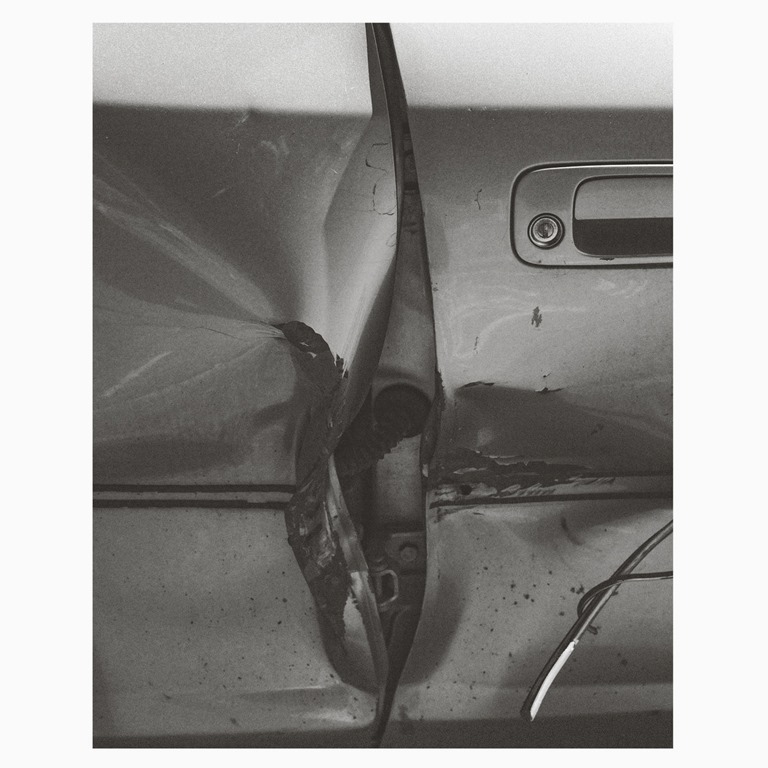
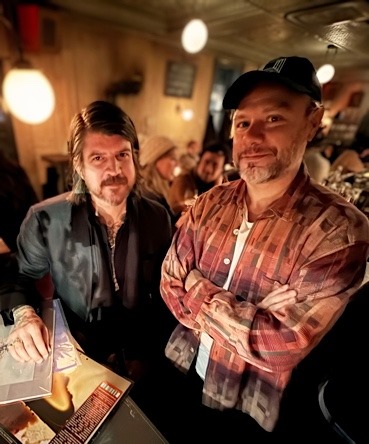
Three years on from Lasped Gasps, their collaboration with Jon Mueller, experimental duo Push For Night, consisting of Oliver Chapoy and James Elliott, decided they needed to take a slightly different approach and pull back on the intensity a tad and allow some hints of light into the darkness for the follow-up.
They write in the accompanying notes – as if offering reassurance to anyone who may be concerned that this means that their new album is some kind of breezy pop fun – that That Porous Line ‘is absolutely a collaged, flickering, chaotic, electro-acoustic record. The project is the project after all. Although our tomb-room isn’t fully hermetic (what is?), I think it is a place PFN will always reside. A total escape outside into harshly lit reality without mystery is fairly unappealing, for us anyway. Inside is personal, guarded from too much light; a dark terrarium of weird ghosts and peculiar shadows ripe for conjuring and harnessing in order to make them kick and howl in a way pleasing to us. Or at least be near enough to them to try and hear what they sing. That’s the motive. We decorate the cave, invite the specters to reveal a message, and try to capture something. Inside, cocooned in the semi-dark of our uncommon space, we bang our heads against the act of interpreting these shifty, chimeric, hidden sonic shadows. How big is it in here? How much further down can we go? Did something move in that corner over there? Can it touch us? Can we catch it? That’s where the fear is. That’s where the fun happens. That’s why we listen. That’s why we play.’
Compared to Lasped Gasps, pretty much anything would be lighter and less tense. But the first composition, the nine-and-three quarter-minute ‘A Good Hosing Down’ immediately makes clear the difference, opening with some scratchy strings and chiming notes which ring through a soft static and ambient mist. There’s no real sense of danger or threat here, and you don’t immediately feel as if you’re suffocating. But around seven minutes in, the atmosphere does change, and shit does get weird. Warped, spongy electronics rub against one another as they twist and turn in unpredictable directions.
The underlying structure of ‘Fang Vendor’ is a low, slow beat and swampy bass that’s almost a desert rock reimagining of Suicide, but over these are strains of retro-futurist space-age synths and random glitches and all kinds of sonic incursions that disrupt the flow.
At the centre of the album stand a brace of monolithic works: ‘It’s Sure To Be Dark If You Shut Your Eyes’ and ‘Idler’s Reward’ both pass the eight-minute mark, and place the collage nature of their approach to the fore. On the former, fragments of processed, glitched-out vocal samples and random snippets intersect with a piano motif which fades in and out while flickering beats flit around subtly in the distance, by no means driving or propelling the piece forward, instead adding further distraction to a palette already overloaded and blending to indistinction. Heavy drones, elongated organ sounds, ominous rumbles, and electronic explosions fizz and spark all over. Cymbals crash and tension builds. The latter provides some respite, with a slow, gradual glimmering change of hue accompanied by a sparse pulsation. I start to envisage the deep sea, the gentle, fluid movements of jellyfish… but then there’s a corrupted proggy synth break that utilises an awful farting synth sax sound or something, and further on, there’s some trilling jazz-infused woodwind. No two ways about it: That Porous Line explores experimentalism to the max. Asserting that the duo apply the collaging of materials indiscriminately may sound like a harsh criticism, but I make the observation more in the context of William S. Burroughs’ cut-ups, which brought collage to the page, and, shortly after, audio works, with the intention of creating art which was closer to life, and the way we experience an array of sensory inputs simultaneously. That Porous Line may be a fair bit smoother in its application of the methodological principles than early adopters of sound collaging – from John Cage to Throbbing Gristle and Cabaret Voltaire, but ultimately, this is about applying a technique established a long time ago in art to other media, specifically sound. And the aim is to be disorientating, to overlay fragments to achieve a certain effect.
‘Bait is Lowered’ is a dark, rippling wash of unsettling layers of sound, creeping, thrumming, before sputtering beats burst amidst a wail of siren-like sounds and everything dissolves into a panic-infused morass of sound. In many ways, it’s low-key: there are no brain-shredding walls of white noise here, but nothing about it is right, nothing about it is easy, comfortable.
That Porous Line isn’t one of those albums where you find yourself praying for it to finish, and it doesn’t suck the life out of you – but it’s no party, either. Culminating in the wall of static wash that is the final minute of ‘Turned Slowly and Slowly Turned’, and the somewhat proggy, somewhat Krautrock, somewhat ambient title track which draws the curtain remarkably gently. It’s a journey, and no mistake.
AA