Posts Tagged ‘scene’

Christopher Nosnibor

I’ve been frothing about the Utterly Fuzzled events for a while now, as being an absolute cornerstone of the remarkably vibrant York scene of the moment, and similarly, I’ve commented variously on the sense of community and the way the promoters support one another rather than compete. It’s perhaps a byproduct of these challenging times – noted from the stage by Objections during their set – whereby putting on gigs at this level is bloody hard work and largely a thankless task – and not without financial risk, either, which means that those who do it do so because first and foremost they’re passionate about music.

Times have certainly changed: back in the 80s and 90s, often regarded as a golden age for independent venues and new music, smaller places such as York were under the monopoly of greedy promoters who would operate pay to play and other unscrupulous policies which largely ensured that the bands – who had no money to begin with – took the risk while they got paid regardless. At least now there’s a certain sense of equality in that no-one gets paid.

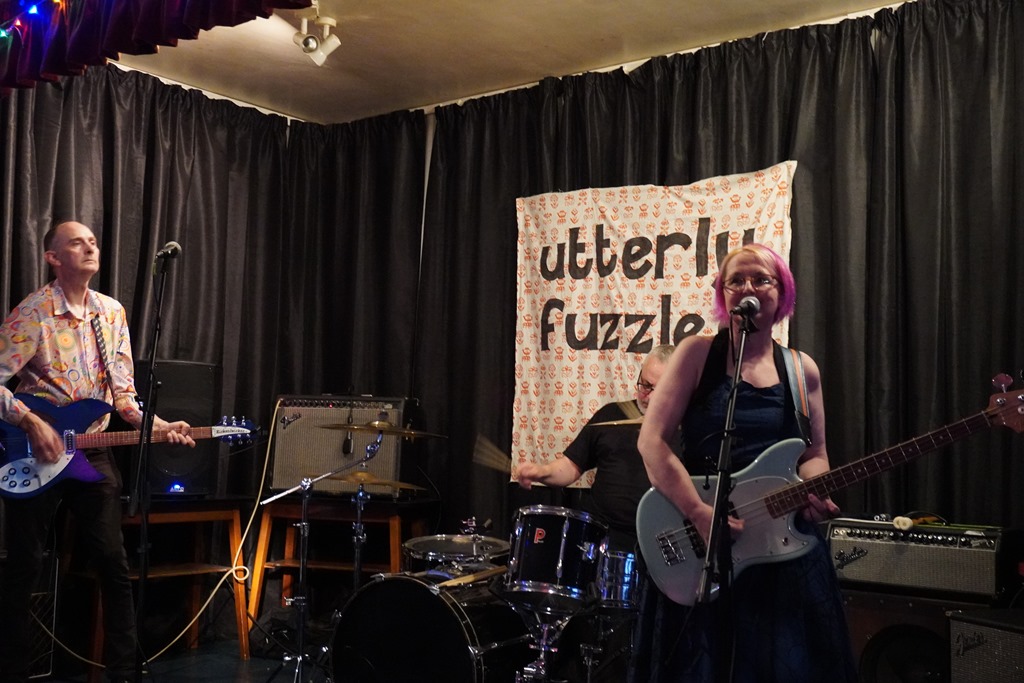
This is their tenth event, which expanded into a two-nighter (A Fuzzlefest, if you will), of which this is the second, and the lineup is stacked – a veritable ‘Best of Utterly Fuzzled’, with four of tonight’s acts making a return (if we include Objections who played a pre-Fuzzled event before the name was formalised).

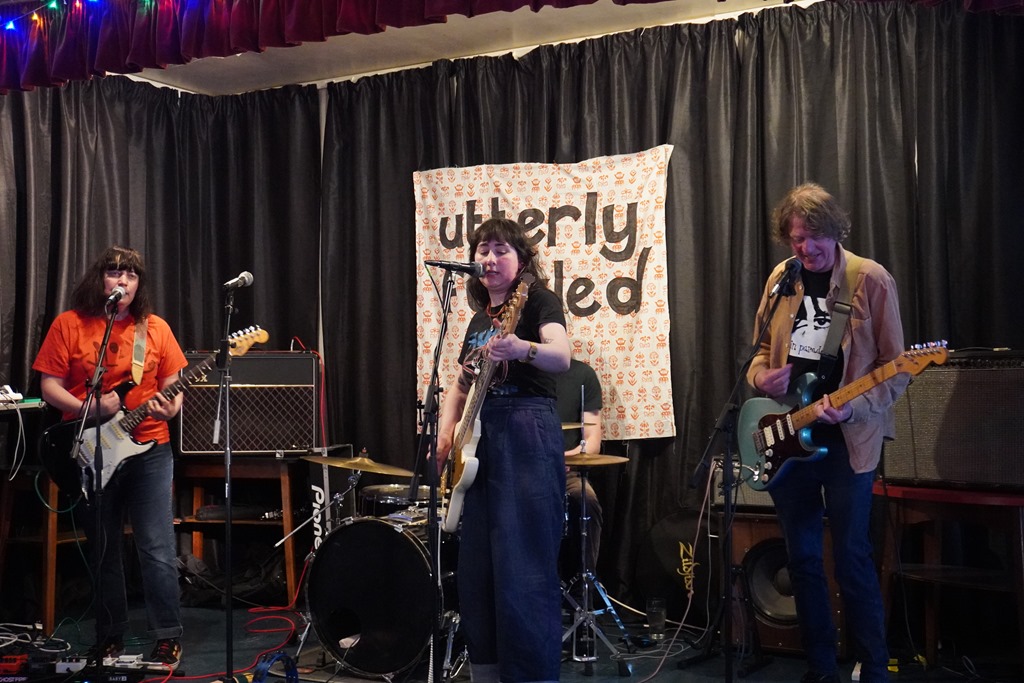
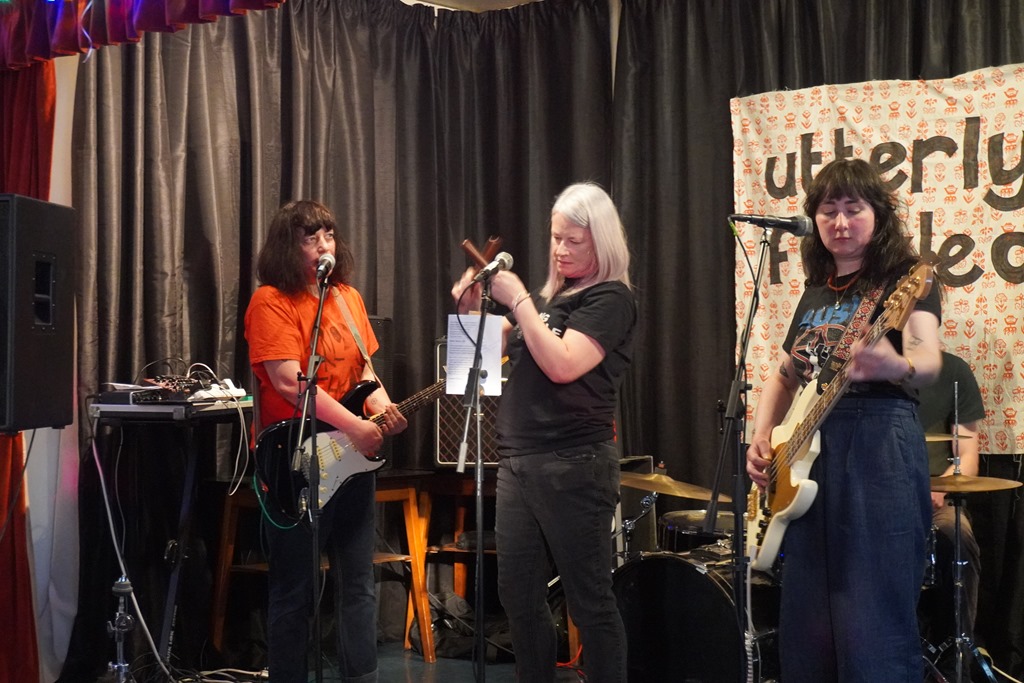
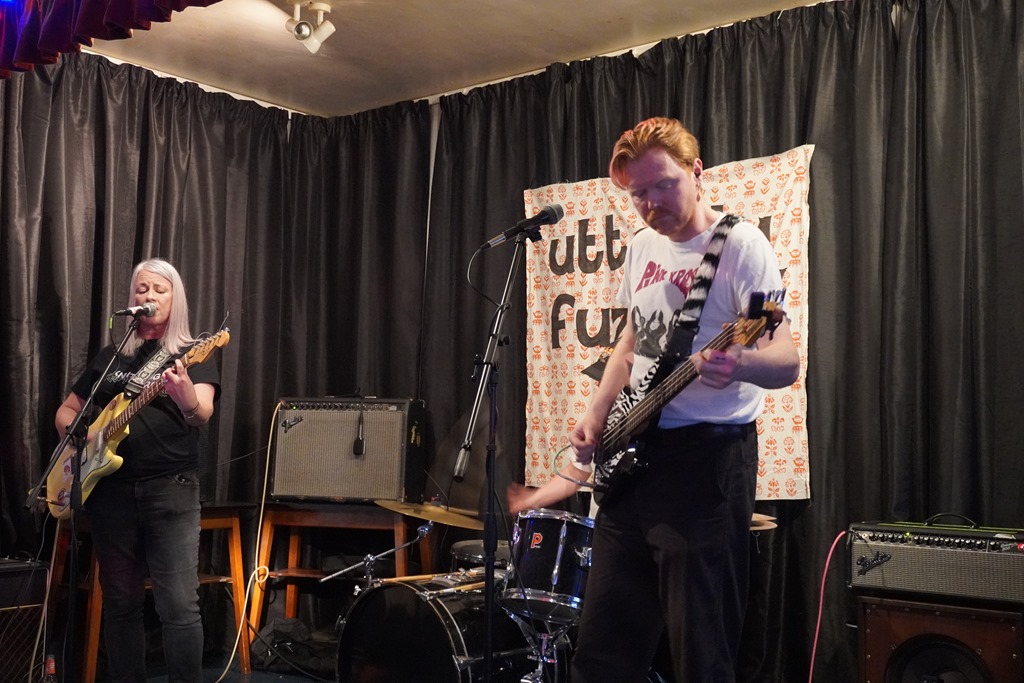
The fact that former headliners Dragged Up are late additions and opening proceedings, hitting the stage at 5:30 before hauling up to Newcastle (after playing Middlesborough the night before), is quite the coup, and testament to the strength of the connections organisers Jo and Pete have with the bands they put on.

Future single ‘Rapunzel’ lands mid set with guests vocals from Mel Whittle of fellow Glasgow act Count Florida – who are on later – and slides onto the chord sequence of Bauhaus’ ‘Dark Entries’ in the mid section. They close with a sprawling eight-minute monster about leopard print, which lands with far more impact in the room than it ever could on paper.

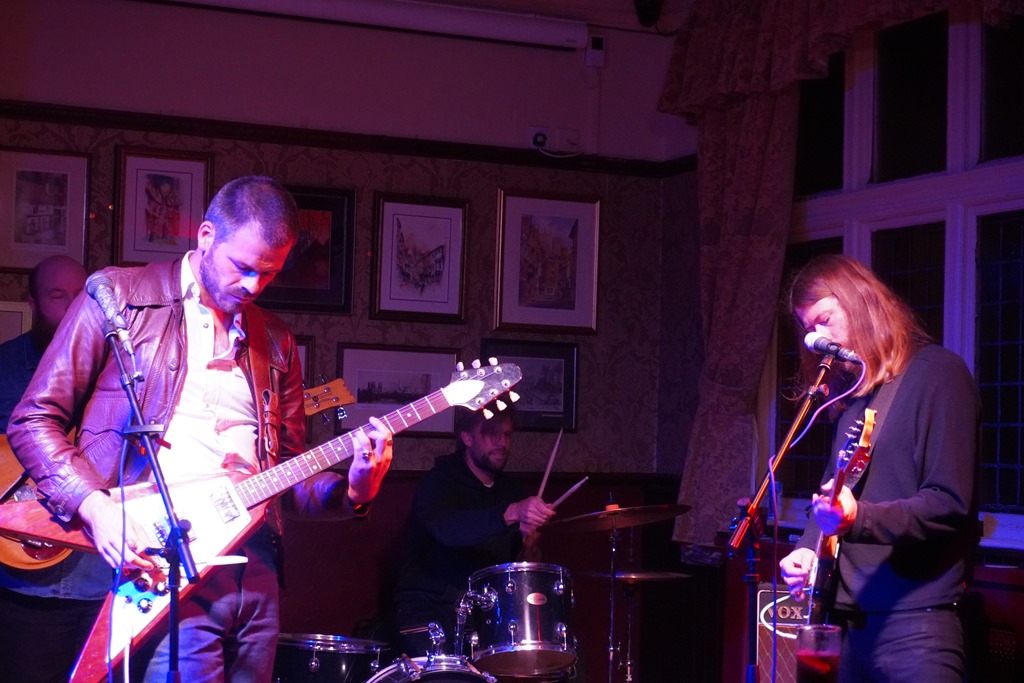
DSC01157DSC01174

Dragged Up

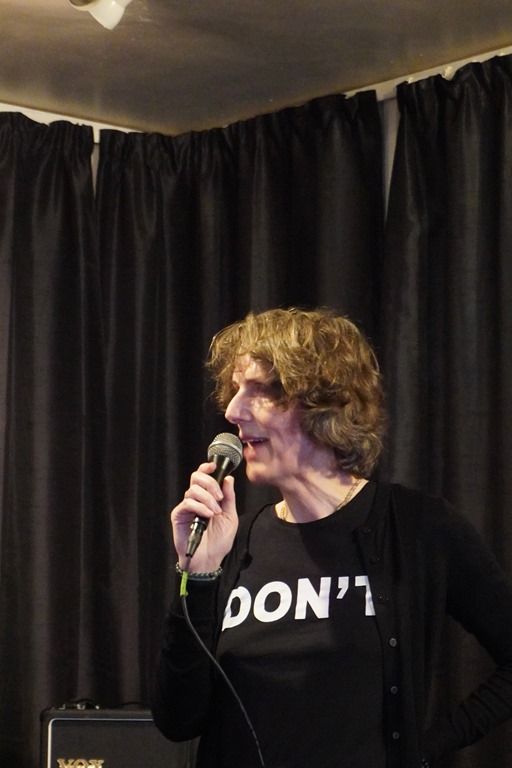
Pope Joan’s performance exemplifies everything that’s brilliant about the Fuzzled events – the spread of genres and the willing ness to showcase the oddball and experimental electronica amidst the guitar-based indie and post-punk and beyond. Pope Joan – formerly of Leeds act Casino Volante – brings a host of elements together with some quirky humour and a dash of strange. Initially, we get Stereolab meets Kraftwerk, evolving into some experimental synthy hip-hop with some mutant disco going on. Then at times it gets a but noisy, a bit DAF, a bit Cabaret Voltaire. The bants are awkward, and this seems to be part of the act, too. There’s a Yeah Yeah Yeahs cover that sounds more like Suicide – the band, that is.

DSC01192

Pope Joan

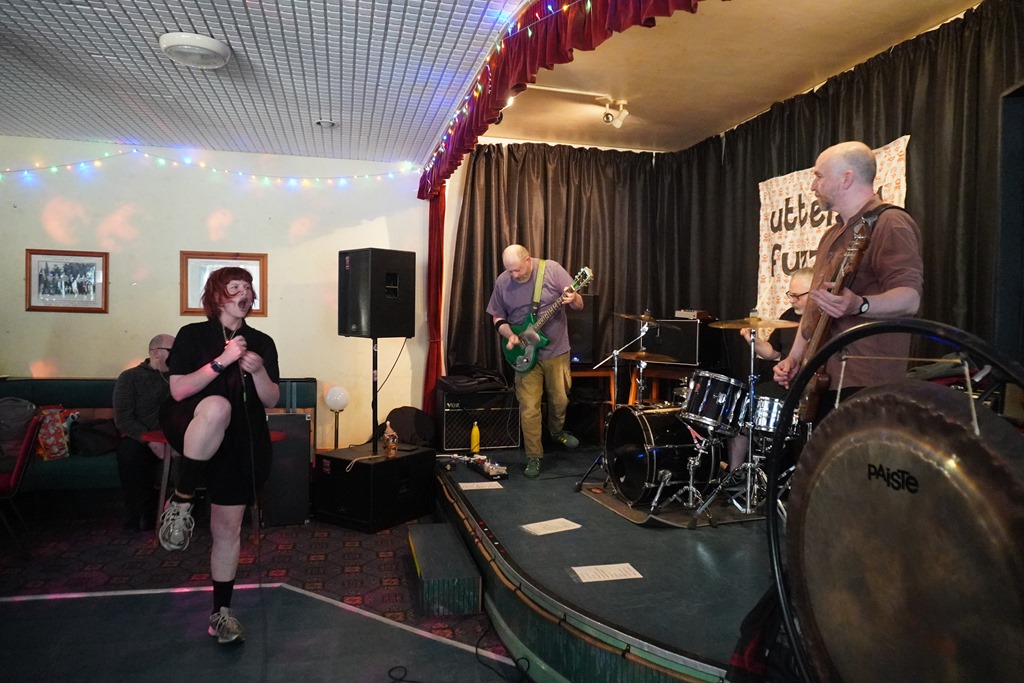
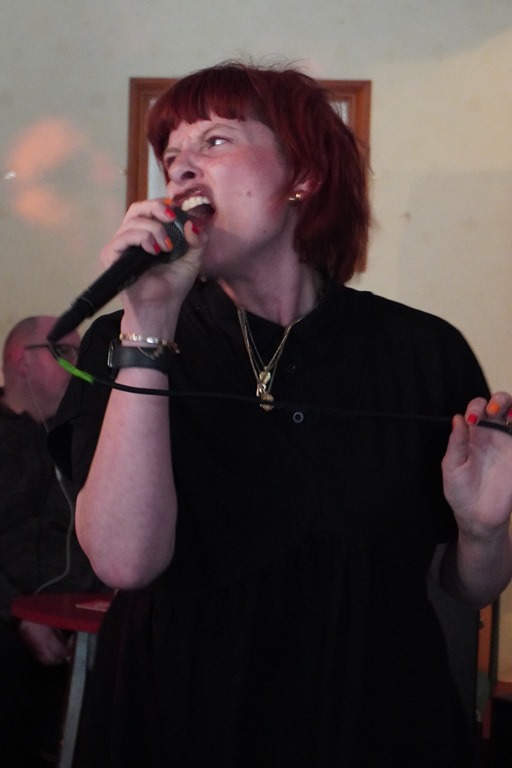
Two weeks on from the last time I saw them, The Bricks are relaxed and on fine form. It’s a very different setting, and the fact they’re every bit as good playing through their backline as through a PA – and seem as comfortable – is an indication of just how well meshed they are as a unit. Gemma installs herself in front of the stage, and, with all the room, she makes the most of the space, charging about, radiating electric energy. And once again, she hollers her fucking lungs out, to the extent that she’s visibly and audibly spent every grain of her guts by the end of the set. It wouldn’t work if the band behind her weren’t the pinnacle of precision, though, and while they have lengthy debates about what song’s next and how it goes, once the first bar happens, they’re in the zone.

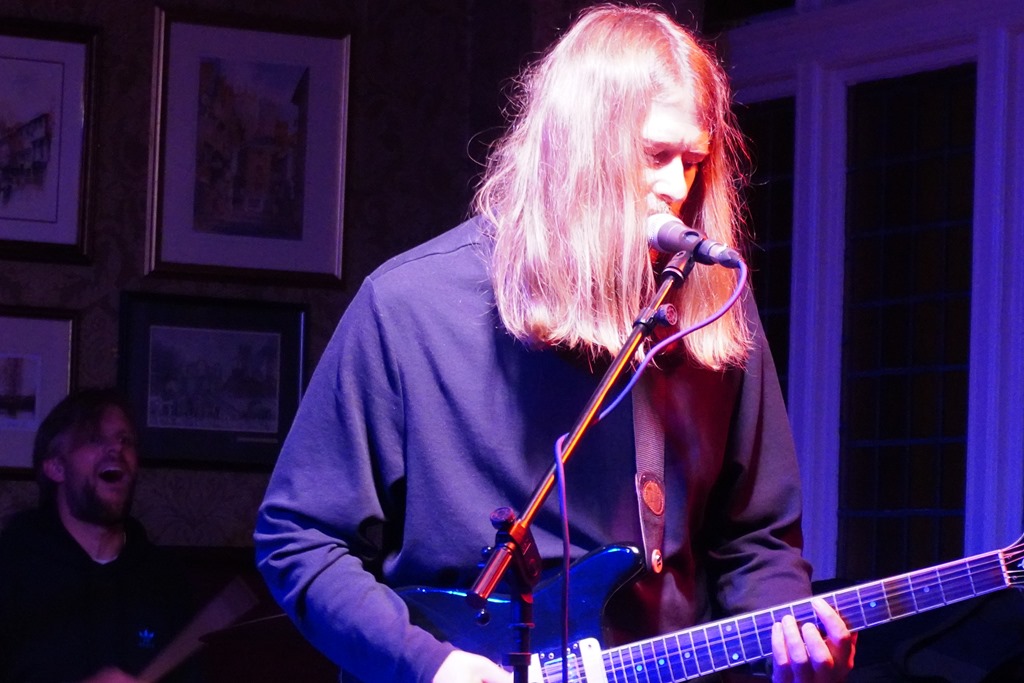
DSC01208DSC01218

The Bricks

Second Glasgow band of the night, Count Florida espouse vintage jangly indie, hinting at the sound of C86, but perhaps more pertinently that of the Postcard Label – something which is uniquely Scottish (despite their releasing a single by The Go-Betweens, who were Australian). They’re perhaps a little under rehearsed for a few of the songs, and while not necessarily performed to peak level, I couldn’t help but feel the effect of some of their deeply personal songs about death and about loss and needed to breathe for a couple of minutes after their set.

DSC01252

Count Florida

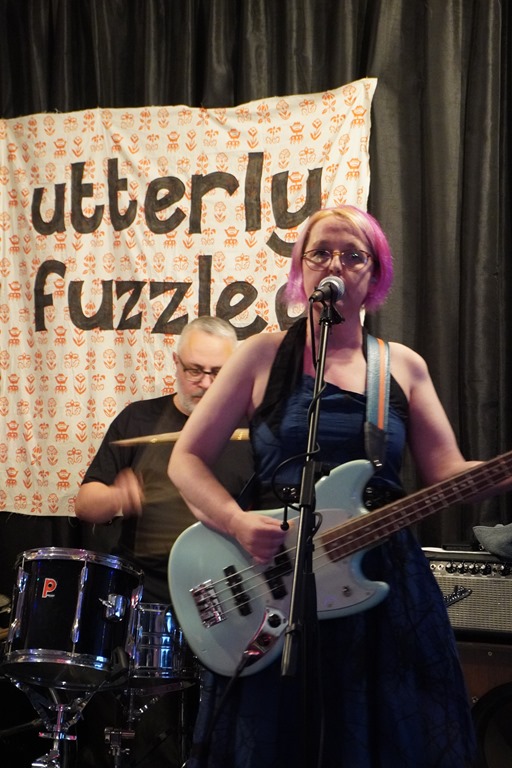
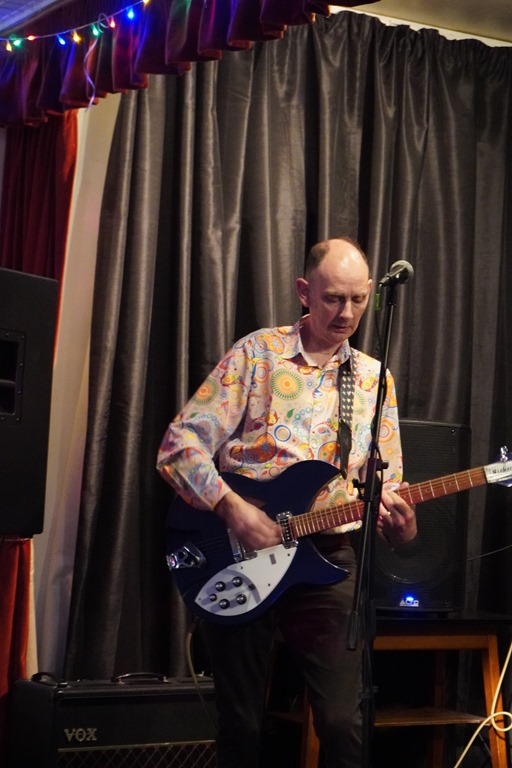
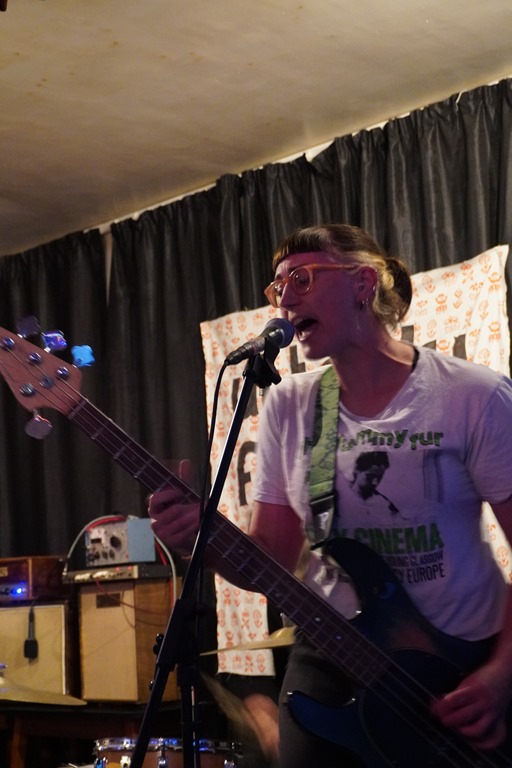
Knitting Circle just get better, tighter, more confident, more comfortable with every performance. They might not think so, but they do. Even when looking tense and debating the set list, the way they react to audience call-outs and situations more generally shows an assurance that’s a measure of a band becoming truly established. They throw in the risky new material in early, and the second half of the set is, as ever, a showcase in choppy, issues-based post punk. On the subject of issues, Jo (vocals, bass) recently posted on Facebook how a recent review had made a deal of her choice of dress in contrast to the rest of the band, highlighting how deep sexism runs in all aspects of our culture – it’s particularly glaring in context of Pete’s remarkable shirt collection. When asking of the audience how the mix was, there was a call for him to turn his guitar up – fair enough, but equally, he might have turned his shirt down. Anyway, needless to say, they sound great.

DSC01270DSC01271DSC01297

Knitting Circle

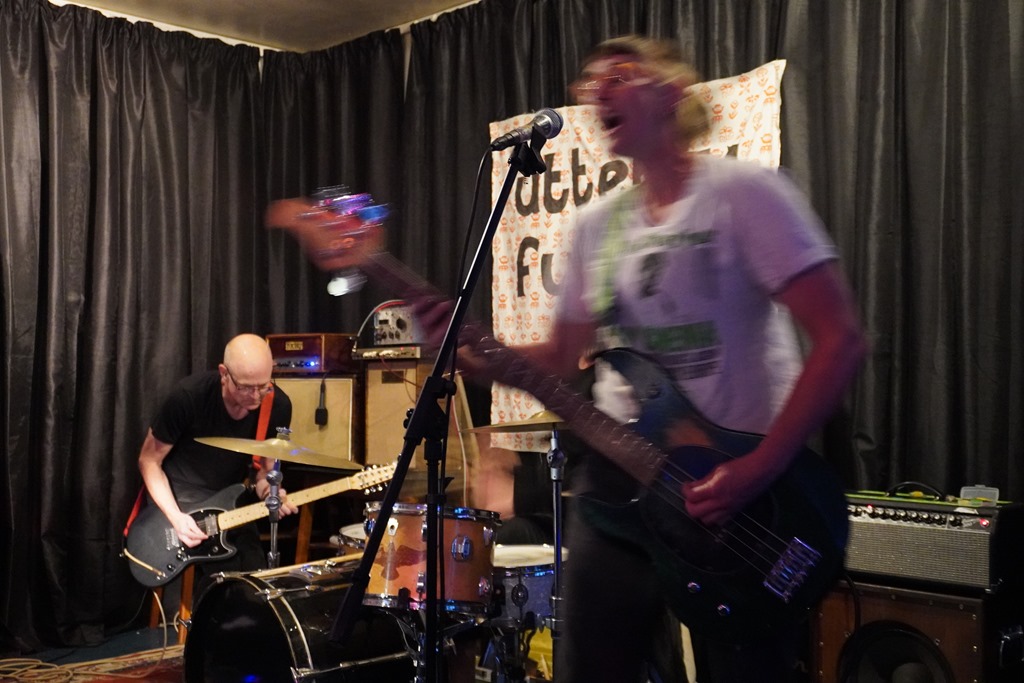
Objections are also well-liked around these parts, and further afield. I made precisely no notes during their set: I was simply hypnotised by the fretwork. They’re by no means a wanky band, but they are incredibly technical, and totally kinetic in their performance. They’re not exactly in the domains of Captain Beefheart’s Trout Mask Replica, but there is very much a sense of the three bandmembers each playing different tunes – but it all comes together, miraculously. Claire Adams’ bass switches between stop/start and booming groove, and it melds perfectly with the precision, jazz-style drumming of Neil Turpin, while Joseph O’Sullivan goes nuts in his own world making noise never before wrung from an electric twelve string. They’re completely unprepared when hassled for an encore, but after some debate, we get one. This is real, spontaneous. And it’s ace.

DSC01305DSC01312

Objections

This is live music at its best. Six bands for the price of a takeaway. Four have travelled: all six are worth the entrance fee. But it’s more than just about seeing some decent bands. It’s about the vibe, and the people, too. This is the very core of the live music scene.

Launchpad+ and EMI North – 25th February 2026

Christopher Nosnibor

From Interpol to Editors to White Lies and far beyond, including, at present IST IST, dark-edged post-punk acts displaying strong Joy Division influence have been emerging for the last twenty years now, and more. Some are better than others, some capture the mood more effectively than others.

It’s perhaps because they’re from Leeds that The 113 are particularly good at capturing the mood: the spawning ground of goth in the 80s, the Leeds scene has always stood apart from not only the mainstream, but other major cities of the north, particularly Manchester and Sheffield, which in turn have always had their own identities: in the early 00s Leeds was hotbed for innovative post-rock, and has, over the last decade, yielded ever noisier, ever more angular, ever weirder bands, but also bands of quality who simply do – or did – their own thing, from Hawk Eyes and These Monsters to Castrovalva and I Like Trains, Thank, Post War Glamour Girls, Beige Palace, Black Moth, BELK, Irk, and of course, the mighty Blacklisters.

The 113 aren’t nearly as abrasive or far-out as many of these acts with whom they share turf, but their debut EP, To Combat Regret, released last March packed some blustering urgency to the familiar post-punk template. Both ‘Scour’ and previous single ‘Leach’ continue the same trajectory – lean, dark post-punk vibes, driven by dense bass, insistent percussion and some sinewy guitar work, creating tension and using it to powerful effect – but if anything, this is tauter, tenser, and more nuanced: the melodic, shoegaze mid-section adds significant impact to the song’s explosive conclusion.

This, in conjunction with ‘Leach’ says that the forthcoming EP, The Headonist (out April 17th) will be killer, and the upcoming tours in April and May look like something to get excited about, too.

AA

AA

923bdd4b-dfcd-0bd4-f755-7b62d5b746c4

Photo: Naomi Whitehead

Christopher Nosnibor

I find it most disconcerting shopping in my local Co-op. The self-service checkouts film you, and you can see yourself on the screen above your head while you scan your items. Surveillance and facial recognition is everywhere now. The other day, I passed a venue where a guy in a flat cap was ordered my security to remove his hat and “look into that camera” before being told he could replace his cap and enter the venue. We really have come to this: you can’t go shopping or go for a drink without a capture of your visage ‘for security’. I appreciate that shoplifting is at a record high and violent crime is rife, but is this really the solution? How about asking why we have these issues? And what happens with these captured images? Who views them? How long are they stored, and where? Are they being passed off to train AI?

The ‘if you’ve got nothing to hide, you’ve got nothing to worry about’ argument is missing the point, and no longer holds water. The state of things in America with brutal ICE raids where countless American citizens have been mauled, detained, and even murdered (because regardless of the official line, Renee Nicole Good was murdered: those shots were not fired in self-defence, and we live in a horrible, brutal, fucked-up world). And this shit affects you. Well, it certainly affects me, and I know I’m not alone in feeling jumpy, on edge, endlessly anxietised by the prospect of what may happen next, the prospect of waking up to discover that WWIII has broken out while asleep.

This new single by 311 touches on this, significantly, as it happens. as their bio notes summarise: ‘Propelled by discordant guitars and thunderous offbeat rhythms, ‘Leach’ is an abrasive dystopian statement on surveillance, data harvesting and the quiet unease of modern digital life; both a rallying cry against the advancement and negative impacts of big tech, and an honest admission of powerlessness and inevitability in the face of it all.’

It’s a killer single and yet again evidence of just how fertile Leeds is as a spawning ground for fantastic bands. London, Manchester, even Sheffield receive so much hype, but despite being the epicentre of goth in the early 80s and the place for post-rock in the mid 2000s, Leeds seems to be criminally lacking in recognition for its contribution to music, despite Blacklisters, despite Pulled Apart by Horses… and 311 are another bands that should be flagging the city on the national – and international – radar. Because ‘Leach’ brings it all, from churning math-rock, angularity and anguish, colliding post-rock with post-punk and huge energy, they pack menacing and searing riff energy and… and… yeah. This is good.

It’s worth remembering punk and post-punk emerged from terrible times, where it felt like music offered a rare escape, both for those who created it and attended shows. And here we are again.

AA

Christopher Nosnibor

Pub gigs provided me with my first experiences of live music, back in the early 90s. Often, pubs with upstairs rooms would pop bands on, and other still would simply pack bands somewhere in the bar. At some point, there seemed to be a shift away from this, with pubs seeming to be only really interested in solo performers and acoustic duos. Gigs in pubs stopped being such a thing. But now, pubs are dying. And grassroots venues are dying. Let me be more blunt they’re not so much dying, as being killed off in the interest of capitalist greed.

As I wrote recently on the repurposing of working men’s clubs – also suffering from a severe decline – as gig venues, so the return of the pub gig seems to solve two problems at once, namely how to bring punters into pubs, and providing bands with a place to play. This certainly seems to be happening in York.

The Black Horse used to be a Tap and Spile, and has always been a solid Yorkshire boozer – real ale and bar snacks, and a weekly quiz. But clearing the top part of the room – more a raised area than a mezzanine per se – creates a fairly generous stage space, and not being a massive space, means a basic setup whereby the bands play straight through their amps with only the vocals going through the house PA, simplifying soundchecks and making switchovers straightforward.

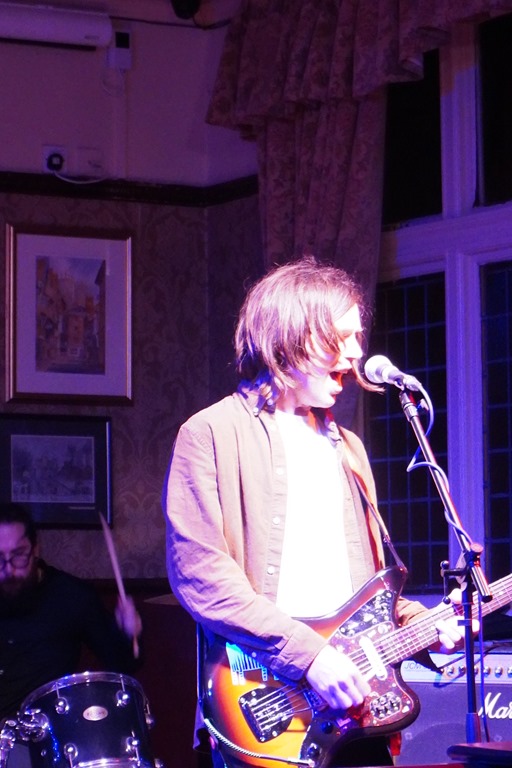
When this show was first announced, Strange Pink were an unknown quantity, but the release of their debut EP changed that, and the Hull-based power-trio-cum-supergroup consisting of Sam Forrest (Nine Black Alps, Sewage Farm), Eddie Alan Logie, and Dom Smith (whose resume is a feature in itself) make for a cracking opening act. They manage to be loose but tight at the same time, and it suits their 90s slacker rock stylings. As the EP attests, their approach is varied, and so, accordingly, is their set. They seem to grow in confidence as the set progresses, the sound coming clearer and brighter, too, and by the end of the set, they’re on fire. They close with ‘Boys Club’, the lead single from EP. It’s a clear standout and possibly their best song, with a strong hook, making for the perfect way to leave the crowd with something to remember.

DSC03153DSC03159

Strange Pink

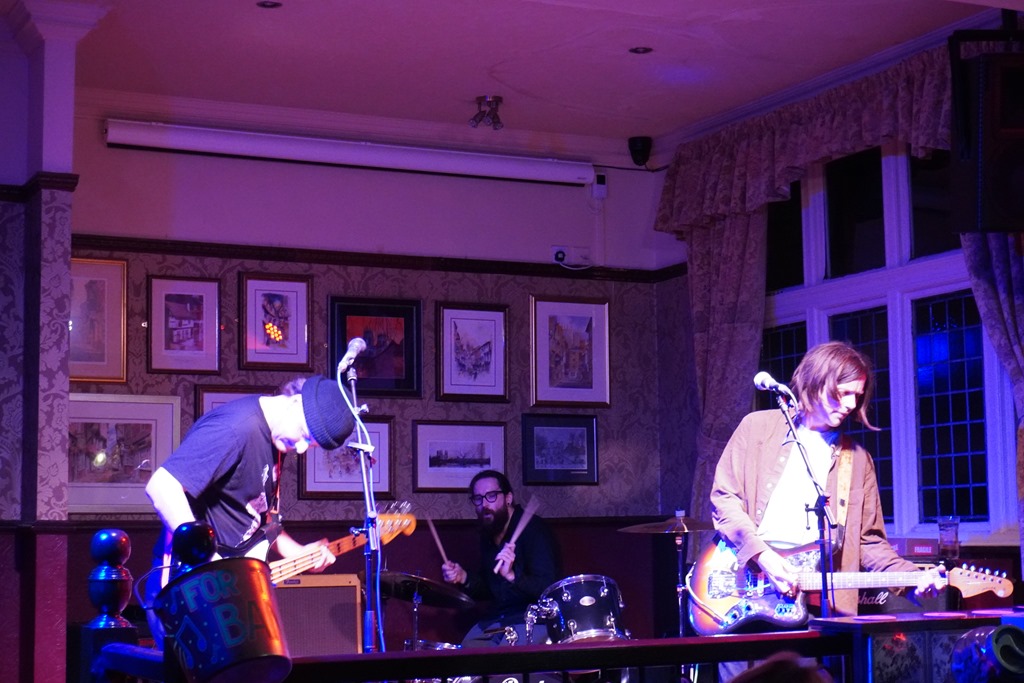
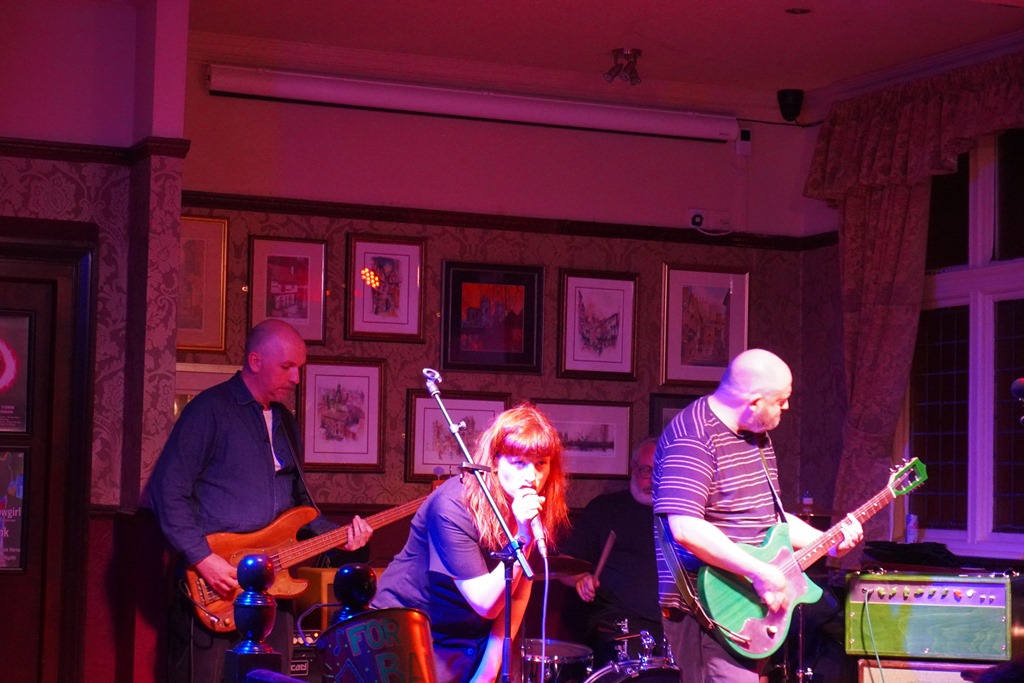
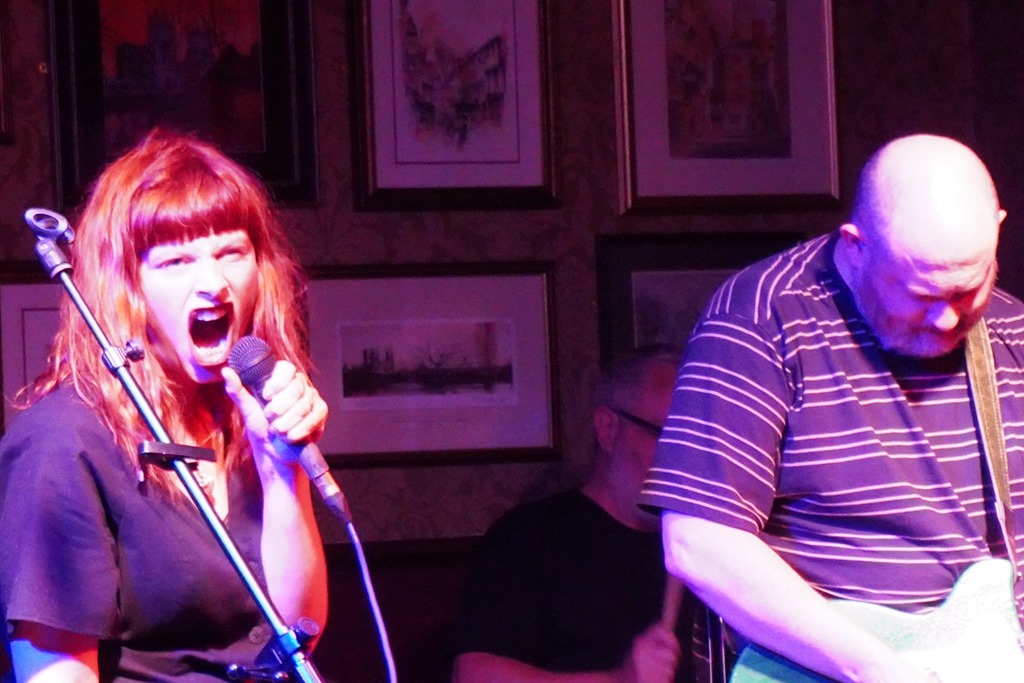
The Bricks have become Aural Aggravation staples, and are a band I will always go and see whenever possible, for two simple reason: they have great tunes, and they’re a great live band – always. During their brief soundcheck, I began to wonder if their run of infallibility might come to and end tonight, but I needn’t have worried, because they were firing on all cylinders from beginning to end. In fact, they seem incredibly at home in tiny venues such as this, and flame-haired Gemma cranks up the wild, eyes-wide, lung-busting intensity, as if relishing the proximity. By the end of a fierce set, her fringe is swept away and plastered to her forehead. The band play relentlessly hard, too, and I try to analyse what it is about them that’s so compelling, why they work so well. The songs are fairly simple, both structurally and in terms of musical complexity – simple lead parts, four-chord riffs, classic (post-)punk, built around solid rhythms, with most songs two or three minutes long and strong hooks. Simple proves effective, especially when played with precision and passion.

DSC03160DSC03168

The Bricks

This does mean that Cowgirl have a tough act to follow. But they’re super-seasoned professionals. Danny Barton (guitar and vocals) plays bass in Sewage Farm, previously played bass with White Firs with former Federals drummer James Holdstock (who’s also drummed with Cowgirl), and has, in short, played in more bands in and around York than I’ve had hot dinners, and the same is true of Sam Coates (also guitar and vocals), who’s been pretty much ubiquitous on the scene for years now.

Looking around the room – it’s standing room only, and there’s plenty of beer being drunk, and I bet they’ve not sold this much on a Thursday night in a long time – half the people here are in other bands, or are otherwise recognisable as gig-going regulars, highlighting what a close-knit scene the city has, but also that this lineup has brought people out on a night that’s not exactly a popular one for gigs or pubs. The free entry and donations bucket may be a factor (although a facility to take card donations would likely have seen more contributions), but still, it’s proof that a quality lineup is a definite draw, and the fact a small venue can be filled more easily creates a sense of buzz, which is definitely the case here.

DSC03173DSC03177

Cowgirl

Early on in their set, a friend remarked that they sound like Oasis. He’s completely wrong, but the comment got me thinking. Some of the elements are there… some of the jangle, a bit of the swagger, but with a keen American indie influence. Perhaps his opinion was influenced by the fact that their sound is decidedly more ‘rock’ on this occasion than previous times I’ve seen, them, likely on account of the backline / PA setup, resulting in a sound dominated by blistering guitars. But they have actual melodies and a psychedelic hue, and once again, it’s a set that builds in every way – confidence, cohesion, and volume. The final brace of songs is segued together to form a ten-minute melting wall of sound, an epic psych-wig out that’s nothing short of a brain-cleansing blast that leaves you dazed as the final strains of feedback taper away.

Everything about tonight feels like a win. I may have had one more than was wise – easily done when it’s hot because it’s packed and all hand-pulled beers are a fiver and there’s half a dozen to choose from – and I may be a touch emotional at having attended my last live music of my forties – but stepping into the night, I feel like I’ve experienced something life-affirming and positive in the bleakest of times.

5th December 2022

Christopher Nosnibor

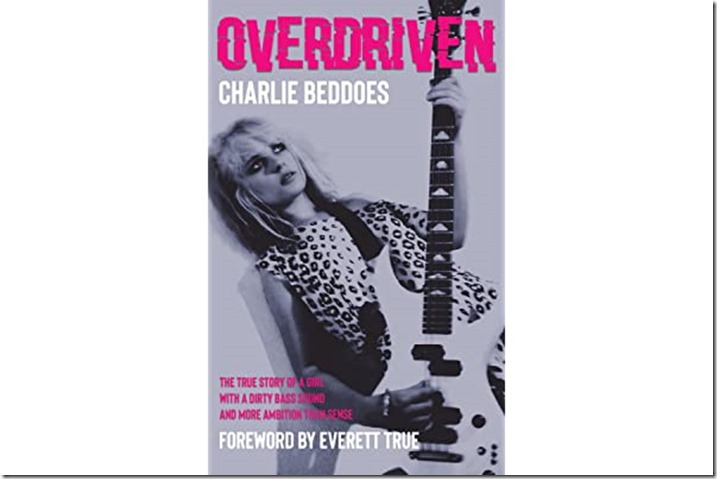
It’s perhaps fitting that after penning around seven hundred words of a review of this book, that I suffered a crash and the file corrupted irretrievably. Unlike most autobiographies, this isn’t really a ‘rise-to-fame’ or ‘rags-to-riches’ narrative, and nor is it a tale of rise-and-fall. Overdriven is more an endless succession of trips, stumbles, misses, and near hits, failures and not-quite-off-the-drawing board ideas. And so, as is the theme of the book’s narrative, in the face of adversity, you need to get up, and just plough the fuck on. Because if you don’t… no, not doing isn’t an option. You just do it, however hard it may be.

Everett True makes an unusual but valid point in his foreword, in that the ‘wrong’ people write rock history. Usually, it’s the successful ones for a start. If, indeed, they even write it themselves and don’t use a ghostwriter. Rock biographies and autobiographies invariably have an arc, but the starting point is that the subject is well-known, having achieved chart success at some point, and more often than not they have – at least at some point – been a household name. This, of course, is simply not representative of the lives of, well, pretty much every gigging musician, really, and this makes Charlie Beddoes’ book unique: Overdriven is the story of what it’s really like to be a musician slogging – and slogging, and slogging – in their quest to make it.

What even is ‘making it?’ Again, success tends to be measured conventionally in terms of units shifted and celebrity status, but that simply is not the reality for the vast majority of musicians. Success is simply being able to exist as a musician, and Overdriven really does show just how hard it is simply to achieve this, often relying on second jobs – interior design work, lecturing – during much of her career, having hauled herself up from living in squats to cruddy flats and shared accommodation.

Overdriven conveys all the crazy pace of things, and how life and relationships continue all around the ‘exciting’ ‘career’ stuff, and just how much of a maelstrom it can be. And relationships and being in bands, it seems, is often a conflict of interests, especially when the two cross over. Fucking hell, shit is messy at times in this book. But if – as I did – you often find yourself howling ‘nooooo!’ at the page, which what feels like constant acts of (albeit unintentional) self-sabotage, as the same time, what’s so striking is just how real, and how human is all is.

It’s clear, and not just from the ordered chronology of the book that Beddoes is someone who not only likes, but needs, order and organisation, yet has spent a lifetime struggling to find it amongst musicians. It’s a story packed with flaky, inconsistent and unreliable characters, not to mention the full spectrum of addicts, oddballs, and out and out psychos. But it’s also a milieu of people lost, lonely, confused, messed up, and some plain massive twats.

It’s also written in a remarkably even, matter-of-fact tone, and some of the dialogue reads rather like Kathy Acker. It’s unframed, direct, and it suits the style, because the narrative is straightforward and uncluttered. One may likely read it in one of two ways – the voice of someone level-headed and well-adjusted, or the voice of someone numbed by trauma, not least of all by her childhood years, where her mother’s mental health issues which normalised all that is not normal. Perhaps it’s a bit of both, but her recounting her childhood feels as important to the overall picture as anything in the book. Again, context counts, and joining the dots it’s clear that Charlie’s determination to make something of herself, despite spending years in squats and enduring endless shit is rooted in her childhood.

While much has been made of cult alternative band Rub Ultra, which Beddoes co-founded, Overdriven places it in context – a relatively brief period of her life, one that was defined more by struggle than any sense of accomplishment, with her having been ousted from the band prior to the release of their debut – and sole – album. What really comes to the fore is the precarity and volatility of life in a band. Charlie’s book is unstinting in its honesty in approaching the constant flashpoints which make simply getting to, and through, the next gig an heroic achievement. This isn’t just Beddoes’ take, or the story of how things were in Rub Ultra. This is representative of the expectations of so many musicians and bands. You realise that achieving any degree of success is beyond miraculous, when most bands don’t even make it as far as a gig or two, let alone recording anything. It always seems like a good idea in the moment to get together for a jam…

So many of the rock ‘n’ roll anecdotes are often brilliantly bathetic, and instead of trashing hotel rooms, we get a tale of accidentally setting off smoke alarms at a Travelodge while smoking a spliff, and Charlie turning down groupie action. The numerous potted reviews are amusing, too with her brief assessment of Idles on seeing them as an emerging band in 2012 is exemplary: ‘I don’t really get it, they are kind of post hardcore and very grumpy and they don’t look like they are having a good time’. There are some pithy observations, too: she sums up social media reactions perfectly in one sentence, observing how she could release an album to thirty likes, but post a pic of her cat hours later and receive a hundred. Yep. Books and reviews are the same. And if only likes had any correspondence to sales.

Overdriven also conveys the eternally tangled web of people on ‘the scene’ from musicians to roadies to A&R and label types, promoters and engineers. The same people crop up again and again, and occasionally they’re in bands who broke through – at least for a time.

And so the ‘peak years’ of relative comfort and security and ‘making it’ as a touring musician arrive later, not even playing her own music, and Charlie Says proves to be another near-miss failure, before her most recent vehicle, the mighty Nasty Little Lonely – which was essentially a continuation of Rock in Your Pocket, rebranded to increase the band’s appeal on the Bristol scene, and – and which ultimately sees her making the music she always wanted to, if only with a cult following and no major labels offering hods of cash – occupy only the last few chapters and the band is secondary to the turmoil of life.

It’s the last few chapters which hit the hardest. Unexpectedly, it’s Charlie’s account of her experiencing the onset of menopause that’s perhaps the most affecting part of the book, packed in near the end. For all the disappointments and deaths – a lot of people die, especially in the post-millennium years – all the years of soaring highs and crushing lows and endless rejections and dead-end auditions and all the rest, not to mention the endless conflict over not being considered ‘fit’ and wanting to be recognised for her musical abilities – and during all this time she rolled with the punches, this brings home just how life-changing it is. And it’s still not talked about nearly enough, not seen as a serious issue, even, as she writes, by younger women in the medical profession.

As much as this is an autobiography – and one well—told and well-written at that – this is a story of being a musician, with Charlie being a WOMAN in rock secondary to what really doing this is like. There are no two ways about it: Overdriven is essential for anyone with an interest in the music industry – but also for anyone who cares about life struggles and what it is to simply get through.

AA

71C5XK5u8AL._AC_UL600_SR600,400_

California darkwave duo, Male Tears has just unveiled their latest single, ‘Deal3r’. The song plays into the themes of an upcoming record that speaks on the abuse and hypocrisy of city night life.

‘Deal3r’ tells the story of the ultimate example of ‘style over substance.’ It’s the tale of an important person; a ‘legend’ embraced by the ‘scene’. But beneath the ‘image’ and artistic craft, lies an individual empty and shallow; a hypocrite and drug dealer whose true identity was hidden under the skin of the community.

The song is intended to be an aggressive dance-pop track pulling from darkwave and EBM influences. Filtered through the lens of 90’s pastiche and acid house, ‘Deal3r’ is a departure from the band’s established 80’s new wave sound.

Watch the video here:

AA

DEAL3R cover