Posts Tagged ‘music industry’

Antigen Records – 30th October 2026

Christopher Nosnibor

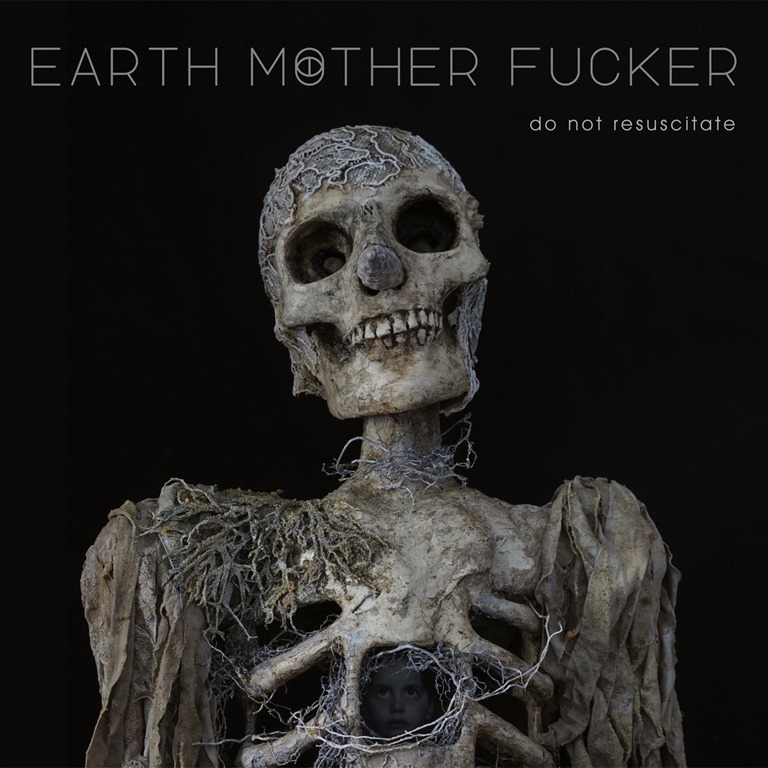
Old bastards make confrontational noise album nearly forty years in the making. That’s the headline, or the boiled-down version of the biography which accompanies the debut album from Suffolk noise-rock merchants Earth Mother Fucker. Formed in 1988 – long before the EMF who stormed the charts with their hook-laden dance-tinged indie songs – they’ve gigged hard and frequently, but worked on recording at a pace that would make a snail look like Usain fucking Bolt, with the sum total of their output standing as one EP, a live album and ‘a couple of collections of demos recorded in a barn in Holbrook in the late eighties’. As if they could care less. If they were even remotely fussed about being a commercial proposition in any way shape, or form, they wouldn’t have stuck with calling themselves Earth Motherfucker all this time. Even if they had a catalogue stacked with slick pop tunes and smooth r’n’b, they were never going to find themselves dominating the playlists of Radio 1. Even when the station had Mark and Lard in the breakfast slot – can you imagine that happening now? – spinning Radiohead, Placebo, and Depeche Mode babbling about Crispy Ambulance, there’s no way a band called Earth Mother Fucker would be making the airwaves.

Six years ago, their eternal traversing of grassroots venues saw them come to the attention of UK Independent Venue Week, who selected their no-cock rock anthem, ‘I Fuck Therefore I Am, as one of their top nine live performances of 2020, including it on the Independent Venue Week Live 2020 album with Self Esteem, Sleaford Mods and Anna Calvi. You couldn’t make this shit up, but this event prompted them to finally get it together to complete their first full-length studio album, Do Not Resuscitate. As there seems little likelihood of resuscitation by the time they get to that ‘difficult second album’, we should probably celebrate the fact that it’s happened at all.

It’s ‘I Fuck Therefore I Am’ which raises the metaphorical curtain on this eleven-track magnum opus, which has a run time of almost an hour. It starts with some zany slide guitar, but swiftly latches into a filthy groove and comes on like The Stooges. It’s wild, and builds to a frenetic climax which leaves you feeling dazed after just four and a half minutes.

They describe themselves as pioneers of ‘a mash-up micro-genre of one, delivering death country murder ballads and bleached-out retina-detaching noise rock’ – and it’s all here, in spectacular, ear-bleeding glory. ‘Crooked Path’ sounds like the best song The Gun Club should have written, while ‘A Good Man’ introduces Fall-esque vibes with its clanging guitars – although the distorted spoken word narrative takes it somewhere else entirely.

There isn’t a duff track on here. Nor should there be, they’ve had bloody long enough to figure out the tracklisting. But the magnificence of Do Not Resuscitate lies in its rawness, which encapsulates the band’s uncompromising nature. ‘Uncompromising’ is a word which has come to be chronically overused, and we know that nearly every band, every artist in every medium, makes compromises. Sign with a label or publisher, engage a PR… essentially, anything that could potentially further the career and increase audience reach involves a degree of compromise, unless you’ve already sold out before embarking on a path of placing creative works in the public domain. Not these guys.

In a parallel universe, Earth Mother Fucker would be massive. Because there have been other, similarly ‘difficult’ and ‘challenging’ bands who’ve broken through, ranging from the Jesus Lizard to Sleaford Mods – although I’d contend that the latter sold out and bought their own hype, and while the Jesus Lizard’s first UK tour in an eternity saw them playing venues like the 450-capacity Brudenell in Leeds, Sleaford Mods have taken their one-trick gimmick to arena-level, playing to 10,000+ people. Fuck that. And fuck them.

‘Cobalt Blue Climax’ is a disorientating, discordant slice of psychotic gospel country noise rock, and after that, we’re into the frenzied ‘Roadfucker’, where The Stooges and The Cramps and The Screaming Blue Messiahs crash headlong in a crossroads collision, before ‘Happy Shopper’ goes Sonic Youth on dirty speed.

There are no specific standout tracks on Do Not Resuscitate – but that’s because it’s simply relentless and the standard is consistent throughout, despite the stylistic variety. ‘Topper’ is a bot jangly, a bit pub-rock even, and lands with something of a swagger and – but equally, it calls to mind ‘Container Drivers’ by The Fall, before it collapses into chaos. ‘Ips’ is perhaps the album’s most accessible track, straying into post-punk/ indie crossover territory, and hinting at a certain level of songwriting nouse with a solid chorus – which, naturally, they obscure with the scuzzy, lo-fi production. Some would likely charge them of self-sabotage, but this is the very essence of Earth Mother Fucker – a band who refuse to play the industry game on any level.

When bands say they make music for themselves, and if anyone else like it, it’s a bonus, they’re lying. It’s false modesty and pre-emptively providing cover should they fail commercially. But not these guys. It’s impossible to fail commercially when you have absolutely no regard for commercial endeavours or the industry as an entity. Do Not Resuscitate is here as a document of a career spent crossing the road and taking every detour possible to avoid industry shit, and not to win them new fans or any of that shit. But it’s undeniably a fantastic album – and the last track, the six-minute ‘Junkie Faghag’ is something else.

AA
a2044693343_10

Seattle ‘turbowave’ pioneers, DUAL ANALOG have dropped their new single, ‘Dharmachakra’ – a raw reflection on modern day apocalyptic hellscape of independent artists. It’s an autobiographical anthem that captures the frustrations and struggles of today’s independent musicians.

With introspective lyrics that resonate deeply with anyone who has faced the uphill battle of booking gigs and finding an audience, DUAL ANALOG paints a vivid picture of the modern-day challenges faced by independent artists. This also comes though dynamic instrumentals, showcasing the band’s unique sound and unyielding spirit.

Says DUAL ANALOG co-founder, Chip Roberts, “We wanted ‘Dharmachakra’ to reflect that struggle and the sense of futility that often accompanies it. It’s a raw and honest portrayal of what it’s like to pour your heart into your art, only to feel like you’re shouting into the void.”

Fans of DUAL ANALOG can expect a visceral listening experience that not only highlights the band’s diversity but also speaks to the collective experience of struggling artists everywhere. With ‘Dharmachakra,’ DUAL ANALOG invites listeners to share in their journey and reflect on their own battles within the music industry.

Listen to ‘Dharmachakra’  here:

AA

0f929540-4b3b-0126-2008-502f7eafe3cc

5th December 2022

Christopher Nosnibor

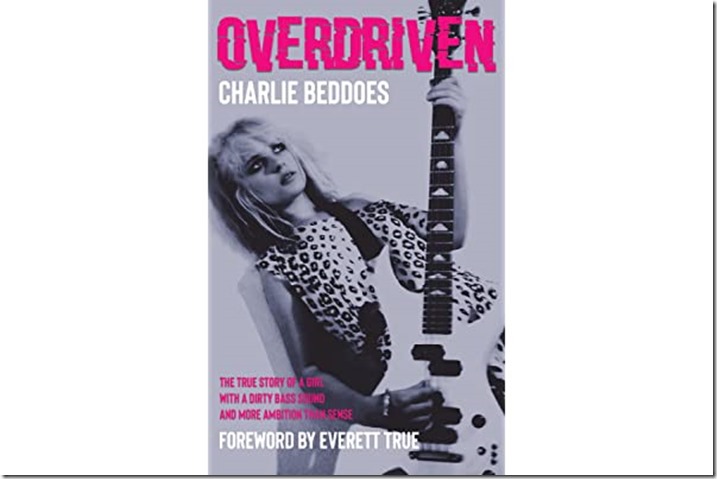
It’s perhaps fitting that after penning around seven hundred words of a review of this book, that I suffered a crash and the file corrupted irretrievably. Unlike most autobiographies, this isn’t really a ‘rise-to-fame’ or ‘rags-to-riches’ narrative, and nor is it a tale of rise-and-fall. Overdriven is more an endless succession of trips, stumbles, misses, and near hits, failures and not-quite-off-the-drawing board ideas. And so, as is the theme of the book’s narrative, in the face of adversity, you need to get up, and just plough the fuck on. Because if you don’t… no, not doing isn’t an option. You just do it, however hard it may be.

Everett True makes an unusual but valid point in his foreword, in that the ‘wrong’ people write rock history. Usually, it’s the successful ones for a start. If, indeed, they even write it themselves and don’t use a ghostwriter. Rock biographies and autobiographies invariably have an arc, but the starting point is that the subject is well-known, having achieved chart success at some point, and more often than not they have – at least at some point – been a household name. This, of course, is simply not representative of the lives of, well, pretty much every gigging musician, really, and this makes Charlie Beddoes’ book unique: Overdriven is the story of what it’s really like to be a musician slogging – and slogging, and slogging – in their quest to make it.

What even is ‘making it?’ Again, success tends to be measured conventionally in terms of units shifted and celebrity status, but that simply is not the reality for the vast majority of musicians. Success is simply being able to exist as a musician, and Overdriven really does show just how hard it is simply to achieve this, often relying on second jobs – interior design work, lecturing – during much of her career, having hauled herself up from living in squats to cruddy flats and shared accommodation.

Overdriven conveys all the crazy pace of things, and how life and relationships continue all around the ‘exciting’ ‘career’ stuff, and just how much of a maelstrom it can be. And relationships and being in bands, it seems, is often a conflict of interests, especially when the two cross over. Fucking hell, shit is messy at times in this book. But if – as I did – you often find yourself howling ‘nooooo!’ at the page, which what feels like constant acts of (albeit unintentional) self-sabotage, as the same time, what’s so striking is just how real, and how human is all is.

It’s clear, and not just from the ordered chronology of the book that Beddoes is someone who not only likes, but needs, order and organisation, yet has spent a lifetime struggling to find it amongst musicians. It’s a story packed with flaky, inconsistent and unreliable characters, not to mention the full spectrum of addicts, oddballs, and out and out psychos. But it’s also a milieu of people lost, lonely, confused, messed up, and some plain massive twats.

It’s also written in a remarkably even, matter-of-fact tone, and some of the dialogue reads rather like Kathy Acker. It’s unframed, direct, and it suits the style, because the narrative is straightforward and uncluttered. One may likely read it in one of two ways – the voice of someone level-headed and well-adjusted, or the voice of someone numbed by trauma, not least of all by her childhood years, where her mother’s mental health issues which normalised all that is not normal. Perhaps it’s a bit of both, but her recounting her childhood feels as important to the overall picture as anything in the book. Again, context counts, and joining the dots it’s clear that Charlie’s determination to make something of herself, despite spending years in squats and enduring endless shit is rooted in her childhood.

While much has been made of cult alternative band Rub Ultra, which Beddoes co-founded, Overdriven places it in context – a relatively brief period of her life, one that was defined more by struggle than any sense of accomplishment, with her having been ousted from the band prior to the release of their debut – and sole – album. What really comes to the fore is the precarity and volatility of life in a band. Charlie’s book is unstinting in its honesty in approaching the constant flashpoints which make simply getting to, and through, the next gig an heroic achievement. This isn’t just Beddoes’ take, or the story of how things were in Rub Ultra. This is representative of the expectations of so many musicians and bands. You realise that achieving any degree of success is beyond miraculous, when most bands don’t even make it as far as a gig or two, let alone recording anything. It always seems like a good idea in the moment to get together for a jam…

So many of the rock ‘n’ roll anecdotes are often brilliantly bathetic, and instead of trashing hotel rooms, we get a tale of accidentally setting off smoke alarms at a Travelodge while smoking a spliff, and Charlie turning down groupie action. The numerous potted reviews are amusing, too with her brief assessment of Idles on seeing them as an emerging band in 2012 is exemplary: ‘I don’t really get it, they are kind of post hardcore and very grumpy and they don’t look like they are having a good time’. There are some pithy observations, too: she sums up social media reactions perfectly in one sentence, observing how she could release an album to thirty likes, but post a pic of her cat hours later and receive a hundred. Yep. Books and reviews are the same. And if only likes had any correspondence to sales.

Overdriven also conveys the eternally tangled web of people on ‘the scene’ from musicians to roadies to A&R and label types, promoters and engineers. The same people crop up again and again, and occasionally they’re in bands who broke through – at least for a time.

And so the ‘peak years’ of relative comfort and security and ‘making it’ as a touring musician arrive later, not even playing her own music, and Charlie Says proves to be another near-miss failure, before her most recent vehicle, the mighty Nasty Little Lonely – which was essentially a continuation of Rock in Your Pocket, rebranded to increase the band’s appeal on the Bristol scene, and – and which ultimately sees her making the music she always wanted to, if only with a cult following and no major labels offering hods of cash – occupy only the last few chapters and the band is secondary to the turmoil of life.

It’s the last few chapters which hit the hardest. Unexpectedly, it’s Charlie’s account of her experiencing the onset of menopause that’s perhaps the most affecting part of the book, packed in near the end. For all the disappointments and deaths – a lot of people die, especially in the post-millennium years – all the years of soaring highs and crushing lows and endless rejections and dead-end auditions and all the rest, not to mention the endless conflict over not being considered ‘fit’ and wanting to be recognised for her musical abilities – and during all this time she rolled with the punches, this brings home just how life-changing it is. And it’s still not talked about nearly enough, not seen as a serious issue, even, as she writes, by younger women in the medical profession.

As much as this is an autobiography – and one well—told and well-written at that – this is a story of being a musician, with Charlie being a WOMAN in rock secondary to what really doing this is like. There are no two ways about it: Overdriven is essential for anyone with an interest in the music industry – but also for anyone who cares about life struggles and what it is to simply get through.

AA

71C5XK5u8AL._AC_UL600_SR600,400_

SN Variations – 7th May 2021

Christopher Nosnibor

Did downloading really kill physical formats and the music industry? If you believe the media and the major labels, yes, and again, when it comes to non-major artists, it’s clear that the current industry model is not one that benefits them kindly. Then again, streaming services probably did more damage than downloading – or home taping – ever did. But there is also a very definite flipside, in that the cost of producing physical releases on a small scale is phenomenally expensive on a per-unit basis, to the point that it’s often prohibitive, and that’s before one factors in issues of distribution and postage.

There’s also a matter of purpose: conventionally, singles were released to promote albums, and in order to achieve that aim, tended to be the most commercially viable song(s) from said album that radio stations (and, later, blogs and the like) may play and draw potential buyers in. But artists like Adrian Coker don’t make music that has that kind of marketability. You won’t find his music being played on commercial radio, and a single is probably likely to sell a bunch of albums.

No artist makes music for it not to be heard. And so it is that SN Variations release Adrian Corker’s ‘9 Spaces’ single as a download only, and it makes sense, particularly in context, as a musical work that was only possible via digital means, as Corker explains: ‘This piece started quite a while ago in a room with me, Chris Watson and an electro magnetic receiver made in Russia. It ended with the processing of these parts by Takuma Watanabe and a percussive improvisation by Tatsuhisa Yamamoto that left my original demo in his recording worldising my track in Japan. In between over the last year musicians such as Aisha Orazbayeva, the Ligeti Quartet and Pascal Wyse sent me parts remotely from London and various places around Europe. A track that was made in 9 spaces of which I was in 3’.

It’s in this context that the title makes sense also. And the roll-call of contributors is quite something:

Tatsuhisa Yamamoto – percussion

Takuma Watanabe – max

Chris Watson – field recordings

Aisha Orazbayeva – violin

Pascal Wyse – trombone

Ligeti Quartet:

Mandhira de Saram – violin

Patrick Dawkins – violin

Richard Jones – viola

Val Welbanks – cello

The first version, a quite punishing nine-and-a-half-minutes in duration, begins with grating drones and serrated buzzes, somewhere between an electric hair clipper and a palm-sander, before transitioning into trepidatious territory, with skittering fleeting buzzes and swarming sounds creating an unsettling tension atop a sparse, hesitant bass that stops and starts, single notes echoing and halting, And ultimately, it’s quite challenging – but to be clear, that’s no criticism. Art that isn’t challenging isn’t really art, but entertainment.

‘V2’ is subtler, quieter, stealthier, the drones trimmed, more mid-range, cleaner, manifesting as more like organ notes that quiver and quaver into space, disturbed only by the occasional extraneous disruption. As such, it’s more ambient and less upfront. It’s also everything a single should be: a snapshot of the artist, showcasing different aspects of their sound in contrasting and complimentary fashion.

AA

SN10D_art