Archive for the ‘Reviews’ Category

31st July 2026

Christopher Nosnibor

We really do seem to be experiencing a Nu-Metal renaissance right now. And of all the genres I would have put money on sinking without trace, it’s Nu-Metal, which felt like a flash-in-the-pan fad in the late 90s. The idea of crossing rap and metal wasn’t entirely new even then. Aerosmith’s collaboration with Rum DMC may have sown the seeds, but it was most definitely a meeting of rock and rap. The collaborations which featured on the Judgement Night soundtrack in 1993, however, very much brought rap and metal together, and set the precedent for what Limp Bizkit and Linkin Park would go on to do. Helmet and House of Pain? Faith No More and Boo-Yaa T.R.I.B.E.? Slayer and Ice T? These were some fierce collisions of rap and metal. This was radical. But that was 1993 – and what a time to be alive! And now it’s 2026. Thirty-three years have elapsed. Holy shit. It’s not exactly ‘nu’ anymore. Is it? Perhaps it’s time for a rebrand. And since we’ve had Post-punk and even The New Wave of New Wave, how about Nu-Nu Metal, or ‘The Nu-Metal Revival’ or ‘The Nu-Metal Renaissance’?

But while the Nu-Metal scene of the late 90s was dominated by blokes venting versions of adolescent rage (although Fred Durst was nearing 30 when Limp Bizkit released their debut album, and there always felt like a sense of arrested development hung around the genre – older guys making records for disaffected teens), the current scene is altogether more diverse, and most significantly, we’re seeing female-fronted acts like Eville breaking through and kicking arse.

Smutclub Ldn share some common ground with Eville, as is happens, with whacked-out pop autotune colliding with skull-crunching riffs. And as such, ‘Elephant’ is a brain-melting identity crisis of a single: clocking it at precisely three minutes, it’s a mental mash-up of nu-metal, emo, and pop, all brought together and heated under compression, with explosive results.

The verse riff is a gnarly, churning beast which chugs and undulates menacingly, the chorus sounds like it belongs to a completely different song, and the breaks and bridges are something else again. How do you switch between hands-in the-air anthem and brutal slam-dancing and back again, and again, in just three minutes? ‘Elephant’ is positively schizophrenic, and love it or hate it, it’s the most inventive thing you’re likely to hear in 2026.

AA

Smutclub Ldn Promo image 1

Nocturnal Rainbow Recordings – 31st July 2026

Christopher Nosnibor

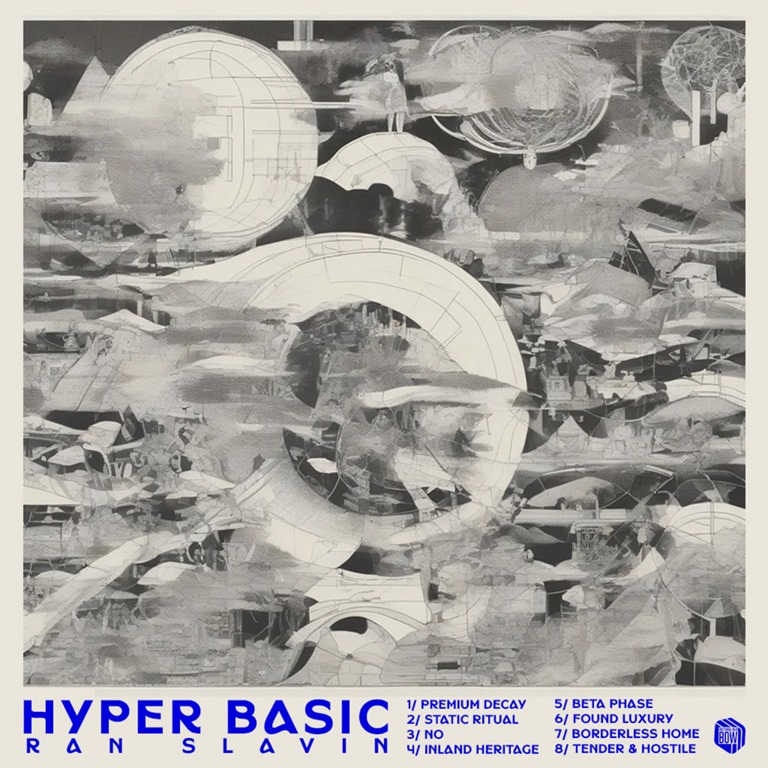
The title of Ran Slavin’s latest does, for all the world, sound like some slangy diss.

“I’m getting skibidi rizz.”

“Bruh’s hyper basic.”

“I can’t even.”

“Bruh.”

It’s been a while since I’ve penned any dialogue in a creative context, and it also transpires that it isn’t actually some slangy diss, but precisely what it is remains unclear, and the accompanying notes do little to solidify where we’re at here, focusing on informing us what the album isn’t, and what it doesn’t do, instead of shedding light on its actual objective:

‘Neither functional nor ambient, the album occupies a shifting territory where abstraction and physicality remain in constant negotiation – a deconstructed club language suspended between pressure, atmosphere, and perceptual displacement… Rather than offering release, Hyper Basic inhabits a state of suspension, where signals dissolve into beats, reduction folds into excess, and movement unfolds as much in the mind as on the floor.’

And so, from what I can discern, it doesn’t occupy any particular space, but hovers and ambulates in some ‘between’ space.

The ‘hyper’ seems to relate more to the schizoid energy which ripples through the album’s eight ridiculously hectic compositions. The first of these, bearing the title ‘Ritual Decay’ would, superficially’ suggest some snarling back metal grind, but what we get is some sparse electro groove, and ‘Static Ritual’ is infinitely more Gilles Peterson than John Peel, if you catch my drift. Still, while it may not be entirely my bag, I’d take Gilles Peterson over Jordan Peterson, or, for that matter, Gilles de Rais any day. And we shall move on.

It’s all pretty chilled, but for some reason, I personally find this kind of stuff impossibly tense. When the beats hit, it’s not that I fear bring grooved away, as much I wonder what will happen next.

This is very much a work steeped in the tropes of 90s and early 00s dance music – or, perhaps, more accurately, the sound of more underground club culture. Despite the insistent beats and vocal samples which drift in and out, Hyper Basic doesn’t even for one moment deploy the formula of the monotonous mainstream nightclub thud-thud-thud-thud. So that’s another thing it isn’t – a work of mainstream dance. Rather than glowstick territory, this is chin-stroking territory, dance music you don’t actually dance to, but reflect on, dissect, muse on the dynamics, the tones, the details of the beats, and the vibrations. The arrangements are sparse, and there’s space and separation between the beats and the low-key bass tracks.

There are moments when the introverted shuffles break out into all-out groove euphoria, as on the rushing bomp ‘n’ stop of ‘No’, which builds over the course of almost eleven minutes, but many of the tracks just flick and flutter along while whispers reverberate in the background. On ‘Beta Phase’ the beats turn harder, a thwocking metallic bin lid of a snare cuts through a woozy, rolling bass that’s dizzyingly dense and it’s anything but comfortable – although I suspect many would love it. A looped vocal snippet bobs to the surface here and there, too. ‘Found Luxury’ fires up a snarling, serrated bass which owes more to rock than dance, and it drives through a drifting wash of synths and samples amidst a rather conflict-filled semi-ambient concoction.

As with much of Ran Slavin’s work, Hyper Basic is hard to place, and just as hard to critique, largely because it doesn’t stay in one place long enough to get a handle on what’s happening. There are elements I just can’t get on board with, while accepting it’s a matter of taste, but it’s impossible to deny that Ran Slavin has a knack for bringing a unique slant to the dancier end of electronic music, and that Hyper Basic is anything but.

AA

a4168500375_10

Christopher Nosnibor

By the early 80s, the power of punk had mostly petered out. We were very much in the post-punk era, and most of the first wave of punk acts had called it a day or slunk into obscurity. And yet The Damned, whose debut, ‘New Rose’ was the first single by a British punk band, released their most commercially successful album in 1982 in the form of Strawberries, and their continued success through the 80s was largely attributable to their ongoing evolution, leaning into the gothic – and even the overtly goth – style. It was Strawberries which saw Roman Jugg join their ever-expanding family tree to contribute keyboard solos, and when Captain Sensible left the band a couple of years later, Roman stepped into the role of guitarist. So the pitch that they’re ‘playing songs from the back catalogue as they were originally meant to be performed’ might sound like quite a claim, but since the set does predominantly focus on songs from Phantasmagoria and Anything, which Jugg was involved in writing, he’s certainly got grounds. As for older songs, well he toured with the band long enough to be considered an authority.

Considering Gary Numan is playing the Peace Hall just up the road in Halifax tonight, there’s a respectable turnout, and deservedly so. The question of the impact of these large outdoor summer gigs in addition to festivals and their impact on regular gigs, particularly for those at smaller, and specifically grass roots venues may be one to debate in more detail separately, but so far this year it does feel as if the effect may be tipping towards the negative. These events seem to be as much social as musical, everyone plastering their social media with blurry pica and wobbly videos with shit audio to prove that they were there – that they’d forked out £60 to stand a mile from the stage and listen to people chat while slopping exorbitantly-priced crap lager over their own trainers. And fine, each to their own of course, but there’s no trickle-down here, and they’re not a gateway to grassroots events when people I know would often attend the small-venue gigs can’t make it because they’re either at one of these big gigs, or are tired / skint as a result of having been to one – or three. And again, is a £60 gig six times better than a £10 gig? Obviously it’s impossible to quantify, but I think it’s fair to say there’s a point at which the experience grows incrementally less enjoyable as the scale of the show increases. Somewhat ironically, The Damned, still fronted by Dave Vanian, and with Paul Gray on bass and Rat Scabies behind the kit, are playing at both The Peace Hall and Scarborough Open Air Theatre this summer, the latte as support to American rock supergroup Hollywood Vampires (Alice Coooper and Johnny Depp, with Aerosmith’s Joe Perry), which sounds nothing short of hellish. It highlights just how much the nostalgia market has changed the nature of things: I saw The Damned in the middle of the afternoon at Guilfest circa 2003, and they didn’t even sell out the 200-capacity Fibbers in York in 2005 or 2006. They were great, mind you, but felt like they were a band that worked best in a space with a low ceiling and where the front row is within spitting distance, literally.

Boggis Fringe are up first. Having risen from the ashes of dark post-punk combo Fatherfigures in 2024, following the death of their guitarist, Boggis Fringe straddle the space between old-school punks playing old-school punk, and some quite taut post-punk action. Tonight, the power trio are once again expanded to a four-piece, with the addition of Erin on second guitar, who also provides backing vocals and covers drumming duties for a few songs in the middle of the set. As we soon learn, this is because drummer Chris is still recovering from a knee injury, and isn’t yet back to strength to manage the entirety of the set. Add to the instrument swapping some guitar cut outs (pesky pedals and leads), the feel is a shade chaotic, but it in no way detracts, and if anything, makes it feel more authentically punk. Singer Doug plays like he hates his guitar even more than life itself, and gets bonus points for the most audaciously bad wordplay joke I’ve heard in a while.

DSC03483DSC03475

Boggis Fringe

I was rather underwhelmed the last time I saw Moose Knuckle in York at the back end of 2024. They felt sluggish and low-energy, and worst of all, entitled, as if they believed the audience should put in more work, despite their own apparent lack of effort. It seems I caught them on an off night. They really give it some on this hometown outing, powering through nine songs on half an hour. New song ‘Hard to Kill’, which lands mid-set, has strong hints of The Ramones. Their cover of The Prodigy’s ‘Breathe’ (mistitled on the setlist as Breath) is still the best thing in the set, mind, and of the originals, the squelchy funk rage of ‘Old Flame’ is a clear standout, although another new song, a grungy beast that’s called ‘Do It On My Own’ is a close second.

DSC03521DSC03552DSC03540

Moose Knuckle

Roman Jugg has assembled quite a band for this latest tour centered around the songs he wrote while with The Damned in the 80s, notably absorbing garage duo Dave and Fi Dukale, aka The Tuppenny Bunters (interchangeably) on drums, keyboards, and vocals. They’ve been on my radar for a while, and although this doesn’t strictly qualify as seeing them as such, it does still sort of count as a twofer. Pat MacNamara is rocking turnups worthy of Kirk Brandon and sideburns that would impress Neil Young, and does a mean bass face throughout the set. Meanwhile Roman himself and guitarist Paul Bedford keep things low-key and keep the focus on the songs, which they bang out with admirable proficiency.

DSC03600DSC03616DSC03675

Roman Jugg Band

The setlist is superb, and apart from ‘Elouise’ not featuring, is more or less a selection of my favourite Damned songs. ‘I Just Can’t be Happy Today’ drops fourth in a rammed set. ‘Edward the Bear’ goes down a storm before they’re back to plundering from Strawberries.

Dave and Fiona switch drums and keyboards for a bit, and they blast through a high-octane rendition of ‘Ignite’. Their styles are quite different, with Fiona bringing more swing and a fluid stroke that contrasts with Dave’s method, and this shift gives the set a certain dynamic. ‘Grimly Fiendish’ – probably the first song by The Damned I heard growing up still sounds ace – as if The Kinks had penned a cabaret goth tune. Dark but poppy and great fun. As the set moves into its final stages around the hour mark, they kick it up a couple of gears and raid the early singles for blistering takes on ‘Smash it Up’ and ‘Neat Neat Neat’. There’s barely a minute’s pause, during which only half the band actually vacate the stage before they encore with a hundred-mile-an hour ‘New Rose’ which delivers a final injection of adrenaline for the night.

Sod your social media ‘I was there’ big-names-in-massive-venues shows: this is still, and will forever be, what live music is really about.

3rd July 2026

Christopher Nosnibor

For so, so long, the UK music industry was so London-centric that it actually hurt. The music press would flock to all the regular London haunts within spitting distance of their offices and declare that they’d just witnessed the next big thing. often, it became a self-fulfilling prophecy, because said bands found themselves in the national press, but because London is so huge, they rarely needed to venture beyond the M25. There were moments in time when cities in the North spawned scenes which were simply impossible to ignore – Manchester in the late 70s and again in he 90s, Sheffield in the 80s, and Leeds, also in the 80s – as much as the press tried to look the other way there. But over the last fifteen years or so, Leeds has consistently birthed acts of a remarkable quality.

It’s true that, living in York, I may be prone to a certain Leeds bias of the kind which tinged the London-based press historically, but I still have to travel to the next county to see shows in Leeds, which requires both time, effort, and expenditure. In short, the quality has to be there to motivate me to go. But more to the point, this is not a matter of settling for what’s accessible. In the late 80s and early 90s, I yearned to live in London because it seemed that’s where I needed to be to discover the most happening music. This is not the case anymore: the Leeds scene is positively foaming with exciting acts, more than I can even keep pace with.

During this time of new band emerging on a weekly basis, Kath and the Kicks have been beavering away, building a following through a steady live schedule and a flow of exhilarating releases, the latest of which is ‘Sleep’.

Pitched as being for fans of Skunk Anansie, Siouxsie Sioux, Muse, Guano Apes, No Doubt, and The Runaways, ‘Sleep’ brings together slugging grunge riffery and doomy / goth vocals with a subtle pop edge – that is to say, amidst the ethereality and posed drama, there’s a melodic accessibility. Here, they bring the kind of guitar-driven heft, blended with soaring melody, that invites comparisons to heavier contemporary acts like Cwfen (and given that Sorrows was one of my top albums of 2025, that’s no small compliment).

Their name may carry connotations of a middling, middle-aged pub-rock band, but Kath & The Kicks bring full-throttle power, and properly kick arse with gutsy guitars and a distinctive dynamism, and with ‘Sleep’ they bring it all together into a densely-packed guitar-driven blast. Top drawer.

AA

Kath & The Kicks Promo shot 2

Room40 – 7th August 2026

Christopher Nosnibor

Lawrence English is an artist who invariably creates works imbued with insight and purpose, with concept and theoretical grounding in the contemplative, academic sense. I had the good fortune to interview him by email some years ago, which proved to be not only illuminating, but exhilarating on a personal level when he wrote insightfully and knowledgeably of William S. Burroughs and the cut-up technique. I very much get the impression he spends as much time considering his work as he does creating it, in the physical sense.

That interview, sadly, is long gone, along with the site which published it. This is true of many interviews, reviews, and indeed, works of fiction which I had published online through the years, and I’m not sure they exist on hard drives anymore either so far down the line. Back in the late 90s and early 00s, we were sold the dream that The Internet would be the archive of everything. The idea went that if it existed, however niche, you could find it online, and this was essentially the precis for Warren Ellis’ 2007 novel Crooked Little Vein. This was also the time of MySpace and what felt like a new world, full of potential. And then the corporations took over and it all turned to shit. I daresay others have a different perspective, but this is mine. And of course, Ellis turned out to be another sleazy male shitbag and overnight saw his outstanding career sunk by his own actions. But I miss those days when the Internet was exciting, anarchic, and not dominated by AI and bots or riven with social and political engineering and so on.

And this is where we arrive at The Rest Is My Ghost, and Lawrence’s notes on the album:

‘Nostalgia is not an ideology, though in this moment, we could be mistaken for thinking it might be just that. Over the past years, the idea of nostalgia has been filtered through various political and technological lenses and has become a tool used for forgetting, rather than remembering. Instead of embracing histories’ complexities and inconsistencies, this version of nostalgia seeks only singular recollection. This contemporary phenomenon of nostalgia has become a methodology at best, and a weapon at worst, used to erode the past and project forward a collapsed and unimaginably sanitised version of things, places, and ways of being from former times. It’s this projection that sees it playing a mounting role in a social pathology associated with reducing the imagined possibilities of future.

‘The Rest Is My Ghost is a record that interrogates the manifestations of this reductive futuring and celebrates those that have tried (and failed), and those who continue to push back against decayed and revisionist positions. It’s a record that considers the weaponisation of nostalgia for the purposes of cloaking possible futures.’

These observations are on point. The far-right parties in the UK – in particular Reform and its adherents are largely basing their campaigns on nostalgia. But not even real nostalgia. They hark back go a golden age that never was with dewy-eyed yearning for a completely glossed reimagining of the 1950s, whereby kids cycled to school down cobbled streets, and bidding the milkman, who is whistling cheerily, a good morning, and dad does off to work in his tweed tie while mum goes to the village store and buys freshly baked bread and eggs laid on the local farm. And NONE OF THIS HAPPENED. This is probably why the Facebook pages in support of Nigel Farage and espousing this worldview are bursting with bollocks AI mages of London busses and phone boxes and cardboard cutout people.

We still had rationing until 1954, some nine years after the second world war ended – although by this time, we were living in the grip of the Cold War and fear of nuclear annihilation. A golden age indeed.

On The Rest Is My Ghost, Lawrence English conjures many rich, immersive atmospheres, many of which evoke nostalgic echoes of myriad shades. ‘大’ opens the album with a crashing gong and eerie wraiths and swirling eddies of sound which slowly give way to tectonic crashes and earth-shattering bursts of sound which connote a collapse of civilisation, and, indeed, the planet. It’s heavy, and it’s hard to breathe while surrounded by this rib-crushing, oxygen-bereft swirl of sound.

As much as ‘Acid Nostalgia’ makes an obvious nod to a particular moment in time, there is both humour and serious comment to be unravelled here. It’s something I noticed in my thirties: peers would bemoan how there had been no decent music released since they were twenty-one or so. This was patently untrue: what they were actually saying is that they switched off after they left college or university and got jobs, started families, and disengaged. Their rave days, their festival days, were their life pinnacle. They associated these experiences of their youth with freedom and a lack of responsibility, and found themselves unable to separate their ageing and becoming entrenched in adulthood, the 9-5 and all that shit, with the times themselves.

There’s no escaping or denying that things have a unique buzz when they’re new, and in your teens the senses are heightened, and you can spend the rest of your life failing to recapture that initial rush. But some of these sad fucks… it’s like their lives ended at eighteen or so, and by the time they hit thirty they’re embittered.

Echoes and layers and dark ambient forced define The Rest Is My Ghost. ‘Sodium Vapour Halo’ (remember when street lights weren’t white LEDs? Remember the sodium haze?) presents a howling wall of sound, a sound that screams anxiety, that swirls all around and grips your very being and shakes it. Ah, ‘Aerial Cable’… it’s a subtler, but no less wry commentary which stands alongside South Park’s ‘Member Berries’ episode. Nostalgia is big business, but one which very much traps people into an idealised misremembrance of the past – and keep them buying anniversary reissues of the albums they had on tape or whatever when they were in school.

By the time we arrive at ‘Hack’, we find ourselves worn out and exhausted as we trudge through drifting sand dunes of sound.

The Rest Is My Ghost is not a representation of the all-pervasive nostalgia trip that keeps the people docile – or angry, as they rage about wanting their country back, idealising a time before immigrants took over (which would, of course, predate the Roman Empire). As English positions it, it’s an interrogation – and in intense one, which responds to the ugly side of the wave of nostalgia which is sweeping through contemporary culture. It also feels like a response, and one which doesn’t shy from confrontation. While so much of this nostalgia appears to stem not so much from a love of the part but a fear of the future, so The Rest Is My Ghost encapsulates a certain sense of anxiety over the prospect that we fail to make progress in a meaningful and constructive way. This is a dark album for dark times. Without words, The Rest Is My Ghost not only conveys so much, but provokes so much thought and speaks on so many levels, making it an essential work.

AA
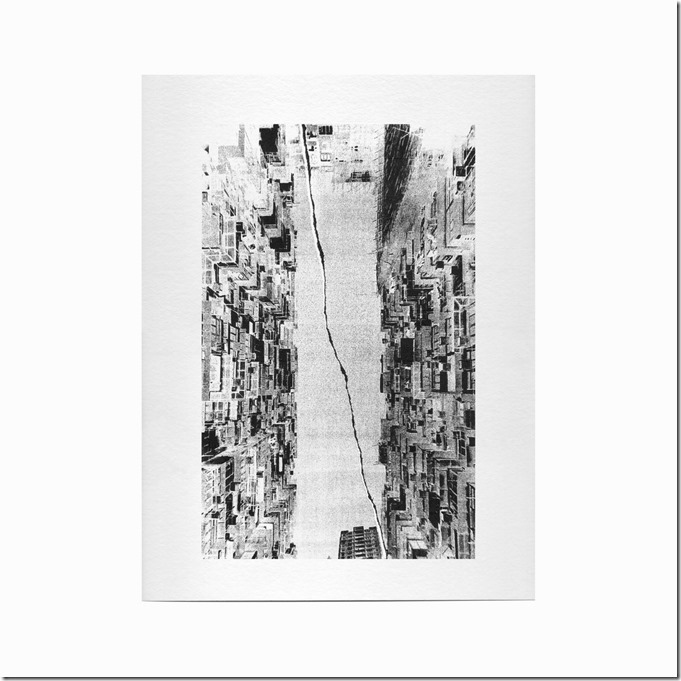
a0359375143_10

Christopher Nosnibor

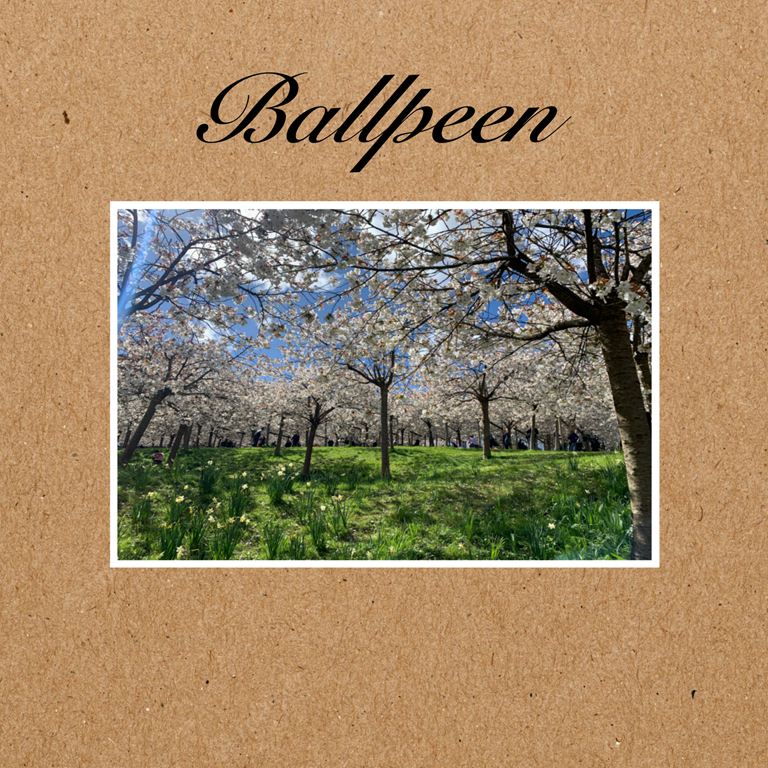
Just over six years ago, one of my favourite labels, Cruel Nature Records, released Pachinko, the third EP / mini-album from Newcastle noisemongers Ballpeen – a band appropriately named, given their capacity to hammer home heavyweight riffs with bludgeoning brutality. With noise rock, grunge, and hardcore punk all in the mix Pachinko was rabid, raw, primitive, recorded, not produced.

2020 was a productive year for them, with the release of two live recordings and a split EP, and 2021 saw the stop-gap EP Bunch of Sevens, which featured material recorded in 2017 at the same time as their debut release. And then, silence. It transpires that they sadly called it a day some time after this. They’re not the first band to abort before the release of their debut album by any means, but the shock news is that they actually recorded an album which then got ditched.

But now here it is. Ballpeen are no more, but finally, there is closure in the delivery of the lost album, What You Need, What You Deserve. And it’s a beast. Thirteen songs packed into thirty-seven minutes. That’s an average of approximately 2.8 minutes apiece. And into these compressed timescales, they pack in so much energy, so much explosive riffery, and so much… just so much.

The first single, released in May, is also the first track on the album, and from ‘Modern Life is Hell’, it’s immediately apparent just how much they’d evolved from previous releases. It’s by no means polished or pop, but the sound is crisper, denser, the songwriting more sophisticated, a solid hook snaring the listener early, with a sound and style which warrants comparisons with Hawk Eyes, who are also now sadly missed. And the sentiment probably resonates more powerfully now than when it was recorded. How times have changed – and not for the better. We thought the pandemic was hell – because it was. But little could we have anticipated what was to come.

What follows is nothing short of a gut-busting guitar-driven blast. ‘Unit Three’ amalgamates the steely nihilism and sinewy strain of Kowloon Walled City with a thick bass-driven grunge heft. There are some neat descending bass runs in the second half of the song which remind me of something else, but we’re into the squalling wall of feedback that drives ‘Poverty of Ambition; before my brain has remotely got itself into gear. But ballpeen are very much in gear: there’s no mid-album slump, no breath-catching ballad here. Instead of slowing the pace, they crank up the distortion and stoke up the rage.

The bass on the intro to ‘Engram Theory’ is nothing short of rib-rattling, a chunky, clunky, bruising assault of pure density, reminiscent of Shellac, for sure, but closer to that of Blacklisters with their original bassist – which is a fair comparison for the song as a whole, really, and it provides a welcome reminder of just how the North of England has been so strong in its generation of noisy bands over the last fifteen ears or so. Seattle and Chicago have the longstanding reputation for their scenes, but we’re looking back to the late eighties and early nineties for their heydays: more recently, Leeds and Newcastle have proven to be the crucial hotspots, and Ballpeen’s contribution is strong. The belated arrival of What You Need, What You Deserve only cements this view.

Second advance single, ‘Ukiah’ is yet another fiery onslaught, and compels one to consider what might have been. It’s true that such speculation is futile, and instead of mourning, we should be grateful, and the juddering riff of ‘Crossing Waters’ provides every reason to be grateful. It hits so hard, it makes you sweat. There isn’t a weak moment on What You Need, What You Deserve. In fact, there’s barely a moment to catch breath. It’s intense, alright.

There can be little doubt that it’s best to quit while you’re on top, kill things while you’re at the peak of your game (Nirvana perhaps took that a bit too literally, but Big Black are a fine example of a band who left a concise but unsullied legacy). And to the list, we can now add Ballpeen, a band who demonstrably saved their best for last.

What You Need, What You Deserve needs to be heard. It’s all killer and no filler, and more – and it doesn’t just go all the way to eleven: it starts at eleven and works its way up over its skull-cracking thirty-seven minutes. It’s the good shit alright, hitting with enough force as to dislodge your fillings.

This must surely be their legacy.

AA

cover

22nd July 2026

Christopher Nosnibor

‘At Last, I Found You’ arrives as a standalone single to bookend the releases from their album, F.I.V.E. (Fear Increases Violent Emotions), released in January, ahead of a two-month tour of Europe, including some UK venues that are some way off the beaten track (which is a bummer for those on the regular circuit stop-offs, but a boon for those in neglected places like Whitchurch and Morecambe. The song was written during the F.I.V.E. sessions but intentionally held back until listeners had time to fully absorb the album, before emerging as its final companion piece, and it says something of the standard of material – as well as the level of confidence in said material – when a band are comfortable leaving what they know to be one of their strongest cuts off the main release.

But, as guitarist and bandleader Fabrizio Giampietro explains, “‘At Last, I Found You’ was always the most immediate and instinctive song we wrote during the F.I.V.E. sessions. We deliberately left it off the album because we wanted listeners to experience that record’s emotional arc without this song becoming its centre of gravity. Six months later, it

felt like the right moment to finally share it.” There’s a logic to this: so many albums are dominated by THE single, and in the age of streaming, where people tend to play tracks rather than albums (apparently – I personally shun streaming as a medium, and make a point of listening to vinyl and CD albums in full, from end to end, both when reviewing and also while cooking) it’s a decent strategy to encourage – by any means – listeners to focus on the body of work that is the album, over individual tracks.

‘At Last, I Found You’ is an obvious single cut, being a classic slice of dark synth pop with a distinctly European feel, and in drawing comparisons with early A-Ha I’m paying a strong compliment (I will forever maintain that the darker currents in their music are severely underappreciated, and songs like ‘I’ve Been Losing You’ and ‘Manhattan Skyline’ have ben wrongly eclipsed by ‘Take On Me’, because the Internet and compilation album compilers have a tendency to reduce acts with many, many hits down to one song to be endlessly repeated… don’t believe me? Duran Duran’s ‘The Reflex’ spent six weeks at number one in the UK, but you could be forgiven for thinking that ‘Rio’ was their only hit, and likewise that The Cult only had ‘She Sells Sanctuary’ as a charting single. We can learn from this just how history gets twisted, not primarily by the dissemination of false information, but by omission. Of course, I’ve digressed – that’s what I do, and I also strongly believe that the narrative of real life isn’t to be found in the main thread, but in the digressions. It’s not about the career or the landmark events, it’s about the weird detours and the dirt that falls between the cracks along the way, the stuff you don’t even notice while you’re looking at the next thing, the goals.

‘At Last, I Found You’ is dark but positive: Massimo Ciampani’s baritone vocal  leaps upwards for the soaring choruses. An insistent beat and throbbing bass drive the song, which draws together elements of 80s synth pop, 90s goth and contemporary darkwave with a crisp precision.

What goes around certainly comes around: Christine Plays Viola formed in 2008, which was certainly a lull time for the popularity of goth and adjacent music. The present is another world, not just with heritage bands like Corpus Delicti and Red Lorry Yellow Lorry and The March Violets releasing new material and / or touring, but new acts like Mouth Ulcers and Just Mustard bursting onto the scene. These are exciting times, and ‘At Last, I Found You’ is an exciting release. And while I rarely give advice, I would strongly recommend checking out the album.

AA

AA

Progetto senza titolo - 1

Christopher Nosnibor

Did I ever mention how much I fucking hate ABBA? No? Well, I really, really fucking hate ABBA, and pretty much all covers of ABBA songs too, with the exception of The Sisters of Mercy’s cover of ‘Gimme Gimme Gimme’ which made the set a few times in 1984 just after Wayne Hussey joined. To provide a measure of just how much I fucking hate ABBA, just after university, my then girlfriend and I got a flat, and took her best mate on as a lodger. She loved ABBA. So much so that ABBA Gold was pretty much, the only CD she owned. And she played it all the time. That’s no exaggeration. We’re talking legitimate grounds for eviction or even murder here. So when I upgraded my stereo, instead of selling the old one – which would have fetched a good hundred and fifty quid, which was some wedge back in ’98 – I gave it to her for her room on the proviso that she would never play ABBA in the living room ever again. The rationale for this anecdote will make sense later on.

Meanwhile, when I took this gig on, I hadn’t appreciated that the band I was here for – Dismiss – were only the support, and it blows my mind that a band with some kind of following, however moderate here, would come from Greece to support a local covers band in York. We’ll come back to this presently, too.

My introduction to Too Late for Gods was a pub gig on the other side of town, and my reaction was very much mixed. So, seeing them on a proper stage, through a full PA, and without the element of surprise means I’m in a better position to properly assess their skills.

Their first song is a straight up post-hardcore metal rager, the five-string bass bringing significant depth and power. It’s the grunge leanings which shine through during the next couple of songs, and it’s very soon apparent what a difference a decent mix can make to how songs come across. There are some meh punk pop / emo cuts mid-set, but they’re performed with guts and gusto, which carries them. Their drummer is a solid asset, too, a strong player with a big personality, bringing dynamics and showmanship, and very much driving the band. The penultimate song of the set has a hint of Placebo and a strong hook. They look comfortable in this setting, and give the impression that they would deliver in significantly larger venues, too.

DSC03140DSC03172

Too Late for Gods

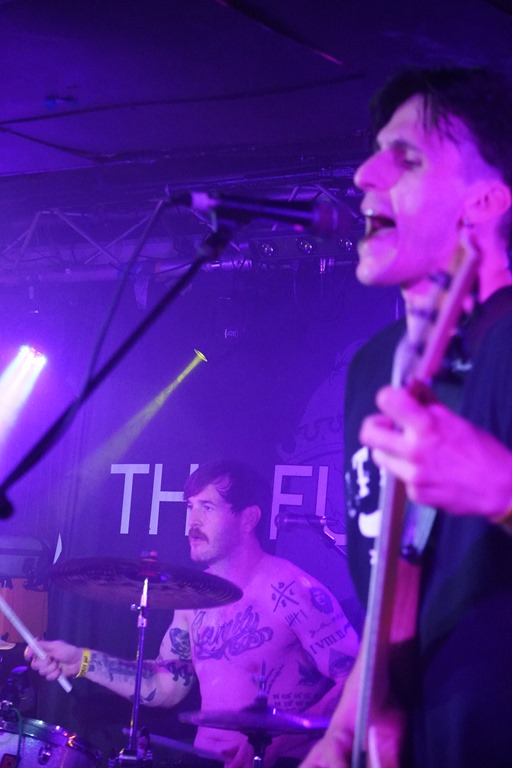
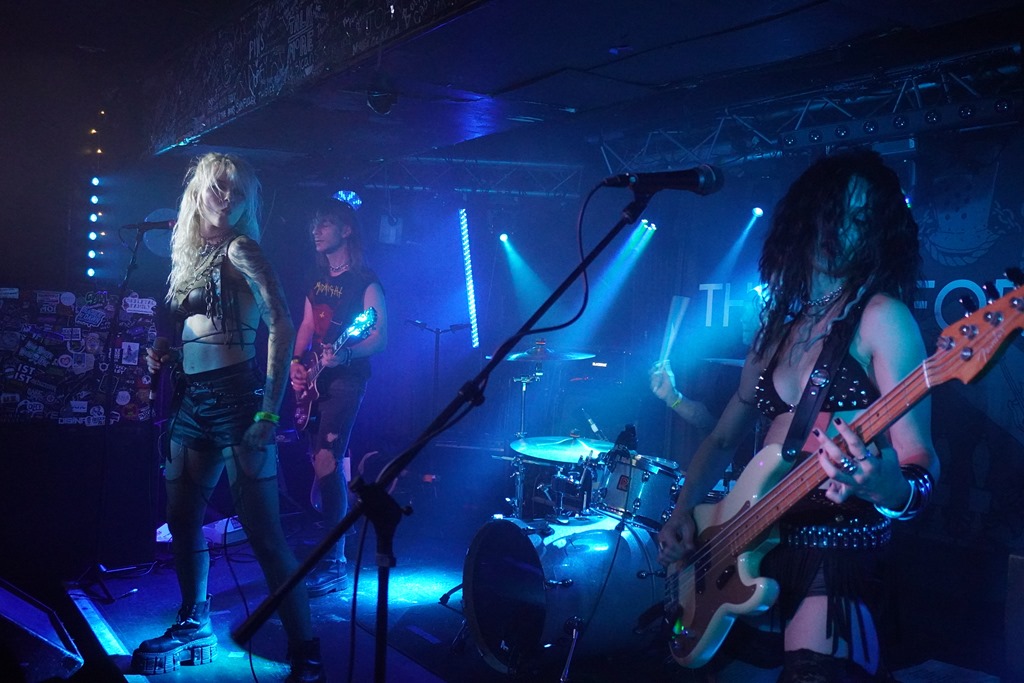
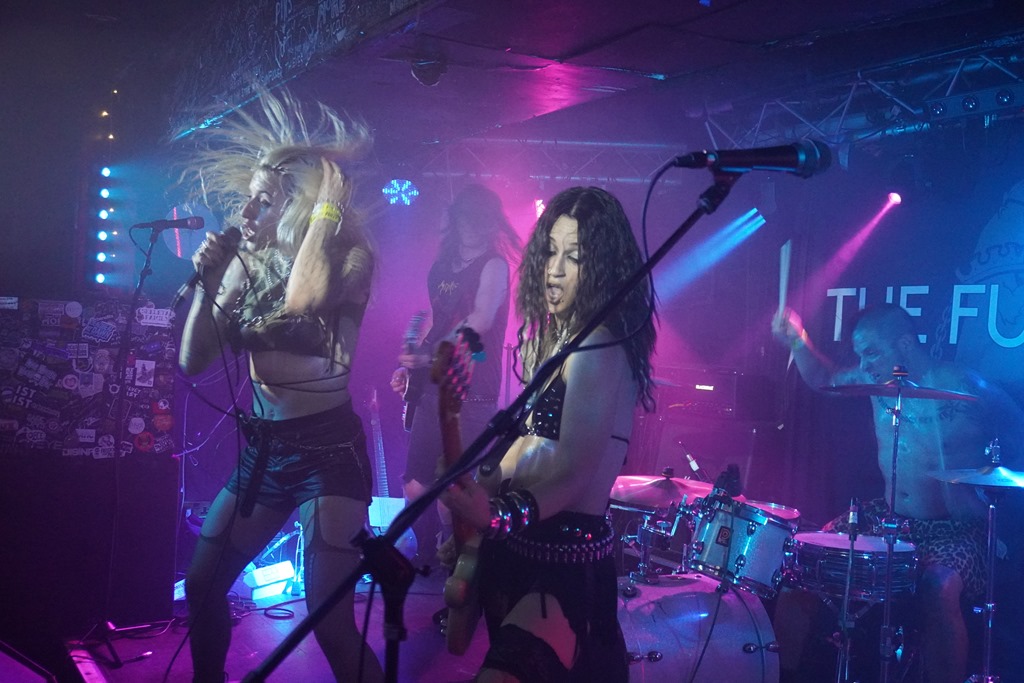
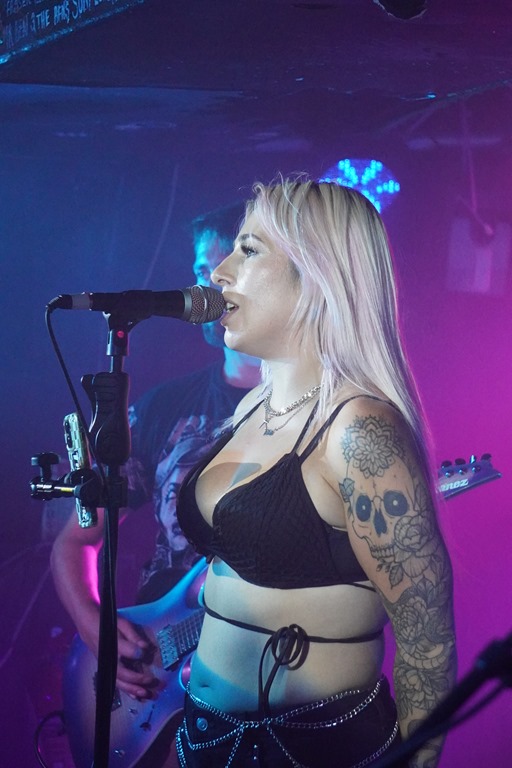
I’m here for Dismiss, and woah! They are all the energy straight out of the traps. My notes are scant: I’m too busy trying to catch my breath. They play hard rock with a punk edge, and they bring the fire, and what’s more, they’re absolutely relentless, powering through fifteen original songs in forty minutes (the setlist indicates that they dropped two from the planned set, too), but it feels like about twenty whiplash-inducing minutes, as they the songs back-to-back. Their singer is a blur of peroxide, the bassist is a spike-studded energy blast, and they make a strong case for the prosecution in the case that women rock harder than men. And if we’re doing touchstones and references, Lita Ford and The Plasmatics and Amyl and the Sniffers are where we’re at. They absolutely fucking slay. You wouldn’t want to go on after them, especially as, judging by the T-shirts on display, a good number of the punters are here for them. And deservedly. They absolutely play their arses off and are nothing short of phenomenal. Not only band of the night, but one of the highlights of the year to date.

DSC03218DSC03222DSC03265DSC03288

Dismiss

But suddenly, just as Pop Goes Metal take to the stage, the place is rammed from the front to the back. I guess this is telling. Do we talk about covers bands? Should we contemplate guilty pleasures? I wrote about covers bands just the other night – but can’t help but feel differently about covers bands playing village pubs as background, and covers bands playing ‘proper’ venues and headlining over bands playing sets of original material. Like Natalie Imbruglia, I’m torn. It’s great that people are coming out to small venues and supporting live music. But…

I’ve personally never been embarrassed by my appreciation of pop tunes, and I don’t just mean the 80s stuff I grew up with, like Duran Duran and A-Ha. A good tune is a good tune, irrespective of genre. As such, I’m personally comfortable with the fact that Pop Goes Metal start strong with a thunking Nu-metal take on Katy Perry’s ‘I Kissed A Girl’. However, am I comfortable with the principle of what is, in essence, a novelty covers act? While perhaps not as corny as, say, Elvana or Tragedy (the metal Bee gees tribute), they certainly sit within that bracket.

Objectively, Pop Goes Metal do a great job of delivering what they pitch. They bring a brace of chunky guitars melded to a chunky rhythm section, and Emz gives us gutsy vocals, with rasp and power. Britney’s ‘Toxic’ is a solid choice at the front end of the set and works over the more obvious choice of Britney tunes in terms of their sonic and stylistic range. The Dua Lipa and Billie Eilish songs are beyond my ken, but they go down well.

New addition to the set, ‘Umbrella’ is only so-so, and while Emz reads the lyrics from her phone, the song slides into an extended fretwanking solo. Their interpretation of Mark Ronson’s ‘Uptown Funk’ sounds too much like ‘Free Range’ by The Fall crossed with ‘Black Betty’ to be entirely successful, and while ‘Let Me Entertain You’ benefits from a huge chugging break, it’s still a shit song. ‘Toca’s Miracle’ translates from a dance-pop banger to a thunderous disco metal banger, and it would be curmudgeonly not to acknowledge a job well done there.

DSC03365DSC03413DSC03427

Pop Goes Metal

The audience is particularly hyped and vocal, and increasingly so as the night progresses. Emz’s voice starts to go with five songs to go, and by the end she can barely croak between songs, but still belts ‘em out full lungs. ‘Shake it Off’ not only proves I’ve never knowingly heard a song by Taylor Swift, but that perhaps I’m not entirely the target demographic. ‘Sk8er Boi’ comes in pretty much untouched, and Anastacia’s ‘Left Outside Alone’ is a strong tune that it would be hard to go wrong with, and credit where it’s due, they do it justice. And then it’s onto ending on ‘Mama Mia’… just no. No no no no. They’ve crossed the line.

Christopher Nosnibor

In keeping with my (recent) policy of never not writing about a live act I see, I find myself presenting some diaristic notes from my break from reviewing. The plan had been to avoid emails, the Internet, people, and pretty much everything by escaping to Alnmouth for four nights. Historically, I’ve used such holidays as an opportunity to concentrate on some of my fiction or other writing, but instead, I decide to walk and read and decompress for a while. And if this reads more like an extract from my diary than an actual review, that’s because, ultimately, it is. The review element is but a prelude to a ponderance, you might say.

For context, last week marked three and half years since the death of my wife, and some proper time out with our daughter, now 14, and just broken up for the summer holidays, was what was needed. Much as I depend on my routine to an extent – which involves chipping out a review of between 600 and 1,000 words a night, when not out watching bands, it’s certainly work. And you know what they say about work… Well, they say a lot, very little of which is positive. And while we’re here, this isn’t so much a review, as a review as a pretext for an essay of reflection and contemplation.

Alnmouth, while pretty sleepy, is home to no fewer than four pubs / hotels with public bars, and having just last week written about how I’d been missing bands in bars, and having clocked the The Red Lion was hosting a live band on Friday night, decided I should pop down for a last pint or two before the train home on Saturday morning. I expected a naff covers band, and while Millennium Bug are very much a covers band, they weren’t naff. They could certainly play, at least. And their choice of songs was not the obvious.

It must be hard for musicians wanting to play round here. Newcastle has a vibrant scene with an abundance of metal and noise and all sorts, but it’s a different world out here on the coast in a small village that’s a low-key tourist destination, primarily for retirees. You’re not going to get going with a metal band here.

When I set out with Aural Aggravation, the rubric was pretty explicit: music as far from the mainstream as you could possibly get. So why am I now documenting a covers band in a pub? The musical landscape has changed in the last decade, and my focus on the grass roots has developed over this time as things have got more challenging, particularly post-COVID. And I’d contend that you can’t get much further from the mainstream than this.

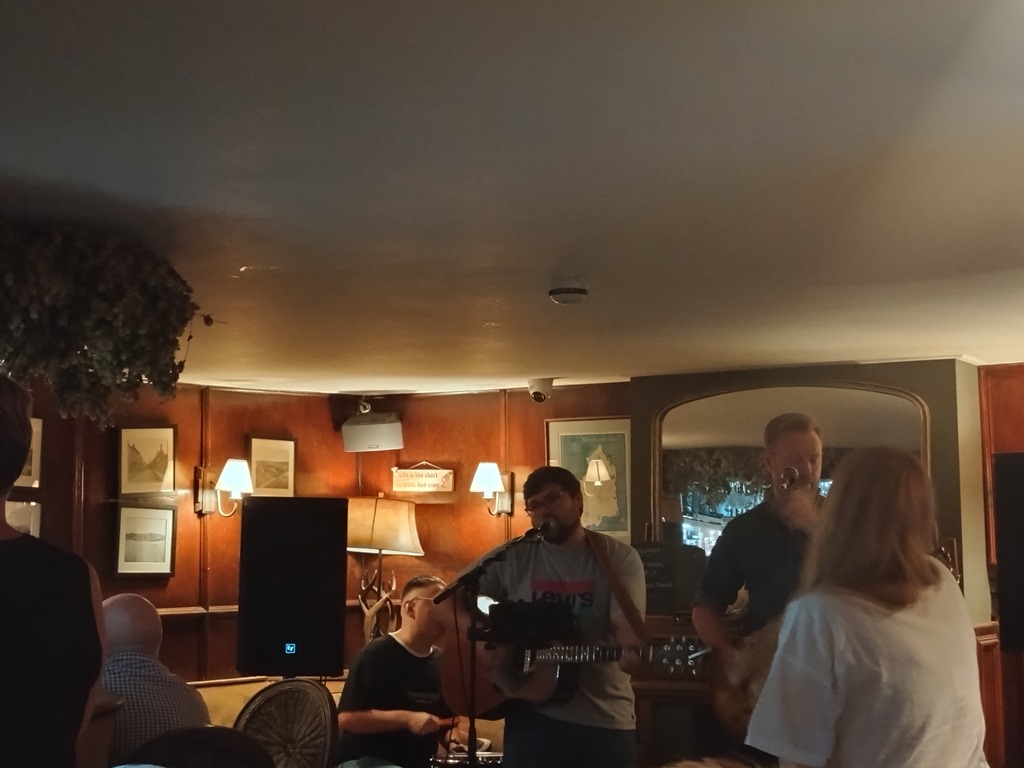
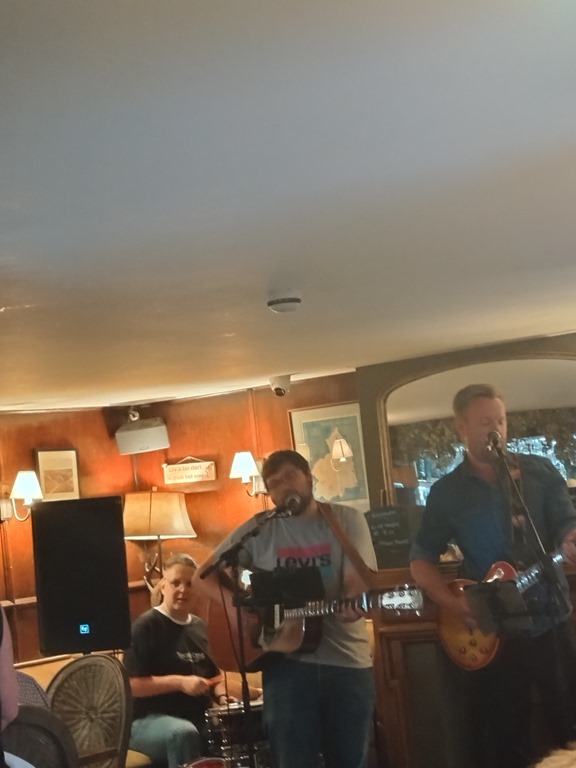
They’re playing ‘When You Say Nothing At All’ off the bat – as they say. It’s a shit cliché. Most cliché are, though. They forewarn that their set will consist of ‘cheesy nineties and noughties pop songs’, and they’re not kidding. The trio, consisting of acoustic guitar, bass, and minimal drum kit make their way through ‘I Want it That Way’ which I’ve always jokingly said was a song about anal sex, but, on reflection, may be about pegging, and ‘I Miss You’ by Lisa Loeb. They perform a pretty spirited and harmony-laden rendition of ‘Torn’, a passable take on ‘Unwritten’, and a killer version of ‘Genie in a Bottle’ follow. Cher’s ‘Life After Love’ actually sounds better as an acoustic song without the autotune.

20260724_21065520260724_204036

So what’s the thrust here? They’re three forty-something guys playing a local village pub against a barrage of chatter. The applause starts off strong, but diminishes after about three songs as the punters lose interest and the music falls to background. It’s nothing like the volume of talk when I saw BRMC in Leeds last December, but it’s a tough gig. And yet they take it in their stride. No strops, no huffs. It’s simply the gig. And while many musicians aspire to supposedly greater things, they’re clearly enjoying doing this – and when it’s so easy to give up doing anything outside dayjob and family life and whatever, this is certainly better than that.

It’s easy to denigrate this level of the music scene, a level which exists outside of the industry. But I’d put this above tribute acts. They’re not pretending to be another band or cashing in on another name, and in many respects, this kind of live music is foundational. The first gigs I ever saw, when I was probably thirteen or so, were covers bands playing in pubs in Lincoln.

Ultimately, I have no real point, no angle, beyond this being a slice of life, and that it’s good to hear live music in even the most rural of settings.

23rd July 2026

Christopher Nosnibor

With Amps Kill’s Avulse EP, we’re in dark ambient territory here, with the emphasis on the dark, at least sonically. In terms of intent and narrative arc, it’s a little more nuanced in hue.

As the accompanying notes outline, ‘Without lyrics, Avulse guides the listener through a story. The track titles on the EP provide some context to the emotional inspiration behind the music… Avulse explores the idea of removing aspects of the self or of one’s life that are holding one back from growing and moving forward just as lizards, spiders, and insects need to shed their skin to grow. It’s a process that is often quite painful but always for the better. That pain is the core of Avulse’.

The EP’s title certainly makes sense in this context, the dictionary definition being ‘to pull or tear something away, especially a part of the body as a result of an accident or surgery’. And so it is that Amps Kill delivers something of a performative purging over the course of the EP’s five compositions.

As is the method when it comes to EP releases in recent years, the four of the five tracks on Avulse have been released individually as singles. I’m still not entirely clear on the wisdom of this approach to promotion: there’s building interest through advance singles, and then there’s emptying the tank. But then I spent a long time being accustomed to one or two singles in advance of an album’s release, and one or two more after to maintain its profile and to extend its trailing sales. Now, everything is up-front – a consequence surely being that anticipation for an EP is diminished because there’s less – if any – new material to look forward to. But I’m 50 and came to music in an era of physical releases and singles chart shows on the TV and radio, and I’m clearly get to grasp the benefits of the new way.

The first four tracks, all released as singles do, it has to be said, work better in succession than as standalone pieces. ‘Slough’, landing with a dense, hard, serrated-edged billow of noise that crashes in like a tidal wave, is heavy and oppressive. There are softer sounds beneath, but overall, it forges a thick, oppressive atmosphere, and ‘Chronophage’ plunges deeper. The title references the Corpus Clock, also known as the Grasshopper Clock, outside the library of Corpus Christi College, Cambridge, a clock with no hands or numerals and guarded by a metal grasshopper or locust. Amidst scrapes and hums of feedback, electronic insectoid skitterings create texture on the track, creating a scratchy, uncomfortable tension, and ‘Husk’ brings more heavy, sonorous drones and cracking distortion at the edges of dense surges of sound. It’s not entirely ambient, as there are thick, booming beats which land like detonations, and the atmosphere is tense, akin to the sound of low-flying planes and crashes and splashes like shattering metal rupture all about. It’s pretty intense, and comfortable it is not.

AA

‘Basilisk’ brings more of the same, in essence, but the thunderous beats are brought to the fore, amidst the flutter of flapping, like the sound of a thousand bats fleeing a bottomless cave. And so there is a clear sense of progression here: dark ambience transitions to throbbing industrial – in the more traditional sense, tracing a lineage to Throbbing Gristle, Coil.

Arriving at the last piece, the only one previously unreleased, there is a significant shift in tone. As Amps Kill intimates, “‘Des Pas Sur Les Cendres’ completes the idea of the group and ties all of them together. That track takes all of its musical thematic material from a piano work by Claude Debussy called ‘Des pas sur la neige’ and expands or explores it’. It sure as hell doesn’t sound like Debussy, but it very much does feel like a composition which brings the EP to a fitting close – altogether more subdued, softer, more delicate, it’s five and a half minutes of mellow ambience, albeit with a few serrated edges – which, while dark, hints at some vague sense of hope, and the sense that once the avulsion is complete, there is the potential to grow anew.

AA

cac66c20-f0a6-aedb-5332-831a15a73619