Posts Tagged ‘Expansive’

Mortality Tables – 14th August 2026

Christopher Nosnibor

Ordinarily, I tend to pave the way to grappling with a release with some form of discursive preamble, but here, I feel it would detract from the work itself. Instead, I present the context for Metanoia: Music From Therapy directly from the accompanying notes, and without comment:

The first spark for Metanoia came from a simple plan to meet for a drink after a gig. Peter Fitzpatrick (Circuit3) and Mat Smith from the Mortality Tables imprint ended up talking about trauma, therapy, and the parts of ourselves we usually keep out of sight. That conversation led to a small, recorded experiment. From there the music began to take form, guided by fragments pulled from their notebooks.

Metanoia grew out of therapy and the slow process of letting difficult truths surface. Instead of singing those words, Fitzpatrick shaped them through analogue machines. The title refers to the deep shift that can follow self-reflection: a break, a reset, a way of living with more honesty.

A defining moment in the project was the opportunity to work with Vince Clarke, a long‑standing influence on Fitzpatrick’s music. They created an eleven-minute piece titled ‘The Hope’, named after the bar near Farringdon, London where that first conversation between Fitzpatrick and Smith happened. The collaboration feels like a dialogue across time: the artist Fitzpatrick once was, the one he is now, and the one emerging through this process.

Metanoia is not a linear or predictable account of trauma, breakdown, and recovery. Instead, it moves through a series of moments and memories that surfaced during therapy.

Vince Clarke crops up with remarkable frequency around Mortality Tables artists and releases, and his presence proves to be a positive one. There’s nothing here, or on other releases, which directly hints at Clarke’s celebrated electropop career

‘Cracked Eyes’ offers minimal, dulcimer-like tones, the notes fuzzy around the edges, as the backdrop to a skipping, fractured vocal loop which resembles to some extent one of William Burroughs’ tape experiments, the phrase, or phrases – muttered, mumbled – reverberates in fragments, overlapping, cutting in and out while played at different speeds, to quite unsettling effect.

A number of the pieces – in particular ‘Mood’, and ‘Where Are We Going?’ are comparatively brief interludes, and some of the instrumentals, such as ‘Imperfect’ are very much in the vein of Tangerine Dream or Mike Oldfield, built around sift, rippling notes and textured drones – flowing sounds of tranquillity, which don’t immediately evoke trauma or anguish. But of course, trauma and anguish aren’t necessarily endless stricken screaming, and therapy – the key to unlocking this album – can, for many, bring moments of peace and clarity amidst the painful psychological excavations.

‘Burnout’, on the other hand, it tense, the sound of a palpating heartbeat and panting breaths, albeit against an overtly uplifting electronic backdrop. This is something I personally find more relatable in some sense, and I suppose this is the leading point to observe when it comes to Metanoia: clearly, it comes from a deeply personal space, and some listeners will relate to some aspects more than others based on their own experiences. I know many people who have been through therapy, for a wide array of reasons, and with mixed experiences and outcomes. The trilling 70s synth sounds which course through the six-and-a-half minute ‘Shielding from the past’ seem to make sense, with their soft ambient cushioning, and despite their more sci-fi leanings that seem to tip a hat to Dr Who. Titles like ‘What If Everything Goes Right?’ take the listener through the difficult journey of self-doubt and catastrophising, before finally arriving at the eleven-minute finale, ‘The Hope’. And while there are undercurrents of doubt as articulated through darker shades, particularly at the start of the track, it does, ultimately, bloom into light.

Metanoia may be non-linear – and I understand this is often true of the journey through therapy, which can be riven with setbacks and periods of stasis – but it very much concludes with a piece which feels like the sun breaking on a new dawn, the curtains opening on a new chapter.

AA

a3727223469_10

19th July 2026

The Sunken Land – the musical vehicle for David Martin, York-based solo purveyor of ‘bedsit doomgaze’ – makes a fairly swift follow-up to The Woods at Dusk three-track EP, released in May, with a more expansive five tracker in the form of ‘sunstead’. There are no notes beyond the credits, meaning the music is left – or allowed – to speak for itself.

‘horizon fires’ makes for a strong start, and continues Martin’s assimilation of current and local geography events and events by way of inspiration. There have been countless wildfires around the UK in the last couple of months, many of which have failed to make national or even regional news. One can assume that this is largely on account that their number has made reporting impossible, meaning that only significant fires in national parks or those close to nuclear plants have warranted that level of coverage. But in and around York, there have been fires lit – intentionally – on an almost daily basis, in playparks and on local moorland, with one potentially endangering cattle and threatening to make its way toward a branch of Lidl to the south-west of the city. The entire country – and, indeed, most of mainland Europe, too – is a tinderbox, gripped by drought during one of – if not the –most prolonged hot / dry spells since records began. And people – mostly teens – are starting fires for fun. It’s a terrifying and bewildering state of affairs, and seeing smoke on the horizon is disconcerting. This first track layers soaring post-rock lead guitar lines over thick, distorted chords. At times – again – reminiscent of latter-day Earth, it’s a composition which explores tonal and textural contrasts, and builds tension as it does so.

‘tupla vs. egregore’ plunges straight into the heavy drone territory, the mesh of distortion and slow pace reminiscent to some extent of Sunn O))), but with strolling bass and some extended soloing that feel more as if it belongs in the domain of prog, it combines a host of disparate elements in quite unexpected ways – almost as unexpected as the abrupt ending. At just over fine minutes long, it’s by no means a short piece, but the impression is that it would have worked quite nicely extending over a full stretch of twenty minutes or so. The same is true of the six-minute title track, which swoops and soars and is all the while driven by a serrated drone of overdriven chords which hang for an eternity.

‘swedish death cleaning’ springs quite the surprise with a thudding riff that screams Mötörhead, which is in turn overlayed with the most flamboyant fretwork we’ve yet heard from The Sunken Land. It’s certainly the most raucous, and full-on rock piece in his catalogue, and unexpected as it is, it’s also well executed, and adheres to his principles of lo-fi recording and an absence of percussion, meaning it doesn’t feel entirely incongruous.

Across the EPs five cuts, sunstead demonstrates a marked expansion of The Sunken Land’s sound, and if the last of these, ‘noctilucence’ returns to more familiar territory, the overall feel of this set is one of greater confidence, and a determination to explore wider territory, and as such, marks the fulfilment of the promise of the works which preceded it. Given his rate of output – and evolution – the next six months could prove to be very interesting indeed.

AA

a3122162059_10

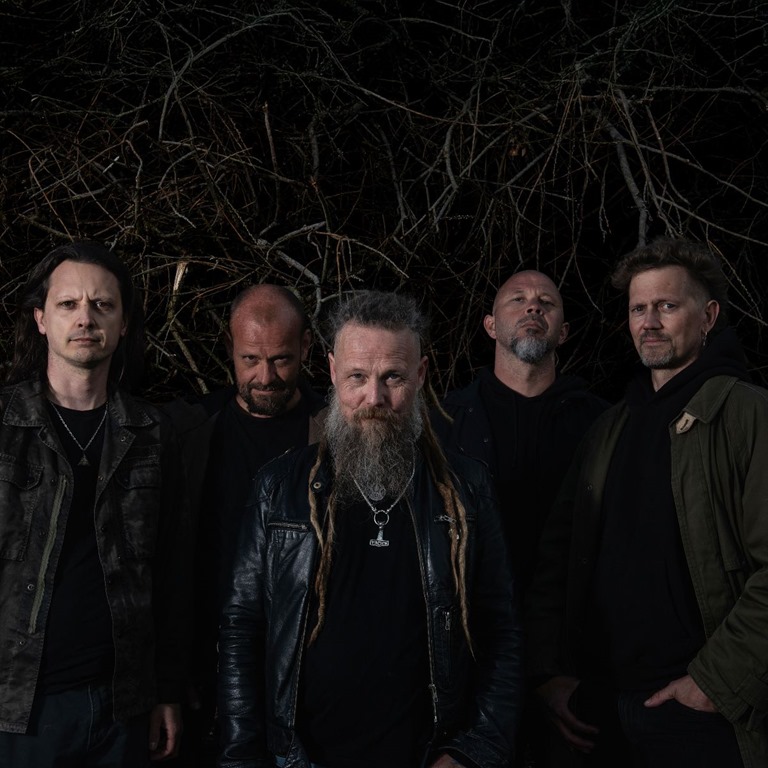
Up-and-coming Nordic doom adventurers MAUNAH unveil their first music video ‘Heimaland’ (‘Homeland’) as the first advance single taken from their forthcoming debut full-length Hjarta ("Heart"). The Danes’ first album has been scheduled for release on September 18, 2026.

MAUNAH comments: “To us, ‘Heimaland’ feels like a signature track for Maunah that captures our urge to let beauty and doom coexist”, vocalist Søren Sol Koldsen-Zederkof muses. “The song carries the feeling of belonging to a place, but it also reflects the more difficult search for a home within oneself. We have lived with ‘Heimaland’ for a long time, shaping and fine-tuning the song until it finally became as it is now. We are deeply excited to finally release it into the world and hope that you will like it as much as we do!”

AA

How on earth can any debut album sound as complete and sophisticated as Hjarta from Danish doom newcomers MAUNAH? How can a band that seemingly just appeared out of the blue deliver such a modern doom metal masterpiece?

Valid questions. The answer lies in the fact that although it is technically correct to label MAUNAH as a new band, the truth is that the members are veterans of the Danish rock, folk, and metal scenes.

MAUNAH’s popular frontman, Søren Sol Koldsen-Zederkof, has toured extensively with the beloved Nordic folk band KRAUKA, and he has also released several critically acclaimed albums under the artist’s name LOS. His fellow musicians come with experience as well. Guitarist Mads MP Laursen has, for example, played guitar with IRONGUARD and ENCYRCLE.

As it turns out, the chemistry was just right. All the stars aligned – and remarkable talent, fresh musical ideas as well as mature songwriting flowed together naturally in MAUNAH. The positive interaction of the band members became the catalyst for an alchemical transformation that turned music into sonic gold.

Although the roots of Hjarta reach deep into the melodic Scandinavian doom tradition, there is so much more happening on this album. A dash of Nordic folk here, a pinch of modern metal there, which is boosted by renowned producer Tue Madsen (THE HAUNTED, MOONSPELL, HEAVEN SHALL BURN et al.) being responsible for recording the groove parts with the Danes’ rhythm section.

With each new spin, Hjarta keeps giving as MAUNAH have crammed their album with excellent ideas and layers of details. Yet the Danes have not fallen into the trap of drowning out their own ideas by wanting too much in too short of a time. Their songs are allowed to breathe, develop cinematic moments, and unfold, before sinking captivating hooks into the ears. 
That MAUNAH are a perfect example of the notion that the sum can become greater than its parts was already audible on the band’s digital EP Heimaland, which came out on June 20, 2025. Enriched versions of the songs found their way onto the debut album.

Another element that sets MAUNAH apart from their peers in doom is the absence of a lexical language. The vocals are built on tone, feeling, and rhythm – in an echo of human speech. This creates a space for a more direct connection between vocals and music that reaches beyond the limits of rational language.

In the Danes’ own poetic words: “Maunah is the sound of despair and open skies. Maunah is leaves crunching underfoot, the cold of the forest floor seeping through the soles. And Maunah is the warmth of the sun on the face and oxygen filling the lungs. In the music, the cold of winter meets the summer warmth in the chest, where Maunah pumps blood through the body and music into the air.”

With Hjarta, MAUNAH offer a remarkable debut that goes well beyond the average and exceeds expectations. How far can these Danes get? Only time will tell!

AA

f73bebc0-8afd-32ea-688f-e70cc8f8f1e4

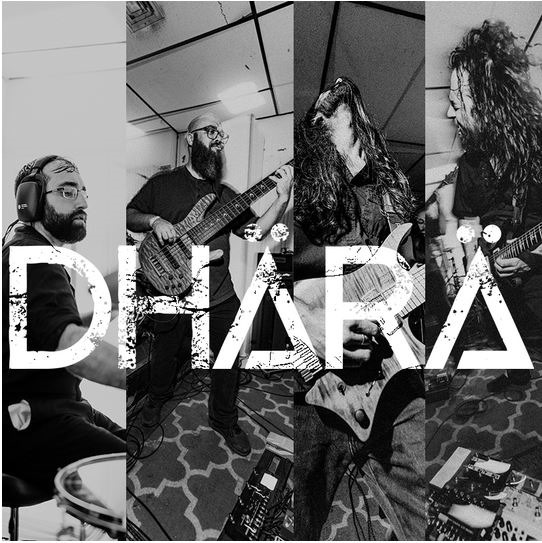
Progressive rock quartet Dhärä return today with their expansive new single ‘A PLACE IN TIME, (the entities, divided)’, offering the next glimpse into their forthcoming full-length album Elemental Four, arriving January 11, 2026.

Known for their immersive instrumental storytelling and dynamic compositions, Dhärä continue to push beyond strict genre boundaries on ‘A PLACE IN TIME, (the entities, divided).’ The track unfolds with patience and atmosphere before erupting into driving rhythms, soaring guitar interplay, and a powerful sense of momentum—highlighting the band’s signature balance between precision, emotion, and scale.

The band shares: “This is the opening of our concept album Elemental Four. ‘A PLACE IN TIME, (the entities, divided)’ introduces many themes that are heard throughout the album. This album is also a concert movie that features five ballerinas who perform modern lyrical dance to the music. Elemental Four is a journey of four entities whose world is shaken by a meteor which threatens their existence. They are separated by a great earthquake, and the only path to saving the planet and themselves is to unify and summon The Conduit, whose power can hopefully vanquish the threat.”

Watch the video for ‘The conduit, A PLACE IN TIME’ here:

AA

Dhara

25th October 2025

Christopher Nosnibor

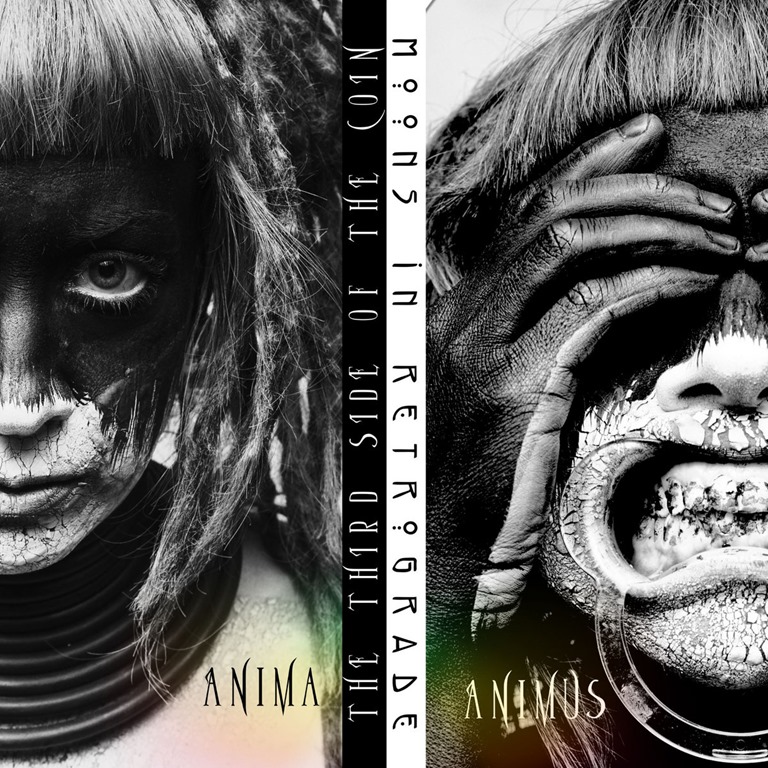
As the blurbage explains, ‘The Third Side Of The Coin is a split, 2 part album which includes 2 sides of one coin, Anima and Animus. They are separate entities but together they create a bridge between dark and light, outer identity to inner truth and form a union of opposites that gives birth to universal truth. They are the gatekeepers of transformation.’

Well that’s two sides, but what about the third? Of course, this is where the truly conceptual aspect of the work comes in – the part which goes beyond the recordings themselves – and which only really makes sense in context of the following explication:

The Third Side Of The Coin is about the natural but paradoxical dualistic state of the universe. This split album explores both sides of a polarized world by peering over the precipice of the coin only to see a reflection staring back from the other side. It is a surreal mirror showing that what you fear and what you hate is living within the unconscious parts of yourself, both sides being parts of a whole. As you look into the familiar and uncomfortable reflection the coin spins, dissolving duality and revealing a clear image of the third side.
Dissolve the duality! The magic is in the middle!’

Taken literally, this suggests that the magic resides in the space between track five and track six, but I don’t think that’s what they’re meaning. Similarly, although I’m reminded of how William Burroughs and Brion Gysion expounded the concept of ‘the third mind’ as how two minds in collaboration can create a work greater than the sum of the parts, as if there’s a ‘third mind’ at work between them, I don’t feel that this quite first with the concept Moons in Retrograde are offering here.

To delve into the album itself is to venture into a world of thumping beats and deep emotional exorcism: single cut ‘Mirror Obscura’ launches the set in classic style, forging a dark, industrial-infused, goth-hued slice of dark electropop – mid-tempo, atmospheric, anthemic, and completely enthralling. The tracks which follow feel rather more generic, particularly ‘Eternalgia’: it’s a solid electrogoth stomper, and while the synths are sweeping, layered, rich in texture, everything is centred around the hard kick drum, which cuts through it all and really slams. The final song on the ‘Anima’ side is a supple exercise in dreampop, with the emphasis on the pop, a quintessential anthemic mid-tempo ballad.

While the atmosphere is overtly darker during the second half of the album – the ‘Animus’ side – it doesn’t seem so radically different at first. ‘The Edge of Entropy’ very much employs the same instrumentation and approach to composition, and ‘The Rotten Tree’ is a classic, processed dark pop cut. But closer listening reveals more twangy guitar in the mix, and a more claustrophobic and subdued style of songwriting. ‘Taxidermy Mouse’ may sound like a rather humorous title, but it’s a slow, deliberate pulsating piece which goes full aggrotech stomper at the mid-point, drawing on elements of metal while pumping out technogoth grooves. And by the time we arrive at the heaving churn of ‘Biological’, with its rampant, frenetic nu-metal percussion and gargling noise, it’s clear that this is very much an album of two halves, and at times the second half feels like a goth Prodigy.

For the most part, The Third Side Of The Coin feels a shade too clinical to really hit the mark on the emotional scale. It packs some bangers, for sure, but there’s some distance between pumping beats and emotional intensity which has a resonant, moving impact. And perhaps, stripping away the concept and taking the album as it is is the best way to approach this…

AA

a1338474138_10

VRÎMUOT present the lovingly illustrated lyric video of the balladesque song ‘Vom Traum zur Pflicht’ ("From Dream to Duty") taken from the forthcoming new album Lupus Viridis ("The Green Wolf").

The German dark folk innovators’ second full-length has been chalked up for release on December 5, 2025.

AA

VRÎMUOT comment: “The song ‘Vom Traum zur Pflicht’ is a musical journey through the fog-shrouded realm of my own soul”, mastermind Lupus Viridis reveals. “Only those who are willing to descend into the depths of their own existence may embark on a path of knowledge and seek the light of truth. Only those who are willing to make sacrifices may overcome the glass mountain and triumph over themselves.”

“Solve et coagula”! For death is the path to reverence … and to love.

This song is dedicated to my wife and son.

“Aus den schwarzen Schleiern heraus,
wurde ein weißer Stern geboren
und feuerrot brennt die Seele in mir!"”

“From the black veils,
a white star was born,
and the soul burns fiery red within me!”

Lupus Viridis

AA

e7c50600-a377-ab52-69f3-f7e217285254

Midira Records / Cruel Nature Records – 24th October 2025

Christopher Nosnibor

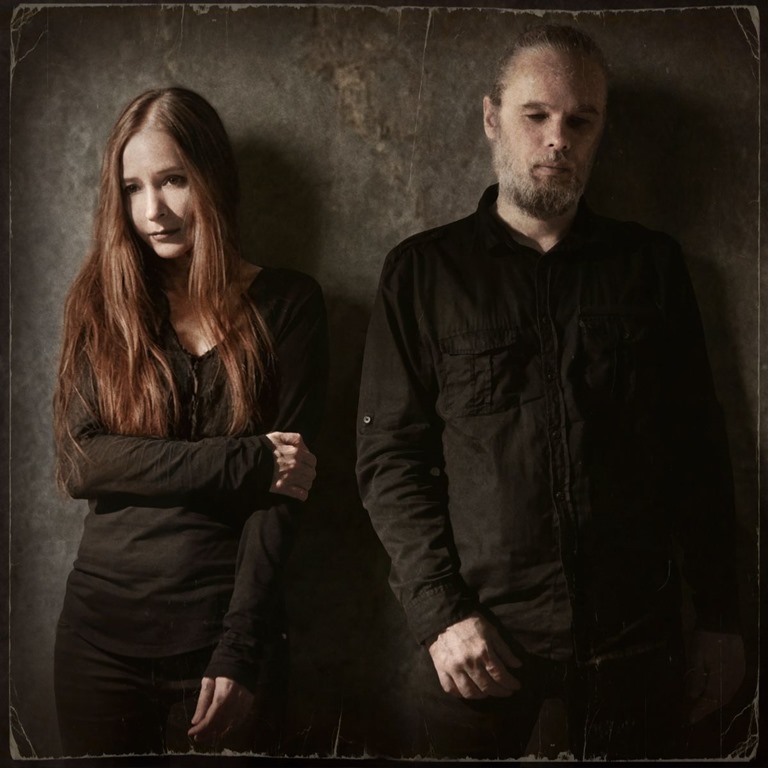
A new Nadja release is always cause for a pique of interest. Excitement doesn’t feel like quite the right term for an act who create such dense, dark, brooding soundscapes. Centred around the duo of Leah Buckareff and Aidan Baker, each release marks a shift thanks to the contribution of a range of guest performers, and cut is no exception – and this time, following the instrumental epic that was Labyrinthine (2022) – we have vocals, from not just Baker and Buckareff, but also Tristen Bakker, Oskar Bakker-Blair and Lane Shi Otayonii, among others. They certainly bring a lot of guests to a party which features just four tracks. But that is ’just’ four tracks which each occupy an entire side of vinyl on a double LP. As with Labyrinthine, these are compositions which span ten to sixteen minutes, and utilise that timeframe to maximum effect. They don’t hurry things, with slow, tapering drones interweaving, the emphasis on the atmosphere and the detail over the impact. And yet, despite this, or even perhaps because of this, the impact is strong, albeit in more subtle ways.

Their comments on the album are illuminating, explaining that ‘Thematically, cut explores trauma and physio-/psychological stress, as well as possible tools and means of overcoming these stressors, of which the music itself (sonic sublimation) might be one… Musically, while Nadja retains their signature wall-of-noise doomgaze sound, they also explore quieter, more introspective moments as well as new/different instrumentation, with harp, French horn, and saxophone featuring for the first time on one of the band’s recordings’.

‘It’s Cold When You Cut Me’ is stark, bleak, minimal. The air feels dead, it’s suffocating. The sparse percussion rattles along, but the drones are glacial. Five minutes in, rumbling bass and heavy beats roll in, and by the mid-point there are crushing waves of lugubrious noise worthy of Swans, but overlaid with trilling brass and woodwind, jazz in slow-mo, the honk of migrating birds and trilling abstraction.

But this is just a gentle introduction ahead of the thunderous grind of ‘Dark, No Knowledge’, which begins with atmospheric whirlings and even hints of Eastern esotericism, voices rising in the distance, atop wisps and rumbles, echoes and murmurings, before the dense, sludgy, post everything doom drone cascades in like a mudslide. It’s low and it’s slow, crawling like larva. buzzes and rumbles sustain for an eternity. You can actually feel your stomach drop in response to the bass frequencies.

The sound seems to get thicker and murkier as the album progresses, and if ‘She Ate His Dreams From the Inside & Spat Out The Frozen Fucking Bones’ isn’t nearly as abrasive as the title may suggest, its slow repetitious form is truly hypnotic as it trudges its way along.it possesses a rare density which matches its delicacy, and comparisons to latter-day Swans stand in terms of positioning the piece. There are thick, distorted tones grinding like earthworks through the airier overtones, and the contrast brings something magical and soothing. Then ‘Omenformation’ crashes in like a tsunami. The volume leaps, the density leaps, and you find yourself blown away by a sonic force strong enough to knock the air out of your lungs. The dingy, booming bass alone is enough to send you to the ground. The drums are immense. In fact, everything about this is almost inarticulable, as Nadja scale up the sound to beyond that of mere mortal beings. This is music with a physical force and a power beyond words, beyond contrivance. It’s archaic, occult, primal in its power. This is a track which treads through a series of movements, the last of which is crushing in its weight.

It’s true that cut possesses all of the sounds which are recognisable as being concomitant with Nadja’s distinctive dense, doomgaze stylings, and a lot of the vocals are as much additional layers rather than clearly enunciated words, and as such, add further depth – and a certain human aspect to the overall sound. The result is a work which speaks to that level of the psyche beyond words, which conveys trauma and physio-/psychological stress, and which offers a degree of relief through an experience which is wholly immersive and immensely powerful.

AA

a1598661613_10

Nadja2025

Photo: Hugues de Castillo