Archive for the ‘Reviews’ Category

Christopher Nosnibor

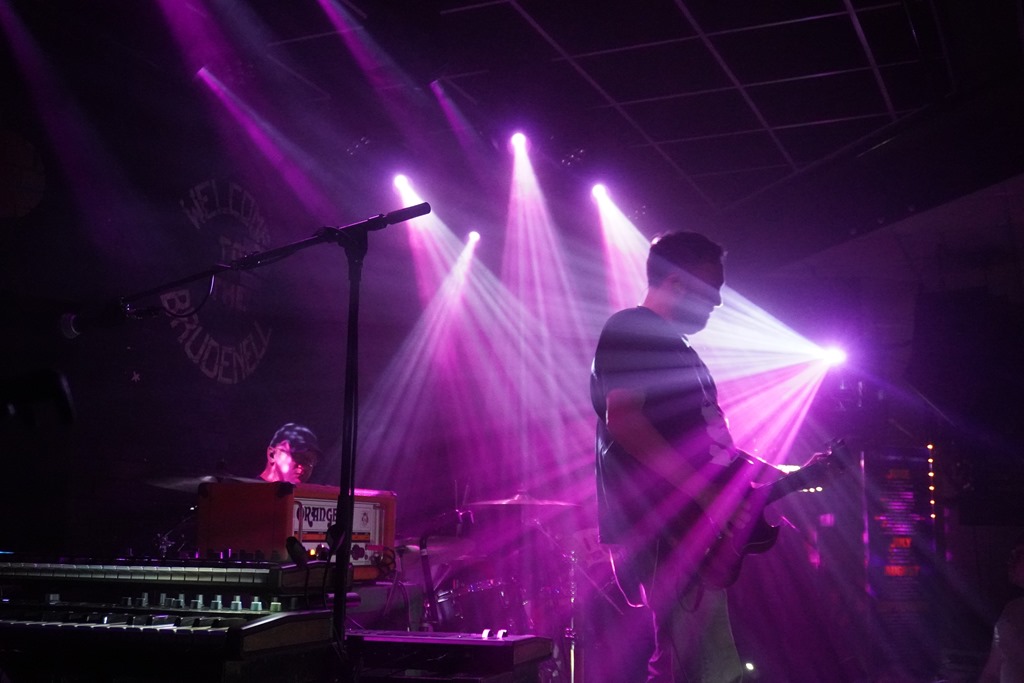
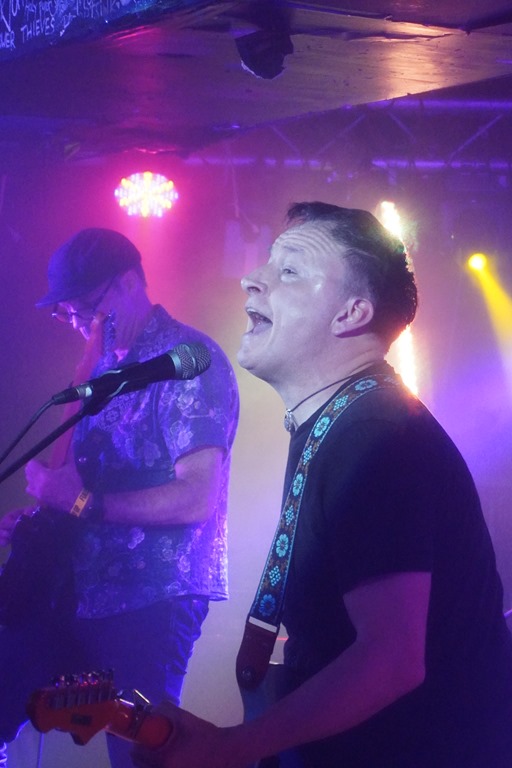
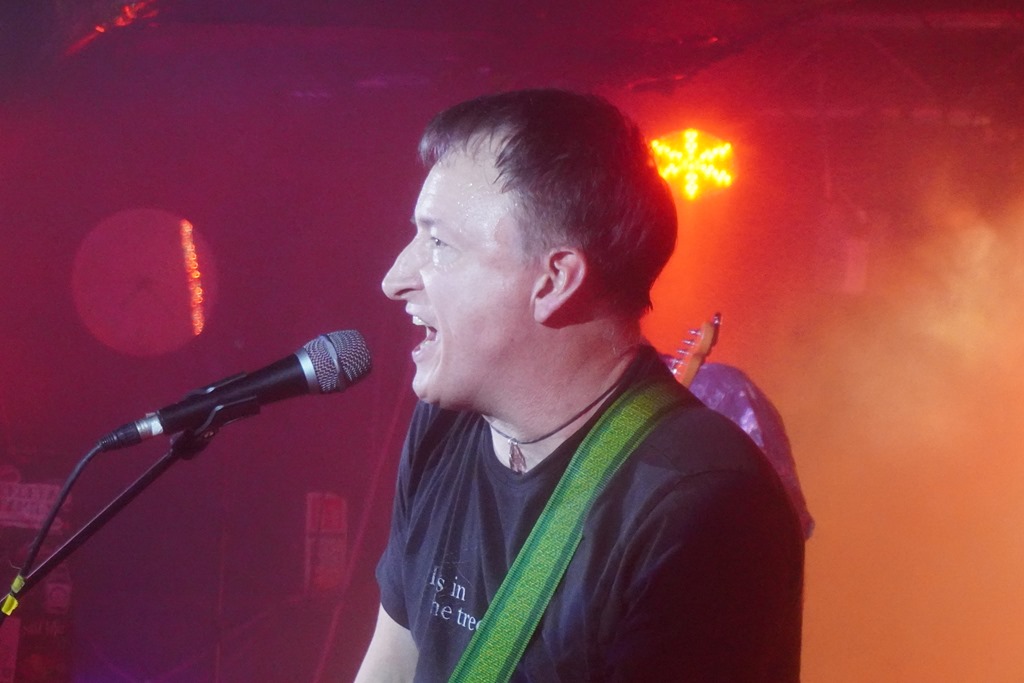
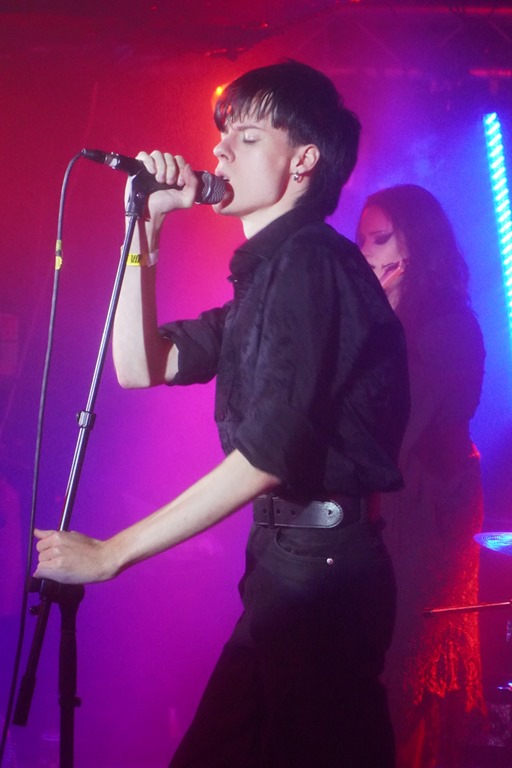
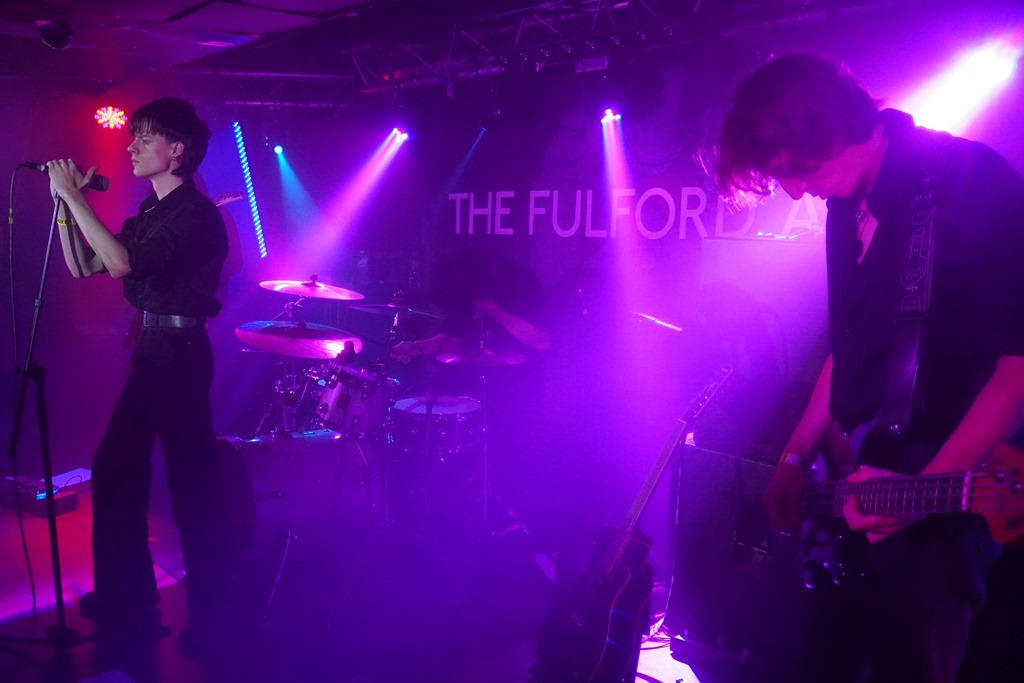
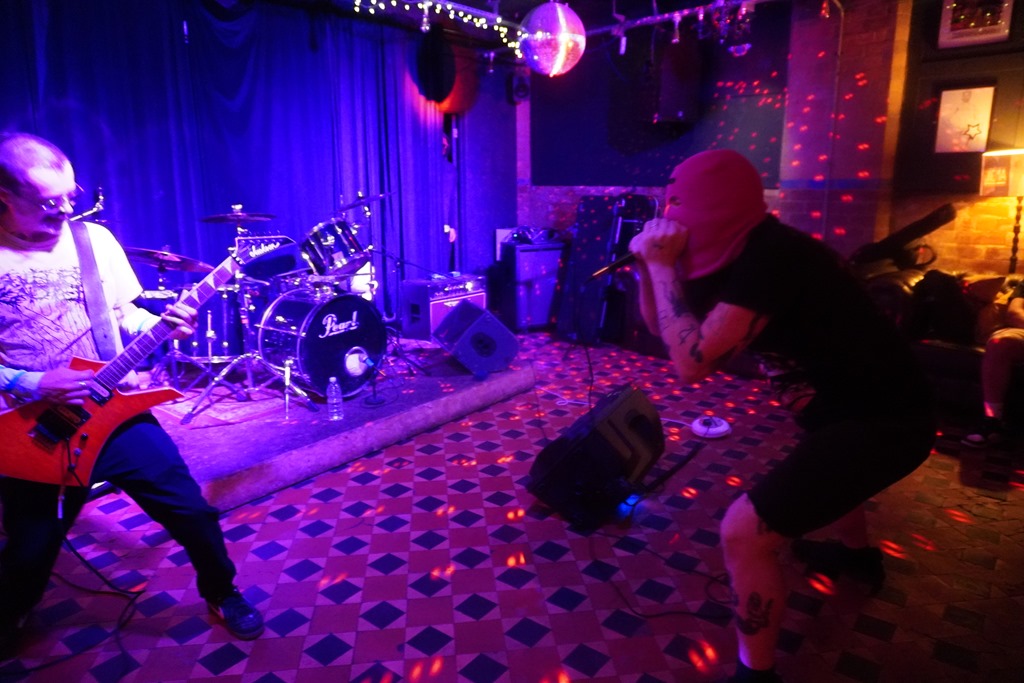
Suspicious Liquid had originally been down to open this evening’s dark proceedings, but they’ve been replaced by Troll Mother. While not getting to see Suspicious Liquid again is disappointing, southern power sludge duo Troll Mother are everything their name suggests… or are they? They’re more Mötörhead than Melvins, with a hardcore punk edge in places. They also boast an absolutely fucking MASSIVE drum kit, meaning that when the drummer takes on vocal duties – something they share – it’s not always immediately obvious because he’s largely obscured by a huge bank of toms and a swathe of cymbals. They make a cracking racket, too, with next to no pauses for the full duration of their half-hour set.

DSC09312

Troll Mother

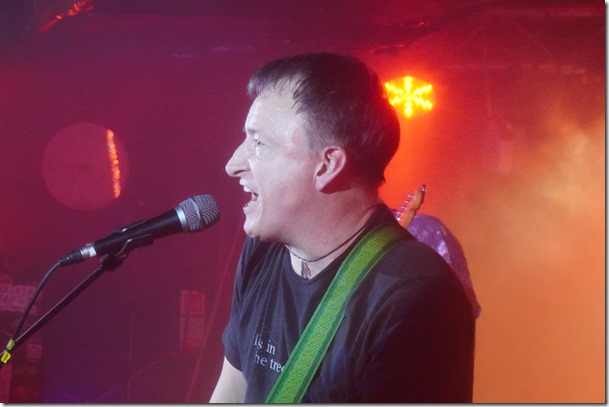
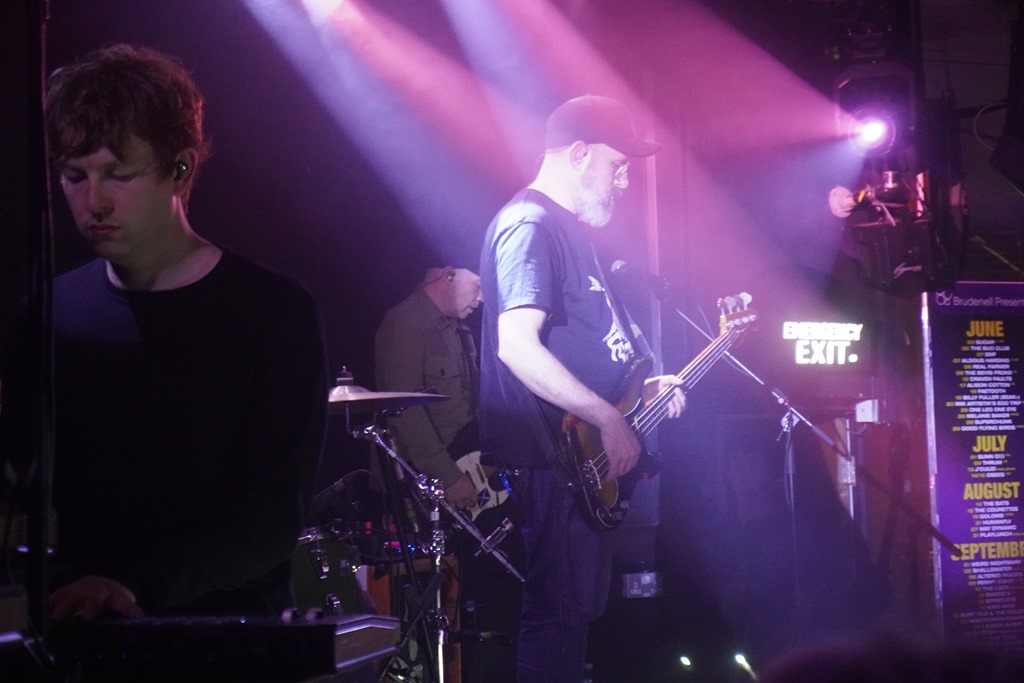
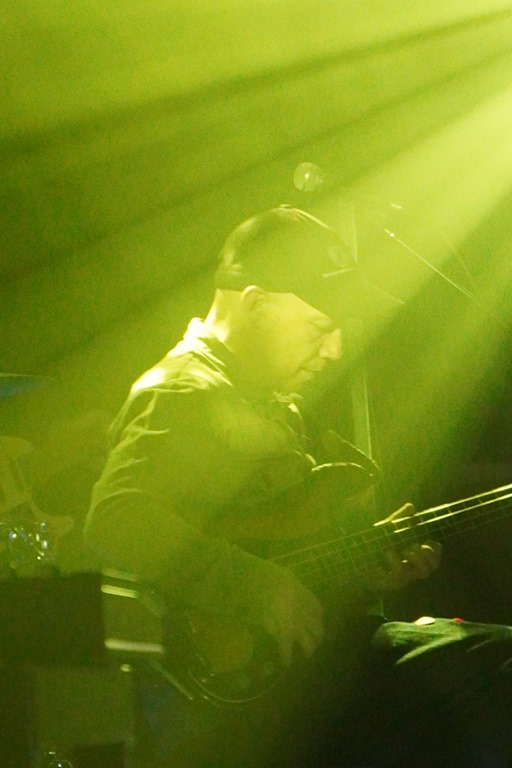
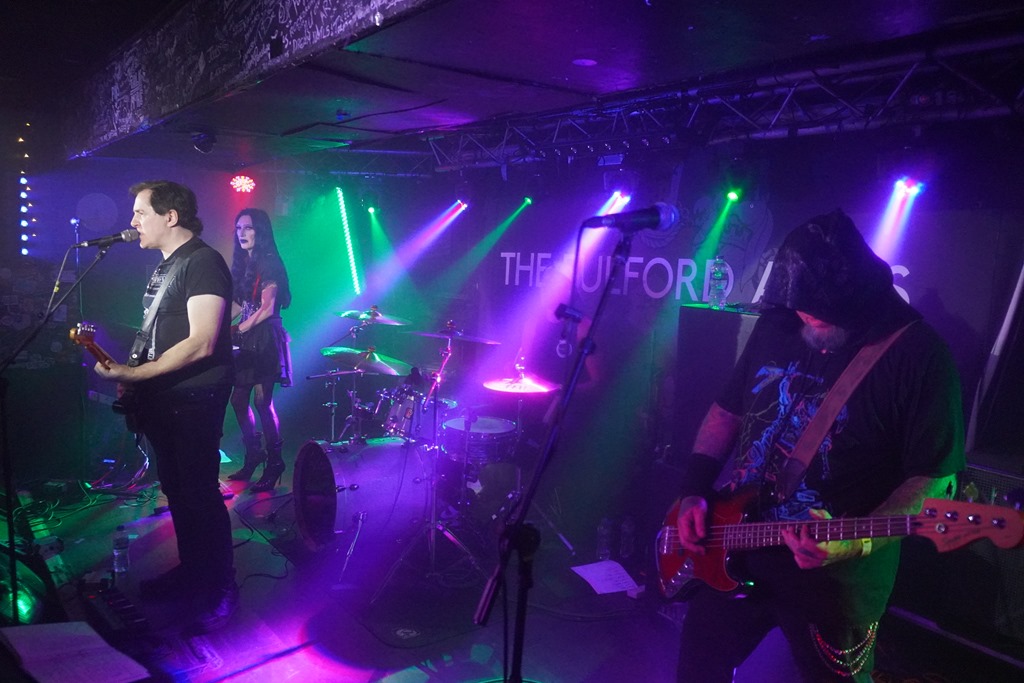
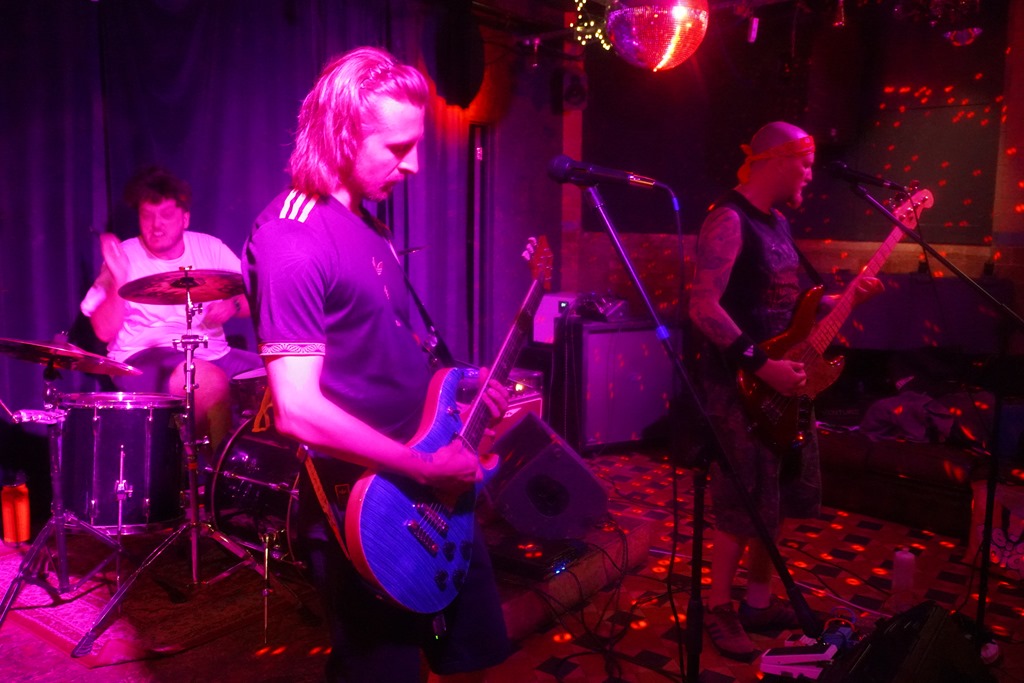
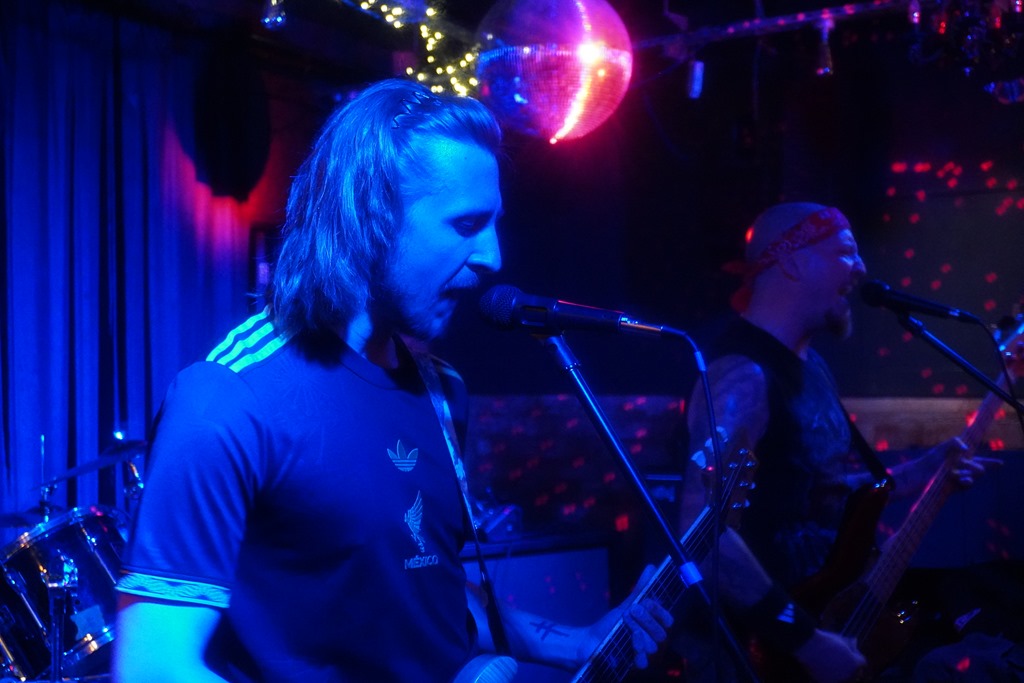
Space Pistol bring the riffs, and they do evoke Melvins, as well as Faith No More, and Hawk Eyes, among others. The three are decked out in matching orange boiler suits and the bassist, who has a board with about 36 pedals plays with his face. He also leaps and bounds – and yes, positively cavorts – about the stage with a flamboyance that’s uncommon to a bad that are this big on hefty riffs. There are false endings galore, and at one point they lock statue-like positions and maintain silence for maybe a good twenty seconds, during which time you could hear a pin drop. They absolutely love this, to the extent that it seems that this moment is a career high point for them. Since they’ve come all the way from Milton Keynes for this, we’re pleased that York is a memorable show for them, and I’m pretty sure they’d be welcome back up here any time.

DSC09331DSC09390

Space Pistol

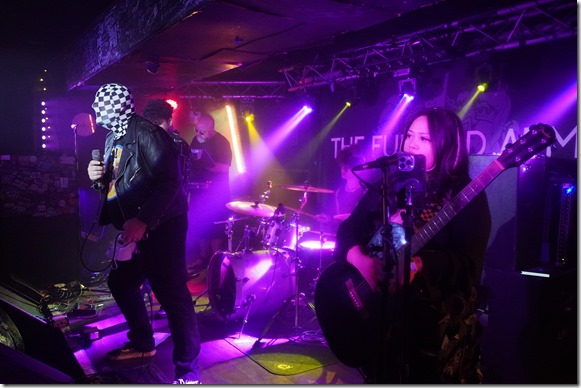
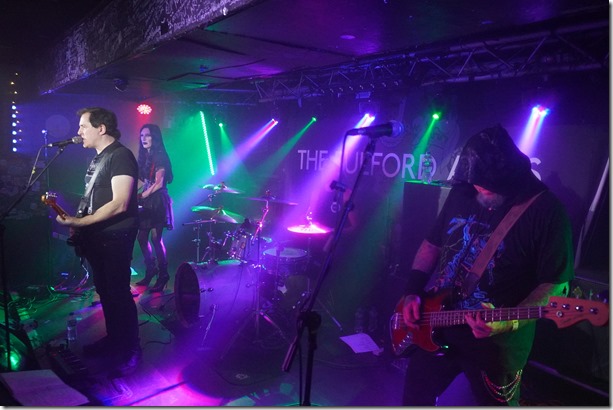
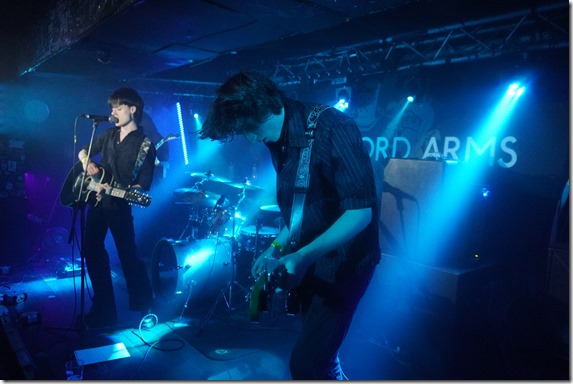
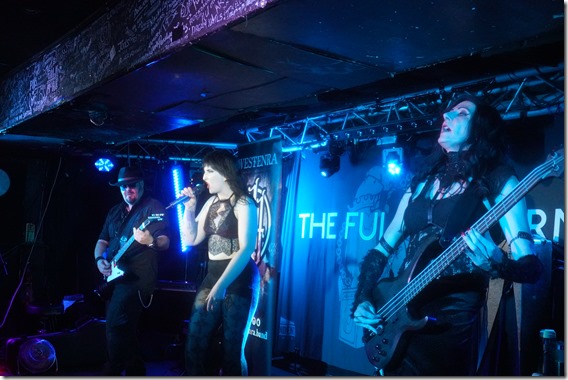
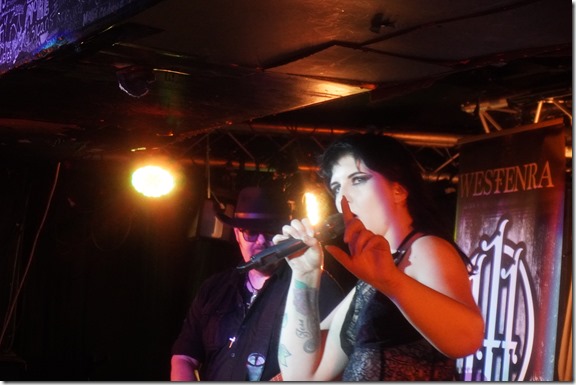
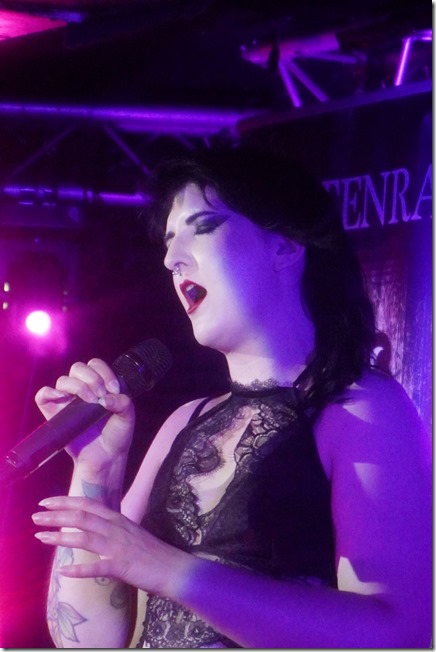
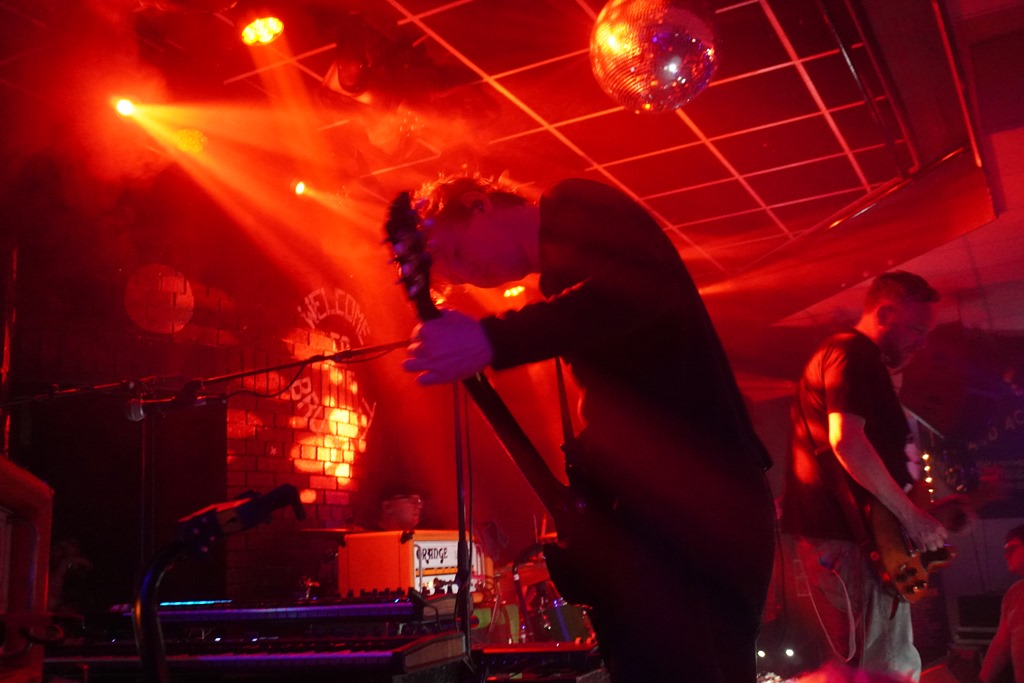
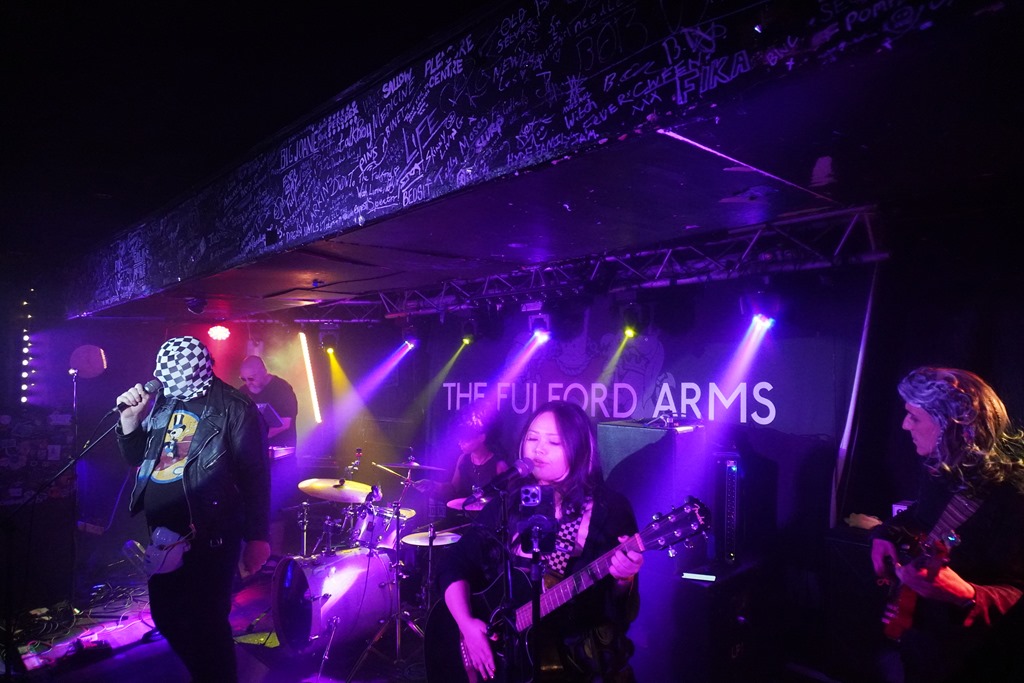
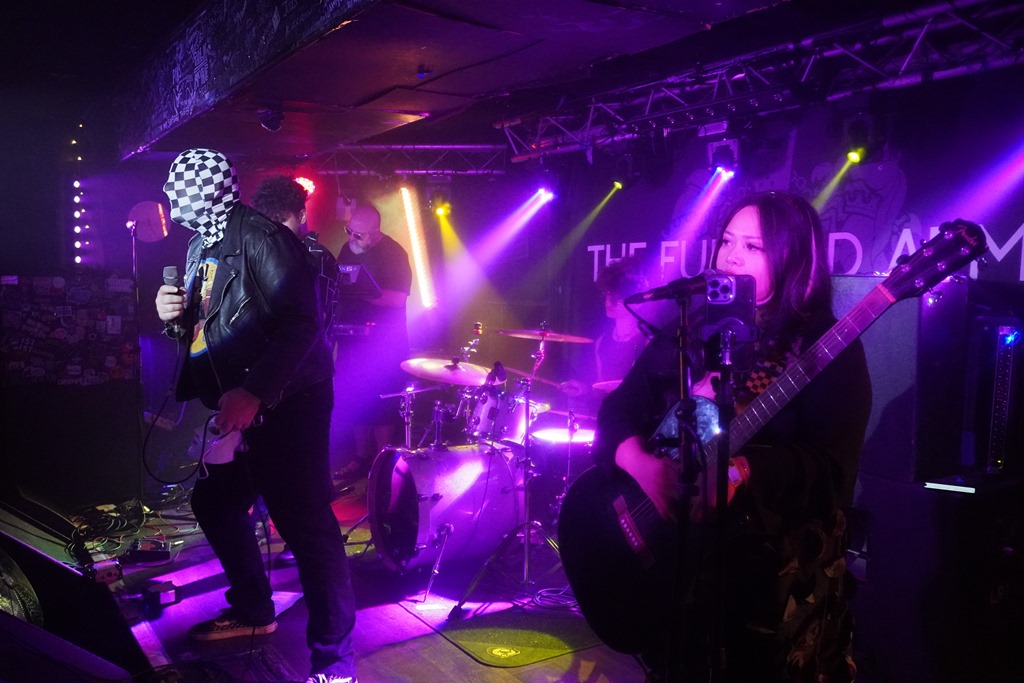
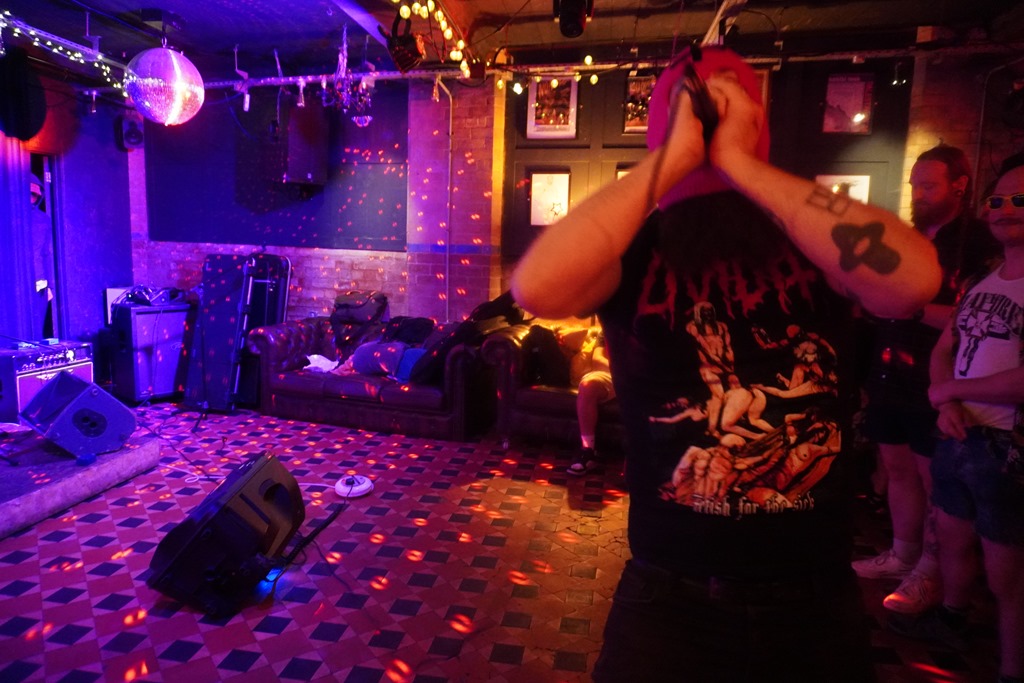
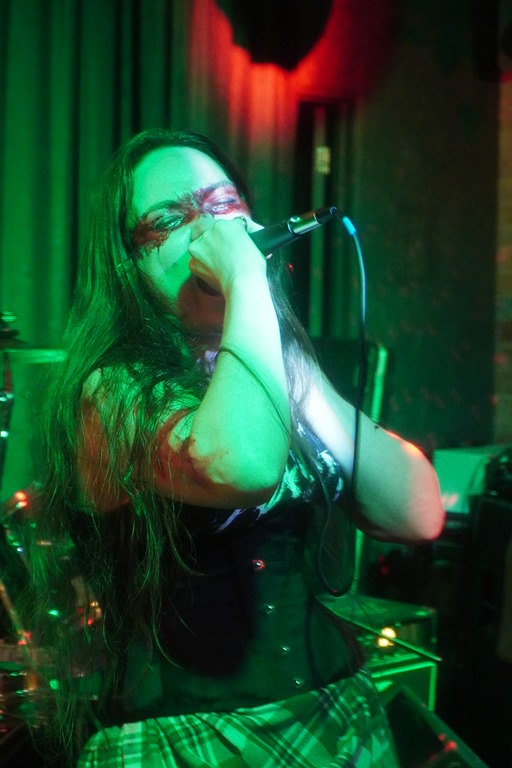
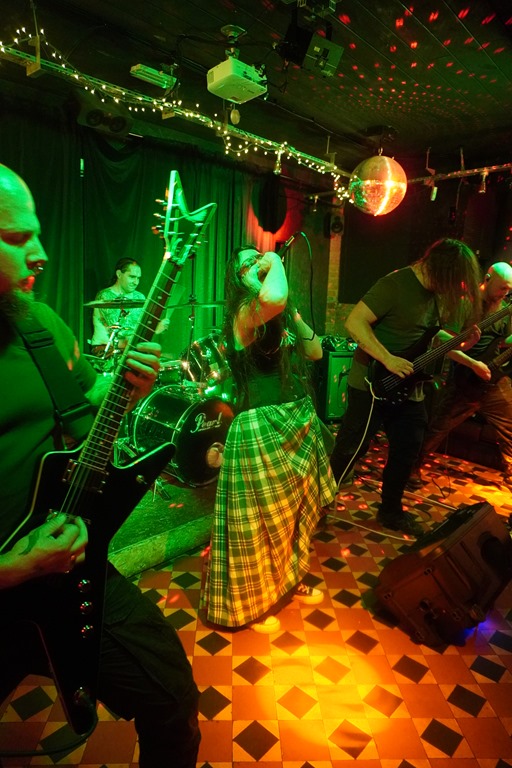
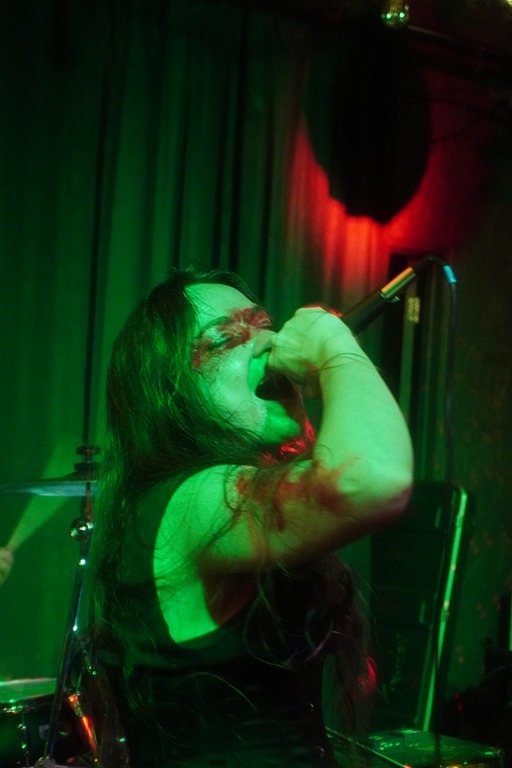
Froglord, meanwhile, are making a return visit after just eleven months. The concept is pretty ludicrous, the stage show even more so: a stoner / doom band all about amphibians, kitted out in masks and arranging their sets as some form of swamp-centric ritual. The fact that they’ve eked this out across six albums now is nothing short of remarkable. But the fact that every show is an event, shaped by that sense of occasion and ritual is part of the appeal – that and the fact the performances are entertaining and they really know how to riff.

DSC09406DSC09410

Froglord

But there is a certain serious element to the band (not that heavyweight sludgy riffs in themselves aren’t serious), in that they’re genuinely eco-conscious, and their frog fixation isn’t all just japes, with 100% of the proceeds from digital sales of their new album, Lower & Slower Vol 1, released in March, are being donated to the Waterfowl & Wetland Trust (WWT) – the wetland charity, as well as 50% of all physical media and merch profits. Or, as they put it, ‘At it’s [sic] core, Froglord have always been an environmentally [sic]-driven band. Through their fundraising and tale of an amphibious deity, reeking vengenace [sic] on humanity for the environmental destruction they caused.’ Personally, I like them even more for this. Once could reasonably argue that just a handful of the world’s billionaires could eradicate poverty and save the planet and not even notice a reduction in lifestyle and that Froglord’s sales aren’t even a drop in a puddle in comparison, but that’s not the point: the point is that these guys actually care, and are using their platform for good.
DSC09438DSC09464

Froglord

They also put on a great show. It’s no huge development on the last time around: their website positions it as follows: ‘Returning with brand new masks, costumes, and a 6th studio album, Froglord deliver another massive offering of amphibious swamp doom. Recorded live in the studio in a single take, Lower & Slower briefly pauses the band’s concept storytelling of the Tale of The Froglord saga, instead revisiting six previously released tracks from across their discography’. And the fact is, it works: tonight’s performance feels very much like a consolidation, and they seem particularly focused, the set’s structure absolutely honed to perfection in every way. They drop a powerful cover of ‘Iron Man’ early in the second half of the set, and in many ways, this speaks for itself. The bassist plays wearing a frog glove puppet for a while, and after the ritual circulating of the giant rubber toad later in the set, said toad is then used to bash bass strings before eventually tucked in the crook of an elbow in a more friendly fashion for a time.

DSC09511DSC09531

Froglord

Admirably, they never break character for a moment: this is outstanding theatre. It’s also outstanding, riff-driven fun. All hail the Froglord!

17th April 2026

Christopher Nosnibor

Either the members of Karobela – who are jointly credited with the lyrics – have had some really shitter personal experiences, or they’re keen when it comes to observing some of the more negative aspects of relationships and social interaction.

Whereas previous single, ‘Afterthought’, which came out in December, dealt with being dropped, forgotten, kicked to the curb, ‘Love Letter To No One’ explores, as they put it, ‘the profound emotional turmoil caused by the contemporary issue of ‘ghosting’, capturing the lingering heartache it leaves behind’.

In name, ‘ghosting’ is very much a contemporary issue, and certainly, it’s easier to vanish virtually than in real life. It’s hard to ghost someone who works in the same office or whatever. But in the pre-Internet days, people would just stop writing, stop phoning, and you couldn’t even search on Facebook to see if they were still alive. But one difference in that is the time delay, in that you’d wait days, weeks for a letter, and the time span of the uncertainty was something which elongated gradually: there were no messages unread, no disappearing profiles. And as we’ve come to depend on immediate back-and-forth, even a minute waiting for a message to be picked up can feel like a lifetime. And it’s this angst which is the subject of ‘Love Letter to No One’.

It’s a step up in terms of ambition for the band, being the first track in a projected four-part narrative following the romantic experiences of a female protagonist, and musically, it’s got some beef to it, with a chunky riff and strong vocal delivery that does convey emotional turmoil. In many ways, it’s rock music of the kind that you don’t hear so much at the moment. That said, it’s driven by a disco-tinged beat and has more of a dance-leaning breakdown in the middle.

With a chorus that’s all hook, and tightly packed into a fraction over three minutes, ‘Love Letter to No One’ is a work of precision, and a first-rate single cut.

AA

AA

Karobela Promo shot 2

Wormhole World – 20th March 2026

Christopher Nosnibor

Given the diminishing number of grassroots venue and the changing nature of live music consumption – whereby the masses flock to £60+ arena shows, and are happy to pay £20 or more to see a third-rate tribute act while swilling £8 pints and yammering away loudly to their mates for the entire evening, with barely one ear on the music, it’s small wonder acts who are new and / or more niche struggle to get bookings. And without taking your music to a new audience through live shows, if you can’t afford PR to plug your music to radio stations and the like, how are artists ever to break through the algorithmic recommendations and reach people? This is even more of a challenge for experimental electronic acts, as most small venues are more likely to showcase ‘bands’ or guitar-based music in the main, unless they’re doing something that’s promotable as ‘electropop’ or similar.

It’s thanks to the EMOM (Electronic Music Open Mic) network, and, in particular, the EMOM nights in York, hosted by North Facing Garden at The Fulford Arms – one if the most accommodating venues there is, who don’t only welcome weird and experimental shit, but have sound engineers who are up to the job of facilitating the kind of noise the acts who play such events are striving for, that I’ve caught TSR2 live on numerous occasions. These nights don’t only host bedroom explorers just starting out, but acts with respectable recording careers who simply can’t get a foothold on the regular gig circuit. And TSR2 certainly have quite a recording career already.

A yin / yang / pro / con of the EMOM format is that each performer gets just fifteen minutes, which is great by way of a showcase, a taster, and also great if you’re not digging it as no act is on long enough for it to get boring, but of you are digging it, or the music itself requires a more expansive set…

Transmission is TSR2 serving a more expansive set, with ten tracks and a running time in the region of an hour. It’s their second release on Lancashire label Wormhole World, following Birdstrike! in 2024, and it brings full-spectrum bleeps, churn, and imaginative abstraction, and the first composition – which is also the title track – brings all of this simultaneously, with space-age heavy drone given structure by some industrial strength beats which hit hard.

There’s ambient abstraction and swirling spaciness in abundance, all the oscillations and layers bouncing back and forth off one another, skittering and surging, with moments which elicit the essence of R2D2, others which are more like wading through long grass while struggling to find the path.

Muffled samples merge with the delirious digital meltdown that is ‘Modern Life’ and while it does have me briefly contemplating ‘Darker Avenues’, samples float and echo around the darker ambient spaces of ‘The Salt Marsh’. The ten-minute ‘Sewer Lawyer Logic’ is a dark, detailed exploration which ventures into dank sonic territories, and ‘Some Of You Had Better Go Home’ wanders between the terrains of Krautrock and Industrial – specifically at the point where Chris and Cosey make their departure to spawn techno.

Transmission evokes the atmosphere of space travel – but more in the sense we imagine than of the latest vanity loop around the moon – and laser-squirting sci-fi explorations. It’s a varied album, which presents shades of both light and darkness and ever-shifting moods.

AA

AA

a4168567349_10

Christopher Nosnibor

Few bands are less predictable than New York’s Ecce Shnak, and their catalogue is a veritable smorgasbord of flavours and textures. Their last release was the standalone single, ‘Katy’s Wart’, a two-and-a-half minute grungy punk rager presented in the middle of a sort of weirdy supernatural teen drama short film. Before that there as the live EP Backroom Sessions, a 4-song live set recorded at Backroom Studios in Rockaway, NJ released to coincide with a US West Coast tour with Spacehog and EMF.

Then, there was their being featured in the video for EMF’s ‘LGBTQ+ Lover’.

And now, a year on, they finally return to promote their last studio EP, Shadows Grow Fangs, on the East Coast, before hitting Europe and the UK (sadly no longer part of Europe for trade and touring, despite its continental geography), again with EMF – a band who’ve evolved significantly since they first broke in the early 90s. It seems like an appropriate time to catch up with this varied and inventive five-song set.

‘Prayer of Love’ brings together an almost trippy, psychedelic vibe and shades off prog, with a shuffling beat and an almost Cure-like bass. There’s some guitar noise kicking away low in the mix, too, and contrasts abound, although it’s nothing in comparison to ‘The Internet’. It’s 2026 (yes, the EP was released in 2025, but still) – and The Internet has become such a fact of life it’s largely overlooked as a thing. News articles quote comments made in response to posts on X or Instagram as if they have some value, and no-one considers this weird or devaluing. How is it any different from quoting some bloke down the pub or a street heckle as commentary? The track opens with layers of chatter and the scrattering of a reverby shoegaze guitar, then a shuffling beat slides in and in an instant it’s a rap / opera / math-rock hybrid. In some ways, it feels like a retro hybrid that evokes the days when sampling and scratching were innovate and it’s at least twenty years too late, but at the same time, it feel timely, in that never before has shit been stranger, more messed up, more bewildering, as the generation gap grows wider by the week and the different generations – A, Z, X, boomers – evolve their own languages which are incomprehensible to anyone other than their peers. Does anyone actually know what anyone else is saying, let alone what’s going on?

The title track is bombastic and theatrical, but also a bit post-rock and a bit chamber pop and a bit drum ‘n’ bass. The last time I heard anything quite this headspinning was when I discovered Birdeatsbaby, who veered between dark cabaret and metal, while incorporating elements of classical and prog.

The EP’s final song, ‘Stroll With Me’ marks a significant shift, as a sparse, acoustic folk song with gentle organ tones, which is disarming and genuinely pretty.

None of the songs on here sound like any of the others, and nothing on Shadows Grow Fangs sounds like ‘Katy’s Wart’ – or anything else for that, for that matter: Ecce Shnak tunes are like a box of chocolates – only better, because they’ll not rot your teeth and will give your brain something to chew on. What they’ll do next is anyone’s guess, and the live shows are certainly going to be interesting.

AA

TOUR DATES
MAY 07  Philadelphia, PA, USA – Nikki Lopez
MAY 08  Buffalo, NY, USA  – Town Ballroom
MAY 09  Toronto, ON, Canada – Dance Cave
MAY 10  Montreal, QC, Canada – Bar Le Ritz
MAY 11  Boston, MA, USA  – City Winery
MAY 13  New York, NY, USA  – Sony Hall
MAY 14  Millersville, PA, USA  – Phantom Power
MAY 15  Baltimore, MD, USA  – Metro Gallery
MAY 16  Hamden, CT, USA  – Space Ballroom
JUN 02  Manchester, UK – Gorilla
JUN 03  Worthing, UK – The Factory Live
JUN 04  Portsmouth, UK – Kola
JUN 05  Southend, UK – Chinnerys
JUN 06  London, UK – The Garage
JUN 07  Leeds, UK – Brudenell Social Club

AA

Ecce

Christopher Nosnibor

This is one of those occasions where music critique intersects with personal experience. I make no apology for this. I’ve long maintained that one’s relationship with music is personal, and it goes beyond the fact that the soundtrack of your life is something which evolves in ways beyond your control.

The first time I saw Salvation was ay my first ‘proper’ gig, when I was 14: they were supporting The Mission at Sheffield City Hall in March 1990. I didn’t know who they were at the time. But I soon discovered that they were an integral part of the early 80s Leeds milieu, and they’re noteworthy for having their first two singles produced by different members of The Sisters of Mercy, among other things.

The last time I saw them was at The Brudenell in Leeds, the day after the Queen died, and ahead of it, my wife bought me one of their T-shirts. It turned out to be the last birthday present she bought me, as she died just four months later. So here I am, wearing that shirt, to see a band I first saw thirty-six years ago, playing just fifteen minutes from my house in a 150-capacity pub venue. It’s a big deal, but also an occasion which lands with mixed emotions.

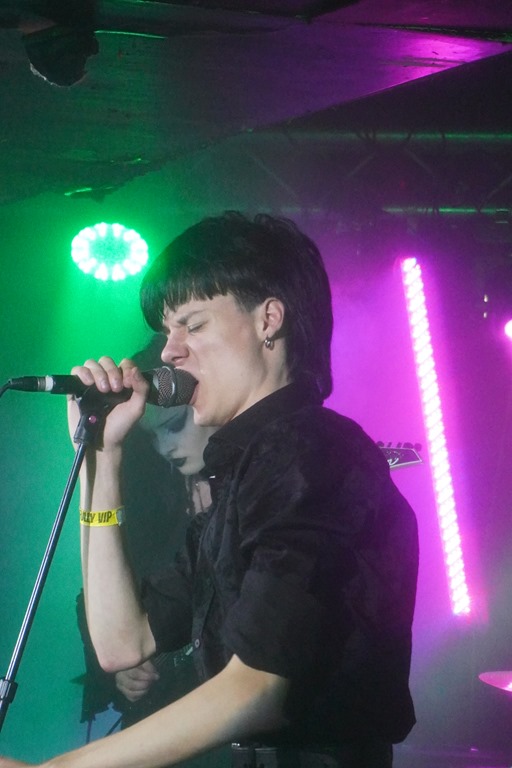
The Scarlet Hour are a duo with programmed synth and drum backing and live bass. But there’s an awkwardness about them and their set. The sound is a bit thin – that’s thanks to the bass and backing track being proportionally quiet, and the fairly clean vocals being a bit high in the mix, meaning the cliché lyrics are more audible than is desirable, and the vocals – trying and failing to sound menacing and tortured don’t help. Tim Synistyr (who really is anything but) has the poses – not to mention the leather jacket, open snakeskin-patterned shirt and ‘Body Electric’ T-shirt – but no aspect of the performance feels natural, the poses come across as being forced as the off-key singing. Dose makes the poison, and the naffness has a cumulative effect, making for a long half hour. ‘Stay Awake’ sounds like New Order circa ’83 and ‘Afterlife’ calls to mind the flimsy pop of Depeche Mode’s ‘New Life’ – novel, and a decent enough tune, but it would be a long time before they got interesting. Unfortunately, that’s something The Scarlet Hour never do. The applause is more polite than enthusiastic.

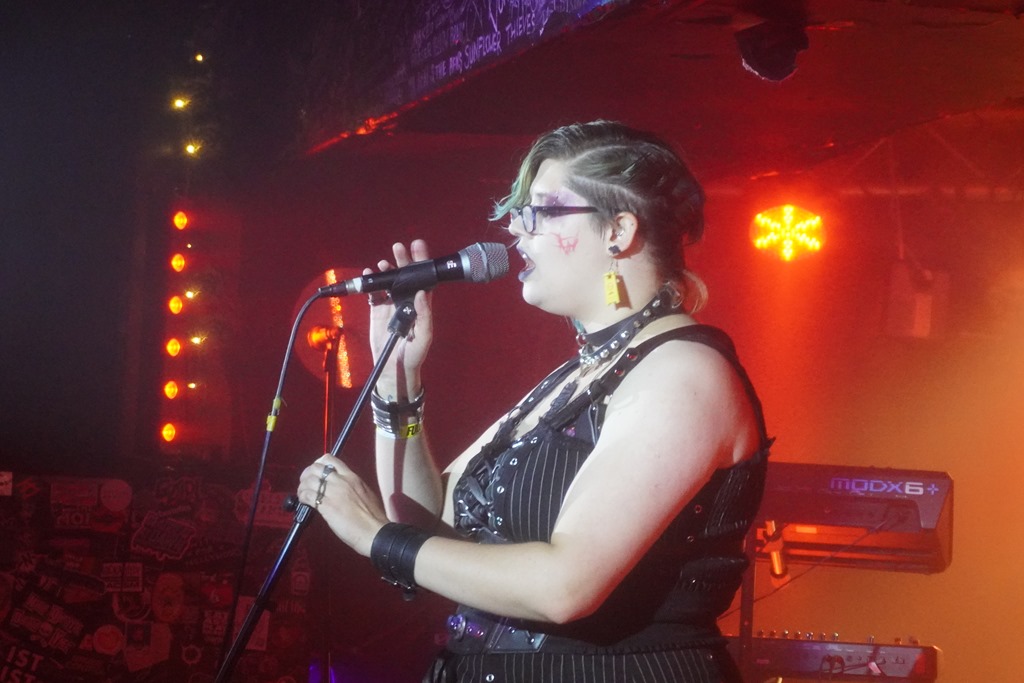
DSC09080DSC09035

The Scarlet Hour

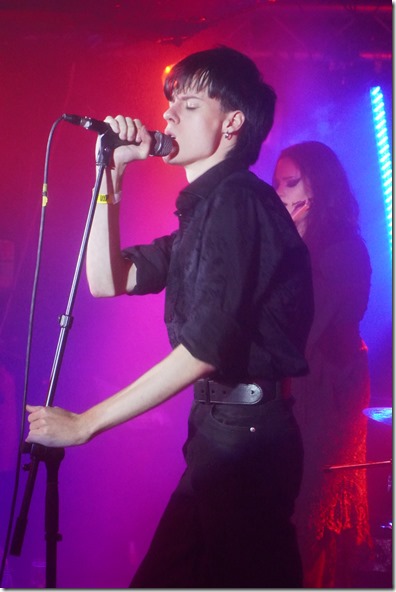
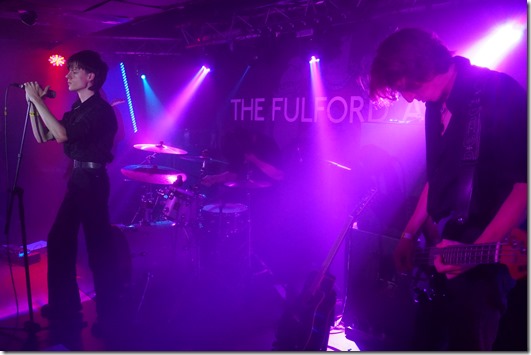
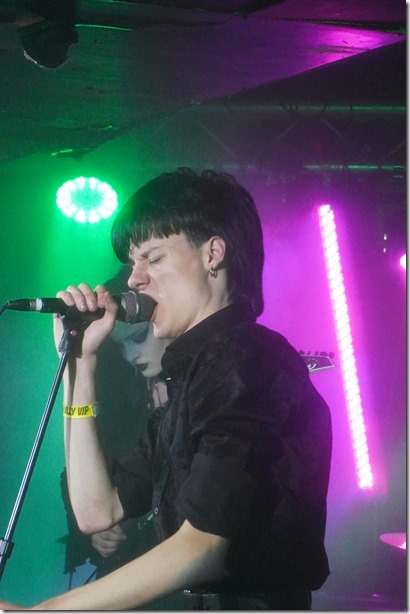
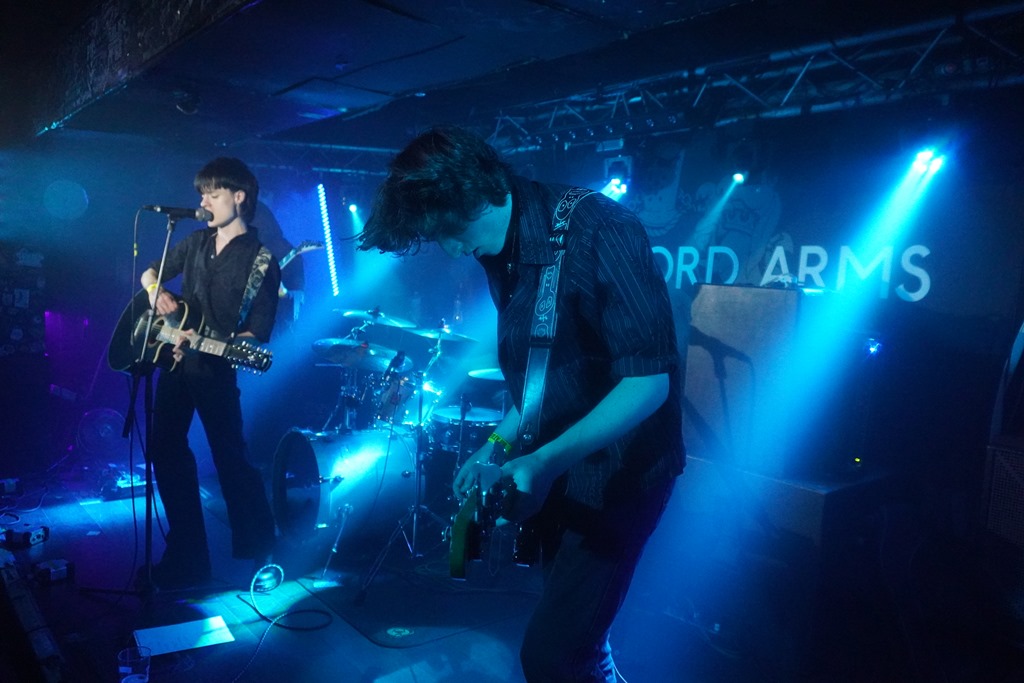
The InSect, who released their debut album As It Ever Was a week ago, have a much more elaborate stage show and a full band lineup. Despite the fact I’m a fan of drum machines myself, their performance strikes a huge contrast with The Scarlet Hour’s in terms of dynamics, volume, sonic density, and energy, and much of this is on account of the band-ness they present. In terms of presentation, they’ve a lot more going for them, too: The Insect are flamboyant and theatrical, and look comfortable acting up and bringing the show to the audience. Ed Banshee is a natural from man who spends a good portion of the set among the crowd, and Athena FireChild provides the perfect interplay. Instrumentally, they’re tight, and compositionally and stylistically, there are strong hints of Bauhaus. They go all out to put on a show, to entertain, with bright white lights and various other accoutrements adding to the atmosphere. But ultimately, it’s their energy that makes their set what it is.

DSC09123DSC09190

The InSect

And so, to Salvation. For tonight, SASS-era guitarist Adam Clarkson is back in the band at short notice, and this has necessitated a revised set-list from the one played at The Old Woollen in Farsley a week or so previous – but as this seemingly means the reintroduction of ‘Jessica’s Crime’ in place of a cover of ‘Don’t Change’ by INXS, it’s hardly a bad thing. They confess to a few slips during the set, but it’s unlikely anyone out front noticed: the keenest of fans are getting down and busting moves at the front from the start, and this is a relaxed show, with some good-natured back-and-forth between band and audience throughout.

DSC09214

Salvation

Salvation sound absolutely fantastic, and again highlight the difference between the old-school drum machine bands and more recent ones: they know how to crank up the beats – and the synth bass – to create a full sound which is at least equal to live instrumentation. Perhaps more specifically it’s an early 80s Leeds thing, but they, like The March Violets at The Warehouse last year, sound loud and vibrant, with a bass drum sound that truly kicks and a snare that cracks right into the cranium, punching through the interweaving mesh of the dual guitars.

DSC09281DSC09288

Salvation

They were always at the more accessible end of the spectrum in comparison to The Sisters and The Violets, but at the heart of songs like ‘The Shining’, there’s that solid bass groove, pumping drum sound, and nifty guitar work – and live, the guitars pack more punch than on the recordings. Tonight’s rendition of ‘Jessica’s Crime’ lands between the more guitar-orientated version recorded for she shelved Clash of Dreams album for Merciful Release, and the Wayne Hussey produced viola-soaked rerecording, released as a single in 1985, and it’s nothing short of killer. ‘All and More’ lands near the end of the set, which closes with ‘Why Lie’, and the pretence of an encore is tossed aide as they leap into a fun, chuggy cover of ‘Kids in America’ which brings the set to an elated conclusion.

And for all the weight of personal history pressing into this outing for me, I’m more than glad I turned out.

17th April 2026

Christopher Nosnibor

The singles leading up to the release of The Hedonist, the second EP by The 113 have very much been cause for excitement and built a buzz about the band. Each of the four songs is tense, taut, edgy, quickfire vocals spitting lyrical depictions of the grim present in which we find ourselves with a splenetic urgency against a noisy backdrop where the combination of bass, drums, and guitar – in themselves, completely conventional – meld to forge a dense, unified aural assault.

As they put it, The Hedonist ‘revolves thematically around an anti-technology sentiment, raising questions about data, online worlds and how these can be weaponised against you.’ This – and various surveys and reports – is indicative of an increasingly anti-technology (and certainly an anti-AI) sentiment among younger generations. They have reason for concern, and it’s hard to decide what’s scarier, the prospect how personal data will be used, or how entire swathes of jobs will cease to exist in the imminent future. Anyone who blithely pisses about making caricatures and action figures in the name of fun is not only missing the point: they’ve already sold their soul and more. They’re part of the machine.

We’re living in every single dystopian fiction ever created all at once, right now. This isn’t hyperbole. And it feels as if we’re all trapped and helpless. It’s small wonder we’re experiencing a mental health crisis as we see an entire generation coming through paranoid and scared as we witness an existential threat in many ways worse than the cold war, inasmuch as it’s a war on all fronts.

The 113 recognise this, and The Hedonist is an articulation of this infinitely-faceted terror. Every single track is a standout, and in sustaining the high level of intensity across the whole EP, the potency of the material is amplified. Where The Hedonist succeeds is in the way it doesn’t depart from the blueprint of the debut, To Combat Regret, but instead builds on it.

It’s by no means music to chill out to: quite the opposite, in fact. It’ll likely raise your blood pressure and make you clench your jaw and fists. But if there’s a band that encapsulates the zeitgeist, it’s The 113.

AA

012The113_Jan26Press_BNW

Glitchmode Recordings – 10th April 2026

Christopher Nosnibor

.SYS Machine’s third album is the first to be released through the Glitchmode Recordings imprint, home to Dave McAnally’s main project, Derision Cult, among notable names. And on Parts Unknown, .SYS Machine continue to expand their sonic palette, while still maintaining close connections with influences like Depeche Mode and Nine Inch Nails, but also Peter Gabriel and Porcupine Tree.

One thing which is key to .SYS Machine’s work is its proximity to the present: McAnally draws on his environment and events in real-time, and while previous album Graceful Isolation was the ‘lockdown’ album, Parts Unknown is, as they put it, a work which ‘reflects on navigating an age of uncertainty—both spiritually and technologically—touching on themes of recovery, loss, and the uneasy process of entering new phases of life.’ And once again, ‘the album also features guest vocal contributions from Kimberly Kornmeier of Bow Ever Down on two tracks, adding a dynamic that recalls the atmospheric interplay heard in artists like Garbage and Portishead’.

These are unquestionably daunting times: the world is at war – not all fighting the same war, but the point stands – and while many are joyfully embracing AI as an assistant, a creator of amusing artwork, a companion, or a therapist, just as many are fearful for their livelihoods. The future has never looked so uncertain, our places in the world as individuals so precarious.

‘Everyday just feels like the gravity’s gone’, is the refrain on the album’s first song, ‘Gravity’ – and it’s not about being serious. There is a sense of being cut loose from the planet, spinning free from all that is known.

Single release ‘Fading’, one of the Kimberly Kornmeier vocal leads, is altogether slower and more overtly reflective in tone – almost a trip-hop ballad, whereby the standard electronic backing, with its twitchy beats, is augmented with guitar. ‘Are you lost in yourself / I think you’re fading away’, she sings, sounding lost in herself, too. And perhaps the message really is that we’re all lost, but many don’t even realise – or have the time or headspace to reflect long enough to realise. It’s perhaps fitting that at a time when the world seems to be spinning at a faster pace, and waking each morning brings with it a combination relief at still being alive and the anxiety over what may have happened overnight and what the coming day may hold, that Parts Unknown manifests as a slower, sparser-sounding work, which steps back and creates space and time for contemplation. ‘Home’, the second Kornmeier cut is, in contrast, quite possibly the album’s poppiest, and more than justifies the Garbage references.

‘Resonance’ touches on the contradictions of life in the present: ‘I can see the future it’s not certain everything’s just fine / Maybe if we wait just longer everything will be alright’. We tell ourselves, perhaps even convince ourselves everything’s fine, but ultimately, it’s just a hope, wishful thinking that it will be. Because without hope, what have we actually got?

The expansive ‘Collapse’ is, contrary to its title, the expansive sound of hope as sweeping, cinematic synths soar over a delicate acoustic guitar, while the final track, ‘Closure’, leaves us in a more ponderous place, mining a strong seam of Depeche Mode / NIN electro-led instrumentation which blossoms into a powerful, uplifting finale. But is it the sound of true hope, or simply a desire to convince that hope still exists? And where does the line lie between hope and delusion? These are questions to mull while absorbing the details of Parts Unknown. Unknown and unknowable, none of us knows what’s around the corner. With Parts Unknown, .SYS Machine prompt contemplation with some well crafted soundscapes and neatly-tempered beats.

AA

AA

a3679975656_10

Romac Puncture Repairs – 17th March 2026

Christopher Nosnibor

While Rad Berms is Abigail Snail’s debut release, the musicians behind the name have a notable pedigree, and between them, drummer Will Glaser and guitarist Stef Kett (aka Stef Ketteringham) have numerous credits on record – and for Rad Berms, they’ve joined by ‘master reed player’ James Allsopp, who gets pretty much everywhere. And for this debut release, Abigail Snail’s promise ‘avant-rock, improv, and experimental soul groove into an adventurous collection of tender, boundary-pushing songs’.

After the gentlest of intros, the first track, ‘Show Breaking to Waves’ slowly derails before the arrival of the vocals. The vibe is rather Crooked Rain Crooked Rain era Pavement, only wonkier and significantly jazzier, particularly in the percussion. The instrumentation is sparse, the feel a shade folky… then ‘Soul Berm’, the first of the ‘Berms’ crashes in, wonky, scratchy, discordant. Counterpart ‘Space Berm’ sounds like a noisy tuning up / tuning down outtake, a chaotic interlude of jarring noise rock propelled by a jazz percussion break.

I remember reading a review of Trumans Water in the early 90s describing them as ‘the real Pavement’. Well, I think it was Trumans Water and not Archers of Loaf. AoL were kinda tame indie: Trumans Water were demented and truly off-kilter, taking the lo-fi slacker thing to a level that incorporated the weirdness of Captain Beefheart, down to the sounding like they were playing different songs in different keys and tempos, but all at the same time. This is a circuitous detour to arrive at the conclusion that Abigail Snail call to mind – well, my kind, which is a vault of disorganised musical files and recollections – Trumans Water, only even further out and significantly jazzier.

I appreciate that with every sentence, I’m probably alienating another ten per cent of potential listeners here. It’s probably for the best. Rad Berms is as niche as it is crazy, and it’s better to shed the ones who won’t dig it early on and save everyone the hassle of rubbing the wrong way.

A deranged howl of ‘Goooooood grief / That’s one batshit brief / Good Lord / How much shit can one chick hoard?’ delivered atop clanging, angular guitar that’s pure Shellac announces the arrival of single cut ‘Good Grief’, a raw, riotous blast of jazz and math-rock melded together. They explore a host of genre forms across Rad Berms, but manage to incorporate some jazziness into most of them.

‘Attach Bayonets’ lands in the middle of the album and brings with it a mellow psychedelic / desert rock feel, like a slacker retake of America’s ‘Horse with No Name’, only with bongos and woodwind – and no obvious hook. But you get the idea. Hopefully. It’s kinda trippy, primarily acoustic, and at times quite discordant. Laden with melody and harmonies, ‘Stay Rad’ is mellow, too, a quintessential slice of slacker indie with a dash of 60s psychedelia. There’s daftness in abundance here, and at times it does seem as if they’re just testing us as listeners while they dick about showing off their technical prowess and simply demonstrating their capacity to make music that doesn’t conform to any convention, and the fact they’re too cool for choruses, or even structure anyone can follow. ‘Yikes Bikes’ and ‘Bitchin’ Chords’ in particular feel indulgent, albeit in quite different ways. But why not? There was a time when bands would say in interviews that they made music for themselves, and it was a bonus if anyone else liked it. It became a cliché, and of course most of them were lying. But now? Who makes music to get rich and famous? Some, for sure, but the majority appreciate now that it’s not going to happen, so they may as well make music to please themselves – which is precisely what Abigail Snail are doing here. There’s no way you could accuse these guys of being predictable or lacking range.

AA

AA

nwV8XyiQ

Fysisk Format – 17th April 2026

Christopher Nosnibor

King Midas’ seventh studio album is the follow-up to their 2013 Norwegian Grammy-winning album Rosso. Thirteen years is quite the gap, although such spans between albums seem rather less unusual now than in times past. In the 90s, the five-year gap between The Stone Roses eponymous debut and The Second Coming was painted by the press as being longer than an eternity, but the last few years have seen acts return after absences of a quarter century or more. The fact is that many artists find themselves mired in life and in dayjobs, because it’s hard to make a living from music alone, and regular work and raising families aren’t compatible with creative work, and especially not with touring. And so it is that Blanco arrives more than thirty years after their first EP, From the Pipeline, in 1994, and notably, they report that the band ‘still consists of founding members Ando Woltmann and Per Vigmostad who share production credit for Blanco’.

According to the duo, ‘Blanco is an album about emptiness, partly inspired by Belgian cold wave music from the early 1980s, by the noise cancellation in BMW models from 2023/24, by New Age as a concept, by the novel Lanzarote by French author Michel Houellebecq, by Rod Stewart on his way home from a party in the wee hours and by yuppie Scandinavian businessmen in all forms’.

This seems like a curious array of inspirations, and I can only comment with any real knowledge on Michel Houellebecq’s typically bleak and anticlimactic novel and Rod Stewart, whose 80s work haunts me on account of childhood memories if my mother dancing to awful, awful songs ‘Baby Jane’ and Atlantic Crossing still got played far more often than was healthy. But then, I was also exposed to dangerous levels of Phil Collins and Tina Turner, which probably indirectly explains my immersing myself in writers like Houellebecq, who I arrived at on the publication of Whatever, which was described by Tibor Fischer as ‘L’Etranger for the info generation’.

According to their bio, ‘Blanco marks a brand new start for King Midas – a tabula rasa, a blank slate – where all methodology, instrumentation, composition and production are untried ground, and all paths have been trodden anew’.

‘Sunrise’ is a drifting sprawl of muiltitracked autotuned vocals which quiver and warble over some expansive, semi-ambient synths. It’s novel and vaguely entertaining, but you hope to dog that the album gets better, and mercifully, it does, conjuring expanses of quite claustrophobic, beat-driven electronica.

As an exploration of emptiness, it works well: the vocals are largely sampled and / or looped, creating an atmosphere of detachment, human sounds without the human presence, while the instrumentation is minimal in its arrangement. There’s no comfort to be found here, no human warmth, just stark monotony, beats that thud on, and on, and on… I never really took to dance music because it felt… impersonal, is perhaps the word which summarises the experience. And that’s despite being a fan of late 80s and early 90s electronic industrial music. Anyway. Blanco seems to take those elements and turn a mirror on them. It is repetitive, impersonal, monotonous… and that’s the comment. And there are flickers where there’s a near-silent acknowledgement. ‘Look’ brings a strongly eighties feel, and things fall into place around the BMW comments with ‘Blaupunkt’. A friend of mine bought an 80s BMW in the early 90s and thought he was flash as hell with his aircon and bangin’ stereo, although we’d be freezing our tits off while he burned fuel at an alarming rate with the aircon on and the stereo sounded shit. I’ve digressed again, but this is what happens with albums which are largely instrumental, and ‘Blaupunkt’ sounds like Kraftwerk nabbing bits of Ennio Morricone and chucking in a bit of New Order circa Movement. It’s pretty cool, and also hypnotic, but also intense.

The eight-and-a-half-minute closer, ‘Infinite Sadeness’ is slow, deliberate, expansive, the pulsating beats which define the album as a whole replaced by altogether sparser, more minimal, and subtler percussion, and with the introduction of flute it adds a new dimension to the sound.

Blanco is varied, and takes some time to come around to. The indefinable absence is affecting, and reverberates around these taut compositions, which emanate a sense of emptiness, assimilating all aspects of its dominant theme. But patience is the key. It’s as a whole that Blanco works.

AA

AA

a3099271958_10

8th April 2026

Christopher Nosnibor

Six months on from Benefactor, and Washington D.C. improvisational psychedelic outfit Zero Swann are back again with Ones Who Love. This marks quite a step up in output following a two-year gap after 2023’s Amon Zonaris.

Once again, it’s a set built around theatrical, gothic vocals, drones and cacophonous percussion, feedback, and more drones, all wrapped in layer upon layer upon layer upon layer of reverb.

On first hearing the album’s first song, ‘Chrisom’, I had to hit the pause button a few times to check there wasn’t some other music playing on one of my open browsers. There wasn’t. One might reasonably draw parallels to Captain Beefheart’s Trout Mask Replica, which to my ear (an ear which has been exposed to one hell of a lot of strange experimental shit) sounds like people playing different tunes in different rooms of the house, with the doors all open while you’re standing in the hallway. But the experience is truly more akin to MySpace circa 2007, when every post and profile would be playing music and you’d spend an age trying to figure what you needed to mute while slowly going mad. The drums don’t seem to be in time with themselves, let alone the abstract instrumentation, and the vocals float around in that sea of reverb as if in another dimension entirely. It’s not only disorientating, but quite quease-inducing.

This is – as anyone familiar with Zero Swann will know – the template for the album. The hectic, multi-layered percussion on ‘White Lips’ splashes around in a swirl of treble, reverb, and phase or flange, while amidst a stuttering bass throb and chaotic mess of noise. This is lo-fi to the max: black metal production values applied to Batcave-era goth with a heavily experimental edge.

It’s all going on with ‘Shrine Slavery’: drum ‘n’ bass beats put through the mangle and a thousand effects are paired with haunting, howling layers of shoegaze guitars, while Jeremy Moore comes on like Michael Gira in his messianic mode circa Children of God, calling the end of days while all burns around him. The title track is a towering, hypnotic monster of sound on sound, and it feels huge, not to mention apocalyptic and terrifying.

The derangement continues on the murky ‘Pig Scalder’ with echo-soaked guitars to the fore – the quintessential US ‘death rock’ sound (something that very much separates the UK and US interpretation of ‘goth’) – but with swirling chaos behind it all. With so much going on, and in all directions all at once, it’s virtually impossible to concentrate on or otherwise pick out the lyrical content, and while this may be detrimental in some respects, the fact of the matter is that this is Zero Swann’s sound – messy, multiplicitous, discontiguous. And it’s best approached by simply letting it all happen, immersing oneself in the mayhem. It’s impossible to pick apart the separate elements – and equally impossible to piece them together.

‘Tidal Skull’ again brings a dingy, doomy, gloomy gothy morass which is hard to penetrate and even harder to decipher and unravel, and ‘Storage Organ’ is a riot of sludgy, sepulchral darkness. Ones Who Love is hard going. And I actually dig it – but it’s one seriously challenging listening experience. The last song, ‘What You Never Wanted’ lurches and lumbers its way through five and a half minutes of sludge that stands practically waist-deep, and you slosh and crawl and trudge your way to the end. There are no short cuts, no easy routes, no alternative directions.

Whichever way you look at it, there’s no other act around which sounds like Zero Swann. On Ones Who Love, Moore goes deep and goes dark. Spectral structures emerge from thick fogs of noise and reverb, very like ruins looming through gloom. Gloom and ruins essentially summarise what Ones Who Love gives us. As was the case with its predecessor, Ones Who Love is not an easy or accessible album – to the extent that it often feels like a test, a challenge: enjoyment and appreciation are not the same thing.

AA

a1686268212_10