Posts Tagged ‘Futura Resistenza’

Futura Resistenza  – 24th Match 2026

Christopher Nosnibor

Well, it is Good Friday, so it seems an appropriate time to settle down with a large whisky and some candles to engage with an album of funeral procession music from Ryfylke, Norway. And as the title suggests, this is actually what this collaborative album contains:

Rooted in the bygone custom of ‘Liksong’ (literally ‘corpse song’) that was once sung by small groups of singers who guided rural funeral processions, Janvin and Joh tap into its uncanny, unbearably slow intervallic structures, reanimating the practice as a kind of ancient electronic microtonal devotional music. Voices and vocal effects, synths and melodic percussion seep into the cracks between major and minor, and the whole thing carries the creaking weight of ceremony, yet glows with an otherworldly modernity, as if a forgotten liturgy had been retuned for a dimly humming chapel of circuits.

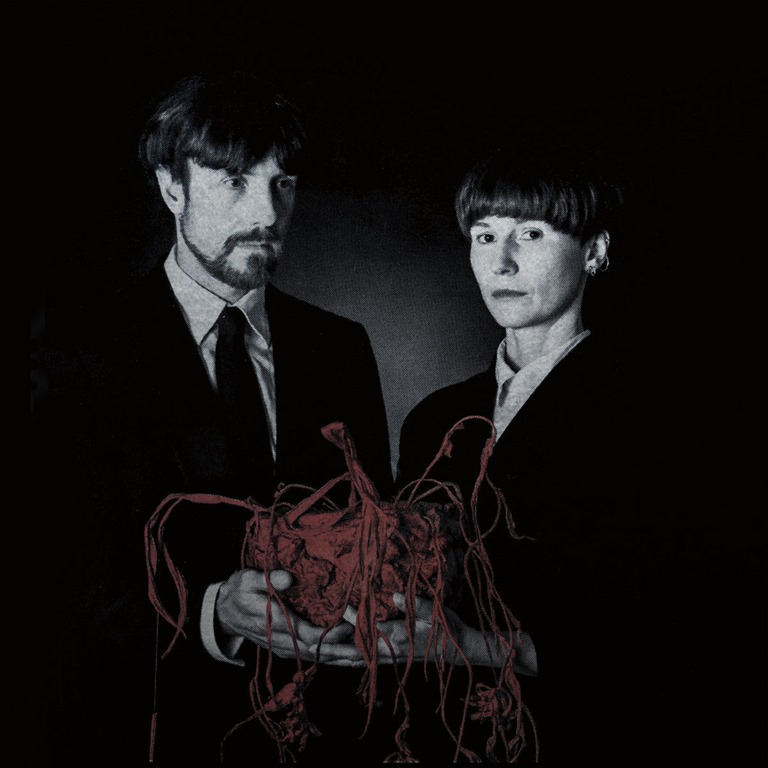
The duo, with Janvin on vocals and electronics and Joh on synths, tape machines, and percussion, also enlisted Lucy Railton (cello) and Jules Reidy (electric guitar).

The nine tracks present a remarkably structured, linear funeral journey – and while the premise of the album is already most uncommonly literal, so is the linear structure, which begins with ‘Leaving Home’ and concludes with ‘Postlude’, which it arrives at via ‘Pasing neighbours’, ‘Before the burial site’, ‘By the grave’, ‘Lowering the coffing’, and ‘Processing grief’, among other almost instructional titles.

The pieces them selves are quite minimal in their arrangements: drones, hums and haunting, folk-inspired vocals, bathed in reverb and surrounded by echo come together to create soundscapes which are haunting, and, at times, other-wordly. ‘Pasing Neighbours’ is a slice of detached, rippling electronica, which on the surface couldn’t be further removed from ancient Nordic rituals… and yet Janvin and John succeed in subtly manipulating the sounds to conjure something which reaches deep into the psyche with its rippling dissonance.

There’s a gravity to this album which underlies the twisting, processed electronic experimentalism which is befitting of the subject and the context, and while ‘Passing neighbours’ does amalgamate shoegaze with robotix 80s electro, it doesn’t feel disrespectful to the source.

‘Rest – Bordvers’ which features Jules Reidy) is a sliver of ghostly folk which sounds like spirits ascending over an early Silver Jews outtake, and ‘Before the burial site – Jeg Raader Eder Alle’ is a heavily processed, almost space-age reindentation of a folk incantation – but it’s the haunting, eight-minute ‘By the grave – Akk, Mon Jeg Staar I Naade’ which really grips the attention with its ghostly wails and insistent pulsations and expansive, arcing drones. The dronerous ‘Lowering the coffin’ features vintage spacemuzak ripples and reverberating ululations contrasts sharply with ‘Processing grief’, which begins hymn-like, before swiftly transitioning to shuffling, fractal synthiness reminiscent of Tangerine Dream.

One suspects that in this modernisation, in this translation, something has been lost. But at the same time, this interpretation serves to keep an ancient heritage alive. And this is the sound of dark woodland, of glaciers, of spartan spaces – ice-dusted woodland. Often, it’;s trult beautiful, and this is nbowhere more clear on ‘Acceptance – Kom, Menneske, At Skue Mig!’, another piece which is more than seven minutes in duration.

The final track, ‘Postlude’ is gentle, and even alludes to a brighter future on the horizon. For mem it feels a little soon, although there s no use of timescale by which to orientate oneself available in the immediate entrance of the accommodation.

Having spent the last three years processing – and documenting – grief following the loss of my wife, Or Gare: Funeral Procession Music from Ryfylke, Norway is a difficult album to approach on a personal level. But there are times in this expansive, exploratory work, that death, in all its suffering, has been muted and spun into niceness – if not a palatable, packageable sound.

AA

AA

a1717757498_10

Futura Resistenza – 27th January 2025

Christopher Nosnibor

Some years ago (like about seventeen years ago), when I embarked on my reviewing journey proper, I was introduced to whacky experimental work and the world of microtonality. It was an absolute revelation. Just as, growing up in the 80s and raised on the Top 40 singles and Now That’s What I Call Music, discovering goth, alternative, John Peel, and Melody Maker completely changed my head, so did entering this new world. Onje thing that completely spun me was the way in which some artists extrapolated and academicized some pretty stupid or mundane stuff. This is a reasonable example. To quote: ‘Flipperen takes the randomness of pinball and turns it into music. Using recordings from old pinball machines, the music mixes chaos and structure, reflecting the Fluxus spirit of play and chance. It’s a wild ride through sound, where things don’t always make sense–but that’s the fun of it.’

Flipperen began as a lockdown / COVID project, of course. As they detail, ‘During the quiet and strange Covid days, Suzana Lașcu, Robert Kroos, and Reinier van Houdt began a recording project based on the soundbites of pinball machines. They visited the empty Dutch Pinball Museum in Rotterdam and captured field recordings of machines from the 1960s to the 1990s. From these, they selected 28 samples to serve as thematic starting points for what they called ‘game pieces,’ recorded in two sessions at Sonology Studios in The Hague. The recordings were then shaped into sound collages using cut-up techniques and probabilistic processes.’

These processes mean that the end product is a very long way removed from the actual sounds of metal balls pinging and rolling about inside a glass-covered case. Instead, landing between Brion Gysin and John Cage, we get a collection of weird and woozy fragmentary pieces – compositions would be something of a stretch – ranging from awkward ambience to crashing and banging that sounds like a prepared piano fitted with lump hammers. There’s playful, whimsical sighing and trilling, psychedelic trippery and some fairly straight jazz-flavoured piano in the mix. There’s Clangers-like whistling and clattering and clanking, pops and thuds, explosive industrial noise and frenzied country. There are moments which sound like someone grunting through a comb with greaseproof paper, others which sound like the strumming of an egg-slicer, others still which create the impression of a piano being dropped down a flight of stairs.

The final cut features twenty-six tracks, the majority of which are around a couple of minutes long, or even significantly shorter. But there are a couple which run to around six and a half minutes of uncoordinated chaos, and it’s a lot to take in.

The appeal from a sonic and experimental perspective is that ‘Pinball is a game that combines control and randomness—each action leads to an unpredictable result, and the outcome is always uncertain’, and as such, the patterns which provide the material for these pieces are erratic, unpredictable, and ultimately, not really patterns at all. And so it is that Flipperen shunts forwards and backwards, crackles and pops with zany snippets of this, that, and everything, conjuring a wild collage of disparate elements and all kinds of discord.

As much as pinball machines lie at the heart of Flipperen, it’s really a wide-ranging collage work with randomness at its heart. It’s fun, it’s fascinating, it’s brain-bending – and one might say it’s a work of Flipperen genius – but you definitely have to be in the mood for something quite this far out.

AA

a2489366009_10