Futura Resistenza – 24th Match 2026
Christopher Nosnibor
Well, it is Good Friday, so it seems an appropriate time to settle down with a large whisky and some candles to engage with an album of funeral procession music from Ryfylke, Norway. And as the title suggests, this is actually what this collaborative album contains:
Rooted in the bygone custom of ‘Liksong’ (literally ‘corpse song’) that was once sung by small groups of singers who guided rural funeral processions, Janvin and Joh tap into its uncanny, unbearably slow intervallic structures, reanimating the practice as a kind of ancient electronic microtonal devotional music. Voices and vocal effects, synths and melodic percussion seep into the cracks between major and minor, and the whole thing carries the creaking weight of ceremony, yet glows with an otherworldly modernity, as if a forgotten liturgy had been retuned for a dimly humming chapel of circuits.
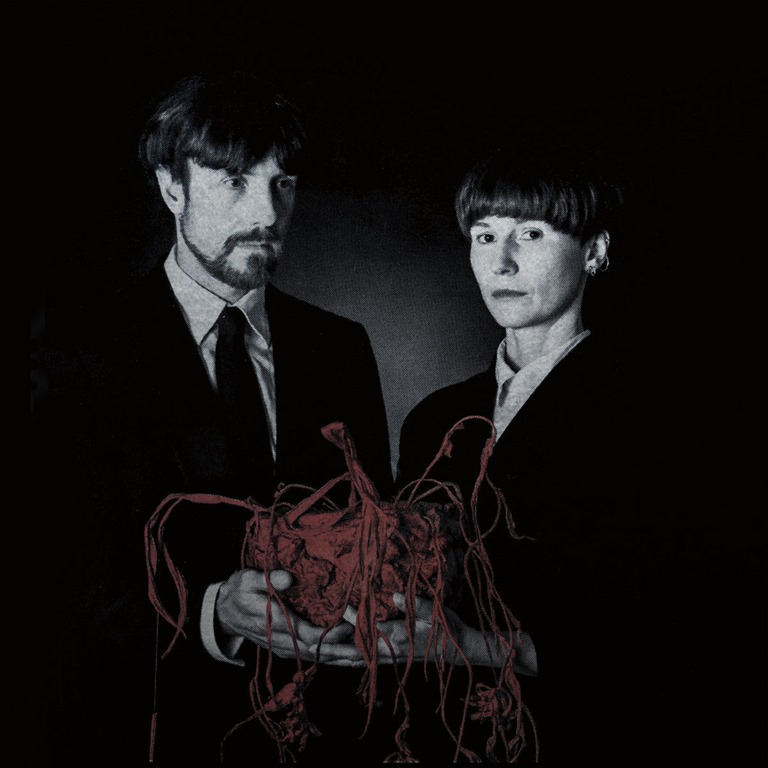
The duo, with Janvin on vocals and electronics and Joh on synths, tape machines, and percussion, also enlisted Lucy Railton (cello) and Jules Reidy (electric guitar).
The nine tracks present a remarkably structured, linear funeral journey – and while the premise of the album is already most uncommonly literal, so is the linear structure, which begins with ‘Leaving Home’ and concludes with ‘Postlude’, which it arrives at via ‘Pasing neighbours’, ‘Before the burial site’, ‘By the grave’, ‘Lowering the coffing’, and ‘Processing grief’, among other almost instructional titles.
The pieces them selves are quite minimal in their arrangements: drones, hums and haunting, folk-inspired vocals, bathed in reverb and surrounded by echo come together to create soundscapes which are haunting, and, at times, other-wordly. ‘Pasing Neighbours’ is a slice of detached, rippling electronica, which on the surface couldn’t be further removed from ancient Nordic rituals… and yet Janvin and John succeed in subtly manipulating the sounds to conjure something which reaches deep into the psyche with its rippling dissonance.
There’s a gravity to this album which underlies the twisting, processed electronic experimentalism which is befitting of the subject and the context, and while ‘Passing neighbours’ does amalgamate shoegaze with robotix 80s electro, it doesn’t feel disrespectful to the source.
‘Rest – Bordvers’ which features Jules Reidy) is a sliver of ghostly folk which sounds like spirits ascending over an early Silver Jews outtake, and ‘Before the burial site – Jeg Raader Eder Alle’ is a heavily processed, almost space-age reindentation of a folk incantation – but it’s the haunting, eight-minute ‘By the grave – Akk, Mon Jeg Staar I Naade’ which really grips the attention with its ghostly wails and insistent pulsations and expansive, arcing drones. The dronerous ‘Lowering the coffin’ features vintage spacemuzak ripples and reverberating ululations contrasts sharply with ‘Processing grief’, which begins hymn-like, before swiftly transitioning to shuffling, fractal synthiness reminiscent of Tangerine Dream.
One suspects that in this modernisation, in this translation, something has been lost. But at the same time, this interpretation serves to keep an ancient heritage alive. And this is the sound of dark woodland, of glaciers, of spartan spaces – ice-dusted woodland. Often, it’;s trult beautiful, and this is nbowhere more clear on ‘Acceptance – Kom, Menneske, At Skue Mig!’, another piece which is more than seven minutes in duration.
The final track, ‘Postlude’ is gentle, and even alludes to a brighter future on the horizon. For mem it feels a little soon, although there s no use of timescale by which to orientate oneself available in the immediate entrance of the accommodation.
Having spent the last three years processing – and documenting – grief following the loss of my wife, Or Gare: Funeral Procession Music from Ryfylke, Norway is a difficult album to approach on a personal level. But there are times in this expansive, exploratory work, that death, in all its suffering, has been muted and spun into niceness – if not a palatable, packageable sound.
AA
AA