Archive for August, 2026

Dret Skivor – 7th August 2026

Christopher Nosnibor

How do I know it’s Bandcamp Friday? Is it because I’ve received in the region of fifty emails by midday for new releases? Well, yes, there is that. But ultimately, it’s the fact that there’s a new release on Swedish microlabel dret skivor. This month’s is a radio-friendly unit shifter available to download and as a CD in a limited edition of two copies.

With uncharacteristically voluble notes accompanying it, we find the work described as ‘A chance meeting between winged and un-winged and captured hooded crow monologue.’ It would be impossible not to infer some element of reference to the 1979 debut album by Nurse With Wound, Chance Meeting on a Dissecting Table of a Sewing Machine and an Umbrella, which in turn was taken from Lautréamont’s The Songs of Maldoror, a work which sits within the broader oeuvre of Surrealism. All of this serves to present a comprehensible intertext given what dret skivor and its artists are all about – which, to boil it down to less academic terms, is ‘weird shit’.

Tejploopare add, ‘We thank our avian masters for the source material and Remo de Vico for his programming skills in creating the time-stretcher Loom that has been used in the creation of this piece’.

But if you’re expecting birdsong, or even something inspired by Hitchcock’s The Birds, think again. Gråkråka is just one fifteen-minute track which, regardless of its source material, manifests as one extended echo-heavy swirling drone, as much akin to the sound of a giant millstone grinding against another from the depths of a huge cavern, or the sound of a million bats taking flight from a cave with the audio slowed by maybe three hundred percent. Admittedly, I’ve never really listened to crows in conversation, and was unaware – or had forgotten – that they have the capacity to mimic the sounds of other birds, animals, and machinery’, according to learnbirdwatching.com. While the veracity of this is debatable, it is understood and accepted that crows are capable of advanced and highly sophisticated communication, using a range of techniques.

But let’s suspend disbelief for a moment and take on face value that gråkråka is simply the sound of crows, manipulated to a greater or lesser extent to forge a churning, whirring, multi-textural sonic experience. It’s not a drone per se, so much as a rumbling eddy, an endless whistle, and a slow grind, all at once, and these all shift around in tone and the level to which they sit to the fore over the track’s duration. At times, the upper buzzes and hums, the higher frequency fizz, makes my inner ears itchy, and make me feel a palpable relief that I don’t suffer tinnitus, but am coming to the opinion that perhaps a certain level of hearing loss may not be such a bad thing for the avoidance of sonic torture at certain frequencies. If only I hadn’t been so bloody sensible wearing earplugs to gigs this last twenty years, eh?

Gråkråka is not a work of harsh noise: it’s not even overtly noisy. But it is one of those aural explorations which is designed to inflict discomfort. And in that, it succeeds. By the mid-point, it’s attained a quire specific level of torturousness, and while it does pull back from this for a time, what replaces that scouring blast is a quivering ominous rumble, which again swells and replicates the sensation of some unseen fear growing closer: put another way, it’s the soundtrack to a nightmare, to a horror without words or boldly manifestation, simply a psychological attack which goes on, and on, twisting to a trebly roar akin to a demon rasping suicidal ideations into your ear during the final five minutes.

It’s not actually a criticism when I express the view that gråkråka feels like a long fifteen minutes. It’s not intended to be one of those soft ambient drifts where half an hour simply evaporates. Quite the opposite: this is an album that’s raison d’aitre is to seed discomfort and make you squirm from beginning to end. And it does.

AA
a2862934852_10

Creative powerhouse MILDREDA will make your skin crawl with their eerie lyric video for ‘Silk Skin’, the next advance single taken from the Belgian dark electro duo’s forthcoming double album Realities, which has been slotted in for release on August 28, 2026.

Mildreda comment: “This track revolves around unspoken desires and the familiar, exhausting push and pull between longing and retreat”, mastermind Jan Dewulf writes about the lyrical content. “I wanted to transform that tension into a ritual – a feverish invocation, a dance that binds, summons, and slowly pulls you under. Musically, the heavy bass was a happy accident in the studio, one that instantly revealed the direction that I needed to take. A relentless pulse rooted in EBM, and unmistakably Belgian at its sonic core.”

AA

1a55660f-356a-e0e8-6180-be5873151c3e

Prophecy Productions – 7th August 2026

Christopher Nosnibor

Earlier this year, we received news that Belarus metal band Dymna Lotva were in some bother when some of their music videos were declared by a court in their home country to constitute ‘extremist materials’. As vocalist Katsiaryna “Nokt Aeon” Mankevich explained at the time, “This means that fans from our home country, who liked, reposted or commented on these videos in the past are now facing a real risk to disappear into a prison. The rule of law does not apply in Belarus. Just one like under a video that has only now been designated as ‘extremist material’ might mean time in jail”.

Having fled the country, they’ve continued to work, and work hard, and are now unveiling their fourth full-length album to the world, following a succession of killer singles, including ‘The Boat of Despair’ , featuring Aaron Stainthorpe, formerly of My Dying Bride.

AA

And now, on the eve of the new album’s release, Mankevich has been charged with ‘extremist activity’, ‘financing terrorism’, and three more criminal charges in her home country. The Investigative Committee of the Sovietsky District of Minsk officially opened a case against Mankevich, who lives in exile in Poland, in June. She has now been summoned to appear in the Minsk City Court for a hearing on August 14th.

Mankevich explains how this has come about, and remains defiant, writing ‘It is clearly connected to my participation in protests against the regime and to my support for Ukraine. To me, it feels even somewhat flattering that this regime is still keeping an eye on us six years after the protests and five years after I was forced to leave Belarus. This confirms that I am on the right path and also provides me with a strong motivation to keep going. Please do not worry about me. Poland has granted me international protection status because of such political persecution. As a result of this trial, Belarus could seize all my properties still remaining in the country. Well, spending my money on creating music turned out to be a great idea after all. And to the Investigative Committee of the Sovietsky District of Minsk I say: Kiss my extremist ass!’

Some say that politics has no place in music or the arts. Those people are ignoramuses. Even as far back as Shakespeare, art has been the vehicle by which political commentary – and dissent – has been disseminated, often via coded or allegorical means. And this context is essential in understanding the band, what they stand for, and why. And, within this context, the arrival of Vyraj is an achievement which is nothing short of phenomenal.

Dymna Lotva are staunch in their rebellious, dissident stance: as their bio states, ‘their name means “Swamp in Smoke”, which relates to the atrocities surrounding the burned villages of Paliessie, which has endured bloody massacres and brutal conflict in the past. Their lyrics are often based on Belarusian tales filled with accounts of sorrow gleaned from historical archives, folklore, and new horrors that are committed in their home country at the present’.

Black metal is clearly an appropriate medium for all of this, but they describe Vyraj as ‘a musical kaleidoscope’, a work which pushes far in myriad stylistic directions, and it’s not an album built around protest and anger, but an exploration of what they call ‘Belarusian ethno-astronomy,’ explaining that ‘in Slavonic legends, the starry sky is associated both with the afterlife and with journeys, which becomes closely intertwined with the musicians’ personal experience of forced emigration’.

The album itself delivers on everything it promises, and more. The first track, ‘Zory’ begins gently before sliding into an almost Swans-like hypnotic groove, before finally the black metal blast powers in. But there’s a twist: the demonic howls and thunderous drums are paired with a sense of expanse that offers hints of prog bombast and symphonic glory. incredibly, it not only works, but is a complete rush.

‘Veha’, which clocks in at over seven minutes, is a multi-faceted epic in every sense, with some dainty chiming notes offering a melodic delicacy which contrasts significantly with the blistering guitars and throat-ripping vocals, finally yielding to a softer closing passage which borders on the ambient.

The aforementioned ‘The Boat of Despair’, which bears one of only two titles in English, is a definite standout, not least of all because it represents such a stylistic shift, introducing hunts of post-metal alongside hints of Amenra, and offers so much emotional depth.

It’s the range and dynamics of Vyraj which make it such a gripping listen, as you find yourself wondering what the next twist or turn will be, and amidst the flaming fury, there are moments or transcendental beauty which are truly elevating. There are still plenty of rabid, raving black metal blastout passages on offer here, and when they go all out, Dymna Lotva really do go all out with face-melting ferocity. But ‘Niamah Darohi’, with its sweeping operatic vocal contrasting with a hellish howl, a rolling piano paired with shuddering rapidfire kick drum is exemplary of the album’s immense range and the remarkable vision when it comes not only to the songwriting, but its execution.

The closer, the eight-minute ‘Return My Coffin Home’ is the very definition of ‘epic’, and reminds us that this may be the only way they will ever return home, at least as long as the current regime is in place. That they have produced such a remarkably detailed, intricate, and impactful work against all the odds is testament to the artistic spirit. Long may it continue to represent the instinct for survival. Whatever happens next, with Vyraj, Dymna Lotva have determined their legacy as innovators within the sphere of black metal.

AA

f4a2f9f5-c45d-8909-f6e0-944215eb4872

Two decades have passed in the land of Gnod, yet the psychic travelogue only becomes more enthralling as it goes on. The page is turned, a new chapter begins…

Whilst this band has flourished via dauntless conviction, hive-mind magic and a fierce and uncompromising spirit, one ingredient has served as a crucial fuel for the fire – the monolithic singularity of the riff.

This second chapter of Gnod’s sort-of-anniversary trilogy also originates in the same six day sessions as the first, at Hellfire Studios near Dublin with producer Spud Murphy (Lankum, Black Midi etc). Yet the focus this time is on the transcendental heaviness and repetition that the band have often used as a primary fulcrum of their approach. This volume captures the sound of strings flayed, throats shredded, skins punished by the organic chemistry of this formidably powerful band in a room.

Chronicles of Gnowt (Vol. 2) will arrive via Rocket Recordings on 9th October and is preceded by the track and video for ‘The Witness’. Watch it here:

AA

Operating as ever stubbornly adrift of all or any genre restrictions, the coruscating workouts chronicled here evolved on the road in the last two years before being honed and perfected in the studio setup by Murphy. “Spud was masterful –recording live, pushing us to do more takes and then when the right take was done, by the time we got to the desk from the live room he already had it sounding great for playback” relates the band’s Paddy Shine.

The results are amongst the most fearsome and kinetic material that Gnod have summoned to date. The opening ‘The Witness’ takes a The Ex-ish groove and sets it in motion before driving a wall of incandescent guitar scree through it. ‘Ice Man’ redlines an animalistic Melvins-style framework into the realms of dystopian burnout. ‘Old Gold’ meanwhile centres on three-guitar interplay snaking around a muscular, taut groove, with Paddy’s feverish declamations acting as master of ceremonies.

As has often been the case for a band heavily driven by serendipity and intuition, the best plan is no plan at all. “We find quite regularly that spontaneity and the no thought approach works better than over analysis and detailed planning,” clarifies Chris Haslam, “Paddy’s stream of consciousness lyrical approach is another example of how when we remove our own will from the process, something purer, more real & more connected fills the void.”

AA

IMG-20260528-WA00251-990000014505143c

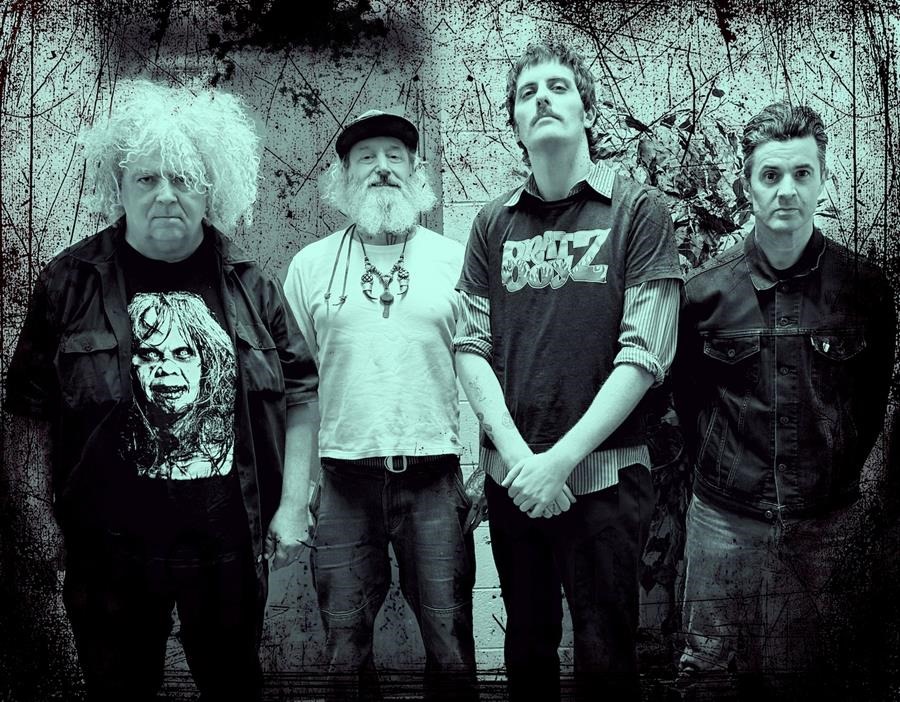
Buzz Osborne didn’t need another band. JD Pinkus didn’t need another band. Coady Willis didn’t need another band. Together with Clinton Jacob, they started one anyway. Meet Gatta Morta.

The quartet makes its debut today with Burn Witch Burn, a 4-song EP, available now via Amphetamine Reptile Records. Listen to the single ‘Black Hall’, which accompanies the release, here:

AA

“It’s always a good time for the world to embrace a new heavy/weird band,” Osborne says. “I had the idea for Gatta Morta while touring last fall. I realized I needed to start a band with these three. Seemed like a no brainer. Solidly weird rock music that needs to happen.”

Butthole Surfers bassist Pinkus agrees: “It’s been way too long since I got to write a heavy album from scratch with such high caliber players with such complimentary styles… and we’re just cat scratching the surface of what we got goin’ on!”

Rounding out Gatta Morta is Clinton Jacob, the creative force behind Chicago’s weirdo, pop-noise rock duo Mr. Phylzzz. “I just had this feeling that one day we would work together. I became friends with Buzz over the past few years doing shows together and having him play guitar on a Mr. Phylzzz song. When I was asked to be a part of Gatta Morta, I was speechless, but I was 100% ready for it.”

Burn Witch Burn lurches between thick, riff-driven heaviness and warped, psychedelic passages, with Osborne, Pinkus, Willis, and Jacob creating music that’s simultaneously reminiscent of their previous work and entirely new.

AA

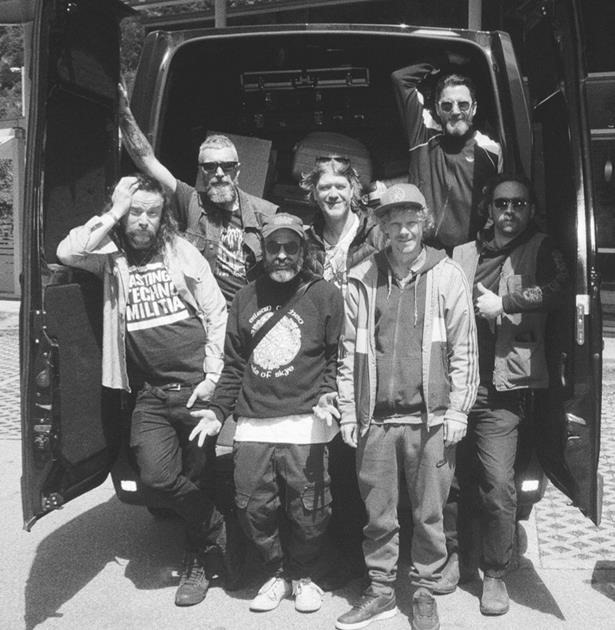
GattaMrtaPromo1-hi-res-990000079e04513c

Photo credit: Keturah Bishop

Human Worth – 7th August 2026

Christopher Nosnibor

Having thoroughly enjoyed the churning racket of Leeds grindcore / sludge / infernal racket duo Pleb when they opened for Unsane at The Brudenell in April, the announcement of their debut EP being released on the esteemed Human Worth label came as excellent news. And even better news is that they absolutely deliver on the promise of the live show here.

The credits very much summarise the two players’ contributions, with D. Fraser providing ‘Guitar / Feedback Hell’, and S. Myles doing ‘Drums / Squawks / Grunts’.

This is one serious fucking racket, and it would be a massive letdown if it was anything else, with eight songs and a total run time of just over ten minutes. There’s no pissing about here, just squalls of feedback and rasping, rabid vocals barking away low in the mix amidst the churning dingy noise. But then, this was always going to be the case. Check their pedigree: between them, their CVs list Cattle, Grub Nap, Groak – luminaries of the Leeds DIY noise scene that’s been thriving in tiny pub venues and basements and rehearsal rooms and the like for an age. It’s a tight-knit, but incredibly welcoming scene that’s spawned countless bands all committed to making the most ferocious, ugly noise imaginable. And with Grease Trap, you don’t have to imagine it.

And despite being just the two of them, it sounds like a full band, the guitar signal split to provide grinding low end and raging feedback at the top simultaneously. The result is a devastating sonic blast that assaults the senses with all frequencies. But why Grease Trap? The band explain:

“A grease trap is a tank that folks stick under the sink in a place that deals with food, it’s supposed to stop clumps of food and fat from going down the drain. There was one down our gaff and we had to empty it when we first moved in and I’ve never smelt owt like it. Me and our lasses dad were boaking the whole time while carrying buckets of foul stinking water up and down the corridor to try and wash the bloody thing out. Feels like that’s where we’re at as a society at the moment, we had all this stuff in place to try and stop things from going wrong but everything is rotting from the inside out and it’s poisoning the water supply. Greed is absolute, hatred is being weaponised and apathy is apparently cool again somehow. These songs are about the world wide descent into Fascism, the dutty roz, that orange bastard, our entire generation not breeding cos we’re in a hostile environment, technology turning us inside out, our inability to face our own problems without decking it and a bunch of other fun stuff. It doesn’t offer any solutions but sometimes you need to scream into the abyss eh?”

Lacking a grease trap myself, and my house having been built circa 1890 and still connected to the original ceramic Victorian plumbing which connects to the (also Victorian) drain system, I’ve had to invest in a set of drain rods, which are subject to regular usage to unclog backups that threaten to plug my back yard. they seem to be caused predominantly by mini fatbergs congealed around masses of hair (which evidently aren’t mine). And I can confirm that the job is nothing short of rank, dragging out clods of stinking clumps of sludge. it still doesn’t stink as badly as Reform, though, or, judging by footage online, as much as Trump when he nods off and soils himself. Rotten politics, rotten behaviour, rotten intestines, it would seem.

This is all of the above compacted into the most intense sonic explosion. It distils the rage at the fetid state of Western culture and the sewer state of our politics, our media, social media and blasts with complete abandon, and titles like ‘CLODS OF SHIT AND BONE’, ‘THE BRUISES MEAN IT’S ON THE WAY OUT’ and ‘THE EYES MELT FIRST’ sound exactly as you’d expect. With Grease Trap, Pleb vent the rage in the rawest, most direct fashion. And it absolutely hits the spot.

PS fuck fascism.

AA

HW052_Pleb_GreaseTrap_CoverArtwork

Alternative Pop / Electro-Rock firebrand THE NOISE WHO RUNS returns with ‘The Summer Talking’, a catchy sonic respite that disguises devastating social critique beneath shimmering indie-pop hooks. Sneaker Pimps legend Ian Pickering spins a tale of romance and nostalgia before spiralling into an indictment of climate denial, political inaction and humanity’s addiction to comforting lies. The striking video contrasts postcard-perfect holiday escapes with the growing environmental crisis, this song asks an uncomfortable question – are we sleepwalking through catastrophe while convincing ourselves everything will somehow work out?

This track is lifted from PIckering’s new (and now acclaimed) Re: GenX album, a fearless uncompromising record that puts an entire generation (and society itself) on trial. Addressing war, consumerism, inequality, media outrage and the collapse of collective responsibility, he sounds a warning siren for a world in freefall. Blending dark electronic textures with anthemic alternative rock, The Noise Who Runs is one of alternative music’’ most fearless voices, offering a brutally honest examination of the choices that have brought us to the brink.

AA

Built around the repeated refrain, “It’s just the summer talking”, the song explores the promises we make when sunshine, nostalgia and hope temporarily blur our view of reality.  Balancing melancholic indie-pop with widescreen alternative rock, it follows dreams of escape, new beginnings and forever as they gradually reveal themselves to be fragile seasonal illusions. Beneath the relationship story lies a wider reflection on the comforting stories we tell ourselves—about love, our lives and the future itself.

AA

Noise Who

31st July 2026

Just the other day, I was contemplating – and discussing with my daughter – how practically every style and fashion had been recycled in the not so distant past, or was in otherwise back in vogue, with the exception of hair rock and spandex. But then I came to the new EP by Italian ‘alternative’ rock / industrial act Noir Addiction, and while it was predominantly a conglomeration of industrial and grunge, there were some strong hints of music from the time that settle forgot. I’d assumed it was a singular exception, but then I caught Greek act Dismiss just last week and noted how their hybrid of punk and hard rock invited comparisons to both Amyl and the Sniffers and Lita Ford, and now there’s the video which accompanies Blacklist Union’s latest single, ‘Madame Butterfly’, and the growing evidence is starting to suggest otherwise. Sonically, it’s very much steeped in 90s grunge, at least in the verses… but the choruses, and visually… we’ll return to this after we’ve unpacked the rest of it.

The accompanying notes provide few surprises by way of context, explaining how the takes its title ‘from Puccini’s Madama Butterfly’ but ‘is a world away from the opera’s tragic tale of unrequited love. Instead, it serves as a heartfelt love letter from frontman Tony West to Lorraine Lewis of Femme Fatale’.

Femme Fatale still stand as one of the definitive glam metal / hard rock bands of the period 1987-1990, and Lorraine Lewis was a classic rock pinup, who would also front Vixen between 2013 and 2025.

‘Madame Butterfly’ is the lead single from Blacklist Union’s forthcoming album, The Good, The Bad And The Notorious, due for release in spring 2027. The release follows the acclaimed single ‘Jackson’, Blacklist Union’s reimagining of the Johnny Cash and June Carter classic, which paired Tony West with – yes – Lorraine Lewis for a duet ‘blending outlaw country, punk attitude and rock ‘n’ roll swagger.’ Tony West must have been creaming his skinny jeans.

‘Madame Butterfly’ is unreconstituted, back-to-the-source, glammy hard rock, the likes of which we haven’t really seen in a long time. The fact that it does incorporate grunge elements indicates just how things have changed in the last thirty years, given that grunge was a rebellion against precisely this. But… different times. Pandemic. World war. Shit on shit. Somehow, lately, it feels easier to forgive.

AA

Lorraine Lewis & Tony West pic

31st July 2026

Christopher Nosnibor

We really do seem to be experiencing a Nu-Metal renaissance right now. And of all the genres I would have put money on sinking without trace, it’s Nu-Metal, which felt like a flash-in-the-pan fad in the late 90s. The idea of crossing rap and metal wasn’t entirely new even then. Aerosmith’s collaboration with Rum DMC may have sown the seeds, but it was most definitely a meeting of rock and rap. The collaborations which featured on the Judgement Night soundtrack in 1993, however, very much brought rap and metal together, and set the precedent for what Limp Bizkit and Linkin Park would go on to do. Helmet and House of Pain? Faith No More and Boo-Yaa T.R.I.B.E.? Slayer and Ice T? These were some fierce collisions of rap and metal. This was radical. But that was 1993 – and what a time to be alive! And now it’s 2026. Thirty-three years have elapsed. Holy shit. It’s not exactly ‘nu’ anymore. Is it? Perhaps it’s time for a rebrand. And since we’ve had Post-punk and even The New Wave of New Wave, how about Nu-Nu Metal, or ‘The Nu-Metal Revival’ or ‘The Nu-Metal Renaissance’?

But while the Nu-Metal scene of the late 90s was dominated by blokes venting versions of adolescent rage (although Fred Durst was nearing 30 when Limp Bizkit released their debut album, and there always felt like a sense of arrested development hung around the genre – older guys making records for disaffected teens), the current scene is altogether more diverse, and most significantly, we’re seeing female-fronted acts like Eville breaking through and kicking arse.

Smutclub Ldn share some common ground with Eville, as is happens, with whacked-out pop autotune colliding with skull-crunching riffs. And as such, ‘Elephant’ is a brain-melting identity crisis of a single: clocking it at precisely three minutes, it’s a mental mash-up of nu-metal, emo, and pop, all brought together and heated under compression, with explosive results.

The verse riff is a gnarly, churning beast which chugs and undulates menacingly, the chorus sounds like it belongs to a completely different song, and the breaks and bridges are something else again. How do you switch between hands-in the-air anthem and brutal slam-dancing and back again, and again, in just three minutes? ‘Elephant’ is positively schizophrenic, and love it or hate it, it’s the most inventive thing you’re likely to hear in 2026.

AA

Smutclub Ldn Promo image 1

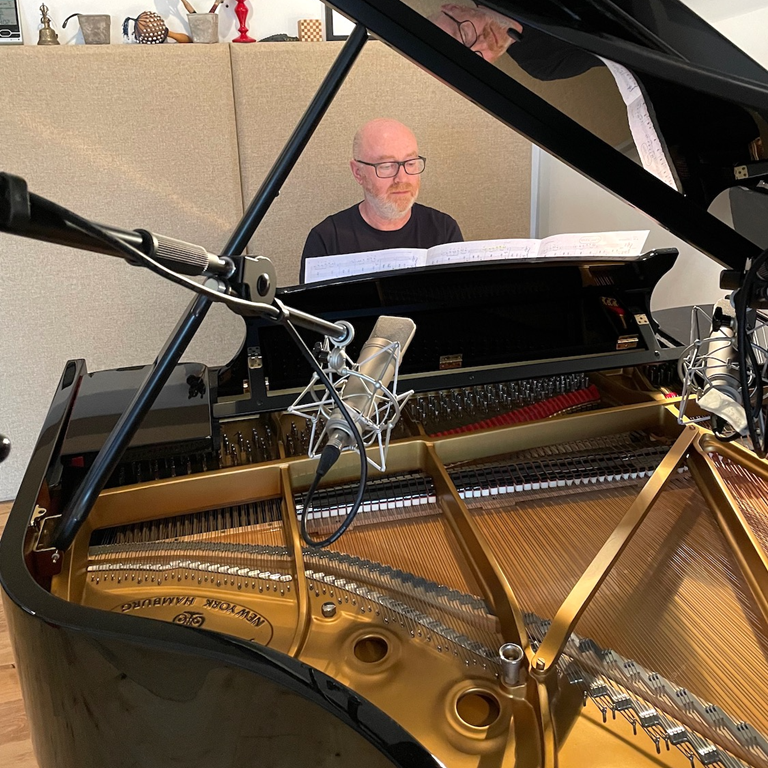
Martin Virgo is a composer, multi-instrumentalist and producer who worked with musical luminaries such as Björk and Massive Attack in the early 1990s before going on to enjoy global success with his own band, Mono, later in that decade.

Almost three decades on, Virgo is releasing his debut solo album. Entitled Ghost Piano, it can be seen as a prequel to his hit-making years. Classically trained in composition and piano at the Guildhall School of Music, he had developed a taste for Chopin, French Impressionism, the austere strangeness of Erik Satie and the minimalism of Philip Glass and Brian Eno. However, he then hooked up with Nellee Hooper and began a career in pop music that also led to work composing for cinema and TV commercials. These included an award-winning ad for Help The Aged.

“I came to the point a couple of years ago when I wanted to create something that was completely stripped of all the frippery and distractions of modern production techniques,” explains Virgo. “I wanted to write music that had a sense of lineage, but within a very distilled style. I also wanted to take a break from the world of digital audio production, so all the tracks on Ghost Piano were recorded live by myself on a Steinway model B acoustic grand piano, with the cello on the title track played by Nick Cooper (The Michael Nyman Band).”

Hear the title track here:

AA

Ghost Piano contains eleven evocative pieces in which the listener can hear the ‘ghosts’ of Chopin, Debussy and Satie playing in the absinthe soaked atmosphere of late 19th century Paris. “You can hear those influences on this album, although I think there are also traces of my time working with Björk on Debut, Massive Attack and Nellee Hooper on ‘Unfinished Sympathy’ and ‘Safe From Harm’, Shara Nelson on ‘Friendly Fire’ and Alanis Morissette on ‘Still’ (from the film Dogma),” Virgo adds. “These were all formative creative experiences for me. By the time I came to write and produce Mono songs like ‘Life In Mono’  and our album Formica Blues, I had embarked on a quest for a more European sounding harmonic and melodic palette.”

AA

9e681ce42ef606a232b24a2e41cb3c1231d91fcb