Posts Tagged ‘Heavy’

Magnetic Eye Records – 22nd August 2025

Everything gets an anniversary reissue now, doesn’t it? And however much you love a band or an album, the constant cycle of repackaged reissues with bonus this, that or the other, a new remastering starts to feel like a cynical drain. Not that such exploitation is anything new: the late 80s and early 90s with infinite formats of single releases whereby fans felt compelled to purchase multiple versions to obtain all the tracks and mixes in order to attain a higher chart position – when these things actually counted – were shocking for it. But back then, 7” and cassette singles cost 99p, a CD single wasn’t much more, and a 12” was maybe £3.50. But the point was that you got different stuff on different formats, and being a completist didn’t require a second job. Now, you’re looking at £30 for a splatter vinyl remaster with maybe one bonus track of an album you’ve already got five copies on, but you buy if for that track and for the sake of the collection… and being reminded that an album is now ten, twenty, twenty-five years old is like a body blow as you realise how quickly your life is passing by. On a personal note, I’m feeling this most acutely as I find myself on the cusp of fifty. How the hell have I been here half a century? And this means that anything that happened twenty-five years ago – at the turn of the millennium – was a quarter of a century ago. Remember how the entire civilised world was shitting itself over the so-called ‘Millennium bug’? It felt like the apocalypse was imminent at the time. How, it feels like a picnic.

But there are positives. Sometimes, a new edition can bring an album to the attention of a new generation of fans, and / or provide long-term fans with something special which serves to expand on the legacy of the release. This is likely the case with Further, an album which bypassed me, but won New Jersey stoner metal act Solace critical acclaim and fans, and there’s a poignancy about this re-release, too, as founder and vocalist Jason died in January of this year (the reissue was already in the pipeline before his departure), making for a fitting tribute and summation of his and the band’s legacy, remastered and expanded to include three previously unreleased tracks, and the original EP version of ‘Heavy Birth / 2 Fisted’.

Now, as this is my first exposure, if you’re already familiar with the album, this review will likely not be of much use to you: I’m in no position to comment on how the 2025 remaster compares to the original, or how the track sequencing – which follows that of the 2005 reissue, down to the 11-minute cut of ‘Heavy Birth / 2 Fisted’, with the additional material appended to the ten-track version.

For those unfamiliar, this is a solid slab of heavy metal that takes plenty of cues from Black Sabbath, straight from the off with the rifferola of ‘Man Dog’. The lead guitar work is busy, atop riffs which are thick and heavy, while the rhythm section is dense: the drums feel loud despite being fairly low in the mix, giving the impression of extreme volume on the part of the guitars while the bass slides like sludge at the bottom end of the sonic spectrum.

Jason’s vocals tend to manifest as bombastic and Ozzy-like, but there are moments, as on ‘Black Unholy Ground’ where he channels some palpable aggression, just before an epic solo breaks loose. There are no shortage of epic solos to be found here. The slower eight-and-a-half-minute ‘Followed’ exploits the classic quiet / loud dynamic and goes for the atmospheric slow-building intro, but when it gets going, by the mid-point it packs the filthy heft and rage of Fudge Tunnel. It’s a ball-busting blast of anguish which races to a pulverising conclusion with a blown-out cyclical riff. ‘Hungry Mother’ goes mellow – a brief acoustic interlude with some psychedelic hues – before the behemoth that is ‘Angels Dreaming’, a nine-minute monster that is peak stoner metal. Like ‘Followed’, ‘Heavy Birth’ draws as much on 90s underground noise as much as vintage heavy metal, and packs a massive punch.

The musical landscape of recent years is another world from that of 2000, and it’s important to bear this in mind, not because Further has aged badly, but because it sounds so contemporary. While stoner metal wasn’t a completely novel concept at the time of release – Melvins had been doing it since forever already, of course, and Queens of the Stone Age would unleash breakthrough major label debut Rated R in June 2000, it certainly isn’t the sound of the time, when nu-metal was the dominant style the world of guitar music, and after grunge fell to indie, big riffs were largely out in favour of guitars that sounded like slabs of concrete and vocals which switched between rap and emoting.

Further is heavy, gritty, unashamedly drawing on grunge (which with acts like Tad had taken cues from 70s metal in the first place), and hearing it now, it feels like an album that’s more at home in 2025 than it would have been in 2000. But this also demonstrates just how, while fashions come and go, quality music always holds up at any time – and this is quality. The bonus tracks – including the obligatory live cut in the form of ‘Funk #49 (Live in Tokyo ’98)’- are all worthy additions of a standard which is equal to the album itself.

AA

038620

Rocket Recordings – 22nd August 2025

Christopher Nosnibor

While you wouldn’t exactly call Rún a supergroup, they certainly represent a coming together of disparate artists of no insignificant pedigree, as their biography attests:

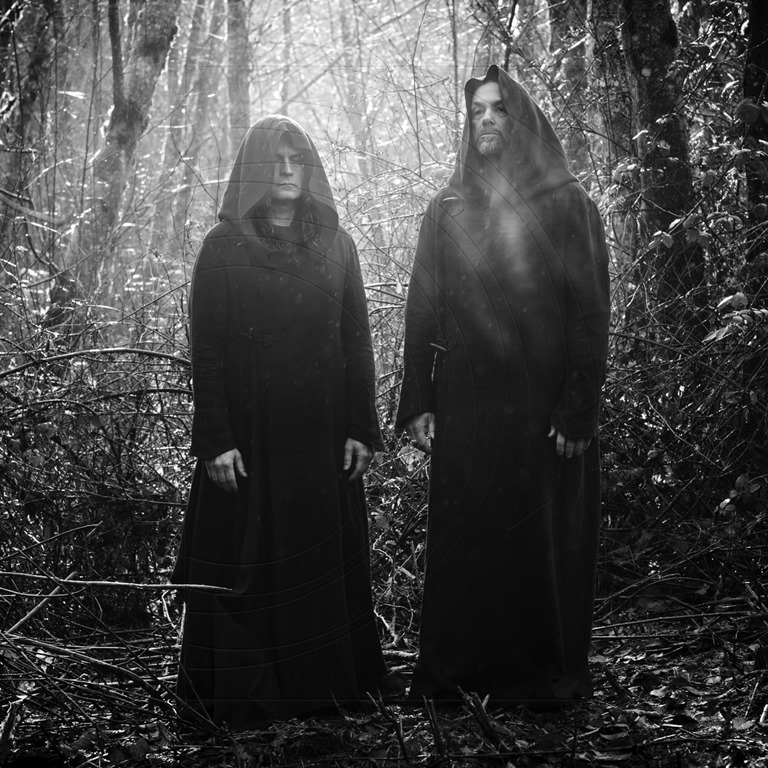
Rún comprise firstly Tara Baoth Mooney – sometime Jim Henson voice artist, with a longstanding background in everything from folk and choral music to experimental film-making. Diarmuid MacDiarmada – Nurse With Wound co-conspirator and brother of Lankum’s Cormac, brings with him the experience of avant-garde collaborations with a plethora of artists stretching back over thirty years. Drummer, sound designer and engineer Rian Trench, meanwhile, has worked on everything from the psychedelic IDM of Solar Bears to auto-generative experiments to orchestral arrangements, and owns the studio – The Meadow on Ireland’s East Coast – in which the album was made.

It’s a delicate folksome vocal which floats in on the first composition, ‘Paidir Poball (Pupil)’over what initially sounds like a mechanical wheeze of a bellows, or some form, of life support. The juxtaposition between something so earthy, so human, and something so very much not is compelling, and quite powerful, in a way which isn’t immediately easy to unravel. But a couple of minutes in, a thick, droning guitar – reminiscent of Earth 2, with that thick, sludgy distortion and trebly metal edge – winds its way int the mix and immediately, the mood and the direction changes. And then, on top, choral, almost monastic layers of vocal build and rise upwards to the heavens through the grit and grind and howls of feedback before eventually there is percussion. The drums – thick, thudding, low in the mix, feel as if they’re lagging, foundering in the tide or struggling against a head-facing current.

‘Your Death My Body’ strips things back primarily to percussion, but turns up the intensity with the vocals, which hit a wild intensity which borders on rabid. But with this, and some bleepy computer incursions and a grumbling but groovy bass which makes allusions to Jah Wobble, this album becomes increasingly difficult to place, or to pigeonhole. It’s a sad fact that nowadays, not only will they throw you in jail if you say you’re English, these days (I’m safe as I’m ashamed to pronounce my Englishness, even – or perhaps especially – in Scotland) – but aligning oneself to a genre can be a minefield, too.

The eight-minute ‘Terror Moon’ is a dark morass and a muti-layered, bass-heavy mindfuck that explodes into blistering, shredding electronic overload in the first minute before thumping percussion and the filthiest, fuzziest bass drive in and punch straight in the gut, propelling a psychotic, psychedelic weird-out with tripping space-rock synths and strains of feedback and infinite echo, which leaves you feeling dazed, dizzy. Terror? Yes, just a bit: it’s huge, it’s warped, and a tiny bit overwhelming in its weight and witchiness.

But this is nothing compared to the final track, the ultimate finale, the thirteen-and-a-half minute behemoth that is ‘Caoineadh’. Arriving as it does after a pair of punchy cuts – ‘Such is the Kingdom’ is murky, atmospheric, leaning toward experimental / spoken word, but a mere three an as half minutes on duration, and ‘Strike It’, which is perhaps the album’s most direct composition, evoking Swans circa ’86 but on speed, the grind coming with pace –it takes the album in a whole new trajectory. Gentle, even tentative at first, with nothing but a wandering bassline, it has a slow-burning drone-rock vibe to it as first. But then, the vocals – oh, the vocals! Tara Baoth Mooney brings a lilting folk feel against a slow, droning backdrop, which eventually gives way to a slow, expensive prog-pop mellowness, opening new horizons in every way. And every direction. It ends in a rippling wave of distortion.

This is essentially Rún in a nutshell: they have no confines, no limits, and to touch them is to embark on a journey. And what a journey this is.

AA

a1829277806_10

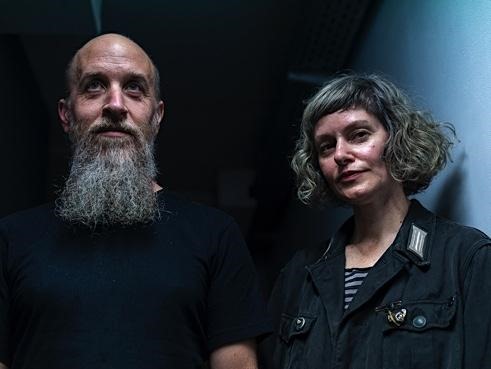
The forthcoming full-length from Los Angeles–based band Agriculture, The Spiritual Sound, traces a narrative arc through extremes.  The album is largely a fusing of the visions of its two principal songwriters: Dan Meyer and Leah Levinson.  Though distinct, their voices converge in a singular spiritual grammar—one that defines the totality of The Spiritual Sound, not as separate parts, but as one unified expression.

Dan writes like someone clawing toward the divine through noise, channeling Zen Buddhism, historical collapse, ecstatic grief. Leah’s songs move differently: grounded in queer history and AIDS-era literature, amid the suffocating fog of the present, they carry the weight of survival as daily ritual.  Levinson leads the charge on the album’s latest single ‘The Weight’  of which she comments:

“’The Weight’ is part of a series of songs on the album that bears witness to queer life. It was written reflecting on a particular month last year when so much seemed heightened. It seemed like many of my friends were being harassed in public—both verbally and physically—for being trans, for being queer, and/or for being women (it’s not always clear which). This was also a time when I was feeling a lot of love and a lot of community. I wanted this song and the songs around it to honestly reflect both these elements. I wanted to write about transness but didn’t want to rely on political aphorisms and indulgent images of suffering. I wanted to paint a holistic portrait of queer life.” – Leah Levinson

AA

image-990451000004513c

Photo credit: Olivia Crumm

AGRICULTURE LIVE DATES 2025:

Sep 3  Bristol, UK — The Exchange
Sep 4  Brighton, UK — Dust
Sep 5  London, UK — Oslo
Sep 6  Manchester, UK — White Hotel
Sep 7  Newcastle, UK — The Cluny 2
Sep 9  Leeds, UK — Brudenell Social Club
Sep 11  Dublin, IE — Workman’s Club
Sep 12  Cork, IE — Nudes
Sep 13  Belfast, NIR — Voodoo
Sep 14  Glasgow, SC — CORE. Festival
Sep 16  Paris, FR — Point Ephemere
Sep 17  Kortrijk, BE — Wilde Westen
Sep 18  Haarlem, NL — Patronaat

Oct 8  Brooklyn, NY — Union Pool (Record Release Show)

Oct 27  San Antonio, TX — Paper Tiger $
Oct 28  Austin, TX — Mohawk $
Oct 30  Atlanta, GA — Masquerade $
Oct 31  Saxapahaw, NC — Haw River Ballroom $
Nov 01  Silver Spring, MD — The Fillmore $
Nov 02  Philadelphia, PA — Union Transfer $

Nov 04  Louisville, KY — Zanzabar
Nov 06  Oklahoma City, OK — 89th Street
Nov 08  Albuquerque, NM — Launchpad
Nov 09  Phoenix, AZ — Valley Bar
Nov 11  Denver, CO — Hi-Dive
Nov 13  Salt Lake City, UT — The State Room
Nov 14  Boise, ID — Neurolux
Nov 16  Seattle, WA — Madame Lou’s
Nov 18  Vancouver, BC — Fox Cabaret
Nov 19  Portland, OR — Mississippi Studios
Nov 21  Sacramento, CA — Cafe Colonial
Nov 22  San Francisco, CA — The Chapel
Dec 04  San Diego, CA — Soda Bar
Dec 05  Los Angeles, CA — Lodge Room

$ with Boris

1st August 2025

Christopher Nosnibor

The other day, while riffling through my record collection, I found a few LPs and 12” I had quite forgotten owning, including a promo copy of ‘Chance’ by Red Lorry Yellow Lorry. Stapled to the plain black die-cut cover of this white-label record with the title hand-written in biro, is a press release which simply reads ‘I know this is what you’ve all been waiting for….. Yep. The new Red Lorry Yellow Lorry single It’s called “Chance” and as usual it’s on Red Rhino Records. It’s very good’ and is signed ‘Yours condescendingly’.

You just don’t get press releases like that any more – especially not typed in all block caps and photocopied.

I appreciate the effort that goes into a good press release, and a solid band bio, because it does help me as a reviewer get a sense of context, of what a band’s about, what an album’s about. But the counterpoint to that is that there’s so much detail being spoon-fed, there’s less room for creative interpretation. The fact of the music industry has changed radically since the 80s and 90s, the days of the weekly inkies, the time before the Internet.

There simply was no way of ‘doing research’. And writers had tight deadlines. And so they just riffed to fill the column inches. Facts were hazy, critiques were often based on first impressions and knocked out in an hour after an extended liquid lunch. Names, dates, titles weren’t always accurate. And fans scoffed at the errors – and still do when clippings are posted online – but that was the nature of the beast.

Now, misspell the name of the bassist or give the wrong year for their debut EP, or somesuch and PRs, labels, and bands are onto you straight away asking for corrections. In a competitive market – I often report that on average, I receive around fifty submissions a day – simply getting coverage is a massive feat. This is certainly not to say that those times past were better – simply different, and I simply navigate my way to this release via this route to demonstrate the ways in which things have changed in the years since I started out writing about music in the 90s. It’s also altogether rarer now to find negative reviews, and while a part of this is due to the overwhelming amount of music being released meaning that reviewers are generally more inclined to spend what time they have promoting music they like, there’s also a certain element of fear of there being a social media pile-on, or having their supply of gratis music cut off. But artists and their labels and PR really need to accept that they’re not going to please all the people all the time, and sometimes, it’s necessary to call out an act with dodgy politics or whatever, or to simply call a turd a turd.

Anyway. Before I’ve even hit play, I’ve learned that this release by MOTHS is ‘a visceral journey through the Seven Deadly Sins, with each track embodying a facet of indulgence, obsession, and self-destruction — from the corrosive jealousy of “Envy” to the insatiable hunger of “Gluttony” and the rage of “Wrath”. The album plunges listeners into a dark, immersive experience where desire spirals into chaos’, and that ‘Diving deeper into heavier territory, MOTHS fuse elements of death and black metal with their signature blend of progressive, psychedelic, doom, and stoner metal, crafting a sound that’s both aggressive and atmospheric. With every step forward, MOTHS continues to explore new sounds and challenge genre boundaries, proving that music has no limits when driven by passion and innovation.’

I feel as if my work is already done. I can pour myself a large vodka and kick back, right? Well, I could. But that’s not my style. At least not the kicking back part. Large vodka in hand, I brace myself for the sonic onslaught… to be faced with some tinkering banjo or acoustic guitar giving country licks that are pure blues / Americana. And it gets jazzier and groovier as it goes on. What the fuck is this?

‘Sloth’ slides into ‘Envy’, a slippery, sultry alt-rock cut where the vocals are bathed in reverb, and the lo-fi production belies the fact that this is a vaguely jazzed-up take on grungy emo, at times coming on like Paramore recorded on a 90s cassette four-track. The haziness of the recording is actually something of a positive, but these are songs which require a slicker, fuller production. As a consequence, these takes sound more like demos than final versions.

The murky rawness works better on ‘Greed’, which brings rabid, raw-throated, growling black metal elements to the vaguely gothic metal compositions. It segues into ‘Pride’ which goes full-throttle skin-peeling abrasion before suddenly going commercial rock with fancy licks at the midpoint. I like ZZ Top, as it happens. I just wasn’t expecting a riff from Eliminator here.

‘Pride’ does take things full heavy, a prime slice of sludgy doom, and ‘Lust’ is, without question, a slugging slab of doominess, with some fancy fretwork thrown in on top. There’s certainly a lot going on here, and most of it works. MOTHS certainly bring some megalithic riffs and a lot of fire to an album that may be unpredictable in places, but is, overall, solid and with no shortfall of gutsy, guitar-driven heft.

AA

MOTHS - cover

Floodlit Recordings – 29th August 2025

Christopher Nosnibor

Having discovered Swans in my teens – it was the late 80s and a friend introduced me to their most recent album, Children of God, which swiftly led me, via weekends spent at record fairs, to Cop, whenever I’m forewarned that a new release is ‘heavy’, I invariably find myself thinking ‘really? How heavy? Bring it on!’

I read – am forewarned – that Trudger’s ‘new album Void Quest… released on August 29th through Floodlit Recordings, a new label venture from guitarist of Pijn and Leeched… [is]

absolutely savage’. I saw Pijn live a few years ago and they slayed, so I consider this a positive in advance. And there’s no question that Void Quest is something of a monster. Arriving a full eleven years on from their debut, it’s as if they’ve distilled all the rage and festering fury of a decade into the nine songs on offer here.

The first track, ‘Merciless Sabre’ is fast and furious, but arrives with a surplus of fast licks and an element of black metal fretwankery that, in my ears, diminishes its weight despite the rampant, rabid ravings of the vocals, the tempestuous blast of the instruments combined to create a thunderous wall of noise.

Things settle to a more organised shape with ‘Occupied Frequency’, where math and metal merge. It seems as if they flung everything into the blender to grab the attention at the start and possibly overdid it, as things aren’t quite as wildly ostentatious thereafter. Sure, the guitar work is fast and furious, and it’s still showy and perhaps a bit over-the-top, but they layer down some magnificent textures and judicious detail amidst the relentless sonic assault, the eardrum-bursting blast.

‘God Rest’ is slower, heavier, and utterly devastating in its driving density. ‘Battle Hardened’ is simply out-and-out brutal, a song that slays all comers. Think you’re hard? Wait for this. This is shit that will slice your head off and ruin your internal organs.

Void Quest is heavy, but what makes it really heavy is its relentlessness. Thirty-five minutes or so of blasting ferocious noise, it leaves you feeling like you’ve just been given a good kicking. I wouldn’t recommend taking a kicking, but I would recommend this.

AA

a2040788392_10

Christopher Nosnibor

The Fulford Arms has quite a record for booking bands which are of a significantly larger magnitude than its 125 capacity – Wayne Hussey, and The March Violets are a couple which immediately spring to mind from personal experience, while Utah Saints, Bob Vylan, and Ginger Wildheart are further examples, and there are countless others who played here before going massive. And now Light of Eternity join that list. Formed with legendary drummer Paul Ferguson, whose credits in addition to Killing Joke are a feature in their own right, they’ve released a brace of belting EPs and are now undertaking their first tour, taking in a number of larger venues as a headline act, an even larger venues as support for Ministry. And here we are: the first night of the tour is also their live debut, here in this grassroots venue with its small, low stage, and black walls marked in chalk with the names of the acts who have played previously.

Soma Crew have a knack for landing a fair few of the city’s high profile support slots, and deservedly. Supporting The Fall will likely be a career highlight, but something about tonight is special. The Crew’s ever-shifting lineup sees them packing out the stage as a sextet, and they open with the crawling ‘Dead Insect’. Is it the right choice for this occasion? Do they care? On the second song, ‘Counterfeit’, they hit the motorik groove that’s their strong suite, and from hereon in, they’re away. Broken string? Meh, it’s no issue when you’ve got three guitars (plus a bass), one with an E-bow plugging away at a single chord. With the addition of a throbbing bass, it all makes a magnificent hypnotic drone. This is Soma Crew at their best.

DSC02831

Soma Crew

The DJ spun Ministry (‘Just One Fix’) and Murder Inc. between bands. Is it the done thing to play tracks by bands related to those about to take the stage? Why not, eh? I’d actually played not only the band’s two EPs but Locate, Subvert, Terminate, just the other day in advance of tonight, and it proved appropriate. There’s an interesting – and perhaps somewhat telling – selection of bands T-shirts on display here: no shortage of Killing Joke, but also The Sisters of Mercy, Paradise Lost, and The KLF… and the near-capacity crowd is suitably rewarded with a belter of a set, with twelve songs in all, which represents both EPs and another EP’s worth of as-yet unreleased material.

DSC02851DSC02847

Light of Eternity

Ferguson’s drum kit isn’t only the focal point: it occupies the majority of the little stage, with Fred Schreck (bass and vocals) and Pauly Williams (guitar) positioned either side. It’s perhaps as well they’re not given to ambulating a great deal. In Williams, they’ve found a guitarist with a sound that’s incredibly close to that of the late, great, Geordie Walker, and capable of churning out methodical riffs – and his dense, compression-heavy sheet metal thunder really rings out in a live setting, more so than recorded. He keeps his head down and just keep cracking ‘em out, and it works well alongside sturdy bass grooves, while it’s the busy, full-kit drumming that provides much of the action, the movement, within the songs.

DSC02911DSC02896

Light of Eternity

Their presence could be reasonably summarised as unassuming but focussed. They’re not a band for chat: Schreck does begin to speak on the subject of America, and hope, before ‘Dark Hope’, but it’s curtailed by the onset of the next percussive barrage which marks the start of the song. Ferguson not only leads proceedings, but does so in his own world, and that world is the centre of all of this. After the first few songs, he’s one hundred percent in the drum zone, and it’s apparent he doesn’t do breaks, preferring instead to keep that relentless momentum. Some may read it as standoffish, but it’s fairly apparent that it’s about the intensity, the songs slamming in back-to-back, the explosive beats, the churning riffs. Singer may not have Jaz Coleman’s charisma, but his reverb-drenched vocals are crisp and clear and delivered in such a way that the experience is that of an unyielding force.

DSC02893

Light of Eternity

Checking the setlist encapsulates the mood and subject matter of Light of Eternity: ‘Conformity’, ‘Distraction’, ‘Tipping Point’, ‘Explode’. They may be older (Ferguson is 67 now), but they’re not settling into a comfortable relationship with the status quo, offering a cocktail of anger and disaffection at the state of the world. ‘Dark Hope’ is grungy, built around descending chords played with steely guitars. The unreleased ‘Fascist X’, landing near the end of the set is a full-throttle heavy grinder, while ‘Aftershock’ is an absolute juggernaut. They simply don’t let up: every song is driving, solid, muscular, a wall of leaden density.

There isn’t a weak song in the set, and their live debut more than delivers on the promise of the first studio releases. Most of those present reasonably expected quality, but for a live debut, this was phenomenal. The smaller venue was a test, in a way – and they passed it, and then some. The rest of the tour promises to be fantastic – but those who were here tonight witnessed something special that they won’t forget in a hurry.

30th August 2025

Christopher Nosnibor

Just when you think every genre hybrid has been done, and are feeling worn and jaded by everything, someone chucks you something unexpected. You’re not even sure if you like it, at least not at first, because, well, the different elements are all good independently of one another, but in combination..?

It’s taken until their third album for me to discover Australian ‘Industrial Synth Crust’ outfit Schkeuditzer Kreuz, the brainchild of Kieren Hills, and ‘better late than never’ is one angle to take with it – although another is ‘would I have been ready for it before? Would I ever be ready?’

Swan Grinder is as ugly and intense and industrial as its title suggests. Spasmodic drum machines sputter and blast all over, underpinning pulsating electronic basslines and ear-shredding blasts of noise and distortion. And all of this provides the backdrop to raw, rasping vocals. In some ways, I’m reminded of really early Pitch Shifter – but with the wall of guitars replaced by abrasive squalls of electronic noise.

To think, there was really nothing like this before the 90s. While the 80s are the subject of great affection, and there’s a broad consensus that this was the decade of innovation, with the exception of grunge, the 90s are largely portrayed as a retrograde decade, with a return to ‘rock’, guitar-orientated music, and, in particular, the Britpop era, something born out of a nostalgia for the pre-punk era and a golden age which never really was. And now this period is revered with what one might even call a double-nostalgia; folks in their forties getting dewy-eyed over their teenage years listening to music that was nostalgic for the music of their parents’ generation. There’s something inherently sad about that, really.

But the alternative scene of the 90s was something else again. It was here that all kinds of metal migrogenres were birthed, while rap and rock came together and industrial metal emerged, melding crushing guitars with electronic elements. And there was also just so much weird shit percolating through various channels, and it wasn’t just something you had to tune in to John Peel late at night in the middle of the week for: with the major labels getting in on the action, you could catch the likes of Ministry and Butthole Surfers on MTV.

Anyway. There’s nothing sad about Swan Grinder. Angry, perhaps. Deranged, almost certainly. But sad? Nah. While there are elements of the construction which share common ground with , say, KMFDM, or PIG, the overall sound is altogether dirtier, gritter, rawer – and then there are the vocals, which are pure metal. As such, the result is a different kind of hybrid – hard, abrasive, and as nasty as the image the title conjures.

AA

a0603919453_10

Cruel Nature Records – 1st August 2025

Christopher Nosnibor

If ever an album was appropriately titled, this is it. Obliteration is from the Sunn O))) / Earth end of the slow and heavy spectrum, with everything low and grinding and dense and seeping along at a snail’s pace – but it’s also so very different. The eleven-and-a-half-minute ‘Teeth’. which raises the curtain on this colossal work, trudges along, thick and murky, the guitars like sludge, overlaid with the most haunting, ethereal vocals, like spirits ascending to the heavens – or perhaps more accurately, fleeing the molten torment of the volcanic pits of hell. The quieter passages ripple gently, but there’s something off-key and off-kilter that proves unsettling, a discordance which isn’t quite right.

The album is described as ‘a visceral, atmospheric journey shaped by improvisation, deep literary roots, and a shared affinity for both crushing heaviness and ghostly ambience’, with the notes going on to add that ‘vocalist and instrumentalist Amanda Votta draws lyrical inspiration from classic rock icons and poets alike – Led Zeppelin, Stevie Nicks, Carl Sandburg’s poems ‘Alone’ and ‘The Great Hunt’, along with Sylvia Plath.’

If none of the influences are immediately apparent, it’s likely because influence can be subtle, more a process of osmosis and assimilation rather than being about emulation. Drawing influence from Led Zep doesn’t have to equate to epic solos and using ‘baby’ a thousand times. And so it is that The Spectral Light suck all of those influences into a swirling vortex.

The churning ‘Branch’ is wild: ZZ Top on acid, Led Zep in the midst of a breakdown, riffs played at a thousand decibels through shredded speakers and melting amps. But it also spins into cracked post-rock territory over the course of its disorientating nine minutes.

Make no mistake: this is a monster: ‘Moonsinger’ warps and bends and it’s emotionally gutting in ways that are difficult to articulate. It touches the core of the very soul. The title track is defined by a dense, metallic churn… and yet there is still a delicacy about it. It’s dark, disturbing, ugly, and yet… beautiful. There is nothing else quite like this. And the dark, airless trudge of Obliteration feels like a black hole… and I find myself being dragged into its eternal depths.

Ahead of the album’s release, we’re privileged to be able to offer a video exclusive for the album’s final track and choice of lead single, ‘Whisper Surgery’. You might want to pour a big drink for this one.

AA

AA

AA

a1781525944_10

New Irish trio Rún are preparing to release their debut self-titled album on Rocket Recordings on 22nd August, and today share with us another taster in the form of ‘Strike It’.

About the track the band comment, “’Strike It’: A barely contained explosive doom riff with an industrial patina; points to the hypocrisy of a religious institution in profound dereliction of its duty to the most weak and vulnerable of us. The song addresses the macabre details of the Tuam babies controversy in Co. Galway, Ireland.”

The Irish word Rún can mean secret, mystery, or love, or perhaps some elusive combination of the three, reflecting the many aspects of life that defy easy explanation. In wrestling with these, it can become necessary to commit oneself entirely, to jump in at the psychic deep end in search of the vibrations and feelings at hand. This is where the band Rún come in.

The debut album of Rún – the result of three powerful artists locking horns and bringing equally passionate and uncompromising approaches to bear – is no less than an extraordinary collective catharsis. Yet more evidence that true heaviness is about much more than a cranked amp. It’s an emotionally driven and richly atmospheric journey into the darkest recesses of states earthly and unearthly, from a spiritually intrepid outfit who alchemise experimental methods and improvisatory states to reach intimidating heights of sonic and psychic intensity.

AA

Live dates:

21 Aug / Galway / Roisin Dubh
22 Aug / Cork / Nudes
27 Aug / Dublin / Spindizzy Records (instore)
29-31 Aug / Birmingham / Supersonic Festival
6 Sep / Sligo / Minor Disturbance Festival
15 Nov / London / Rich Mix (w/ Sirom)
19 Nov / Glasgow / The Glad Cafe
20 Nov / Newcastle / The Lubber Fiend

Rún comprise firstly Tara Baoth Mooney – sometime Jim Henson voice artist, with a longstanding background in everything from folk and choral music to experimental film-making. Diarmuid MacDiarmada – Nurse With Wound co-conspirator and brother of Lankum’s Cormac, brings with him the experience of avant-garde collaborations with a plethora of artists stretching back over thirty years. Drummer, sound designer and engineer Rian Trench, meanwhile, has worked on everything from the psychedelic IDM of Solar Bears to auto-generative experiments to orchestral arrangements, and owns the studio – The Meadow on Ireland’s East Coast – in which the album was made.  
The disparate artistic practices of the three members of the band collude in this context to create something no member could have foreseen. “Beyond the larger themes we explore, the work is often inspired by dreams, synchronicities, and other uncanny influences found in everyday life” reckons Diarmiud.

Besides this, an extremely diverse range of musical influences make their presence felt here, from William Basinski and Pauline Oliveros to Om, Coil and The Necks. “Suffice to say that there was a variety of sacred musics, acid-folk, cosmic jazz, stoner / sludge-metal, avant-garde composers and a hint of R&B being ground up and baked in with everything else in our wonky witches’ kitchen.” They say, “Things that possibly shouldn’t go together are juxtaposed to create something surprising and new.”

AA

Run-bird2colour1-990451014504513c

Photo by Robert ‘Scan’ Watson

Mortality Tables – 11th July 2025

Christopher Nosnibor

And so it is that the third season of Mortality Tables LIFEFILES series – and, indeed, LIFEFILES as a project, closes as it began just over two years ago, with its thirtieth instalment coming courtesy of Simon Fisher Turner. As such, this release is appropriately titled.

The premise of the series, which we’ve covered quite extensively here over the course of its running, is that curator and Mortality Tables label owner, Mat Smith, furnishes an artist with a field recording for them to more or less do as they please. Some of the reworkings and manipulations have been quite radical; others, less so. But what each has offered is a snapshot of a particular place at a specific time, reimagined and retold at distance by a third party. If this sounds rather absurd, it’s worth considering that this is essentially how history is formed – by the interpretation and re-presentation of primary source material to create a linear narrative. But how much can we trust the narrator? Even that primary source recording is just that – a recording. It is not the actual event. Therefore, with each revision, there is a move further away from the actual event. There evolves a certain historical layering, not so much akin to the degradation of a photocopy of a photocopy, but a drawing of a drawing, subject to ever-increasing distortions, deviations, corruptions.

As the accompanying notes inform us – quite factually – ‘The LIFEFILES series commenced in March 2023 with a piece by Simon Fisher Turner made using sounds recorded at an exhibition of works by the Memphis collective at Milton Keynes Gallery. The series concludes with a final piece from Fisher Turner, again using sounds recorded at Milton Keynes Gallery, this time at an Andy Warhol exhibition.’

This piece is only a little over eleven minutes long: a single or EP rather than an album – but Simon Fisher Turner packs a lot into that time. It begins with the slow-echoing of voices, a low mutter, the sound of voices, perhaps, chattering in a gallery – slowed and distorted, there’s a sense of discomfort, of the unheimlich, before a mid-range chimes in and hovers. So far, so ambient – but then some crushing percussion batters in and from nowhere things go a bit Test Dept. Trudging industrial beats slog away relentlessly, and they’re multi-layered and multitracked and hammer away from all angles in surround sound. There are some lulls, some drops in pitch and volume, occasional rests in tempo, even – but this is first and foremost a full-on beat assault. The speakers crunch and crackle and the beats thump and stomp.

Glitching, grinding bass enters the fray around the mid-point, albeit briefly, before swiftly vanishing, replaced instead by a subsonic sonar – and then things really get ugly. There’s a violence to this beat-driven blast, which even during the moments where it’s taken down a notch or three, there’s a sense of menace, something underlying that’s uncomfortable. The delicate chiming of a singing bowl or somesuch in the last couple of minutes, even when it yields to a quiet, low rumble, does little to dissipate the tension which has built – and built. But in the end, as is always the case, the ultimate end is silence. And so it is that the circle finally closes.

AA

AA

cover