Archive for the ‘Reviews’ Category

Ipecac Recordings – 9th May 2025

Christopher Nosnibor

mclusky was one of those bands which built a cult following without ever really breaking through in the period they were active, in the period which spanned from 1996-2005. None of the greats are ever appreciated in their time, of course. Their albums would fetch premium prices second-hand, in the years after they called it a day, and my local Oxfam had prohibitively-priced copies of a couple of them for a while, which got progressively more tired and shelf-worn. With Future of the Left, Andrew Falkous found a wider audience while still doing much of the same, but as loved as they became, there was always a sense among fans that ‘they’re bloody brilliant… but they’re not mclusky’.

Of course, nostalgia has a large part to play here, and it’s almost inevitable that practically no second or subsequent band, however popular or successful, will experience the same affection as their forebears, unless, perhaps, they’re The Foo Fighters, in which case that affection is misplaced anyway.

mclusky flirted with occasional comebacks, while Falkous would release solo work as Christian Fitness. But, somewhat unexpectedly, the Wikipedia note on Mcluskyism (2006) that ‘This compilation is, without doubt, the final chapter in Mclusky’s nine-year saga, as Falkous informs in the Mcluskyism liner notes, “that’s it, then. No farewell tour… no premature deaths (at time of writing), no live DVDs…”’ First, there was the EP unpopular parts of a pig in 2023, and now, here we have it: their first full-length album in a full two decades. What has happened? I really don’t know, but seemingly from nowhere, a stack of bands from the Jesus Lizard to Red Lorry Yellow Lorry, have re-emerged with their first new albums in twenty years or more, and they’ve not been some second-rate, tepid late- (or even post-) career cash-ins, but up there with the best of their work.

‘Is it any good?’ people will be asking. ‘Is it as good as the old stuff?’ Anyone who has heard lead single, ‘way of the exploding dickhead’ will probably already be thinking that the answer to both of these questions is in the affirmative, and they would be right. the world is still here and so are we is indeed up there. As they put it, ‘it was important not to cos-play the past but also not to flubbity-flub over everything like a gang of big stupid flubs.’ Yeah,. There’s definitely no flubbing, or flab here. This is lean and full-on, and sheer quality.

It’s ‘unpopular parts of a pig’ which launches the album in a scratchy blast of cutty treble, a skewe(re)d tumult of stop / start angular punk which is frantic and irreverent, compressing elements of Nirvana and Shellac and Butthole Surfers, Dead Kennedys, and the Jesus Lizard into a manic two minutes and twenty-one seconds.

It was often the case, especially in the 70s, 80s, and 90s – before streaming, essentially, but while record company exploitation and the industry gravy train was racing at a seemingly unstoppable pace – that the singles, which would lure you in to buy an album, were the only decent songs on it, and you’d feel pretty bummed and short-changed at having forked out £7.50 for an LP or cassette – unless if had been one of your bonus purchases through Britannia Music – when you might as well have just paid 99p for the 7” and not bothered with the album. This may still be the case in some instances, now that the album format is supposedly dead in the world of the mainstream, where people only stream the songs they know already as part of the playlist they’ll loop for weeks, but beyond the mainstream, it feels like the album is stronger than ever, and acts are committed to making albums which are 100% quality from beginning to end. This certainly rings true for the world is still here and so are we.

Of the album’s thirteen songs, only three are over three minutes in duration, and it feels like there’ve compressed and distilled everything to achieve peak intensity. The bass is absolutely immense, a thunderous boom that dominates the sound, leaving room for Falkous’ guitar to wander and explore sinewy tripwire picked lead parts and discordant textures.

‘people person’ also released as a single, lands with a swagger and showcases a gutsy bass-led groove, while also highlighting the sarcastic, ironical humour and misanthropy that’s integral to both mclusky and FOTL: bursting with pithy one-liners and sharp commentary, it’s everything that makes them so loved and so bloody great. Elsewhere, the more overtly mathy ‘not all the steeplejacks’ channels the spirit of Shellac rather nicely.

the world is still here and so are we is gritty, unpretty, full-throttle, and fiery. It’s a racket. And yes, it’s fucking mint.

AA

Print

Kranky – 2nd May 2025

Christopher Nosnibor

Landscapes, in all their forms, have always been significant in the inspiration for loscil works. Scott Morgan is an artist who seems sensitive to his surroundings, and also responsive to them when it comes to the creative process.

This is true of many artists, of course, and any artist who isn’t in some way influenced by their surroundings and the things which happen around them are… largely incomprehensible to me on a personal level. It simply seems unnatural to create art in a void, detached from experience. I’m not advocating that all art should be grounded in the here and now, or even in reality, but even the most imaginative of scenarios require an element of grounding in order to be credible. The most wildly-imagined sci-fi and fantasy only work when there’s a demonstration of an understanding of human character, or how dialogue works, and so on.

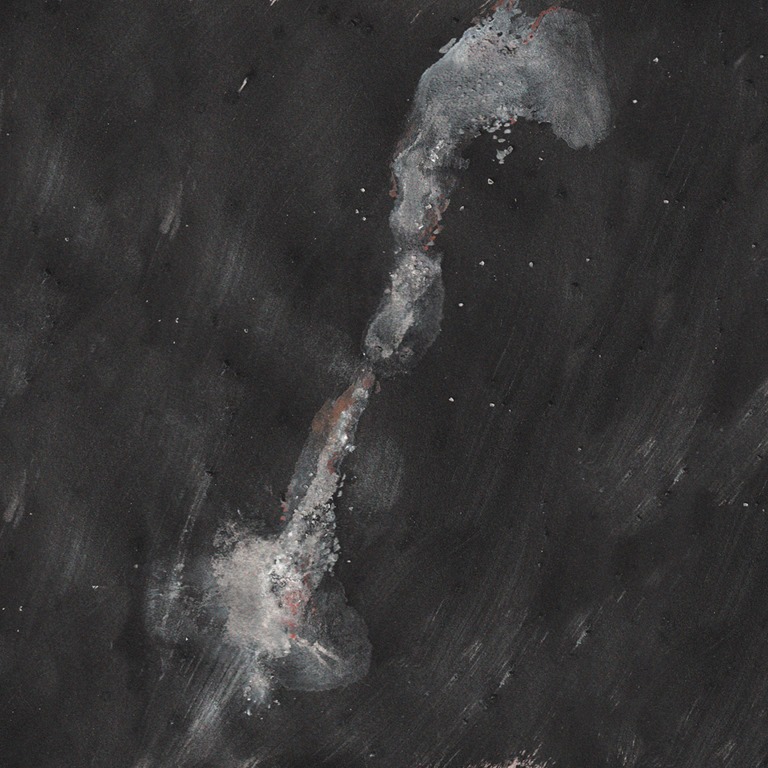
The misty, murky shadings of the cover are replicated in sonic form on ‘Arrhythmia’, the first of the album’s nine compositions. Where are indecipherable whispers eddying behind the piano notes, which gradually blur into a watercolour wash, and a slow pulsing tide slowly rises, only to fall and resurface and fall again.

Interweaving layers create an aural latticework on ‘Bell Flame’, the different tempos of the rippling waves merge together effortlessly to create a shimmering, ever-shifting fabric that’s soft, almost translucent. These supple, subtle ambient works are far from abstract, although their forms are vague to distinguish, and single release ‘Candling’, it so proves, is exemplary of the album’s finely-balanced layerings and contrasts.

With ‘Sparks’ preceding ‘Ash Clouds’, one might be tempted to perceive some form of narrative, or at least a linearity in their pairing: the two six-minute pieces drift invisibly from one to the next, although ‘Ash Clouds’ is heavier, darker, an elongated drone providing one of the album’s moodiest, most oppressive pieces. ‘Flutter’ is appropriately titles, and warps and bends in a somewhat disorientating, disconcerting fashion, creating an effect not dissimilar from the room-spin of inebriation, while the title track concludes the album with a lot of very little, as long, low droning notes hang heavy. It’s pure desolation, and yet… there is something which rises upwards other than smoke and flame – a gasping breath and the sound of a thousand souls transported in vapour.

There are beats on this album, but they’re almost subliminal, a heartbeat underneath the mix, and provide a sense of orientation like fence posts visible through fog or low cloud on a barren moor. More often than not, though, the rhythms come from the interactions between the different elements as they meet and then separate once again. The abstract nature of the work somehow compels the listener to not only fill the blank spaces with their own sensory and emotional input, but also to visualise in the mind’s eye what they may look like. As such, Lake Fire, while largely tranquil, sedate, and even soothing in parts, is stimulating, and to more than just the ears.

AA

a2277207601_10

Christopher Nosnibor

Is it acceptable to wear the band’s T-shirt to their show? It’s a frequent topic of debate amongst my gig-going friends. As a rule, we tend to agree it’s not cool, although we all have our notable exceptions, and I got mine. But IST IST fans would largely disagree, it would seem – unless this is their exception band.

Usually, with the front bar right next to the auditorium, people sit at the tables supping until the bands start, sometimes until the headliners take to the stage. Not tonight. A large cluster of middle-agers in IST IST T-shirts are queueing and actually blocking access to the bar room half an hour before doors.  There’s a guy with an immense beard wearing a sleeveless black denim jacket with Sisters of Mercy and Fields of the Nephilim patches paired with red tartan trees and he’s standing in the queue too. The queue is practically out of the front door by 7:25, but the bar remains almost empty. These people are keen.

The support is an Ian McCulloch wannabe in a knee-length coat doing sub-mid-80s Psychedelic Furs lifts with a goth tinge. The drum machine is nicely up in the mix and the sound is great, even if the songs are only middling at best, and wince at worst. and it’s mostly backing track. But the Jarvis Cocker moves are overdone, suddenly throwing shapes in the most uncool fashion, sometimes going for a power pose or something a shade more aggressive and all the more incongruous, and the shades are off and back on and off and I again and the cringe only increases as the set progresses. It’s one of the longest half hours of music, and probably the most painful since the band supporting A Flock of Seagulls at The Brudenell a few years ago. It’s a rare talent to be this technically competent and so fucking embarrassingly awful at the same time.

DSC01981DSC01982

Oliver Marson

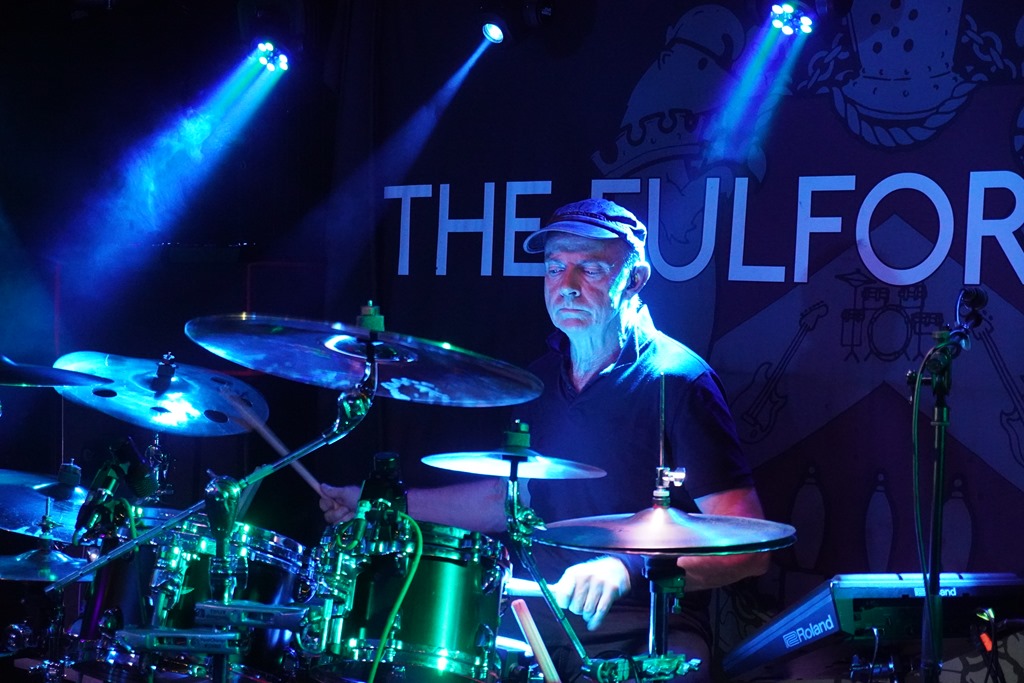
Having clocked a vintage Sisters T in the gents and emerging to find the front of the stage absolutely rammed, I was reminded just how hardcore – not to mention fucking stubborn – older gig-goers can be. It’s no wonder I learned spot-bagging and elbows when I started going to shows as a teen in the early 90s. And, as then, I’m probably a sound 10-15 years younger than the majority of these buggers. Those clustered in the front row in groups are discussing the set lists placed on the stage. Smoke drifts as Interpol’s ‘Roland’ blasts from the PA.

It’s not hard to comprehend why this band enjoys such devotion from this demographic: they present all of the quintessential post-punk elements, delivered with precision and panache. It is, it must be said, post-punk as viewed through the prism of the 21st Century revival. And there are many who are here for that, too, with plenty of under 30s grooving away behind the first five rows of old sods.

DSC01992DSC01990

IST IST

There has been no shortage of bands doing precisely this since around 2004, but Superlative drumming elevates their Editors /Interpol / White Lies – etc. – sound. The vocals are a flat, monotone and slightly twangy baritone with all the reverb, which take me a while to place, but they land somewhere between I Like Trains and She Wants Revenge. Credit to the sound guy, too, who’s working hard with the reverb and echo, especially on new song ‘Echo’, which has ‘instant classic’ written all over it and goes down a storm. They’re tight as and the sound is outstanding, with some super-solid bass at the pulsating heart of it all – and unlike Oliver Marson, leather jacketed bassist Andy Keating keeps his shades on – although I can’t help but wonder if they’re prescription and he’s doing a Wayne Hussey.

DSC02012DSC01998

IST IST

One of the tracks later in the set – my notes are sketchy as I was a bit engrossed – is pure She Wants Revenge, and it would be easy to shrug that IST IST offer nothing new, and it would be a valid criticism – but the counterpoint to that would be the consistency of the material and sheer quality of the performance, where some nice 12-string action adds some all-essential texture, and there are abundant I Like Trains-style post-rock crescendos along the way – and shshsh, don’t tell the younger fans, but it’s all as goth AF.

4th April 2025

Christopher Nosnibor

I miss Fawn Spots. I didn’t especially like them at first – musically, they were lo-fi, energetic, and thrilling, but they came across as bratty, even a shade twatty, at times, notably in my recollection as coming across as somewhat ‘off’ and disparaging when supporting The Twilight Sad at The Duchess in York. I miss The Duchess, too. I suppose, like Fawn Spots at the time, it had its faults: the pillars weren’t great for views at times and the sound was often a bit crap, but it brought some top-notch touring bands to York, with The Fall, and The Psychedelic Furs’ DV8 performance being clear standouts.

But I came to feel an affection for Fawn Spots: they evolved, in every respect – from a raw, messy two-piece cranking out some frantic racket, to a proper band, with some proper songs – although not too polished. They never got so slick as to lose their edge. It’s easy to take bands who are always out on the local circuit for granted, and it’s only when they move on – whether it’s because they call it a day, or move on beyond the local scene – that their significance on a personal level becomes apparent. You go from seeing them every other week either headlining or supporting a bigger-name touring band and it all being so much ‘yeah, whatever, cool, but this is the sixth time this year, and it’s only May’ to suddenly, they’re absent.

After a clutch of indie and self-released EPs and bits, and some touring, and with the release of their critically-lauded debut LP From Safer Place in 2015 on Critical Heights, which received coverage from Record Collector and Louder than War Fawn Spots seemed to be on the brink of something. And then… they vanished, and we forgot about them because we were busy with our lives and all the other bands we were listening to, and all the rest.

This posthumously-released album has been lurking in the vaults for some time. As they write – and at the same time highlighting their wildly eclectic influences – ‘A few months after recording this album the band ceased to exist… The product of a period of obsession with Arab Strap, Angels of Light, Lungfish and the song ‘Don’t Dream It’s Over’ by Crowded House.’

I love Angels of Light, but don’t love nostalgia: however, while cooking the other day, I flipped to the 80s music day on the Smithsonian channel, and heard ‘Don’t Dream It’s Over’ – a song I own on 7” – for the first time in ages, and was reminded just how good it is. It’s not the first thing that comes to mind listening to the fuzzing, buzzing guitar blast of Ersatz.

‘Fortunes’ is a bit Fugazi, a bit Girls Against Boys, gritty, driving, sturdy, while ‘Blossoms’ is dynamic, textured in the way Nirvana pushed soft and chiming vs max overdrive.

The album has energy, that’s for sure. It also has some dense riffs and some keen melodies. Some are keener than others, it’s true, and the hollering ‘Daylight Runner’ feels a bit emo with a dash of mathiness. The same could be said of ‘Strangers’ but the early Dinosaur Jr vibe rescues it., while ‘Faint House’ has the post-punk-with-a-commercial-edge feel of White Lies. Quite liking White Lies, and bearing in mind the timing and context, I have no issues with this, but a decade on, I can comprehend why some may be rather less enthused.

Listening to these songs now, I feel I’d have appreciated them more contemporaneously. Buzz does count for something, it seems, as does being in the moment. If they’d sustained their momentum, if they’d remained current… things would likely have been very different. And perhaps some sounds do date, until nostalgia resurrects them. What goes around comes around, but sometimes it takes time.

Winding the clock back, the songs on Ersatz are well-realised, and played with real energy. But this an album that is, essentially, of its time. It’s not so much that its dated, as that is just feels… not entirely confluent with the zeitgeist of 2025, not entirely gripping in the sense that you need to check your back yard to feel safe.

Had it been released in 2015, and given the right press push and media uptake – because. let’s be honest, leading horses to water is only part of the equation when it comes to getting new bands heard – Ersatz could have propelled Fawn Spots to the next level – not because it was their best work, but their most accessible, and their most zeitgeisty work. And it has hooks: the post-punky ‘No Source’ is bold and guitary, but catchy, too.

Ersatz is now a historical document. It feels anachronistic, and doesn’t really sit anywhere in 2025. But it reminds us not only of how things were, but what could have been… and how we miss Fawn Spots.

AA

a3148452959_10

9th April 2025

Christopher Nosnibor

With his latest offering, Gintas K promises a work of ‘ambience, electroacoustical micromelodies and noise played and record live without overdub.’ That he is so relentlessly active is perhaps one of the reasons its possible for him to create such wild improvised works on a first-take basis – which in turns means it’s possible to crank out new releases at such a staggering rate.

The first of the seven sequentially-numbered pieces is eleven and a half minutes in duration, and begins as a barely audible drip, a tiny trickling sound at the fringe of perception. Instantly I find myself on edge: it’s a sound I’ve become increasingly and acutely aware of in recent days, as the shower in my bathroom – only an internal stud wall away from my office where I listen and write – has progressed from a slow and infrequent drip to a full, continuous dribble, a nagging, torturous sound which has led me to place the shower head in the bath in order to mute it. There’s something of a liquid, and sometimes foamy, frothy sound to many of Gintas’ works, and Atmosphera begins with all the promise of being another one of these. And, indeed, as the drip and trickle increases in rate to become a gurgling stream, there is a sense of growing volume – in terms of liquid, rather than sonically. But a sparse piano rings out over the babbling stream, and as the piece progresses, creaks and bleeps and bumps and strange warps in the very fabric of time and space disrupt the flow. And yet, as the abstract interruptions and distractions become increasingly frequent and ever-more alien, sometimes extending to washes of fizzing distortion, and even fill-on frenzies of chaotic noise, echoing drips and splashes, like water falling from above into the lake at the bottom of a heigh-vaulted cavern, and reverberating piano notes remain at the core of this bewildering sonic collage.

There is a certain sense of evolution as the pieces run into one another: by Atmosphera #3, there is a sense of ambience blended with dissonance, and slow pulsations merge with the brooding and often melancholic piano lines, and these elements certainly contrast with the organic yet equally turbulent, almost artificial grunts and gurgles. Atmosphera #5 is the sound of lasers set to stun, with robotic squawks and a relentless whistle of feedback that hits right at the tinnitus pitch and congeal into concoction of wrongness, like a stew with a bunch of ingredients that should never be combined.

The album winds down gradually, sparse piano notes and a soft trickling liquid flow slowly descending, falling, and fading away…

Something about listening to Atmosfera is like watching a large fish tank. Just as the fish flit blithely and without any attention to the world beyond their own, darting here and there without any predictable linear path, so Atmosfera doesn’t follow a linear flow – and is all the better for it.

AA

a2258515655_10

Suicide Records – 30th April 2025

Christopher Nosnibor

Blammo! With Absolutely Launched, Demonic Death Judge slam straight in with the juggernaut riffage: ‘90s Violence’ is full-throttle, in-yer-face, no pissing about, thick guitars welded to a ball-busting rhythm section where the drums absolutely pound and the bass is lurking darkly, filling out that low-end with a heavy throb, while the vocals are a full-throated roar. Drawing together the extravagance of 70s heavy rock and the raging rawness of grunge, Demonic Death Judge land firmly in the territory of 00s racketmongering guitar slingers like Pulled Apart By Horses.

The six-minute ‘You’ve Got Red on You’ chugs and lurches along with all the grain and heft and would be just another heavy stoner cut taking its cues from Les Zeppelin and Black Sabbath were it not for the ravaged, gargling gasolene vocal, which is raw, incendiary. And on Absolutely Launched, they just keep on blasting out the meatiest, most monster riffs with no let-up. Any slower, less-up-front segments, such as the mid-sections of ‘You’ve Got Red on You’ and ‘Goner’, the latter of which chimes nicely, are simply brief breathers where they reload and come back, all guns blazing, twice as hard. They do chill things out on the mellow blues of ‘I Realise That… Now’, and it presents a switch in the emotional tone, too, hinting at a more reflective, contemplative side to the band which stands in contrast to the rest of the album, which is anything but reflective or contemplative, and instead rages all the way, breathing fire with every chord struck – and those chords are struck hard and at maximum volume.

Absolutely Launched is a magnificent exercise in spectacular excess, and it’s truly glorious. If you’re going to go big and hefty, and utterly ballistic, there can be no half-measures. Everything is overloading, cranked up to eleven. There aren’t many solos, instead favouring the monster riff as the dominant feature, but when the solos land, they’re epic, and wild. ‘Dead Dogs’ simply tears. ‘Spliffhanger’ roars in a raw-throated forest fire of a relentless rager, while the seven-minute title track which wraps the album is monumental in its punishment.

The easy blues rock touches which occasionally grace the compositions hint at accessibility and a more overt musicality, but more than anything, Absolutely Launched is all the revs, foot to the floor riffery, and it’s a behemoth of an album.

AA

a1384961471_10

Bearsuit Records – 30th April 2025

Christopher Nosnibor

It’s been a couple years since we last heard new material from Harold Nono, enigmatic purveyor of weirdy electronica, and platformed by the go-to label for weirdy folky worldy electronica, Bearsuit Records. And Faro is suitably strange, and, well, Bearsuity.

It doesn’t start out so: ‘Raukar’ is primarily sedate, piano-led, sedate, strolling, and overall, feels quite calming, despite jangles and scrapes of dissonance whispering away in the background. As the ambience trickles its way into balmy abstraction, we feel a sense of discomfort, and while the expansive ‘Sketch for Faro’ is soothing, expansive, cinematic, and feels like it could easily be an excerpt from Jurassic Park or another sweeping passage from a big-budget family-friendly movie, there are undercurrents which are subtle but nevertheless discernible which add an element of ‘otherness’ to it, particularly the abstract, almost choral vocal which rises near the end.

An EP consisting of only four tracks, Faro is a brief document, but Nono brings together many elements within this succinct work. Besides, it’s not all about length, right? Faro is sonically rich, imaginative, and ambitious in scope and scale. It feels expansive, transporting the listener over huge landscapes of trees and hills and field and planes, and you kinda feel carried away on it all in a largely pleasant way, despite the niggles of tension which creep in. And during ‘The Hour of The Wolf’ everything begins to explode and expand like some kind of galactic simulation, and suddenly, from nowhere, there are beats are blasts of distortion and everything somehow crumbles, and as silence falls, you find yourself standing, dazed, amidst rubble and ruins wondering what just happened.

While many of the elements common to Nono’s work are present here, Faro does seem like something of a development, expending in the direction of 2023’s ‘Sketch for Strings’ and moving further from the more disjointed, collagey compositional forms of earlier works. It’s less overtly jarring, less conspicuously weird, but don’t for a second think that Nono has gone normal on us – because Faro is subtle in the way it unsettles, and the last couple of minutes completely rupture the atmosphere forged gently and carefully over the rest of the EP. And this is why it’s both classic Nono and quintessential Bearsuit – because whatever your expectations, it is certain to confound them.

AA

a0171664628_10

God Unknown Records – 25th April 2025

Christopher Nosnibor

A new album by World Sanguine Report is always something to pique the interest. The jazz-tinged avant-rock collective centred around Andrew Plummer, with longtime collaborators Matthew Bourne, Ruth Goller, and Will Glaser, has a knack of producing music that Does Something Different. In a world of mass-produced, off-the-shelf sameness, were even every ‘independent’ or self-professed ‘boutique’ business of any persuasion is simply a carbon copy of all the rest in their striving for Instagram perfection, this is welcome. Very welcome – even in their less accessible moments. Because all this endless sameness is brainrot.

A few years ago now, people started setting up independent burger places as a rebellion against the dominance of McDonalds, etc. But now there’s a hipster place doing smash burgers every few hundred yards, just as there’s an indie coffee place on every corner, and that’s great, but it’s total overkill. How much fucking coffee do we need?

In the early 00s, there was an oversaturation of post-rock. I can’t recall a time when we’ve ever been drowning in jazz-infused avant-rock, and while there are acts which stand by way of comparison when exploring their work, World Sanguine Report stand apart in a very open and sparsely-populated field. And for Songs From The Harbour, they’ve decided they need to do things a bit differently – just in case there was a risk of things getting a bit predictable.

They consider Songs From The Harbour ‘The most direct WSR album to date’. Plummer goes on to recall how ‘We auspiciously recorded the majority of the album aboard the Lightship 95 Studios on the Thames. The ship moved us, the ship moved with us. The Thames lapped at the boat, its tides washing in the Lightship’s echo chamber, housed in the hull of the ship, made its way into the recordings.’

London has a way of infiltrating the psyche and the creative mind of artists, in a way few other places do, other than perhaps New York. I digress. As usual.

‘Lay Down With Me’ makes for an interesting intro track: Less than two minutes log, it’s a low, slow, droner which leaves you pondering ‘where will this go from here?’ The answer is that will go deep, delving down and exploring difficult terrain. ‘She Is All’ is huge in its mere four minutes, with Plummer’s brooding baritone vocals resonating out over the space as reverb covers a crushing embrace. ‘Blue Skin’ finds Plummer brooding and musing, and sitting somewhere between late Leonard Cohen and Jim Morrison, only with a certain feel of despairing.

The same gloom hangs on the remainder of the album, with ‘Starboard’ not only clinging to the nautical theme of the album’s title, but sounding like a slightly inebriated sea funeral. ‘No Kids’ brings a slow, weary-sounding blues feel – and by weary, I mean fagged out, fatigued, it’s a knackered-sounding groan of a song, while the last song, the seven-minute ‘The Catching of the Bull’ rings out in a fuzzy-edged drift of melancholy with an almost sing-song back and forth with the dual vocals. It’s pretty and sad in equal measure, and leads the album out on an extended sonic cascade, like a slow incoming tide.

Songs From The Harbour is more bluesy and folky than jazz, and it’s also slow and weighty in its lugubrious mood. There’s a solidity to it, a coherence, and an assurance which radiates from its carefully-woven tapestry.

AA

a1542432635_10

Cruel Nature Records – 25th April 2025

Christopher Nosnibor

Limited to 30 cassette copies worldwide, which sold out in advance of the release date, anyone wanting this now will have to satisfy themselves with a stream or download. Tapes really have become cult cool again of late. Raised on vinyl, the cassette was my format of choice in the mid- to late-eighties, until I got a CD player for Christmas in 1991, although I continued to buy vinyl through the 90s because an LP cost about £8 whereas a CD cost around £12. I loved tapes, and I especially loved being able to copy stuff to tape, and do it so cheaply. It was a long time before the advent of the technology to rip and burn CDs.

But for a time, I would buy albums on tape, often in Woolworths or WH Smiths and sometimes from Britannia Music when my parents had made enough purchases to earn a free album – because a tape was about eight quid and you could stuff it in your Walkman and sometimes, perhaps, get it played in the car when going on holiday. Although I recall purchasing Children by The Mission in 1988 on the same trip my parents took me to buy a snake, and my mother moaned and asked if we could have ‘the nice man’ back on (meaning the Bruce Springsteen album I’d been listening to before discovering The Sisters of Mercy and The Mission.

So, the status of the cassette release has certainly changed – again, and one can’t help but wonder if it’s only a matter of time before the cassette single makes a comeback.

Before the Skeletal Dance Of Our Festering Jesters is… bassy. And with good reason for certain. As the Bandcamp blurbage details, ‘Blind Johnny Smoke was born severely deaf in both ears, and started to lose his vision as a teenager with only a few degrees of central vision remaining and still decreasing. Then at the end of 2023 he experienced a sudden loss of his remaining hearing on his left side leaving him profoundly deaf. This posed huge questions for him, what life will be like going forward, how this would change how he felt about the nefarious shit going on in the world around him, and whether he was still equipped to be able to express himself through music. With the aid of The Juddaman, the answer lies within the tapestry of Before the Dance of our Festering Jesters.

Musically, the album is almost obscenely focused on bass frequencies, which coincidentally are the only sounds Blind Johnny can detect without hearing aids. There is a dub sensibility that the band have always dabbled with, but here it weighs in heavily alongside trademark percussive programming and unmusical cut up noise. The accompanying words are as angry as ever and, after a few years of Blind Johnny performing on the spoken word circuit, the lyrics have depth and trickery sitting alongside blunt vitriol.’

‘Sensory Denudation’ presents a groaning mass of distortion, and the spoken word vocals offer up comparisons to Pound Land and Sleaford Mods, and nothing about this is easy on the ear as ambience and trudging industrial noise grind away. It’s the Mods and Benefits who come to mind during the stark electronic grind of ‘Safety First’ and ‘Words Without Echo’, which also introduces a Public Image kind of slant, and Before the Skeletal Dance Of Our Festering Jesters brings together post punk and ranty rap with hip-hop and industrial and spoken word. It’s hard going if you’re wanting tunes, but ‘Ghouls’ is perfectly representative of the low-tempo, thudding noise approach the band have taken to the creation of Skeletal Dance.

‘This is All I Hear Now’ is pure rant, raw and aggressive, the ‘blah, blah, blah’ refrain snarled over a thick, woozy bass, before the six-minute ‘Party On’ turns its focus on the UK government’s COVID lockdown ‘partygate’ shenanigans and dubious contracts for PPE as dense, industrial percussion builds, and I’m reminded of Test Dept’s The Unacceptable Face of Freedom. It’s pretty potent stuff.

Running beyond seven minutes, ‘Crooked’ is the album’s centrepiece, a murky postindindustrial wasteland of a soundscape dense in distortion, crashing beats trudging hard through an unusually melodic chorus which provides the album’s lightest moment at the point it was least expected. Sorry for the spoiler there. It’s back to seething and sparse, throbbing techno bass and thumping beats on ‘Behind Closed Doors’, a bleak slice of dark dance that wouldn’t have been entirely out of place on a Wax Trax! release in the late 80s or early 90s.

‘Laughter’ offers a sliver of illumination in this overall dark offering, although it’s very much relative and it’s a cold, mirthless cackle than an uproarious belly-shaker: a piano-led piece of Numanesque electropop, it’s stark but structured.

Everything builds perfectly for the monster finale, the twelve-minute ‘Satellites, a low, rippling drone crawling and billowing from the speakers in the most lugubrious and ominous fashion. A chorus of voices rises up, dissonant but united, before fading out in a waft of reverb, to be replaced by slow-smouldering synths and a sparse but insistent beat that strolls its way to an almost tranquil horizon.

Before the Skeletal Dance Of Our Festering Jesters covers a lot of ground, and while much of it is pretty desolate, it is not an album entirely bereft of hope.

AA

a0086783039_10

Christopher Nosnibor

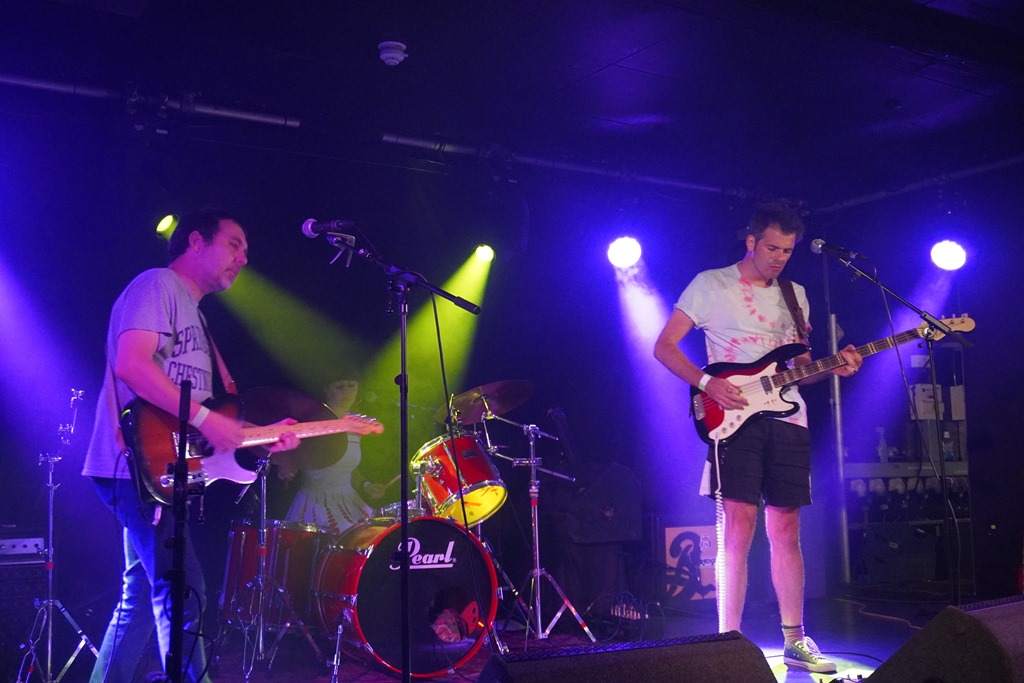
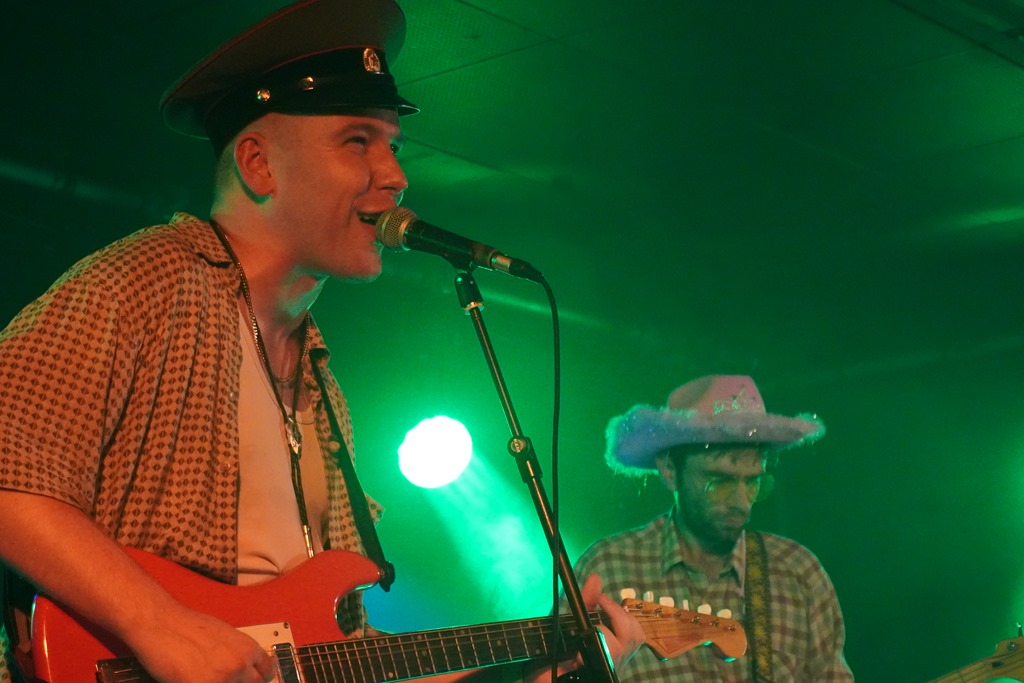
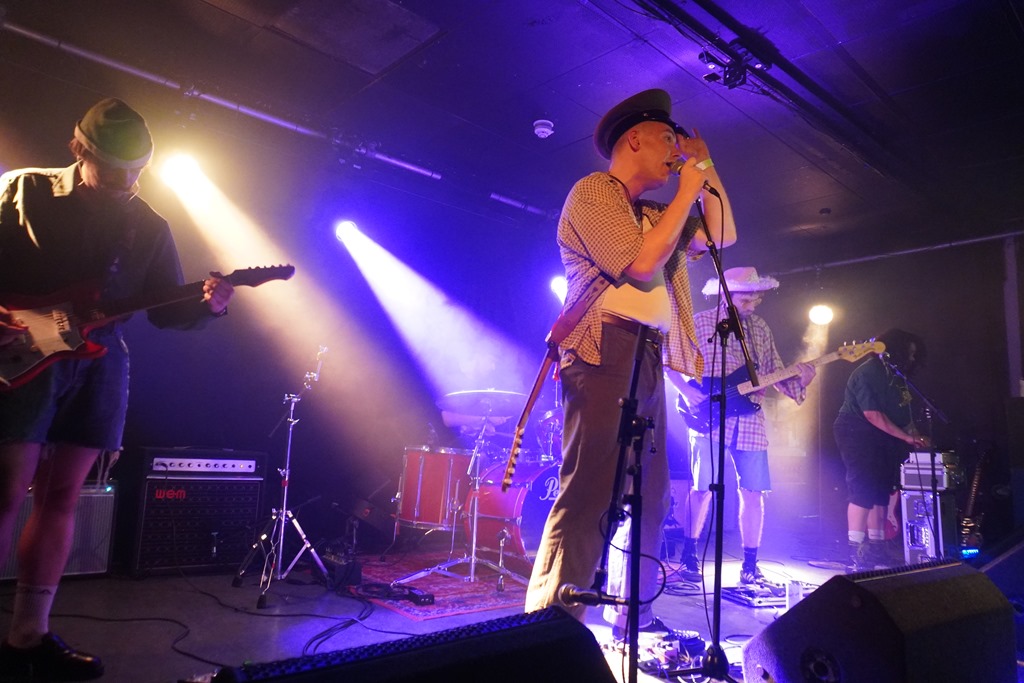
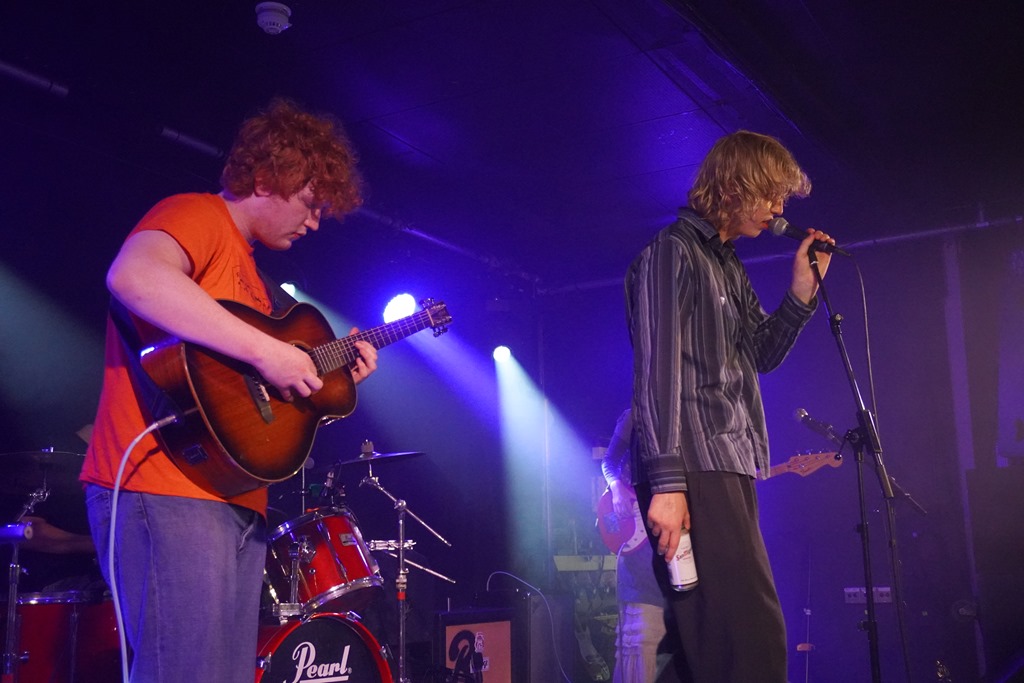
And this is why it’s always worth turning out in time to see the support acts… Just last month, I was in this very same venue to see Feather Trade, a band who pretty much guarantee a quality show. There were three other acts on the bill, all of whom were well worth seeing, but the pick of the crop by some margin were Suspicious Liquid, who, it transpires, won the York Battle of the Bands last year. It wasn’t hard to see why. But has I stood outside chatting, or just rocked up for the headline act I knew, I’d never have seen them. And having seen them play as a support was what compelled me to come and see them headline tonight. And once again, the support acts proved to be good value – especially when you do the sums of three bands for seven quid.

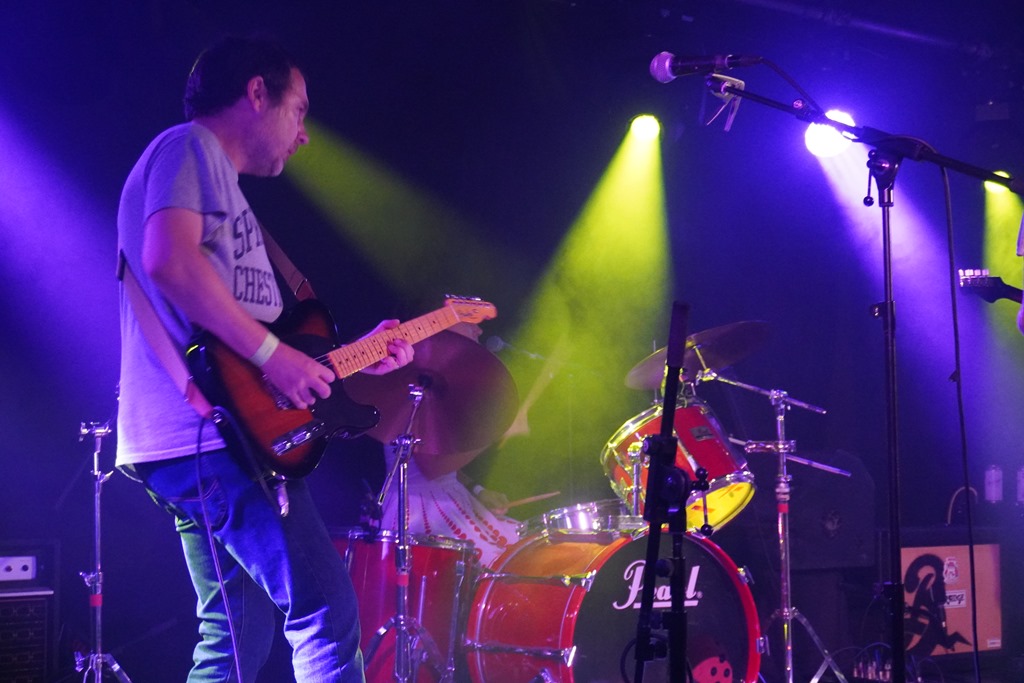
As they took to the stage, I had some initial doubts about Echoviolet: image-wise they look a bit 90s indie, especially the singer / guitarist who’s sporting a bad indie haircut, and they sounded like a band who are still working things out. Sometimes the bass and guitar lines don’t really gel, with one running ascending chords and the other descending and not necessarily in perfect time either, but then suddenly from nowhere they’d land a cracking chorus. The vocals, too, aren’t quite there yet: they sound somewhat tentative, undersung, as if rehearsing quietly in a bedroom rather than going all-out. But, as a power trio, they’re unusual in that the guitar parts favour spindly picking rather than fully-struck chords. It’s certainly distinctive, and they’ve definitely got things going for them.

DSC01896DSC01898

Echoviolet

Broadly speaking, their sound could be reasonably described as alterative rock with a 90s flavour and some heavy moments that would have really hammered hard at higher volume. There are hints of Bleach era Nirvana, and a few dashes of dark psych, and at times they call to mind The Horrors.

The punky ‘Micromaniac’ is driven by some foot to the floor bass but dominated by an unexpected drum break near the end. Drummer definitely overplays, but he brings a vibrance, an energy to the stage, and while they’re a bit rough in places, there is clear potential here. Would see again.

Velleity are straight in with a groove, they’re as tight as fuck and the layers of synth add polish. Sure, they’re a bit muso, a bit groggy, there’s a bit too much sexface guitar wankery, but they radiate confidence and it’s forgivable because – and it’s a rare thing – they actually are as good as they think they are, and you could easily envision them going down a storm at festivals, bringing in a range of elements from Pink Floyd to Led Zepp and… Muse.

DSC01919DSC01921DSC01922

Velleity

It’s certainly a remarkable debut even from seasoned musicians, and the quality of the performance and musicianship is impossible to deny. Mid-set they drop a tune that could easily be a Smashing Pumpkins outtake, before going Alice in Chains for the last song. They grew on me as the set progressed, and the bass tone was supreme. During last song, singer popped to the bar and returned with shots which he fed the band before a particularly indulgent instrumental break. I guess you could call that showmanship…

Suspicious Liquid are the reason most of us are here, and while it’s only a third full, it’s not bad for a Thursday night when students are still drifting back after Easter. And they give the show 100% from start to end. It takes some guts to open with a slow, sprawling epic… which is just what they do. Showcasing new material – a lot of new material, for that matter – and some seriously meaty hard rock riffs, they are on fire. The small audience pack forward and close to the stage, things look busy. It must be gratifying for a band to see faces up close instead of playing to a void with lights in their faces. All the elements come together perfectly, with no weak parts. Sound and performance, everything is just superb, and they play with intense focus. They boast powerful vocals with incredible range, especially at the upper end, and collectively they seem so comfortable on stage, too. Yes, this is how it’s done.

DSC01933DSC01937DSC01963

They chuck in a King Gizzard cover mid-set, followed by more new material and some colossal riffery, debuting one nine-minute behemoth near the end of the set. Every second of the set is pure quality, and on the strength of the new songs, you get the sense that the best is yet to come.