Archive for the ‘Reviews’ Category

Institute For Alien Research – 15th January 2025

Christopher Nosnibor

Bath-based microlabel Institute For Alien Research tends to focus on compilation releases, with open submissions, on various themes. One long-running series is Collage Music, each of which features fifteen works, the only stipulation being that their duration is 4:33. Not a second more, and not a second less. They’re not looking for interpretations of John Cage’s seminal work, and as such, the duration is in many ways arbitrary beyond the idea that artists respond to limitations and set parameters in different ways, and as this – the twenty-eighth in the series (as the title indicates) – illustrates the point unequivocally.

With ‘Circumstances’, Support Group ease us in gently with some slightly woozy, echo-soaked, ambience, before Lezet stammer and glitch through a multi-layered slice of abstraction with ‘Colonnades of Fear,’, which may also be ambient, but it far from relaxing, although it’s Robert & Lamy who are the first to venture into much darker territory, with the kind of doomy, drony warped tape and noise experiments that are reminiscent of Throbbing Gristle in places.

The arrival of ‘bruits de la vie’ by samelectronics feels like something of a watershed moment, being the first piece to present big, bold sounds – feedback and immense powerchords, which, instead of feeling heavy or oppressive, open an expanded horizon, to surprisingly uplifting effect. The rough, lo-fi punkiness of ‘Johnny got no respect’ by This is The Utter vs Chelsea comes as a surprise bang in the middle, being the album’s first straight-up guitar-based cut, and it’s a savage semi-cover to boot.

Along the way, there’s a superabundance of weird shit, with collages and field recordings and ethereal haunting soundtrack-like compositions, dark electronica, spaced-out BBC Radiophonic Workshop type soundscapes, and banging dance, courtesy of Sbilts, with ‘Acid Dog’, who mine a vintage techno sound propelled by old-school drum machine sounds. That snare! Samples! It’s a sonic time-machine!

Just as grassroots venues are essential on so many levels, so are labels who put out releases like this. Most of the contents of such compilations is ultra-niche, and will never expand beyond being so – and that’s ok. There is a huge audience with niche tastes who simply aren’t catered for by bigger labels, bigger venues. Most of the acts here are unlikely to ever play to more than twenty-five people, assuming anyone will put them on, and they’re never going to be snapped up by a label which has aspirations of making money. Self-releasing is find, but it’s hard to reach the tiny, fragmented target audience. But a label like Institute For Alien Research, having established a reputation for providing a platform for the full spectrum of experimental electronica and beyond, creates its own niche. It may seem hard to believe when there are maybe a few hundred or so people who are into it, but this really is what the world needs. Capitalism is killing cultural diversity, and it’s killing art.

The fact that Collage Music (28) is a mixed bag is a good thing. It would be all too tempting for the label to be picky, sniffy, selective, and offer up a compilation which is more homogeneous, unified, that presents, ultimately, a curated collection determined by personal taste. And that would have been fine, and entirely their prerogative. But Collage Music (28) is all the better for its wild eclecticism. You might not like all of it – and it would be probably be a bit strange if you did – but in listening to it, there’s a chance you’ll find your eyes are opened to something you didn’t know you would like, and it’s absolutely guaranteed you’ll hear artists you would never have otherwise encountered. So dive in!

AA

a3223356046_10

14th January 2025

Christopher Nosnibor

They only released their debut single on 1st December last year, and here we are, not quite halfway through January and we’re being presented with single number three.

While Argonaut’s track-a-month schedule for their ‘open-ended’ album Songs from the Black Hat, matching only that of The Wedding Present in 1992, seemed like the pinnacle of prolific – not to mention the ultimate advertisement for the DIY approach – three singles in six weeks must surely have the makings of a record (pun partly intended). As of this moment, though, we don’t know what their longer-term aim is, or even if there is one, beyond releasing new songs as soon as they’re ready, and if that is their MO, it’s admirable. Without the need to work to the schedules – or budgets – or a label, their only limitation is their own time and energy.

I had initially noted, following ‘Scarlet’, and ‘Amber’, a theme of colours linking their songs, but perhaps it’s female names. Or perhaps it’s pure coincidence, and they have simply plucked one-word titles to denote their songs.

‘Jude’ – which comes with appropriately dramatic artwork, somewhere between swooning gothic drama and pre-Raphaelitism, the source of which I haven’t been able to identify – once again features the voice of poet Monica Wolfe, here whispering, and, as credited, ‘breathing’. These contributions are significant in rendering an atmospheric composition, particularly in the introduction, before the arrival of the piano – of which there are, in fact, two, adding layers to the brooding theatricality of the song, and Stephen Kennedy’s voice.

The feel – particularly in his delivery, with some quavering intonation, and enveloped in a spacious reverb – is very much gothic folk, as he casts introspection, while chasing ghosts.

‘Will the world miss me?’ I whisper

And sigh, as my life drifts away.’

It’s moving, poetic, and powerful, presenting a straight-ahead contemplation on mortality – not in some cheesy ‘romantic’ gothic style, and not in a crass emo way, but a rare sincerity.

Somewhat ironically, in our teens and twenties, we tend to agitate about death, while also treating it with a flippancy, because it’s what happens to old people, but as we grow older, we go out of our way to avoid thinking or talking about it, because as we begin to lose parents, uncles, aunts, and even – increasingly – peers, shit gets more real than we can handle. Invariably, we bury our heads in the sand, shrug off life insurance and toss making wills into the distant future along with pensions, laughing darkly how we never expect to retire anyway.

In the final minute, the song swerves into more electropop territory as the rippling piano combines with a crisp, insistent drum beat. It’s a magical, ethereal moment, which is but fleeting, like dappling sunlight through the branches of trees in a woodland on a breezy day. In many ways, this captures the essence of the song and its sentiment, in its fleeting ephemerality, a metaphor for life itself.

It ends suddenly, with only inaudible whispers fading to the close, and again the metaphor stands. This is perhaps their strongest and deepest release to date, and best absorbed by candlelight, with a large measure of something intoxicating.

AA

a0763472052_10

Mortality Tables – 17th January 2025

Christopher Nosnibor

Given Mortality Tables’ liking for location-based field recordings, Circuits From Soft Frequencies makes for a comfortable fit in their rapidly-expanding catalogue.

As the liner notes explain, Circuits From Soft Frequencies originated ‘as a four-channel sound art installation developed using field recordings from sites around the South East of England.’

‘Drawing on soundtracks taken from 70s minimalist sci-fi films, both the samples used and the overall composition are based on different terrains encountered during Jamie’s field trips, describing huge shingle beaches, swamps and clifftops. The installation which was exhibited at MK Calling in Milton Keynes during the summer of 2024 also consisted of fabricated ‘cymbal speakers’, incorporating sensor-based technology to respond to changes in their environment.’

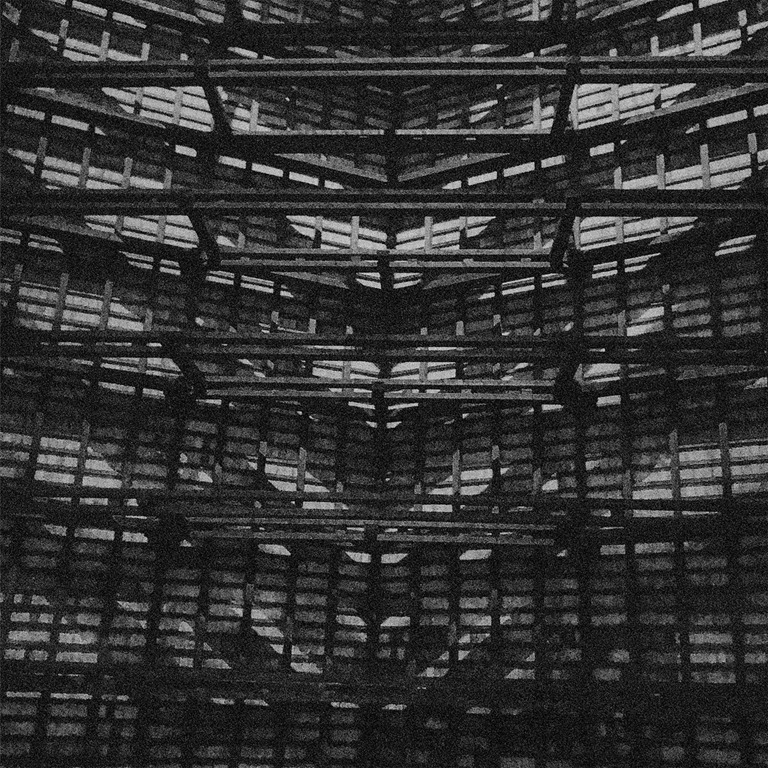
The cover art depicts one of the ‘sound mirrors’ which were constructed at various sites around the UK shortly between the world wars as an experimental early warning system, as a precursor to radar. While there are sound mirrors at two sites in Kent, those at Denge are the most renowned and best preserved, and it was here, one assumes, that the recordings of percussion, ‘incorporating cymbals, bells, gongs and clocks’, took place.

The installation, the notes go on to explain, ‘repurposes four cabinet speakers to transmit sounds collected during field trips to sites featuring [the] huge, concrete sound mirrors’.

This release contains a nineteen-and-a-half-minute recording of the installation, and highly atmospheric it is, too. Ther ticking watch not only keeps time, but gives a sense of tension and urgency which runs fast, in contrast to the long, low, reverby thuds and slow splashes of cymbals. That everything – apart from the watch – sounds somehow dulled, muffled – only adds to the atmosphere. It’s likely that this eerie, swampy echoiness is the product of the location, which features not only the thirty-foot concave ‘ear’ shown on the cover, but a two-hundred foot concrete wall. Images of the site stir the imagination, and one gets the impression to actually be in the presence of these strange-looking objects must be truly awe-inspiring. The sounds which emanate from the speakers while listening to Circuits From Soft Frequencies evoke the same sense of the alien, the otherworldly. Spurs of noise occasionally burst through, interjections of dissonance pulse through the building layers of sonic collage to unsettling effect.

It’s a reminder that often, the most alien and seemingly otherworldly creations are, in fact, man-made – and often connected in some way to war, and mankind’s destructive tendencies. I was struck, not so long ago, by the quite chilling experience of touring the cold war bunker in York – not a place of refuge, but a cramped and claustrophobic subterranean observatory which, in the event of the fulfilment of its purpose, would assure the deaths of its crew.

The sound swells and glitches, scratches and hums, and at times exudes a nightmarish quality that makes your muscles tense and your scalp tighten and crawl. It’s a remarkable piece of work, but one of those where the end comes as something of a relief.

AA

cover

Christopher Nosnibor

I expended a lot of typing extolling the virtues of grass-roots venues last year, and mentioned in my end -of-year summary how a change in personal circumstances had changed my gig-going habits somewhat. And so it was that I picked this one more or less on a whim: after DarkHer’s show on Monday was cancelled due to band illness, I found myself itching to see some live music.

Having been blown away by the Jesus Lizard last week, I figured seeing a band I had no knowledge or expectations of might be a good idea, as there would be less likelihood of disappointment.

A Thursday night in the middle of January is pretty much the ultimate lull in the gig year – ordinarily. So it’s pleasing to see a decent turnout early doors, with surprising mix of studenty types and older men. Grey hair, beards, bald heads… Yes, broadly my demographic now, but more like retirement age than approaching 50. At the opposite end, nerd glasses, mullets, turnups. And all as lanky as hell. Why is everyone under the age of thirty so bloody tall?

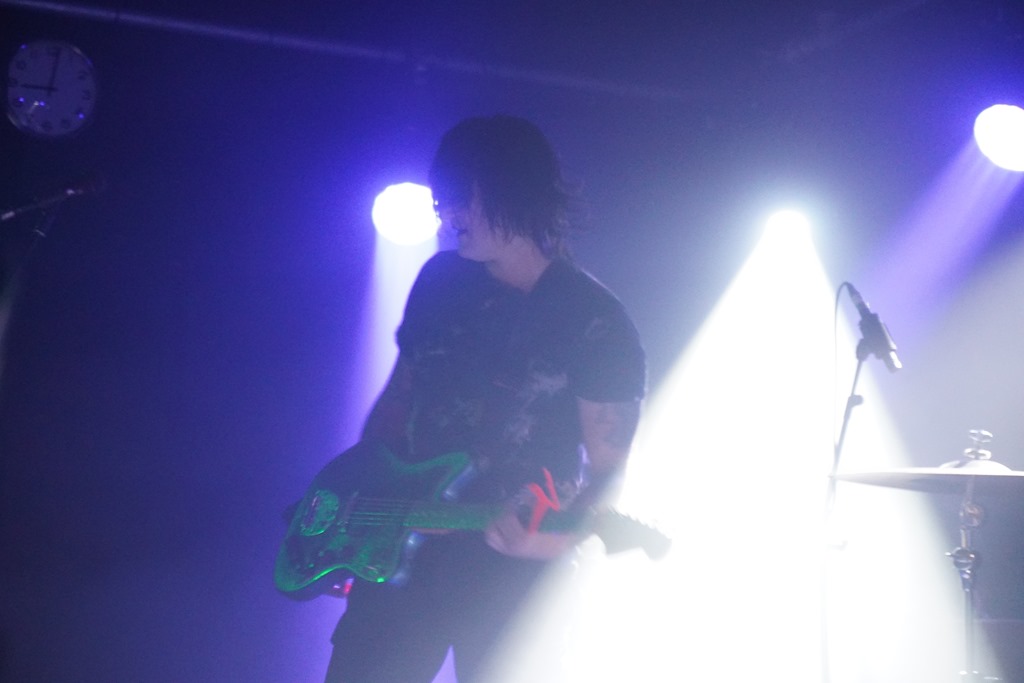
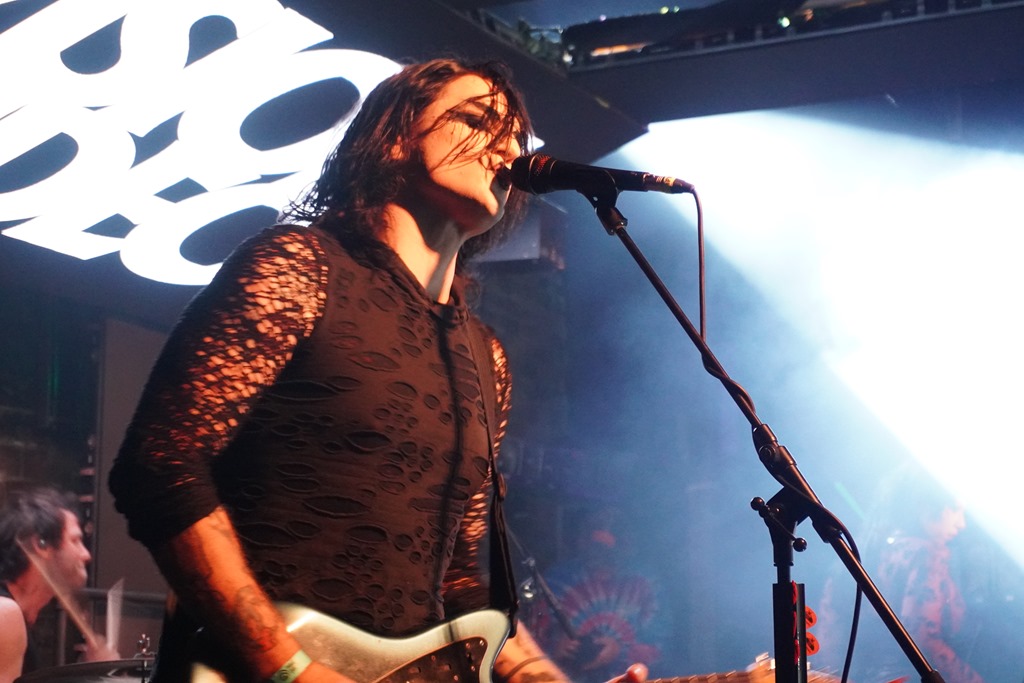
Patience are first up, bring a set of middling alt-rock with a bit of an emo edge and some flash mathy licks. The singer looks a little uncomfortable on stage: she makes rather hesitant moves when not singing, mostly with some small-stepping jogging on the spot. The band have some serious pedal setups for a bottom of the bill band with just a handful of tunes on Spotify. Perhaps partly on account of this, they sound really good. Things fall apart a bit during the last song, with tuning time-outs and false starts, and the bassist, who’s about seven feet tall and using a wireless setup, not content with bouncing and flailing in his own space, repeatedly encroaches on the singer’s space as he crosses the stage and lurches about around the drum kit. It’s a solid enough performance from a band who have no shortage of technical skill or kit, but whose songs are lacking in that all-essential grab which would make them memorable. They have clear potential, though, and I’d be interested to see them in another six months or so.

DSC00848.2DSC00843.2

Patience

Covent’s single, ‘Peace’, released just last week, was the only bit of pre-gig research I managed. Showcasing a proficient grunge-influenced sound, it’s more Bush than Nirvana, but I’d take that over Nickleback any day – and as a consequence, I was rather looking forward to their set.

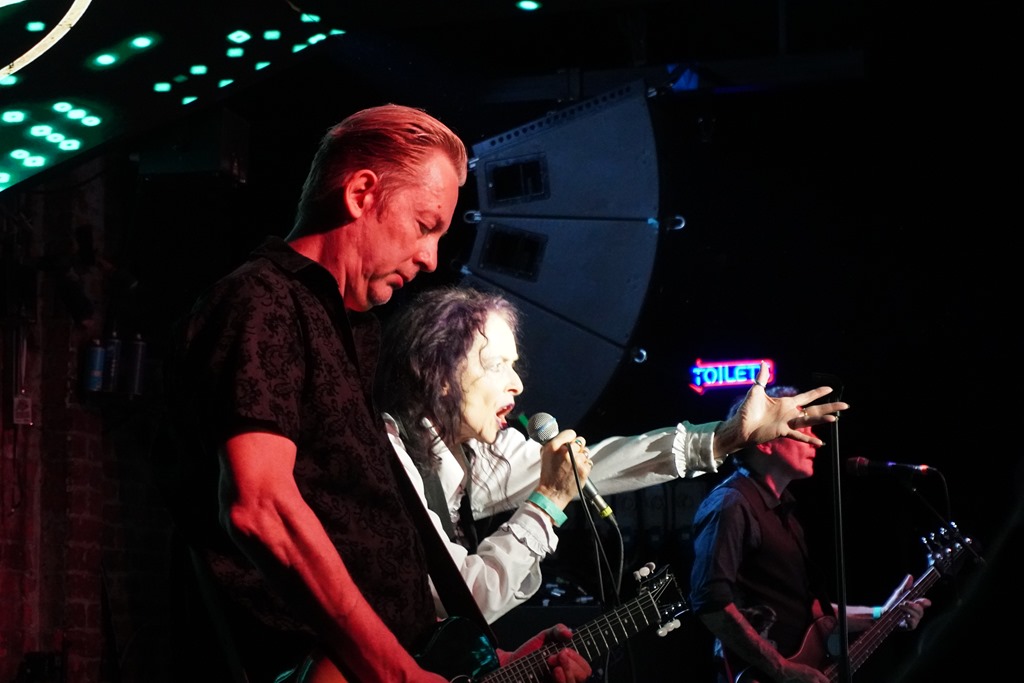
They have even more pedals than Patience, especially the bassist. And fuck me if he’s not wearing a bloody Nickleback T-shirt. They’re certainly at the more radio-friendly end of grunge, sounding like Language. Sex. Violence. Other? era Stereophonics crossed with Celebrity Skin era Hole – not to mention Smashing Pumpkins. They sound great, mind, and the singer’s voice has a good level of grit and gravel, and when they do really kick it hard, as on ‘Under the Surface’, they move above drive time grunge into heavy-hitting territory. ‘Out of the Blue’ does remind me rather of Weezer, although I can’t put my finger on anything precisely, and they close with ‘Peace’. It’s a sound choice and a strong finish to a thoroughly decent set. I could easily see them playing considerably larger rooms.

DSC00866.2DSC00862.2

Covent

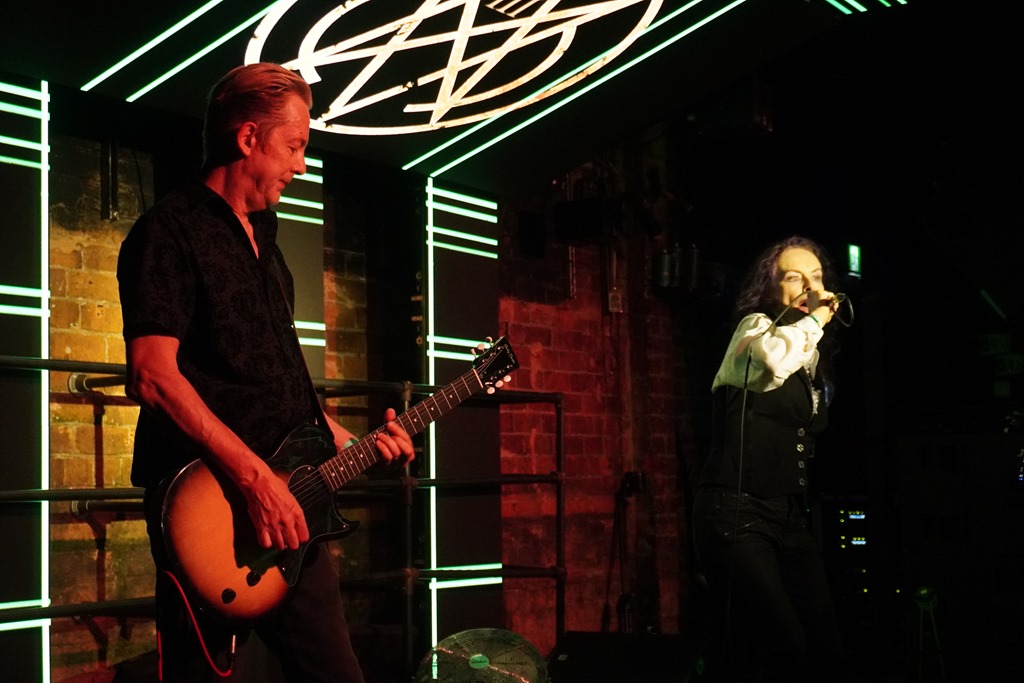
Chonky Dogg demonstrate why it’s worth taking punts on bands, and why grassroots venues are vital. Where else would a local band with no label backing – that is to say, a real band rather than a manufactured one – get to cut their teeth and build a fanbase? There’s been much made of the cutting of the pipeline, how the not-so-slow death of the small venue circuit is starting to choke the development of acts who will be playing arenas and headlining festivals in years to come. Chonky Dogg are never going to be headlining Glastonbury or selling out O2 venues around the country – but given the right exposure, clearly have the potential to play to substantially larger audiences than this.

DSC00919.2DSC00924.2

Chonky Dogg

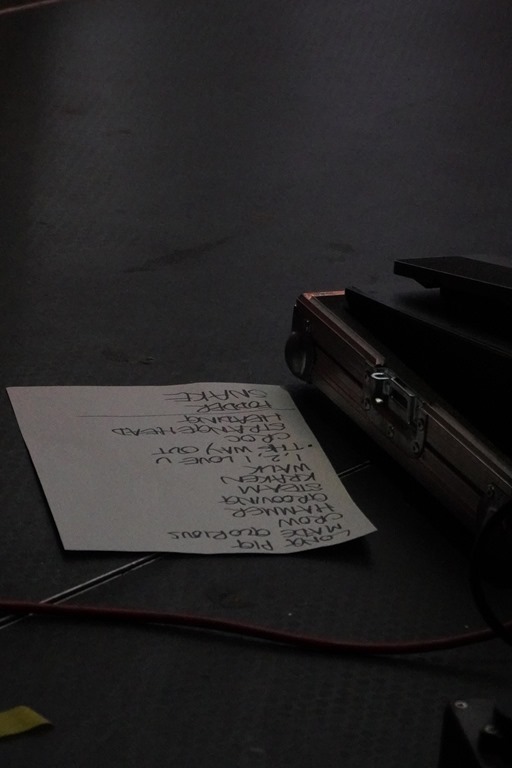
Theirs is a daft name, but it so happens they’re a great band, strongly reminiscent of And So I Watch You from Afar, another band I discovered by way of a fluke because I went to see maybeshewill – on the basis of hearing a single – while staying in Stirling for a conference. They play noodly, mathy post rock driven by big, big riffs. Their music is complex, yet accessible, richly layered, with some magnificent detail, wonderful guitar interplay, and some dense, crunchy bass. The songs pack some weight and substance. And, they’re as tight as they come: is it really only their third gig? ‘Barbenheimer’ is a blistering riff-fest with soaring lead work, and everything about their performance is perfectly balanced and brilliantly executed. A beautiful proggy neoclassical interlude prefaces the final song, scheduled for single release soon (I think), and it’s a blinder.

I’m going to call it here first while I can: they really are the (Chonky) Dogg’s bollocks.

Cruel Nature Records – 14th January 2025

Christopher Nosnibor

Released on various formats by various labels in different countries, the latest offering from genre-blasting French instrumental trio Toru is being released on cassette (and download) by Northumberland’s Cruel Nature in an edition of 65. Following on from 2020’s eponymous debut and a split release with Teufelskeller, which saw Toru join forces with CR3C3LL3, this time around, they’re different again, and having been featured as album of the day at Bandcamp Central just the other day, the signs are that Velours Dévorant could see them significantly expand their fanbase – and deservedly so.

Velours Dévorant featires five V-themed tracks defined by some riotous riffmongering and big, dirty, overdriven guitar noise with tempo shifts galore. Blasting in with ‘VHS’, it’s a manic ride through waves of tempestuous, bludgeoning racket from the very start. Trilling feedback fulfils the duty of a lead guitar line, while a shuddering, ribcage-rattling bass tears its way out from the chaos atop some heavy, but highly skilled jazz-inspired drumming.

Some will likely describe their sonic blitzkrieg as ‘experimental’, but that’s something of a misrepresentation, in that it suggests a lack of coherence, a haphazard and unplanned approach. The sudden stops and starts, the moments where a chord hangs, suspended in the air for just the briefest moment before the fractionally-delayed snare smash or cymbal crash, where the three of them simultaneously draw breath in just a split second… those microcosmic moments require remarkable precision – unquestionably, intuition is key, but rehearsal too. The skill is to make it sound haphazard, unpredictable, to keep the listener on the edge of their seat, buttocks clenched, while having it all worked out. Every composition contains moments which feel like the sonic equivalent of watching trapeze artists, where you tense and momentarily stop breathing as they fly through the air, seemingly in slow-motion, tense in case they fail to grab on: will they keep it together, or will everything collapse into a mess of sludge like a sewer rupturing and spewing a fountain of slurry?

These are long tracks – the shortest is over five and a half minutes – with infinite twists and turns. The skewed, surging jazz-grunge of ‘Voiles’ – a whopping eleven and a half minutes in duration – is representative, and encapsulates the essence of the album. The guitars squall and screed in a showcase of noise-rock par excellence, while the bass lurches and snarls, grooves and grinds, and the percussion is simply wild. It’s like listening an instrumental version of every track by the Jesus Lizard all at once. There’s a low-impact, atmospheric mid-section that rolls and rumbles, yawns and splashes… lazily would e the wrong word, but it takes its time, with bent guitar chords twanging like elastic bands, while the sparse percussion meanders seemingly without aim. But then it all reshapes and takes form once more, building, building, and then exploding so hard as to detonate so hard as to blow your eyeballs out of their sockets. Fuck, when these guys hit the pedals, they really do go all out.

I’ve heard a plethora of zany noise-rock acts, and have loved many – most of whom are so obscure that to reference them or draw comparisons would be the most pointless exercise imaginable: ‘hey, wow, this band I’ve not heard of sound like a bunch of other bands I’ve never heard of, that’s informative!’.

On Velours Dévorant, Toru take the tropes of post-rock, with its protracted delicate segments and slow-building atmosphere, and incorporate them within a noise-rock setting, with the result being epic tunes with some incredibly graceful, and ultimately poignant expanses, pressed tight against some of the most explosive overloading, overdriven abrasion going. And then, of course, there are the jazz elements: ‘Volutes’ is the apex of jazz/grunge hybridization, and it works so well. Not sold on Nirvana meets The Necks? Trust me.

The fourteen-minute title track is… special. It is, in many respects, the evolution of post-rock circa 2004. Chiming guitars, infinite space, haunting atmosphere. The intro is magnificent, beautiful. Her Name is Calla’s sprawling ‘Condor and River’ comes to mind. That use of space, that simmering tension, that sense of something growing which is more than… well, it’ s simply more. There are things hidden. When the riffing lets rip, holy shit, does the riffing let rip, fully shredding blasts of distortion tear through with obliterating force. The track feels like an album in its own right.

It seems like a while since I’ve felt compelled to describe an album as ‘epic’ – but this… this is next-level epic.

AA

a0213833004_10

Mortality Tables – 10th January 2025

Christopher Nosnibor

Ambient music is, in many ways, music for reflection. Or perhaps, music which provides the backdrop to reflection. Time was that I had very little interest in ambient music, but I have come to appreciate it has having quite significant functions, whether by the design of the artists or not. Reviewing requires a level of focus and attention that regular music listening does not, and when it comes to ambient works, a greater level of attention is necessary: I feel there is a requirement to tilt the ears and pluck out the details, the textures, to venture into the depths to extrapolate the moods and meanings. Sometimes, I fail, and find my mind wanders down different paths as space opens up through sonic suggestion, and random associations are triggered completely unexpectedly. Regardless, ambient music is generally best received in darkness, or by candlelight. Please… close your eyes and absorb without distraction.

As Oliver Richards – aka Please Close Your Eyes – writes, “Music for Floating is a document of transition. It collects pieces that were made over a three year period, nearly three years ago. They were all made before my last Mortality Tables release, ‘Nibiru’ / ‘Heaven On The Fourth Floor’…It’s a consciously-composed modern classical album. I have no classical training at all, but when I was making it, I set out with the intention of composing for the first time, consciously and intentionally. The music I made before under the name Goodparley was all created improvisationally and instinctively. With this I would step back and ask myself, ‘What am I actually going for here?’”

I ask myself this question often, and not just about creative endeavours, but life generally. How many of us really have any idea, about anything? Music for Floating, then, provides a magnificent soundtrack for contemplation and reflection, on the world, on life, and all things. But it’s not simply an ambient work: it’s a collection of pieces which span a broad sonic range, and while gentle and mellow throughout, there’s much more to it than drifting clouds and soothing sonic washes.

There’s something of an underwater, soft-edged soporificness about ‘The Moment Before We Sleep’, and it’s one of those pieces which lends itself to immersion and letting oneself cut adrift. In contrast, ‘The Hollow’ brings a busier, more bustling feel, not to mention something of a progressive vibe, as synth piano ripples and rolls with waves of energy. Augmented by synth strings and other elongated, organ-like sounds, the seven-minute ‘Piano for Floating’ is a standout, compositionally, structurally, and sonically. It’s subtle, layered, and casts the listener adrift on a rippling expanse of tranquil sound. Music like this has a profound effect that’s both physical and mental: you can feel your spine elongating, your muscles gradually becoming less knotted. I find myself yawning, not out of boredom, but through a rare relaxation.

At under three minutes, ‘Deeper Blue’ provides an interlude at what stands as the notional start of side two, before the six-minute ‘Heaven, Faced: or, The Fairies’ Parliament’, and the epic finale, the nine-minute ‘The Time Before the Last’. The former traces shimmering contrails through an azure sky; it’s the sound of slowly rippling aroura, of silent snowfall in a windless winter sky, of your mind spinning in amazement at the wonder of natural phenomena… while the latter brings slow abstract drifts which evoke the vastness of space, eternal in its expanse. It’s bewildering, but so, so calm… Time evaporates, and nothing matters. There is nothing.

AA

cover

skoghall rekordings – 10th January 2025

Christopher Nosnibor

The notes which accompany this release are more of an anti-pitch than a promotion: ‘depression, dourness, gloom, sex, drinking, drugs and male anxiety – some of it true, some made up.’ I had been warned. Should this maybe even come with a trigger warning?

Hell no. Art is life., and life doesn’t come with a rigger warning. If you truly want to avoid anything that’s a potential trigger, you probably just need to die right now, because there is no other way to avoid everything.

But my misery is your reward is pretty fucking bleak. It’s not Dave Procter’s first foray into acoustic-based musical work, and by no means the first release to feature his first spoken word works, although it is perhaps his first to present both these and an array of other styles with the purpose of exploring a core theme, namely of being fucking miserable.

I should make the up-front presentation of the fact that I am absolutely by no means being critical of the album’s miserabilism. For years, the theme of much dialogue has been ‘we need to talk more about mental health! We need to destigmatise mental health! We need to talk about mental health more openly!’ And I agree without reservation… but… It seems that the limit of most conversations – and this is perpetuated, sadly, by sufferers, and by artists, and by bosses (especially bosses) and by social media –remains at ‘I’m having trouble with my mental health’/ ‘Oh dear’. That is not talking about mental health. But people are not comfortable discussing the details, the way those troubles manifest, what it really means. Tell someone what that really means and oftentimes it will likely be a very brief and one-sided conversation. Male anxiety: are we even close to a place where blokes can sit and talk about their disturbed sleep and panic attacks down the pub with their mates? Are we hell.

The spoken-word pieces – succinct and pithy – are impactful partly because they say so much with so little verbiage, but equally because of the monotone delivery recorded close to the mic, with no studio slickness, no compression or reverb, but dry, as if Procter is leaning forward to confess in low tones the unutterable darkness. ‘no sleep no peace’ is exemplary:

I get no sleep at night

No peace in the day

There’s shit in the kitchen

There’s shit on the floor

There’s shit all on my life

Since you walked through the door.

So many of us will have lived with some squalid fucker at some point, and what may on paper appear trivial can in fact become a living hell.

The majority of the songs are sparse acoustic guitar and vocal works which sit between bedroom gloom and neofolk, with similarly direct and downcast lyrics: ‘the choices are stark enough / between dope / and a rope / it doesn’t take much these days’, he sings on ‘not much’. They’re simple and super lo-fi, and wouldn’t work any other way, because the nature of the recordings imbues them with an intimacy which brings a lump to the throat on many occasions. Even the bits that are made up, because it’s all interwoven and ultimately inseparable.

Elsewhere, ‘the visitor’ has the haunting reverb-drenched melancholy of Leonard Cohen, while ‘his face, my place’ is like a demo for a goth take on the kitchen sink non-drama of The Wedding Present, and ‘when you want her back’ sounds like David Gedge in collaboration with Stereolab.

As the label’s Bandcamp page states, Skoghall exists to present ‘a collection of past and present work involving Dave Procter’, and my misery is your reward is very much a work mines from the archives, ‘originally recorded during several periods of the above in Leeds and Stockholm in 2007 and 2008, although the ideas have been around since late 2005…’ Procter adds, ‘I think they call it catharsis. This LP is meant to be listened to in one sitting.’

Almost twenty years since conception and seventeen or so years since its recording, some may consider it curious that an (extremely) active artist would serve up these somewhat primitive and one might even say juvenile recordings now. But there does come a point in life when, perhaps we make peace with our discomfort and awkwardness and with the distance of time, can appreciate the merits of those works which were necessary in the evolutionary journey to the artists we become. To finally release it… yes, there must be an element of catharsis in casting out those thorny thoughts, the kind of twisty, churny recollections that insist on needling away, years after the fact.

my misery is your reward is a world away from Procter’s work as Legion of Swine or Fibonacci Drone Organ, and even the no-nonsense spoken word of Dale Prudent, and there’s a touching humanity, and the lack of sophistication is an asset when it comes to conveying difficult emotional states in a relatable fashion. Yes, we need to talk about mental health, and what we also need is for documents of unflinching honesty and for artists to take the lead. This is what we need.

AA

AA

a2113781565_10

Prophecy Productions

Christopher Nosnibor

Ahead of the release if their seventh full-length album, A Pathway to the Moon, Unreqvited, the Canadian blackgaze solo-project of 鬼 (Ghost), has unveiled a new lyric visualiser for ‘Void Essence / Frozen Tears’. While it’s a timely taster for the album it’s also a reminder that singles are something of a rarity nowadays. I can’t help but feel that this is a significant loss. Perhaps not so much for acts like Unreqvited, whose singles are unlikely to garner radio play or drive the same kind of album-buying traction singles would in the 80s or 90s. The Internet has certainly changed our habits when it comes to music consumption, and while one may reasonably argue that the old industry model was a massive con on so many levels, we not longer appreciate the single as we once did. Singles were an art, and not only the kind pitched to radio play, and not only the standalone release which bridged spaces between albums and perhaps indicated a transition for an artist.

While it’s true that singles far too long for radio have been around since living memory (The Orb’s ‘Little Fluffy Clouds’ and ‘Psychonaut’ by Fields of the Nephilim spring to mind, but let’s not forget the songs radio made exceptions for, like ‘Bohemian Rhapsody’ and ‘American Pie’), it’s really only with the advent of the digital stream that ten-minute singles have become commonplace. It is, of course, much easier when terrestrial radio play isn’t on the cards, and fitting a track onto a side of vinyl isn’t something which requires consideration either.

If the demise of the single as we used to know it has one positive, it’s that artists are no longer constrained or limited by these boundaries. You want to release a single track that’s three hours long with no interruptions? No problem. No physical release and probably no audience, but no problem. Anyway. ‘Void Essence / Frozen’ is a single released as a lyric video, as seems to be popular right now. It may not be especial popular with me, but that’s neither here nor there.

According to the press release, ‘UNREQVITED explain: “The final advance track, ‘Void Essence / Frozen’ reveals the causatum of its antecedent, traversing vehemently into the undistinguished”, mastermind 鬼 comments. “Obstreperous yet endowed in euphony, it emblematizes a juncture in the greater odyssey by which it subsists. Redolent of prior opera, it is an ardent offering to the fervent disciple.”’ ‘Explain’ may be a rather generous overstatement, but it’s a bold counteractive stance against the perpetual dumbing down and overt aversion to anything which could feasibly construed as art in mainstream culture in recent years.

Clocking in at nine minutes, ‘Void Essence / Frozen Tears’ is but a brief interlude following ‘The Antimatter’. It’s also something of a contrast to its full-blooded raging guitar assault, with a graceful, chiming guitar. It takes a while for the rapid kick-drumming to hit and propel the guitar, by now soaring high, into the stratosphere.

There is so much detail, so much texture subtly woven into the fabric of this epic, epic composition, and then, around the mid-point, the vocals finally arrive. The screaming anguish is almost submerged in the mix… and then, suddenly, we’re adrift in space, airless. An ambient calm descends for a time, paving the way for the ultimate theatrical climax.

The album is now set for release on February 7, 2025.

AA

af19ac22-d776-a893-33f9-469695aca701