Posts Tagged ‘Hybrid’

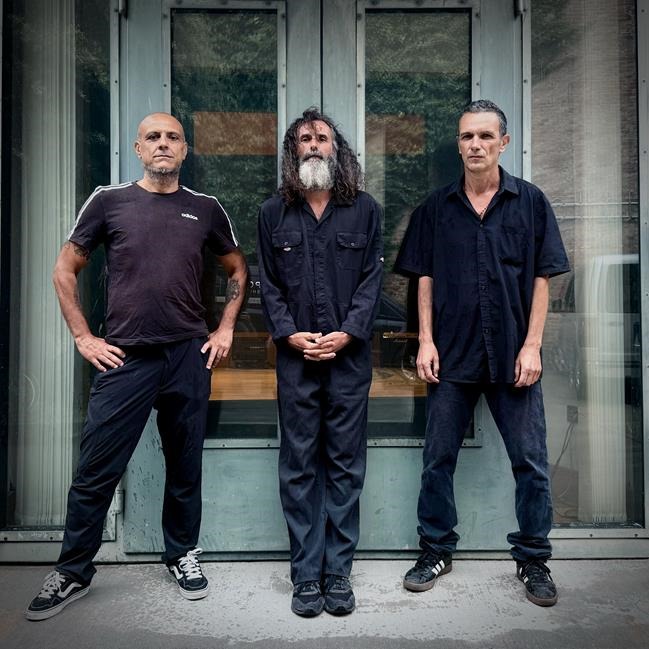
Legendary Italian experimental trio Zu recently announced their return with Ferrum Sidereum (produced by Marc Urselli), a big and bold double album arriving on House of Mythology on the 9th January.

The music combines the complexity of progressive rock, the grit of industrial music, the precision of metal, the spirit and energy of punk, and the freedom of jazz. The result is a sonic journey that is as cerebral as it is visceral, defying easy categorisation while remaining unmistakably Zu.

Today they share the new single and video for ‘Kether’ – about which the band comments,

“Kether is the crown, the halo, the nimbus, the corona. Since it has been symbolically attacked, we symbolically take it back.The golden crown became the sign of kings, but it is a much older and deeper symbol, and it is at anyone’s reach to reactivate the crown.”

AA

IMG_18602-9903cf03cf05143c

Photo credit: Marco Franzoni

Cruel Nature Records – 12th September 2025

Christopher Nosnibor

Postmodernism, emerging primarily as a product of post-war America was defined by hybridity, the demolition of parameters and distinctions between different cultures, genres, and was, in many respects, tied to the accelerating pace of technological development, in particular the globalisation of communications and beyond. But postmodernism also not only recognised, but celebrated, the fact that originality has finite scope, and that anything ‘new’ will by necessity involve the reconfiguration of that which has gone before. Shakespeare had all the ground to break in terms of the advent of modern literature, and one might say the same of Elvis and The Beatles with the advent of rock ‘n’ roll and pop respectively. The reason the 80s were such a watershed was because technology revolutionised the potentials for music-making, and while this saw a huge refraction in terms of creative directions, from industrial to electropop, one could reasonably argue that the next leap in music after 1985 came with house and techno.

Post-millennium, it feels like there is no dominant culture, no defining movement, underground or overground: the mainstream is dominated by a handful of proficient but in many ways unremarkable pop acts, and notably, it’s largely solo artists rather than bands, and while there are bands who pack out stadiums, they tend to be of the heritage variety. At the other end of the spectrum, the underground is fragmented to the point of particles. There are some pros about this, in that there is most certainly something for everyone, but the major con is that unlike, say, in the mid- to late-noughties, when post-rock was all the rage, there’s no sense of zeitgeist or unity, and right now, that’s something we could really do with.

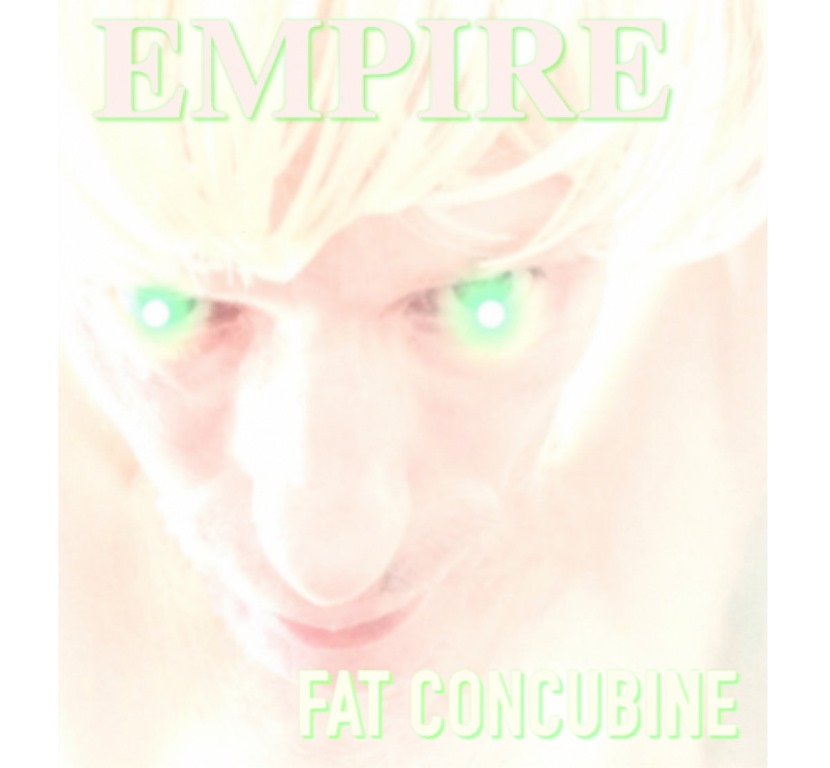
Fat Concubine are most certainly not representative of any kind of zeitgeist movement. With a name that’s not entirely PC, the London acts describe themselves as purveyors of ‘unhinged dance music’, and Empire is their debut EP, following a brace of singles. The second of those singles, ‘for Whom the Fools toll’ (with its irregular capitalisation, which is a bit jarring), is featured here, along with four previously unreleased tracks. This is a positive in my view: so many bands release four, five, or six tracks as singles, and then put them together as an EP release, which feels somewhat redundant, apart from when there’s a physical release.

And so it is, in the spirit of wild hybridisation, that they’re not kidding when they say their thing is ‘unhinged dance music’, or as quoted elsewhere, ‘unhinged no wave ravers’. ‘Feeding off the dogs’ pounds in melding angular post-punk in the vein of Alien Sex Fiend with thumping hardcore techno beats, and it’s not pretty – although it is pretty intense. The snare drum in their first thirty seconds of ‘for Whom the Fools toll’ takes the top of your head off, and the rest of the ‘tune’… well, tune is a stretch. It’s brash, sneering punk, but with hyperactive drum machines tripping over one another and a stack of synthesized horns blaring Eastern-influenced motifs.

There are hints of late 80s Ministry about ‘When we kick Their front door’, another synth horn-led tune that begins as a flap and a flutter before a kick drum that’s hard enough to smash your ribs thuds in and pumps away with relentless force. If the notes didn’t mention that it was a perversion of ‘These Boots We’re Made for Walking’, I’d have probably never guessed. As the song evolves, layers and details emerge, and the vibe is very much reverby post-punk, but with an industrial slant, and a hint of Chris and Cosey and a dash of The Prodigy. If this sounds like a somewhat confused, clutching-at-straws attempt to summarise a wild hotch-potch of stuff, to an extent, it is. But equally, it’s not so much a matter of straw-clutching as summing up a head-spinning sonic assault.

‘tiny pills’ is a brief and brutal blast of beat-driven abrasion, with a bowel-shaking bass and deranged euphoric vocals which pave the way for a finale that calls to mind, tangentially, at least, Cabaret Voltaire’s ‘Nag Nag Nag’.

The version of ‘O so peaceful’ was recorded live, and builds to an abstract chanting drone work. It offers a change of angle, but is no less attacking, its percussion-heavy distorted, shouting racket reminiscent of Test Department and even Throbbing Gristle, particularly in the last minute or so, and you can feel the volume of the performance, too. This is some brutal shit.

Empire is pretty nasty, regardless of which angle you approach it from. It’s clearly meant to be, too. Harsh, heavy, abrasive, messed-up… these are the selling points for this release. And maybe having your head mashed isn’t such a bad thing if you’re wanting to break out of your comfort zone and really feel alive.

AA

a1581875889_10

Constellation are releasing the second album from the Beirut-based avant-rock sextet, SANAM this fall – who merge psych/kraut, improv/skronk, electronics, goth, and jazz elements with traditional Egyptian song and modern Arabic poetry in a compelling brew of widescreen hybrid avant-rock.

The new album, Sametou Sawtan expands on the genre-bending exploration of sound, memory, and cultural identity from their acclaimed 2023 debut Aykathani Malakon on Mais Um Discos, and is already garnering accolades from Uncut, Songlines, and Loud and Quiet.

Today, they share the track and video ‘Habibon’, a slow-burning, autotune-doused freakout, which follows their previously arresting lead single ‘Harik’ -  check out the new video below.

AA

In support of the new album, SANAM has announced headline dates in the EU and UK from October-December.

SANAM LIVE

Oct-Dec 2025 • Europe and UK

09.10 Nantes (FR) Stereolux

14.10 Geneva (CH) Cave 12

15.10 Grenoble (FR) Le Ciel

16.10 Lyon (FR) Le Periscope

17.10 Briançon (FR) Bruit Blanc

18.10 Gap (FR) Le Gorille

22.10 Paris (FR) Petit Bain

23.10 Brest (FR) La Carène

24.10 Ghent (BE) De Koer

21.11 Milano (IT) Spazio Teatro 89

22.11 Ravenna (IT) Transmissions

28.11 Mestre (IT) youTHeater

30.11 Leeds (UK) The Attic

01.12 Glasgow (UK) The Flying Duck

02.12 Salford (UK) The White Hotel

03.12 Bristol (UK) Strange Brew

04.12 Brighton (UK) Patterns

05.12 London (UK) Rich Mix

AA

images.disco

SANAM photo by Karim Ghorayeb

Bearsuit Records – 5th September 2025

Christopher Nosnibor

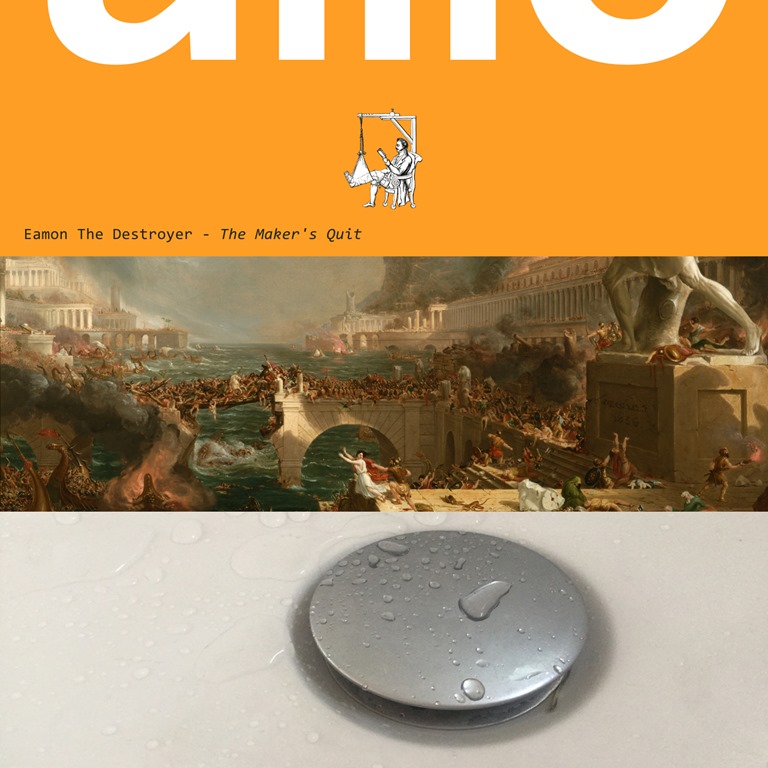
The thing with Eamon the Destroyer is that you never know what you’re going to get. The Maker’s Quit is different again from We’ll Be Piranhas, which in turn was quite unlike Small Blue Car (which remains a personal favourite, even if it does make me feel impossibly heavy on the inside). If We’ll be Piranhas marked a step forward in terms of experimentalism and optimism, The Maker’s Quit sees a greater emphasis on songwriting and structure – but don’t for a second think it’s in any way straightforward, and that the experimentalism has taken a back seat – it’s still very much a copilot here, and with the accent on the mentalism.

Here, the title track commences what is an incredibly varied set with a song that has the theatricality of Alex Harvey crossed with 1990s Leonard Cohen, before ‘Silverback’ confounds all expectation by bringing some shuffling funk-infused jazziness. In contrast to the fairly minimal arrangements common to previous ETD releases, this is pretty busy, then is settles into a mellow groove that’s almost loungey – bar the mid-section, which is rent with a protracted burst of extraneous sound. It’s almost as if he purposefully weaves around the line between genius and self-sabotage simply to tests us as listeners. There are some nice, light, poppy moments on here, and – albeit fleetingly – some captivating grooves. But it wouldn’t be Eamon the Destroyer without a huge helping of straight-up weird shit mashups, and The Maker’s Quit brings the lot, from frenzied jazz and post-grunge, wonky vaudeville waltzes and whistling, via electropop and slices of pan-culturally inspired melody.

More often than not, the verses and choruses are so contrasting as to seem to have been spliced from different songs – that’s when there are verses and choruses. ‘Three Wheels’ is a veritable patchwork, which compresses segments of what sounds like half a dozen songs into five minutes as it spins from grandiose heavy country dirgery by way of an intro, which even hints vaguely at recent Swans, before swerving into Europop with a hint of Sparks, through a off-kilter but gentle soundscaping that slides into laid-back salsa before winding up with a segment of jaunty indie rock. But rather than feel like an identity crisis, the effect is more that of a multi-faceted artist showing all his facets simultaneously. It’s hard to keep up, but one can only imagine what it must be like to live in his head.

The lyrics are equally fragmented, between stream of conscious and cut-ups, producing a Burroughsian, dream-like quality. This snippet from ‘The Maker’s Quit’ exemplary: ‘Saturn kid – spins and reels – in a city / Little Feet – lost in a wave – out to sea / A grandmother – nods – to a space in the crowd / Cap gun assassin – emerges – from a conjurers cloud…’ Beyond oceans and waves, it’s impossible to pin down any notion of themes or meanings. The images float up and fade out instantaneously.

‘The Ocean’ begins dramatically, a swelling, surging drone that halts abruptly, yielding to one of the most typically Eamon the Destroyer passages – lo-fi folktronica with a low croon reminiscent of Mark Lanegan, which slowly tilts its face upwards from scuffed boot-tips towards the sun…. and then all mayhem happens in a brief but explosive interlude, and your head’s suddenly spinning because wherethehellhasthiscomefrom? It’s this wild unpredictability and unapologetic perversity which is – strange to say – a substantial part of the appeal of Eamon the Destroyer.

When Eamon the Destroyer goes downtempo, as on the mournful, string-soaked introductory segment of ‘Captive’, you can actually feel your heart growing heavier by the bar, but then it twists onto some semi-ambient avant-jazz, and the sensation transitions to bewilderment.

The final track, ‘The Buffalo Sings’, is a twelve-minute behemoth is s slow, surging lo-fi electronic exploration. Face the strange? It embraces it, hard, then absorbs it by ghostly osmosis. If ever a song was less country, less ‘Buffalo’… maybe some of the western themed electrogoth songs by James Ray and the Performance are on a par on that score, but this wanders into a sonic desert without even a hat for protection from the punishing sun, and slowly, everything melts in the heat. Circuits bend and warp, and the weirdness rises like a heat haze… and it’s wonderful to be immersed in a work which celebrates creative freedom with no sense of constraint or obligation.

On reflection, with Eamon the Destroyer, you know exactly what you’re going to get: visionary hybridity, moments of aching sadness and fractured beauty, shards of melancholic memory , unbridled inventiveness and fevered creativity, and music like nothing anyone else is making. In a world where meaning seems to have all but evaporated and it’s increasingly difficult to make sense of any of it, The Maker’s Quit feels like a fitting soundtrack. It exists purely in its own space, and it’s the perfect space to escape to in these most dismal of times.

AA

Eamon-TD-3_Cover

Christopher Nosnibor

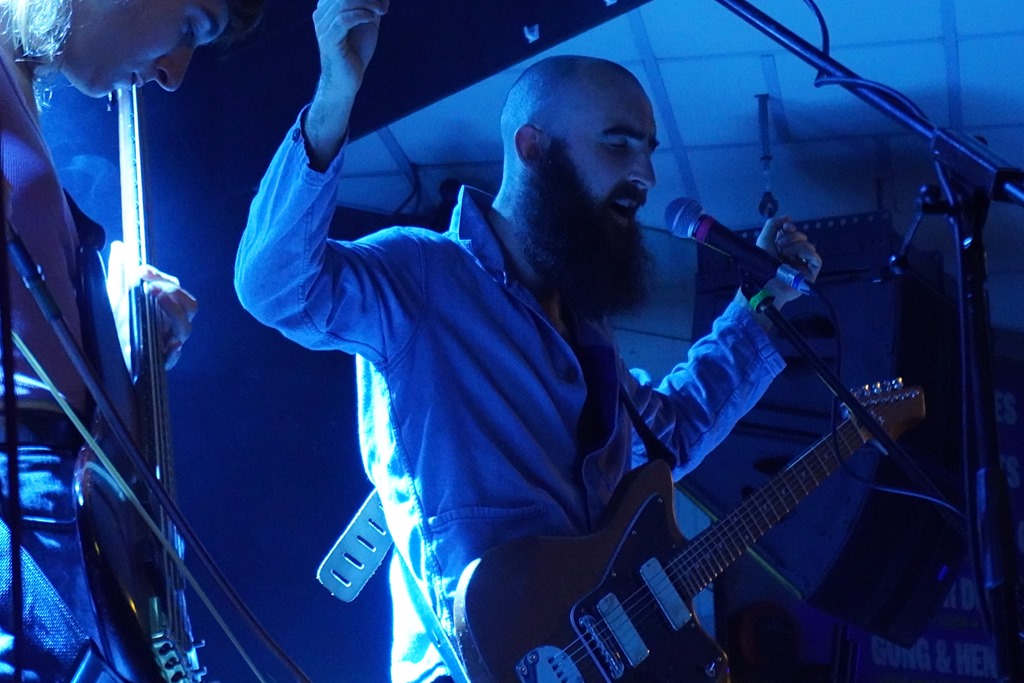
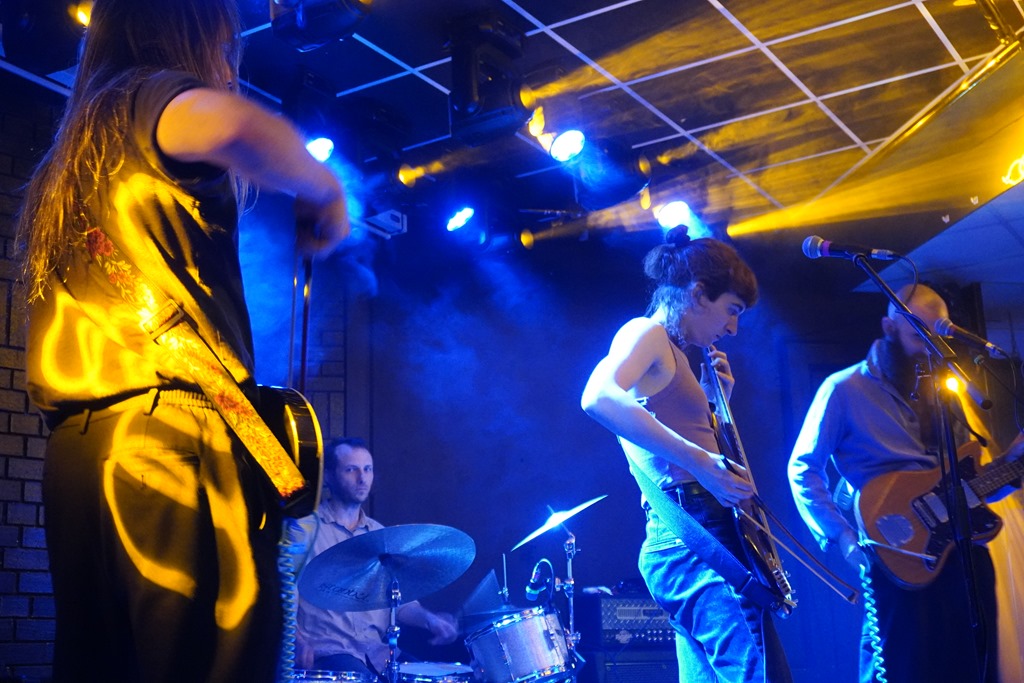
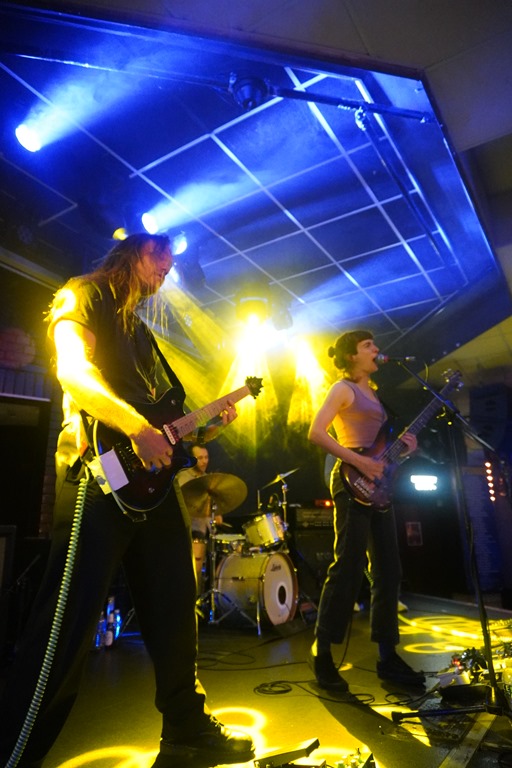
It’s good to be back at Wharf Chambers. Personal circumstances have meant that the trip to Leeds has been largely beyond me, but stepping into the place felt like coming home. It’s unassuming, some may even basic, but it’s got a unique – and accommodating – vibe. There aren’t many small independent venues that can keep going by sticking to a programme of leftfield live music, or being explicit in a keen leaning towards inclusivity for LGBTQIA+ and anyone else who stands outside the fence of the normies, but Leeds is a big enough, and diverse enough, city for a place like this to not only survive, but thrive. It’s kinda quirky, a bit shabby chic, and it works: the beers – local – are cheap, the sound in the venue space is good, and it’s all cool, and tonight’s advertised lineup is a cracker. Diverse, but solid quality of an international reach.

Before we come to that, it’s a strange and rare occurrence to arrive at a venue to discover that there is an additional, unadvertised, band on the bill, and even more so when the band in question has effectively gatecrashed the event without prior arrangement with the promoter, but by dint of deception. But the first band on tonight have done just that. Perhaps it’s the only way they can get gigs. Because they sure do suck, and it was obvious that they’d never have been booked for this lineup in a million years. I head back to the bar after a couple of songs, having heard enough. When they’re done, promoter and sound man (in both senses), Theo takes the mic to explain that he hadn’t booked them and that they didn’t espouse the experimental ethos of the acts Heinous Whining exists to promote. The band did not respond well to this, validating the opinion a number of us had already formed, and they fucked off in a huff. Dicks.

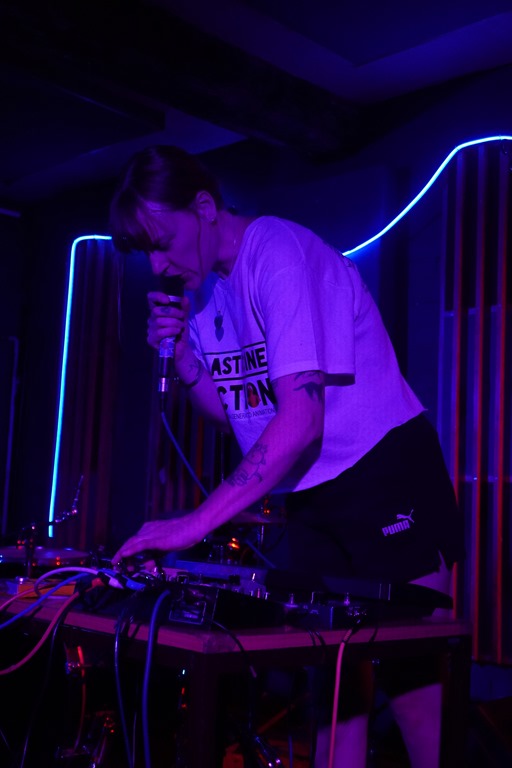
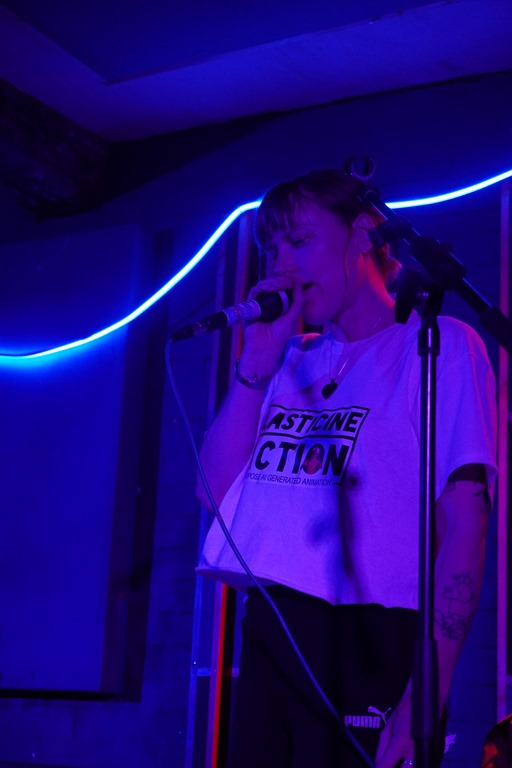
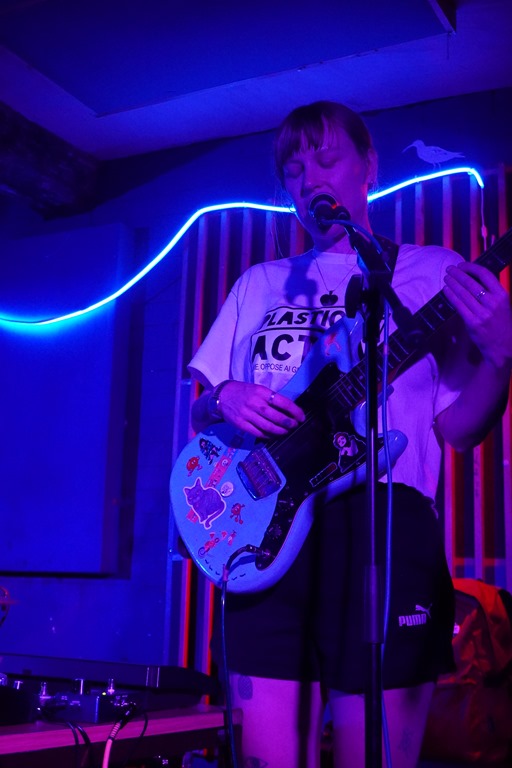
Thankfully, normality – of the kind we’re here for – resumed with the arrival of Sour Faced Lil, the solo project of Hilary from Cowtown. Her set starts – somewhat incongruously – with a quirky electropop cover of Bright Eyes. I just about manage not to cry. Then she swerves into swooshing space rock noise galore, and she explores the weird and wibbly, and it’s everything you’d expect from a Heinous Whining night. Live drums, looped, live guitar, and warped, undulating synths create a cacophony of sound in layers. The performance is a little tentative in places, but the audience is behind her all the way. There’s something quite enthralling about seeing a solo artist juggling myriad musical elements and instruments, knowing what a balancing act, how much effort it is to remember everything and keep the flow, and the fact she manages it is impressive.

DSC03057DSC03064DSC03070

Sour Face Lil

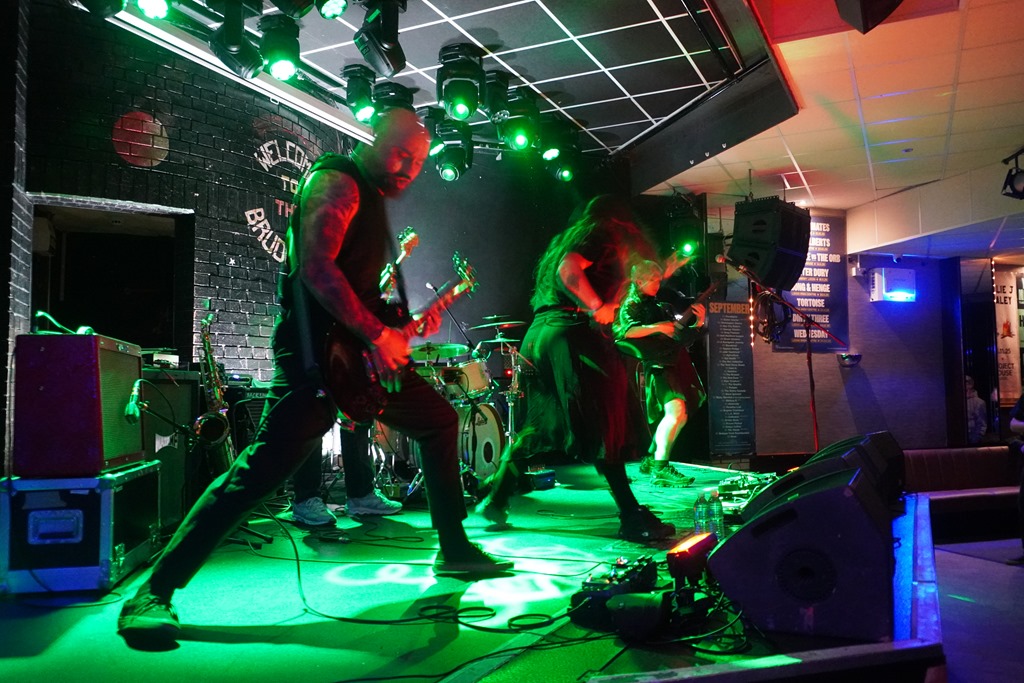
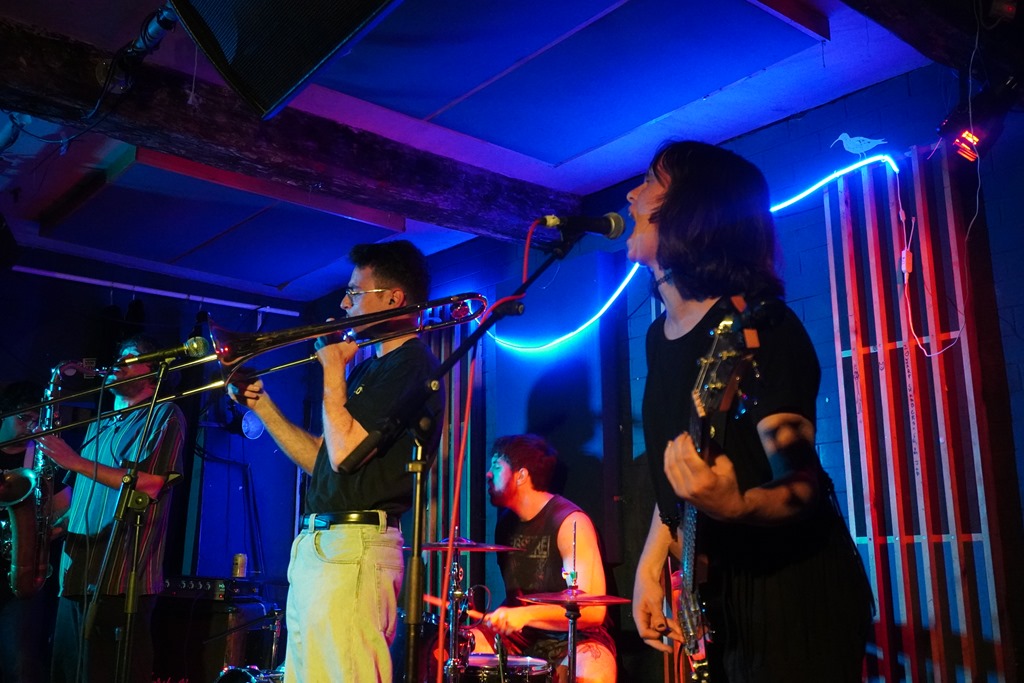
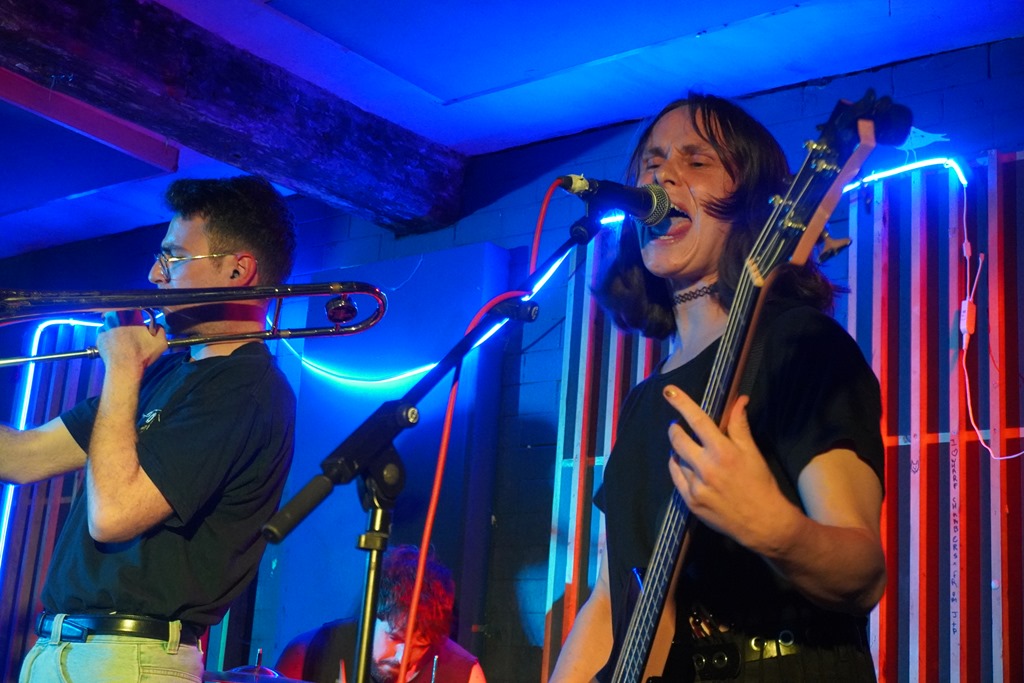
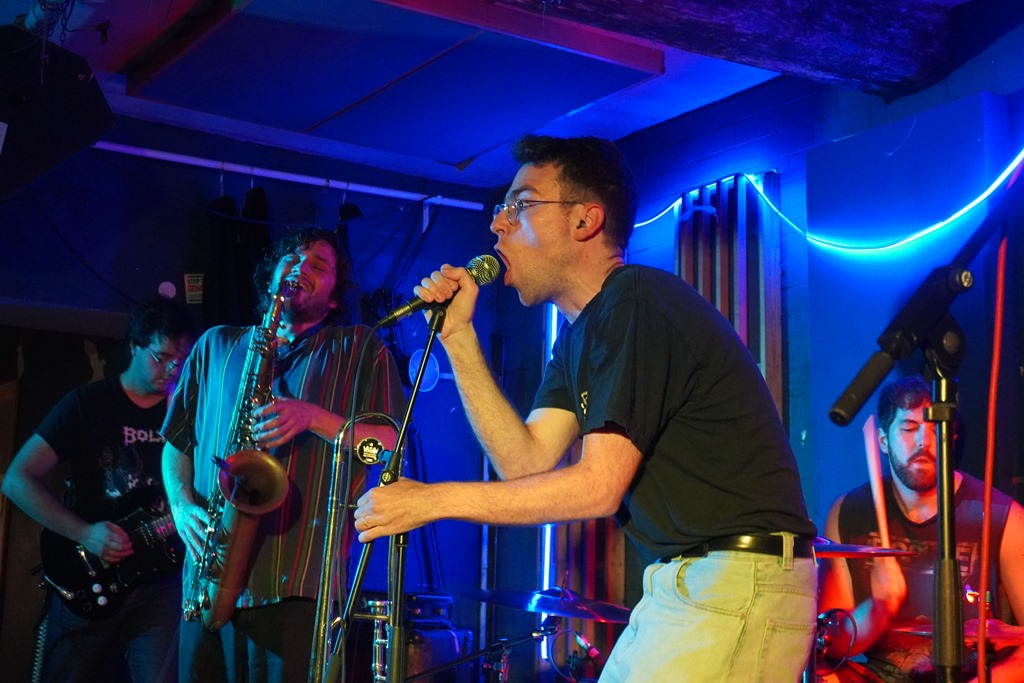
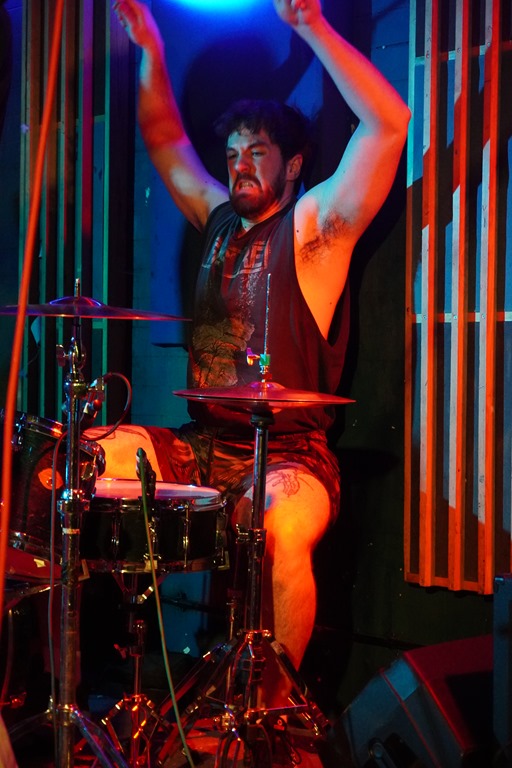
Also impressive are Lo Egin, but for quite different reasons. I feel I owe Lo Egin an apology, as it happens. When I reviewed their split release with Beige Palace a little while ago, I misspelled their name as Lo Elgin, more than once (although I managed to get it right when covering Volumancer in 2013) Hammering out reviews on a daily basis means I slip up sometimes. It’s not great, and I do try, to do better but… I did really rate that release, though, and I’ll admit that they were as much a draw for me as the headliners. And the fact is, they were worth the entry fee alone. On paper, they’re perhaps not the easiest sell, bring atmospheric post rock in the vein of early Her Name is Calla, with brass – sax and trombone – crossed with elements of doom – with the addition of screaming black metal vocals. They do epic. They do crescendos. They also do ultra-slow drumming, something I am invariably transfixed by having first become fixated during my first time seeing Earth live. The drummer raised his arms to fill extension above his head, before smashing down with explosive force.

DSC03079DSC03084DSC03092DSC03105

Lo Egin

Dolorous droning horns create a heavy atmosphere. Then, out of nowhere, from the delicately woven sonic tapestry they’ve been weaving, things turn Sunn O))) and the skinny baggy jeans wearing trombone guy who looks like a young Steve Albini delivers cavernous doomy vocals as he contorts and the mic stand and then all hell breaks loose. When they go heavy, they go heavy – and I mean HEAVY, the drummer smashing every beat so it hits like a nuclear bomb. To arrive with high hopes for a band, and to still be absolutely blown away is a truly wonderful experience, and one that stays with you.

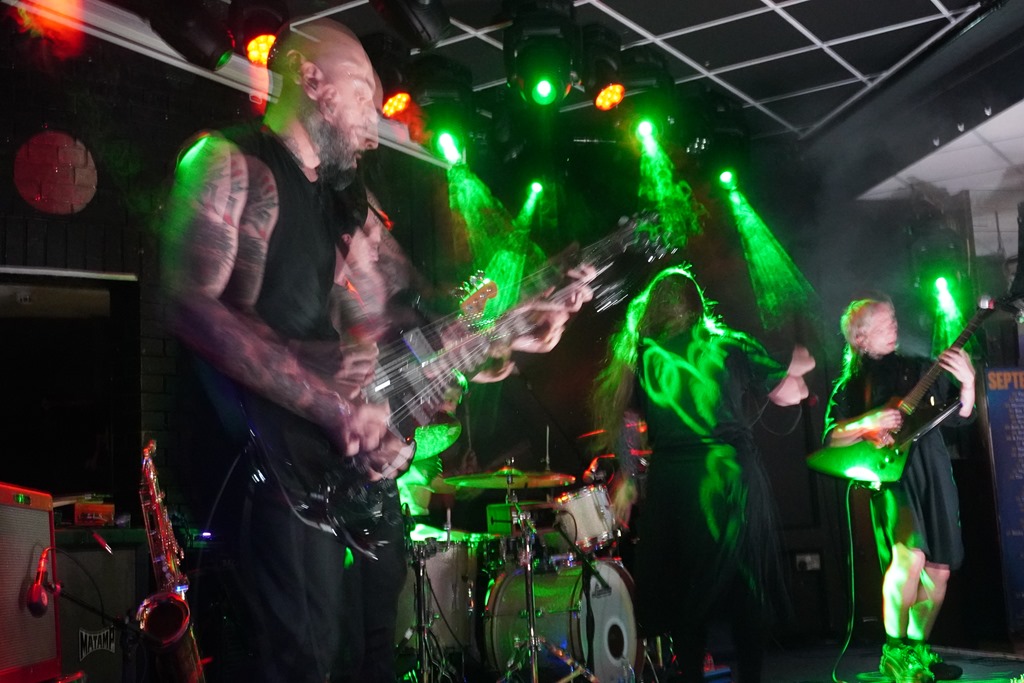
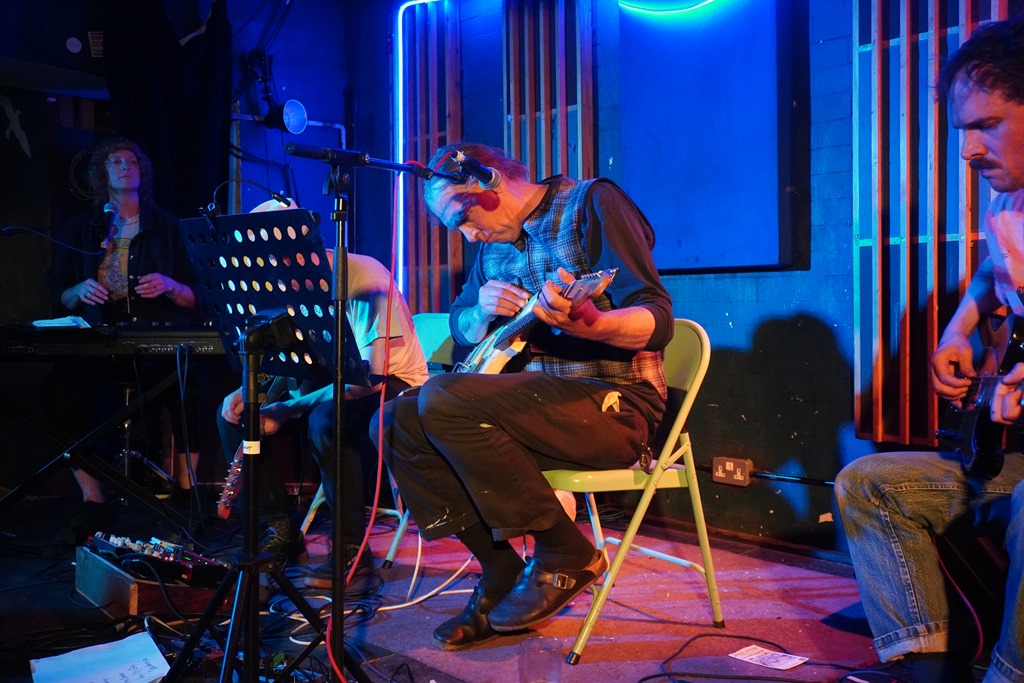
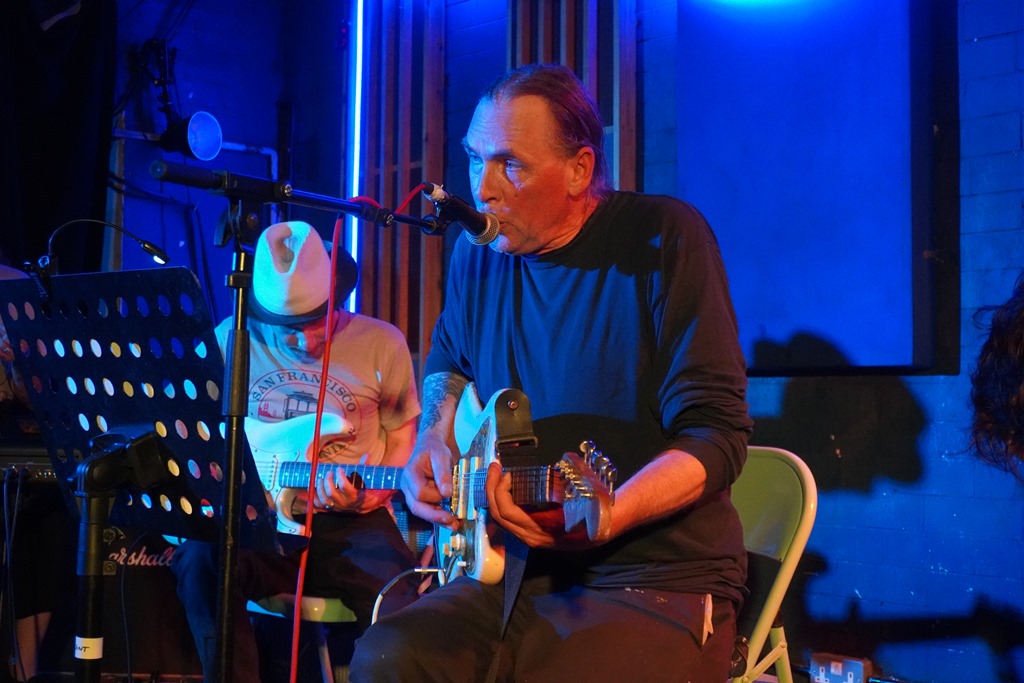
I feel I should perhaps take this opportunity to apologise to Jackie-O Motherfucker, too: in my review of Bloom, I described them as a country band. And while there are without question country elements, they’re really not a country band. They’re not really a psychedelic band, either, or any other one thing. Instead, they’re a hypnotic hybrid, and they’re deceptively loud considering how mellow everything is. What they do is simple in many respects, but in terms of genre, it’s rather more complicated, not readily pigeonholed. I’d clocked them about the venue beforehand, and they seemed like really chilled folks, and while they’re not exactly chatty during their performance, it’s apparent that they’re humble, and simply really chuffed to be playing here. The room is pretty full, too. Tom Greenwood looks like he’s just taken some time out from doing some decorating to play. He’s got paint on his trousers, and is as unassuming as they come.

DSC03109DSC03130DSC03137

Jackie-O Motherfuker

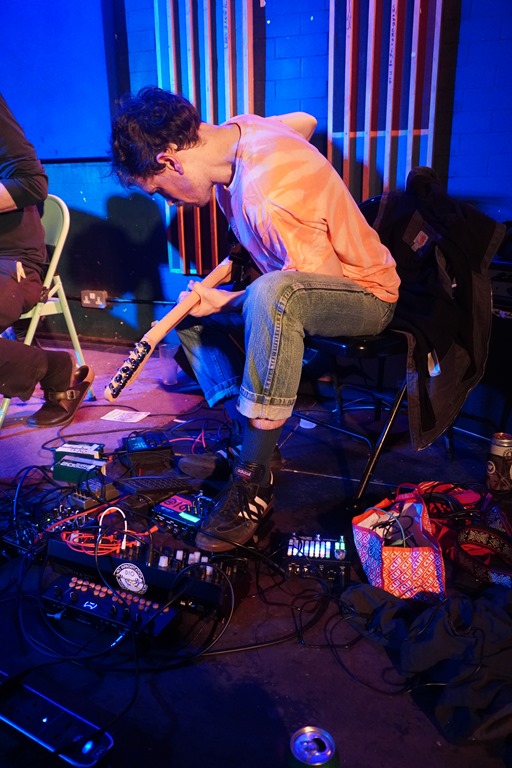
The current lineup consists of three guitars, synth, and some electronic stuff including subtle percussion. No bass, no drums. There are, however, many pedals and much pedal fiddling throughout the set, as they sculpt a wall of reverb and feedback and a whole lot more from this hefty – but ultimately portable – setup.

The resultant sound is detailed, but at the same time a hazy blur. Picked notes – and much of the sound is clean, with next to no distortion, but with all the reverb – bounce off one another here and there, creating ever greater cathedrals of sound. I find myself utterly transfixed. Their hour-and-a-bit long set features just seven songs, and they are completely immersive. There’s no real action to speak of, just an ever-growing shimmer which envelops your entire being. In some respects, their extended instrumental passages invite comparisons to the current incarnations of Swans, only without the evangelically charismatic stage presence or crescendos. In other words, they conjure atmosphere over some extended timeframes, but keep things simmering on a low burner, without any volcanic eruptions. The end result is a performance which is hypnotic, gripping because of, rather than in spite of the absence of drama. Low-key, but loud: absolute gold.

13th August 2025

Christopher Nosnibor

Re:O’s ninth single is a song of frustration, of dissatisfaction, about giving everything and receiving underwhelming returns. It’s a song about life’s struggles. And it takes the form of musical hybridity taken to another level. And when it comes to taking things far out, Japan has a long history of it. Only Japan could have given us Merzbow and Masonna, Mono and Melt-Banana, Shonen Knife and Baby Metal – acts which couldn’t be more different, or more wildly inventive. J-Pop may not be my bag, but on reading that Re:O take ‘the best of Japanese alternative music and combin[e] western metal and rock… Re:O has been described by fans as “Japancore” a mix of Metalcore, industrial metal, J-Pop, Darkpop, cyberpunk inspired symphonic layers with high energy and heavy guitar.” It’s a tantalising combination on which I’m immediately sold.

Hybridity in the arts emerged from the avant-garde, before becoming one of the defining features of postmodernity: the second half of the twentieth century can be seen as a veritable melting-pot, as creatives grappled with the notion that everything truly original had already been done, and so the only way to create something new was to plunder that which had gone before and twist it, smash it, reformulate it, alchemise new permutations. If the zeal – not to mention any sense of irony or knowingness – of such an approach to creativity seems to have been largely drained in the first quarter of the twenty-first century, Re:O prove that there’s life in art still after all.

With ‘Crimson Desire’ they pack more ideas into three and a half minutes than seems humanly feasible, starting out with snarling synths, meaty beats, and churning bass – a combination of technoiundustrial and nu-metal – before brain-shredding, overloaded industrial guitar chords blast in over Rio Suyama’s blistering vocal. And it blossoms into an epic chorus that’s an instant hook but still powered by a weighty instrumental backing. The mid-section is simply eye-popping, with hints of progressive metal in the mix.

The only other act doing anything remotely comparable right now is Eville, who have totally mastered the art of ball-busting nu-metal riffery paired with powerfully melodic choruses rendered all the more potent for strong female vocals, but Re:O bring something different again, ad quite unique to the party. It’s all in the delivery, of course, but they have succeeded in creating a sound that is theirs, and theirs alone. No two ways about it, they’re prime for Academy size venues, and given a fair wind, they could – and deserve to be – there this time next year.

AA

AA

a0408141558_10

30th August 2025

Christopher Nosnibor

Just when you think every genre hybrid has been done, and are feeling worn and jaded by everything, someone chucks you something unexpected. You’re not even sure if you like it, at least not at first, because, well, the different elements are all good independently of one another, but in combination..?

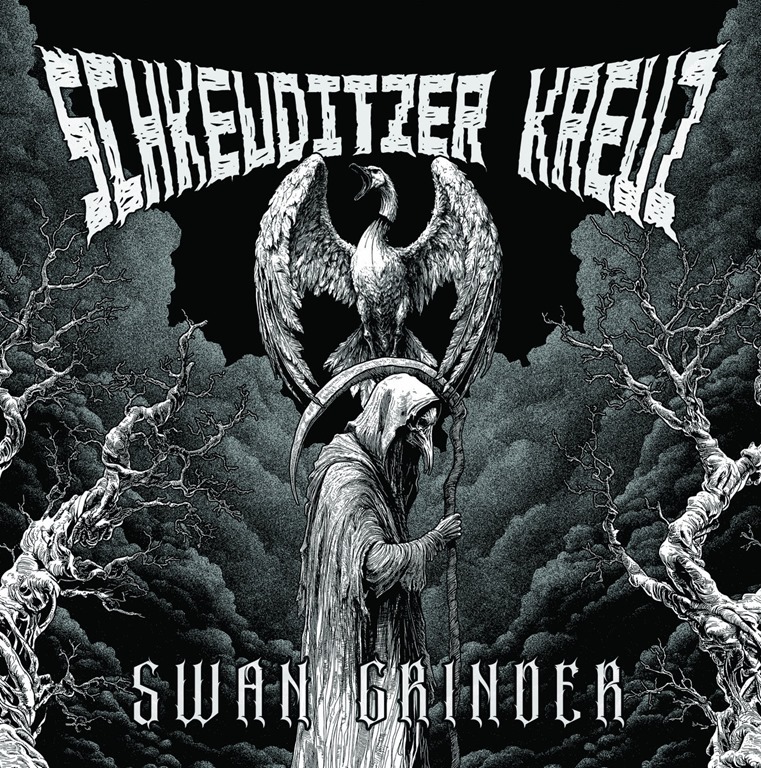
It’s taken until their third album for me to discover Australian ‘Industrial Synth Crust’ outfit Schkeuditzer Kreuz, the brainchild of Kieren Hills, and ‘better late than never’ is one angle to take with it – although another is ‘would I have been ready for it before? Would I ever be ready?’

Swan Grinder is as ugly and intense and industrial as its title suggests. Spasmodic drum machines sputter and blast all over, underpinning pulsating electronic basslines and ear-shredding blasts of noise and distortion. And all of this provides the backdrop to raw, rasping vocals. In some ways, I’m reminded of really early Pitch Shifter – but with the wall of guitars replaced by abrasive squalls of electronic noise.

To think, there was really nothing like this before the 90s. While the 80s are the subject of great affection, and there’s a broad consensus that this was the decade of innovation, with the exception of grunge, the 90s are largely portrayed as a retrograde decade, with a return to ‘rock’, guitar-orientated music, and, in particular, the Britpop era, something born out of a nostalgia for the pre-punk era and a golden age which never really was. And now this period is revered with what one might even call a double-nostalgia; folks in their forties getting dewy-eyed over their teenage years listening to music that was nostalgic for the music of their parents’ generation. There’s something inherently sad about that, really.

But the alternative scene of the 90s was something else again. It was here that all kinds of metal migrogenres were birthed, while rap and rock came together and industrial metal emerged, melding crushing guitars with electronic elements. And there was also just so much weird shit percolating through various channels, and it wasn’t just something you had to tune in to John Peel late at night in the middle of the week for: with the major labels getting in on the action, you could catch the likes of Ministry and Butthole Surfers on MTV.

Anyway. There’s nothing sad about Swan Grinder. Angry, perhaps. Deranged, almost certainly. But sad? Nah. While there are elements of the construction which share common ground with , say, KMFDM, or PIG, the overall sound is altogether dirtier, gritter, rawer – and then there are the vocals, which are pure metal. As such, the result is a different kind of hybrid – hard, abrasive, and as nasty as the image the title conjures.

AA

a0603919453_10

25th July 2025

Christopher Nosnibor

2025 continues to be the year of the comeback. My remark earlier in the week, in context of the release of the new Curse Mackey album, that ‘three years is a long time’ pales rather when considering that just a few days before I’d covered the first Red Lorry Yello Lorry album since 1992, and reviewed The March Violets touring only their second album proper since their formation in 1981. And that’s before we consider the unexpected return of the Jesus Lizard… But somehow it’s been fifteen years since the last new material from the progenitors – and likely sole purveyors of – cack pop, Wevie Stonder.

2017 compilation The Beast of Wevie provided a potted history of their exercises in perversely calculated naffness, and since then… tumbleweeds.

Sure Beats Living is every bit as bizarre as anything they’ve done previously, and successfully nudges beyond… and then accelerates over the horizon. It’s not so much cack as demented. Instrumentally, it’s a wide-ranging work, sometimes expansive, bold, ambitious, even cinematic – as the epic, widescreen ‘Piccolo’s Travels’ illustrates. But mostly, it’s a collection of lo-fi electronic dicking about with irreverent babbling in lieu of serious or meaningful lyrical content. So it’s a step up from previous outings…

It’s a sparse electro backdrop which frames the first track, ‘That’s Magic’, and no doubt fans will like it – but not a lot – as is immediately ventures into the domains of the strange, a Scots brogue narrating the steps for performing a magic trick which culminates in setting the cards alight, vacuuming the ashes and moulding polystyrene. What makes it all the stranger is that the delivery isn’t so different from that of a self-help tutorial, and reminds me of the guided relaxation CD I got given when I attended CBT some years ago.

‘Carpet Squares’ pitches the old-skool groove of Mr Oizo against crunching industrial beats… while providing detached directions for carpet-laying amidst a looping reverb-heavy collage of commentary on carpet. But then the urgent wibbly wobbly ping-pong bloopery of ‘Vanja and Slavcho’ takes things to another level. There’s storytelling, there’s cheesy Japanese-influenced pop and a whole lot more, and it’s quite bewildering – but then, so is the stomping glam beat of ‘Tiktaalik’, which kicks in hard and with all apparent intention of bringing something serious… As if these guys have a serious bone in their collective bodies.

In fairness, quirky humour and an overt lack of seriousness should never be seen as corresponding with a lack of ability to be serious. It’s often reported that comedians are in fact depressives who use humous as a way of deflecting their inner sadness, and clowns are often masking. And something in the title carries hints of a clowning subterfuge: you can almost picture a downbeat character in a US sitcom turning to the camera, breaking the third wall, with an exaggerated shrug, and declaring, ‘Well, it sure beats living’. And so it may just be my own state of mind which colours my perception of this, or maybe there really is something darker beneath the surface. ‘Push It’ inches towards funk, but ends up elsewhere completely, and in seemingly taking some of its lyrical inspiration from the game ‘Bop It’, it’s the epitome of irreverence. ‘Customer Services’ is a perfect pastiche of corporate phone line hold hell, down to the frustrated ‘shut up’ and tossing aside of the phone. Because beneath humour usually lies truth.

However you look at Sure Beats Living, this is a different kind of nuts. The core of the album is constructed around bleepy, shuffling electronica and spoken word… spoken word what? They’re not diatribes, they’re not really narratives, either. They’re words, often detached from meaning, or otherwise, where not abstract, designed to be daft, and Wevie explore words because they can.

Sure Beats Living is perverse, it’s stupid, and it know it is, because that’s what it sets out to be. And in these dark, depressing times, we need the wild irreverence of Wevie more than ever. Welcome back, you barmy buggers.

AA

AA

a3883920739_10

9th June 2025

Christopher Nosnibor

Sledges are described as ‘a four piece Alt-metal/Heavy-shoegaze band that blends genres like grunge, metal, shoegaze, emo/post-hardcore, and alternative to craft songs with catchy hooks and big riffs,’ and while this is true, it fails to convey the way the various elements melt into one another to conjure something quite special.

Take the first track, ‘Stumbling as I Fall’: the guitars bend and pixelate in a way that evokes the essence of My Bloody Valentine, but it’s grunged up and beefy, and at the same time the melodic vocals contrast with that thick overdrive, capturing the spirit and sound of ’94, and in particular, Smashing Pumpkins circa Siamese Dream. The title track is harder, heavier, with loping drums melded to a tight, chugging bass underpinning some hefty overdriven guitars that provide the backdrop for vocals that ae by turns breezy and gnarly, offering one of the most overtly metal moments on the EP. I find myself momentarily thinking of Troublegum by Therapy? – a classic example of solid tunes brimming with melody played with hard distortion and some raw aggression – but then Soundgarden also poke their way into my cognisance. If it sounds like I’m simply pulling bands out of the air, it’s very much not the case: Losing Pace simply has that much going on, although the fact that many of the touchstones I’ve referenced thus far are of a 90s vintage does also serve position the various elements which contribute to the Sledges sound.

‘Weightless’ is – ironically – pretty heavy, and it’s not (believe it or not) a criticism to stand it alongside Linkin Park, in that it brings nu-metal heft and a strong emotive hue to a song that’s both riffy and rich with a palpably sincere feeling of angst. It matters because this is no cheap stab at commercialism, and nor it is just another song that tries to alternative by hauling all of the tropes into the mix: there’s a sincerity to this which lends it an indefinable power, and it hits hard.

After a soft acoustic intro, ‘June is Better than July’ goes widescreen, a cinematic burst of post-rock, post-grunge, alt-rock riffcentric extravaganza. There’s a nagging sense that it’s a but emo, a bit ‘things we’re not supposed to like’… but bollocks to those strictures of convention. It’s pure quality, and that’s ultimately what it all boils down to.

Losing Pace was originally released as a four-track twelve-inch, but this new edition, which also marks its first digital release, offers a brace of bonus tracks, in the form of ‘Fading’ and ‘Letters’. The former is the weakest and most overtly emo song of the set, but it’s bathed in reverb and the guitars are bold and overdriven and grungy, and it’s impossible to deny that it’s well-executed. Rounding it off, bonus cut ‘Letters’ is both dreamy and dynamic, melding elements of early Ride and MBV and Chapterhouse with later exponents of shoegaze / nu-gaze like The Early Years as swirling guitars conjure cathedrals of sound around a pumping drum machine.

On Losing Pace, Sledges successfully combine classic and contemporary, and do so with an aptitude and energy, and a keen sense of dynamics. It’s quality all the way.

[bandcamp width=400 height=340 album=244179070 size=large bgcol=ffffff linkcol=0687f5 artwork=small]

AA

a3823762619_16