Archive for the ‘Singles and EPs’ Category

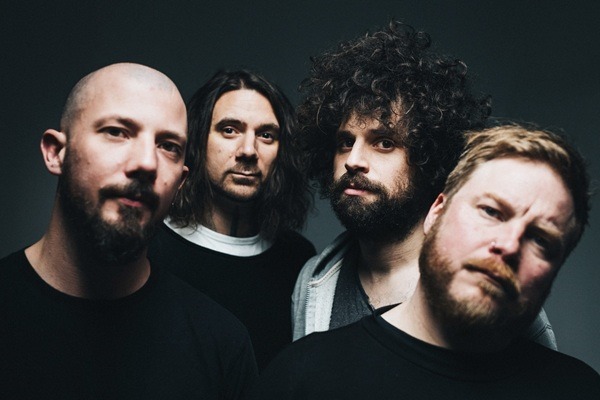
This Friday sees the release of Year of the Horse, the Ipecac debut from exciting new signings Cor de Lux, which very much gets the Aural Aggravation vote.

Across nine songs, the Kill Devil Hills quartet balances post-hardcore urgency, shoegaze bliss, and guitar-driven catharsis. Recorded and produced by J. Robbins (War on Women, Mary Timony), Year of the Horse preserves the raw chemistry that defines the band while pushing their songwriting into sharper, more immediate territory.

‘Blind Smile’, the track described by Loud Women as “bright, melodic and eccentric” now has a music video. About the video, Dawn says, “The video is about someone stuck in a world of complacency. It’s her journey to break free and show color to the world around her. Much like the meaning of the song it’s about being your true self.”

“The blind man smile, the deaf laugh for all to hear, to be so brave, you can’t hear anyone.”

Watch the video here:

AA

CordeLuxPaint-creditBoboGrunwald-990000079e04513c

Photo: Bobo Grunwald

Metropolis Records – 11th September 2026

Christopher Nosnibor

Red Lines, the new EP from international electro-industrial group Damage Control – centred around a core quartet of Bill Barsby, Richard Thacker and Alex Wise (all based in Australia), plus Markus App from Germany – and finds them in collaboration with the Canadian duo OHMelectronic.

“‘Red Lines’ is about psychological warfare, the endless cycle of human conflict and the hunger for power that lies in the hearts of men,” says Huxtable of the EP title track. “While the lyrics were inspired by the Russian invasion of Ukraine, the same themes haunt America and it’s global conflicts. As tyranny and the fog of war repeats itself through every age, so too does the hope that we learn from our mistakes.”

I only wish I had that same hope, could share that optimism: the trouble is, we never do seem to learn from our mistakes. One might have thought that we – as a species – would have learned from the outcomes of two worlds wars, the second of which involved genocide and nuclear annihilation. Yet somehow, we’re in a place where to suggest that there’s a genocide taking place in Gaza is controversial, and we have world leaders who are so unpredictable that in recent months, I’ve taken to checking news sites on my phone on waking at 5am to make sure the world hasn’t ended. But then, it’s not just world leaders who seem perilously close to the button – because despite myriad dystopian sci-fi works detailing how AI will destroy us, those who run the multi-billion dollar corporations developing it are more interested in next year’s profits than the future of humanity. I say humanity, but something has changed in recent years. A trigger has flipped. Where is the humanity?

Russia had seemingly been biding their time during the pandemic, and pounced on Ukraine the moment restrictions were lifted. But the whole world changed during the pandemic: people emerged from restrictions fired up and angry. The mask – and the gloves – were off. The evidence was plain to see: people were suddenly ok driving aggressively, yelling at random strangers in the street, and being openly racist. Politics turned a new shade of ugly, and while America leads the way there, the rest of the world isn’t far behind, and war is all around us and escalating by the week, to the point that much conflict around the globe goes unreported in Western media. Even the ongoing conflicts in Ukraine, Gaza, Iran, have seemingly faded into the background in much of the news media, giving the impression that it’s mundane and life goes on. What the actual fuck happened? Is this really where we are, who we are?

Before we arrive at ‘Red Lines’, the EP’s lead – and title- track, the percussion-driven ‘Manifesto’ pounds in, and thunders and pumps hard under a thick sonic haze. It’s a quintessential techno-electro / industrial cut, which reaches back to the late 80s and early 90s Wax Trax! catalogue for references.

The title track is tight and oppressive, quiet, queasy, dense, grinding bass with serrated edges, and thudding beats are welded together as the backdrop to minimal synths wavering cautiously. The vocal is understated, monotone, but breathy, while reeling off a list of horrors. By the end, the sensation is suffocation, and there is no room, and no air, to breathe. It’s not only Damage Control at their absolute best, but one of the most gripping tracks in the genre in a while. It’s the claustrophobic intensity that makes it.

‘Modernity’ is tense and dense, a pumping hard-edge disco groove, and a snarling response to the to the dark and difficult word in which we find ourselves. It marks a fitting close to a powerful document of these difficult and alienating times.

AA

440008

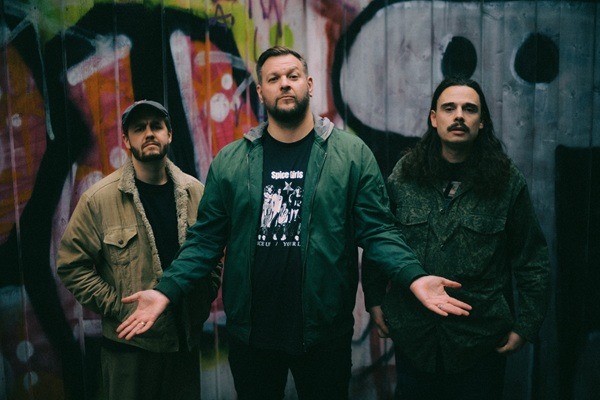
Adelaide sludge merchants Sundowner are back, and things haven’t gotten any prettier.

Three years after Lysergic Ritual dragged listeners through a feedback-soaked wasteland of nihilism and decay, the Australian quartet have announced their third full-length, Cesspool, due out October 15 via Melbourne’s Disdain Records.

The band are offering the first taste of the album with ‘Intoxication Blues’, a filthy, swaggering slab of NOLA-inspired sludge accompanied by a brand-new visualizer.

Built around poisoned blues riffs, suffocating grooves, walls of feedback and a thick layer of distortion, ‘Intoxication Blues’ provides an appropriately nasty introduction to an album designed to soundtrack a world going up in flames.

AA

Cesspool sees Sundowner take the caustic, slow-burning sludge that has defined them since their 2021 debut Guns, Knives and Tyre Irons and push it into even more punishing territory across ten new tracks.

The band explain: “Cesspool continues on with our brand of sludge, further melding influences from the classic ’90s pioneers of the genre through our own lens out of Adelaide, South Australia.”

For Sundowner, that lineage has always been clear. The poisoned blues of Eyehategod, the ugliness of Iron Monkey and Buzzov-en, and the smoke-filled grooves of Weedeater remain embedded in their DNA. But Cesspool isn’t interested in simply recreating the past. Instead, those influences are fed through Sundowner’s own distinctly Australian strain of hostility.

The album also sees Sundowner reunite with the production team behind Lysergic Ritual. After handling virtually everything themselves during the band’s early years, Sundowner brought Jason Fuller of Goatsound Studios into the fold to mix their second album, with Dav Byrne of Iridium Audio handling mastering.

“We went with the same production team as our last album, but pushed everything further for a more punishing and abrasive sound,” says the band.

Across its ten tracks, Cesspool doubles down on everything Sundowner do best: filthy blues, crushing grooves, abrasive riffs and pure sludge-soaked hostility. It’s heavier, nastier and more punishing, without straying from the band’s uncompromising roots.

60fab216-f0b2-9e05-87ad-48f1dbc9ae75

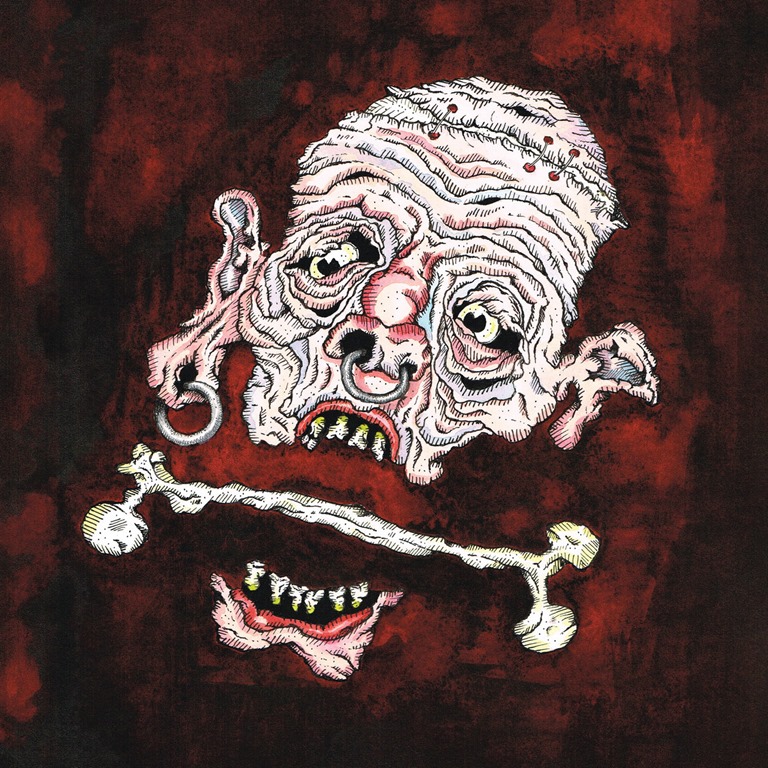
Belgium’s most unpredictable noise-rock troublemakers 30,000 Monkies have premiered their new single .Unsound Hero’.

Taken from the band’s forthcoming album Super Rebound, due September 18 via Fvn Kvlt Records, ‘Unsound Hero’ trades instant impact for a six-minute descent into tension, melancholy and crushing sludge.

AA

The band explains: “‘Unsound Hero’ is about almost wandering off to the dark side when hostile forces keep pushing all the wrong buttons. Unlike a lot of other tracks on the album, this one starts with a slow-burning intro. We had fun layering some deep melodic vocals with uncanny, autotuned choirs, trying to increase the tension with every added layer.”
But restraint was never going to last forever.

“Eventually, of course, we wanted to put the hammer down—BAM! After this, the hero drifts completely off the map, left with nothing but two clean guitars, screaming into an empty space. But then all of a sudden—BAM!—another hammer, arriving unexpectedly, used by our hero to flatten everything in his path once and for all: a reluctant but absolute obliteration for anyone who left him no choice.”

For more than a decade, 30,000 Monkies have occupied a unique place within the European underground. Emerging from the Belgian noise-rock scene, the band built their reputation through a string of increasingly adventurous releases that balanced cathartic chaos with an unmistakable sense of fun. From the dizzying riff storms of Somewhere Over The Painbow to the wild experimentation of I Ate Myself To Grow Twice As Big and HONESTY INTEGRITY FRIENDSHIP PASSION, the band have consistently followed their own path.
With Super Rebound, they may have finally arrived at the destination they have been chasing all along.

AA

598062be-dfa8-51db-1fc8-995cc5793db3

Stockholm post-punk trio Then Comes Silence presents ‘Remaker Redeemer’, the second single from their forthcoming Requiem Ballroom album, due in November via Metropolis Records. The music video, filmed by Damon Zurawski of Future Legends Films, captures the song perfectly, descending into the space between death and rebirth, where the final journey into darkness becomes a passage toward transformation, renewal and the possibility of another world.

Then Comes Silence has also just launched their European tour, which runs throughout September and October, bringing them to venues and like-minded music lovers in Belgium, the Netherlands, Germany, France, Italy and Czech Republic, before returning home to Sweden for the final show on this leg.

AA

A tightly focused trio since 2022, Then Comes Silence was formed in 2012 by vocalist-bassist Alex Svenson in 2012. Drummer Jonas Fransson and guitarist Hugo Zombie, round out the band in its most direct, powerful and uncompromising form. One of the leading names on today’s goth, post-punk and darkwave scene, they are driven by a fascination with horror, the occult and the raw intensity of underground music, having forged a distinctive sound and a devoted international following.

The Requiem Ballroom album itself is divided into two parts: ‘Ballroom’ was mixed by Jon Bordon (Nicole Sabouné, Melody Club, The Exploding Boy) and the ‘Requiem’ half was mixed byTom van Heesch (Rammstein, Apocalyptica, Backyard Babies). Svante Forsbäck / Chartmakers (Rammstein, Amaranthe, Ville Valo, The Rasmus, Apocalyptica) assumed mastering duties.
”Remaker Redeemer introduces the second part of the album ‘Requiem Ballroom’. It’s about new life, and being reborn with the old sins washed away. A kind of cleansing, a fresh start, and the feeling of beginning again. The choice of instruments and sound on this track is a way to explore something different this time,” says Alex Svenson.

“Death is generally regarded, across many cultures, as the final blackout where nothing follows. Yet in another sense, death can also serve as a metaphor for change and transformation. To take the next step, change is inevitable.”

Then Comes Silence earlier released ‘Judgement Day’, a driving anthem that embraces failure, reckless choices and the thrill of living without regrets, embracing a final celebration before the inevitable reckoning. The vivid behind-the-scenes documentary by Marzipan Moonlight offers a glimpse into the video’s creation and the thriving spirit of Stockholm’s goth community.

LIVE DATES
SEP. 11 -  Glain, Belgium @ Deux Ours
SEP. 12 – Rotterdam-Albrandswaard, Netherlands @ Baroeg Open Air 2026
SEP. 13 -  Rennes, France @ Brewklyn
SEP. 14 -  Paris, France @ Le Chinois
SEP. 15 -  Rezé, France @ Cold Crash
SEP. 16 -  Lyon, France @ Rock N’Eat
SEP. 17 -  Marseille, France @ Le Molotov
SEP. 18 -  Torino, Italy @ Ziggy Club
SEP. 19 -  Castelfranco Veneto, Italy @ Sale Improve
SEP. 20 -  Hlavní Město Praha, Czechia @ Subzero
OCT. 24 -  Stockholm, Sweden @ Kollektivet Livet

AA

TCS

7th August 2026

Christopher Nosnibor

What do Depeche Mode, Pink Floyd and Roger Waters, and The Cure have in common? No? A bit stumped? Well they’re all listed as touchstones for the new solo EP from Greg Bullock, who’s perhaps better known as co-founder and one half of Cyborg Amok, purveyors of goth-infused synth-rock – although he his solo career has always coexisted alongside. The band’s name seems particularly salient in context of the recent news of AI’s exponential self-advancements: what was essentially science fiction just a couple of years ago is now the reality of the world in which we live. And it’s the reality of the world in which 26EP is firmly routed, exploring, as he puts it ‘ideas we may not always find comfort in: persecution, contamination, ignorance, and mortality’.

It’s true: few find comfort in any of those topics, and while the romanticism of death is a fairly popular and eternal trope in art through the centuries, few find much by way of warmth when confronted with issues of mortality in immediate proximity. In fact, it’s strange how even the most philosophical – or nihilistic, or tough-seeming – individuals who are brazen about death wilt at the loss of friend and relatives and are suddenly moved to proclaim that someone in their sixties or seventies was ‘of no age’ and ‘taken too young’. In short, death in the abstract is fine, but the actuality is something we can’t even bear to contemplate. Meanwhile, persecution, contamination, and ignorance provide the daily fuel for fiery exchanges on social media and inflammatory reports in the news media. It seems that in recent years, we’ve come to thrive on these very things which tear us apart, as individuals, and as a society. I suppose it comes down to the separation of the keyboard to the life experience, the chasm which yawns between concept and corporality.

‘In Other Words’ starts with a bassline reminiscent of The Cure circa Faith, before plunging into a dark gothy post-punk space, somewhere underground and airless. ‘The deeper the trench / The higher the climb’, he croons in a reverb-soaked baritone, dry, crunched, but ringing clear. It’s a lyric based in logic rather than one which provides a revelatory insight, and yet… and yet, we seem to have become so mired in distractions and misinformation and futile infighting, that simple, basic truths have been cast by the wayside, and in this context, this plain observation carries unexpected weight, particularly as we continue to dig ourselves ever deeper, not only increasingly entrenched in polarised views, but also in embracing AI and practices which accelerate climate change. We’re digging our own graves, here. The trench is approaching the depth of very depths of the oceans. And still we dig.

The folksy ‘Thirty Pieces’ is sparse and dark, despite some lilting instrumentation. Bullock’s rasping vocal lands between Leonard Cohen and recent releases by James Ray, while ‘I Ain’t Goin!’ presents a hybrid of early post-punk and electropop, with a primitive production aesthetic reminiscent of the era, a basic drum machine with a whip-crack snare dominating the mix.

The riff on ‘Blu-Green Beauty’ leans on ‘You Really Got me’ by The Kinks, but filtered through Dr Mix and the Remix as Bullock rails against climate change and paints a bleak yet somehow encouraging picture in which there is still choice: ‘You can close the curtains / You can close your eyes / You can kill everything / You can kill, blu-green beauty.’ Do we still have a choice? If so, for how long?

26EP is pretty bleak, but still contains glimmers of optimism. Where I’m sitting, the future is dark, so I hope he’s right.

AA

a0905385165_10

The Body and Cel Genesis share ‘Whole Wide World,’ the title track and second preview from their debut collaborative album of the same name, out November 13 via Thrill Jockey.
The song wastes no time getting to the point, fusing the punishing force of power electronics with a bitter nihilism that runs throughout the record. Built on lyrics by Chip King and Pauline Poderoso about exhaustion and the limits of continuing to place hope in humanity, the track offers a direct distillation of what emerges when the two projects’ sounds and sensibilities collide.

That confrontation extends to the song’s construction. As Chris Danko of Cel Genesis explains, when bandmate Poderoso delivers the line “You want a key change?,” the song gives way not to a key change but to a crushing breakdown, a moment that plays with spectacle while deliberately addressing and challenging the listener.

About the track, Chris comments, “What was once before you – an exciting, mysterious future – is now behind you. Lived; understood; disappointing. You realise you are not special. You have struggled into existence, and are now slipping silently out of it. This is everyone’s experience.”

AA

The collaboration was first conceived on tour, with few parameters set in advance, letting Cel Genesis’ maximalist compositions and aggressive editing meet Body’s improvisational approach on even ground, with both projects pushing their ideas to their outermost limits. The resulting record draws heavily from trance, distortion, and experimental electronics, anchored by the visceral interplay of dual drumming from Lee Buford and Nick Cowman and the combined force of both groups’ vocals.

Recorded at Machines with Magnets by Seth Manchester, with additional recording by Andrew Oswald in California, Whole Wide World evolved over two years of recording and meticulous editing. Some songs began with electronic beds generated by Cel Genesis, while others grew from live drums, with each group reshaping and reimagining the material.

Whole Wide World is a dense and heavy album, but one that nevertheless feels joyful and fresh—an uncategorizable ode to egoless invention. It’s a work born of artists with disparate approaches, who feel compelled and comfortable to surrender them in service of the birth of new art. Whilst the album was made with joy, its themes confront today’s harsher realities; we see this play out through the eyes of an unrelenting optimist processing the death of possibility itself.

AA

AA

StudioGroupStillEditv1-990000079e04513c

Photo: Chris Danko

Lustmord Lombardo, the pairing of two of heavy and experimental music’s most respected musicians, ambient heavyweight Lustmord and percussive force Dave Lombardo, release ‘The Desolate Shore Part I: Submergence’ from the duo’s forthcoming album, The Pulse of Atoms (Oct. 2, Ipecac Recordings).

“’The Desolate Shore’ is a meditative landscape that feels like a slow descent into the abyss,” Lombardo says of the newly released track. “There is a sense of the ground moving beneath you as shifting rhythms make it feel like nothing is ever completely still beneath the surface.”

AA

Lustmord, discussing the duo’s approach to the album, shared: “One thing about an album like this is that you can’t really point it out as being part of any specific genre or hopefully any specific period. Is it from last year? Is it from 10 years ago, is it from 20 years ago, is it from 5 years in the future? It’s trying to create something that has its own sound, not tapping into whatever musical language or history you’re familiar with. It goes way, way further back. This is the sound of planets dying or of stars being born. It’s about a bigger picture. It’s the sound of the birth of the universe and the death of the universe; it’s not rock and roll.”

The two musicians met backstage at a Fantômas show, introduced by mutual friend Buzz Osborne, around the time that Lustmord and Melvins released their collaborative album. Nearly two decades later, Lombardo and Lustmord convened as Lustmord Lombardo, crafting an album that is as cold and distant as it is frantic and engaging. The Pulse of Atoms showcases an unheard side of Lombardo and brings Lustmord back to his industrial roots.

Rather than composing songs in a traditional sense, Lustmord built evolving walls and vortices of sound, leaving room for Lombardo to add percussion and various synthesizer layers. Once the editing and arrangement was complete, Lustmord mixed and mastered the record, which was a balancing act between the two players’ large, loud musical presences.

AA

LustmordLombardo-LeadPhoto1CreditLustmordLombardo-1-990000079e04513c

With their album debut Nüwa Mends the Sky, UREDDA reveal themselves as musical alchemists who create pieces of utter beauty and a fascinating otherness, that appear to the listener as magic due to being at least one step ahead of their time. Their perfect amalgamation of elements from contemporary electronics, new wave, post-punk, krautrock, and drone among many other influences creates something excitingly new from some things old and beloved. Their sounds are born from experience as well as a deep understanding and mastery of their art.

The masterminds behind UREDDA have already left deep marks in circles of avant-garde music. Thighpaulsandra, previously a member of Coil and Spiritualized, has worked with Julian Cope among other influential acts – these include URUK, in which he was joined by Massimo Pupillo. Pupillo and Paolo Mongardi are probably best known as members of label mates Zu.

UREDDA sprang into being out of pure synchronicity – while those who believe in predetermination are welcome to view the meeting as glorious providence. Thighpaulsandra had travelled to Italy for a solo performance at a contemporary art museum while, at the same time, Massimo and Paolo were working at the studio of UREDDA guitarist Bruno to try out some new raw sketches. On a fateful whim, they invited Thighpaulsandra to join them. There was no prior blueprint, no rehearsal, and no intention of starting a band. Yet the sparks of creativity and inspiration were flying while music began to flow spontaneously.

The band name stems from the famous Italian ‘Caso Amicizia’ (‘Friendship Case’). This refers to alleged mass contacts between humans and extraterrestrial beings called W56 in the central Italian region of the Abruzzi between 1956 and the late 1970s. These aliens supposedly taught harmony and friendship. In this context, ‘Uredda’ was defined as the vital energy of love, friendship and wonder. This energy was not an abstract concept, but the literal fuel driving their advanced technology and the very core of their mission on Earth. “All I know is that a world on the precipice has a desperate need for beauty”, Massimo Pupillo states, discussing today’s single release. “Not a shallow and only cosmetic glamour, but real beauty – one that incorporates and transforms our deepest anxieties and fears. The diamond is born in the lotus, but the lotus is born from the mud.”

This philosophical approach ties UREDDA directly to an esoteric legend of early Krautrock, by mirroring the belief that musicians could collectively tap into a cosmic current and were able to communicate directly with their mixing desks, instruments and gear as living entities.

Ahead of the album, they’ve unveiled a video for ‘All He Knows’, which you can see here:

AA

unnamed-2-1

Photo: Sek

Two decades have passed in the land of Gnod, yet the psychic travelogue only becomes more enthralling as it goes on. The page is turned, a new chapter begins… Chronicles of Gnowt (Vol. 2) will arrive via Rocket Recordings on 9th October.

Today, the band share the King Tubby-inspired ‘Old Gold’, taken from their transcendentally heavy middle instalment in the Chronicles of Gnowt trilogy.

Paddy comments, “The words for ‘Old Gold’ have been floating around the Gnod universe since 2008 waiting for the right rhythm. 18 years later the right rhythm appeared. This track was further enhanced by our (sometimes) sound engineer Raikes jumping on guitar, wah and space echo and Spud Murphy approaching the mix like King Tubby.”

Chris adds, “The rhythm came from jamming in the rehearsal room on a one note riff / rhythm that I was playing on the bass. It was one of those riffs that stuck & became a track.”

AA

000011010019GS-99079e045104513c