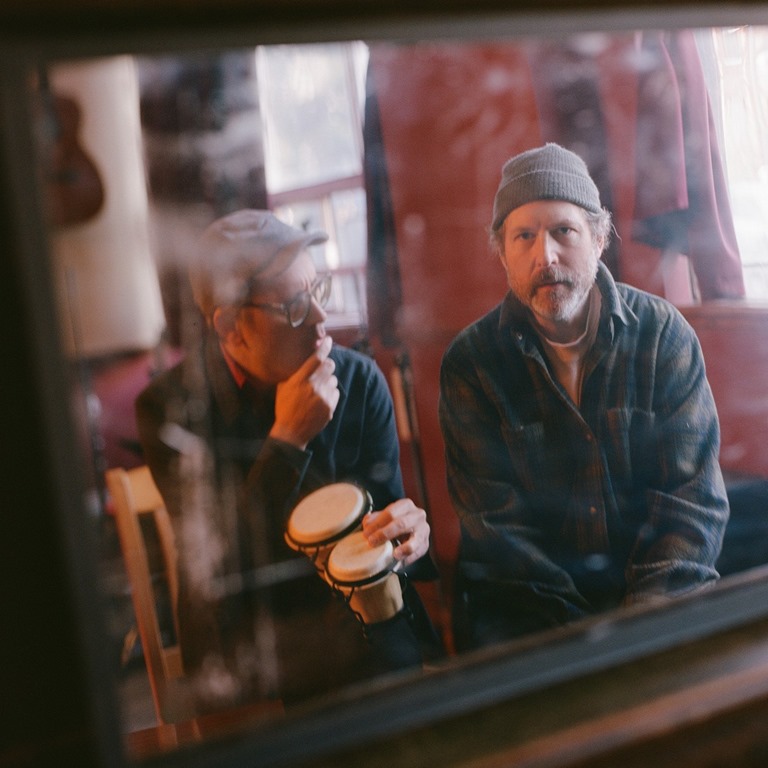
The exploratory electronic duo of Craig Dunsmuir and Sandro Perri returns 20 years after its self-titled debut. G70 2: Bones Of Dundasa is out on 1st May 2026.
Hear the skittish industrial stutter of ‘Aquatint’ and fractured beats of ‘Pad Tide’ here:
AA
AA
20 years after its self-titled debut, Glissandro 70’s follow-up straddles the Album and Archive: a decade’s worth of recordings that were abandoned, lost in a hard drive mishap, recovered in the form of rough stereo mixes, reappraised with the balm of time, and restored/augmented/enhanced to forge a captivating new LP.
Glissandro 70 is the collaboration between Toronto musicians Craig Dunsmuir and Sandro Perri, first formed in 2003 as a mostly studio-based project of longform loop-based guitar and rhythm-driven experimentation. An eponymous (and up to this point singular) album appeared on Constellation in 2006, blending Dunsmuir’s afrobeat and Perri’s tropicalia influences through their shared reverence for Arthur Russell and dub techno.
While continuing to collaborate musically and foster a close friendship, Dunsmuir and Perri largely went on to helm their own projects thereafter. Perri transitioned from his ambient electronic sobriquet Polmo Polpo to a string of acclaimed singer-songwriter albums under his own name starting in 2007, with a side quest as ringmaster for the inscrutably leftfield electronic collaborations of Off World. Meanwhile Dunsmuir continued deploying lo-fi loops and broken beat iconoclasm as Guitarkestra and Kanada 70 (whose early tracks provided the original birthplace of Glissandro 70) and intermittent live concert Hi-life extravaganzas at the head of Toronto’s Dun-Dun Band (recently captured on wax for the first time by Ansible Editions).
G70 2: Bones of Dundasa arrives 20 years after the Glissandro 70 debut as an archival celebration, revisiting unfinished paths and re-assembling rediscovered recordings originally made between 2005 and 2015. The new album includes a cover of Arthur Russell’s ‘Lucky Cloud’ (augmented by Peter Zummo’s trombone newly recorded in 2025) and a previously unreleased Dan Bodan remix of the debut record’s ‘Bolan Muppets’, alongside 10 tracks of sample- and beat-based vignettes brimming with skittish guile.
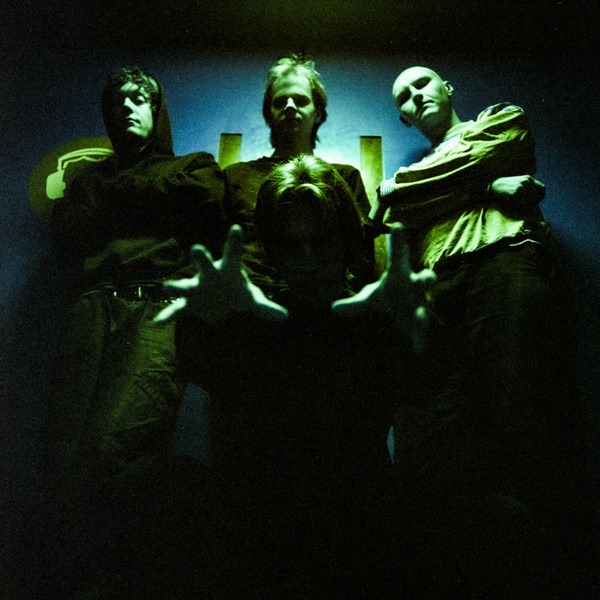
Today, experimental Hip-Hop legends dälek release their latest full-length album, Brilliance of a Falling Moon.
Conceived, composed, and produced by Will Brooks (aka MC dälek) and Mike Mare, Brilliance of a Falling Moon is a sprawling, uncompromising record that speaks to the political timbre of the day. Taking its name from a section of Erik Larson’s 2011 novel In The Garden of Beasts, the album paints a fiery portrait of life and resistance in fascist America.
Recorded in the group’s Deadverse Studios over the course of 2024 and 2025, Brilliance of a Falling Moon’s beats are propelled by brutal, dust-caked drum breaks and cloaked in an ominous, otherworldly atmosphere. Taking aim at everything from The State’s suppression of information to colonialism and Trump’s demonization of immigrants, Brooks’ rhymes are practically burning with outrage at the current state of the world.
“When you listen to this, I hope you walk away with hope because we’re still fighting, building, and pushing.”
Check out the new video for ‘Normalized Tragedy’ below:
AA
Not only has dälek always presented an undiluted political stance in their music, the band is part of the continuum of bold, revolutionary hip-hop pioneered by Public Enemy and The Bomb Squad. dälek has spent decades carving out a unique niche fusing hardcore Hip Hop, noise and a radical approach to sound.
Founded by Will Brooks (aka MC dälek) and Alap Momin (aka Oktopus), dälek debuted in 1998 with Negro Necro Nekros, a sonic tour de force built upon thunderous drums, blissful ambient sections, and gritty, insightful lyrics. On watershed albums like 2002’s From Filthy Tongue of Gods and Griots (2002), Absence (2005), Abandoned Language (2007), and 2009’s Gutter Tactics (2009), dälek laid a template that added completely new textural and structural dimensions to rap music.
With this kind of musical and political pedigree, it makes sense that dälek would return with such a timely record that reflects all of our frustrations.
Once again the band has teamed up with artists Paul Romano and Mikel Elam for the striking package artwork.
Swedish experimental noise-rock outfit The Family Men return on May 8 with their second full-length album Co/de/termination, set for release via Welfare Sounds & Records. To mark the occasion, the band have unveiled a brand new video for the track ‘Luxury’.
‘Luxury’ channels the band’s sonic identity into a single, tightly focused piece. As Echoes & Dust put it: “Built upon looping, intertwining rhythms and heavily processed instruments and samples, ‘Luxury’ distils the band’s unmistakable sonic identity into one focused strike. It’s a precise yet overwhelming construction – mechanical, hypnotic, and abrasive – and a perfect example of what we’ve come to expect from the proprietors of the ‘total harmful sound.’”
The band themselves add: “‘Luxury’ is heavily inspired by William Gibson’s writing. It also feels like it encapsulates every part of the new album in some way, so it fits really well as a final single before the release. The video was a collaborative effort between Gustav and this really talented guy from Stockholm named Henke Luhr, and we feel it reflects the music in a very fitting manner.”
AA
AA
Following their debut album No Sound Forever, The Family Men have spent the past years performing extensively across Sweden and internationally, building a reputation as one of the most intense and uncompromising live acts around. That relentless momentum feeds directly into Co/de/termination, a natural yet sharpened continuation of the band’s sonic evolution. Pushing both intensity and precision to new extremes, the album refines their sound into something tighter, heavier, and more deliberate than ever before. Urgent yet controlled, abrasive yet purposeful, Co/de/termination stands as a focused and uncompromising statement.
Operating across a wide sonic spectrum, The Family Men resist easy categorization. Samplers, broken electronics, tape loops, and heavily distorted guitars collide into a sound that is both confrontational and immersive.
Their live shows, often accompanied by feverish VHS projections, towering waves of feedback, and vocalist Gustav Danielsbacka performing directly within the crowd, have become legendary for dissolving the boundary between band and audience.
With Co/de/termination, The Family Men further cement their position as one of the most uncompromising voices in contemporary experimental rock.
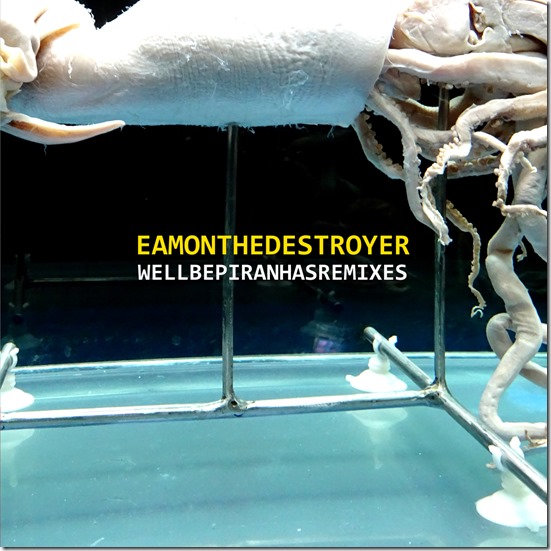
Anyone who’s been following this site for any time will have likely encountered the work of Eamon the Destroyer, and Edinburgh-based label Bearsuit Records, and in doing so, will have learned that the label specialises in weird shit, and that Eamon is an artist who conjures a uniquely strange musical hybrid, which is entirely free of the mores of genre-specificity. Idiosyncratic is the word.
And what better way to shed new light on all of this than through a remix album? I’ve written extensively in the past with a critical view on remixes – about how they eke out material on and on, or pad out singles into EPs and albums, and also about how they can be really fucking boring, with back to back versions of the same song over and over but with different drums, more disco drums, more aggressive drums, more industrial drums, while the vocals are dubbed out and mostly what you get is some ravey shit.
This is very much not the case with the remixes of We’ll Be Piranhas, the original version of which was released in 2023 and has already been subject to a follow -up / satellite release in the form of Alternative Piranhas EP (2024), which, as the title suggests, features alternative takes of some of the songs on the album. Since then, Eamon the Destroyer has released another album of new material, but this evidences that there’s more mileage in Piranhas yet. These reworkings are subtle and sensitive and, in the main, preserve the essence of the original tracks. That is to say, it’s a chaotic assemblage of twangy Western stuff which clashed and melts into Eastern vibes, all melted together with a filmic overlay, and none of it makes sense, but at the same time it makes perfect sense – if that makes sense. And if it does, well, good, because little else about all this does.
The sequencing of the tracks is different from the original album, and it works, taking into account the transformative reinterpretations of the songs, starting with a laid back but grooved-up take on ‘A Pewter Wolf’ by Senji Niban.
The Elkeyes remix of ‘Rope’ is particularly brain-bending, with its warped jazz elements which are vaguely reminiscent of later Foetus. At the same time, it brings a weight, a long shadow of gloom, with organ-like drones. It’s a lot to process all at once. And while remixes often add length to tracks, the reworked title track is cut to half the length of the original, although with the weirdness and distortion turned up a long, long, way. Similarly, the No Mates Ensemble cut ‘My Stars’ from nine-and-three-quarter minutes to three and a half, and reframe it as a slowly evolving avant-jazz meandering. Elsewhere, ‘Société Cantine transform the low-key space-synth strum of ‘Underscoring the Blues’ into a seven-minute hybrid of quasi-operatic drama and drum ‘n’ bass.
It’s different alright, and that’s the point of a remix album, of course. But the success of the We’ll Be Piranhas remixes is that it doesn’t fall into the trap of regular remix mode. Here, the songs aren’t obliterated, but simply respun. It’s a winning formula, and this is anything but a predictable rehash exercise.
This one’s been out for a while now, but some releases simply have a slow diffusion. And Fini Tribe’s career was one of slow diffusion and… and what, really? Certain corners of the press dug them. Me, I was a bit too young at the time to appreciate them, and never felt compelled to delve into them retrospectively… until now. Chris Connelley, of course, went on to find fame and (mis)fortune with The Revolting Cocks, and also stepping up to the ranks of Ministry. His autobiography, Concrete, Bulletproof, Invisible & Fried: My Life as a Revolting Cock (2008) might not be the best-written book ever and might have benefitted from some finer editing, but it’s a wild ride, and it’s a fair analogue for his recorded output, too. A bit variable, but when it’s good, it’s off the scale. That they would change their approach in the mid-late 80s means that this compilation spans their initial phase
Whatever happened to Revolting Cocks in the later years, where they became a touring tribute act is a topic for another time, but the fact Connelley’s legacy includes Murder Inc. and contributions to KMFDM and one-off single projects like PTP and Acid Horse (a collaboration between Ministry and Cabaret Voltaire) is worthy of reverence.
But before he jetted off to the USA for that pivotal meeting with Big Al, there was Fini Tribe, and they produced a veritable shedload of material in five-year spell.
As the accompanying notes detail, ‘Fini Tribe was born into the cash-poor but culturally-wealthy environs of post-punk Edinburgh in the very early 80s – 1980 to be precise. A tiny three-piece with no drummer would soon swell into a muscular six-piece with inherited or cheaply-purchased instruments. Band members Chris Connelly, Simon McGlynn, Andy McGregor, Davie Miller, Philip Pinsky, and John Vick haunted the cold, damp warrens of the Niddry Street and Blair Street rehearsal rooms, just off the high street in Old Town Edinburgh. Drawing on the influences of everything from Throbbing Gristle, Wire, Can, Captain Beefheart, and numerous angular funk bands that were spewing out of the John Peel Show at the time, they also drew from the seemingly bottomless well of modern film, writing, and art that was abundant in the festival city.’
The result? Everything including the kitchen sink. And here we have a forty-seven track document of that career, with singles, Peel Sessions, live cuts, remasters, remixes, you name it. It’s all there, from the earliest works, like the tracks from the scratchy post-punk debut 12” Curling And Stretching (1984) are present in remastered form, and they sound stark and magnificently angular and challenging.
AA
There must have been something in the water – or maybe it was the Irn Bru or Buckfast – in Scotland around this time, since it yielded The Jesus and Mary Chain, Primal Scream, Altered Images, and laid the foundations of the JAMMS / KLF – although at this time Bill Drummond was doing mental shit plotting rabbit-shaped tours for Echo and the Bunnymen.
The first EP is spikey and angular and vaguely jazzy, and brings in elements of post-punk and what would become aligned with mathy post-rock in years to come. It’s aged well, for sure, and the same is true of the second EP, Let The Tribe Grow, released in October 1986. Combining warped synths and jittery guitars to conjure an air of tense paranoia, this is tense listening. ‘All Fours’ deploys thunderous percussion that’s pure Test Dept, and ‘Detestimony’, too, is dominated by relentless crashing beats. The EP’s last track, ‘Monomil.’ is murky, doom-laden ambient and fairly disturbing
Their cover of Can’s ‘I Want More’ saw the band move to Wax Trax! and perhaps not entirely coincidentally cement a more pumping dance style – that is to say, an industrial dance party style that was very much the sound of WT circa ’87 and shares considerable common ground with early RevCo – but at the same time, they still sound unmistakably Scottish, and not solely on account of Connelley’s vocals. ‘Idiot Strength’ (the B-side of ‘I Want More’) could be an outtake from Big Sexy Land. The same is true of the drum—dominated ‘Make it Internal’, which now sounds like a rehearsal for ‘Beers, Steers, and Queers’. In some ways, it probably was.
After the early EPs and Peel Sessions, there’s a host of material hauled from the dark depths of the back catalogue, much of which is of a rare quality.
On ‘An Evening with Clavichords’ and ‘Goode Duplicates’ they sound more like a frantic 80s pop band wrestling with jazz elements and slap bass, and there’s a whole lot happening on ‘Bye Bye to the October Sky’, which straddles goth, electro, industrial, and all kinds of post-punk experimentalism. ‘Throttlehearts’ lands like a Scottish Scott Walker, and is pretty mad but also compelling.
The live material – four tracks from ’87 and five from ’83 – both from sets performed in Edinburgh, are illustrative of a band unyielding in their desire to challenge. The later recording is reminiscent not only of RevCo, particularly in the grinding bass grooves and messy confrontational stylings, but the live albums of Foetus on their Thaw tours of ’88 and ’89. The set from ’83 is rougher rawer, in terms of performance and sound quality, but the contrast is telling in that the later recording is more attacking and abrasive. This was not a band that mellowed as they evolved: instead, they grew in ferocity during this time.
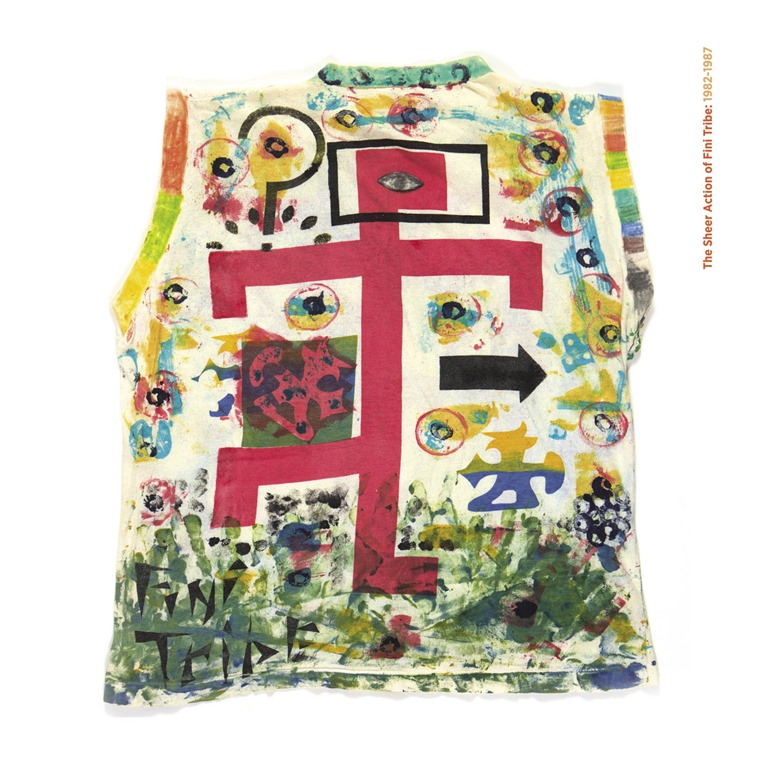
The collection winds up with some experimental offcuts, which aren’t the most listenable of pieces, but do provide an insight into their evolutionary workings. The Sheer Action of the Fini Tribe 1982-1987 is a fascinating document, not necessarily a band ahead of its time, but a part of a revolutionary zeitgeist. And while bands like Depeche Mode and Yazoo and The Human League were bringing synths into the mainstream with pop tunes created using emerging technologies, the underground was throwing out bands like this, bands like DAF, bands like Foetus, Meat Beat Manifesto, Test Department. A lot has changed since then – culturally, and musically – change worthy of not simply acknowledgement but an entire thesis. It’s a thesis not for me to write, but The Sheer Action of the Fini Tribe 1982-1987 is a document which needs to be referenced in it.
Having slipped out ‘This and That’ as a forewarning of the imminent arrival of his ‘difficult third album’, the time is almost upon us for its unveiling. Just as it was six years between his debut, Grievous Bodily Charm and second album Touch & Go, so another eight years have elapsed since then, although he’s maintained his profile through touring – something which for him comes with the added challenge beyond the usual logistical matters with a wild stage act and even wilder and largely impractical-looking outfits. But then, Mr Vast is more than music. The creation of Henry Sargent of Wevie Stonder – perhaps the sole exponents of the cack-pop genre – Mr Vast is more than a musical project. It’s an entire world, where the Vast persona is all encompassing, bringing together music and performance art, and there are no half-measures here, Vast fully embracing the strange, the wonky, the incongruous and the improbable.
He’s at pains to stress that this isn’t art, though, and explicitly states ‘Mr Vast is not art. He’s something that happens to you. So let him.’ I rather feel that there’s no choice in this matter, really. The idiom goes that one should ‘expect the unexpected’, and this could well be a mantra for approaching Mr Vast – although it’s perhaps more appropriate to suggest that it’s all expected when it comes to his work. ‘Accept the expectable, yeah?’ he says on ‘Ants’, before blabbering on about ‘swan crisps’ and reflecting on deep water: the wrongness and the delivery remind me of Nathan Barley – perhaps one of the most underrated and uncomfortable sitcoms of the early 00s. ‘Failure is its own reward’, he croons moments later, spinning another classic postmodern dichotomy within a cocoon of New Age hipster jargonisms.
And so it was – and still is – that ‘This and That’ confounded expectation by being remarkably not-weird, a surprisingly danceable cut that could be legitimately referred to as a ‘bangin’ choon’. How serious or how ironic or parodic it is, remains unclear. Before we get to it on the album however, there’s ‘What’s Difficult About Being Stupid?’, which at twenty-nine seconds in length is more of a sliver of facetious frippery with a toy keyboard, and ‘Scatterbrain’, a sub-two-minute flourish of medieval folk absurdity that comes on like a collision between Horrible Histories and Steeleye Span. Or something. In this context, the pumping hyperactive acid beats of ‘This and That’ seems like a moment of sanity, despite its OTT KLF-style ‘stadium house’ / ambient / soul breakdown in the middle before going full-on happy hardcore. ‘Oh, listen to the sound effects… that’s fantastic’, he comments amidst a stream of conscious lyrics, before drum ‘n’ bass breaks drop.
Upping the Ante is appropriately titled: it’s peak Vast. ‘The Bench’ is almost – almost – a spoken-word vignette within a soft, mellifluous ambient composition, and it’s almost – almost – not weird or off-kilter. But then, as we learn a few tracks later in what seems like a confession of sorts, Vast tells us, ‘I Can’t Help It’. This track is another Hi-NRG work which incorporates drum ‘n’ bass and samples but breaks out into derangement worthy of a Brett Easton Ellis character – but there’s some observational content in the mix, too.
‘Neural Preening’ takes the form of jerky, quirky early eighties electronica, a bit Devo, a bit Thomas Dolby, a lot hyperactive. Keeping up with the sheer range of what’s going on is mind-bending, and while the gentle acoustic ‘Guess Who’ does offer some breathing space, it does so while offering something a bit trippy, a bit Syd Barrett era Pink Floyd. Then he goes and spins things into a different orbit with the murky groove of ‘Crumpet Man’, which could be a ‘Born Slippy’ meets Tubular Bells for 2026 if he wasn’t talking about animals, muffins, and pancakes.
It would be easy enough to simply bracket this as ‘experimental’ – and also ‘barking’ and ‘batshit’, which I’ve probably done myself before – but this fails to give due credit. Sure, there’s a certain sense that Mr Vast’s main purpose is to explore the furthest fringes with no regard for musical or social norms, instead seeing what new novelty oddness he can create, but equally, one gets the impression that this isn’t forced gimmickry, but simply how his head works – this is the work of someone who is wired differently. He doesn’t so much think outside the box, but exists outside the box, while performing origami on said box, which is, of course full not only of frogs, but newts and Natterjack Toads, all of which may or may not exist when the box is closed or folded in a certain way.
Some might think that with his evident ability, Sargent could make music that’s far more commercially viable, but as a writer who thought it would be a doddle to knock out a genre novel and actually get paid for this, only to find that the literary Tourette’s kicks in after a few paragraphs or pages. In other words, he really can’t help it. And this is a good thing. There’s too much bland shit out there. There’s too much manufactured shit out there. There’s too much shit out there, full stop. But there’s a real fear amongst musicians that they need to confirm to have any chance of success – whatever that is – and reach an audience and survive. Mr Vast exists not only outside of this, but in his own world, one almost devoid of reference points, comparisons, and peers. And this is what we need more of in the creative community. Arguably, such freedom to disregard pretty much all influence and all trends is a luxury, but to submit to conformity is to surrender the foundations of what it is to create.
Upping the Ante is warped, weird, and dances to its own tune and no other. It deserves applause – and your listening ears.
For context, a definition: Spökenkieker: soothsayer / a person who has second sight and is believed to have the ability to know and tell what will happen in the future. And we also learn that ‘The local mythological figure of the Spökenkieker is situated in the mystical depths of the Teutoburg Forest and serves both as name giver and patron saint for this journey to the initial starting point.
Arguably, anyone who has invested any significant time in studying the past can predict the future. History has a habit of repeating itself, and this has perhaps never been more apparent than now. Consider the following:
In 1933 Mussolini closed the national opera to “renovate” it.
In 1934, Hitler closed the national opera house to “renovate” it.
In 1935, Portuguese dictator Salazar closed the national opera house to “renovate” it.
Orwell’s 1984 is considered one of the greatest dystopian novels of all time, but 1984 is an inversion of 1948, the year it was written, and as such, penned in a recently post-war world, holds a mirror to the ways in which totalitarian regimes operate. And now, here we are, and it’s not just the US under Trump, but a creeping shift towards totalitarianism and total surveillance. We may not be in World War 3, but the world is very much at war, and what peace we have is hanging on a knife edge. If you’re not scared, you’re simply not paying attention.
Sicker Man’s fifteenth album, Spökenkieker is a mesh of different elements thrown together and mixed, blended, chopped, and pulped together. ‘Stop the Gravy Train’ is a perfect example of the melting pot of post-punk, stuttering drum machines, ambience, rave, and experimental jazz. And that’s just four minutes. And however representative it is, it doesn’t really prepare the listener for so much going on all at once. And it’s no mere wheeze that the album is strewn with spoken word samples culled from the past – the idea is to pull these snippets into the present, and cast the future, too, a layering of sorts whereby the past reverberates, echoes forward through the generations.
‘Jojatsu’ and its reprise, and the three-part ‘Ad Finem’ sequence is built around an orchestral / jazz hybrid that transitions between passages of tranquillity and of tension, while samples flit in and out.
I’m going to hit the pause button here for a moment: I’ve been fairly explicit in my dislike of Public Service Broadcasting over the years, online and in conversation. So why is Spökenkieker great and PSB’s work an abomination? It boils down to the fact that Sicker Man is digging through the archives and responding to both the past and the present in a way which strives to articulate something meaningful. It may not be immediately apparent, but some of the titles offer clues: ‘Greedy People’ and ‘Mean Drift’ for example. In contrast, boil these dark moments in history and present them as some for of nostalgia-infused entertainment, no more than the endless ‘documentaries’ churned out on Channel 5, lean on content and even leaner on analysis.
Spökenkieker engages on another level, and the aforementioned ‘Greedy People’ lands like Melvins gone jazz with a Roland 606 spinning a primitive post-punk beat while muttering samples criss-cross over one another as things take a turn for the experimental / ambient / dark dance vibe – and if that sounds like a wild hybrid, it is. ‘Matchless’ is simply a frenzy of elements which defies categorisation. The fact that it works is barely conceivable. But work, it does, and well.
Sometimes, an album packs in so much into a limited space that unpacking it presents itself as a major task – which in turn leads to the question of whether or not the process of unpacking is integral to the appreciation of the work. This is true of much art, beyond music. Is it essential to be familiar with the concept and the story of its creation to appreciate a painting. This is not in any way to devalue or diminish the context, but equally, a work should be able to stand by itself.
Autistici’s biography is in itself a work of abstraction, which tells us little about the artist and more about their vision of art, and cursory attempts to find further detail are scuppered by a swathe of search results about autism and anticapitalism. So to focus on what we do know rather than to vanish down yet another rabbit-hole of research, Familiarity Unfolded follows Familiarity Folded and Familiarity Enfolded to conclude a collaborative trilogy, which on this instalment features Datewithdeath, Jacek Doroszenko, Ümlaut, Distant Fires Burning, and Neuro… No Neuro.
‘2.25 Degrees of Internalisation’, which opens the album is dense and droney to begin with, but soon fragments into something that’s altogether more glitchy and jangly, electronic pulsations creating an ebb and flow of fractured robotics, stutters and echoes. ‘Grusch’s Biologics’, which sees Autistici come together with Datewithdeath is spacious, abstract and ambient in the background, with smooth, sedate bass notes filling out the sound, but with the foreground littered with all kinds of drifting debris, pops and pings. It feels like navigating the tranquillity of zero gravity while swerving space junk – the contrast between the calm emptiness with unpredictable clutter.
‘Scarlar (E-dit) with Distant Fires Burning’ serves up some squelchy analogue synth-driven Krautrock, the likes of which is easy to get lost in, particularly over the course of almost six motorik minutes, before ‘My Modal Realism’, created in collaboration with Jacek Doroszenko ventures into territory which could almost be considered dance… It’s by no means a bomp-bomp-bomp club banger, but with its looped vocal sample and spaced-out synth grooves, it very much incorporates elements of both trance and trip-hop. With Neuro… No Neuro, ‘We Melt Clouds’ is clicky, clatterly, an exercise in abstraction and microtonalism, the sound of beetles tap-dancing alongside bent piano notes and clouds racing past on a buoyant breeze. It’s noting if not imaginative and wide-ranging, and the album’s final piece – the twelve-minute epic that is ‘Subliminal Selves’, with Ümlaut is a microscopic textural exploration, the sonic equivalent of scrutinising cells dividing under a microscope.
The range of electronic experiments on Familiarity Unfolded is admirable – and experiments are the real emphasis here. Done differently, this could have been a far more accessible, commercial album. But this is not what Autistici is about – and so, instead, we get a diverse range of weirdness. Cue applause for art over plays.
Well, this is a conundrum. This Is Why We Lost is the second album by Danish trio Smag På Dig Selv is pitched as a work which ‘shatter[s] the boundaries of electronic music’, and was made with the ambition ‘to create music that can exist within a trance or club-oriented setting, while still carrying a strong melodic and narrative arc’. Only, the band lineup consists of two saxophonists and one drummer, while single cut ‘Vik’s Rawcore’ features vibraphonist Viktoria Søndergaard. No arguing that it’s an intriguing, even exciting proposition, but can it really ‘shatter the boundaries of electronic music’? Or does it instead take acoustic music into new territories?
I’ll admit that I’m not mad keen on conventional ‘club’ music – no doubt a revelation which will come as a shock to many – but then perhaps I’ve never been to any decent clubs. It may seem perverse that I like noise and drone but find bangin’ choonz insufferable. This Is Why We Lost is built on techno / electronic tropes with insistent beats and some throbbing basslines – the second half of the album’s first track, ‘Like A Word I Never Knew’ goes full drum ‘n’ bass… and sax. For atop the frenetic fills and frenzied rhythm, not to mention the pulsating bass – whatever instrument is responsible for that – there are some strong jazz currents.
‘Let’s Go!’ is a slab of lively Europop / EDM, while ‘Vik’s Rawcore’ is full-on HI-NRG stomper – albeit with a mellow breakdown in the mid-section which prefaces the inevitable build before the beat drops again.
There’s no question that this is technically (or techno-ichally, if I’m up for deploying a shit pun) accomplished and innovative, and while AI is insidiously creeping its way and hollowing out the arts at a devastating rate, it’s refreshing to find an act which turns the tables, instead using acoustic instruments to create sounds associated with electronic music. The fact musicians and artists in all fields are embracing AI is bewildering. Why? Just why? The creative process is what makes the work of creativity, learning new techniques and ways to articulate the contents of the mind via any given medium. When I write, as much as delving for words and scouring a Thesaurus may at times be painstaking, this is precisely what it’s all about. The fundamental purpose of art is to convey the complexities of the human condition. To remove the human element from the art is to remove its very heart and any sense of feeling. AI is not art, it’s entertainment plagiarised from all preceding art. Fuck that.
Smag På Dig Selv aren’t the only ones using conventional, acoustic instrumentation in unconventional ways: Jo Quail is very much striking forth in new territories in forging immensely powerful ‘(post-)rock’ music with solo cello (aided by effects and a loop pedal), but what they’re doing is rather different.
‘Ya Tal3een’, featuring Luna Ersahin is altogether different, a stirring, primal folk composition led by an immensely powerful vocal performance, is more reminiscent of the earthy works of Wardruna, evoking vast expanses of woodland and rugged mountains. Elsewhere, the title track manifests as a thick, textured drone, an ambient piece which forms shapes as it evolves, but sounds more like strings, organ, synths, than any of the instruments listed. There’s a fleeting moment of melody which reminds me of something else, too, but it eludes me. ‘Fitness Bro’ amuses with its hyperkinetic energy, the pulsating groove – topped with big sax action – evokes fast treadmills and rapid reps, pumping biceps and perspiration. It also call to mind that brief moment in the early 80s when post-punk acts embraced saxophone, extending the initiative of The Psychedelic Furs and Theatre of Hate.
‘Jeg Ved Ikke Hvad Jed Siger’ swings into dark hip-hop territory, and it’s cool, unlike the happy hardcore of ‘Hits 4 Kids Vol. 3000’, complete with whistles and samples. Just no. It may not be quite as bad as Scooter, but there really is no need for this.
And perhaps THIS is why we lost. The album has some strong moments – many, in fact and they’re solid, too, showcasing a rare creativity, and an approach to composition that’s postmodernism turned up eleven… or thereabouts. I’m personally very much on the fence with this one, since it’s 50% mind-blowing and 50% Europop mediocrity. It certainly has its moments, and will likely to appeal to most, at least at some time.
It may be a ‘me’ issue that when an artist suddenly hits the world with a blunderbuss blast of output, I feel somewhat overwhelmed. There are some acts I know I like which I’ve simply avoided because of not knowing where to start. Overfaced is the word: a term I discovered perhaps in my early teens when presented with a large roast dinner. The sheer amount of food in front of me instantly killed my appetite, to the point that I felt queasy and, not knowing where to start, felt incapable of starting, meaning that I would fold before I’d barely consumed a forkful.
While I did manage to ease myself into The Fall after dipping a toe, I very much feel this way about the likes of Merzbow, among others, and, to a lesser extent, the Melvins – and the specific reason I come to them is because of their early 00s trilogy, when they cranked out The Maggot, The Crybaby, and The Bootlicker on top of one another. Ben Heal, aka Coaxial has truly splurged with his output this year, as Redux Trilogy is not even the total. My head swam. The prospect of listening to, and reviewing, three albums in one session, for one piece… No. Just no.
Having stepped back and broken things down to more bitesize chunks, I have come to Redux Media, which is in fact the second of the trilogy, first. This feels reasonable, since this is set of releases is sold as ‘a triptych of cassette releases conceived as a recombinatory system rather than linear statement’. I will return to the other releases in due course, but for now and content to dabble.
The seven tracks on Redux Media are soft, squelchy, electronic and experimental. ‘Onyaxial’ lifts the lid on the set with a bibbling, bubbling stroll that sits in the space between minimal techno and the pulsating grooves of Kraftwerk. It bends and warps a bit, and there’s some weird shit going on near the end as it battles with its own identity, but this is the very essence of this release – it’s about the exploratory, about swimming out of the lanes and venturing wherever the mood takes.
‘Tryxxial’ is mellow, an 80s drum machine sound plodding along while keyboard sounds trill along, mixing all shades of electronic action with no suggestion of a conclusion, and rightly, with the wonky babbling of ‘Peswyx’. ‘Pymediax’ wanders into eighties electropop, but without vocals, and it’s more DAF than Depeche Mode.
In the main, it’s entertaining, and despite the overarching connotations of seriousness, it’s quite good fun. Redux Media finds Ben Heal venturing every which way and drilling deep into different dimensions.