Posts Tagged ‘Experimental’

gk. rec. – 30th March 2026

Christopher Nosnibor

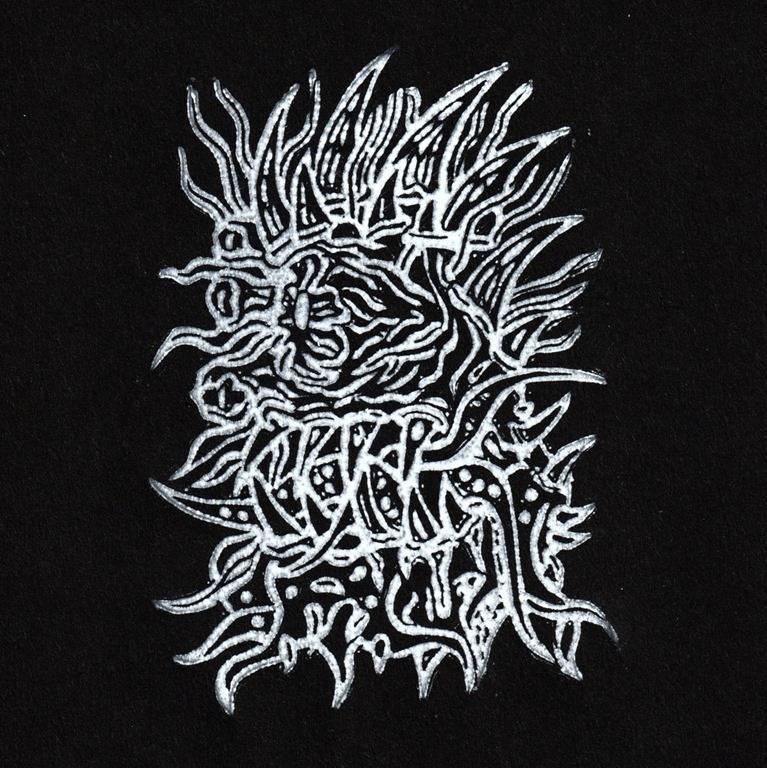
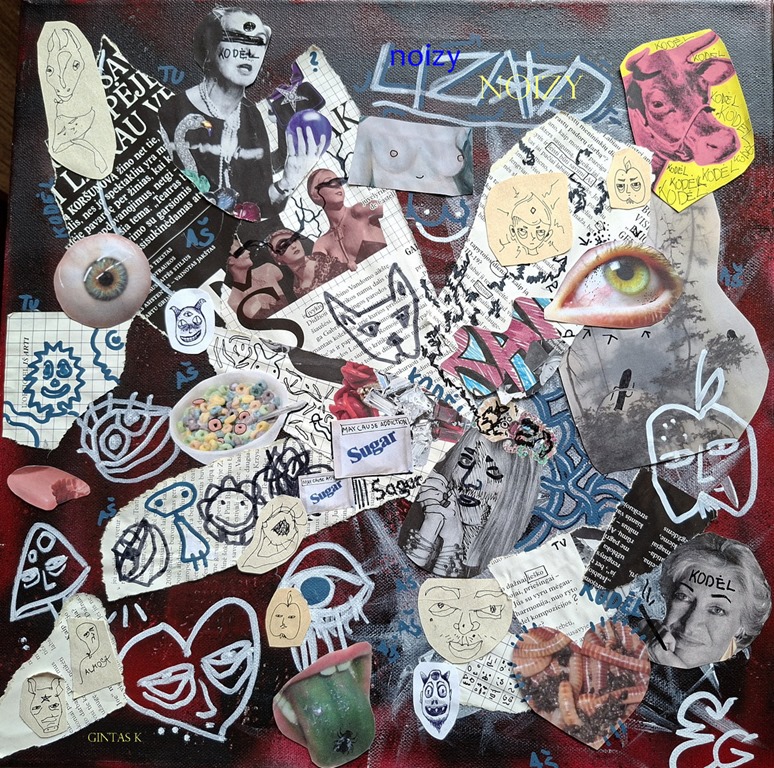
There’s a clue in the album’s title as to what Gintas K’s latest musical venture is about, and while neither Merzmania nor anything else in Gintas K’s catalogue comes close to the harsh noise of Masami Akita, there are clear connections and parallels between the two artists, in particular the prodigious output, and their propensity for taking experimentation to its absolute limit. Oh, and the occasional pun. Merzmania very much seems to echo Merzbow’s revelling in self-referential ‘Merz’ prefixes with album titles like Merzbeat, Merzdub, Merzbear, and Merzbuddha. It’s by no means an homage or stylistic lift, but a simple and seemingly sincere acknowledgement of a thread of influence. But anyone familiar with the work of Gintas K will already be aware that he is a unique presence within the field of experimental electronic-based audio works.

As he explains regarding this release, ‘Merzmania is electroacoustic live electronics pieces made using my own instrument made from a computer, Plogue Bidule software & midi controller assigned to VST plugins. All software parameters controlled, altered live in real time during performance using knobs & sliders of midi controller attached to VST plugins parameters. Performance made from synthesized sounds. Merzmania is a piece connecting classical music skills with today’s noise music (slight allusion to noise icon – Merzbow). Merzmania’s main playing method is real time interaction with the computer which I am using on all my live compositions’.

The tech stuff goes over my head, if I’m honest – but I’m more interested in the output than the input, and Merzmania provides 75 minutes of sonic mayhem. From swarming, skittering microtones which crowd in a dizzy delirium, through warping drones and groans, fairground organ sounds, and the occasional subaquatic detonation, it’s all going on, and often simultaneously, as is very much the case with the first piece, the 9:41 ‘merzmania#1 main’. Five minutes in and my head is spinning and I’m experiencing a huge anxiety spike and a sense of being overwhelmed. ‘Mania’ is very much the word here.

‘merzmania#2’ is the sound of a thousand digital hornets clustering around a dial-up modem struggling to connect – for nearly eight minutes, while ‘merzmania#3 dreaming’ makes you wonder what kind of dreams this guy has. It’s by no means nightmarish, but the rush of discord very much instils the sensation of rising panic, the palpitations of an anxiety dream. There’s something that fleetingly resembles a break from some drum ‘n’ bass, and again, the fact that there’s so much going on, all at once is… headspinning. And I mean… holy shit. Just when you think it couldn’t get any wilder, any more frenzied, any more overloading or intense… Gintas K manages to take it up not just another notch, but another two or three.

‘merzmania#5 slow’ does offer some respite from the insanity, but its syncopated toots and scratches and hums and crunches are far from soothing, and the space becomes increasingly sonically crowded as it progresses. The stereo panning is nothing sort of brain-melting, and nowhere more so than on ‘merzmania#6’, tinkling chirps and motorised hums and drones, the sound of a piano being played by a dozen cats while an engine revs… the hum of the power lines…

While employing much of the same technology and largely the same performance techniques of previous releases, something about Merzmania feels like a step forward for Gintas K. It’s hard to pinpoint precisely what, but that’s likely because my head is swimming with a tonal assault. But also, it is different: many of the sounds are more piano-like, more overtly ‘keyboardy’, in place of the bubbling froth which dominated many of his past works.

There’s distortion and fizzing static and pure noise on ‘merzmania#8 spare’, and ‘merzmania#10 hum’ essentially speaks for itself. And even with all of the live demos posted on his YouTube channel, just how Gintas K conjures this wild mash-up is difficult to assimilate. Because, but really, how…? It’s a lot to process. Life, the world, everything, really. And this latest Gintas K album does not help. But if it wasn’t this, something else would assault the senses, in other ways. Gintas K’s work will never offer a diversion or escape, but it does provide a different kind of mental overload. The final track, the second ‘slow’ is very much more gentle in the main, a tinkling taking the lead, but some roars like the revving of a motorbike overtaking, and explosive noise obliterating the finale.

Merzmania finds Gintas K at his experimental best, and pushing beyond the parameters set out on previous works, which were in themselves boundary-pushing. This, then, is the outer limits… but there’s a sense that he’ll still go on from here, too.

AA

cover

3rd April 2026

Christopher Nosnibor

Exit Void represents the coming together of no fewer than six notable names from the Austrian scene. Some may even designate them the title of ‘supergroup’. Their bio spins it that ‘EXIT VOID functions as a spontaneous search for sound, where the distinct artistic signatures of Manfred Engelmayr (Bulbul), Katrin Euller (Rent), Alex Kranabetter (Drank), Wolfgang Lehmann (Voyage Futur), Anja Plaschg (Soap&Skin), and David Reumüller (Reflector) collide in productive friction, giving rise to music that remains open to the unpredictability of the moment.

For context, they first played together in September 2025 at Dom im Berg in Graz, and first came together to work on a soundtrack for a video installation, and we learn that ‘the ensemble combines electronic and acoustic instruments with structured compositions and open improvisational passages’.

There’s little room for experimental passages on this single release, though, with ‘Void of Escape’ clocking in at just over four minutes, and virtual flipside ‘Residual Breed’ at a minute and a half.

The former is an off-kilter and intriguing composition that builds – from a lone, mournful trumpet, subsequently joined by slow drumming which is simply immense, positively industrial… but is nothing compared with the powerful vocal performance. The lyrics themselves are sparse, but Anja Plaschg’s delivery is nothing short of devastating in its power.

Lately, I myself have struggled to articulate the thoughts circulating – or moreover frothing in a wild frenzy – about my mind. I can’t keep pace with the news. I lived through and watched – compulsively – the Falklands War, and the first Gulf War. I was a kid, and it felt exciting, especially living near an RAF base and during the Falklands I would the planes take off over the back garden, and later see them on the news. But right now is the worst and most scary shit we’ve ever seen unravel in real time on TV, streaming live 24/7, and then there’s social media… It’s hard to find the words.

On ‘Void of Escape’, Exit Void keep it simple and focused ‘War in the East… War in the West…’ Plaschg sings, with all of her lungs. And that’s it – succinct, simple, direct: there is war everywhere: the world is at war.

‘Void of Escape’ hits hard, a powerful musical experience and a statement of… of what, exactly? It feels like music for the apocalypse. It’s music of the moment.

AA

AA

EV001 art

20th March 2026

Christopher Nosnibor

With his debut release, Abel Autopsy makes his ambition clear, announcing that uunder is envisioned as a journey within a three-part series, with the next two releases in the series being overr and outt, and promising ‘dark, melancholic, shapeshifting worlds that slide between light and shadow’. Although the inconsistency of the double letters on this first release from those projected to follow disturbs my sense of necessary balance, I can close my mind to it while opening my ears and concentrating on the music.

The nine tracks take the form of layered, atmospheric synth-dominated compositions, and Abel Autopsy sets out the context for these thereal works, which evoke haunting (super)natural landscapes by electronic means.

“This started in my youth – pulling apart various musical instruments (battery powered) while in the woods of Appalachia. There was an eerie, ethereal vibe almost like something ‘other’ in the wilderness with me. That permeates through all of the songs and is woven in the mental tapestry throughout. This album is an exercise in capturing that – the balance between light and shadow, feeling another ‘presence’ with you that is not entirely from here.”

The vocals on ‘ghostride’ are muffled, indistinct, the words – if there actually are any – indecipherable, serving more as another instrument than anything else. The pieces are bold, sweeping, cinematic, the ambient tendencies given form by solid mechanised beats which are up in the mix. ‘unfound’ and ‘gates’ land in the space between later Depeche Mode and Nine Inch Nails, the latter also spinning in dance tropes and the haunting monasterial sounds of Enigma music.

He is very partial to the big thunderclap blast when making a change in key or tempo, or simply stepping up the drama – perhaps excessively so, as there are moments when things do feel a bit formulaic – something compounded by the comparative uniformity of the track durations, which are all within the range of 3:01 and 3:37 (three of the nine have a run time of 3:37).

‘mycenae’ tweaks the template to accentuate the contrasts between light and dark and thanks to a super-full, extra-low bass, goes darker than anywhere else on the album, and the crackling static which fizzes through the introduction of the heavier, more distorted ‘nihill’, which concludes the set, brings a sense of decay and a doomy finality.

There are some neat ideas spread across uunder, and the execution is similarly neat, with a clear attention to detail. More variety, particularly in terms of tempo and dynamics would likely create greater impact, but it’s a promising start, and it will be interesting to see how Abel Autopsy evolves over the next instalments of the trilogy.

AA

762177

Ipecac Recordings – 10th April 2026

Christopher Nosnibor

What better pairing could there possibly be than the gods of grindcore paired with the supreme lords of sludge? It’s hard to think of one. They’ve toured together under the Imperial Death March banner in 2016 and 2025, but this is their first release together – and it’s not a split album, but a truly collaborative work, featuring members of both bands. It was recorded at the Melvins’ Los Angeles studio, with Buzz Osborne (vocals/guitar) and Dale Crover (drums) joined by Napalm Death’s Barney Greenway (vocals), Shane Embury (bass), and John Cooke (guitar).

And as advance single releases ‘Tossing Coins into the Fountain of Fuck’ and ‘Rip the God’ forewarned, so it is that Savage Imperial Death March is one absolute fucking beast of an album. It’s ‘Tossing Coins’ that kicks it off, a rabid overload of guitar mayhem, grindy riffery and wild guitar breaks underpinned by dingy riffs, all played at breakneck speed. Greenway gives guttural growls all the way and it’s nothing short of a sonic blitzkrieg. It’s very much a positive to summarise it as being a sum of the parts.

AA

AA

The nine and a half minute ‘Some Kind of Antichrist’ is much more Melvins – with the weight of Bullhead, but as if the 33rpm album was being played at 45: thick, megalithic, speaker splitting riffs, but on Red Bull, and Buzzo’s hyper vocal countered by Greenway’s salivating growl. It’s a wild, filthy mess, and it goes on, and on, and it’s fucking fantastic – even when, or especially when, it goes weird about four minutes in. because weird is, good, and Melvins are good at being weird. Sometimes, they’re not quite so good at being weird, as the Prick and the ‘Cowboy’ single attest, but like they give a fuck. Melvins have always pleased themselves, and that’s reason enough to love them, if not necessarily all of their releases. You could hardly call Napalm Death crowd pleasers, either, and their lineup’s as been as evolutionary as their sound.

‘Awful Handwriting’ is a brief experimental electro-led interlude that’s daft and noisy in equal measure, and stands in total contrast to the grungey post-metal crossover of ‘Nine Days of Rain’ which immediately follows. Credit where it’s due, this album brings some stylistic surprises which sound like neither band, let alone what you’d expect from the two combined, and this is very much one of those songs.

After the sludge-grunge of ‘Rip the God’ which marks the start of the album’s second half and is very much on the side of the Melvins’ style, there’s a rush into the fast and furious, and while it’s wild and heavy and full-on and loud, it’s also fun, and entirely serious, it is not. With operatic vocals and bold, cinematic synths, ‘Comparison is the Thief of Joy’ leans very much toward the experimental side, while the final track, ‘Death Hour’ just goes all out of the riffery and guitar overload, with raving raw-throated vocals courtesy of Greenway sitting alongside Buzzo giving it his most Ozzy, before once again, shit gets weird. It’s as if they can’t help themselves. Ach, we’ve done some riffs, let’s fuck shit up and go weird… yeah, man. And why not? Neither band has anything to prove after all this time. And now it’s time to embrace the strange… but the keyboard riff from Van Halen’s ‘Jump’ played limply at the end…? That might be a step too far.

AA

AA

990162

Futura Resistenza  – 24th Match 2026

Christopher Nosnibor

Well, it is Good Friday, so it seems an appropriate time to settle down with a large whisky and some candles to engage with an album of funeral procession music from Ryfylke, Norway. And as the title suggests, this is actually what this collaborative album contains:

Rooted in the bygone custom of ‘Liksong’ (literally ‘corpse song’) that was once sung by small groups of singers who guided rural funeral processions, Janvin and Joh tap into its uncanny, unbearably slow intervallic structures, reanimating the practice as a kind of ancient electronic microtonal devotional music. Voices and vocal effects, synths and melodic percussion seep into the cracks between major and minor, and the whole thing carries the creaking weight of ceremony, yet glows with an otherworldly modernity, as if a forgotten liturgy had been retuned for a dimly humming chapel of circuits.

The duo, with Janvin on vocals and electronics and Joh on synths, tape machines, and percussion, also enlisted Lucy Railton (cello) and Jules Reidy (electric guitar).

The nine tracks present a remarkably structured, linear funeral journey – and while the premise of the album is already most uncommonly literal, so is the linear structure, which begins with ‘Leaving Home’ and concludes with ‘Postlude’, which it arrives at via ‘Pasing neighbours’, ‘Before the burial site’, ‘By the grave’, ‘Lowering the coffing’, and ‘Processing grief’, among other almost instructional titles.

The pieces them selves are quite minimal in their arrangements: drones, hums and haunting, folk-inspired vocals, bathed in reverb and surrounded by echo come together to create soundscapes which are haunting, and, at times, other-wordly. ‘Pasing Neighbours’ is a slice of detached, rippling electronica, which on the surface couldn’t be further removed from ancient Nordic rituals… and yet Janvin and John succeed in subtly manipulating the sounds to conjure something which reaches deep into the psyche with its rippling dissonance.

There’s a gravity to this album which underlies the twisting, processed electronic experimentalism which is befitting of the subject and the context, and while ‘Passing neighbours’ does amalgamate shoegaze with robotix 80s electro, it doesn’t feel disrespectful to the source.

‘Rest – Bordvers’ which features Jules Reidy) is a sliver of ghostly folk which sounds like spirits ascending over an early Silver Jews outtake, and ‘Before the burial site – Jeg Raader Eder Alle’ is a heavily processed, almost space-age reindentation of a folk incantation – but it’s the haunting, eight-minute ‘By the grave – Akk, Mon Jeg Staar I Naade’ which really grips the attention with its ghostly wails and insistent pulsations and expansive, arcing drones. The dronerous ‘Lowering the coffin’ features vintage spacemuzak ripples and reverberating ululations contrasts sharply with ‘Processing grief’, which begins hymn-like, before swiftly transitioning to shuffling, fractal synthiness reminiscent of Tangerine Dream.

One suspects that in this modernisation, in this translation, something has been lost. But at the same time, this interpretation serves to keep an ancient heritage alive. And this is the sound of dark woodland, of glaciers, of spartan spaces – ice-dusted woodland. Often, it’;s trult beautiful, and this is nbowhere more clear on ‘Acceptance – Kom, Menneske, At Skue Mig!’, another piece which is more than seven minutes in duration.

The final track, ‘Postlude’ is gentle, and even alludes to a brighter future on the horizon. For mem it feels a little soon, although there s no use of timescale by which to orientate oneself available in the immediate entrance of the accommodation.

Having spent the last three years processing – and documenting – grief following the loss of my wife, Or Gare: Funeral Procession Music from Ryfylke, Norway is a difficult album to approach on a personal level. But there are times in this expansive, exploratory work, that death, in all its suffering, has been muted and spun into niceness – if not a palatable, packageable sound.

AA

AA

a1717757498_10

6th March 2026

Christopher Nosnibor

Matt Wand is best known for his work as a founder member of experimental samplists Stock, Hausen & Walkman between 1989 and 2001, although his body of work in collaboration with other artists, and under numerous pseudonyms, and as a solo artist is extensive. His latest project came to my attention via a friend, and a tape, and suddenly it felt like the 90s again, when word of mouthy was the most likely source of introduction to new music – alongside the weekly inkies and John Peel. Not that I’m about to harp on about the good old days, particularly as I have the good fortune to be fed a constant stream of music that never fails to amaze and confound, but it does highlight and remind just how limiting the force of the algorithm is, the endless conveyor belt of ‘if you like this…’ and services simply lining up the next track in an eternal playlist which subscribers tend to passively permit to pass into their ears, and how the cultural relationship has changed over time. And yes, something has been lost: endless streaming music on tap isn’t the boon it’s often hailed as. Spotify and the like delivers sonic wallpaper. How many of its users will listen to an album end-to-end and multiple times in sequence over the course of a week and a month, really engaging and excavating every last detail while it beds in?

I’ve begun with a digression, but the joy of music – for me, at least – is the way in which it inspires trajectories of thought, often in the most unexpected directions. It’s as if it has the capacity to unlock doors to forgotten recesses within the mind. Anyway, to shift focus specifically to the album at hand, while credited to Small Rocks, the album’s cover (the artwork of which is almost as disturbing as that of the first Toe Fat album) appends this with the words ‘in dub’, and this very much gives a clue to the contents – that is, fourteen instrumental compositions centred around dense, strolling basslines and sparse, echo-soaked beats.

A number of the tracks on here – ‘A Lung Full Of Woofer Gas’, ‘Give Me Back Me Bucket’, and ‘Blind Mute Specialist’ – date back to 2002’s three-way split album Dub TribunL, which featured Small Rocks alongside Atom™ and The Rip-Off Artist. This is an album which has been a long time in its gestation.

Leisurely grooves and rippling reverberations abound, with puns and wordplay making for an added bonus – ‘Curlew Curfew in Corfu’, anyone? On ‘Bassically Unsettled’, the thick, rubbery bass bounced its way through subtle and mildly disorientating tempo changes, while ‘Mirror Sigil Manoeuvre’ is sparse and spacey, the beats landing like drips from stalactites in an immense cavern. And yes, as minimal as it is, the sounds are mentally and visually evocative.

Landing in the middle of the album – or the end of side one on the cassette – ‘The Moss Veil’ is less dubby and more a work of dark ambience with hints of Dr Who amidst the dank swampiness and sporadic whirrs and bleeps. It calls to mind the weirdy sci-fi sounds of soundtracks of the late 70s and early 80s and the BBC Radiophonic Workshop.

The title track, which raises the curtain on side two, is more uptempo and verges on being some mutant drum ‘n’ bass, before the multi-00layered ‘Keep Quiet & ROT (mit bADbLOOD JA Kötting) ‘, which takes a swerve into more industrial territory, while hinting at the cut-up tape experiments of William S. Burroughs and Brion Gysin, conducted in the later ‘60s and early ‘70s, while at the same time coming on like a reggae Butthole Surfers. It really is all going on here on The Future in a Rearview Thumbnail. ‘a Lung-full of Woofer GAS’ is a hybrid of dub with minimal techno, and ‘Give fe me back Me BUCKET’ brings an industrial-strength percussive clatter that owes as much to Test Dept as any other act, while ‘The Custodian’ closes the set with a warping, glitchy tension that’s again infused with a more retro vibe, although the distant snare which lurks in the background is swamped in reverb and vocal fragments float around in a dubby fashion.

The Future in a Rearview Thumbnail is a rare expression of experimentalism, an album which dares to venture in different directions, and celebrates its strangeness.

AA

a2839687999_10

Deeply rooted in industrial experimentation and the rawness of black metal, French avant-garde collective Non Serviam have forged a singular style that blurs the boundaries between extreme genres while preserving their intensity through a radical and uncompromising artistic approach.

The collective now announces their third full-length album, La Lune Dont Mon Âme Est Pleine, set to be released on June 12 through a new alliance between Non Serviam and Lay Bare Recordings. Alongside the announcement, the band unveil the video for the new track ‘Abject Sacrifice’.

AA

Five years after Le Cœur Bat (2021), and more than a decade after Un Petit peu d’amour Pour la Haine, this new album stands as a major step forward in the band’s evolution. After a prolific run of EPs, splits, and mini-albums, Non Serviam return with a full-length work that pushes further the sonic and aesthetic direction unveiled on Le Cœur Bat, now refined through experimentation and artistic evolution.

La Lune Dont Mon Âme Est Pleine is a symbolist concept album centered on the myth of Diana and Actaeon, exploring themes of the desire for the absolute, the violence it engenders, and the melancholy that follows. These ideas permeate the album’s compositions, shaping both the music and the lyrical narratives. Beyond the metamorphosed and tormented figure of Actaeon, the album also draws on historical and mythological figures such as Émile Henry, the late-19th-century French anarchist, and the apocalyptic goddess Kali, invoked through a powerful vocal appearance by Mirai Kawashima (Sigh).

With La Lune Dont Mon Âme Est Pleine, Non Serviam continue their artistic trajectory, delivering a work that is ambitious, confrontational, and emotionally intense, further pushing the boundaries between extreme music, experimental composition, and avant-garde art.

AA

d45ecc66-f1d9-6433-2920-6ffd387c8fb5

The exploratory electronic duo of Craig Dunsmuir and Sandro Perri returns 20 years after its self-titled debut. G70 2: Bones Of Dundasa is out  on 1st May 2026.

Hear the skittish industrial stutter of ‘Aquatint’ and fractured beats of ‘Pad Tide’ here:

AA

AA

20 years after its self-titled debut, Glissandro 70’s follow-up straddles the Album and Archive: a decade’s worth of recordings that were abandoned, lost in a hard drive mishap, recovered in the form of rough stereo mixes, reappraised with the balm of time, and restored/augmented/enhanced to forge a captivating new LP.

Glissandro 70 is the collaboration between Toronto musicians Craig Dunsmuir and Sandro Perri, first formed in 2003 as a mostly studio-based project of longform loop-based guitar and rhythm-driven experimentation. An eponymous (and up to this point singular) album appeared on Constellation in 2006, blending Dunsmuir’s afrobeat and Perri’s tropicalia influences through their shared reverence for Arthur Russell and dub techno.

While continuing to collaborate musically and foster a close friendship, Dunsmuir and Perri largely went on to helm their own projects thereafter. Perri transitioned from his ambient electronic sobriquet Polmo Polpo to a string of acclaimed singer-songwriter albums under his own name starting in 2007, with a side quest as ringmaster for the inscrutably leftfield electronic collaborations of Off World. Meanwhile Dunsmuir continued deploying lo-fi loops and broken beat iconoclasm as Guitarkestra and Kanada 70 (whose early tracks provided the original birthplace of Glissandro 70) and intermittent live concert Hi-life extravaganzas at the head of Toronto’s Dun-Dun Band (recently captured on wax for the first time by Ansible Editions).

G70 2: Bones of Dundasa arrives 20 years after the Glissandro 70 debut as an archival celebration, revisiting unfinished paths and re-assembling rediscovered recordings originally made between 2005 and 2015. The new album includes a cover of Arthur Russell’s ‘Lucky Cloud’ (augmented by Peter Zummo’s trombone newly recorded in 2025) and a previously unreleased Dan Bodan remix of the debut record’s ‘Bolan Muppets’, alongside 10 tracks of sample- and beat-based vignettes brimming with skittish guile.

AA

images.disco

Photo by Colin Medley

Today, experimental Hip-Hop legends dälek release their latest full-length album, Brilliance of a Falling Moon.

Conceived, composed, and produced by Will Brooks (aka MC dälek) and Mike Mare, Brilliance of a Falling Moon is a sprawling, uncompromising record that speaks to the political timbre of the day. Taking its name from a section of Erik Larson’s 2011 novel In The Garden of Beasts, the album paints a fiery portrait of life and resistance in fascist America.

Recorded in the group’s Deadverse Studios over the course of 2024 and 2025, Brilliance of a Falling Moon’s beats are propelled by brutal, dust-caked drum breaks and cloaked in an ominous, otherworldly atmosphere. Taking aim at everything from The State’s suppression of information to colonialism and Trump’s demonization of immigrants, Brooks’ rhymes are practically burning with outrage at the current state of the world.

“When you listen to this, I hope you walk away with hope because we’re still fighting, building, and pushing.”

Check out the new video for ‘Normalized Tragedy’ below:

AA

Not only has dälek always presented an undiluted political stance in their music, the band is part of the continuum of bold, revolutionary hip-hop pioneered by Public Enemy and The Bomb Squad. dälek has spent decades carving out a unique niche fusing hardcore Hip Hop, noise and a radical approach to sound.

Founded by Will Brooks (aka MC dälek) and Alap Momin (aka Oktopus), dälek debuted in 1998 with Negro Necro Nekros, a sonic tour de force built upon thunderous drums, blissful ambient sections, and gritty, insightful lyrics. On watershed albums like 2002’s From Filthy Tongue of Gods and Griots (2002), Absence (2005), Abandoned Language (2007), and 2009’s Gutter Tactics (2009), dälek laid a template that added completely new textural and structural dimensions to rap music.

With this kind of musical and political pedigree, it makes sense that dälek would return with such a timely record that reflects all of our frustrations.

Once again the band has teamed up with artists Paul Romano and Mikel Elam for the striking package artwork.

AA

dalek---2026---4---credit-Jonny-Scala-990000079e04513c

Photo credit: Jonny-Scala

Swedish experimental noise-rock outfit The Family Men return on May 8 with their second full-length album Co/de/termination, set for release via Welfare Sounds & Records.
To mark the occasion, the band have unveiled a brand new video for the track ‘Luxury’.

‘Luxury’ channels the band’s sonic identity into a single, tightly focused piece. As Echoes & Dust put it: “Built upon looping, intertwining rhythms and heavily processed instruments and samples, ‘Luxury’ distils the band’s unmistakable sonic identity into one focused strike. It’s a precise yet overwhelming construction – mechanical, hypnotic, and abrasive – and a perfect example of what we’ve come to expect from the proprietors of the ‘total harmful sound.’”

The band themselves add: “‘Luxury’ is heavily inspired by William Gibson’s writing. It also feels like it encapsulates every part of the new album in some way, so it fits really well as a final single before the release. The video was a collaborative effort between Gustav and this really talented guy from Stockholm named Henke Luhr, and we feel it reflects the music in a very fitting manner.”

AA

AA

Following their debut album No Sound Forever, The Family Men have spent the past years performing extensively across Sweden and internationally, building a reputation as one of the most intense and uncompromising live acts around. That relentless momentum feeds directly into Co/de/termination, a natural yet sharpened continuation of the band’s sonic evolution.
Pushing both intensity and precision to new extremes, the album refines their sound into something tighter, heavier, and more deliberate than ever before. Urgent yet controlled, abrasive yet purposeful, Co/de/termination stands as a focused and uncompromising statement.

Operating across a wide sonic spectrum, The Family Men resist easy categorization. Samplers, broken electronics, tape loops, and heavily distorted guitars collide into a sound that is both confrontational and immersive.

Their live shows, often accompanied by feverish VHS projections, towering waves of feedback, and vocalist Gustav Danielsbacka performing directly within the crowd, have become legendary for dissolving the boundary between band and audience.

With Co/de/termination, The Family Men further cement their position as one of the most uncompromising voices in contemporary experimental rock.

AA

d6dd53ff-fb63-ee27-8c95-6cae25407a0b