Posts Tagged ‘Drone’

11th June 2025

Christopher Nosnibor

Some artists thrive on collaboration. Deborah Fialkiewicz is one of those. While she’s prolific as a solo artist, the volume of collaborative works in her discography is also noteworthy: when she’s not working as part of SPORE, she’s part of the ever-rotating lineup of BLOOM – and that’s before we touch on the frequent collaborations with (AN) EeL, the most recent of which was only released three weeks ago.

The Improvisation Sessions was recorded live May of this year, with a lineup of Dan Dolby, Deborah Fialkiewicz, and John Koser, marking an expansion from the duo which recorded the trilogy of Parallel Minor, Besides, and Hybrid in 2020. Fialkiewicz is without doubt an artist with range, but one who favours the dark end of the ambient spectrum more often than not, and this is very much the case here.

The Improvisation Sessions features two longform tracks which would quite nicely align with a vinyl release.

‘Chameleon Soul’, which spans a colossal continuous twenty minutes, begins with low, rumbling ominous drones, but soon escalates to a busy, buzzy criss-cross of sounds, interweaving and interlacing, leaving one’s head in a spin as if after trying to trace several flies flitting about the kitchen on a hot summer’s day for any period of time. It’s a morass of warping tones overlaying a ballast of churning noise, and any comparisons to Hull luminaries Throbbing Gristle or Merzbow are entirely justified.

The layers of distortion only grow denser and gnarlier as the track progresses, crashing waves of white noise blast in from one side and then the other as they really push to test the stamina. And then you realise we’re only six minutes in. This is a positive: plenty more left to enjoy… Enjoyment is of course subjective, and enjoyment of this requires being appreciative of a dizzying, disorientating assault simultaneous with a full-on white noise blizzard.

The momentary lulls, the spells where they pull back from the precipice of all-out aural obliteration, are far from mellow, as serrated spurs of hard-edged drones, wails of feedback and brain-melting extraneous noise conglomerate to seismic effect. There are some nasty high-end frequencies knocking about in the mix, moments were one has to check if the whistle is coming from the speakers of if it’s that troublesome tinnitus nagging again, and said frequencies rise from a battery of ugly distortion, bone-shattering blasts of which simple explode around the twelve-minute mark, and from hereon in, things only grow harsher, more corrupted, more intense, more difficult to withstand. We’d be inching into polythene bags on heads territory were it not for the variation, but the last three minutes or so are fractured, damaged, and agonizing – part power electronics, part circuit meltdown.

As the world becomes evermore and increasingly fucked up, I find words fail me more by the day. It’s harder to articulate, and this is where I’ve found that sound has come into its own. Sound as the capacity to convey something beyond words, something that lies in the most innermost parts, giving voice to the subconscious, even. On The Improvisation Sessions, BLOOM convey anxiety, gloom, pessimism.

‘The Dark Room’ is indeed dark, constructed primarily around a fixed but thick, distorted hum. Oscillators whine and whistle, and something about it calls to mind Whitehouse around the time of Never Forget Death, when they discovered low-end frequencies and restraint, the impact of a low undulating wave and subtle tweaks of reverb.

It rumbles and drones on, eddying and bouncing around in a shrilling mesh of dissonance. There isn’t a moment where this is an easy listen, and so often, it sounds as if the equipment is faulty, whether it’s a stuck loop or generating unexpected noise.

This set hangs on the edge of ambience, but be warned, it’s dark, and noisy at times, to the extend that it may shred your brain. For me personally, that’s my idea of fun, so it gets a two thumbs up, but for the more sensitive, this is a release to approach with caution.

AA

a3419622385_10

Cruel Nature Records – 30th May 2025

Christopher Nosnibor

First things first: Beige Palace were ace, and their departure has left a gap in the musical world, especially in Leeds. In a comparatively short timespan, the trio produced a respectably body of work, evolving from their minimal lo-fi beginnings to explore musical territories far and wide, and this final release, split with another Leeds act, Lo Elgin, who, in contrast, have released precious little.

The accompanying notes provide valuable context for the final recordings laid down by Beige Palace, recorded at Wharf Chambers, one of Leeds’ finest DIY venues by Freddy Vinehill-Cliffe (guitar/keys/vocals)… and now helming the mighty Thank.

Taking a step back from the discordant post hardcore of ‘Making Sounds For Andy’ and the freewheeling experimentation of ‘Leg’, Beige Palace’s side largely favours the repetition and extreme dynamic shifts found on their 2016 EP ‘Gravel Time’. The production here also returns to the lo-fi, DIY approach from that EP, eschewing the more polished sound of their two full-length albums. Through returning to their roots, Beige Palace manages to drag their sound to new extremes, with these three tracks bringing to mind artists as disparate as US Maple and Sunn O))).

‘Wellness Retreat’ is dense and discordant, low-end synth drone and bass coalescing to a eardrum-quivering thrum over which scratchy guitars and vocals come in from all sides to forge a magnificently disjointed and angular two minutes and twenty seconds. Too chaotic to really be math-rock, it’s a squirming can of worms, a melting pot where Shellac meets Captain Beefhart at a crossroads with Trumans Water. Or something.

Bringing hints of Silver Jews, the lo-fi crawler ‘Good Shit Fizzy Orange’ does math-rock but with an experimental jazz element, the sparse picked guitar and slow-rolling cymbal work juxtaposed with what sounds like the strumming of an egg slicer before sad strings start to weave their way over it all. The lyrics are, frivolous and stupid, and we wouldn’t want things any other way. Because much as one may value well-crafted, poetical lyrics, sometimes dumb, trashy, meaningless words work just fine. Better than fine, even.

There’s a hint of later Earth about the spartan folksiness of ‘Update Hello Blue Bag Black Bag’ – a song which sounds serious but as the title suggests, isn’t quite so much, but around the midpoint, all the pedals are slammed into overdrive and suddenly there’s a tidal wave of distortion, a speaker-busting cascade of heavy doom-laden drone. And as it tapers to fade, while we mourn the departure of a truly great band, we get to rejoice that during the span of their career, Beige Palace did everything. It’s a solid legacy they’re leaving, and one which may well expand in the years to come. There will be people in five, ten, fifteen years asking ‘remember Beige Palace?’, and other people will be replying ‘Yes! I saw them at CHUNK!’. Well, I will be, anyway. And we still have Thank to be thankful for.

The two pieces which represent Lo Elgin’s contribution mark a sharp contrast to those of Beige Palace. The first, the eleven-minute monster that is ‘Beneath the Clock’, is a thunderous blast of doom-laden rage and anguish. The barking, howling vocals are low in the mix of droning, lurching, lumbering noise, through which strings poke and burst, and as the noise sways and sloshes like a boat tossed hither and thither on waves in a storm as it attempts to guide its way through the entrance to the harbour, the listener finds themselves almost seasick with the unpredictable movement. Around seven minutes in, the tempest abates and the piece meanders into altogether mellower territory, where again I’m reminded of Earth circa Angels of Darkness, Demons of Light. And then, right at the end, there’s a massive jazz segment, backed with crushing guitars. I did not see that coming. And then ‘Abomination’ is different again- a gritty, gnarly, gut-spewing blast of noise that is simply too much…. But too much is never enough as we’re led through a racketacious swamp that starts out Motorhead and toboggans down to a crazed morass of manic jazz.

The two very different sides belong to completely different worlds, at least on the surface. But they are both staunchly strange, keenly experimental, and dedicated to inventive noisemaking, and as such, compliment one another well. And this also perfectly encapsulates the essence of the Leeds scene: diverse, noisy, weird, and wonderful.

AA

a1376481820_10

Dret Skivor – 4th April 2025

Christopher Nosnibor

This latest release on Swedish microlabel devoted to the most underground of underground music, Dret Skivor, may be form an act we’ve not heard of before, but something about it has all the hallmarks of the eternally prolific Dave Procter all over it. The man behind Legion of Swine (noisy) and Fibonacci Drone Organ (droney) and myriad other projects and collaborations – some occasional, some one-off – has a distinctive North of England drollness and a penchant for pissing about making noise of all shades, after all.

Released on CD in a hand-painted edition of just two, the notes on the Bandcamp page for the release are typically minimal: ‘Is it dungeon synth? Is it just spooky music? Is there torture afoot?’ I would say I will be the judge of that, but dungeon synth is a genre I’m yet to fully get to grips with, although it does for all the world seem as if it’s a genre distinction that’s come to be applied to spooky music, and seems to have grown in both popularity and usage comparatively recently, despite its roots going back rather further.

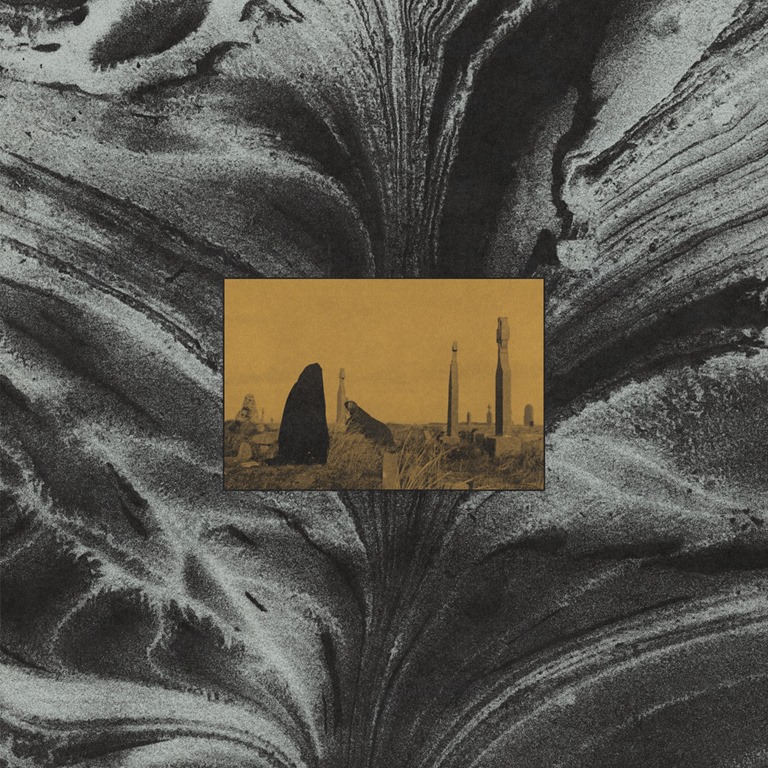
The cover art doesn’t give much – anything away, and in fact, I might have hoped for something more… graphic. But perhaps less is more here. However, the titles of the two tracks –‘the shithouses’ shithouse’ and ‘the festering flesh of the neoliberal’ are classic Procter and could as easily be titles for poems by Dale Prudent, another of his alter-egos.

The first begins with a swelling thrum of what sounds like a chorus of voices, possibly some monastic indentation, layered and looped and multitracked to create a torturous cacophony. For the first twenty, thirty, forty seconds, you wait for a change to come, for something to happen. After a minute that expectation is diminishing, and by the three-minute mark it’s impossible to be certain if there really are keyboard stabs swirling in the mix in the midst of it all, or if your ears and mind are deceiving you and you’re losing the plot. For some reason, I’m reminded of the Paris catacombs – not because it’s actually creepy, but because, just as seeing rows and rows of bones stacked up for quite literally miles becomes both overwhelming and desensitising after a time, so hearing the same sound bubbling away for ten minutes is pretty much guaranteed to fuck with your head. Near the eight-minute mark, there are most definitely additional layers of buzzing drone and there are some tonal slips and slows, like listening to a tape that’s become stretched or is slipping on its spool, but by this time your brain’s already half-melted, and I find myself contemplating the fact that while visiting the catacombs on a sixth-form art trip, one of my fellow students accepted the challenge to lick a skull for eight Francs – which was about a quid at the time. I was less appalled by the fact it was a human skull than the fact the bones looked dusty and mossy, and had probably been touched by even more unwashed hands than the handle of the gents lavs at a busy gig venue.

And so we arrive at the twenty-two-minute ‘the festering flesh of the neoliberal’. It begins with a distant clattering percussion – like someone bashing a car bonnet with a broken fence post heard from a quarter of a mile away, but with a gauze of reverb, as if echoing from the other side of a valley – or, put another way, like listening to early Test Dept through your neighbour’s wall – while a pulsing, pulsating electronic beat, like a palpating heartbeat, thuds erratically beneath it. And that’s pretty much it. But there are leaps and lurches in volume, and the cumulative effect of this monotonous loop is brain-bending. There are gradual shifts, and seemingly from nowhere rises a will of croaks and groans which grow in intensity, and it may well be an auditory confusion, but regardless, the experience is unsettling. Twenty-two minutes is a long time to listen to a continuous rumbling babble that sounds like droning ululations and a barrage of didgeridoos all sustaining a note, simultaneously, for all time.

Is it dungeon synth? Probably not. Is it spooky? Not really. It is torturous? Without doubt. This is a tough listen, with dark babbling repetitions rendered more challenging by the cruelly long track durations. The torture afoot is right here.

AA

a2009823040_10

Gizeh Records – 4th April 2025

Christopher Nosnibor

Returning for their eighth album, A-Sun Amissa, purveyors of drone-centric ambience centred around founder Richard Knox pull back from the rather larger avant-rock sound of 2024’s Ruins Era to concentrate once more on ‘unsettling drones and claustrophobic atmospheres’. Knox is joined for the third successive release by Luke Bhatia and Claire Knox, indicating that this is a fairly stable lineup, and perhaps this has been a factor in the album’s exploratory, evolutionary approach.

The promise is that the record’s ‘washed out and ethereal sound drags electric guitar, clarinet, voice and piano through pillows of reverb and distortion to build heaving, desolate dronescapes. Moving through dense, oppressive passages of sound and diffusing into sections of gloomy, haunting restraint. We Are Not Our Dread is filled with majestic, textural detail. It envelops and, at times, smothers you before releasing just at the right moment, resolving in a billowing, melancholic, distorted reverie.’

The first thing that strikes me – as is often the case with any project centred around Knox – is the evocative nature of the title. Perhaps I’m feeling uncommonly sensitive right now, but this one in particular lands with an unexpected impact, and as much as the implication is one of positivity – no, we are not our dread, our dread does not define us or dictate our lives – there is equally the emphasis on the fact that we have that dread. And not you, or I, but us, together, collectively. And so it is that dread become the focus, that thing which looms large over not only the title or the album, but our lives. Why do we have this dread? It would not be an overstatement that the pandemic changed everything: the world that we knew lurched on its axis and no-one knew how to handle it. And since then, insanity has run free. 9/11 may have rattled the rhythm of life for a time, but not it seems that the entire world spent the pandemic years just waiting to wage war, and now nothing is safe or predictable – not your job, your home, your ability to post stuff online. You don’t need to be a prominent protestor or social agitator to attract the wrong kind of attention. The dread hangs over every moment now. We thought we had seen the worst when COVID swept the globe and lockdowns dominated our lives, and began to breathe a collective sight od relief when things began to retract, as we looked with optimism toward the ‘new normal’. But who ever anticipated this today as the new normal the future held?

We Are Not Our Dread consists of four fairly lengthy instrumental compositions, and ‘Electric Tremble’ arrives in a dense cloud of ominous noise which immediately builds tension, and if the rolling piano which drifts in shortly afterwards is gentle, even soothing, the undercurrents of rumbling discord and distant thunder which persist maintain a sense of discomfort which is impossible to ignore.

Ever since his early days with Glissando, melding post-rock with ambient tropes, Knox has had an ear for the unsettling, deftly manoeuvring elements of the soft and gentle with the spine-tingling. And while the eleven-minute ‘All The Sky Was Empty’ is a quintessential work of epic post-rock abstract ambience, rich in texture as it turns like a heavy cloud billowing and building but without an actual storm breaking, instead dispersing to offer breaking light and a sense of hope, the wandering clarinet brings a vaguely jazz element to the sound.

‘Sings Death or Petals’ arrives on trails of feedback and rumbling guitar noise, and is immediately darker, and those dark undercurrents continue with crackles and rumbles and elongated drones which persist beneath the ghostly, ethereal voices and reverb-heavy piano and picked guitar notes. At times, this bears the hallmarks of latter-day Earth, but at the same time there’s a less structured, less motif-oriented approach to the composition, which leaves much open space. I still can’t choose between death or petals here. It builds to a churning whorl, before the final track, ‘Our Hearts Bent As Crooked Lightning’ stirs from a rippling array of simmering noise and evolves into a colossus of rumbling drones, and, over the course of ten-and-a-half minutes, grows supple with softer waves of expansive synth which remind you to breathe again. For all the fuzz and broad swells of abstract, buzzing noise that’s equal parts gripping and soothing, the overall effect is sedative, and welcome.

We Are Not Our Dread leads the listener through some challenging moments, and as each listener experiences works differently, as I hear the final soaring strains of ‘Our Hearts Bent As Crooked Lightning’ this strikes me personally as dark and challenging. The intentions may be quite different, but this is undeniably a work which is sonically ambitious, spacious, resonant. Even as the tension lifts, the mood remains, like a dream you can’t shake, like the paranoia that persists even when you’ve dome nothing wrong.

That We Are Not Our Dread is true, and so is the fact that, to quote from Fight Club, you are ‘not your job. You’re not how much money you have in the bank. You’re not the car you drive. You’re not the contents of your wallet. You’re not your fucking khakis.’ And you are not your dread. It may at times possess you, but this, this is not it. This, however, is a great album.

AA

a1068739543_10

Exile On Mainstream – 21st March 2025

Christopher Nosnibor

Noisepicker get a pass for a rather lame name by virtue of being absolutely phenomenal purveyors of noise rock, and that they are absolutely phenomenal purveyors of noise rock is a fact, not an opinion.

It’s also a fact that the album’s title, The Earth Will Swallow The Sun, is factually inaccurate. But again, they get a pass, not least of all because without Earth, there would be no Sunn O))) and the whole world of drone metal was born from Earth and the sun, or at least Sunn O))) revolve around that… but I digress. The Earth Will Swallow The Sun marks the return of Noisepicker after a seven-year break following the release of their debut, Peace Off, in 2018, because… life, apparently. This seems to be how it goes. Stuff happens, you get busy dealing with it, and simply doing everyday stuff, like laundry and life admin, and before you know it, shit, five years have evaporated, and that’s half a decade.

‘Do not expect neat, polished, note perfect, carefully constructed sound. Noisepicker are loud and abrasive. They pay homage to the genres which made them fall in love with music in the first place – doom, punk and blues – and bring it all together in a hearty and heavy concoction that is all their own.’, they forewarn, and yes, it’s all true. The Earth Will Swallow The Sun places texture and impact and density over palatability and accessibility. And that’s for the good: the world is engulfed in slick digital mass-produced music, and there seems to be something of a rebellion against it in underground circles, with artists with nothing to lose going all-out to splurge their souls with unapologetically raw output. And this is something that feels relatable, it’s music to connect with, because it’s real, immediate, direct, and without compromise. To listen to something so unfiltered is to feel alive.

The album starts sparse, with strong hints of Mark Lanegan, with Harry Armstrong delivering a heavy-timbred vocal croon that emanates from the chest and crackles in the throat, over a simple guitar strum and some anguished drones, until finally, almost two minutes in, it all kicks in with some big guitars, thudding drums, booming bass. It’s a hint at the potential energy that Noisepicker offer, and if opening an album with a slow-paced dredger of a song seems like an odd choice, it paves the way for some high-octane, high-impact racket, sliding immediately into the darkly chaotic snarl of raging riff-out roar of single cut ‘Chew’, which lurches and lumbers between grunge and metal and heavy psychedelia.

Things only get more intense from hereon in. ‘Tomorrow Lied the Devil’ is built around a solid blues-based boogie, but with everything cranked up to eleven and Armstrong giving it some gravel-throated grit while the guitars chug hard against thunderous percussion. ‘Leave Me the Name’ sees them coming on like Chris Rea not on the road to hell, but dragged up, charred and rotting from the depths of hell, and ‘What Did You Think Was Going to Happen’ is dense, dark, gnarly, menacing and lands like a punch to the gut. The riff is actually a bit Led Zep, but with so much distortion and a vocal that sounds like a death threat, it all takes on a quite different dimension, while ‘The End of Beginning’ is simply a slow but blistering assault. None of this is pretty, and none of this is gentle. All of it is strong, and rabid in its intensity. ‘Start the Flood’ offers some wild bass runs amidst the raving riff-driven mayhem – because we need for there to be more happening here. There’s some rabid raving about supernovas, and then the title track comes on like some deranged stoner rock blitzkrieg that has hints of Melvins and a megadose of daftness. We need that daftness as much as we need the guitar carnage. There’s a smoochy swagger to the blues / jazz-hued ‘Lorraine in Blood’ that’s like Tom Waits narrating a pulpy crime novel, before ‘Lunatics’ brings the album to a more experimental conclusion with its dominant crowd noise backing.

It’s rare for a side-project to stand above the main band, but Armstrong has his fingers in many pies beyond Orange Goblin, and Noisepicker are a rare entity in every way. The Earth Will Swallow The Sun is something else. It’s the sound of a pair of extremely capable musicians really testing themselves, and having fun in the process. It’s fun to listen to, too. Hard, and harrowing at times and in places, but ultimately fun.

AA

AA

420726

3rd January 2025

Christopher Nosnibor

Only the middle of March and I’m running behind on releases, so my apologies to Teleost for letting this one slip down the pile, especially as I’d been looking forward to it for some time. Even their earliest live shows, Before rebranding as Teleost, the duo, consisting of Leo Hancill and Cat Redfern, showed a rare musical chemistry, resulting in music of huge, immersive power. Recent shows, such as their recent York homecoming show with Cwfen, demonstrated that they have reached a whole other level of almost transcendental drone, a place where sound becomes a physical force.

But the challenge for any band who are so strong as a live unit, is how successfully can that be translated via the record medium. To commit the sound to tape – or digital recording – is in some way to compress and contain it, to reduce it to two – or even one – dimension. A recording is essentially a listening experience, without the visual element, without the klick drum or the low frequences vibrating your ribs, and all of the other stuff. So how have Teleost faced up to that challenge? Remarkably well. No doubt recording the guitar and drums live has helped retain the huge sound of the live experience. No slickening, studio polishing, just that huge sound caught in real-time, and Pedro at The Audio Lounge in Glasgow has done a remarkable job, clearly understanding what the band are about.

Three Originals opens with the ponderous grind of ‘Forget’, where a sustained whistle of reverby feedback is rapidly consumed by the first thick, sludgy chord: the distortion is speaker-decimatingly dense, and there’s so much low-end you feel it in the lower colon. It’s pure Sunn O))), of course, but then the ultra-heavy drums crash in and the vocals start… Hancill’s approach to singing is very much about rendering his voice an additional instrument rather than the focal point, and the elongated enunciations convey an almost abstractly spiritual sensation.

The first time I saw Earth was following their return with Angels of Darkness, Demons of Light I, and I spent the entire show completely hypnotised by Adrienne Davies’ slow drumming. It was an experience I shall never forget: it was if time slowed down, and empires could rise and fall between each beat. I haven’t experienced anything similar since, until Teleost. And once you’ve had such a powerful visual experience in a musical context, it’s not only impossible to forget it, but it becomes integrated with hearing the band. And so it is that on listening to Three Originals, I find myself reliving that experience. It’s clear where Teleost draw their influences, but in amalgamating that low, slow drone of Sunn O))) with the more nuanced, tectonic crawling groove of latter-day Earth, they offer something that is distinct and different.

The seven-and-a-half-minute ‘Ether’ blasts in and the sheer density of that guitar is pulverizing. It simply does not sound like two people, let alone that it’s one guitar and no bass. There’s a delicate mid-section consisting of a clean guitar break before the landslide of distortion hits once more. Final track, ‘Throwaway’ is anything but, another sprawling, seven-minute monster dominated by gut-churning sludge and yawning yelps of feedback, while the vocals drift plaintively in the background.

Three Originals is without doubt their strongest work to date, my only complaint being that it simply isn’t long enough. But then, if each track was fifteen minutes long, it still wouldn’t be. In the field of doomy droney heaviosity, Three Originals is in a league of its own.

AA

a1823302603_10

Christopher Nosnibor

On arrival, it looks like Nu Jorvik have pulled and been replaced by Makhlon, and at somewhat short notice, but it’s hard to grumble when you’ve got three heavy bands for six measly quid and the headliners are guaranteed to be worth double that on their own.

There’s lots of leather, studs, long coats, and long hair in the gathered crowd, it turns out those sporting corpse paint – perhaps not entirely surprisingly – belong to the first band who are straight-up black metal.

Makhlon’s singer has Neil from The Young Ones vibes. He’s about 7ft tall and wearing a Lordi T-shirt, but snarls full-on Satanic rasping vocals from behind his nicely-washed jet-black hair. The lead guitarist and front man swap roles for the last two songs – both of which are epic in scope, with some nice tempo changes, and they really step up the fury. It’s quite amusing to see him clutching a notebook in the arm which is thrust forward and enwrapped in a spike-covered vambrace, and checking the lyrics, as if it’s possible to decipher a single syllable. But this is all good: time was when York was wall-to-wall indie, folk, and Americana. Now… now we have homegrown acts like this, and the thing with black metal is that it only works when the band and its members are one hundred percent committed to the cause. These guys are, and while they may be fairly new, they’re tight, they can really play, and they give it everything.

DSC00987DSC00992DSC00999

Makhlon

Cwfen – pronounced ‘Coven’ – aren’t Welsh, but in fact Scottish, and this is their first trip south of the border. It seems that since relocating to Glasgow, Teleost have been making some good friends. And Cwfyn are good alright… Woah, yes, they’re good. They are heavy, so heavy, as well as melodic but also ferocious. There’s a lot going on, all held together by a supremely dense bass. The ‘occult metal four- piece’ may be the coming together of artists who’ve been around a few years, but the fact they’ve only been playing as a unit for a couple of years is remarkable, as they really have everything nailed. They’re both visually and sonically compelling: Siobhan’s fierce presence provides an obvious focal point, but the way everything melds instrumentally is breathtaking. The third song in their five-song set slows things, and brings some nice reverb and chorus textures. Piling into the penultimate song, the crushing ‘Penance’, which features on their debut release, they sound absolutely fucking immense. The closer, the slow-burning, slightly gothy ‘Embers’ is truly epic. With their debut album in the pipeline, this is a band to get excited about.

DSC01013DSC01026DSC01029

Cwfen

I’m already excited about Teleost, and the fact that there’s such a turnout on a cold Thursday night says the people of York are extremely pleased to welcome them home. Having knocked about in various bands / projects previously, with Cat Redfern fronting Redfyrn on guitar and vocals, before pairing with Leo Hancill to form Uncle Bari, who would mutate into the ultimate riff-monster that is Teleost, they departed for Glasgow, leaving a uniquely Teleost-shaped hole at the heavier end of the scene.

Absence not only makes the heart grow fonder, but it’s apparent they’ve spent their time getting even more immense since they left.

DSC01042DSC01067DSC01072

Teleost

They’re a band to watch with your eyes closed. Not because they aren’t good to watch, but because their sound is so immersive. Teleost have perfected that Earth-like tectonic crawl. Imagine Earth 2 with drums and vocals. Or, perhaps, Sunn O)))’s Life Metal with percussion. Each chord hangs for an entire orbit, the drums crash at a tidal pace, and with oceanic, crushing weight. Somehow, Leo Hancil’s guitar sounds like three guitars and a bass, and it looks like he’s actually running through two or even three separate cabs. It’s not quite Stephen O’Malley’s backline, but it’s substantial. And you’re never going to get a sound like that just going through a 15-watt amp, however you mic it up. They play low and slow, and Cat plays with drumsticks as thick as rounders bats, yielding a truly thunderous drum sound. In fact, to open your eyes is to reveal a mesmerising spectacle: two musicians playing with intense focus and a rare intuition, and Redfern’s slow, deliberate drumming is phenomenal, and the whole experience is completely hypnotic. They play over the scheduled time, and then, by popular demand, treat us to an encore with an as-yet-unreleased song. Everyone is absolutely rooted to the spot, currents of sound buffeting around us.

Teleost’s influences may be obvious, but they’re at the point where they’re every bit as good as their forebears. The future is theirs. But tonight is ours. We can only hope they visit again soon.

Hallow Ground – 7th February 2025

Christopher Nosnibor

If it’s got Norman Westberg on it, I’m in. The longtime Swans guitarist is – and I’m not ashamed to say it – something of a hero of mine in the league of guitar players. The discipline he displayed churning out sometimes just a couple of chord at a crawling BPM is beyond admirable, and those releases, particularly from Cop to Children of God were entirely reliant on punishing guitar monotony, and while his post-Swans solo works have been of a significantly more ambient persuasion, his brilliance as a musician still lies in his adherence to a ‘less is more’ approach, playing to achieve sonic effect rather than to showcase himself or his musicianship. There’s something refreshingly egoless about this.

The context of this release is that ‘Night Keeper is a collaborative album by New York City-based artist Aaron Landsman and former Swans guitarist Norman Westberg that is based on the former’s eponymous play. Westberg recorded it together with performer Jehan O. Young for the Swiss Hallow Ground label, with Landsman serving as the record’s producer. The original piece was first performed in the Spring of 2023 at The Chocolate Factory Theater in Queens and filled the stark industrial space with spoken text, choreography, projections, and music in dim light and, occasionally, complete darkness. Westberg and Young afterwards brought it to the studio to record it as a two-part album in whose course his textural sounds, based on loops and samples, set the stage for her soothing, sonorous vocal performance.’

In a sense, then, it’s a soundtrack album of sorts, and it’s also a spoken-word album.

The accompanying notes explain that ‘Night Keeper is a performance inspired by sleeplessness and the wanderings of the human mind at night—about time and memory… The initial spark for Night Keeper was a run of almost sleepless nights in different neighbourhoods of a city that is perpetually insomniac. Instead of trying to force himself to go back to sleep by any means necessary, Landsman started writing down his thoughts.’

I first experienced insomnia at the age of five while staying at my grandparents’. As the time wore on, I grew increasingly scared, and convinced that if I fell asleep I wouldn’t wake up in the morning. Bordering on hysterical, I went downstairs to see my parents, who told me not to be ridiculous and to go back to bed. I cried myself to sleep that night, But I did wake up.

In my mid-teens, I came to embrace the insomnia, spending my nights watching television and videos, drawing, writing, making music, and later, dwelling in internet chatrooms and talking shit till the small hours while writing a novel and downloading stuff from Napster and Soulseek, before perhaps embracing it a little too hard in my mid-twenties, reaching petrifying levels of paranoia and experiencing hallucinations, before collapsing and being off work for six weeks.

I recount this, because the spaced-out, dreamy, disjointed stream-of-consciousness un-narrative of Night Keeper feels uncomfortably familiar. The way the internal monologue flows on, and on… and sometimes spills out to external monologue without realising. The soundscapes forged by Westberg as a backdrop to this is abstract, unsettling. At the end of the first part, there’s a glitching loop, which starts with a thud. It’s an uncomfortable rhythm, akin to water torture and replicates, to some extent, that heightened sensitivity and self-reflectiveness which interrupts the flow of the monologue: what is that? Am I going mad? Oh my god, I’m going mad. What is it? Make it stop… And then, it does, and the silence feels strange.

‘I still can’t sleep. Am I sleepy?’ the narrator asks as one point, after picking through an alertness to a range of sounds. There are people out there, and not everyone is asleep. Sleep’s for wimps, and you can get so much more done if you sleep less, even if that’s starting a fight club. The narrator counts the hours – not with close attention, but suddenly, it’s gone form 2:15 to 4:15. ‘How did it get so late? When is it time to give up?’ are questions which resonate. It’s no longer a late night, it’s no longer tomorrow, it’s almost time to get up for work again. It’s not worth going to bed. Might as well get a couple of chores done and arrive a bit early at work in the hope of an early finish. As if.

In the main, the musical backdrop is supremely subtle: occasionally, ripples of chiming guitar ripple across the murky surface of the dark, misty drones. Sometimes, there are some stuttering crunches, thick scrapes, and they change the dynamic, create seismic shudders which break through the low, slow, undulations. It’s the perfect soundtrack: sympathetic, subtle, nuanced, detailed, textured, dynamic, and understated. You find yourself drifting in and out of the words, and drifting in and out of the backdrop, too – and this is the most fitting experience, in that it’s the most accurate representation of the insomniac life. If you’ve ever not slept for a prolonged spell, Night Keeper will feel familiar. If you’ve had the good fortune to habitually enjoy the luxury of quality sleep, then Night Keeper may provide some education and insight into the torment of what it’s like, you lucky bastard.

HG2407_Outer Sleeve_643x328.indd

“Golem Mecanique touch[es] upon the ashes and fibres of back metal and the DNA of gothic music, literature, sorcery, and most of all—poetry.”  – Stephen O’Malley

The last words that poet and visionary film director Pier Paolo Pasolini said in his final interview were “Siamo tutti in pericolo”; translated: we are all in danger. Pasolini was then brutally murdered on a beach in Italy, a case which is still cold today.

On this album, named after the man’s final public words, Golem Mecanique loses herself on that same Italian beach alongside his body and translates her observations and mourning into a devastating musical landscape. Siamo tutti in pericolo will be released via Stephen O’Malley’s Ideologic Organ label on 14th March.

Siamo tutti in pericolo is dangerous, conveying the darkness and uneasy nature of both the art Pasolini created when he was alive and the circumstances of his murder.  In her early teens, Golem taped the Pasolini film Accatone when it was shown on television and watched it the next day after school. In her words, “it was an earthquake!”,

Immediately leaving a great impression on her as it was unlike anything she had ever seen before. She describes the feeling she has when watching a Pasolini film as “silent violence” – a cold and radical response which calls into question her beliefs about the behaviour of people and lies and truth. She hopes to evoke this feeling with her music – a melding of beauty and dread.

Today, she shares the track ‘La Notte’ from the album…

AA

a1734767960_10

Ideologic Organ – 10th January 2025

Christopher Nosnibor

It’s already looking like 10th January is going to be an intense date in terms of the sheer volume of releases. Time was when January was something of a quiet spell for new music, as everyone recovered from the Christmas glut, and labels tended not to release much since people were skint. It also used to be the case that unexpected releases would sneak unexpectedly high in the charts, especially the UK singles top 40, with remarkably low sales figures, usually with cult acts with savvy labels whacking out a release that would have barely scraped the charts any other month – White Town’s ‘Your Woman’, released 13th January 1997 and hitting number one in the UK and going top ten globally – however briefly – is a classic example.

There’s no danger of Nate Wooley registering on any charts with Henry House, released on the Ideologic Organ label, curated by Stephen O’Malley of Sunn O))) legend, and home to a long line of truly magnificent avant-garde and otherwise most unusual musical works, of which this is very much one. That’s not because it’s not good, it’s just that the nature of charts has changes beyond recognition over the last thirty years. There is also the statistic which recently came to light that there was more music released on any single given day of 2024 than during the entirety of 1989. It’s a pretty staggering statistic, and one of many factors when considering just how difficult it is for artists to make a living from making music. Something I have touched on previously is the fact that simultaneous with this explosion of output, culture has become both more homogenised and more fragmented. In terms of the mainstream, this homogenisation has facilitated the advent of multimillionaire and even billionaire ultra-megastars like Taylor Swift – but at the other end of the spectrum, there are tens of thousands of artists releasing music on Bandcamp and Spotify with no backing or publicity whatsoever, to be heard by maybe five people.

But we need music that’s unpopular, that isn’t created with any commercial intent, and we very much need labels like Ideologic Organ to provide a platform and to point us toward the cream of those artists who may not otherwise reach the audience they so richly deserve.

And as an album containing a single composition split into five parts, described as ‘a recurring dream song’ with a running time of some eighty minutes, this is a work which is very much non-commercial in every way.

As the accompanying notes detail, this is a work which combines ‘closely tuned instruments and sinetones, tape-music editing techniques, field recordings, and voice,’ providing the context that ‘this eighty-minute, five-part song cycle is an evolutionary step away from the spontaneity of the free jazz/noise aesthetic usually found in the music of Nate Wooley. Henry House expands on the ecstatic, durational work found in Wooley’s Seven Storey Mountain, a six-part composition that has been premiered over the last ten years by an ensemble that now includes multiple drummers, guitarists, a twenty-one-person choir, and the composer on amplified trumpet. But its ritual is more serene, more natural, slower.

Henry House is the first long-form piece that doesn’t feature Wooley’s trumpet. It is also the first to be constructed around his poetic writing. Wooley weaves a strange funeral mass for a fictional everyman from isolated phrases culled from essays, poems, and non-fiction written by Wendell Berry, John Berryman, Joseph Mitchell, and Reiner Stach. After organizing the fragments into a dream narrative, Wooley rewrote the text dozens of times, manipulating the stitched-together story until only glimpses of its sources remained.’

It’s ten minutes into the twenty-minute opener, ‘Acacia Burnt Myrrh’ that the poetical oration begins, with the words spoken by Mat Maneri. He speaks in a calm, not entirely flat, but level tone, of geometry, of space, of time. The words conjure abstractions, images, moods, against backdrops of elongated hovering hums, oscillator-driven quivering drones. The words are audible, but comparatively low in the mix, and it’s not always easy to stay focused on the narrative, such as it is: instead, the mind focuses on absorbing the atmosphere. There’s a lot of that, and Henry House is an immense project with near-infinite dimensions. Megan Schubert’s faster-paced, more driven-sounding delivery is quite a contrast to Maneri’s, and from these counterpoints, the album grows in terms of dynamics and depth.

So much happens: listening to Henry House is like reading a book which contains stories within the story, and illustrations in a range of styles. No two tracks are really alike, and the arrangements change across the course of each piece. It draws you into a dark fairytale, a unique world which isn’t exactly scary, but unsettling because it feels unfamiliar, dissonant. The fact that two of the pieces bear the same title only add to the bewilderment. Horns and drones radiate between the narrative segments, and the final piece, ‘Aleatory Half Sentences’ is led by some flighty piano work, which trills and flickers against a heavy, nagging, low-level hum. It’s one that really takes some time to process, but it’s very much worth the effort.

AA

a3180996504_10