Posts Tagged ‘Doom’

Christopher Nosnibor

Live music should carry a warning over its addictive properties. Witnessing a band playing a set so good that you’re buzzing for hours, even days afterwards is a unique high, and one that sets a seed of a desperate need to replicate that experience.

I’ve seen a lot of live music since I started going to gigs over thirty years ago, but the number of acts who have ignited that sense of fervent excitement is limited. I’ve seen many, many amazing shows, but few have blown me away to the extent they’ve felt in some way transformative. Dead Space Chamber Music are one of those few, and I left the Cemetery Chapel in York a few months back feeling dazed and exhilarated, my ears whistling despite having worn earplugs. I simply had to see them again, in the hope to experience that same sense of rapture.

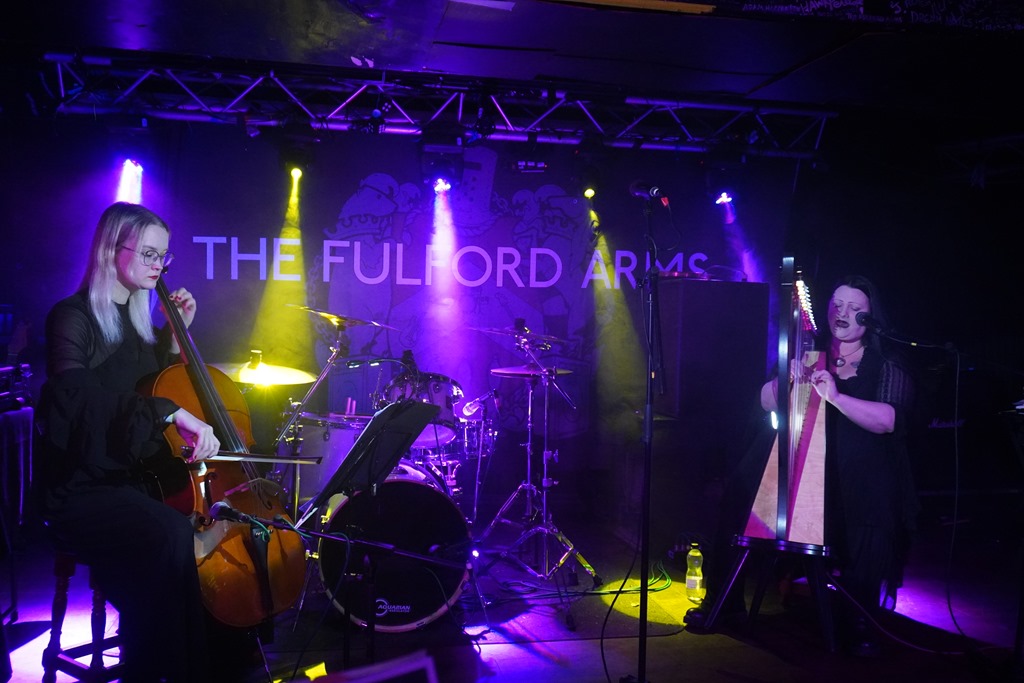
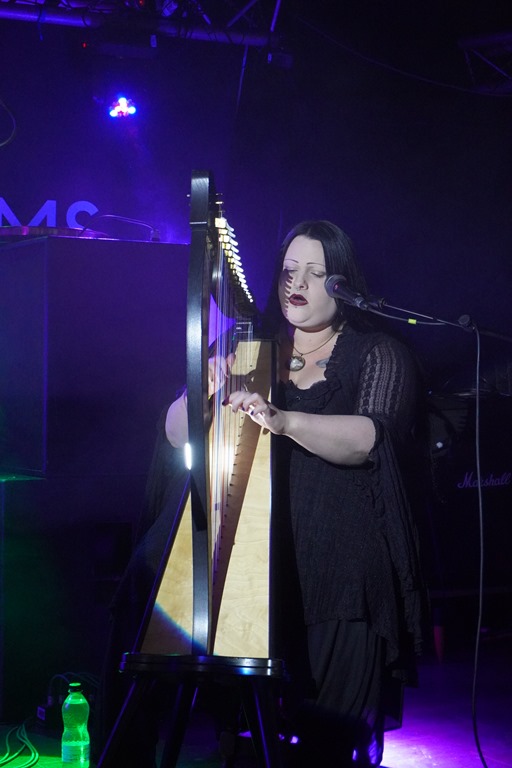
Eldermother – consisting of Clare de Lune on harp and vocals and Michalina Rudawska on cello – have no shortage of musical pedigree, and a superabundance of talent which they showcase with their minimal neoclassical works, a mix of covers and original material. They open with Radiohead’s ‘Street Spirit (Fade Out)’ led by harp and with Clare’s soaring vocals, and it’s one of those performances that make the hair stand up on back of your neck with its haunting atmosphere. There’s a rendition of WB Yeats’ poem ‘The Stolen Child’, a work rich with imagery inspired by wild nature and imbued with emotion and drama. The execution is magnificent, and the originals are similarly graceful and majestic. ‘Hurt’ may not be by any stretch representative of Trent Reznor’s career, but it certainly showcases his capacity for powerfully emotive songwriting, and if it’s the song which forms his legacy, it’s all to the good. Yes, Eldermother play a semi-operatic version of ‘Hurt’ with harp and dark, brooding cello, and… woah. It’s almost too much, especially this early in the evening. I find myself dabbing a tear and grateful for the low lighting.

DSC04790DSC04787DSC04785

Eldermother

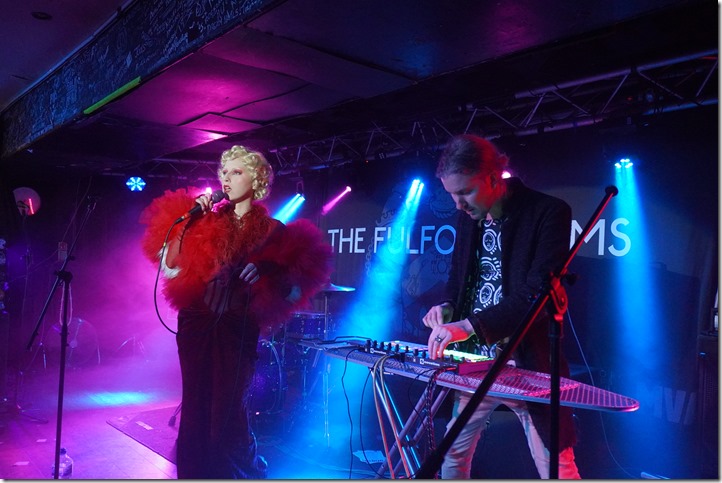
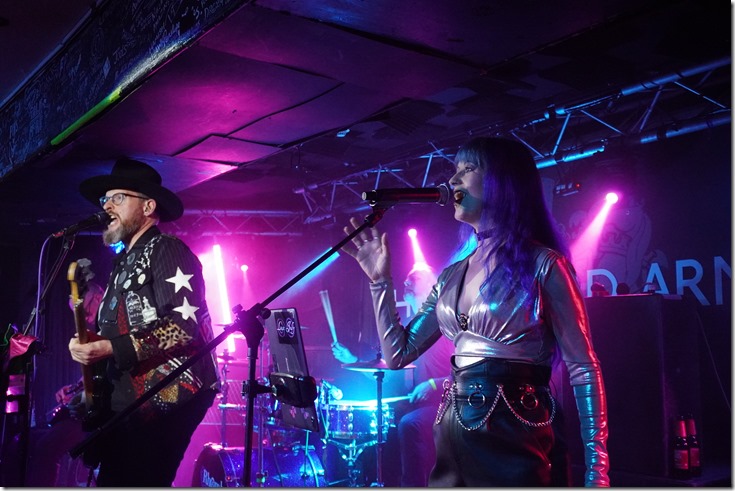
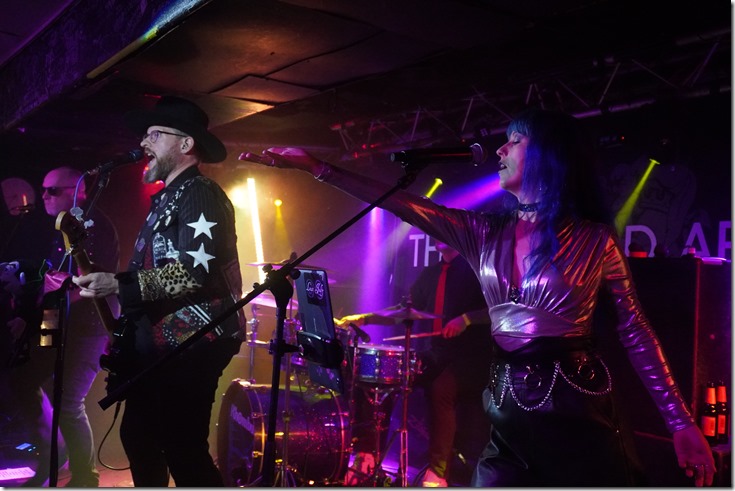
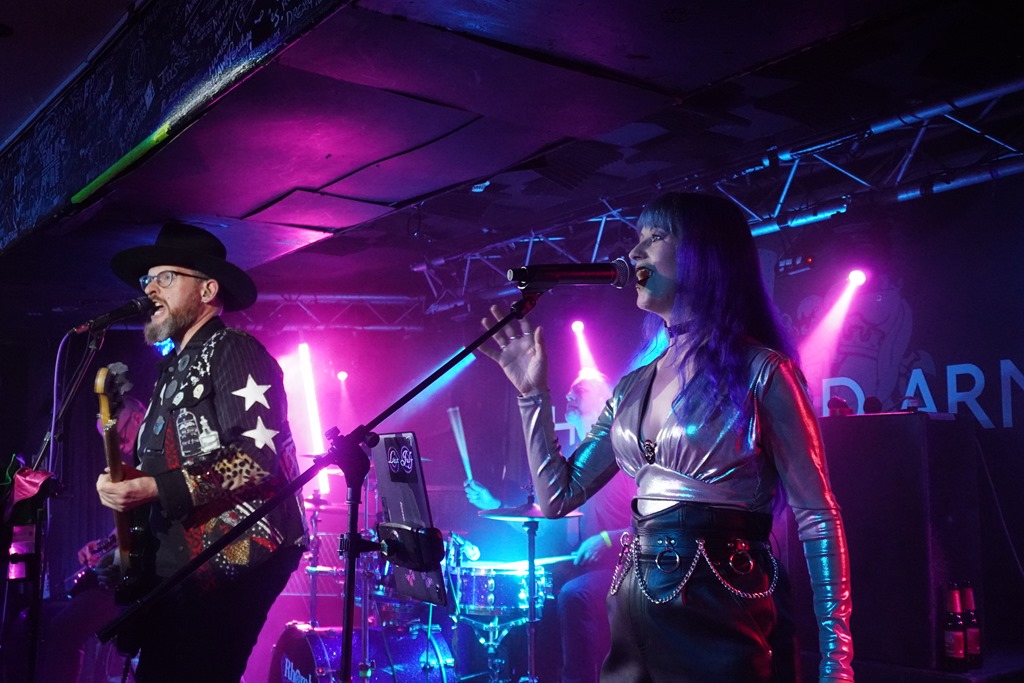
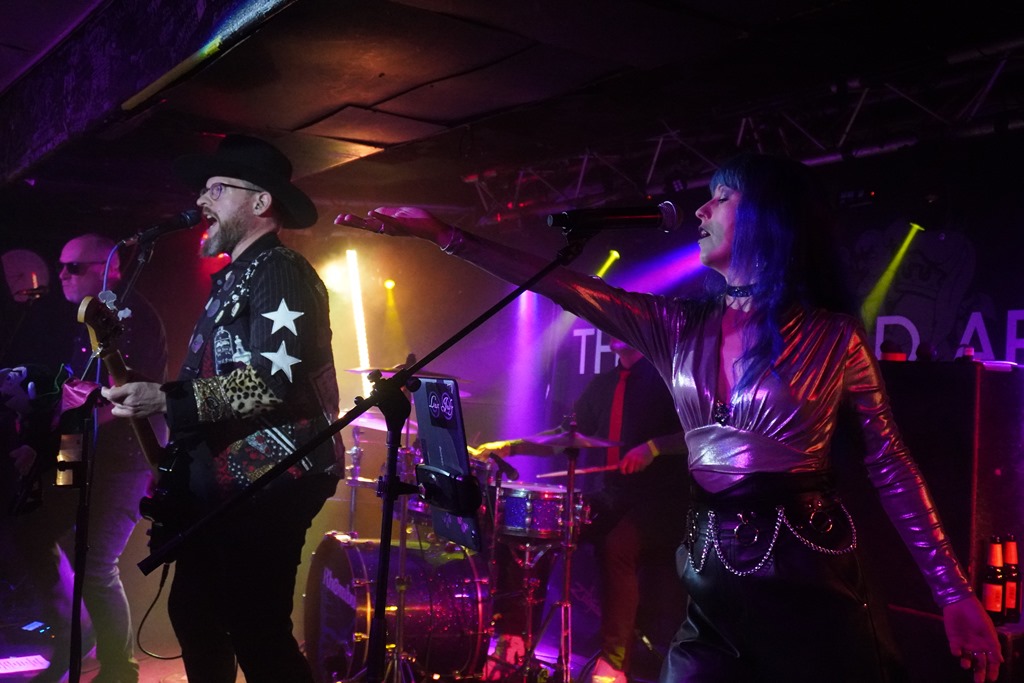
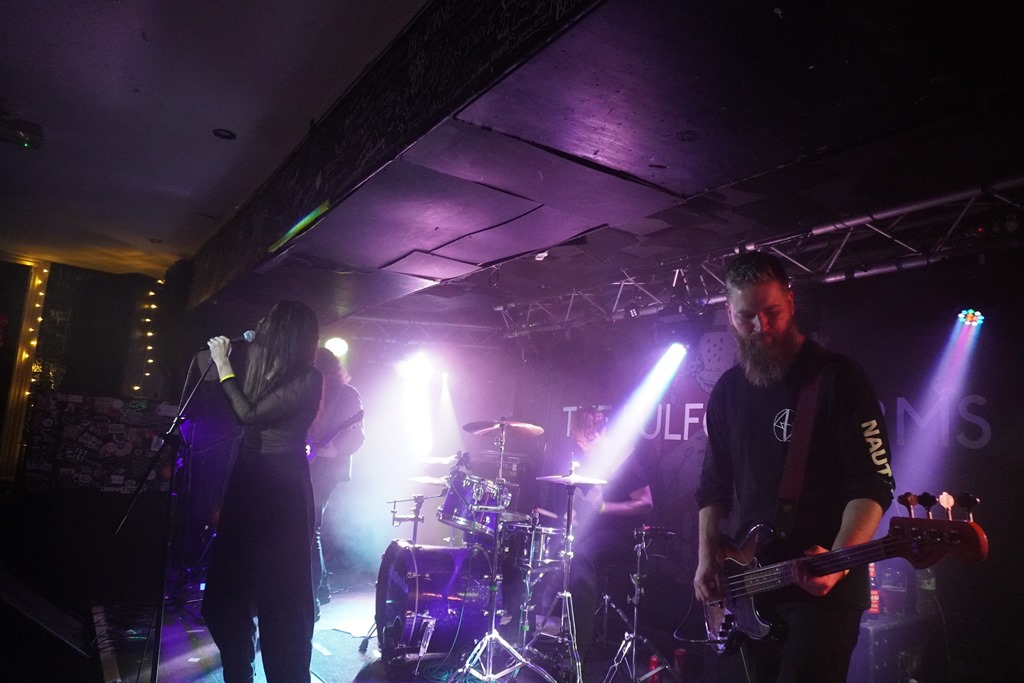
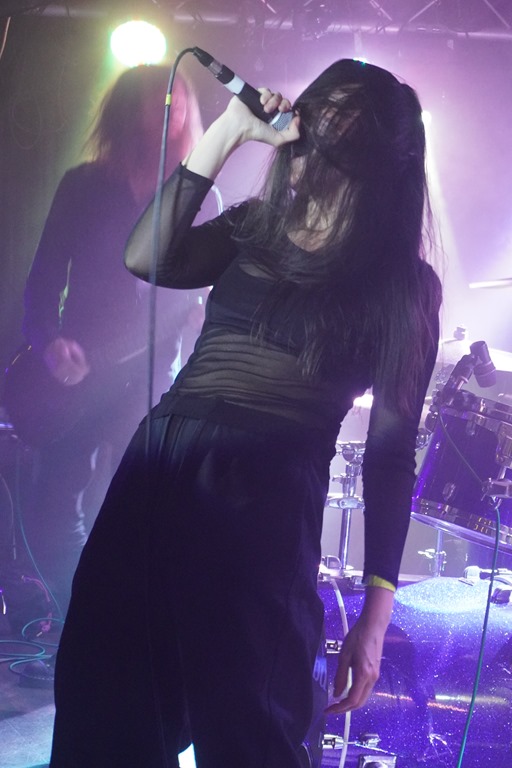
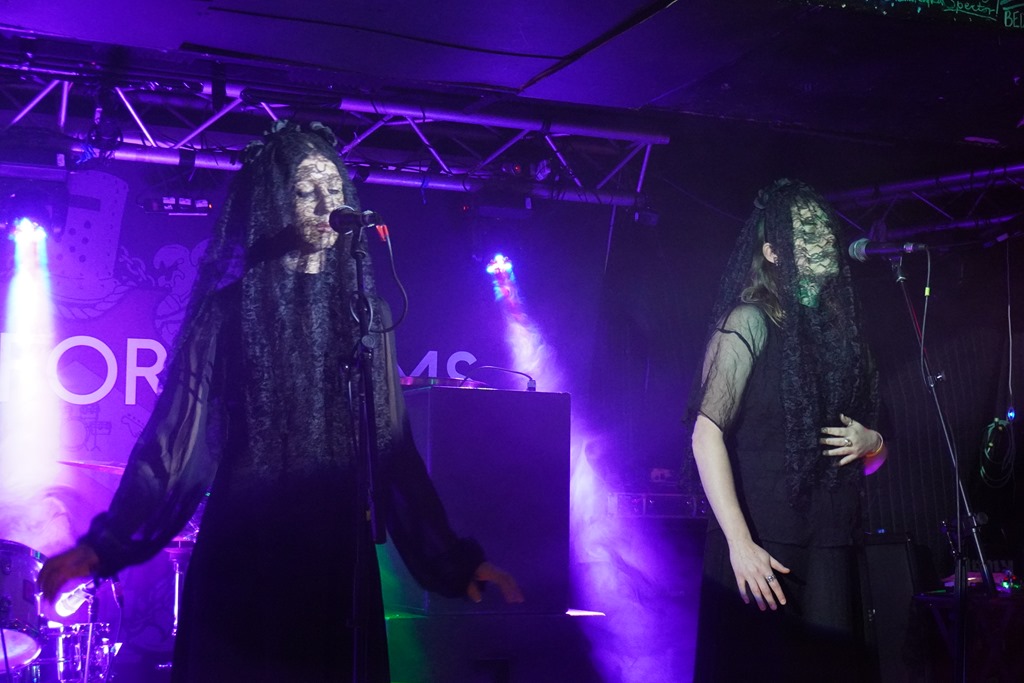
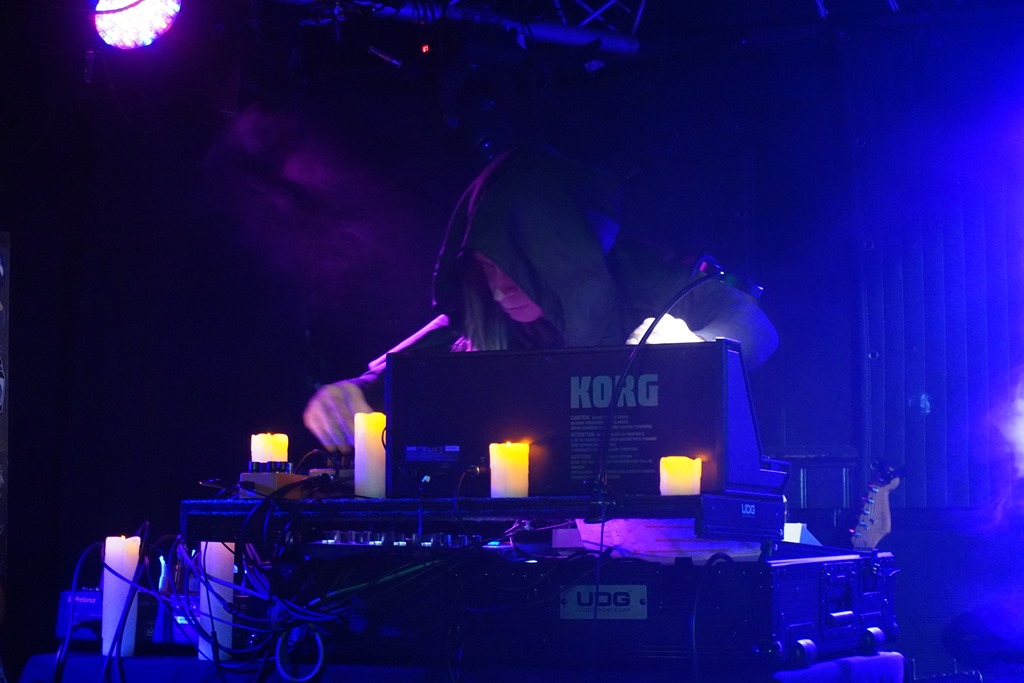
Lunar Cult Club – featuring Doug Gordon, aka Futures We Lost – as the provider of the instrumental machinations, take the theatricality up several notches to deliver a set of otherworldly cold, cold, darkest electro with glacial synths and funereal forms. The bank of synths swirl and grind, muddy beats thud and pop from amidst a dense sonic fog. Sonically, they’re impressive – in the main, the arrangements are sparse, and overtly analogue in form – but visually, they’re something else. Theirs is a highly theatrical stage show, and this significantly heightens the impact of the songs. The two singers, dressed all in black and with faces obscured by long, black lace veils – Corpse Bride chic, as my notes say – sway and move their arms in an unnerving fashion, as if reanimated, exhumed. I’m reminded of Zola Jesus and of Ladytron, and I’m mesmerised by their facsimile of a Pet Sematary Human League with its spellbinding marionette choreography. The final song, ‘No-Ones Here to Save Her’ is as dark as it gets: the vocals merge and take us to another realm entirely.

DSC04800DSC04804

Lunar Cult Club

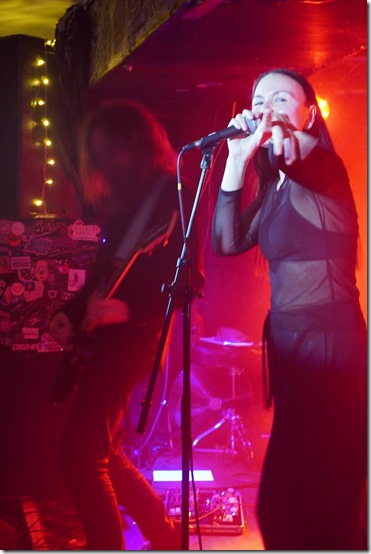
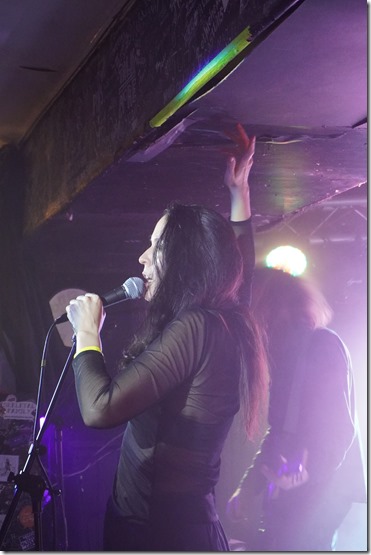
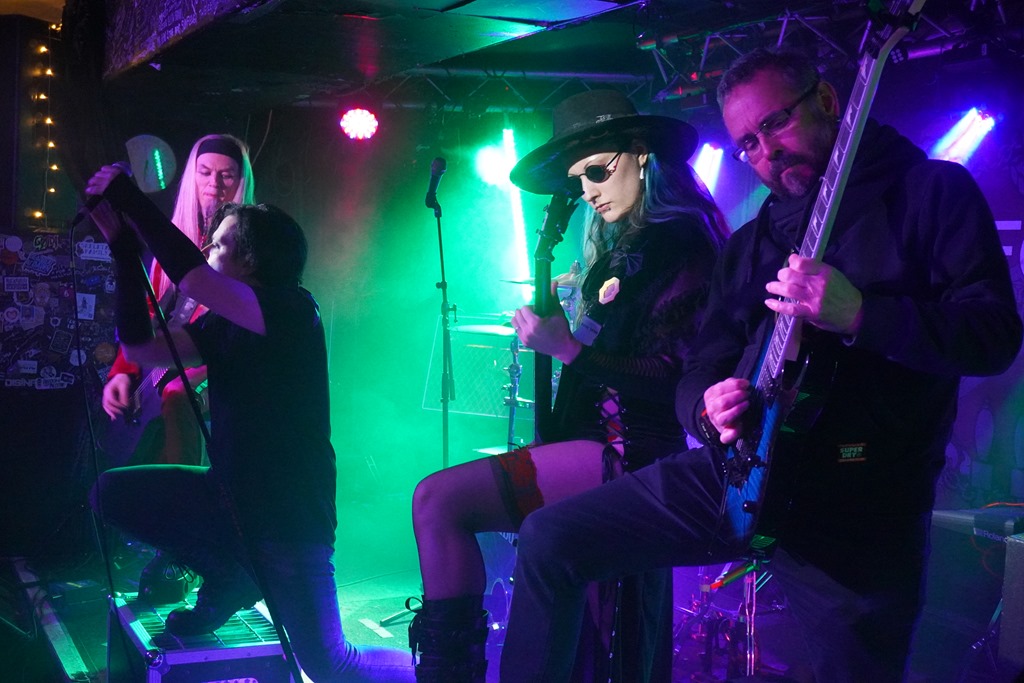
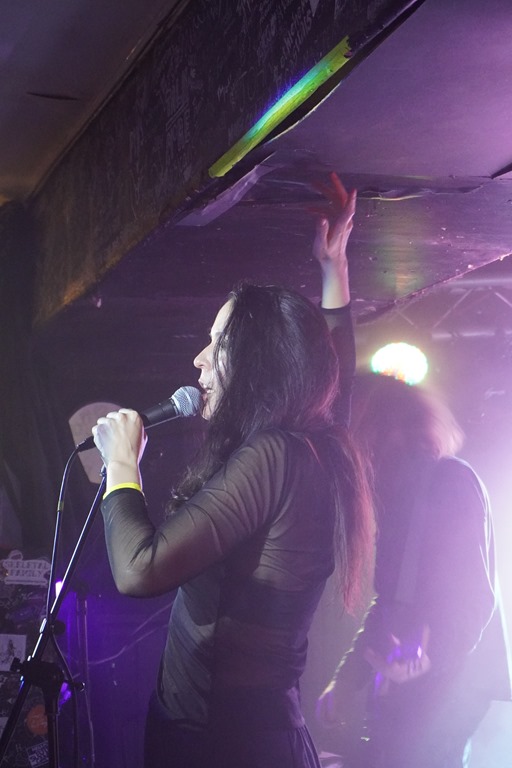
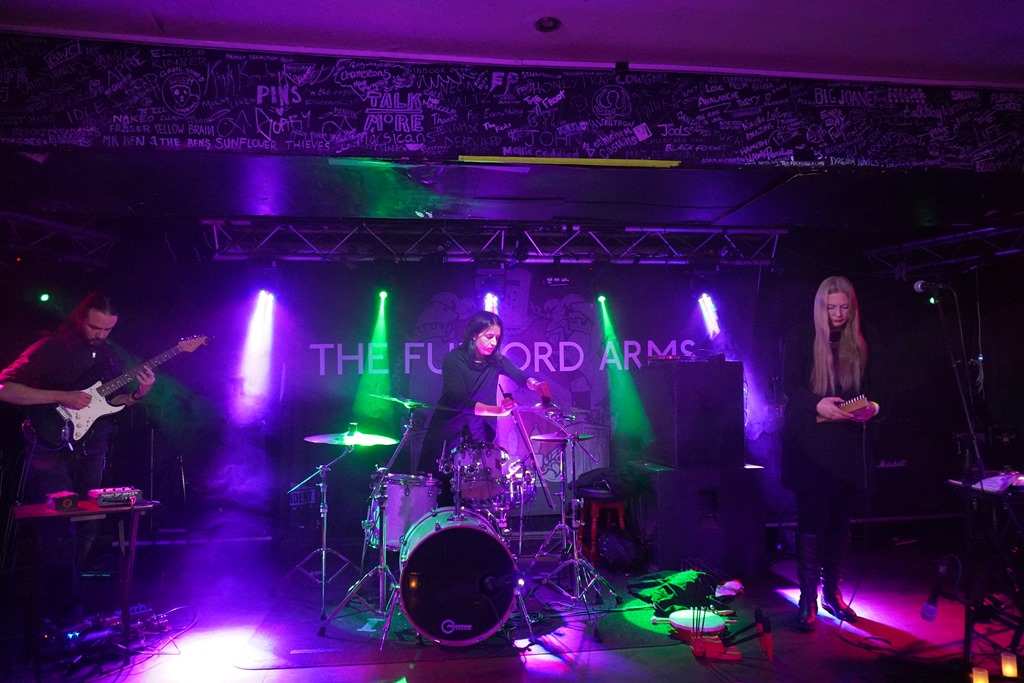
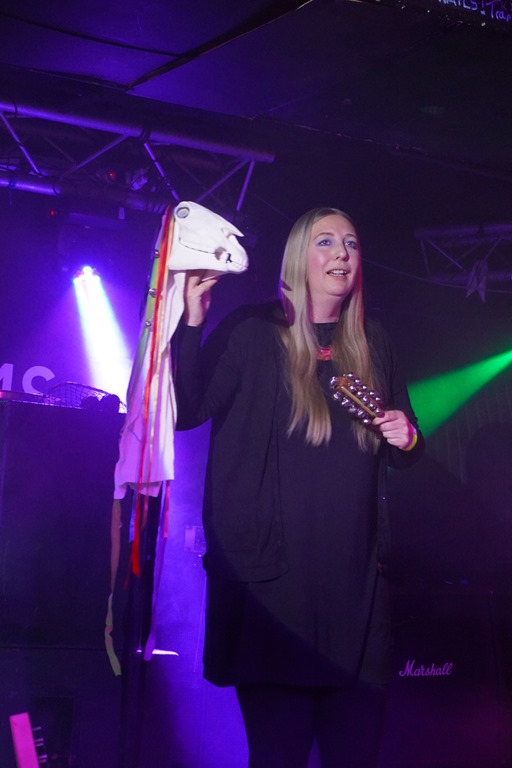
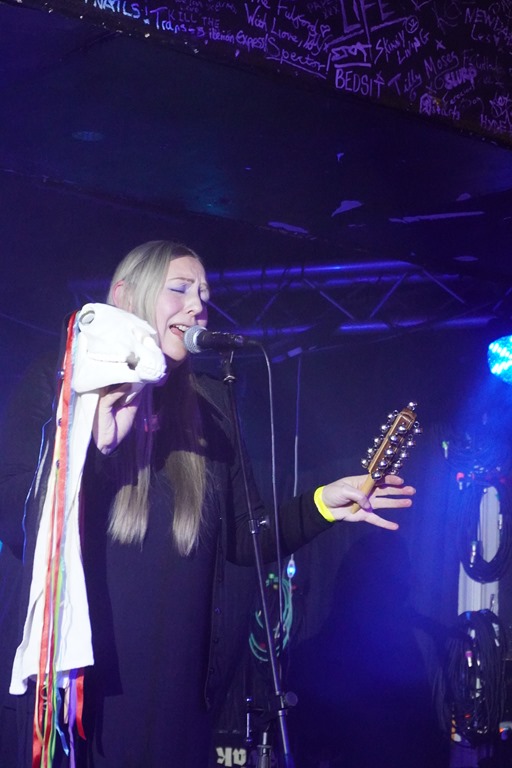
I’m still floating in a state of mild delirium when Dead Space Chamber Music take to the stage. The atmosphere is thick, tense, hushed… awed. Something about the trio’s presence alone makes you sit up, lean in, eyes wide, ears pricked. There’s a lot of detail here. Their focus is gripping by way of spectacle, and their set is designed as a linear work which evolves and transitions over its duration, in a way which calls to mind when Sunn O))) toured Monoliths and Dimensions, whereby, over the course of the set, Attila Csihar transformed into a tree. There are props and costume embellishments, mostly on the part of Ellen Southern, who performs vocals and various percussion elements and a strange stringed instrument: she brings much drama and theatricality, delivered with a sense of self-possession and deep spirituality which is utterly entrancing.

DSC04839DSC04852

Dead Space Music Orchestra

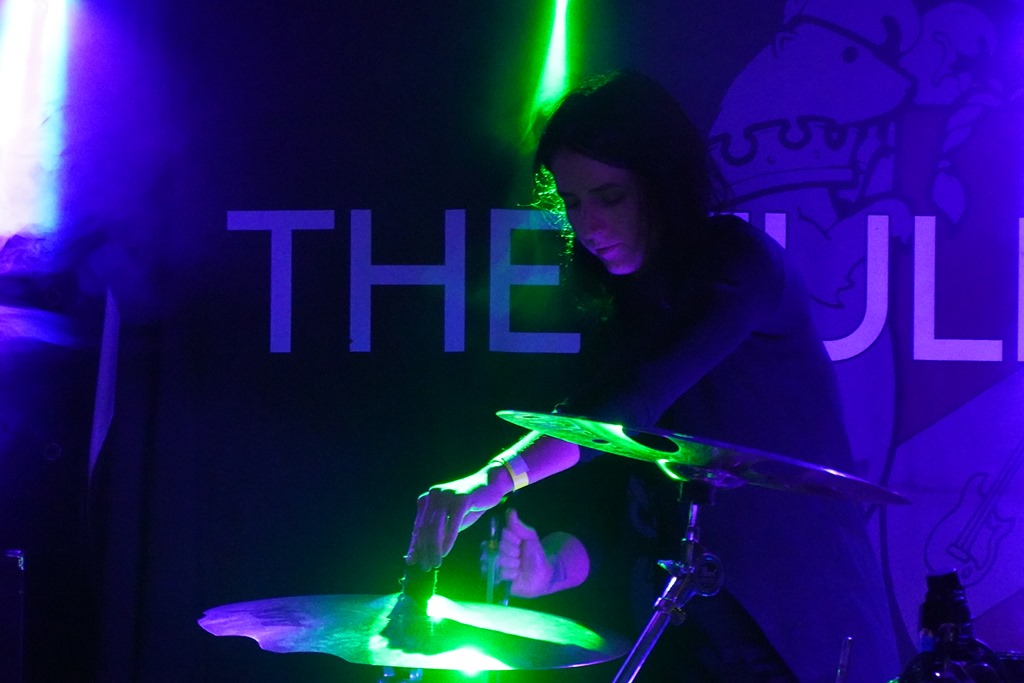
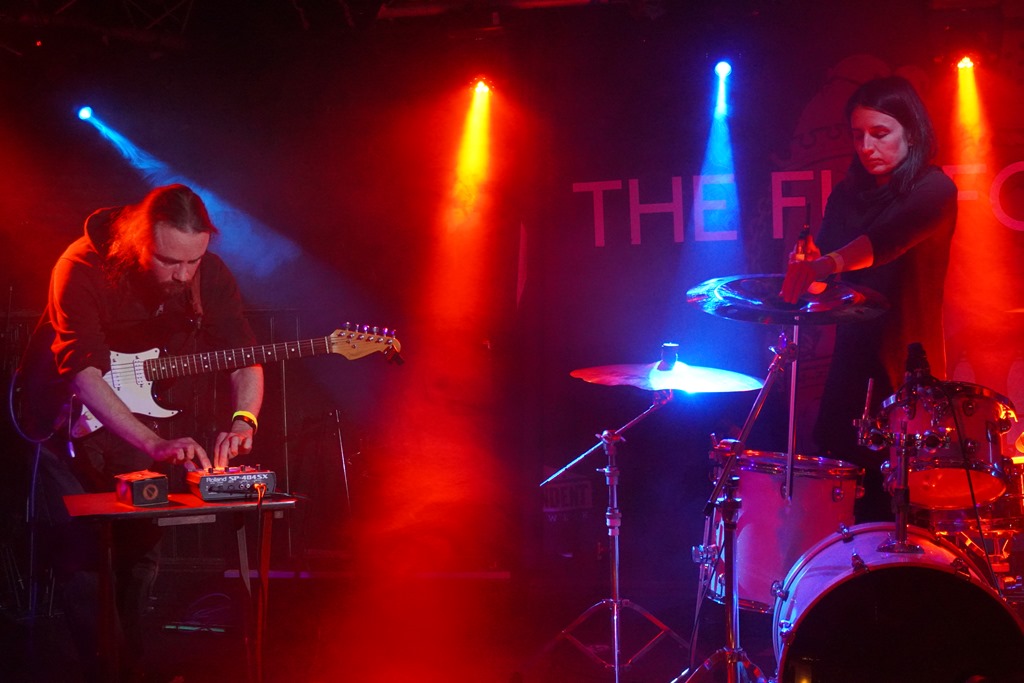
They’re so quiet you can hear matchsticks dropping into a tray. But the fact that these things are audible, amidst cavernous reverb and sepulchral echoes, is a measure of the clarity of the sound and the band’s attention to detail. Ekaterina Samarkina is impressive in the sheer versatility and nuanced approach she takes to the percussion which is truly pivotal to the performance. Her work is so detailed, subtle, the sound so bright and crisp, as she slowly scrapes the edges of her cymbals with a bow. Lurking in the background, Tom Bush – on guitar – plays with restraint, sculpting shapes and textures rather than playing conventional chords and melodies. In combination, they conjure a rarefied atmosphere.

DSC04867DSC04886DSC04906

Dead Space Chamber Music

But towards the end of the set, as if from nowhere, emerge huge cathedrals of sound. The last time around, I compared their climactic crescendos to Swans, and having seen Swans just over a week ago, I very much stand by the parallel called then. And this is not volume for volume’s sake: this is about catharsis, about escape. Dead Space Chamber Music make music which is immense, transcendental. And when they go all-out for the sustained crescendo of the finale, it’s not because of a bank of pedals or a host of gear: they simply play harder, throwing themselves behind their instruments, and full-throttle intensity. It may not be as loud as on that previous outing, or perhaps it’s simply because I’m expecting it, but they nevertheless raise the roof, and fill the space with expansive layers of sound on sound.

The three acts very much compliment one another, making for an event which is more than merely a gig, more than three bands playing some songs: this is an occasion, steeped in theatre and art, performed with a sense of ritual. The experience is all-encompassing, immersive, enveloping; it takes you out of life and suspends time for its duration. It will take some time to return to reality.

Human Worth – 14th November 2025

Christopher Nosnibor

Human Worth seems like a comfortable place for the latest album by sludge behemoths GHOLD. The band has forged a remarkable career to date, with each album showing development and progression, building on previous works – and as they’ve been going for some thirteen years now, that’s some significant expansion. PYR (2016) saw the duo expand to a trio, and Stoic explored the potentials of the three-way interplay in much greater depth. INPUT>CHAOS took the band in a rather different direction, fully embracing the avenues of straight-up noise while bringing, at times, almost accessible shades to the monstrous riffery that defines the GHOLD sound. So many bands spend their entire career recreating their first and second albums because they’re so desperate to appease their fanbase, and while that might be alright for acts who’ve sold their soul and their lives to major labels and likely have no say in the matter, any act who has artistic freedom who peruses such a creatively limiting course is likely doing it for the wrong reasons.

GHOLD’s unpredictability, then, is a strong positive. And Bludgeoning Simulations is bursting with surprises, and none greater than the tremulous piano opening on the first track, ‘Cauterise’. It’s tense and dissonant, but at the same time, soft, reflective… and then the monstrous, churning riff crashes in and lays waste to everything which stands before it. The guitar and bass are welded together tight to forge a solid wall of sound, and it’s delivered with attack., a raw, barrelling intensity. You don’t just hear the volume from the speakers: you feel it.

Without a moment’s pause, a thick, lumbering bass riff crashes in hard, and leads ‘Lowest’ into spectacularly Sabbath territory – it’s hard and heavy, but also captures both raw contemporary feel and that vintage 70s sound. Sabbath as played through a filter of Melvins goes some way to explaining where they’re at. It sound like abrasive hardcore played slow.

The ridiculously long and sludgy single cut, ‘Place to Bless a Shadow’ s a beautiful slow-burner, expanding everything they’ve ever done to a new and remarkable breadth. There’s detail here, and deep, dark, whispering atmosphere, before ultimately, after some sparse, slow-building tribal beats and simmering tension, not to mention vocals that start gently but gradually come to resemble the rage of Trent Reznor on The Downward Spiral, they finally go full Melvins sludge mania just after seven and a half minutes. It’s heavy, and it’s wild. And – alright, sit down and take it – it’s solid GHOLD.

‘Fallen Debris’ is a fast-paced, buzz driven blast, and a contrast in every way – hard, driving, it’s a tabid blast of a punk / gunge / metal hybrid that hits like a kick in the stomach. Whipping up a stomach-churning maelstrom in the last couple of minutes, we find GHOLD hitting peak energy, before the slow-churning Sunn O))) ‘inspired ‘Leaves’ drifts in and drives hard. It’d s heavy as fuck. And it hurts.

There are no simulations here: this real bludgeoning, from beginning to end. Bludgeoning Simulations is heavy, and make no mistake, there are no simulations here: this is fucking REAL. The album’s second monumental beast of a track is the groaning, droning, nine-minute monster that is ‘Leaves’, and it’s nine minutes of sepulchral doom fully worthy of Sunn O))). It’s heavy shit, alright, but the reason it hits so hard is because of the context: Bludgeoning Simulations is remarkably nuanced, inventive, a questing work that seeks new pathways, new avenues, and shows no interest in genre boundaries of conformity. ‘Rude, Awaken’ brings the dingy riffs that will satisfy thirsty ears, but again, there’s a stylistic twist that’s truly unique, in a way that’s not even easy to pinpoint. It’s simply something different.

Bludgeoning Simulations is inspired, and inspiring, and finds GHOLD conjuring sonic alchemy with a visionary take on all things doomy, sludgy, low, slow, and heavy.

AA

a0166716374_10

We’re late for the Halloween announcement, we’re late on this… but we love GHOLD and we love Human Worth, so… better late than never, eh? And it’s only a couple of days belated…

‘Place To Bless A Shadow’ is the second single to be taken from GHOLD’s forthcoming album Bludgeoning Simulations, produced by Wayne Adams (Petbrick, Big Lad), to be released on November 14th on Vinyl and Digital via independent label Human Worth. Proceeds from Bandcamp sales will be donated to registered charity SkatePal, providing skateboarding equipment and training courses to underfunded communities in Palestine.

AA

Relative newcomers Suspicious Liquid have crashed the York scene in a big way with some powerful live shows, and now, with an album in the offing, they’ve gifted us with a video for ‘Fish-Like Things’.

It’s the perfect introduction to the band – melding elements of stoner / doom, prog, psychedelia and even a hint of jazz, and driving them home with some big riffage, ‘Fish-Like Things’ encapsulates the weird and wonderful sound of Suspicious Liquid. The accompanying video is suitably dark and twisted, and locals have the added bonus of being able to play ‘identify the location’.

AA

channels4_banner

15th August 2025

Christopher Nosnibor

In recent years, the field of doom has expanded in terms of range, and has, at the same time, become rather more populous. One suspects in part that because these are pretty fucking dark times, increasingly, people are turning to dark music to articulate their own challenges, and to navigate the world around them. One welcome development is the number of female-fronted doom bands with vocalists who bring not only powerful voices, but a strong emotional force to the heft of the instrumentation.

Amnesiak pitch themselves as ‘Alternative Doom Rock’ – a subtle but necessary distinction from the proliferation of doom metal, which is something rendered clearly on this, their debut album. Containing just seven tracks, the longest of which is just under five minutes in duration, and with a couple that clock in at under three, it’s a concise document – and that’s welcome, because unlike so many other releases in the genre, which can at times be indulgent and err towards the overlong, and leaving you feeling drained, Arkfiend leaves you hankering for more.

The instrumental intro track, ‘Deamoniacus’ is something of a trope nowadays when it comes to heavy music – and screamy post-hardcore – but here it works differently, with samples reverberating in torturous extreme stereo, the sounding of the muttering clamour of a fractured internal dialogue which crowds the mind with discomfort, paving the way for the slow, majestic ethereal grandeur of ‘Archfiend’, which blends sepulchral doom with soaring vocals which float to the skies. ‘Flamed In Solitude’ plunges into darker territory, with dingy guitars squirming queasily over loping percussion. Layered vocal harmonies contrast with the thick guitars and booming bass, and those vocals sit between doom and folk, elevating the song to unexpected heights.

The dynamics of each song is something special, and the stylistic interplay sets them apart from their peers. ‘Pillory Of Victory’ is theatrical, gothic, dramatic in a theatrical sense, but also in an intense real and immediate sense – and at two and a half minutes there’s a moment where the riff skews and things take a sinewy turn for the more discordant, before the riff returns, hard and heavy. And yeas, I’m one of those people who obsessively pinpoints the moment when a song switches, when it moves from ‘yes!’ to ‘woah, fucking yes!’ – and it all comes down to a second or so. I’ve digressed, but so have Amnesiak, until they come around to the churning riffery of ‘Bootlicker’, which is truly monumental. Everything comes together here, and this is track of the album. For all its dirty guitar grind and dark lumbering riffery, it’s majestic, epic, a song that fills you up and lifts you up with its power. The final track, ‘The Last Rattle’ is a perfect balance of light and dark, weight and melody, reflective and sad and uplifting in equal measure. The quality of the songwriting, and the attention to detail on display here is quite something.

Arkfiend places Amnesiak comfortably alongside Cold in Berlin and Cwfen – and that’s a strong recommendation.

AA

a4008843204_10

Sub Pop – 14th October 2025

This one has seemingly come out of nowhere. And it’s on Sub Pop. And they’re calling it a Maxi 12”, as was the term for a 12” EP back in the 80s and 90s. And I suppose it does actually quality, given that the old-school Maxis tended to feature either two tracks per side, or an extended version of the single, plus B-sides, and that’s then case here. But with this being a sunn O))) release, the lead track is just shy of fourteen minutes in duration, and the tracks on the flip are eight and seven-and-a-half-minutes long respectively. Back then, a maxi would cost maybe £3.50, or £3.99 (I’m talking about the ‘90s: it was a couple of quid in the 80s… I can’t actually remember the price of an LP in the 80s, but have receipts sitting inside sleeves that verify that in 1994, a new LP on vinyl cost around £7 and a CD £11… so the fact that this ‘maxi’ is $25 tells you all you need to now about inflation and capitalism and how times have changed.

Anyway. The three tracks on this release, with a total running time of almost half an hour are notable as ‘first official sunn O))) studio recordings to feature only the original core duo on heavily saturated electric guitars and synthesis.’ It’s also introduced with a sense of elevation that’s typical sunn O))), when they inform us that ‘sunn O))) gave extreme focus and care to each step and aspect of the recording, each tone and level of saturation, each gain stage and speaker, each arrangement and harmonic. The Pacific Northwest forest is our guide.’

‘Eternity’s Pillars’ is a raging behemoth of feedback and sustain, every chord struck a billowing beast that punches through the endless drone, and while it is unquestionably classic sunn O))), it also brings together the defining elements of early Earth, in particular Earth 2, an album which effectively created the blueprint for the entirety of sunn O)))’s existence. Not a lot happens: that’s never the point. Downtuned guitars churn the bowels, scraping and snarling their way to monumental, megalithic sustain, though a continuous whine of feedback, each strike hanging in the air for what feels like an eternity. The pace is a crawl. Time stalls. It’s absolutely punishing. New shapes emerge, fleetingly, toward the end, notes rising like monuments from a cloud of smoke – by no means a melody, but it’s a progression, a change in mood.

‘Raise the Chalice’ is named ‘for a rallying cry often uttered by Northwest legend Ron Guardipee throughout the mid-1990’ – making it their second composition in his honour (the other being 2023’s ‘Ron G Warrior’, which was also released on Sub Pop), and opens with a full growl like a giant engine slowly revving , but instead of revving up, it gradually revs down into a slow-churning sonic abyss. It doesn’t sound, or feel much like a rallying cry. With the density of dark matter, the enormity of the sound engulfs the senses. By the arrival of ‘Reverential’, there’s a feeling of exhaustion, as if all the light and oxygen has been extracted, and yet still the sound continues to apply a crushing pressure.

While it’s difficult to really rank or compare sunn O))) releases as to what constitutes their ‘best’ or ‘heaviest’ work, this is certainly classic, quintessential sunn O))), and it’s very, very heavy indeed.

AA

a3585267222_10

Wounds is Cold in Berlin’s long-awaited and recently announced fifth album – their first in six years. As heavy as it is haunting, the record masterfully blends doom, post-punk, and driving krautrock in a dynamic, hypnotic maelstrom – pushing London’s most exciting cult band into intoxicating new territory.

Wounds is a series of songs about the different ways people live with and process ‘the wounds’ of their lives,” explains vocalist Maya. “A strange celebration of that formative pain we have all experienced in some way. The loss and joy of survival – the celebration of finding others like us, the gift of knowing life comes after fire.”

New single ‘The Stranger’ is a song that is meant to allow for multiple interpretations. Vocalist Maya adds:

“Perhaps it is a song about addiction- the wound that doesn’t heal. The way the focus of an addiction sings to you, searching you out, twisting and flowing through the body- whispering beneath the skin until you answer the call and find home once more.

Perhaps it is a song about finding your place in the world- groups of people watching and experiencing something meaningful together- a way to heal and close old wounds. How live music can stay with you even as you are separated from it. How finding the strange songs, sang in dark places can actually bring you home to yourself.

Or perhaps it is a song about that sharp kind of love at first sight that can overwhelm, offering freedom and constraint all at once. When you are drawn to that person that you know can destroy you, but you cease to matter because they are somehow instantly your home and only resting place.

‘The Stranger’ can be all these things- a healer, a cage, an addiction, but it is most definitely a call into the darkness, reaching out to the listener to join us in the howl of life, to wake up the bones and the skin. Be with us in the noise and know that whatever it is that led you to us, we are grateful you are home.”

AA

AA

zDIwBwtg

Rocket Recordings – 17th October 2025

Christopher Nosnibor

The thing that particularly stands out in the bio for the latest Smote album is this: ‘Daniel Foggin has spent the majority of his adult life working as a landscape gardener, frequently pursuing his trade in conditions of either baking heat or freezing cold and, as he puts it “more often covered in mud than not”. Yet the primal, meditative aspects of this work, the act of communing with nature, its histories and its depths have fuelled his art on a profound level. As Daniel himself relates; “I think the music is a direct reflection of this feeling that I haven’t quite managed to define yet, it is dirty and hard but there is an overwhelming comfort to it.”’

It’s something artists rarely mention: they have day jobs. Perhaps there’s an element of shame in it for some. Maybe it detracts from the mystique. Or it could be that it’s considered a detraction from the pitching of the latest creation. But it’s a truth rarely spoken: most musicians, and artists in any medium, have day jobs and have to make time for their creative work. Tours have to be negotiated with work, taken out of annual leave, often juggled with family responsibilities. Sleevenotes by Joe Thompson of Hey Colossus and Henry Blacker is the most open narrative on the realities of this I’ve read to date, and at times the exhaustion crawls from the pages. As such, it’s refreshing that Foggin not only acknowledges his day job, but recognises it as a significant influence on his creative work. And why not? The most engaging art is drawn from life, after all. Much as it would be a more ideal situation that artists could make their living from art, at the same time, there is perhaps greater value in art created by those who live in ‘the real world’ rather than floating, detached, elevated above it in some kind of bubble.

The words ‘Free House’ make me automatically think of pubs, which perhaps says more about me than the artist, of whom we learn that ‘In the world of Smote, going further out means going inward. Less a metaphysical journey into inner space, more a physical journey into the ground itself, converging with its roots and vibrations. What’s more, a journey right to the heart of its principal architect’s daily experience’.

A cottar is a farmer, and with the album’s first piece, we’re plunged into a deep, surround-sound immersive dronescape, There are many layers to it: reverberating voice, trilling flute, sonorous synths, distant percussion… and it builds, and builds, growing into a hypnotic swell before finally breaking into a slow, weighty post-metal riff that twists and turns with spectacular force, hammering with the force of Pale Sketcher by the six minute mark. It has the weight of sodden earthworks, and conveys the hard exertion of ploughing and tilling, as it descends into a speaker-shredding wall of distortion.

‘The Linton Wyrm’ brings heavy Nordic connotations as it plods on, and on, over the course of a rousing nine and three quarter minutes. It’s not so far removed from the epic force of Sunn O))), but equally Wardruna, a band who evoke earthiness and the essence of pagan spiritualism – not about worshipping mythical gods, but celebrating a connection with nature on a level which is almost primal, and isn’t readily articulable through words: it’s something which transcends language.

Single cut ‘Snodgerss’, which clocks in at under four minutes is both representative of the album as a whole – and not. With its trilling flute and thunderous slow riffery, it incorporates some of the leading elements, but in a way which is considerably more accessible, not least of all with its folk leanings, and presents them in a condensed format. That said, it’s an intense piece, which offers no let-up.

The ten-and-a-half-minute ‘Chamber’ is slower, heavier, dronier, and encapsulates the true essence of the album as a whole, building on a low, resonant throb before the introduction of mournful woodwind. As graceful and soulful as it is, it connects with a primitivism which reaches to the core, a place beyond linguistic articulation. This is the sound of forests, of hills, of streams and moorlands.

The final track, ‘Wynne’ hammers the album home in a squalling blast of overloading guitar and powerful oration propelled by thunderous percussion. It’s mighty, and beyond, seven and a half minutes of blinding intensity which concludes an album that’s varied but unswerving in its density and force. You can truly feel the earth move.

AA

a1730365911_10

Wounds is the band’s long-awaited fifth album – their first in six years. As heavy as it is haunting, the record masterfully blends doom, post-punk, and driving krautrock in a dynamic, hypnotic maelstrom – pushing London’s most exciting cult band into intoxicating new territory.

Wounds is a series of songs about the different ways people live with and process ‘the wounds’ of their lives,” explains vocalist Maya. “A strange celebration of that formative pain we have all experienced in some way. The loss and joy of survival – the celebration of finding others like us, the gift of knowing life comes after fire.”

First single ‘Hangman’s Daughter’ leads the charge and is available to stream and download from today. Opening with a hypnotic techno bassline, the song quickly gives way to post-punk guitars, huge choruses, and vocalist Maya’s magnetic storytelling.

“Hangman’s Daughter is an unrequited love song,” says Maya. “A woman was loved but could not love in return so she is drowned by the man who loves her. She is not lost though – she haunts the killer and he can’t escape her. The title hints at the past, but actually this is a very current issue for women today – how to literally survive when they can’t love a man who has decided he only wants her.”

Watch the video now:

AA

Wounds was recorded by Mike Bew, on location at Foel Studio. The band could be found working deep into the witching hours, experimenting with new sounds and filling the valleys with cantankerous wails of sound, bursting from amps borrowed from My Bloody Valentine.

"The Welsh countryside has a mystical quality to it," says guitarist Adam. "We recorded in a deep, dark valley; misty days and shooting stars at night. You could wander through nearby woods and stone circles during breaks. Foel Studios is woven into this setting with a transcendence of its own – its storied history includes sessions by Electric Wizard, Hawkwind and The Fall."

Synths on the album are arranged by Berlin-based Bow Church, an influential figure in the dark electronic scene and a long time collaborator of the band. His work weaves icy and atmospheric textures into the songs, layering complexity that demands repeat listens. The horns on 12 Crosses were recorded by a high profile jazz musician who appears anonymously due to label ties.

While meticulously crafted, Wounds captures the visceral energy of Cold In Berlin’s renowned live shows. The album’s arrangements and raucous sound remain true to the unrelenting intensity and atmosphere of their stage performances – every track retains the sweat, urgency, and immediacy of a band performing in the moment.

Wounds is the band’s first studio album since 2019’s Rituals Of Surrender, which Narc Magazine praised for its “crushing doom-laden riffs that assaulted the speakers with a steady pulse of noise”. It follows the 2024 EP The Body is The Wound, described by Metal Epidemic as featuring “hooky melodic songs” with a “swelling heavy intensity”.

Featuring free-jazz brass sections, off-beat structures, techno rhythms, and soaring synths, Wounds is the band’s most ambitious release yet.

AA

uwjjuFVQ

Photo: Rupert Hitchcox