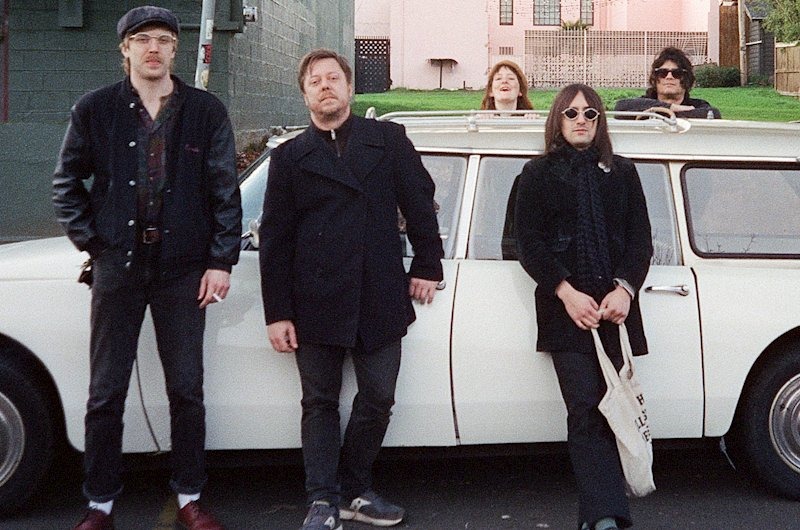
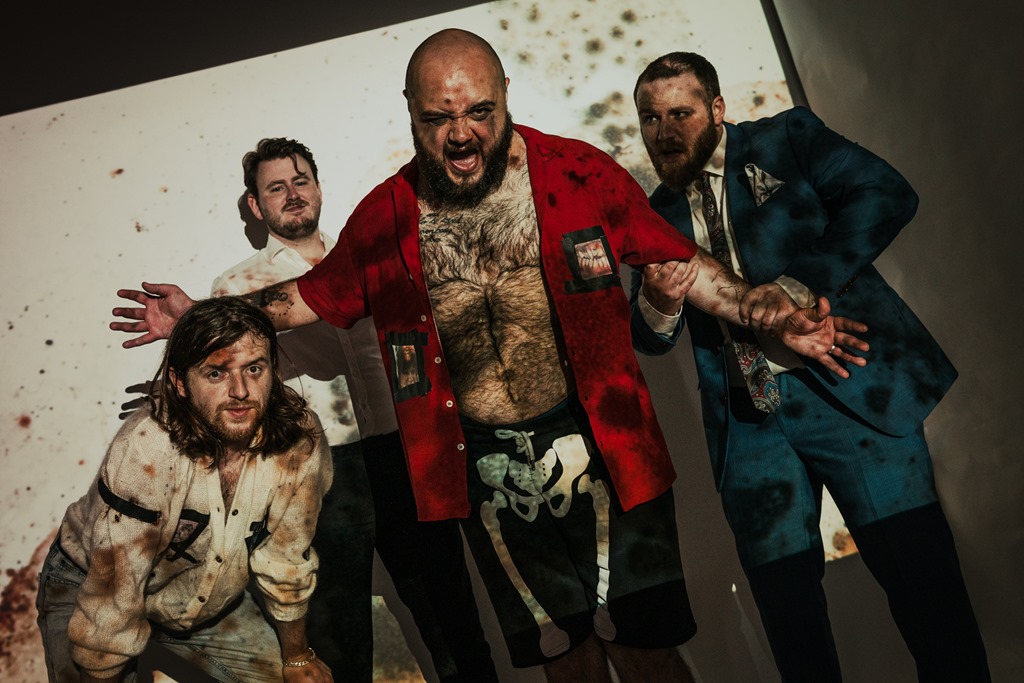
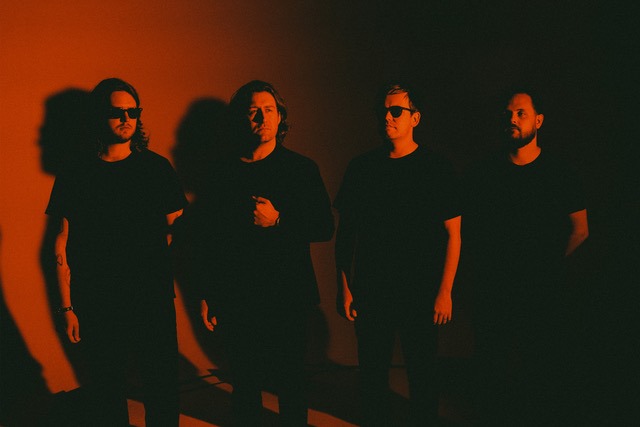
BLACK LUNG drop the opening track ‘Traveler’ as the first single taken from the American heavy psych rockers’ forthcoming new full-length Forever Beyond. The fifth album from the Baltimore, Maryland outfit is scheduled for release on March 6, 2026.
BLACK LUNG comment on ‘Traveler’: “This song is about relying on one’s anxiety and depression – almost like a super power”, vocalist and guitarist David Cavalier writes. “You think, it’s the things that are going to keep you safe and sharp. In reality, it’s the complete opposite. The song also touches on the idea of living in a blameless world. Radical acceptance of people and who they are. Musically, this is one of my favorite tracks. We made it as dynamic as possible and each section feels like its own moment.”
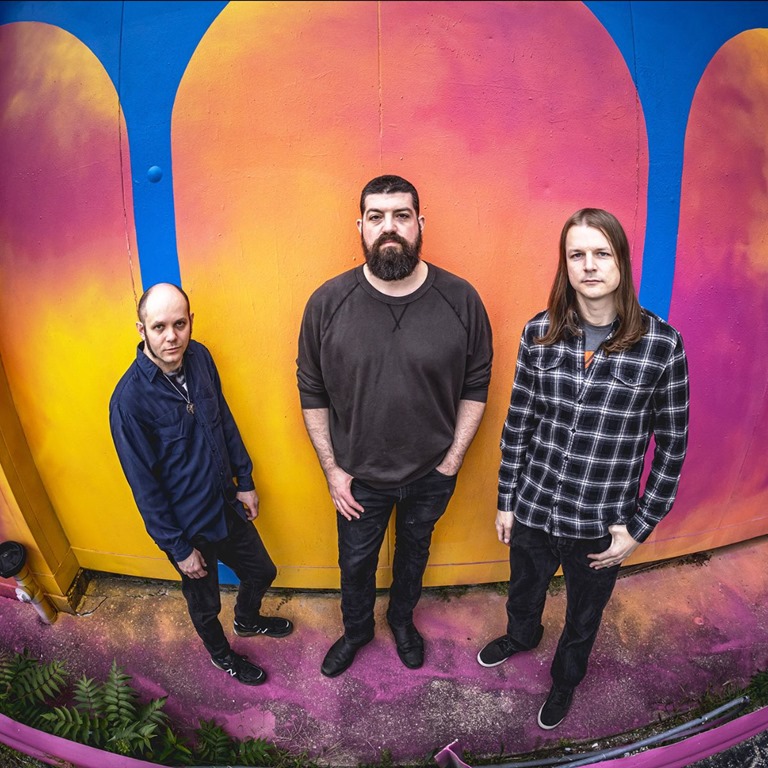
Oakland alt-rock trio Sword Tongue presents ‘Murder White Noise’, a wry commentary on the state of the world and our attempts to soothe ourselves to get through it. The latest offering from their explosive Bonfire In The Tempest EP – their fourth to date.
In an increasingly stressful world, this song explores how people try to externalize their anxieties by consuming content that allows them to feel better about their own lives. We attempt to cope with the pressure of maintaining equilibrium by coming together to grieve, worry, and comfort each other, often finding that the only way to feel good about our lives is to reflect on others’ misfortunes.
Creating dark music for dark times, Sword Tongue is vocalist Jennifer Wilde and guitarist Gaetano Maleki, a husband and wife who launched this project in the pandemic year of 2020, now joined by renowned drummer-producer Dan Milligan.
“I started consuming true crime content as a way to turn off the thoughts that kept me awake at night and distracted me during the day. One day I told a friend I was a listening to a livestreamed trial where a lady put her husband on a burn pile. She said “WHOAH, what is that, murder white noise?” As I told people about the song, I found many others watch crime stories as a release from their stressful lives. It is important to bring that into the conversation about how we are coping today,” says Jennifer Wilde.
“Finding comfort in tragedy is new for me; during the pandemic and especially in the last year I find myself needing to look for reassurance that whatever I am facing is not as bad as it could be. ‘Murder White Noise’ was written as a way to come to grips that someone else’s pain is that content, and what that says about where we are as a society right now. Gaetano wrote the perfect guitar line that hooks you in to get to the truth of the song.”
On ‘Murder White Noise’, soothing vocals contrast with the song’s macabre lyrical content, while steadily thrumming instrumentation lulls you into a false sense of security. For a moment, the listener feels heard and encouraged, then questions their own motivations, left to wonder whether they are now the tragic victim in this story. ”From a songwriting perspective, this pulled a lot of anxiety out of me,” says Gaetano Maleki. “While writing the guitar and bass lines, I wanted to bring out tension to mirror the vocals, but with some kind of seductive undertones. I feel the instruments really complement the lyrics, like a hard boiled soundtrack.”
When I was a child, I used to suffer anxiety – often when I was unable to sleep (my complex relationship with insomnia began at the age of five) – that my memories were stored in the vast eighteen-volume encyclopaedia my family owned, and I would be unable to access them because I couldn’t remember which volume they were stored in. Not that it was recognised as anxiety at the time: my parents would tell me to stop padding downstairs and bothering them, and to go to sleep. There’s a (sort of) valid reason for this (the anxiety, not the parental dismissal, but that’s an essay for another time): said encyclopaedia was made up from weekly magazines string-bound in identical hardback covers – a precursor to those infinite volume magazines devoted to knitting or whatever, or where you would build a Death Star in 300 instalments, that would likely cease publication before the collection was complete – and there were issues missing, including segments of the index, and topics were not arranged alphabetically like a conventional encyclopaedia. I couldn’t even find my favourite illustrations of dinosaurs fighting a lot of the time.
Things have only become more difficult since the advent of the Internet, and while spent my youth and even my early twenties in a pre-Internet world, there are many now who have never known anything else. Kids have existed online even pre-cognisance thanks to parents posting endless pics of them growing up on social media, and YouTube and Netflix have replaced conventional TV for anyone born in the last twenty years now.
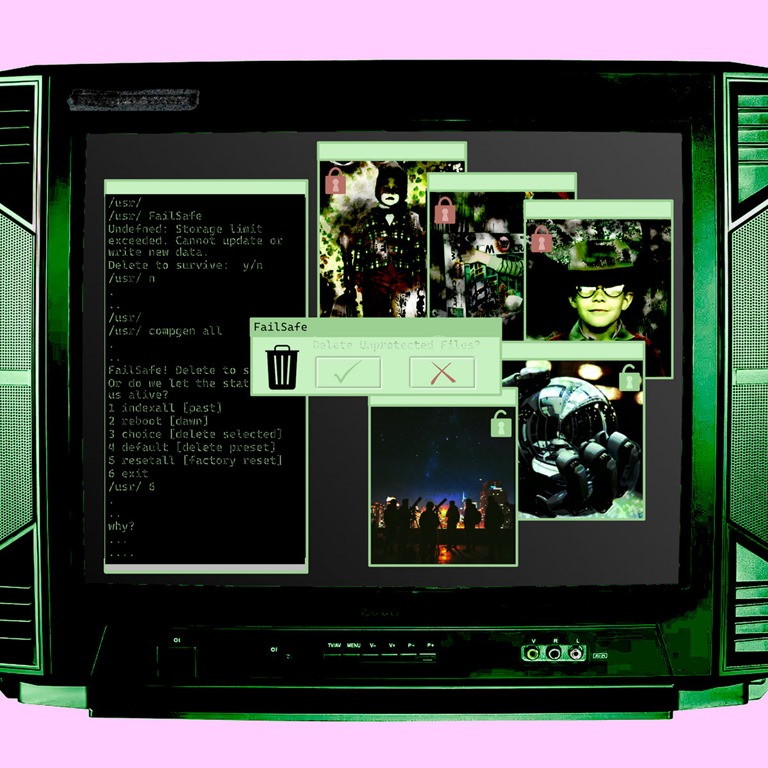
Memory, identity, and their changing nature of both under the conditions of lives lived permanently online, are primary subjects of exploration for solo artist Will N, songwriter, performer, engineer, admin, and the man behind industrial / darkwave act Solid State Sunlight. These topics provided the focus of the ExoAnthro EP last year, and ‘Failsafe’ continues that trajectory, ‘address[ing] the realization that the more we develop our own identity, the less memory remains for experiencing life moving forward. Does it delete previous memory to make space for ongoing growth? What memories are disposable? What are the consequences if it fails?’
I hadn’t considered this, or the idea of what he refers to as ‘data-poisoning’ before, having come to view the mind as a recording device, which captured and archived every single experience, every thought, e very book read, movie seen, but stored them in such a way that it accessing those archives was often a random process – Random Access Memory in the most literal sense.
But we scroll, and we scroll, and we troll, and we troll, and personalities become fragmented, real-life and online personas and experiences partitioned off from one another. Who are you? As AI takes over, the lines are becoming increasingly blurred.
‘FailSafe’ is a gnarly, glitchy technoindustrial stomp through melting circuitry that collides Depeche Mode and Nine Inch Nails with Twitch-eraMinistry, with crunching beats dominating jolting electronics and raspy vocals. The intro is a grating bass throb, emerging from an abstract crackle – and then the beat kicks in. And it kicks hard.
If the autotune / robotix breakdown in the middle sounds a shade retro or corny, it works in context, reminding us of how the visions of the future portrayed not so long ago have been replaced by a truly dystopian present. The future was exciting. Computers would make life easier, give us more leisure time and infinite knowledge: that was the promise. Now look where we are. The corporate takeover of the Internet was where it all started to sour, and it was inevitable, but still somehow came as a surprise.
With ‘FailSafe’, Solid State Sunlight draw together a host of references and points of discussion, directly or otherwise, through the savvy hybrid formulation of the composition. It’s hard, and it hits with some attack. This is the vibe of the late eighties and early nineties updated to poke the paranoia of the now. We live in troublesome – by which I mean hellish, fucked-up – times, and with ‘FailSafe’, Solid State Sunlight poke that nerve.
As my final review of the year, what could be more fitting than a work, the title of which, suggests an element of reflection on the recent past. Businesses provide regular reports, people and musical ventures tend not to, with perhaps the notable exception of Throbbing Gristle, but then, they were an exception to more or less everything before or since. Their debut album proper, The Second Annual Report, which followed a brace of cassettes, The Best of Throbbing Gristle Volume I, and The Best of Throbbing Gristle Volume II, set new precedents in so many ways.
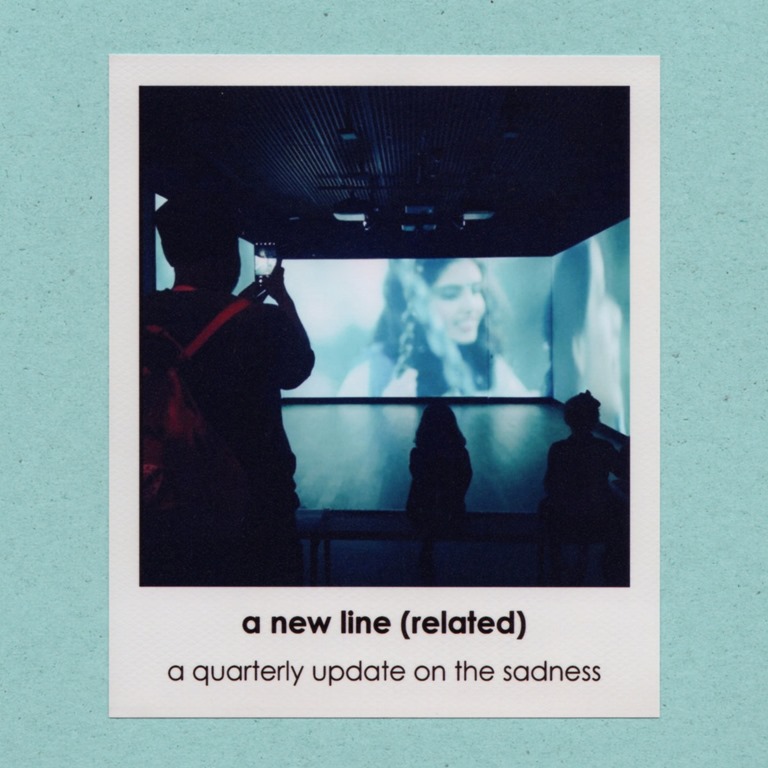
Arriving to the latest release from A New Line (Related) – the solo project of Andrew Johnson, who has previously released music as a member of bands such as Hood, The Remote Viewer, and Famous Boyfriend among others, one feels compelled to wonder ‘just how is The Sadness, and how has it been of late?
This is his third album, which we’re forewarned is an ‘immersive’ work, which ‘balances between minimal techno, dub house and ambient pop.’
‘Calapsis’ drifts in with low-key beats pulsing beneath delicate waves which ebb and flow subtly, gusts of compressed air which build to a hypnotic close. It’s not until the glitchy, disjointed groove of ‘3AM Worry Sessions’ arrives that we begin to get a sense of The Sadness. Stress and anxiety manifest in many ways, and while worry and panic may manifest differently their cousinly relationship It heaves, jittery unsettled and tense, conveying an uncomfortable restlessness.
The globular grumblings of ‘The Ballad of Billy Kee’ emerge from a rumbling undercurrent or mirk to glitch and twitch like a damaged electrical cable sputtering and sparking. Elsewhere, there’s a certain bounce to ‘Only Star Loop’ which gives it a levity, but the scratchy click of cymbals which mark out the percussive measures feels somehow erratic and the time signatures are apart from the bubbling synths and the distant-sounding, barely-audible vocal snippets, which give echoes of New Romanticism. Overall, the track has an elusive air of whispering paranoia.
In many ways, not a lot happens on A Quarterly Update On The Sadness, and the sparse and repetitive yet curiously dynamic title track is exemplary. It leaves you feeling strangely disconsolate, bereft, not only as if you’ve perhaps missed something, but that you’re missing something – not from the music, but from your own life. It seems, in conclusion, that The Sadness is thriving in its own, understated way.
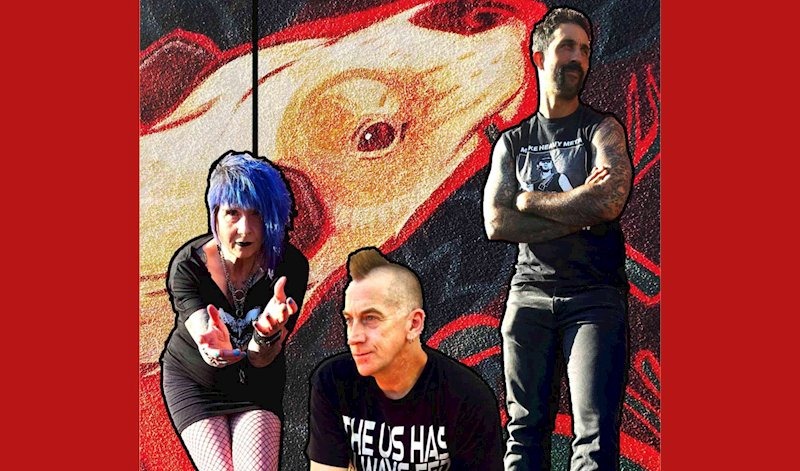
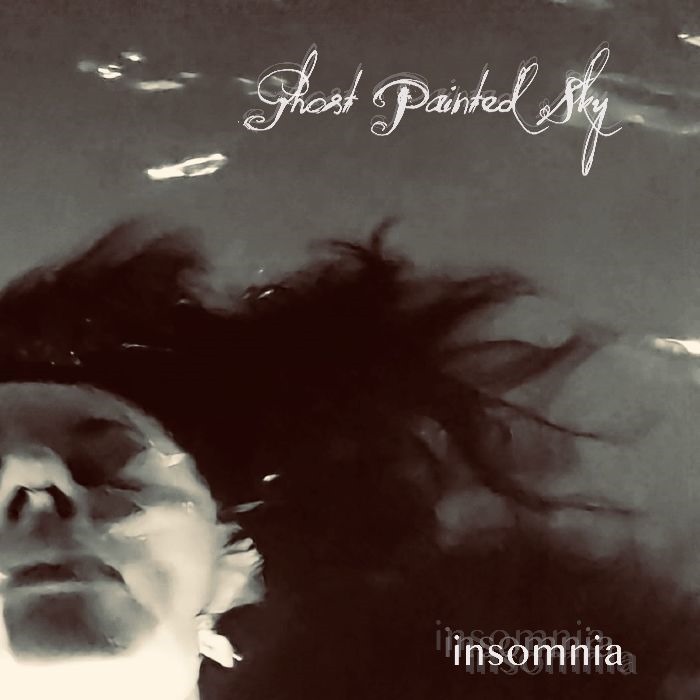
Goth rock/post-punk band, Ghost Painted Sky recently unveiled their latest single, the introspective ‘Insomnia’.
Ghost Painted Sky have always tried to write songs that are true to their own life experiences, while also tapping into something a little more universal. With the new song ‘Insomnia,’ they explore some of the most familiar of common modern plagues: stress and sleeplessness.
Raw, claustrophobic, and perhaps a bit more aggressive than some of their previous material, ‘Insomnia’ is the sound of the night fight against the thousand micro-demons of anxiety that crawl and claw around the edges of peace and sanity.
AA
GHOST PAINTED SKY began as the solo studio project of David Strong, as a way to process some major life changes through songwriting, which resulted in a debut self-titled EP released in 2014. The following year brought a second short EP, The Shadows Breath, and the first live performances.
In 2017, Lisa Wood began contributing vocals with the Scars EP, and then with the first full-length Ghost Painted Sky album, Flightless, released in the summer of 2018. Lisa has since become the second official member of the band and the primary vocalist, continuing through the Ephemeral Wake EP (2021), and a series of singles – of which ‘Insomnia’ is the latest – offering previews of what to expect from the forthcoming second full-length album, Failure Blooms. While David remains the principal songwriter, Ghost Painted Sky continues to include work with musical collaborators and live band members (including current violin player, Aurora Grabill and guitar player, Michael Boudreau) while continuing the ever-present theme of songwriting as vessel for personal exploration and catharsis.
Following on from ‘For Horror Eats the Light’, Fvnerals bring more darkness for December with ‘Ashen Era’ from the forthcoming album Let the Earth Be Silent. And truly, it’s a monster, a sprawling seven-and-a-half-minute beast that behind dark, murky, atmospheric in a haunting, ethereal ambient sort of a way, before crushingly heavy guitars grind out colossal drone over thunderous percussion.
If it feels like the end of the world, that’s probably because that’s the intention. The band explain the song and is place in the album’s development thus: “Inspired by the deeply destructive nature and harmful presence of our species, ‘Ashen Era’ was the first song that we wrote for this album, which also established its foundation", singer and bass player Tiffany Ström reveals. “In our writing process, we used dissonant orchestral instrumentation coupled with eerie vocals to ritualistically build up from a chant of despair to a state of acceptance. It is moving from the overwhelming longing for annihilation as well as the anxiety and guilt of our existence, to finding beauty and peace in our own impending end.”
Pic: Anja Bergman
This anxiety is something that’s been increasingly difficult to ignore, and it’s not just me and the sense of impending apocalypse that I’ve had for half my life: everything seems to be accelerating exponentially – climate change, consumption, population growth. The last few weeks have seen myriad news pieces on people complaining that Christmas markets have never been so busy and that traffic gridlock is suddenly no longer a rush hour or bank holiday thing, but from eight in the morning to nine at night.
In the wake of the pandemic, and with floods and droughts and fuel shortages and spiralling prices as demand for everything exceeds demand, as I’ve written previously, it feels as if we’re not only heading towards but already living in all of the dystopian futures featured in books and movies. That more writers and musicians are articulating these same feelings is cold comfort.
If one thing is becoming clear now, it’s that we have left it too late, and have almost certainly sealed our own fate, and now it seems that all we can do is make peace with this, and search for the ‘beauty and peace in our own impending end.’ It isn’t easy, if it’s even achievable, accelerating toward the abyss. But with ‘Ashen Era’, Fvnerals provide the perfect soundtrack.
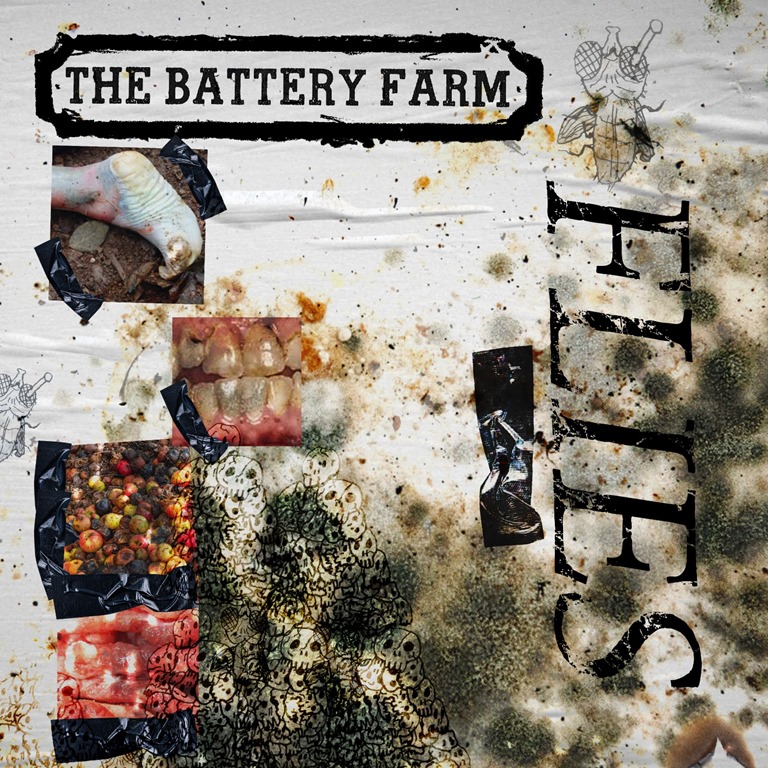
Following on from big-hitting introductions in the form of single releases ‘A Working Class Lad’, Manchester’s The Battery Farm hit us with their debut album, Flies.
They describe it a ‘an album about end times fear and societal breakdown. It is an album that tries to come to terms with the violent world we find ourselves in, and tries to reconcile with an uncertain future in world that we have decimated. It’s about the endless, screaming noise of 21st Century living and the squalid claustrophobia that entails. Driven by fury, black humour, compassion and a desire for hope.’
These are all things I’m on board with: it’s essentially a list of the top things that gnaw away at my psyche and my soul on a daily basis. Because to live in the world right now is to live and breathe all shades of anxiety.
Some people – mostly right-wing wankers and idiots on social medial, especially Twitter – like to jeer and poke fun at those who intimate any kind of panic over the state of things, laughing their arses off at those who perpetuated ‘project fear’ and the so-called ‘remoaners’ and scoffing at the idea that this year’s heatwave is anything to do with climate change citing the summer of ’76. But these are the same tossers who whine about health and safety and speed limits as being symptomatic of a ‘nanny state’, and also the same tossers whose kids will die after swallowing batteries or burn the house down lighting fireworks indoors.
What I’m saying is that anyone who isn’t scared is either beyond oblivious or in denial. The world is literally on fire and drowning at the same time. Fittingly, Flies is an album of contrasts, both in terms of mood and style. There are fiery, guitar-driven flamers and more introspective compositions which are altogether more subdued and post-punk in their execution.
The title track is but a brief introduction, a rushed, desperate spoken work piece set against – at first – a tense bass and a growing tide of swelling drums and guitars that in just over a minute ruptures into a full-on flood of rage. Distilling years of anguish into a minute and a half, it’s got hints of Benefits about it, and then we’re into the snaking groove of ‘A Working Class Lad’, that sees The 80s Matchbox B-Line Disaster collide with The Anti-Nowhere League in a gritty, gutsy punk blast with a surfy undercurrent.
It’s the combination of gritty synth bass and live bass guitar that drives the sound of the album. The former snarls, while that latter thuds, and in combination they pack some serious low-end punch in the way that Girls Against Boys and Cop Shoot Cop did. The synth gyrations also lend the sound a tense, robotic edge that gives it both a certain danceable bounce while at the same time heightening the anxiety of the contemporary, that sense of the dystopian futures so popular in science fiction are in fact our current lived reality.
‘In the Belly of the Beast’ is a stuttering blast of warped funk. In contrast, ‘Everything Will Be Ok’ is altogether more minimal, with hushed spoken word verses reminiscent of early Pulp, and tentative, haunting choruses which exude a subtle gothic vibe. And it all builds slowly, threatening a climax which never arrives. But then ‘Poet Boy’ drives at a hundred miles an hour and burns hard and fast to its finale in three and a half minutes.
‘DisdainGain’ comes on like Motorhead at their grittiest and most rampant, and again shows just how broad The Battery Farm’s palette is. By their own admission, they draw on elements of ‘Punk, Hardcore, Post Punk, Krautrock, Glam and Funk’, and one of the key strengths of Flies is its diversity – although its range does not make for a lack of coherence or suggest a band who haven’t found their identity, by any means. What’s more, the diversity is matched by its energy, its passion, and its sheer quality. Full of twists and turns and inspired moments of insight, Flies is a bona fide, ball-busting killer album. Fact.
Delivering a resolute punch with an acerbic sting in its tale, new single ‘Stamp You Out’ sees the Manchester band return to the spotlight with commanding form and typically uncompromising style.
From its blistering post/punk guitar lines to its punishing percussives, ‘Stamp You Out’ creates an impending atmosphere of anxiety throughout. With Adam Houghton’s trademark baritone vocal booming with all the force of an omnipotent autocrat at the lectern of a police state; it makes for a powerful statement of intent that instantly envelops listeners back into the shadow-strewn world of IST IST. Speaking about ‘Stamp You Out’, Houghton says:
“[Stamp You Out] tips its hat to the previous IST IST where the modus operandi was to try and make an impact in the most forceful way; pounding drums and bass and repetitive lyrics. I remember watching a news report where a politician, whose name I forget, just kept saying: ‘we need to stamp this out’. I was thinking ‘we need to stamp you out’, so I wrote an aggressive fight song and a call to arms about it.”
The single is accompanied by an official video that sees the band deliver a voltaic performance of the track against a flurry of incandescent lights. Watch it here:
AA
Of the video Keating adds: “We felt like the track is a straightforward rock song which required a straightforward video and we didn’t want to over-embellish the visual aspect. For existing IST IST fans, it re-affirms what we’re all about, and for anyone new it tells you everything you need to know.”
The new single is also accompanied by the announcement of IST IST’s third studio album Protagonists, out 31 March 2022 via Kind Violence Records. After securing their status as one of Manchester’s most exciting acts with their 2020 debut Architecture, and then consolidating the title with its 2021 follow-up The Art of Lying; new album Protagonists arrives as something of a new dawn for the four-piece. As Andy Keating says:
“This was our first straightforward album, which sounds strange given it’s the third one. Our first album was a little bit of a back catalogue, and the rest was written in the same vein to have a coherent record. The second album was a stab in the dark and written and recorded during lockdown restrictions, but it broke us into the top 100. ‘Protagonists’ feels like the first album where there’s no pressure.”
An album all about new beginnings, with a nod to the trials and tribulations of love, tricky family relationships and the feeling of being trapped by the past, ‘Protagonists’ arrives as an attestation to a band sure of their own identity. With the time and space to experiment in order to solidify their own sound, Keating adds:
“We originally started just exploring sounds and textures which appealed to us, and it evolved into fully-fledged songwriting. There are some elements which hark back to our ballsy days of a heavy sound, but we feel like this is a band expressing themselves how they want to.”
Owing its title to songwriter Adam Houghton’s magpie-like method of writing, Protagonists finds the frontman taking prominent characters that have caught his imagination, whether fictional or non-fictional, and transplanting them into dystopian worlds with new and uncertain outcomes. As Hougton explains: “My process has always been taking inspiration from everything around me including but not limited to TV, Books, Movies, Newspaper, Articles on Wikipedia, Crime Documentaries etc. I then use these sources to craft fictitious stories around an imagined persona. The title ‘Protagonists” seemed to work with this method.”
Blurring the lines between fact and fiction and traversing a broad spectrum of genres, tracks like “Nothing More Nothing Less” — a “simple love song written from a woman’s perspective” — take on a gauzy and ethereal pop-tinted quality, while slightly more menacing moments like “Fool’s Paradise” and “Trapdoors” find closer alignment with the band’s brooding, brazen rock roots.
From future favourites like “Something Has To Give”, a jittering guitar track about “a stick or twist situation”, to fully fitted-out classics like the anthemic “Emily” (a live fixture from the band’s earliest days, which has finally found its place on this record), ‘Protagonists’ will provide plenty to pore over for fans new and old.
Recorded and mixed by Michael Whalley and IST IST at Milkshed Studios, the album was mastered by the legendary Greg Calbi and Steve Fallone at Sterling Sound (The National, Yeah Yeah Yeahs, Interpol). A compulsive, character-driven record from a band hitting their creative zenith, IST IST will release ‘Protagonists’ in Spring of 2023.
To mark the release, IST IST will be playing a special hometown launch show for the new record at the Manchester Ritz in March next year – details below. There will also be a small preview tour before the end of 2022, with dates in London, Birmingham and Hebden Bridge. Standby for further UK live dates soon.
IST IST UK LIVE SHOWS
NOVEMBER 2022
3/11 O2 Academy 2, Islington, 4/11 The Rainbow, Birmingham, 25/11 Trades Club, Hebden Bridge (Sold out)
KEN mode has released harrowing new single, ‘Unresponsive,’ from its upcoming eighth album, NULL, out on 23rd September.
A relentless dirge, ‘Unresponsive’ features frontman Jesse Matthewson unleashing a tormented soliloquy that hits like Henry Rollins at his most confessional. "Forgotten, erased, unresponsive, replaced, abandoned," he chants.
Matthewson recalls the origins of the song: "At this phase of the pandemic I had begun having dreams about my partner leaving me and my family dying, probably five nights a week, for several months. I sat there, writing the lyrics to this one while listening to a rolling storm come in, that never seemed to actually reach a crescendo. It all felt too apt for the way everything had been feeling for the last year at that point."
The track’s sparse, machine-like pulse, peppered by hints of cello and clanking percussion, points to early industrial and No Wave influences, beyond the metallic hardcore and noise-rock for which KEN mode is known. Matthewson credits the COVID-19 pandemic with pushing the band to take new chances and explore new ground: "We felt like there was really no reason to do anything at all unless we were trying to push this into something new," he states. Recorded and mixed by Andrew Schneider (Cave In, Unsane), NULL is the first KEN mode release to feature collaborator Kathryn Kerr (saxophone, synth, piano, percussion, backing vocals) as a full-fledged member of the band.
Check the video here:
Founded by Matthewson and his brother Shane, KEN mode has come to define intensity and dedication, via tours with Russian Circles, Torche, and Full of Hell, and releases produced by the likes of Steve Albini, Kurt Ballou, and Matt Bayles. Upcoming new album NULL sees this warhorse of a band emerge from the darkest of times with new energy, evolved and ready to carry on into its next chapter.
The band embarks on a US tour in October, with support from Frail Body (Deathwish Inc).
Oct 20 – St Paul, MN @ Turf Club
Oct 21 – Davenport, IA @ Raccoon Motel
Oct 22 – Chicago, IL @ Beat Kitchen
Oct 23 – Indianapolis, IN @ Black Circle Brewing Co.
This latest four-tracker from Panic Lift continues the trajectory of themed EPs that it’s been pursuing for a while now.
With two new cuts and a remix of each, it’s reminiscent of the old-school 7” and 12” formats, and ‘Every Broken Piece’ accompanied by ‘Bitter Cold’ would make for a perfect 7”, with the additional tracks – remixes respectively from Mechanical Vein and Tragic Impulse – fleshing out a 12” and CD… Such reminiscences are relevant because Panic Lift’s harsh industrial dance sound is rooted in the 90s when multi-format releases were de rigueur. Much as they were clearly a way of milking fans and boosting chart positions, I do kind of miss those days, since the majority of releases don’t even come in a physical format.
For Stitched, James Francis, aka Panic Lift, revisits the kind of sound that defined his debut, Witness To Our Collapse, and talking of the physical, there’s a strong physicality to both ‘Every Broken Piece’ and ‘Bitter Cold’ – not just their thumping hard as nails grooves and pounding beats, but the overall density of the sound hits with a physical impact, while the forced, rasping vocals equally hit hard, the sound of anguish and rage and a host of mixed and conflicting emotions aflame.
‘Every Broken Piece’ was a feature of Panic Lift’s online performances during lockdown, and it’s from this place of inner turmoil that these songs emerge, with the accompanying notes pointing out that they ‘continue with the familiar themes of stress, coping, and concerns of self-image’, and the rippling synth lines, juxtaposed against snarling, abrasive vocals, are the perfect expression of internal conflict. There’s a lot going on here in the arrangements, with churning metal guitar grazing against cinematic synths, and the slower chorus on ‘Bitter Cold’ brings impact by contrast.