Archive for June, 2026

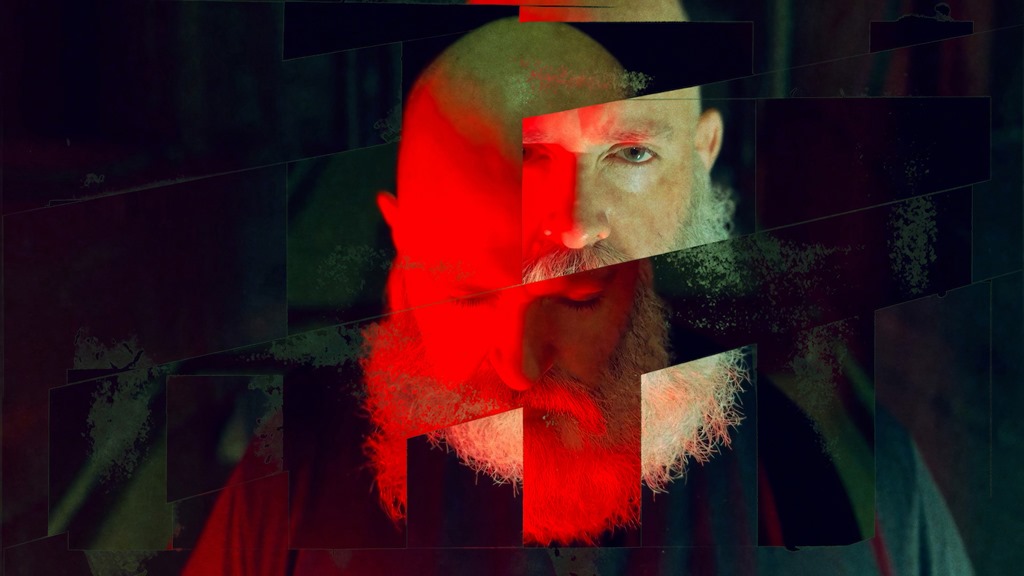
Chicago-based dark synth / industrial artist Tatv Gral (ˈtätü ˈgräl) announces the release of the Treachery EP, a new remix EP featuring the original version of the ‘Treachery’ single, produced by William Faith at 13 Studio, alongside exclusive remixes by DSTR (Daniel Myer of Haujobb), Tweaker (Chris Vrenna of NIN), and fellow Chicago underground denizens, [melter]. The EP is released on 6 July 2026, with presales available on Bandcamp now. The EP release is also flanked by the new video for the DSTR remix of the track, following on the heels of the video for the original single version in June.

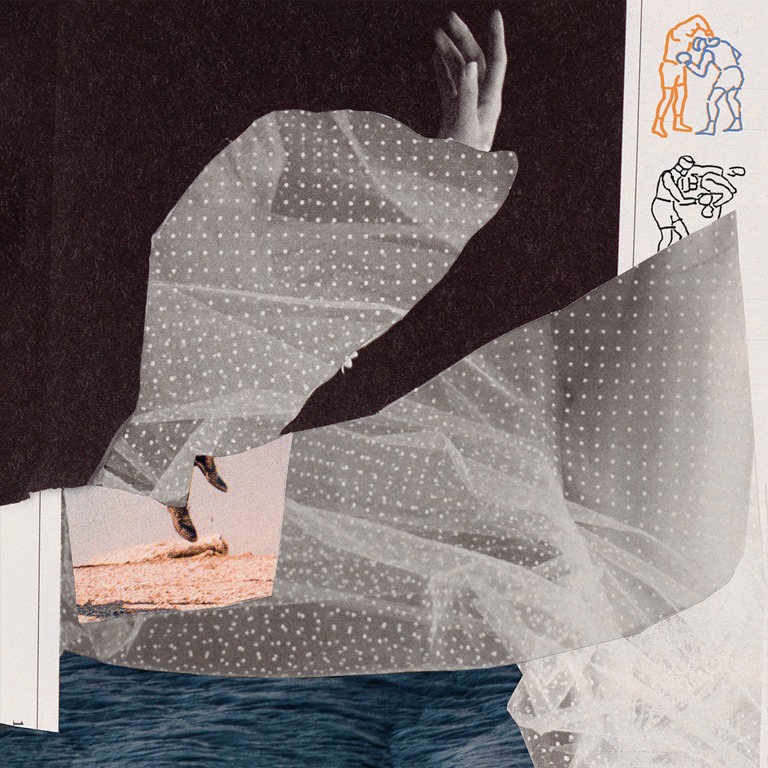
Thematically, ‘Treachery’ emerged from a chance encounter that led Tatv Gral’s Allen Addington deeper into the symbolic world of Hellenistic astrology, as Addington explains: “It was a discovery in the ancient texts that unlocked the whole song – both Saturn and Mars independently carry the signification of ‘Treachery’, translated directly from the Ancient Greek. Two malefic forces, each already marked by betrayal, meeting in the same charged space. Following Richard Tarnas and James Hillman, I wanted to explore that archetypal collision phenomenologically – the Old Man and the Young Man, bondage and erotic force – seen through a gay male gaze and the cinematic shadow world of William Friedkin’s Cruising.”

Drawing on the archetypal psychology of James Hillman, who argued that images arising from the psyche carry their own intelligence and must not be immediately moralized, Tatv Gral uses music as a container for difficult energies rather than a platform to promote them. This approach places ‘Treachery’ in a lineage that runs through Coil’s ritual electronics, Kenneth Anger’s astrologically-timed film workings, and the Jungian shadow work that informs all of them. The queer lens is not incidental: it is the specific viewpoint through which these archetypal forces become visible.

Musically, Tatv Gral draws on the colder edges of industrial, EBM and dark electronic music, combining mechanical rhythms, claustrophobic textures and cinematic tension with an emotionally exposed vocal approach. Coil’s occult philosophy as genuine practice is at the centre of Tatv Gral’s frame of reference, while other influences range from Chicago’s industrial lineage via WAX TRAX! Records, through to the brutalist intersection of early British and German electronic music, shaped by the severity of Kraftwerk and DAF, while also maintaining a distinctly personal and contemporary perspective.

AA

Allen Treachery 96dpi

Sound in Silence – 18th May 2026

Christopher Nosnibor

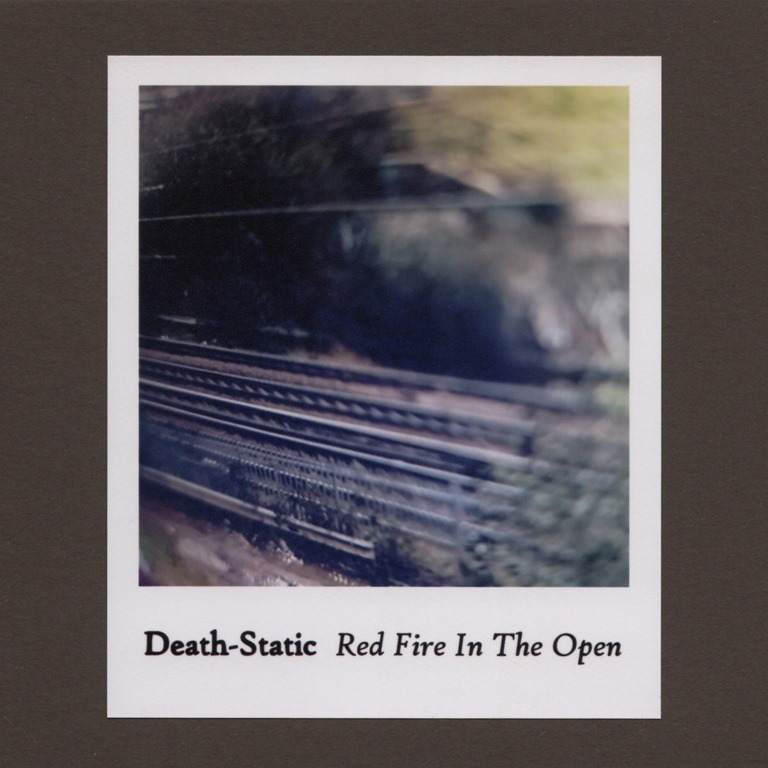
Sound in Silence produce nice releases. Like the Loom label and early Gizeh releases, they disprove the notion that the CD format is impersonal, no more than mass-produced plastic. The latest offering from Death-Static, released as a run of 200 handmade, hand-stamped, and hand-numbered copies is exemplary. It’s more than just a CD. It’s art, and an artefact, and one worthy of the music it houses.

Death-Static is the solo project of Gareth S. Brown, who has no small catalogue of output to his credit, having previously released music as a member of the bands Hood, The Declining Winter and Memory Drawings, and solo under his real name and various aliases. We learn that Red Fire In The Open, his second full-length album, ‘is more drone-based than his last year’s debut Time Is Ignorance and consists of three tracks… conceived as a prelude, interlude and main piece, using bellows instruments, organs, cellos and field recordings’.

The prelude takes the form of the fourteen-minute ‘Blackhorse Infirmary’ and it starts out as a quavering analogue drone which stutters and stalls in between undulations. It’s the kind of warm tone that’s eerily close to the human voice. Organs and bellows are uncannily breath, and the polyphonic exhalation which defines this piece is uncanny and somewhat discomfiting. It swells like a chorus of voices humming, wordless, all around you, as trilling synth drones and elongated scrapes ripple, with feedback occasionally rising up through the slow, dense drift. The final minutes are a rustling, rupturing cacophony of churching chaos and discord. Although not entirely unpleasant, it is challenging, and feels like being assailed by a storm.

In context, the interlude, in the form of ‘The Last Days of Light’ is welcome. It’s a piano-led moment of reflection. Quiet, calm, with a hint of melancholy, it’s soothing, and extremely emotive. I feel a certain sadness. Not in having been manipulated to sadness, but because there is simply something about it. Life is sad. The world is sad.

The title track, ‘Red Fire In The Open’ is the main event – a composition which stretches beyond thirty-four minutes in an exercise in patience. It’s pitched as being ‘like a guided meditation, using bellows instruments, organs, cellos, and field recordings to move the listener from the grimy, urban trudge of a major metropolitan train station to a woodland dawn chorus – and at the same time towards a sense of possibility and hope.’ It very much marks a shift in tone, but at the same time expands on the gentle drone forms of the previous pieces.

Like cheese, or for some, bacon, birdsong always makes everything better. I used to march into town to get a bus to the office on the city’s outskirts on the opposite side from where I live under the power of the MP3. Since lockdown, I’ve sought silence and felt the need to keep my ears open, and to venture into nature as much as possible. This has been a huge life change in many ways. I actually appreciate the sound of the breeze, the ripples of air though the leaves of trees, now, not because I’ve turned into some massive hippy, but because I crave the sounds of life, and feel I need that connection. The nature on my doorstep has become far more meaningful to me than any David Attenborough documentary. Whales are cool, but so are bees and birds and green spaces closer to home. We live in the most horribly overstimulated of worlds. We’re far beyond the postmodern blizzard Lyotard and Jameson wrote of, in that we’re in a place where we’ve devolved, concentration spans have been diminished to mere seconds and most people use AI to do their thinking for them. We’re so fucked, in so many ways, and on so many levels. But Red Fire In The Open reminds us that there is an alternative, and that there is more. It reminds us that it’s still possible to step outside, and to open your eyes and open your ears, and open your lungs. Please, do, while you still can.

AA

a3054815221_10

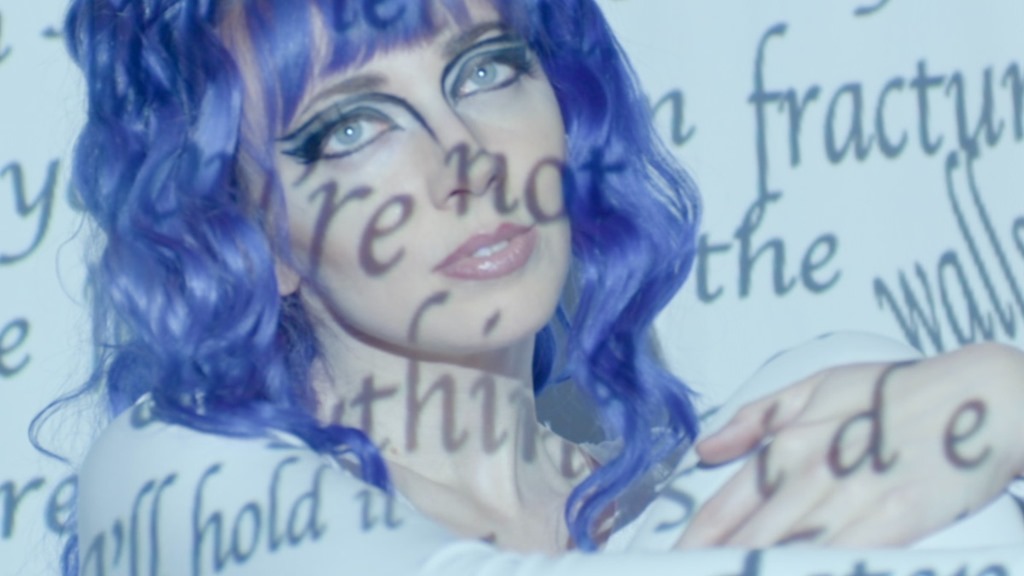
On the trail of the Low Sunday Ghost Machine – Black EP, newly released via Projekt Records, Pittsburgh darkwave-shoegaze pioneers Lowsunday present ‘You’re So Wired’, with the video produced by Jer Herring. Capturing the roller-coaster experience of being drawn to a highly energetic, erratic individual, who blurs the line between imagination and everyday life, this song channels a vibrant, alternative rock spirit that ultimately celebrates breaking free into a state of liberated peace.

“’You’re So Wired’ is a song that touches on a manic type of experience. It also touches on the  classic Chuang Tzu question, after having had a vivid dream: "am I man dreaming I am a butterfly or am I a butterfly dreaming I am a man?" — The experience of not knowing if you’re awake or dreaming. In this case, the rapid eye movements shown in the video capture both dreaming and erratic behavior, making it hard to interpret which is which,” says Shane Sahene.

“In the video, I love the way Jer shows the subject looking through a camera – like a search for honesty or an altered reality. It relates to the song like a form of detachment – just one step removed. Ultimately it’s the experience with this type of person – that when they’re gone, you miss the excitement they create and when you’re together, the unpredictably can feel overwhelming. I enjoy the idea of being in a permanent dream state, like an overlay to reality, where one is only stabilized by their dreams.  The beauty of the video comes when the escape has been made – just as the song opens up in the bridge – it captures a freedom that had been searched for and finally found.”

AA

Formed in 1994, Lowsunday (initially Low Sunday Ghost Machine) emerged as a “retro-futurist” pioneer, blending darkwave and shoegaze long before the genres saw their modern revival. The ‘Black EP’ is their second release of all-new material released since 1999, previewed by the darkly fascinating lead track ‘This Is Not Heaven’ and focus track ‘Shattered’.
Their legacy was cemented with their 1996 debut album Low Sunday Ghost Machine and the 1999 masterpiece Elesgiem, both with extended re-releases out via Projekt Records in the past 18 months (for the 30th and 25th anniversaries, respectively). With a cult reputation for mercurial sounds and blistering guitar work, their music set the stage for subsequent generations of alternative artists. Following a nearly 25-year hiatus, the band resurfaced as the duo of original member Shane Sahene (vocals, guitar, synth, bass, drums) and Bobby Spell (bass, guitar, drums).

At the end of 2025, Lowsunday released their Low Sunday Ghost Machine – White EP, ranked second among Post-Punk.com’s Best EPs of 2025, and showcased by the singles ‘Love Language’, ‘Soft Capture’ and ‘Nevver’. Both a reflection and a resurgence, Lowsunday’s two new EPs usher in a welcome return, marked by superb production and a renewed creative clarity, bridging three decades of distinct sonic legacy with balanced doses of escapism, dreamlike sounds, drones and feedback.

With a sound defined by atmosphere, precision, and heartfelt shadow and depths, Lowsunday is now asserting their presence with new strength. While the White EP explored light and texture, the Black EP is the darker counterpart and definitive statement. Shadow and intensity, layered guitars, tight rhythms, and austere synths, this new EP distills the duo’s vision into a sharper, more potent form — a bold declaration of their enduring artistic power.

AA

Lowsunday again

28th May 2026

Christopher Nosnibor

It may only be three minutes and twenty seconds long, but this latest offering from Lumirex – an Italian musician based in Munich – has a lot happening. It’s dark and stark, with low, stealthy industrial bass tones strolling and bubbling. So far, so much standard dark electronica, the kind of stuff that’s been circulating since the late 80s when Wax Trax! created the template for all things of an electronic industrial persuasion. But with ‘Hurts’, Lumirex take that template and expand on it in the most unexpected of ways.

It begins with stealth, before building… and then something happens. That something is a magnificent vocal which soars and glides – not quite operatic, but every inch classical and the perfect contrast. Compressed and breathy, it suddenly soars skywards in a departure from this domain, while the beats flurry faster, evermore glitchy, evermore tense.

There’s a break where things clamour down to a hushed moment of breathing – a tense gasping, where the word ‘kill’ is repeated, and it feels dangerous, before, out of nowhere, a banshee scream erupts and the beats flitter in again and you find yourself in a total spin.

Sure, it incorporates myriad things you’ve heard before, so much so that it’s not only familiar, but borders on the cliché – but these are just the elements. The way Lumirex draws them together is something else, and ‘Hurts’ is nothing short of mind-blowing. It has to be heard to be believed.

AA

a2384340999_10

22nd May 2026

Christopher Nosnibor

Black Leather Birds – the musical vehicle of A.G. Syjuco, based in Chicago, IL., like so many projects, began during the pandemic. Unlike so many projects, Syjuco has not only kept things going, but remained incredibly prolific.

He describes this new five-tracker, of Children and Their Sorceries, as ‘a deliberate piece of work — heavy on atmosphere and slow-building tension. Themes of anxiety and existential dread run throughout, handled with a literary sensibility that places spoken word, prose poetry, and ritual chant alongside more conventional song structures’.

Straight from the off, it’s heavy and intense. A thick, grinding bass greets us – that is to say, it churns our guts out – and a back-and-forth spoken word dialogue paints a bleak scene. The mellow breakdowns between verses include vinyl crackles and a low ache of nostalgia, before that heavy grind returns twice as heavy, twice as dense, and twice as ugly. In combining elements of Beat-influenced spoken word, trip-hop, and industrial, ‘Nothing Ever Grows Here’ makes for a dizzying and hard-hitting first four minutes.

At just over a minute, ‘Monster’ is but an interlude, but it’s a dark one, which culminates with crashing, crushing beats reminiscent of Dälek, and it segues into the narrative-centred ‘The Box’, a piece where noise rock meets spoken word. It’s actually been a while since I heard anything so narrative-orientated. More than anything, I’m reminded of Enablers – the words are first and foremost, and the atmosphere is tense, and there is noise, and there’s a certain sense of a duel for dominance between the words and the accompaniment. There are elements of jazz and noise rock and post-punk bubbling and jostling away behind Syjuco’s nonchalant narrative, which at times spins some pretty grim imagery – grimagery, even, if you’re so inclined (and I am). I’m also reminded of the smart-witted spoken word of King Missile, only with less of the sassy wordplay.

This is some pretty dark, bleak shit. ‘Almost’ is the most conventionally song-structured piece of the set, and ventures into industrial territory, with mechanical whirrs and dark electronic sounds, not to mention thudding mechanised beats, before the slow, melancholic ‘Goodnight My Darling’ lowers the curtain on this visionary work with a sadness that’s difficult to define. But sad it is.

of Children and Their Sorceries is inspired and inspiring: it’s wide-ranging, and straddles numerous genres. I have no idea where to locate it – but it’s good. And that’s what you need to know.

AA

a2909328540_10

Karlrecords – 22nd May 2026

Christopher Nosnibor

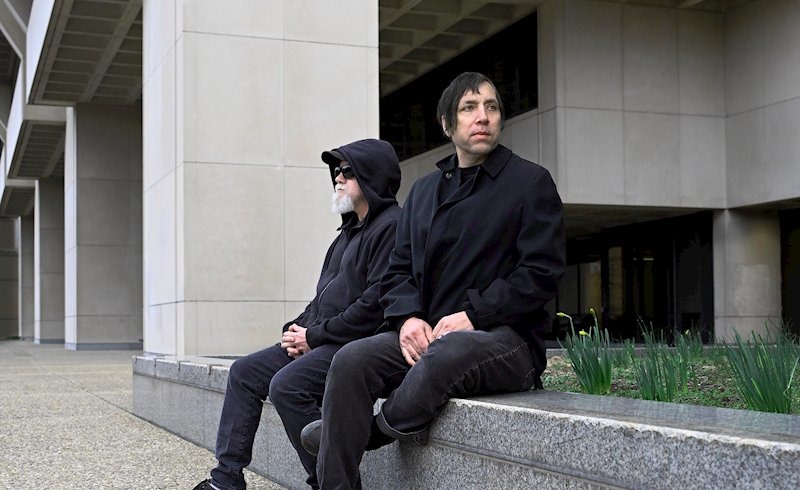
Flocks is the duo consisting of drone specialist Werner Durand and percussionist Uli Hohmann, and their second album, Lagoon, we’re informed that ‘the duo further explores the aesthetics it has crafted on its selftitled debut (2023, on the now defunct ZEHRA imprint): DURAND and HOHMANN shape drone-y soundscapes based on their self-built wind- & stringed instruments, Persian percussion and subtle electronics, drawing additional inspiration from Krautrock (listen to the irresistible, hypnotique, ever-changing rhythmic pattern of the title track) as well as JON HASSELL’s “fourth world” aesthetics, placing the duo nicely between tradition and experiment!’

For those unfamiliar with the fourth world concept, it can be traced to the 1980 collaborative album Fourth World, Vol. 1: Possible Musics by Hassell and Brian Eno, with the former defining the fourth world as “a unified primitive/futuristic sound combining features of world ethnic styles with advanced electronic techniques.” And it does very much describe the sounds on Lagoon, where electronic drones and quavering digital textures are melded with percussive forms of ancient origin. Indeed, Hohmann’s credits on the album include kanjira, riq, ghatam, Tibetan bells, Venetian shells, and bamboo tube zither. And the result is nothing short of hypnotic.

The three longform tracks share aquatic-themed titles, matched with gloopy tones and fluid forms. Side one contains two ten-minute pieces in the form of ‘Whirls’ and ‘Tidal’, while the twenty-minute title track fills the entirety of side two.

The length of the pieces means they each have time – and space – in which to fully explore the tones and textures of the instruments involved, and to create fully immersive soundscapes. There are breathy stutters amidst the wavering undulations, and sounds which evoke the sound of waves lapping the sides of a small boat. There are gentle ripples, ebbs and flows in these extensive sonic expanses, and it’s not difficult to let go and simply succumb to the drift.

The arrival of some quite smooth sax in the middle of ‘Tidal’ is something of a surprise and feels kind of incongruous at first, but in time it manages to nestle in nicely. ‘Lagoon’ features stronger, busier, percussion and denser, more claustrophobic drones, and is also the most overtly ‘jazz’ of the three compositions due to the more prominent sax work. Over its extended duration, it builds a solid groove, and seems to quicken in pace, although it may only be an increasing density and the tension of eternal repetition. Eleven minutes in, and you really begin to feel it: the relentless rhythm and eternally monotonous drone which underpin all of the additional layers have a cumulative effect. As horns and clients and an array of extraneous sounds from twittering to laser-like bleeps come and go, it becomes increasingly disorientating, and while the experience is by no means unpleasant, it does fully envelop the mind and body.

The combination of sci-fi sounds and weird electronica with urgent polyrhythmic percussion does, indeed, feel other-worldly – of this planet, and not, of the distant past and the equally-distant futures of imagination. And among it all, the listener finds themselves lost, adrift between the two, in time and space unknown.

AA

AA

KR120 front

The pioneering electronic dance act Lords of Acid have released their third single of 2026. Blending infectious electronic beats, Latin-inspired hooks and the tongue-in-cheek attitude that has made the group a cult favourite all over the globe, ‘El Mundo Está Loco’ (The World Is Crazy) is a dance floor anthem for a world that seems to be getting crazier by the day.

Driven by an irresistible chorus and a playful exchange between Lords of Acid and the New York City-based duo Tony & The Kiki, the song captures the chaos, absurdity and excitement of modern life while inviting listeners to do the only sensible thing left….dance. Because, when the world goes crazy, turn up the music.

Tony & The Kiki blend gritty NYC glamour, disco decadence, punk, soul and high-voltage anthems into an unapologetically queer rock-and-roll spectacle. Channelling the spirit of Blondie, Queen and Scissor Sisters through a modern, theatrical, arena-ready lens, they have built a significant cult following and been praised by icons that include Lady Gaga, Celine Dion, Cyndi Lauper, Grace Slick and even Fred Durst.

It quickly became clear that Tony & The Kiki belonged in the Lords of Acid universe, so the idea of having them guest on ‘El Mundo Está Loco’ felt like the perfect collaboration – loud, chaotic, sexy, theatrical and completely unhinged in all the right ways. The duo also performed as one of the guest acts on the recently completed ‘Cheeky Freaky Tour’ of the USA with Lords of Acid.

AA

9f9ee5c1ea7bb9d5d818a7bf8ecf81dea5dd73b0

26th May 2026

Christopher Nosnibor

It’s an interesting choice of name for a band, is Fishwife. Of course, the literal meaning is the wife of a fisherman, and in the dim and distant past (before my time), when industry was cottage rather than factory-based, and before the advent of supermarkets, the wives would sell the fish caught by their husbands. But we also have the phrase ‘to swear like a fishwife’, because said women were notoriously loud and sweary. Although this is also true of women from Glasgow and parts of the north of England in the present. As a final observation, it’s perhaps worth noting that, according to an article in the Review of English Studies, ‘managing alone while their menfolk were away fishing for extended periods made them strong and self-sufficient’. And while biographical details of this female London duo are scant, it seems likely relevant. That and the fact that Lenny Moynihan and Jos Cubie met in an oyster shack in a storm. As happens.

‘All Good Wives’ is their debut single – released completely non-coincidentally on World Dracula Day (May 26, 1897 being the date Bram Stoker’s seminal novel was published). They describe it quite simply as ‘a gothic indie rock song about falling in love with a vampire’, adding ‘We recorded the vocals in an empty ghost train ride and the organ in a gothic church.’

It’s all there, then, in just a few lines – a chance meeting, literary allusions by way of context. You can imagine them trotting this tale out to all the music sites in interviews, even telling to Tim Lovejoy on Sunday Brunch (since he asks every band, even siblings how they met, week in, week out). A song that combines romance and vampires… this is surely a recipe for success. Are we really convinced by this tale? Or is it there something fishy beneath the surface? Are we looking at the latest instalment of The Last Dinner Party, Wet Leg, Geese? There’s certainly quite a roll-call on the credits for the video. Let’s just say that I couldn’t afford this level of production if I wanted to put out a promo vid, even if I called in all the favours from all the people I know. In the age of AI and industry plants and nepo-buy ins and all the rest, it’s hard to know what’s real, what you can trust. I write this as someone who’s been writing reviews since 1994. I grew up reading the NME and Melody Maker, when the critique was as times beyond brutal. Now, music journalism seems to have become part of the PR machine, and writers are terrified of proffering any kind of criticism for fear of a virtual pile-on or their supply of freebies being cut off. Whatever happened to journalistic integrity?

It so happens that ‘All Good Wives’ is a solid tune. It isn’t an instant grab, but one of those songs that slowly worms its way into your psyche. Note that it’s described as ‘gothic’ rather than ‘goth’, and it’s all about the atmosphere – the spacious instrumentation, the breathy vocals, the tension and the dynamics. As a debut single, it’s magnificently understated – no huge anthemic chorus, no slogan, no instant hook, it’s built around a sparse, trudging riff, motorik percussion and layered vocals. It’s not only a great song, which blooms in a widescreen cinematic finale, but an introduction that has allure and is a lure, one which makes you lean in awaiting the next instalment.

Let’s see what happens next…

AA

AA

FISHWIFE_1

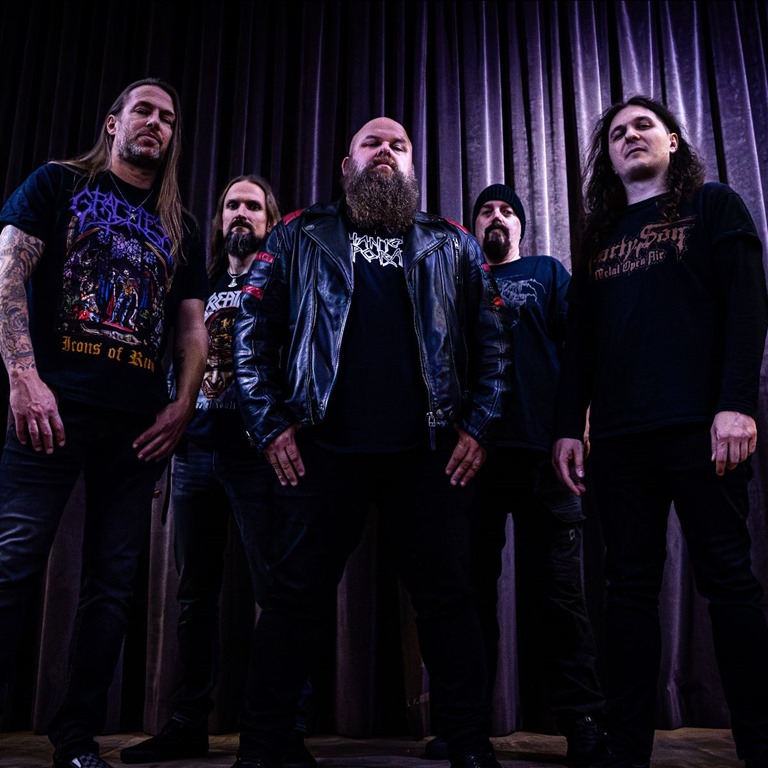
What happens when the release of a band’s debut exceeds their wildest dreams of what’s possible? 12 months ago, Cwfen (pronounced ‘Coven’) released their first album, Sorrows, which emerged from attempts to demo some material at a friend’s studio in a remote Scottish farmhouse. The results received instant and widespread acclaim, enjoying glowing reviews in the heavy music press (Metal Hammer, Kerrang!) and featuring in album of the year lists at the close of 2025.

Fast forward 12 months and the band have toured extensively with Paradise Lost and Faetooth, and played countless festival stages, crushing audiences and gaining new fans with consistently powerful performances of the Sorrows material.

To mark the first anniversary of the release of their debut, and the whirlwind 12 months that have passed since, the band are making two special releases of the album available for the first time. The first is a digital deluxe edition of Sorrows, which presents the original tracklist alongside more than 40 minutes of previously unheard music, including blistering live tracks from their early shows and recent touring, early demos of key songs, and eerie sonic experiments composed during the making of the album. The second new release is a special 3rd edition vinyl repress of Sorrows on neon violet vinyl, limited to 300 copies.

Fresh from a performance this week at Download Festival, the band are excited to share these releases, as they look ahead to a summer of festival performances across Europe, and then to beginning the process of preparing album number two.

AA

Cwfenna2514403753_10