Archive for September, 2025

2nd October 2025

Christopher Nosnibor

The context for Ashley Reaks’ sixteenth solo album – and his third in three years (not counting the compilation of demos released earlier this year) – is weighty. He has written openly and extensively of his health issues, while sharing images and commentary nocturnal wanderings, and these both inform At Night The World Belongs To Me, of which he writes:

The looming spectre of death and loss haunt the album: Reaks survived two major health scares and a misdiagnosed terminal illness over the last 18 months, experiences that inform the reflective, poetically gloomy lyrics, and the 4 am downtempo grooves. Adding to the sense of loss, guitarist and long-term collaborator Nick Dunne died suddenly at home just one week after completing his guitar parts for the record.

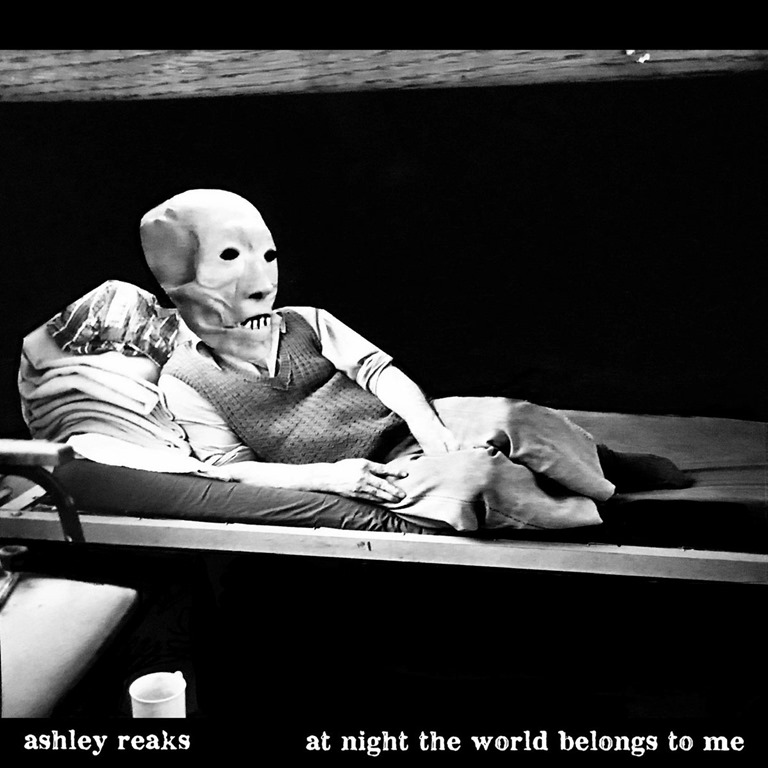
Through all of this, he has continued to collage and write prodigiously, but At Night The World Belongs To Me marks a distinct change of tone from its immediate predecessors, The Body Blow of Grief (2024) and Winter Crawls (2023). The usual elements are all present and correct – the sense of experimentalism, the collaging of genres, melding post-punk, jazz, and dub – but this feels darker, more introspective. The cover art, too, reflects this. While it has the same rather disturbing, grotesque strangeness of his usual work, the grim-looking figure in repose has connotations of ailment, frailty, even the deathbed.

The first track, ‘Playing Skittles With The Skulls and Bones’ has a bass groove that calls to mind The Cure’s early sound, melded to a rattling rhythm reminiscent of ‘Bela Lugiosi’s Dead’. The smooth sax that wanders in around the mid-point provides something of a stylistic contrast, but at the same time, it’s minor-key vibes keep the song as a whole contained within a bubble of reflection, evoking the stillness of night. I know, I’m sort of dancing about architecture here, but something about Reaks’ work prompts a multi-sensory response.

‘Rimmed With Yellow Haloes’ brings soaring post-rock guitars atop of an urgent ricochet of drumming and solid bass. On the fact of it, it’s almost poppy, but it soon shifts to take on a folksy aspect, while Reaks sings of death and funeral pyres, and the refrain, delivered with lilting, proggy overtones, ‘The Lord gave the day to the living, the night to the dead’. In context of the album’s title and theme, there is a tangibly haunting foreshadowing here, a suggestion that Reaks has not only accepted his mortality, but has assumed his place. It’s powerful, and deeply moving. Of course, Reaks can’t help but introduce incongruous elements, with some horns which are pure ska and some super whizzy 80s pop synths providing a pretty wild counterpoint to it all. It’s hard not to smile, because there’s an audacity to this approach to composition and arrangement – a lot of it simply shouldn’t work, but it does, and it’s uniquely Reaks.

The album’s shortest song, ‘Things Unseen’ is snappy, poppy, Bowie-esque, an amalgamation of post-punk and electropop, a standout which is succinct and tight, and consequently, the dark connotations of the bleak shuffle of ‘Life Forever Underground’ – a rippling synth-led tune – are rendered more profound. The sequencing of this album is such that the shifts between songs accentuate their individual impact.

‘Mask the face, unmask the soul…’ he sings softly on ‘Mask The Face’, which has a somewhat spacey Krautrock feel to it – before a guitar solo that worthy of Mark Knopfler emerges most unexpectedly. And as dark as things get here, Reaks never ceases to bring surprises. At Night The World Belongs To Me perfectly encapsulates the reason he’s so respected and critically acclaimed, but orbits light years outside the mainstream. In a world defined by an exponentially reducing capacity for sustained attention, Ashley Reaks makes music that requires real engagement, the musical equivalent of complex carbs and high fibre foods in a processed, white bread culture. But also, contemporary mainstream radio music favours short songs which cut straight to the chorus, where the hook has to land in the first twenty seconds. Here, we have eight songs, all but one of which are over five minutes long. They take their time, they’re expansive and exploratory, there’s atmosphere, there’s depth. And as ‘Eyeing Up The Sky’ tapers away on a buzzing drone, we’re left with much to chew on, much to consider.

AA
a2008509738_10

Following the announcement of Smote’s fifth release for Rocket Recordings – Songs From The Free House – the band now shares a second taster of what’s to come in the form of ‘Snodgerss’, a flute-led jig-turned-pitch-dark-ritual. Their deepest and most fully-realised album to date, Songs From The Free House continues Smote’s exploratory mission into heaviness in all its forms, and sees its primary creator Daniel Foggin exploring a variety of new avenues.

Songs From The Free House features guest appearances from Sally Mason of the Smote live band on vocals and Ian Lynch from Lankum on Uillean pipes and will be released via Rocket Recordings on 17th October.

Forged from repetition and mantric intensity and possessed of formidable psychic fortitude, this album proves that the only retro-chic Smote indulge in is liable to go back several centuries. The megalithic monomania of last year’s A Grand Stream set a formidable precedent, and Smote’s live shows in its wake have gradually built a reputation as visionary seers building audial monuments by cranked amplification and atmospheric intensity alike. Yet these five gnostic serenades offer portals and paradigms anew.

Smote has now shared the track ‘Snodgerss’. About the track, Daniel says,“’Snodgerss’ roughly translates to ‘smooth grass’ or ‘long grass’. Waves and layers dance around each other and modulate against the wind, each blade moving individually but still in harmony with the rest.  Such is the nature of the 3rd track on the album, blown out percussion dances around flute melodies and explosive guitars alike, each playing its own part in the movement." 

AA

Upcoming Smote live dates:
17 Oct / Falmouth / KCM Church
18 Oct / Bristol / Down Stokes Festival
19 Oct / Preston / The Ferret
20 Oct / Glasgow / Hug and Pint
23 Oct / London / The Lexington *sold out*
24 Oct / Derby / Dubrek Studios
26 Oct / Newcastle / The Lubber Fiend
13 Dec / Todmorden / The Golden Lion

13 May / London / The 100 Club

Smotepresspic2landscape-9900000000079e3c

Canadian dark electro artist S1R1N has unveiled the new single and video, ‘Voodoo Doll’.

‘Voodoo Doll’ is, at its core, a song about self-destruction and destructive relationships. The lyrics describe an effigy, a doll that the protagonist has created. This doll is the most precious thing in their world, as they love it with abandon, but it also becomes the target of their anger and rage and destructive behavior. As it often is in life, people hurt those whom they love the most, and it is no different in the relationship with the self.

The story also serves as a metaphor for the artistic process, as the journey of creation involves placing one’s heart and soul into something, all of the love and positive emotions that one feels, as well as all of the suffering and pain . The sound palette used to create the song calls to mind a creepy yet melodic aesthetic reminiscent of horror film soundtracks.

AA

The music video for ‘Voodoo Doll’ was very much inspired by the surreal yet gritty aesthetic of the music videos of the late 90’s and early 00’s. It was filmed in several abandoned buildings including a Victorian Insane Asylum and a Tuberculosis Sanatorium. The symbolism of these places, as well as the imagery of dolls and the bloody white clothes worn by Morgan in the video call to mind themes of lost innocence, and the corruption of the inner child. This is especially exemplified by the scenes in the video where dolls are destroyed. Both the song and video are intended as a cathartic experience for both the artist and audience.

AA

224febac-1343-f204-9316-56d1d82199f3

Originally released digitally on 14th March, and recorded at Hermitage Works during November 2024, the four track EP will receive its first physical release and will be available via Bandcamp.

Mixed and mastered by Max Goulding and Nathan Ridley.

Track Listing

One Window Open

Polar

Unit

Void Request

a1695055066_10

Liner Notes (by Fred MG):

Bo Gritz have been at it for ten years now. Or do we mean five?

You see, while the trio of Benjamin Salt, Max Goulding and Finn Holland have been together since 2015, they are also one of those groups who have a significant fork in the road in their past, specifically the Coronavirus pandemic. Lockdown gave Bo Gritz the opportunity for a hard-ish reset, with the band using all that time as a chance to work new synthetic textures into the tried and tested combo of guitar/bass/drums/vocals. Coupled with them securing a new permanent practice space in South London, the Covid period ultimately led to the hair-raising noise-rock of Bo Gritz’s most recent LP, 2023’s Chroma.

On Prang, Bo Gritz continue to reap the benefits of their new era. This is a potent four-tracker, industrialised and bristling. From the single-note lurch that heralds first track ‘One Window Open’ to the last thwack of closer ‘Void Request’, Prang’s barely-shackled chaos makes for an unpredictable and arresting listen. It’s ambitious, grizzly and extremely hard not to fall for.

At the noisier end of rock, there’s a strong modern lineage of album openers which get all their mileage from a stomping single-note riff. To a list which includes Pissed Jeans’ ‘Waiting On My Horrible Warning’ and Death Grips’ ‘Giving Bad People Good Ideas’ we can now add ‘One Window Open’. The track sitting just below mid-tempo allows space in the beat with which Bo Gritz can gesture towards all manner of beat-based stylings, from mercurial junglism to broken-beat techno.

The stall set out, Prang’s other three joints also tow the line of order and bedlam. ‘Polar’ is screed with strange, almost-tuneful noise which sounds like a revving motorcycle fed through an ungodly array of outboard gear. Occupying a space between texture and melody, this sort-of-lead line increasingly becomes the centrepiece of the song as things go on. Something similar takes place on ‘Unit’, and this track’s nervous twitching also has one thinking of that instrumental version of ‘Breathe’ by The Prodigy which used to be on the soundtrack of one of the Wipeout games.

As with the instruments, so with the vocals. Across this EP, Holland assimilates a sense of barely-controlled chaos into both the lyrics and delivery. The way in which ‘Polar’ sets lurid imagery (‘they said his eyes were cut out’) against the straight-laced sloganeering of capital (‘business must only get better’) makes one think of Thom Yorke’s star-making era cut with a little of that Gilla Band hysteria. ‘Void Request’ – a joint with a hint of Leeds lifers Bilge Pump in its DNA – finds Holland barking stentorian code one minute, muttering in the background the next.

Times change, but humanity doesn’t. Whether Bo Gritz had been doing their thing for five, ten or fifty years, the feeling at the heart of Prang – the suppressed horror of contemporary civilisation, the ugliness lurking underneath the workaday – is one for the ages. It’s just that now, in Bo Gritz’s new phase, they’ve got the emotional and material tools to deliver their message with a viscerality which feels thrillingly contemporary.

Dependent Records – 3rd October 2025

Christopher Nosnibor

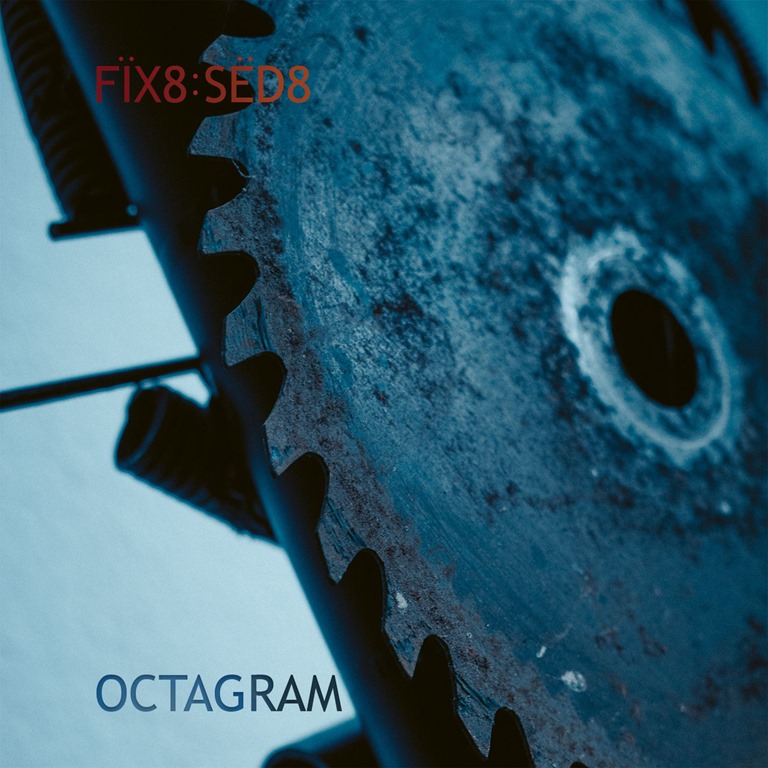
I’ve always favoured words over numbers – meaning, maths was never my strong point, and my qualifications strongly favour the arts. But it doesn’t take a maths genius to deduce that there are some serious numerical gymnastics taking place when conjuring the equation for this release. That Octagram extends the love of the number 8 which is clear from the band’s name to a concept, whereby the album features 8 songs with a playing-time of 8 minutes is logical, but when they try to spin it that ‘when the 8 just turns by a little in the context of the German electro industrial project’s sixth album, it becomes the symbol for infinity’, I’m lost. How does infinity fit in, and how does it all sit with being their sixth album, something which really screws up the whole thematic.

The tracks aren’t all exactly eight minutes in duration, but in the eight-minute span, ranging from 8:11 to 8:58, so it doesn’t feel as if the limitations / constraints of the project are so rigid as to inhibit the creative freedom necessary to explore and interrogate the themes flexibly.

We’ve already aired single cuts ‘New Eden’ and ‘Oathbreaker’ here at Aural Aggravation, and it’s fair to say they’re representative of this expansive, ambitious effort. It’s electronic industrial, with expansive, ambient trance elements woven in, as well as sampled snippets of dialogue. It’s perhaps worth noting that the vocal samples consist mainly of recitations quoting the last words of persons that were about to receive the death sentence. It’s all there on the sweeping, cinematic, dark electronic dance opener, ‘The Unborn’. In terms of texture and production, it’s absolutely meticulous, but a bit predictable and of a form. Three minutes or so in, the tone and tempo changes, the atmosphere darkens and the beats get harder, and the gritty, distorted vocals finally arrive and while it’s still quintessential technoindustrial / dark electro, the switch makes the song work in terms of structure and dynamics. And this seems to the strength to which FÏX8:SËD8 play to on Octagram, blending the trancey ambient dance elements with the driving hard-edged aspects of the genre.

Skinny Puppy are an obvious touchstone, to which they themselves draw attention, they seem to have assimilated the entirety of the Wax Trax! catalogue, while pulling from all aspects of cybergoth, and even Tubular Bells to forge a hypnotic hybrid of techno, electronica, dance, and industrial, taking a number of cues from Ministry’s Twitch. It’s true that I often return to the same sources: Wax Trax!, KMFDM, Skinny Puppy, 80s Ministry… but I feel I should stress that this isn’t entirely a reflection of my limited sphere of reference, but the two inches of ivory on which so much of the electronic industrial scene carves its tales of angst. The use of samples does feel rather cliché, the way the beats build behind fuzzy synths which ebb and slow, the minor-key one-finger synth riffs… And that’s fine: you know what you’re going to get. But at least with Octagram, FÏX8:SËD8 push that envelope a bit.

If ‘New Eden’ represents the more accessible side of all this, ‘Blisters’ goes in hard. ‘Tyrants’, too, brings a heavy Industrial throb with a dominant percussion, led by a powerful bin-lid smash of a snare sound. With the distorted vocals low in the mix, it’s tense, it’s intense, it’s claustrophobic. Taking its title from one of my favourite phrases from Milton, ‘Darkness Visible’ brings an interlude of cinematic serenity, at least initially, before locking into another dark pulsing groove. The darkness has rarely been more visible.

‘An Unquiet Mind’ makes for a slow-simmering, brooding finale, cinematic, atmospheric, expansive, as synth layers and beats build, rising from a montage of samples to stretch out an almost post-apocalyptic landscape. It feels like the end… and it is.

The best electronic industrial has an intensely inward focus, and makes you feel tense, restricted, somehow, and as much as it draws on obvious influences, with its taut, claustrophobic feel and dense production, Octagram sits – shuffling, twitching, crackling with anxiety – with the best electronic industrial.

AA

a1712199305_10

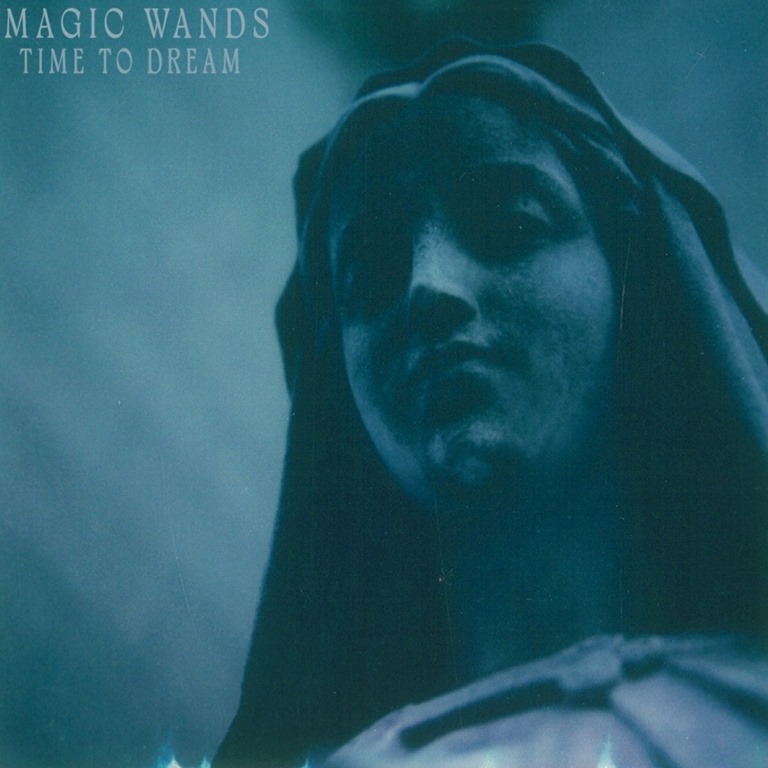
US dark/dream-pop duo Magic Wands have released a new digital double single today that couples the brand new song ‘Time To Dream’ with a remix by Metropolis Records labelmates Lost Signal of their ‘Armour’ single issued in October 2024. Video clips of the original version of ‘Armour’ and the remix have also been made available and can be seen here (original)….

…and here (remix):

“‘Time To Dream’ is about entering a dreamlike state where the boundaries between reality and imagination dissolve,” the duo explain. “It was inspired by magic and a sense of stepping through the looking glass.”
‘Time To Dream’ is included on a new Magic Wands album entitled ‘Cascades’, which is out on 24th October via Metropolis Records. It also includes the original single version of ‘Armour’, as well as the previously issued ‘Hide’, ‘Moonshadow’ and ‘Across The Water’ . It will be promoted with an appearance at the Substance festival HERE in Los Angeles on 7th November, with further shows to be arranged.

AA

Magic Wands is a dark-pop duo originally formed in Nashville by guitarists and vocalists Dexy and Chris Valentine. Now based in Los Angeles, they are known for their shimmering and dreamy sound, which incorporates elements of shoegaze, dream pop, post-punk and goth. They utilise heavily textured guitars, synth drones and ethereal vocals to conjure an otherworldly atmosphere in their songs.

Dedicated to creating music that is both imaginative and emotionally engaging, Magic Wands found success soon after forming in 2008, gaining a loyal fanbase that has grown ever since. They have issued five studio albums to date, the most recent of which is ‘Switch’ (2023). Its songs were also remixed by guest artists and released as ‘Switched’ later that year.

AA

c5070ae4c1efb042ea766b492244ba286a0b5ea8

Brooklyn alt rockers CLONE present ‘Care To Try?’, the title track from their Care To Try EP, a blazing three-track offering set for release on October 3 via Portland label Little Cloud Records. The band recently shared the adrenaline-inducing lead single ‘Galvanized’.

Written over the past year with Clone’s original lineup of LG Galleon, Gregg Giufree (Pilot to Gunner), Max Idas and Dominick Turi, this EP was produced by LG Galleon and Bisi at his famed BC Studio (built together with Brian Eno), and mastered by Fred Kevorkian (The White Stripes, Sonic Youth, Juliana Hatfield, Regina Spektor, Lloyd Cole).

"Well ‘Care to Try?’ is a retribution song. A song that cries out for the disenfranchised and undersung people in the world whose voices are never heard above the drowning of the right wing nationalist leaders in this world,” says LG Galleon.  “The spoken word bridge signals out to this issue with the line "with all charisma there is scorn, with every swoon another’s heart will stammer slowly in submission. To Glimpse what could have been through the eyes of another.”

AA

a1058073376_10

Constellation – 3rd October 2025

Christopher Nosnibor

The third album by The Dwarfs Of East Agouza (Maurice Louca (Lehkfa), Alan Bishop (Sun City Girls, Sublime Frequencies), and Sam Shalabi (Land Of Kush) promises ‘a focussed set of rhythmic psych-trance free/improv’.

As their moniker and the album’s title suggests, they demonstrate a collective interest in urban myths, the strange, the embroidered and embellished tale, perhaps spun with a twist of esoteric mysticism, but at the same time, aren’t entirely serious about it all. That is by no means to imply they’re not serious about the music they make, even when the pieces have titles like ‘Goldfish Molasses’, ‘Saber Tooth Millipede’, and ‘Swollen Thankles’. Because it is possible to be intense and serious and at the same time retain a capacity for humour, a sense of the absurd.

Sasquatch Landslide is an album that’s knowingly ‘out there’, but at the same time, it’s clearly the work of a collective who are completely immersed in the world they’re creating through a conglomeration of sounds which border on the transcendental. Elongated, quavering drones and an array of percussion merge in a haze to forge loose, yet curiously intense grooves. The aforementioned ‘Sabre Tooth Millipede’ is a full-on wig-out jazz frenzy played with the psychedelic loopiness of Gong as their most far-out, and at the same time, amidst the twanging and clattering, there’s something of the spirit of The Master Musicians of Joujouka about it. For an added addling bonus, there are tempo changes galore, and some parts where there are multiple tempos crossing one another simultaneously as the players seemingly detach from this physical realm into different plains of consciousness, separate from one another yet still connected by some kind of telepathy. Because however weird and disjointed it gets, somehow it works.

‘Double Mothers’ goes spaced-out, haunting, and atmospheric. On the one hand, it’s one of the most overtly jazz pieces on the album, but the wandering, reverb-soaked saxophone weaves its way through a nagging twang of a distinctly Eastern influence, while a pulsing heartbeat rhythm creates an underlying tension.

Single cut ‘Titular’ is busy and adds an easy listening, lunge-like organ trill which is completely at odds with the hectic hand drums and frenzied fretwork. They really cut loose on the ten-minute ‘A Body to Match’, stretching things out in all directions – tempo, texture, detail, serving up a pan-cultural smorgasbord of noodlesome improvisation. There, they slowly pick apart the component elements, a slow-motion explosion or deconstruction of the composition, each part slowly moving further from the rest. ‘Goldfish Molasses’ slowly melts, a plodding beat reminiscent of ‘What A Day’ by Throbbing Gristle provides the spine for this slow, pulsating Industrial thudder, where a woozy bassline undulates in the background, and incidental noises and chattering yelps fill the space behind some indecipherable vocal.

Sasquatch Landslide is big on warped, looping drones and layers of intricacy upon layers of intricacy, which weave a shimmering sonic cloth that ripples and shifts before the eyes – and ears. Time itself bends and stretches, taking on an almost elastic quality as the threads unravel to reveal new layers and dimensions. One can feel the instrumentation expanding outwards into infinity – and infinite reverb – in the same way that the universe is continually expanding, only in an accelerated timeframe. For all of its abstraction, Sasquatch Landslide provokes quite visual interpretations of the sounds emanating from the speakers. I expect to have very strange dreams tonight after this.

AA

08 - The Dwarfs Of East Agouza cover art

The second single from The Lunar Effect’s upcoming third album Fortune’s Always Hiding was released yesterday. “’Settle Down’ is one of the songs we’re most proud of on the new record. Stripped-back and full of raw emotion, it carries a grunge edge that nods to the bands we grew up admiring, while still pushing our sound forward. It stands apart from some of our previous work, but for us, evolving is essential”, the band comments on the new single.

Watch the video for Settle Down here:

AA

The Lunar Effect were formed in London in 2017 by brothers Jon and Dan Jefford and later completed by vocalist Josh Neuwford, bassist Brett Halsey, and eventually second guitarist Mark Fuller. Since their arrival on the scene, they’ve carved out a reputation for crafting music that feels both familiar and original – a modern echo of grunge-soaked ’70s rock, fuzzed-out blues, and melancholic British soul.

Following the underground success of 2019’s Calm Before the Calm, the band signed with Svart Records and released the critically praised sophomore album Sounds of Green & Blue in 2024. After touring the album across the UK and Europe, they set their sights on album three, their most ambitious work to date. Fortune’s Always Hiding lands in October 2025; a brooding journey through loss, memory, and the weight of time. It marks a new era for the band – deeper, stranger, and more soul-baring than ever.

They don’t imitate the past, they channel its spirit through a warped, modern lens. From thunderous grooves and fuzz-soaked guitar riffs to intimate, fractured vocals, The Lunar Effect channel the unease of the modern world with a sound that refuses to sit still.

2026 promises more touring, more evolution, and no interest in standing still. For a band that’s never fit neatly into any box, The Lunar Effect continue building their own universe — one hypnotic, heavy track at a time.

Fortune’s Always Hiding is available on Svart exclusive Cream/Red/Orange marble vinyl, limited Transparent Green vinyl, Black vinyl, CD, and digital platforms on October 24th, 2025.

AA

GfXhClRg

Cruel Nature Records – 12th September 2025

Christopher Nosnibor

Postmodernism, emerging primarily as a product of post-war America was defined by hybridity, the demolition of parameters and distinctions between different cultures, genres, and was, in many respects, tied to the accelerating pace of technological development, in particular the globalisation of communications and beyond. But postmodernism also not only recognised, but celebrated, the fact that originality has finite scope, and that anything ‘new’ will by necessity involve the reconfiguration of that which has gone before. Shakespeare had all the ground to break in terms of the advent of modern literature, and one might say the same of Elvis and The Beatles with the advent of rock ‘n’ roll and pop respectively. The reason the 80s were such a watershed was because technology revolutionised the potentials for music-making, and while this saw a huge refraction in terms of creative directions, from industrial to electropop, one could reasonably argue that the next leap in music after 1985 came with house and techno.

Post-millennium, it feels like there is no dominant culture, no defining movement, underground or overground: the mainstream is dominated by a handful of proficient but in many ways unremarkable pop acts, and notably, it’s largely solo artists rather than bands, and while there are bands who pack out stadiums, they tend to be of the heritage variety. At the other end of the spectrum, the underground is fragmented to the point of particles. There are some pros about this, in that there is most certainly something for everyone, but the major con is that unlike, say, in the mid- to late-noughties, when post-rock was all the rage, there’s no sense of zeitgeist or unity, and right now, that’s something we could really do with.

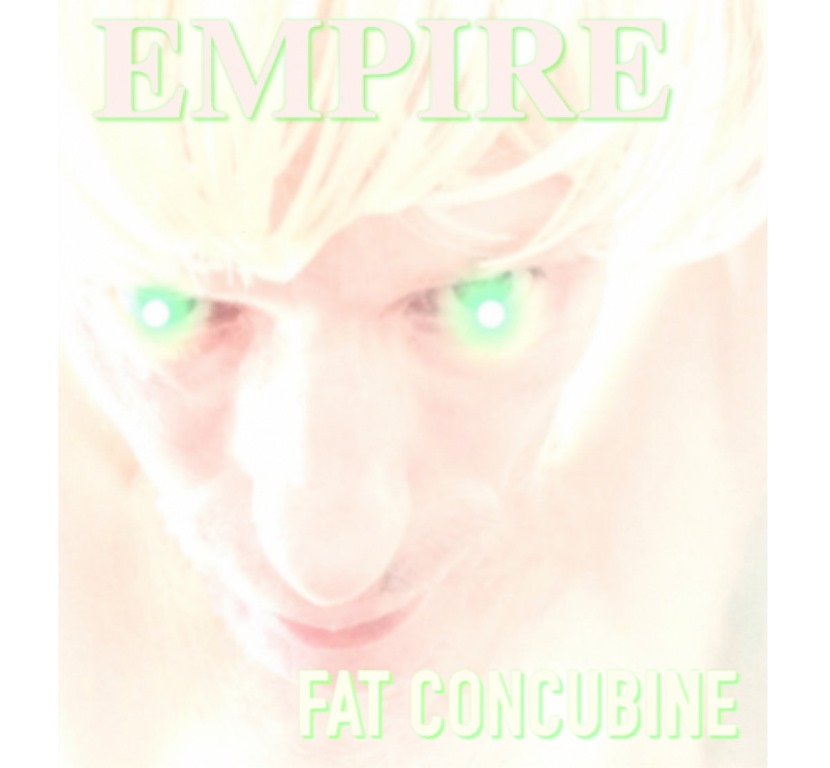
Fat Concubine are most certainly not representative of any kind of zeitgeist movement. With a name that’s not entirely PC, the London acts describe themselves as purveyors of ‘unhinged dance music’, and Empire is their debut EP, following a brace of singles. The second of those singles, ‘for Whom the Fools toll’ (with its irregular capitalisation, which is a bit jarring), is featured here, along with four previously unreleased tracks. This is a positive in my view: so many bands release four, five, or six tracks as singles, and then put them together as an EP release, which feels somewhat redundant, apart from when there’s a physical release.

And so it is, in the spirit of wild hybridisation, that they’re not kidding when they say their thing is ‘unhinged dance music’, or as quoted elsewhere, ‘unhinged no wave ravers’. ‘Feeding off the dogs’ pounds in melding angular post-punk in the vein of Alien Sex Fiend with thumping hardcore techno beats, and it’s not pretty – although it is pretty intense. The snare drum in their first thirty seconds of ‘for Whom the Fools toll’ takes the top of your head off, and the rest of the ‘tune’… well, tune is a stretch. It’s brash, sneering punk, but with hyperactive drum machines tripping over one another and a stack of synthesized horns blaring Eastern-influenced motifs.

There are hints of late 80s Ministry about ‘When we kick Their front door’, another synth horn-led tune that begins as a flap and a flutter before a kick drum that’s hard enough to smash your ribs thuds in and pumps away with relentless force. If the notes didn’t mention that it was a perversion of ‘These Boots We’re Made for Walking’, I’d have probably never guessed. As the song evolves, layers and details emerge, and the vibe is very much reverby post-punk, but with an industrial slant, and a hint of Chris and Cosey and a dash of The Prodigy. If this sounds like a somewhat confused, clutching-at-straws attempt to summarise a wild hotch-potch of stuff, to an extent, it is. But equally, it’s not so much a matter of straw-clutching as summing up a head-spinning sonic assault.

‘tiny pills’ is a brief and brutal blast of beat-driven abrasion, with a bowel-shaking bass and deranged euphoric vocals which pave the way for a finale that calls to mind, tangentially, at least, Cabaret Voltaire’s ‘Nag Nag Nag’.

The version of ‘O so peaceful’ was recorded live, and builds to an abstract chanting drone work. It offers a change of angle, but is no less attacking, its percussion-heavy distorted, shouting racket reminiscent of Test Department and even Throbbing Gristle, particularly in the last minute or so, and you can feel the volume of the performance, too. This is some brutal shit.

Empire is pretty nasty, regardless of which angle you approach it from. It’s clearly meant to be, too. Harsh, heavy, abrasive, messed-up… these are the selling points for this release. And maybe having your head mashed isn’t such a bad thing if you’re wanting to break out of your comfort zone and really feel alive.

AA

a1581875889_10