Posts Tagged ‘synth’

Bin Liner records – 5th July 2024

Christopher Nosnibor

The band hailed by Louder Than War as ‘probably the Last Great Gothic Rock Band’ – Portsmouth based post-punk/goth band Torpedoes – return with their fourth album, Heaven’s Light Our Guide, six years after their previous outing, Black Museum (2018). To compensate for the time away, they’ve made it a twenty-track beast of a double-album, and when coupled with something of a transition in their sound towards something rather more keyboard-driven, it’s almost certainly their most ambitious release to date.

The album’s themes are pretty bleak, but no-one’s here for a party goth album, right? The press release is worth quoting for context: ‘Principal songwriter Ray (Razor) Fagan (Ex Red Letter Day) gives his take on the world we must all inhabit whether we like it or not. Lyrically the album focuses on largely dark themes from the destruction of the planet & corruption to bereavement and historic tragedies. Including a song inspired by a mass suicide in the town of Demmin, north of Berlin in May 1945. Over a thousand of Dremmin’s inhabitants, mostly women and children elected to commit suicide rather than face the advancing Russian troops….’

Hopefully, this sets the context, rather than torpedoing the mood – pun intended, of course.

Heaven’s Light Our Guide is by no means a concept album, or a work which focuses specifically on any one tone or theme, which would be difficult to sustain and likely difficult to listen to over such a duration: instead, the album is in many ways a pick ‘n’ mix from the smorgasbord of goth, in the way that The Cure’s Kiss Me Kiss Me Kiss Me offers contrasting elements of light and dark. These contrasts do make for a work that feels like it pulls in different directions at times – not nearly as schizophrenic as Kiss Me, but certainly the product of a band on a voyage of discovery.

‘Somekindaheaven’ kicks things off with a quintessentially gothy bass groove, that foot-to-the-floor, four-four thudding bass, and while it’s draped in cold synths, the guitars rip in just shy of a couple of minutes into its expansive six. There are some nagging gothy guitar breaks, too, and it presents balance between introspective and anthemic.

‘End of the World Party’ is far from a knees-up, but it’s a dreamy, wistful Curesque slice of jangling, indie which definitely sits at the poppier end of the goth spectrum. It’s fitting, inasmuch as it was The Cure who really broadened the spectrum of what is generally recognised as ‘goth’ – a term I really do struggle with despite principally identifying as such myself. Then, as many of the songs on here are more 90s grunge than goth, as ‘Idiot’ evidences perfectly.

‘Blue Sky (In the Rain)’ sits somewhere between Dinosaur Jr and REM, and in its execution ends up sounding not unlike later Red Lorry Yellow Lorry. None of this is a criticism: it’s a solid tune, and Heaven’s Light Our Guide has plenty of them.

There is a strong leaning towards that mid-late 80s alternative sound as showcased by the likes of The Rose of Avalanche and IRS-era Salvation. The fact that the latter toured extensively with The Alarm does give some indication of the more commercial sound which had evolved by this time, and hints at the tone of Heaven’s Light Our Guide. In the main, this is a highly accessible set of songs. But then they chuck in some really hefty darker-hued cuts along the way: ‘Made of Stone’ comes on like The Mission in their early years, but heavier and more fiery, and it’s by no means the only stomper in this vein here. The grungy ‘Your Democracy’ certainly brings the riffs on one of the album’s most blatantly political songs, which goes a bit Metallica, too.

The title track is different again, a sweeping post-rock instrumental sweep that really mellows things down, and it’s clear that Torpedoes really want to demonstrate their range and musical skills here. Takings its title from a novel by Dostoyevsky, ‘Notes from the Underground’ is another gritty slice of sociopolitical critique, which contrasts with the altogether folkier acoustic-based ‘Fear of Human Design’.

Despite its length, Heaven’s Light Our Guide manages to hold the attention: it’s varied and interesting enough to do so, but not so diverse as to feel unfocussed or messy. Perhaps an even greater feat is that it doesn’t feel like there are any filler tracks or any which it would have been beneficial to cut.

AA

Copy of HLOG Front Cover text black star (1)

Cruel Nature – 24th May 2024

Christopher Nosnibor

It seems as if every album of the year has been released on this date, May 24th – and by every album of the year, I mean all of the releases have landed at the same time, but also that this album and the other ‘best album’ contenders have all landed simultaneously, too. It’s meant that I’ve been absolutely swamped, and struggling to listen to everything, let alone formulate thoughts and render them coherent – something I fear I struggle with at the best of times.

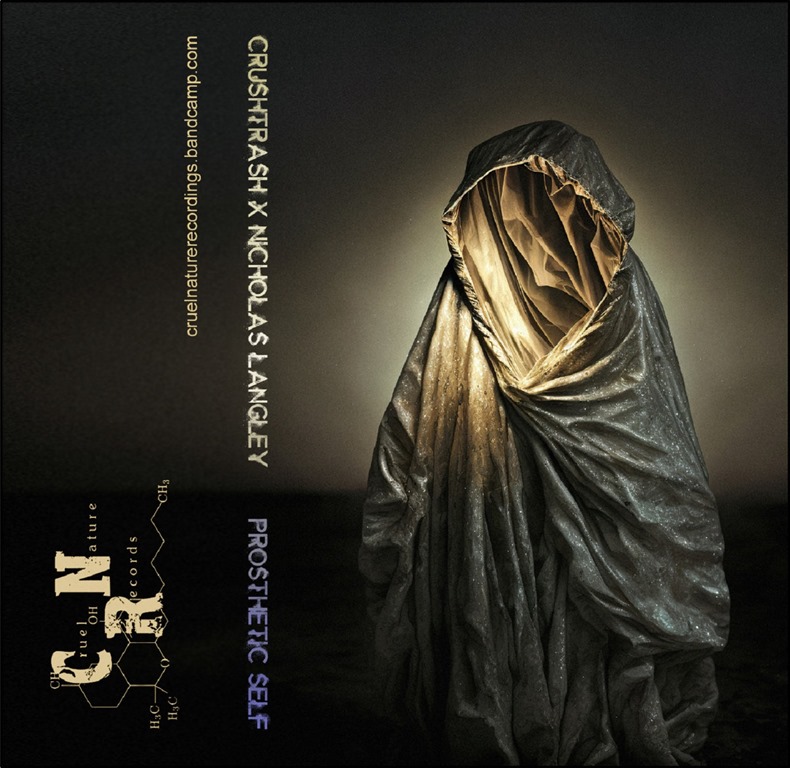
Surveying this release, I learned that ‘Prosthetic Self is a collaboration between CRUSHTRASH & NICHOLAS LANGLEY that seamlessly blends the energy of early ‘80s dark industrial synth pop with the mesmerising allure of ’90s electronica. Drawing inspiration from iconic acts like Coil, The Associates, Depeche Mode, Björk, and Portishead, this album is a sonic journey that transcends time and genre boundaries.’

It does feel as if every electronic act with a dark leaning wants to be Depeche Mode, and every electro-based Industrial act is essentially wanting to be Pretty Hate Machine – era Nine Inch Nails – who in turn sounded a fair bit like Depeche Mode if truth be told. That’s no real criticism, as much as an observation of the extent to which those two acts broke ground and created new templates in the 80s. However, the industrial elements of Prosthetic Self hark back to a time before Nine Inch Nails, and presents a more experimental form.

The tile, Prosthetic Self Connotes a sense of falseness, the fake exterior we apply to ourselves in order to deal with people and society. Workplaces – particularly offices – tell us to ‘be ourselves’ at work, while at the same time telling us we need to leave our problems and personal baggage at the door, but at the same time seem incapable of dealing with non-conformity. Well, come on then: what do you want: individuals or clones? Prosthetic Self is an exploratory work which presents a multitude of facets, and it’s a fascinating journey which leads one to the question as to what is real and what is construct, artifice. The cloak, on the cover, with its empty hood feels like a representation, not necessarily for this collaborative project, but the album’s themes, searching for what lies beneath the prosthetic self: is there, indeed, anything at all? Then again, how much here is style, and how much is substance?

There’s certainly a lot of well-studied style on display. ‘Bring Some Change’ is dark but also soulful, and their referencing The Associates hints at the almost operatic stylings of the vocals at times, and against some stark backings prone to some unexpected sonic ruptures and moments of heightened tension and drama, I’m also reminded of Scott Walker.

‘Claustrophobia’ is appropriately-titled. ‘In my dream, something’s wrong, caving in…’ Crushtrash croons with hints of Dave Gahan in his delivery against a slow-moving murky throb. But there’s a really attacking percussive loop that knocks on the top of your skull which makes it tense rather than soothing, and before long, panicked breathing gasps in the darkness, and you’re drawn into the nightmare.

Elsewhere, glitching, knocking beats shuffle and click, and the production really brings these to life in a way that makes you clench your jaw and tense your shoulders. ‘Selective Memory’ has something of a collage structure about the way the sounds are brought together and overlaid, with sampled snippets woven in alongside the bubbling vintage synth sounds.

In places, the kind of retro vibes which permeated 90s trip-hop seep into the shadowy atmospherics, and ‘Subtle Fetish’ comes on like Marc Almond in collaboration with Tricky, spinning lascivious wordplay along the way.

Prosthetic Self creates a lot of atmosphere with minimal arrangements, and they work because of the close attention to detail, the multiple layers of percussion which pulse and snake through spartan synths, more often than not with a simple, repetitive bass overlaid with subtle details, in a fashion which adeptly recreates the sound of the early 80s. In doing so, it recalls a time when so much was new, innovative. Coming at a time when there is so much sameness, and production and mixing has come to be all about the loudness, to hear a set of songs which really concentrate on dynamics and detail, it seems unexpectedly different.

AA

a1438080285_10

5th April 2024

Christopher Nosnibor

It’s been almost four years since I encountered Alaxander Stordiau, when I covered the single release by The Original Magnetic Light Parade, a collaboration between Stordiau and Edinburgh man, Harold Nono, on perennially oddball label Bearsuit Records.

With minimal info about that release – and not much more about this one, I’m mostly left to grapple with the music as it presents itself, with minimal content. This is good: and so is this EP.

A brief Internet delve uncovers that the material on this this EP was initially released a year ago, as part of an album-length work bearing the same title, slipped out on Soundcloud. Now, there are plenty of albums I think would have made decent EPs – or 7” singles – but there’s no reason to believe Stordiau has whittled this set down due to any issues with quality, and it does seem that it’s often easier to pitch an EP than an LP in our attention-deprived times. If I were to go all-out on a personal obsession, I’d make a greater deal of the fact that this four-track cut has aa running time of twenty-three minutes. There’s nothing to suggest Stordiau is a fan of William S. Burroughs or otherwise beholden to the ‘23 Mythos’, but the fact it does have a playing time of twenty-three minutes was of note to me, simply because. The twenty-threes just keep on coming.

And so to the music itself. ‘Fear Merges Easily’ is something of a teaser, an introduction, an atmosphere-builder, with wavering synth undulations creating a nice, even flow over a shuffling beat that sits off in the background. It’s got groove, but it’s subtle, and overall, it’s pretty mellow. It doesn’t ‘do’ much: one gets the impression it’s not supposed to, and nor is it necessary for it to do more. It’s vaguely background, it has some classic eighties electro and krautrock elements to it, and enough texture to keep it engaging.

‘Hearing the House Breathing’, stretching out to almost eleven minutes is the centrepiece and defining track here, and what’s interesting is how it’s centred around a core motif and built upon a solid spine of subdued beats, pulsating bass, and nagging synth shapes, but shifts and moves through a succession of segments. It’s dancey, but at the same time, it isn’t. and there are gasping, whispering vocals wheezing beneath the waves of undulating analogue ripples. Around the mid-point, it breaks into a more energetic mood, the bubbling synths bouncing over a lively robotic electro beat dominated by the whip-cracking snap of a vintage drum machine snare sound. Everything gets quite busy, and a shade hazy around this point, there’s a lot going on, and not all of it synchronous. I can’t be alone in finding this kind of busyness induces not a trance-like state, but one of feeling dizzy and vaguely overwhelmed, an experience not dissimilar to sitting in a busy pub or coffee shop and being unable to focus on reading or the conversation in front of my face for the distraction of all the babbling noise filling the air all around.

Things take a turn for the eerie, the proggy, the spacey, on the trilling title track, where a creeping dark chord sequence sits beneath altogether more vibrant tones, before giving way to a sloshing ebb and flow overlayed with some barbed organ, and there are moments here that remind me of Gift by The Sisterhood, Andrew Eldritch’s project between phases of The Sisters of Mercy: specifically, the notation the chilly closer ‘Rain From Heaven’. Closing off, ‘The Sting of the Lie’ is a relentless, cyclical composition over which blasts of wavering, quavering keyboards wander and spin.

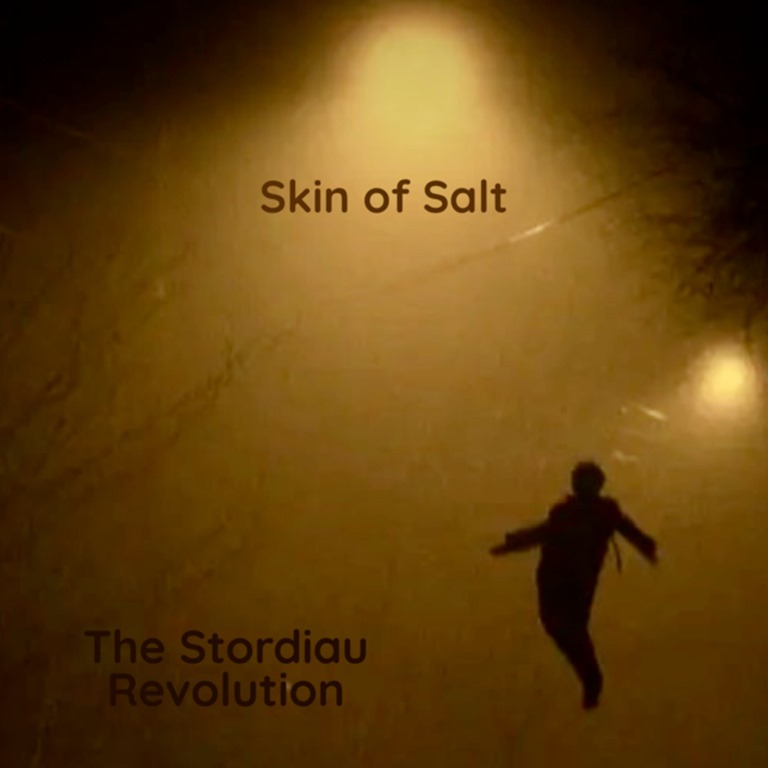
Skin Of Salt brings together a range of elements, and not always comfortably. But why should music be comfortable, why should it always be easy, accessible? What’s wrong with discord and dissonance, lumpiness, discomfort? Why, nothing, is the answer. Life is brimming with discord and dissonance, lumpiness, discomfort. And without these elements, this would just be a bland hybrid of dance and ambient. Thankfully, it is so much more. Skin Of Salt isn’t mere mental chewing gum, but something which requires some proper chewing and a slow digestion.

AA

artwork-album_Skin-Of-Salt

Negative Gain Productions – 9th February 2024

Christopher Nosnibor

Pitched as ‘a battle cry against the facade of perfection that suffocates an authentic connection’ and a song that’s ‘about the dark, often unseen journey of seeking forgiveness and finding solace in the unexpected kindness of strangers’ ‘Necessity Meal’ is perhaps the ultimate hybrid of everything that’s gothy and on the darker side of electro/synth pop.

I’d wager it’s pretty much impossible to write about ‘Necessity Meal’ without recourse to Depeche Mode. That isn’t to say it’s just some rip-off, so much as an indication of just how deep and broad their influence is felt at the darker end of the electro spectrum.

‘Necessity Meal’ is built around a rolling drum beat with a harsh snare, and some brittle, trilling synths pave an intro that gives way to some guitars that are by turns cutty and deliver strains of feedback. The verses are a bit rappy / spoken and I can’t help but think of it being like a gothy take on grebo and it sort of works but sort of doesn’t – in the way that The Sugarcubes worked but didn’t: you know, you either dug – or more likely tolerated – the Einar bits, or outright hated them as rubbish intrusions into some great songs, but ultimately, it worked because the Björk bits and the overall thing was more than worth the clash. This feels confused and confusing, a bit messy. But then, as front man Mychael says of the song, “In the end of it all, life can be rather messy, and I can sing if I want to, at my own pity-party!” In the mix there’s a bunch of noise that casts a nod to Nine Inch Nail, and…

…And so it is that from all of this sonic jostling emerges a magnificent refrain: the vocals suddenly come on like David Bowie, and with a heavy sarcasm, deliver the line, ‘Thank you, thank you for the guilt’. It’s unexpectedly, and almost inexplicably, affecting, but somehow, in this moment, the whole song, and everything around it makes some sort of sense.

AA

a0341299273_10

Spleen+ (Alfa Matrix) – 1st December 2023

Christopher Nosnibor

Christmas has come early this year, with an absolute deluge of releases landing on1st December, many from acts I like or am otherwise keen to hear. Hanging Freud are in the former bracket, and Worship marks their seventh album release, following 2021’s Persona Normal.

The duo have established themselves as purveyors of premium-quality dark, stark, gothy electro, and with Worship, they solidify their position with aplomb. Persona Normal was recorded at a leisurely pace between 2018 and-2020, and, like so many other releases in the last couple of years, Worship was written and recorded during the pandemic and under lockdown conditions, and the accompanying notes lay out both the contents and context in further detail:

‘The 10 songs featured on this album literally come from a place of contradiction hanging somewhere between courageous vulnerability and fearful resilience, and deal with themes such as collective distress and loss, finding beauty in tragedy or yet questioning about what makes us human in the symbolic contrasts of life and death…. It’s no surprise to hear that this “less is more” introspective ode to melancholia was written in particular claustrophobic circumstances during the pandemic lockdown. “Because of what was going on, we were essentially stuck in temporary accommodation in Scotland, away from our studio and forced into a period unexperienced before. The songs that came out therefore come from a different place. Everything was done within a laptop and is proudly 100% digital. It was recorded and mixed while literally sitting on the side of a bed in a mouse infested apartment…” explains Paula Borges.’

If it sounds like a grim and oppressive set of circumstances for creating art of any kind, then the singles which prefaced the album have set the tone and expectation, while affirming the claustrophobic intensity of the music which emerged from these challenging conditions.

The result is a hybrid of Siouxsie and 17 Seconds era Cure with a hefty dose of New Order’s Movement and dash of Editors circa On This Light and On This Evening. Reference points may be lazy journalism, but they serve a purpose. While this album stands alone like an icy obelisk, singular and a monument to the darkest introversions, some musical context is probably useful for discursive purposes.

The stark ‘Falling Tooth’ is as bleak and haunting as it gets: Paula’s vocals are breathy but theatrical, pitched over a strolling squelchy synth bass and a vintage-synth sound that wanders around over just a few notes, while ‘I pray we keep the world’ is low, slow, sparse, and lugubrious, as well as emotionally taut, and dominated by a truly thunderous drum sound. ‘This Day’ is particularly drum-heavy, withy only gloomy, droning synths sweeping through a heavy mist of atmosphere.

There are some who bemoan the use of drum machines, and who complain that they lack the vibe of a live drummer. Hell, there are contributors to forums and groups devoted to The Sisters of Mercy who question why they don’t get a real drummer, some forty-two years on from their inception. These people are missing the point. Drum machines can do things that human drummers can’t, and one of those is how drum machines can be louder, heavier, more monotonous than a live drummer. And in context for certain music, this can be a real asset, accentuating the sensation of dehumanised detachment of synth music that sits at the colder end of the spectrum. And Worship is one of those albums which will leave you with chapped lips.

It’s against brittle snare cracks and sweeping synths that Paula claws her way through complex emotions, and where the lyrics aren’t immediately decipherable, the haunting vocal delivery is heavy with implicit meaning. It resonates beyond words alone. Everything is paired back to the barest minimum, exposing the darkest recesses of the psyche.

Standing alone as a single, ‘A hand to gold the gun’ was bleak and heavy. Sitting in the middle of the album, this sensation is amplified, accentuated, and the gracefulness of the vocals as they drape around the broad washes of sound which surge and well is that of a dying swan.

‘Her Joy’ is perhaps the least joyful thing you’re likely to hear in a while, and if ‘Beyond’ feels somewhat uplifting, it’s only because it’s a flickering candle flame in an endlessly dark tunnel, as devoid of air as light. The mood is heavy, and presses on the chest, slowly pressing the air out and crushing the spirit, and as the album progresses, the effect is cumulative. By the time we arrive at the piano-led ‘Don’t save yourself for him’, I feel my shoulders sagging and my back hunched forward from the endless weight of this.

Worship is a masterful exercise in poise and restraint, a work which conveys the purest essence of isolation, of desolation.

AA

HFreud

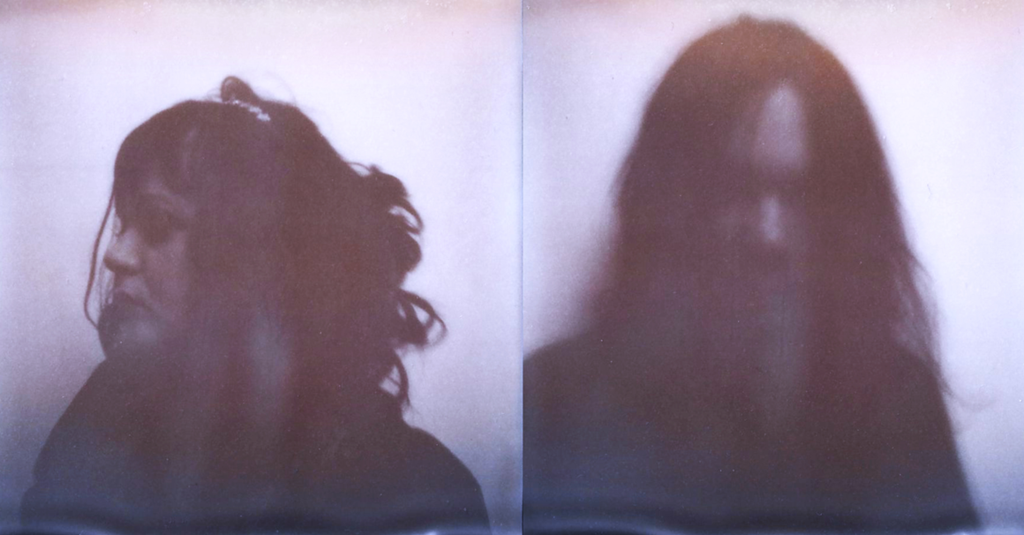
Operating in the same dark and subversive corners where Fever Ray, Jenny Hval or Bjork may find solace, ‘Flesh it Out’ is a track that arrives shrouded in a mystique all its own, with a strident confidence to defy conventions.

Written while gazing into the flickering flames of an open fire in her current base of Nashville, Proteins of Magic found herself caught in the daze of a flashback in which she had seen a young couple openly having sex during the day on the beach in Aotearoa / New Zealand. As Kelly Steven AKA Proteins of Magic remembers:

“The hope and the idealism, the youthful sheen on their skin, being unaware of what life lies ahead for them. That is what triggered the start of the lyrical process. I think the song lays out an emotionally treacherous life for them, a day in the life spanning 10 years and 2min52 seconds.”

Surrounding surrealistic lyrics with hex-like incantations, tribal rhythms, sinister synthesiser trills, and haunting woodwind sections, PoM creates an unsettling ambience and intimidating presence to send shivers. “If I give you a smile will you resuscitate me?” she coos through gritted teeth. Building to a hypnotic climax, ‘Flesh It Out’ couples brooding instrumentals with a litany of foreboding vocal textures, each representing a disjointed voice of differing lost souls. Foreshadowing a bleak future, these spectres emerge to erode the wide eyed innocence of youth and replace it with existential questions and hollow false promises.

As its title may suggest, ‘Flesh It Out’ was born from within a jam to evoke a spirit that is discernibly raw and immediate, before being layered and moulded repeatedly to find its current recorded form. The finished song spawns, regenerates and severs over its three-minute course, summoning a sense of self determination out of the chaos.

Directed by Ranger Garrett, ‘Flesh It Out’ arrives with an art-house style official video intended to capture a ‘day in the life’ in Nashville. Showing another side of the fluorescent glitz and glamour of the music city, it was shot around various alternative landmarks using a vintage Sony PMW-F3 and Sony Handycam DCR-SX45, including footage of the Dragon Park that was featured in Harmony Korine’s Gummo.

“I liked the idea of it being lo-fi and raw, and I wanted the filming to be like the recording process,” says Kelly of the video. “Less formulated. The cameras were actually literally held together with tape and things were falling apart. I wanted it to be a ‘day in the life’ in Nashville, in a manic, irregular, fractured way.”

Watch the video here:

AA

POM

Credit: Chris Cuffaro

Cruel Nature Records – 28th July 2023

Christopher Nosnibor

The Sargasso Sea is a unique place on earth: situated within the Atlantic ocean, it is the only sea without a land boundary – a sea within an ocean, in other words – its borders defined by sea currents. Its name is derived from to the vast ‘sea’ of free-floating seaweed called Sargassum which occupies the space, and it’s an ecosystem like no other, the aquatic equivalent of the Amazon. And yet its existence appears to be considerably less well-known, despite the success of Jean Rhys’ 1966 novel, Wide Sargasso Sea, which has been adapted for film, stage, TV, and radio and has been lauded as a pivotal work of postcolonial feminism. And it’s this book which I think of when I hear the word ‘sargasso’ – although clearly, it has absolutely no bearing on this album. What even is a sargasso sky?

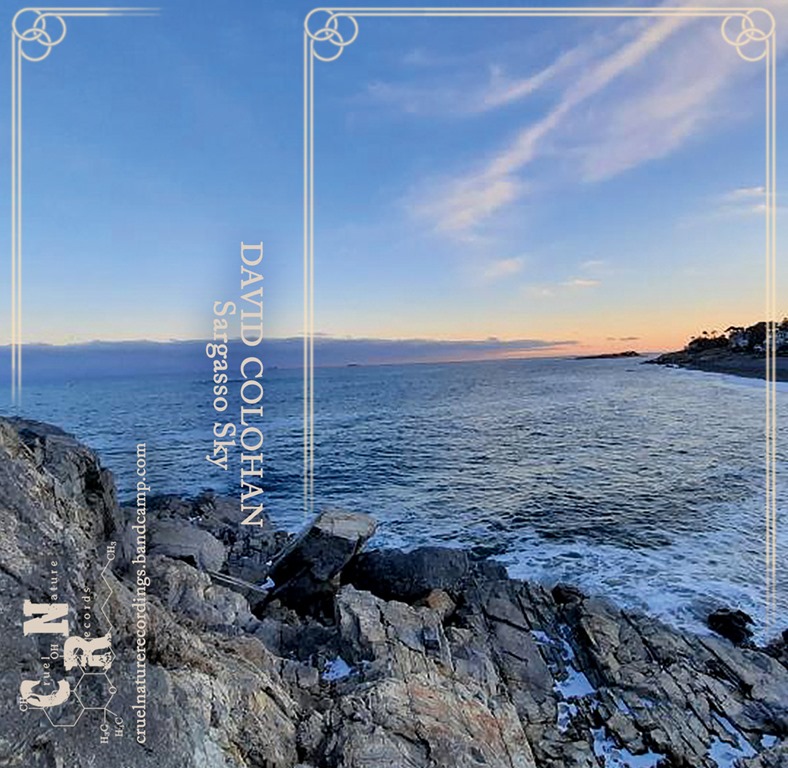
The liner notes paint the scene, where ‘A sargasso sky shimmers above a twilit American shoreline, slipping in & out of time. Via a way slowed down take on jazz fusion, limpid pools catch its reflection, ebbing & flowing with the soon to come stars… The cover images taken at Marblehead, Massachusetts depict something of the aura of an area that H.P. Lovecraft considered life-changing. Step into the sea & sky….’

There are many layers, then, to this release, which extend far beyond the surface of the music itself. But when it comes to the music, Colohan presents ten pieces, all comparatively concise (only four extend beyond the five-minute mark, and none reach beyond eight), and the form is ambient yet structured, with rippling washes of synth gliding over the mellow mists of sound which float invisibly through the air. Despite its title casting its eye above the horizon to the sky, parts of this album is given to a preoccupation with the water, still, as exemplified by titles such as ‘Sacred Teeming Waters’ and ‘Longshore Drift’.

Whereas much ambient music is formless, abstract, the instrumentation vague, on Sargasso Sky, David Colohan offers musical works with structure, and with the implementation of identifiable instruments.

‘Longshore Drift’ is led by sparse piano, backed by a sliding, bulbous synth bass that’s extremely eighties in sound, and elsewhere on the album, long resonant voices dominate, from flute to organ. These are clearly synth voices, sounds conjured digitally in response to creative needs but also evolving technology facilitating new music. There are some bold drones which surge and swash on ‘Anoint’, and ‘Summers Old as Stars’ brings late 70s and early 80s synth stylings to the fore, with hints of Tubular Bells and Vangelis, and the myriad music of this era which remained anonymous. But for all that, Sargasso Sky is subtle and it’s still not overtly electro for the most part, and it’s not of the prog persuasion either. But what is it? Certainly, there are parts which do very much pursue progressive forms, and Sargasso Sky is very much an exploratory work: spacious, undefined by limits of composition or instrumentation.

AA

a2197923751_10

The Helen Scarsdale Agency – 4th August 2023

Christopher Nosnibor

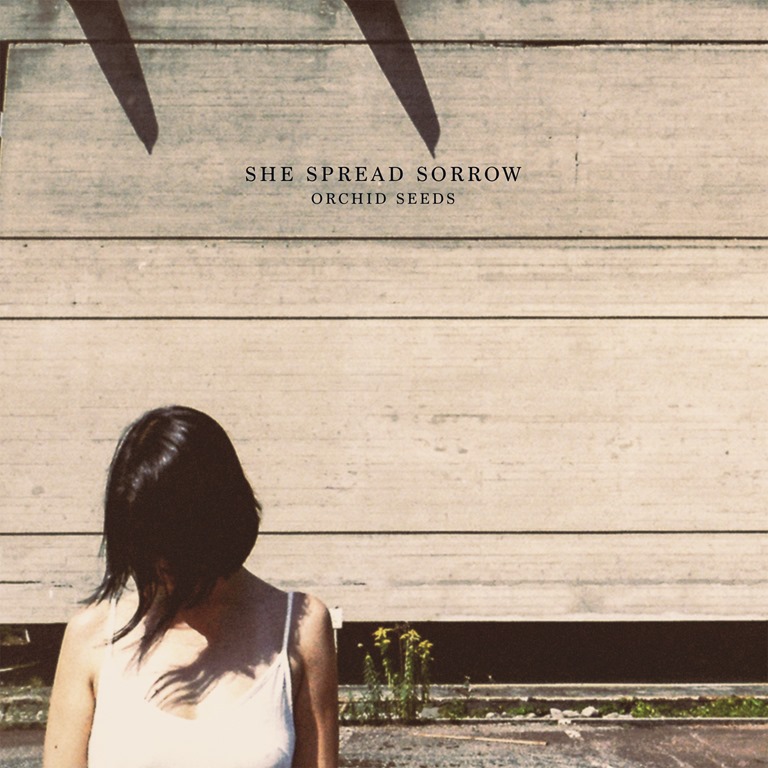
She Spread Sorrow is the musical vehicle for Italian artist Alice Kundalini, and over the course of a number of releases, the majority via Coldspring, she has explored a minimal industrial style, stark yet dense, and characterised by an eerie, whispered vocal delivery.

As the accompanying notes explain, ‘Orchid Seeds was originally published as part of the instantly out of print On Corrosion – a 10 cassette anthology from 2019 that was housed in a handcrafted wooden box and featuring full albums from Kleistwahr, Neutral, Pinkcourtesyphone, Alice Kemp, She Spread Sorrow, G*Park, Relay For Death, Francisco Meirino, Fossil Aerosol Mining Project, and Himukalt. The collection also stood as the 50th release for The Helen Scarsdale Agency, an imprint founded in 2003 and dedicated to post-industrial research, recombinant noise, surrealist demolition, existential vacancy and then some.’

Four years on, it finally gets a standalone release, both digitally and on vinyl.

Kundalini states that the album, “is about 5 different women of my family. Each track is about one of them with their difficult story and strengths. My family is totally destroyed now, no relation between anyone, but in the past there was a strong tradition of women with

interesting personalities.”

And even by the standards of She Spread Sorrow, Orchid Seeds is stark and eerie, dark and unsettling. The reverby, robotic vocals that whisper and moan over the sparse backing of ‘The Solitude in the Giant House’ may set the tone, and with a vintage drum machine thudding and clopping in the background, it has that late 70s vibe – somewhere between Young Marble Giants and cabaret Voltaire.

Things twist into darker territory with ‘Star’ as strains of feedback and grating, serrated synth ripples fizz and crackle beneath her gasping monotone vocal. This is much more reminiscent of Throbbing Gristle. It makes for a tense eight minutes: so often, when acts capable of producing great and heartstopping noise show such restraint as to keep it minimal yet audibly straining, the effect is amplified. This is one such composition; you find yourself moving to the edge of your seat, limbs tensing, waiting for something that never comes.

While the songs are about different people, ‘She Didn’t Care’ and ‘Queen of Guilt’ show opposite aspects of a theme, and perhaps provide some insight into the dynamic of the familial relationships and why they collapsed. The former is built around a stammering beat and hovering, hesitant synthesized organ hum; the sound and overall performance is primitive, immediate, while in contrast, the latter is dominated by a slow, heavy beat defined by a thunderous, reverberating snare, over which a simple synth wanders as echoed vocals drift, fuzzed and breathy and way off in the distance. The effect is some king of industrial dub, and it’s unsettling but not altogether unpleasant, perhaps because it contains stripped-back elements of common pop and dub tropes and so its oddness is countered by a certain stylistic familiarity.

The fifth and final track, ‘The Fortune of Others’, builds through serrated oscillations to grind away for what feels like a slow-throbbing eternity of electronic claustrophobia. It’s important to bear in mind the context: this is an album that’s equal parts narrative and concept, and the execution really pushes the concept to the fore, building the atmospheres of moments missed.

Without more detail – and let’s face it, more detail would likely be unsettling, even potentially traumatic – it’s impossible to determine the full extent of the meaning and also the pain behind the title. But for better or worse, the prospect of taking a firm grasp on the album seems to grow ever further away as it progresses. There is something magnificently and also frustratingly elusive about Orchid Seeds, and however deep you delve, however long you seek it, one suspects it will remain eternally beyond grasp.

AA

HMS050J_front

For this follow-up effort to their 2021 debut album Blacken the Skies, the Terminal formula of industrial glam has been updated with ‘more industrial, more glam.’ Mainman Thomas Mark Anthony also makes a strident case for being his genre’s best wordsmith, weaving grand themes of power, zealotry and corruption via complex rhymes and anthemic choruses. Picking up where its predecessor left off in its excoriation of society’s dangerous hypocrites, the very first line on the new record is “How many guns would Jesus buy?” Plato’s Republic provides the album title and theme – that an unjust society is a doomed society and democracy in itself is no defence against demagogues or tyrants – while Anthony’s sonorous baritone is prominent in the mix as he ponders existential themes of religion and mortality.

Compared to the rapid-fire delivery of Blacken The Skies, the new Terminal songs are wider in breadth and depth as well as longer in duration, while experimental influences are evident in the orchestral-inspired title track and in the hard glam of ‘Don’t Be Taken Alive’, which is believed to be the first industrial blues shuffle. The album includes four instrumentals among its thirteen tracks.

The New Republic is dedicated to the late Metropolis Records label founder Dave Heckman.

The soundtrack to a world unbalanced, reeling, spinning out of control and running out of time, Terminal allies industrial music and glam rock with trace quantities of dark techno, synthpop and raw machine recordings. Each of their songs is a broadside against the atrocities of lost humanity and the devastation of our planet.

Terminal is the work of singer, songwriter and multi-instrumentalist Thomas Mark Anthony. A lifelong anti-apartheid and civil rights activist over a life lived in South Africa, Canada and the United States, Anthony is joined by the US-based Terminal Live Unit for his group’s powerful and confrontational live shows.

Check lead single ‘The Sin of the Sanctified’ here:

AA

a0144423605_10

23rd June 2023

Christopher Nosnibor

Talk about moving fast: as their bio details, ‘The Bleak Assembly was formed in July, 2022. Two weeks after its inception, the first EP, We Become Strangers was unveiled. The Bleak Assembly’s meaning takes inspiration from Charles Dickens’s Bleak House – the ‘Bleak Assembly’ being the chain of people in the story whose lives are destroyed by the promise of wealth.” This seems a fitting parable for modern times, and show how we never, ever learn from history.

Comprising Michael Smith (all Instruments) and Kimberly (from Bow Ever Down), they continues to create at pace (ugh – I hang my head at having written such a corporate phrase in a review… but, phraseology notwithstanding, it’s true), and followed up their debut EP with the ‘Alibi’ single in February of 2023, and now they present Strangers Among Strangers. The goal of this EP, says Michael Smith was to “try a different sound. Bands seem to fall into a certain sound after a while, so if that should happen to us. I wanted to open it up to a more electronic sound to give us more room in the future.”

They have pedigree and experience, having between them shared stages with the likes of Assemblage 23, Razed in Black & Switchblade Symphony with their own individual projects, and it’s unusual to see them declare up-front that The Bleak Assembly will likely remain strictly a studio project. But why not? Sometimes the creative process evolves organically and feels like it needs to have that live outlet, while at other times, recordings simply don’t lend themselves to being replicated live. And then there are logistics, not to mention economics. The latter is a very real factor in determining how artists operate now. Funny (not) how the cost of everything has gone up apart from wages and the fees paid to artists.

But this sounds like a studio project, also. And that’s no criticism, and no bad thing. Oftentimes you’ll find bands striving – and failing – to capture the energy of their live performances in the studio. It’s often the case that they developed out of playing live and that’s the platform on which they’re familiar and on which they thrive. And fair play to them: but other acts evolved in the studio and are detrimented by distance, while others simply don’t feel comfortable as live entities and feel they simply cannot replicate their studio works in a live setting. Whatever the case with The Bleak Assembly, they’ve clearly found a method which works for them, facilitating a rapid stream of material.

With Strangers Among Strangers, The Bleak Assembly, who clearly have something of a fixation on strangers and the unheimlich have crafted a crisply-manufactured piece of electropop, and while it’s got some strong gothy / darkwave elements, there’s a lot of Midge Ure era Ultravox and Violator-era Depeche Mode in the mix here, as is immediately apparent on ‘A Night Like This’ (which isn’t a Cure cover).

Strangers Among Strangers is solidly electro-based and packs some real energy. It’s synthy and it’s dark – and nevermore dark than on ‘Ready to Die’, where Kimberley faces straight out into the abyss and confronts the ageing process and, ultimately, the end, against a backdrop of swirling chorus-soaked guitar that’s pure 1985. ‘Remains’ is similarly bleak on the lyrical front, and these songs channel a lot of anguish. It may well be that they’re common tropes in the field of goth and darkwave, but the delivery is gripping, as well as keenly melodic. There’s something of a shift on the EP’s second half, moving to a more guitar-driven sound, but the throbbing synth bass and cracking vintage drum machine snare keep everything coherent and push the songs along with a tight, punchy feel. There’s much to like.

AA

a0917300862_10