Posts Tagged ‘Scott Walker’

Defying convention and expectations once again, Pharaoh Overlord’s upcoming album 7 is to be released via Rocket Recordings on 20th November. They have just shared a video for ‘The Man Laid Low,’ a continuation of the story which began in ‘Arms of None’.

“We wanted to continue with the idea where somebody else is playing the fictional Pharaoh Overlord character. In the ‘Arms of None’ video it was a band called Modem, and in this video the character is played by Julius Jääskeläinen, anarchitect and the other half of the Jääskeläinen guitar twins of Circle,” says Tomi.

The video pays homage to the likes of ‘Unfinished Sympathy’ by Massive Attack or ‘Bittersweet Symphony’ by The Verve. Speaking on the concept, Tomi adds, “Walking in an environment like a city centre brings in an element of chance that cannot be controlled. Lots of things are happening at the same time, yet nothing is scripted and everything falls perfectly in place. It’s also a little time capsule of what the environment and the people looked like in that exact day it was filmed.”

AA

Pharaoh Overlord album release shows:
20.11. Stockholm / BATA
21.11. Malmö / Brogatan
22.11. Copenhagen / RUST

Pharaoh Overlord’s 7 rides in auspicious, possessed of the gleaming high octane euphoria that transforms a dreary everyday into a triumph-over-adversity movie montage, swaggering in with high-saturation synth-rock, dressed in a custom satin bomber jacket for euphoric big-screen moments that never existed, salvation narrated by the death growl of Aaron Turner and guest falsetto from Richard Dawson. 

The number 7 is a cross-cultural signifier of good luck and divine completion, and if this promises much, 7 delivers, as Jussi Lehtisalo and Tomi Leppänen’s self-proclaimed "dream album". "This is, finally, the real Pharaoh Overlord," promises Jussi, “I can generate demos easily, but working with a producer, it’s reached a destination we really wanted.”

Now, over 20 albums deep, Lehtisalo proclaims Pharaoh Overlord ready to breakthrough, having brought in big guns on the buttons for the first time, with notable Finnish experimental black metal band Oranssi Pazuzu‘s Juho Vanhanen on production, and Niko Lehdontie mixing. Together they have polished the chrome of this synth-driven death-metal hyper-rock into a high-gloss mirror-shine, to "something like Justice’s debut album with the raw and disturbing atmospheres of Scott Walker’s Drift-era sound", says Vanhanen.

Pharaoh Overlord are consistent in one field: nailing the joyful thrill of being utterly unpredictable. Reliably unreliable when it comes to sticking to a genre, they are magpie-like music heads without a care for the stultifying brand-building best practice of dullard music industry proscriptions, describing their process as "like playing the Oblique Strategies but without the cards". This tracks with the anti-strategies of their parent band Circle, who once loaned out their name to another band for a year, corrupting their own legacy. Beginning as a full group, they now have two permanent members, but in their time have rendered glossy synthwave, whitewater motorik, idiosyncratic overdriven art rock, bombed-out psychedelia and more, always dancing fleet-footed across genre, as parent band Circle do, too. "They simply go wherever the music needs to go," says Dawson, who is both collaborator and superfan. "If the surface-sound of the albums change from record to record the spirit remains the same."

AA
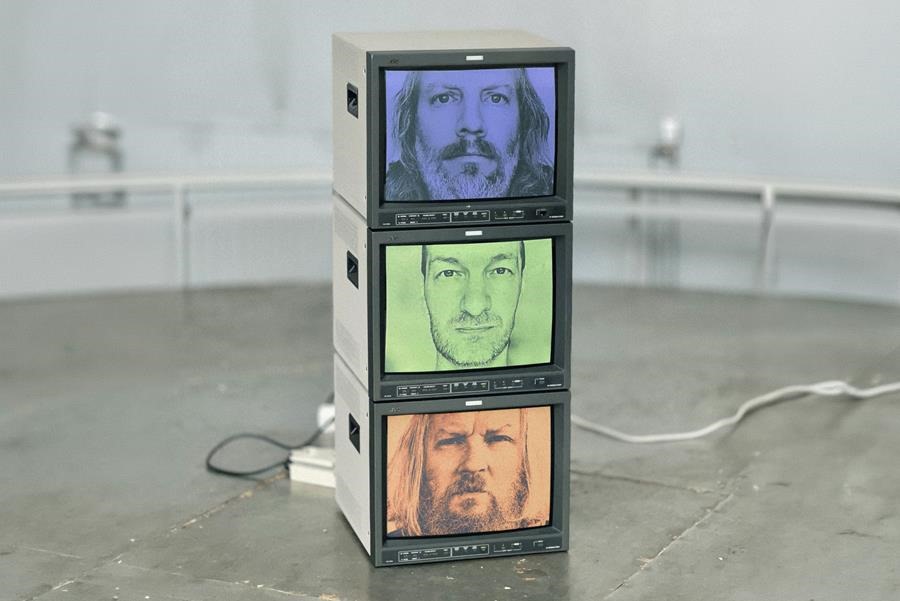
Pharoah Overlord

Photo credit: Mika Taanila

Discus Music – 27th September 2024

Christopher Nosnibor

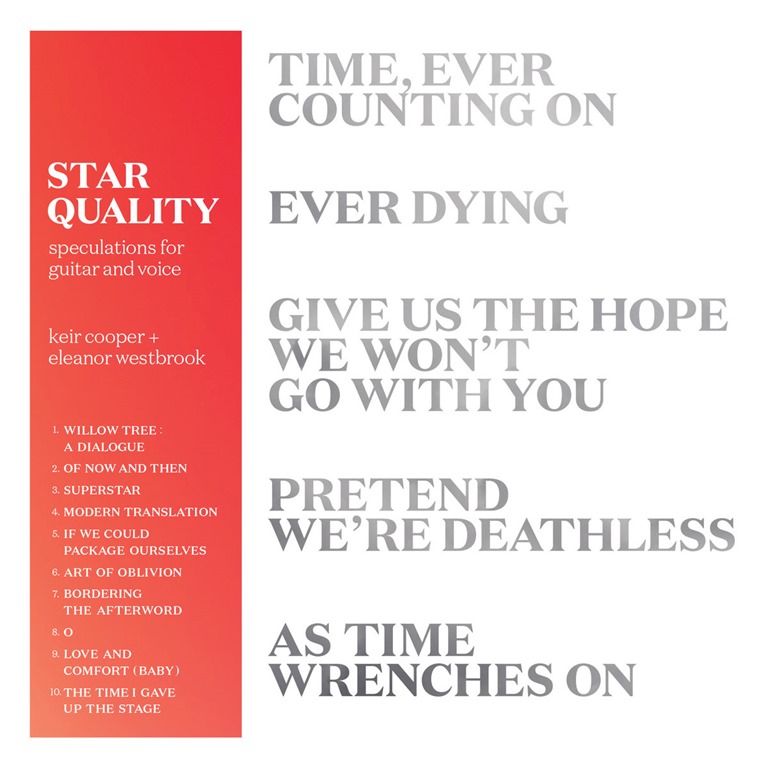
One way to tell an avant-garde musical work from its title alone is when the title provides a quite precise statement relating to its compositional nature. And so it is that this collaborative set of songs by Keir Cooper and Eleanor Westbrook are structured around guitar and voice.

‘Willow Tree – A Dialogue’ takes the interesting form of – perhaps not surprisingly – a dialogue of sorts, in which Westbrook’s adopts two contrasting modes of delivery, with a spectacular operatic aria juxtaposed with a spoken-word interrogation as a counterpoint. The effect is closer to a simultaneous internal monologue running across the song itself rather than a dialogue in the conventional sense. Meanwhile, the delicately picked neoclassical guitar is subject to interruption by clunks and distortion and occasional whirs and bleeps and the operatic vocal strays off kilter and the dream which drifted in twists and flickers with darker shades: not pronounced enough to be truly nightmarish, but unsettling.

The pair continue to explore the contrasts of melody and disharmony as Westbrook squeaks, squawks, trills, and purrs an infinite array of vocal gymnastics and Cooper’s guitar work, which chimes and treads delicately from folk to flamenco via classical streams, stamps on its own beauty with sudden and unexpected stops and stutters and forays into wrongness with stray notes and dissonance.

‘Superstar’ strays into the space which soundtracks a sense of derangement, the territory where things make no sense, and that place of incomprehension instils an unsettling confusion that borders on anxiety. ‘Modern Translation’ follows a similar trajectory: it’s a piece of magical neoclassical chamber music that’s twisted as if performed in an auditory hall of mirrors. Everything is wrong: something that should be soothing and beautiful is warped in a that it becomes unheimlich, eerie.

It’s hard to locate a touchstone or reference point for this: perhaps there are elements of later Scott Walker present, blended with hints of The Ex with its more avant-jazz leanings. One can only muse as to how they came to create this work: despite its clear foundations in the realms of classical and opera, Star Quality ventures so far from this path that it often bears little resemblance to any given style. The pieces evidently do have quite detailed and complex structures, as there’s nothing haphazard or uncoordinated about the way the two play together, but it’s impossible to decipher them from an outside perspective.

There’s a grand yet ethereal theatricality to ‘Bordering the Afterworld’, and ‘O’ soars and swoops and squeaks and whoops its way theatrically – and somewhat crazily – across some sprightly, if vaguely gothic-sounding guitar picking that suddenly, from nowhere, begins to buzz and thump. ‘The Time I Gave Up the Stage’ draws the curtain on an incredibly curious and as far off the wall as is imaginable.

Star Quality clearly has theatrical inspirations and aspirations, but shows two artists who are more interested in exploring their outer limits than taking the limelight in a mainstream setting – and for that, I applaud them.

AA

a1210959813_10

Cruel Nature – 24th May 2024

Christopher Nosnibor

It seems as if every album of the year has been released on this date, May 24th – and by every album of the year, I mean all of the releases have landed at the same time, but also that this album and the other ‘best album’ contenders have all landed simultaneously, too. It’s meant that I’ve been absolutely swamped, and struggling to listen to everything, let alone formulate thoughts and render them coherent – something I fear I struggle with at the best of times.

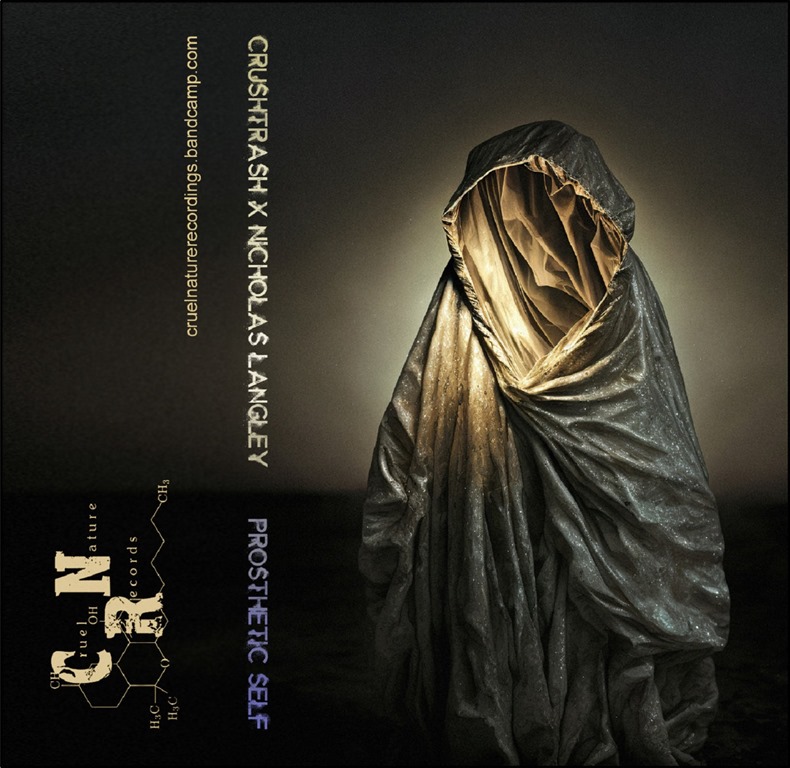
Surveying this release, I learned that ‘Prosthetic Self is a collaboration between CRUSHTRASH & NICHOLAS LANGLEY that seamlessly blends the energy of early ‘80s dark industrial synth pop with the mesmerising allure of ’90s electronica. Drawing inspiration from iconic acts like Coil, The Associates, Depeche Mode, Björk, and Portishead, this album is a sonic journey that transcends time and genre boundaries.’

It does feel as if every electronic act with a dark leaning wants to be Depeche Mode, and every electro-based Industrial act is essentially wanting to be Pretty Hate Machine – era Nine Inch Nails – who in turn sounded a fair bit like Depeche Mode if truth be told. That’s no real criticism, as much as an observation of the extent to which those two acts broke ground and created new templates in the 80s. However, the industrial elements of Prosthetic Self hark back to a time before Nine Inch Nails, and presents a more experimental form.

The tile, Prosthetic Self Connotes a sense of falseness, the fake exterior we apply to ourselves in order to deal with people and society. Workplaces – particularly offices – tell us to ‘be ourselves’ at work, while at the same time telling us we need to leave our problems and personal baggage at the door, but at the same time seem incapable of dealing with non-conformity. Well, come on then: what do you want: individuals or clones? Prosthetic Self is an exploratory work which presents a multitude of facets, and it’s a fascinating journey which leads one to the question as to what is real and what is construct, artifice. The cloak, on the cover, with its empty hood feels like a representation, not necessarily for this collaborative project, but the album’s themes, searching for what lies beneath the prosthetic self: is there, indeed, anything at all? Then again, how much here is style, and how much is substance?

There’s certainly a lot of well-studied style on display. ‘Bring Some Change’ is dark but also soulful, and their referencing The Associates hints at the almost operatic stylings of the vocals at times, and against some stark backings prone to some unexpected sonic ruptures and moments of heightened tension and drama, I’m also reminded of Scott Walker.

‘Claustrophobia’ is appropriately-titled. ‘In my dream, something’s wrong, caving in…’ Crushtrash croons with hints of Dave Gahan in his delivery against a slow-moving murky throb. But there’s a really attacking percussive loop that knocks on the top of your skull which makes it tense rather than soothing, and before long, panicked breathing gasps in the darkness, and you’re drawn into the nightmare.

Elsewhere, glitching, knocking beats shuffle and click, and the production really brings these to life in a way that makes you clench your jaw and tense your shoulders. ‘Selective Memory’ has something of a collage structure about the way the sounds are brought together and overlaid, with sampled snippets woven in alongside the bubbling vintage synth sounds.

In places, the kind of retro vibes which permeated 90s trip-hop seep into the shadowy atmospherics, and ‘Subtle Fetish’ comes on like Marc Almond in collaboration with Tricky, spinning lascivious wordplay along the way.

Prosthetic Self creates a lot of atmosphere with minimal arrangements, and they work because of the close attention to detail, the multiple layers of percussion which pulse and snake through spartan synths, more often than not with a simple, repetitive bass overlaid with subtle details, in a fashion which adeptly recreates the sound of the early 80s. In doing so, it recalls a time when so much was new, innovative. Coming at a time when there is so much sameness, and production and mixing has come to be all about the loudness, to hear a set of songs which really concentrate on dynamics and detail, it seems unexpectedly different.

AA

a1438080285_10

Crease is the debut full-length album of deconstructed electroacoustic postpunk songcraft by Montréal guitarist and producer Kee Avil, whose touchstones range from Scott Walker and Coil to Fiona Apple; (early) PJ Harvey and (later) Juana Molina to Eartheater, Pan Daijing and Smerz—or like Grouper produced by Matmos.

Chiselled twitchy minimalist guitar, sinuous electronics, industrial and prepared-instrument micro-samples, furtive rhythmic propulsion, all galvanised by the anxious intimacy of finely wrought lyricism/vocals: Crease is one of those debut records that excites a wide range of peerless references precisely because it’s so compelling and convincing in its own idiosyncratic originality, vision, detail and execution.

To coincide with the album’s release comes the video for ‘HHHH’. Watch it here:

AA

e5b78732-9de6-90a0-c600-bb352c7f2845