Posts Tagged ‘synth’

Negative Gain Productions – 6th June 2025

Christopher Nosnibor

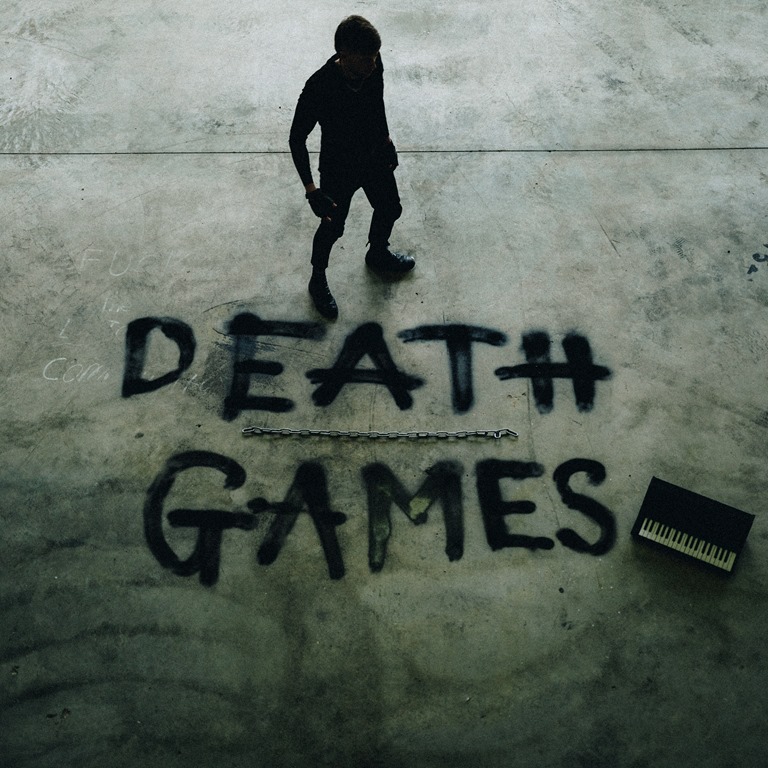
Just as the birds of prey from which they take their name are creatures of the night, so this Irish act – essentially one guy – who draw inspiration from the darker realms of postpunk, goth, and synth-based music are very much dwellers of the dark hours, as debut album Death Games attests, with titles such as ‘Perfect Nightmare’, ‘Tombs’, and ‘Send Me to My Grave’. The album’s themes are timeless and classic, offering ‘a haunting exploration of love, mortality, and the fragile nature of existence,’ while casting nods to touchstones such as Lebanon Hanover, Boy Harsher, and Black Marble.

Lead single ‘Give Me Your Stare’ opens the album in style with a disco beat and throbbing bass giving this bleak, echo-soaked song a dancefloor-friendly groove. The vocals are backed off but ring clear through a haze of reverb, offering a hint of The Cure’s Seventeen Seconds in terms of production values.

AA

The compositions on Death Games are pretty direct: there’s not a lot of detail or layers, and it’s the electronic beats and pulsating basslines which not only define the sound but drive the songs. The sonorous synths which twist and grind over the top of these predominantly serve to create atmosphere more than melody, although haunting, repetitive motifs are commonplace, and the vocals, too, being low in the mix and with a fairly processed feel, are more a part of the overall sound than the focal point.

‘Skin on Skin’ brings a wibbly, ghosty synth that sounds a bit like a theremin quivering over a minimalist backing of primitive drum machine and bass synth, and the likelihood is that they’re going for early Depeche Mode, but the end result is more like a gothed-up Sleaford Mods, although, by the same token, it’s not a million miles away from She Wants Revenge around the time of their electro-poppy debut, and that’s perhaps a kinder and more reasonable comparison. ‘Fevr 2’ brings an increased sense of urgency with skittering bleeps skating around the reverberating drums: it has both an 80s movie soundtrack vibe and a vintage goth disco feel, and despite its hectic percussion and busy bass, ‘Tombs’ conjures a haunting, requiem-like atmosphere.

The ‘death’ thematic may not always be literal, and as much concerned with the death of love and the ends of relationships, but the duality the theme offers serves OWLS well. There’s no denying that it’s both a stereotype and a cliché that an obsession with death is such a goth thing, and OWLS fulfil these unashamedly – but then, why should there be shame? Why is it only goth and some strains of metal which embrace life’s sole inevitability, and explore mortality and the finite nature of existence? Even now, after millennia, we aren’t only afraid of death, but, particularly in Western cultures, we’re afraid to think or talk about it. People passing in their eighties and nineties still elicits a response that it’s a tragedy or that they should have had more time, and I’ve seen it said of people departing in their sixties or even seventies that it’s ‘no age’. We seem to have a huge blind spot, a blanketing case of denial when it comes to death, as if it shouldn’t happen, that it’s an injustice, and that no-one deserves it. But nothing is forever, be it love or life, and while loss – any loss – is painful, it comes attached to inevitability, being a matter of when, not if.

The stark and sombre ‘Send Me to My Grave’ commences a trilogy of dark, downbeat, funereal songs, which grow progressively darker, more subdued, the vocals more swallowed by evermore cavernous reverb. Even when the beats kick in and the bass booms, things warp, degenerate, and seem to palpably decay and degrade. There’s a weight to it, a claustrophobic heaviness, and the kick drum thwocks away murkily as if muffled by earth and six feet under sods. ‘This Must be the End’ is brittle, delicate, the calm that comes with the acceptance of… of what? What comes after the end? It feels like the song, and the album, leave this question hanging with an ellipsis, a suspense mark. It seems fitting, since we simply don’t know. But it does very much leave the door ajar for OWLS’ follow up, and that is something to look forward to.

AA

AAlbum CoverA

29th November 2024

Christopher Nosnibor

While the entirely of this EP has already been made available as individual tracks, some of which have made our ‘recommended streams’ pages, songs as standalone pieces are one thing, but understanding them in context can often be quite another.

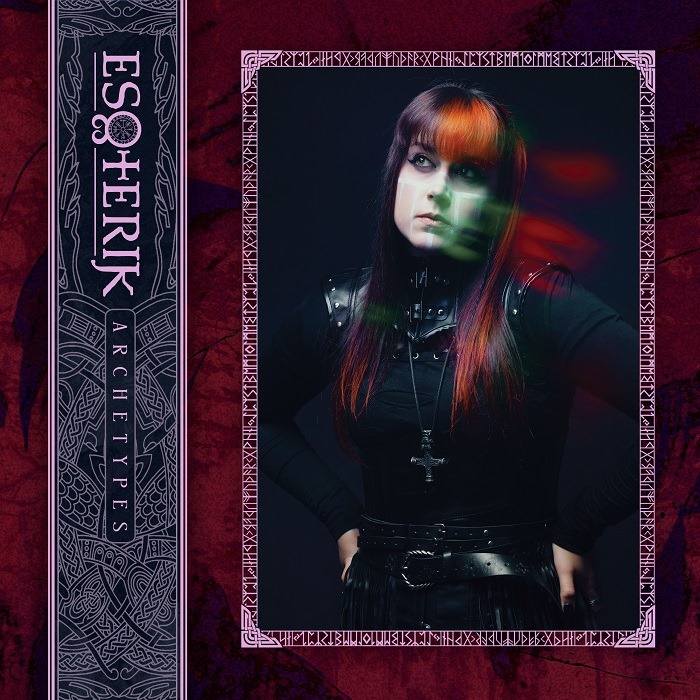
And so it is that Archetypes ‘explores timeless themes that have shaped societies for centuries. The band delves into the power of language and storytelling, celebrating legends that transcend time and culture. These stories, rich in symbolism and ritual, carry the wisdom of generations and continue to captivate audiences with their enduring lessons and sensational nature.’

Hearing the songs in isolation, the sense of thematic unity which unite them as an EP isn’t immediately apparent, particularly with the visual accompaniments of highly stylised neon-flashing cyber-tinged promo videos. They’re necessary – even essential – tools for grabbing attention in our hyper-stimulated, visually-obsessed world. Post some words, or some audio, and it’s like standing in the middle of a field at night dressed in black and expecting attention – but post an image, or a video, and people notice. It really is that clear-cut. It’s as if people need their media injected directly into their eyeballs, but listening the songs in sequence and only in audio, draws the attention to the music itself.

‘Mentor’ opens the EP, driven by a sturdy industrial groove and some tidy two-way vocals which form a dialogue and pivot around themes of disconnection while pitching a magnificently melodic chorus that really brings all the hooks. ‘Trickster’, the first song to be released from the EP, is bold and energetic, and if the backing is like a pumped-up disco interpretation of Depeche Mode, the belting vocals bring from-the-gut passion. The song’s overt pop sensibilities are enhanced with this raw edge, making it a clear and instant standout.

AA

As the title implies, ‘Shadow’ is darker, and finds the duo tunnelling deeper into the psyche and troubled waters, and satisfaction – or lack of – bubbles to the surface amidst the lyrics, and what filters through over the course of the EP is that as much as Archetypes is about the power of language, Esoterik are interrogating the shortcomings of language to fully convey complex emotions – the elements of which constitute our very DNA which ties us to those myths and legends of centuries past, and which, ultimately, are the essence of the human condition.

‘Hero’ makes for a strong, bombastic finale, the big drum-fills and powerful snare sound evoking the spirit of the 80s power ballad as they push to the conclusion with a surging chorus. Just how effectively they explore the elements of symbolism and ritual may be questionable, but as a superbly-realised slab of dark pop, Archetypes is hard to fault.

801465

Gagarin Records – 6th December 2024

Christopher Nosnibor

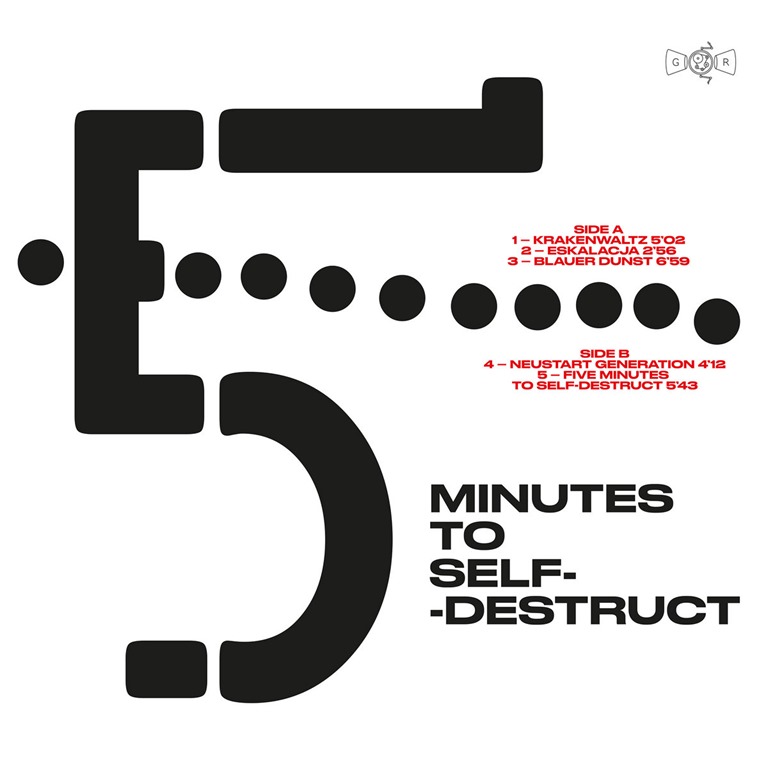
You might be hard-pressed to call CEL a supergroup, but Felix Kubin has been creating sound here, there, and everywhere for a long time now, and Five minutes to self-destruct is definitely a coming together of established creative forces, containing as it does five recordings of live tracks performed by longstanding Kubin and longstanding collaborator Hubert Zemler, remixed by Warsaw sound engineer Jan Wroński.

And the thing about creative collaborations is that they often rely on spontaneity, immediacy, the frisson between the individuals in proximity, feeding off one another in the moment. And so it is here, as the accompanying notes set out: ‘The expressiveness of these recordings is evident not only in their unbridled live energy, which can hardly be reproduced in the studio, but also in a musical nervousness that sets itself apart from the current wellness folklore of the modular community. The pieces gather in their DNA the paranoid plasma of cultural unease, chaos and upheaval.’

To make a small sidestep, we hear endless decrees that employees need to return to the office in order to foster the spirit of collaboration and all the rest. We know that this is bollocks, and is simply about working the instruments of control. Collaboration and the coalescence of energy for creative ends is not something which cannot be forced, and it happens, regardless of distance, time, and space, given the right connection and chemistry. Hearing the performances on Five minutes to self-destruct, it’s immediately apparent that this is not something that could ever be created by desire or will alone.

As the accompanying bio notes, ‘The expressiveness of these recordings is evident not only in their unbridled live energy, which can hardly be reproduced in the studio, but also in a musical nervousness that sets itself apart from the current wellness folklore of the modular community. The pieces gather in their DNA the paranoid plasma of cultural unease, chaos and upheaval.’

The title track ‘Five minutes to self-destruct’ is a quote from Michael Crichton’s sci-fi classic The Andromeda Strain, which describes a research team’s fight for survival against an accidentally triggered self-destruct mechanism, underpinned by trigger impulses and increasing panic.

My own experience of the modular community may not be on quite the same scale or the same higher circles as theirs, but it does feel primarily the domain of the middle-class, middle-aged white male these days, and there’s a certain air of ease and the satisfaction of hobbyism about it. Needless to say, not so here. There’s a tension that runs throughout the entirety of the release. ‘Krakenwaltz’ cartwheels and loops in jittery circles, head-spinning rhythmic cycles with no small degree of attack, with some sharp, aggressive snare sounds and a frenetic, frantic undercurrent which grows increasingly disorientating over its near-six-minute duration.

‘Eskalacja’ is dominated by hectic percussion and a whirl of fairground bleeps and toots running in ever-tighter concentric circles. It some respects, it calls to mind the frenzied looping and wild, vaguely manic excesses of early Foetus 12” singles, seeing just how far they can push the concept, and themselves in the creation of hyperactive sound.

The seven-minute ‘Blauer Dunst’ which sits as the album’s centrepiece marks a distinct shift in tone and texture, a rumbling dark ambient piece that invites comparisons to some of the more abstract works of Throbbing Gristle. It predates the rest of the set by almost four years, having been recorded in October 2020.

It’s back to more upbeat, stomping percussion-led synth work on the DAF-like ‘Neustart Generation’ – but don’t mistake upbeat for uplifting: it clatters and bangs with a clipped, regimented, Germanic feel, and the grooves are taut and tense, and it’s simmering tension which crackles beneath the lumping, shuffling, organic rhythms which underpin the sparse, tetchy title track. A couple of minutes in, a loping percussive cycle breaks out and the repetition of this and the dominant synth motif, amidst a swell of extraneous sounds – samples, sirens – makes this one of those tracks where you can feel your blood pressure increasing as it progresses and the pace quickens to a blur. It ends before reaching the point of inducing an aneurysm, and the assurance to the applauding audience, “We’re still alive, it’s ok,” at the fae injects some unexpected humour to proceedings.

AA

a1852422406_10

Following in the wake of their North America Tour 2024, Synth pop trio BEBORN BETON drop the second single ‘My Monstrosity (EMMON Remix)’, taken from the forthcoming new EP To the Stars, which has been scheduled for release on November 22, 2024.

BEBORN BETON comment: “When searching for artists to remix a track from ‘Darkness Falls Again’, we had one goal in mind: to collaborate with incredible female producers and performers whose work we admire", vocalist Stefan Netschio explains on behalf of the band. " While some were unavailable or tied up with other projects, we were thrilled to be able to collaborate with two of our favourite artists. One of whom is the immensely talented Swedish artist Emma Nylén, known as EMMON. She has re-imagined our track ‘My Monstrosity’ with her unique artistry, breathing new life into it with her beautiful and energetic remix. We could hardly wait for you to hear it, and here it is!”

Listen here:

AA

a0681355494_10

Metropolis Records – 7th June 2024

Christopher Nosnibor

Oi, Nosnibor? Call yourself a goff? Well, yes… and no. Y’see, much as many people scoff at Andrew Eldritch insisting The Sisters of Mercy aren’t goth despite displaying so many of the trappings of goth, he does have a point, and one I’m willing to defend when it comes to my own musical preferences.

The Sisters, The Cure, Siouxsie, Bauhaus, bands I came to quite early in the formation of my musical tastes in my teens, are all largely considered exponents of ‘goth’, but were well-established long before the label existed. Tony Wilson said in an interview that there was something ‘gothic’ about Joy Division, and while they were contemporaries, and similarly dark, and – like the aforementioned acts – emerged from the post-punk scene, along with the likes of Alien Sex Fiend, The March Violets, The Danse Society, but somehow manage to avoid the goth tag. Ultimately, the whole thing was a media construct based largely on a false perception of a bunch of disparate acts who shared a fanbase. Just how much bollocks this was is evidenced by the fact the likes of All About Eve, New Model Army, and Fields of the Nephilim – again, bands who shared nothing but a fanbase, in real terms – came to be lobbed into the ‘goth’ bracket.

But then bands started to identify as ‘goth’ themselves, most likely as a way of pitching themselves in press releases, and things started to head south rapidly thereafter.

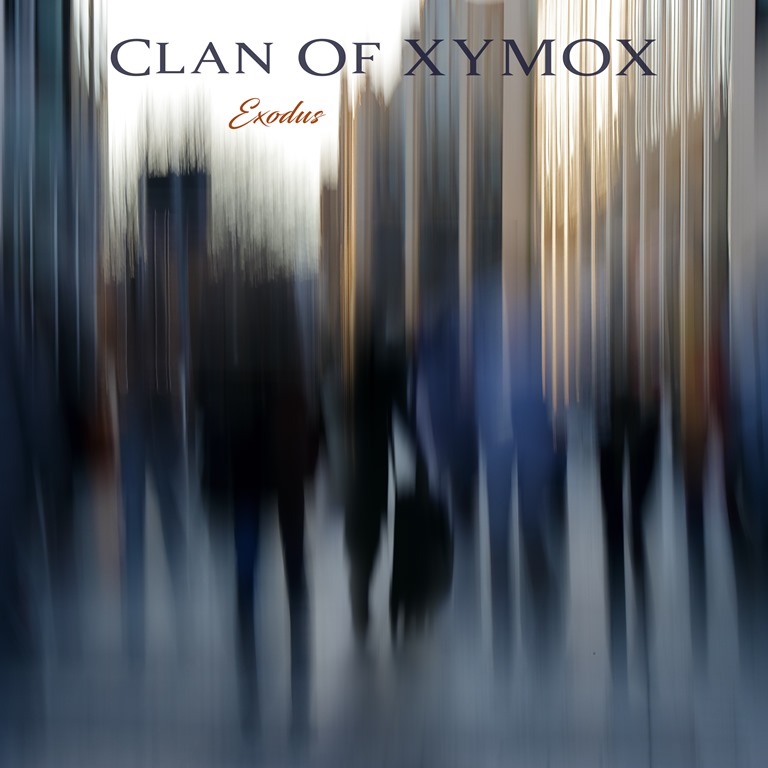
Having formed in 1981 and being signed to 4AD, home of The Cocteau Twins, and releasing their debut album in 1985 – the same year The Sisters released their seminal debut First and Last and Always – Clan of Xymox belong to the initial wave of proto-goth, in the same way X-Mal Deutschland do. Yet for some reason, they’ve bypassed me. Seventeen albums in, I’m perhaps a bit late to the party, and while I can’t claim to be fashionably late, it’s better late than never, right?

This does mean that I’m approaching Exodus with no benchmark in terms of their previous albums, and with the weight of recently-jettisoned preconceptions and prejudices. Perhaps not a strong standpoint for objectivity, but it’s worth getting these issues out of the way first.

It’s amusing to read how retrospective reviews of their debut criticised the fact it sounded cliché and dated, not least of all because of the synth sounds which dominate. What goes around comes around and vintage synths and drum machines, however tinny, fuzzy, basic, are all the rage once more, with people willing to pay crackers prices for the precise purpose of recreating those sounds.

Exodus sounds like an early-to-mid-eighties dark electro album, showcasing all of the elements of goth before it solidified, before the cliches became cliches. The drum machine programming is quintessentially mid-80s, a relentless disco stomp with a crisp snare cracking hard and high in the mix.

They slow things swiftly, with the brooding, moody ‘Fear for a World at War’ – a timely reflection on the state of humanity – landing as the second track. It’s moving, haunting, but drags the pace and mood down fast, samples and twinkling synths hovering and scrapping over a hesitant beat and reflective vocals.

‘The Afterglow’ combines chilly synths and fractal guitar chimes to forge a cinematic song. It’s unquestionably anthemic, and has the big feel of an album closer. Where can they possibly go from here? Well, by pressing on with more of the same… Much of Exodus is reflective, darkly dreamy, vaguely shoegazy, very Cocteau Twins – at least sonically, being altogether less whimsical in content. It’s undeniably a solid album, and one steeped in the kind of sadness and melancholy that’s quintessential brooding gothness. ‘X-Odus’ hits a driving techno goth sound that borders on industrial, but equally owes as much to The Sisterhood’s Gift, which is really the point at which ‘goth’ intersected with dark disco.

Eighteen albums in Exodus sounds predominantly like the work of a contemporary dreamwave / goth act plundering the old-school with some heavy dashes of late eighties Cure, and while many fans will be hard into it, to my ears, it’s good – really good – but much of its appeal is nostalgia and familiarity, and objectively, it’s just a shade predictable and template.

AA

064556

Distortion Productions – 5th July 2024

Christopher Nosnibor

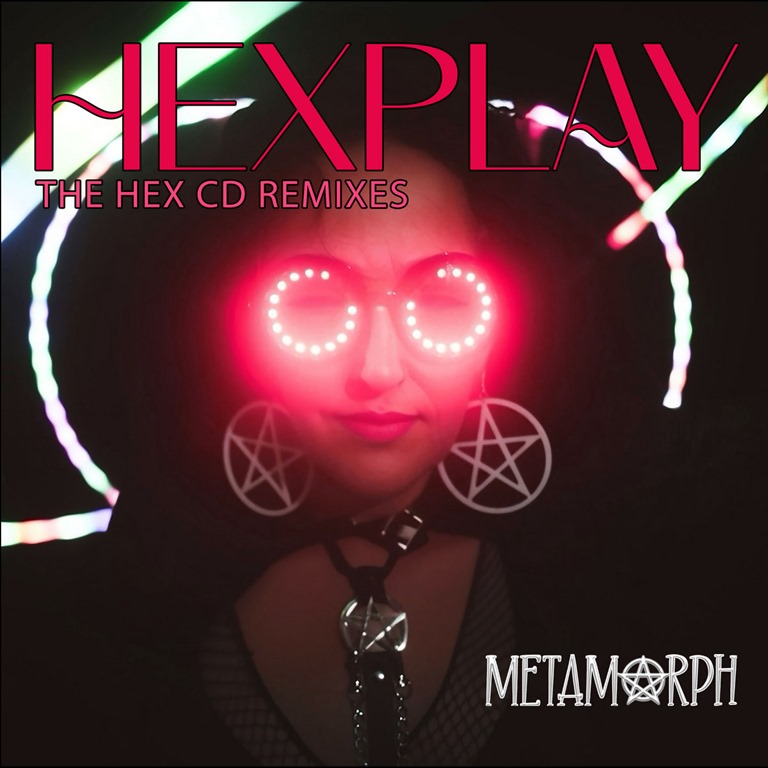
Released to coincide with the start of their US tour to promote the album HEX, released in March, HEXPLAY offers up remixes of three tracks from the album, by artists including Leaether Strip and Red Lokust.

Remix albums and EPs do tend to be a bit of a mixed bag, and my cynical side says they’re an easy way of milking maximum product from the material an act has – and the fact that the Grendel remix of ‘Veridia’ already appeared as a bonus track on the digital version of HEX does little to dispel this notion with this release (the album contained seven new tracks including lead single ‘Witch Lit’ released the year before, expanded with three remixes, and there was previously a standalone Stabbing Westward remix of the title track).

There are two further mixes of ‘Veridia’ here. Of these, the Leaether Strip reworking which opens this set is the most radical, transforming the dark electrop of the original – which clocks in at just over two minutes – into a sprawling five-minute exploration of brooding esotericism, with a hint of Eurovision-friendly groove. Pushing the bass up in the mix, it’s darker and denser than the original, and adds new depths and dimensions. Placing it up front was a sound decision, as for my money, it’s the strongest track here.

In the hands of Third Realm, the contemplative mid-tempo ‘Raining Roses’ is transformed into a cinematic anthem, and it’s a triumphant reworking – not a huge stretch in terms of imagination, but it simply makes the song so much bigger.

SPANKTHENUN take ‘Witchlit’ in a darker, murkier direction, straddling stuttering techno and ambience. It’s quite a departure from the original, unexpectedly tense and claustrophobic, and if it lacks the magical, haunting nature of the original its quite brutal treatment is big on impact and shows the song in quite a different light.

The last couple of tracks are solid enough, but perhaps a shade predictable, and certainly lacking the impact or imagination of those which precede. This is what I mean when I say that remix releases are a mixed bag, but I’m equally aware that this is a question of taste, and some will likely prefer the versions I’m less enamoured with.

Here, the source material is strong, which definitely gives the remixers a head start, and while I’ll often find myself asking ‘why mess with perfection?’ credit is due on this occasion for offering versions which, if not improving on the originals, certainly bring something different and worthwhile.

AA

a2135998688_10

Darkwave/Post-Punk duo, REDWING BLACKBIRD have just unveiled their latest single, ‘Black Cloud’. This single is a departure from the more guitar-based approach of earlier tracks and sees the band leaning more into the energy of modern darkwave, synth bass & drive.

Lyrical Inspiration for the track comes from the fragile balance between faith & fanaticism – the ongoing blurring of the separation of church & state, the horrific loss of women’s rights & the slow, steady rise of nationalistic fascism, too often disguised as religious morality. All of this is put to an almost satirical "dance while your heads on fire " irreverence.

‘Black Cloud’ marks a clear change in direction leaning into more of the  duo’s darkwave vocabulary that has only briefly surfaced on previous tracks, as it is the first recording of collaboration between Paul Baker & Lisa Jensen on entirely new material. ‘Black Cloud’ is also the fourth single collaboration with producer/engineer Tiffany Flanagan of Audio Pervert recordings.

Listen here:

REDWING BLACKBIRD is the focal project of Paul Baker & Lisa Jensen, currently based in Denver, Colorado, USA. Baker is perhaps best known for his time with nineties goth rockers Second Skin, and more recently, the deathrock trio Plague Garden’s first two full length releases on lead guitar & bass.

REDWING BLACKBIRD, on the other hand, distils influences from Baker’s extensive background working across multiple genres: from the political ideology and ethos of punk; the guitar tonality and melodic lead bass of post-punk, proto-goth, shoegaze, drone-rock, and dark wave; to the sonic nuances with the vocal growl of classic goth rock.

Comparisons have been drawn to everyone from Red Lorry Yellow Lorry, Big Black, and Joy Division to Swans and Nick Cave; Dead Kennedys and The Clash; and even points of reference as disparate as Slint or Ween. And yet, despite having clearly defied and confounded convenient genre pigeonholes, there is certainly a coherent, distinctive, and immediately identifiable REDWING BLACKBIRD sound.

34ec4329-b6dc-d85b-9d37-99a0a2ac8a0a

Seattle-based "turbowave" pioneers, DUAL ANALOG are set to make waves with their latest single & video, ‘Reborn.’

‘Reborn’ is a visceral journey through the dark corridors of human emotion and the haunting echoes of regret. As the band reflects on their struggles following their debut album’s release, "Reborn" emerges as a poignant anthem for anyone who has faced adversity and felt trapped in a cycle of obscurity.

With ‘Reborn,’ DUAL ANALOG steps into the visual realm of a story-driven narrative for the first time, signaling a new chapter in their artistic evolution.  The accompanying music video, directed by Skye Warden (Nuda, DK-Zero, Abney Park) adds a visual dimension to this gripping tale of self-inflicted torment and redemption. This collaboration adds depth and dimension to their music, offering fans a multi-sensory experience that transcends traditional boundaries. Through a mix of their own haunting melodies, existential lyricism, and nihilistic outlook, DUAL ANALOG paints a vivid, yet inspiring portrait of a man consumed by his own ambition unlocking his true potential at the expense of his family.

Listen to ‘Reborn’ here:

AA

e72da907-3634-43aa-00c8-9c4512087b1e

Bin Liner records – 5th July 2024

Christopher Nosnibor

The band hailed by Louder Than War as ‘probably the Last Great Gothic Rock Band’ – Portsmouth based post-punk/goth band Torpedoes – return with their fourth album, Heaven’s Light Our Guide, six years after their previous outing, Black Museum (2018). To compensate for the time away, they’ve made it a twenty-track beast of a double-album, and when coupled with something of a transition in their sound towards something rather more keyboard-driven, it’s almost certainly their most ambitious release to date.

The album’s themes are pretty bleak, but no-one’s here for a party goth album, right? The press release is worth quoting for context: ‘Principal songwriter Ray (Razor) Fagan (Ex Red Letter Day) gives his take on the world we must all inhabit whether we like it or not. Lyrically the album focuses on largely dark themes from the destruction of the planet & corruption to bereavement and historic tragedies. Including a song inspired by a mass suicide in the town of Demmin, north of Berlin in May 1945. Over a thousand of Dremmin’s inhabitants, mostly women and children elected to commit suicide rather than face the advancing Russian troops….’

Hopefully, this sets the context, rather than torpedoing the mood – pun intended, of course.

Heaven’s Light Our Guide is by no means a concept album, or a work which focuses specifically on any one tone or theme, which would be difficult to sustain and likely difficult to listen to over such a duration: instead, the album is in many ways a pick ‘n’ mix from the smorgasbord of goth, in the way that The Cure’s Kiss Me Kiss Me Kiss Me offers contrasting elements of light and dark. These contrasts do make for a work that feels like it pulls in different directions at times – not nearly as schizophrenic as Kiss Me, but certainly the product of a band on a voyage of discovery.

‘Somekindaheaven’ kicks things off with a quintessentially gothy bass groove, that foot-to-the-floor, four-four thudding bass, and while it’s draped in cold synths, the guitars rip in just shy of a couple of minutes into its expansive six. There are some nagging gothy guitar breaks, too, and it presents balance between introspective and anthemic.

‘End of the World Party’ is far from a knees-up, but it’s a dreamy, wistful Curesque slice of jangling, indie which definitely sits at the poppier end of the goth spectrum. It’s fitting, inasmuch as it was The Cure who really broadened the spectrum of what is generally recognised as ‘goth’ – a term I really do struggle with despite principally identifying as such myself. Then, as many of the songs on here are more 90s grunge than goth, as ‘Idiot’ evidences perfectly.

‘Blue Sky (In the Rain)’ sits somewhere between Dinosaur Jr and REM, and in its execution ends up sounding not unlike later Red Lorry Yellow Lorry. None of this is a criticism: it’s a solid tune, and Heaven’s Light Our Guide has plenty of them.

There is a strong leaning towards that mid-late 80s alternative sound as showcased by the likes of The Rose of Avalanche and IRS-era Salvation. The fact that the latter toured extensively with The Alarm does give some indication of the more commercial sound which had evolved by this time, and hints at the tone of Heaven’s Light Our Guide. In the main, this is a highly accessible set of songs. But then they chuck in some really hefty darker-hued cuts along the way: ‘Made of Stone’ comes on like The Mission in their early years, but heavier and more fiery, and it’s by no means the only stomper in this vein here. The grungy ‘Your Democracy’ certainly brings the riffs on one of the album’s most blatantly political songs, which goes a bit Metallica, too.

The title track is different again, a sweeping post-rock instrumental sweep that really mellows things down, and it’s clear that Torpedoes really want to demonstrate their range and musical skills here. Takings its title from a novel by Dostoyevsky, ‘Notes from the Underground’ is another gritty slice of sociopolitical critique, which contrasts with the altogether folkier acoustic-based ‘Fear of Human Design’.

Despite its length, Heaven’s Light Our Guide manages to hold the attention: it’s varied and interesting enough to do so, but not so diverse as to feel unfocussed or messy. Perhaps an even greater feat is that it doesn’t feel like there are any filler tracks or any which it would have been beneficial to cut.

AA

Copy of HLOG Front Cover text black star (1)

Cruel Nature – 24th May 2024

Christopher Nosnibor

It seems as if every album of the year has been released on this date, May 24th – and by every album of the year, I mean all of the releases have landed at the same time, but also that this album and the other ‘best album’ contenders have all landed simultaneously, too. It’s meant that I’ve been absolutely swamped, and struggling to listen to everything, let alone formulate thoughts and render them coherent – something I fear I struggle with at the best of times.

Surveying this release, I learned that ‘Prosthetic Self is a collaboration between CRUSHTRASH & NICHOLAS LANGLEY that seamlessly blends the energy of early ‘80s dark industrial synth pop with the mesmerising allure of ’90s electronica. Drawing inspiration from iconic acts like Coil, The Associates, Depeche Mode, Björk, and Portishead, this album is a sonic journey that transcends time and genre boundaries.’

It does feel as if every electronic act with a dark leaning wants to be Depeche Mode, and every electro-based Industrial act is essentially wanting to be Pretty Hate Machine – era Nine Inch Nails – who in turn sounded a fair bit like Depeche Mode if truth be told. That’s no real criticism, as much as an observation of the extent to which those two acts broke ground and created new templates in the 80s. However, the industrial elements of Prosthetic Self hark back to a time before Nine Inch Nails, and presents a more experimental form.

The tile, Prosthetic Self Connotes a sense of falseness, the fake exterior we apply to ourselves in order to deal with people and society. Workplaces – particularly offices – tell us to ‘be ourselves’ at work, while at the same time telling us we need to leave our problems and personal baggage at the door, but at the same time seem incapable of dealing with non-conformity. Well, come on then: what do you want: individuals or clones? Prosthetic Self is an exploratory work which presents a multitude of facets, and it’s a fascinating journey which leads one to the question as to what is real and what is construct, artifice. The cloak, on the cover, with its empty hood feels like a representation, not necessarily for this collaborative project, but the album’s themes, searching for what lies beneath the prosthetic self: is there, indeed, anything at all? Then again, how much here is style, and how much is substance?

There’s certainly a lot of well-studied style on display. ‘Bring Some Change’ is dark but also soulful, and their referencing The Associates hints at the almost operatic stylings of the vocals at times, and against some stark backings prone to some unexpected sonic ruptures and moments of heightened tension and drama, I’m also reminded of Scott Walker.

‘Claustrophobia’ is appropriately-titled. ‘In my dream, something’s wrong, caving in…’ Crushtrash croons with hints of Dave Gahan in his delivery against a slow-moving murky throb. But there’s a really attacking percussive loop that knocks on the top of your skull which makes it tense rather than soothing, and before long, panicked breathing gasps in the darkness, and you’re drawn into the nightmare.

Elsewhere, glitching, knocking beats shuffle and click, and the production really brings these to life in a way that makes you clench your jaw and tense your shoulders. ‘Selective Memory’ has something of a collage structure about the way the sounds are brought together and overlaid, with sampled snippets woven in alongside the bubbling vintage synth sounds.

In places, the kind of retro vibes which permeated 90s trip-hop seep into the shadowy atmospherics, and ‘Subtle Fetish’ comes on like Marc Almond in collaboration with Tricky, spinning lascivious wordplay along the way.

Prosthetic Self creates a lot of atmosphere with minimal arrangements, and they work because of the close attention to detail, the multiple layers of percussion which pulse and snake through spartan synths, more often than not with a simple, repetitive bass overlaid with subtle details, in a fashion which adeptly recreates the sound of the early 80s. In doing so, it recalls a time when so much was new, innovative. Coming at a time when there is so much sameness, and production and mixing has come to be all about the loudness, to hear a set of songs which really concentrate on dynamics and detail, it seems unexpectedly different.

AA

a1438080285_10