Posts Tagged ‘Post Rock’

16th June 2023

Christopher Nosnibor

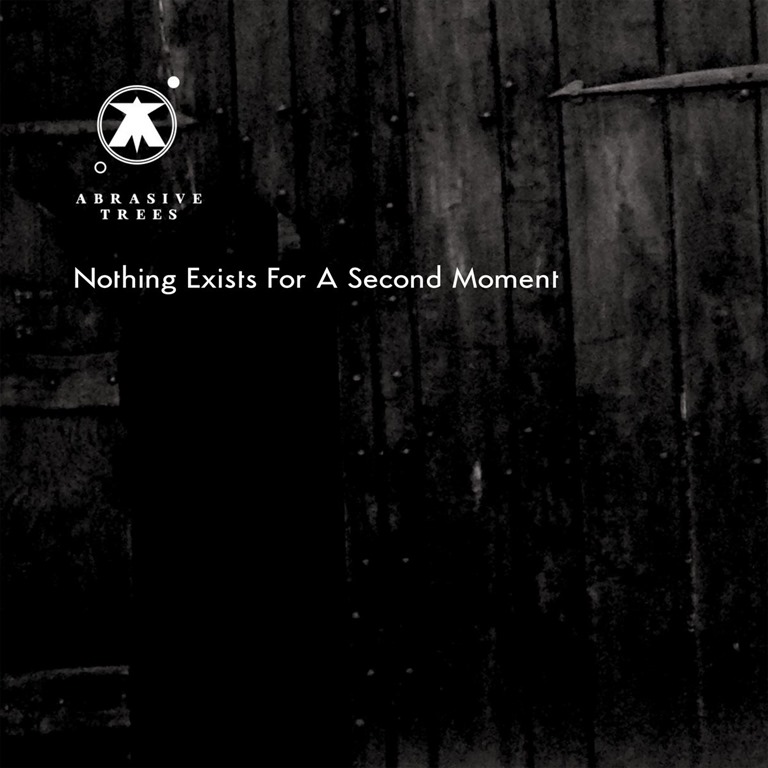
After a lengthy and sustained spell of creativity, dark Devonshire band Abrasive Trees are taking stock, reflecting and consolidating on their achievements to date, something which also affords newcomers an opportunity to catch up, March saw the release of Epocha, a compilation album which gathered their singles and EPs from 2019-2021, and now, housed in a sleeve which continues the thread of the design of its predecessor, they offer up a live album, which captures the band performing at hatch Barn, a venue close to their base in Totnes.

Live albums are notoriously tricky. So many live acts have an energy live that simply doesn’t translate when recorded. Then, at the opposite end of the spectrum, I recall meeting a metalhead in my first few weeks of university who was gushing in his enthusiasm for Iron Maiden “T’ Maiden” as he referred to them as being an amazing live as because “it sounds just like ont’ album”. This stuck with me, because I wasn’t accustomed to such thick Northern accents back then, and also because the idea of a live show so slick it sounded like the CD was a cause for consternation. Some people may think it’s a good thing, of course, but for me – even at the age of nineteen – it seemed to be missing the point of playing live. Especially when it’s a big band, who you’re likely to be watching on screens instead of looking at the stage. Might as well be watching a video at home for that.

Then there’s the recording itself: too much audience and it sounds like a shitty bootleg that’s as much that gobby tosser and his mate yammering away over the band; too hermetic and soundesky and it sounds dead and like there was no-one there, and all the vitality of the live experience is lost. This six-track release, once again mastered by Mark Beazely of Rothko, is magnificently realised: the sound is superbly crisp and clear – it’s obviously taken from the sound desk – but there’s a hum and a sense of space and audience, and it isn’t so clinical as to sound like another studio recording.

There’s irony in the title here: the live experience exists only in the moment, but here we are with a documents which gives us that second moment of existence. But of course, this is not the thing in itself, but a recreation, which captures only a part of it. Dimensions are missing: the sights, the ambience, and so on. This gives us not the full give experience, but an aural document of the band’s performance alone. They know this. We know this.

Four of the six tracks here are featured on Epocha in their studio forms, but the two mid-set songs, ‘Kali Sends Sunflowers’ and ‘Moulding Heaven With Earth’ are from the post-Epocha double-A-side single, and ‘Moulding Heaven With Earth’ is extended here from its near-six-minute form to almost eight her, making for a colossal centrepiece to the half-hour long set. Over its duration, the band sound solid, and assured, and they bring the detail of the studio recordings to their live show, with added dynamics and energy – the bass and drums in particular when they hit peak crescendo cut through in the way that only ever really happens live, and so it’s a credit that this release captures that energy.

The set opens with ‘Before’ from the Now You Are Not Here EP, and while abridged from its original six-and-a-half-minute sprawl to just three and a half, it conjures a magnificently atmospheric space, with chiming guitars, drifting ambient synth drones, hand-drums, and brooding sax, not to mention Easter-inspired vocalisations to build tension, and it segues into the ornate and delicate ‘Now You Are Not Here’ from the same EP, introducing vocals to the set, and finding the band at their most dramatic, evoking the quintessential goth sound from circa 1985-86. Mattthew Rochford’s voice quavers and you really feel as if you’re with him, teetering at the of the world… before the chorus-soaked maelstrom descends.

The soft swell of clean, reverby guitar on ‘Kali Sends Flowers’ is so very reminiscent of Wayne Hussey it sends an unexpected pang of nostalgia, echoing as it does both ‘Severina’ and the intro to ‘Deliverance’. But instead of Wayne’s overt drawing on Christianity in his lyrics, Abrasive Trees delve into other belief systems, and crash into some bold crescendos in the process.

The samples on ‘Moulding Heaven With Earth’ are studio-clear, without sounding at odds with the mix of the music itself, while the near note-perfect ‘Replenishing Water’ breathes deeper as the guitars burst through the air and it explodes into a monumental extended climax that’s absolutely killer and one hundred percent exhilarating. There is so much energy and life here. There is not much vocal, and for some reason this often takes me by surprise.

There isn’t much chat either, but then, on the evidence of this recording, Abrasive Trees’ set relies on building and maintaining tension rather than rapport.

‘Bound for an Infinite Sea’ begins with the crescendo and drives hard to an energetic, bass-driven finale, Rochford’s voice brimming with emotion – and delving into gloom before soaring into gripping tension – and it’s all of this and more that makes Nothing Exists for a Second Moment so great. It’s almost as if you were there, and very much wish you were, but Nothing Exists for a Second Moment achieves the rare feat of making you feel something almost like having been there, slipping a subliminal buzz in the process… It’s as close to a second moment as possible.

AA

a1140864367_10

skoghall rekordings – 30th June 2023

Christopher Nosnibor

Racking up a second release in its first month of existence, new Swedish label skoghall rekordings – the gentler sibling of Dret Skivor – offers up a reissue of the second album by Farming Incident, originally released in 2008 on Wrath Records, home of The Scaramanga Six and Eureka Machines.

The tags which accompany this release include ‘experimental’, ‘hip hop’, ‘ambient’, ‘anarcho-folk’, ‘folktronica’, ‘politics’, ‘post-punk’, ‘post-rock’, and ‘space rock’, and if that seems an incredibly eclectic cocktail, it’s a fair summary of a band who never sat comfortably in any category, at a time when crossovers and hyper-hybridity were still pretty uncommon and even less accepted: this was a time in the wake of the 90s emergence of rap-rock crossovers and around the time when instrumental post-rock’s ubiquity was waning after what felt like an eternity but was in fact a span of maybe four years at most.

For this, their final album, Farming Incident had expanded its pseudonymous membership to four, with Agent Jones (guitar, bass), Agent Mays (drums) and Agent Procktaur (vocals, guitar, bass, keyboards) being joined by Agent Pushkin (backing vocals, guitar, bass) ‘to allow more flexibility in instrument swapping’. And that’s certainly a lot of guitar and bass-playing contributions across their personnel.

‘Elk vs Volvo’ is a choppy slice of post-punk that crunches Gang of Four and The Fall together with sinewy guitars propelled by energetic drumming. It’s also got that authentic lo-fi eight-track early eighties sound, and really only being familiar with Dave Procter’s work from the last ten years or so, it’s something of a revelation to hear him doing vocals – and actually singing(ish) – in a more conventional indie / rock context. The verses on the goth-tinged ‘Sadism vs Fadism’ (although it’s more early Pulp with a dash of PiL and Rudimentary Peni than The Sisters of Mercy or The Danse Society) finds him in more recognisable voice, with a Sprechgesang delivery with flattened northern vowels, before coming on more like David Gedge in the choruses.

There’s indie-surf and straight-up indie in the mix, and it’s all going on really. Casting my mind back to 2008, and some of it’s hazy because time, and beer, and so may gigs and albums, but this doesn’t sound like an album from around that time. The nagging bass and guitar of ‘Stiletto’, which reminds me of Murder the Disturbed but with the synths from B-Move or even Ultravox, giving it very much a feel of c79-81, before it locks into a motorik groove.

‘The Terrorist You Seek Is in the Mirror’ finds Procter in the kind of lyrical territory he’s made his home since, slogging out slogans with passion, but with a fairly standard four-square punked-up pub-rock instrumentation, it’s perhaps the alum’s least interesting track, particularly as it’s overshadowed by the atmospheric stroll of ‘G.O.T.H.’ which explodes in a colossal crescendo three quarters of the way in, flange and chorus heavy guitars dominating.

They chuck in a surprise grunge tune in the shape of ‘Phobos’, but it’s also got that early 90s noise rock slant that owes as much to the more obscure acts. And then there’s the final track, ‘Owls’. It’s a goth—tinged alt-rock screamer, one of those longer songs that simply could never be long enough even if it was half an hour long, in the same way that The Honolulu Mountain Daffodils’ ‘Tequila Dementia’ is simply too short. ‘Night vision, owls are gonna get you!’ Dave sings, channelling paranoia and panic while prefacing the avian themes that would resurface latter in his career on songs like The Wharf Street Galaxy Band’s ‘No Puffins For You, Lad’.

A lot has happened in the last fifteen years. We’ve had thirteen years under a Conservative government for a start, and the whole world seems to have taken a nosedive socially, politically, economically, and it seems impossible to think now that Trump and Brexit and Johnson and Covid were only the tip of the iceberg. But while we’re seemingly more divided than ever as people wage war over pronouns and images of Mickey Mouse in hostels for asylum-seeking children, we do seem to have become more accommodating of music that is so eclectic as to seem rootless. Nine Degrees of Torture probably feels more at home in 2023 than it did back in 2018, but even now, it doesn’t really sound like anything else. Bits of stuff, yes, like a magpie raid on bits and bobs from all over, but it’s not grunge or post-punk or anything really, but somehow it hangs together nicely.

AA

a3609247591_10

Gizeh Records – 30th June 2023

Christopher Nosnibor

In this sense, Bleaklow is a rather different proposition, and in some respects, the instrumentation is a significant factor in the shape of the sound, with Claire contributing ‘Voice, Nord Electro, Yamaha PSS-170, field recordings, Moog Taurus’, and Richard contributing ‘Electric gtr, drones, field recordings, Yahama PSS-170, Moog Taurus’. But by the same token, there is something about anything Richard Knox does which has something of a signature – not a signature sound as such, more of a signature feel, which comes from the kind of wispy ambience and dense atmospherics.

The overall effect of Bleaklow’s debut, Glume, is mellow, amorphous washes of cloud-like sounds drifting softly on invisible air currents, but there are moments where the textures are coarser, more abrasive, and these provide vital contrast. ‘Husk’ scrapes in with a wash of distorted guitar before tapering tones supple piano and vocals, layered to a choral effect surge and swell.

Claire’s voice by turns evokes Kate Bush and Cranes, haunting, ethereal, and as much as this sits in the post-rock bracket from which Richard and Gizeh emerged back in the early 00s (the label put out not only the The Heritage, the debut mini album by Her Name is Calla, but Knox also put out a super-limited CD of ‘Condor and River’ in a crazy corrugated card sleeve, as well as Arrivals, the debut album by worriedaboutsatan, wrapped in a chunk of blown vinyl wallpaper, which looks and feels amazing but is a real bugger to store… but I digress) it also very much harks back to 90s shoegaze, with a heavy debt to Slowdive and My Bloody Valentine, but then again, it’s impossible to listen to this without recourse to The Cocteau Twins. If this sounds like a catalogue of touchstones, it’s testament to how deftly they draw on myriad elements and whip them into a sonic souffle with the texture of candyfloss – not that this is particularly sweet, but it is lighter than a feather, lighter than air. And nowadays, the packaging is a little less DIY, but still very much focused on sustainability: the packaging for Glume is a recycled cocoa-card sleeve, whereby the ‘recycled card is made from 40% Post Consumer Waste and 15% natural fibres (by-products derived from the food processing industry which would otherwise go to landfill.) Turning a waste product into a natural, GMO free, raw material derived from nuts, fruits etc, resulting in distinctive colour shades’. It’s not just commendable, environmentally: it taps into the physicality of a releasing music and rendering the physical release a work of art rather than a commodity of plastic in plastic.

Everything on Glume happens at a sedate pace, and everything melts slowly together. The chances are that at some point, you’ve sat, stood, or even laid on the grass and simply looked at the sky and watched the clouds slowly shifting shape, rabbits and elephants becoming elongated and increasingly deformed, until they’re no longer rabbits or elephants, but abstract shapes stretching and fading to formlessness. The songs on Glume are by absolutely no means formless, but the sounds are like mist and the structures are supple. It’s a magnificently realised work: textured, detailed, nuanced.

It may not be bleak, but it’s dark, and it’s got detail. Bask in it.

AA

a0373089653_10

Consouling Sounds – 26th May 2023

Christopher Nosnibor

Size matters. Or at least, scale does, if you’re measuring epic. You can’t do epic by halves, and that’s a fact. And when an album weighs in with just five tracks but has a running time of almost forty minutes, you know you’re in proper epic territory (and that it certainly isn’t an EP masquerading as an album). And this is one hell of an album, and it goes beyond epic.

As the bio explains, TAKH emerged from ‘The fruitful collaboration between The Black Heart Rebellion and Echo Beatty’s Annelies Van Dinter on the People album was the beginning of a new musical story. After the end of TBHR Alexander, Annelies, Emeriek and Pieter went deeper in their quest to write music reflecting the true emotions of the musicians. After about one year of free improvisation, TAKH created something truly unique. The idea was very simple: to release the result of the collaboration without pre-orders and announcements…’

There is absolutely nothing out there on-line which provides a precursory listen to this album, and that in itself is beyond rare in an age when bands – and labels – hype releases to the nth degree. More common is that you’ll have heard every track weeks before the release, and this makes TAKH’s stealth approach all the more welcome. It takes us back to the days of before the Internet, when you’d read about a band in Melody Maker or hear about them from a mate or on the sixth form stereo – the means by which I introduced my friends to / tortured my friends with Swans and Godflesh during breaktime.

Swans are one of the bands listed as influencing TAKH, and it shows in the compositions, and to some extent, the musical arrangements, not least of all the way the final track echoes latter-day Swans in their hypnotic, immersive swells of sound.

‘Salomonne’ enters in a swathe of ancient Eastern mysticism, long, trilling vocal drones and esoteric spiritualism which sets the atmosphere before the arrival of the drums, bass, and rasping vocals. In combination, the tension builds as does the sense of vastness, and you feel an endless desert and sky spreading before you, extending infinitely to the vanishing point at which the two meet and fade in a haze. It slowly trudges, shimmering, simmering, and burning, to its weighty climax. It’s metal, but not in a particularly recognisable form.

The percussion dominates the droney ‘Unabashed and knowing’: if The Cure’s Pornography comes to mind, it’s a fair comparison, but this actually feels more like The Glitter Band paired with Joujouka and the triptastic done of a digeridoo. Around five minutes in, seemingly from nowhere, rising like a desert storm, the dual vocals rise up climactically to deliver something resembling an impassioned chorus, even bearing a semblance of a hook, before being drowned in a rising wave of sound: part shoegaze, part eddying panic and a sense of unfamiliarity, and all propelled by a relentless percussion., before ultimately fading to a heavy elongated drone.

The album’s shortest song is also perhaps its most conventional: a crawling bass and plodding beat pin ‘Drôme’ together, and the vocal passages are intersected with a chiming nagging guitar motif before the tension breaks – or more cracks a little – around four and a half minutes in. Perhaps it’s just me and I’m a little cracked, but the break into the light makes you want to cast your eyes to the skins and open our arms, not necessarily expecting a response but to simply absorb.

‘Azure Blue’ has a warped sea-shanty feel to it, amidst the crushing post-rock crescendos which surge and splash. Spread out over almost seven-and-a-half minutes, it’s a beast, albeit one that’s subdued and contemplative.

The album concludes in reflective style, with the ten-minute ‘Hair of a Horsetail’. Captivating vocals, at once ethereal and earthy, quaver over a slowly wavering drone. It’s a duet of sort, and one which delves into deep and ancient spirituality. The bass rolls in around the midpoint, from which the song builds, making for a climactic closure to an album that’s powerful, while often understated. It has so many levels, so many layers, so many depths; at once uplifting and exhausting.

TAKH - S T Cover

Darkplace is a mysterious new Swedish dark dream pop/post-punk group who created a conceptual debut album inspired by the bleak landscape of the Stockholm suburbs that birthed them.

Centred around an alternative reality – or just the grim present and future? – and entitled About The End Of The World, the album is being unveiled gradually over the coming months via a series of imaginative visuals based on animated digital paintings for each of its eleven tracks.

Having recently released ‘Arken över Hesselby’ (The Ark Over Hesselby), the video for which presented the outskirts of a city haunted by an unknown aerial presence, the clip for brand new single ’Fearmonger’ takes us into the heart of that city, presenting an apocalyptic scenario as ominous sirens wail and a lone soldier flees the prying ‘eye in the sky’ of an airship.

The Swedish national alarm system is still tested on a quarterly basis by the army. A familiar sound to all Swedes, the sound of the siren has the nickname ‘Hesa Fredrik’. Darkplace state: “After trying to improve Hesa Fredrik, the government learned that the new horns scared the shit out of people.”

Although rooted in late 80s/early 90s indie styles, Darkplace incorporate a variety of other genres into their sound. However, for the members of this highly secretive group, it is not just about the music. They perceive themselves as more an art project that happens to be exploring and commenting on the state of the world through their chosen mediums of music and video.

Most of the short instrumental pieces on the forthcoming album were written with specific storyboards in mind, with the band revealing that “we started creating the art before we had the music for both singles to date, so the tracks were written as soundtracks to the animation.”

The art itself is a multi-layered process that involves photography, sculpting, oil painting, digital editing and animation. Using apps like Nomad Sculpt to create it before exporting scene specific angles and imported into Procreate to be painted, they add: “we use oil paintbrushes and paint over the photo. It is layers upon layers and it gets messy. Exporting gets even messier since we want depth in the scenes and need to export them in layered depths. A few scenes in this project have been animated frame by frame and it has taken almost two years to complete.”

Watch ‘Fearmonger’ here:

AA

ba03807830e148ce85e902a5eea7b6fe5d6fb95f

Thanatosis produktion – 24th March 2023

Christopher Nosnibor

Having frothed with enthusiasm over Mammock not so long ago, I was particularly thrilled to discover Organ Donor, a Swedish/Greek outfit featuring members of Viagra Boys, Grismask, VÖ, Mammock, Angles, Fire! Orchestra, Aurora Ensemble, CBVB and the Mute. Admittedly, I’d expected something more guitar-driven and noisy in the rock sense, but expectations are best when confounded.

Malplacé evolved through improvisation, resulting in what they describe as ‘6 diverse yet coherent tracks, spanning from instrumental kraut, to mystic themes perhaps reminiscent of John Lurie or Loren Connors, to dark, minimal pulsating improv and punkish, full-on, noise outbursts.’ Diversity and coherence tend not to converge too commonly, and in truth tend to sit at opposite ends of the spectrum.

As the rippling vibes and subtly trilling horns of the abstract jazzy post-rock of the first track, ‘A Sleeping Beauty’ meander their way from the speakers, I’m struck by just how far a cry this is from Mammock and The Viagra Boys, and, on reflection, this is something to be pleased about. Why have a collaborative side project that sounds like your main project? It’s like having a hobby that’s the same as your dayjob. You can insert your own example here, because, well, I can’t help but feel that too labour  the point with explicit examples would be crass.

‘Touch’ spills jazz juices across a chiming guitar that jangles over an insistent yet mellow groove, where post-rock meets psychedelia and krautrock. Sometimes, for a moment, I find myself wishing there was slightly less sax, but then, again, the overloading nature of the jazzery is what makes this what it is, and things get really scratchy and discordant on the ten-minute ‘Stemless’. This is one of those freeform pieces that hurts the brain. Everything jars and flits, and toots and parps, squeaks and squawks and twangs and pings, like rubber bands being stretched and plucked across pans and bin lids, bowed notes bend, drone and grind, and it sounds more like a scrap than a song. It groans and wheezes and stutters and heaves, to the point that it’s enough to induce motion sickness.

‘A Sleepwalking Beauty’ provides a welcome moment of rest and tranquillity, before ‘Power Tools’ goes all out on the avant-jazz noise frenzy trip. It’s noisy, noisy, and noisy, a wild chaotic and cacophonous blast and an instant headache which feels a lot longer than a minute and a half.

In contrast, ‘Sci Fi Marmots’ is slow and smoky, an odd yet sedative piece where everything melts away into a haze. I’m tired, and need sleep. I’m all the more tired after experiencing the bind-bending chaos of Malplacé, but have to hand it to the guys in Organ Donor for creating an album that has the capacity to both exhilarate and drain the very life through aural excess. It’s a significant achievement.

AA

THTD4_art

10th March 2023

Christopher Nosnibor

Epocha gathers together Abrasive Trees’ output from 2019-2021 – a brief but pivotal period for the band released four singles and EPs which found them evolving and solidifying their sound. They’ve been variously described as Post-Punk/Post-Rock/Post-Folk and permutations thereof, and all of these elements are in the mix in a style that has gothic – but not explicitly ‘goth’ overtones across the course of the nine tracks gathered here.

Although ostensibly a five-piece centred around Matthew Rochford in their current incarnation, these recordings feature a host of contributors, notably Mark Beazley of Rothko and Band of Holy Joy, who was also involved in elements of production, mixing, and mastering the tracks, and among others. It’s perhaps because of what these individuals bring, both in terms of playing style and instrumentation – with cello, e-bow, organ, and dulcimer among the array of instruments which augment the standard setup off bass, drums, and guitar.

The fact that the songs aren’t simply presented chronologically – and remixes have been omitted – does give this disc a more the feel of an album set than a compilation, and this makes for a journey-like listening experience.

The album opens with ‘Bound for an Infinite Sea’, the lead track of the EP bearing the same title from September 2020, and the chiming guitarline is reminiscent of The Nephilim era Fields of the Nephilim, and sets the expansive atmospheric tone that defines the sound of Abrasive Trees.

While there are vocals, they feature sparingly, rippling up between the lengthy instrumental sections. On ‘Replenishing Water’, this manifests as a percussion led swirling psych groove, whereas elsewhere, as on the slow, hypnotic ‘Before’, the vibe is rather more spaced-out and trippy, and there’s certainly an experimental, almost-jam-based aspect to the music in places.

Predominantly, though, there’s a contemplative, brooding nature that seeps through the rich yet subtle arrangements, and at times, in the folkier parts, I’m reminded of Last Harbour (granted, not a comparison that will likely leap out to many, but so often the best bands are underrated and under the radar). The dark, moody ‘Alone in the World’ is eerie, haunting, and other-worldly.

In pulling together these recordings, released variously on cassette, vinyl, and hand—packaged CD, one would hope that Abrasive Trees will find new converts, even if there are only 100 copies of this CD-only release – if its existence steers people to the digital versions of the original, then it’s all to the good, although it has to be said, as a fan of physical media, Epocha is a lovely item, as well as a well-realised document of the band’s first phase.

a4124501000_10

(Image links to Bandcamp)

Human Worth – 3rd March 2023

Christopher Nosnibor

Irish foursome Hands Up Who Wants to Die feature members of Shifting, No Spill Blood, and Wild Rocket, and – as you’d expect from an album released on Human Worth – it’s heavy. But it’s not just lumpen-headed thumping: there’s a lot to absorb on Nil All – and so much more than noise.

The opening of ‘Clothbound’ is atmospheric, subtle, intriguing. And then the bass slams in like a lump hammer. The guitar, rather than following with any direct riff, creeps around, twisting and turning, while the vocals are those of a strangled gargoyle – ugly, menacing, perturbing.

There’s a fair array of stylistic variation across the album’s eight tracks, and it’s this unusual relationship between the guitar and bass that is most intriguing. ‘0-0’ is a deconstructed jazz semi-spoken word piece where neither bass nor guitar confirm to the time signature of the drumming: Enablers may be a touchstone, but ultimately, this is something unique. The same is true of the low and slow theatrical math-rock of ‘L’inconnue’ that comes on like a dreamed reimagining of Shellac that lumbers its way into a howling psychodrama before slowly falling apart over the course of an eight and a half minutes that will make you feel like your limbs are slowly being separated from our body.

Satre famously wrote in Nausea that ‘hell is other people’ and this messy-sounding gut-churning bass-driven, feedback-strewn behemoth is a worthy soundtrack which corresponds with the urge to purge after too much time among the masses – like the excruciating torture of a trip into town on a weekend or lunchtime. It’s a crushingly heavy dirge, and the guitars nag and gnaw at your skull while the bass kicks you hard in the guts. And then it goes off-kilter and lumbers and lurches all over, and that hellish throb continues into the grainy drone of ‘Hell Is Just More Of What’s Already True’. It may only be a couple of minutes long, but it’s lugubrious as fuck.

‘God’s Favourite’ is like a three-way pileup of Shellac, Pavement, and Her Name is Calla, and these guys seem determined to drag the listener through some dark and difficult places – sonically and emotionally. This, of course, is the selling point for Nil All. It’s an album that rages, raves, groans and sighs as it explores those uncomfortable spaces and challenges the listener in a way that delivers optimal rewards. It channels the pain, anguish, and confusion of being alive and articulates it in a way you didn’t realise was possible.

Signing off with the blasting noise-fest that is ‘Ludger Sylbaris’ – a morass of booming bass and sinewy guitar havoc – Nil All is not overtly uplifting or cathartic. It’s schizophrenic, twisted, dark, unpredictable, deranged. And absolutely fucking top.

AA

a0448521134_10