Posts Tagged ‘Experimental’

Human Worth – 3rd December 2021

Christopher Nosnibor

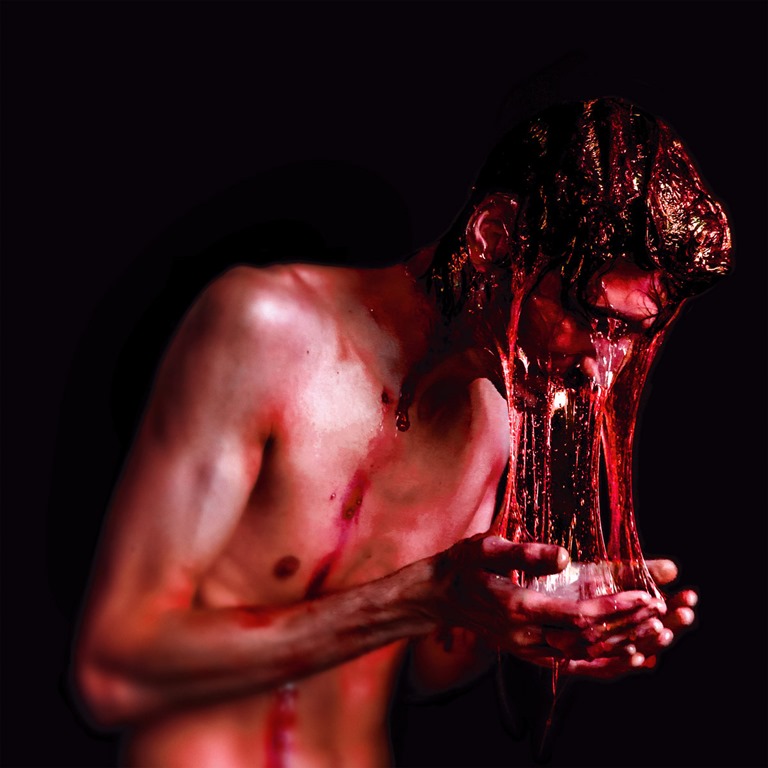
Shit happens, and lost in a tsunami of shit that is life with Christmas on top, the landing of Human Worth’s vinyl release of How Is This Going To Make It Any Better?, the third album from Northampton’s 72% originally released digitally and on cassette in 2019 was something I was aware of, but never got around to exploring. My loss.

It’s straight in with the clattering percussion that feels almost counterrhythmic, over which guitars skew in at obtuse angles, clanging and scratching – and then everything goes haywire and in less than a minute it’s a full-throttle assault: ‘I Have No Idea What You Want Me to Do’ brings the ugly sonic churn of Swans’ debut album, Filth, a record that still lands a kick to the stomach and leaves you feeling like you’re on the brink of spilling your guts to this day.

Some of it’s about discord; some of it’s about the relentlessly lurching rhythms, the stop/start churning bass and droning feedback and slabs of dissonance crashing out of the guitars, and some of it’s about the sheer abrasive force, meaning that as much as it’s in the realm of nascent Swans, it’s equally in the domain of Daughters and KEN Mode. ‘Mate, No-One Will Ever Love You’ sounds like it could be a title by The Streets or Sleaford Mods, or maybe some ‘witty’ middling indie band who think they’re incisive, so the fact it’s a blast of face-melting turbulence only makes it more audacious.

While it’s not exactly easy to make out the lyrics – by which I mean it’s pretty much impossible – the titles reveal the various themes that run through the album, and with ‘It’s Only a Problem if it’s a Problem for Me’ connotes the same kind of gregarious self-centred twattery as the abundant misuse of prefacing a statement with ‘mate’; you know the sort: cockends who call you mate are the last person you’d have as a mate, and they invariably think the world revolves around them.

‘Don’t Look For it, it’s Not There’ marks a shift towards a more post-rock style before lurching on a turn into thinking, lumbering sludge metal, while ‘Holy Shit’ is an appropriate response to the song of that title: it’s a messy morass of squalling free noise that’s not jazz, math, or experimental, but some kind of hybrid of all three, and it hurts. ‘Failure is Absolutely Possible’, however, is an entirely different proposition; mathy, proggy, post-metal, it beings the noise pinned to quiet/loud dynamics and some rather more technical drumming and for all its up-front, balls-out riff-driven thunder, there’s a lot of detail as well as a lot of noise. ‘Hurry, There’s No Time to Explain’ is urgent, powerful, hefty, and again it’s a collision of math and metal, and ultimately noise against noise with the force of a juggernaut racing down a mountain with the brakes cut. Closer ‘Brutish Giant’ is a full-on raging grunger which again invites favourable comparisons to Daughters’ last album, and leaves you drained, but uplifted.

With just 150 red vinyl copies, this is one of those releases that looks destined to be a future collectible, in addition to being a nice item. And, meanwhile, ‘10% all proceeds (+ Bandcamp’s 10% cut on the fee waiver days) donated to charity CALM – a leading movement against suicide, who are currently supporting more people than ever through this challenging time.’

There is comfort to be found in abrasion and noise, and Human Worth continue to put their proceeds where their sentiments lie, and we sincerely applaud their work, especially as there simply isn’t a duff release in their entire catalogue.

AA
a4045036575_10

28th January 2022

Christopher Nosnibor

So I’ve been bigging up OMNIBAEL from the outset – not because I’m acquainted – that cuts no ice with me as a critic, and if I don’t dig the music, I’m not going to back it for anything – but because I really rate what they’re doing. And what they’re doing is… well, they’re not entirely sure. OMNIBAEL are on a voyage of discovery, and they’re inviting you – and me – and all of us – along for the ride. They have no idea where it’s headed or where it will end, and that’s a large part of the appeal. So much supposedly ‘experimental’ music is scripted and scored. Rain Soaks the Earth Where They Lie is an experiment within a long-term experiment.

Each release to date has been a document of an evolution, and their debut album roper is no exception. Twittering feedback gives way to ripping riffage that’s distorted to fuck on opener ‘Mind is a Mess’ that’s the gnarliest of black metal melted into the darkest pits of burning torture, a missive from a purgatorial inferno.

I may have written on this album elsewhere, including some abstract liner notes that capture its essence, but I haven’t previously reflected in detail on the listening experience. It’s not pleasant, but it is intense, and it is, in the same way as it is with listening to Uniform, or The Body, a full-on body slam. It’s not easy, it’s not comfortable, and it’s a physical experience – one that’s like taking a kicking from a gang. Drums hammer in like boots reining in on the ribcage, and there’s absolutely no fucking mercy across the album’s nine tracks.

The churning murk of the eight-plus minute ‘Last Days’ is pure Throbbing Gristle, and this is dark, gnarly, nasty. ‘The Repetition’ starts with a mess of overlayed tape loops that’s very much reminiscent of the Burroughs / Gysin tape loops that so influenced Cabaret Voltaire in the early days, and after a moment of crackling electronica that strays into Whitehouse / Merzbow territory, it plunges deep into torturous melting industrial metal, a dingy mess so dark and so charred as to be corrosive to the organs. It ccu88ulminates in punishing screeds of howling feedback atop thunderous percussion that hammers like thunder. There are some deeply fucked-up vocals low-down in the mix, too.

It’s not pleasant, and listening to this breeds tension upon tension, you feel your muscles tense and your head grow tight at the temples and the back of the cranium. If the dank and gloomy ethereal ambience of ‘Rung Keep’ evokes swimming underwater, it equally feels like the soundtrack to drowning slowly, and there really are no breaks on this album: despite its sonic and textural variety, it’s heavy all the way. ‘Sound of the WW2 Story’ may be a brief interlude with some soft ambience akin to the swafting of a jellyfish, but it’s still dense, tense, and oppressive, and offers but two minutes breathing before the thundering punishment of ‘Flowering backwards’, which callas to mind Swans circa 1986 and early Godflesh in dub form. The volume, the power, the force, all combine to create something utterly cruising.

Listening to Rain Soaks the Earth Where They Lie is hard. It’s a brutal nihilism I’ve been craving and welcome unreservedly; it articulates the fact that life is pain. But the pain is without letup. Rain Soaks the Earth Where They Lie is uncomfortable, painful, and very, very necessary.

Om

Room40 – 14th January 2022

I know I’m not alone in experiencing the sensation that large parts of my life have been spent wading through treacle. It may be something of a cliché, but it’s a valuable simile for that slow struggle.

Although these are the associations circulating sluggishly in my mind, they have no bearing on the origins of the album’s title, which is, as Cooper himself explains, ‘a soundtrack for an otherwise silent film. The title of the album, and of course the film, is borrowed from my late friend Fred Hardy’s book The Religious Culture of India – Power, Love and Wisdom, considered to be one of the most important books on the subject. In this book Fred wrote,

“In 1835 the historian Macaulay investigated whether there was anything in the traditional Indian systems of learning and education that could be used in the training of native personnel. In fairness to Mr Macaulay, we must remember that those were days long before the writings of a Tolkien or a Mervyn Peake. He came to the devastating conclusion that people who believe in oceans of milk and treacle had nothing to offer to a modern system of education. A straightforward, realistic assessment in an age that believed in science and realism! The effects were far-reaching. Traditional Indian ways of looking at the world were written off as obsolete. India was provided with three universities (Calcutta, Bombay and Madras, founded in 1857) as the hothouses to nurture a custom[1]built, English-speaking Indian intelligentsia. A new age began for India, and two of its inevitable consequences were the demand for independence and the production of atomic bombs and satellites by the post-independent Bhārat.”

This places Oceans of Milk and Treacle in an altogether more academic context, and perhaps, if only a shade, this knowledge does colour my appreciation of the work specifically, an album consisting of nine compositions.

The pieces themselves present a collaged array of sounds, from distant rumbles and clanging hammers, to wind-chimes and static crackles. The clanking windchimes and eerie vocal moans and bleats, which drift amidst a breaking storm on the first piece, ‘A Chart of the Wet Blue Yonder’ contrive to create something quite sinister, and a significant contrast from the playful Jazz frivolities of ‘Boogie Boards and Beach Rubbish’. Oceans of Milk and Treacle is very much an album of contrasts and of strange sounds, combining chillout grooves and collaged field sounds and weirdness, often simultaneously.

It’s one of those albums that packs in so much, it transcends definition or categorisation, for better and worse – because genre distinctions tend to be lazy marketing pitches, and music – or any other artistic medium – should just be. Why can’t a book simply be a book or a story? Why does I have to be crime fiction, a thriller, sci-fi, or otherwise tossed into the netherworld of literary fiction or speculative fiction? And so why can’t an album simply be an oddball amalgamation of all sorts and simply be an album? Electric guitar and Moogs or something tinkle around while something electronic happens in the background to fill the space like crickets scratching, but clearly actually something less natural in origin on the warping, bending array of almost-pleasantness of ‘Tirta Gangga’, a woozy collision of sedated bleeps and chimes that sounds like it’s nodding off near the end – and it’s not an unpleasant experience.

The title tracks goes deeper into jazz territory, but there’s trilling analogue noise humming in the background, and it nags away at the peripheral sense, while on ‘Mono-Hydra’, amidst tweeting birdsong, the musical elements sound warped., bent, as if the tape is stretched and the notes spin off their spindles to spin into strangeness. ‘Under Vertical Sunlight’ brings hectic percussion to the fore, amidst drones and groans, before drifting into abstraction on ‘Toward Great Piles of Masonry’, which sounds like a wander down a city street while the clubs are still open.

Oceans of Milk and Treacle isn’t really a journey, but then what is it? A meandering sonic amble through a succession of sonic spaces and a range of scenarios? Possibly. Whatever it s it’s interesting, and devoid of genre conventions.

AA

a0586186042_10

Sub Rosa – 26th November 2021

Christopher Nosnibor

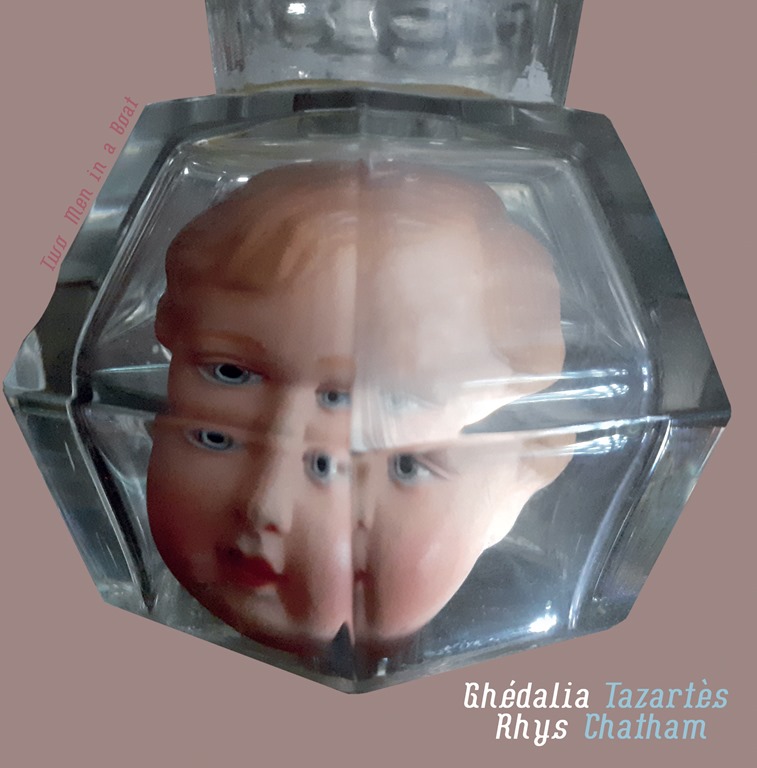
In the scheme of Ghédalia Tazartès singular career, which saw him featured more prominently in dance, theatre, and cinema than on record – a career spanning back to the mid-late 70s yielded just thirteen albums – this release is significant in several ways, not least of all in that it contains probably his final recordings prior to his death in February 2021 at the age of 73. It follows his last album release, Superdisque, which was released a full decade ago, in 2021. It also documents a collaboration that almost never happened.

As the story goes, ‘Tazartès and Chatham had met once in 1977 at CBGC’s and had not seen each other since then when they were asked by their mutual agent to play a private show in Paris. This happened in September 2018 in a house with a garden where sax player Steve Lacy had lived back in the 1990s. This album presents the recording of this show plus another show at La semaine du bizarre festival in Montreuil, France a year later, mixed with a couple of studio sessions.’

Their coming together yields something – and I’ve struggled to find a word that comes anywhere near describing what others have simply classed as ‘indescribable’ and ‘unclassifiable’ – most otherly. Tazartès singing is, in itself not only unique as a style, but also as an experience. It’s less about what it conveys as such, and more about how it touches you. It’s certainly not singing in the conventional sense; and yet, it is very much musical, rather than mere vocalisation. Tazartès sings from different parts of the body, and his voice tremors and quivers, trills, gargles, and ululates.

On the four parts (or ‘actes’) of the ‘Jardin de Simone’ performance, Chatham’s sparse, minimal backings provide a shimmering backdrop that ripples and glimmers softly. On ‘Acte 1’, it’s chiming notes, picked, on a clean electric guitar, while on ‘Acte 2’, it’s wavering woodwind which accompanies Ghédalia’s soft croon. Scraping strings create a dolorous discord alongside a wailing, weeping, skittish vocal performance on ‘Acte 3’ while the fourth and final piece floats into the atmosphere in amorphous waves if sound.

The three parts which make up the ‘Semaine du bizarre’ set are quite different, with Chatham’s backing on the ten-minute ‘Acte 1’ being denser, the electric guitar rattling and with strains of feedback filtering through the stuttering notes. The stutters are not of hesitation, but of tightly-reined tension, and over time the form evolves into an elongated tapering drone. The vocal adopts an almost falsetto-range droning quality, at times shifting to a guttural throb, at others, an open-throated note sustained on, and on. Woodwind drapes and twists around like fingers of mist. In combination, it feels mystical, in an impenetrable, occult way. Overall, this set is more drone-orientated, Tazartès’ vocals venturing more toward the lower register, the growlier, the more atonal. And yet, in places, he soars almost operatically, albeit descending like a punctured bellows after, while the instrumentation wheezes out, fatigued.

The vinyl finds a performance on each side, while the digital version features a bonus cut, appropriately entitled ‘Encore’. This, too, is quite drone-orientated, with the addition of a certain hint of an Eastern twang.

As a whole, Two Men In A Boat feels like a meditative work, and one which exists out of any kind of context, real or imposed. Without any constraints in terms of structure, culture, time, place, or even meaning – explicit or implied – the performers can be found revelling in the freedom of musical explorations. These are songs of the soul, and Two Men In A Boat is a unique document.

AA

SRV520_front

Southern Lord (CD/DL) | Pomperipossa Records (LP – Europe) – 14th January 2022

Christopher Nosnibor

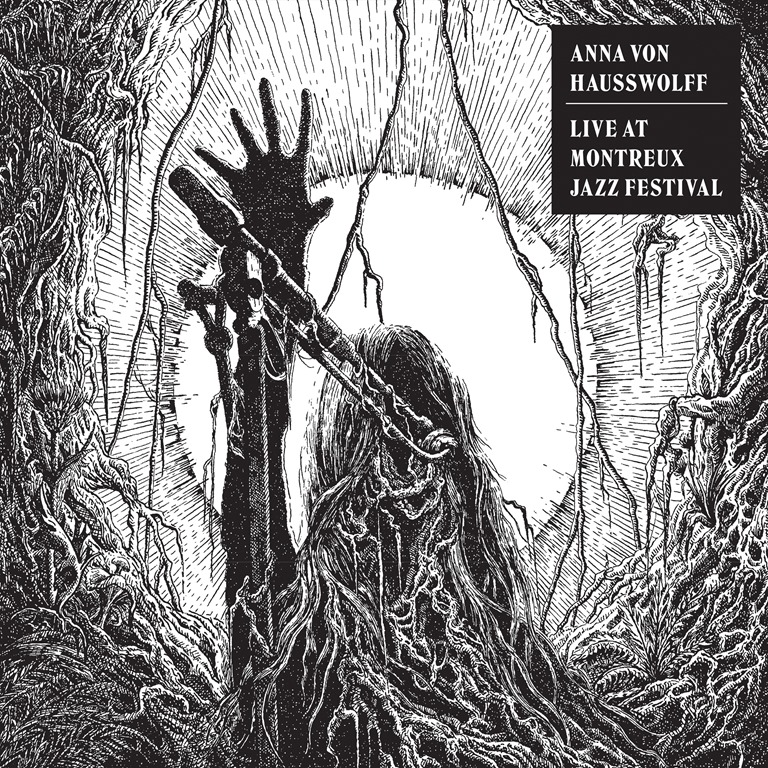
Perhaps the last thing one would expect to find being released on Southern Lord is a live jazz album. The label is, after all, home to much to the rawest, loudest, harshest metal and hardcore punk, not to mention, of course, the doom drone legends that are Sunn O))). But then, if Anna von Hausswolff seems like something of a roster misfit, it’s fair to say that her catalogue doesn’t conform to any obvious jazz tropes either.

The performance, from 2018, as the notes advise, features six fan-favourites from the two beloved albums; The Miraculous and Dead Magic, with the backing of a full band including additional vocals from her sister / cinematographer Maria von Hausswolff, and it’s ‘The Truth, The Glow, The Fall’ from Dead Magic, which opens the set in mesmerizingly hypnotic style. Against widescreen drones and rumbles, von Hausswolff’s vocal soar and swoop operatically. It’s a powerful and compelling start which paves the way for the grandiose expanse of creeping fear that is ‘Pomperipossa’ from The Miraculous.

‘The Mysterious Vanishing of Electra’ slows to a crawl with a Swans-like dirge centred around a simple, trudging repetition of bass and drum, and it’s here that things really take a turn for the heavy and the intensity builds. This rendition reminds me of the epic take on ‘Your Salvation’ by Foetus on the Male live album, grinding away at a single chord and hammering it into the ground before blossoming into something jaw-droppingly magnificent, and there simply are no words.

From hereon in, things only become more intense, more spectacular, with the brooding atmospheric ‘Ugly and Vengeful’ stretching out to almost twenty minutes, and leads the listener through an epic journey through a succession of sonic terrains. It’s a clear centrepiece within a set of vast sonic and emotional scale. It’s far, far beyond the domains of jazz, and even beyond the domain of ‘mere’ music: this is transportation and transcendental, taking you beyond the physical world and out of your own space to one beyond imagination. What’s perhaps most impressive is that this is all live; there’s no studio tweaking or trickery, but musicians conjuring pure aural alchemy in real-time.

After the delicate respite of ‘Källans återuppståndelse’, the fifteen-minute ‘Come Wander With Me Deliverance’ brings a suitably epic finale. The backing may be sparse at first, but the understated, almost wispy drones place von Hausswolff spectacular vocals to the fore. Then, when the drums and megalithic guitars crash in, they really do bring the weight. Yet the vocals remain the dominant force, and it builds – and builds, and builds – to a monumental crescendo. To have actually been there! The recording does a superb job of conveying just how gargantuan that finish would have been, and while there truly is no substitute for being in close proximity to a band working together, witnessing that connection and intuition as it flickers like electricity across the stage, and nothing can touch the experience of hearing, and feeling, music at gig volume as it vibrates the bones, Live at Montreux Jazz Festival comes very, very close.

We’re days into January, but it’s unlikely there’ll be a better live album this year.

AA

752975

Powdered Hearts – 25th December 2021

Christopher Nosnibor

I vowed not to cover anything Christmas-related, simply because, well, because, and also because fuck it. Christmas releases tend to be mawkish, and / or shitty cash-ins, which I have simply no time for, and even a general distain. Charity fundraisers are laudable, although in a just world there should be no need for them because ultimately the state should be supporting the needy and vulnerable without musicians, most of who make next to nothing from their art, having to donate their small royalty fees to food banks and the like. Christmas sucks on so many levels that it’s an essay or even a book in its own right, but this perhaps isn’t the place to begin expounding any of that.

But here we are, and here I am making an exception, and for what I feel to be the right reasons, with the additional bonus that this is no crappy cash-in, and no motive beyond itself.

The prodigiously prolific Gintas K celebrated Christmas unconventionally with yet another release, this time in the form of a Christmas treat entitled Christmas Till The End. With five tracks in all, which are mostly shorter pieces, apart from the twelve-minute title track, it’s quite a departure from much of his back-catalogue, not least of all some of his experimental digital explosions of recent years which have seen him move from microtonal explorations to squelch-laden sonic chaos delivered by means of some nifty software run though an ancient Lenovo Thinkpad (something I have infinite respect for: so many musos have state of the art hardware, while I’ve discovered for myself that reconditioned corporate laptops even from a decade ago have better specs and are built more sturdily than the majority of consumer-orientated laptops). Whatever the sonic differences, though, he’s maintained the same process, namely recording each track live in a single take with no overdubs.

Christmas Till The End may not be the frenzied digitised froth of recent releases, whereby GK simply blasts out various strains of laptop-generated whirring, blooping, crackling noise, and you couldn’t exactly call it a conventional Christmas album, or a celebration of the festive season, either. It’s more of an assemblage of elements of Christmas collaged, crossed out, crunched together.

If the first track, ‘Bah’, perhaps speaks for itself, ‘Für Elise’ presents a picture that highlights the complexities of Gintas’ work. It features Beethoven’s ‘Bagatelle No. 25 in A Minor’ (aka ‘Für Elise’) and mangles the absolute fuck out of it, because it’s a Gintas K digital mess mash-up. There’s no overt or explicit statement here but trashing the piece feels more like a desecration of the Christmas spirit than a celebration, an act of destruction that feels wonderfully irreverent and more than just a little cathartic in context. It is, also, an ultimately avant-garde act of destruction, in keeping with the principle of destroying the old to build anew. Here, Gintas renders that destruction performative, integral to the form and content.

‘Hymn Lithuania’, at first, does sound overtly Christmassy: a rendition of the Lithuanian national anthem on a glockenspiel, the notes ring out, chiming, bell-like and charming. But after about a minute, it begins to degrade and disintegrate as extraneous noise, feedback and bleeping whistles begin to disrupt the tranquillity, while the delicate piano of ‘vivaLIDL spring’ is ruptured by bomb-like detonations and the clatter and thud of descending rubble. If I’m not mistaken (and I may well be), a corruption of Vivaldi’s ‘Spring’ played at about a quarter pace provides the backdrop to this grim scene; you can almost picture the pianist playing, the film in slow motion, while the building collapses in flame around him. The wordplay is also worth noting – I’m assuming LIDL is bigger in Lithuania than Aldi, as VivALDI would have been the most seamless pun by which to highlight the commercialism of the season.

The title track wraps it all up nicely, and ventures closer to K’s whiplash blizzard off whirrs and bleeps, although in a relatively restrained form, whereby the discombobulating discord whirs and warps over delicately chiming tones. As things slowly disintegrate – both on the album and in the real world, it feels more like Christmas for the end: this is the soundtrack to the decline. May the end come soon.

AA

a3680885656_10

Klanggalerie – 5th December 2021

Christopher Nosnibor

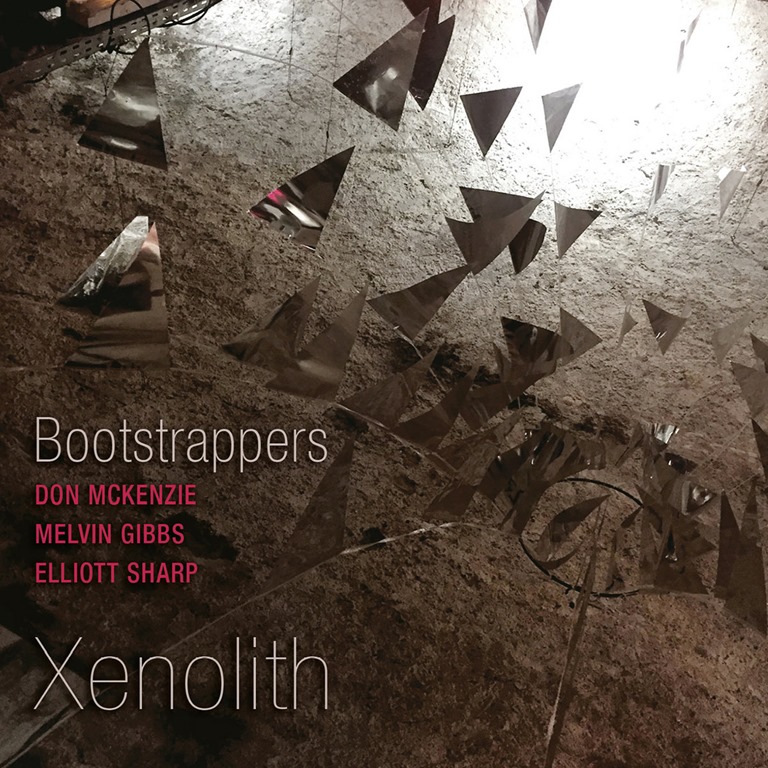
From the Greek xénos, a noun meaning “stranger, guest” or an adjective meaning “foreign, strange”, xeno has come to used as a prefix meaning “alien,” “strange,” or “guest.” Meanwhile, ‘lith’ refers to a stone (making megalith and monolith self-explanatory).

Elliott Sharp’s power trio Bootstrappers’ brand of free jazz / classic rock crossover, they say, is ‘filtered through the ethos of cyberpunk, techno, and free jazz: raging, psychedelic, and filled with fantastic extrapolations’, and since the group’s inception in 1990, they’ve undergone numerous changes in lineup, but the ethos has remained the same, meaning that this offering truly is a strange stone – one that’s hard and soft, smooth and rough, not just in different places, but in some patches, all at once. Such a stone should be geologically impossible, but then, so should the sensory explosion of the seven wildly varied and inventive compositions here, courtesy of Sharp, along with Melvin Gibbs and Don McKenzie.

If the first, ‘Telentechy’ is, at least on the surface, a fairly standard jazz-leaning rock workout, it also possesses enough detail and enough changes to render it rather more. It does seem customary for many such acts to open an album with a track that sounds like a slowly-winding down finale at the end of an hour-long live performance, and this track just does just that, but where so many similar acts lose my attention is in making every subsequent piece sound like another eight-minute winddown and seventy minutes later you’ve had nothing but a crashing, discordant conclusion and not a lot else. So while Bootstrappers do essentially begin at the end, and have numerous sprawling, somewhat formless expanses of barely-contained chaos on Xenolith, they also present numerous changes in mood and tempo, even approximating structural form in places.

‘Sieze the Mement’ is a wibbly, noodlesome piece that evokes eastern scales while also hinting at a dizzying progressive / Krautrock crossover. Immediately after, and after bouncing along for about four and a half minutes, I suddenly realise that ‘Lo Shu’ has grown quite funky in its groove… but then just as the dawning occurs, so the groove melts and dissipates into so much flickering light.

There is a lot going on, but where Bootstrappers succeeds and stand apart is their being only three: this necessitates more minimal arrangements and means they’re not prone to the spells of chaotic discoordination whereby it sounds like six people playing six different tunes in different keys and different time signatures, and instead feels altogether more focused for the most part, and as a result, they do pitch into some nice grooves that you can really get into.

According to their bio, ‘Future editions of Bootstrappers may see the group expand to orchestral dimensions’. While this may be an exciting evolution, Xenolith evidences that they’re fine just as they are right now.

AA

a0588468219_10

1st December 2021

Christopher Nosnibor

Just shy of a year since Cave Suns threw their improvised ‘Surk Skum’ EP into the plague-ridden void, they return with a proper lo-fi DIY release, consisting of four pieces, ‘improvised live one take each song apologies included’ they write. The set was captured on an iPhone and is released on a limited edition cassette (and digitally, of course).

Beyond the world of the major label (and the domain of the indie label with some cash behind it), this increasingly appears to be the future of the little band. With the chances of getting signed and getting bankrolled these days practically nil even for solids acts with some commercial potential and significantly less than zero for artists doing anything without that commercial potential (which isn’t to say there’s no audience or demand), they’re taking thee means of production into their own hands and just getting on with getting their music out there. If one positive thing has emerged from the last couple of years under the pandemic – and let’s face it, it’s been hard to find anything positive, particularly for bands and small venues (I’m hesitant to say ‘the music industry’ because Ed Sheeran and Eric Clapton won’t have suffered too heavily from the lack of touring options in terms of bank balance or their ability to reach audiences or shift units / merch and I’m sure the likes of Warners aren’t questioning their viability right now) – it’s the fact that perhaps finally any stigma around self-releasing has been eradicated. That said, for Newcastle’s Cave Suns, it’s business as usual: they’ve been self-governed and self-releasing since 2014 and haven’t been troubling studios in order to lay down their intrusive improvised sessions, preferring instead to capture live shows and rehearsal room jams

‘Dunder Salt’ is a kind of mellow psychedelic swagger with a buoyant bassline and bopping beat that seems to all cast a nod to the verse of The Beatles’ ‘Come Together’. With minimal progression, there’s a Krautrock element to the vaguely jazzy, vaguely funky groove. It’s a solid jam, but it’s not until the eleven-and-a-half-minute ‘To Who It May Concern’ that they really show us what they’re capable of. Mystical, eastern-inspired scales twist in a slow-building swell of sound, a hum and a drone of bass and tentative drumming before emerging on a vast sonic plateau. It’s one of those compositions that stops and starts so often that it’s hard to decide if it ever really gets going, or if it’s several pieces string together; perhaps more reasonably it’s best described as several movements with a succession of ebbs and flows and sustained crescendos, often with the drums pounding hard with insistent thrashing of cymbals and hitting some solid grooves even with the stretches of meandering guitar.

‘Essesse’ kicks off wide two with something altogether lighter, more technical, with a mathy aspect, and also more overtly proggy, you might even go so far as to describe it as jaunty – but then, you may not. It’s kind of a collision between That Fucking Tank, Muse, and Royal Blood. Maybe it’s more as well, It’s certainly their most ‘muso’ cut to date, and is also highly accessible.

The 11-minute ‘13th Celebration’ that rounds off the EP and the remainder of side two is built around a repetitive bas throb that evokes the monotonous groove of Suicide, but overlaid with a sprawling guitar jam that’s part prog, part space rock, all improv. They lock into a neat groove for a time and really rock out, but then slow it down and trip out, crawling to the close.

Hypnotic, groovy, completely free of the shackles of genre and commerce, No Guards knows no limits and captures Cave Suns on fine form.

AA

a1022258747_10

Room40 – RM4163 – 3rd December 2021

Christopher Nosnibor

Field recordings are rarely something one would consider ‘contemporary’, although if you think about it, they invariably capture a moment in time in some way or another, be it the morning of the dawn chorus or the grind of machinery which is firmly post-industrialisation; the sounds committed to tape all document history in sound.

Ian Wellman’s latest release is quite specific in its focus on present times. It is almost impossible to avoid the pandemic; it has, after all, affected all of our lives, and in myriad ways. As the accompanying text states, ‘If this past couple of years has taught us anything, it is that to hold someone closely is not something we may take for granted. The bonds of friends and of family are tenuous, as tenuous as the world that we find ourselves in.’ While most attention has understandably been given to the vulnerable, the bereaved, and the sufferers of long covid, there have been long—terms and slow-evolving effects on everyone. And this is what Wellman soundtracks with subtlety and care here.

The parenthetical ‘(Police Helicopter Activity Increased – Jul 2020)’ is brief, but it’s impactful. On the one hand, it’s a simple snippet of the sound of rotors; on the other, it’s the kind of conglomeration of low-flying helicopter buzz that makes you duck and look up and feel paranoid: police helicopters hovering or circling overhead always do, right?

The final moments of ‘It Crept into Our Deepest Thoughts’ bursts into shards on abrasive noise in the final moments. It’s on ‘The Toll on Our Daily Lives’ that Wellman really encapsulates the struggle. The first four minutes are dislocated ambience, which reflects the general sense of detachment and distance, but the last minute is dominated by a rising tide of noise, a surging swell. And it speaks because it really is the sound of swelling tension and anguish. The reality is that living through this is not something that belongs to a ‘model’, there is no fix by means of re-engagement. This resonates because it speaks to and of the building anxiety, and it builds because maintaining that level of alertness, that level of fear, actually has a cumulative effect in real terms, and we’re simply not designed to process life in the now. There is nothing normal about this, old or new, and ‘The Toll on Our Daily Lives’ encapsulates this perfectly, both in its title and the sonic smog that ambulates broodingly, again growing in density and becoming more oppressive and heavy and harsh as it progresses. You feel not only the weight, but the tension. It’s real, it’s palpable, and it’s a direct reflection of life as lived.

The interludes, too, are so very visual and evocative: a cock crows and what sounds like rainfall and passing cars crackle and splash on ‘(Ash Falling on Power Lines – Sept 2020)’ (the ash of wild fires burning), and there’s a post-apocalyptic feel to ‘(Wind Against Decaying Bus – Jan 2021)’, and they all combine to create what the blurb describes as ‘a devolving diary of unsteady moments and the assurance of change as the one constant in our collective times’.

‘As The Beast Swallowed Us Whole’ veers between ominous rumbling and near-ambience and surging, cracking textured distortion that borders on noise, and there is nothing comforting about this album. Even the final track, the optimistically-titled ‘The Light at the End’ is woozy and disorientating, and evaporates into a crackle of static that ends abruptly, and feels more like the light being snuffed out. You want to be wrong… but life… it’s a killer. Swear all you like, but whether or not it’s going to be okay remains to be seen.

AA

a0173304686_10

Constellation is honoured to welcome Montréal producer Kee Avil to the label. Her hybrid songcraft of postpunk, electroacoustic and electronics gets inside our heads and under our skins in the best way. She’s celebrating by sharing a song and video. Details of her first and phenomenal full-length album to follow in early 2022.

‘See, my shadow’ is a kinetic assemblage of tension and release with chiselled guitar lines, plucked and pounding prepared piano, scraping metal, electroacoustic micro-samples and alternating blasts of crisp drum programming, all galvanised by Kee Avil’s intimate, inscrutable, insistent vocal.

Watch the video here:

AA

Led by Montréal producer Vicky Mettler, Kee Avil combines guitar, voice, electroacoustics and electronic production to create song assemblages that teeter on the edge of collapse while oozing forward, like sticky resin picking up and shedding disparate elements along the way. Kee Avil evolved from playing guitar with broken cymbals and drumsticks to forging askew tempos and templates glued together by samples of screws dropped into crystal bowls. Her self-titled debut EP, released in 2018 on Black Bough Records, harnessed her improvised music and prepared guitar background toward a newfound structural sensibility and arresting vocal / lyrical experimentation; she has been immersed in the exploration of distinctive compositional architectures ever since, expanding her sonic palette with increasing and intensive detail, where twitchy, finely wrought postpunk electro-industrial avant-pop songs are meticulously assembled to resemble disassembly.

Honed through pre-pandemic tours in North America and Europe (sharing stages with Marc Ribot, Pere Ubu, Bill Orcutt and Fly Pan Am, among others), Kee Avil’s emerging body of work signals a vital, viscous, virtuosic new voice in experimental songcraft – where touchstones include Juana Molina, Scott Walker, Fiona Apple, and Eartheater; where PJ Harvey meets Pan Daijing or Grouper melds with Autechre.

Kee Avil will be presenting a new and definitive collection of studio recordings in early 2022.

4de07a03-c59e-2d3c-013a-f686f6c8a644