Posts Tagged ‘electronica’

Analogue Trash – 15th August 2025

Christopher Nosnibor

It’s been a busy spell for The Royal Ritual. You might say that David Lawrie is making up for lost time. With real-world activity off the cards during the pandemic, he assembled The Royal Ritual’s debut album, Martyrs, and followed up swiftly with the more sophisticated Pleasure Hides Your Needs last year, as well as an EP and some proper touring, which saw that sophistication taken to the stage in such a way that created a spellbinding live show and immense sound. Despite there only being two bodies on stage, two live guitars, a combination of programmed and live drumming, looped, not to mention ambitious visuals makes for a compelling performance. There’s no question that this this was a show that would be perfectly suited to a bigger stage, and landing a slot at Infest provided the opportunity for the band to truly come into their own. The live footage they’ve shared online confirms this, and the quality of the performance very much justifies this live album’s release, capturing as it does the full set with first-rate fidelity.

AA

It’s a masterfully structured set, which draws equally on the two albums, and begins with atmospheric organ leading into the slow-building ‘Vantage Point’, slow, brooding synths and a pulsating kick drum giving way to a barrage of beats and crunching, metallic industrial guitar. There’s no dead space between the songs: a tapering drone and snippets of samples maintain the atmosphere before ‘(nothing) On the Other Side’ thunders in on a thunderous percussive assault, and things only turn darker, heavier, more intense and more percussion-led on the claustrophobically intense ‘Pews in the Pandemic’. Lawrie gives it some guts in the vocal department, switching between menacing and wracked with anguish, and peaking at epic, emotive.

The processed-sounding guitars and synths have that KMFDM / Pig vibe and would be perfectly at home on a Wax Trax! release from the early 90s, but the colossal drumming sets it quite some way apart. Moreover, where The Royal Ritual really succeed here is in the way they preserve the sound – and the detail, and, importantly, the mechanical tightness – of the studio recordings, while the use of so many live instruments and, for wont of a better term, ‘moving parts’ means that this has the full energy and dynamics of the live setting, that edge, that bite. Naturally, this is felt more strongly when you’re actually in the room, in the moment, with the electricity of the proximity to the band, and in a room full of people, but this does a top-notch job of capturing it all through the medium of sound alone.

‘Martys’ is a full-blooded industrial-strength dark glam-tinged stomper, and ‘Modes of Violence’ takes things up a notch, combining solid hooks and gritty, hard-as-nails industrial guitars. It’s fitting, then, that ‘Coma’ closes the set with a more reflective feel, with expansive almost trance-like passages intersecting with electronic-led progressive segments. Lawrie’s soaring vocals are rich with emotion that’s almost spiritual as they ascend to the skies, before the set concludes with a glitching stutter, somewhere between a Morse Code SOS and teetering on a flatline, amidst a mutter of sampled dialogue and siren wails. It’s a bleak, almost apocalyptic, Bladerunner-esque finish. There is high theatre here, but there is also real human spirit, and an emotional range not always found in the sphere of electronic / industrial music, which can, at times, feel cold, clinical, detached.

The quality of the songs was already evident in their studio releases, but Live at Infest demonstrates that not only do the songs have further dimensions which only become apparent in a live setting, but that The Royal Ritual are a killer live act.

AA

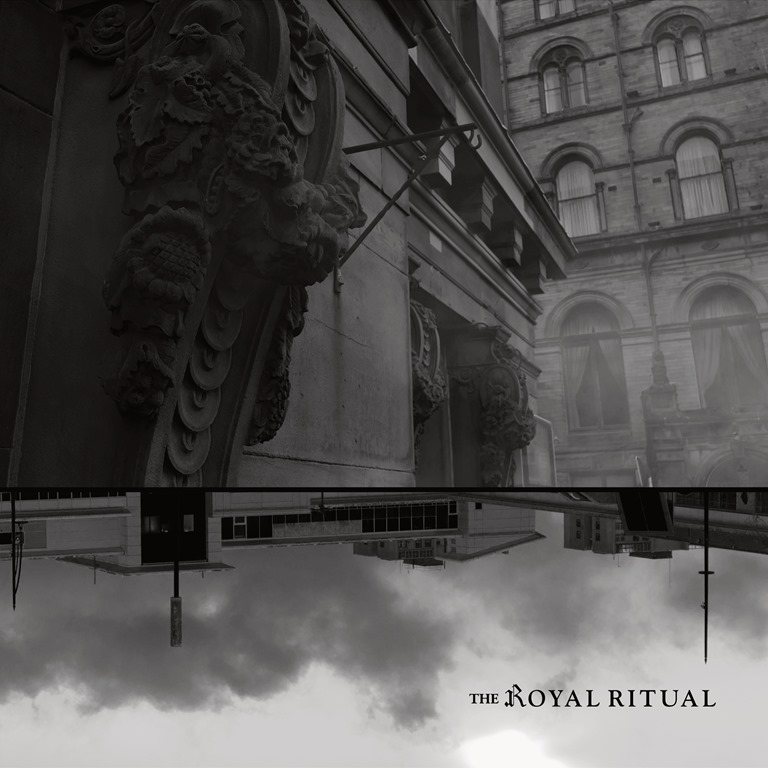
The Royal Ritual - Live at Infest (Digital Cover)

Dimple Discs – 22nd August 2025

Christopher Nosnibor

Weird shit is welcome here at Aural Aggravation. It was a part of the ethos of my starting this site back in 2015. Yes, it’s been that long since I decided that I wanted to strike out alone with a view to creating a platform devoted essentially to stuff that appealed to me and exploring them with more long-form, discursive essay-type writing. This of course completely went against the grain of where most media, in particular music media, is at now, and this has only become more pronounced over the last decade, in which time attention spans have largely been reduced to circa 120 characters or simply .GIFs and memes. But – presumably because my focus is on rather niche music which doesn’t always receive a wealth of coverage, rather than because of my propensity for divergence into the personal or the political – Aural Aggravation now attracts a respectable readership. I don’t feel any desire to celebrate 10 years of doing this: to do so would really be to celebrate a decade in a lifetime of stubbornness, a compulsion to write, and a musical obsession which I choose to inflict upon the world, but I do suppose, on reflection, that the rarity of the format, occasionally touching on theory, but – hopefully –without too much hypotactic wankery.

And so we arrive at XiX by Kev Hopper, who despite fourteen solo albums, and despite co-founding electronic act Ticklish in the late ‘90s, and was composer/bassist with Prescott in the 2010s, and working as a visual artist by the medium of painting for a good number of years, is still probably best known for being the bassist in Stump between 1983 and 1988. Despite only releasing one album proper, their output of singles and EPs was solid, they were all over the music press at the time, and they were championed by John Peel. This potted history throws into sharp relief just how times – and the face of the music industry, particularly outside the mainstream – have changed.

Hopper’s second album on Dimple Discs is a collection of quirky, whimsical electronic experiments. Skittery, light, and lively, there’s a playfulness which defines the pieces, even when sliding into low-end notes and minor chords. ‘Vector Prodder’ plunks and plonks, twangs and reverberates, and slides into spooky but fun territory, and in some respects it’s got 1960s Addams Family vibes. ‘Gruntian Forbes’ twists and spins strangeness into a sunny calypso groove, and this, in many ways, encapsulates Hoppers’ approach to composition on the twelve tracks on offer here – namely taking a comfortable form, and rendering it uncomfortable by warping, twisting, and distorting it in some way or another, tossing in some ethereal haze and a bucketload of l’aissez-faire oddball elements. And why not?

XiX fully embraces the spirit of experimentalism – the idea of simply trying things out and seeing what happens, and not even being hugely concerned if it’s only half-successful. That isn’t to say there are any semi-successes or borderline failures on XiX: what I’m driving at is the spirit of creative freedom which pervades. When cut free of the constraints of commercial concerns, when liberated from self-censorship, and simply creating for the sake of creating, for the joy that experimentation and making sound can bring, a work takes on a level of buoyancy. XiX is the sound of creative freedom. ‘Devils’ may be dolorous, with hints of Tom Waits, but ‘Lance The Prawn’ is an exercise in gurling synth and ridiculously OTT vocal processing (half-burying absurd couplets like ‘lance the prawn / on the lawn’) amidst bleeps and wiffles and space-age throbs and pulsations.

It’s sci-fi in its influences, but it’s Douglas Adams on the serious scale. While I’m no fan of Adams myself – I find the humour simply too cheesy, but worse than that, I find the fans of his works, who insist on referencing him relentlessly beyond irritating, I would like to think that this scaling works in context. The album’s material is not irritating or nerdy, but it is, at times, overtly strange, and nowhere more so than on ‘Brand Street Psychodrama’. It may be but a brief interlude, but it’s all the disorientation. ‘Window Seat’ brings all the chimes and gentle brass, evoking that mythological bygone age crossed with intimations of ‘made in China’, in the brittle 80s plastic sense.

Having just written about Eamon the Destroyer’s new release, it seems that this belongs in the same field, but represents an altogether different face of the experimental dice.

And this is a good thing, in that we are able to wander through very different corridors while stroking our chins and pondering the work emerging from the field of ‘experimental music’. Towards the end, there’s an urgency that builds to XiX. Or perhaps it’s just my anxiety rising as midnight draws closer.

Either way, this is a supple work, which ventures across a range of styles and forms, with the chiming, tinkling nine-minute closer, ‘The Cucurella Problem’, with its whimsical , warping lead lines and tentative, wandering bass being truly exemplary. It bends the brain, but slowly, gently, softly, and it’s kinda nice.

AA

a0361012740_10

Bearsuit Records – 5th September 2025

Christopher Nosnibor

The thing with Eamon the Destroyer is that you never know what you’re going to get. The Maker’s Quit is different again from We’ll Be Piranhas, which in turn was quite unlike Small Blue Car (which remains a personal favourite, even if it does make me feel impossibly heavy on the inside). If We’ll be Piranhas marked a step forward in terms of experimentalism and optimism, The Maker’s Quit sees a greater emphasis on songwriting and structure – but don’t for a second think it’s in any way straightforward, and that the experimentalism has taken a back seat – it’s still very much a copilot here, and with the accent on the mentalism.

Here, the title track commences what is an incredibly varied set with a song that has the theatricality of Alex Harvey crossed with 1990s Leonard Cohen, before ‘Silverback’ confounds all expectation by bringing some shuffling funk-infused jazziness. In contrast to the fairly minimal arrangements common to previous ETD releases, this is pretty busy, then is settles into a mellow groove that’s almost loungey – bar the mid-section, which is rent with a protracted burst of extraneous sound. It’s almost as if he purposefully weaves around the line between genius and self-sabotage simply to tests us as listeners. There are some nice, light, poppy moments on here, and – albeit fleetingly – some captivating grooves. But it wouldn’t be Eamon the Destroyer without a huge helping of straight-up weird shit mashups, and The Maker’s Quit brings the lot, from frenzied jazz and post-grunge, wonky vaudeville waltzes and whistling, via electropop and slices of pan-culturally inspired melody.

More often than not, the verses and choruses are so contrasting as to seem to have been spliced from different songs – that’s when there are verses and choruses. ‘Three Wheels’ is a veritable patchwork, which compresses segments of what sounds like half a dozen songs into five minutes as it spins from grandiose heavy country dirgery by way of an intro, which even hints vaguely at recent Swans, before swerving into Europop with a hint of Sparks, through a off-kilter but gentle soundscaping that slides into laid-back salsa before winding up with a segment of jaunty indie rock. But rather than feel like an identity crisis, the effect is more that of a multi-faceted artist showing all his facets simultaneously. It’s hard to keep up, but one can only imagine what it must be like to live in his head.

The lyrics are equally fragmented, between stream of conscious and cut-ups, producing a Burroughsian, dream-like quality. This snippet from ‘The Maker’s Quit’ exemplary: ‘Saturn kid – spins and reels – in a city / Little Feet – lost in a wave – out to sea / A grandmother – nods – to a space in the crowd / Cap gun assassin – emerges – from a conjurers cloud…’ Beyond oceans and waves, it’s impossible to pin down any notion of themes or meanings. The images float up and fade out instantaneously.

‘The Ocean’ begins dramatically, a swelling, surging drone that halts abruptly, yielding to one of the most typically Eamon the Destroyer passages – lo-fi folktronica with a low croon reminiscent of Mark Lanegan, which slowly tilts its face upwards from scuffed boot-tips towards the sun…. and then all mayhem happens in a brief but explosive interlude, and your head’s suddenly spinning because wherethehellhasthiscomefrom? It’s this wild unpredictability and unapologetic perversity which is – strange to say – a substantial part of the appeal of Eamon the Destroyer.

When Eamon the Destroyer goes downtempo, as on the mournful, string-soaked introductory segment of ‘Captive’, you can actually feel your heart growing heavier by the bar, but then it twists onto some semi-ambient avant-jazz, and the sensation transitions to bewilderment.

The final track, ‘The Buffalo Sings’, is a twelve-minute behemoth is s slow, surging lo-fi electronic exploration. Face the strange? It embraces it, hard, then absorbs it by ghostly osmosis. If ever a song was less country, less ‘Buffalo’… maybe some of the western themed electrogoth songs by James Ray and the Performance are on a par on that score, but this wanders into a sonic desert without even a hat for protection from the punishing sun, and slowly, everything melts in the heat. Circuits bend and warp, and the weirdness rises like a heat haze… and it’s wonderful to be immersed in a work which celebrates creative freedom with no sense of constraint or obligation.

On reflection, with Eamon the Destroyer, you know exactly what you’re going to get: visionary hybridity, moments of aching sadness and fractured beauty, shards of melancholic memory , unbridled inventiveness and fevered creativity, and music like nothing anyone else is making. In a world where meaning seems to have all but evaporated and it’s increasingly difficult to make sense of any of it, The Maker’s Quit feels like a fitting soundtrack. It exists purely in its own space, and it’s the perfect space to escape to in these most dismal of times.

AA

Eamon-TD-3_Cover

Louisiana-based ‘industrial bass’ pioneer, SINTHETIK MESSIAH has unveiled their latest EP, Beneath The Surface.

Beneath The Surface is a descent into the undercurrent — a raw, unfiltered excavation of the chaos, cruelty, and confusion that define the world we live in. Each track is a spade hitting the dirt, digging deeper into the systems, histories, traumas, and human instincts that keep everything so relentlessly messed up. It’s not about offering answers. It’s about refusing to look away.

Sonically, the EP blends the smoky unease of 90s trip-hop with the rusted edge of 90s industrial — a fusion of broken textures, distorted synths, and dragging, dirt-covered beats. It’s jagged, emotional, and sometimes angry — the way truth sounds when it’s unearthed.

‘Caught In The Grip Of The City’ is representative of the EP’s dark atmosphere. Hear it here:

AA

1af3853d-f518-24bc-fb7e-db48d226923f

British electronic artist Max Rael presents ‘Pressing Against The Glass’, a danceable elegy for the unbelonging. Capturing the deep-seated ache of being on the outside, this is a soundtrack for those who feel eternally separated from the warmth and safety they can only observe.

Based in Hertfordshire, Max Rael is a key creative force in the UK underground through 1990s-2000s electro-goth trailblazers History Of Guns, frontrunners of the Wasp Factory / FuturePunk scene, and Decommissioned Forests. Here, he showcases his singular talents on this record, featuring unique twists on sound design and his acclaimed outsider lyrical perspectives. Musician, writer, actor, engineer and producer, Max Rael has collaborated with Fish (Marillion), Last July, Kommand + Kontrol, Freudstein and Bienheldenschafgegenstand.

“I’ve always been taken by the image of someone being outside alone in the cold looking in through a window to warmth, comfort and safety that’s not for them. I was thinking of Heathcliff looking through the windows of Thrushcross Grange in Wuthering Heights or Frank Abagnale Jr in the film "Catch Me If You Can", outside in the snow at Christmas, unseen looking in through the window at his mother with her new family, happy and warm indoors and realising there is nowhere he belongs, and no one he belongs to,”  says Max Rael.

This is the latest audio-visual offering from his debut solo album The Enemy Is Us, released via London imprint Liquid Len Media. Offering up a dark bouquet of minimalist synth, darkwave and spoken-word electronic pop, this album introduces Rael’s compelling ‘futuretroist’ sound: an alternative sonic universe built on a unique sound design that feels at once familiar and alien.

AA

AA

Rael’s powerful and thought-provoking spoken-word lyrics confronts a world in freefall—its corruption, alienation, and misery. The result seemingly effortlessly conflates a painfully personal portrait of an interior world, with an achingly universal depiction of society and the world outside. He still unearths a resilient core of hope and gallows humour that burns brightly through the darkness, offering a complex and compelling take on the human condition.

Earlier, Max Rael released the poignant shadow-streaked ‘Slightly Less Than Human’, a nervy electronic track with a great hooky synth melody and spoken word vocals. Partly inspired by Japanese author Osamu Dazai. Lyrically, Max Rael relays his feeling of being somehow different from the rest of the human race, while the non-album B-side ‘When the Only Winning Move Is Not to Play’ relates to the 1983 film War Games and the book The Games People Play by Eric Berne.

In April, Max Rael shared his spoken-word electronic pop song ‘Brighter Future’, where he questions avoidant strategies of coping with life in a seemingly increasingly chaotic and unsafe world and queries how can we reverse course from an anticipated dystopian future. The B-side ‘The People We Love Have Won (Persistence Is All)’ is a darker beast, named after Coil’s 2000 London performance at The Royal Festival Hall, which also happens to be tattooed on the inside of Rael’s left wrist.

Spoken word, electronic music and loud drums feature strongly on the 12-track album, produced and mixed by Max Rael with additional mixing by Caden Clarkson and mastered by Pete Maher (U2, Nick Cave, Depeche Mode, Pixies. Nine Inch Nails). Fusing a range of electronic music styles with other genres, Max Rael is a master journeyman of existential exploration into humanity, self, society, reality, psychology, philosophy and the future.

Max R

28th July 2025

Christopher Nosnibor

Beauty, as they say, is in the eye of the beholder. Certainly, it requires a fairly specific subjective standpoint to hear the beauty in a bleeping rush of effervescent electronic froth, but there is something in it – and yes, it is intense – to the extend that it’s like a fizzing chemical reaction, like vinegar and bicarbonate of soda, exploding in your brain. And it’s quite a high.

Intense Beauty finds Gintas Kraptavičius (Gintas K) in his most common setting, with the album being fully improvised, ‘recorded live, using computer, midi keyboard & controller’. Recorded in June 2025 of this year, by the power of the Internet and micro-labels, it was released as a limited cassette on Tokyo-based label Static Disc just weeks later on 10th July, before also becoming available on Gintas’ own Bandcamp page.

As is common to many of Gintas K’s works recorded in this manner and with this – seemingly unique setup, there’s something playful, even joyful and uplifting about the sound. It is chaotic, but it’s also carefree, and it’s not remotely dark or heavy: there’s nothing harsh or abrasive to be heard here. ‘intense’ is skittery and skittish, off-key electric piano thumps and stomps erratically, glitching in and out throughout, while cellular sounds fly around all over like plankton in a storm before gradually slowing, tinkling and flitting at a more sedate pace until grinding to a halt.

‘harmony’ isn’t particularly harmonious, instead merging static and drone with groaning whirrs before yielding to discordant bent notes playing across one another. One thing that is a constant throughout Intense Beauty is a sense of movement. There isn’t a moment is stillness, as sounds and ideas flit from one place to another with no discernible flow, and th9is is nowhere more apparent than on the shifting sonic collage of ‘gal bet’. It’s hyperactive, and should be exhausting, but the sheer energy is contagious and uplifting.

Watching the accompanying video of Gintas recording for the album is illuminating, particularly the vigour with which he plays, simultaneously striking keys on the keyboard with hands, wrists, forearm, seemingly at random, but with remarkable speed and dexterity, while cranking knobs hard and fast: the camera and table shake under his frenetic kinetic activity. K isn’t one of those who creates sound simply by pushing buttons here and there: this is a full-body physical performance. This, too, is an example of intensity, and the artist pours it into the act of artistic creation.

There are a lot of experimental electronic artists around, but no-one else sounds quite like Gintas K.

AA

AA

a3925363230_10

US dark-pop duo Magic Wands have released a double single today (1st August) that couples the brand new song ‘Across The Water’ with a remix by Stargods of their ‘Hide’ single issued exactly a year ago. The latter is accompanied by a new video that can be seen here:

AA

They describe ‘Across The Water’ as “setting the tone for a sonic journey through time, transporting us to a 16th-century French European landscape and evoking the essence of a bygone era. Its repetition invites interpretation, allowing listeners to weave their own narrative and connect with the music on a deeper level.”

‘Across The Water’ is the opening track on a brand new album by the duo entitled Cascades, which is set for release on 24th October via Metropolis Records. It also includes the original single version of ‘Hide’, plus the previously issued ‘Armour’ and ‘Moonshadow’. The album will be promoted with an appearance at the Substance 2025 festival in Los Angeles on 7th November, with further shows to be arranged.

AA

c221a95108828c1659ddda2ea3ebf8b9e03358d3

COVENANT announce the release of the new Andreas EP. The EP is dedicated to the memory of Swedish band’s former member Andreas Catjar-Danielsson (March 3, 1973 – July 29, 2024) who sadly passed away from cancer on this day one year ago. All proceeds of Andreas EP will go to charity in benefit of his wife and children.

Dependent Records will waive all proceeds from the vinyl EP in contribution to this important charity.

In further news, COVENANT present the track ‘Winter Kills’, a cover of legendary British synth-pop duo YAZOO, as an advance single taken from the Andreas EP. You can hear it here:

AA

a2140020591_10

Get ready to dive headfirst into the neon-soaked daydream of your wildest VHS-era fantasies—Sex-O-Rama is back with their latest single, ‘Inside Your Dirty Mind.’

Taken from their recent double LP, Invaders from the Pleasure Planet, the new single is a full-frontal sonic seduction: dripping with synth-laced sleaze and tongue-in-cheek swagger. A cinematic throwback through and through, the track channels the voyeuristic thrill of late-night cable TV and the pulpy punch of vintage softcore scores—with a wink, of course.

“Inside Your Dirty Mind” captures everything that defines Sex-O-Rama’s signature “Porn-Funk” aesthetic: campy, cool, and completely uninhibited. A love letter to the decadent, neon-flooded excess of ‘80s softcore soundtracks, it fuses nostalgia with fresh production and sly social satire.

The mastermind behind the madness, Carvin Knowles, describes the music as a deliberate rebellion against classical constraints. “We wanted to make music that was free—groovy, dirty, unpretentious,” says Knowles. “’Inside Your Dirty Mind’ is about those taboo thoughts everyone has… and the freedom that comes from embracing them.”

Their return in 2025 marks a new era for the cult heroes of sleaze-funk. After stirring up controversy in the late ‘90s with their film placements and provocative sound, Sex-O-Rama’s resurgence is nothing short of intergalactic. Invaders from the Pleasure Planet features remastered cult classics and brand-new tracks that take listeners on a journey through laser-lit bedrooms and outer space discotheques.

AA

j48n9ZzKEHCVUi7aPJebp1CEKlt1lykHfqeuio77

Cruel Nature Records – 27 June 2025

Christopher Nosnibor

The cover within a cover artwork is only the first example of near infinite layers when it comes to this complex and inventive work from the truly demented experimentalist who records under the moniker of Cumsleg Borenail.

This latest effort promises ‘a collision of methods—part LLM-based sampling, part MPC assembly, part human lyrics—stitched together into something fluid and unpredictable. AI scavenges random prompts, returning garbled errors and fractured phrases, while voices and instruments drift in from nowhere, guided by no fixed direction. Each track begins as one idea and mutates into another, warping its original design into something unrecognizable yet strangely intentional.’

Oh, and it delivers on that promise, alright. This is truly a derangement of the senses, a collaged cut-up, an uncompromising mash-up, a smash-up, if you will, where absolutely nothing is off limit, and it all gets tossed, unceremoniously and indiscriminately, into the blender and churned up into a mess of the most mind-blowing chaos imaginable.

To provide a detailed analysis of this would be to unpick the threads in a way which would reduce the album to less than the sum of its parts. 10mg Citalopram works precisely because it’s an exercise in brain-pulping loop-heavy derangement.

‘You mean nothing me!’ a female voice repeats, and repeats, against a clattering, springing backdrop of twangs and poings throughout ‘You Mean Something To Me’. My head’s a shed by the time we’re midway through the second track, ‘Denizen Invocation Via Lunar Phase’ – because this is a work that goes off in all directions, all at once, and it’s really not pretty. It is, however, weird and frantic. It’s a mess of noise and samples and glitchy electronic samples and frantic breakbeats. Later in the album, there’s a companion piece of sorts, ‘Now I Know I Am Nothing Because You Said’.

AA

In some respects, I’m reminded of early Foetus, JG Thirlwell’s crazed tape loops and cacophonous noise bursts, and the way Cabaret Voltaire took the tape experiments conducted by William Burroughs and Brion Gysin and the ideas outlined in The Electronic Revolution as their starting point – but it’s also a bit Trout Mask Replica, in that it’s like listening to several songs being played at the same time, only it’s got bust-up techno beats exploding all over the shop and frankly, it’s impossible to know what the fuck’s going on most of the time. Too much, for sure. But that’s the point.

For context, Citalopram is a widely-prescribed antidepressant, described on the NHS website as ‘a medicine that can help treat depression and panic attacks’. This album, however, sounds more like a prolonged panic attack or all of the listed possible side-effects being experienced at once, while the numerous references to being ‘nothing’ appear to allude to the inner voice of low mood. Then again, there are other medical matters of an altogether different sort which provide the reference points for tracks like ‘Clostridium Difficile’ (a bacteria which causes diarrhoea) and ‘Snifflers, Nostril Pickers and Dribblers’. All of it is utterly batshit wonky and wildly arrhythmic, and certainly not for anyone who’s feeling tense or jittery or suffering from any kind of psychosis. For anyone else… proceed with caution. May have unwelcome and unpleasant side effects.

AA

a1363557647_10