Archive for July, 2026

Christopher Nosnibor

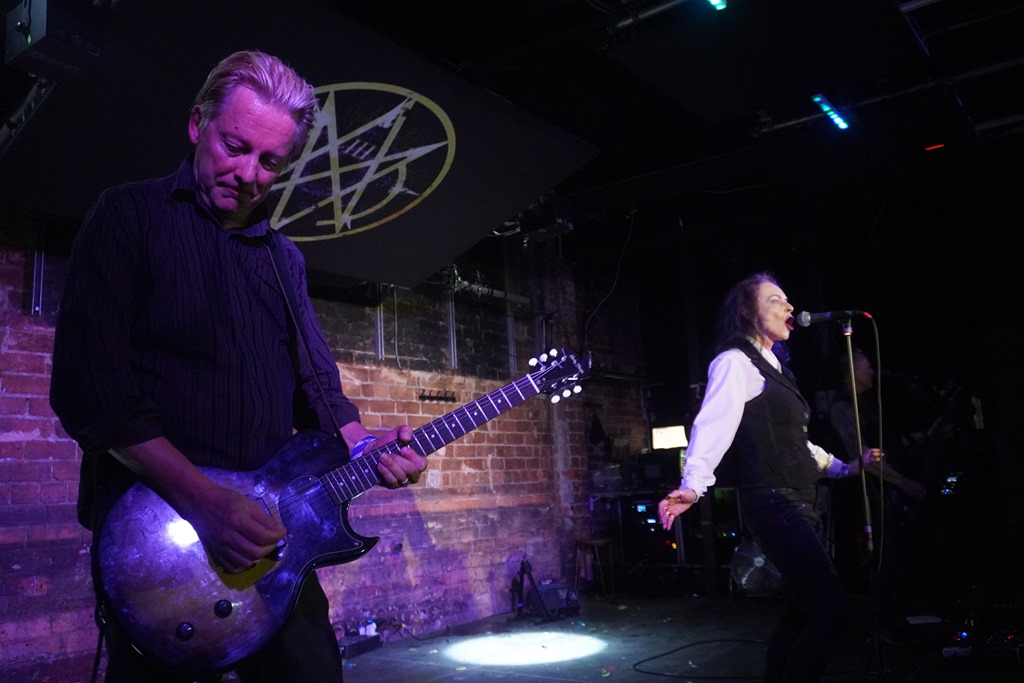
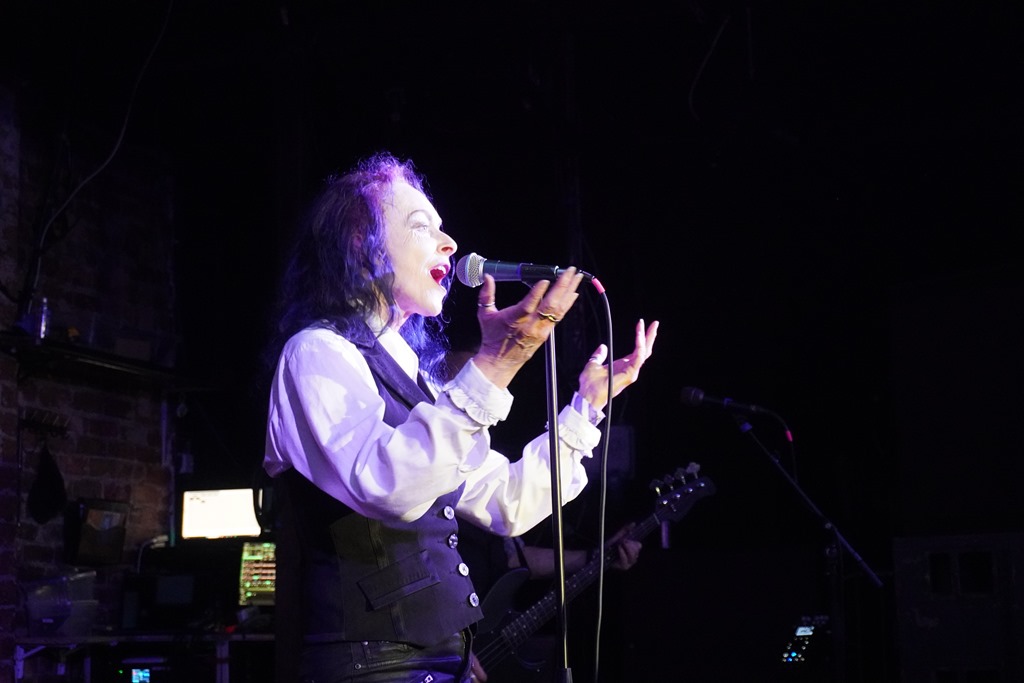
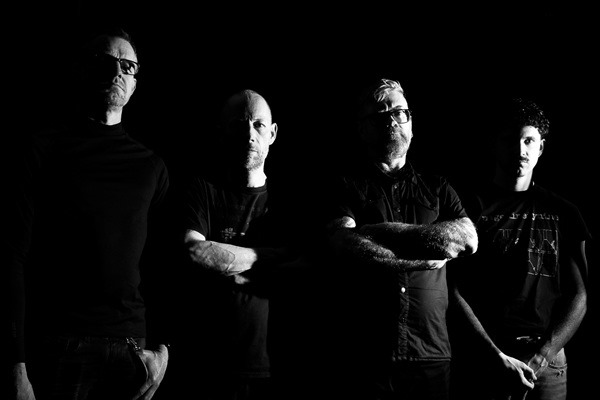
Active since the mid-nineties, Chicago’s TATV GRAL (tätü ’gräl) are an industrial-leaning dark synth act, the vehicle of Allen Addington, and one very much represents the seedy, sleazier, grindier aspect of the scene. As they put it, ‘Forged in shadow, shaped by archetypal psychology, the gay male gaze, and the ritual power of containment’, and the songs in their catalogue are abrim with hints of fleshly sensuousness and dark desires pitched alongside pulsating beats.

The Treachery EP offers four versions of ‘Treachery’ – the original, plus remixes by DSTR (Daniel Myer of Haujobb), Tweaker (Chris Vrenna of NIN), and fellow Chicago industrial outfit [melter]. These are some names to be reckoned with, making this a significant release for TATV GRAL, making several steps up the ladder, so to speak. And it flexes some muscles, too.

AA

In terms of context, there’s a fair bit to this, from Hellenistic astrology to the psychology of James Hillman, we learn that ‘the song places these symbolic forces in dialogue with Coil’s ritual electronics, Kenneth Anger’s astrologically timed film work, and the Jungian tradition that informs them.’ Thankfully, knowledge of all of this is not a requirement when it comes to appreciating the song or the EP. But add to this the fact that Addington requested the project’s collaborators to not simply remix the track, but to draw out an emotional aspect not present – or at least, not explicitly conveyed – in the original, and it’s yielded some interesting results, which take it beyond the standard remix EP – thankfully. It’s a format that tends to feel lazy, delegating creative responsibility to others and milking material for all its worth and more, and more often than not I find I’m bored shitless of hearing the same song back to back to back with bigger beats or more bass or synth and stretched out over double the duration of the original… after Nine Inch Nails released Fixed, the remix EP had reached not only its peak, but its limit, as far as I’m concerned.

There are, of course, some exceptions, and this is one of them.

In its initial iteration, ‘Treachery’ grinds along, breathy, suggestive, with a pumping groove and with hints of DAF and Man 2 Man and Depeche Mode circa Black Celebration in the mix, and as when listening to ‘Stripped’, it’s hard to decide of you need a wank or a shower most.

The DSTR Remix is the longest of the three, adding almost a whole minute to the running time, and accentuating the heavy grinding bass synth and altering the vocals by downtuning them. The effect is weird, filthy, and vaguely menacing. The [melter] mix is all about the stomping beat and feels more aggressive, sweatier, more muscle-flexing. The arrival of the Tweaker Remix is well-timed, being altogether sparser, more minimal, and more expansive, picking apart the components and introducing significant space. You might say it’s less techno and more industrial, but whatever you say, it’s a dramatic shift in interpretation, and it works well.

AA

Christopher Nosnibor

The March Violets’ career path has followed an unusual trajectory – as is perhaps fitting for a band which always stood apart, even from the scene it helped create. A band who’d disbanded before I even discovered them, they’ve released more new material since their 2007 reunion than in the whole of their initial career. Rosie has survived throat cancer, which stalled post-reunion activity for a while, and co-founder Si Denbigh was forced to depart following a stroke some years ago. But they’re still here, and in their current three-piece iteration, they’re touring as hard now, almost forty-five years since their inception, as ever, and they’re very much an active, still-writing band.

But this current tour is an unashamed nostalgia fest, playing the entirety of their 1984 compilation Natural History, which gathered (most of) their early single releases, and which was given a reissue for Record Store Day this year – hence the ‘(Un)Natural History Tour’ with all of the songs, but not in the same order. Tonight is particularly special, being a homecoming show, and they’ve cued up some hotly-tipped support acts for the occasion.

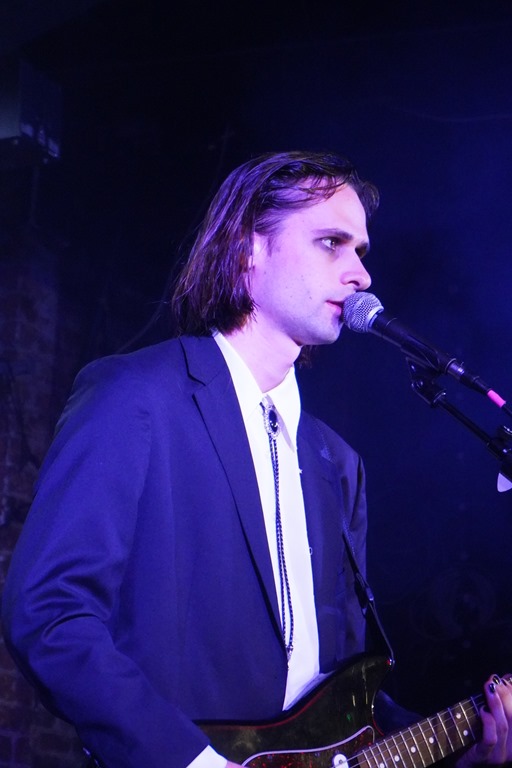
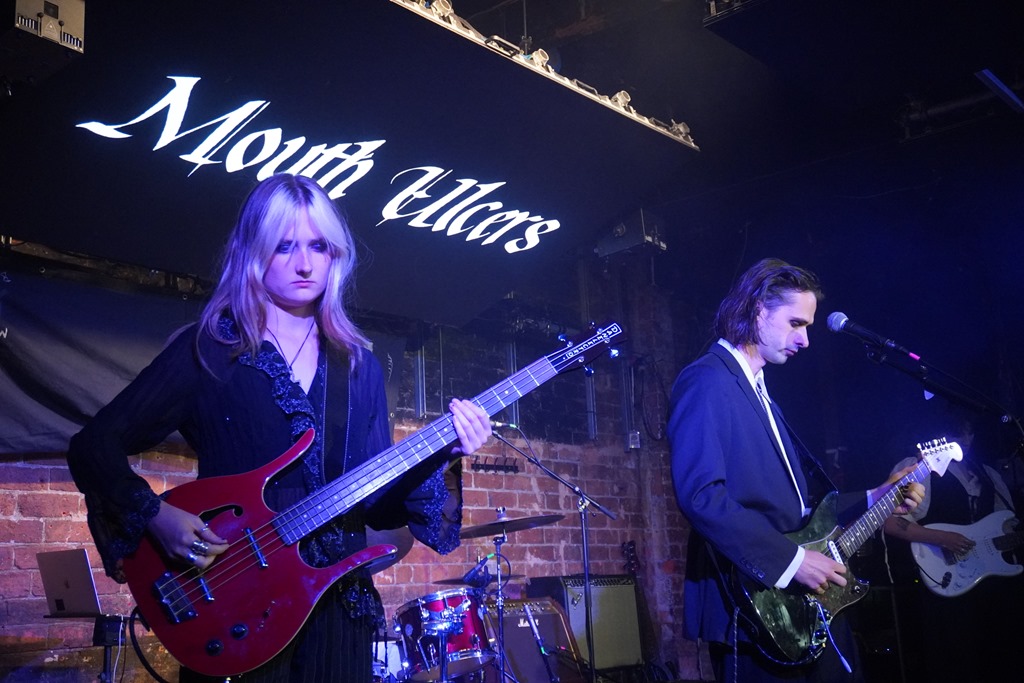
Up first, Mouth Ulcers – who have been booked to support none other than The Mission for one of their four nights at The O2 Forum in Kentish Town, London, marking the 40th anniversary of God’s Own Medicine. Wayne Hussey recently described them as ‘definitely the real-deal and a band that are deservedly going places’. It’s hard to argue. The singer, Zak, looks a bit Nick Cave in a rather baggy suit with bootlace tie, and as a band, they cohere as well visually as they do sonically, serving up a set of A1 shoegaze goth. Brittle, atmospheric guitars interweave… and that bass! Bassist Jamie-Lee is static, almost mannequin like, and knocks out the most perfect metronomic groove in the vein of Craig Adams era Sisters with complete nonchalance. Propelled by some supremely crisp drumming, they’re an absolute rush, and a complete revelation.

DSC01950DSC01932

Mouth Ulcers

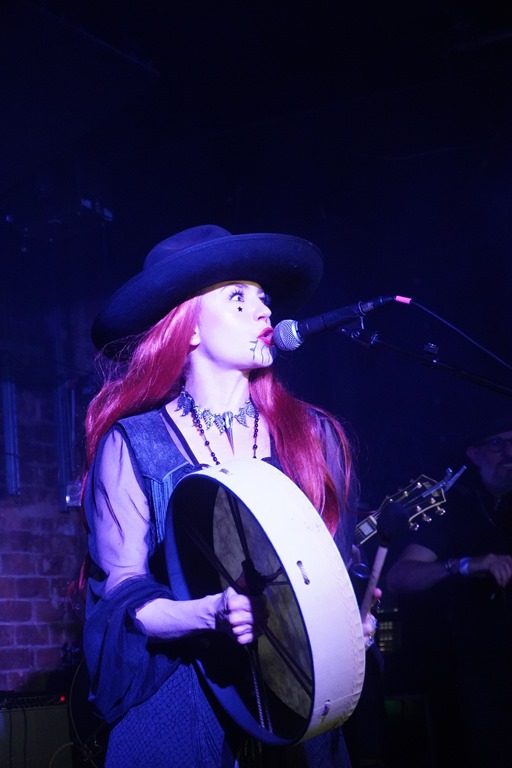
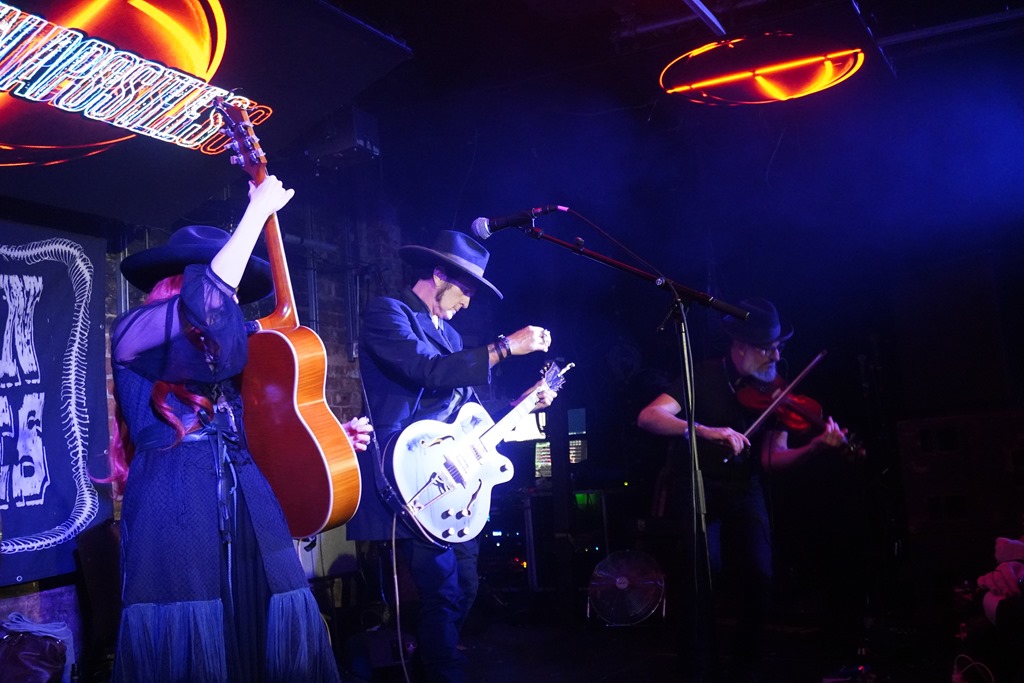
Heathen Apostles make for a mess obvious choice for the bill, but prove to be an inspired one. They described themselves as Western Gothic, or Gothic Western, and play lively and dramatic folk, which is at times dark, with a cracked old double bass with loads of gaffer tape and a fiddler who plays hard, gnashing his teeth when it gets intense. Guitarist Chopper Franklin has steel-toed boots with the metal on the outside, and Mather Louth (vocals / guitar / frame drum. Theirs is quite a long set, but they have hauled themselves all the way from LA, and the fact they’ve toured recently with Fields of the Nephilim speaks not only of their quality, but how they’ve been embraced by the UK goth scene.

“Fuck Donald Trump… We’re not that kind of a roots band,” Louth tells us. It’s a sign of the times that nearly every band over from the US feels the need to make clear that they don’t support the regime of the orange fascist, but it’s always reassuring to hear it.

DSC02037DSC01991DSC02040

Heathen Apostles

Protest song ‘No Peace’, which they say is being censored by online platforms – is a clear standout. ‘Without a Trace’ is introduced as a gothabilly hoedown, and it’s hard to resist the urge to get some air at this point, but I stick around, and ‘The Reckoning’ makes for a rousing finale. They’re not my kind of thing per se, but it’s hard to fault the energy and the showmanship.

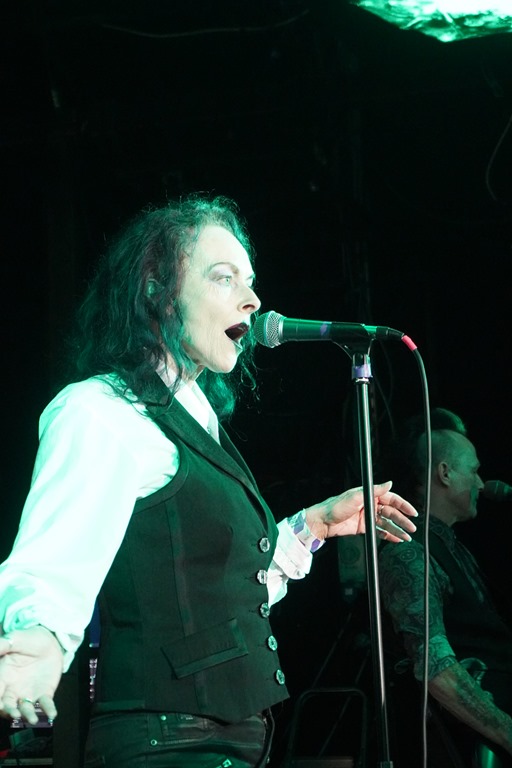
The mighty March Violets are straight in with ‘Long Pig’, followed by ‘Religious as Hell’, which has only made the setlist a handful of times since 2007. To say it’s a joy to hear it is an understatement: as the first track off their first EP, it exemplifies The Violets’ most primitive, angular post-punk roots, with its stuttering drum machine and squalling guitar. ‘Hammer the Nail’ is one of only two later songs in the set, meaning we get to revisit a wealth of material which hasn’t been aired live in donkeys. ‘Radiant Boys’ hasn’t made the setlist for a couple of years, and ‘Undertow’ has barely made the cut in the last decade, but tonight, they sound fresh and punchy.

DSC02134DSC02160DSC02103

The March Violets

On stage, they’ve stripped the setup right back, the guitar and bass going straight into the PA via DI, meaning that not only are there no drums, but no amps, and there’s no smoke and the lighting is pretty straightforward, too. This bareness only heightens the sense of proximity, and there are some nice exchanges with the audience. It also means that with none of the usual distractions, I find I watch and listen more closely, and am reminded just how unconventional their song structures are, as well as how unique Tom Ashton’s approach to guitar playing is, not only with the use of harmonics, but also the way he navigates the fretboard. And as on last year’s tour, he looks to be so happy to be up there – and the same is true of the rest of the band, for that matter. Rosie is on top form, super-sprightly and in fine voice, and the sense of occasion – playing these early songs in the very place where it all started – isn’t lost on her.

The set closes with ‘Snake Dance’ – because there it simply has to – and they encore with ‘Walk into the Sun’, the only other post-Natural History song of the set. It’s a solid pop tune (that’s now fully forty years old), and a supremely upbeat way to finish the night. And a great night it was at that.

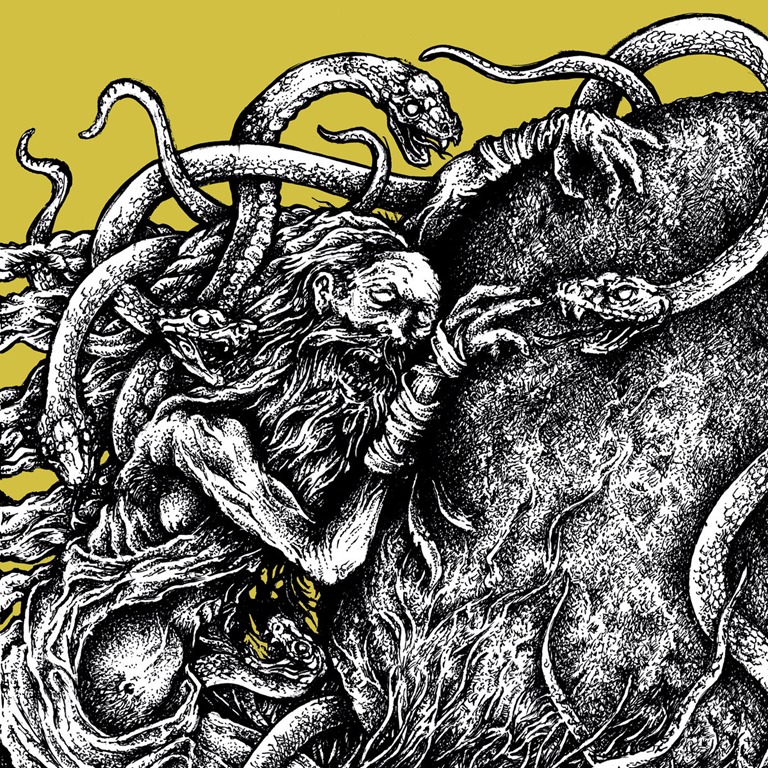
After fifteen years of relentless sonic punishment, Dutch grindcore outfit Suffering Quota return with Sisyphean Life, their fourth full-length album and their most conceptually ambitious and sonically uncompromising work to date. The album will be released on September 25 via a collaboration between 7 Degrees Records and Tartarus Records.

To mark the announcement, the band have recently dropped  the album’s first single, ‘Head, accompanied by a video that premiered via Invisible Oranges, who described the track as: “Whiplash tempo changes ultimately send this roiling edifice crashing down into a miserable avalanche of suffocating grind shrapnel. Razor-sharp production gives ‘Head’ a level of sonic depth and power that further illuminates the song’s fierce, desperate energy.”

AA

The band had this to say about this new track: “For me, this was the first song where the full concept began to click. I was going through a period of complete lack of motivation or desire, where the days seemed to blur into one another without a clear beginning or end. ‘Head’ became a frantic reflection of that state of mind and ultimately encapsulates everything the album is about.”

a3255900195_10

AA

For more than fifteen years, Suffering Quota have carved out their own space within the European grindcore underground, crafting music that values tension, power, and physical impact over excess. Their songs are not merely fast or abrasive; they are deliberately oppressive, built around repetition, density, and an overwhelming sense of momentum that mirrors the emotional and psychological pressures of everyday life.

Inspired by the ancient Greek myth of Sisyphus, Sisyphean Life examines the endless cycles that define the human experience. Like the mythical king condemned to push a boulder uphill for eternity, the album reflects on depression, monotony, and the perpetual search for fleeting moments of relief, only to find oneself back at the beginning. Rather than offering catharsis, Suffering Quota embraces the uncomfortable truth that some struggles are destined to repeat themselves.

AA

27960253-3a3a-5ee5-7af3-2793f9dd40de

Christopher Nosnibor

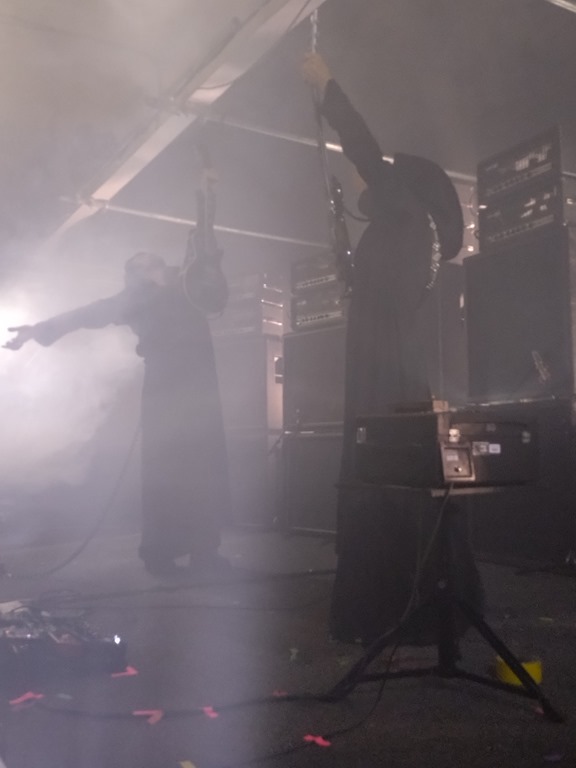
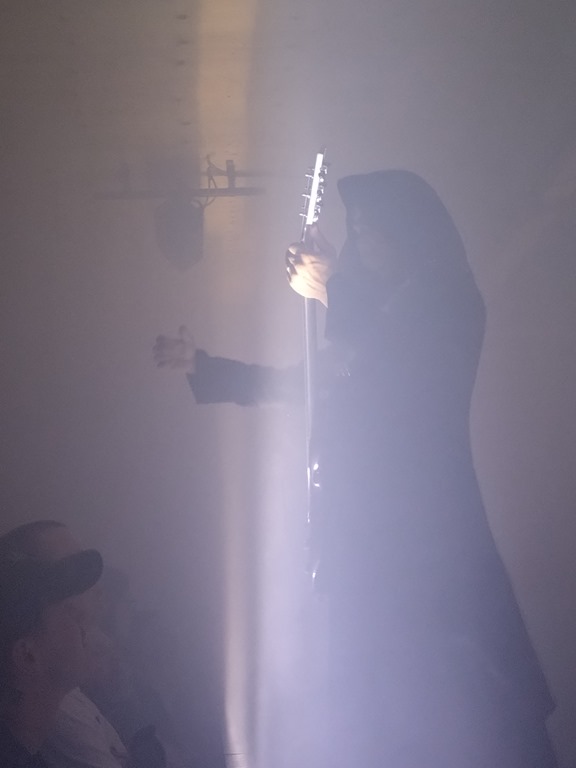
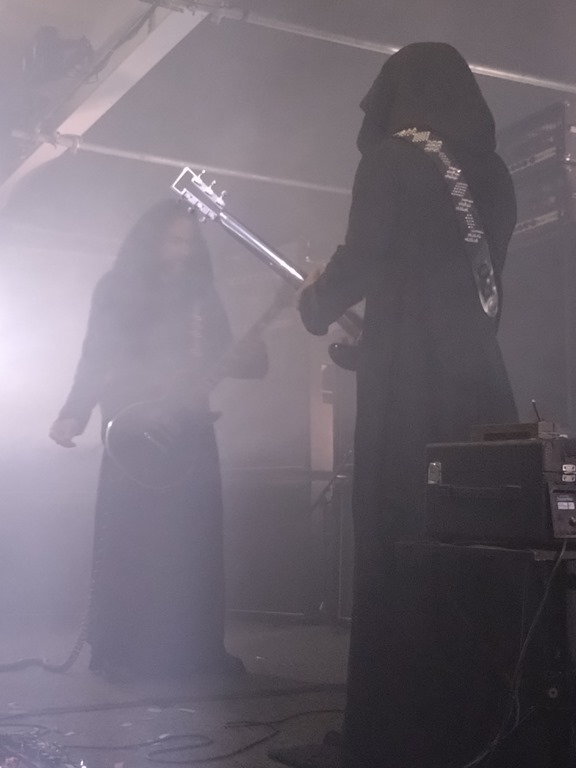
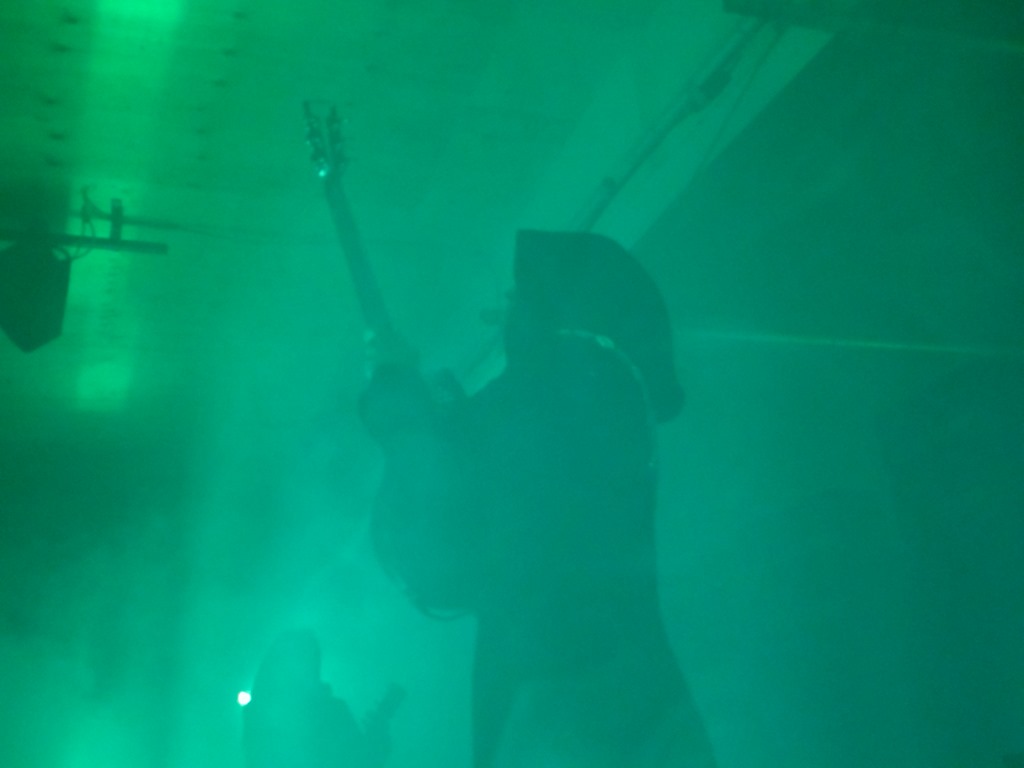
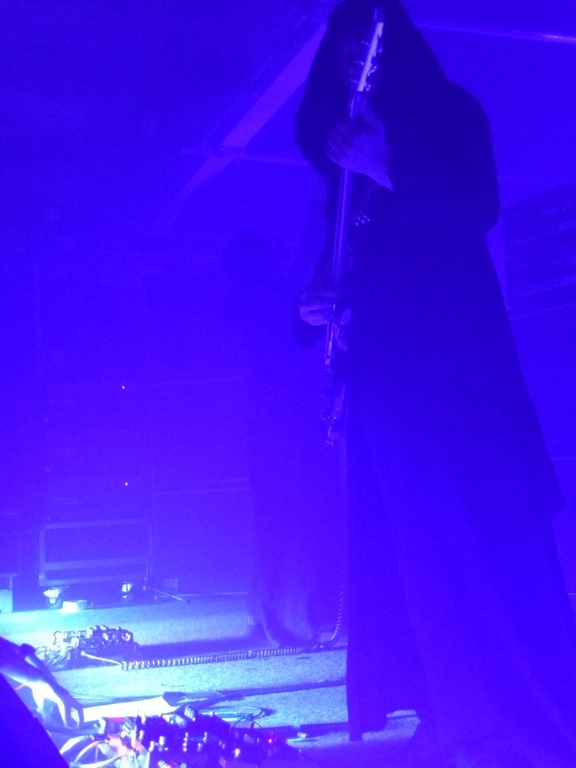
I can still smell the smoke on my clothes and skin. I can still taste the smoke. Not tobacco smoke, as used to be the case way back (although more recently than seems possible), but smoke machine smoke. Back in the 90s – and no doubt prior – gigs would often leave this lingering residue embedded within the senses. But some time, around the turn of the millennium, perhaps, there seemed to be a change in the formula of smoke used at most live events, in favour of something less dense and noxious, and which didn’t make you sweat so much, with most fog formulas now being advertised as being white, without ‘unpleasant odour’ and ‘leaving no oily residue’. Sunn O))) seem to have managed to hijack an entire tanker’s worth of the old vegetable oil-based stuff and pump it out at a rate of gallons per second during the entirely of their set, which, despite featuring (apparently) five tracks, has a colossal duration in the region of an hour and three quarters.

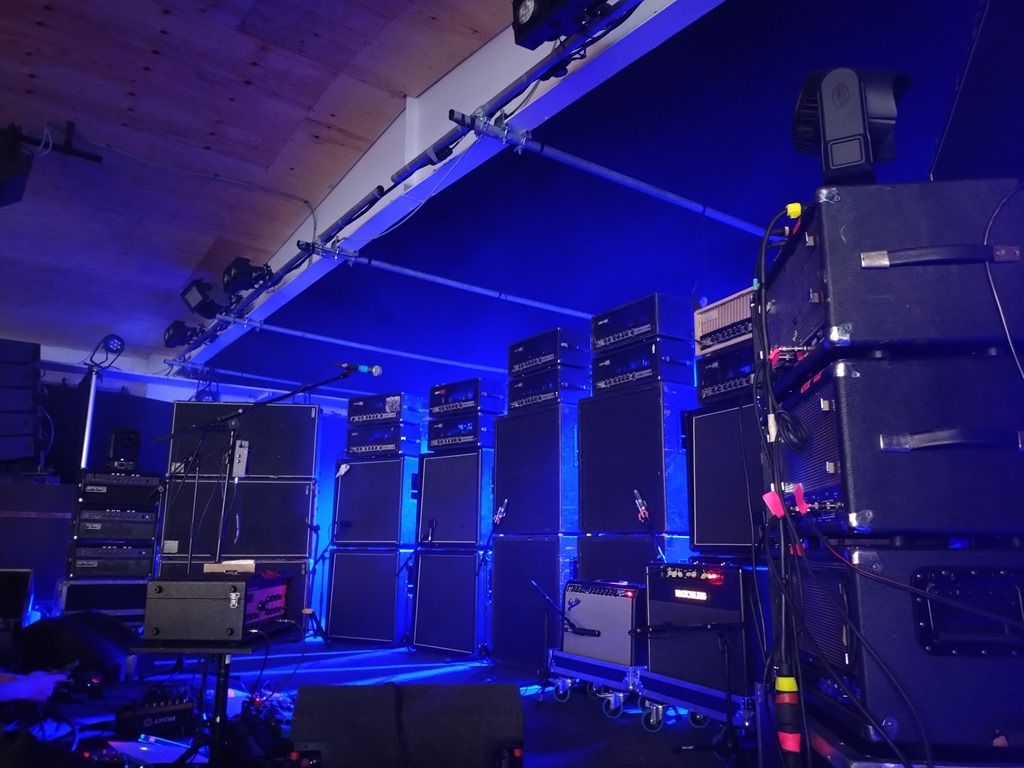
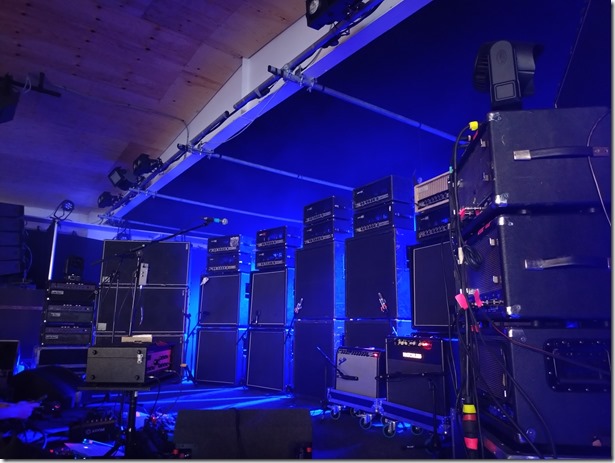
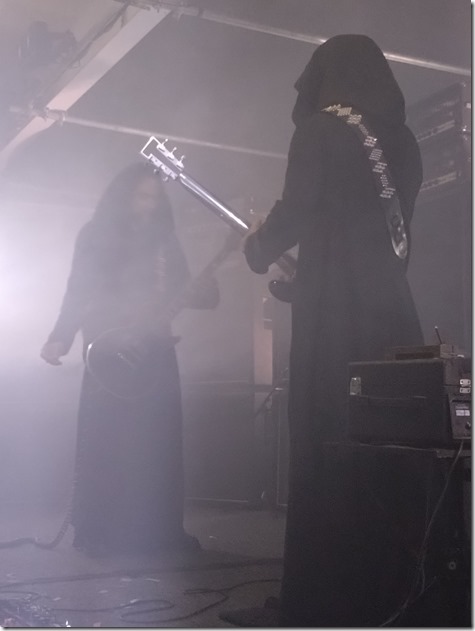
So much of the Sunn O))) experience is steeped in ritual and ceremony. From the hooded robes, the power of incense drifting in amongst the smoke from the machines, the wielding of the guitars as eternal drones ring in sustain from the amplifiers. Those amplifiers, vintage valve amps, stacked almost to the ceiling my towering monoliths, arranged in such a way as to resemble the interior of a prehistoric monument, bathed, before the show begins, in a celestial blue hue, inviting worship simply by their looming presence, even when silent.
20260701_193205

AA

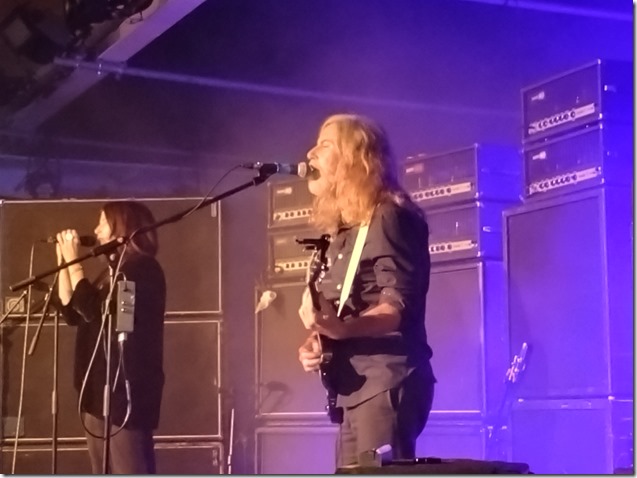
Black Mountain make for an interesting choice of support, and an appropriate contrast. Initially, they present as a quiet acoustic folk duo. There’s some chat at the side towards the toilets and bar, but the swelling audience is largely quiet and respectful in front of the stage. Their second song introduces drum machine and distortion on the guitar, and while the harmonious form doesn’t change, the texture very much does, with squalling desert rock overtones and bluesy strains and a dash of 70s rock filtering their way into the songs throughout the set, which is pleasant – not in the vague, not much of anything sense, but mellow and melodic and low-key. It’s a most enjoyable half hour which contrasts nicely with the earth-shattering experience which follows.
20260701_200112

Black Mountain

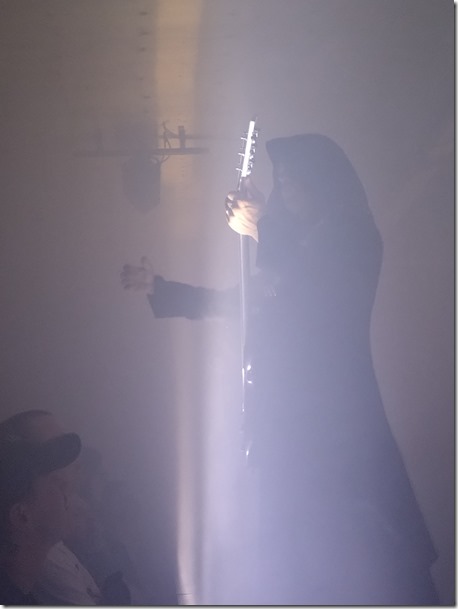
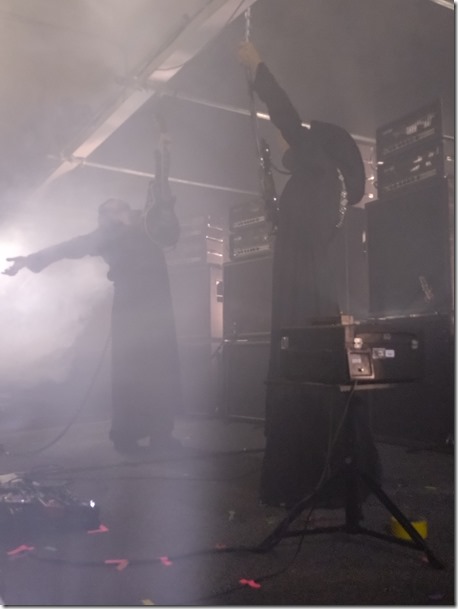
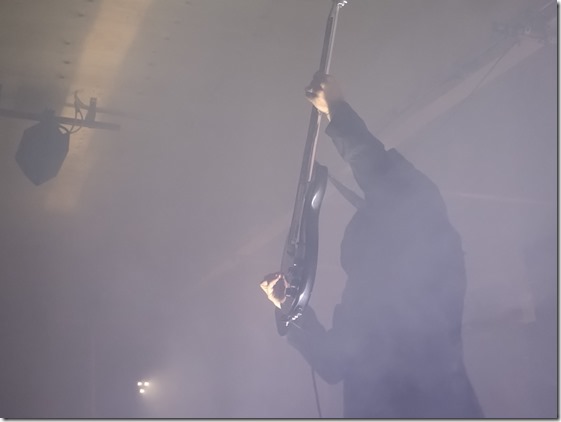
By way of an intro, they play all of the talk from between the songs from an entire live set by Venom, the progenitors of black metal (something Melvins did with their ‘Cowboy’ single, which was equally frustrating). It made for a long and twitchy eight minutes of suspense that felt like an eternity. But this is Sunn O))) all over. Their entire ethos seems to be based on the question of ‘how far can we actually push this?’ – and when they find what must surely be the absolute limit, they nudge it a bit further, and then further still. And as it played on, and on, the stage began to flood with smoke… and more, and more smoke, until it became completely impenetrable. Vertical LED beams along the front of the stage illuminate the smoke in such a way as to create a curtain which renders the stage itself invisible when viewed from the other side.
20260701_21550320260701_21130120260701_213357

Sunn O)))

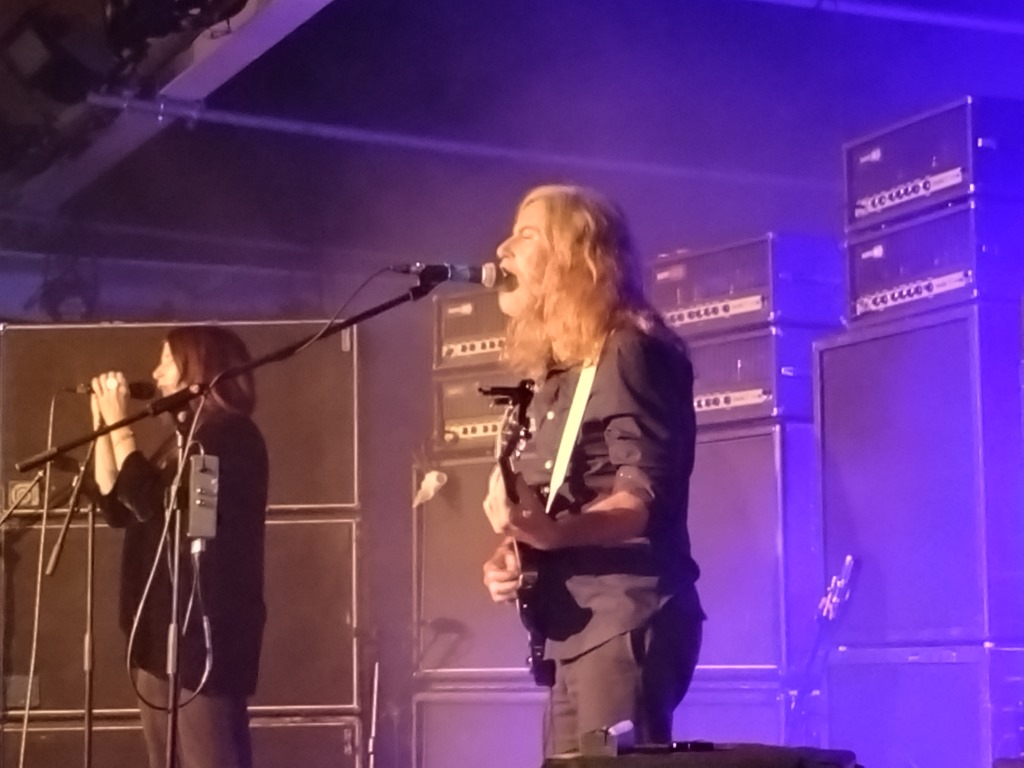
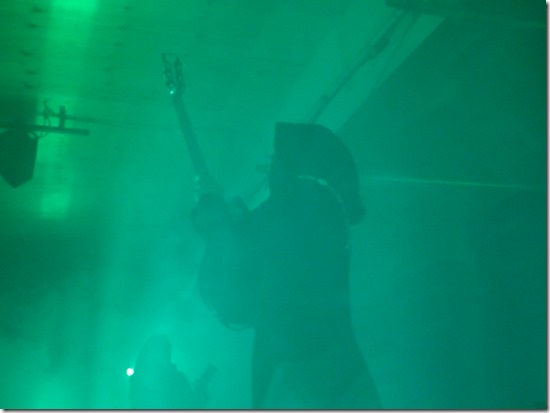
Anderson and O’Malley are guided onstage with torches, and moments later the first chord strikes. Immediately, everything shudders. The very air quakes as I feel my flesh quiver and my ribs, my lungs tremble. Time immediately stalls. And something strange happens. Perhaps I enter something approximating a trance-like state. Whatever it is, I find myself utterly spellbound, and borderline hypnotised by the combination of the spectacle and the sound. It’s not zoning out, but zoning in, fixated on the tones and textures, and the way the two interact and interweave, catching glimpses of the band in the brief moments when the smog thins.

Stripped down to a two-piece, the volume is typically obliterative, but it’s clear they’re fully immersed in exploring the spaces between the notes, more subtle dynamics of the way certain frequencies resonate. The sound is remarkably clear, and while there are howling walls of feedback, the sonic spectrum is predominantly low-end, meaning that there’s no tinnitus-inducing harsh treble (at least not with earplugs, and everyone I see is suitably equipped), and as a consequence, it’s easier to simply bask in the huge throb which envelops every inch of your being. The first two tracks are run together as one continuous piece, a full hour in duration, and at this point, the smoke reaches a new peak of density. It’s beyond suffocating, you can’t see your own hand let alone the stage, from which emanates the most brutal howl of feedback yet. But there’s no checking your watch to puff that only twenty minutes have elapsed, and they’ve barely played three notes. Some people move further back to escape the full force of the backline, but the majority simply stand, transfixed. This is peak Sunn O))). As much as there’s a sense that they’re testing us, they’re also testing themselves, and revelling in the theatre of it all. It’s high art.
20260701_214503IMG_20260701_223302

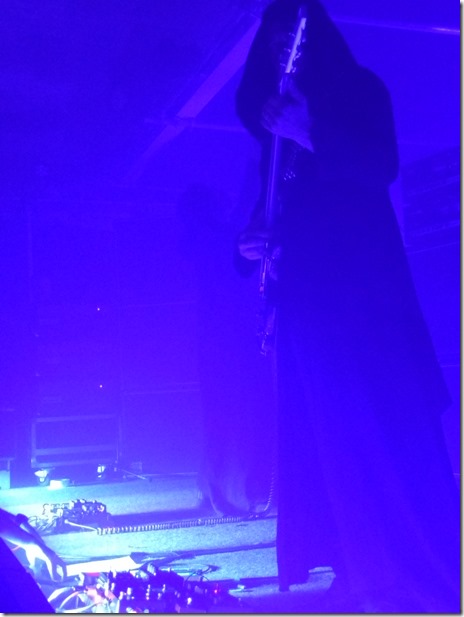
More smoke blasts across the stage like a tidal wave. Everything is vibrating, from my nostrils to my buttocks. I’m amused to see people nearby attempting to film clips of the show, only for their phones to be completely submerged in billows of smoke – which are an analogue of the billowing rumble radiating from the stacks of speakers, and with the backline alone capable of filling the 1,000 capacity with that organ-bothering low-frequency drone, the fact they’re all in turn mic’d up only adds layers to this oceanic swell of sound. Anderson and O’Malley don’t so much strike chords as mildly stroke a string to set off another devastating avalanche of sound.
IMG_20260701_224203

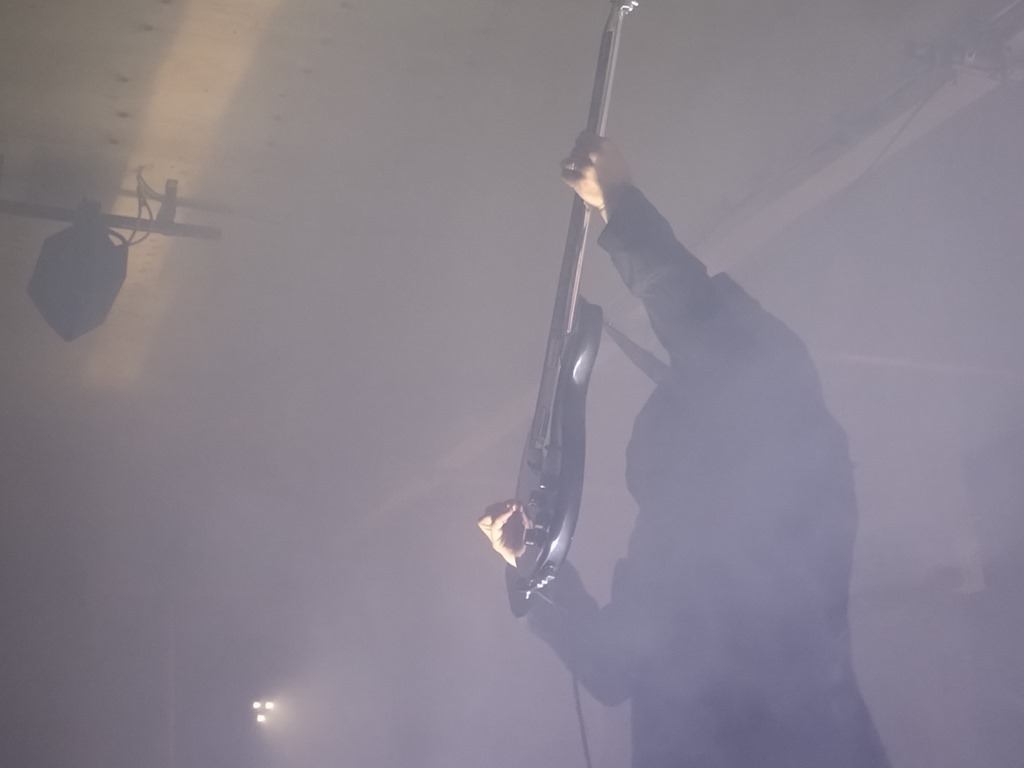
Towards the end of the set, O’Malley lodges his guitar on top of a stack, wedged against the ceiling, before subsequently hanging it by the neck from a power cable above, and letting it swing from the rafters.

And just like that, it stops. The smoke clears, and the two men step forward and receive – humbly, and with gratitude – the most rapturous applause. Because for all of the theatre involved in creating the separation between band and audience, the obstinate absence of engagement, for the pain-threshold volume, the appreciation flows both ways. It’s a joyously respectful experience: no chat (as if!), no heckling, but a symbiotic exchange based on pure immersion in pure art. And tonight, we’ve witnessed an ascendency to a new pinnacle. Pure transcendence.
BEES MADE HONEY IN THE VEIN TREE drop the first advance single, ‘Departure’, from their fourth album In Between Strides. The forthcoming new full-length by the German shoegaze rockers has been slated for release on September 18, 2026.

Bees Made Honey comment: “’Departure’ was the first song that we wrote for In Between Strides”, frontman Simon Weinrich reveals. “It was by far the hardest song to write for this record. It exemplifies our struggle of finding out where to go next after Aion. It was clear from the start that we wanted to go into a more melodic direction and more straightforward songs compared to our previous album. The second part of the song started as a separate composition, but we added it later since it is a nice conclusion of the first part. Our first demo of the second part was recorded at a studio near Passau. This is where the inclusion of a Fender Rhodes piano played through our regular guitar-setup stems from. It began as an experiment and was later re-recorded at Milberg Studios. Lyrically, ‘Departure’ portrays the first step and point of departure for our journey beyond our old ways of working. We recorded each song without knowing what the next one was going to sound like.”

AA

727ee612-6cc3-a083-cb04-279665f0174d