Archive for May, 2025

Korean-American singer-songwriter NoSo has today revealed details of their highly anticipated second album When Are You Leaving? (out 10 October via Partisan Records) along with its lead single ‘Sugar’. Listen to ‘Sugar’ here:

When Are You Leaving? is a record for anyone still figuring themselves out, and one that proves NoSo to be one of this generation’s most compelling songwriters. The album follows NoSo’s 2022 debut Stay Proud Of Me which earned rave reviews and praise from NPR’s All Songs Considered, Paste, The Guardian, The Times and Metro, and a stunning performance atTiny Desk. NoSo (real name: Baek Hwong, he/they) says: “My first album mostly comprised of daydreaming about what my life cobuld be like if I embraced my identity. This record is firmly rooted in reality and details my enlightening and tumultuous experiences head on.”

Largely self-produced, When Are You Leaving? sharpens NoSo’s artistry into something at once more expansive and more intimate. It’s an album about the subtle, slow-burning victories that come after walking away from what no longer serves you. Hwong’s music is rich with contrast: thorny lyrics nestled in shimmering arrangements, quiet moments of self-recognition delivered with the confidence of a born storyteller. Across disco grooves, jagged guitars, and spacious ballads, they reflect on fractured relationships, platonic heartbreak, and the complexity of perception.

‘Sugar’, (co-produced by Wild Nothing’s Jack Tatum), glides along a sleek, nostalgic disco groove, light on its feet but emotionally loaded. Beneath the gleaming surface, Hwong explores the quiet exhaustion of navigating interpersonal dynamics with volatile people, choosing compassion over conflict. Hwong elaborates: "‘Sugar’ is about the delicate dance of interacting with volatile, unwell individuals. It’s a reflection on those experiences, aiming to approach them with sympathy instead of anger. I’ve learned that this is the only way I can move forward—by not feeding those memories and giving them power.”
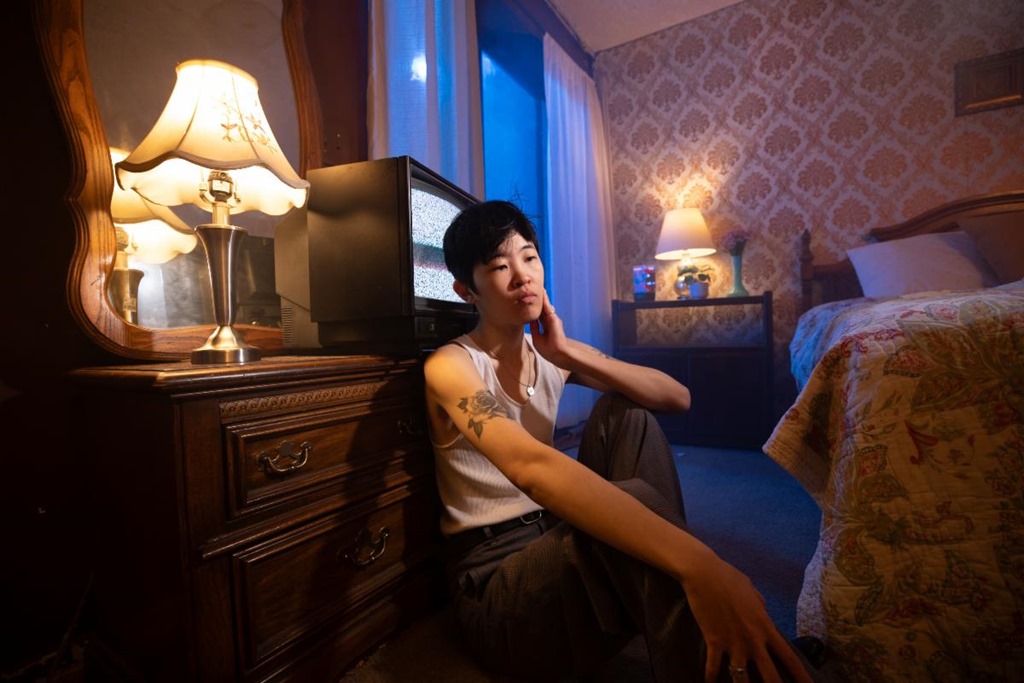
NoSo - Album announcement _ Sugar - Credit Driely Carter

Credit: Driely Carter

NoSo 2025/2026 tour dates:

15 August – Gunnersbury Park – London, UK (w/ Khruangbin, TV on the Radio)

23 October – The Atlantis – Washington, DC

24 October – Baby’s All Right – Brooklyn, NY

25 October – Johnny Brenda’s – Philadelphia, PA

27 October – L’Escogriffe – Montréal, QC

28 October – The Drake Underground – Toronto, ON

30 October – Lincoln Hall – Chicago, IL

1 November – 7th St Entry – Minneapolis, MN

3 November – Globe Hall – Denver, CO

4 November – Kilby Court – Salt Lake City, UT

6 November – Fox Cabaret – Vancouver, BC

7 November – Madame Lou’s – Seattle, WA

8 November – Mississippi Studios – Portland, OR

10 November – Cafe Du Nord – San Francisco, CA

12 November – Masonic Lodge, Hollywood Forever – Los Angeles, CA

4 February – EKKO – Utrecht, Netherlands

5 February – Rotown – Rotterdam, Netherlands

6 February – Turmzimmer – Hamburg, Germany

7 February – Ideal Bar – Copenhagen, Denmark

9 February – Silent Green – Berlin, Germany

10 February – YUCA – Cologne, Germany

11 February – Rotonde – Brussels, Belgium

12 February – La Bellevilloise – Paris, France

14 February – L’Aéronef – Lille, France

17 February – Islington Assembly Hall – London, UK

18 February – Strange Brew – Bristol, UK

19 February – Band on the Wall – Manchester, UK

20 February – King Tut’s Wah Wah Hut – Glasgow, UK
Negative Gain Productions – 16th May 2025

Christopher Nosnibor

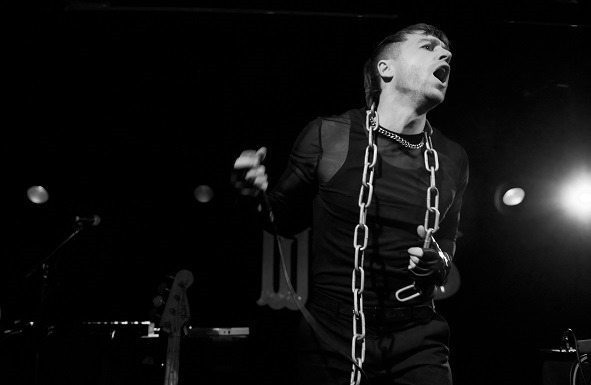
‘Give Me Your Stare’ is the first taste of the forthcoming album, Death Games from Irish darkwave artist OWLS.

It’s pitched as ‘a seduction: a desperate call for the gaze of someone whose love comes with a quiet promise of devastation… a dance floor confession in the fog of emotional collapse…. With echoes of goth romanticism and a subtle menace beneath its polish.’

Seduction and desperation strike me as sitting at odds with one another: desperation has a scent, a look in the eye that’s less ‘come to bed’ and more ‘flee the situation’ – and yet with ‘Give Me Your Stare’ it makes some kind of sense.

These contradictions are elementary, harking back through time and now well-worn cliché to the tropes forged by Elizabethan sonneteers. I’m reminded of Sir Thomas Wyatt’s ‘I Find No Peace’, which contains the lines, ‘I fear and hope. I burn and freeze like ice’, and ‘I desire to perish, and yet I ask health / I love another, and thus I hate myself,’ concluding ‘And my delight is causer of this strife.’

And in essence, ‘Give Me Your Stare’ succeeds as a contemporary articulation of that inner turmoil, all delivered with a steely control that’s either clenched-tight keeping things together, or sociopathic.

With the vocals down in the mix, and delivered with an easy soulfulness, it’s the bass and beats which dominate, and the groove is simultaneously smooth and hard-edged, thanks to the combination of soft synth layers and a crisp kick drum that packs some punch. And for all of the glass-like production, there’s emotion there, and, what’s more, it’s all packed into a neat dark pop package that clocks in at a perfect three minutes and thirty.

AA

7810be40-75e2-1e57-11c8-450e960b5eb5

NYC-based quintet Ecce Shnak (pronounced Eh-kay sh-knock) presents ‘Fight Song’ (Live), a hard-hitting track with a potent message, presenting an ironic take on violence and addressing today’s rampant spread of hate-filled vitriol.

This is the second taste of their Backroom Sessions EP, following the downtempo groove-inducing opus ‘Prayer On Love’ (Live). Recorded at the Backroom Studios in Rockaway, NJ, the EP is out May 22 via Records, Man Records).

Rejecting conventional aesthetics, Ecce Shnak whimsically incorporates diverse artistic expressions, tackling profound subjects and intriguing minutiae with remarkable clarity. Building on the success of their recently-released debut ‘Shadows Grow Fangs’ EP, this new release previews June’s West coast tour with platinum-selling legends Spacehog and EMF.

Ecce Shnak is David Roush (composer, bassist and one of two singers), Bella Komodromos (vocals), Chris Krasnow (guitar), Gannon Ferrell (guitar), and Henry Buchanan-Vaughn (drums). Where fervent brilliance blurs into absolute, uncontainable madness, there resides Ecce Shnak, balanced precariously upon an illuminated sonic high wire.

“The hardcore slammer ‘Fight Song’ is not a Katy Perry cover. Instead, it is a djent-forward ramble on the ubiquity of violence in human life, be it literal or metaphorical. It was originally an ironic joke when it was released on our first EP, Letters to German Vasquez Rubio in 2012,” says David Roush.

“We decided to change the lyrics and release a new version in reaction to the rancid bigotries that so plague the human spirit nowadays, in America and elsewhere. The final line is a call to defend our basic human freedoms while we still have them: ‘Fight for your right to fight!’”

AA

Ecce_Shnak_Backroom_Sessions_EP_cover_400448

3rd February 2025

Christopher Nosnibor

This one may have started at the beginning of the year, but is an open-ended project which has been added to over the subsequent months, meaning that there’s more to absorb now than there was previously, and some five months in, it seems like a reasonable point to take stock of the progress so far. Although released under his Sunday name and therefore perhaps not a release that leaps out, Ash Sagar has been operating as Meanwoood Audio for a while, as well as being involved in numerous Leeds / York based collaborative works, notably The Wharf Street Galaxy Band and Neuschlafen, and perhaps notably the one-off experimental improv collective Beep Beep Lettuce, who will one day be hailed as a 21st century Big in Japan or Immaculate Consumptive. Well, we can but hope.

M/A/R/R/S tools is one of those albums that could only ever exist in the digital age, consisting as it does of some fourteen experimental pieces with a running time of around a hundred and eighty-five minutes. Yes, that’s over three hours – even longer than recent sprawling Swans releases.

Sagar’s notes are succinct – or scant, depending on your perspective – summarising M/A/R/R/S tools as ‘Audio recording from tests of building tools in SuperCollider for Meanwood Audio Recording & Research Services {"M/A/R/R/S"}.

My instinct is – because my instinct is dictated by my brain, which is brimming with stupid nonsense and is excessively prone to misfired associations – is to ‘pump up the volume’. But this proves to be rather unwise, as the release contains an endless stream of unsettling discordant rumbling, hovering hums, and fizzing extranea which is just around the tinnitus range.

‘Audio_25_01_20_1’ makes me feel tense: it reminds me of a ‘breather’ in a Teams call – there’s always one freak who positions their unmuted mic right in front of their open, gasping mouth, and the sound is like a gale on a mountain top.

Dripping, dropping, dribbling electronic abstractions dominate, with microtonal bibblings running on and on, sounds like twanging elastic bands and scratches and scrapes, atonal strings and R2D2 malfunctioning. I recall running my nails along an egg-slicer as a child. It’s a memory I had largely forgotten until hearing this remined me. M/A/R/R/S tools offers up an oddball array of sounds, and it feels random in the extreme. Oftentimes, it’s barely there, or it’s nothing more than the rumble of passing traffic or a distant radio. Occasionally, there are stuttering drums. Other times, there is not much at all.

This is a work which has been a long time in development: there are two full live sets, recorded five years apart, with a set recorded in London sitting at the midpoint, and another live set, recorded in Leeds, drawing the curtain on this colossal release. The fifteen-minute London set is a challenging work, which confirms what anyone who has seen Ash live will already know, and that’s that he in unafraid to test an audience with monotonous, woozy oops which are as uneasy on the intestines as they are on the ears. This is reinforced by the thunder-filled, sample riven discomfort of the Leeds set – something that his set in Leeds just this last weekend extended still further. Distorted, heavily reverbed and practically impenetrable vocals spitting out randomly sequenced words cut through the speakers, and it’s almost too much, too disorientation. A derangement of the senses. Both John Cage and Brion Gysin would have been proud. It’s dark and murky, and droning notes quaver in the background.

M/A/R/R/S tools is not an easy listen, not only on account of its duration. Despite its superficial minimalism, there is a lot going on. And none of it is kind, comfortable, or particularly easy on the ear or mind.

AA

a4289167092_10

Mortality Tables – 16th May 2025

Christopher Nosnibor

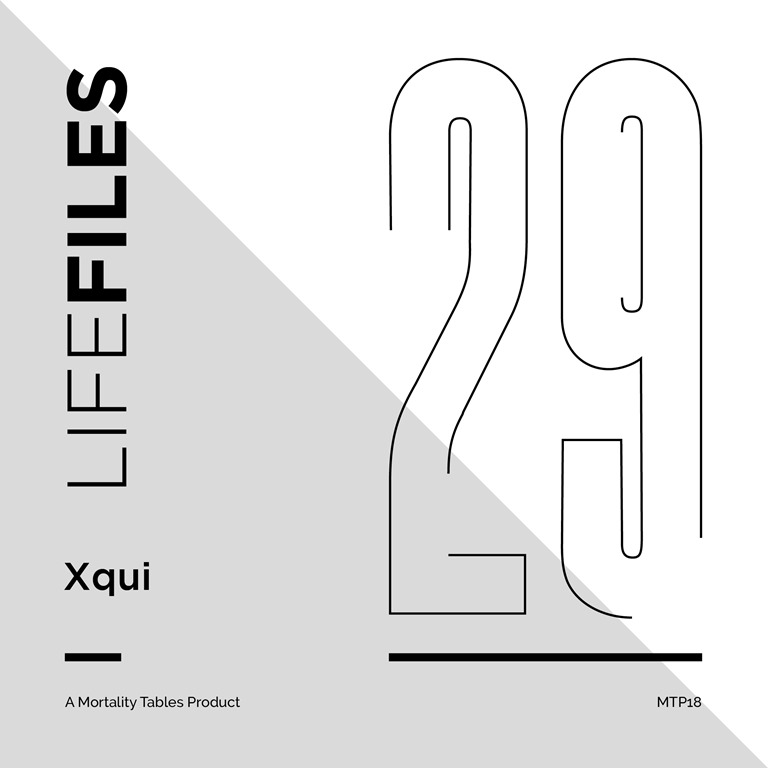
Just three weeks after the previous instalment in the extensive LIFEFILES project from Mortality Tables, now in its third season, comes what promises to be the final instalment for now. And all proceeds from this release will be paid to CALM – the Campaign Against Living Miserably. It seems fitting, given that life can often feel relentless, amped-up stress and bewilderment, and the LIFEFILES series has presented, over its duration, works which take the listener into audio representations of calmer environs. I write this as someone who has, in recent years, factored a daily walk into their routine, as much for the mental health benefits as for the physical exercise. A change of scenery, particularly in open spaces and away from crowds, can be a transformative experience.

The premise of the series, for anyone who hasn’t seen any of my previous coverage, is that the artist is given a field recording, captured by Mat Smith, who runs the label, to respond to in any way they feel appropriate. For this release, the accompanying notes record that the two tracks have been constructed using ‘Source recordings made by Mat Smith at Charing Cross Underground Station on 27 November 2021, as part of a Hidden London tour of disused areas of the station and areas not normally accessible by the public.’

In addition, there’s an excerpt from Smith’s journal, from the same date, which reads as follows: “…walked around the old station section of the Jubilee Line that isn’t used any longer, went into a construction tunnel underneath Trafalgar Square which had a bend in it to avoid the foundations of Nelson’s Column, and then finished up in a ventilation shaft above the Northern Line platform…”

Xqui’s treatment of the recording is interesting, taking the form of the ‘classic’ experimental work, the likes of which you’ll find on labels like Editions Mego, with a single longform track occupying each side. The first, ‘Charing Cross Underground’, captures the voice of what may be a tour guide, spun out in reverb and glitching echo, while trans rumble in the distance, before slowly melting into ambient abstraction. It’s like hearing the ghosts of the underground, rising up through the disused tunnels, calling out to the present to remind us of the past beneath our feet. There are flickers of chatter, as if, here in the present, we continue to talk without ever stopping to listen. Voices warp, slow, slur, distort, and it makes for an unsettling fifteen minutes.

‘Reverb Underground’ goes slower, more spacious, more echoey. I had half-expected something resembling a dub version, but instead, Xqui slows and stretches everything beyond recognition, creating a slow-motion blur, a crawling ambient drone. The sound simply hangs, dense, suffocating. Time stalls, and you find yourself floating, in suspense, in a fugue state, as the sound lifts free of context and embraces pure abstraction.

What Xqui manages to convey on this release is a sense of history, of space, of time, and the way we’re so busy rushing about in our daily lives that we never pause to contemplate the echoes of the past which exist, and linger all about us.

AA

cover

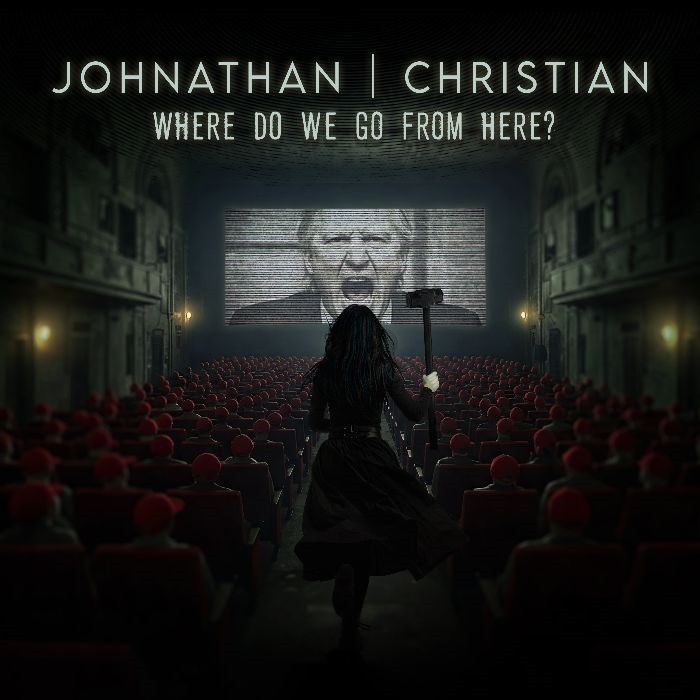
Darkwave duo, Johnathan|Christian return with ‘Where Do We Go From Here’—a brooding, cinematic post-election anthem that captures the emotional wreckage of a divided nation. The track opens in hushed reflection (90 BPM) and erupts into a 125 BPM pulse of unrest and reluctant clarity. No slogans. Just aftermath.

The video integrates footage from Maya Deren’s At Land—a woman lies on a beach, disoriented yet unbroken, before rising with quiet resolve. What begins in poetic isolation transforms into documentary collapse: flickering headlines, divided families, shuttered classrooms, and hands reaching—but not always finding. It opens with: “We Still Remain.” It ends with: “WE STILL RISE.”

“We didn’t want spectacle—we wanted aftermath,” says the band. “No fire. No fury. Just a reckoning in the ruins.”

Included in the release are: a 125 BPM DJ Edit for live mixing and DJ sets, and remixes by industrial supergroup, The Joy Thieves and Stoneburner’s Steven Archer. Also included is the track, ‘Fall from Grace’ – a short, ghostly instrumental layered with static and decay; a requiem for what was, and a reflection on what remains.

For fans of Peter Murphy, Human Drama, Laibach, New Order, and politically-driven dance stompers.

AA

8bbee6f4-172e-2102-2c5c-e9987acdebda

The Glue Factory / The Orchard – 2nd May 2025

Christopher Nosnibor

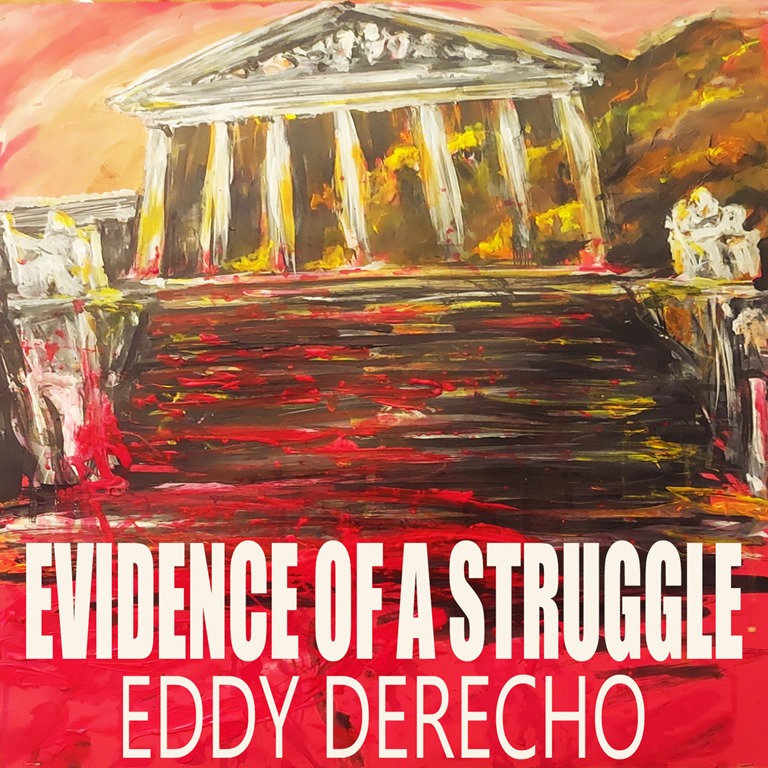
For his second album under the Evidence of a Struggle moniker, W P C Simmons V a.k.a. Rev. Billy Simmons has managed to recruit a band lineup with some serious pedigree, with Matt Walker (Smashing Pumpkins, Morrissey, of1000faces, Garbage, Filter) on drums and synths, with bass contributions by Alan Berliant (Chris Connelly, Mavis Staples, Saint Asonia) and Solomon Walker (Liz Phair, Bryan Adams, Morrissey). We’ll forgive Walker and Solmon for Mozz – musicians need to work and get paid, after all.

We aired the title track here on Aural Aggravation a little while ago, and it launches the album with all engines blazing, a full-throttle industrial / grunge beast of a cut in the vein of Filter. And from hereon in, things get darker, heavier, and weirder. ‘The Whale’ adds a psychedelic spin to some dense, sludgy riffage, coming on with some hints of Melvins, Smashing Pumpkins, and Queens of the Stone Age in the blend.

AA

‘Alma’ takes a skipping detour into rippling, expansive electronics, even alluding to prog as it locks into a looping, metronomic groove and serves up an extended guitar solo towards the end of its sprawling six minutes. But there’s a tough, serrated edge which remains consistent throughout. It’s hard to really pinpoint, but there’s a drawl, a sneer, about the vocal, and something about the treatment – be it compression, reverb – that calls to mind Girls Against Boys. Musically, there’s no similarity: in fact, Eddy Derecho is an album that’s difficult to pin down stylistically. There’s a keen 90s vibe to it, in some rather abstract way. It’s a guitar album, but that in itself isn’t it, not by a long shot. I’m almost reluctant to describe it as ‘heavy’, too: the guitars may be big and overdriven and the drums thunderous, but, well, it’s all relative, is my point. What made grunge exciting in the early 90s was that we got to hear music with aggression, angst, and edge, in a mainstream setting: anyone who was in their mid- to late teens or early twenties in in the early 90s had been raised on crisp, clinically-produced music in the charts, and sure, that production was phenomenal in so many ways – listen to Duran Duran’s Rio and it’s truly remarkable just how clean and yet, at the same time, dynamic it sounds. We also grew up with the studio slickness of Phil Collins and the like, and even ‘rock’ was highly polished. It’s no wonder that grunge was an absolute phenomenon. But was it that heavy? Not really, not in comparison to the likes of, say, Earth, or Swans, or, for that matter, early Melvins. Nine Inch Nails smashed everything with Broken and The Downward Spiral, though. Those releases were truly revolutionary. The reason I’ve taken this diversion is because Eddy Derecho is an album which has all the hallmarks of emerging from this musical milieu. The guitars are bold, but it’s not so heavy that you’d shit your pants. It’s edgy and has aggression, but it’s also fairly accessible, in that it has tunes, with tangible structures. There’s melody.

The sinewy ‘Orchan’ is perhaps one of the hardest-hitting tracks on the album: all of the elements just seem to come together to render a sum greater than the parts, and not only is the drumming mighty, but the mix is such that the snare really cuts through in a way that’s rare on contemporary releases.

Despite my enthusiastic focus on aspects of the production, this is by no means an attempt to milk the engorged udders of nostalgia – although if any ‘new’ bands should get a pass for sounding ‘retro’ it’s these guys, since they were there at the time. Eddy Derecho is an album with tunes – and the slow-burning, seven-and-a-half-minute epic ‘Aethyrs’ is a standout among them, a hefty grunger which spins in some Six-era Mansun vibes.

Eddy Derecho may well sound like a lot which has come before – but that’s true of so much music now, inevitably. But what sets it apart is the quality, and the consistency of that quality, and by sprinkling a dash of cosmic pop dust on the top, Evidence of a Struggle have hit a winning formula here.

AA

a3526355763_10

Electronic musician and vocalist Mari Kattman is known for her work as part of the electronic duo Helix as well as a solo artist in her own right. ‘Sharp Shooter’ is the second single to be teased from a new album entitled Year Of The Katt, her debut full-length solo release for Metropolis Records (and third overall), which is scheduled for release on 20th June.

“‘Sharp Shooter’ explores the theme of an intelligent soul that navigates to painful circumstances for the chance to grow. No shots missed”, states Kattman. The song follows the recent ‘Anemia’ STREAM, which drew a parallel between vampiric exploitation and the weakness often suffered by those living with the condition.

Of the new album as a whole, she explains that “finishing it was a truly herculean effort. It was an album completely recorded, composed and produced by myself, so there were a lot of learning curves and things I needed to sort out before I was truly happy with the end product. I feel relief and enormously proud that I got it done.”
One of the most captivating artists on today’s electronic music scene, Kattman has been writing, recording, producing and performing since 2012. She has collaborated with the likes of Assemblage 23, Mesh, Ivardensphere, Jean-Marc Lederman, Psy’Aviah, Aesthetiche, Neuroticfish, BlackCarBurning, Cassetter, This Morn Omina, Solitary Experiments, Mephisto Walz, Aiboforcen, Interface, Comaduster and more.

Kattman’s impressive resumé of vocal contributions for these acts bely her own talents as a songwriter and producer. Singles such as ‘Fever Shakes’, ‘URGOD.AI’ and ‘Swallow’ have already demonstrated her prowess in crafting hook-laden, irresistibly catchy electronic songs tailor-made for the dance floor, where elements of Trap, Hip Hop, Electro, Ambient, EBM and Industrial music interplay with her powerfully distinctive voice.

AA

a1034129064_10

Neurot Recordings – 16th May 2025

Christopher Nosnibor

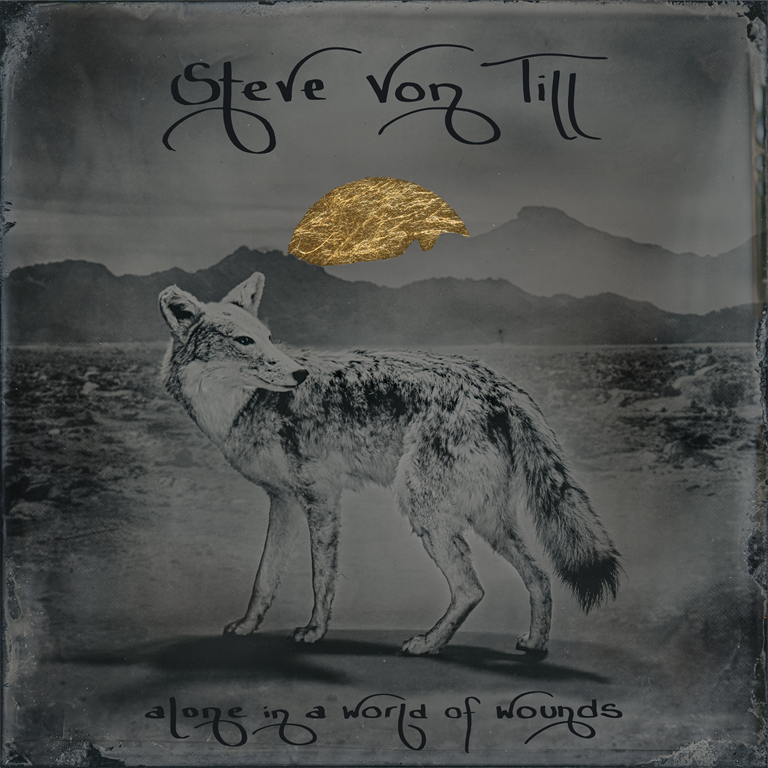
Steve Von Till doesn’t really require any introduction or preamble: the chances are, if you’re reading this, you’re already aware of his work, and if not as a solo artist, then as the guitarist / vocalist with Neurosis, active between 1985 and 2019. As much as Neurosis were labelled a post-metal band, they very much forged their own sound, which has, to an extent, become the house style of Neurot Records.

Von Till’s solo works may lean more toward folk and the gentler side of that style, but nevertheless have significant heft, and Alone in a World of Wounds – his seventh solo album, the follow-up to No Wilderness Deep Enough (2020) is no exception (he’s been busy in the intervening years with a trilogy of Harvestman albums, all released in 2024). The heft here comes from a sense of gravitas, rather than volume and distortion, and continues the softer trajectory of its predecessor, an album ‘initially inspired by the harmonic resonance of piano and synths and his long-standing love of ambient music’.

‘The Corpse Road’ sees Von Till croak and croon in a fashion that could me taken for Mark Lanegan in a blind test, against a sparse backdrop of strings which swell and swoon, heavy with sadness and gloom. There is a sense of times past, not just fading memories and bygone days, but a sense of the creak of wood and worn clothing of harder but simpler times. I find myself unexpectedly transported to a walk my daughter and I undertook from Ambleside to Grasmere in the Lake District a year or so back, via the ‘Coffin Route’. It was winding, and wet, and uneven, not to mention long, and it’s billed as a ‘strenuous’ walk, while still suitable for tourists: as the rain battered the hood of my anorak, I found myself contemplating what it must have been like hauling an actual coffin along that four-mile stretch without the benefit of modern hiking gear. Life must have been tough. Von Till taps into the essence of these past times, and a sense of the elemental.

The mood remains lugubrious on ‘Watch Them Fade’, a song redolent with sadness and reflection, weighted down with the reminder that mortality affects us all and is never far. Despite the fact that life’s only certainty is its expiration, we continue to shy away from the topic. While Alone in a World of Wounds does not confront mortality and death head-on, it’s there at every turn. “Keep on diggin’… dig a little deeper” he implores on ‘Horizons Undone’, and while there are psychological connotations here, it’s hard to ignore images of graves.

The eight-minute ‘Calling Down the Darkness’ is a super-sparse piano-led slow-burner, and confounds any expectation for a surging finish by remaining low-key and minimal to the end, ad something about it is so, so achingly sad.

‘The Dawning of the Day (Insomnia)’ is a brief spoken-word interlude with a moody piano accompaniment, while paves the way – or perhaps scatters woodchips – for the arrival of the swirling atmospheric start of ‘Old Bent Pine’, another song which revels in the forces of nature, before the six-minute ‘River of no Return’ flows toward the finish. It has hints of Slowdive about it. Moreover, its superficial ominousness reminds us that rivers only flow in one direction, and as with rivers, so with life: there is no return, no replay, no turning back. there is no undoing mistakes, only not repeating them.

‘Alone in a World of Wounds’ may be a largely acoustic album, but it is still heavy – really heavy – emotionally more than sonically – and consequently not an easy one to process. It would be impossible to deny the album’s quality. But the weight, the sadness…

AA

AA

450947

13th May 2025

Christopher Nosnibor

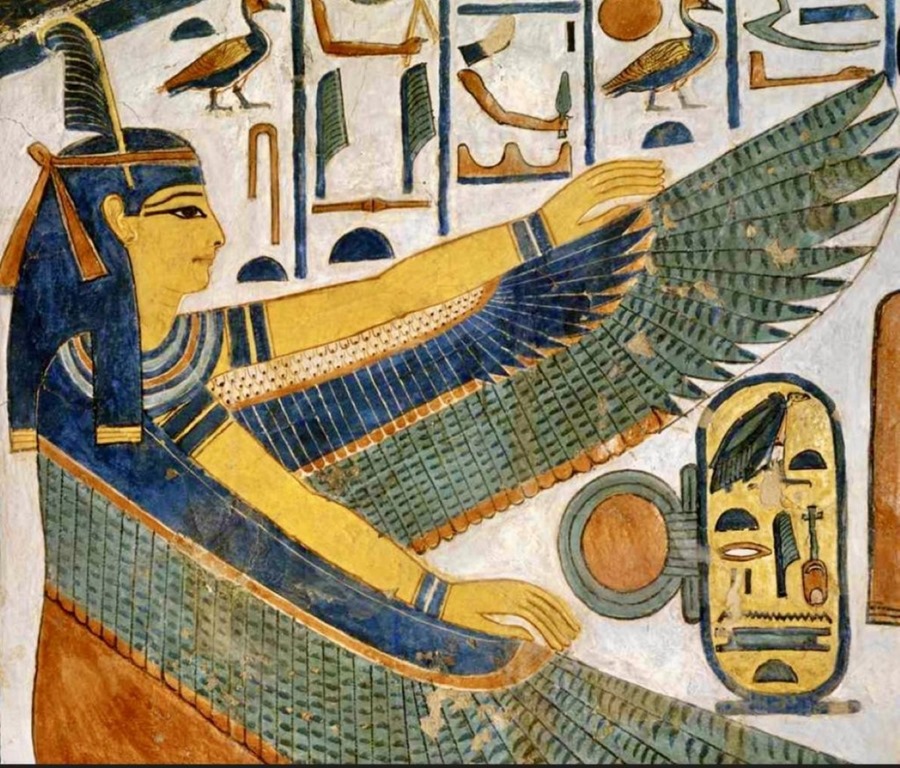
Papillon de Nuit, the ever-evolving, ever-shifting musical collective centred around the multi-talented composer, arranger, lyricist – not to mention promoter and musical / creative all-rounder – Stephen Kennedy, presents a sixth single in just a few short months, a run which began in December last year. And, true to form, ‘Ma’at’ is very different from each of the previous offerings.

Once again featuring the grand piano work of Karen Amanda O’Brien and Michalina Rudawska on cello, along with the return of Megan Richardson providing vocals alongside Kennedy’s, ‘Ma’at’ follows its predecessor, ‘Adriane’, as a song built around strong, dominant percussion and brooding strings. Where it departs is that what emerges from the bold, dramatic intro is a pretty straight-up dark pop song that’s not a million miles removed from later March Violets. It’s graceful, melodic – and I’ll even add catchy, comfortably withstanding repeat plays – and naturally, it’s laced with a delicate hue of wistfulness and melancholy.

AA

a1804204922_10