Posts Tagged ‘Techno’

29th August 2025

Christopher Nosnibor

When I was a child, I used to suffer anxiety – often when I was unable to sleep (my complex relationship with insomnia began at the age of five) – that my memories were stored in the vast eighteen-volume encyclopaedia my family owned, and I would be unable to access them because I couldn’t remember which volume they were stored in. Not that it was recognised as anxiety at the time: my parents would tell me to stop padding downstairs and bothering them, and to go to sleep. There’s a (sort of) valid reason for this (the anxiety, not the parental dismissal, but that’s an essay for another time): said encyclopaedia was made up from weekly magazines string-bound in identical hardback covers – a precursor to those infinite volume magazines devoted to knitting or whatever, or where you would build a Death Star in 300 instalments, that would likely cease publication before the collection was complete – and there were issues missing, including segments of the index, and topics were not arranged alphabetically like a conventional encyclopaedia. I couldn’t even find my favourite illustrations of dinosaurs fighting a lot of the time.

Things have only become more difficult since the advent of the Internet, and while spent my youth and even my early twenties in a pre-Internet world, there are many now who have never known anything else. Kids have existed online even pre-cognisance thanks to parents posting endless pics of them growing up on social media, and YouTube and Netflix have replaced conventional TV for anyone born in the last twenty years now.

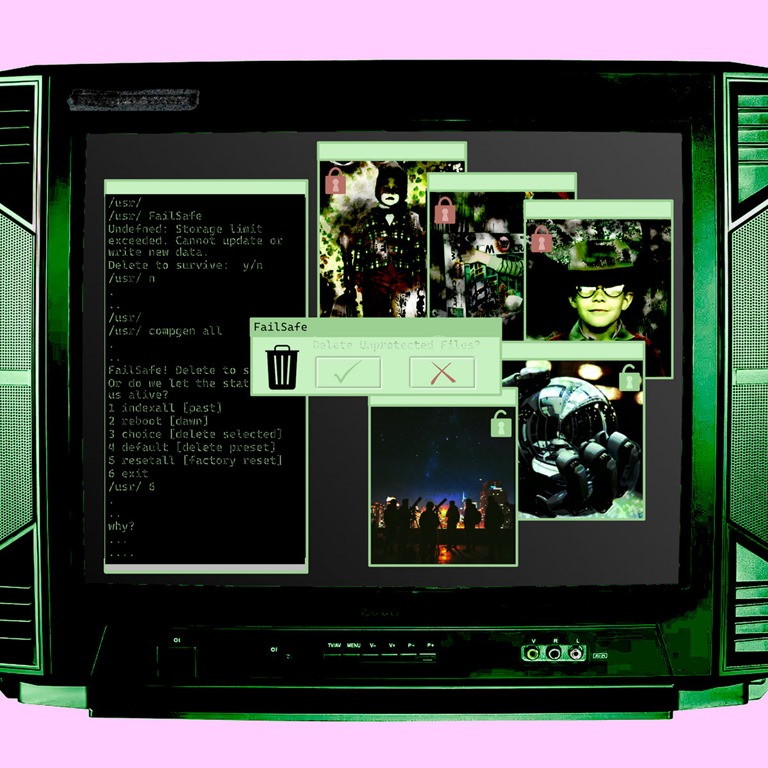
Memory, identity, and their changing nature of both under the conditions of lives lived permanently online, are primary subjects of exploration for solo artist Will N, songwriter, performer, engineer, admin, and the man behind industrial / darkwave act Solid State Sunlight. These topics provided the focus of the ExoAnthro EP last year, and ‘Failsafe’ continues that trajectory, ‘address[ing] the realization that the more we develop our own identity, the less memory remains for experiencing life moving forward. Does it delete previous memory to make space for ongoing growth? What memories are disposable? What are the consequences if it fails?’

I hadn’t considered this, or the idea of what he refers to as ‘data-poisoning’ before, having come to view the mind as a recording device, which captured and archived every single experience, every thought, e very book read, movie seen, but stored them in such a way that it accessing those archives was often a random process – Random Access Memory in the most literal sense.

But we scroll, and we scroll, and we troll, and we troll, and personalities become fragmented, real-life and online personas and experiences partitioned off from one another. Who are you? As AI takes over, the lines are becoming increasingly blurred.

‘FailSafe’ is a gnarly, glitchy technoindustrial stomp through melting circuitry that collides Depeche Mode and Nine Inch Nails with Twitch-era Ministry, with crunching beats dominating jolting electronics and raspy vocals. The intro is a grating bass throb, emerging from an abstract crackle – and then the beat kicks in. And it kicks hard.

If the autotune / robotix breakdown in the middle sounds a shade retro or corny, it works in context, reminding us of how the visions of the future portrayed not so long ago have been replaced by a truly dystopian present. The future was exciting. Computers would make life easier, give us more leisure time and infinite knowledge: that was the promise. Now look where we are. The corporate takeover of the Internet was where it all started to sour, and it was inevitable, but still somehow came as a surprise.

With ‘FailSafe’, Solid State Sunlight draw together a host of references and points of discussion, directly or otherwise, through the savvy hybrid formulation of the composition. It’s hard, and it hits with some attack. This is the vibe of the late eighties and early nineties updated to poke the paranoia of the now. We live in troublesome – by which I mean hellish, fucked-up – times, and with ‘FailSafe’, Solid State Sunlight poke that nerve.

AA

a1907026816_10

Sister 9 Recordings – 9th May 2025

Christopher Nosnibor

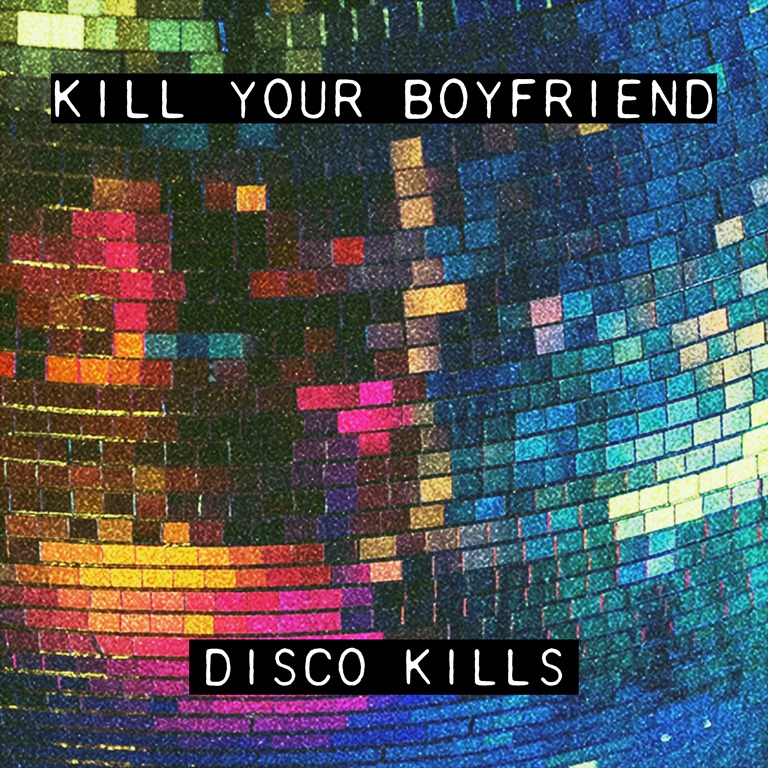
Since showcasing single cut ‘Discretion’ last month, I’ve been totally gripped by this new EP by Italian post-punk electro duo Kill Your Boyfriend.

There’s something about the consistent use of one-word titles that adds punch. The complete catalogue of Foetus albums is a strong case in point: Hole, Nail, Gash Blow… Four letters, forming a single syllable, prove to be powerfully evocative, even when there is no context – or perhaps more so because there is no context.

The titles of the six songs on here are rather less abstract, more descriptive, but still strong and evocative in isolation: ‘Ego’, ‘Obsession’, ‘Apathy’… words with emotional connotations, words which plug straight into the beating heart of the human condition. And, just as ‘Discretion’ threatened, Disco Kills is a full-on sonic kicking that registers blows from every direction.

It’s all about that throbbing, hard-hitting rhythm section, and once again, I feel compelled to sing in praise of the drum machine. Much-maligned and still contentious when used in a ‘rock’ context, the relentless thud and crash of programmed percussion can be so compelling – hypnotic, yes, but also in the way it registers in a purely physical way, the toppy snare explosion sending shockwaves through the nervous system while setting eardrums quivering. From Suicide to Uniform via Metal Urbain, The Sisters of Mercy and Big Black, there’s a rich lineage of bands for whom a drum machine used well – and at an appropriate level in the mix – absolutely defines the sound. It doesn’t work for a lot of rock acts because they’re more about having a certain flexibility, but for absolutely smashing the senses with precision timekeeping, drum machines really come into their own, especially when solid, four-square basslines which follow the beats with equal precision are involved.

And so it is that for all the mesh of treble and distortion, Kill Your Boyfriend structure these songs around a punishing rhythm section. No fancy fills or extravagant bass runs – just hammering, solid grooves, which underscore all the rest. I say ‘all the rest’ as if it’s somehow lesser. It isn’t, not by a long shot. ‘Obsession’ would be dancefloor-friendly – to the point you could imagine people turning and clapping in time with the crispy snap of the vintage Akai snare sound, were it not for its dark, distorted vocal. ‘Apathy’ a bubbling dance banger that’s twisted by some dissonant chord changes and an echo-soaked shouty vocal, the end result sounding like The Prodigy remixing Alien Sex Fiend. Apathetic it is not: a Hi-NRG banger with a dark, serrated edge, it is.

They do trancey / shoegaze / synthwavey lightness on ‘Illusion’, which offers an unexpected – and unexpectedly welcome – pause for breath. But although it pulls back on the breakneck pace and abrasion of the tracks which both precede and succeed it, ‘Illusion’ is still dense, richly textured, and overtly beat-driven, with a thick, churning bass lurking beneath. It just doesn’t drive as hard or as aggressively, with an altogether gentler vocal delivery, and it builds tension with twisty guitars with strong echoes of the sound of 1984. Yes, it’s a bit gothy, and it sits well, and all of this means that the thick, buzzy, echoey electrogoth stomp of ‘Discretion’ hits even harder after the lull, highlighting just what an absolute beast it is. And make no mistake: it’s a pumping, pulverising dark disco monster. It’s brashy, it’s trashy, not so much a car crash as a flaming, petrol-tank-exploding pileup with Sheep on Drugs, Selfish Cunt, KMFDM, and Sigue Sigue Sputnik. It’s an instant adrenaline spike, a rush of pure exhilaration.

‘Youth’ begins darkly but offer something more buoyant as a bookend to the EP, like an electro Sex Pistols, it echoes and bounced its way in a rush to the end. It does feel like a rather flimsy add-on, but works in terms of bringing things down again to wrap it up.

Disco Kills is solid and fierce from beginning to end – and while it’s predominantly electronic in its instrumentation, it’s also very much rock, and it’s pure punk all the way.

AA

052932

Cruel Nature Records – 25th April 2025

Christopher Nosnibor

Limited to 30 cassette copies worldwide, which sold out in advance of the release date, anyone wanting this now will have to satisfy themselves with a stream or download. Tapes really have become cult cool again of late. Raised on vinyl, the cassette was my format of choice in the mid- to late-eighties, until I got a CD player for Christmas in 1991, although I continued to buy vinyl through the 90s because an LP cost about £8 whereas a CD cost around £12. I loved tapes, and I especially loved being able to copy stuff to tape, and do it so cheaply. It was a long time before the advent of the technology to rip and burn CDs.

But for a time, I would buy albums on tape, often in Woolworths or WH Smiths and sometimes from Britannia Music when my parents had made enough purchases to earn a free album – because a tape was about eight quid and you could stuff it in your Walkman and sometimes, perhaps, get it played in the car when going on holiday. Although I recall purchasing Children by The Mission in 1988 on the same trip my parents took me to buy a snake, and my mother moaned and asked if we could have ‘the nice man’ back on (meaning the Bruce Springsteen album I’d been listening to before discovering The Sisters of Mercy and The Mission.

So, the status of the cassette release has certainly changed – again, and one can’t help but wonder if it’s only a matter of time before the cassette single makes a comeback.

Before the Skeletal Dance Of Our Festering Jesters is… bassy. And with good reason for certain. As the Bandcamp blurbage details, ‘Blind Johnny Smoke was born severely deaf in both ears, and started to lose his vision as a teenager with only a few degrees of central vision remaining and still decreasing. Then at the end of 2023 he experienced a sudden loss of his remaining hearing on his left side leaving him profoundly deaf. This posed huge questions for him, what life will be like going forward, how this would change how he felt about the nefarious shit going on in the world around him, and whether he was still equipped to be able to express himself through music. With the aid of The Juddaman, the answer lies within the tapestry of Before the Dance of our Festering Jesters.

Musically, the album is almost obscenely focused on bass frequencies, which coincidentally are the only sounds Blind Johnny can detect without hearing aids. There is a dub sensibility that the band have always dabbled with, but here it weighs in heavily alongside trademark percussive programming and unmusical cut up noise. The accompanying words are as angry as ever and, after a few years of Blind Johnny performing on the spoken word circuit, the lyrics have depth and trickery sitting alongside blunt vitriol.’

‘Sensory Denudation’ presents a groaning mass of distortion, and the spoken word vocals offer up comparisons to Pound Land and Sleaford Mods, and nothing about this is easy on the ear as ambience and trudging industrial noise grind away. It’s the Mods and Benefits who come to mind during the stark electronic grind of ‘Safety First’ and ‘Words Without Echo’, which also introduces a Public Image kind of slant, and Before the Skeletal Dance Of Our Festering Jesters brings together post punk and ranty rap with hip-hop and industrial and spoken word. It’s hard going if you’re wanting tunes, but ‘Ghouls’ is perfectly representative of the low-tempo, thudding noise approach the band have taken to the creation of Skeletal Dance.

‘This is All I Hear Now’ is pure rant, raw and aggressive, the ‘blah, blah, blah’ refrain snarled over a thick, woozy bass, before the six-minute ‘Party On’ turns its focus on the UK government’s COVID lockdown ‘partygate’ shenanigans and dubious contracts for PPE as dense, industrial percussion builds, and I’m reminded of Test Dept’s The Unacceptable Face of Freedom. It’s pretty potent stuff.

Running beyond seven minutes, ‘Crooked’ is the album’s centrepiece, a murky postindindustrial wasteland of a soundscape dense in distortion, crashing beats trudging hard through an unusually melodic chorus which provides the album’s lightest moment at the point it was least expected. Sorry for the spoiler there. It’s back to seething and sparse, throbbing techno bass and thumping beats on ‘Behind Closed Doors’, a bleak slice of dark dance that wouldn’t have been entirely out of place on a Wax Trax! release in the late 80s or early 90s.

‘Laughter’ offers a sliver of illumination in this overall dark offering, although it’s very much relative and it’s a cold, mirthless cackle than an uproarious belly-shaker: a piano-led piece of Numanesque electropop, it’s stark but structured.

Everything builds perfectly for the monster finale, the twelve-minute ‘Satellites, a low, rippling drone crawling and billowing from the speakers in the most lugubrious and ominous fashion. A chorus of voices rises up, dissonant but united, before fading out in a waft of reverb, to be replaced by slow-smouldering synths and a sparse but insistent beat that strolls its way to an almost tranquil horizon.

Before the Skeletal Dance Of Our Festering Jesters covers a lot of ground, and while much of it is pretty desolate, it is not an album entirely bereft of hope.

AA

a0086783039_10

28th March 2025

Christopher Nosnibor

Ahead of a new album release, Protokoll 19 have given us the single ‘When Will It End’. It’s a question I ask myself almost daily. Because fucking hell. Life. The world. Both seem to be an endless hell. You wake up, lug yourself to work, trudge home, you’re wiped, and it’s as much as you can do to eat food, maybe do some chores and get ready for bed again. You scan the news and it’s Armageddon, especially this last couple of months: the world is at war and the fascist agenda of the US ‘government’ sends tsunami-force reverberations around the globe daily. And it just goes on and on and on, forever the same. Here in the UK, our government has decided that mental health issues which [prevent people from working are being ‘overdiagnosed’. We’re all being spectacularly gaslit here. This isn’t a question of overdiagnosis: it’s a matter of how terrible, terrible times – we’re still not really over the effects of the pandemic, and everything since then has felt like the realisation of every dystopian fiction and the worst aspects of history recurring – affect people and send them into states of mental distress. When will it end?

This single, they tell us, ‘sets the tone of what can be expected from the album as a whole. When we find ourselves in a dark place, it often feels like there is no way out. The longer it goes on the more difficult it becomes to engage in anything. We isolate ourselves and see these thoughts as a burden. We’re haunted by these thoughts because they’re always lurking in the shadows.’

With this single, Protokoll 19 deliver a full-throttle stomping technoindustrial blast of skin-prickling tension. The vocals are mangled and gnarly and are more toward the black metal end of the spectrum, a demonic rasp that splutters gasoline and broken glass over the clean surface of hi-NRG synths and a pumping beat. Intense is the word. There is no snoozing through this.

AA

370822

1st March 2025

Christopher Nosniboir

Richard Rouska is something of a cult legend in his own lifetime: back in the 80s he was pivotal in the Leeds zine scene, documenting the emerging post-punk movement Leeds remains so renowned for, in real-time, subsequently writing a number of books. Along the way, he’s made some music of his own, recently making Well Martin This is Different his primary focus, with some prolific results. Finding The Ai G-Spot is WMTID’s fifth since their inception in the mid-late eighties, and serves up a set of remixes, with proceeds from any donations going to the Throat Cancer Fund.

And yes, it certainly is different, and that’s clear from the get-go. WMTID’s music is essentially electronica, but draws on a host of elements which have their origins in different decades and different scenes. I will admit that I misread the title as Finding The Ali G-Spot initially. Ai-iit! But while this album draws on a huge array of influences, you won’t find any naff cultural appropriations.

‘The Prince is Dead (Again)’ is a twisted hybrid of lo-fi post-punk, 80s electronic industrial (think Wax Trax! stuff in the late 80s / early 90s), space rock, and Krautrock, a motorik groove stricken through with some wild orchestral strikes and multi-layered vocals – and this is to an extent the template: ‘03:33 Time’s Up’ is exactly the same duration as the original version (‘333’) which appeared on I Know What You Are But Who Am I? in the Autumn of 2024, tweaked to optimise the hypnotic rhythm and detached-sounding vocals. The result is somewhere between DAF and early Human League. ‘Deep Down Low II’ – again reworking a track from I Know What You Are goes full-on techno / cybergoth stomper, with industrial-strength beats pounding away relentlessly. It works so well because it doesn’t take from the original, instead simply rendering it… more. More. MORE! And I want MORE!

There are hints of both KMFDM and very early New Order about ‘It’s (Another) Lovely Day’, but then, it’s as much a work of buoyant lo-fo indie and bedroom pop, while ‘Little Bombshells’ comes on a bit Prodigy, but again, a bit technoindustrial, and a bit kinda oddball, bleepy, bloopy, twitchy, stuttery, the vocals quavering in a wash of reverb as crashes of distortion detonate unexpectedly. Elsewhere, ‘Waiting For The End…’ goes dark and low and robotic, and ‘Three O’Clock Killer’ is hyperactive and warped, and brings menacing lyrics atop a baggy 90s beat.

It really is all going on here, and the end result feels like a wonderfully eclectic celebration of music, articulated through some quite simple compositions, all of which have solid grooves providing the backbone of each.

My general opinion of remix albums is widely documented and not entirely enthusiastic, but Finding The Ai G-Spot is a rare exception, mostly because it doesn’t feel like a remix album an doesn’t offer three or four unnecessary and unrecognisable versions of each song, boring the arse off all but the most obsessive fan. In fact, if you’re not up to speed on WMTID’s output – and there’s a fair chance you may not be, to be fair – Finding The Ai G-Spot offers a neat entry point and summarises the last couple of albums nicely, too.

AA

a2835565654_16

Metropolis Records – 7th March 2025

Christopher Nosnibor

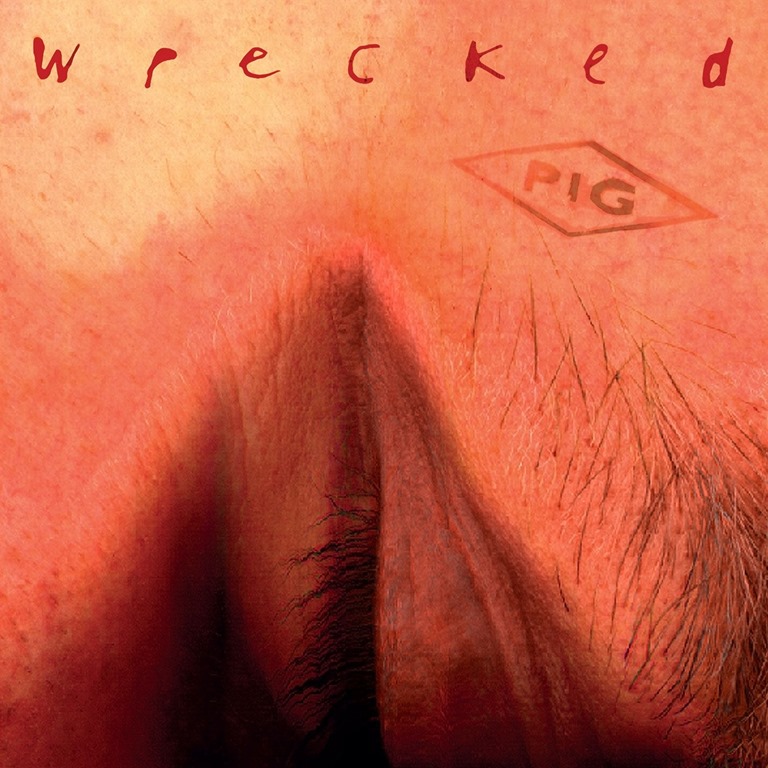
As Metropolis continue with their run of PIG reissues, the arrival of the remastered Wrecked reminds us of the run they had in the 90s. Having hardened up the sound showcased on debut album A Poke in the Eye… and follow-up Praise the Lard, and having toured with Nine Inch Nails in the Downward Spiral tour, PIG found themselves signed to Trent Reznor’s Nothing label for the release of Sinsation (1995), which melded the more experimental aspects of The Swining and Red Raw & Sore from a couple of years previous and cranked up the guitars – and the sleaze and depravity – to eleven. And after Sinsation came Wrecked, and having returned to Wax Trax!, in the US at least, the album was released first in Japan in ’96 and the US a year later with a substantially different tracklisting – and was an absolute bastard to get here in the UK in either form.

This version brings together the tracks which featured on both the original Japanese edition – which was criminally missing ‘No One Gets Out of Her Alive’ and ‘Contempt’ – and the American edition, which brought ‘The Book of Tequila’ and ‘Fuck Me I’m Sick’ in their place.

Wrecked very much represented PIG at their wildest, most wide-ranging, and arguably their heaviest. The title track drifts in on some mellow steel guitar country vibes and ambient chilling… and then gets gnarly with gritty industrial rigging and snarly vocals that are quintessential PIG. Raymond Watts may not have been in the best place during this period, but creatively… the music he was making was something else, and Wrecked stands up just as well now as it did on release. I’ve mentioned previously that PIG stand apart from their contemporaries, and while Watts was a touring member of Foetus in the late 80s and worked with JG Thirlwell when PIG was born, as well as being a member of KMFDM for a time, as much as those elements of aggrotech and industrial metal are core to the sound, Watts took it somewhere else entirely. Where? It’s hard to say: PIG’s work simply doesn’t conform to any genre forms or models – PIG just are PIG. While a couple of tracks had been previously released in different forms – the original versions of ‘Find It, Fuck It, Forget It’ and ‘Blades’ appeared on The Swining, released only in Japan in 1993 (prior to a 1999 US reissue) – it would be wrong to suggest that their inclusion on Wrecked suggested a lack of material, given just how radically different these versions are. The same is true of the reworked version of ‘My Sanctuary’, which appeared on Praise the Lard: expanded, more grandiose, more everything, the ‘Spent Sperm Mix’ taking the track to preposterous heights while audaciously combining industrial, techno, and gospel with orchestral strikes galore.

Since the US and Japanese editions included various alternative mixes, it would have been nice to see this version feature all sixteen tracks featured on the 2017 tour edition, which is arguably the definitive edition. But what we learn here is that you can’t have everything, and this edition at least has the majority of the prime cuts. Sequentially, it follows the Japanese edition, with the tracks which featured on the US release at the end.

The drumming on this album is brutal, choppy, the guitars cutty, stuttering, heavily distorted, but with a bright, clear, digital crispness that really slice hard. Watts growls, snarls and sneers, dark and salacious, and everything about Wrecked is harsh and ugly. ‘Find It, Fuck It, Forget It’ is a full-throttle beast of a track, with a sample-laden breakdown in the mid-section, with snippets of reports on American obesity and the like (in place of the sped-up snippet of ‘The Dance of the Sugar Plum Fairy’ on the original), and it’s pretty dark and unforgiving.

‘Blades’ is one of the greatest tracks ever recorded by PIG or anyone – it’s one of those songs that just does something to you. The ‘Slash Mix’ on here may not be the best version – for my money, I prefer the more orchestral original, but this rendition is dense and girthy, and fits with the sound of Wrecked. Then there’s ‘Save Me’, the album’s slowie, and so, so powerful. It takes ‘anthemic’ in a whole new direction.

Watts has always made music with a boldly theatrical approach to the industrial template – and Wrecked really turns up the dial on everything – density, volume, aggression, intensity, and this expanded reissue is an essential document in the broader industrial oeuvre. It’s also an outstanding album in its own right.

AA

67fd98d7819df26e756c1ecba56842acbbd35016

Long Trax Productions – 31st January 2024

Christopher Nosnibor

The brief liner notes are almost as perplexing as the cover art and the rest of Will Long’s Bandcamp page. I mean, you might think that the title is the key here. While clocking in around the eleven-minute mark, these compositions, as much as they’re far from short, well, I’ve certainly heard many longer trax, with many albums featuring a single twenty-minute piece on each side. But of course, it’s a pun. Sort of. Regardless, spreading these four tracks across four sides of vinyl feels somewhat indulgent, although I won’t go quite as far as to say exploitative, despite the temptation.

Will Long has to date created an extensive catalogue of work, both with Celer, since 2004, and as a solo artist – and when I say ‘extensive’, I mean extensive, with Celer having released around a hundred albums (if you include collaborations and compilations), and his solo output is equally overwhelming in volume. The Long Trax releases have arrived sporadically between other releases, and are broadly connected, in stylistic terms. As Long puts it, ‘round 4 of the Long Trax series [is] the pivotal moment of truth. Four new deep cuts spread across 4 sides of vinyl in dual sleeves, and spun onto disc. An all-analog, hardware machine affair, full of glacial pads and icy stabs, rhythm composure (composer) sequences, round booming basslines, and narrators from beyond. It’s the real thing, still chugging along.’

Less than a minute into ‘One in the Future’, I’m feeling late 90s chilled techno vibes, and I’m dragged back to a handful of club experiences where I fucking hated the music and I hated the posers.

I’ll admit, I’ve always had something of a fraught relationship with dance music and its culture. I suppose I’ve generally leaned towards rock, but have found spaces in my head and heart for some dance and adjacent, loving the KLF from the start, and so much of the electronic music from the late 70s and early 80s. Chris and Cosey’s Trance is a straight-up dance album, and I dig it not just because it’s a Throbbing Gristle-related release. But, as I discovered when visiting a club in Brighton on visiting friends in the late 90s, some stuff, I just struggle to connect with. And this is it. To add to my story, I attended an Optimo night in Glasgow in 2004 to see Whitehouse. It was a strange event, in that most were there for the downtempo dance, which was halted for three quarters of an hour while William Bennet and Philip Best cranked out the most punishing, ear-shredding set to the sheer horror of the majority, before smooth beats returned, to their relief. My experience was inverse to the majority. Whitehouse did not go down well: the end of their set did. As the relentless bouncing beats returned, I was happy to leave, as were my whistling, devastated ears.

‘One in the Future’ is the longest eleven minutes of nondescript sonic wallpaper I have had the pain to endure in over a decade. It’s the monotony that hurts. It’s soulless, tedious, and nothing happens. And this is a fair summary of the album as a whole. To my ear, to my mind, to my insides, it feels so devoid of… anything that I can connect to. The samples blare, the squelchy synths blip and bloop and pulsate over tedious beats and maybe I need different drugs or a different brain, but this is relentlessly tedious, monotonous and crushingly dull. Get me out of here!

AA

名称未設定のアートワーク

Kalamine Records – 14th September 2024

Christopher Nosnibor

Whether it be solo works ranging from ambience to classical, or collaborations running the full gamut in the electronic field, Deborah Fialkiewicz’s output in recent years has been nothing short of prodigious, and spanning as many forms as her work does, there is never a dull moment. This latest work, under the POOCH moniker, in collaboration with Dan Dolby (Bassist in Mastiff, Noisemonger in Catafalque and Sulphur Nurse) is no exception. It offers a set of eight dark, stark electronic compositions which owe a considerable debt to early industrial and electronic works, bringing a combination of dark atmospherics and nagging beats. Although entirely instrumental, we’re in the kind of territory occupied by the likes of Cabaret Voltaire, Test Dept, and Chris and Cosey’s Trance.

As an opener, ‘Hades’ is as dark and subterranean as the title would suggest, a bleak, murky pulsation squelching around and leading the listener down, down, down. It serves as something of a primer, a mood-setter, but doesn’t fully prepare one for the altogether steelier, starker, more rhythmic and percussion-driven pieces which follow.

The title track pairs a dense, dirty bass with clattering, metallic percussion which assails the mind like a concerted assault with the contents of a cutlery drawer, and it bashes away relentlessly for four and a half minutes straight. On paper, it might not sound much, but as an experience, it’s pretty hard-hitting. Built around short, clipped repetitions, it creates a suffocatingly claustrophobic aural space. The word ‘pooch’ evokes a cuddly companion, something friendly, but there’s nothing cuddly or friendly about this, a listening experience closer to being whipped with a chain than fussing a canine buddy.

Each composition bears a one-word title (‘GameBoy’ being a forced blend-word (it doesn’t really qualify as a portmanteau) in order to maintain the theme. Funtime bit-tunes are bent with glitches and warping drifts of darkness here, before things begin to slide further into beat-orientated minimal techno.

The steady beat which dominates and defined the spartan ‘Quazar’ is almost soporific: the track assumes something of a background position as it clicks along nonchalantly, with a low, unshifting drone hovering just around the level of register. Nothing happens. It doesn’t need to. And while the thunder which heralds the arrival of ‘Midnite’ might initially serve as an alert, the piece soon melts into abstraction. The final track, ‘Stimpy’ may be missing Ren, but hits hard, built around a strong, thudding beat and looped electronic undulations.

For all of its cuddly connotations, Pooch is a pretty dark album. To my mind – and it could be to my mind alone – music which is heavily beat-orientated and instrumental feels impersonal somehow, and I find it somewhat disorientating, disconnecting, alien. And so it is that the pounding beats of Pooch leave me feeling somewhat dazed, detached, even dizzy. But it’s impossible to deny the detail, the quality of the execution, or the fact that this is an outstanding work.

AA

cover

Industrial band, CLOCKWORK ECHO has just unleashed their highly-anticipated new single, ‘Hallowed Be Thy Pain’.

Laden with raw emotion and haunting revelations, ‘Hallowed Be Thy Pain’ delves deep into the themes of deceit, faith, and the far-reaching consequences of a single lie. The song’s lyrics are poignant and introspective, unravelling a story that intertwines personal guilt with collective delusion.  The song offers a powerful critique of faith, deception, and the human condition. It challenges listeners to question the narratives they have been fed and to seek the truth behind the comforting lies.

In a world where belief often triumphs over evidence, ‘Hallowed Be Thy Pain’ critiques the exploration of faith and the ease with which people are swayed by spiritual narratives, often lacking concrete evidence. Phrases such as ‘shadows in their eyes’ evoke a sense of collective blindness, a willingness to be deceived in exchange for spiritual comfort.

‘Hallowed Be Thy Pain’ serves as a haunting reminder of the fragile line between truth and fiction. As we navigate through the shadows of our own lives, may we find the courage to confront the lies we tell ourselves and others, and seek a path illuminated by truth and understanding.

Listen to this blasting stomper here:

AA

ab1a4016-f502-e421-4960-d414cbdb59eb

Metropolis Records – 17th May 2024

Christopher Nosnibor

For a good many years, PIG lay dormant, moribund, mute. Gone, but not forgotten, having mingled with the milieu of industrial royalty since emerging in the ranks of KMFDM and retaining that connection and confluence while operating separately under the PIG moniker, Raymond Watts arguably reached his largest audiences in the wake of touring as support to Nine Inch Nails on the Downward Spiral tour. With pig’s heads on stakes at the sides of the stage, it was visual, visceral, and vital.

Things went quiet for a time – a very long time – but since returning in 2016 with The Gospel, the releases have come thick and fast, with Red Room being the sixth album (if you include Pain is God, a compilation of EP cuts) since PIG’s phoenix-like resurrection

As the accompanying notes explain, ‘Watts has co-written much of Red Room with Jim Davies, a longtime member of Pitchshifter but best known for his acidic and acerbic guitar lines on many chart hits by The Prodigy. Several regular cohorts are also present and correct, along with some new additions most majestically heard on ‘Dum Dum Bullet’ as the PIG choir: Emily Kavanaugh (Night Club), Chris Hall (Stabbing Westward), Burton C Bell (Fear Factory, Ascension of the Watchers), I Ya Toyah, Chris Connelly (Revolting Cocks, Ministry), En Esch (KMFDM) and Marc Heal (Cubanate) are among those featured.’

First: it’s a hell of a roll-call of contributors. A veritable who’s-who, an industrial supergroup on a scale that pisses all over recent lineups for RevCo or Pigface. Second: Jim Davies’ presence is notable in terms of defining the sound. There’s a lot of sinewy detail in between the chugging riffs and bulbous sequenced synthy bass notes. Recent releases have seen Watts expose the poppier, glammier aspects of PIG, but these have been cast aside here in favour a sound which is altogether more reminiscent of mid-to-late 90s PIG, only minus the flamboyant orchestral strikes and string flourishes.

Blasting in with ‘Crumbs, Chaos, Lies’ – which deviates from the classic alliterative rule of three – the album gets down to the grind from the off, the track boasting some dirty low-end scuzz, the likes of which would have been quite at home on Sinsation or Wrecked, with overloading guitars that burst from the speakers rent with a serpentine synth line and some discordant piano. Layers? It has many, and the more you listen, the more you hear. Watts has long been a meticulous master of detail in the studio, and while Red Room is darker and noisier than some of its predecessors, it’s a masterclass in attention to the little things.

The title track is a proper PIG prime-cut: anthemic, but dark, bleak, and dirty, while ‘Dum Dum Bullet’ is reminiscent of previous ‘gospel’ flavoured pieces, but equally, I’m reminded of a grimier sweatier, sleazier version of She Wants Revenge. If ‘Does it Hurt Yet’ calls to mind Nine Inch Nails circa Pretty Hate Machine and the more low-key, robotic synth moments of The Downward Spiral, it’s worth bearing in mind that it was Watts who working this field before Trent, before Reznor contributed to Pigface, Watts was recording with KMFDM, and come 1988 (when PHM was released), he released the first PIG LP and worked as a touring member of Foetus.

‘Slave to Pleasure’ mashes a whole lot together, sounding like an industrial version of The Associates, while throwing nods to Depeche Mode and David Bowie. It’s high-energy and a killer tune which would go down well on the radio, if the whip cracks and general themes could pass approval. ‘Six Eye Sand Spider’ is again predominantly electronic but the layers ad textures are exciting, and the guitars, while packed down so, so low, bring both dirt and density the sound. ‘PIG is at Your Window’ is uncomfortable, and brings some bold brass and busy orchestral work atop the big, grinding blasts of guitar, not to mention a dash of .

Red Room captures PIG at their darkest and heaviest, but also marks a return to their eclecticism and experimentalism of the mid-nineties. It’s an unapologetically hefty set with some inspired twists.

AA

a0167926687_10