Posts Tagged ‘Techno’

28th November 2023

Christopher Nosnibor

Following on from the interim Thrown Away EP release, which boldly, and perhaps somewhat unexpectedly – pitched a Papa Roach cover front and foremost, and taster single release in the shape of ‘Slow Blade’, Binary Order drop the new album The Future Belongs To The Mad. In doing so, Benjamin Blank’s techno / industrial / metal vehicle reveal just how much has evolved since previous album, Messages from the Deep.

So many acts in this musical sphere seem to exist in a sort of genre-specific bubble, grinding out endless psychodramas centred around dark sexuality and degradation, having taken the first couple of Nine Inch Nails albums as templates for their musical existence. Fair enough. It’s easy enough to become embroiled and fixated on the relentless turbulence of your angst and relationship disconnects and how they fuck with your head. At least when you’re a fucked-up hormone-explosion, which is pretty much anyone’s teens and probably twenties.

This could perhaps explain in part the difference in focus of The Future Belongs To The Mad. Blank has been operating as Binary Order since 2008 – the same year I got serious about reviewing music – and it’s been a ling and tempestuous fifteen years. Older, wiser… and more bewildered by the world.  Blank’s statement which accompanies the album is stark, bold, bleak, and honest – but at the same time suitably vague, and I shall quote in full in order to provide context:

“It’s never easy to be honest about these kind of things, but I feel it’s important with this release to be so. The Future Belongs To The Mad was written during possibly the most difficult period I’ve ever had to get through – a period I’m not actually done dealing with – and one from which I now fear I shall never depart.

This album is an expression of my own inability to find meaning or purpose in life. And the utter disdain and emotional distraught that comes from the accumulation of living like that year, after year, after year. With this album I’ve managed to turn something that is for all intents and purposes destroying me, and created what is without any doubt in my mind, the greatest accomplishment of my life.

I don’t know if there is going to be anymore Binary Order after this. Finishing this album felt like an impossibility at one point, and now it’s done I feel like I am too. I hope anyone who listens to this can find something of value for within it. If not then I just appreciate having this platform to express myself in this way because it has kept me alive.”

Whether so much of this existential trauma was triggered by lockdown or other personal circumstances, we don’t know, but the fact that Blank is British and subject to the daily hell of living in a country in turmoil and seemingly hell-bent on utterly fucking itself and its citizens is worth highlighting, in that this seems to reflect the mood of many people I know. It feels as though the mad have already taken over and are stealing the futures of the rest of us, and our children. From this vantage, you look in, you look out, and you feel hollow and broken.

The Future Belongs To The Mad is harsh, abrasive, and rages hard from the offset, with the blistering hot guitar inferno of ‘Consternation’, which judders and stutters, halts and race, blasts of noise slamming in your face in the first bars. The vocals alternate between snarling, impenetrable metal roars in the verses and cleanly melodic choruses abrim with bombast.

Elsewhere, ‘Perfect World’ builds to a truly magnificently anthemic climax, while ‘Feel Again’ brings some crisp dark electropop that calls to mind mid/late 80s Depeche Mode with its layered synths and backed-off but crunchy guitars, over which Blank wrestles with his entire soul over darker feelings. There are dank instrumental interludes to be found during the course of the album. ‘Hope is a Mistake’ is every bit as bleak and life-sapping as the title suggests. ‘Skin’ is tense and claustrophobic electro, but again, there are segments which are smooth and soulful. ‘Face Beneath The Waves’ is a black blast of aggrotech metal / glichy electro / industrial / emo which takes your face off then soothes your raw flesh with some nicely melodic passages.

If nu-metal at its best / worst battled with stylistic duality, Binary Order carry this through to a Jekyll and Hyde manifestation of internal struggle on The Future Belongs To The Mad, which incorporates elements of numerous genres. These contrasts serve the album well in terms of it being a dynamic, energised offering, but such schizophrenic sonic stylings make for an album that’s almost pitched at two or more different markets. But more than anything, it feels as if these stylistic conflicts are the manifestation of Blank’s internal conflicts – and with this interpretation, The Future Belongs To The Mad works well. Blank hauls the listener through his difficult experiences, one at a time, and you bear witness to his self-torment a song at a time.

The Future Belongs To The Mad is not an easy album, but it is one that carries much weight and is well-realised. I won’t be alone in hoping it isn’t the last of Binary Order – but if it is, it’s a grand final statement.

AA

a3124503610_10

Sinners Music – 30th September 2023

Christopher Nosnibor

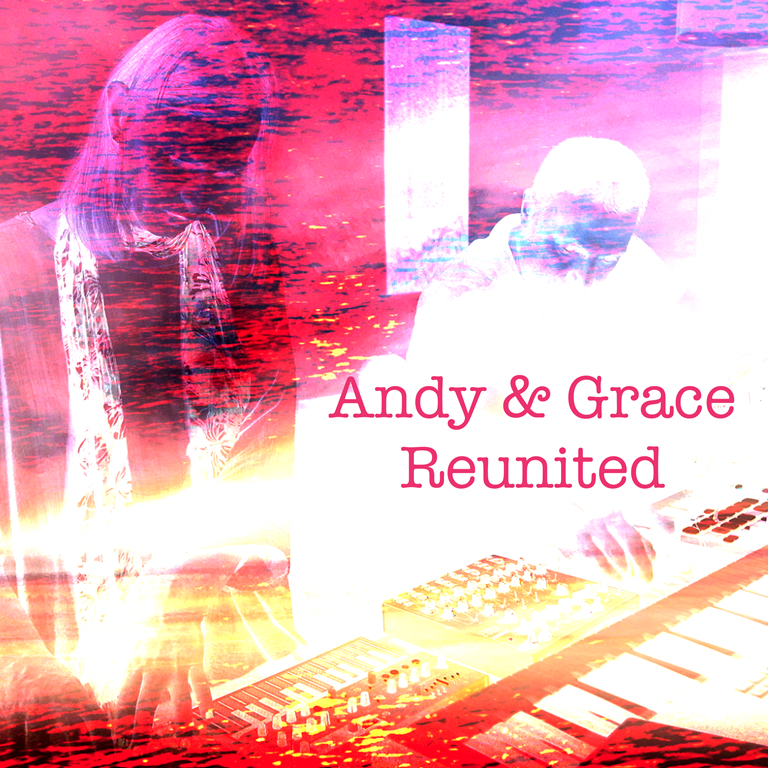
As the album’s title suggests, this is not Andy & Grace’s first work together, but does come after some time since their last collaboration. By ‘some time,’ I mean a long time. Like two decades long. As the bio which accompanies the album outlines, they first met in the late 1990s ‘as founding members of the ambient chillout band Chillage People’, under which moniker they played ‘long, improvised sets in sweaty chill-out rooms in gloomy Sheffield clubs’ and resulted in the album Solid Water, released in 2001.

There’s much of the intervening time unaccounted for, presumably because life. So many creatives in all media seem to suddenly disappear from view. Work, families, and ordinary everyday adult pursuits take over and there simply isn’t the time or the energy. Some accept this comfortably, even embrace it, others wrestle with the opposing forces of creative juices fermenting and slowly gnawing at their guts while enduring.

Whatever the reason for the gap in his musical CV, recent year have seen Andy becoming a part of the Electronic Music Open Mic (EMOM) movement, appearing at venues around the North of England playing with his modular synthesiser. This is where Sinner Records come in: Ian J Cole is also a face on the EMOM circuit, a musician in his own right, who recently established Sinners Records. And let’s not forget Grace – that’s Grace Griffin, who at the time of joining Chillage People, was already a highly sought-after live sound engineer, working with some of the biggest names in the music business.

‘You name them and it’s a fair bet that Grace will have worked with them,’ says the bio. On top of that, and being ‘an accomplished musician with a gift for crafting fascinating textures and grooves, she is also an adept photographer and video editor.’

She’s remained engaged in music. There may be a worry that after twenty years and their lives having taken such different trajectories, reconvening would bee awkward, but the clue is in the title, really: Reunited speaks of coming together, coming home and picking up where you left off. And listening to Reunited, for all its crazy crossover and stylistic divergences, it feels like an album that has been dying to get made, whether they knew if or not before they started work on it.

Over the span of thirteen pieces, the pair explore a host of soundscapes and varying moods, all incredibly rich in atmosphere, shifting constantly. The first of these, ‘Deady Long Legs’ transitions from shifting sands of electronic noise to somewhat unsettling echo-drenched ambience, eerie chimes and shooting stars spinning off course against a warping backdrop of slow-melting vintage synth tones and shuffling groundworks, and there’s a lot going on here. It’s an album dominated by rippling waves and space-age spins, and there are some tracks which find the pair go full dance – or EBM or EDM or whatever it is in America. The beats aren’t often dominant, but they are frequently driving. At times, the tones are brittle, reducing from full range to clipped, tight compressions mingling with undulating synths forge cinematic techno.

There are moments of expansive tranquillity, such as ‘Sad Major’, and this is an album that places tone and texture to the fore in terms of the way the sounds are sculpted into songs. It’s immersive stuff, and on a number of occasions I find myself zone out, not through boredom but the music enveloping my mind and body. And perhaps some tiredness, too. But ‘Forty Winks’ a bleepy wakeup, and one suspects the title is a reference to Josh Wink.

Reunited is the sound of old friends coming together and finding they still have an intuitive connection. There are some neat grooves – like the buoyant almost funk-tinged workout of ‘Groovy Machine’ and the stuttering harder beats of the mellow ‘Mallets of Entanglement’, and there are elements of playfulness in evidence, as on the skittering ‘Wasted in Da House’ and the irreverently-titled ‘When A Seagull Ate My Icecream’ – which reminds me of the time a giant cockerel nicked my baguette, but that’s a story for another time.

Reunited is a cohesive work which strolls through numerous different terrains of electronica, and shifts from light to dark, but mostly ambulates the spaces in between in fine style.

AA

Andy _ Grace Cover

28th August 2023

Christopher Nosnibor

Techno/industrial is rather like craft beer. It was invented in Europe (KMFDM are obvious progenitors back in 1984), before being embraced in the States and with Wax Trax! almost singlehandedly spawning a factory for the genre, which in turn found significant popularity in mainland Europe, particularly in Germany.

English exponents are rather harder to come by, although Benjamin Blank, who has been working under the Binary Order moniker since 2008, is a worthy representative. His words on this latest single, lifted from forthcoming album The Future Belongs to the Mad (out at the end of November), illustrate perfectly why this mode of music is ideally-suited to life in Shit Britain: “’Slow Blade” is a reflection of the decline I’ve witnessed in my lifetime. It’s a decline that has gotten us to a point where we are more concerned with passing the blame than attempting fix the decay that has rotted away at us all, leaving many despondent and lost, myself included.”

I’m writing this in the week that, as schools are due to reopen after the summer break, hundreds are being forced to close or otherwise relocate students because the buildings are unsafe, built using cheap concrete which is structurally unsound and liable to collapse without notice. Our government has known about this for years, but has failed to act. And, indeed, over the last thirteen years, our infrastructure has been slowly crumbling – our roads, our sewerage systems, our rail network – as profit has been put before people, and we’ve become embroiled in petty patriotism, culture wars, and outright horrible racism and prejudice of every kind. It’s no wonder Blank feels as if our small island is sinking while the only things rising are rates of poverty, depression, and other mental health issues.

‘Slow Blade’ feels like a significant progression from the material which comprised previous album, Messages from the Deep. While it incorporated guitar elements, it was very much in the vein of early Nine Inch Nails, the sounds crisp, tight, overtly synth-dominated. In contrast, ‘Slow Blade’ is far more gnarly, far dirtier, more raw, rough-hewn, and simply more metal. And not the kind of metal you’d likely associate with industrial – the likes of Ministry or perhaps Godflesh – but gritty, murky black shit smashed together with the guitar slabs of nu-metal. At least, to begin with – because ‘Slow Blade’ is a song of psychotic multiple personalities, and a song in three parts.

Unexpectedly, the songs slows and goes first expansive and melodic, then explodes in a frenzy of stuttering techno beats that’s more Fixed than Pretty Hate Machine, and then it brings the two elements together in the third and final stage. While to suggest it has a particular arc, narrative or otherwise, feels like something of a stretch, ‘Slow Blade’ transitions through a series of emotions, from blind raging fury to the acceptance of defeat as everything collapses. The end is final. And we all know it’s coming.

AA

082306

nynode intermedia – 7th July 2023

Christopher Nosnibor

Sometimes, a title just captures the imagination. And in some respects, art – be it a book, an album, or a movie, will take one unawares in the same way as a new person. Sometimes, it’s something unexpected at precisely the right time, discovering something you don’t even know you need until it’s there. To select a quote from what may appear to be an unlikely source, ‘just when you least expect it, just what you least expect’, sang The Pet Shop Boys on ‘Love Comes Quickly’. It’s a great line because it so succinctly summarises the unpredictable nature of life, and this wordy title tripped a similar trigger, which, I accept is uniquely personal…. But then, in the personal lies the universal. It must be so true for many that we’ve met the right person, but at the wrong time, for whatever reason.

And so it is that I’m spiralling on a chute of reflection, a wall of mirrors inset with faded and distorted memories of people I’ve met and lost along the way as I begin to ease myself into what ultimately proves to be a remarkably diverse album, with deft compositions flitting between retro electronica, sparse techno, trance and shoegazy electrombience – and a lot more besides. Other times, mood-dependent, I may find the perceived lack of identity frustrating, the gentle mellifluousness without any obvious focus nigglesome, but right here, right now, I’m ready to experience transportation. And having emerged from a journey for the artists, If We Had Met Earlier Things Might Have Turned Out Differently feels like a suitable soundtrack.

As the accompanying notes recount, ‘Hours of recorded improvisations were arranged afterwards to slowly shape what would be the new sound of the duo. After three years of experimenting and writing various compositions the album slowly began to unravel itself and took its final form. Eleven unique pieces — deep explorations of sound — that all have their own story to tell are assembled in this collection of snapshots from the past years.’

In some ways, then, If We Had Met Earlier Things Might Have Turned Out Differently is more of a work of sculpture than composition, moulding and shaping the recordings into pieces with form and structure. Rising from a mist of gentle ambience, ‘Arbour’ soars, but is pinned down by a solid martial drum and ambulant, bulbous bass.

Listening to the ominous discordant experimentalism of ‘X’, I reflect on the fact that there was a time I’d have found this boring, just as I’d have cringed at anything remotely jazz-flavoured and sneered at anything overtly dance, before the clattering mess of ‘Techno | Hovestaden’ arrives, chanking and chiming over some ponderous keys, rippling piano, and evolving drones. In the background, as the piano plays mellow chords, there’s a banging tune giving it large way off in the distance, and it’s like hearing a neighbour’s music through your own. It’s irritating, but it’s real: as William Burroughs wrote, ‘life is a cut up’.

‘Ghost’ is suitably eerie, and ‘Shinjuku’ goes all-out tweaking electro, straddling late 90s dance and new age which just shouldn’t work and I should detest, but having lived through this and experienced a somewhat fractious relationship with tunes like ‘The Sun Rising’ and ‘Sadeness Part 1’, I’m rather more at peace with the incorporation of diverse elements to conjure sensations of spaciousness and spirituality, as long as they don’t involve pan pipes. Gotta have limits, y’know. This doesn’t actually sound like these musical forebears, but it feels as if there’s a certain context and progression at play here. The present only exists because of the past.

We’re plunged back into ominous drone territory with ‘Odessa’, and its warping grind which quavers up and down is most unsettling, building to a droning roar that’s hard not to equate to missiles and jets as the oppressive buzz grows louder.

The looming brass and slow, deliberate percussion of the spacious ‘Noon’, as it trickles slowly toward the album’s soft ending, with clattering percussion slowly marking a long wind-down before ‘Tide’ smoothy washes everything away to a smooth, blank state once more.

So what does this say? It says Hellas have conjured a majestic work from – well, who knows what source material? How much of this album came to fruition in the wake of its recording? And how much does it matter? It’s not as it’s an AI work, contentiously bypassing human input: pianist Peter Sabroe and drummer Jeppe Høi Justesen, with the assistance of producer Brian Batz have created something with personality, intricacy, depth. If I’d have heard it ten years ago, I’d have hated it: now… it reaches me. It’s an accomplished work, subtly complex and possessing significant depth. It’s amazing how things can turn out.

AA

NNI003_art

26th June 2023

Christopher Nosnibor

‘Industrial’ is a definition that’s shifted significantly over the years. The shift seems to have come some time in the late eighties or early nineties, when the likes of Ministry and Pitch Shifter were breaking into a much more mass-market audience: the former smashed MTV with the singles from Psalm 69, with even Beavis and Butthead getting down to ‘NWO’ and proclaiming ‘even the old dude is cool’ in reference to William Burroughs’ appearance in the video to ‘Just One Fix’. It seems hard to reconcile the enormity of that album with the face of music in the media now, but the early 90s really were something. You’ll read endlessly about how Nirvana smashed open the doors and so on, and perhaps to an extent that’s true, but they were simply a part of the zeitgeist in an era when MTV focused on ‘M’, and you would find bands like Soundgarden and Butthole Surfers and Rage Against the Machine being played alongside ‘Sabotage’ by The Beastie Boys, and it didn’t seem incongruous with all the mediocre pap because, well, that was what people were listening to. I even picked up a Therapy? live bootleg CD in a record shop while on holiday in Venice in the summer of ’94. I was excited, but it didn’t seem particularly strange at the time. Pitchshifter, meanwhile, had named their debut album Industrial, and it was fucking heavy, but it wasn’t until they changed their sound and rode the wave of sports metal around the turn of the millennium that they got popular, doubtless aided by their intersection with The Prodigy.

But because of the bracketing of these bands as ‘industrial’ in the 90s, the original characteristics of what had previously been deemed ‘industrial’ became buried, and forgotten. It’s hard to really find a connection between Ministry and the likes of Throbbing Gristle and Cabaret Voltaire (at least musically: they all loved Burroughs, but Jourgensen’s fascination was more about the junkie guru legend, whereas TG and The Cabs were into exploring ways of applying the cut-ups and Burroughs’ tape experiments of the late 50s and early 60s to music.

Binary Order sit firmly in the bracket of contemporary industrial, or what many refer to as Industrial Metal, and with this release they really show their influences and wear them with pride.

Now, I do get somewhat twitchy when the running order of a review stream or download differs from the Bandcamp stream or whatever, because the flow of a release is important – at least to me, and I tend to consider the overall flow of a release in my appraisal of its success.

So we’re going with the Bandcamp sequence here, which kicks off with lead single and title track, ‘Thrown Away’, a cover of the song by the oft-maligned nineties nu-metal act Papa Roach, who, remarkably, are still going and releasing albums at a steady rate. Are people really still buying this shit? Rap Metal was surely one of the worst things to have happened to music… but here it is. They blast off the four-track EP with a chunky riff-dense rendition of ‘Thrown Away’, and with that out the way, be can finally turn to the rest of the EP.

The remaining three tracks are remixes of songs from their debut album, Songs from the Deep, released in November of last year. The ‘Bleeding Mix’ of ‘Parasite’ is a gut-churning gurgle of stuttering electronica, that starts with a pumping, shuddering beat and a quivering synth groove which provides a stark backdrop to the raw vocals… but then it gets a bit ravey and autotune and straddles the uncomfortable intersection between dancefloor and sonic assault.

The Arcadmix Remix of ‘A Good Death’ is altogether more atmospheric and moody, and works well, largely because it’s neither overtly dancey nor Industrial / Nu-Metal. The six-and-a-half-minute ‘Irreversible Mix’ of ‘Hands of Time’ manifests as a long, oppressive, darkly ambient drone that’s a real departure from the rest of the EP.

The diversity is the key strength of this release, paired with the fact that it shows a band wanting to push their limits and aren’t especially precious about how their material is reshaped or adhering rigidly too their chosen genre.

AA

812429

Dedestrange Records – 2nd June 2023

Christopher Nosnibor

Initially released on vinyl for record store day, for the rest of the world who don’t own a record player or otherwise have spare cash to splash on records that cost as much as a week’s groceries, See Through You: Rerealized – containing twenty-one remixes of the songs from last year’s See Through You – is now getting a digital release.

Given just how twisted and fucked-up A Place to Bury Strangers’ records have got over the last few releases (Pinned notwithstanding), the prospect of the mangled messes that make up See Through You being remixed was a source of both curiosity and trepidation. Curious, because exactly what can you do with material this brain-bendingly off the wall, with so much noise and unconventional structures and production? And trepidation because just how fucked up is this going to be? After all, if you’ve ever witnessed A Place to Bury Strangers live, the chances are probably still haven’t recovered, and you know that things can get pretty insane without external help or interference.

There’s also the eternal question of just how many reworkings of any given song you want or need. There are no more than four versions off any one song on here, and the diversity of the remixers’ approaches means there doesn’t really feel like there’s significant duplication.

Trentmøller’s remix of ‘I’m Hurt’, which opens the album brings a glammy swagger to the song, and it feels cleaner, quite different from the original, and while the album version of ‘Love Reaches Out’ sounds like a demo version of a reimagined take on New Order’s ‘Ceremony’, in the hands of GIFT it becomes a winsome indie tune, at least to begin with, and the theme overall seems to be, contra to what normally happens with remixes, is that many of the remixers have straightened out and unfucked the songs to render them crisper, cleaner, more overtly ‘songy’. There are always exceptions, of course: Data Animal twists ‘Broken’ into a twisted dark synth effort, and as for Xiu Xiu and their take on ‘Love Reaches Out’, well. You’d expect nothing less, mind you. Ceremony East Coast revel in the racket with their murky electronic post-punk mangling of ‘So Low’, and it works well as a celebration of reverb and sonic fog.

Also notable and noteworthy are the reworkings by bdrmm and Sonic Boom: the former’s contribution, a ‘I Don’t Know How You Do It’ is a work with a sparse, minimal skeleton and misty layers overlaid to conjure a dreamy yet energetic cut that fades into rippling piano, while the latter’s immense ten-and-a-half-minute megalith is, well, a lot. It preserves the New Order vibe and polishes it up a bit, and seems to simply loop it forever. Indulgent? Well, yes, but then, it’s fitting.

It’s not until Lunacy’s ‘My Head Is Lunacy’ that were plunged into swampy hypnotic semi-ambient terrain, and it immediately precedes a reworking of ‘I’m Hurt’ this time by Ride’s Andy Bell under the Glok moniker, which is – rather unexpectedly – a work of dark, stark trance, with a thudding beat and a chunked-up bass.

‘Rerealized’ is the key to understanding this album, really. The songs find themselves not so much remixed or reimaged, but restore, to a state before all of the mess and noise and twisting and screwing and scrunching and all the rest. Despite its length, it works well. Does it improve on the original songs? No, but it definitely places them in an array of different lights.

AA

012270

A Place to Bury Strangers will bring their legendary live shows – a shamanistic experience that bathes listeners in glorious sound, crazed left turns, transcendent vibrations, real-time experiments, and brilliant breakthroughs – to the UK and Europe in May and June 2023 for the second leg of their Destroy Into The Future Tour. See full dates below:

DESTROY INTO THE FUTURE TOUR – TICKETS

19 May – Foul Weather Festival – Le Havre, France

20 May – Patterns – Brighton, UK *

21 May – The Lanes – Bristol, UK *

22 May – Furure Yard – Birkenhead, UK *

23 May – The White Hotel – Manchester, UK *

24 May – Belgrave Music Hall – Leeds, UK *

25 May – Broadcast – Glasgow, UK *

26 May – The Star and Shadow – Newcastle, UK *

27 May – Wide Awake Festival – London, UK

29 May – Wave Gotik Treffen – Leipzig, Germany

30 May – Futurum Music Bar – Prague, Czech #

31 May – Fluc – Wien, Austria #

01 Jun – Storm – Munich, Germany #

02 Jun – Vinile – Bassano del Grappa, Italy #

03 Jun – Freakout – Bologna, Italy #

04 Jun – Grabenhalle – St. Gallen, Switzerland *

05 Jun – L’Usine – Geneva, Switzerland *#

06 Jun – La Marché Gare – Lyon, France *#

07 Jun – Rockschool Barbey – Bourdeaux, France #

08 Jun – Festival Aucard De Tours – Tours, France

09 Jun – La Laiterie – Strasbourg, France #

10 Jun – Reklektor – Liege, Belgium #

* with Camilla Sparksss

# with Lunacy

Industrial bass artist, SINthetik Messiah returns with a controversial new single, ‘Know Your Enemy’.

The greatest threat to democracy in the USA is that of communism – not as a social ideology, but rather, one that is psychological in nature. In communist countries, people do not have freedoms or rights. They are modern day slaves who have been brainwashed to love their government.

But ‘Know Your Enemy’ is not about a war that is fought with a bullet, but rather, a war that starts in the enemy’s mind. That war in our minds is the USA’s greatest threat.

‘Know Your Enemy’ presents a blended sound that is inspired by EBM, Industrial Bass and Power Noise. The single also features remixes by SpankTheNun and Anthony H.
The single is available on all major streaming platforms including Bandcamp.

Watch the video here:

AA

afc8f500-a2b1-7689-10ad-4147857e5887

Alien Creation returns after hibernation and consolidation with their previously unreleased track, ‘Red Pill’.  

Taken from a well-known phrase in ‘The Matrix’ movies, ‘Red Pill’ confronts the modern world and our inability to see an obvious scam in our internet-obsessed, neon-lit, high-tech society.

Lyrics in the song address the one mantra we should say to ourselves in the mirror every morning; there is a ‘scam in just about everything’ and no matter what happens in the world, someone somewhere is making money from the misery of others. “Wise Up Sucker!” Take the Red Pill and see the scam in everything.

‘Red Pill’ is a catchy tune enveloped in textured synthesized layers of hard-hitting sound carefully crafted to deliver an incredibly infectious dance track. The song probes deeply into the senses with the power of the bass drum and catchy lyrics, the driving force behind Alien Creation’s unique sound.

Listen to ‘Red Pill’ here:

AA

a2272165980_10

Infacted

Christopher Nosnibor

Released at the end of 2022, the latest set from for all the emptiness is only now getting a major push. As the title suggests, this five-tracker is thematically centred around themes of use, abuse, pain and pleasure.

for all the emptiness describe themselves as exponents of ‘futurepop’, which is filtered with a range of other genres like 90s industrial rock to glitchcore, ebm, and more.

Musically, the title tracks is very much in the vein of early Nine Inch Nails – which in turn took cues from Depeche Mode when they started to explore fetishism circa 86 – but the songwriting style is more akin to PIG, and mines the catchy slogan-style hook favoured by Raymond Watts. But for all of the sweat and sleaze, there’s something curiously proper about this – specifically the enunciation of the lyrics. It’s particularly curious because Jonathan Kaplan – who records as for all the emptiness – hails from Ontario, but sings with preppy received pronunciation English. And so – my brain being prone to presenting images in response to sounds – envisages a Victorian gentleman with a handlebar moustache in a wrestling leotard as he sings of being ‘restrained and dominated’. Well, it’s well-known that for all of their straight-laced appearances, the Victorians were kinky buggers, and equally, it’s the public school types who are more likely to be into ‘alternative’ sexual proclivities in modern society.

It’s by far the most immediate track of the set, as the EP veers sharply in a more industrial dance / cybergoth direction.

‘dead inside’ is overtly dance-orientated, exploiting all of the classic breakdowns and drops, and goes all-out for the euphoric anthem, which contrasts with the hook ‘please forgive me as I die, I’ve always been dead inside’. ‘sell the sins’ is a proper bass-led technoindustrial stomper, while the last track, ‘at the brink’ is more 80s electropop and reveals a more sensitive aspect: it’s the most nuanced and probably the strongest of the collection.

While it does exist very much within the domain of the genres from which it draws inspiration, there’s some interesting stuff happening here, and not just Victorian wrestling.

AA

542651

Dret Skivor – 3rd March 2023

Christopher Nosnibor

Fern’s Deformed is appropriately titled: this some mangled shit. From the slow, deliberate, rolling grooves that boom and bow through snarled up noise, while against it, crisp, crunching beats thump and stutter, Fern keeps things interesting and innovative, but more than anything, keeps it uncomfortable.

Deformed sits within that bracket of dark ambient that’s deeply dark, but not entirely ambient, and doesn’t for a second let you settle into it, instead twisting and squirming awkwardly, refusing to solidify or confirm to any one fork of style.

‘Intro’, the minute-long splurge of wibbly dissonance set the scene nicely for the following twenty-five minutes of oddball electronica. The liner notes offer ‘Respect to Portishead, aphex twin, faster katt and Mindacid for inspiration (samples)’.

The majority of the album’s ten tracks are brief sonic snippets, most being well under three minutes in duration, and in many respects, Deformed feels more like a palette sampler than a fully realised work – although that is by no means a failing, as it gives the album an immediacy that further evolution would likely dilute.

It’s four tracks in that Deformed really starts to take (strange, twisted, unexpected and indefinable) shape: ‘Greyhats’, a live recording – it’s unclear if it’s live in the studio or soundboard, but there’s no crowd noise and it fades at the end – is aggressive, dark, and difficult.

Immediately after, ‘Heaven in my hands’ is a murky mangled mess of distortion and mid-range, drums overloaded and crackling in a grey blurry sonic haze, and ‘Give Your Soul Away’ is a skull-pounding beat-driven assault, and the samples pile in thick and fast. ‘Porthole’ is dense, robotic, repetitive, and while dance elements are a defining feature of the album’s style, this is by no means a dance album: it’s stark, it’s bleak, detached, and in places, unsettling.

Deformed is many things: easy, predictable, comfortable, are not among them.

AA

a0661217700_10