Posts Tagged ‘Spoken Word’

Christopher Nosnibor

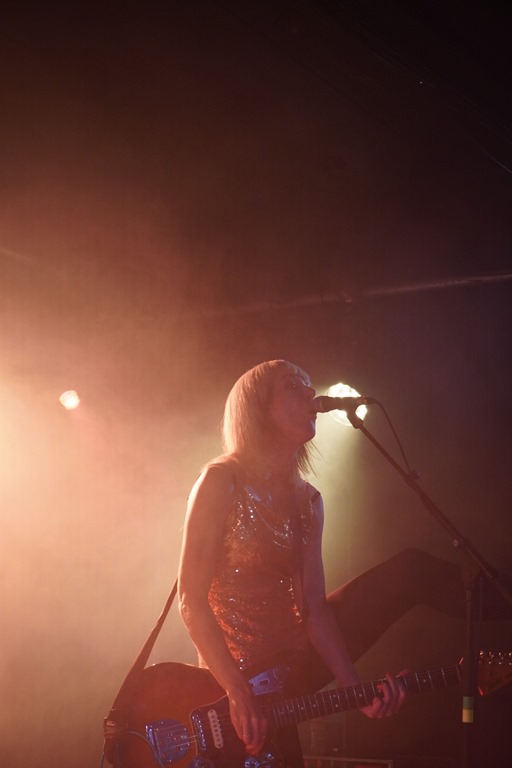
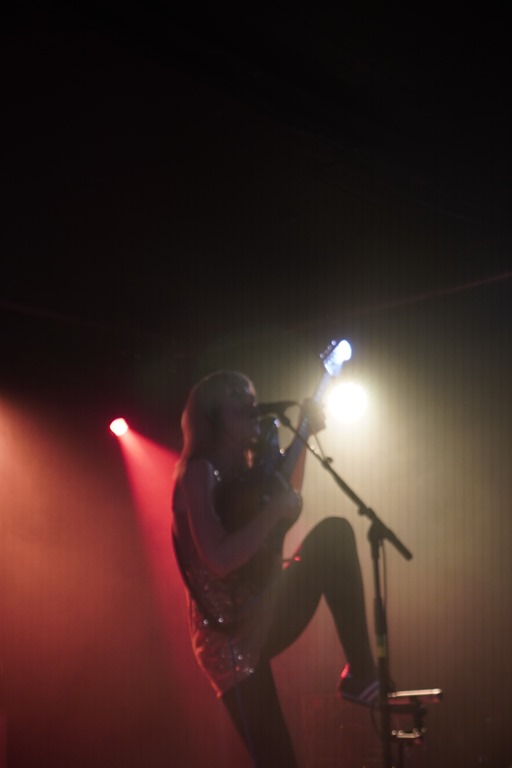
The Lovely Eggs really are the best advert for the DIY ethos going. Here we are, in the 300-capacity Crescent in York, just over two years since their last visit, and whereas then – again, on a Sunday night – there were twenty-eight tickets left on the door, they’ve sold out well in advance this time. This is likely due in no small part to the release of the absolutely cracking Eggsistentialism earlier in the year, but equally their ever-growing reputation as a truly outstanding live act.

Track back to 2015, the first time I saw them: it was a part of the sadly gone and fondly-remembered Long Division festival in Wakefield. They weren’t a new band even then, and while they drew a respectable crowd, were just one of many punky indie bands on the circuit. Seven albums in, and having stood up to gouging from arena venues on merch from support acts and done quite literally everything themselves these intervening years, they’ve risen to prominence not only as a super band, but the definitive outsider band. And, as with last time around, we have a curated lineup with a fellow Lancashire band opening, a poetry / spoken word performer by way of an interlude, before their own set. Previously, we got Arch Femmesis and Thick Richard: this time, it’s British Birds opening, and Violet Malice providing the off-kilter spoken word.

Both are excellent. I was hugely enthused by the return of British Birds to York, having first seen them in this very venue supporting Pale Blue Eyes, and they did not disappoint. Their set is packed solid with hooks, harmonies, jangle… and tunes. A solid rhythm section and some twiddly vintage synth tones provide the base for two- and three-way vocal interplay. In the five months since their last visit, their sound seems to have grown meatier, more solid, and they’re tighter, more focused, and Emma Townson, centre stage on vocals, keyboard, tambourine, and cowbell is more nonchalant and less six bags of Skittles exuberant in her performance, but there’s a really great vibe about them on stage, and they feel like a cohesive unit, and one with great prospects if they maintain this trajectory.

DSC00173DSC00167

British Birds

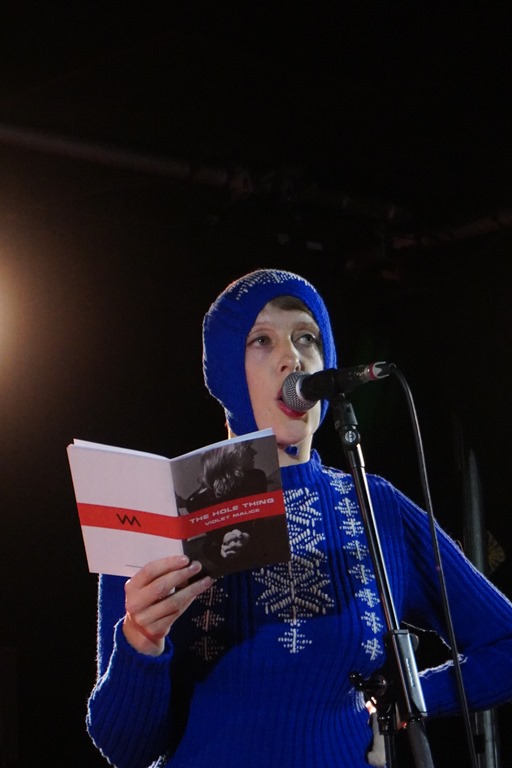
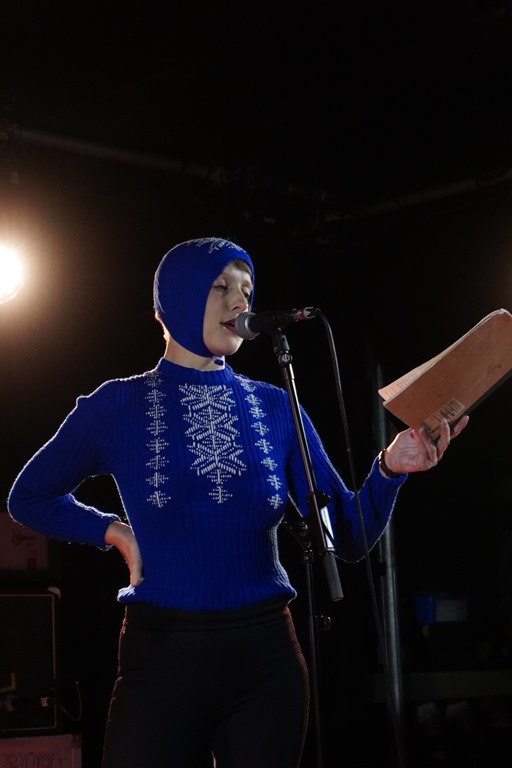
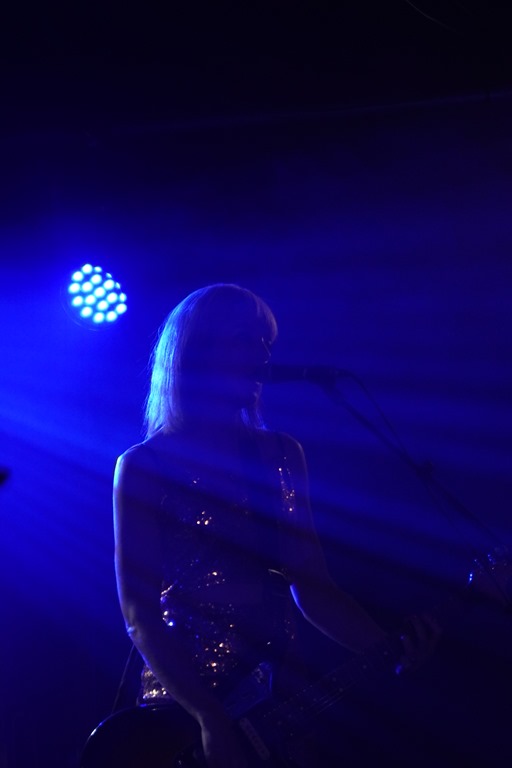
Violet Malice is not from Lancashire, but Kent. It’s appropriate. It could almost be a typo or a mispronunciation. She belongs to the glorious lineage of snappy poets who are likely to go down better at a rock gig than your average spoken-word night which clearly has an arc from John Coopeer Clark forwards. She tells it like it is: and how it is is hilarious, but uncomfortable. I’m reminded of Manchester writer and spoken word performer Sue Fox, and the way an audience will lap up her visceral monologues about cocks and cunts, howling with mirth but breathless as they ask themselves ‘did she really just say that?’

‘Stop eating your own food and jizzing on about how good it is’, Violet intones in a blank monotone. Her best line comes in ‘Posh Cunt’ where she drop ‘enough cum to make 24 meringue nests’. It’s fair to say that if a guy had delivered the line, it would not have had the same impact, and this is but one measure of the ground which still needs to be made up. But Violet Malice is leading the charge – as, indeed, are The Lovely Eggs. What they’ve achieved with this lineup is strong female representation without being male-exclusionary: they’ve not gone on a Dream Nails kind of anti-male campaign (which is simply inverse sexism) and there’s no adopted policy of hauling single men off for interrogation by security, a la The Last Dinner Party in Lincoln. It’s as strongly feminist as it gets: no-one is alienated, and the demographic across both genders and ages is well-balanced.

DSC00186DSC00184

Violet Malice

My notes pretty much run out during The Lovely Eggs’ set, and I make no apology for this. When this happens, it means I’ve either overimbibed or am just so in the moment I forget, and tonight, it’s very much a case of the latter.

They’re straight in with ‘Death Grip Kids’, with the killer opening line ‘Shove your funding up your arse!’, of which I wrote elsewhere, ‘the song is a proper middle finger to the industry and the establishment, a manifesto which encapsulates the way they’ve rejected the mechanisms and payola of labels’. More than a song, it’s a manifesto, which sets the tone for their bursting-with-energy hour-long set.

DSC00224DSC00216DSC00239

The Lovely Eggs

‘Magic Onion’ is a standout; ‘I am Gaia’ brings the obligatory mid-set slower tempo tune, ahead of leading a big old singalong with ‘Fuck It’, and the second half of the set is just incendiary. The packed room is united and uplifted and collectively uplifted. There’s no encore, no artifice, just pure, life-affirming entertainment: everything you could want from a gig. The Lovely Eggs really are the best.

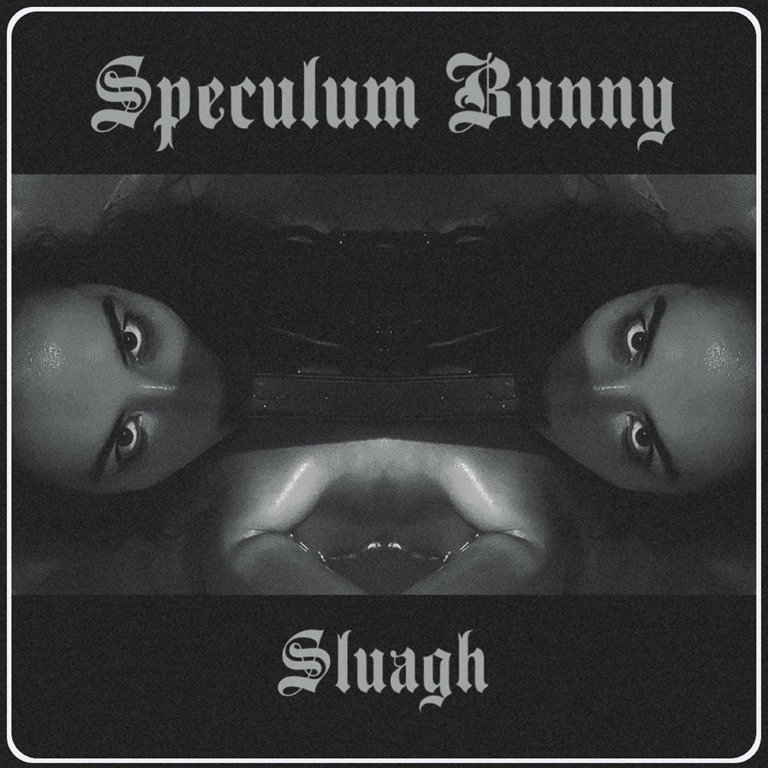
Having written music since she was a kitten, Speculum Bunny enjoys blending words and sound to provoke, enthral and mystify her audience. Inspired by the depraved nature of love in all of its majestic forms, her childhood,  masochism and devotion. Challenging mainstream narratives on motherhood and women’s expression she blends noise, synths, voices and field recordings. She pushes her her edges.

Featuring five tracks – three of which were recorded live at Radiophrenia, Sluagh is Speculum’s first release since Liminal Fluff in October of last year.

Combining abstract sounds and elongated wavering drones with murky noise and disturbing sound as backdrops to uncomfortable spoken word pieces, Sluagh is by no means easy to categorise, and it’s not the easiest of listens either – and that’s precisely why we’re recommending it.

Listen to Sluagh here:

AA

a0456756198_10

26th February 2024

Christopher Nosnibor

Having recently had his early punk rock recordings reissues, Stewart Home makes a new foray into the recorded medium, this time with a rather more experimental collaboration with JIz. Delivering a spoken word list of ‘problematic memorials’ (as the title suggests) with some additional commentary, in a fashion not dissimilar from The Justified Ancients of Mu Mu’s ‘It’s Grim Up North’, across three variants with backing that ranges from swampy experimental noise to minimal avant-jazz, Home leads us on a tour of London taking in sights that most people don’t realise have unsavoury connotations and commemorate people and events which probably ought to be damned rather than celebrated.

The long history of slavery throughout the British Empire has – belatedly – become subject to more open discourse in recent years, but our current government, who seem determined to resurrect the spirit of the empire through jingoism and xenophobia and a completely false reimagining of history as a way of selling Brexit as a win, are averse to such discourse, branding anything and everything from the Army to the National Trust as ‘woke’ – as if being woke is a bad thing.

For the most part, the sense of ‘Britishness’ which is increasingly only a sense of ‘Englishness’ in our ever-more isolated and impoverished part of a small island on the edge of Europe – geographically, and sinking off the coast of Europe politically – is born of ignorance. Stubborn, belligerent ignorance, but ignorance nonetheless. And out of such ignorance arise pathetic, futile culture wars.

Home has so far managed to slide his antagonistic sociopolitical position under the radar in recent years – in contrast to his controversy-piquing earlier years when he was churning out pastiche works about skinheads and riots and anarchy. What happened? Perhaps in developing his approach to be more subtle, Home achieved even greater subversion by being able to continue his mission without interference. Whatever the reason, here we have Problematic Memorials. Call it woke, call it what you like, but it needs to be heard. And beyond the message, it’s a top-notch spoken word / experimental music crossover collaboration, so go get your lugs round it.

AA

a2330344121_10

New Reality Records – 17 October 2023

Christopher Nosnibor

Speculum Bunny’s been doing the rounds on the live circuit with New Reality Records labelmate Stewart Home of late, and while in terms of presentation they’re leagues apart, her modus operandi bears strong parallels with Home’s, not least of all the audacious piss-takery of his earlier career, which is – quite unexpectedly – experiencing something of a renaissance – she’s also a completely different animal.

Her bio outlines how ‘Having written music since she was a kitten, Speculum Bunny enjoys blending words and sound to provoke, enthral and mystify her audience. Inspired by the depraved nature of love in all of its majestic forms, her childhood, masochism and devotion. Challenging mainstream narratives on motherhood and women’s expression she blends noise, synths, voices and field recordings. She pushes her edges.’

Female voices in music – strong ones, not sonic wallpaper popmakers dollied up by record labels – may be growing in number, but they’re still few and far between in the scheme of things. It’s a sad reflection on society and the music industry, but it does mean that when someone comes along and says ‘fuck the norms’, it’s powerful, and stands out, and Speculum Bunny – an overtly challenging moniker, uses a profile pic on her Bandcamp bearing the slogan ‘I’m not cute, I’m disgusting’ (it’s the cover art from her first release in May 2023: this is her fourth). It’s clear that her objective is to provoke a real sense of discomfort, and if both her choice of name and the EP’s title work through incongruous juxtapositions of hard / soft or similar, then the four tracks contained therein are the sonic manifestations of this oppositionality.

‘Demon Boyfriend’ is built around a chubby bass groove that’s reminiscent of the early years of The Cure, and it provides the backdrop to a dark spoken word piece. ‘he’s quite old… and he’s quite hairy… and he’s got horns…’ Much of the impact / appeal lies in the delivery, of course. Flat, monotone.. and unashamedly Scottish. There’s a tinkly fairytale tone to the keyboard sounds on the lo-fi ‘Dragon of Lure and Dread’. The vocals are sung, but mumbled so as to render the words almost inaudible, and the drums are distant, a thumping heartbeat below the surface.

You can probably consider this a spoiler alert. Pretty much the last thing I expected was for ‘House of the Rising Sun’ to be a fairly straight acoustic cover, delivered in what one might – for wont of a better description – an intimate, witchy tone. As the song plays out, a double-tracked vocal gives a slightly disorientated twist. The final song, ‘There is No Ash Without Fire’ is again minimal in its arrangement, and while a bulbous Curesque bassline provides the main element of the backdrop to her haunting vocal, which soars and swoops, the atmosphere is more akin to Young Marble Giants.

Liminal Fluff doesn’t sit within any single genre pigeonhole: in fact, none of the songs really conform to any style or genre, and ultimately, it seems a fair summary of Speculum Bunny as an artist. It’s truly refreshing to discover an artist who really doesn’t sound like anyone else – and even more of a deal when what they’re doing is good. And this is good.

AA

a3042142564_10

Panurus Productions – 6th October 2023

Christopher Nosnibor

Heavy music doesn’t have to be po-faced or excessively serious, and there have been a few comedy metal and noise bands through the years. Lawnmower Deth are one which swiftly spring to mind, but the likes of Municipal Waste, and lesser-known acts like Grindcore Cakemakers also make hard noise while being a far cry from the existential rage more commonly associated with their genres. And that’s good. The world needs variety, and there’s more than one way to alleviate the grimness of life on this sorry planet.

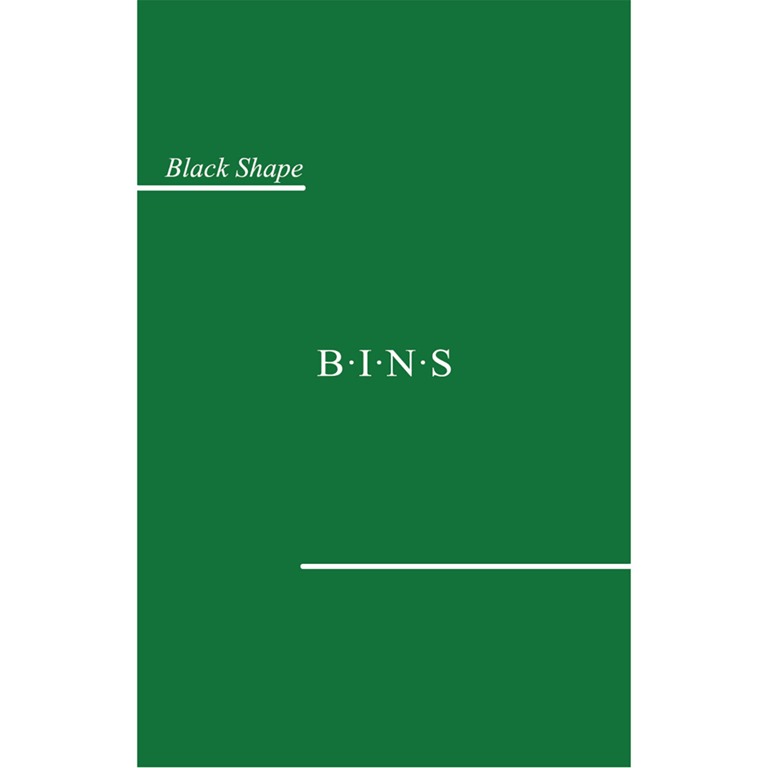
This album from Black Shape is perhaps the absolute antithesis of Godflesh’s seminal Streetcleaner. With the lumbering weight of a runaway bin lorry, Black Shape rumble their way through eleven tracks of bin themed absurdity, utilising their knack for writing material that is as colossally heavy as it is varied and comedic. Most of the tracks are around the two-minute mark, with just a couple of four-minute outliers. On the surface it’s a whole mess of noisy shit, but closer listening soon reveals a wildly varied album which incorporates jazz, spoken word, nu-metal, rap and thrash.

‘The Beast from the North East’ is a dirty, shouty punk effort – more Anti-Nowhere League than The Pistols. Dense, muscular, with filthy sludge guitars, pant-soiling bass, and a wild solo which occupies half the song’s duration. The production is rough and raw, and this works in its favour: the guitar on ‘I Wanna be a Binman’ positively tears from the speakers, and it’s like being at a gig and standing so close to the PA that your nostrils vibrate. If you’ve never done it, you need to at least once, although earplugs are recommended. You still feel the force without fucking your hearing for the rest of your life. It’s a throbbing stomper reminiscent of Ministry circa Psalm 69. Only instead of burning for the needle, it’s a hard craving for lugging refuse. They pillage every style going here: ‘Dogshit Bin Juice’ takes a turn for the choral in the verses between ball-busting glam stomp riff breaks. It’s hilarious, but also makes you think. You sometimes hear that binmen are pretty well-paid. But would you do this, for any money?

If ‘Put Me in the Bin’ is the most overtly old-school punk cut, the recording is again more industrial, which couldn’t be more at odds with the offbeat, off-the-cuff lyrics, while ‘Once a Binman, Always a Binman’ throws a curveball with a gentle intro and unlikely lift of ‘Love Lift us Up Where We Belong’ before going full-slugging nu-metal / grunge crossover, with the meaty heft of Tad bringing the blue collar grit to proceedings. There are some moments of astute observation and social critique which land quite unexpectedly, but it just goes to show that it’s a mistake to write of a so-called ‘comedy’ album – or indeed any comedy – as shallow, lacking in content, or emotional depth. ‘The Story of How I Died’ brings lilting harp and Pam Ayres style narrative.

Beyond bin-related themes, this is not an album that’s predictable in anyway, lyrically or stylistically, with piano ballads pressed against squalling hardcore assaults. And because of the punk / thrash / metal leanings, and the overall daftness of many of the lyrics and the overall concept, Black Shape’s musicianship is likely to be overlooked. But the range is a measure of immense versatility and competence. Black Shape are the Bill Bailey of dustbins, and BINS is a work of sheer brilliance.

AA

a2313098061_10

Subsound Records – 10th March 2023

Christopher Nosnibor

It’s easy in the age of the Internet to conduct enough research behind the scenes to present oneself as having an extant k knowledge of a subject. It’s also a huge temptation to do this as a reviewer or critic, because there’s a certain expectation from audiences that if you’re going to proffer opinions on things, you ought to know what you’re talking about. It’s that knowledge and authority that ought to differentiate someone who presents insightful critiques from the boorish tosser down the pub – or, as is more common now, on social media who has an opinion on everything but talks out of their arse because they know nothing.

But life is an open-ended learning experience, and the day you stop learning, you’re effectively dead. And so it is that while I’m familiar with Malcolm McDowell, primarily for his role in A Clockwork Orange, and Massimo Pupillo of ZU, but not the Italian poet and essayist Gabriele Tinti – which is surprising given his prolific output and the immense reach of his work, especially considering that his career hasn’t been without controversy. Still, the fact he is prolific and has immense reach, as well as being a keen collaborator, explains the coming together of these three for a collaborative album, which finds McDowell reading Tinti’s works over music by Pupillo.

McDowell reads five pieces from the 2021 collection Ruins, dedicated to what he calls the “living sculpture of the actor”, ruminating on the distant past as it echoes through to the present. In keeping with the subject matter – where art and mythology of the ages provide evocative contemplation – there are weighty words, formulated with such syntax as to accentuate their gravity and import, and McDowell’s delivery does them admirable justice. As much as Tinti is given to elevated tone, there’s both a resonating sense of spirituality and an earthiness to his words, and McDowell reads with nuance, bringing the more visual aspects to the fore as he speaks of flesh and blood and bones wounds and exploding veins. There’s a physicality to the writing which possesses a rare potency, and as such, the words are well-suited to the context.

Pupillo’s atmospheric score, conjured using ‘a plethora of different sources, various synthesis, samples of eastern European choirs, processing McDowells’ voice,’ lends further layers of depth: at times choral and monastic voices rise and ring out against elongated drones, rich and organ-like, at others billows of sound creep like tendrils of fog.

Songs Of Stone may only be some twenty minutes in duration, with each side working nicely as a single, continuous soundwork punctuated by the spoken segments, but its grave intensity means that any longer would be difficult to digest. As it stands, Songs Of Stone feels perfectly formed.

AA

a3543316873_10

Cruel Nature Records – 2nd December 2022

Christopher Nosnibor

Having raved about Pound Land’s second album, Can’t Be Arsed back in March, I was pretty thrilled to find the follow-up landing so swiftly. What with the exponential rise of Benefits, and acts like Polevaulter emerging, it seems that now is a good time for angsty, angry music with noisy tendencies and gritty sociopolitical leanings. Of course it is: it’s a sign of the times, and besides, it’s not a good time for anything else, unless you happen to be a non-dom billionaire or a CEO at an oil company.

If Sleaford Mods set a new template for the paired-back duo setup as being in vogue before the pandemic, the combination of lockdowns and crippling economic circumstance has rendered this an operational necessity for many musicians.

Pound Land may be up to their elbows in grimy dishwater and wading through excrement in streets where the drains and sewers are backed up due to torrential downpours and a lack of council funding, but they share little common ground with Sleaford Mods, and that’s despite favouring repetitive monotonous Krautrock-inspired grooves over dynamic structures: Pound Land are far doomier, dingier, lugging their way closer to sludge metal than anything you could possibly dance to.

The Stockport duo’s third album is a monster slab of punishing, gut-dragging, bass-heavy grimness, and one has to wonder how much to read into the title. The people are weary, ground down: will they rise up, or curl up and give up?

The blurb points out that the album finds the Stockport band pushing their ‘post-industrial kitchen-sink drama preoccupations even further on Defeated, exploring the dark comedy of everyday life in the dismal land of eternal recession. Sometimes the vision expands out of shitty Britain too, ‘Drone’ recounting the wearied observations of an electronic device as it traverses the globe… You’ve got to laugh, because if you don’t you’ll kill yourself. Or somebody else.’

The laughter is pretty dark and pretty hollow, though, and derives as much from the keen observations as any particular knack for a punchline (a line about mobility scooters with Northern soul stickers on stands out as particularly pithy) and the stark musical backing isn’t especially musical, more of a pounding trudge that provides a backdrop to an endless stream of vitriol and bleak depictions of the everyday, from pavements caked with dogshit and news items about rising fuel prices and their effect in the average household. If it sounds mundane, it is, but then we need art that speaks to us about life as we experience it, and the majority know far more about scrabbling for change to buy a loaf of bread than luxury cars, watches, and clothes.

‘Violence’ is their equivalent of Public Image Ltd’s ‘Theme’, a brutal, sprawling, brawling, squalling monster that opens the album with a relentlessly heavy battering ram of a racket, like Sunn O))) with a howling harmonica and sneering Lydonesque vocal. It crushes your skull, before it fades out swiftly and unexpectedly, which somehow works. But maintaining the PiL comparison, it’s Metal Box that is perhaps the closest similarity, in that the album as a whole is diverse, fractured, unpredictable.

‘Carry On Screaming’ sounds like The Fall in a three-way collision with Yard Act and Melvins. It’s a mangled mess of drum machine beats and psychedelia and noise with a monotone vocal drawl.

Against a thumping dirge of a noise, a grating mesh of distortion and dolorous drum, the title track is a gnarly hybrid of early Swans, and elsewhere, as on ‘Sick Day’, it becomes less about songs and more about spoken word narrative delivered against a backdrop of mangled noise, and at times, it’s pretty harrowing. Lyrically, Pound Land don’t pretty things up. Sonically, they don’t either. It’s magnificently raw and un-produced, and this is no more true than on penultimate song ‘Pathogen’, a dirty slow stomp that’s pure rage and invites comparisons to Uniform. And it sounds like it was recorded on a phone from the next room.

‘Drone’ sneers and snarls like Lydon at his best, closing with a venomous refrain of ‘fucking twat’ delivered in a thick, spitting Manchester accent.

Defeated may only contain eight songs, and only a couple of them extend beyond the five-minute mark, but it’s feels immense, and experience that’s exhausting both physically and mentally. Listening, you feel the weight of the world condense and compress as the angst and anguish press down ever darker, ever denser. It’s a bleak, suffocating document of everything that’s wrong right now. This is the sound of broken Britain, and it’s a harrowing insight into just how fucked everything is. But in this channelling of nihilistic anguish, you realise you’re not alone. It doesn’t change anything, but it’s something to cling to.

AA

cover

Preston Capes – PCT001 – 1st July 2022

Christopher Nosnibor

The Front & Follow label may have reverted to mothballed status (at least for the time being), but that doesn’t mean that Justin Watson is doing nothing these days, despite the title of the latest release from three-way collective The Incidental Crack, who we’ve been following – and covering – for some time here at Aural Aggravation. For this outing, they’ve found a new home on newly-established cassette label – and these seem to be springing up all over now – Preston Capes (and I’m guessing no relation to Geoff).

As the notes explain, ‘The Incidental Crack began with Rob [Spencer] recording himself wandering around in the woods and finding a ‘cave’ – Justin put some weird noises to it, and then Simon joined in. The rest is history. The Incidental Crack are joined again by Dolly Dolly / David Yates on this album.’ Indeed, however much The Incidental Crack may evolve, they remain fundamentally unchanged, their albums assemblages of random field recordings and strangeness melted and melded into awkwardly-shaped sonic sculptures that unsettle the mind and by turns ease and tense the body.

The Incidental Crack Does Nothing follows the two albums they released in 2021, the second of which, Detail, was a challenging and expansive work, and this very much continues in the same vein.

With The Incidental Crack, it very much feels as if anything goes, and reflecting on the name of the collective, this seems entirely appropriate. What their works represent is a crack, a fissure, in time, in continuity. Their methodology may not be specifically influenced by William Burroughs and Brion Gysin’s cut-ups, but are, very much, open to, of not specifically channelling and incorporating, the assimilation of random elements, and have a collage aspect to their construction.

‘Shitload of Rocks’ is comparatively airy, and serves as a brief introductory passage before the dank, gloomy ambience of ‘The Worst Party’. It’s a dark, ominous piece that hovers and hums, echoes, clanks, and rumbles on for a quarter of an hour; it’s cold, clammy, and unsettling. But is it the worst party ever? While it does sound like hiding in a cave while an armed search party charged with the task of your erasure stomp around in adjacent tunnels off in the distance, I don’t actually hear any people, laughing drunkenly or loving the sound of their own voices while holding court with tedious anecdotes, so I don’t think so.

‘Hair falling from our bodies clogs up the sewers,’ we learn as a clattering beat clacks in and rattles away on the industrial chop-up churn of ‘Hair’, featuring Dolly Dolly, who’s clearly no sheep. It’s the album’s most percussive cut, the monotone spoken-word narrative somewhat surreal, and looping eighties synths bubble in around the midpoint, although it’s probably too weird for the Stranger Things retro adopters.

‘Couch Advantage’ is the album’s second longer piece, a sinuous, clattering workout almost nine minutes in duration. It’s minimal, yet somehow, there’s enough stuff going on as to render it all a blur: is that jazz drumming, a groove of sorts off in the distance? Or is it simply some clattering chaos, the sound of bacon sizzling? What is going on? And following the brief interlude that is ‘Belting’, the final piece, the ten-minute ‘Photography’ with more lyrical abstraction from Dolly Dolly depicting random fragmentary images against a backdrop of clicking sparks and evolving, supple sweeps of drifting clouds of sound. It’s all incidental, every second of it: fleeting, ephemeral – and in the cracks, is where it happens. As they open wider, you peer in, and observe. There is movement. There is life. Because life is what happens between the events, among the random incidents and accidents.

The Incidental Crack Does Nothing may be confusing, bewildering, difficult to grasp – but it is, without doubt, a slice of life. You can do with that what you will.

AA

cover

28th April 2022

Christopher Nosnibor

While physical formats for music may not be especially popular these days, there really is no substitute for holding an article in in your hand. It’s not just about the artefact or the possession – although increasingly, I feel that actually ‘owning’ your music seems like a sound move as acts pull their music from popular platforms – particularly Spotify – and acts who no longer exist cease to maintain their websites and BandCamp profiles and their works simply disappears. Nothing is permanent, but when it comes to things which are virtual, their ephemerality is even more pronounced. This is a long way to coming around to saying that the CD for Abrasive Trees’ new single is magnificent as an item, and it’s very much a fitting way to present the musical contents, and with three tracks including a remix of ‘Moulding Heaven with Earth’ by Mark Beazley (Rothko), it’s a proper 12” / CD single release, the likes of which are sadly scarce these days.

I don’t just love it for the nostalgia: this feels like a proper, solid package in every way, and ‘Moulding Heaven with Earth’ is very much cut from the cloth of sparse, minimal shoegazey post-rock, which provides the backdrop to a stirring spoken word performance before spinning into a slow-burning extended instrumental work. It builds and it broods, the atmosphere growing denser and tender as the picked guitar lines unfurl and interweave across a slow, strolling bass. A reflection on life and death, earth and afterlife, it’s a compelling performance, and the words would stand alone either on a lyrics sheet or as a poem. From there, it’s a gradual, and subtle journey that culminates in a crescendo – that’s strong, yet restrained.

B-side / AA side ‘Kali Sends Flowers’ is moving: again, it’s understated, and yet so very different, spinning a blend of post punk – even hinting at the gothier end of the post-punk spectrum – and psychedelia that in places hints at Spear of Destiny in the way it’s sparse yet rousing. It’s one of those songs that simply isn’t long enough, and that demands for ‘repeat’ to be hit immediately to keep it going.

Mark Beazley’s remix of ‘Moulding Heaven with Earth’ accentuates the atmospherics, and while it retains the rhythm – and if anything it highlights the beef of the bass – and is generally quite respectful in its treatment, and somehow expands the vibe and introduces a more ambient feel, while at the same time shaving over a minute off the time of the original. It’s an interesting – and I mean that positively – reworking, and one that most definitely brings something fresh to the track, rounding off what’s as close to a perfect EP as you’ll hear all year.

AA

AA

31UQdh hqYL

Crease is the debut full-length album of deconstructed electroacoustic postpunk songcraft by Montréal guitarist and producer Kee Avil, whose touchstones range from Scott Walker and Coil to Fiona Apple; (early) PJ Harvey and (later) Juana Molina to Eartheater, Pan Daijing and Smerz—or like Grouper produced by Matmos.

Chiselled twitchy minimalist guitar, sinuous electronics, industrial and prepared-instrument micro-samples, furtive rhythmic propulsion, all galvanised by the anxious intimacy of finely wrought lyricism/vocals: Crease is one of those debut records that excites a wide range of peerless references precisely because it’s so compelling and convincing in its own idiosyncratic originality, vision, detail and execution.

To coincide with the album’s release comes the video for ‘HHHH’. Watch it here:

AA

e5b78732-9de6-90a0-c600-bb352c7f2845