Posts Tagged ‘Spoken Word’

Christopher Nosnibor

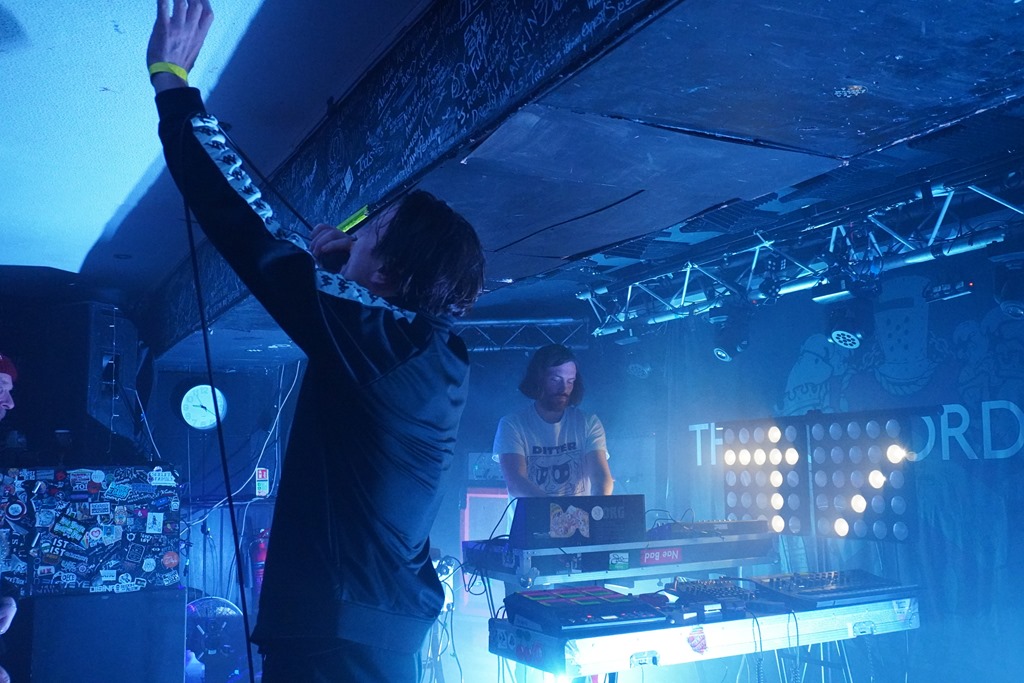
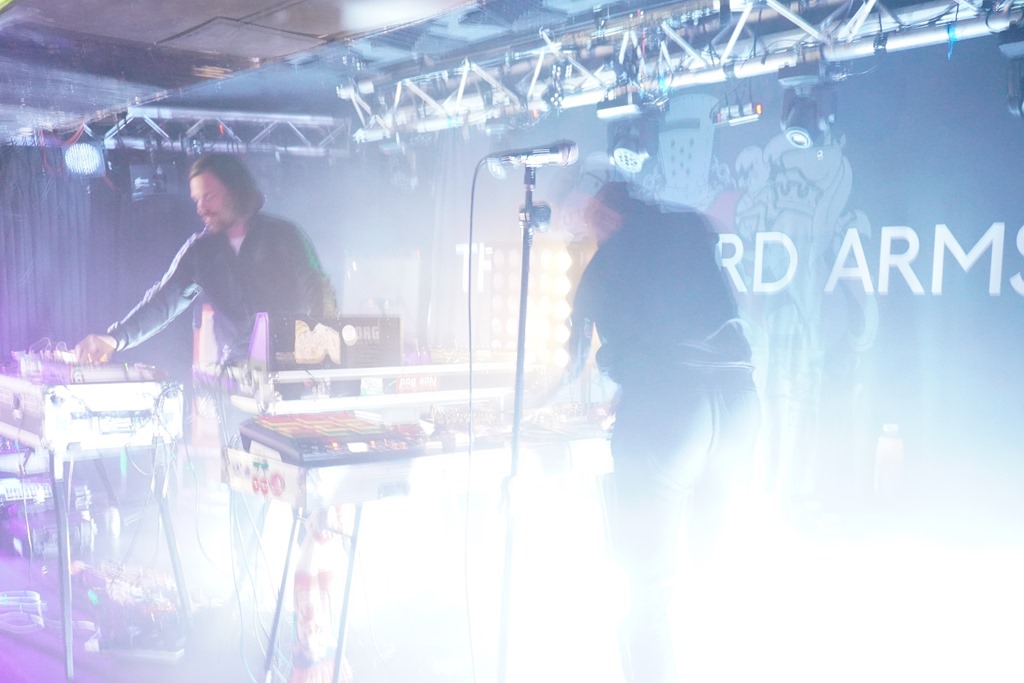
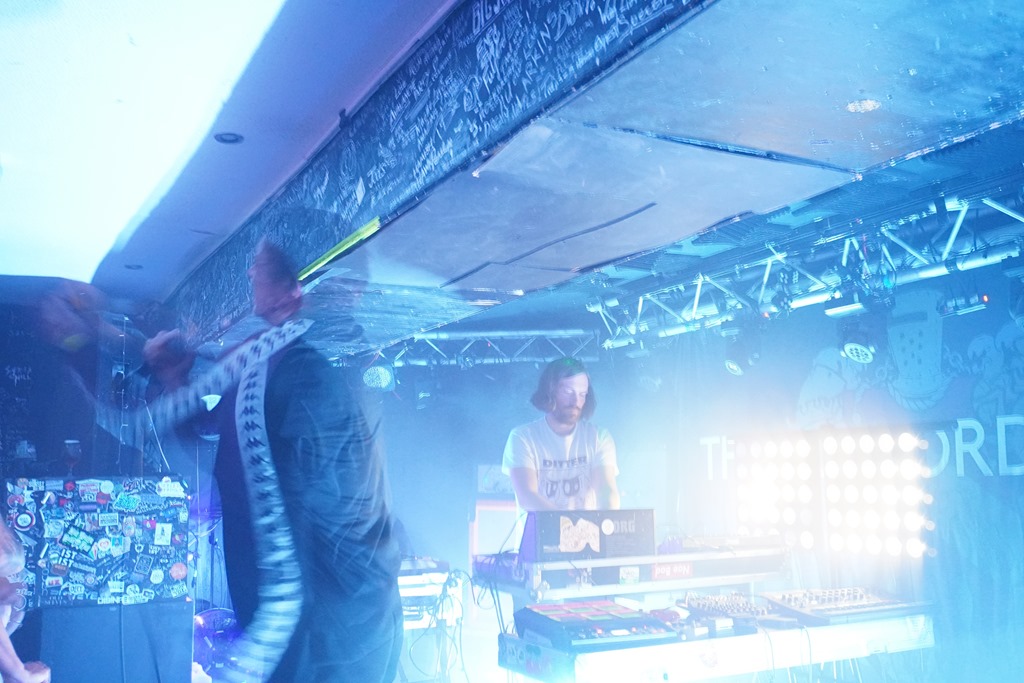
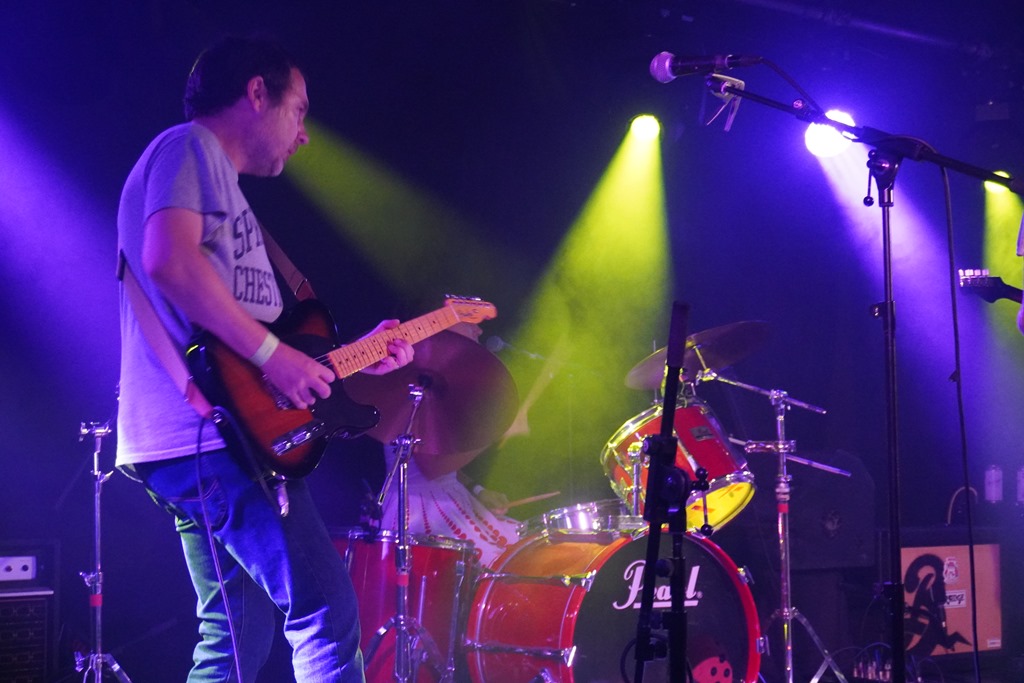
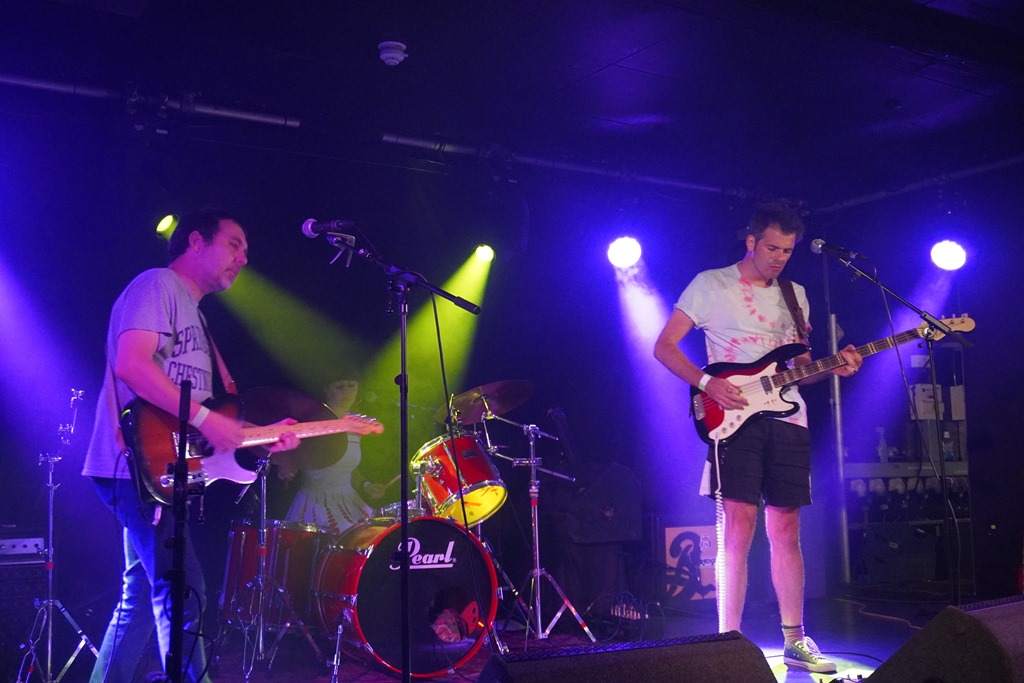
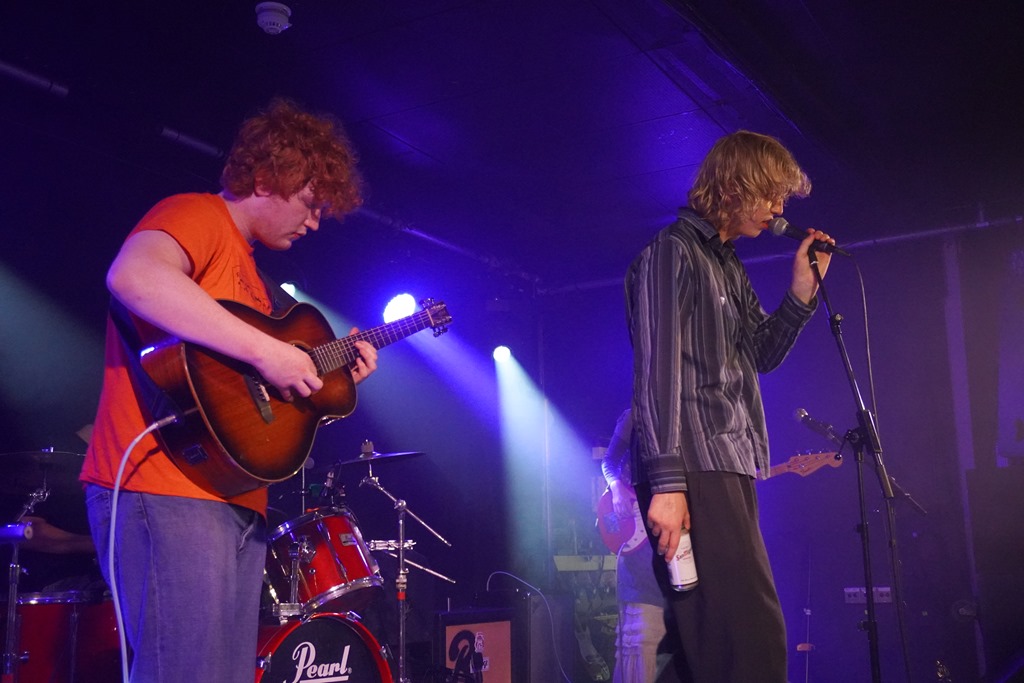
Benefits exploded onto the scene not long after lockdown – and I mean exploded, an atomic detonation of rage. The essence of the setup was pretty simple: angry sociopolitical spoken word delivered with blistering vitriol, backed by a blinding wall of noise. The result could reasonably be described as something in between Whitehouse and Sleaford Mods, but the fact is that from day one, Benefits created their own niche. The live shows were jaw-dropping, and the debut album, Nails captured that raw energy with a rare precision.

The arrival of second album, Constant Noise marked a necessary departure – sonically mellower, far more beat-orientated, a lot less shouty, angry-sounding. My first impression was that it was decent, more produced, but still packed some sting in the lyrics., and will be hard to top in terms of the number of mentions of dogshit in albums of the 2020s. But it’s a fair reflection of post-lockdown Britain: dogs have proliferated exponentially, and concordantly so has the volume of dogshit – and, just as bad, bags of dogshit tied and dropped, piled next to or on top of bins, and hung in trees. What kind of twat does that? A selfish one is the only answer. But as for the album, I kinda let it sit for a while. But over time, with more – and more – listens, the album’s depths reveal themselves. Constant Noise is every bit as angry as Nails, and if anything, the more moderate, tempered delivery hits harder. It just takes a little bit longer to reveal its depths and quality. But how would this translate live, especially now they’ve been stripped back to the founding duo of Kingsley Hall and Robbie Major?

DSC05075

Benefits

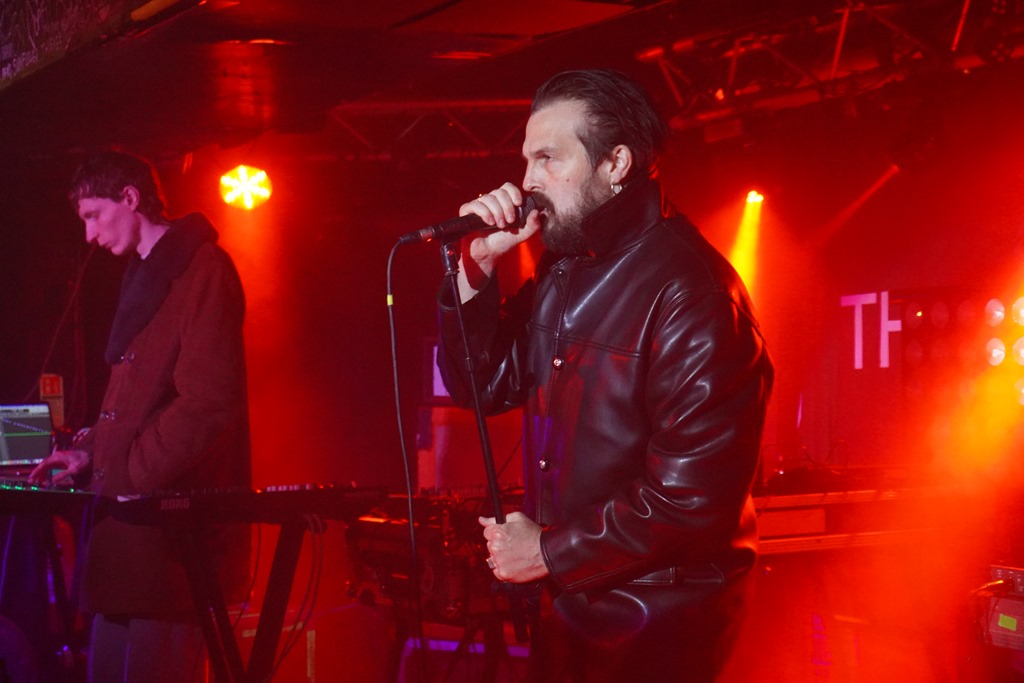
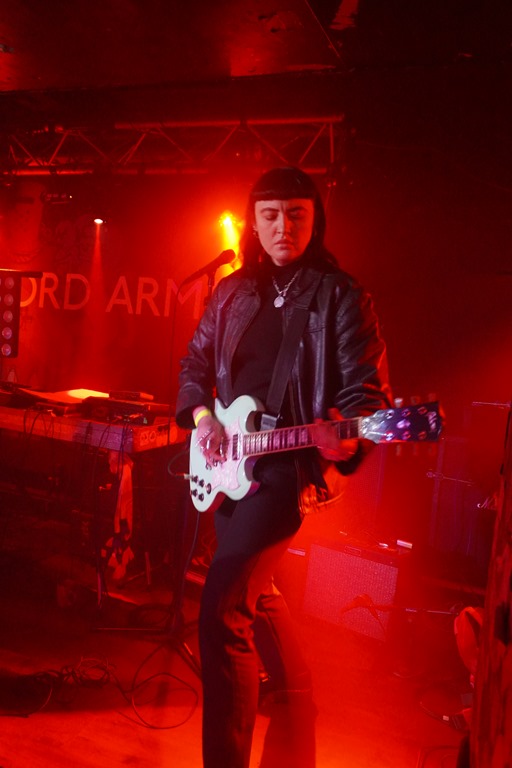
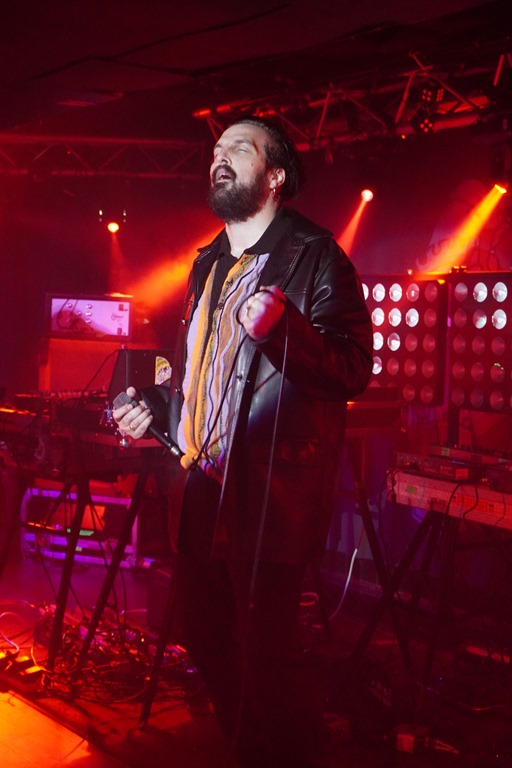
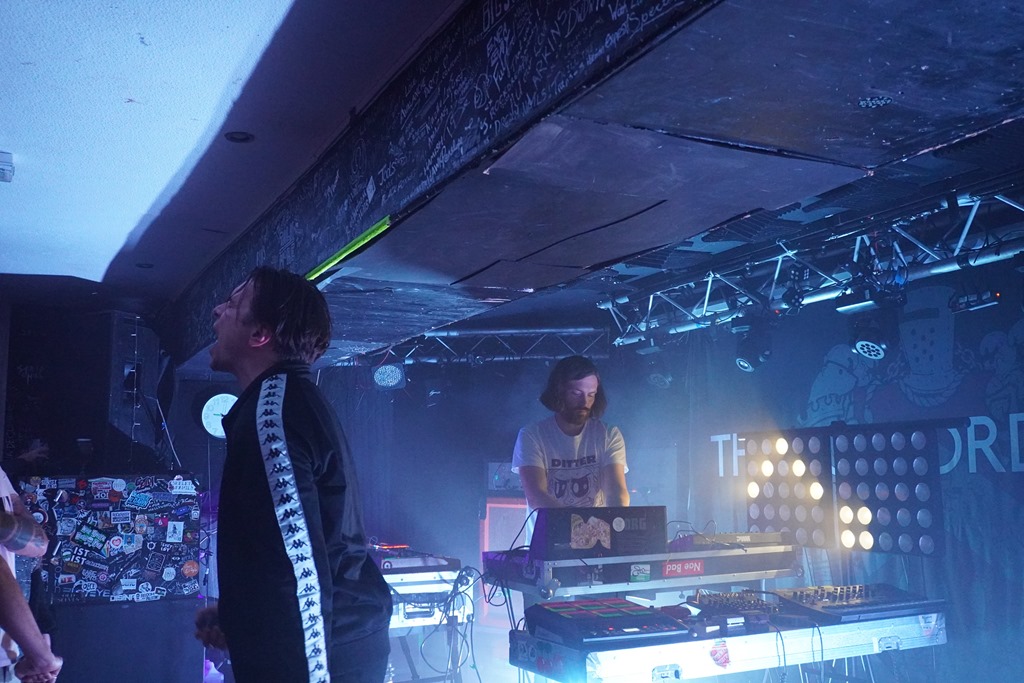
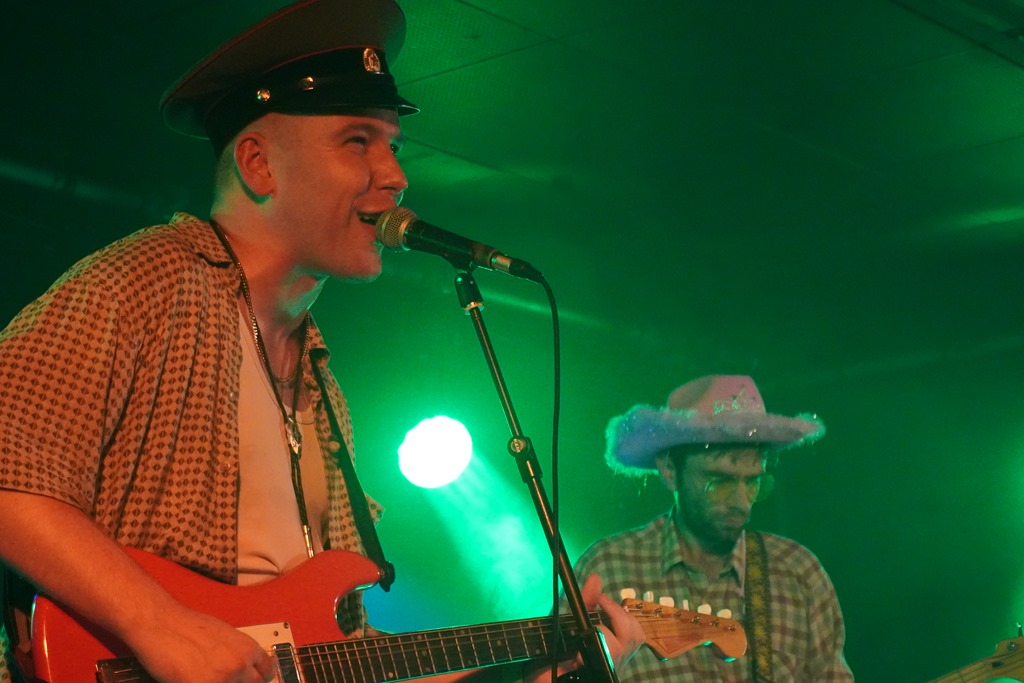
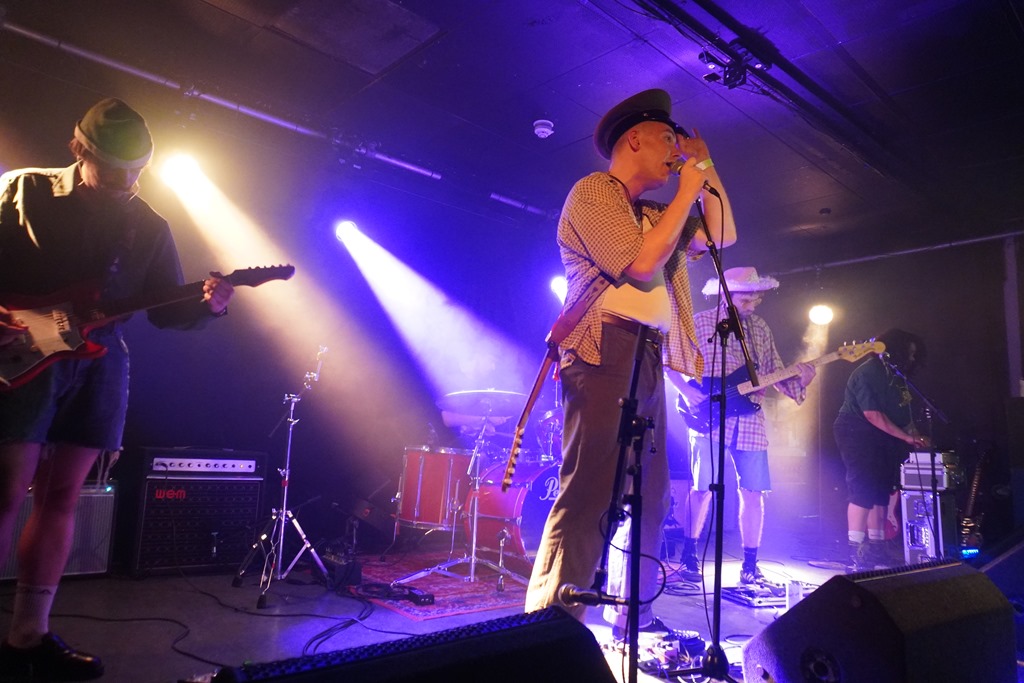
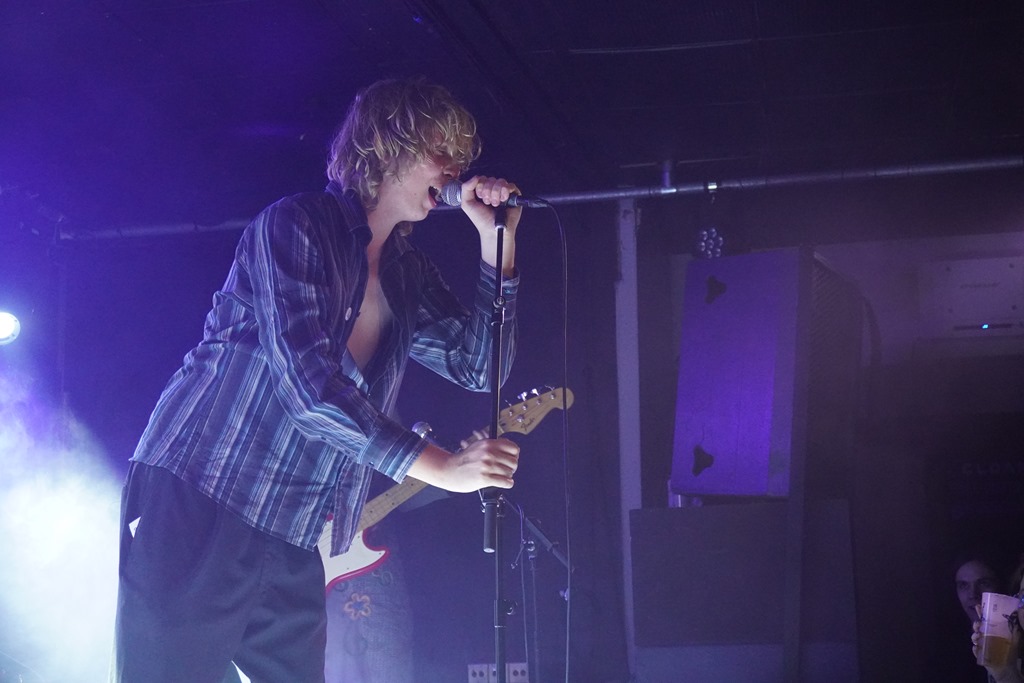
Before we would get to find out, there was the equally intriguing support. The Eighties Matchbox B-Line Disaster are one of those acts who may have only attained cult status during their time together, but it’s one which has expanded since their demise. They were always a band destined to implode, as was apparent when I witnessed a particularly fractious gig here in York circa 2007. But this was always a band which had derangement and volatility wired into their makeup. Guy McKnight formed DSM IV in 2018, and they’re an altogether different proposition, trading in gothy electro with some tidy guitar textures woven into the fabric of the songs, and Guy seems altogether more settled. It’s all relative, of course, and he ventures into the crowd on numerous occasions, and at one point around the middle of the set, tosses mic stand over, drops the mic and busts some tai chi moves. It’s a solid set, both compelling and entertaining, and they’ve got some tunes, too.

DSC04943DSC04962DSC05008

The DSM IV

Benefits don’t really have a great many tunes in the conventional sense. Choruses and hooks aren’t the primary focus of their compositions. Hall’s words range from reflective and ponderous to outright roaring rage, the backing spanning sprawling barrages of obliterative noise to quite chilled dance grooves. But at this volume, and when delivered with this much passion, there’s nothing chilled about this live show.

Here, I find myself returning to the topic of seeing an act you’ve seen before and been blown away by, and going to see them again in the hope of replicating that first time – only it’s a weak hope, because the first time has the element of surprise which is unlikely to be repeated. Yes, a band may be consistently awesome, but that first bombshell experience, that initial high… very few bands have the capacity to have that impact more than once. Benefits, however, hit even harder on this outing than any before.

DSC05025DSC05084

Benefits

There was word online that their current tour was as brutal as any they’d ever done. Having seen them three times previously, and never with the same lineup, it seemed like that claim might be a bit of a stretch, particularly without a live drummer. But synthetic beats have a way of bludgeoning and cracking in a way that live drums don’t always, and when paired with gut-churning low-frequencies and ear-bleeding top-end noise, the sonic impact of what blasts from the PA is positively immolating.

DSC05085

Benefits

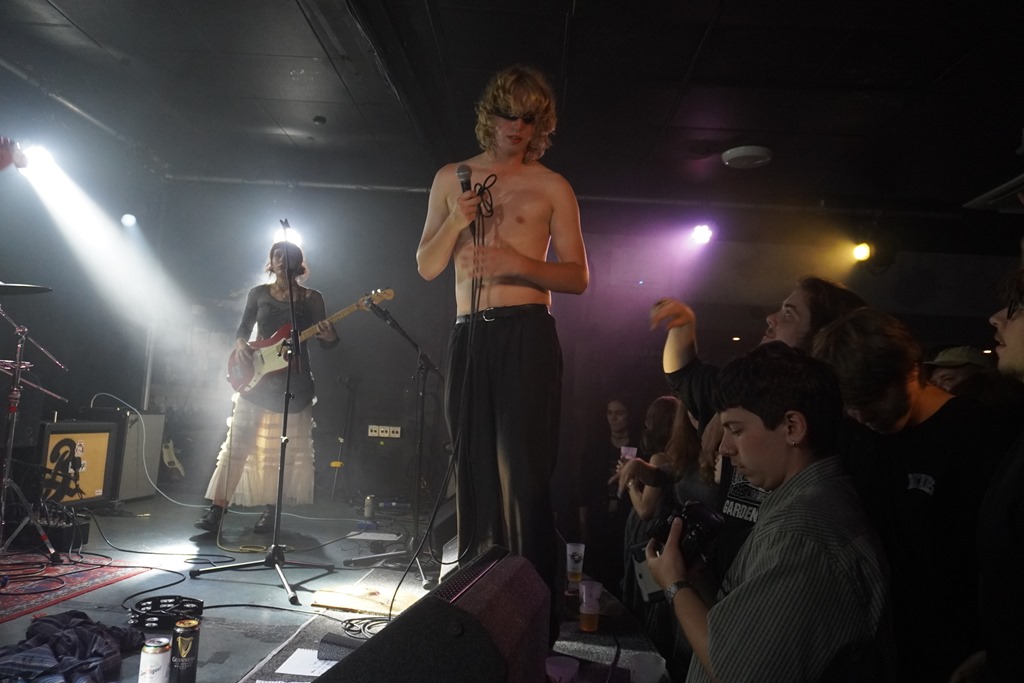
Kingsley gets most of the chat out of the way at the start, with a bit at the end: in between, they power through a relentless set uninterrupted. And relentless it is, and not just sonically: with the sole lighting consisting of blinding white strobes for the entire duration of the hour-and-twenty-minute set, the stark, uncompromising nature of the music and lyrics is amplified. They put every ounce of energy into the show, Hall positively streaming with perspiration by a third of the way through. And we feel the passion; the whole room is buzzing and aglow with a sense of unity through a shared experience of catharsis. These are shit times. Dark times, bleak and scary times, domestically and globally. Benefits capture the zeitgeist, and rail against those who will one day be proven to have stood on the wrong side of history – the right-wing, flag-shagging, pro-Brexit, racist, xenophobic, hatemongering, exploitative, manipulative capitalist shits and their supporters and enablers – articulating thoughts and feelings with a unique precision and an intensity which is positively nuclear. The experience is nothing short of mind-blowing.

The catalogue of material released by Papillon de Nuit, the ever-shifting, ever-evolving musical project of Stephen Kennedy, continues to expand with the release of single number eight.

Kennedy’s approach to the project is both interesting and unusual, with each song recorded at a separate session, often not even fully-formed in terms of writing and arrangement beforehand, and realised with various guest musicians and vocalists. Retuning once more to Young Thugs studio in York, ‘The Pilgrim’s Arc’ again sees Stephen handle a considerable range of duties, from drums to grand piano and providing spoken and sung vocals, as well as writing and arranging the song itself, while joined by Michalina Rudawska (cello) and Karen Amanda O’Brien (spoken word).

The Exceptional Mr Hyde make a guest appearance here, providing ‘menacing spoken word’, while Steve Whitfield  added bass and guitar, as well covering production work

The result is a striking, dramatic, percussion-driven piece with some chunky bass, and layered vocals creating an almost schizophrenic mutter behind a soaring melody.

AA

a2654860644_10

Sinners Music – 28th February 2025

Christopher Nonibor

I’m a little behind with things. Life has a habit of running away at pace. There’s no small element of truth in the observation that Life is what happens to us while we are making other plans – often attributed to John Lennon, but which first appeared in the mid-1950s, in an article in the Stockton Record of Stockton, California.

The latest release helmed by Iain J. Cole and released on his Sinners Music label is something of a departure. Although bearing the ‘various artists’ label, it is, in fact, a set of collaborations recorded with a number of different authors, whose works are narrated by other speakers. Conceived , curated, and the stories edited by David Martin, Iain J. Cole provides the musical accompaniment for the five – or seven – pieces which make up this monumental release.

Each track is a true longform work: all bar two are around – or substantially over – twenty minutes in duration.

Martin’s own contribution, ‘Relic’ evokes aspects of both The Man Who Fell to Earth and The War of the Worlds, as well as various other sci-fi tropes and no small dash of Lovecraft. Cole’s accompaniment is absolutely perfect: largely ambient, it’s composed with the most acute attention to detail, adding drama at precisely the right points, but without feeling in any way contrived or over-egged.

‘What Rupert Don’t Know’ – an exclusive short story written by Glen James Brown and narrated by Alexander King sees Cole linger in the background with a soundtrack that hangs at a respectful distance in the background, and takes the form of some minimal techno.

Gareth E Reese’s ‘We Are the Disease’, read by Daniel Wilmot, has a very different sound and feel. The vocals have a scratchy, treble-loaded reverby sound, somewhere between a radio just off-tune and Mark E Smith. It’s a bleak tale, an eco-horror delivered as a series of scientific reports, and with Cole’s ominous sonic backdrop, which has all the qualities of a BBC Radiophonic Workshop piece, the tension is compelling.

Claire Dean’s ‘The Unwish’, narrated by Helen Lewis marks a necessary shift in the middle of the album – a female voice is welcome, for a start, and so is the change in narrative voice. Women writers observe and relay differently, and the details are integral to the literary experience. Add to that a Northern intonation, and we find ourselves in another world

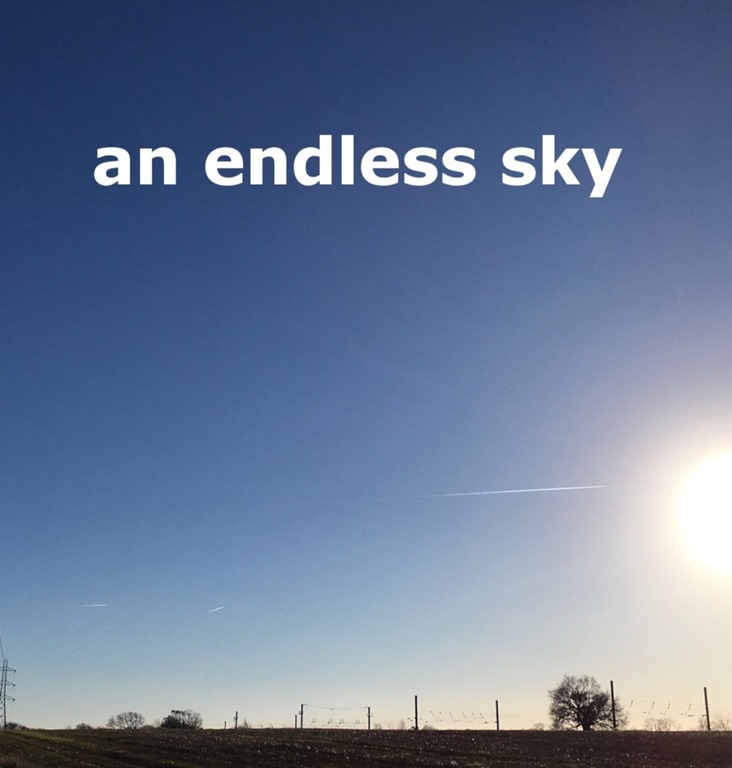
As a collection of speculative and environmental sci-fci, an endless sky is noteworthy for its quality. The bonus cuts – a brace of ‘soundtrack’ instrumentals showcase Cole’s capacity to create immersive slow techno works which draw heavily on dub. ‘The Rupert Zombie Soundtrack’ is a sedate, echo-heavy slow-bopping trudge, and then there’s the twenty-minute ‘The Blind Queen Soundtrack’, which is more atmospheric, more piano, less overtly techno.

Over the course of some two-and-a-bit hours, an endless sky gives us a lot to process. So much, in fact, that I’m not even sure it’s possible in a single sitting. What does it even all mean when taken together?

an endless sky is delicate, graceful, detailed. Beyond the narratives – which in themselves offer depth and detail – there is something uniquely compelling about an endless sky. Keep Watching…

AA

a2800421803_10

Christopher Nosnibor

There was a time when there wasn’t really much doing in York, which was particularly disappointing for a city with two universities. But, despite grass roots venue disappearing at an alarming rate, right now, the city is offering up some exciting stuff on the grassroots scene. Tonight, there are three quality live music events on, and had I mastered cloning, I would have gone to all three. The Fulford Arms was serving up a night of top-notch goth and post-punk, while there was experimental and ambient work on offer at The Basement under the City Screen cinema. But I feel I made the right choice plumping for Needlework at The Crescent, not least of all because it transpired that this was to be their last show.

Needlework have only been around a couple of years, and only played a handful of shows, but they’ve made a serious impression, as tonight’s crowd shows. Sure, they’ve got plenty of their sixth-form / college mates down, but this is a band who had built a keen following in their own right. In a previous time, John Peel would have been all over them and they’d have achieved national cult status. Instead, because it’s 2025, they’re bowing out with only an EP (released today, but without mention) and a few shows to mark their existence. But I guess this is how it goes.

First up, it’s Speedreaders. They’re nothing if not consistent., and tonight’s set brings all of the things I’ve highlighted in my previous coverage. They’re tight, but slow and mellow. And this evening they’re slower than ever. After imparting his opinion on Fleetwood Mac being shite in a rare bit of between-song banter, singer David Mudie spent longer tuning his guitar for the next song than it actually took to play it. That’ll teach him to engage in conversation with the audience. My mate went to the bar and returned with two pints before he was done tuning. Still, when they’re back on track, they’re sounding good. It’s the harmonies which stand out in tonight’s clean, crisp set, with clear balanced sound.

DSC02705DSC02709

Speedreaders

Divorce Finance sound pretty much the same as they look…. meaning I can’t remember the last time I so wanted to punch a whole band. Actually, I lie: Sleuth Gang, who I witnessed in the same venue a few months ago emanated wankerdom from every pore. It must be something about bands who take their style cues from The Village People.

DSC02733DSC02735DSC02720

Divorce Finance

It’s sort of tongue-in-cheek but not really rockabilly country hoedown hillbilly bollocks. There are people down the front getting down with some boisterous line-dancing moves, and there are plenty who are digging it, but I just can’t get on board with this is corny, gimmicky shit, and the fact they play it well doesn’t get them a pass. All the whooping and whelping is high-energy and perfectly executed, but… It’s just so much cheesy turd-polishing, and the singer’s smug, grinning, cheeky chappie, eye rolling delivery only makes everything so much worse. I found myself feeling not irritated, or annoyed, but – most unexpectedly – angry.

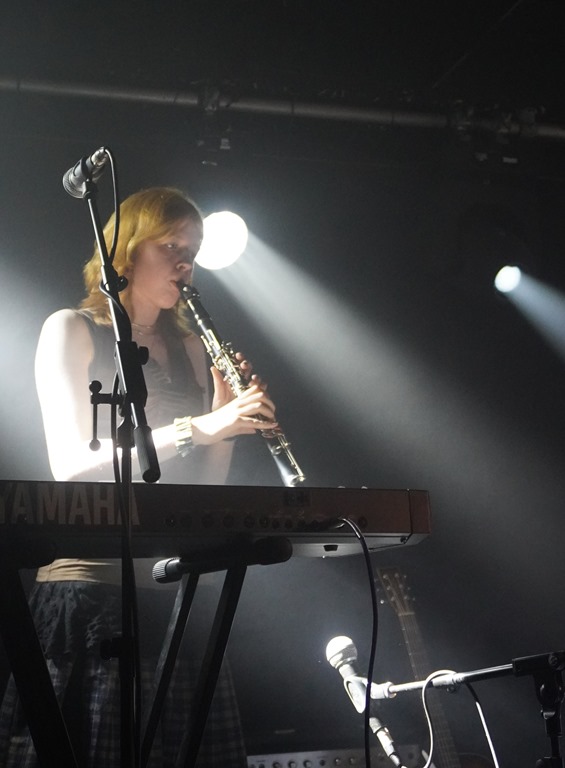
Needlework are simply something else, and what that something is is not easy to pin down. Their entire existence is constructed around a mass of contradictions and paradoxical premises, none of which are reconcilable or make any obvious sense – but this is precisely why they work, and why they exist in a league of their own. They’re really tight and together, but create the illusion of being lose, even a shade shambolic; front man Reuben Pugh is simultaneously intense and aloof. Each member of the band brings something different, stylistically, and in terms of personality – that goes for both their musical contributions and stage presence. Jagged, scratchy guitar work slices across rolling basslines, jittery drumming finds a counterpoint with soft, trilling woodwind and synths interwoven through the scenes as they unravel.

DSC02765DSC02768

Needlwork

They’re not really a ‘songs’ band in terms of conventional verse / chorus structures, either, instead exploring routes which take obtuse twists and turns, and they’re unafraid to do slow, wonky, spoken wordy, abstract narrative. They understand dynamics, and the power of jarring angularity. It’s post-punk, it’s jazz, it’s experimental, and it’s utterly spellbinding. Needlework are one of those rare bands that seem to suck you into a parallel universe while they play. Time hangs in suspension and you find yourself on another plane, utterly gripped while wondering what they’ll do next. During the time they’re on stage, something transformative takes place: it’s more than simply five people on stage making music. Needlework conjure aural pure alchemy.

Pugh takes his shirt off to substantial applause, and a big fella in the front row responds by whipping his T-shirt off and lobbing it on stage after helicoptering it above his head a few times. He asks for it back a song or two later, and the band duly oblige.

DSC02762DSC02741.CROPDSC02801

Needlework

The set builds to a perfect climax, a monumental whirl of sonic chaos which is electric. And then, that’s it. Finished. Done. They leave us stunned, dazed by the magic we’ve witnessed. They certainly concluded on a high, and one suspects that this is a band which will be remembered, and talked about, for years to come.

Panurus Productions – 20th June 2025

Christopher Nosnibor

You’d think that cassette labels would be not only niche, but few and far between, and in the main, they are, but Newcastle is home to not one, but two labels who provide a near-endless supply of releases to satiate the need for weird shit the world over, with Cruel Nature Records being one, and Panurus Productions being the other. The labels have a considerable amount in common, too, not least of all in that they both favour music that’s of a quality, rather than a style.

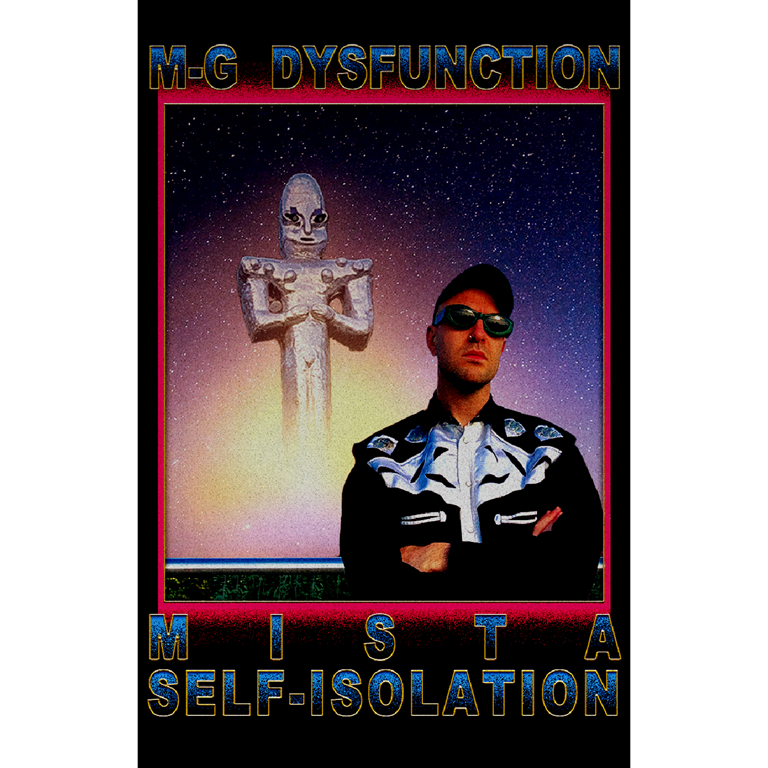
The latest Panurus release is a perfect case in point. The label’s previous offering, a split release from Belk and Casing was a raw blast of guitar overdrive. In contrast, the third album from M-G Dysfunction is of an altogether more experimental bent, leaning toward hip-hop and beat-driven electronics, but once again marking the close connection between the scenes in Leeds and Newcastle, both of which have become significant spawning grounds for the offbeat, the difficult, the wilfully obscure.

According to the blurb, ‘Mista Self-Isolation is the fullest realisation of the M-G Dysfunction project to date – a record of trepidation and humour, of lopsided passion and warped poetics. This album is about surveying the wreckage of monoculture and navigating the act of making music amidst a land-grab of rights, melodies and rhythms by people who never liked music in the first place. It’s about properly honest artistic expression – what “keeping it real” looks like, sounds like, feels like in 2024. It’s about getting some official beats and saying fly shit over them.’

That it’s quirky may be obvious, but it’s a necessary headline observation. On the one hand, it’s white rap, so there’s an awkwardness, but on the other, there’s some dirty experimental electronic noise layered over the beats, and this is an act that shared a stage with Benefits, a band who may have made their reputation by being angry, shouty, and noisy, but who aren’t without humour or an appreciation of nuance.

As tracks like ‘Roger Daltrey (Permanent Record)’ illustrate, M-G Dysfunction are multifaceted – something likely to leave many quite nonplussed. How can they do jokey, daft, a bit random and be serious at the same time? In truth, the answer is simple: because human beings are complex creatures, capable of a vast range of emotions and infinite ways of expressing them. It’s something we seem to have lost sight of in recent years, when everything has been boiled down to binaries, and everything is a conflict because the lines have been marked in such either / or terms. It’s no longer possible to be a woolly socialist: suggest that, I dunno, people on disability benefits are right to receive free prescriptions, and you’re labelled a left-wing extremist, a communist, and by the way, disabled people should get back into work or die. Something is severely fucking wrong with this picture.

Back in the early 90s, genre crossovers were all the rage, and the Judgement Night soundtrack was a real watershed moment that took the idea of rock / rap crossover, first witnessed in the mainstream when Run DMC and Aerosmith did ‘Walk This Way’ to the next level. At that time, it felt like a new future was emerging, and perhaps, even a future where boundaries and differences were dismantled. But here we are, and times are bleak.

But with Mista Self-Isolation – an album which is by no means an exercise in buoyant pop tunes – M-G Dysfunction show that in 2025, there is still scope to create something that speaks of what it is to be human.

The structured, beat-led songs are interspersed with self-reflective spoken word segments, spanning CBT meditation and contemplations on experiences and life in general. It is truly impossible to predict the twists and turns this album takes.

’50 Words for Blow’ comes on like a hip-hop-inspired barber’s shop quartet, while ‘John Wick’ is a critical memo, and the title track is abstract, minimal, dreamy but quietly intense. ‘Junglists Only’ is a perfectly executed pseudo-banger which knows it’s absurd and works because of it. The last song, ‘All that is Solid Melts into Deez Nuts’ evokes both humour and at the same time draws attention to M-G Dysfunction’s hip-hop credentials. If you know, you know, as cunts say, but for those who don’t, it’s a reference to Dr Dre’s ‘Deeez Nuuuts’ from The Chronic in 1992.

Postmodernism is alive and well after all, at least in some quarters, and it’s very well in the world of M-G Dysfunction. There is a lot going on on Mista Self-Isolation – and it’s all good.

AA

cover

Peter Murphy – Silver Shade – Metropolis Records – 9th May 2025

David J Haskins – The Mother Tree – Erototox Decodings – 6 June 2025

Christopher Nosniobor

It seems quite incredible that following a debut single which alone created a whole new genre, Bauhaus would release four definitive studio albums in just three years. The chemistry and creative crackle which existed between the four members was something special, and, judging by the 2008 reunion album Go Away White something that was very much of the moment.

While all four members remained active after the split in 1983, subjectively speaking, none of them have really replicated the same quality, or consistency, despite Love and Rockets – Daniel Ash, Kevin Haskins, and brother David J enjoying a degree of success with their more overtly pop-orientated rock sound.

The release of new albums by both Peter Murphy and David J within a month of each other affords an opportunity to observe just how different their respective creative trajectories have been, and also perhaps offers some insight into why Bauhaus reformations haven’t been entirely successful, with a 2022 tour of the US being cancelled, Murphy entering rehab, and the reunion ending.

Both of these albums are very much art-orientated, albeit approaching said art from almost diametric angles.

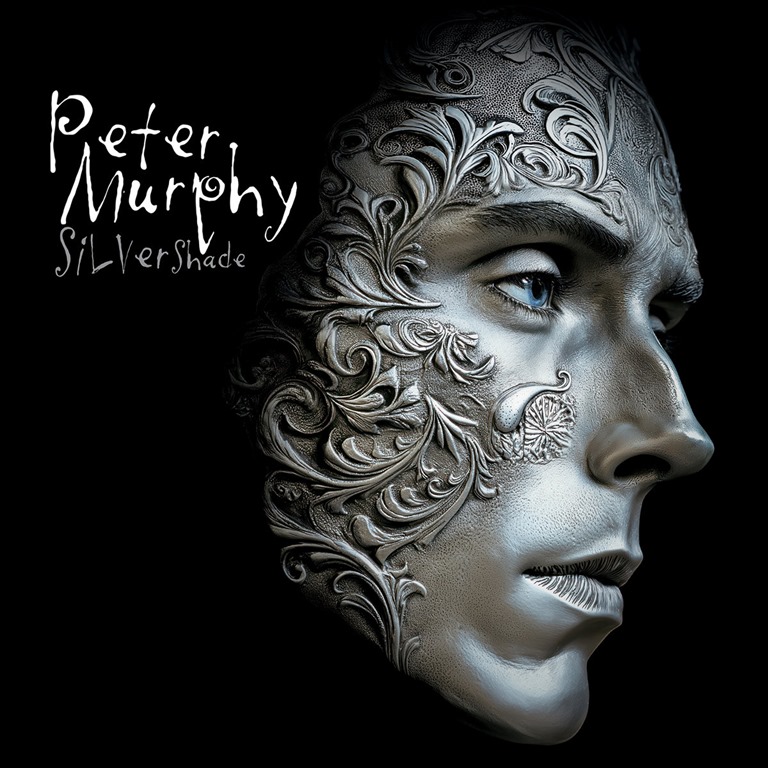
Murphy’s latest offering isn’t strictly a solo effort. Initially released as a standalone single, ‘Let the Flowers Grow’, which now closes the album as a ‘bonus track’, is a duet with Boy George, and much of the material on the album was co-written with Youth, who also produced it. Silver Shade contains twelve tracks and has a running time of fifty-nine minutes. As such, it’s a longish album, and the crisp 80s-sounding production, while suited to the material, dates it somewhat.

‘Swoon’ is classic Murphy in full-on Bowie mode, with a dash of Lou Reed and some grandiose electropop leanings. But if the bassline is lifted from The Sisters of Mercy’s ‘This Corrosion’, something about the swinging pop groove is actually closer to Springsteen’s ‘Dancing in the Dark’. You can clearly hear Bauhaus in all of this, but it’s predominantly in the vocals – perhaps not entirely surprisingly. And at five and a half minutes, it feels a bit laboured.

‘Hot Roy’ is Outside era Bowie crossed with Donna Summer’s ‘I Feel Love’ and The Associates. It’s poppy, it’s high drama, and it’s an early high point in an album that’s solid enough, but rarely spectacular. ‘The Artroom Wonder’ was an obvious single choice, but does sound like so many other things chucked into a blender, and elsewhere, the title track brings some dark glam vibes, and while it’s big on theatre, it’s not quite so big on substance, and feels rather predictable.

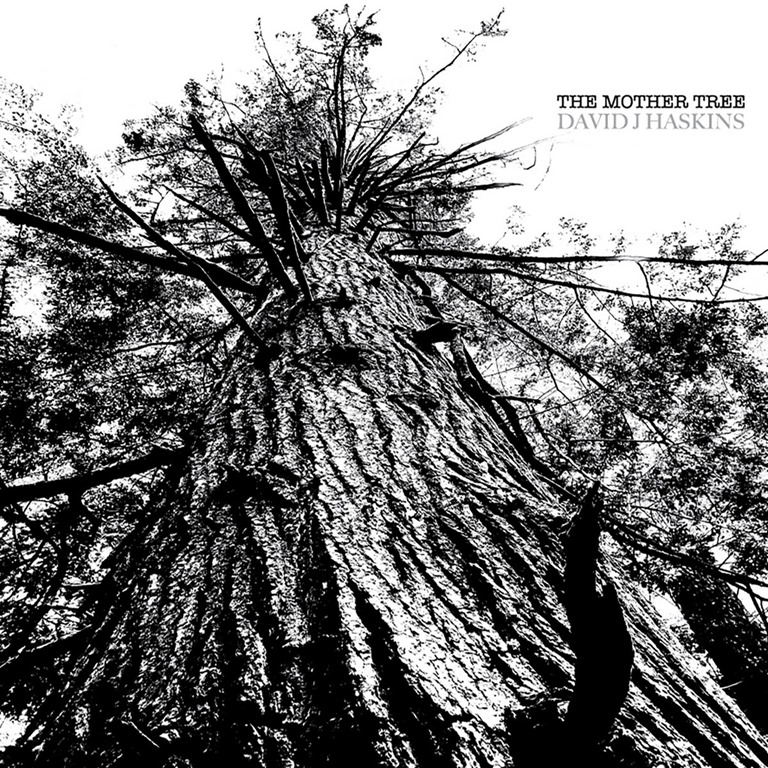
Predictable is not a word which can be applied to David J Haskins’ The Mother Tree, an album which is released in tandem with a book of poems, Rhapsody, Threnody & Prayer, both a tribute to his mother. As such, it’s a spoken word album with musical accompaniment, and, for context, it’s worth quoting that ‘David J’s decision to release these projects under his birth name, “Haskins,” (the name his brother Kevin used in both their bands together: Bauhaus and Love and Rockets) underscores their deep familial and emotional significance to him. He calls The Mother Tree, “my most personal work yet.”’ And that personal aspect rings out loud and clear, including as it does ‘profound reflections on life, love, loss, and touching tributes to late cultural icons and artists including Ian Curtis, Kurt Cobain, Jeff Buckley, Jack Kerouac and Mark Linkous.’ We feel and experience loss on different levels, and Haskins in no way suggests the loss of his mother is the same experience as the passing of a friend or an artist one admires: this is an exploration of the muti-faceted experience of loss and the way they all leave a different kind of void in one’s life.

The first piece – the title track – is a twenty-one minute piano-led meditation with subtle strings as the musical backdrop to a descriptive, linear narrative tale. There is a simplicity about it, not to mention an immediacy and directness. ‘this is a personal sacred story’, he says in the early stages of this patchwork of scenes which depict moments of his mother’s life. While the instrumentation is perhaps synonymous with high art, the words and their delivery are unpretentious, a flow of recollections and reminiscences, some harrowing, heart-rending, and all so real. Because life is often harrowing and heart-rending. ‘I miss your laugh’, he says openly, before effusing about perfect Sunday roasts. ‘Loved and lost’ is the succinct and poignant summary of the composition, and one which runs through the album as a whole. The other four tracks are substantially shorter, most around six minutes in duration, with almost folksy instrumentation and more contemplative spoken-word narratives, rich in little details which render them all the more vivid. There’s something almost unfiltered about it, and it feels so resonatingly human.

It sits at the opposite end of the spectrum from Murphy’s album: it’s art without artifice, a richly-woven tapestry where emotion is subtly laced through every moment.

These two albums may provide some indication of how the individual members brought specific traits to Bauhaus in the early years, and provide some measure of how they came to be increasingly divergent over time. Murphy’s album is clearly the more accessible, and will likely receive more coverage and acclaim, and reach a far wider audience, and be lauded and cherished by many. But for me, although The Mother Tree is a very different beast and challenging on a number of levels, it has a deeper resonance, and connects on a deeper level.

a3232846235_10a3601842447_10

Strategic Tape Reserve – 21st March 2025

Christopher Nosnibor

It’s certainly been a while since we last heard from Justin Watson, the epically-bearded being who formerly ran the Front & Follow label, but here he has temporarily resurfaced as one half of the absurdly-monikered Cromwell Ate A Twix Here on a split release with underground noise legend YOL, released by Spanish cassette label Strategic Tape Reserve. As such, even before hearing a sound, one can predict that this is destined to be unpopular – by which I mean an ultra-cult release for a microniche audience – or, put simply, the noise scene.

The bio for Cromwell Ate A Twix Here tells us more about what they aren’t than what they are, hammering home that ‘Justin ran Front & Follow and definitely doesn’t now. It’s over. He’s half of MORE REALISTIC GOALS, a third of The Incidental Crack and a quarter of The Watson Marriage Experiment (2006-)’. So in the wake of its brief revival for the charity fundraising Rental Yields series of complications not so long ago, we can be confident that the lid is now firmly nailed onto the coffin of F&F and even Dracula wouldn’t resurrect the label’s activity. But this is how it tends to be with those of a creative bent. They simply can’t not do anything forever. It’s not even an itch: it’s a compulsion. ‘Fragile’ occupies side one, and is eighteen minutes of expansive, filmic music, constructed around quavering, wavering drones, sparse pseudo-strings and soft, supple abstractions by way of an accompaniment to a somewhat surreal spoken-word narrative about… what is it about, exactly? Death, yes, but also a new relationship, interaction… The music fades into the background during the narrative, rising to the fore between passages. David Yates’ delivery is natural, down to earth, friendly, even, and is fitting for a tale which is largely given to quite mundane details before shit gets weird at the end. The audio begins to grow more unsettling, a shade disturbing around the seven-minute mark, and things only get darker thereafter.

And then there is eighteen minutes of Yol, which is pure derangement. Anyone acquainted with his work will be expecting nothing less. It begins with him stuttering and choking in convulsions over a mess of noise about ‘wheel of life, wheel of cheese’, and he yelps and roars, sounding as if he’s utterly possessed or dying, spasmodic ranting overloading over a horrific mesh of feedback and sonically rough terrain. You can practically hear your speakers wilting as the blasts of distortion scratch and scrape and glitch and burst and grind and buzz like so much sputtering, sparking, damaged circuitry. The whole thing is deranged, although it’s no less deranged than Liz Truss’ famous proclamations about cheese or any statement issued by The Whitehouse in recent weeks. He knows this, of course: however insane his work sounds, there are political undercurrents and a certain knowingness to his brand of frenzied avant-gardism, as evidenced on viral cats and dogs (2021).

The fact that this is just short of twenty minutes of a man yelping and barking and seemingly losing the plot before a microphone, and yet making more sense than five minutes spent perusing the news or social media tells us where we are in the world right now.

The two sides of this split release may be very different, but the contrasts are complimentary, and in combination, offer a welcome excursion beyond the everyday madness we’re living through, offering insights into rather more specialist madness instead. But this is artful madness, or good mad, or something. These guys won’t wreck the economy, invade or annexe your country, or fuck you over. They’ll just be over there making some weird noise. I’ll be over there with them, and you’re more than welcome to join us.

AA

a4054677057_10

A track about the last man to insult Stalin to his face and live to tell the tale – left communist Amadeo Bordiga…

It’s a spoken-word groove sensation!

AA

a1502990593_10

The final song in a trilogy of time-related experimental tracks, ‘Mnemosyne’ incorporates an original song – recorded in Mayfair Studios, London, in 1975 – into poetic musings, and haunting atmospherics, dwelling on nostalgia and false memory.

a0864877400_10

Hallow Ground – 7th February 2025

Christopher Nosnibor

If it’s got Norman Westberg on it, I’m in. The longtime Swans guitarist is – and I’m not ashamed to say it – something of a hero of mine in the league of guitar players. The discipline he displayed churning out sometimes just a couple of chord at a crawling BPM is beyond admirable, and those releases, particularly from Cop to Children of God were entirely reliant on punishing guitar monotony, and while his post-Swans solo works have been of a significantly more ambient persuasion, his brilliance as a musician still lies in his adherence to a ‘less is more’ approach, playing to achieve sonic effect rather than to showcase himself or his musicianship. There’s something refreshingly egoless about this.

The context of this release is that ‘Night Keeper is a collaborative album by New York City-based artist Aaron Landsman and former Swans guitarist Norman Westberg that is based on the former’s eponymous play. Westberg recorded it together with performer Jehan O. Young for the Swiss Hallow Ground label, with Landsman serving as the record’s producer. The original piece was first performed in the Spring of 2023 at The Chocolate Factory Theater in Queens and filled the stark industrial space with spoken text, choreography, projections, and music in dim light and, occasionally, complete darkness. Westberg and Young afterwards brought it to the studio to record it as a two-part album in whose course his textural sounds, based on loops and samples, set the stage for her soothing, sonorous vocal performance.’

In a sense, then, it’s a soundtrack album of sorts, and it’s also a spoken-word album.

The accompanying notes explain that ‘Night Keeper is a performance inspired by sleeplessness and the wanderings of the human mind at night—about time and memory… The initial spark for Night Keeper was a run of almost sleepless nights in different neighbourhoods of a city that is perpetually insomniac. Instead of trying to force himself to go back to sleep by any means necessary, Landsman started writing down his thoughts.’

I first experienced insomnia at the age of five while staying at my grandparents’. As the time wore on, I grew increasingly scared, and convinced that if I fell asleep I wouldn’t wake up in the morning. Bordering on hysterical, I went downstairs to see my parents, who told me not to be ridiculous and to go back to bed. I cried myself to sleep that night, But I did wake up.

In my mid-teens, I came to embrace the insomnia, spending my nights watching television and videos, drawing, writing, making music, and later, dwelling in internet chatrooms and talking shit till the small hours while writing a novel and downloading stuff from Napster and Soulseek, before perhaps embracing it a little too hard in my mid-twenties, reaching petrifying levels of paranoia and experiencing hallucinations, before collapsing and being off work for six weeks.

I recount this, because the spaced-out, dreamy, disjointed stream-of-consciousness un-narrative of Night Keeper feels uncomfortably familiar. The way the internal monologue flows on, and on… and sometimes spills out to external monologue without realising. The soundscapes forged by Westberg as a backdrop to this is abstract, unsettling. At the end of the first part, there’s a glitching loop, which starts with a thud. It’s an uncomfortable rhythm, akin to water torture and replicates, to some extent, that heightened sensitivity and self-reflectiveness which interrupts the flow of the monologue: what is that? Am I going mad? Oh my god, I’m going mad. What is it? Make it stop… And then, it does, and the silence feels strange.

‘I still can’t sleep. Am I sleepy?’ the narrator asks as one point, after picking through an alertness to a range of sounds. There are people out there, and not everyone is asleep. Sleep’s for wimps, and you can get so much more done if you sleep less, even if that’s starting a fight club. The narrator counts the hours – not with close attention, but suddenly, it’s gone form 2:15 to 4:15. ‘How did it get so late? When is it time to give up?’ are questions which resonate. It’s no longer a late night, it’s no longer tomorrow, it’s almost time to get up for work again. It’s not worth going to bed. Might as well get a couple of chores done and arrive a bit early at work in the hope of an early finish. As if.

In the main, the musical backdrop is supremely subtle: occasionally, ripples of chiming guitar ripple across the murky surface of the dark, misty drones. Sometimes, there are some stuttering crunches, thick scrapes, and they change the dynamic, create seismic shudders which break through the low, slow, undulations. It’s the perfect soundtrack: sympathetic, subtle, nuanced, detailed, textured, dynamic, and understated. You find yourself drifting in and out of the words, and drifting in and out of the backdrop, too – and this is the most fitting experience, in that it’s the most accurate representation of the insomniac life. If you’ve ever not slept for a prolonged spell, Night Keeper will feel familiar. If you’ve had the good fortune to habitually enjoy the luxury of quality sleep, then Night Keeper may provide some education and insight into the torment of what it’s like, you lucky bastard.

HG2407_Outer Sleeve_643x328.indd