Posts Tagged ‘Review’

Christopher Nosnibor

The Lovely Eggs really are the best advert for the DIY ethos going. Here we are, in the 300-capacity Crescent in York, just over two years since their last visit, and whereas then – again, on a Sunday night – there were twenty-eight tickets left on the door, they’ve sold out well in advance this time. This is likely due in no small part to the release of the absolutely cracking Eggsistentialism earlier in the year, but equally their ever-growing reputation as a truly outstanding live act.

Track back to 2015, the first time I saw them: it was a part of the sadly gone and fondly-remembered Long Division festival in Wakefield. They weren’t a new band even then, and while they drew a respectable crowd, were just one of many punky indie bands on the circuit. Seven albums in, and having stood up to gouging from arena venues on merch from support acts and done quite literally everything themselves these intervening years, they’ve risen to prominence not only as a super band, but the definitive outsider band. And, as with last time around, we have a curated lineup with a fellow Lancashire band opening, a poetry / spoken word performer by way of an interlude, before their own set. Previously, we got Arch Femmesis and Thick Richard: this time, it’s British Birds opening, and Violet Malice providing the off-kilter spoken word.

Both are excellent. I was hugely enthused by the return of British Birds to York, having first seen them in this very venue supporting Pale Blue Eyes, and they did not disappoint. Their set is packed solid with hooks, harmonies, jangle… and tunes. A solid rhythm section and some twiddly vintage synth tones provide the base for two- and three-way vocal interplay. In the five months since their last visit, their sound seems to have grown meatier, more solid, and they’re tighter, more focused, and Emma Townson, centre stage on vocals, keyboard, tambourine, and cowbell is more nonchalant and less six bags of Skittles exuberant in her performance, but there’s a really great vibe about them on stage, and they feel like a cohesive unit, and one with great prospects if they maintain this trajectory.

DSC00173DSC00167

British Birds

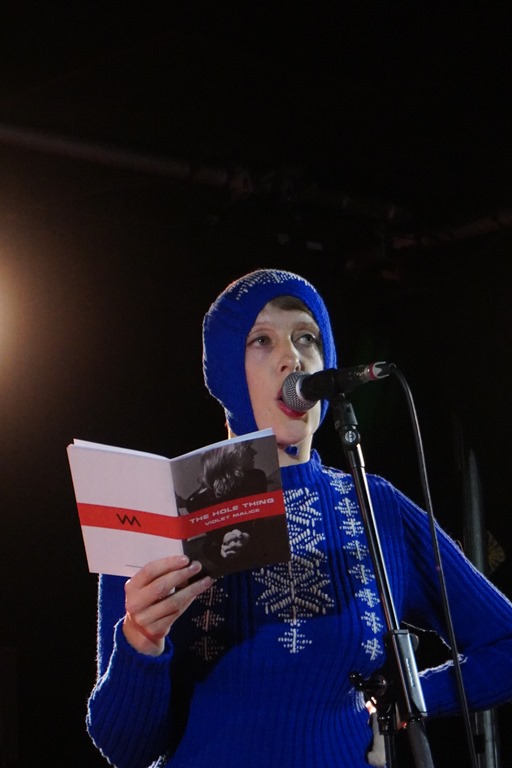
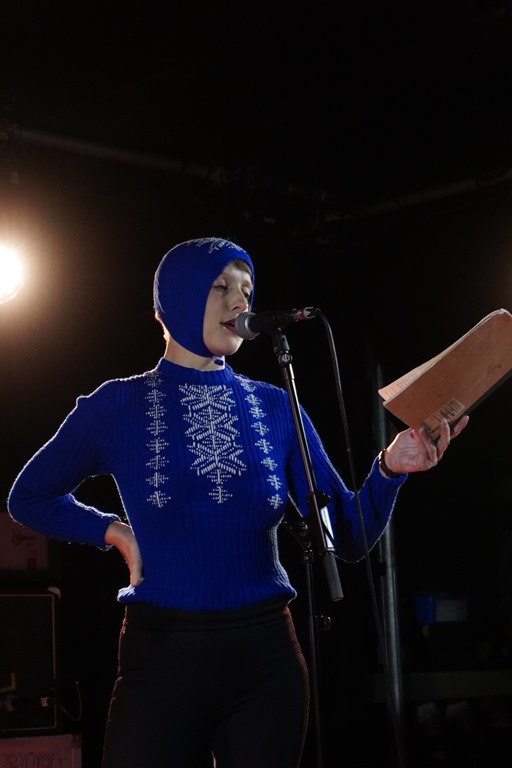
Violet Malice is not from Lancashire, but Kent. It’s appropriate. It could almost be a typo or a mispronunciation. She belongs to the glorious lineage of snappy poets who are likely to go down better at a rock gig than your average spoken-word night which clearly has an arc from John Coopeer Clark forwards. She tells it like it is: and how it is is hilarious, but uncomfortable. I’m reminded of Manchester writer and spoken word performer Sue Fox, and the way an audience will lap up her visceral monologues about cocks and cunts, howling with mirth but breathless as they ask themselves ‘did she really just say that?’

‘Stop eating your own food and jizzing on about how good it is’, Violet intones in a blank monotone. Her best line comes in ‘Posh Cunt’ where she drop ‘enough cum to make 24 meringue nests’. It’s fair to say that if a guy had delivered the line, it would not have had the same impact, and this is but one measure of the ground which still needs to be made up. But Violet Malice is leading the charge – as, indeed, are The Lovely Eggs. What they’ve achieved with this lineup is strong female representation without being male-exclusionary: they’ve not gone on a Dream Nails kind of anti-male campaign (which is simply inverse sexism) and there’s no adopted policy of hauling single men off for interrogation by security, a la The Last Dinner Party in Lincoln. It’s as strongly feminist as it gets: no-one is alienated, and the demographic across both genders and ages is well-balanced.
DSC00186DSC00184

Violet Malice

My notes pretty much run out during The Lovely Eggs’ set, and I make no apology for this. When this happens, it means I’ve either overimbibed or am just so in the moment I forget, and tonight, it’s very much a case of the latter.

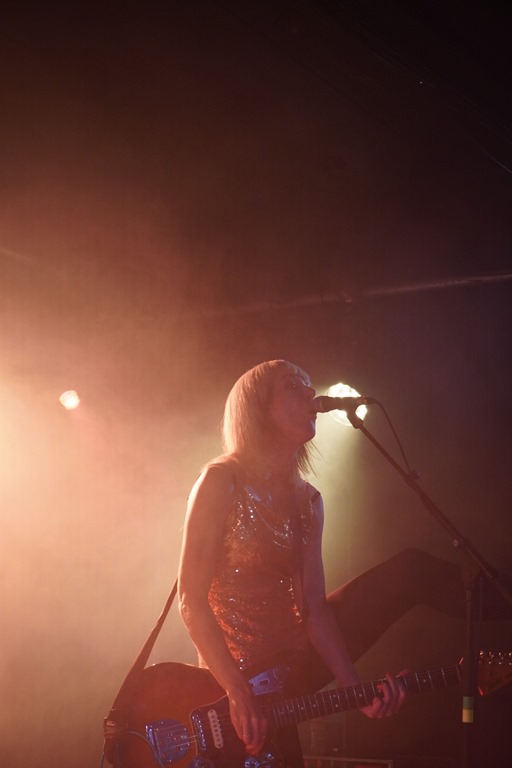
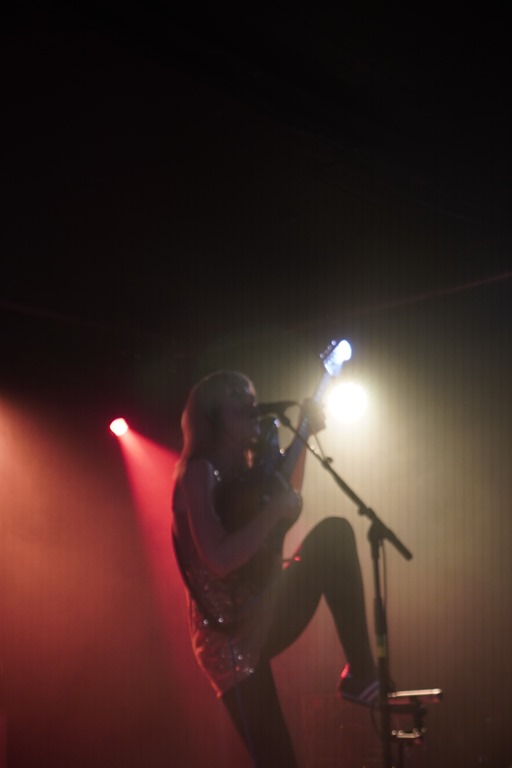
They’re straight in with ‘Death Grip Kids’, with the killer opening line ‘Shove your funding up your arse!’, of which I wrote elsewhere, ‘the song is a proper middle finger to the industry and the establishment, a manifesto which encapsulates the way they’ve rejected the mechanisms and payola of labels’. More than a song, it’s a manifesto, which sets the tone for their bursting-with-energy hour-long set.
DSC00224DSC00216DSC00239

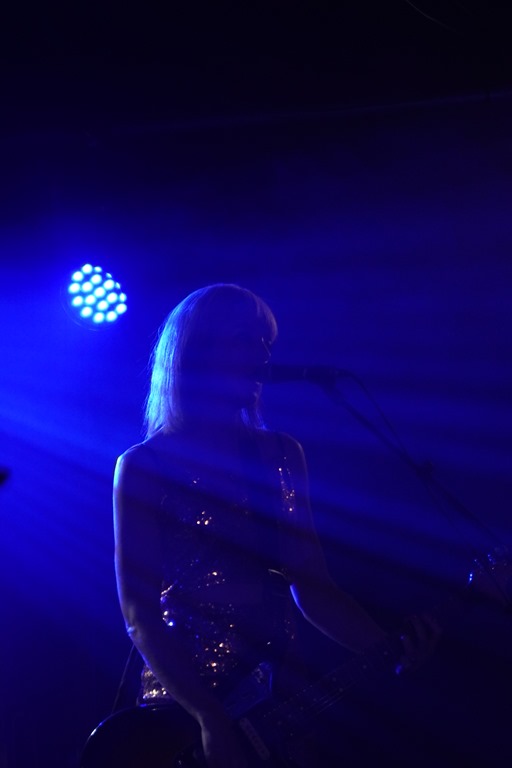
The Lovely Eggs

‘Magic Onion’ is a standout; ‘I am Gaia’ brings the obligatory mid-set slower tempo tune, ahead of leading a big old singalong with ‘Fuck It’, and the second half of the set is just incendiary. The packed room is united and uplifted and collectively uplifted. There’s no encore, no artifice, just pure, life-affirming entertainment: everything you could want from a gig. The Lovely Eggs really are the best.

COP International – 6th December 2024

Christopher Nosnibor

What a year this is proving to be for bands who have lain dormant, at least on the studio front, for quite literally decades. And when it comes to Red Lorry Yellow Lorry, it really has been a long time. The last Lorries release was an ultra-limited gig-only affair back in 2015, with just 50 copies pressed for Leeds in the August and 100 for Valencia the following month. Said EP featured two new songs, ‘Safe as Houses’ and ‘Piece of my Mind’, which were listed as being from the ‘forthcoming album Strange Kind of Paradise’. Time passed, and it really didn’t look like the album would ever see the light of day. But now, this official EP presages its arrival in February 2025, some thirty-three years since they called it a day with Blasting Off (1992).

The Lorries always stood apart from their contemporaries: whereas the Leeds post-punk scene of the early 80s clearly favoured black in every possible way, the band’s guitar sound was steely grey and like scraping metal, and paired with murky bass and relentless percussion, they forged an industrial clang that, was the perfect mirror to both the landscape and the times. Chris Reed’s baritone was less theatrical and more gnarly and angry-sounding than your archetypal goths which would follow. Fans will already know and appreciate all of this, but with so much history – and so much time having passed – some context is worthwhile, especially for those unfamiliar.

During their 80s heyday, they built a catalogue of outstanding 12” releases, with some of their best cuts not on the albums, and with Driving Black, they’ve added another. It contains six tracks, with two mixes of the title track – I gather the original will feature on the album – long with a mix of the as-yet-unreleased ‘Chickenfeed’. ‘Safe as Houses’ and ‘Piece of my Mind’ finally get to be heard – and owned – by more than 150 people, and hearing them again in this context reminds me of the buzz I got when first heard them almost a decade ago: they’re unmistakably RLYL, and if they’re more in the vein of the material on Blow and Blasting Off, the one thing that’s remained consistent throughout the band’s entire career is their sonic density, that claustrophobic, concrete-heavy heft, with ‘Piece of Mind’ being a solid mid-tempo chugger and a grower at the same time. It seems that the two tracks from the 2015 EP didn’t make the album cut – but this can be seen as good news, if they have material of this quality going spare. The same is true of ‘Living With Spiders’, a frenzied track which has spindly guitars crawling and scratching all over it. It would be a standout, but the consistency of quality across the EP means it’s one more cracking tune.

The strangest thing is how time – or our perception of time – seems to become evermore distorted. Perhaps some of it’s an age thing, but… I remember at the time, The Sisters of Mercy’s release of Floodland was hailed not only as the rebirth it was – stylistically and in terms of commercial success – but as a huge comeback after a great absence. But Floodland arrived only just over two years after First and Last and Always. Even more remarkably, I seem to recall the release of Crawling Mantra under the name The Lorries that same year was considered something of a comeback and a departure, even though Paint Your Wagon was released only the year before. The world seemingly lost the plot when The Stone Roses delivered The Second Coming after a five-year gap (and they really needn’t have bothered). And now, while Daniel Ek is advocating the production of ‘content’ on a constant basis, we have bands putting out their first new material in an eternity, and rather than having forgotten about them, fans are fervent – and rightly so.

Chris Reed’s reuniting with David ‘Wolfie’ Wolfenden – Leeds alumni who first appeared with Expelaires in 1979 along with one Craig Adams, who would do a stint as a member of The Mission’s touring lineup – is most welcome, because they’re simply a great pairing, and this is nowhere more apparent than on lead track ‘Driving Black’, which is vintage Lorries, kicking off with urgent, driving drums, before the throb of bass and rhythm guitar and a sinewy lead guitar, sharp and taut as a tripwire cut in and casts a thread right back to their earliest work in terms of style and structure.

The parallels between now and the 80s are uncomfortable; we may have ditched a Conservative government, but workers are still feeling the pinch, and global tensions are off the scale. That the BBC’s apocalyptic movie Threads is getting only its fourth screening – to mark its fortieth anniversary – feels worryingly relevant. And so it is that Red Lorry Yellow Lorry still sound essential and contemporary is equally testament to their songwriting and delivery, and the bleak times in which we find ourselves. Putting the social and political backdrop to one side, the Driving Black EP is an absolute triumph. There are no half-measures, nothing is weak or half-arsed, and it’s – remarkably – as if they’ve never been away.

AA

Red-Lorry-Yellow-Lorry-_Driving-Black_-EP-3000-Cover

Ex Records – 20th September 2024

Christopher Nosnibor

It’s hard to conceive that The Ex have been going for a full forty-five years. It’s more than understandable that the pandemic proved a challenge for them, a band accustomed to getting out and doing it live. As their bio points out, in 45 years they did more than 2000 concerts in 45 countries. But creativity isn’t something that can simply be switched off. Again, to turn to how their notes set it out, ‘The pandemic was a standstill for many, including The Ex. Or perhaps it was more a kind of recharging, as the band is back on national and international stages with new music, ready to return to the studio… It was time for a new 45rpm 7” single. From the brand-new set they are playing full-on this year, they picked two blinking tracks: ‘Great!’ and ‘The Evidence’.

For some reason, I’ve always considered The Ex to be more of an album band, but as the compilation Singles. Period evidences, they’ve released a fair few singles through the years. And what’s interesting is how they clearly approach singles and albums very differently, exploring expansively on albums in the same kind of way they do live and striving to see just how far out they can push things, while exercising remarkable discipline and concision with the single releases, with tracks of two or three minutes and rarely exceeding four in running time. This awareness or tailoring of material to medium is quite a rare thing, but illustrates their phenomenal versatility as musicians, and also provides some insight into their methodology and creative processes.

‘Great!’ is. It’s an uptempo meandering sliver of discord whereby the musicians play across one another rather than together to spin a slice of angular post-punk that’s not a million miles from The Fall in their early years. ‘The Evidence’ – which clocks in at under three minutes – is more focused-sounding, and more noisy. Both songs are the work of a band who are still firing on all cylinders with ideas and energy.

This single is exhilarating in unexpected ways. It sounds fresh – and yes, it might also sound like it’s from circa 1979, but it sounds authentically 1979, rather than some old buggers trying to recreate and rekindle the vibe of their youth. Just what their secret is, I don’t know – although one suspects the fact that they’ve continually striven to create, and to create something new, something different, is a significant factor. In life, as well as with musicians, it’s so easy to simply settle, to adopt a routine, to take the easiest path within an established comfort zone. Fair enough: most people want an easy life, especially when they reach a certain point. But, critically, to accept a diminishing scope for activity is to consign oneself to a future of diminishment in every way. This clearly isn’t the mindset of The Ex, and this single provides ‘The Evidence’ that they’re still ‘Great!’.

And after that shameful punchline, I should probably get my coat – but shall instead pour another drink and get to the next review – because diminishment is stagnation and death, and re-engaging with The Ex post-pandemic is an invigorating experience.

AA

EX148 front

28th June 2024

Christopher Nosnibor

There are many reasons I’ve long been drawn to the obscure, the underground, the DIY – and many of those same reasons are why I try, wherever possible, to use my platform to champion those acts who fall within these broad brackets. And another thing I endeavour to use my platform for is the broader topics which relate to the releases – because during my life, I’ve become acutely aware of just how personal a thing music is, both to artist and listeners.

I suppose I first really tuned into this when I was around the age of fifteen: I’d started getting into goth and alternative stuff when I was twelve or thirteen – back when the weekly singles charts and Top of the Pops rules, and the likes of Killing Joke and The Sisters of Mercy and The Mission would make incursions into these realms – and was getting into live music. None of my mates were into the same stuff, so my choices were, go on my own, or don’t go. I decided I didn’t need my mates, but I did need to see the bands. This essentially set the template for my life, taking a position of a willing outsider.

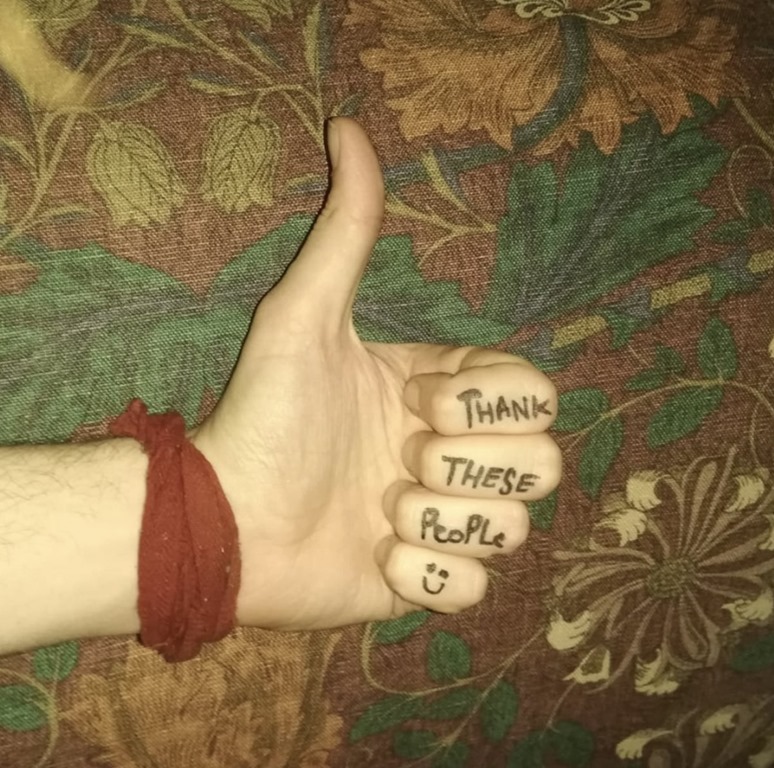
Not everyone gets to be so willing in the place they find themselves, and while Rip Space’s biographical info is sparse, there’s a clear sense that they’re here as much out of compulsion as choice, describing themselves as an ‘anonymous autistic Scottish multi instrumentalist’. They outline how ‘Thank These People is an EP inspired by the catharsis of overcoming otherisation, public humiliation and otherwise targeted acts of evil that resulted ultimately, in official diagnosis in 2021… So this EP is called Thank These People. We make lemonade from the lemons life gives us. And in ways, we can decide to be thankful for the lemons.’

It’s hard not to find this apparent level of positivity and optimism quite staggering and more than a little overwhelming, as I fight the personal urge not to frame my own experiences as, rather than ‘thank these people’, but ‘fuck these cunts’. Ripspace has already demonstrated that they’re a better, less bitter human being than I before I’ve even heard a note… And then I heard a note, and I love Ripspace all the more. Amidst a roaring blast of lurching, distorted black metal guitars and crashing percussion there’s that anguished vocal howl. This… this is the sound of rage, of fury. Thanks? Yeah, right. This is a throbbing middle finger. This is what you’re thinking, what you want to say but muzzle because you don’t want to rile your boss. Because your boss is a twat.

Thank These People contains just three songs, and has a running time of under ten minutes – meaning it would fit comfortably on a 7” in old currency (when a 7” cost a couple of quid, although I’m not about to embark on a nostalgia trip, not now of all times, when nostalgia for the time of £1 pints costs £350 a ticket).

‘The Green Ripper’ really captures the vibe of Touch & Go and Am Rep in the 90s, but with a keenly Scottish lilt, and transitions from spoken word to full metal fury in a blink. And you feel the fury as it seethes and rages and roars, a pure, splenetic outpouring. ‘Welcome to Mother Earth’ is a noise-rock math-mash thrash-frenzy, Metallica in a three-way high-speed collision with Shellac and And So I Watch You From Afar. Thank These People spits, roars, foams, burns. And I have to agree when they add that ‘also, the music video is really good.’

AA

AA

a0730216148_10

5th July 2024

Christopher Nosnibor

Sometimes, I really do feel as if my brain is my enemy. Word association and wordplay are a particularly frequent and annoying curse. Oftentimes, I keep this to myself, but midway through listening to this, it struck me, completely at random, that Killzones isn’t a million miles away from Calzone, at least when written down. So why share this? A problem shared, and all that, for one. But as much as anything, I felt the urge to purge, or moreover to crack open the challenges that present themselves as part of the creative process. Writing – and finding something new and interesting to say – about music, day in, day out, is a challenge in itself, without other factors.

Seemingly, the recording of this EP proved rather less challenging for its makers, who came together and developed it swiftly and fluidly –although the same can’t be said for listening to it. That’s by no means a criticism. In a climate where the airwaves are jammed solid with anodyne sameness and slickly-produced beige sonic slop disguised as raw or edgy on account of some explicit content and some choice language that requires beeps or asterisks in the mainstream media, anything that does something different offers a welcome challenge in the way many pit themselves against the Great North Run or similar. We’ve grown accustomed to everything being delivered neatly-packaged and pre-digested, and feeling like following a recipe from Hello Fresh makes us a Michelin chef. Collectively, we’ve forgotten how to chew – meaning that this will either kick-start your metabolism or simply make you spew if you’re unaccustomed to anything that’s this high-fibre. Just look at that cover art. It’s dark, grainy, uncomfortable. It’s the perfect encapsulation of the music it accompanies.

Machine Mafia is quite the collaborative paring: Adam Stone of gritty northern grimsters Pound Land and Jase Kester of ever-evolving experimental noisemakers Omnibael / Omnibadger have come together to do something different. Very different.

As Jase explained to me, the EP features ‘no live instruments, leaning into the way dub reggae was so embraced by punk right in the early days.’ And there’s no question that it has both – simultaneously – the spaciousness of The Ruts (D.C) and the density of early PiL. It’s a formidable combination, that’s for sure.

The title track assembles sampled snippets as its foundation, drawing parallels with the collaging methods of Cabaret Voltaire and Throbbing Gristle, evolved from William Burroughs and Brion Gysin’s late-50s tape experiments – in turn a progression from the cut-ups on paper. Atop of this slice ‘n’ splice selection of political speeches and an almost subsonic, floor-shaking bass, Stone delivers a mumbling, drawling semi-spoken spiel. It’s like Sleaford Mods on Ketamine, a heavy trudge of ever-degenerating sound which eventually collapses to a low-end buzz and a crisp sample that makes the pair’s political position clear through antithesis.

On ‘Faces’, scrapes of discord, distortion, and a thudding beat half-submerged in the mix grinds out the opening before a dark, dense bass groove starts a gut-shaking growl. The drawling, atonal vocals, too, are distorted and low in the mix, and I’m reminded of some of the more obscure Ministry offshoots witch Chris Connelly – the vibe is dingy, sleazy industrial, a bit early Pigface, and sounds like it was recorded in a damp mould-stained basement on a salvaged reel-to-reel.

The songs get slower and heavier – and longer – as the EP progresses. ‘I Am Not You’ comes on as if Dr Mix and The Remix had done dub, while ‘Lecture 0.3B’ goes all out on transforming a simple spoken-word piece into a cut-up tape experimental headfuck with loops and delays and effects galore, all laced with crackles of distortion and sonic degradation fuzzing and fading the edges. It lands somewhere between the JAMS, Max Headroom, and Throbbing Gristle’s ‘Hamburger Lady’ – weird, unsettling, dystopian, with near-familiar elements twisted and recontextualised in an ugly mash-up collage work.

Conceptually, Killzones is far from new – but then, there’s no claim to innovation here, explicitly drawing a line from the past. But the kind of reference points and influences in evidence here are not the ones you find often, if ever – independently, perhaps, but the whole point of intertextuality as a method of creating is the nexus of divergent touchstones and the way in which they’re combined. With Killzones, Machine Mafia deliver a crash course in experimental music 1976-1994. It’s a mangled, messy cognitive assault. It’s knowingly, and purposefully, difficult, unpleasant, and a complete creative success.

AA

a0890048129_10

à La Carte Records – 23rd June 2023

Christopher Nosnibor

Perfection is a thing so rare it’s practically mythological. And yet LA post-punk act appear to have achieved it with ‘Never Say Forever’. While reprints of their bio abound, evidence of a back catalogue or previous work is impossible to locate, so it does appear that this is their debut single, which makes it all the more remarkable.

‘Never Say Forever’ is pure vintage in every respect – stylistically, it captures the essence of 1981-85, and I have no shame in saying that I’m an absolute sucker for that era which saw post-punk give birth to goth and dark pop. Sonically, too, they’ve got it down. There’s a certain sound, something that comes not only from the production but from the equipment of the time. Technology was advancing apace – it was around this time that drum machines and synths became widely available – and while the last forty years have seen substantial further developments, I can’t help but feel that something has been lost. That crystal-clear digital fidelity we’ve become accustomed to lacks something, a certain soul, perhaps, but also the sonic haze that defined the sound of the early 80s was absolutely integral to the music itself, and while many contemporary acts have tried to emulate it, they’ve simply fallen short. Not so Mirror of Venus: ‘Never Say Forever’ sounds completely authentic, to the point that it sounds like an archive recording. How have they done it? I don’t know. Time travel, perhaps.

Promo and visuals have increasingly become key to success. People of a certain age, in particular – that would often be people my age (and above) – bemoan the advent of style over substance and how it’s all snazzy videos and shit now, while conveniently forgetting that this came to pass in the 80s. But of course, the difference between major-label 80s and independent acts 80s was immense, and this was perhaps the time when capitalism and money really changed the shape of things: the majors would chuck megabucks at the big acts, which led to the slickness and ubiquity of the like of Duran Duran (who I do happen to like) and the low-budget values of all of the bands who weren’t signed to the likes of EMI. The video which accompanies ‘Never Say Forever’ captures the vibe of the era, and how we view them now, also: once affecting slick but now looking faded, it’s a perfect recreation of the VHS era, the pre-digital age. And yes, when I say a ‘perfect’ recreation, I really do mean it.

Everything about ‘Never Say Forever’ feels like it’s been cracked out of a time capsule. But none of this counts for anything if the material isn’t up to scratch, and that’s where ‘Never Say Forever’ really shines. It’s crisp, it’s catchy, it’s moody, broody, hooky, and nothing short of sheer shimmering magnificence. In other words, perfect.

Will they ever match this moment again? One would hope so – of course. It makes you crave more, so much more. But whatever the future holds, with ‘Never Say Forever’, Mirror of Venus have achieved more than almost any band ever does. Perfection.

AA

a1525440547_10

Metropolis Records – 14th June 2024

Their Bandcamp bio presents a pretty fair an honest summary of the band’s career: ‘Original Post Punk drum machine band from Leeds. Started at the beginning, imploded, reborn for the 21st Century.’

They really were there at the start of that fermentation of post-punk that frothed its way out of Leeds, propelled by drum machines and a fuckload of attitude and came to define what would come to be defined as ‘goth’. The labelling was bollocks, but that’s the press for ya. The Violets may have been – for a short time – taken under the wing of Andrew Eldritch, who produced their first couple of records and put them out on his Merciful Release label, established for the purpose of disseminating The Sisters of Mercy’s releases, but also – equally briefly – home to fellow Leeds act Salvation, and much, much later, La Costa Rasa – but apart from the drum machine and attitude, you couldn’t really say that they sounded alike.

There were reports in the press of a falling out, although Violets front man Simon Denbeigh, who went on to front The Batfish Boys after the Violets, would later become a touring member of The Sisters as Nurse to the Doktor, before ill health curtailed any kind of musical activity.

But to backtrack a small way in a messy history, 2007 saw The March Violets reconvene, seemingly out of nowhere, with a reunion show at Leeds Beckett (which used to be the Polytechnic) and an EP and, not long after, an album. And they’ve been busy ever since.

The arrival of ‘Hammer the Last Nail’ is exciting because their first new material in a long time, and it’s a cracking tune in the vein of their later 80s works as well as the post-return releases. And it’s good, too. It SOUNDS like The March Violets. It sounds gothy, sultry. Rosie’s vocals are as strong as ever, and she’s still got so much charisma. The Violets minus Simon aren’t quite the same, and there’s no escaping that: the dynamic of the dual vocal defined their sound to begin with.

But… bands evolve, and shift lineups. This is a ripping tune and a great addition to their catalogue.

AA

AA

96eb4167e4e26bda21d6ad05bfab3c4a9fe69f8e

Mortality Tables – 7th June 2024

Christopher Nosnibor

Mortality Tables have continued to release titles from their ‘Life Files’ series at a remarkable rate, with instalments 18 and 19 landing in May, and hot on their proverbial heels, this, number 20, in the first week of June.

The premise remains consistent, namely ‘Recordings of places, people, objects, moments in time, environments and quotidian events [which] are shared with a range of artists working across different disciplines. Those artists are free to respond to the recordings in any way they like. And so, as ever, the field recordings, courtesy of Mortality Tables main man Mat Smith provide the foundation and inspiration.

Killiegrew Monument is a peculiar thing. Located in Falmouth, and intended as a memorial to the last surviving member of the Cornish family, the monument is a sharp obelisk constructed in 1738. It looks altogether more contemporary, and ultimately anomalous with its surroundings. And one might say that this release is similarly anomalous. I can imagine that beholding this curious construction would inspire an array or reactions. But why the fuck would you play a stone monument with a sharp stone? Is that really one of the responses you’d likely have to coming face to face with such a construction? Well, perhaps, if you’re possessed of an avant-garde mindset, whereby instead of reflecting on the origins of The Wind in the Willows, you find yourself contemplating ways of making unusual noises.

Once again, when it comes to the ‘Life Files’ series on Mortality Tables, we don’t know what the source materials actually sound like.

‘Killigrew Monument Played With A Sharp Stone (Part One)’ is an odd sound work: there’s chatter and ambient drift and scratches and shuffles and scrapes, but what on earth is going on? Seagulls wheeling and cawing – and on those squawks the sound echoes and reverberates, and the collage of sound collides with a strange rendition of ‘One, two, three four five, once I caught a fish alive’.

There’s lots of processed echo and cawing gulls at the start of ‘Killigrew Monument Played With A Sharp Stone (Part Two)’, as well, and it does, in some respects, sound like someone crooning abstractly into a child’s echo mic just to see how it sounds. The longer of the two pieces, at almost thirteen minutes in duration, it creates a deeply strange and disorientating atmosphere, which is likely evocative of this curious monument, which stands out of time and out of keeping with its surroundings as a testament to human folly, and, ultimately to vanity.

Too abstract to be ‘songs’, too much happening to be ‘ambient’, the result is a haunting and somewhat disorientating soundwork of a rare quality.

AA

a4230686863_10

Bearsuit Records – 31st May 2024

Christopher Nosnibor

There was a time – not so long ago – when I would come home from work and struggle to nudge the front door open with my shoulder for the mountain of CDs that had been dropped through my letterbox, along with the occasional ‘sorry we missed you’ card telling me I had a parcel at the depot awaiting collection or to arrange redelivery, and more often than not it would be some vinyl, and all of it promo material for review. I had a box – which was initially a shoebox, but later replaced with something larger – which was my ‘to-review’ box, after the pile kept falling over once it reached an unsustainable height. It was a storage nightmare, and I still have boxes containing quite literally thousands of promo CDs with press releases folded up with them, in boxes in the walk-in cupboard and the end of my office, which is, in truth, too stuffed with boxes of CDs to squeeze more than a toe into, rather than actually walk in.

Working in an office as I did then – rather than at home – I would take a bundle of CDs in a jiffy in my bag, and sit and listen to them as I worked. It beat enduring the often moronic drone of the people around me, and I’d tap out notes which I’d email home to myself to flesh out into full reviews in the evening.

My working method has changed rather since then, and while still working the dayjob, I’ve barely set foot in an office other than the one in the back bedroom of my house since lockdown. I haven’t received stacks of CDs in the post for a similar length of time, if not longer. For all of practical issues around the stacks of CDs, I do kinda miss it, and this is one of the reasons I always get a thrill at the arrival of a disc in the mail from Dave Hillary, who runs Bearsuit Records. The other, and not insignificant reason I always get a thrill at the arrival of a disc in the mail from Dave is that I’m eager to discover what mad genius work the label’s releasing next. I enjoy slipping the disc in the external CD drive I have attached to my laptop and soaking in the strangeness that spills from my speakers: I’m never disappointed.

I love the fact that I still get CDs in the mail, with promo cards and handwritten notes and so on, from Bearsuit, not just because of the joy of the physicality and the personal touch, but because it’s emblematic of the label as an entity. It does what it does, regardless of whatever else is happening, and it releases music the likes of which you simply won’t find anywhere else.

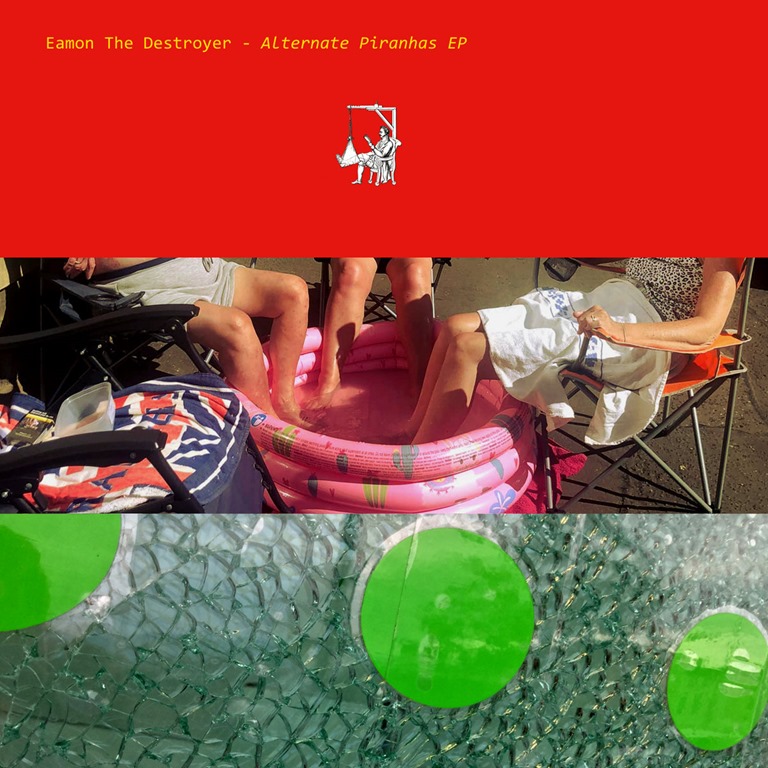
Eamon the Destroyer is a classic case in point. Another typically enigmatic artist in the Bearsuit tradition, Eamon the Destroyer has enjoyed a great run of releases to date. Debut album A Small Blue Car was a work of fuzzy, minimalist , downtempo brilliance. A sad, introspective work, it was unexpectedly touching for something so overtly odd, and follow-up We’ll Be Piranhas pushed further into forging songs that straddled the dreamlike and the nightmarish, a disorientating, discombobulating work that delved deep into the psyche in a way that felt like invisible fingers creeping inside the cranium and directly massaging the brain.

And now we come to the more or less obligatory counterpart release. Instead of the standard and expected remix EP, Alternative Piranhas gives us outtakes alternative takes of tracks from the album. A cynical voice might ask why they didn’t make the album cut, but there are myriad valid reasons: an album need to cohere and sometimes even the best tunes don’t fit with the flow, and similarly, the mood of one take or mix may in fact be better objectively, but not quite sit with the context.

And so it is with the five tracks here. All five appeared on We’ll Be Piranhas. While exactly the same length as its album counterpart, ‘A Pewter Wolf’ presents a quite different mix: the organ is much more boomy, more ‘churchy’ than on the album version, while the guitar sounds, almost buried on the album blurred and hazed out low in the mix, are more up-front and gritty here.

The version of ‘Rope’ on Alternate Piranhas seems to be in a different key, and is much grainer, murkier and messier than the more polished album take, and it’s more abrasive, more aggressive, with the vocals more up-front, and the result is that I found myself hearing thee song anew and soaking in the anger which permeates it, less obviously on the other version, tempered by the more mellow mix.

Overall, the versions on Alternate Piranhas are rougher, less ‘produced’, and it’s not difficult to discern why the versions chosen for the album were the ones they were. The album worked as a cohesive set, with an even, smoothed-out sound – well, in context – but Alternative Piranhas provides an insight into the process, which is never more apparent than on ‘The Choirmaster’. It’s not radically different… but it is different, while the alternative take of ‘My Stars’ is half the length of thee album and feels like a sketched-out demo. But again, it possesses qualities absent from the album version, just as the album version has elements which are absent here, including another five minutes of sound.

Alternate Piranhas feels more overtly rock than its progenitor, and perhaps it is, but above all, it’s a source of enjoyment to revisit these songs from a different perspective.

AA

a4099667252_10

The Record Machine – 12th April 2024

Christopher Nosnibor

The latest single, ‘Forget About You’, from ‘nouveau post-punk troubadours’ Monta At Odds’ is pitched as ‘a dark-natured opus about resisting attraction, especially when the bound proves hazardous.’

The trio, consisting of Mikal on vocals, Krysztof wielding the baritone guitar, and founding member Dedric polymathing on all other sonics are aiming for a ‘danceable mixture of eras past and present to match this raw but crisp sound.’

It’s very much of the school of neo-new wave / post-punk from circa 2004-2006 – think of Editors breaking through, Interpol’s Antics, and the likes of The Organ, and The Cinematics – particularly The Cinematics, in fact – with the electro element of She Wants Revenge’s debut. It’s post-punk with that clear contemporary slant, and a heavy dose of New Order’s buoyancy and accessibility. There’s shade around ‘Forget About You’, but a lot of sunlight and vibrancy, too: the crisp, clean, vaguely brittle guitars positively jangle against a thumping disco beat, and the melancholy is cut through with eyes cast to bright blue skies and a forward-facing optimism.

It’s only while writing this that the fact 2004 was twenty years ago has begun to register. What goes around comes around, of course, but twenty years is a generation, broadly – it seems, in my ever-lengthening experience – and the time it takes for kids to start picking up their parents’ record (or CD or whatever) collections and start drawing influence and inspiration. I say ‘or whatever’ because I do worry about the future. I worry less about styles rolling round in a repetitive cycle than what music will be coming through another twenty years from now. How is it going to go when it comes to teens raiding their parents’ Spotify playlists and finding nothing but Ed Sheeran, Taylor Swift, and, er, does anyone listen to anyone else? Of course I’m dramatizing slightly, but the point is that so much of the mainstream has become focused on quite literally a handful of artists – and what will be their legacy? Does Sam Smith capture an element of the zeitgeist beyond his identity? What does Dua Lipa speak of, and who does she speak to? A part of the problem is that where we used to have shows like Top of The Pops, The Tube, The Roxy, The Chart Show (with its alternative charts and other segments) and the Top 40 on Radio 1 (followed by something rather more alternative), the charts were pretty open and it was possible for stuff that wasn’t slick major-label sonic wallpaper to chart. This meant that it was possible to encounter something different without having to go to great lengths to seek it out. Now what do you do? Where do you go? How do people source music beyond the endless pumping of algorithms?

‘Forget About You’ hits me with a sense of nostalgia I had not anticipated, and which isn’t welcome: for some, nostalgia brings golden-tinged fuzziness and a warmth, an uplifting sensation. For me, it’s more like the sand tricking down in a sand timer, a slow-sapping pull in the guts, a seeping sadness. 2004 was twenty years ago. Less ‘yay, good times’ and more ‘fuck, I’m that much closer to death and twenty years have evaporated with depressingly little to show.’

Nostalgia isn’t a defining element of ‘Forget About You’: that’s simply something I bring to the table, highlighting the way that reception and perception colour the way an individual responds to music. It’s uptempo and catchy, bouncy even, and ultimately danceable, and neatly balances darkness and pop.

AA

681414