Posts Tagged ‘Review’

21st July 2025

Christopher Nosnibor

I’ve been digging GSXT for a whole decade now and shouting about it whenever the opportunity arises. I’m not sure how many people have been paying attention, but anyone who hasn’t has been missing out. They took their timing building up to their debut album, released in 2022, with half a dozen EPs preceding it. ‘Cosmic’ is the first material since Admire, three years ago, and this new single continues their trajectory of extending their repertoire, taking the form of a slow-building expansive brooder.

A cinematic piece of post-punk desert rock, and with hints of recent releases by Earth ‘Cosmic’ tones down the snarling overdrive that’s the duo’s signature sound in favour of something more hypnotic, in the vein of ‘Sonores’. It suits them well, as it happens: Shelly X’s voice drifts and aches through the bass-led verses, floating in a growing swirl of guitars in the chorus before a straight-up rock guitar solo swoops in.

To describe ‘Cosmic’ as commercial would be rather misleading, because it’s certainly no sell-out. But it does mark a significant step. What’s more, it’s absolutely huge, and immediately accessible, making it the cut which has the broadest appeal yet. Maybe now they’ll listen up, eh?

AA

a1762628991_10

Mortality Tables – 11th July 2025

Christopher Nosnibor

And so it is that the third season of Mortality Tables LIFEFILES series – and, indeed, LIFEFILES as a project, closes as it began just over two years ago, with its thirtieth instalment coming courtesy of Simon Fisher Turner. As such, this release is appropriately titled.

The premise of the series, which we’ve covered quite extensively here over the course of its running, is that curator and Mortality Tables label owner, Mat Smith, furnishes an artist with a field recording for them to more or less do as they please. Some of the reworkings and manipulations have been quite radical; others, less so. But what each has offered is a snapshot of a particular place at a specific time, reimagined and retold at distance by a third party. If this sounds rather absurd, it’s worth considering that this is essentially how history is formed – by the interpretation and re-presentation of primary source material to create a linear narrative. But how much can we trust the narrator? Even that primary source recording is just that – a recording. It is not the actual event. Therefore, with each revision, there is a move further away from the actual event. There evolves a certain historical layering, not so much akin to the degradation of a photocopy of a photocopy, but a drawing of a drawing, subject to ever-increasing distortions, deviations, corruptions.

As the accompanying notes inform us – quite factually – ‘The LIFEFILES series commenced in March 2023 with a piece by Simon Fisher Turner made using sounds recorded at an exhibition of works by the Memphis collective at Milton Keynes Gallery. The series concludes with a final piece from Fisher Turner, again using sounds recorded at Milton Keynes Gallery, this time at an Andy Warhol exhibition.’

This piece is only a little over eleven minutes long: a single or EP rather than an album – but Simon Fisher Turner packs a lot into that time. It begins with the slow-echoing of voices, a low mutter, the sound of voices, perhaps, chattering in a gallery – slowed and distorted, there’s a sense of discomfort, of the unheimlich, before a mid-range chimes in and hovers. So far, so ambient – but then some crushing percussion batters in and from nowhere things go a bit Test Dept. Trudging industrial beats slog away relentlessly, and they’re multi-layered and multitracked and hammer away from all angles in surround sound. There are some lulls, some drops in pitch and volume, occasional rests in tempo, even – but this is first and foremost a full-on beat assault. The speakers crunch and crackle and the beats thump and stomp.

Glitching, grinding bass enters the fray around the mid-point, albeit briefly, before swiftly vanishing, replaced instead by a subsonic sonar – and then things really get ugly. There’s a violence to this beat-driven blast, which even during the moments where it’s taken down a notch or three, there’s a sense of menace, something underlying that’s uncomfortable. The delicate chiming of a singing bowl or somesuch in the last couple of minutes, even when it yields to a quiet, low rumble, does little to dissipate the tension which has built – and built. But in the end, as is always the case, the ultimate end is silence. And so it is that the circle finally closes.

AA

AA

cover

5th June 2025

Christopher Nosnibor

It may seem hard to believe, but there is music beyond Glastonbury at this time of year, and it may seem even harder to credit, but more than ten acts played the festival. And because right now, it seems there’s nothing but wall-to-wall debate over Bob Vylan’s performance, I feel more than ever that my job here is to focus my energy elsewhere. The only thing I will say on the matter is that it’s staggering just how vehement the criticism has been of the band in the media and by the government, when criticism of the perpetrators of genocide has been largely non-existent. The statement on the stage backdrop makes the point perfectly: “Free Palestine. The United Nations have called it a genocide. The BBC calls it a ‘conflict’.” And yet, I’ve observed countless couch warriors calling Bob Vylan ‘opportunists’ and ‘attention seekers’.

And this is where we land with ‘What You Made Me Do’, the new single by female-fronted grungy alt-rock four-piece Shallow Honey. Not because it’s a political song – it isn’t – but because it’s a song that comes from that breaking point where something just gives. Because normal dialogue simply has no effect. When the only way to get someone to listen is by going to an extreme.

I am screaming for attention

finding all the words

the words that can offend you.

Rai, Shallow Honey’s vocalist, describes the meaning behind the track: “WHAT YOU MADE ME DO is a track about when you have been calmly expressing your feelings and frustrations to someone over a long period of time, yet have not been heard. After a while of repeating yourself and trying to meet them where they’re at with nothing back – you will snap! Like holding a beach ball under water – you can only push it down for so long. It feels good to let go – but it’s also really scary and sobering”.

It’s indubitably relatable for most of us – and for those who it’s not relatable, it’s likely because you’re the one who’s given to endless stonewalling, the shit who will act surprised, dumbfounded, offended, and then suggest that this is an overreaction from someone who’s being sensitive or whatever.

‘What You Made Me Do’ is appropriately fiery, with driving guitars to the fore in what is a solid rock tune that would could have come from that early ‘90s golden age of grunge. But Rai’s vocals, while, strong, bring melody, with a tone reminiscent of Gwen Stefani, giving the song an instant accessibility – without diluting the power of the sentiment.

B-sides ‘Aim Low’ and ‘Start the Ride’ are both of a similar quality, with guts and a raw energy that’s completely compelling.

In short: this is good stuff. Dig it. More soon, please.

AA

AA

Shallow Honey - Artwork

Dark Scrotuum – Rotting Dream

Cruel Nature – 27th June 2025

Christopher Nosnibor

As the label recently hailed in its midyear roundup, Newcastle-based cassette label Cruel Nature has put out some forty releases so far in 2025, which equates to one every fortnight. It’s no small achievement, particularly considering that not only are they essentially a one-man operation but they’re hardly mainstream in their output – and what’s more, that output is remarkably diverse. More often than not, niche labels adhere to a fairly narrow range, whether it’s black metal, indie, or experimental in nature: they know their audience, and cater to them, knowing they will shift inventory. Cruel Nature takes a different approach, which isn’t without risk, in that they release music they feel meets a standard based on quality rather than style, meaning that label collectors may not love everything – at least at first – but will be introduced to stuff they wouldn’t have otherwise listened to, and fans of given bands or styles will make discoveries by association.

And so we come to Rotting Dream by the wonderfully if somewhat crassly-named Dark Scrotuum. You know before you hit play that whether it’s black metal or power electronics, it’s probably going to be pretty nasty, right? Right. It’s pitched, quite succinctly, as ‘crushing dark ambient BM drone sludge noise’. BM could as readily be taken in the American sense – bowel movement – as black metal here. And believe it or not, that’s not a diss. Anyone who’s familiar with Aural Aggravation will be more than aware that heavy shit is our bag, and specifically my bag. And this is some heavy shit, bowel-trembling, uncomfortable, heavy shit.

The first of the three tracks, ‘Skin the Fool’, is seven and a half minutes of earth-shifting, stomach-churning dark ambience with a growling, grumbling industrial edge. It’s dark, and it’s heavy, a constant, heavyweight rumbling, the sound of destruction, of desolation, like slow-motion detonation. The first three minutes alone are utterly harrowing, and then, from nowhere, it goes nuclear, a churning blast of noise so dense it hurts, an extended billowing explosion that replicates the impact of Threads. Game over? Life over. Existence over.

Dark scrotuum? Tense and shrivelled scrotuum is the initial reaction to this brutally harsh work. ‘Pineal Gland Turning to Mush’ is ten minutes of tension, meaning the track is appropriately titled, barrelling into a relentless wall of harsh noise. It’s not quite HNW because there is texture and variation over its duration… but fuck. It’s abrasive, obliterative. I find myself sitting here, sweating, wide-eyed, uncomfortable. This is… intense, alright. It hurts.

And then, there is ‘Tears of a Flower’, the harshest heaviest, most explosive cut of the three. Toss Sunn O))), Prurient, Swans, and Vomir together and you’re about there. It seems that Dark Scrotuum have pulled together everything – and I mean everything – they can conceive to create the nastiest, most overloading wall of noise possible. ‘Tears of a Flower’ is a punishing, brutal sonic assault which offers no respite, only more pain, and more pain and more pain. And you feel it. There is not one fleeting moment of kindness, no respite. This is music to puke to as you feel your eardrums collapsing and your soul shrivelling. As for our dream…it’s over.

AA

a4040102512_10

Sonic Pieces – 30th May 2025

Christopher Nosnibor

Five years is quite some time, and a lot has happened in the last five, that’s for certain. Although the fact so much has happened means that the last five years have been something of a void for many. And so it is that Reverie, recorded in October of 2024, sees Otto A Totland (piano) and Erik K Skodvin (guitar, cello, electronics, and processing) reunited in concert for the first time since 2019.

It’s pitched as ‘a follow up to 2014’s Recount, which saw two pieces of music created around their live-sets in different periods. This time, we are treated with a contemporary, raw live performance from October 2024 in Rabih Beaini’s studio, Morphine Raum in Berlin, during the 15th anniversary celebration of Sonic Pieces.’

The two longform pieces which make up Reverie were recorded live, and as if to prove the point, there’s the sound of a light cough just as the first piano note hits, then hangs in the air. They could have dubbed it out, I’m sure, but to have done so would be against the spirit of this work – spontaneous, improvised, in the moment. The recording is not only about capturing the music, but the moment itself.

The seventeen-minute ‘Rev’ is delicate, built primarily around Totland’s graceful, nuanced piano work, and considerable reverb, which may well be natural from the room, but however the sound is achieved, the sense of space is integral to the atmosphere. Skodvin’s contribution is magnificently understated: the slow scrapes of strings and subtle sonic details may seem secondary or additional because they’re not the focal point, but without them, the effect would be diminished by more than half. A great musician is not necessarily the one who dominates or demonstrates virtuosic talents, but the one who understands their contribution to the work as a whole, and appreciates that less is more. And so it is that elongated notes quiver and quail, wailing tones and sonorous drones swirl about and bring so much depth and texture, an as the piece progresses, the piano and extraneous incidentals achieve an equilibrium, and it’s utterly mesmerising.

‘Erie’ turns the tables, and it’s Skodvin’s strings which take the lead initially, before trepidatious piano creeps in. Trilling tones hang hauntingly like distant memories and displaced ghosts, and there’s a melancholia to this piece which is difficult to define, but lingers amidst the brooding lower notes. The slow piano is soft, and sad, while tremulous strings evoke a sense of something lost, somehow.

Without words, Reverie paints a picture, and hints that memories and reveries are inherently tinged with sadness. For even to recall a happy time is to remember a moment which has passed, and will be relived. However many times one may return to a particular place which is imbued with fond memories, however many times one may listen to that favourite song which carries such joyous connotations, that moment, that time will forever continue to recede into the past, never to be experienced again. The past is forever past, and will become further past with each day that goes by. Summers will never be as long, or as carefree as in childhood. The exhilaration of new experiences will never provide the same buzz, however hard you chase it. And with this realisation comes the slow fade, and a sense of acceptance. Bask in the reverie, and hold those times dear as the years slip away.

AA

ReveriePATTERN013 front

Photo: Alex Kozobolis

Mortality Tables – 20th June 2025

Christopher Nosnibor

Lunar Forms is Rupert lally’s second release on Milton Keynes label Mortality Tables, following his Interzones album, released in November last year, and forms part of the latest ongoing project by the label, dubbed The Impermanence Project (which so happened to feature a tense but lugubrious ambient work by some guy called Nosnibor a short while ago).

Sometimes, while I try to work through my review pile in a broadly systematic way, I have to reshuffle my priorities according to mood. And right now, my mood is jittery, jumpy, tense, unfocused, meaning that what I need is something fairly gentle, somewhat abstract, if not necessarily ambient. But also something which feels relevant, in some adjacent fashion. And so here we are: bombs are dropping and missiles are flying, and it’s maybe easy to dismiss it as taking place at a safe enough distance away…. But is any distance truly safe enough?

And so, it’s necessary to seek solace in distraction, solace in abstraction, something that offers layers and textures that draw you in, captivate the attention… but at the some time, offers something more to reflect on while listening to the glitches and echoes, woozy, skitty fragments of analogue pull my attention in different directions.

Impermanence… as polyartist and the innovator of the cut-up method, Brion Gysin said, ‘we’re all here to go’. And we are. We fear it, but it’s impossible to escape the inevitable. It’s not a question of if, but when.

Lunar Forms transitions between stuttering, glitching minimal techno and slowcore EDM, and more expensive, cinematic instrumental sounds which are overtly ambient. Electronic fuzzed and buzzes spark over swirling soundscapes, and at times we’re led into Tangerine Dream territory, while at others, we find ourselves adrift. The fact that, including bonus tracks, Lunar Forms features eighteen pieces, and has a running time of some seventy-four minutes, is significant. It’s a vast and expansive work, and one which is easy to get lost in, since the tracks are distinguished only numerically, ad those numerical titles are not tagged sequentially.

There is a lot of dark atmosphere, a lot of rumbling. There is much haunting reverb, considerable space, a great deal of bubbling, blipping, hovering. The deeper it plunges into spacious, cloud-like disturbance, the more immersive and simultaneously the more the power of this work increases. Breathe deep… and feel everything this represents. ‘313’ May be sparse, but it also edges its way into the space between dance music and the BBC Radiophonic Workshop, while ‘325’ pitches jittery microtonal beats against sonorous strong-like sound. It’s simultaneously tense and introverted, and outward-facing through cloud. The beats of ‘303’ are like the dripping of a tap amidst synthesizer drones and swirls. And it goes on. As such, Lunar Forms is more than varied: it straddles boundaries in a way which renders it almost impossible to place.

AA

cover

Distortion Productions – 20th June 2025

Christopher Nosnibor

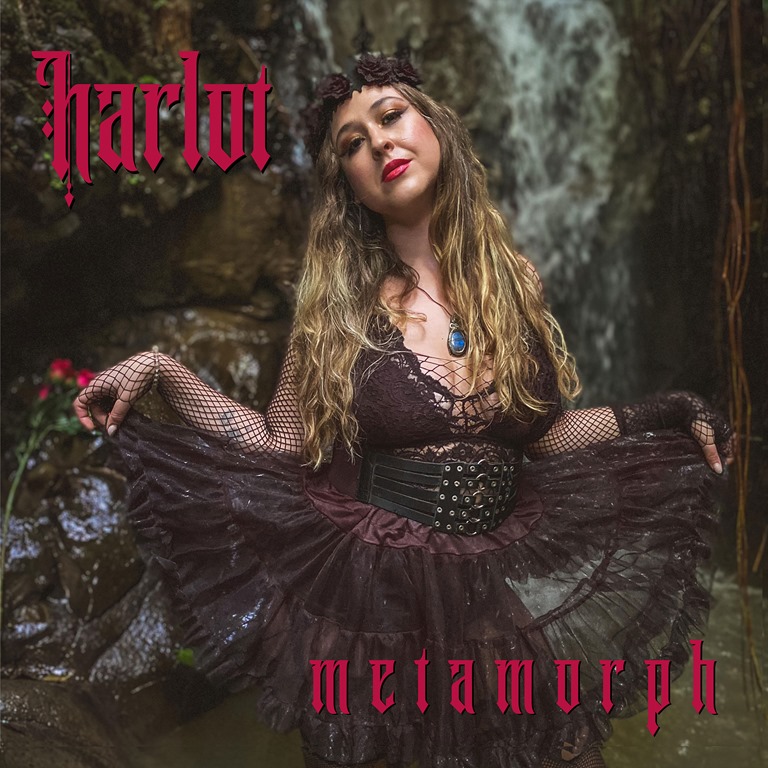
Ahead of their new full-length album release, Haunted Hearts, slated for an autumn release, Metamorph have served up the Harlot EP, which offers their usual blend of glistening electropop with a dark gothy, witchy flavour, and promises to be ‘your summer soundtrack—sweat, stilettos, and seduction.’

Living in the north of England, the last thing I would have expected to be doing was writing this at what is, with any luck, the tail-end of a heatwave – but is does mean that while I’m short on the stilettos and seduction, I have more than enough sweat to make up for it. But it does remind me of the difference in where UK goth – particularly the early stuff – and US goth comes from in terms of its geography and broader environs. As the phrase goes, ‘it’s grim up north’. It rains a lot. It’s often cloudy, windy, and cold. Until recent years, if it went over 20ºC, even in the summer, it was hot, and you’d be forced to remove the leather jacket. These conditions, coupled with generally poor conditions of low wages, high unemployment, and social deprivation, meant that dark music articulated the experience of the world as is.

America has always had its own problems, of course, but summer has always been a bit different from on this side of the pond – inasmuch as the US tended to have summers. Anyway. ‘Harlot’ is classic Metamorph: uptempo. HI-NRG, somewhat sultry, gothy electropop, and concise, clocking in at a fraction over two and a half minutes. With pounding beats and a throbbing bass, it’s got that late 80s eurodisco / technogoth vibe, with a hint of KMFDM but popped up. In terms of singles, it delivers everything you’d want.

The five remixes are solid, in particular – and I’ve amazed myself in writing this – the dance mix, which really places the bass and the beats to the fore, and the expansive Allie Frost Remix is really quite special, adding a well-suited 80s spin to the sound, led by a dominant snare which is just perfect.

But my awkwardness with remix-led releases remains, and this EP gives us the same song, six times. It’s a good song, and some of the remixes are great, but… Bring on the album.

AA

229878

Panurus Productions – 20th June 2025

Christopher Nosnibor

You’d think that cassette labels would be not only niche, but few and far between, and in the main, they are, but Newcastle is home to not one, but two labels who provide a near-endless supply of releases to satiate the need for weird shit the world over, with Cruel Nature Records being one, and Panurus Productions being the other. The labels have a considerable amount in common, too, not least of all in that they both favour music that’s of a quality, rather than a style.

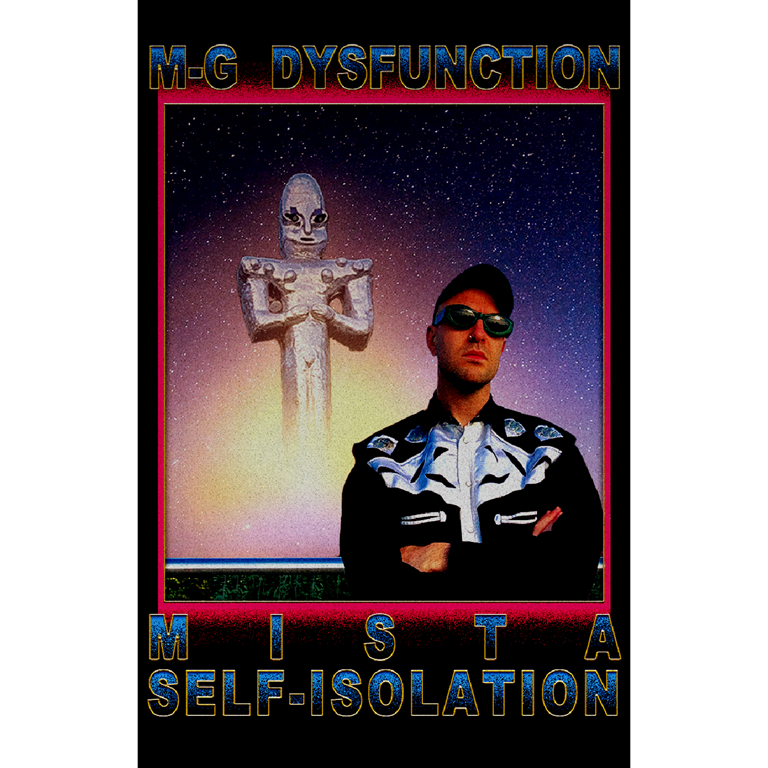
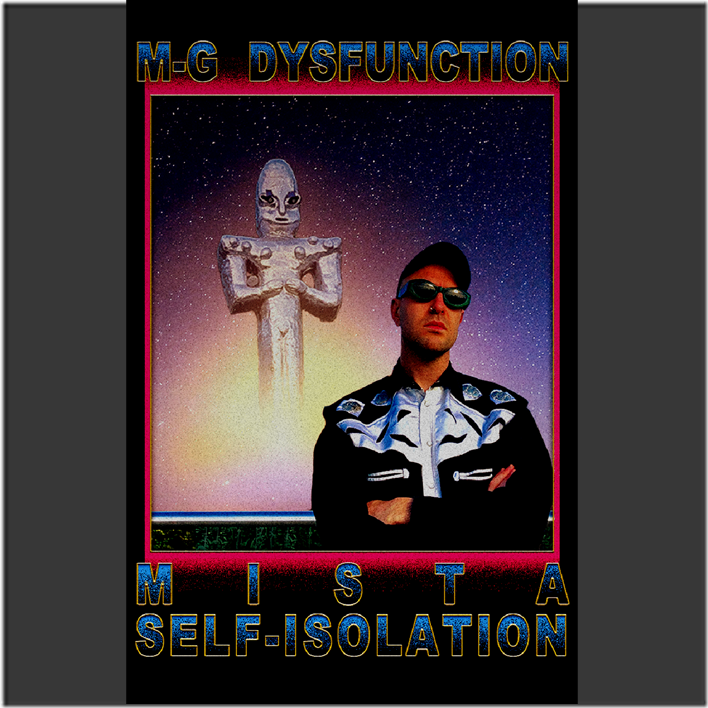
The latest Panurus release is a perfect case in point. The label’s previous offering, a split release from Belk and Casing was a raw blast of guitar overdrive. In contrast, the third album from M-G Dysfunction is of an altogether more experimental bent, leaning toward hip-hop and beat-driven electronics, but once again marking the close connection between the scenes in Leeds and Newcastle, both of which have become significant spawning grounds for the offbeat, the difficult, the wilfully obscure.

According to the blurb, ‘Mista Self-Isolation is the fullest realisation of the M-G Dysfunction project to date – a record of trepidation and humour, of lopsided passion and warped poetics. This album is about surveying the wreckage of monoculture and navigating the act of making music amidst a land-grab of rights, melodies and rhythms by people who never liked music in the first place. It’s about properly honest artistic expression – what “keeping it real” looks like, sounds like, feels like in 2024. It’s about getting some official beats and saying fly shit over them.’

That it’s quirky may be obvious, but it’s a necessary headline observation. On the one hand, it’s white rap, so there’s an awkwardness, but on the other, there’s some dirty experimental electronic noise layered over the beats, and this is an act that shared a stage with Benefits, a band who may have made their reputation by being angry, shouty, and noisy, but who aren’t without humour or an appreciation of nuance.

As tracks like ‘Roger Daltrey (Permanent Record)’ illustrate, M-G Dysfunction are multifaceted – something likely to leave many quite nonplussed. How can they do jokey, daft, a bit random and be serious at the same time? In truth, the answer is simple: because human beings are complex creatures, capable of a vast range of emotions and infinite ways of expressing them. It’s something we seem to have lost sight of in recent years, when everything has been boiled down to binaries, and everything is a conflict because the lines have been marked in such either / or terms. It’s no longer possible to be a woolly socialist: suggest that, I dunno, people on disability benefits are right to receive free prescriptions, and you’re labelled a left-wing extremist, a communist, and by the way, disabled people should get back into work or die. Something is severely fucking wrong with this picture.

Back in the early 90s, genre crossovers were all the rage, and the Judgement Night soundtrack was a real watershed moment that took the idea of rock / rap crossover, first witnessed in the mainstream when Run DMC and Aerosmith did ‘Walk This Way’ to the next level. At that time, it felt like a new future was emerging, and perhaps, even a future where boundaries and differences were dismantled. But here we are, and times are bleak.

But with Mista Self-Isolation – an album which is by no means an exercise in buoyant pop tunes – M-G Dysfunction show that in 2025, there is still scope to create something that speaks of what it is to be human.

The structured, beat-led songs are interspersed with self-reflective spoken word segments, spanning CBT meditation and contemplations on experiences and life in general. It is truly impossible to predict the twists and turns this album takes.

’50 Words for Blow’ comes on like a hip-hop-inspired barber’s shop quartet, while ‘John Wick’ is a critical memo, and the title track is abstract, minimal, dreamy but quietly intense. ‘Junglists Only’ is a perfectly executed pseudo-banger which knows it’s absurd and works because of it. The last song, ‘All that is Solid Melts into Deez Nuts’ evokes both humour and at the same time draws attention to M-G Dysfunction’s hip-hop credentials. If you know, you know, as cunts say, but for those who don’t, it’s a reference to Dr Dre’s ‘Deeez Nuuuts’ from The Chronic in 1992.

Postmodernism is alive and well after all, at least in some quarters, and it’s very well in the world of M-G Dysfunction. There is a lot going on on Mista Self-Isolation – and it’s all good.

AA
cover

Criminal Records – 20th June 2025

Christopher Nosnibor

If I didn’t know this was the new single by The Kut, I would never have guessed in a million years. ‘Sevens’ certainly sound different – very different… Beloved by Kerrang, Download veteran, with a debut album that reached number seven in the UK Rock Charts, The Kut is rock music. ‘Sevens’ however, is distinctly pop. Yes, really. But when you pick it apart, just how different really?

From their very inception, Princess Maha’s songs demonstrated a pop nouse, a knack for a hook, a nagging guitar line, a keen melody. It’s easy to overlook these components when it comes to many of the acts which have provided inspiration and comparison, the likes of Hole, Nirvana, Placebo. But all the raw energy in the world won’t translate to commercial success if there’s nothing that sticks in the mind. And so it is that all of these things are very much present on ‘Sevens’. Where it depart from previous offerings is not only that it’s sunny ad sultry, but the beats are backed off and everything is clean, smooth, the guitars are there but off in the background while a remarkably groovy bass flexes and bounces about in a way that’s not quite funky but certainly noddable. Landing in the middle of a heatwave and ahead of some festival appearances, it feels incredibly fitting. But, more to the point, if switched around to be recorded differently, with the guitars up in the mix and the vocals less compressed-sounding it would still be a solid rock tune. Done this way, it’s a solid pop tune with a post-punk flavour.

At heart it’s still The Kut, but with a new spin.

Ideologic Organ – 20th June 2025

Christopher Nosnibor

In his liner notes, Robert Barry suggests that ‘Brace for Impact might just be the first album of post-internet organ music’, and goes on to explain that ‘it is a record weaned on networked processes and algorithmic thinking, a suite of tracks which build their own systems then push them to the point of collapse. Lindwall is not a programmer, but he will wield whatever technology is ready to hand much as Chopin made use of the richer, fuller sound of an Erard piano. From the software subtly weirding the interior textures of ‘Swerve’ and ‘Piping’ to the juddering, kernel panic of ‘AFK’ and ‘À bruit secret’, these are works of music unthinkable without the ubiquitous experience of life lived online. Imparting that hypermodern aesthetic sensibility through the austere sound of a baroque organ only heightens the anachronistic sense of temporal disjuncture characteristic of days spent rabbit-holing through ever-multiplying stacks of browser windows. The vernacular of Web 2.0 is here re-transcribed in the ornate script of a medieval illuminated manuscript.’

As Barry also suggests, the organ has been undergoing something of a renaissance in recent years, and cites a number of significant organs which have been recently restored, including the grand organs at the cathedrals of St John the Divine and Notre-Dame (New York and Paris respectively, and, not so much closer to home but on my very doorstep, York Minster, which ‘heralded a “once-in-a-century” refurbishment of its own 5,000-plus pipe instrument’.

It marks something of a shift from an album I reviewed around maybe fifteen years ago, the details of which elude me now, which was recorded on a series of broken-down and dilapidated organs from around Europe which wheezed and groaned as if gasping out the last breaths from their collapsed lungs.

Brace for Impact is an altogether more vibrant work, although as much as it celebrates the organ and the instrument’s sonic magnitude, it also reaches far further into exploratory sonic territories over the course of these five compositions.

The title track features ‘a highly saturated and distorted electric guitar, performed by collaborator and SUNN O))) founding member, Stephen O’Malley’ – and ranges from tectonic crunches, machine-gun rattles and alienated whines rising from the kind of dissonant dronescape only O’Malley can conjure. And so we brace… and then we swerve. The collision fails to materialise during the ten-minute dark ambient swirl of the second track, spreading ominous overtones and watery, echo-heavy plips and plops. The muffled beats are akin to listening to a minimal techno set overlayed with a piece from the BBC Radiophonic Workshop, performed in the Blue John Cavern, and it shimmers accordingly, slipping into off-kilter fairground trilling in the final minutes.

The final diptych of compositions rally ventures out: both ‘AFK’ and ‘Piping’ extend beyond twelve minutes. The former brings jolting discord and drama, lurching stabs that manage to bring a crazed dance feel to the sound of the organ before swinging into a circus-type jive. It stands out as perhaps the most playful track on the album. There is a playfulness to ‘Piping’, too, but it feels more like it belongs to a film soundtrack or theatre performance, and it whirls and winds and spins and pirouettes it way to a pretty but perhaps confused conclusion.

Brace For Impact is very much a non-linear work, and one which stands, uncertain of where it’s going next. But is it unquestionably interesting, not to mention disorientating, and it’s a work which seems to bend time as well as notes. It’s an album to lose yourself in.

AA

SOMA062_3mmCover