Posts Tagged ‘Review’

Projekt Records – 9th December 2025

Christopher Nosnibor

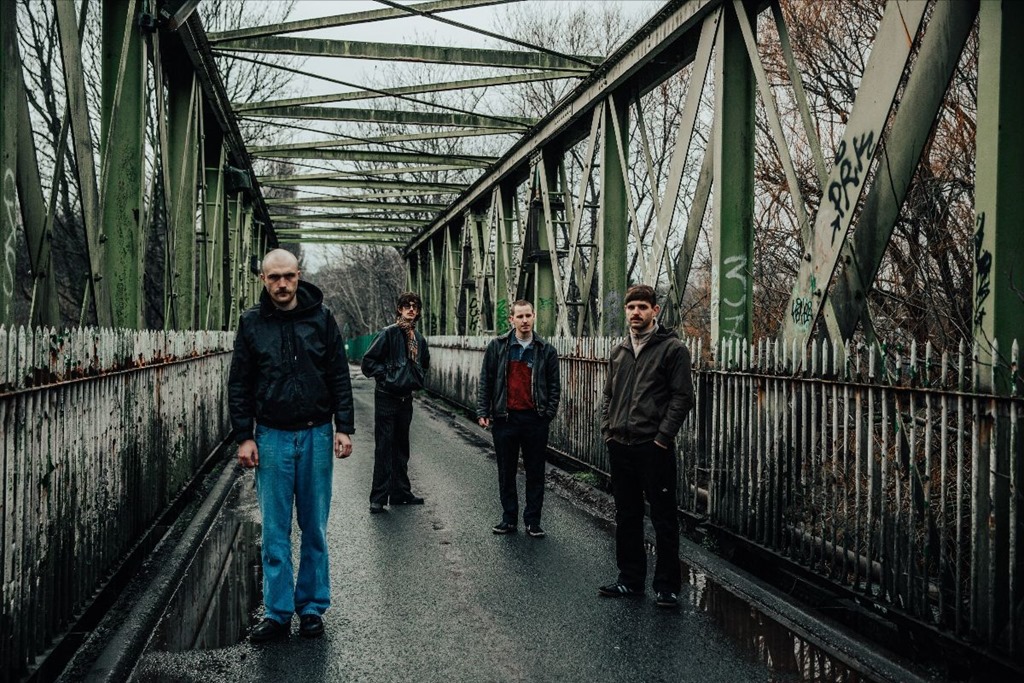
Woah, wait. 1999 is more than 25 years ago? Logically, I can grasp this. But the fact that lowsunday have existed for some thirty years and have been dormant since 1999 meaning this is their first material in over twenty-five years is still difficult to comprehend. It does very much seem to be a more common occurrence in recent years that bands who existed comparatively briefly in the 80s or 90s are reuniting and returning with not only new material, but strong new material. It may be a rather different league, but the last thing I expected last year was a new album by the Jesus Lizard, and that my first gig of 2025 would involve David Yow flopping off the stage and directly onto my face in the opening thirty seconds of the set. Lowsunday formed in 1994: the year Kurt Cobain died, the year I started university, the year of my first job as a reviewer. It feels like another lifetime. It probably does for them, too.

It may be pitched as a blurring post-punk, shoegaze, dreampop, and darkwave, and also as being for fan of The Chameleons, ACTORS, The Cure, Modern English, Clan of Xymox, Then Comes Silence, TRAITRS, but that thumping bass groove and pumping mechanoid drum beat on the EP’s opener, ‘Nevver’ is as trad goth as it comes. But the squalling noise that envelops the vocals – swathed in echo and low in the mix and taking direct cues from The Cure circa Faith and Pornography – is something else, a melding of My Bloody Valentine and The Jesus and Mary Chain with a dose of early New Order, Danse Society, and The Chameleons swirling around in there. And out of this swampy post-punk soup cocktail emerges a song of quality which really recreates that early eighties dark groove.

‘Call Silence’ goes straight for the sound of The Cure circa ’83, the singles on Japanese Whispers. And that’s cool: if you’re going to lift from early 80s gothy pop, you could certainly do far worse than ‘Let’s Go to Bed’ and early New Order as an inspiration – the bassline is pure Peter Hook. The production – and the strolling high-fretted bass work – really hits the spot, although it should be perhaps noted that they really do sound like a band born in 1982 rather than 1994. I guess they were retro before their time.

Paired with chiming guitars, it’s the monster snare smash that really leads – and grabs the attention on ‘Soft Capture’, a song that unashamedly draws on Ride and My Bloody Valentine, and pairs that wash of sound and monotone vocals with a drum sound straight from 1984. The fall from favour of the dominant snare feels like a loss, but there’s no time for lamentations as they pile in with another claustrophobic read goth groover in the shape of ‘You Lost Yourself’. Here., I can’t help but feel the vibes of late 90s goth acts like Suspiria and the scene around that time. It’s well-executed, with fractal guitars tripping over pumping drum machines and throbbing bass.

Closing with single cut ‘Love language’ sees the band strive for low-key anthemic with dreamiest and most overtly shoegaze song of the set. With the vocals drowning in a sea of reverb amidst a swirl of guitars, its detachment is its emotional power, perversely enough. And then, unexpectedly, it stops.

Everything about the White EP is simply magnificent – the way the songs are composed and played, the production, the overall feel. And while retro is all the rage – and has been for a while now, since postmodernism has eaten itself and the entire world has collapsed into endless recycling and nostalgia for ersatz reimaginings of golden bygone times. But sometimes a release will appear, seemingly from nowhere, that radiates a rare authenticity, and reaches the part others don’t. Lowsunday’s White EP is one of those.

AA

756671

New Reality Records – 7th November 2025

Christopher Nosnibor

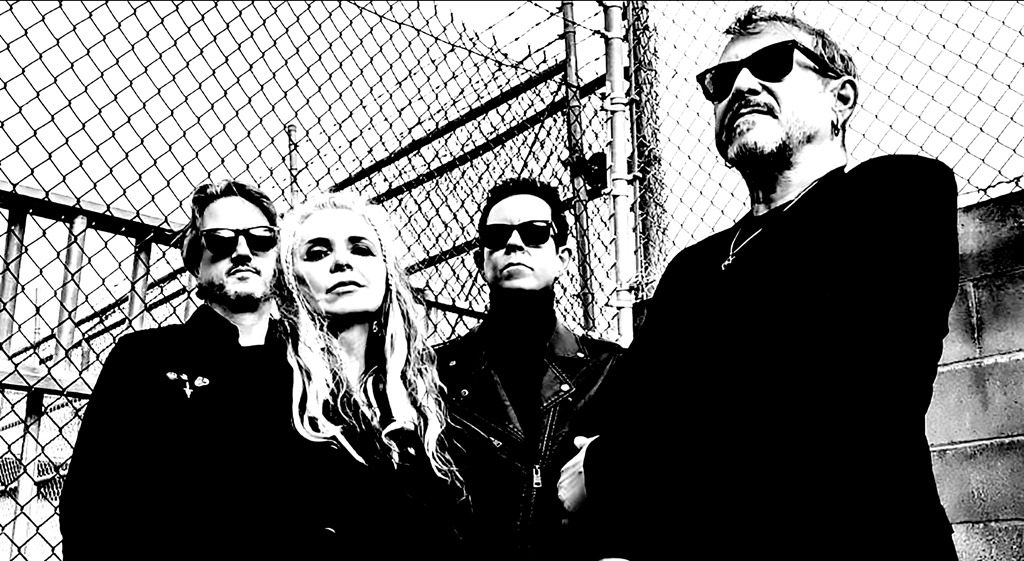
Almost a year to the week on from the release of their dark, emotionally powerful album, Age of Loneliness, Vamberator – the duo consisting of Jem Tayle, formerly of Shelleyan Orphan, and former drummer with The Cure, Boris Williams – have given a welcome poke to remind us of their existence with the release of a new single, in the form of a remix of ‘I Need Contact’, courtesy of Rolo McGinty of The Woodentops. The pedigree is rich here, and so is the quality.

McGinty’s reworking is sensitive, subtle, and what is adds is very much attenuated to the themes and underlying concept of the song, and, indeed, the album as a whole. Yes, the title renders these concepts self-evident, and while the project was spawned during the pandemic, when solitude and loneliness reverberated around the lives of so many in ways which had been hitherto unimaginable, where we find ourselves now often feels little better, with social fragmentation, social division, and the whole equation of work / life balance and all the other endless shit raining down day after day, maintaining connections – real connections, not those false connections of yelling into the void on social media – has never been more difficult. The things which were supposedly designed to bring people together – from open-plan workspaces to instant messaging and social media – have, in reality, trashed the threads of real-life social interaction. Millennials no longer meet down the pub after work or on a Friday night, and kids watch YouTube Shorts instead of going down the park. Gen X and older… who knows? We’re all lost, drifting.

‘I Need Contact’ captures that sense of desperate anguish, and McGinty adds something else – not least of all an enhanced sense of sadness and poignancy, with the addition of cellist Asakura Momoka and a field recording of an old diesel train engine. These add, respectively, shades of brooding and nostalgia (and who would have thought, not so long ago, that a diesel train would be a source of nostalgia? Time marches on, and at pace, and leaves us all behind eventually). But these additions are made subtly, keeping the soulful vocal to the fore of a minimal arrangement.

AA

The release is augmented by another Rolo McGinty remix, also lifted from the album. Here, ‘Creature in my House’ is stretched from its original five-and-a-half-minute duration to closer to double that. Pumped along by a retro ‘baggy’ beat (I can’t but be transported back to the 90s, as well as being reminded of the vibe of The Cure’s Mixed Up), and it does offer up a very different side of Vamberator. While the original version blends a mid-pace glammy stomp with hints of The Cure at their more playful, this lifts both the tempo and the spirits, and slings in some zany guitar breaks. Funky isn’t quite the word, but groovy might well be, and one might add ‘buoyant’, too, although it ventures into more experimental, and even dubby territory during its second half.

These are quite different versions, and make for a great single in the classic sense of A and B-side contrasting. They work well, and provide a well-timed reminder that the album’s out and well worth investigating – or giving another spin.

AA

AA

a1213871652_10

Christopher Nosnibor

Bite the Boxer is unquestionably an unusual and intriguing name for a musical project: my mind immediately leaps to the infamous ‘bite fight’ between Mike Tyson and Evander Holyfield in 1997, where Tyson lost through disqualification after biting off a chunk of Holyfield’s ear in one of sport’s most shocking moments.

In combining an eclectic range of elements spanning industrial, alt-pop, trip-hop, and ambient lo-fi, there’s nothing about Matt Park’s music which indicates any connection to this moment in sporting history. The same is true of his objective to create music imbued with ‘he feeling of impending doom but with just a glimmer of hope’, which is inspired by ‘horror video games and dystopian, post-apocalyptic films’.

‘Venom Test’ is haunting – at first ambient, before bursting with an expansive, cinematic feel, then plunging into darker territory. Even without the aid of a beautifully-shot and remarkably stylish video, the rack leads the listener through an evocative sequence of sonic transitions. Although never harsh, the distant drums are weighty, powerful, and the overall experience feels like a juxtaposition of must and decay with rays of shining hope breaking through cloud. The listener feels as if they’re being pulled in opposite directions, the suspenseful end offering no conclusion, but instead, leaving a sense of emotional quandary, an uncertainty. ‘Venom Test’ creates a tension, and provides no closure or conclusion, only a sense of a door being left ajar. It’s a deftly woven piece, and one which feels very much like it belongs to a much larger project – which it does, being a taster (which doesn’t remotely have the flavour of bloodied ear, to the best of my knowledge) for the forthcoming album, Haunted Remains Pt.2. As a choice of single, it’s a good one, leaving us in suspense to hear it in the context it was intended.

AA

AA

92e42d4c-6d54-911b-d615-4a752d4ebad6

Blaggers Records – 2nd October 2025

Christopher Nosnibor

Continuing the thread of my review of the new Eville EP, which sees a young band push hard on the forward trajectory of a nu-metal revival, I find myself basking in the retro sound of ‘Anything,’, the latest offering from JW Paris, trashy indie / alternative trio from London. This isn’t some kind of nostalgia wank, whereby the 90s is largely misrepresented through the prism of Britpop (or grunge), but a cut that reminds us just how eclectic the 90s – particularly the first half of the decade – was. It was a melting pot of skewed guitar-led bands which were often lo-fi, ramshackle, bands who would grace the pages of Melody Maker but rarely play outside Camden, and the only way you’d ever hear any of their music would be by tuning in to John Peel, where they’d be wedged in between some weird dancy shit and the filthiest grindcore going, alongside something jangly on Sarah Records and something else entirely on Rugger Bugger records. And something by The Fall, of course.

‘Anything’, the lead track from their forthcoming EP, packs the essence of that period into just shy of three and a half energetic minutes. As much as it’s 90s indie / Britpop in its attitude, it’s the early Wonderstuff that comes through most strongly here. Before they became the beloved band of every cherry-red DM wearing sixth former, and way before the Gallagher brothers came onto the scene, Miles Hunt swaggered forth with colossal confidence, and songs that sizzled with snappy wordplay and hooks, and while I never really dug much after The Eight-Legged Groove Machine, they were exhilarating and fresh, and it’s this that JW Paris recreate here. The woo-ooh-wooooh backing vocals are a bit dandy Warhols, and there’s a lot going on, a lot of ideas and energy compressed into this neatly crafted nugget of a tune.

Bad Song Single (3000 x 3000 px) - 7

Christopher Nosnibor

When you’ve singlehandedly created a new subgenre, what better way than to cement the trail you’ve blazed with a release bearing its name? This is precisely what Eville had done here with the Brat Metal EP. For the uninitiated, their unique contribution to the musical landscape has been to give the slugging, concrete-slab guitar riffery of nu-metal a makeover, and by blending it with strong pop elements and delivering it all with a strong, empowering feminist message and truckloads of attitude, they’ve kicked the whole ‘sports metal’ ‘rock for jocks’ kind of thing in the nuts and made it something that’s culturally relevant here in 2025.

Maybe I need to unpack ‘relevant’ here. It’s a fact that in music, what goes around comes around, and there are always cycles of recycling, revivals and renaissances, waves and generations. But a nu-metal revival always seemed unlikely because it was so patently uncool, even at the time. But here we are: a new generation is discovering Limp Bizkit, who are back and riding a wave that combines nostalgia for those who were in their teens around the turn of the millennium, and the fact their kids are now teens who are educating themselves with their parents’… what, Spotify playlists now? But more significantly, women are still having to fight just as hard now as they ever did just to hold ground. Sexism, misogyny, and abuse are rife, and there are enablers everywhere.

Photo 29-07-2025, 23 08 31

This all makes Eville’s rapid ascent even more impressive, and something the world truly needs. It’s remarkable just how a flip can transform testosterone-led whiny shit into something truly powerful, and Eville have, over the course of a handful of single releases gone from being hopeful newcomers to Kerrang favourites performing Reading and Leeds with festival dates already on the calendar for 2026. There’s a very good reason for this: as I’ve been saying from their very inception, they’ve completely nailed their sound, are confident in their identity, and have killer tunes.

Brat Metal offers four more. None of the songs on here breach the three-minute mark, and all are thumping, riff-driven blasts bristling with hooks. ‘BR4T MBL’ powers in with a Prodigy / later Pitch Shifter vibe paired with sneering vocals which are autotuned to fuck for the verses, but then switch to a lung-busting guttural roar. Single cuts ‘No Pictures Please’ and ‘Accidents Happen’ bring real attack, sassy rap and stuttering beats colliding with force. In the former, ‘bitches’ takes on a different slant when delivered by a woman, and it feels like there’s a reclamation of sexist language happening here.

‘Bikini Top’ again brings the dense chug and squalling harmonics of Pitch Shifter, and at the same time offers the flippant lyrical simplicity of Wet Leg’s ‘Chaise Longue’ but it’s charged with the challenge to the male gaze, and it’s a lesson in how it’s possible to make music that’s heavy but accessible, to entertain while offering substance instead of mere fluff. Brat Metal shows that Eville can sustain the intensity and the quality over the duration of more than just standalone singles: it is packed solid, and their most focused document yet.

AA

BRAT-METAL-EVILLE-1-768x768

Mortality Tables – 25th September 2025

Bryan Alka’s brief post on Facebook sharing the news of his new release, is revelatory: ‘Today we release my 5th full length on Mortality Tables. After a series of breakdowns… The Magnitude Weighs Heavy.’

The Magnitude Weighs Heavy is the third and final instalment of a of dark and brooding albums, the first two parts of which – The Colour Of Terrible Crystal and Regarding The Auguries – were released by Vince Clarke’s VeryRecords. Alka, and particularly Bryan Michael, has no small back story: ‘a Philadelphia-area artist who has collaborated with Vince Clarke (Depeche Mode / Erasure / Yazoo), Roger O’Donnell (The Cure), Christian Savill (Slowdive / Monster Movie) and Michael Textbeak (Cleopatra Records). alka was formed around 2000 as a return to his bedroom producing days, and as a cleansing of his disappointing experience within the Philadelphia indie rock scene.’

This thirteen-track album is epic, grand, expansive. It’s also an exercise is taut electropop with a decidedly early 80s bent. Because what goes around comes around, the whipcrack snare and noodly electronic drift which defines many of the tracks, despite being pure 1989, have a contemporary feel, too.

‘Soliloquiy’ drifts into dreamy electro shoegaze, mellow and atmospheric, rippling, and soaked with a certain sadness, however sturdy the beats remain. Elsewhere, as on ‘Creeps; its clearly an attempt to lock things down with pinging robotic beats

This feels like quite departure for Mortality Tables, given their learning toward abstraction an ambience, but they’ve always leaned toward the different, and this is a work which is unashamedly different. ‘Unravel’ is exemplary here: it’s got groove, and is ostensibly a bopping dance cut, and a far cry from the implications of the album title. But everyone deals with trauma, grief, and distress differently, and we all articulate our internal strifes by different means. ‘enchanté’ locks into a hypnotic groove, the likes of which I haven’t been so immersed in since I discovered The Dancing Wu Li Masters by 25 Men back in 2008.

For all that, there are large, ambient expanses, passages of stuttering electro which draw together elements of industrial alongside the layered dance beats. The ten-minute ‘an attempt to conjure quiet’ feels like it’s quite willing to delve deeper into noise, the very opposite of the quiet it claims to seek, and the duration of this album feels like a teetering on edge. I’m reminded of how my late wife would hassle an and harangue over details, over chores, and the tense, jittery tone which leads n this album at times tales me there. But if the dark mutter of ‘thee individual visions ov jhonn’ is dark with resonating melancholia, The Magnitude Weighs Heavy brings things back to the light. ‘Whatever Will Become’ is a hybrid of pop and bubbling electronica, busy but mesmerising in its concentric circles of sound, its abrupt ending jolting the listener back to the moment.

The magnitude may weigh heavy, but this album has a remarkable lightness, delivered with a deftness of touch.

AA

a2561728450_10

Cruel Nature Records – 12th September 2025

Christopher Nosnibor

Postmodernism, emerging primarily as a product of post-war America was defined by hybridity, the demolition of parameters and distinctions between different cultures, genres, and was, in many respects, tied to the accelerating pace of technological development, in particular the globalisation of communications and beyond. But postmodernism also not only recognised, but celebrated, the fact that originality has finite scope, and that anything ‘new’ will by necessity involve the reconfiguration of that which has gone before. Shakespeare had all the ground to break in terms of the advent of modern literature, and one might say the same of Elvis and The Beatles with the advent of rock ‘n’ roll and pop respectively. The reason the 80s were such a watershed was because technology revolutionised the potentials for music-making, and while this saw a huge refraction in terms of creative directions, from industrial to electropop, one could reasonably argue that the next leap in music after 1985 came with house and techno.

Post-millennium, it feels like there is no dominant culture, no defining movement, underground or overground: the mainstream is dominated by a handful of proficient but in many ways unremarkable pop acts, and notably, it’s largely solo artists rather than bands, and while there are bands who pack out stadiums, they tend to be of the heritage variety. At the other end of the spectrum, the underground is fragmented to the point of particles. There are some pros about this, in that there is most certainly something for everyone, but the major con is that unlike, say, in the mid- to late-noughties, when post-rock was all the rage, there’s no sense of zeitgeist or unity, and right now, that’s something we could really do with.

Fat Concubine are most certainly not representative of any kind of zeitgeist movement. With a name that’s not entirely PC, the London acts describe themselves as purveyors of ‘unhinged dance music’, and Empire is their debut EP, following a brace of singles. The second of those singles, ‘for Whom the Fools toll’ (with its irregular capitalisation, which is a bit jarring), is featured here, along with four previously unreleased tracks. This is a positive in my view: so many bands release four, five, or six tracks as singles, and then put them together as an EP release, which feels somewhat redundant, apart from when there’s a physical release.

And so it is, in the spirit of wild hybridisation, that they’re not kidding when they say their thing is ‘unhinged dance music’, or as quoted elsewhere, ‘unhinged no wave ravers’. ‘Feeding off the dogs’ pounds in melding angular post-punk in the vein of Alien Sex Fiend with thumping hardcore techno beats, and it’s not pretty – although it is pretty intense. The snare drum in their first thirty seconds of ‘for Whom the Fools toll’ takes the top of your head off, and the rest of the ‘tune’… well, tune is a stretch. It’s brash, sneering punk, but with hyperactive drum machines tripping over one another and a stack of synthesized horns blaring Eastern-influenced motifs.

There are hints of late 80s Ministry about ‘When we kick Their front door’, another synth horn-led tune that begins as a flap and a flutter before a kick drum that’s hard enough to smash your ribs thuds in and pumps away with relentless force. If the notes didn’t mention that it was a perversion of ‘These Boots We’re Made for Walking’, I’d have probably never guessed. As the song evolves, layers and details emerge, and the vibe is very much reverby post-punk, but with an industrial slant, and a hint of Chris and Cosey and a dash of The Prodigy. If this sounds like a somewhat confused, clutching-at-straws attempt to summarise a wild hotch-potch of stuff, to an extent, it is. But equally, it’s not so much a matter of straw-clutching as summing up a head-spinning sonic assault.

‘tiny pills’ is a brief and brutal blast of beat-driven abrasion, with a bowel-shaking bass and deranged euphoric vocals which pave the way for a finale that calls to mind, tangentially, at least, Cabaret Voltaire’s ‘Nag Nag Nag’.

The version of ‘O so peaceful’ was recorded live, and builds to an abstract chanting drone work. It offers a change of angle, but is no less attacking, its percussion-heavy distorted, shouting racket reminiscent of Test Department and even Throbbing Gristle, particularly in the last minute or so, and you can feel the volume of the performance, too. This is some brutal shit.

Empire is pretty nasty, regardless of which angle you approach it from. It’s clearly meant to be, too. Harsh, heavy, abrasive, messed-up… these are the selling points for this release. And maybe having your head mashed isn’t such a bad thing if you’re wanting to break out of your comfort zone and really feel alive.

AA

a1581875889_10

5th September 2025

Christopher Nosnibor

Bandcamp Friday or nay, September is always a busy month for releases, presumably in no small part due to the fact that the festival season is over, and artists can get to the job of plugging material to fans they may have picked up along the way, while music listeners are back home rather than in fields in front of stages, or on holiday, so are placed to listen to, and maybe purchase new music.

Sometimes, it can take a while to sift through it all, and there’s a real danger that some great stuff will slip through the cracks, especially from lesser-known artists. This, in many respects, is where the music press, such as it is these days, has not only a role, but a duty, an obligation, to seek out and highlight the acts who aren’t going to be pushed into the ears of the masses by algorithms, or by labels with hods of cash for promo (who aren’t necessarily averse to insidious campaigns claiming a ‘grass-roots’ story for an unknown group of middle-class posers who’ve barely played a gig or had more than a handful of streams / likes before landing airplay, huge support slots and going stratospheric overnight… and there are a fair few of these).

Moons in Retrogtrade is Kara Kuckoo, a German artist who does a nice line in dark alternative / gothic electronic rock, and who isn’t likely to be getting algorithmic / big label backing any time soon, not because her work isn’t good, but because, well, it’s a bit arty, and in the current climate of anti-intellectualism, it’s a hard sell to the mass market.

Take, for example, this, the lead single from her upcoming debut album The Third Side of the Coin. Released as a video single, the song is accompanied by highly stylised visuals, which feature an almost Tim Burton-esque ‘Mad Hatter’s Tea Party’ scene. It’s fitting that this shimmering dark pop gem should present images offering a twisted alternative reality, given the subject matter (again, a hard sell for commercial channels), as Kuckoo explains the concept behind the single:

“Carl Jung said, ‘Everything that irritates us about others can lead us to an understanding of ourselves.’ ‘Mirror Obscura’ is about facing one’s own darkness through the infinite mirrors of other people… The video portrays the perceived duality of black and white and the madness within us as we avoid our own darkness. The elements of color are glimpses into the spectrum of wholeness… I especially wanted to shoot at sunrise because those moments of dusk and dawn are the magical spaces between day/light and night/dark.”

On the project’s broader intent, she adds: “Moons in Retrograde is about digging up and reflecting on buried emotions… MIR weaves a soundscape which shines a light into the deepest corners of the mind and exposes the truth about the dark side of humanity while simultaneously discovering the core of the human soul.”

It’s one of those tracks which takes its time with a slow build (another thing which goes against the grain in our attention-deficient world, where intros and verses have got shorter and shorter to the point that most chart pop is seventy-five percent chorus), building atmosphere, Kuckoo’s vocals emerging through cavernous reverb and washing waves to arrive by stealth to an meet with an enticing beat and subtle instrumentation before a strong chorus that goes big on the final run, a burst of bold, even epic proportions.

You’re welcome.

AA

AA

Moons in Retrograde - Rotten Tree Still

25th August 2025

Christopher Nosnibor

SEXSOMNIA is a name which is both evocative and provocative. Sex certainly sells, but somnia is concerned with sleep-related conditions, including hypersomnia, insomnia, and apnoea, so the implication of combining the two is something to ponder while we pile into this EP from the Canadian darkwave / electro / post-punk hybrid act, joined here by special guest Marita Volodina of Poland’s Stridulum on vocals.

The title track kicks it off and does so in fine style, too, combining all the best elements of synth-oriented darkwave, brooding post punk, and goth, combining a shadowy atmosphere with a throbbing bass groove and pulsating beat that’s perfectly matched to the themes of seduction and desire, the dark allure of ‘forbidden love’. The instrumentation – and vocal delivery – on ‘Vapour’ is, fittingly, more ethereal, a piano snaking through the mix against a brush of an acoustic guitar, but the beats are straight-up stompers, and thoroughly relentless. The interplay between Philip Faith’s baritone croon and the sultry contributions of another guest vocalist, Isabelle Young, are key to the way it draws the listener in beyond the pounding dance percussion.

The ‘shadow mix’ of ‘Forbidden’, which they describe as ‘a deconstructed version of the original track, made for dancefloors’, was, in fact, released first, and it’s quite different. Fully twenty seconds longer, more overtly electronic, the vocals are louder and clearer in the mix, more lascivious-sounding, and paired with the rippling synths and pumping beats, it’s one to raise the pulse and work up a sweat to.

ATTRITION’s remix of ‘Nigrum Viduadm’, which featured on last year’s debut album, Transcendent is altogether sparser, darker, more ominous, more overtly gothic with what one might perhaps describe as vampiric overtones. It works well here because it showcases a very different side of the band, even if all of their sides are dark in intent.

This EP doesn’t break new ground, but does draw together the elements with a rare precision and panache, which sets SEXSOMNIA apart from their peers. As for the band’s name… there’s no danger of falling asleep while listening to their work, but you might just wake up feeling horny afterwards.

AA

AA

23d0d588-ad67-e34c-296b-ae10ed9f2e34