Posts Tagged ‘Nostalgia’

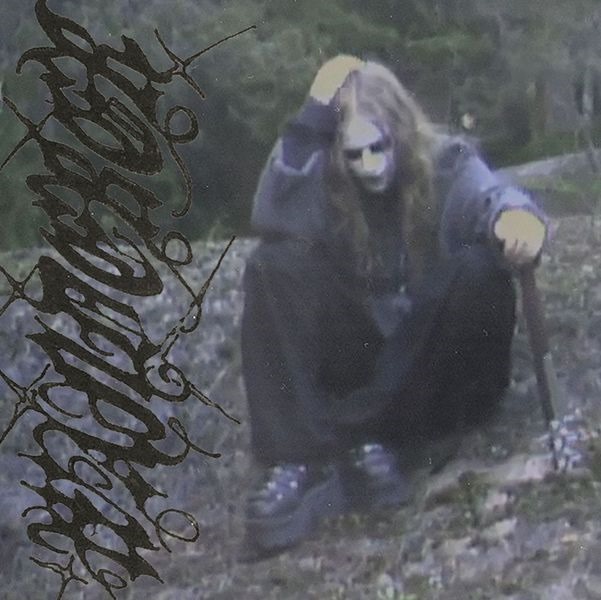
‘Wanderer’ is Këkht Aräkh’s first new music since the release of the highly praised album Pale Swordsman.

Of late, Këkht Aräkh has been a music project on the move. Originally from Ukraine, Dmitry called many places home, finally taking up residency in Berlin. So unsurprisingly, the themes touch on very real and personal experiences pertaining to the complexity of identity and belonging. His inner sensitivity, in the absence of and longing for a sense of home, is a physical one.

Sonically, Këkht Aräkh took inspiration from second wave black metal, as well as neo-folk, hip-hop, and nu-metal. ‘Wanderer’ is an evolution of sound but his signature melancholic atmosphere and escapist nostalgia are fully present.

Watch the video here:

Mirroring the artist’s life, the writing and recording process of ‘Wanderer’ was a nomadic journey in itself. Recording took place in two different locations – Berlin, Germany, and Espoo, Finland. Every borrowed guitar and impromptu studio session became a vital thread in the song’s intricate tapestry. Invaluable contributors also brought their unique elements to ‘Wanderer.’ Wanja from Mrtva Vod lent his raw drumming, and Chase, the Galrög from Lore Liege, played a crucial role in shaping the song’s brooding sound. Nick from IC3PEAK also provided a creative haven for the visceral vocal work.

The eerie tranquility of the Finnish woods provided the necessary space for Këkht Aräkh to breathe life into the song. Here, the finishing touches were added – the delicate keys and haunting vocals. The accompanying music video was also crafted in this setting, amidst dense forests and derelict churches.

The title, ‘Wanderer,’ is a nod to the well-known hook from Pale Swordsman; "Wandering in the night, Pale Swordsman." However, it’s also a reflection of Këkht Aräkh’s personal journey as an immigrant, perfectly encapsulating the essence of the song’s inspiration.

ZtqhIaVb

nynode intermedia – 7th July 2023

Christopher Nosnibor

Sometimes, a title just captures the imagination. And in some respects, art – be it a book, an album, or a movie, will take one unawares in the same way as a new person. Sometimes, it’s something unexpected at precisely the right time, discovering something you don’t even know you need until it’s there. To select a quote from what may appear to be an unlikely source, ‘just when you least expect it, just what you least expect’, sang The Pet Shop Boys on ‘Love Comes Quickly’. It’s a great line because it so succinctly summarises the unpredictable nature of life, and this wordy title tripped a similar trigger, which, I accept is uniquely personal…. But then, in the personal lies the universal. It must be so true for many that we’ve met the right person, but at the wrong time, for whatever reason.

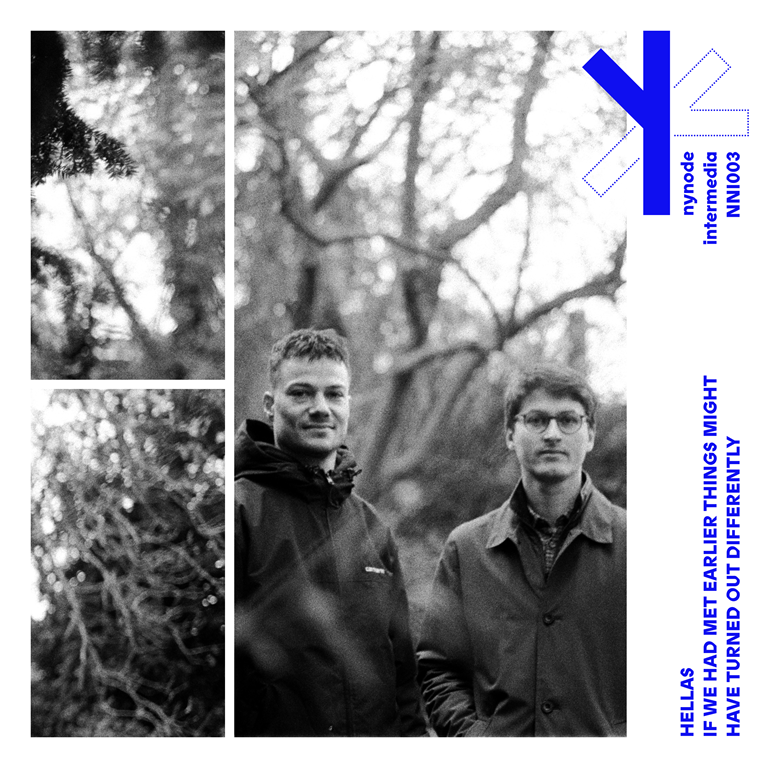
And so it is that I’m spiralling on a chute of reflection, a wall of mirrors inset with faded and distorted memories of people I’ve met and lost along the way as I begin to ease myself into what ultimately proves to be a remarkably diverse album, with deft compositions flitting between retro electronica, sparse techno, trance and shoegazy electrombience – and a lot more besides. Other times, mood-dependent, I may find the perceived lack of identity frustrating, the gentle mellifluousness without any obvious focus nigglesome, but right here, right now, I’m ready to experience transportation. And having emerged from a journey for the artists, If We Had Met Earlier Things Might Have Turned Out Differently feels like a suitable soundtrack.

As the accompanying notes recount, ‘Hours of recorded improvisations were arranged afterwards to slowly shape what would be the new sound of the duo. After three years of experimenting and writing various compositions the album slowly began to unravel itself and took its final form. Eleven unique pieces — deep explorations of sound — that all have their own story to tell are assembled in this collection of snapshots from the past years.’

In some ways, then, If We Had Met Earlier Things Might Have Turned Out Differently is more of a work of sculpture than composition, moulding and shaping the recordings into pieces with form and structure. Rising from a mist of gentle ambience, ‘Arbour’ soars, but is pinned down by a solid martial drum and ambulant, bulbous bass.

Listening to the ominous discordant experimentalism of ‘X’, I reflect on the fact that there was a time I’d have found this boring, just as I’d have cringed at anything remotely jazz-flavoured and sneered at anything overtly dance, before the clattering mess of ‘Techno | Hovestaden’ arrives, chanking and chiming over some ponderous keys, rippling piano, and evolving drones. In the background, as the piano plays mellow chords, there’s a banging tune giving it large way off in the distance, and it’s like hearing a neighbour’s music through your own. It’s irritating, but it’s real: as William Burroughs wrote, ‘life is a cut up’.

‘Ghost’ is suitably eerie, and ‘Shinjuku’ goes all-out tweaking electro, straddling late 90s dance and new age which just shouldn’t work and I should detest, but having lived through this and experienced a somewhat fractious relationship with tunes like ‘The Sun Rising’ and ‘Sadeness Part 1’, I’m rather more at peace with the incorporation of diverse elements to conjure sensations of spaciousness and spirituality, as long as they don’t involve pan pipes. Gotta have limits, y’know. This doesn’t actually sound like these musical forebears, but it feels as if there’s a certain context and progression at play here. The present only exists because of the past.

We’re plunged back into ominous drone territory with ‘Odessa’, and its warping grind which quavers up and down is most unsettling, building to a droning roar that’s hard not to equate to missiles and jets as the oppressive buzz grows louder.

The looming brass and slow, deliberate percussion of the spacious ‘Noon’, as it trickles slowly toward the album’s soft ending, with clattering percussion slowly marking a long wind-down before ‘Tide’ smoothy washes everything away to a smooth, blank state once more.

So what does this say? It says Hellas have conjured a majestic work from – well, who knows what source material? How much of this album came to fruition in the wake of its recording? And how much does it matter? It’s not as it’s an AI work, contentiously bypassing human input: pianist Peter Sabroe and drummer Jeppe Høi Justesen, with the assistance of producer Brian Batz have created something with personality, intricacy, depth. If I’d have heard it ten years ago, I’d have hated it: now… it reaches me. It’s an accomplished work, subtly complex and possessing significant depth. It’s amazing how things can turn out.

AA

NNI003_art

Blaggers Records – 30th June 2023

Christopher Nosnibor

Earlier this year, JW Paris were the millionth act to cover Chris Isaak’s ‘Wicked Game’ – a song that bombed on initial release in 1989 and only started getting attention when it was featured on the soundtrack to David Lynch’s Wild at Heart, and becoming a hit in 1991. What was interesting about JW Paris’ version is that it was different. It didn’t pussyfoot around being nice and delicate – not that it was insensitive or trashed the original, it just had the guts to be different instead of a predictably, safe, straight copy. And I suppose this sums the band up, really. They do their own thing – and it so happens to be good.

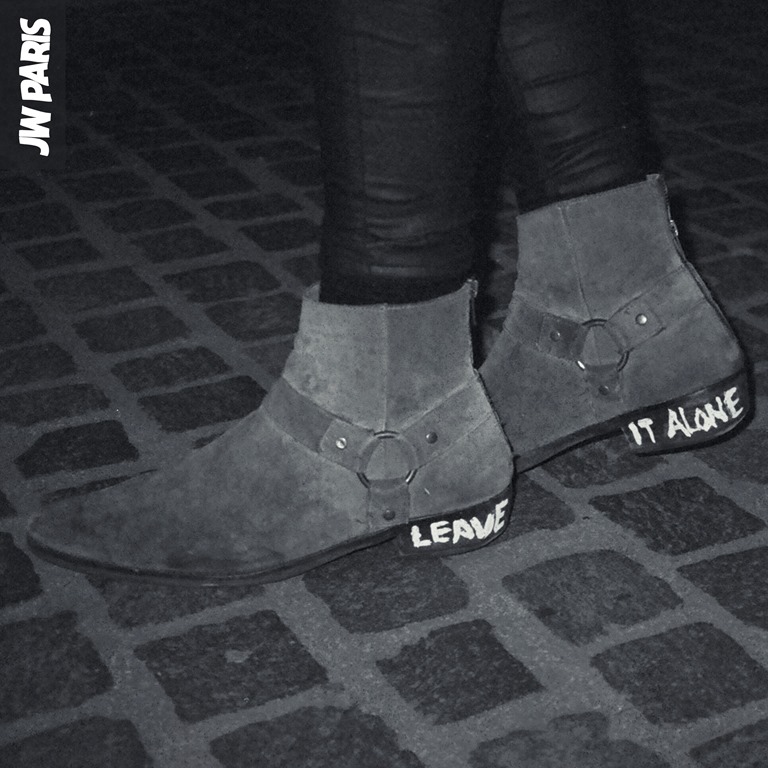
‘Leave It Alone’ is three-and-a-half minutes of choppy post punk with bite – not to mention a yawning guitarline that evokes the essence of Nirvana and The Pixies, straddling a magnificent strolling bassline and exploiting that classic quiet / loud dynamic – but keeping the overdrive in check in favour of a cleaner guitar sound – but with a chorus that’s eminently moshable.

Yes, of course it all pulls me back to the early 90s – no one song or band or anything specific, but that vague, aching haze of what it was like to be there in my late teens and early twenties. There’s some recycled gag about the 60s now being applied to the 90s along the lines of if you can remember the decade, you weren’t there, and there’s an element of truth on a personal level with it being the time I got into beer (and vodka) and live music, but there’s that other key element, namely the passage of time. It’s not even about memory fading: when you’re living life and simply in the midst of things, you don’t stop to take stock or pin a marker on your memory that any given moment in time was something to remember as special. It’s only in hindsight – even if that hindsight is developed in relative proximity to the event – that you often come to appreciate things for what they were. This is, of course, the nature of nostalgia, and why people in their thirties become fixated on the ‘golden age’ of music, movies, and TV, which almost invariably coincides with their late teens and early twenties before the weight of adulthood and the crushing tedium of work and shit took over. But I say this because the further a time recedes into history, the vaguer and more nebulous the recollections become.

It’s not that I can’t pinpoint where bands have leaned on Nirvana or The Pixies for inspiration, but the bigger – and vaguer – picture is that TV and radio and gigs were awash with acts which represented the zeitgeist: it’s impossible to remember all of the little bands who maybe released one single or nothing at all, who played in upstairs rooms in poky pubs, but the period overall is indelibly etched into my memory banks. And this is important, because JW Paris don’t sound like they’ve studied key albums of the time and appropriated accordingly, but have, instead, soaked up the spirit and distilled it into a sweet and powerful shot.

There are layers to this: ‘Take a look at me, am I the person that you wanna be?’ becomes ‘am I who you want to see?’ How much is projection, perception? And not just perception of others, but self-perception. Look in the mirror: are you who you want to see? And how much does that change over time? It’s not always easy to make peace with your former selves.

Speaking on the single, the band say “‘Leave It Alone’ is a deeply personal song that reflects our own inner journey of self-discovery and acceptance… With honest lyrics and a haunting melody, it invites our audience and listeners on an introspective exploration of identity and the longing for inner peace”.

And I guess that’s what the preceding five-hundred-word contemplation is: it’s my introspective exploration, as inspired by the song. A good song does so much more than fill a few minutes with sound: it enters you and takes you places. ‘Leave It Alone’ is a fucking good song.

AA

923819

23rd March 2023

Christopher Nosnibor

It’s been a while since I’ve seen it, but the title of Eric Angelo Bessel’s new single reminded me of the Jack Black ‘buddy comedy-drama’ (as Wikipedia would have it) from 2008, which reminds us that nostalgia for VHS and film rentals hit pretty swiftly after their demise, in real terms. In fact, here in the UK, Blockbuster creaked on with DVD rentals and secondhand sales into 2013. But as an article in The Independent in January 2013 reported, ‘While the North Finchley store had a poor selection of DVDs, the big surprise was that it was charging £5 to £8 for second-hand films to buy, so I bought brand new ones at HMV instead.’ As such, it was clear that times had changed and the world had moved on long before the last rental stores closed their doors.

But the idea of rewinding – something intrinsically connected to the age of the cassette, be it audio or video – is one which is an instant cut to nostalgia, and one which reminds us that thee one thing you can’t rewind is life: there is no rewind on time, and the past is past.

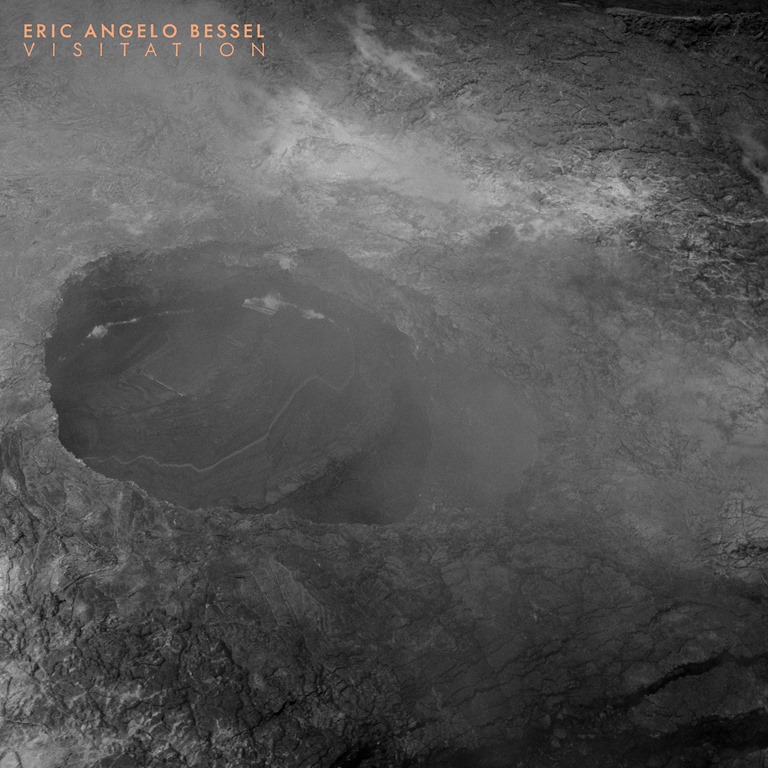
‘Kindly Rewind’ is a slow-swelling deep ambient piece that isn’t about nostalgia for the 80s or 90s, but instead drills deeper, venturing back to prehistoric oceans as its backward surges evoking images of slow evolution and microcosmic growth beneath the oceans. Sedate and supple, this is delicate and spacious and slightly disorientating. It’s also measured, musically articulate, and resonates unexpectedly. It’s a work of quality.

AA

Eric Angelo Bessel - Visitation

Cruel Nature Records – 2nd December 2022

Christopher Nosnibor

Many of us were waiting for the snow. And then, it arrived. And then everything ground to a halt. Welcome to the world now. What happened? It wasn’t always this way.

It’s all in a single word: ‘remember’ immediately imbues the album’s title with a sense of nostalgia. It isn’t explicit, of course, but it’s so, so evocative. Because, so caught up in life and the way everything blurs as time races past, we forget so much. The things we remember, then, hold a special place in our crowded minds. Reminiscences between friends, where moments, events, occurrences, people and places are conjured in those moments of reflection whereby we ‘remember when…’

Winters now are simply not the same as they were. I remember, in the early 80s, a full foot of snow on my parents’ back lawn, from which I would build a six-foot snowman and an igloo. We’d even build igloos on the school field during breaks. Snow didn’t stop school busses from running then. Perhaps it’s because of climate change, perhaps it’s because of the sheer volume of films, art, and literature, that depict idyllic, snowy winters, that show is so evocative. Most of can only dream of a white Christmas, but then, even Irving Berlin’s 1942 song was in itself a slice off nostalgia: ‘just like the ones we used to know’ is perhaps more accurately summarised as ‘just like the ones we see in fiction dating back to Dickens’ but obviously, it doesn’t have the same chime. Ultimately, the world is changing, and

The text which accompanies the album’s release serves almost as an affirmation of my line of contemplation, with the explanation that Remember We Were Waiting For The Snow is about what is called ‘solastalgia’: our anxiety, our concern, our sadness to see some natural phenomenon disappear. Written 5 years ago, after Žils [Deless-Vēliņš – aka (Lunt)] relocated to Latvia, it is a collection of exquisite reflective moving guitar-driven ambience drawing from same the sonic well as soundscapers like Jim O’Rouke’.

The nine tracks of Remember We Were Waiting For The Snow range from the expansive – the eight-minute opener, ‘Flakes and Feathers’ and the nine-minute closer, ‘Auseklis’ – to the fragmentary – the sub-two-minute ‘Dead Man in the Sand’ and ‘Dead Man in the Snow’.

Between the bodies, there is atmosphere. There is tension, but it’s contained by the soft curtains of sound. ‘Plasma (Under the Ice)’ is stark, scraping, brooding, dark, and difficult, uncomfortable, uneasy on the ear.

The instrumentation is varied, from screeding synths to picked guitar and mellow woodwind that falls between jazz and post-rock. But genres matter not and dissolve in the face of such magnificence. Remember We Were Waiting For The Snow drags hard on melancholic reflections. It’s also melodic and intimate, and ultimately, quite magical.

AA

cover

Constellation – 26th August 2022

Christopher Nosnibor

One’s perception of time changes with its passage. As you get older, it seems different, and passes differently too. In childhood, there’s the sense that summers are long and sunny, school holidays stretch out in front of you like a playing field the size of Wembley Stadium, whereas in adulthood, six weeks is no time, and the summer means it’s nearly time to start considering Christmas. But even in adulthood, while there’s a keen and pressing awareness of the rapid passing of time, it’s easy – and perhaps it’s how we’re psychologically wired – to ignore the overall narrative span while focusing on the rapid cycle of existing in the present. You get caught up in the infinite and swift cycle of the working week, thee routine, you complain about how time flies as New Year becomes Easter becomes Hallowe’en becomes Christmas, even how every birthday marks the passing of another year. But for all the talk of making the most of life and living every day or week like it could be your last, that’s what it is – talk. Because it’s almost impossible to comprehend there being an end, not just of life, but of anything. It’s simply human nature to take things for granted, that the sun will always rise, that you will always be able to buy the same bread and crisps and whatever in the supermarket.

And then they stop making a certain brand of crisps or chocolate and there are mutters of discontent, and then, twenty years later, online forums are oozing nostalgia for these things. These things of no consequence.

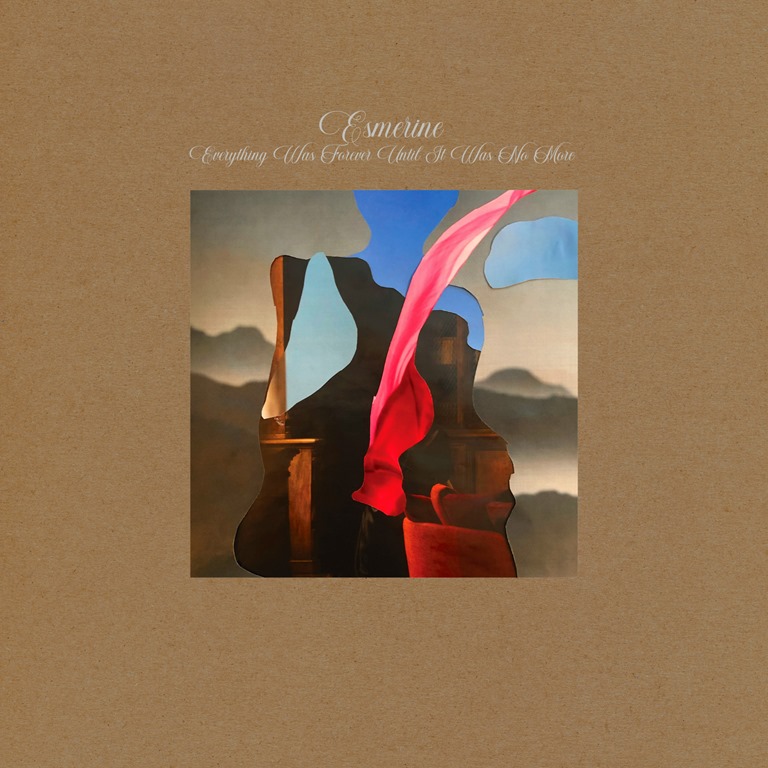
Over the course of seven previous album since 2001, Canadian quintet Esmerine, co-founded by percussionist Bruce Cawdron (Godspeed You! Black Emperor) and cellist Rebecca Foon (Thee Silver Mt. Zion, Saltland) have, as their bio notes, straddled the boundaries of ‘contemporary classical and late 20th century Minimalism’ and ‘more visceral and lyrical sonic terrain born from post-rock, folk and global.’

Such a broad palette is the perfect base from which to paint scenes of shifting perspectives that explore the theme of the title.

Time stalls during the nine-minute ‘Entropy: Incantation – Radiance – The Wild Sea’ – a piece which transitions through numerous parts and brings a range of atmospheres, from quietly brooding piano solo to soaring, majestic post-rock, trickling into the brass-orientated ‘Entropy: Acquiescence’ which evokes that sepia toned Hovis advert kind of nostalgia. And so it’s here I discover that that isn’t an exclusively English thing, but still – there is a cultural heritage of a nostalgia for a golden age of simplicity and innocence. It is, of course, a fallacy: past times were difficult, flawed. It’s easy to hanker for a rose-tinted rendition of a past you never knew, and ‘Imaginary Pasts’ seems to acknowledge this, wordlessly, via the medium of slow drones and rippling piano.

And so it is that Everything Was Forever Until It Was No More mines a golden post-rock seem of evocativeness, conveyed by means of slow-burning epics, interspersed with fragmentary pieces, which, while under three minutes in duration, give the album a certain sense of pace amidst the spic sprawlers, which culminate in the seven-and-a-half minute ‘Number Stations’. The brooding ‘Wakesleep’ is tense and eerie, with a sense of foreboding, that paves the way for the dolorous funeral chimes that herald the arrival of the closer.

There’s a sadness to it, and it’s this sadness which permeates the album as a whole. It’s a sadness that speaks of lost time and fading pasts. And when they’re gone, they’re gone. And yet there are soft hints of redemption, that nothing is entirely finite. Nothing is forever, but memories linger longer than life.

AA

cover Esmerine - Everything Was Forever Until It Was No More

16th September 2022

Christopher Nosnibor

Bristol alt-rock / grunge duo Miss Kill have been making waves around their Bristol locale both live and with radio play, and, more recently, beyond, gripping us here at Aural Aggravation back in July with ‘Drive’, which had plenty.

It’s the lead track on this five-tracker, the title of which succinctly sends a message of taking no shit, and it sets the tempo and the tone, easing in with a gently rolling reverb-soaked guitar and soft, rolling drum and mellow bassline painting a scene steeped in nostalgia while building the volume and packing a solid yet melodic punch.

‘Twilight’ is darker and denser, more emotionally wrought and fraught, a tension tearing through the thick overdriven power-chords that erupt from the quiet, brooding verses. It is, of course, the quintessential grunge format, and they’ve absolutely got it nailed, and with a song that kicks you in the gut while at the same time pulling the heartstrings with a shoegazey twist. It’s a trick they repeat on the boldly guitar-driven ‘All You Gotta Do’, and again, the verses are hushed, reflective, contemplative, and so when the chorus explodes, the impact is immense.

The vocals are integral: powerful, but not simply belting out the lyrics, but delivering them with palpable passion and emotional integrity, to the extent that they convey more than merely the words themselves. It’s singing with feeling, and you feel it.

There isn’t a weak song on here, and if ‘I Wanna Let You Know’ again calls to mind any classic 90s grunge act you could care to name, there’s that bleakly melancholic undertone with a troubled yearning that’s reminiscent of Come, who always took that sound to another place. The same is true of the final song, ‘Someone New’, which showcases a more downtempo sound, and highlights their musicianship and tightness of harmonies.

Debut releases don’t come much stronger than this, and Don’t Tell Me Twice looks set to place Miss Kill firmly – and deservedly – in the national spotlight. The songs are strong, and their delivery radiates quality, and also passion. This is a band that has the power to touch people, to affect them, and it’s a record (albeit virtual) you want to play over and over again.

Miss Kill Artwork

Christopher Nosnibor

And here I am, presented with Trail Of Time, the new album from Darkwave/’Neo-Fanfare" Band, Crooniek, and album which, thematically, ‘reflects on the concept of time. In particular, the inspiration for Trail Of Time is the conflict between the known past and the unwritten future. The future remains hidden and we do not yet know it. But we do know the past’.

It’s a relatable concept, and according to the blurbage, ‘This album is a nostalgic journey through the past of driving force Gerry Croon, his musical projects (‘Parade of the ‘Funeral Fanfare’) and his relationship with his own birthplace Kampenhout, a small village in Belgium, known for his chicory cultivation.’

I much prefer chicory cultivation to Chicory Tip, because ‘Son of My Father’ is limp glam toss, and as such, Crooniek also win my approval for this altogether darker, non-glam album effort.

With slow, plodding beats and mournful brass, Trail Of Time is the absolute in nostalgia, the sound of cobbled streets and horse-drawn carriages, of bygone ages captured in black and white in sepia stills.

‘Would You Wake Me In Time’ is more a triumphalist medieval / martial oompah, and then again, there’s ‘At the Lemmeken Monument’ with its samples and sparse synths and eerie glockenspiel.

You could never call this album dull. For the most part, it is very much a work of nostalgia-laden post-rock, and it’s layered deep with sad strings and detailed but dolorous orchestration. ‘Condemned to the Fire’ somehow straddles ‘Greensleeves’ and I Like Trains circa Elegies to Lessons Learnt, and ‘Melancholy at Toorfbroek’ is classic post-rock.

It isn’t until halfway through that we get vocals, and for the most part, Trail of Time is an instrumental work, making single cut ‘G_B’ both a standout and an anomaly. It’s also a killer tune, in any context.

Perhaps ironically, as steeped in turn-of-the century and interwar nostalgia as it is, Trail of Time evokes – at least for me – more of the spirit of the turn of the millennium and the post-rock explosion if 2001 to 2005 or thereabouts. I say thereabouts because no time period has a definite start or end: there is a blurring, crossover, an intersection. And painful as it is to admit, 2004 is receding rapidly into the past: there are children born in 2004 who are now adults.

Time marches on, whether you like it or accept it or not. Breathe in, and breathe deep. Smell the present; smell the past: you never know if or when you will again.

AA

2f73e0cc-3cb9-ccc7-d7b9-fa85a6c5e466

15th July 2022

Christopher Nosnibor

Marking a thematic link to their lockdown project recording as Videostore, Nathan & Lorna continue to show their love of the retro, of the nostalgia, and specifically of the 80s with the second instalment of their ‘80s Actor’ series (released simultaneously with ‘Johnny’).

Shamefully, it took me a while to piece this one together, as I didn’t clock the concept, and simply because while I very much did my growing up in the 80s (being born in ‘75, I feel I lived through the best of the 80s at a good time, seeing the original Star Wars and Indiana Jones movies and Ghostbusters at the cinema, while Duran Duran and A-Ha were in the charts and on the radio (and yes, Kate Bush, too), I was simply ever drawn by anything featuring River Phoenix, and so wasn’t all that distraught in 93. But I’ve subsequently come to realise his iconic worth.

The song itself is something of a departure, the drum machine backed off and pumping away metronomically beneath a shoegazy drone. It’s heartmelting and melancholy, and as such, captures the feeling among fans, as well as conjuring a perfect pool of nostalgic sentiment that’s non-specific, corresponding with that fleeing ache, that momentary tug, where you find yourself yearning for… well, you don’t quite know what, or why, just that something lost in that time past. And all you can do is go with the flow…

AA

a0953913338_16

Christopher Nosnibor

Last week, there was a brief buzz around the Internet observing that on 1st September 2021, 1980 was as far away as the start of World War 2 was in 1980. It’s one of those startling perspective moments that takes some computing. Being five in 1980, WW2 felt like ancient history, despite the fact my father was born before the end of the war. To me, the music of the 1980s still feels comparatively recent, and I can recall events from the 80s – The Falklands War, for example – with remarkable clarity. And yet I have colleagues who are adults who weren’t even born until the late 90s, who feel the music of the 80s is as relevant to them as I find most music of the 50s and 60s.

It seems crazy to think, then, that The Sisters of Mercy’s last studio album was released a few months before their tenth anniversary shows in Leeds in February 1991, and now, here we are, belatedly marking their fortieth year in existence. Not that no new album means no new material: they may still play a lot of old favourites, but The Sisters are by no means a heritage band (seemingly to the annoyance of some of their older fans who lament the fact they don’t still sound like it’s 1985).

This trio of dates sees a different support act each night, and if the return of previous recent supports AA Williams and I Like Trains makes perfect sense, Jesus Jones being tonight’s openers seemed like an odd choice.

The last time I saw Jesus Jones was supporting The Cure as part of Radio 1’s Great British Music Weekend in December 91. I’d never really been a fan, and the highlight of their set for me was the dreadlocked guitarist falling off the stage. Still, they were fun enough, and the same is true thirty years later. As they kick off with the indie rave bleepfest of ‘Zeros and Ones’ I’m immediately reminded that while the guitar sound was alright, they were just too melodic and lacking in nuts for my taste. ‘Right Here, Right Now’, with its baggy beat sounds both dated and a bit thin. Bassist Al Doughty throws Peter Hook shapes, while Ian baker nominally plays keyboards, spending most of the set charging around the stage and lurching his keyboard around on its stand. It was annoying back in the 90s, and it’s perhaps even more annoying now. Interestingly, for a band with a lot of hits, they tend to focus more on material from the rather edgier first album, with ‘Info Freako’ being a clear set highlight.

DSC_0261

Jesus Jones

There’s some grand JG Thirlwell-style style dramatic orchestral ambient cross played over the PA between bands, and with lights moving a curtain suspended from the incredibly high ceiling, the sense of theatre, and of occasion, are considerable, not least of all the nod to the band’s legendary ‘Wake’ performance at the Royal Albert Hall in 1985. Tonight, the curtain comes down rather than up to reveal the band in positions, from which they step forward and positively burst into ‘But Genevieve’. It’s immediately apparent that the three of them have been itching to get out to do this, and the rare level of energy Eldritch had shown on the last tour, just days before lockdown in March 2020 is exceeded here. Effusing welcomes and greetings with unbridled enthusiasm. It’s uncharacteristic to say the least, but it’s a joyous reunion that’s massively appreciated by the gathered crowd, which spans a notable demographic, including a lot of people, both male and female, who were probably barely born around the time of the twentieth anniversary show, let alone the tenth. And why not? For all the ‘goth’ copyists who’ve emerged through the years, there is only one Sisters.

They’re straight into ‘Ribbons’, and it’s stonking, delivered with real zeal, before steaming into a full-throttle ‘Crash and Burn’, which has long been a standout among the post-studio year. If tonight’s set list is remarkably similar to that of the Leeds show last year, it’s hard to find fault in the song selection: there will always be songs that would have bene nice to hear – ‘Better Reptile’, for example, or, indeed anything from the Reptile House EP, but you have to hand it to The Sisters for remaining true to their lack of compromise. Any other band with their catalogue would have dug up ‘Body Electric’ and more earlier songs for a truly career-spanning set to mark the occasion. But that simply isn’t how they work. Deal with it, or don’t.

DSC_0278DSC_0288

The Sisters of Mercy

Being the first night, a few minor slips were probably to be expected – there were missed cues for both guitarists, wrong chords and wrong lyrics, but these were all part of the buzz: for so many years, The Sisters have been accused of going through the motions or otherwise playing safe. Tonight, they’re giving it everything and more. That it’s not always pitch-perfect is part of the appeal, and reminds of the Sisters of old, with a particularly interesting / old style vocal performance on ‘No Time to Cry’, a song Eldritch has always seemed to struggle with by writing lyrical lines too long without a pause for breath. He does, however, manage occasional sups from a bottle of something that most certainly isn’t water between songs and sometimes verses, and this seems to keep him buoyant and energised.

After blasting through strong renditions of ‘Alice, ‘Dominion / Mother Russia’ and a brooding ‘Show Me’, Andrew gets to take a break – and no doubt have a quick fag – while the guitarists get to play rock gods and race about the stage as they showcase a new instrumental.

‘Marian’ and ‘First and Last and Always’ are dispatched at pace, before Dylan switches to acoustic guitar for ‘Black Sail’. ‘When I’m ready, motherfucker!’ Eldritch admonishes him as he strikes the first chords prematurely, but it’s good-natured banter, and it’s a strong rendition. I’m vaguely amused by the prospect that this was written while Eldritch was loafing around watching Netflix’s airing of the raunchy pirate series prequel to Treasure Island. Heave away, indeed. It’s followed by a personal favourite of mine, ‘I Was Wrong’. Eldritch was always a deft lyricist, and ‘I can love my fellow man / but I’m damned if I’ll love yours’ is a classic.

DSC_0275

The Sisters of Mercy

It paves the way for a truly searing rendition of ‘Flood II’, with ben Christo’s guitar blistering and burning from the very first howls of feedback, and Eldritch again finds his full voice. He may not hit all the right notes on a technical level, but is unquestionably at his best when he just fucking goes for it and sings up instead of mumbling and growling. So, to be clear to the detractors: missed notes and off-key but performed with passion beats grumbling low in the mix while trying to hold the tune. That said, his voice sounds stronger now than at any point on the last decade or more, and it seems fair to say the Sisters aren’t done yet.

After the first encore of a mesmerising ‘Neverland (A Fragment)’ and the throwaway, truncated ‘Lucretia’, I’m forced to skip for a train back to York, missing the second encore – but I’ve left happy. We can’t realistically expect as fiftieth anniversary show, but for the time being, it’s a joy to see The Sisters of Mercy emerging from lockdown energised and sounding solid.