Posts Tagged ‘Neoclassical’

Christopher Nosnibor

Live music should carry a warning over its addictive properties. Witnessing a band playing a set so good that you’re buzzing for hours, even days afterwards is a unique high, and one that sets a seed of a desperate need to replicate that experience.

I’ve seen a lot of live music since I started going to gigs over thirty years ago, but the number of acts who have ignited that sense of fervent excitement is limited. I’ve seen many, many amazing shows, but few have blown me away to the extent they’ve felt in some way transformative. Dead Space Chamber Music are one of those few, and I left the Cemetery Chapel in York a few months back feeling dazed and exhilarated, my ears whistling despite having worn earplugs. I simply had to see them again, in the hope to experience that same sense of rapture.

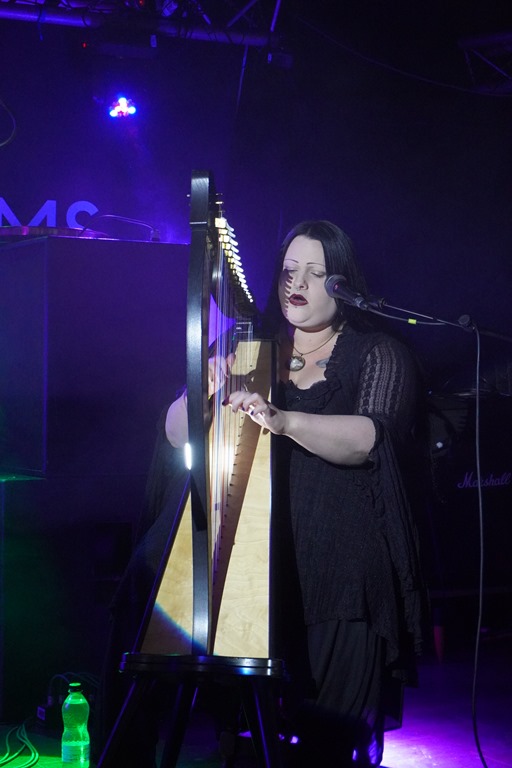
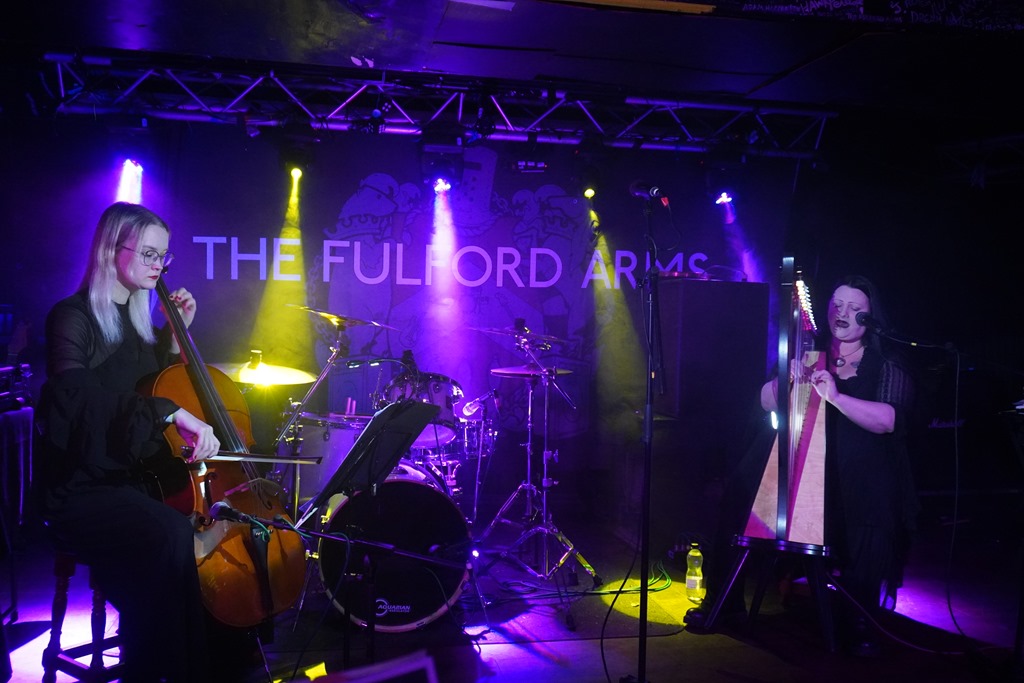
Eldermother – consisting of Clare de Lune on harp and vocals and Michalina Rudawska on cello – have no shortage of musical pedigree, and a superabundance of talent which they showcase with their minimal neoclassical works, a mix of covers and original material. They open with Radiohead’s ‘Street Spirit (Fade Out)’ led by harp and with Clare’s soaring vocals, and it’s one of those performances that make the hair stand up on back of your neck with its haunting atmosphere. There’s a rendition of WB Yeats’ poem ‘The Stolen Child’, a work rich with imagery inspired by wild nature and imbued with emotion and drama. The execution is magnificent, and the originals are similarly graceful and majestic. ‘Hurt’ may not be by any stretch representative of Trent Reznor’s career, but it certainly showcases his capacity for powerfully emotive songwriting, and if it’s the song which forms his legacy, it’s all to the good. Yes, Eldermother play a semi-operatic version of ‘Hurt’ with harp and dark, brooding cello, and… woah. It’s almost too much, especially this early in the evening. I find myself dabbing a tear and grateful for the low lighting.
DSC04790DSC04787DSC04785

Eldermother

Lunar Cult Club – featuring Doug Gordon, aka Futures We Lost – as the provider of the instrumental machinations, take the theatricality up several notches to deliver a set of otherworldly cold, cold, darkest electro with glacial synths and funereal forms. The bank of synths swirl and grind, muddy beats thud and pop from amidst a dense sonic fog. Sonically, they’re impressive – in the main, the arrangements are sparse, and overtly analogue in form – but visually, they’re something else. Theirs is a highly theatrical stage show, and this significantly heightens the impact of the songs. The two singers, dressed all in black and with faces obscured by long, black lace veils – Corpse Bride chic, as my notes say – sway and move their arms in an unnerving fashion, as if reanimated, exhumed. I’m reminded of Zola Jesus and of Ladytron, and I’m mesmerised by their facsimile of a Pet Sematary Human League with its spellbinding marionette choreography. The final song, ‘No-Ones Here to Save Her’ is as dark as it gets: the vocals merge and take us to another realm entirely.
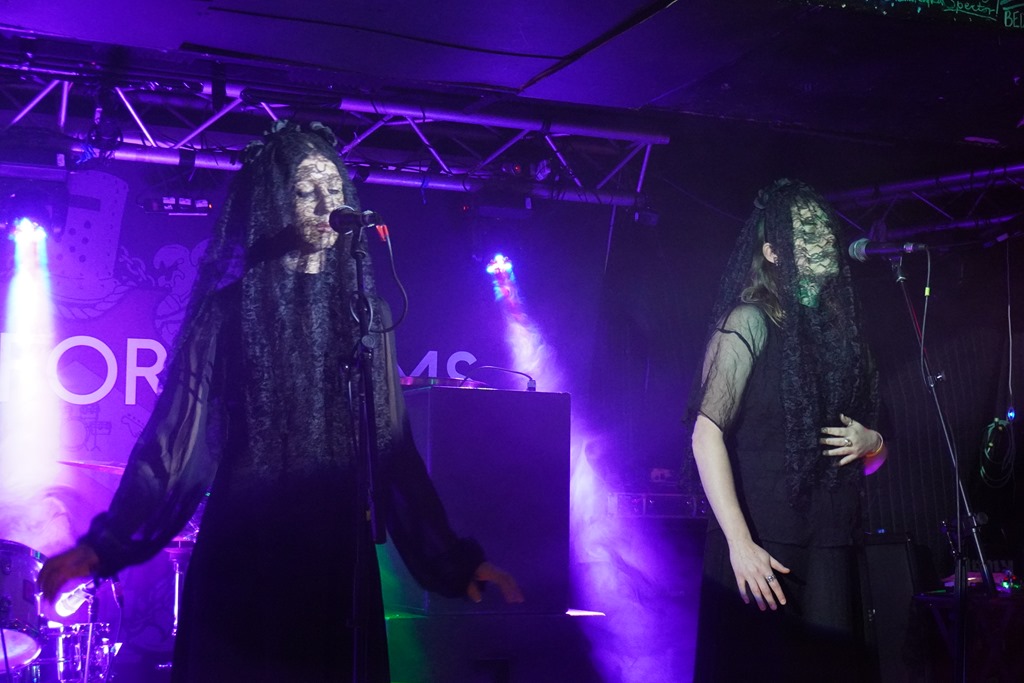
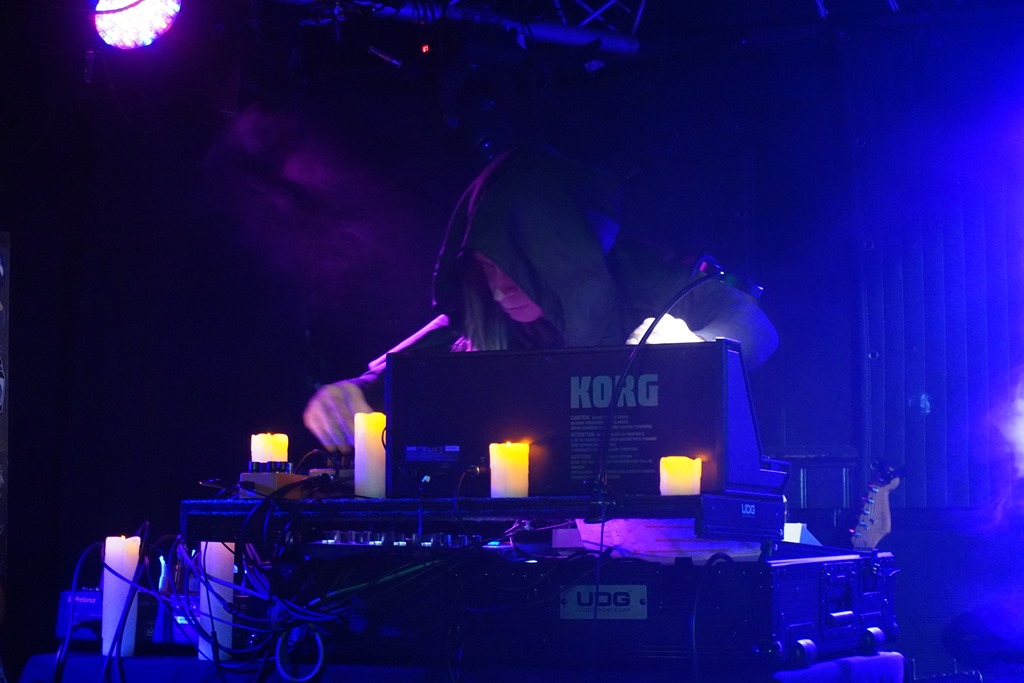
DSC04800DSC04804

Lunar Cult Club

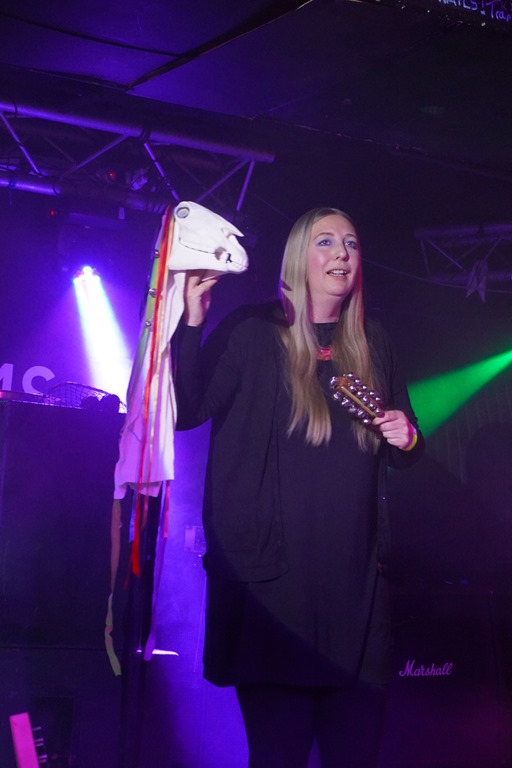
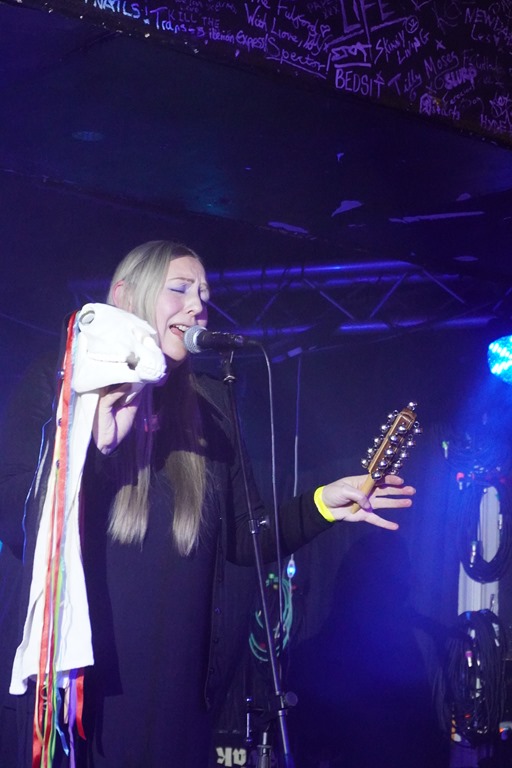
I’m still floating in a state of mild delirium when Dead Space Chamber Music take to the stage. The atmosphere is thick, tense, hushed… awed. Something about the trio’s presence alone makes you sit up, lean in, eyes wide, ears pricked. There’s a lot of detail here. Their focus is gripping by way of spectacle, and their set is designed as a linear work which evolves and transitions over its duration, in a way which calls to mind when Sunn O))) toured Monoliths and Dimensions, whereby, over the course of the set, Attila Csihar transformed into a tree. There are props and costume embellishments, mostly on the part of Ellen Southern, who performs vocals and various percussion elements and a strange stringed instrument: she brings much drama and theatricality, delivered with a sense of self-possession and deep spirituality which is utterly entrancing.
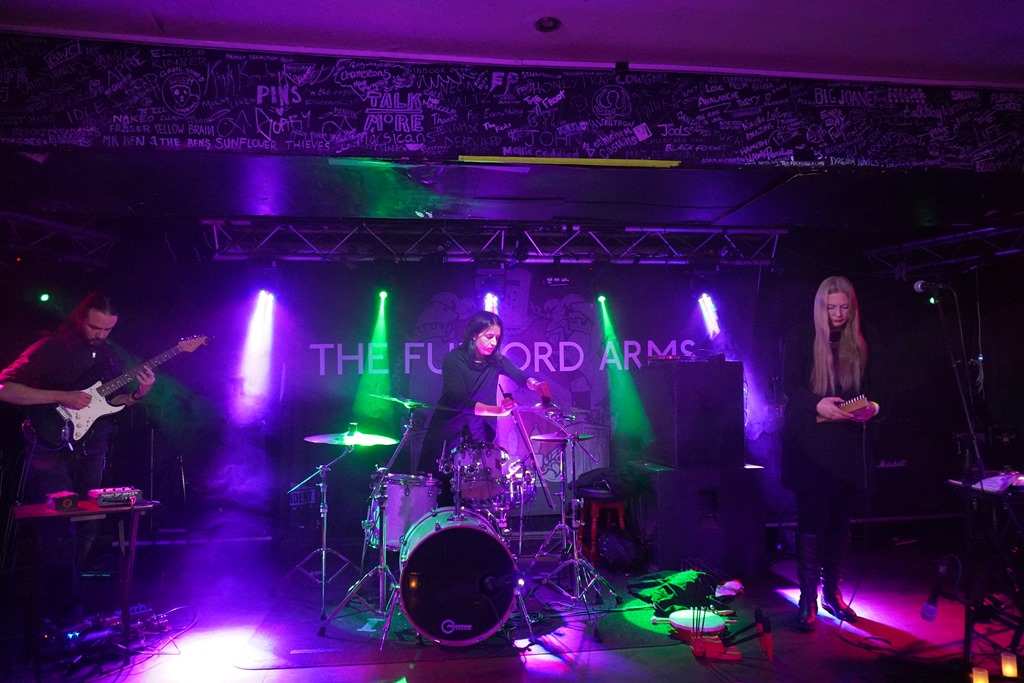
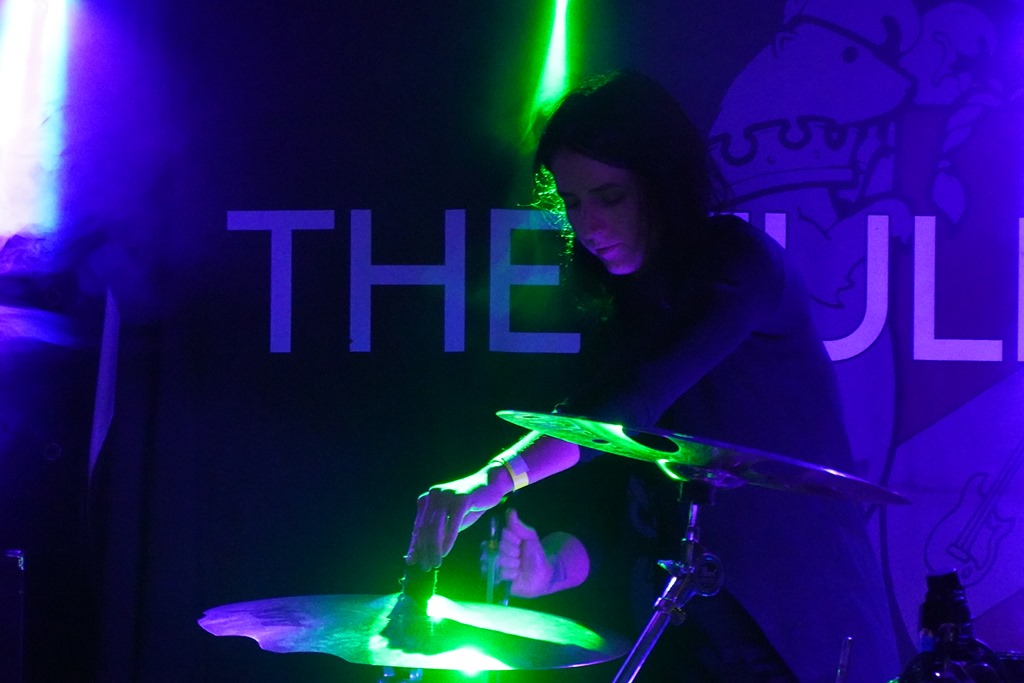
DSC04839DSC04852

Dead Space Music Orchestra

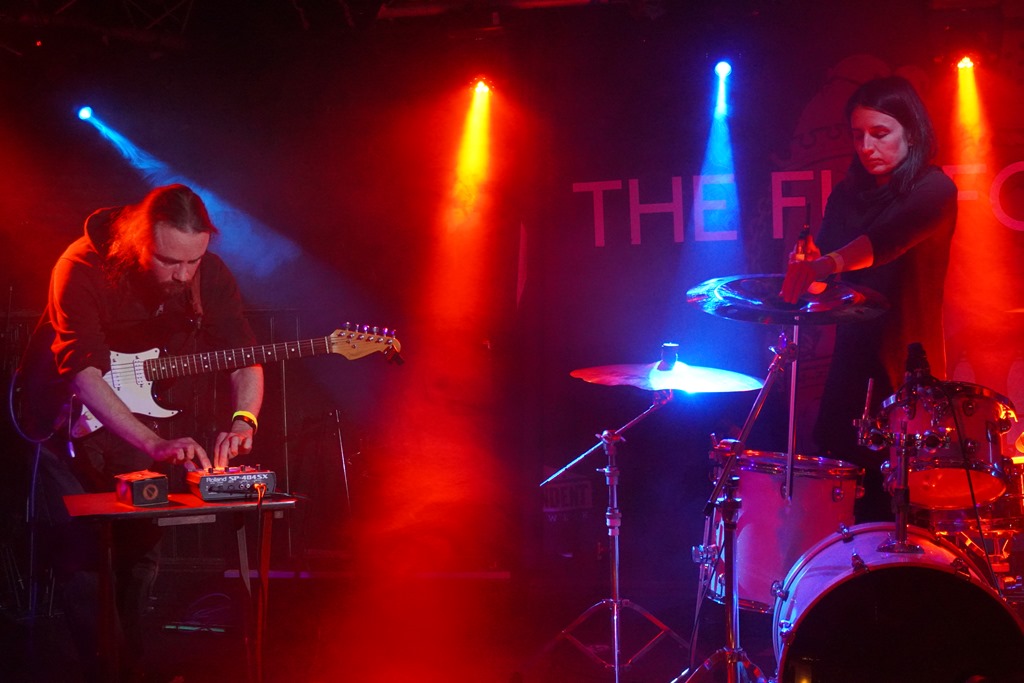
They’re so quiet you can hear matchsticks dropping into a tray. But the fact that these things are audible, amidst cavernous reverb and sepulchral echoes, is a measure of the clarity of the sound and the band’s attention to detail. Ekaterina Samarkina is impressive in the sheer versatility and nuanced approach she takes to the percussion which is truly pivotal to the performance. Her work is so detailed, subtle, the sound so bright and crisp, as she slowly scrapes the edges of her cymbals with a bow. Lurking in the background, Tom Bush – on guitar – plays with restraint, sculpting shapes and textures rather than playing conventional chords and melodies. In combination, they conjure a rarefied atmosphere.
DSC04867DSC04886DSC04906

Dead Space Chamber Music

But towards the end of the set, as if from nowhere, emerge huge cathedrals of sound. The last time around, I compared their climactic crescendos to Swans, and having seen Swans just over a week ago, I very much stand by the parallel called then. And this is not volume for volume’s sake: this is about catharsis, about escape. Dead Space Chamber Music make music which is immense, transcendental. And when they go all-out for the sustained crescendo of the finale, it’s not because of a bank of pedals or a host of gear: they simply play harder, throwing themselves behind their instruments, and full-throttle intensity. It may not be as loud as on that previous outing, or perhaps it’s simply because I’m expecting it, but they nevertheless raise the roof, and fill the space with expansive layers of sound on sound.

The three acts very much compliment one another, making for an event which is more than merely a gig, more than three bands playing some songs: this is an occasion, steeped in theatre and art, performed with a sense of ritual. The experience is all-encompassing, immersive, enveloping; it takes you out of life and suspends time for its duration. It will take some time to return to reality.
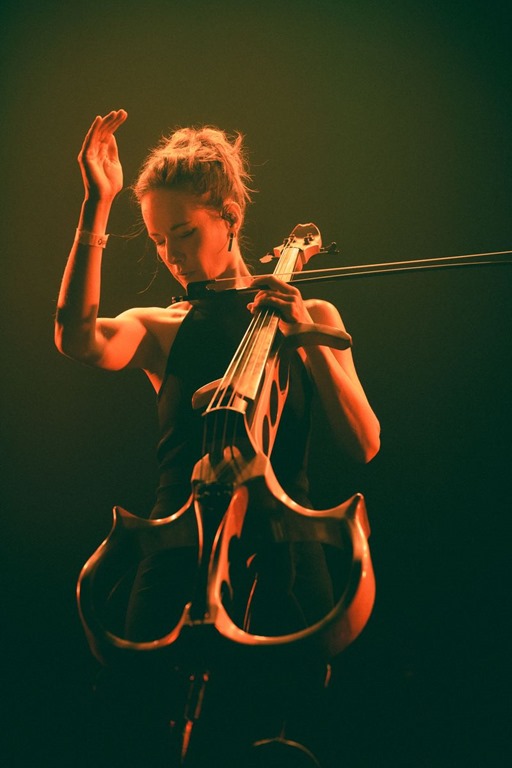
Following recent tours with Wardruna and God is an Astronaut, composer and sound designer Jo Quail is set to release her 7th album Notan on 12th September.

Notan is the seventh album from composer and sound designer Jo Quail—a work of striking contrast and graceful power. Drawing its name from the Japanese concept that explores the interplay of light and dark, the album unfolds as a deeply personal journey through polarity: presence and absence, softness and intensity, expansion and return.

What began in June 2023 as a series of raw, looped improvisations evolved into something far larger: a symphonic tapestry titled Ianus, now destined for recording with full orchestra in late 2025. But Notan is not that orchestral vision—it is the source from which it sprang, and the space to which it returns.

In these solo iterations, the music breathes with both intimacy and grandeur—cello, electric cello, and piano intertwine in richly layered textures. The sounds Jo creates on both acoustic and electric cello range from the traditional to the highly sculpted; all sound design and modelling is her own, forming the distinctive sonic identity that makes her music instantly recognisable. Each track is a live take, with every looped section performed in full, capturing the immediacy of live performance while allowing for a more considered control of sound—one that honours the context of making a record.

Across its arc, Notan evokes archetypal energies. ‘Butterfly Dance’ embodies matriarchal authority—stately and untouchable in its raw grace. First single, ‘Rex’, by contrast, traces Jo’s own evolution. First appearing on her 2010 debut as a tentative, fragile offering, the piece was left untouched for years. Reawakened during the solitude of lockdown, it transformed—emerging here as something altogether more commanding: majestic, grounded, and complete. Jo comments,

The first single from Notan is Rex, some of you who’ve been with me since the early days might remember it first appearing back in 2010. It’s a piece I’ve returned to in live performance, and over time it’s evolved and reshaped itself. This version is something quite different: a reimagining that feels both familiar and entirely new. I’m really proud to be releasing it now — and yes, it’s over 9 minutes long (a bold choice for a single, I know!).

AA

AA

Jo Quail is also set to tour the UK in September to support the release:

12/09 – Manchester – Deaf Institute

13/09 – Newcastle – Cluny 2

14/09 – Glasgow Core Fest

15/09 – Edinburgh – Voodoo Rooms

16/09 – Nottingham – Bodega

17/09 – Bristol – Jam Jar

18/09 – Leicester – The Big Difference

19/09 – Southampton – Joiners

20/09 – London – Omera

AA

toVUUoGA

Photo: Jiawei Zhang

Cold Spring Records – 23rd June 2025

Christopher Nosnibor

It may be a heretical stance, particularly as a big fan of Throbbing Gristle, but Psychic TV never really did it for me. They felt a bit meandering, wanky folky, in the same way as a lot of David Tibet’s stuff does. This may be to my detriment, and I may be missing the joys and benefits of a huge catalogue, but… I can shrug it off, and I will live.

TG and seminal filmmaker Derek Jarman were kindred spirits, provocative, avant-garde, and testament of their reciprocal artistic respect is cemented in their 1980 collaboration, where TG soundtracked Jarman’s movie Under the Shadow of the Sun (with the soundtrack being released some four years later).

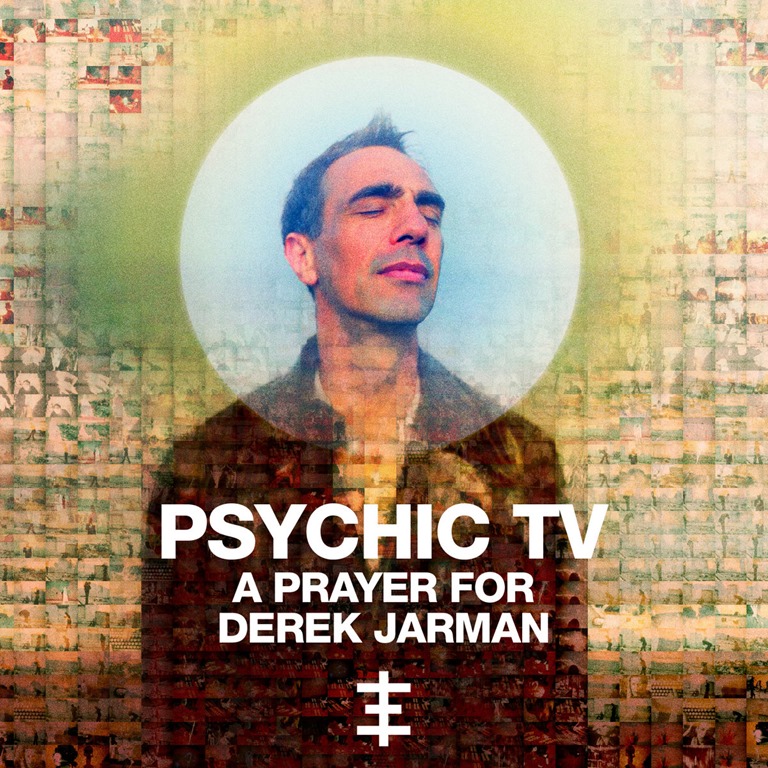
A Prayer For Derek Jarman was recorded later, on LP in 1985 by Temple Records and subsequently reissued as an extended CD version by Cold Spring in 1997. As the accompanying text explains, ‘Unavailable for almost three decades, this collection from the Cold Spring archive has been repackaged and remastered with new artwork. A documentation of the soundtrack work created by Psychic TV for the film-maker and artist Derek Jarman, it serves as a demonstration of why PTV were one of the most important groups in the underground scene of the 1980s and 1990s.’ The material on this disc was – as far as I can discern – last available in 2011 as part of the Themes six-CD box set, also released via Cold Spring, and this represents a solo release of disc two.

There’s no mistaking that both Jarman an PTV were important, although I would personally rank the former above the latter – that may be a rather subjective position to take, though, and there is no denying the immense shadow Genesis P Orridge would cast over the scene for many a year and perhaps an eternity.

The titular ‘Prayer For Derek’ is intended as an invocationary prayer and is based on Tibetan rituals; a collage of sounds including field recordings of the lulling waves running aground on the shingle beach opposite Jarman’s Prospect Cottage in Dungeness, Kent, home of some of the UK’s best preserved ‘sound mirrors’ – alongside bird song, crying babies and massed ritualised chants to aid the late director in his after-life journeys. It follows the seventeen-minute churning abstract noise whorl that is ‘The Loops Of Mystical Union’ – and which is, on balance, as good as any of Throbbing Gristle’s expansive dark noise works, and ‘Mylar Breeze (Parts 1 & 2) on which the promo for the album is predominantly pitched, and the ‘Mylar Breeze (Part 3)’. These compositions are piano-led and border on neoclassical. Dainty, charming, and musically eloquent, they certainly mark a departure from the work more commonly associated with Orridge or PTV, as well as evidencing the reasons why they are such a difficult act to pin down, or even distinguish the ‘good’ and ‘not so good’ works in their immense and wide-ranging – and variable – catalogue. With its echoed, looped vocal layers redolent of Gregorian chants, it’s not so hard to determine why ‘Mylar Breeze (Part 3)’ is not mentioned in the promo, although it’s entirely captivating.

As the accompanying text observes, ‘Other tracks feature elongated drones, washes of dissonance, melancholic guitar chime, evocative piano scoring, Burroughs cut-ups, gothic chants and snarling dogs.’ ‘Rites of Reversal’ marks a clear contrasts from the delicate piano-led compositions, diving in with some hard-edged grinding oscillations, which, again, lean more toward the kind of dark noise that was the TG trademark.

A Prayer For Derek Jarman is broad in scope and mood, and this is as appropriate is it is likely deliberate. It certainly presents the more experimental aspects of Psychic TV, and as varied as it is, the quality is also there.

AA

AA

a2838757322_10

The final song in a trilogy of time-related experimental tracks, ‘Mnemosyne’ incorporates an original song – recorded in Mayfair Studios, London, in 1975 – into poetic musings, and haunting atmospherics, dwelling on nostalgia and false memory.

a0864877400_10

Metropolis Records – 10th January 2025

Christopher Nosnibor

According to their bio, ‘Morlocks are a Swedish act who combine elements of industrial rock, neo-classical, darkwave and metal with epic production values to create an exciting hybrid sound. Having issued the long-awaited and well received album Praise The Iconoclast in late 2023, they subsequently promoted it with two US tours in 2024, both in support of their friends and occasional collaborators KMFDM.’

Asked about the inspiration behind the song, the band state: “Watch the world from a distance. Get angry at first, but also inspired. Take the darkest parts of it and twist them into something weird, beautiful and batshit insane – something that you could either dance to, brood in the shadows to or scream at the top of your lungs at the moon. Preferably all of the above. Everything can be turned into art, and art must hurt. Situation normal: all fucked up.”

‘Everything can be turned into art, and art must hurt’ is a phrase which stands out here. It may seem somewhat dramatic, but to summarise Buddha’s teaching, ‘all life is suffering’, or ‘life is pain’, and the function or art – true art – is to speak in some way of deep truths of what it is to be human. Art must therefore, reflect life and capture something of the existential anguish of the human condition. If it doesn’t, it isn’t art, it’s mere entertainment. And if the idea that ‘Everything can be turned into art’ may superficially seem somewhat flippant, a diminishment of serious matters, if the work is, indeed art, and not entertainment, then the obverse is true: using the pain of life as source material is the only way to interrogate in appropriate depth those most challenging of issues. In other words, making art from trauma is not reductive or to cheapen the experience – but making entertainment from it very much is.

There’s a snobbery around what constitutes art, even now, despite the breakthroughs made through modernism and postmodernism. It’s as if Duchamps had never pissed on the preconceptions of art for the upper echelons of society who still maintain that art is theatre, is opera, is Shakespeare, that art can only exist in galleries and is broadly of the canon. This is patently bollocks, but what Morlocks do is incorporate these elements of supposed ‘high’ art and toss them into the mix – most adeptly, I would add – with grimy guitars and pounding techno beats. Art and culture and quite different things, and those who are of the opinion that only high culture is art are superior snobs who have no real understanding of art or art history.

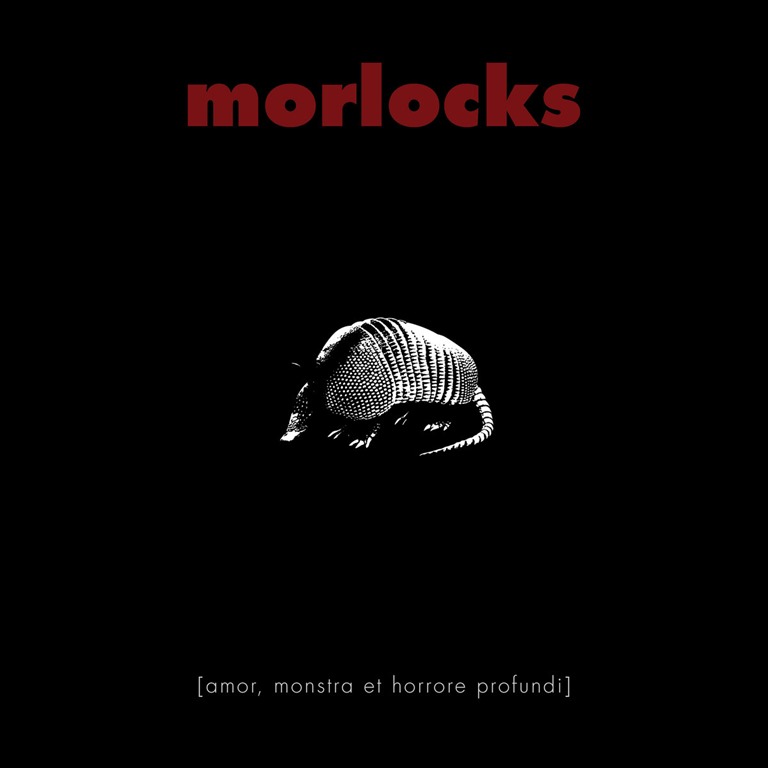
The five songs on Amor, Monstra Et Horrore Profundi are therefore very much art, although that doesn’t mean they don’t also entertain. ‘The S.N.A.F.U. Principle v3.0’ arrives in a boldly theatrical sweep of neoclassical strings and grand drama – and then the crunching guitars, thumping mechanised drums and raspy vocals kick in and all hell breaks loose. Combining the hard-edged technoindustrial of KMFDM – which is hardly surprising – with the preposterous orchestral bombast of PIG and Foetus bursting through and ascending to the very heavens, it’s complex and detailed and thrillingly dramatic, orchestral and choral and abrasive all at once.

With tribal drumming and bombastic, widescreen orchestration, ‘March of the Goblins’ has a cinematic quality to it, which sits somewhat at odds with the rather hammy narrative verses. It seems to say ‘yeah, ok, you want strings and huge production and choral backing to think it’s art? Here you go, and we’re going to sing about radioactive dinosaurs like it’s full-on Biblical’. It’s absurd and audacious, and makes for a truly epic seven and a half minutes of theatrical pomp that’s admirable on many levels. Ridiculous, but admirable.

‘The Lake’, split over two parts with a combined running time of over ten minutes explores more atmospheric territory, with graceful, delicate strings, acoustic guitar, and tambourine swirling through swirling mists before breaking through into a surging tower of power, melding crunching metal guitars with progressive extravagance, and medieval folk and martial flourishes.

Amor, Monstra Et Horrore Profundi is remarkably ambitious and unashamedly lavish in every way. Quite how serious are Morlocks? They’re certainly serious about their art. But while delivered straight, one feels there’s an appropriate level of knowingness, self-awareness in their approach to their undertaking. And that is where the art lies: theatre is acting. The stories told are drawn from life, and resonate with emotional truth: but the actors are not the action, and there is a separation between art and artifice. Amor, Monstra Et Horrore Profundi is something special.

AA

a2788665137_10

10th December 2024

Christopher Nosnibor

Less than a fortnight after Yorkshire-based collective Papillon de Nuit unveiled their first track, ‘Scarlet’, they present to the world the second fruits of their recent recording sessions, mastered by none other than Tom Woodhead, formerly of ¡Forward Russia! at Hippocratic Mastering. While ‘Amber’ continues the colour-themed song titles, they promised something different, and, indeed, that’s precisely what they’ve given us.

‘Scarlet’ was a somewhat folk-infused tune with a rolling rhythm: in contrast, ‘Amber’ sits more in neoclassical territory, in terms of composition and arrangement, with a lone piano providing the primary instrumentation; around the sung segments are spoken-word poetical passages. Again, Stephen Kennedy leads, but there is a counterpoint in words composed and spoken by Edinburgh-based polyartist Monica Wolfe, and the interaction between the voices and modes of delivery is engaging. This is not rock, or pop, or folk, but unashamedly music as art, and as compelling as it is beautiful.

AA

a1612744261_10

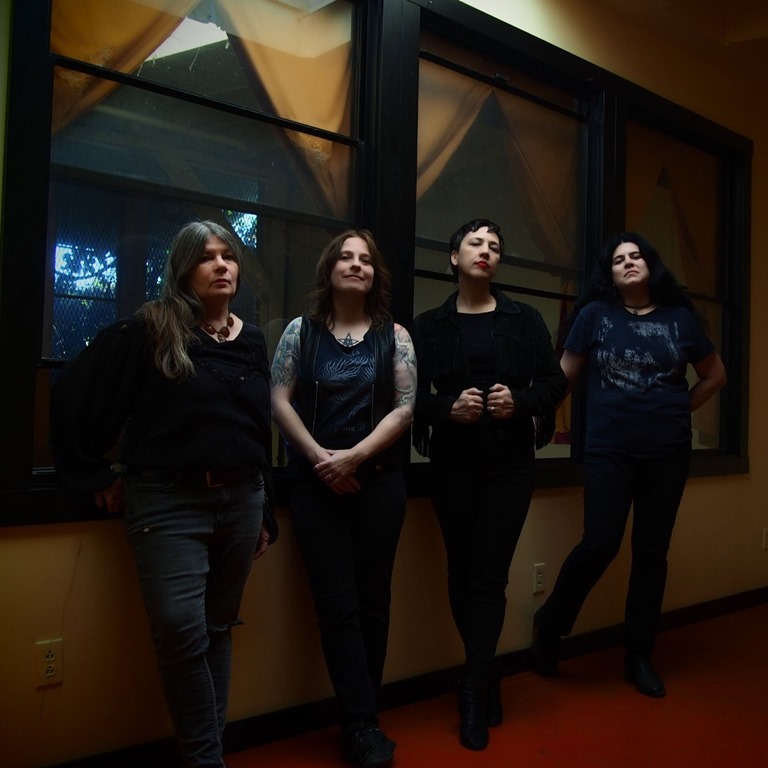
AMBER ASYLUM reveal the title track taken from their forthcoming new album Ruby Red. The tenth regular full-length of San Francisco’s neoclassical dark ambient quartet has been slated for release on February 14, 2025.

AMBER ASYLUM comment: “The title track of our new album, Ruby Red, is a poignant dirge that directly addresses the pain and loss inflicted by the pandemic, riots, war, and the looming specter of death”, frontwoman Kris Force writes. “Its haunting melody resonates with the collective sorrow and anguish felt in the aftermath of recent upheavals. Through mournful vocals and evocative instrumentation, the song serves as a solemn elegy, amplifying the echoes of grief caused by these tumultuous events. Each note carries the weight of collective sorrow, inviting listeners to confront the harsh realities of our world and to find solace in shared experience.”

Listen here:

AA

In times of trouble, women have often had to bear an even heavier burden throughout history. On their tenth full-length Ruby Red, San Francisco based all-female quartet AMBER ASYLUM offers a haunting reflection on turbulent eras, and blends instrumental passages with evocative lyrics. Ruby Red combines dirges, introspective laments, and powerful songwriting that evoke both despair and hope. The album transitions between themes of pain, loss, empowerment, and mortality, while creating a sonic landscape that is both raw and introspective. "Ruby Red" features bass, classical strings, percussion and kit, modular synthesis and female voices.

Ruby Red differs from its predecessor in the expansion of focus and depth. While earlier albums centered more on personal emotions, relationships, and journeys, Ruby Red broadens its scope to address global issues such as societal upheaval, war, and human rights. This album navigates both the personal and the global, and aims to illuminate the seen and unseen forces that influence our shared reality.

Musically, AMBER ASYLUM balance driving neoclassical elements with the raw power of pounding bass and drums, adding a potent, rhythmic force that contrasts beautifully with the quieter, brooding strings on Ruby Red. The bass and percussion create a compelling pulse that underpins the tracks, adding both intensity and depth to the album’s darker moments.

AMBER ASYLUM have taken inspiration for the lyrical concepts of Ruby Red from significant global issues such as the pandemic, riots, war, political turmoil, the threat to women’s rights, and empowerment, all while maintaining a deep connection to the extramundane. It reflects on mortality and the inevitability of death as part of a greater cosmic order, intertwining these global crises with metaphysical reflections on the resilience of the human spirit.

AMBER ASYLUM were conceived by composer, singer, and multi-instrumentalist Kris Force in the Californian city of San Francisco in 1990. Throughout their ever-changing musical evolution, the band has shifted throughout a variety of styles and collaborated with a host of musicians such as Steve van Till (NEUROSIS), Sarah Schaffer (WEAKLING), John Cobbet (HAMMERS OF MISFORTUNE), Leila Abdul-Rauf (VASTUM), among many others. 

With Ruby Red, AMBER ASYLUM perfectly capture the growing dread and horror of many of a new dark age falling in our time. Yet the Californians balance the eerie and unhinged with a fragile beauty and blossoming of hope. Ruby Red is a most fascinating soundtrack of all that is to come. Listen carefully.

AA

92b0c295-5703-2b9e-e58b-0b3750360370

Human Worth – 8th December 2023

Christopher Nosnibor

It’s only a bit of a brag – and a collateral one, at that – to say I’ve followed the Human Worth label since its inception. There’s a contextual reason to mention it, namely that while I’ve long raved about their being consistent in their selection of all things noisy, Human Worth isn’t a label with a ‘house’ style devoted to any one strain of music of an overdriven guitar nature. One need look no further than then recently-released angular indie noise-rock hybrid of Beige palace’s Making Sounds for Andy for evidence of that. It’s most definitely an ‘alternative’ record, in that it’s a million miles from the mainstream, but it’s not particularly noisy.

A. L. Lacey’s mid-bill placing on the label’s recent eight-act extravaganza in Leeds was an inspired one, as her graceful tunes provided the perfect respite from predominantly noisy guitar-based acts, and her performance set my level of anticipation for her album, Lesson.

It’s a landmark release for both Alice and Human Worth: having long established herself as a contributor to numerous acts in her locale of Bristol, Alice explains how “there was a frustrating sense of unfinished business. In that, my piano parts and ideas were being restricted to someone else’s’ vision – a vision which was often ‘less is more’ – a tasteful afterthought… A huge part of this project therefore became the need to challenge myself and to see what I could achieve or lessons I could learn, if I did things my own way – a bit of a journey towards autonomy – a predominant theme in most of my songs, along with finding purpose from confusion, and strength in your weaknesses.”

Lesson, then, is Lacey’s statement of identity, as she steps out from the shadows of other people’s work to present herself and her own musical ideas. And what’s striking is just how eclectic the album’s nine songs are.

‘Sewn’ opens up with rolling piano propelled by a vintage drum machine sound that’s pure late 70s/early 80s. But if this evokes the lo-fi sparseness and simplicity of Young Marble Giants, her vocals, swathed in reverb and strong yet delicate, are equal parts folk and shoegaze. And yet for all these elements, Lacey creates a maximal expansiveness with minimal instrumentalism. With swells of energy, it’s a soaring, uplifting piece, which hooks the listener immediately into the unique world she conjures with her magical fingers and tuneful voice.

It paves the way for eight further slices of creatively crafted musicality that combines elements of neoclassical, folk, and experimentalism. ‘Complaint’ is exemplary: the instrumentation is sparse, subtle, a soft wash of thrumming, droning synths underpinned by an insistent but understated beat. Incidental sounds weave in and out, creating depth, while Lacey’s multi-tracked voice is simultaneously trad folky and otherworldly.

There’s an energy and pace to many of the songs on Lesson which are far from the kind of bland, plodding fare common to many singer-songwriter types: ‘Memo’ may be but a brief note, but has the vintage pop vibes of Stereolab as it breezes on through and makes its mark. Elsewhere, the title track is wistful, swooning, without being remotely twee, and ‘Home’ brings post-rock dramatics to the proceedings. Bold yet understated, ‘Paper’ is worthy of all the airplay, and would sit comfortably on soundtracks and being performed at arena shows alike, being accessible, easy on the ear, hooky, emotive, and –

AA

Perhaps because she’s been doing this for a lot longer than the arrival of a debut would imply, Alice’s accomplishment as both a musician and a composer shine through every moment of this spellbinding collection of songs: the attention to detail the nuances of the playing and the production only accentuate the multi-faceted qualities of her songwriting and performance. It all adds up to a uniquely special album.

AA

HW026_ALLacey_Lesson_CoverArtwork

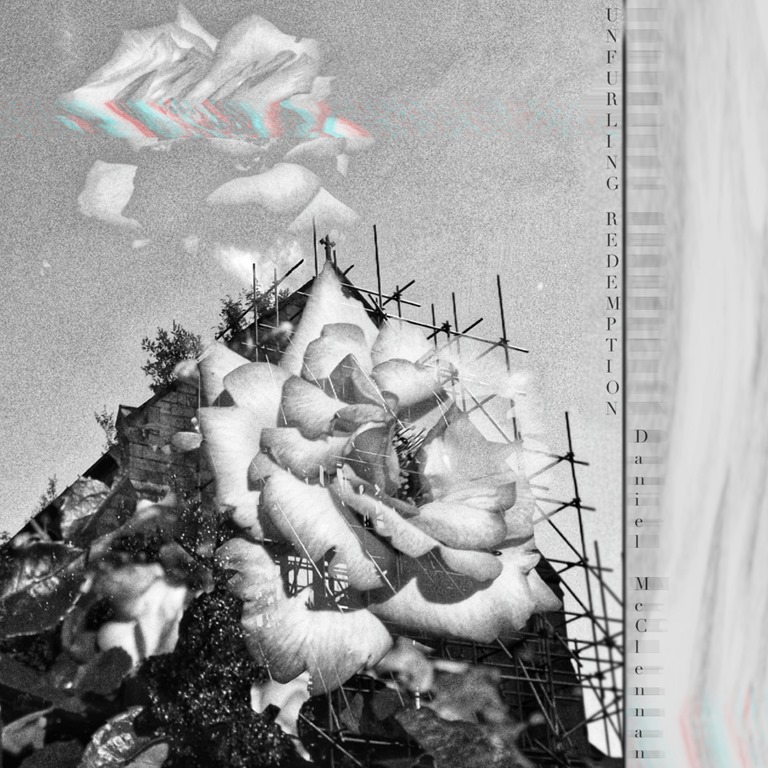
Aural Aggravation is immensely proud to present an exclusive video in the form of ‘Lifted by Marionette Strings (For Kleist)’ by Dan McClennan.

Taken from the album Unfurling Redemption released by Cruel Nature Records on 2nd September, ‘Lifted by Marionette Strings (For Kleist)’ is an unusual hybrid of neoclassical and experimentalism, balancing ominous synths and graceful piano with elements of noise to create a multi-faceted journey brimming with drama and tension.

Known for his energetic furling beats with noise-rock experimentalists Warren Schoenbright and Why Patterns, this solo release sees Daniel McClennan draw on classical and avant-garde influences such as Giacinto Scelsi; Svarte Greiner; Valentin Silvestrov; William Basinski; along with sound-artists such as Jacob Kirkegaard and The Caretaker .

Unfurling Redemption is a collection of eight assemblages comprised of synthesised instruments and freely available/stock sound samples. These assemblages explore the widely observed and seemingly inherent desire for overcoming in humankind, a dangerous proclivity for dreaming the transcendent. Particularly, the tracks pull at the problem of what we can do when these efforts inevitably drop us short of paradise, miss the mark or leave us as pyrrhic victors. Taking the form of empathetic or imagined inward reflections, they are inspired by characters in both fiction and critical discourse and take the form of unpredictable, spectral or melancholy audio ruminations. What must be done when transcendence is forever thwarted? Where then, must we seek redemption?

Watch the video here:

AA

a1220833455_10