Posts Tagged ‘Jazz’

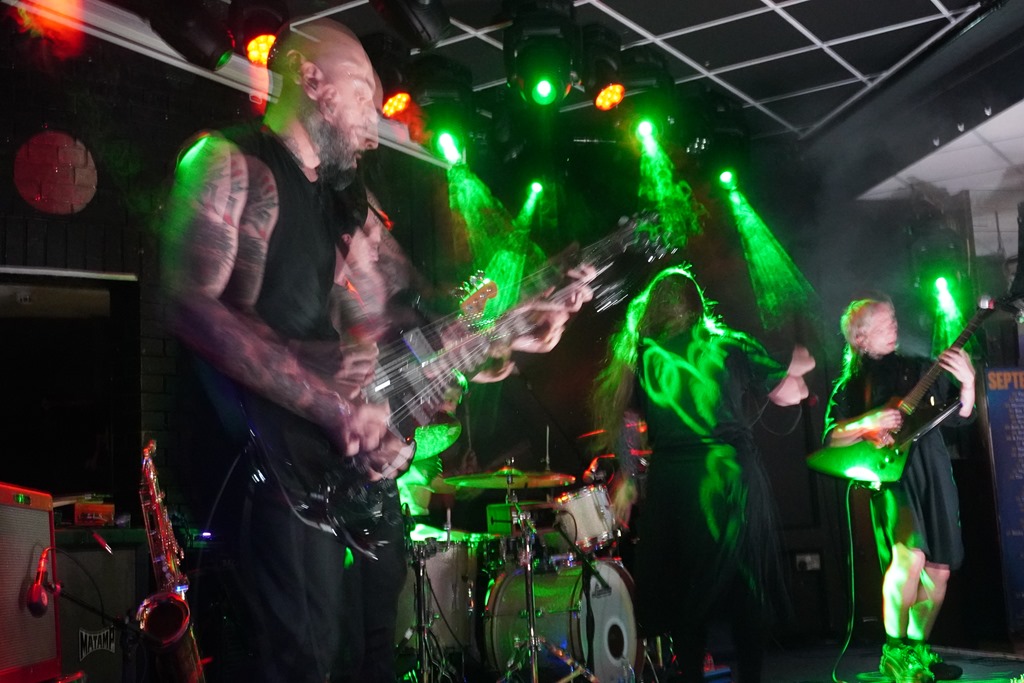
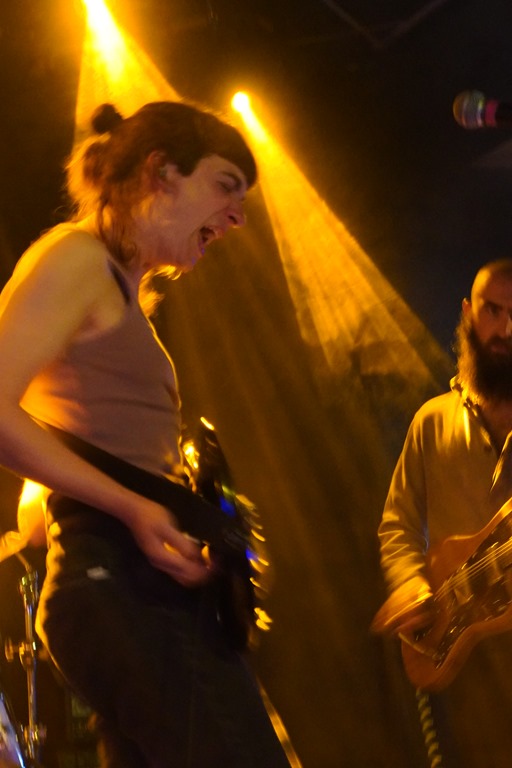
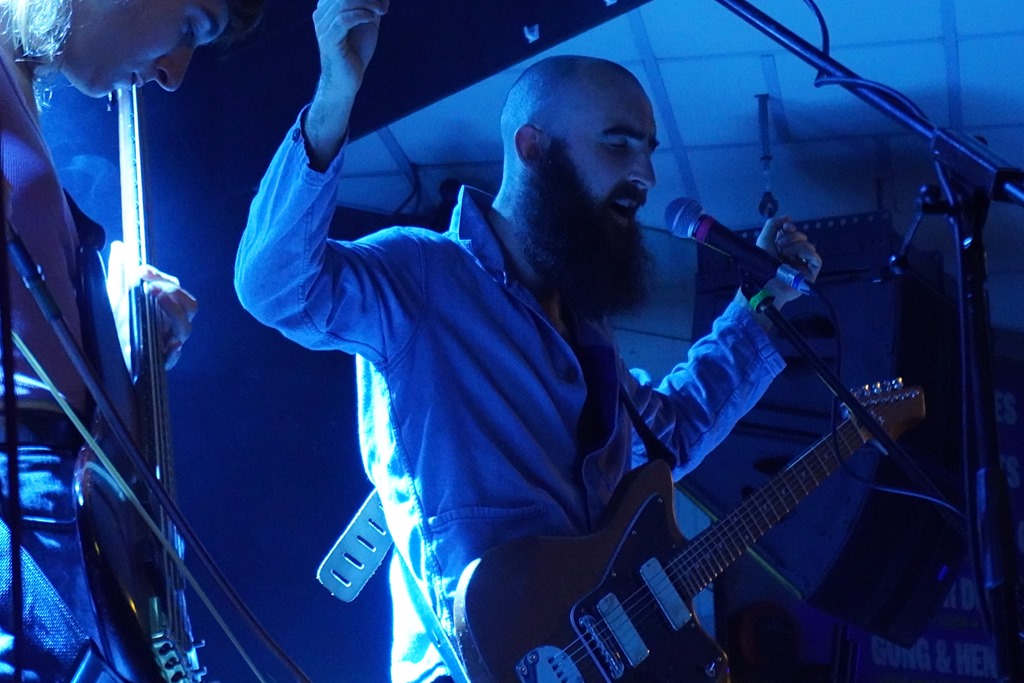
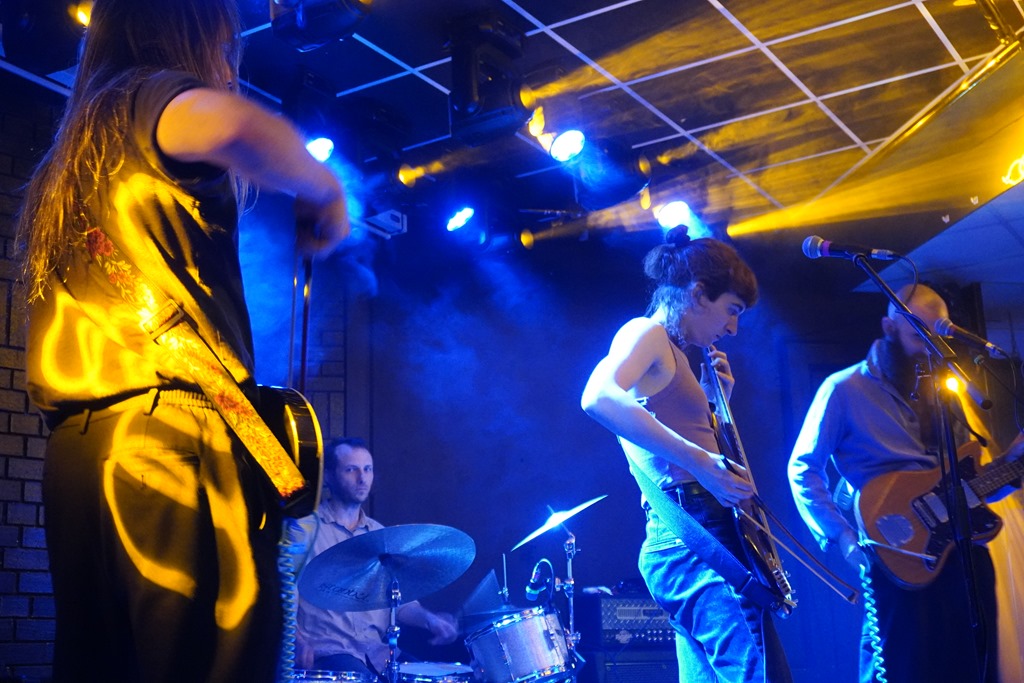
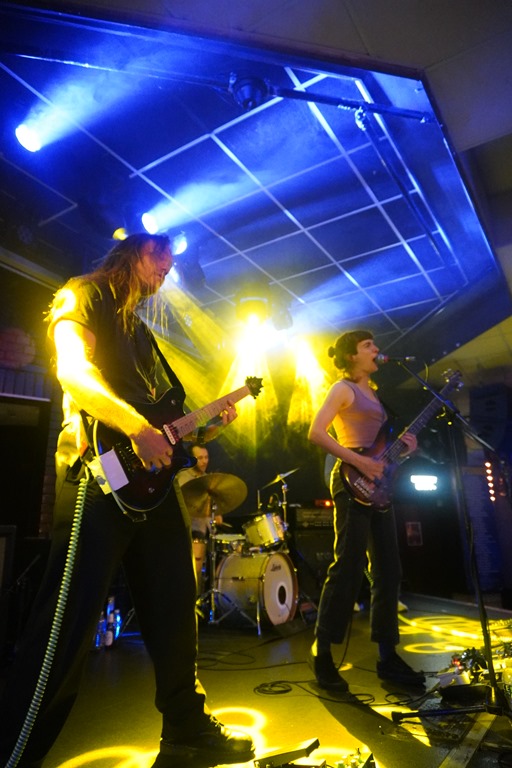
Constellation are releasing the second album from the Beirut-based avant-rock sextet, SANAM this fall – who merge psych/kraut, improv/skronk, electronics, goth, and jazz elements with traditional Egyptian song and modern Arabic poetry in a compelling brew of widescreen hybrid avant-rock.

The new album, Sametou Sawtan expands on the genre-bending exploration of sound, memory, and cultural identity from their acclaimed 2023 debut Aykathani Malakon on Mais Um Discos, and is already garnering accolades from Uncut, Songlines, and Loud and Quiet.

Today, they share the track and video ‘Habibon’, a slow-burning, autotune-doused freakout, which follows their previously arresting lead single ‘Harik’ -  check out the new video below.

AA

In support of the new album, SANAM has announced headline dates in the EU and UK from October-December.

SANAM LIVE

Oct-Dec 2025 • Europe and UK

09.10 Nantes (FR) Stereolux

14.10 Geneva (CH) Cave 12

15.10 Grenoble (FR) Le Ciel

16.10 Lyon (FR) Le Periscope

17.10 Briançon (FR) Bruit Blanc

18.10 Gap (FR) Le Gorille

22.10 Paris (FR) Petit Bain

23.10 Brest (FR) La Carène

24.10 Ghent (BE) De Koer

21.11 Milano (IT) Spazio Teatro 89

22.11 Ravenna (IT) Transmissions

28.11 Mestre (IT) youTHeater

30.11 Leeds (UK) The Attic

01.12 Glasgow (UK) The Flying Duck

02.12 Salford (UK) The White Hotel

03.12 Bristol (UK) Strange Brew

04.12 Brighton (UK) Patterns

05.12 London (UK) Rich Mix

AA

images.disco

SANAM photo by Karim Ghorayeb

False Door Records – 5th September 2025

Christopher Nosnibor

More than five years on from the onset of the pandemic, and still pandemic projects are emerging. The arrival of this release provides a timely reminder of a time which already many seem to have moved on from, forgotten. More than likely, there was a collective keenness to return to normal as quickly as possible, to bury the trauma and make like it never happened. There are many, of course, who will never forget, for a host of reasons. Many lost loved ones, but still many more suffered mentally, from isolation, from being trapped in abusive situations, or simply – I say ‘simply’ as if it’s something minor – the fear of the virus and the way the entire situation was managed and messaged by governments and media – not to mention the bewildering effusions of misinformation on social media.

In between home schooling, struggling to work as key workers, or struggling financially due to reduced furlough incomes, the idea that we were all in it together was essentially a myth – but people found ways of coping, and for those of a creative bent, new ways of creating became the focus.

For Johnny Richards and Dave King, this new way of creating involved emailing digital files across the world to one another: as the bio explains, ‘Richards recorded piano parts, some prepared, some using the piano as an explicitly percussive instrument, then sent King the files to the US for him to record his drum parts. Richards would then record further piano parts and overlay them, in response to King’s parts.’

At the time, there was much talk, many virtual column inches, devoted to the discussion of ‘the new normal’. Fleetingly, there was optimism, a hope for a kinder world, a world where we consumed less fossil fuels, where work / life balance was more evenly distributed… but since the end of the pandemic, it’s been hell, as if people pent up all their hatred and fury and have been unleashing it in war and antagonism and making up for lost time.

And so it is that The New Awkward reminds us of that fleeting spell of optimism, and as they reflect, ‘It could have happened at no other time. With its multiple layers percussion and piano, treated and untreated, it would be impossible to recreate live.’

Awkward is an appropriate choice of word for the title of this album. There is something almost feverish about the compositions, which are bursting with complex – and often irregular, contrasting, even conflicting – time signatures. At times, drums and piano happen upon coincidental timing, but for the most part, they seem to be duelling one another – not in an aggressive or antagonistic way, but playfully. On ‘The Chance Would be a Fine Ting’, there are moments where the parts intersect to forge a groove that almost has a swing, a swagger, albeit a slightly off-kilter, drunken one that staggers a little, the tempo changing as if the crank handle of an organ is slowing, then picking up pace again.

It’s a little disorientating, but ultimately fun, as titles like ‘Sleepless in Settle’ suggest – a title which only really makes sense in the context of Johnny’s being based in Leeds, or, more broadly, the north of England. The best jokes are always puns, especially when they’re super niche.

AA

The seven-and-a-half-minute ‘Memory Man’ has something of a vintage film feel to it, as well as a strong swing, and it’s easy to forget that this album features only piano and drums while listening to what, for all intents and purposes, sounds like a busy bassline leading a full band. The title track twists and twangs, is a bit noir, a bit late-night jazz café, but weird and woozy. ‘Gene Heard Wrong’ is another busy piece, the drums, played quietly but shuffling rapidly around the kit, as it twitching with anxiety, while the piano… the piano chinks and rolls with a nervous energy. ‘Darts’ strolls and stutters, while the last track, ‘Climbing on Mirrors’ builds slowly from dark atmospherics through softly loping beats with jarring discordant piano, and it sounds like everything is winding down… down… down.

From my own experience of lockdown – balancing working from home and home schooling a primary-school-aged daughter while my wife also worked from home, converting the living room sideboard into a desk until she installed a desk in our bedroom – devoting time – or stealing time, carving cracks in time late at night – for creative output was about the only thing that kept me even half sane. The fact that The New Awkward is far from straightforward makes sense in this context: I can relate to becoming so immersed, so invested in a project that it becomes its own world, and that its creation closes the door on the madness outside, all the texts and other messages, the screaming social media frenzy.

The New Awkward brings a lot back, and does so with mixed emotions. But throughout, it buzzes with a tense creative energy, urgent but also immersive and upbeat, the sound of unadulterated creative freedom.

AA

Johnny Richards & Dave King – The New Awkward cover 1000px

Christopher Nosnibor

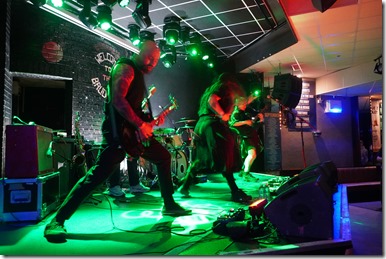
It’s good to be back at Wharf Chambers. Personal circumstances have meant that the trip to Leeds has been largely beyond me, but stepping into the place felt like coming home. It’s unassuming, some may even basic, but it’s got a unique – and accommodating – vibe. There aren’t many small independent venues that can keep going by sticking to a programme of leftfield live music, or being explicit in a keen leaning towards inclusivity for LGBTQIA+ and anyone else who stands outside the fence of the normies, but Leeds is a big enough, and diverse enough, city for a place like this to not only survive, but thrive. It’s kinda quirky, a bit shabby chic, and it works: the beers – local – are cheap, the sound in the venue space is good, and it’s all cool, and tonight’s advertised lineup is a cracker. Diverse, but solid quality of an international reach.

Before we come to that, it’s a strange and rare occurrence to arrive at a venue to discover that there is an additional, unadvertised, band on the bill, and even more so when the band in question has effectively gatecrashed the event without prior arrangement with the promoter, but by dint of deception. But the first band on tonight have done just that. Perhaps it’s the only way they can get gigs. Because they sure do suck, and it was obvious that they’d never have been booked for this lineup in a million years. I head back to the bar after a couple of songs, having heard enough. When they’re done, promoter and sound man (in both senses), Theo takes the mic to explain that he hadn’t booked them and that they didn’t espouse the experimental ethos of the acts Heinous Whining exists to promote. The band did not respond well to this, validating the opinion a number of us had already formed, and they fucked off in a huff. Dicks.

Thankfully, normality – of the kind we’re here for – resumed with the arrival of Sour Faced Lil, the solo project of Hilary from Cowtown. Her set starts – somewhat incongruously – with a quirky electropop cover of Bright Eyes. I just about manage not to cry. Then she swerves into swooshing space rock noise galore, and she explores the weird and wibbly, and it’s everything you’d expect from a Heinous Whining night. Live drums, looped, live guitar, and warped, undulating synths create a cacophony of sound in layers. The performance is a little tentative in places, but the audience is behind her all the way. There’s something quite enthralling about seeing a solo artist juggling myriad musical elements and instruments, knowing what a balancing act, how much effort it is to remember everything and keep the flow, and the fact she manages it is impressive.

DSC03057DSC03064DSC03070

Sour Face Lil

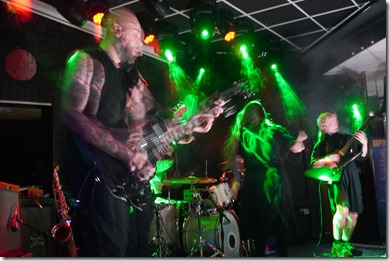
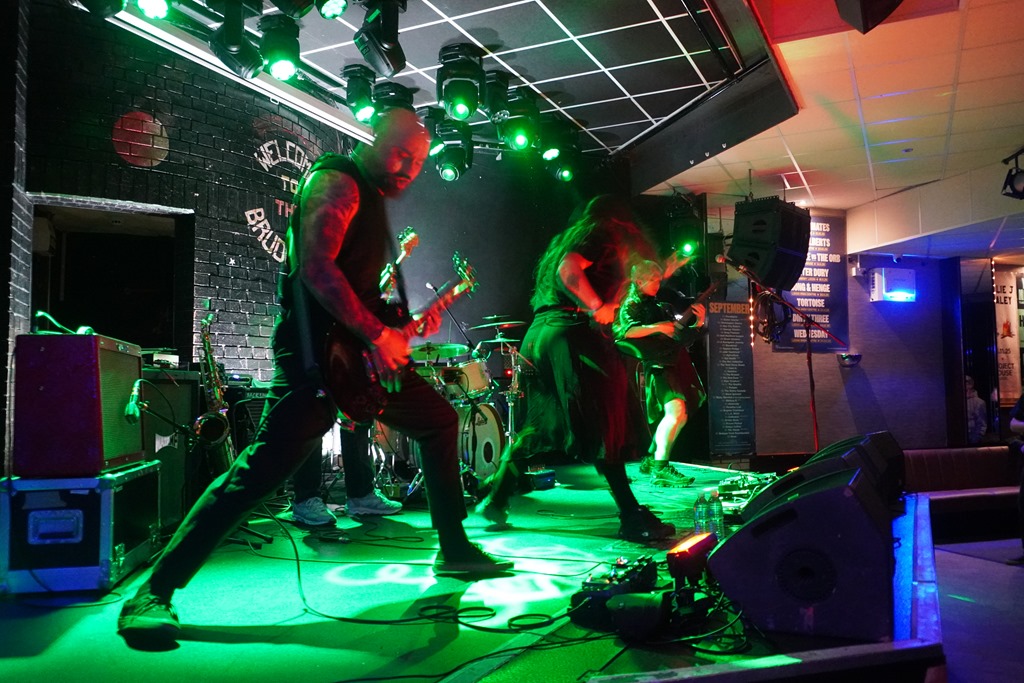
Also impressive are Lo Egin, but for quite different reasons. I feel I owe Lo Egin an apology, as it happens. When I reviewed their split release with Beige Palace a little while ago, I misspelled their name as Lo Elgin, more than once (although I managed to get it right when covering Volumancer in 2013) Hammering out reviews on a daily basis means I slip up sometimes. It’s not great, and I do try, to do better but… I did really rate that release, though, and I’ll admit that they were as much a draw for me as the headliners. And the fact is, they were worth the entry fee alone. On paper, they’re perhaps not the easiest sell, bring atmospheric post rock in the vein of early Her Name is Calla, with brass – sax and trombone – crossed with elements of doom – with the addition of screaming black metal vocals. They do epic. They do crescendos. They also do ultra-slow drumming, something I am invariably transfixed by having first become fixated during my first time seeing Earth live. The drummer raised his arms to fill extension above his head, before smashing down with explosive force.

DSC03079DSC03084DSC03092DSC03105

Lo Egin

Dolorous droning horns create a heavy atmosphere. Then, out of nowhere, from the delicately woven sonic tapestry they’ve been weaving, things turn Sunn O))) and the skinny baggy jeans wearing trombone guy who looks like a young Steve Albini delivers cavernous doomy vocals as he contorts and the mic stand and then all hell breaks loose. When they go heavy, they go heavy – and I mean HEAVY, the drummer smashing every beat so it hits like a nuclear bomb. To arrive with high hopes for a band, and to still be absolutely blown away is a truly wonderful experience, and one that stays with you.

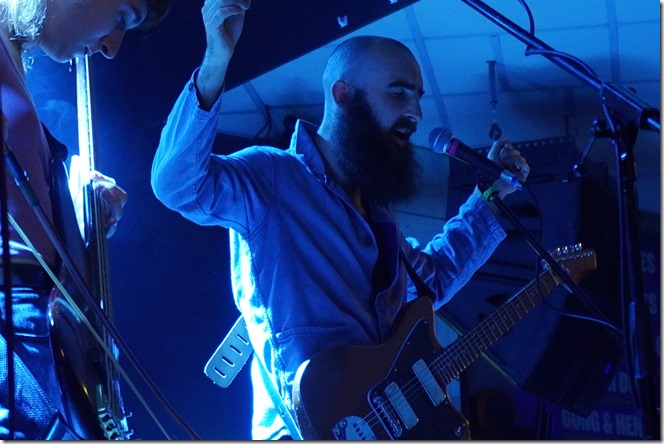
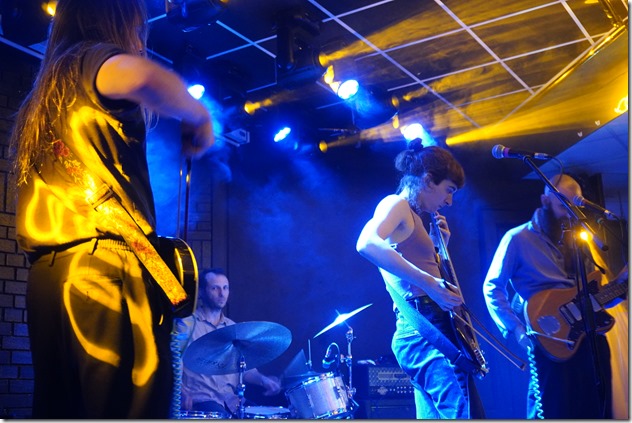
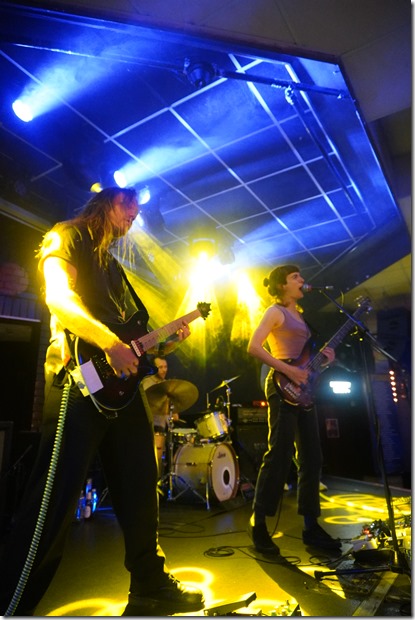
I feel I should perhaps take this opportunity to apologise to Jackie-O Motherfucker, too: in my review of Bloom, I described them as a country band. And while there are without question country elements, they’re really not a country band. They’re not really a psychedelic band, either, or any other one thing. Instead, they’re a hypnotic hybrid, and they’re deceptively loud considering how mellow everything is. What they do is simple in many respects, but in terms of genre, it’s rather more complicated, not readily pigeonholed. I’d clocked them about the venue beforehand, and they seemed like really chilled folks, and while they’re not exactly chatty during their performance, it’s apparent that they’re humble, and simply really chuffed to be playing here. The room is pretty full, too. Tom Greenwood looks like he’s just taken some time out from doing some decorating to play. He’s got paint on his trousers, and is as unassuming as they come.

DSC03109DSC03130DSC03137

Jackie-O Motherfuker

The current lineup consists of three guitars, synth, and some electronic stuff including subtle percussion. No bass, no drums. There are, however, many pedals and much pedal fiddling throughout the set, as they sculpt a wall of reverb and feedback and a whole lot more from this hefty – but ultimately portable – setup.

The resultant sound is detailed, but at the same time a hazy blur. Picked notes – and much of the sound is clean, with next to no distortion, but with all the reverb – bounce off one another here and there, creating ever greater cathedrals of sound. I find myself utterly transfixed. Their hour-and-a-bit long set features just seven songs, and they are completely immersive. There’s no real action to speak of, just an ever-growing shimmer which envelops your entire being. In some respects, their extended instrumental passages invite comparisons to the current incarnations of Swans, only without the evangelically charismatic stage presence or crescendos. In other words, they conjure atmosphere over some extended timeframes, but keep things simmering on a low burner, without any volcanic eruptions. The end result is a performance which is hypnotic, gripping because of, rather than in spite of the absence of drama. Low-key, but loud: absolute gold.

This October, the indefatigably enigmatic trio The Necks will release Disquiet, their 20th full-length release, a triple disc via Northern Spy. It’s an absolutely intoxicating listen, over three hours of incredible music.

The band has shared the mesmerizing 26-minute ‘Causeway,’ as a first listen. Hear it here:

AA

Necks

Photo credit: Dawid Laskowski

Azure Emote unveil the noire video clip ‘Bleed with the Moon’ as the final advance single taken from their new full-length Cryptic Aura. The fourth studio album of the American progressive death alchemists has been chalked up for release on July 25, 2025.

AA

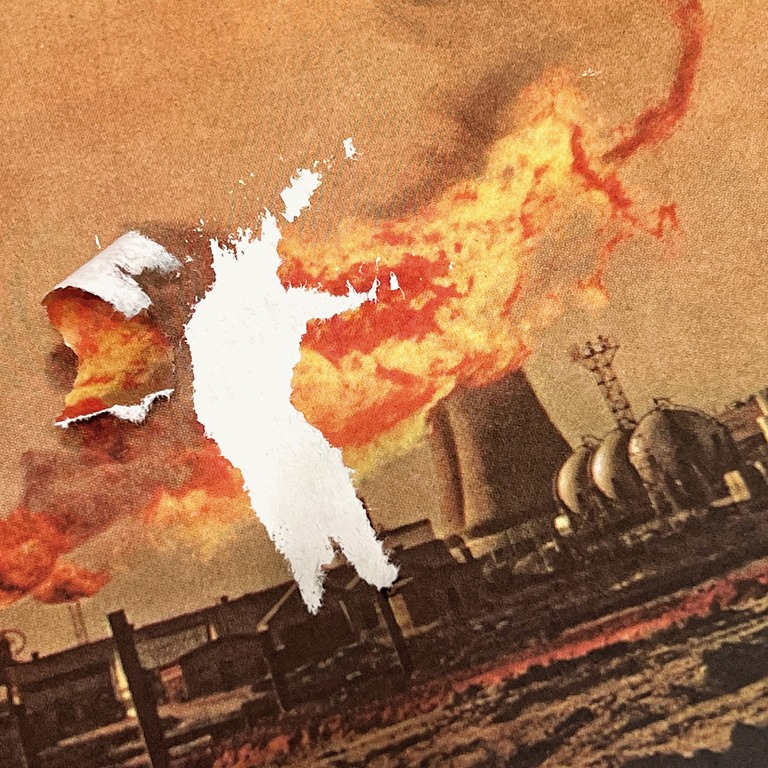
AZURE EMOTE comment: “Overall, ‘Bleed with the Moon’ is conceptually very simple and straightforward, but also one of the more personal songs on the album”, mastermind Mike Hrubovcak reveals. “Alcohol is a demon and I’ve named him Al-Kuhl. This analogy is based on my personal experiences and the lyrics are about getting possessed by this demon around a bonfire in the woods at night. I’m not trying to glorify excessive drinking here. I rather artistically convey the passion, euphoria, and physical and mental dangers of convening with such ‘spirits’ in the heat of the moment. I have a love/hate relationship with Al-Kuhl and I have learned that eventually it ends up taking much more than it gives. This song was written during such a night however, and even the album cover is a photo of a homemade skeleton that I made and burned in the woods along with a bottle and a bonfire.”

AA

52c331a8-4b98-17cb-6040-16cce6f984ec

Needlework caught our attention a few months ago when they supported Aural Aggravation faves Soma Crew.

They’ve just dropped the track ‘Saddle Rash’, and we dig. Check it here:

AA

13838193987112654144

Futura Resistenza –16th June 2025

Christopher Nosnibor

Much of Felix Kubin’s work since the turn of the millennium has involved radio, although film and theatre and other soundtrack works have also been a feature. Der Tanz Aller is one such soundtrack work, which was ‘created for the performance of the same title by the experimental arts collective LIGNA. The group specialized in site-specific, participatory works. Der Tanz Aller is based on Rudolf von Laban’s radical 1920s concept of ‘Bewegungschöre’ (movement choirs), collective dances in public space that aimed to reimagine social order through shared movement.’

The context and objective behind the composition are particularly useful to be aware of when listening to this album in isolation, as Kubin sets out: ‘When the performance group LIGNA approached me in 2012 to compose music for a play based on Rudolf von Laban’s revolutionary kinetic theories and so-called ‘Bewegungschöre’ (movement choirs), I thought of a soundtrack that would be both rhythmically engaging, abstract and mechanical. I knew there would be pre-recorded voices talking about his philosophy and guiding the audience via headphones. So, I had to leave some “air” in the arrangements, allowing the visitors to concentrate on the spoken words, while simultaneously becoming dancers. In LIGNA’s conceptual works – just like Laban’s idea of the movement choirs – the audience members become the performers.’

I shan’t dwell too long on the conceptual aspects here, beyond noting that this predates John Cage’s 4’33” by more than two decades, and while Cage’s silent work was on many levels a quite different proposition, the way in which any sound made by the audience – be it a cough or the shuffling of feet or the creaking of a chair – immediately becomes part of the performance indicates clear common ground. Likewise, William Burroughs’ cut-ups, which invited ‘creative reading’ whereby the engagement of the reader and their experience and perception was integral to their success, arrived some thirty years later. As such, ‘Bewegungschöre’ represent the cutting edge of avant-gardism, belonging to the era which brought us Duchamps’ readymades and – perhaps more pertinently – Tristan Tzara’s directions to make a Dadaist poem.

For the most part, the ‘air’ in the arrangements is apparent: there is space, separation, and while we can only imagine the prerecorded voices talking about Laban’s philosophy through headphones, it’s possible to get a sense of how it would work. But then, occasionally, Kubin’s compositions get father more busy, as on ‘Dämonen der Zerstreuung’, with big band percussion and noodlesome orchestration that’s of a strong jazz persuasion, but has a whole lot happening, and often simultaneously. There’s drama with orchestral strikes, and creeping, urgent glockenspiels that bring a noirish, detective movie feel – not a chase scene, but a cat-and-mouse scenario.

There are some spoken-word passages, in German, as on ‘Raumstunde Vera Skoronel’, accompanied by evolving sonic backdrops, the likes of which I find hard to imagine inspire dancing, but spasmodic twitching and erratic lurching, while the title track is a slice of jerky, and quite insular and intense, Kraftwerkian synth bleepery, and ‘Rotes Lied’ is a perfect exemplar of sparse, spaced-out, glooping, blooping, reverby weirdery with occasional chimes and stuttering shot of snare. There is plenty of air here, as you sit and wonder what exactly is going on?

Who knows? And does it even matter at this point? The percussion builds from all sides, and the nagging away – until suddenly it doesn’t.

The unpredictability of Raumstunde Vera Skoronel is its strength. It is weird, unexplained in many respects, beyond simply the initial onboarding awkwardness. We should probably celebrate this weirdness, this sense of separation. Raumstunde Vera Skoronel is never dull, but always strange and alien – and these are reasons to appreciate it.

AA

AA

RESLP040 front

Limited Edition 7" Dubplate / DL Blank Records – 13th June 2015

Christopher Nosnibor

Tobias Vethake aka Sicker Man has spent a quarter of a century doing things differently – differently from other artists, and differently in terms of his own sound and approach to making music.

As his bio points out, ‘as our world changed a lot during the last 25 years, so did his music. On his last release, KLOTZ WENZEL VETHAKE, the interaction with other musicians and the political dimension of a musical wake-up call became a main focus… The single „Gravy Train / Hollowed“ marks a new and fresh look at both, his musical history and present. It features Sicker Man’s love for dub, noise and electronic music as well his passion for classical composition and spiritual jazz… ‘Stop The Gravy Train / Hollowed’ feels like a collaboration of Moondog and The Bug’

It certainly does. For these two pieces, Sicker Man has enlisted saxophonist Matze Schinkopf, and

How many ideas is it possible to pack into four and a quarter minutes? With ‘Stop The Gravy Train’, Sicker Man manages more ideas per minute than it’s possible to even begin to count. The piece starts with a low, grinding bass and industrial hums, before the saxamaphones enter the mix, interweaving through and across one another. They trickle smoother, teasing with points and counterpoints, laid-back and mellow over the simmering rhythm section, the bass and the beats building currents beneath. Around the midpoint, the piece makes a change of trajectory, the gentle jazz giving way to something altogether more urgent and driving, locking into a robust groove with low saxophone punching rhythmically and in syncopation with the whip-cracking snare and palpating kick drum.

‘Hollowed’ is different again: a swampy surge of seething electronica, a morass of meshing noise – at least to begin, and then it melts into a rather pleasant swaying jazz work, a clip-clip beat nodding along nicely. Swells of noise bubble and surge, but don’t quite break through, and industrial grooves settle in while the saxes tootle off in different directions, hither and thither to brain-melting effect.

‘Genius’ is a word which is chronically overused and often severely misapplied. Is this a work of genius? Maybe not, but it’s got to be close. There’s no question that it’s wildly inventive, and unexpectedly listenable, while challenging every musical preconception.

AA

a1110512025_10

Not Applicable – 23rd May 2025

Christopher Nosnibor

For about five minutes, AI looked like it may provide some entertaining diversions in terms of creative potentials. It wasn’t so long ago that it produced glitchy, idiosyncratic writing and wild art that was so wrong it was hilarious, and lame synth-loop electronic music which had neither style nor substance. It didn’t look like the threat to humanity that dystopian sci-fi novels had portrayed.

But then more information began to emerge about how AI was ‘learning’ by essentially stealing from all available sources. AI is the worst plagiarist imaginable, and nothing is safe or sacred. Then there came the reports of the vast amounts of energy, and water, required to power it, and it started to look like AI will doom the planet by sapping its resources instead of going rogue and obliterating humanity. But then…AI evolved, and fast. In no time at all, people stopped having additional limbs and appendages, the writing transitioned beyond repetitious babble, and people have begun to use to AI chat as a substitute for expensive therapy, despite reports of rogue AI advocating suicide… and as its usage accelerates and it morphs into the nightmare of sci-fi dystopia we’d dismissed just a few months ago, so the use of energy and water increases exponentially. One way or another, it does now look very much like AI will finish us.

And so there’s a certain discomfort in approaching Put Emojis On My Grave by the spectacularly-monikered Ancient Psychic Triple Hyper Octopus, an album which is sold on the way it ‘boldly explores AI and improvisation on an album of freely improvised, experimental electroacoustic music’.

It features, as the press notes put it, ‘a new lineup of celebrated, British musicians’ (Alex Bonney (trumpet, bass recorder, Strohviol), Will Glaser (drums and percussion) and Isambard Khroustaliov, aka Sam Britton (electronics), and ‘ claims to forges ‘a new musical language’, with an album ‘which eschews traditional musical composition, seeks instead to “adopting the language of AI’s deep learning failures and glitches”, attempts to imagine how AI could make a positive contribution to the creative process’.

It’s hard to know how to really assimilate this. The six compositions which make up Put Emojis On My Grave are fine examples of exploratory jazz, with wandering trumpet tooting in meandering lines across clanking, clattering abstract percussion which sounds like cutlery and wind-chimes being knocked about while bleeps and bubbles interject seemingly at random. It has that avant-jazz, experimental, iprov feel which is in some ways quite familiar in its own strange way. That is to say, while it’s niche, the sonic experience is very much representative of a certain field. A field filled with jackrabbits, apparently.

‘Goats on Helium’ is bubbly, bibbly, scratchy, scrapy, wheezy, groany, a splatter and clatter of sounds piled up and colliding all over, and it gets pretty messy over its six and a half minutes. Warping drones and scratching, gargling abstract drones twist around deranged brass tootlings and crashing cymbals on ‘The Adiabatic Flux Differentials of the Id’, and I would challenge anyone to find a title that’s posier, more wankily intellectual than that this year. And while it’s a bit jazz-jizz in places, it’s certainly better than the title suggests.

This is, in my opinion, a fair summary of the album, a work which is concerned with space and time – not outer space, but inner space, the space which our minds explore in reflection like the clatter of 1,000,000 bongos, the space – or distance – between concept and execution, and virtual space, those our other selves occupy, both in the moment and, subsequently, leaving echoes and traces in infinite corners of the virtual world. It’s impossible to discern where the musicianship cedes to AI intervention here, which is certainly in its favour – and if Put Emojis On My Grave is used to train generative AI, then it could confuse it for a while, making for some interesting results. And Put Emojis On My Grave is certainly interesting.

AA

Ancient Psychic Triple Hyper Octopus – Put Emojis On My Grave cover 4000px