Posts Tagged ‘Industrial’

empreintes DIGITALes – IMED 17141

Christopher Nosnibor

The background:

The exhibition Broken Ground looks at seven cities over ten years, and how redevelopment infrastructure changes our perception of cityscapes. These cities could be anywhere (everywhere). Reconstructed from the opportunities of street level construction, I treat the sites more like stage sets, where there are props, actors, entries and exits, and evidence through the debris, disarray, shadows of figures and randomness throughout.

In our contemporary world the works have taken on hybrid references of displaced people from war zones, or natural disasters that fill nightly newscasts in the media.

The review:

It’s an unsettling work. An apocalyptic, post-nuclear work. An album that lurks under the shadow of the bomb. It’s an album for unsettled times, a soundtrack to a return to the distrust of cold war politics and a global culture defined by social and political division, fear, uncertainty and mass murder. Broken Ground is a dark album for dark times.

From the very outset, Bouchard manipulates dark, throbbing layers of undulating, yawning drones and grating tidal waves of noise, dragging them across birdsong-like tweets of analogue twitters, sounding like a corpse in a tarpaulin being hauled down gravel drive at sunset. Yawning, drawling harmonica-like notes drift lazily, and somehow awkwardly, stretched and distended, over groaning low to mid-range backdrops: almost-familiar sounds are bent out of shape and rendered unfriendly. ‘Intergranular Attack’ goes in low, snake-like whispers and bleak monotone narrative samples deliver reports of atomic science with a detached clinicality, and the theme is revisited in the fragmented, fractured post-apocalyptic time capsule that is ‘Resistant Materials’.

Dark tones creep and hover, while washes of snarling noise and contrails of feedback linger amidst screeds of sharp-edged sheets of sound and washes of nebulous noise. Glitchy, crackling beats thud disconcertingly through a stammering hum on ‘Hysteries’, and the scratchy oscillations of ‘Voids Patterns’ offers a fresh take on spacey / spaced out reverby darkness.

Broken Ground finds Bouchard exploring well-trodden experimental fields and offering something new. Charming chimes assume an ominous demeanour; voices drift, detached in empty space. There is no comfort or solace to be taken from their presence: they’re distant, disconnected, out of reach, perhaps by light years. You may be receiving, but there’s no way to make two-way contact: you’re lost in a wave of pink noise and a fizz of rolling static.

As in space, so on earth: each person sitting, alone, boxed in: connected in the virtual world but never more alone and isolated now. Tapping out comments and messages, condolences and sympathy for the displaced and the damaged reported by the media: it’s merely mechanical. You feel nothing for them, you feel nothing for yourself: you’re numb, a drone. You don’t really connect. You’re floating in virtual space.

The voices, stammering, echoing in fractured snippets of different languages from the speakers are no more familiar than the voices from around the world, beamed to your computer and smart phone. This is the world of dislocation and dis-ease Bouchard depicts with such precision on Broken Ground. It’s awkward and uncomfortable, but looking in the mirror always is.
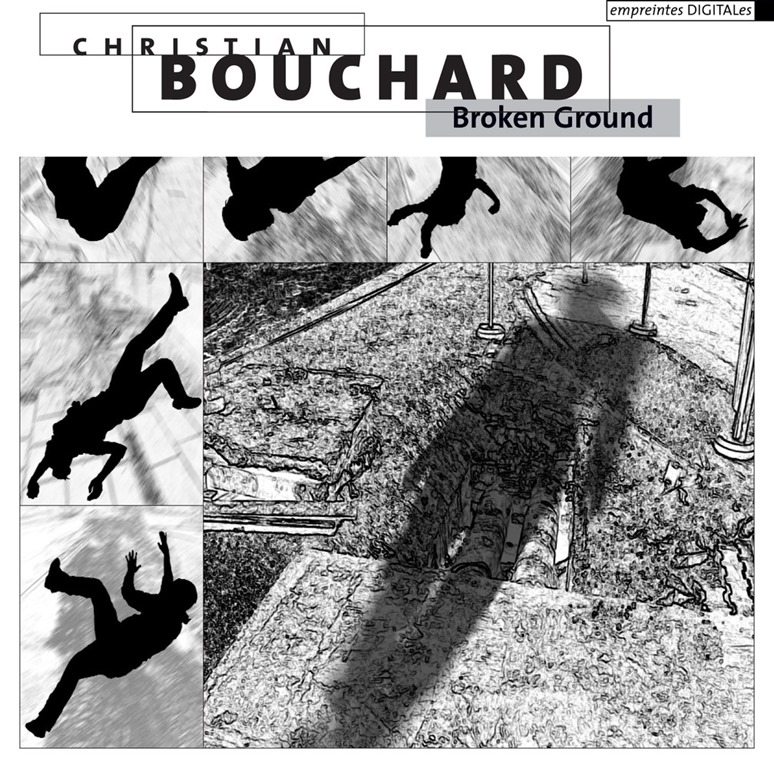
Christian Bouchard – Broken Ground

Consouling Sounds – 9th December 2016

Christopher Nosnibor

Listening to Gnaw Their Tongues always feels like a dubious pleasure, something that’s almost masochistic. You listen to GNT to channel dark energy, to release bad vibes, for the letting of anguish and pain and anger, for an experience akin to a sonic exorcism. You don’t listen to a GNT album to feel better about life and the world, to lift the spirits. In keeping with Mories’ myriad previous releases under the Gnaw their Tongues and various other monikers, Hymns For The Broken, Swollen and Silent is an album for venting, or when feeling the need for some pugilistic self-flagellation.

Structurally, there is a certain narrative thread which is possible to interpret fromt e tracks and their sequencing. Sonically, this is the sound of hell: Hymns For The Broken, Swollen and Silent is the soundtrack of existence in purgatory.

Woozy, near subsonic bass dominates, while above, impenetrable demonic screams and below, almost submerged, drums like machine gun fire rattle at 250bpm. It’s an unholy racket. ‘Your Kingdom Shrouded in Blood’ brings a vast, cinematic expansiveness to the sound. The drums roll like thunder and crash like tsunami, reverberating through immense canyons, and monastic voices send wordless invocations to the heavens. It’s pompous and bombastic and it works magnificently, as if soundtracking the preface to a climactic battle of mythological proportions, a combat between good and evil where the two sides each summon their ultimate deities.

‘Silent Burned Atrocities’ ratchets up the pain, marrying extreme sounds at extreme volume to extreme tempos, barrages of rapid-fire beats from deep within the morass of noise, snippets of dialogue emerge, to be engulfed in a wall of noise and screams of anguish. ‘Hymns For The Broken, Swollen and Silent’ ventures into the territory occupied by Sunn O))) on Monoliths and Dimensions. The dronesome doom and the creeping fear chords are bathed in a quasi-religious light. Here, with sampled vocals floating in and out between the monumental, crushing beats the sound takes on a different perspective on eternal darkness. But dark it is, and there is no hope of finding hope here. ‘I Have Clad the Pillar in the Flayed Skins’ sounds like a black metal remix of early Swans, a punishing cacophony of noise that’s every bit as torturous as the scene the title conveys. These are the spoils of battle, and there is rejoicing in the bloody scene of victory.

The final track, ‘Our Mouths Ridden with Worms’ is the subterranean song of the dead, the defeated. It’s a dank, dark, lugubrious trudge of a track. Perhaps death is not defeat, but victory: to live in a world where this is the sound of living is a bleak prospect.

Hymns For The Broken, Swollen and Silent is not fun. It is not pleasant. It is not enjoyable. It’s dark, and darker still. It’s oppressive, and terrifying. It’s classic Gnaw Their Tongues.

Gnaw Their Tongues - Hymns

ROOM40 – EDRM426 – 4th November 2016

Christopher Nosnibor

This is one for the David Lynch fans, but also fans of experimental industrial noise, and those who appreciate works which exist in the realms between media.

Factory Photographs was one of a number of commissions made by the curator of the exhibition David Lynch: Between Two Worlds, a retrospective exhibition held at Brisbane’s Galley of Modern Art in 2015. The exhibition featured Lynch’s works in painting, sculpture, installation and photography, and included a large section of his Factory Photographs: shots of factories in various states of disuse, taken over several decades.

Raised in the country, surrounded by woods and farms, Lynch developed a fascination with the architecture, the machines and ‘the smoke and fear’ of factories from his visits to his mother’s native Brooklyn. HEXA is Laurence English and Jamie Stewart (Xiu Xiu), and Factory Photographs is their sonic response to Lynch’s images.

While Lawrence English’s work is often typified by a delicate approach to sound and the use of delicate field recordings, it’s clear that the inspiration and the collaborative input of Stewart have pulled him toward something altogether more visceral: Factory Photographs is an intense and brutal work.

‘Sledge’ rumbles and crashes in with some heavy noise, an amorphous roar barrels and funnels a dense sonic cloud, from amidst which shuddering throbs grind and thrum. Each piece is a blast of earthmoving noise, more evocative of a super-scaled atomic destruction than heavy industry or its demise and dilapidation. Yet as noise without clear definition or shape, it’s still highly evocative, and does correspond with Lynch’s conception of ‘the ideal factory location’, with ‘no real nature…’ This is sound which is brutal, harsh, unrelenting and unnatural, wholly man-man made yet wholly inhuman. The barrage of noise is built from a conglomeration of hums drones and thunderous sounds on sounds, roiling, churning. The rhythms are not percussive, but born from cyclical undulations, the churn of industry at its heaviest, in its earthiest form: the mine, the quarry, the drilling rig, the smelting of ore and the forging of metals. But of course these are only echoes of an industrial past: the factories lie empty now, derelict or inching toward dereliction, and the workers have gone, transferred, replaced, relocated, on the same scrapheap as the rusted machinery or otherwise forced into alternative careers.

As crushingly depressing as the factory may have been, its absence leaves only a lack and the question of progress, but as what cost? But equally, the earth-gouging sounds of Factory Photographs reminds of the finite nature of the earth’s resources, in particular fossil fuels. What is left apart from irreparable scars on the landscape once every last scrap has been excavated? Where is the future?

Dark, sonorous notes hang heavy on ‘A Breath’, and Factory Photographs is rich in gloomy atmosphere. Sheet metal thunder resonates through vast empty spaces, and clusters of clangs reverberate in the grimy darkness to create a bleak and oppressive sensation. The turbulent roar of ‘Vertical Horizons’ is harrowing and unforgiving, building to a shrieking howl of feedback while the regular rhythm of heavy machinery rotating is replicated on ‘Over Horizontal Plains’, while thuds and distant rumbles continue endlessly beneath. Digging, dredging…

It’s unsettling but exciting, and the prospect of an audiovisual work, featuring, with Lynch’s approval, the original visual montage of his photographs in 2017 is a thrilling one. Meanwhile, the album more than works in its own right as a dark, stark and uncomfortable collection of pieces which shake the listener’s sensibilities and leaves a hollow, uneasy sensation in its wake.

https://f4.bcbits.com/img/a0775137879_10.jpg

Gargarin Records – gr2035 – 1st November 2016

Christopher Nosnibor

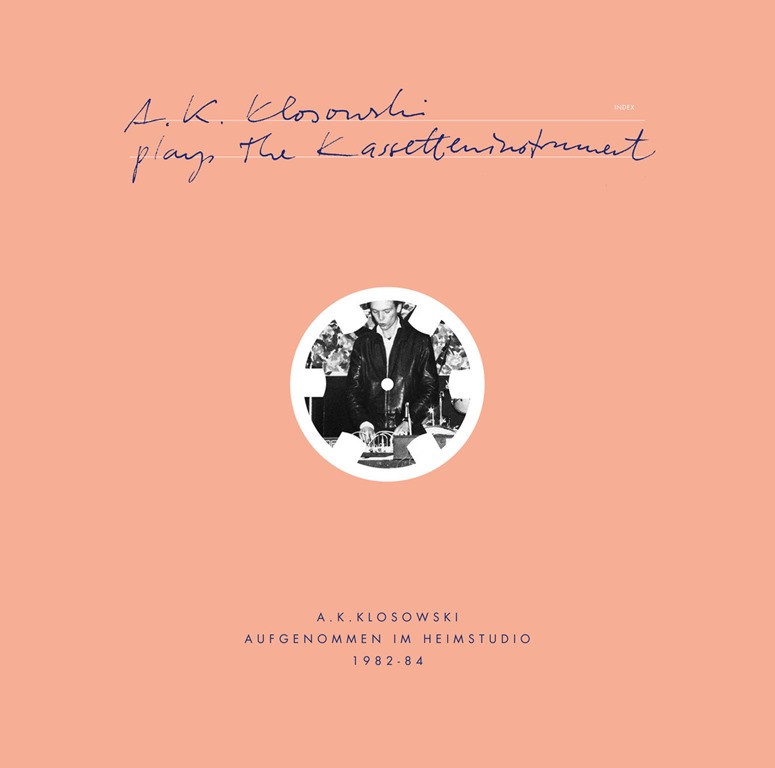
Something is very wrong. Ok, so there are lots of things that are very wrong, but in particular, there’s something wrong with A K Klosowski, and by the sounds of things, his audio archive. And his tape deck  – or decks, to be more accurate. Listening in 2016, one might think that whatever combo of kit constitutes a ‘kassetteninstrument’, something is awry, that the heads are worn and the tapes are chewed, with loops and samples continually playing at random, all at once.

But context is important here and the mic on this album creates digital technology by a mile. As the blurbage explains, ‘Long before digital sampling was affordable for everyone, A.K.Klosowski invented his Kassetteninstrument, a custom-made music apparatus consisting of eight SONY-Walkmen combined with a mute/demute mechanism. The outputs of the instrument could be controlled both by hand and by an automatic trigger module. In addition, a drum computer and some effect machines were fed into the circuit. This technique allowed for very intuitive and simultaneous control over the analogue tape sources.’

Eight Walkmen? That would have required some wedge back in ‘82 to ‘84 when these recordings were produced. …plays the Kassetteninstrument is perhaps an album of its time, but still holds up on every level in 2016. It’s chaos from the offset, and the whole album is a riot of snippets and sounds, bits and pieces, crushed together to create something… different.

Elsewhere, grating, mangled synth sounds and extraneous noise skrawks and clanks hither and thither, and processed beats slither and jitter beneath vocal snippets, robotix voices, whipcracks and car crashes. It’s all going on: synapse-popping, electrode-melting disco and stuttering 80s inspired electronica interfuse in an audio wilderness.

At times it’s an awful cacophony; at others, the mood is playful, while at others still, it’s darkly sinister. Bendy organs and warped tape loops, stretched and scratchy, make weird, woozy wigouts. With motorik rhythms twisted out of time, it’s like Krautrock on acid, with nods to Throbbing Gristle and Suicide, William Burroughs and Cabaret Voltaire. It’s pretty fucking cool.


A.K. Klosowski - …plays the Kassetteninstrument

Uniform are old friends Ben Greenberg (ex-The Men, Hubble, and the producer/engineer responsible for much of the Sacred Bones catalog) and Michael Berdan (ex Drunkdriver, York Factory Complaint) and formed in New York City in 2013.

To coincide with the 28th October release of their Ghosthouse EP (which has scored Aural Aggravation’s vote), they’ve unveiled their cover of Black Sabbath’s ‘Symptom of the Universe’.

Get your lugs round it here…

Peaceville – 21st October 2016

Christopher Nosnibor

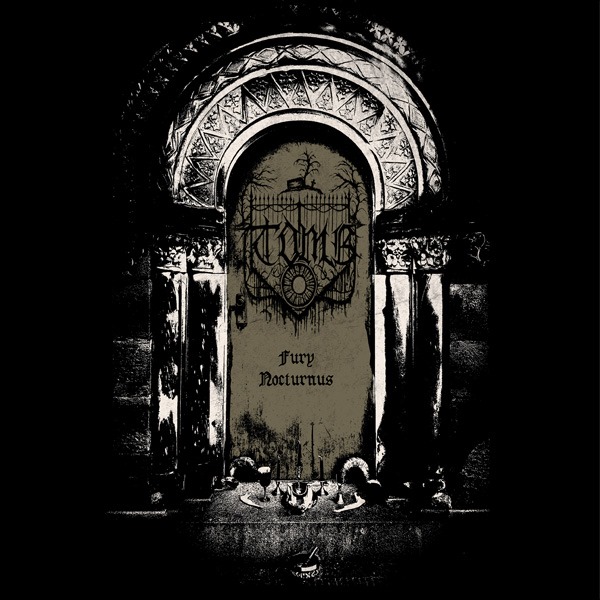
Christ, this is fucking dark. The video which accompanies ‘Abysmal Channelling’ (the album’s bonus track, perversely enough), depicts scenes of an occult ritual, complete with burning incense, singing bowls, self-mutilation, frenzied bell-ringing, pools of blood, all against a backdrop of murky, mangled industrial noise.

Describing themselves as ‘blackened noise occultists’ US act T.O.M.B. (that’s Total Mechanical Occultic Blasphemy) have been going for 18 years now, and have, not surprisingly, remained deep, deep underground. Positively chthonic, in fact.

Fury Nocturnus is their thirteenth release, and while containing thirteen tracks (plus the aforementioned bonus cut), it contains no tunes, and the truth is, it’s very difficult to really establish what the hell’s going on amidst the dense sonic fog. Yes, they’ve fully embraced the

production values of early black metal classics – and it’s perhaps worth noting that Hellhammer, drummer of infamous Norwegian black metal trailblazers Mayhem is a key contributor to this album. This does mean, of course, that the guitars, drums, vocals and dark ambience which pervades every corner of the album is obfuscated by a thick, grainy coating of dinginess. A number of the tracks end abruptly, and there’s a distinctly low-budget, ‘cassette’ feel to this release. But then of course there is. And while occasionally grinding riffs seep through, there are no tunes, no overt structures and for the most part, it’s a seething morass of dark, dark noise cut through with tribal percussion.

Sometimes, there’s a very fine line between portentous and pretentious, grand art and derangement that borders on the dangerously deviant. It’s not entirely clear where T.O.M.B. sit, other than on a throne of bones in a temple hewn into some inaccessible rock face. They’re very much keeping it real in their approach to the music-making process: when creating the field recording soundscapes which feature on Fury Nocturnus, they report that certain necromantic instrumentation was used: human and animal bone, cemetery crypt doors, tombstones and coffins, and audio EVP equipment. I’m inclined to take them seriously if only because I don’t fancy the idea of being the next sacrificial offering, and crucifixion is, I understand, quite a painful way to go. I’m certainly not about to snort with derision about the cliché of the snarling vocals ranting about Christianity on ‘Hoards Rise Now, or any of the album’s many demonic invocations.

It’s not a fun or pleasurable experience, and protracted exposure to this dank, demonic, deviant, and deeply sinister noise feels like an act of self-flagellation. Needless to say, I’d take it over Justin Bieber, Kanye or Katy Perry any day.


T.O.M.B.-artwork-websize

The Hum is the first ever solo album by Marc Heal and his first full-length release since the year 2000. He has been a presence in electronic music since the late 1980s when his band Westwon toured with Gary Numan and recorded with Colin Thurston.

His next band, Cubanate, then achieved success in the industrial scene in the 1990s with four acclaimed albums. Hits such as ‘Oxyacetylene’ and ‘Bodyburn’ crossed over to metal and mainstream audiences, with the former achieving Single of the Week in both Kerrang! and Melody Maker. The band later signed to the Chicago based label Wax Trax!

in its final years, while also gaining worldwide exposure when Sony used four of their songs as the lead tracks on the best-selling Gran Turismo console game. ‘Body Burn’ was also featured in The Sopranos and the Mortal Kombat movie. They toured with The Sisters of Mercy, Gary Numan, Front 242, Front Line Assembly, Fear Factory, Sheep On Drugs, PIG and more. Marc also worked with Jean-Luc Demeyer of Front 242, the duo making two albums as C-TEC.

Marc appeared to remain creatively silent for many years after the demise of Cubanate, but was in fact running Fortress Studios in London and working in television and advertising, writing documentaries for the BBC and Sky.

Pefacing the release of The Hum on 11 November 2016 through Armalyte Industries, Marc presents ‘Adult Fiction’. Watch the video here:

Really? David Tibet and Youth? With an album , Create Christ, Sailor Boy, and live show in the offing, they’ve unveiled a brace of tracks, including the album’s final track, ‘Night Shout, Bird Tongue’. So yes this is really something which is happening nd it promises to be unusul if nothing else. And given the various path-crosings the two have made ove the last three decades, it’s perhps not as bizarre as it may ppear on the surface, so much as a collaboration a long time in the making.

A transformative union of two idiosyncratic tellers, Hypnopazūzu sees Current 93 speller David Tibet joining forces with the eternal Youth, famed not only for his work as bassist with Killing Joke but for production and collaborative work with an outlandishly eclectic list of artists from Alien Sex Fiend to Paul McCartney. Together, they’ve created a singular hallucinatory vision that marries symphonic splendour to indignant gnostic intensity – Create Christ, Sailor Boy draws in, and down, masks terrestrial and celestial and summons a collection of songs unlike anything either artist has created previously. In addition to this debut album release, the duo have also announced a live show in London on Saturday 22nd October at Union Chapel with The Stargazer’s Assistant in support.

Having both first skipped together on Current’s debut album Nature Unveiled in 1983, together, these two again manifested their sticky alchemy, with Youth’s ornate and dramatic arrangements sliding into and around Tibet’s vivid hypnagogic visions to end up in a psychic picnic hinterland that is as sumptuous as it is colourful in its opulence. Tibet’s luxurious kosmoi sliding slyly onto peaks of intent and intoxication on the album, and songs such as the Galactic Sexiness of ‘The Sex Of Stars’ and the Cuneiform Cuteness of ‘The Auras Are Escaping Into The Forest’ show him, backed by the emotive and expressive power of Youth’s arrangements, as a conduit turning unspelled grammars into grimoires.

Transcendent, tumultuous, and tricky, Create Christ, Sailor Boy is the sound of two spirits skipping as one to create a sidereal glimpse into uncounted cartoons. It seems likely this partnership will be a fruitful one, both in this realm and other playgrounds. “I am happy always to work with Youth in any way, forever and for ever and always and in all ways” stresses David. “I wait for my Ouija Board Planchette to receive his Mind’s Eye Text.”

93 years in the making, this elaborately-packaged 3-sided LP (it will have a laser etching on Side 4) contains ten songs and brings together spheres and planets for the Ultimate Hallucinatory PickNick. Also available in CD and digital formats, check out the House of Mythology store for pre-orders.  This album will come with two different front covers; one by David Tibet, the other by Youth, available on 26th August.

Hear ‘NIght Shout, BIrd Tongue’ here:


My Proud Mountain – 22nd July 2016

Christopher Nosnibor

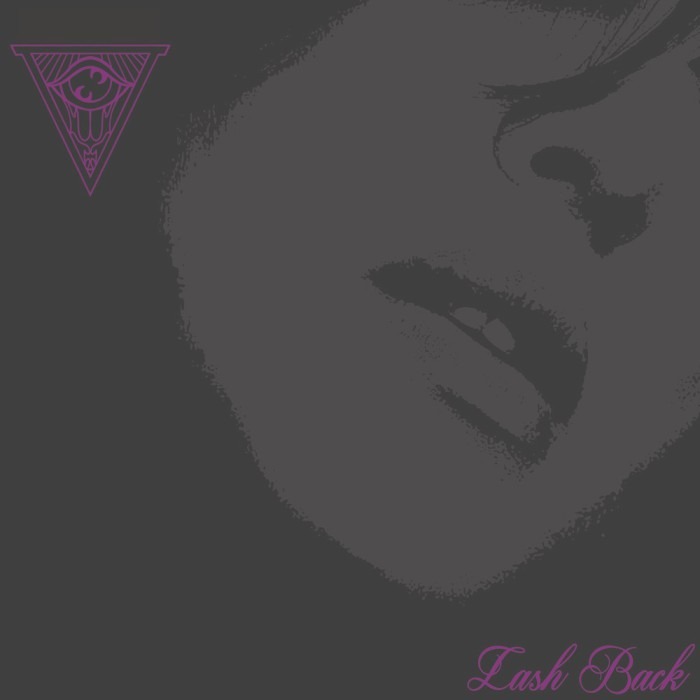
It takes a while to get going: the first minute and a half is simply drifting sound, like the distant sea. But Lash Back is an album that takes it time to build atmosphere. Parker may be the lauded producer and electronics wrangler behind some of metal’s more intriguing contemporary acts, but Lash Back is certainly not a metal album. But it is dark and as innovative an album as you’re likely to hear this year.

Stammering snare drums add an element of unpredictability to the sedate and solid bass-led rhythm on opener ‘Psychic Driving’. As the layers of sound overlay one another, forming a towering sonic cathedral, one is increasingly moved to awe. The stark industrial electronica of ‘Knuckle Crossing’ hangs over a slow, deliberate beat, shifting shapes and textures shading shadows and conjuring an air of coldness and dislocation, while ‘Slow Children’ broods ominously. Parker’s compositions, and their execution, show extreme restraint, the emphasis very much on building tension rather than looking to grant its release. Just as the invisible monster is always scarier than the one which reveals itself, the undefined threat and menace that lurks on, and beneath, the surface of the tracks, is more powerful than their realisation.

There are sustained sonic attacks, and plenty of them for those who relish the blistering noise assault: the aforementioned ‘Slow Children’ does eventually burst into a steely crescendo, and the slow surge of all-engulfing noise that is ‘Low Gaps’ is breathtakingly dense, with heavy hints of Prurient in its tone and the juxtaposition of synth sounds more commonly found on commercial dance albums, with mangled industrial noise, and the sonorous mechanical grating of ‘Sheep Slaughter’ is every bit as abrasive as the title suggests; it’s a soundtrack of pain, of death, of mass-scale killing.

Lash Back is by no means an accessible or easy album, but then, it isn’t meant to be, and Parker has produced something that is unusual and unsettling, and which conforms to precisely nothing.


sanford-parker-lash-back-1

Black Sun Productions – Toilet Chant / Dies Juvenalis

Christopher Nosnibor

Self-styled ‘artivists’ Black Sun Productions had already established a reputation for themselves in Switzerland and Italy, but found a much wider audience after they were discovered by Coil in the early noughties. Touring their performance piece ‘Plastic Spider Thing’ on tour with Coil, they also engaged in collaboration with the seminal industrialists and were signed to their label, Ekstaton.

These two releases – reissues of albums dating back to the mid-2000s and previously released on CD-R on their own Anarcocks label, are interesting for a number of reasons, with the fact that they are Black Sun Productions albums being an obvious starting point. That they’re receiving their first vinyl and digital releases means this rather clandestine work may begin to filter through to a wider audience and be accessible to fans who’ve simply been unable to track down the originals. The choice of these two albums is a shade curious, in that they represent the first and last of the Anarcocks releases, with four other releases separating them.

Given the range of media they’ve worked in and pushed the parameters of, it shouldn’t come as too much of a shock to learn that they’re fairly challenging. That said, these are not brutal or ugly albums. Musically, they’re certainly interesting, and will hold inevitable appeal for fans of dark ambient, avant-garde and music from the more experimental end of the industrial spectrum. I’d argue that true industrial is experimental by its very nature, in the tradition of Throbbing Gristle, and, continuing that trajectory through Peter Christopherson, Coil. And fans of coil will be keen to note that ‘E2 = Tree3’ on the Toilet Chant album features the vocals of ‘Jhonn Balance’ which will make the first of these two albums of particular interest.

Toilet Chant (2004) may sound as though it should have humorous connotations, but the title track which opens the album, but its haunting whale song echoes are far from ribald. Distant, rumbling percussion lumbers in the murky background. ‘Anarcocks Rising’ works on the interplay between unstructured rhythmic pulsations, heaving groans and rolling, bass-orientated, notes. Synths flicker and scrawl, their sparking electronics bringing a starkly manufactured aspect to the more natural sounding sonic body over which they expand. It’s alien and other-wordly, as is the aforementioned ‘E2 = Tree 3’, as thunderous roaring solar winds blast over exotic, eastern-influenced instrumentation and shards of pulsing analogue fizz. The album builds tension across the six tracks, via the Curesque ‘Yesterday’s Dream’ and the spaced-out wibblesome tones of ‘Glüewürmilitanz, culminating in the thirteen-minute ‘Spermatic Cord’. An extended exercise in creating dark, weighty atmospherics, it’s an uncomfortable, queasy listen. Grating bass drones croak and funnel. It’s a dark, insular experience.


Black Sun Productions - Toilet Chant

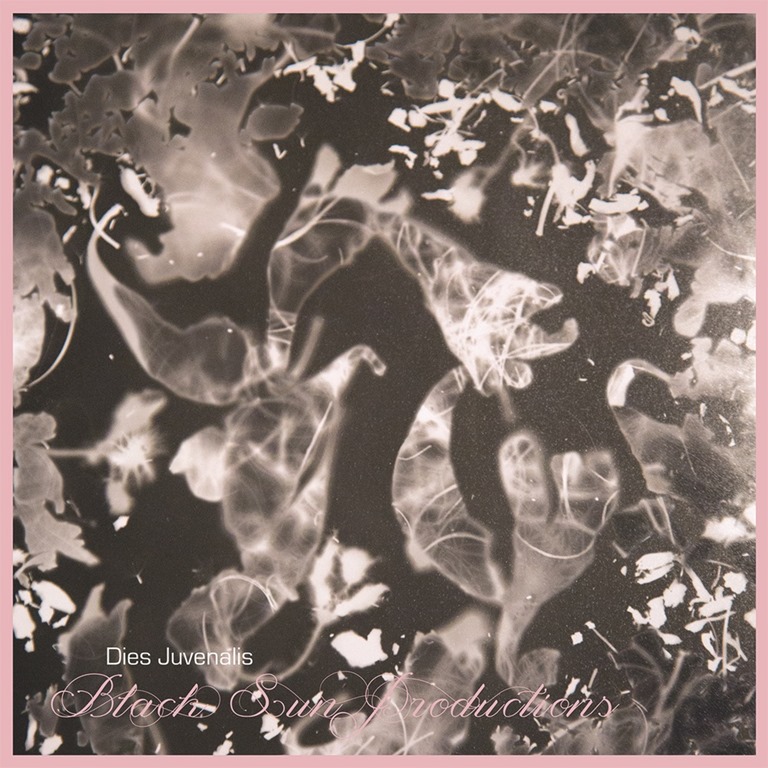
2007’s Dies Juvenalis contains just three tacks, and immediately a different tone is apparent. A swelling organ sound screeds and undulates against pulsating beats on ‘Percettive Riflessioni’. The experimental leanings of Toilet Chant are still in evidence, but the focus here is on dynamics, with dramatic changes in volume and the tonal contrasts adding depth and texture. The presence of definite, regular rhythms also marks a significant change, with elements of Krautrock and psychedelia informing the sound. This was 2007, remember: no-one was digging Krautrock or doing synth-based psychedelia in 2007. Busy xylophones weave the fabric of the title track, while a deliberate, slow, dubby bass beat leads ‘Veneration XXX’ into glitchy, stuttering drum ‘n’ bass territory, while disembodied voices bend and melt over the stammering fills.

Black Sun Prooductions - Dies Juvenalis


I would lean towards Toilet Chant as being my preferred album for listening purposes, Dies Juvenalis offers a greater push on innovation and musical progression. In tandem, they provide an intriguing documentation of the workings of a unique act.