Posts Tagged ‘Dance’

26th June 2023

Christopher Nosnibor

‘Industrial’ is a definition that’s shifted significantly over the years. The shift seems to have come some time in the late eighties or early nineties, when the likes of Ministry and Pitch Shifter were breaking into a much more mass-market audience: the former smashed MTV with the singles from Psalm 69, with even Beavis and Butthead getting down to ‘NWO’ and proclaiming ‘even the old dude is cool’ in reference to William Burroughs’ appearance in the video to ‘Just One Fix’. It seems hard to reconcile the enormity of that album with the face of music in the media now, but the early 90s really were something. You’ll read endlessly about how Nirvana smashed open the doors and so on, and perhaps to an extent that’s true, but they were simply a part of the zeitgeist in an era when MTV focused on ‘M’, and you would find bands like Soundgarden and Butthole Surfers and Rage Against the Machine being played alongside ‘Sabotage’ by The Beastie Boys, and it didn’t seem incongruous with all the mediocre pap because, well, that was what people were listening to. I even picked up a Therapy? live bootleg CD in a record shop while on holiday in Venice in the summer of ’94. I was excited, but it didn’t seem particularly strange at the time. Pitchshifter, meanwhile, had named their debut album Industrial, and it was fucking heavy, but it wasn’t until they changed their sound and rode the wave of sports metal around the turn of the millennium that they got popular, doubtless aided by their intersection with The Prodigy.

But because of the bracketing of these bands as ‘industrial’ in the 90s, the original characteristics of what had previously been deemed ‘industrial’ became buried, and forgotten. It’s hard to really find a connection between Ministry and the likes of Throbbing Gristle and Cabaret Voltaire (at least musically: they all loved Burroughs, but Jourgensen’s fascination was more about the junkie guru legend, whereas TG and The Cabs were into exploring ways of applying the cut-ups and Burroughs’ tape experiments of the late 50s and early 60s to music.

Binary Order sit firmly in the bracket of contemporary industrial, or what many refer to as Industrial Metal, and with this release they really show their influences and wear them with pride.

Now, I do get somewhat twitchy when the running order of a review stream or download differs from the Bandcamp stream or whatever, because the flow of a release is important – at least to me, and I tend to consider the overall flow of a release in my appraisal of its success.

So we’re going with the Bandcamp sequence here, which kicks off with lead single and title track, ‘Thrown Away’, a cover of the song by the oft-maligned nineties nu-metal act Papa Roach, who, remarkably, are still going and releasing albums at a steady rate. Are people really still buying this shit? Rap Metal was surely one of the worst things to have happened to music… but here it is. They blast off the four-track EP with a chunky riff-dense rendition of ‘Thrown Away’, and with that out the way, be can finally turn to the rest of the EP.

The remaining three tracks are remixes of songs from their debut album, Songs from the Deep, released in November of last year. The ‘Bleeding Mix’ of ‘Parasite’ is a gut-churning gurgle of stuttering electronica, that starts with a pumping, shuddering beat and a quivering synth groove which provides a stark backdrop to the raw vocals… but then it gets a bit ravey and autotune and straddles the uncomfortable intersection between dancefloor and sonic assault.

The Arcadmix Remix of ‘A Good Death’ is altogether more atmospheric and moody, and works well, largely because it’s neither overtly dancey nor Industrial / Nu-Metal. The six-and-a-half-minute ‘Irreversible Mix’ of ‘Hands of Time’ manifests as a long, oppressive, darkly ambient drone that’s a real departure from the rest of the EP.

The diversity is the key strength of this release, paired with the fact that it shows a band wanting to push their limits and aren’t especially precious about how their material is reshaped or adhering rigidly too their chosen genre.

AA
812429

7th July 2023

Christopher Nosnibor

A year after unveiling ‘The Nature of Light’ with the promise of a debut album in September 2022, Celestial North’s Otherworld is finally with us. With the title track and ‘Yarrow’ having also built a level of anticipation, it’s left like an album that’s been a long time coming.

Some things simply cannot be rushed, and Otherworld is appropriately-titled, as Celestial North creates songs which sound as if transported from another world, and another time. A she says of the album’s evolution, “I imagined that I was time-traveling through different and exciting worlds. Wandering through the ancient, sacred stone circles at Machrie Moor and then jumping straight into an underground rave in the forest.” And on Otherworld, she transports the listener on these journeys alongside her.

The album opens with the sweeping dreampop of ‘Are You Free’, which begins as a spoken word piece with misty synths, her Scottish accent strong and honest, before piano ripples in and she slides with grace and elegance into her lilting singing voice. It’s a question phrased as a statement, and I suppose it serves to remind us that whatever society’s constraints, we can, to an extent, choose our freedoms.

And yet, for all this ethereality and otherness, Otherworld has a deep-seated earthiness or sense of nature flowing through it. I don’t mean it feels like Celestial North is connected to nature: she is nature, and channels it through her ever molecule.

Raised in Scotland and now residing in Cumbria, Celestial North channels her natural surroundings and their rich, ancient history and heritage. Many artists have promotional photos shot by standing stones and in stone circles, but she describes her music as ‘pagan euphoria’, and listening to Otherworld, you feel that this isn’t image or posturing: these are the spaces where she belongs, and draws the energy from these places. Some – many – will likely dismiss the notion, but many of these locations do possess a unique and indescribable power that goes beyond mere awe. Castlerigg, near Keswick, is one which surprises me every time I visit; yet I have also felt something, like a crackle of electricity, on stumbling upon a minor circle, only half-intact, while in Scotland; the landscape was barren, and gorse had grown beside it, but the full circle was marked by a ring of nettles and a chill ran over me. These are the sensations which emanate from Otherworld.

Her piano-led rendition of REM’s ‘Nightswimming’ is a magnificently-realised slice of quintessentially dreamy indie. Ordinarily, I’d question placing a cover as the third track on an album, but context counts: this featured on a lauded and band-backed charity compilation released by God is in the TV – but moreover, it just works. ‘Olympic Skies’ is breezy, wistful, easy, airy, with a lilting melody that brings folk and dreamy indie into perfect alignment.

The aforementioned title track packs pitter-batter rhythms and sweeping synths and soaring backing vocals which wrap themselves around a fragile, yet confident-sounding lead vocal as it floats on air, before the more overtly 80s electro-sounding ‘Restless Spirit’, another paean to freedom, this time driven by a thumping dance beat. Her voice is unique and complex: it’s quiet, reserved, breathy, with hints of Suzanne Vega and The Corrs, but also Cranes’ Allison Shaw but also Maggie Riley on ‘Moonlight Shadow’. It makes for compelling listening, especially on songs like ‘The Stitch’, which convey powerful, wild-outdoors Celtic pagan vibes – but again, in an understated fashion. ‘Yarrow’ plays the album out with a rolling piano-based post-rock piece that’s sedate and soothing. Otherworld avoids the bombastic clichés which tend to mar much so-called pagan folk or electronic folk: many acts overdo the gothic leanings, and go for bold (melo)drama, which feels contrived and emotionally empty, simply because it’s trying too hard.

For Celestial North, it all comes naturally, and the dancier elements feel comfortable because one doesn’t get a sense of the artist trying to be simultaneously ‘hip’ and ‘deep’; this is simply her music, her style. Otherworld demonstrates that ‘powerful’ doesn’t have to be heavy or hard, and that ‘light’ doesn’t have to mean lightweight or flimsy. It’s accessible, but complex, deep but not dark or difficult. Sit back and let it carry you.

AA

856085

Mille Plateaux – 19th May 2023

Christopher Nosnibor

Fase Montuno is the twenty-seventh release by Cristian Vogel. Yes, the twenty-seventh. Depending on which version you get, this one has seven or eight tracks, all reliant on old synth and drum machine sounds, giving it very much a late 70s / early 80s vibe,

As the accompanying notes detail, ‘This highly personal release is a visionary take on the futuristic potential of Latin American electronica, and promises to be a thrilling journey through Vogel’s musical imagination, every track infused with his signature creativity and energy.

Vogel has lingered on the fringes of dance music for the entirety off his career, and Fase Montuno goes very much all out on accentuating the dance elements of the pieces. That doesn’t mean that Fase Montuno is a chart-dance album, not at all. But with its Larin American influences, it’s very much music you can dance to, if you’re that way inclined – and if you’re not, well, it has groove, and that’s something anyone can get into.

The title track is a busy, bleepy six-minute chiptune that builds layers and energy as it progresses. Things get glitchier and gloopier on ‘Temples in the Sky’ with some busy polyrhythms which flicker over pulsing beats and swathes of swashing synths. It’s sparse, but at the same time there is much happening, sometimes incidentally, sometimes simultaneously.

Always, the beats are dominant, even when pitched subtly. ‘Labyrinth and Warrior’ mines a specific seam of techno I find quite oppressive despite its spaciousness, whereby the repetitions are tightly looped and I find myself feeling as if I’m trapped in a nagging glitch of just a second or two and physically can’t move. Ironic, perhaps, that certain dance music should, instead of moving me, render me utterly paralysed and almost suffocating with claustrophobic panic. But there it is. For those reasons, I find this and uncomfortable experience, and difficult to enjoy.

And so it is that the nagging grooves of Fase Montuno lead nowhere other than inside, burrowing into themselves and clanking away hermetically: there is nothing beyond this is and of itself, and while many find release and escape in this form of music, for me, it’s like being zipped up in a bag where I’m unable to move my limbs and then thrown into a darkened room – worse than sensory deprivation, it’s like the drip-drip-drip of water torture.

I can’t blame Cristian Vogel for my extreme and quite irrational reaction to his music: it’s meticulously crafted, and the frequencies, the mix, are magnificent, and evidence – as if more evidence were needed – Vogel’s enduring appeal in his field.

AA

MP60_front

21st April 2023

Christopher Nosnibor

You know you’re onto something when you get banned from a platform, and so it is that the promo for ‘Heavy Heart’ got canned from VIMEO, usually one of the more forgiving platforms, and you have you ask ‘why?’ It features clips of various failed British Prime Ministers – notably Theresa May’s infamous grooves and various right-wing twats like Farage and Fox and Yaxley-Lennon (Tommy Robinson my arse), pontificating and being pelted with milkshake: nothing untoward, just news footage. So what’s the issue? Perhaps the platform took issue with the featuring of the visage of that out-and-out fash Suella Braverman. But more likely it was starving families juxtaposed with Churchill, toting a machine gun while smoking a cigar, because fuck me, that exposé of the dark side of British politics is hard to swallow for some. No-one wants to contemplate the possibility that Churchill was a twat – an aristocratic political defector and an imperialist – which makes Johnson’s idolisation make deeper sense.

Nishant Joshi’s words which accompany this release are a grim indictment on ‘Great’ Britain in 2023 – the nation which chose to leave the EU (albeit by a slim margin, and that’s something that can’t be stressed enough) on the basis of an ‘advisory’ referendum in 2016. Because ‘the will of the people’? Half the country didn’t even bother to vote because it was a non-issue for them, and only a slender majority of those who did made it happen. But it’s that slender majority who were the most vocal.

He says ‘I was faced with racial slurs when I was younger, but nobody has uttered a racial epithet to my face for many years. But, I know the racists who existed in the 90s are still alive and well. They didn’t die out all of a sudden, and neither did their ideas. So, the point of this song is that everyone acknowledges that racists exist. But nobody will ever admit to being racist – so where did they all go? My answer is that they all wear disguises: as politicians, right-wing journalists, and talking heads for shady think-tanks. The brazen racism has retreated into the shadows, and subtle racism has taken over.’

Will Self said it best when he said ‘Not all Brexiters are racists, but almost all racists will be voting for Brexit’. And that sad fact is, we live in not only a divided society, but, post-Brexit, a more overtly racist society. The referendum outcome has emboldened people to espouse their racist views, with racially-motivated attacks not just affecting blacks and Asians, but also Eastern Europeanss, notably Poles, etc.

Fuck’s sake. We’re a mess. Who do we think has been picking out strawberries and delivering our coffee in Starbucks and Costa thee last decade? The people shunting stacked-up trolleys for click and collect and home deliveries from the supermarket? Large fries?

In Britain, capitalism itself is institutionally racist in a century-long hangover from the empire.

‘Heavy Heart’ kicks straight in with a buzzing, fuzzing, gritty bass and kicking drums that yell urgency. And yes, this is urgent, and it and locks into a throbbing groove that really grabs you hard, a magnificently poised dance / punk hybrid. Just as punk gave voice to a generation frustrated and marginalised, so, sadly, what goes around comes around, and once again, it’s music which is a powerful medium for channelling that frustration. We need change, and it’s voices like Joshi’s which give us hope. And in the meantime, Kill, The Icon! give us a unifying energy, and exhilarating tunes.

AA

FuOhnDPXoAM8A8f

21st February 2023

There’s some debate as to whether or not they really ‘get’ ‘goth’ Stateside, favouring more vampire / horror cliché stylings to anything that defined the disparate ‘movement’ as it emerged from the bleak urban sprawls of England in the early 80s as a darker strand of post-punk. Admittedly, the fans were always the ones with the greater shared affinity rather than the first wave of bands, none of whom recognised the ‘goth’ tag and the ones still going still don’t to this day, but still, quite how or when it morphed into genre let alone a stereotype is unclear.

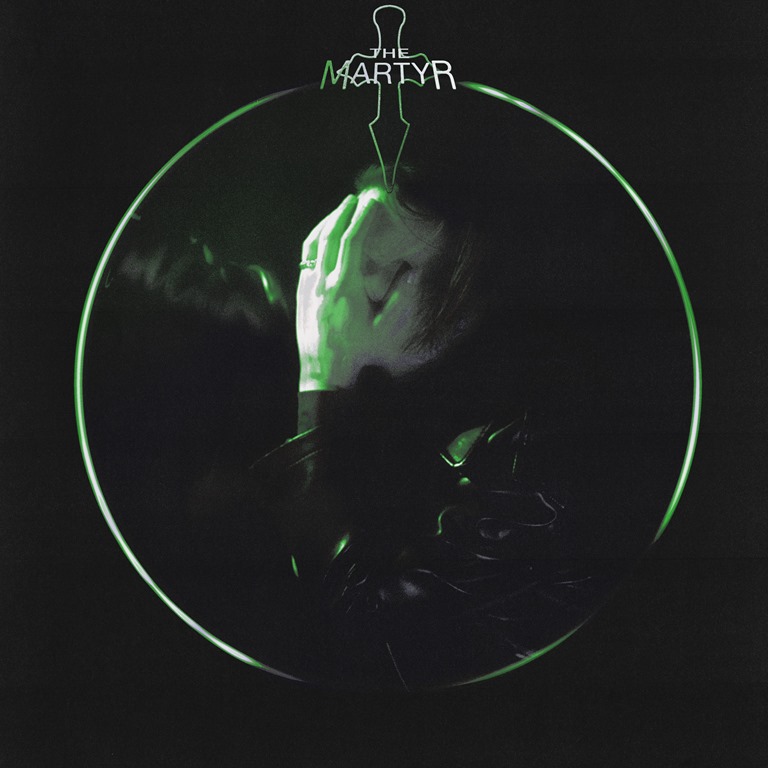
The Martyr’s sound is certainly rooted more in the UK post-punk sound than anything else – brittle guitars and a thudding drum machine call to mind Alien Sex Fiend, and all crunched into just two minutes and thirty-eight seconds – but at the same draws on dark electropop and dance elements – a dash of Depeche Mode, a hint of dark disco – to create something that’s both spiky and danceable.

Lyrically, it’s serious but at the same time isn’t too serious, and it’s certainly not corny or cliché, and if ‘My Friends Look Funny’ employs a number of common stylistic trappings of the hi—NRG dance end of contemporary goth, it’s different enough to be worth a listen.

24th February 2023

James Wells

Looking Tigers is Marcel Moliner, based in Leith, Edinburgh, and he describes his style as ‘animal techno’, since it’s all based on or inspired by tigers. That’s Not to be confused with Techno Animal, although in reality, this is unlikely.

With a hard bass thudding insistently, this is one of those tracks that’s sparse and stark yet at the same time dense. It’s all about the bass. Or, as Marcel suggests, ‘a steady 125bpm kick acts as a safety net against all unforeseen turns, where tiger roars unveil a very primal experience that won’t be forgotten.’ ‘They’re coming’ is dark and brooding, foreboding, and has strong hints of instrumental remixes of Nine Inch Nails or Depeche Mode, as well as calling to mind early Factory Floor.

Yes, it’s danceable, but it’s also cerebral, and it makes you feel compressed and tense, paranoid, even. You can almost feel their breath behind you: they’re coming, but who are they, and what are they here for?

Equally big on groove and atmosphere, it doesn’t necessarily convey the energy of a prowling hunter or savage beast, but this is interesting.

Dret Skivor – 3rd March 2023

Christopher Nosnibor

Fern’s Deformed is appropriately titled: this some mangled shit. From the slow, deliberate, rolling grooves that boom and bow through snarled up noise, while against it, crisp, crunching beats thump and stutter, Fern keeps things interesting and innovative, but more than anything, keeps it uncomfortable.

Deformed sits within that bracket of dark ambient that’s deeply dark, but not entirely ambient, and doesn’t for a second let you settle into it, instead twisting and squirming awkwardly, refusing to solidify or confirm to any one fork of style.

‘Intro’, the minute-long splurge of wibbly dissonance set the scene nicely for the following twenty-five minutes of oddball electronica. The liner notes offer ‘Respect to Portishead, aphex twin, faster katt and Mindacid for inspiration (samples)’.

The majority of the album’s ten tracks are brief sonic snippets, most being well under three minutes in duration, and in many respects, Deformed feels more like a palette sampler than a fully realised work – although that is by no means a failing, as it gives the album an immediacy that further evolution would likely dilute.

It’s four tracks in that Deformed really starts to take (strange, twisted, unexpected and indefinable) shape: ‘Greyhats’, a live recording – it’s unclear if it’s live in the studio or soundboard, but there’s no crowd noise and it fades at the end – is aggressive, dark, and difficult.

Immediately after, ‘Heaven in my hands’ is a murky mangled mess of distortion and mid-range, drums overloaded and crackling in a grey blurry sonic haze, and ‘Give Your Soul Away’ is a skull-pounding beat-driven assault, and the samples pile in thick and fast. ‘Porthole’ is dense, robotic, repetitive, and while dance elements are a defining feature of the album’s style, this is by no means a dance album: it’s stark, it’s bleak, detached, and in places, unsettling.

Deformed is many things: easy, predictable, comfortable, are not among them.

AA

a0661217700_10

11th November 2022

Christopher Nosnibor

Yorkshire based Mayshe-Mayshe’s bio references blending ‘dreamy art-pop and electronica with rich storytelling, skittering percussion and infectious melodies’, and how her ‘deceptively simple songwriting – at once universal and deeply personal – incorporates choral vocals, vintage synths and the occasional hairdryer.’

Said hairdryer was observed in a couple of live reviews I’ve penned in recent years, in catching her live in 2016 and 2021, but what always stands out during her performances is just how deftly she combines an array of elements, both stylistic and instrumental. She’s by no means just ‘another’ loop pedal artist, but a musical who judiciously uses the tools available to conjure textured, layered, detailed works which are, at the same time, simple and radiate aa unique sense of – for wont of a better word – naivete. But equally, her capacity for understatement is a defining characteristic. The fact that while playing a number of regional shows to launch Indigo, her second full-length album, her hometown show in York on the release date is in a record shop/café with a capacity of about 30 speaks for itself.

Performing as Mayshe-Mayshe, Alice Rowan presents as not necessarily shy, but introspective, considered, contemplative and as much as immersing her work in reservedness, there’s a certain sparkle of sass and levity in the mix, as titles like ‘You Throw Lemons, We Throw Parties’ from 2019’s Cocoa Smoke indicates.

Indigo is simultaneously simple and complex. As the lyrics to the title track demonstrate, she’s given to exploring emotional depths by balancing the direct and the oblique to create an obfuscating haze. And, in record, the same is true of her compositions.

‘But I Do’ kicks the album off in a style that’s minimal and poppy and kinda urban but at the same time ethereal and shoegazy, with busy fingerdrums and a crystalline distillation of mood that invites solid and favourable comparisons to The XX.

‘Dark Mountain’, released as a single in September, is really rather buoyant, with a bouncy bass and busy lead synth and twitchy urban vocal delivery that’s quite at odds with the tense lyrics and the ‘I’m drowning, downing’ hook which speaks to anxiety and panic. I suppose you might call it a sugar-coated pill, but it showcases Alice’s capacity to pen bleak yet buoyant pop tunes.

In contrast, ‘Moonflood’ is altogether darker yet dreamy, in a Curesque way, while ‘The Colours of Anxiety’, which originally featured on the 2019 Long Division compilation, is looping, lilting, and easy on the ear in a way that brushes over the tension it channels via a stuttering beat akin to a palpating heart. In this way, Mayshe-Mayshe conveys sensation beyond the words, beyond the explicit, and does so beautifully, in the most subtly resonant fashion.

In many ways, ‘Eczema’ speaks for itself, an itch that just won’t go away, sore and raw, uncomfortable and irritating, but presented in a palatable fashion, and ‘How to be Happy’ feels like a conscious attempt to be uplifting – which is it, but there are strong undercurrent which are less joyous. ‘Zachter’ is another previous release, having featured as the lead track on the two-track Zachter EP last year. With its lyrics in German and its instrumentation sparse and gloopy and with a hypnotic minimal dance groove, it’s something of an oddity which sits apart from the rest of the album.

The title track, released as a single only the other week, rounds the album off in a hazy, intricately detailed style. Accessible, and often breezy-sounding and easy on the ear, Indigo is an album that’s rich in depth and complexity. It’s thoughtful and emotive and dark and tense yet still extremely enjoyable. It’s a wonderful thing.

AA

su49355-Mayshe-Mayshe_2022-1_-_smaller_copy

Shows:

Nov 10

Cobalt Studios

Newcastle Upon Tyne, UK

Nov 11

FortyFive Vinyl Cafe

York, UK

Nov 12

Hatch

Sheffield, UK

Nov 14

Dubrek Studios

Derby, UK

Nov 15

The Holy GrAle

Durham, UK

Nov 17

Oporto Bar

Leeds, UK

Nov 18

The Peer Hat

Manchester, UK

Nov 19

The Studio

Hartlepool, UK

Nov 20

The Grayston Unity

Halifax, UK

Nov 26

Blues Night

Richmond (North Yorkshire), UK

26th August 2022

Christopher Nosnibor

How did this happen? How?? I mean, it’s no bad thing – quite the opposite, in fact – but somehow, a joke band so jokey as so seem almost mythological has broken through, not just on the local scene, but nationally and with songs being played on high-profile radio stations like BBC introducing and even 6Music. They’re a way off beating Shed 7 as York’s most renowned act, but they really are gunning hard for national status right now, following the success of Oh I Don’t Know, Just Horse Stuff, I Guess and now Please Note Intentional Misspelling of Horse.

To look at the covers of early Petrol Hoers albums – or indeed, alboms – is likely enough to deter most sane people – cartoon horses with toilet-wall scrawled enormophalluses provide the housing for messy combinations of hardcore techno and grindcore, the most improbably of hybrids imaginable rendered cheaply and with not only a knowing, but a gleeful lack of sophistication.

So what happened? Not much, really, at least on the face of things. The material is still very much centred around shameful horse puns and so on, and their sound is still a weird mash-up of techno and industrial metal, kinda like Revolting Cocks gone even wronger than on recent tours. The cover art’s been toned down a bit (Horse Stuff featured Danny elegantly draped in a dressing gown in his horse head mask), and some hard touring alongside mates Horse Bastard turned the nation on to all things equine seems to be about the summary of the turn in favour for the act whose most renowned merch is a T-shirt that was born out of a hilarious misunderstanding with the printers, bearing the slogan ‘“PETROL HOERS” IN COMIC SANS CENTRE FRONT BIG AS YOU CAN TA’.

Danny Buckley isn’t daft, and the whole HOERS project is very much an escape for him – but he does it all so well. From the relentless, eye-bleeding block caps posts on social media to the tie-dye T-shirts and pants, HOERS are the full package, so to speak.

Lead single, ‘Captain Me Space Daddy’ has already had some radio play, which is an incredible achievement, considering that it’s an aggressive shouty racket that switches from grating aggrotech to some kind of cheesy Eurovision pop shanty meets early Wax Trax! that’s 100% what the fuck.

It’s exemplary of the album as a whole: fast and frantic – Ali G rapping over chiptune Cossack disco in a head-on collision with full-on raging metal abrasion with raw-throated hollering vocals. It is utterly absurd, and even knowing what to expect, you still find yourself dazed by the audacity of this insane hybrid that singlehandedly knells the death toll for postmodernism, because now, it really has all been done. The thing is – and make no mistake, it’s absolutely genius – even if you absolutely hate it, it’s impossible to deny the audacity and to admire it. ‘Honk if You Like Donk’ is pretty much self-explanatory, while ‘You Can Give Horse a Buckfast’ is a balls-out rager that slips into some kind of lederhosen-slapping ho(rs)edown. ‘You can give a horse a Buckfast / but you’ll never see me drink’, snarls the tee-total Hoers. Wait, he does this shit sober? Oh yes.

It kicks off – and boy, it kicks off – with the Hi-NRG happy horsecore / doom-grind crossover of ‘It’s Just a Mask’, and one feels for all the horseplay, there’s something quite insightful and honest about this. ‘I Would Die for Mr Crunchy’ finds The Hoers spitting vitriol about politicians and the monarchy, and again illustrates that for all the frippery and puerile puns, there is some genuine substance here, and Hoers are by no means completely crass and two-dimensional.

Closer ‘Biblically Accurate Horse’ is a pumping techno tune that invites worthy comparisons to PIG and KMFDM. It’s a bangin’ finish to a bangin’ album, and yes, yes, it really does bang all the way. It’s completely barmy, and that’s precisely why it’s brilliant.

AA

a3115324007_10

‘Phenomena of the Mind’ is a re-mastered EP of selected tracks from the album of the same name released by Mieko Shimizu in 2006, the year after the London Terror attacks. Something dispirited and unexplainable lay heavy in the air off the sprawling city we lived and breathed. In the title song, ‘Phenomena of the Mind’, her intense Japanese rap echoes the deafening noise of the chaotic streets we walk each day. “Visualise”, she said, try to imagine a way to fight your way out of this ominous, dystopian world.

In the track ‘Signal Found’, the theme continues to shattered Dance Hall beats that reverberate to the “twisted sound of broken down London town.”

“Have you lost the plot? Are you ok?” she asks.

In the track ‘Black Salt’, a dark melancholic theme floats over fragmented, glitchy beats, compounded by the repetition of “black” which hammers the constant bombardment of racism prescient of the call for freedom that Black Lives Matter.

Wonderland Magazine has described Mieko’s music as, “beautiful poetic verses and stunning musical arrangements” and Mark Taylor of Record Collector as “An avant garde artist pushing boundaries.”

Mieko Shimizu is a London based Japanese singer, songwriter, composer and producer. Mieko first erupted onto the UK electronic scene as Apache 61; her searing alter ego. The self-titled album garnered plays by John Peel and she quickly build a name across the London & Berlin underground scenes.

Previously she had released 2 albums in her own name, Totem & Road of Shells, then the album Minimal Dance as Mekon Zoo and in 2020 she released her latest album I Bloom.

Watch ‘Phenomena of the Mind’ here:

AA

MS1