Posts Tagged ‘Cruel Nature Records’

Cruel Nature Records – 24th June 2022

Christopher Nosnibor

Hot on the heels of second album Can’t Be Arsed, Cruel Nature have repackaged the eponymous debut from the Manchester makers of ‘kitchen sink punk for the 21st century with a whole side’s worth of remixes from both previous releases – including two pretty radical reworkings of snarling single cut ‘Brain Driver’.

First, to revisit the debut – it’s a primitive, noisy document of disaffection. Adam Stone’s drawling, sneering vocal style is vintage punk, less about holding a tune as conveying attitude, and from the off they set the tone with the seven-minute ‘Food Chain’. A thick, dirty bass grinds out just a couple of notes over a plodding drum while Stone vomits vitriol. If ever a track encapsulated the monotonous drudgery of existing in Boris Johnson’s Britain, this is it. Most of the songs churn away for around seven minutes, but if you’re wondering just how far a band can push low, slow, trudging bass repeating the same simple motif atop a plodding beat, then the answer lies in ‘Half Priced Chickens’ – and the answer is just shy of fourteen minutes. This quarter-hour slog is a gloomy, dark, monotonous trudge: the kick drum sounds like a wet lump of wood, and the sneering shoutiness is replaced by a blank monotone spoken word, and in combination, they create an oppressive sonic fug. The scenes depicted are mundane. Words drift in and out – mobility scooters, office, boyfriend, cough mixture, cheese pasty – and these objects assume bleak resonance as you ask yourself, ‘is this it? Is this life?’ and the answer is there, slumped, devoid of energy, eyelids half closed: yes, this is life. And this is as good as it gets. And it’s fucking endless. Until it ends, in a swampy morass of slow decayed distortion and noise.

The final track, ‘Bunker’ locks into an uptempo groove, but while the drums rattle and bounce away, the mood remains tense, equal parts The Fall and Uniform. As the track progresses, so the anguish builds, and the effect is cumulative Stone hollers roughly about world war as feedback wails and the bass and drums just batter on, and on. Same old, same old…

There’s nothing pretty about Pound Land – the band or the album – and this is a good thing: they deal with the gritty reality of living in shit times. Pound Land articulates the languorous torpor of demotivation, of waking daily to feel the aching anguish of being beaten by life, every minute of every day. Sonically, it’s a long, long way from early Swans, but the density and oppression are very much shared aspects.

By the end of the five tracks, you’re absolutely harrowed and drained.

The remixes are a nice addition, though. The Ruffians on the Train Remix of ‘Brain Driver’ ventures into swampy, almost avant-jazz / trip-hop territory, before kicking into gnarly space-rock swirl. The drums are crisp but overloading, while the bass is pure punishment. Where remixes for most other bands are either dancier or more ambient or whatever, this set – with three of the six from R.O.D., these are primarily exercises in accentuating the gnarliness of the originals, with everything simply sounding even heavier, more crushing.

Pound Land is the real soundtrack to the now. They may have to change their name to Tenner Land before the year’s out the way things are going, so you’d be wise to bag this while you can, and hunker down before things get really tough…

AA

cover

Cruel Nature Records – 27th May 2022

Christopher Nosnibor

Aidan Baker – classically-trained multi-instrumentalist from Toronto (now resident in Berlin), who specialises in electric guitar works – using treated and otherwise non-conventional playing methods – is an artist who I seemingly can’t escape from. His ever-shifting styles and labels may be as difficult to keep pace with as his ever-expanding catalogue, but it seems that whoever’s releasing his work, I’m on their mailing list. This is very much a good thing, as Baker is one of those artists who, despite – or perhaps because – of being impossible to pigeonhole, never disappoints.

Baker’s second release on Cruel Nature, following 2021’s Stimmt, marks something of a shift, from what the accompanying notes ‘was big on atmospherics and abstraction’ to a sound that ‘shoots a bullet straight into the heart of the riff and explodes it, in all its scorching white-out fuzzed-up glory’.

On listening to the album’s grunt and growl guitar assault, the specific meaning of the album’s title remains unclear: ‘tenebrous’ is either obscure, or murky, or otherwise causing gloom, while ‘tenebrism’ refers to ‘a style of painting especially associated with the Italian painter Caravaggio and his followers in which most of the figures are engulfed in shadow but some are dramatically illuminated by a beam of light usually from an identifiable source’. ‘Tenebrist’ seems to lack a specific definition. So is Baker casting himself in the role of an artist whose musical compositions follow in the shadow-casting tradition of Caravaggio, or is this a nod to obscurity, darkness, gloom?

It’s perhaps an amalgamation of all of the aforementioned meanings. The title track, which comes in two parts, lifts the curtain, with a heavy overloading trudge of massive distortion, the guitar too loud of the mics recording, while the drums plod, half-buried but strangely crisp and clear, down in the mix. Unexpectedly, I’m reminded of the production and mix of Moby’s Animal Rights, although the guitar here is much less trebly, angled instead toward the mid and lower ranges, with ‘Tenebrist II’ really plunging deep into psychedelic sludge. The speakers positive crackle with the thick distortion, wrapped in swathes of feedback.

‘Turgid’ is a crackling, buzzing, math-rock explosion: it’s busy and blistering, and somewhere towards the end, the sound thickens, become denser, darker, more abrasive, culminating in a spark-flying meltdown.

The blurb describes Tenebrist as ‘low-down and heavy, and serving up ‘swathes of grunge, pummelling the senses and scattering rhythms through its maximalist energy’, but this is an understatement that only goes so far in conveying the massive sonic impact. ‘Violet Contrast’ is missing an ‘n’: driven by thumping, thunderous drums in a mist of low, slow, smoggy synth drones, it builds gradually to a monumental, percussion-driven climax over the course of a sustained crescendo of drums on drums.

‘Dramatic Illumination’ – in two parts – seems to cast a nod to Caravaggio, and this thirteen-minute suite cuts a dark sonic furrow, as clattering percussion and drones of low, low frequency feedback moan in an avant-jazz mess of calamitous noise, whereby the entire song sounds like the slow wind-down at the end of a set. You wonder when and where it will end… but it doesn’t. Finally, on ‘Dramatic Illumination II,’ the guitar glides in, but it still feels like the end.

The eight-and-a-half-minute closer ‘Chiasroscurious’ is a culmination of the album’s journey; a shuddering, juddering, wall of noise that makes you momentarily think your stereo’s fucked and your speakers are knackered with it’s massively overloading distortion that’s absolutely ruinous, swelling to a sonic tsunami that redefines devastation.

Tenebrist hurts. It’s immense and devastating on every level. The volume hurts. It’s a beast, and exactly the exercise in punishment we all need.

AA

cover

Cruel Nature Records – 3rd December 2021

Christopher Nosnibor

Still moving. We are still moving, despite the fact that the last couple of years have, at times, been characterised by a stifling, crushing inertia. Life on hold. It’s impossible to plan anything, from meeting friends to attending gigs, or going on holiday. Anything and everything could be subject to cancellation or postponement at the last minute. What do you do? Mostly, sit tight, and wait. But in waiting, although the sensation is of time standing still, it isn’t. You’re standing still, half the world is standing still, but the world is still moving; life is still moving.

Still Moving was, in fact, recorded back in 2017; between Slump (2016) and Vent (2018), meaning its original context has no relation to the current situation. And yet, perhaps it does, in some way, with many artists dredging up items from the vaults to create the appearance of movement during a spell of stasis.

Combining elements of ambient, post-rock, and much, much more, Still Moving is a difficult album to pin down stylistically. Sonically, it’s showcases considerable range: from the soft, piano-led ‘Wide Open’, is drifts directly into the altogether more between-space ‘Wherever’, which brings both shades of darkness and light within a single composition, mirrored later in the album by ‘Whenever’, which envelops the lingering piano with mist-like sonic wraiths that swirl in all directions, like will-o-the-wisps flittering, detached and shifting between planes. There are so many layers, so many textures, and so much of it’s mellow, evocative, dreamy, and none more so than ‘Think Through’ where a lonely piano echoes out into a drifting wilderness like a sunrise over a desert.

Darker rumblings underpin the delicate notes of ‘Well Within’, where subtle beats flicker in and out, and each composition brings something new, yet also something familiar. Trilling woodwind drifts in and out as echoes knock against tapering drones and soft-focus synth sounds.

‘Present’ starts dark, but then is swiftly rent by beams of light as grumbling ambience of found sound yields to the most mellow of post-rock moods, with a lot of reverse tape sounds adding to the vaguely unheimlich atmosphere; it’s not weird or creepy, just not comfortably familiar in its subtle otherness.

The title track draws the album to a close, but somehow leaves a sense of inconclusion as the notes hover and hang in the air. Distant waves wash to shore and barely perceptible beats emerge fleetingly, and then immediately fade. Is this it? Where do we go from here? There’s a hint of sadness, but also a sense of stepping forward, hesitantly, towards the new dawn. Breathe. Take in the air and the daylight. We’re still moving.

AA

a0166165718_10

Cruel Nature Records – 3rd December 2021

Christopher Nosnibor

Cruel Nature’s release schedule for December is heavily snake-orientated, with Cavesnake’s eponymous album emerging on the same day as Mitternacht’s The Snake, although the two serpents are very different beasts.

For Cavesnake, the bio informs us that ‘Oxgoat and Sikander Louse came together through a shared love of ugly, blown out Black Metal, achingly beautiful ambient soundscapes, and deep space horror’, and that ‘They use the interstitial zone of Cavesnake to explore themes of loss, emptiness, ontological insecurity and the righteous acceptance of the impending apocalypse.’

It’s seriously fucking dark from the opening, with creeping fear chords and dark ambience drifting slowly across the horizon.

Cavesnake record straight to tape and through a rigorous process of layering, drenching samples in reverb, re-amping guitar drones through monstrous cabinets, they force their music to hang listlessly in a void space akin to an event horizon. And dark it is: ‘Pseudohalo’ may only be four minutes in duration, but it’s a bleak and oppressive opener, although it’s nothing to the whiplash black metal mudslide of ‘Bloodless Weapon’. This is murky, dark, heavy. It growls and grinds and churns and burns, and shrieks howling screeds of sonic lesions, an aural excoriation that scrapes and drones for almost nine minutes.

The ten-minute ‘Posture in Defeat’ is a swirling back hole, a deep, dark eddy of slow collapse, the pretty mid-frequency glimmers rent by earth-shattering sonic donations like planets colliding, while ‘Vipers Dance’ which stretches and twists a full twelve minutes is serpentine, dark, ominous, bleak. Without an explicit context, it’s for the listener to place and utilise this listening experience to suit their experiences, and for the most part, for me, I find myself nervous, anxious, uncertain, as every composition is dark, oppressive, the sound of impending doom. It’s thick, swirling, a dense swirling vortex of airlessness from which there seems to bee no escape as it envelopes your entire being. You simply cannot breathe; all you want to do is breathe. The snake is constricting now, your ribs and lungs are tight. Please…

The final track, ‘Fleshware’, offers no respite, a churning grind and whisper or multi-layered noise that offers no breaks, no moments of calm, only increased tension. It scrapes and screeds and snarls and growls, and near the end, a distorted, impenetrable voice speaks, rasping the album to a close.

It’s pretty heavy, and so intense. Prepare to be bitten.

AA

a1638098834_10

Cruel Nature Records – 3rd December 2021

Christopher Nosnibor

It may have been the year of the Ox in the Chinese zodiac, but 2021 seems to have been more the year of the snake, especially in politics. This snake, however, is one you can trust, if only to be treacherous, particularly in winter: as the accompanying notes explain, ‘The Snake was loosely conceived as a soundtrack to driving along the mysterious, historic route through the Pennines which connects his hometown of Liverpool with his childhood city of Sheffield, and as such forms a bridge between family and friends.’ It’s perhaps not entirely coincidental that it shares its title with the track by Sheffield legends The Human League, also in reference to Snake Pass which carries the A57 to an elevation of some 1,680 feet.

Mitternacht – the solo vehicle for one of the members of Liverpool band Rongorongo – captures the mood in nine compositions, and it’s not just a linear journey, but a journey through time, with nods to aspects of the road’s history as well as it’s geography and geology.

‘The Turnpike’ refers to the original name of the pass, the Sheffield to Glossop Turnpike, and locks into a krautrock groove and it sets the tone, with some dark beats and squelchy, muddy bass frequencies along the way. The Bleaklow Bomber is a US Boeing RB-29A Superfortress which crashed on the gritstone moorland of Bleaklow, killing all 13 crew in 1948, the remains of which remain visible, and it’s a reminder that man is always at the mercy of the environment, and can never truly conquer it whatever advances are made. ‘Nowt But Horizon’ reflects the more ambient aspects of the album, and conveys the vast expanse of untamed wilderness that is the Pennines. It’s bleak, unforgiving, as stretches of the Pennine way more than abundantly evidence. The complex beats are muffled, the air deadened and murky.

Clocking in at over eight-and-a-half minutes, ‘Snowstorm’ is a real standout, flickering, fluttering synth arpeggios rippling, skittering and drifting atop deep, booming swells of bass. Retro loops scratch and cut in and out, and as the layers build, so it becomes increasingly disorientating, a kind of aural onomatopoeia.

For any vintage vibes about The Snake, there’s also a timelessness, which is never more present than in the closing ‘Temptress of the Hills’, a subtle piece that, like much of the album, is built around looping repetitions and granular textures. It’s an evocative work, but one that you can also nod along and mellow out to, and as such, Mitternacht has delivered an accomplished and accessible album.

AA

a1638021615_10

Cruel Nature Records – 3rd December 2021

Christopher Nosnibor

This is one of those albums where the approach to its creation is based around process and technical elements, and the title is not an abstract concept, but precisely the theme around which those technical aspects are centred. Specifically, as the accompanying notes explain, the album uses ‘a custom tuning system’ ‘based upon multiplications of the frequency of the human heart whilst sleeping’.

Or, indeed, not sleeping, as we learn of the composer’s own battles with ‘extreme sleep loss – waking as often as every 15 minutes throughout the night for a period of almost 3 years’ and how ‘the work encapsulates the haze of the perpetual tired’.

It’s relatable, as a near-lifelong insomniac myself, with my sleeping difficulties beginning at the age of five. And not sleeping is both traumatic and debilitating, and sleep deprivation can do awful things to the mind. The paranoia and hallucinations are real. ‘The Cats are Hiding and So Am I’ is a title that hints at this disconnection from the world that goes beyond the mind.

And so The Frequency Of The Heart At Rest is a curious compilation of sounds and sources, fleeting flickers of extranea in the mix beside powerful strings and dramatic drones, at times bordering on neoclassical, others something more industrial, others still folksy, and yet others still approaching ambience. In drawing on an array of sources, and then adapting and mutating them by means of overlays, adjustments of tape speed, this is very much a collage work, and the meticulous attention to detail – the way the sounds interact with one another, the slowing and the reverberations that contrive to create a rare and unique depth and density – is clearly the work of an artist who’s at once focused to the point of obsession, but also has found that point of detachment whereby the creation of such art becomes possible.

The result is incredibly powerful, in that it speaks to those who have occupied this space, where sleep and waking merge into a continuously blurry, bleary, fugue-like state. At times wistful, melancholic, or reflective in a more uplifting way, and yet at others bleak, The Frequency Of The Heart At Rest feels very much like an exploration, a work which strives to navigate this semi-real, half-lives, partially-cognisant existence.

‘6am, The Bathroom, Screaming’ is dark, ominous, heavy beats echo thunderously and captures the essence of the album, and the experience perfectly. No explanation as to why, what, if any story there is behind it, and it may be that the reason is unknown, but the piece transitions from bleak claustrophobia through a spell of ambient tranquillity before blossoming into a passage of soaring, string-led post rock with conventional percussion. The head is not so much a shed, as a cavern of chaos. The whiplash static storm of ‘The Hallways at Home’ is a synapse-blitzing crackle of electricity and fizz of pink noise over which gusts of nuclear wind drift with a desert emptiness. ‘Mealtimes at the Madhouse’ is Chris and Cosey in collision with Nine Inch Nails, a disorientating and hypnotic sketch built around a pulsing synth bass and thudding beat, while the final track, ‘Psalm of the Sleepless Child’ is an extended composition of dark shuffling and rumblings: it’s bleak, and feels very much like the soundtrack to being lost in an anxiety dream from which you can’t wake up, before veering into very different and positively Krautrock territory.

The Frequency Of The Heart At Rest is by no means restful, but is a work of rare intensity, one that prompts palpitations through its woozy, off-kilter other-worldly disorientations. It’s a restless jumble of tension and fatigue, where nothing makes sense, and it’s truly wonderful.

AA

a0578214927_10

Cruel Nature Records – 29th October 2021

Christopher Nosnibor

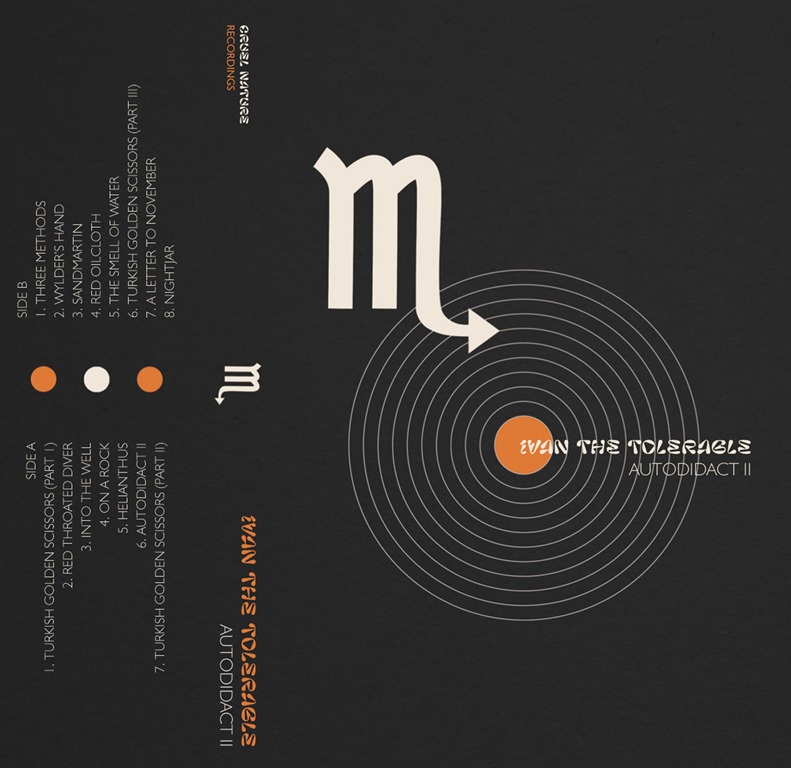
There’s something magnificent about the naming of Oli Heffernan’s project Ivan the Tolerable. It not only places a charming spin on history, neutralising and disarming the fearsome image of ‘the terrible’ with a superbly balanced piece of bathos, but it’s also so very quintessentially English. It’s the weak smile, the stiff upper lip… it’s not terrible. It’s not good either. It’s, you know, tolerable. No-one died. Or only a few people, it could be worse.

Autodidact II is the follow-up to 2018’s Autodidact, separated not only by three tears abut about a dozen releases. Heffernan is nothing if not prolific, and equally, nothing if not diverse.

This fifteen-track behemoth opens with the fifteen-minute ‘Turkish Golden Scissors (Part I) – there are two subsequent, shorter parts, situated strategically about the album. It’s a meandering progressive piece with pseudo-mystical Eastern leanings, a trippy, psychedelic jazz experience that’s utterly baked, man. There’s a trilling keyboard swirling and twirling around in the midst of the sonic sandstorm, and it’s like a collision between a deconstructed Doors track performed by The Necks.

‘Red Throated Diver’, which is centred around acoustic guitar playing a looping, cyclical motif in the style of Michael Gira, paired with some ominous and atmospheric brass and rippling synths, and clocking in at a fraction over two minutes, is a contrast in every way.

The album’s title is perhaps something of a clue to the form, presenting Heffernan as the self-taught experimentalist finding his way as he navigates the sounds in his head and working through ideas and concepts, and Autodiadact II is big on the expansive, rippling Krautrock noodling, with bubbling analogue synth sounds and trilling tones weaving over lower-end oscillations and grind and lay a gurgling, churning bedrock.

Notes chime into space amidst crackling samples and reverberations that connote space voyages – and ultimately being lost in space. It’s appropriate, as Autodidact II is not an album of focus, butt a work that wanders with or without direction in search of… well, what it’s in search if isn’t entirely clear. Not that it matters. The album started life as three separate recording sessions in July and August 2021 as work for a soundtrack to a series of films about psychogeography and North Yorkshire folklore, and as such, if the expanses of North Yorkshire, the moors and beyond, are buried in a sonic fog of otherness, the psychogeographical element reminds us that the end is not the end: it’s all about the journey. And Autodiadact II, while springing numerous surprises and drifting in and out of an array of varied sonic spaces, leads the listener on a unique, if uncertain journey.

AA

a1151846330_10

Cruel Nature Records – 24th September 2021

Christopher Nosnibor

Cruel Nature’s September releases are all about lost classics from Gateshead. Every local scene has those bands who had so much potential to go further afield, and who, given the right exposure, the right breaks, could – and should – have been (inter)national cult icons.

‘Local’ bands so often get a bad rep, as if they’re somehow inferior because they haven’t broken out. Sometimes, it’s misfortune. Sometimes, it’s because of life – dayjobs, family, personal circumstance. And sometimes, it’s simply a lack of ambition to do anything more than make music and play locally, and that’s not reason to judge an act. Not everyone wants to be a global superstar, and of the tend of thousands who do, hardly any make it anyway, so maybe accepting your limitations is a good thing to do, and far healthier than throwing yourself not the rat-race running on the vaguest of hopes of ‘making it’ – whatever that is.

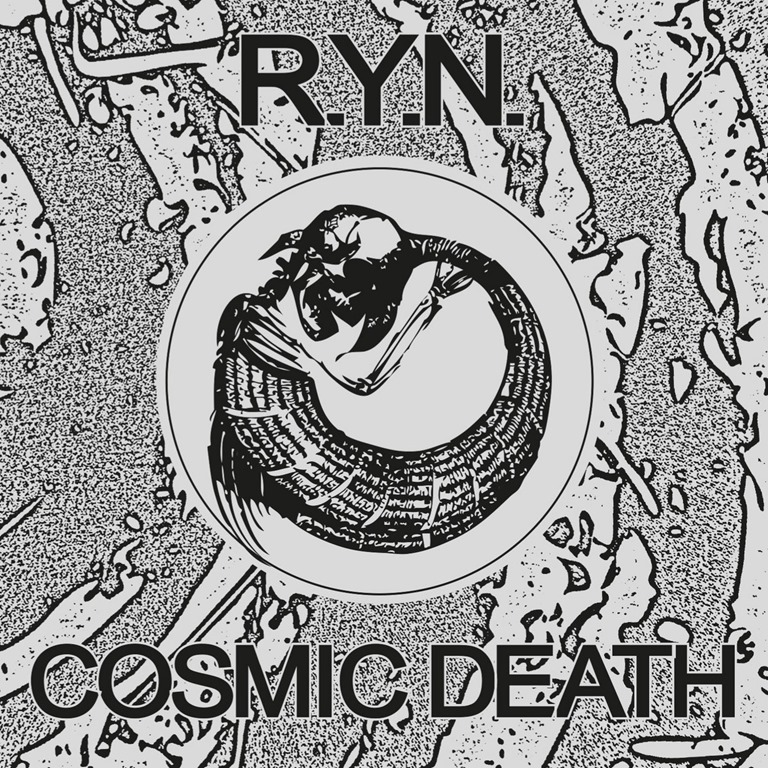
Like turn-of-the-millennium purveyors of brutal harshcore, ODF, R.Y.N. demonstrate a remarkable range and quality of non-mainstream music being played around Gateshead. R.Y.N. was the drone / void ambient project of Gateshead duo Pete Burn and Dean Glaister, active from 2003 to 2011. Like the simultaneous ODF release, Cosmic Death is a retrospective which puts their 2008 albums Astral Death and Cosmic Birth together for the first time as a double cassette package.

Cassette one contains the six tracks from Astral Death, and the eight-minute ‘Conscious Patient’ provides a wonderful introduction into their world of dense, dark, grating dronescaping. Things delve deeper and darker with the nine-minute churning drabness that is ‘The Cleansing’: cleaning is appropriate, and it’s the sonic equivalent of as colonic irrigation. It feels gentle in comparison to the grating metallic oscillations of the third track, ‘Mind Over Mind’. It’s a fifteen-minute thrum, where nothing happens, nothing changes, and it’s not quite harsh noise wall – not least of all because there are shifts in texture and tone – but it’s limited, and a piece that achieves its effect through its sheer relentlessness and lack of variety, the effect of the dense wall of sound being cumulative psychologically.

It’s readily apparent that R.Y.N. had global potential, but for an audience so niche they’d have probably have needed to relocate to Japan to play to an audience of more than fifteen people, unless they’d scored a support with a noise giant like Merzbow or Whitehouse – in which case they may have got to play to 75 or a hundred people on a good night. But quality and quantity are rarely contiguous, and when it comes to creating dark atmosphere, these guys were clearly masters.

‘Cosmic Research Unit’ is still a heavy drone work, but feels softer and leans more toward ambience. It doesn’t get such bleaker than ‘Astral Death’. It sounds like a recording of an engine or a lawnmower, played at reduced pace. It’s like HNW with additional layers of swampsome murk that shift and provide some sense of movement, however slow and lingering.

Cosmic Birth opens with the title track, and picks up where its predecessor left off, with a harsh scraping metallic drone like a machine churning and grating on and on, over which whispering drifts of sonic smoke linger – and it very much sets the tone for the remaining seven tracks, which include two twelve-minute epics in the form of the dank and murky ‘Brain Pictures’, and ‘Creation of Infinity’, both of which lead the listener inside themselves to contemplate those darkest inner recesses, and the fifteen-minute ‘Gravity Drain’, which really pushes the oppressive atmospherics to the limit.

‘Catacombs’ plunges through sonorous and penetrating darkness to arrive, with a bone-rattling percussion way off in the background, at an empty space. And ultimately, the final destination: the somehow incomplete yet equally finite ‘Serpen’, which swirls around ominously and maintains a knife-edge suspense.

After wandering through endless tunnels without light and without any real hope of escape from this claustrophobic aural subterranean, it becomes clear: this is the face of the abyss – from which, there is nothing and no return.

AA

a1776692118_10

Cruel Nature Records – 24th September 2021

Christopher Nosnibor

The lights that burn brightest tend to be the ones that burn briefest, and it’s something of a conflicting pull on the gut that surrounds reflections on this. The idea that acts who quit and artists who died leaving a small but impactful legacy are somehow unfulfilled and that we’ve been deprived of whatever they may have done is counterbalanced by the contention that perhaps curtailing a career at its peak or even still in its ascendency is the best way, and fans will be forever divided on this topic.

What if Ian Curtis had lived, and Joy Division had mutated into New Order? They would have been just another band whose longevity overshadowed that early career, another Manic Street Preachers. Simple Minds should have called it a day in about ’84, and Kasabian’s early promise was spent after just one album.

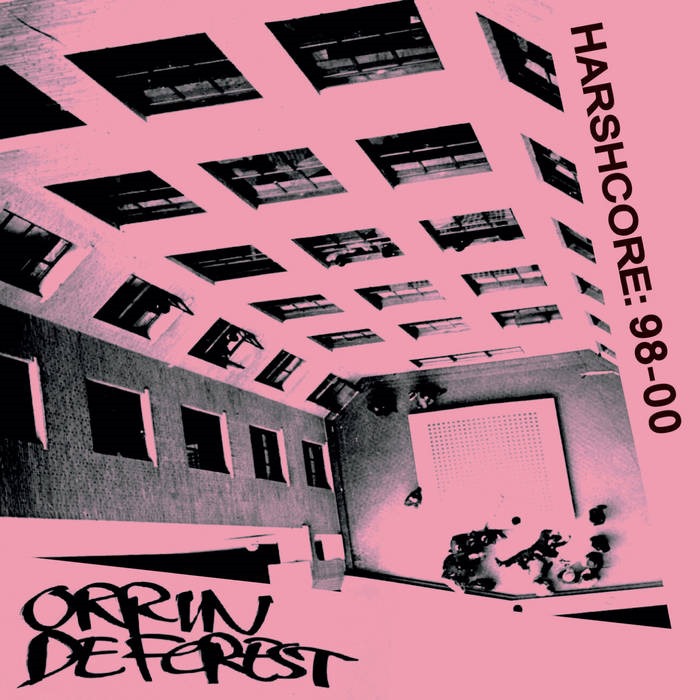
ODF never lasted long enough to really break out of the locality of Gateshead. As the liner notes to this retrospective observe, they ‘blasted onto the North East’s harshcore scene in 1998 and were gone in a flash three years later; their 2001 split album with Newcastle’s Jazzfinger the only remaining recorded output’. Everything leans toward the attainment of immortal cult status here, and the changes are infinitely more people have heard of the band, or otherwise heard them posthumously than ever did during that brief but explosive career.

This limited cassette, Harshcore 98-00, documents two live shows, both recorded in Gatehead, with the first seven tracks recorded June 2000 at the Floating Cup, Gateshead, and tracks 8-14 recorded June 1998 at the Soundroom, Route 26 Centre, Gateshead.

It’s pretty fucking brutal. Most of the songs in both sets are around the two-minute mark, and it’s as abrasive as hell. The vocals! Rob Woodcock (Marzuraan; Tide Of Iron; Fret!; Platemaker et al) sounds like a zombie from The Walking Dead on amphetamines, snarling and rasping with the most ravaged-sounding voicebox. There’s a lot going on here: ‘Calisthenics’ brings all kinds of jazz and math elements alongside the full-on, balls-out wild thrasher, and the fifty-five second ‘Aggressive Lowbrow’ brings everything all at once in a racket that suits the title.

Despite the close proximity of the sets, there’s a clear evolution here, so it’s a little frustrating that they’re presented in reverse chronology on the release. The ’98 set is less evolved, less detailed, less jazz, less multi-faceted, and more of its time – brimming with samples and songs that are little short of whirling explosions of whiplash-inducing racket, with ‘O.D.F. Will Kick Your Lame Ass Motherfucker!’ being exemplary, but also marking the band’s first forays into different terrains, with hints of swagger emerging amongst the frenzied racket. It’s gnarly, it’s intense, and it’s fucking punishing. And it really makes you wish you had been there.

AA

a1380330890_16

Cruel Nature Records – 27th August 2021

Christopher Nosnibor

Zero Gap is a truly international collaboration between Ryosuke Kiyasu (SETE STAR SEPT, Fushitsusha, Shrimp, etc, aka ‘the Japanese guy with a snare drum’ and WATTS (Lump Hammer, Plague Rider, Lovely Wife, aka that beardy growly bloke) that proves that location is a state of mind. Recorded oceans and continents apart, there is zero gap between the two artists as they hammer out half an hour of sonic abrasion, created, as the accompanying notes explain, ‘entirely from one snare and one delay drenched throat’.

If on the surface the snare drum seems to have only limited potential, then Kiyasu doesn’t exactly disprove that, in that it sounds like snare drum throughout. But the guy finds every conceivable way of rendering that snare sound, from rapidfire hits and rolls and crashes through clattering blasts and builds, and the still finds ways beyond conception to conjure yet more dynamic range from the simplest of instruments.

Against this clattering, clanking, thunderous barrage of percussion, Watts delivers a vocal performance that quite simply doesn’t sound like a vocal performance for the majority of the time. From a whispering moan like a distant solar wind, to a gurgling drain to a chthonic babble, he’s got immense range. It might not quite be Mike Patton’s Adult Themes for Voice, but it’s still impressive – and I mean eye-poppingly wide-ranging and weird. Best of all, Watts grasps when less is more, at times uttering little more than barely audible grunts and burps at long intervals. Snarling and snapping like a zombie in The Walking Dead, one moment, to barking like a rabid dog the next, Watts is wildly unpredictable, and often quite simply doesn’t sound human. Perhaps he isn’t. At times unsettling, unnerving, others plein scary, he snarls, growl and gargles his way through the creation of some quite strange soundscapes.

Everything works well in context, too: at times, Kiyasu pulls back on the battery of beats to taper down to some barely-there hints of sound, and the two not only are incredibly egalitarian in the distribution of the prominence of their contributions, but they seems to intuitively grasp the need for ebbs and flows, crescendos and decrescendos, making Zero Gap a work that feels like a journey, and even if it’s a journey without a clear end point, it’s a journey punctuated by events and variations.

Zero Gap isn’t abstract as such, but it does, most definitely stretch the boundaries of music. It is ultra-niche, but in the global village it’s the kind of thing that has the potential for significant cult reach. The pair deserve it: Zero Gap is far out in the best way. Crazy, inventive, innovative, not giving a fuck for convention, it’s an album that carves its own niche.

Captured as a single track spanning thirty-two minutes, it’s unusually a release that works best digitally (and dare I even say it, it, could make a nice CD), but then this is an unusual release. My advice? Dive into the dark stuff.

AA

cover