Posts Tagged ‘Cruel Nature Records’

Cruel Nature – 6th January 2023

Christopher Nosnibor

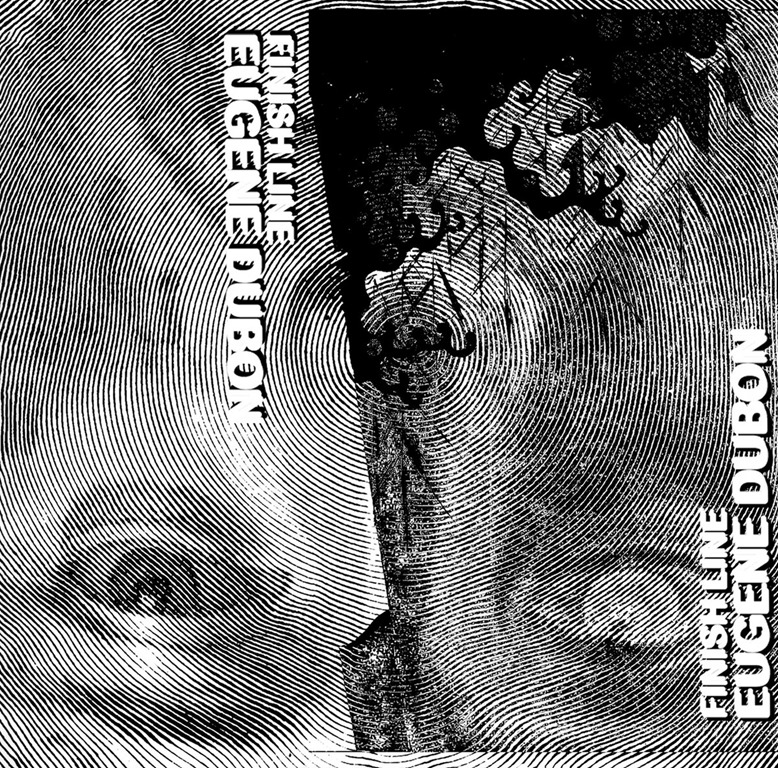
The blurb prepares us for what to expect by explaining that ‘Finish Line is the debut EP from Seattle ex-pat Eugene Dubon’ and promising ‘Seven tracks of rhythmic bass-heavy post-punk fuzz atmospherics, with Eugene’s musings on subjects such as the goldrush and clocks drolly delivered in a dead-pan style. Unapologetic and upfront.’

Only, it doesn’t fully prepare us, because Finish Line is quite extraordinary. In amongst the morass of post-punk-inspired bands and tunes, Finish Line stands out for actually living up to any hype.

The title track smashes it all together: a nonchalant, level spoken word piece is pitched against some layered guitar and swirling noise, but it’s the relentless hammer of the drum machine that defines the sound and sets the parameters for the EP’s six tracks.

‘Last Page’ has a different energy, with a piston-pumping mechanised drum – more Big Black than anything else – keeping things tight against a swirling array of guitar chimes and Dubon narrates from a point of clinical detachment, with ‘Cruising’ proving particularly punchy and percussion-led. And thinking as the album progresses, Dubon’s monotone vocal is more Steve Albini than anyone else: croaking, cool, sardonic, detached.

Dubon’s deadpan delivery renders this as much a set of spoken word backed by music, but it’s not easy to pitch anything overtly literary or spoken word. You kind of lose yourself to the point that the words drift away, the vocals becoming another instrument, and that’s largely on account of the sameness of the delivery, the flat, evenness of it all, his dry baritone isn’t given to variety of tone or pitch, but it very much works with his material.

Halfway through ‘State’, while revelling in the fractal guitars, it occurs to me just how much this calls to mind Kompromat, the most recent album by I Like Trains, and ‘Signpost’ built around a repetitive loop of programmed bass and drum sounds like Sleaford Mods on heavy tranquillisers., with haunting Cure-esque echoes drifting in and out to provide accent and detail.

Rounding off with the slow, gloomy, ‘Conversation With Jean Claude Batois’, we find Dubon wandering into territory that sits somewhere between The Doors and Beat Generation jazz-infused spoken word poetry. It’s not a race to the finish line, but a slow, smoky and soporific meandering towards it. But the change of tempo is well-times, after six back-to-back bangers propelled by piston-pumping beats and snaking chorus-coated basslines. And while Finish Line clearly does belong within that post-punk bracket, it also sets Eugene Dubon apart as having an individual take on the template.

AA

a1915223150_10

Cruel Nature – 6th January 2023

Christopher Nosnibor

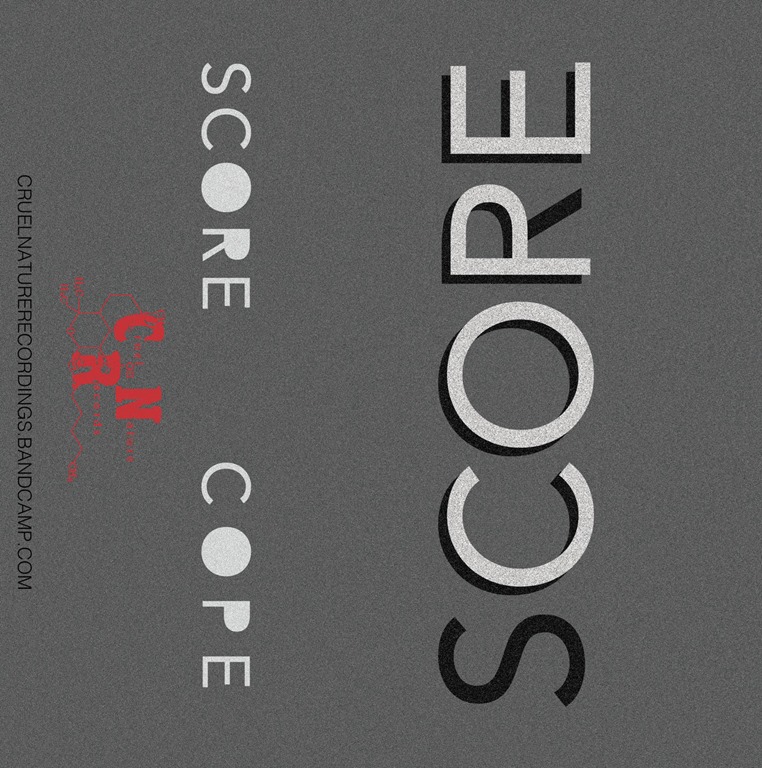
It’s something of a relief to discover that Score’s seventh long player for Cruel Nature isn’t some gentle exercise in self-help and mental health wellbeing, or otherwise the soundtrack to some existential post-pandemic breakdown – because the former are utterly fucking nauseating, and the latter, while I’m all for those primal screams of anguish, which I often find relatable, at least to an extent, variety isn’t only the spice of life but the key to staying within the marginal parameters of sane in an insane world. No, COPE, recorded in six weeks at the end of 2022, which somehow feels like a long time ago now already, takes its title from Julian Cope.

As the blurb explains, ‘the album was directly inspired by the musical descriptions to be found in the autobiographies of Julian Cope: Head On and Repossessed. Using Cope’s impassioned words as instructional starting points for each track, COPE references Mott the Hoople, Patti Smith, CAN, Duane Eddy, The Doors, Suicide, Dr John, Sly & The Family Stone and more.’

Julian Cope of one of those people who I’ve long been somewhat perplexed by, and, truth be told, haven’t spent too much time investigating, either musically or biographically. He has always struck me as having a career less centred around his relatively low-key musical output following a degree of commercial success with The Teardrop Explodes, and more around the fact that he’s Julian Cope. Some may want to set me straight on this, but right now, I don’t need to hear it, and a familiarity with the source material shouldn’t be a prerequisite of my ability to critique the work at hand, which interestingly, in drawing on his biographies, only serves to further indicate that Julian Cope spends more time writing about being Julian Cope than making music I need to hear.

COPE is a document to creativity under intense circumstances. To quote from the accompanying notes, COPE was ‘recorded as it was written, in one or two takes in a tiny garage and drawing on an old quote from the arch-druid himself as a creative manifesto: “It had to be very cheap, very fast, very loose. I needed to be an ambassador of looseness”’… ‘COPE is an exercise in embracing limitations and existing in the moment, a lyric-less love letter to Rock ‘n’ Roll itself, and a one-word command to the fried modern human.’

Containing nine instrumental compositions, COPE is a pretty demented journey, an absolute rollercoaster of a ride, that swings between psychedelia and krautrock, twangy desert rock, swampy jazz, with the six-minute ‘Brick’ bringing it all together with a Doorsy kind of trip with the added bonus of some woozy brass in the mix. ‘On The One’ goes deep into a funk workout that grooves hard, but ‘Old Prick’ stands out for its darker post-punk feel that suggests it could almost be a Psychedelic Furs or The Sisters of Mercy demo. The twelve-and-a-half-minute ‘Softgraundt’ is more than just expansive in terms of duration, and is a multi-faceted musical exploration that wanders hither and thither, shifting, evolving, a dozen or more songs in one. And perhaps this is the key to COPE – both the album, and the man. It’s everything all at once, and it’s more than you can really keep up with. It’s a challenge, and one I’m not entirely sure I’m up to, but there’s never a dull or predictable moment here.

a1384536327_10

Cruel Nature Records – 2nd December 2022

Christopher Nosnibor

Seems I’ve blinked and missed a while slew of releases from Ontario experimentalist Clara Engel since writing about Hatching Under the Stars in the spring of 2020. Then again, the spring of 2020 doesn’t so much feel like a lifetime ago, as much as it does another life. Released on 5th April 2020, we were only just over a week into the first lockdown here in England, and we had no sense of what was to come.

As the blurb outlines, the album was ‘recorded entirely at home / solo’ and ‘Their Invisible Hands presents 13 tracks of subtle dream-like beauty… A mystical work, mixing classical and dark folk wanderings with misty soundscapes, which creates an abstract, new world atmosphere.’ Self-released in April digitally and on CD, Cruel Nature are giving it a cassette release.

In a way, returning to Clara’s work now is a powerful, and grounding experience. What has happened in the space between? Everything…and nothing. As they explain in the accompanying text, replicated on their Bandcamp, “I’m not writing the same song over and over so much as writing one long continuous song that will end when I die.”

If the last couple of years or so have reminded us of anything, it’s our mortality. And the sound of Their Invisible Hands is both spiritual and earthy. To unpack that, the sparse instrumentation, which consists predominantly of creening woodwind, chiming, picked strings, and hand percussion, has a simple, primitive aspect to it, and the slow, rhythmic undulations are attuned to elements of nature, as grounded as the act of breathing. ‘Dead Tree March’ is exemplary, a long, expansive drone that pulses in and out, repetitively, hypnotically, a sparse guide to a meditation.

Engel’s vocals, meanwhile, are ethereal and other-worldly, with a primal folk leaning that moves effortlessly between narrative and incantation, both of which tap into that subconscious part of the mind that it seems only music and nature can reach.

These themes of nature and of the ancient, of thoughts and tales lost in time, are constants in Engel’s work, giving credence to their comment about writing one long continuous song. In this context, it’s easy to see their entire catalogue as an interrogation and exploration of a quite specific field. Engel’s world is one full of magic and mystery, cryptids and magic beans and magnificent birds which sing. These songs are steeped in atmosphere and wonderment.

‘Ginko’s Blues’ is perhaps the most overtly classical piece on the album, a sparse composition led by picked acoustic guitar that calls to mind a stretched, dispersed rendition of Beethoven’s ‘Ode to Joy’, as it’s slowly dragged into a sea of scratched strings and gauze-like reverb.

Dissecting Their Invisible Hands too hard is to misunderstand its nature. It’s not an album to pick apart for the various elements, or even to comprehend its structures, origins, or meanings: any attempt to do so is to demystify its resonance. ‘It’s all fun and games ‘till somebody shows you their heart.. on a platter on a stake on a riverbed rusted…’ they sing on ‘High Alien Priest’. The metaphorical and the literal blur unsettlingly.

You shiver and find yourself mute as Engel leads you through an array of evocative soundscapes. All you can do is let go, and to explore them.

AA

a0799919546_10

After a lengthy hiatus from 2013 to making a return to the fray this summer, Benjamin Heal’s Cowman alter ego is back with a vengeance: hot on the heels of the Crunch’ EP, which was essentially the salvage from an aborted album project, we have a full-length album proper in the form of Slaughter.

The title may or may not be a fairly off-the-cuff and easy reference to its being recorded at a studio by the name of The Slaughterhouse – evidently not the one in Driffield, favoured by Earache acts back in the day, since it was destroyed by a fire in the 90s – but it equally seems appropriate to the tense, tortured atmosphere that pervades this release.

Kicking off energetically with ‘Hydrant’, this is the sound of Cowman reinvigorated. It’s still gloriously lo-fi, and still warrants Pavement comparisons I effortlessly tossed at its predecessor, but this carries the unbridled excitement of those early EPs which preceded Slanted. But moreover, it’s fuller, scuzzier, dirtier, somehow more adrenalized, and also more frenetic, more angular, as if Trumans Water had witnessed the apocalypse. In this sense, it’s very much a return to the gnarly grind of 2013’s Artificial Dissemination and Palpating the Rumen (2009).

AA

This tension carries on into ‘Rinka’, two and a quarter minutes of multi-layered mumbling vocals largely submerged beneath a hefty chug of rhythm guitar and a lead guitar that just about carries a motif, but wanders and around as if half-blinded and disoriented by a spinning compass on a map that’s missing bits.

‘Blackstock’ is a full-on wall of sound, the mangled vocals echoing impenetrably in a churning cyclical riff, and it’s not until ‘Kissing the Rock with Eyes’ that we get something approximating a groove, but even then, it’s impossible to settle into it for long. The beat may be vaguely baggy, but it’s urgent, thwacked out at a hundred miles an hour while the guitars are cracked up, overdriven and grungy. Something has happened here, and perhaps perusing the 2010 Cowvers album, which includes rough-as-fuck renditions of songs by Big Black, The Fall, yes, Trumans Water gives a clue of the roots to which Cowman is returning to here, but there’s also a newfound sense of purpose here, as if there’s a real need to channel some post-pandemic angst into big, bad, noise.

‘Itch’, clocking in at a minute and forty-one is pure Big Black, with a squall of treble-to-the-max guitar clanging over a pummelling blast of drum machine, before the dark, dank mass of the lumbering closer, ‘Wichita Black Sun’ rolls in and mines a mid-tempo motoric groove for over a quarter of an hour. The nagging monotony is integral to the experience, like a feedback-strewn reimagination of Lard’s ‘Time to Melt’ and the entire back catalogue of Terminal Cheesecake pulped into a single document.

While ‘Crunch’ was fun, Slaughter feels like the real Cowman. It’s not an easy or accessible record; in fact, it probably requires four stomachs to fully digest, but it’s a magnificent set of dingy alt-rock noise with firm roots in the early 90s, the likes of which is rare these days, yet seems fitting for these challenging times.

Listen EXCLUSIVELY to album tracks ‘’Blackstock’ and ‘Sticks, Stones, Fingers and Bones’ here:

AA

a2206602401_10

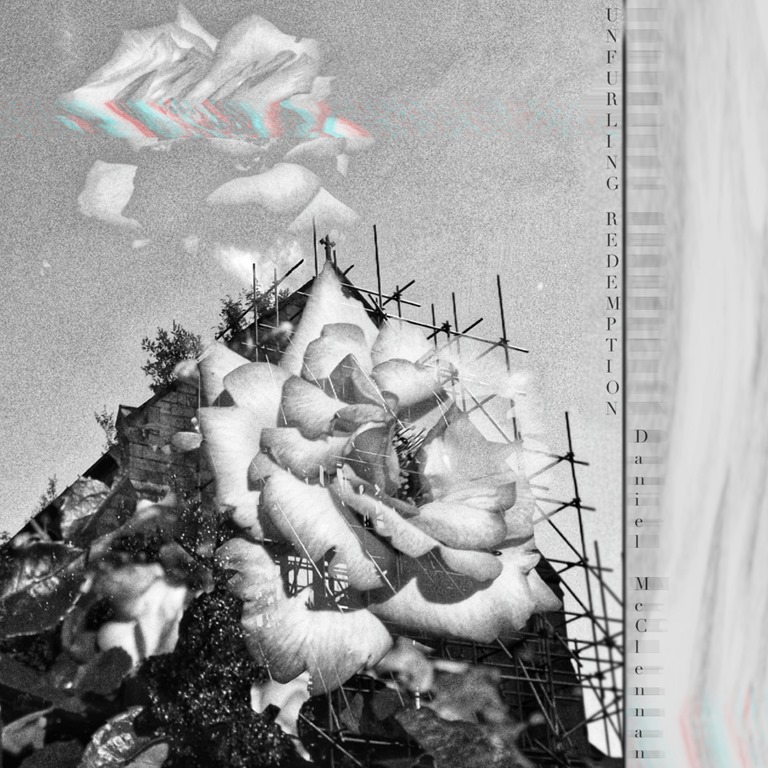
Aural Aggravation is immensely proud to present an exclusive video in the form of ‘Lifted by Marionette Strings (For Kleist)’ by Dan McClennan.

Taken from the album Unfurling Redemption released by Cruel Nature Records on 2nd September, ‘Lifted by Marionette Strings (For Kleist)’ is an unusual hybrid of neoclassical and experimentalism, balancing ominous synths and graceful piano with elements of noise to create a multi-faceted journey brimming with drama and tension.

Known for his energetic furling beats with noise-rock experimentalists Warren Schoenbright and Why Patterns, this solo release sees Daniel McClennan draw on classical and avant-garde influences such as Giacinto Scelsi; Svarte Greiner; Valentin Silvestrov; William Basinski; along with sound-artists such as Jacob Kirkegaard and The Caretaker .

Unfurling Redemption is a collection of eight assemblages comprised of synthesised instruments and freely available/stock sound samples. These assemblages explore the widely observed and seemingly inherent desire for overcoming in humankind, a dangerous proclivity for dreaming the transcendent. Particularly, the tracks pull at the problem of what we can do when these efforts inevitably drop us short of paradise, miss the mark or leave us as pyrrhic victors. Taking the form of empathetic or imagined inward reflections, they are inspired by characters in both fiction and critical discourse and take the form of unpredictable, spectral or melancholy audio ruminations. What must be done when transcendence is forever thwarted? Where then, must we seek redemption?

Watch the video here:

AA

a1220833455_10

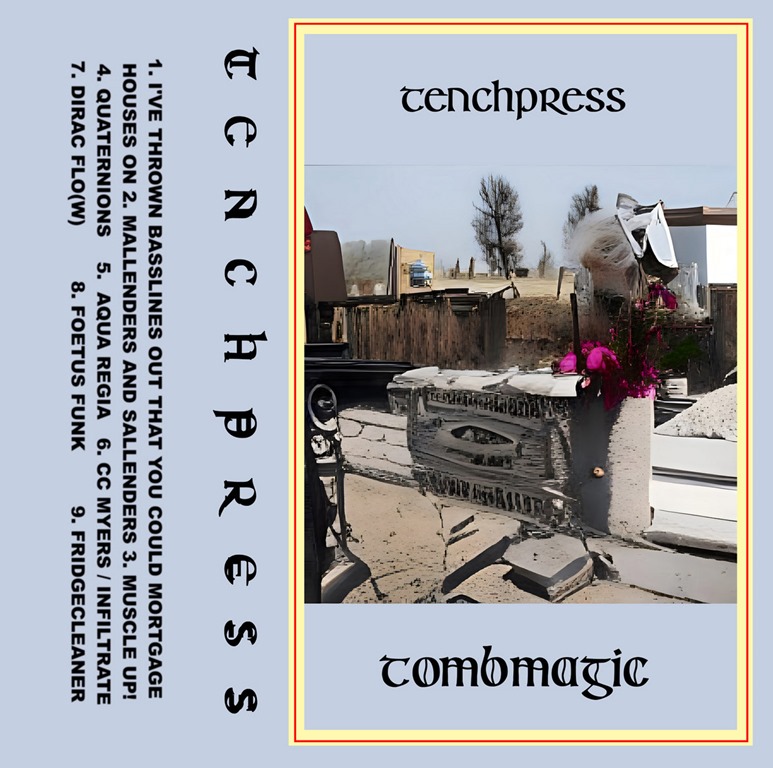
Tenchpress’ bio reads ‘6-string guitar, 12-string guitar, keys (for doors, not the instrument), keys (the instrument, not for doors), concertina, trumpet, a friend’s electric bass, sturm, und drang, 1x LA Galaxy-branded drum stick, free soft synths, A Very Old Snare Drum.’ Which ultimately translates as rather wonky weird shit, judging by their forthcoming album, Tombmagic, released through Cruel Nature in September 5th.

As a taster, they’ve released a video for the track ‘Quaternions’, which bears the distinctive emerging style of Jason Kester.

Check it here:

AA

a2641475574_10

Cruel Nature Records – 6th September 2022

Christopher Nosnibor

These are interesting times for Nadja, the ‘ambient / experimental / doom metal’ duo comprising Leah Buckareff and Aidan Baker. Luminous Rot was recorded during lockdown, and found a home on the legendary Southern Lord label. Released in the spring of 2021, it’s a veritable beast of a work, which combined metal with post-punk, cold-wave, shoegaze, and industrial.

Lockdown feels like something of not so much a distant memory as an unreality, and if by May 2021 it felt like life was returning to normal, the truth is that the wounds were still raw, and any attempt to move on as if life was back as it was before was simply a wilful act of delusion to stave off the effects of the trauma.

And with every trauma, there is some residual hangover, and you might say that Labyrinthine is the product of that. As the accompanying notes detail, the material was recorded during the pandemic and concurrently with Luminous Rot, and ‘explores themes of identity and loss, monstrosity and regret, extreme aesceticism, the differences between labyrinthes and mazes, taking inspiration from Haruki Murakami’s Killing Commendatore, Ursula K. LeGuin’s The Tombs of Atuan, and Victor Pelevin’s reinterpretation of the story of the minotaur and Ariadne, The Helmet of Horror.’

When a band chooses to self-release an album, it’s no longer an indication that it’s substandard or not worthy of a label release, and the case here is that Labyrinthine, which ‘this might be Nadja’s heaviest, doomiest album to date’, it’s clear that rather than consisting of session offcuts, it stands alone as a separate project from Luminous Rot, featuring as it does, a different guest vocalist on each track, and it’s worth listing them here:

Alan Dubin – legendary American vocalist from O.L.D. and Khanate and, currently, Gnaw

Rachel Davies – vocalist and bassist from the British band, Esben & The Witch

Lane Shi Otayanii – is a Chinese multi-media artist and vocalist in Elizabeth Colour Wheel

Dylan Walker – American vocalist from grindcore/noise band Full of Hell

With such a roll-call of contributors, it’s in no way possible to fee short-changed by the fact there are only four tracks, and ‘only’ is somewhat redundant when the shortest of these is almost thirteen minutes in duration. This is an album alright, and it’s an absolute fucking monster at that.

And while the CD release is on the band’s own label, Broken Spine, there are limited cassette versions by several different indie labels from around the world: Katuktu Collective (US), Cruel Nature Recordings (UK), Bad Moon Rising (Taiwan), Adagio830 (Germany), Muzan Editions (Japan), WV Sorcerer (France/China), Pale Ghoul (Australia), and UR Audio Visual (Canada) – and it’s perhaps noting that the running order differs between formats,  and I’m going by the Cruel Nature tape sequence here rather than the CD. It may be more intuitive from a listening perspective, but limitations off format and all…

This co-operative approach to releasing music is highly commendable, and seems to offer solutions to numerous problems, not least of all surrounding distribution in the post-pandemic, post-Brexit era where everything seems on the face of it to be fucked for any band not on a major label with global distribution and access to pressing plants and warehouses worldwide.

The title track is a lugubrious droning crawl: imagine Sunn O))) with drums crashing a beat every twenty seconds in time with each pulverising power chord that vibrates your very lungs. And those beats are muffled, murky, and everything hits with a rib-crushing density, that’s only intensified by the squawking, anguished vocals that shred a blasted treble in contrast to the thick billows of booming bass sludge, and it’s a truly purgatorial experience.

And then, here it comes, and it all comes crashing down hard over the course of the most punishing nineteen minutes in the shape of the brutal behemoth that is ‘Necroausterity’. In a sense, the title speaks for itself in context of a world in lockdown, and it’s sometimes easy to forget just what terrifying times we endured, watching news reports of bodies piling up in New York and elsewhere while governments and news agencies fed a constant stream of statistics around cases and deaths. It felt truly apocalyptic. And ‘Necroausterity’ is the sound of the apocalypse, tuned up to eleven and slowed to a crawl, the writhing torture of a slow, suffocating death soundtracked by guitar and drums do dense and dark as so feel like a bag over the head and a tightening grip on the throat. The recording is overloaded, distorting, and it’s a simply excruciating experience. And it simply goes on, chord after chord, bar after bar, slugging away… and on in a fashion that makes SWANS feel lightweight in comparison. It’s relentless, unforgiving, brutal, and punishing.

‘Rue’ broods hard with dark, thick strings and a heavy atmosphere, but it’s light in comparison. It’s dense, and weighty, but Rachel Davies’ ethereal vocal drifts gloriously within the claustrophobic confines and conjures another level of melody that transforms the thick, sluggish drones into something altogether more enchanting. It builds to a throbbing crescendo that is – perhaps not entirely surprisingly – reminiscent of Esben And the Witch or Big | Brave.

Wolves howl into the groaning drone of ‘Blurred’ and the guitars slowly simmer and burn: no notes, just an endless am-bleeding distortion before the power chords crash in and drive hard, so low and slow and heavy so as to shift tectonic plates and shatter mountains. Amidst the raging tempest, Lane Shi Otayanii brings an otherworldly aspect that transcends mere words, making for a listening experience with a different kind of intensity as it trudges and churns fir what feels like a magical eternity.

The sum total is the sound of hellish desperation, and while Labyrinthine may offer absolutely no solace in the bleakest pits of deathly despair, you’ll be hard-pressed to find an album that better articulates perpetual pain and anguish better than this.

AA

cover

Panurus Productions – 15th July 2022

Christopher Nosnibor

In a world where there’s so little that you can rely on, knowing that there are some labels that can be taken as a measure of quality provides a much-needed reassurance that not absolutely everything is shit. Panurus is one of those labels, along with Cruel Nature, Bearsuit, and Human Worth, that provides an unwritten guarantee that if they’re releasing it, it’s worth hearing. And what’s particularly pleasing with all of these labels is that they’re not genre-specific. Human Worth may lean toward guitar-driven noise, while Bearsuit favour genre-straddling avant-gardism, but ultimately, these little labels put out stuff that they like and find interesting, and this is healthy, in that it provides a platform for a diverse range or acts and fans to connect.

Trauma Bond’s The Violence Of Spring is in fact a reissue, having been originally released by Digital Destruction in the US just over a year ago, in a limited run of twenty-five hand-stamped pink neon tapes. Panurus have retained the original design, but rotated the image to replicate the band’s own digital release, which makes more sense when you study the flows off blood down the face. It’s not a pretty over, but it does very much provide a fair visual representation of the ‘raging grindcore/powerviolence/noise onslaught’ it houses.

As their biography summarises, ‘Trauma Bond is the conception of Eloise Chong-Gargette & Tom Mitchell – blending a shared love of violence, noise and metal to concoct a visceral exploration of aggression’. I mean, who doesn’t love violence, right? I am being sarcastic and, indeed facetious, and should perhaps reiterate here that both makers and fans of the most brutal music tend to be among the gentlest, most docile people I’ve encountered. The music is the outlet for everything they aren’t in the every day. With the exception of Marilyn Manson and Genesis P. Orridge, it’s the bland indie types who are more likely to be the real scumbags, and likewise their fans. This is the long way of saying that there’s violence, and there’s violence.

The original notes pitch ‘a furious onslaught of razor-sharp, disorienting grind; that darts between blasting intensity, to dirge, to industrial noise, and back again before you’ve realised what you’ve been hit by.’ And that’s exactly what The Violence Of Spring delivers, packing nine brutal sonic assaults into twenty minutes.

It all begins with an ominous roll of thunderous rumbling, the fifty-seven-second ‘O.C.B.’ building a tension and suspense that’s devastated with the explosive treblefest of ‘the title track, where everything piledrives in at a hundred miles an hour, from the flurry of guitars, the machine-gun drumming and screamy vocals, and from hereon in there’s not much let-up. There are samples galore – seemingly of panic-stricken crowds and people in streets where accidents, explosions, and shootings have just taken place. And The Violence Of Spring is simultaneously a drive-by and a hit-and-run that concludes with a suicide bombing.

They swing into black metal on ‘Total Fermentation’, and this is a dank brew, unfiltered and thick with sediment, and headcrackingly potent, while on ‘Daddy Do’, it’s more barking, guttural grindcore than anything else, and fuck me, it’s savage. One of the album’s two longer tracks, ‘Double Denim Dissociative Disorder’ which runs past the four minute mark against the usual minute and a half, is a grating wall of distortion, a churning landslide of sludge that slowly sinks into a spent crackle. Sandwiched between this and the finale, the overloaded tempo-shifting blast of demonic fury that is ‘Syndrome Imposter’ is ‘Little One’, a pained blast of metal anguish that’s delivered with remarkable and unexpected clarify, particularly in the vocals.

Nothing about The Violence Of Spring is gentle, but it hits all the harder on account of its comparative range. Yes, it’s all metal, but The Violence Of Spring is all the metal.

AA

cover

Cruel Nature Records – 24th June 2022

Christopher Nosnibor

Hot on the heels of second album Can’t Be Arsed, Cruel Nature have repackaged the eponymous debut from the Manchester makers of ‘kitchen sink punk for the 21st century with a whole side’s worth of remixes from both previous releases – including two pretty radical reworkings of snarling single cut ‘Brain Driver’.

First, to revisit the debut – it’s a primitive, noisy document of disaffection. Adam Stone’s drawling, sneering vocal style is vintage punk, less about holding a tune as conveying attitude, and from the off they set the tone with the seven-minute ‘Food Chain’. A thick, dirty bass grinds out just a couple of notes over a plodding drum while Stone vomits vitriol. If ever a track encapsulated the monotonous drudgery of existing in Boris Johnson’s Britain, this is it. Most of the songs churn away for around seven minutes, but if you’re wondering just how far a band can push low, slow, trudging bass repeating the same simple motif atop a plodding beat, then the answer lies in ‘Half Priced Chickens’ – and the answer is just shy of fourteen minutes. This quarter-hour slog is a gloomy, dark, monotonous trudge: the kick drum sounds like a wet lump of wood, and the sneering shoutiness is replaced by a blank monotone spoken word, and in combination, they create an oppressive sonic fug. The scenes depicted are mundane. Words drift in and out – mobility scooters, office, boyfriend, cough mixture, cheese pasty – and these objects assume bleak resonance as you ask yourself, ‘is this it? Is this life?’ and the answer is there, slumped, devoid of energy, eyelids half closed: yes, this is life. And this is as good as it gets. And it’s fucking endless. Until it ends, in a swampy morass of slow decayed distortion and noise.

The final track, ‘Bunker’ locks into an uptempo groove, but while the drums rattle and bounce away, the mood remains tense, equal parts The Fall and Uniform. As the track progresses, so the anguish builds, and the effect is cumulative Stone hollers roughly about world war as feedback wails and the bass and drums just batter on, and on. Same old, same old…

There’s nothing pretty about Pound Land – the band or the album – and this is a good thing: they deal with the gritty reality of living in shit times. Pound Land articulates the languorous torpor of demotivation, of waking daily to feel the aching anguish of being beaten by life, every minute of every day. Sonically, it’s a long, long way from early Swans, but the density and oppression are very much shared aspects.

By the end of the five tracks, you’re absolutely harrowed and drained.

The remixes are a nice addition, though. The Ruffians on the Train Remix of ‘Brain Driver’ ventures into swampy, almost avant-jazz / trip-hop territory, before kicking into gnarly space-rock swirl. The drums are crisp but overloading, while the bass is pure punishment. Where remixes for most other bands are either dancier or more ambient or whatever, this set – with three of the six from R.O.D., these are primarily exercises in accentuating the gnarliness of the originals, with everything simply sounding even heavier, more crushing.

Pound Land is the real soundtrack to the now. They may have to change their name to Tenner Land before the year’s out the way things are going, so you’d be wise to bag this while you can, and hunker down before things get really tough…

AA

cover

Cruel Nature Records – 27th May 2022

Christopher Nosnibor

Aidan Baker – classically-trained multi-instrumentalist from Toronto (now resident in Berlin), who specialises in electric guitar works – using treated and otherwise non-conventional playing methods – is an artist who I seemingly can’t escape from. His ever-shifting styles and labels may be as difficult to keep pace with as his ever-expanding catalogue, but it seems that whoever’s releasing his work, I’m on their mailing list. This is very much a good thing, as Baker is one of those artists who, despite – or perhaps because – of being impossible to pigeonhole, never disappoints.

Baker’s second release on Cruel Nature, following 2021’s Stimmt, marks something of a shift, from what the accompanying notes ‘was big on atmospherics and abstraction’ to a sound that ‘shoots a bullet straight into the heart of the riff and explodes it, in all its scorching white-out fuzzed-up glory’.

On listening to the album’s grunt and growl guitar assault, the specific meaning of the album’s title remains unclear: ‘tenebrous’ is either obscure, or murky, or otherwise causing gloom, while ‘tenebrism’ refers to ‘a style of painting especially associated with the Italian painter Caravaggio and his followers in which most of the figures are engulfed in shadow but some are dramatically illuminated by a beam of light usually from an identifiable source’. ‘Tenebrist’ seems to lack a specific definition. So is Baker casting himself in the role of an artist whose musical compositions follow in the shadow-casting tradition of Caravaggio, or is this a nod to obscurity, darkness, gloom?

It’s perhaps an amalgamation of all of the aforementioned meanings. The title track, which comes in two parts, lifts the curtain, with a heavy overloading trudge of massive distortion, the guitar too loud of the mics recording, while the drums plod, half-buried but strangely crisp and clear, down in the mix. Unexpectedly, I’m reminded of the production and mix of Moby’s Animal Rights, although the guitar here is much less trebly, angled instead toward the mid and lower ranges, with ‘Tenebrist II’ really plunging deep into psychedelic sludge. The speakers positive crackle with the thick distortion, wrapped in swathes of feedback.

‘Turgid’ is a crackling, buzzing, math-rock explosion: it’s busy and blistering, and somewhere towards the end, the sound thickens, become denser, darker, more abrasive, culminating in a spark-flying meltdown.

The blurb describes Tenebrist as ‘low-down and heavy, and serving up ‘swathes of grunge, pummelling the senses and scattering rhythms through its maximalist energy’, but this is an understatement that only goes so far in conveying the massive sonic impact. ‘Violet Contrast’ is missing an ‘n’: driven by thumping, thunderous drums in a mist of low, slow, smoggy synth drones, it builds gradually to a monumental, percussion-driven climax over the course of a sustained crescendo of drums on drums.

‘Dramatic Illumination’ – in two parts – seems to cast a nod to Caravaggio, and this thirteen-minute suite cuts a dark sonic furrow, as clattering percussion and drones of low, low frequency feedback moan in an avant-jazz mess of calamitous noise, whereby the entire song sounds like the slow wind-down at the end of a set. You wonder when and where it will end… but it doesn’t. Finally, on ‘Dramatic Illumination II,’ the guitar glides in, but it still feels like the end.

The eight-and-a-half-minute closer ‘Chiasroscurious’ is a culmination of the album’s journey; a shuddering, juddering, wall of noise that makes you momentarily think your stereo’s fucked and your speakers are knackered with it’s massively overloading distortion that’s absolutely ruinous, swelling to a sonic tsunami that redefines devastation.

Tenebrist hurts. It’s immense and devastating on every level. The volume hurts. It’s a beast, and exactly the exercise in punishment we all need.

AA

cover