Posts Tagged ‘Cruel Nature Records’

Cruel Nature Records – 28th November 2025

Christopher Nosnibor

November always feels like plunging into an abyss. It’s the month when , after the clocks change on the last weekend of October, the darkness encroaches at an exponential pace, while, simultaneously, the weather deteriorates and temperatures suddenly drop. I struggle with November, and I’m by no means alone in this – but the darkness and muffling cold brings with it a blanket of isolation, too.

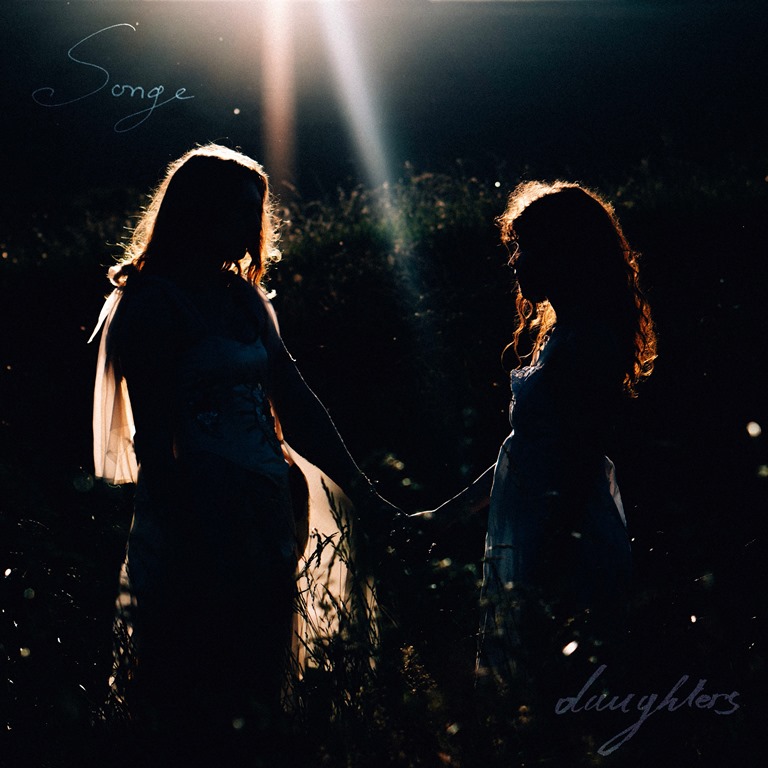
Listening to the debut album proper by Songe in this context makes for a heavy experience. And it’s the context that counts here, because in reality, Daughters is largely calm and spacious rather than dark and oppressive.

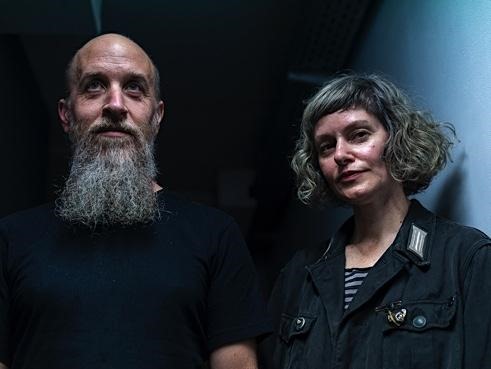
The Anglo-French duo consisting of Gaëlle Croguennec and Phoebe Bentham formed in 2023 ‘upon stumbling on a lonely church piano’, and, we learn that ‘Songe explores what it means to live in a postmodern world that feels rooted in destruction’.

This resonates. Right now, it feels as if the world is on a collision course. The so-called ‘great pause’ of the pandemic seems more, in hindsight, as if it was a time during which tensions built and nations pent up rage ready to unleash the moment the opportunity arose. Some of this a matter of perception and distortion, but the bare fact is that the last COVID restrictions were lifted here in the UK on 21 February 2022, and Russia invaded Ukraine three days later. The pandemic, for many, felt apocalyptic. It wasn’t simply the deaths, the fear, but the impact of the restrictions, which didn’t suddenly dissipate the moment those restrictions lifted. The end of restrictions felt like a deep-sea diver coming up for air, the aftereffects akin to the case of the bends. While we were recovering our breath and dealing with the cramps, Russia invaded Ukraine, and from thereon in it’s felt like an endless succession of disasters, storms, and then – then – the annihilation of Gaza.

Musically, Daughters – on which the duo deliver a set of ‘vibrant and experimental soundscapes using a variety of e-pianos, pedals and theremin, pairing a traditional playing style with bit-crushed granular delays to create a soaring top line met with ethereal vocals’ – is by no means dark, bleak, or depressing. In fact, quite the opposite is true. It’s a delightful set of compositions.

But sometimes, the more graceful, delicate, uplifting the music, the harder it hits. And on Daughters, Songe reach some dark and hard-to-reach places. From the most innocuous beginnings, the epic, nine-minute ‘Warmer, Hotter’ swells to a surge of discordant churn beneath soaring, ethereal vocals. The piano-led ‘Ashes’ borders on neoclassical in its delivery, and is rich in brooding atmosphere. ‘Heol’ begins with distorted, discordant harmonics, with frequencies which torment the inner ear. Gradually, through a foment of frothing frequences and fizzing tones, bubbling undercurrents rise. Haunting vocals rise through the mist, the haze, the dense and indefinable drift. It’s ethereal, spiritual, bewildering in terms of meaning.

Waves crash and splash before soft, rippling piano takes the lead on penultimate track, ‘Eveil’. It’s graceful, majestic, emotive – but not in a way which directly or obviously speaks of the album’s subject or context. The vocals are magnificent, but the words impenetrable. It works because of this, rather than in spite of it. It’s slow, subtle, powerful.

It’s not until the final composition, ‘Wraith’, that we feel the emotive power of a droning organ, paired with saddest of strings, that we really feel the depth and emotion al resonance of Daughters. As it fades in a brief reverberation, I find myself feeling sad. No, not sad: bereft. This is an album that takes time to take effect, to soak in. It deserves time to reflect.that time.

AA

AA

cover

Midira Records / Cruel Nature Records – 24th October 2025

Christopher Nosnibor

A new Nadja release is always cause for a pique of interest. Excitement doesn’t feel like quite the right term for an act who create such dense, dark, brooding soundscapes. Centred around the duo of Leah Buckareff and Aidan Baker, each release marks a shift thanks to the contribution of a range of guest performers, and cut is no exception – and this time, following the instrumental epic that was Labyrinthine (2022) – we have vocals, from not just Baker and Buckareff, but also Tristen Bakker, Oskar Bakker-Blair and Lane Shi Otayonii, among others. They certainly bring a lot of guests to a party which features just four tracks. But that is ’just’ four tracks which each occupy an entire side of vinyl on a double LP. As with Labyrinthine, these are compositions which span ten to sixteen minutes, and utilise that timeframe to maximum effect. They don’t hurry things, with slow, tapering drones interweaving, the emphasis on the atmosphere and the detail over the impact. And yet, despite this, or even perhaps because of this, the impact is strong, albeit in more subtle ways.

Their comments on the album are illuminating, explaining that ‘Thematically, cut explores trauma and physio-/psychological stress, as well as possible tools and means of overcoming these stressors, of which the music itself (sonic sublimation) might be one… Musically, while Nadja retains their signature wall-of-noise doomgaze sound, they also explore quieter, more introspective moments as well as new/different instrumentation, with harp, French horn, and saxophone featuring for the first time on one of the band’s recordings’.

‘It’s Cold When You Cut Me’ is stark, bleak, minimal. The air feels dead, it’s suffocating. The sparse percussion rattles along, but the drones are glacial. Five minutes in, rumbling bass and heavy beats roll in, and by the mid-point there are crushing waves of lugubrious noise worthy of Swans, but overlaid with trilling brass and woodwind, jazz in slow-mo, the honk of migrating birds and trilling abstraction.

But this is just a gentle introduction ahead of the thunderous grind of ‘Dark, No Knowledge’, which begins with atmospheric whirlings and even hints of Eastern esotericism, voices rising in the distance, atop wisps and rumbles, echoes and murmurings, before the dense, sludgy, post everything doom drone cascades in like a mudslide. It’s low and it’s slow, crawling like larva. buzzes and rumbles sustain for an eternity. You can actually feel your stomach drop in response to the bass frequencies.

The sound seems to get thicker and murkier as the album progresses, and if ‘She Ate His Dreams From the Inside & Spat Out The Frozen Fucking Bones’ isn’t nearly as abrasive as the title may suggest, its slow repetitious form is truly hypnotic as it trudges its way along.it possesses a rare density which matches its delicacy, and comparisons to latter-day Swans stand in terms of positioning the piece. There are thick, distorted tones grinding like earthworks through the airier overtones, and the contrast brings something magical and soothing. Then ‘Omenformation’ crashes in like a tsunami. The volume leaps, the density leaps, and you find yourself blown away by a sonic force strong enough to knock the air out of your lungs. The dingy, booming bass alone is enough to send you to the ground. The drums are immense. In fact, everything about this is almost inarticulable, as Nadja scale up the sound to beyond that of mere mortal beings. This is music with a physical force and a power beyond words, beyond contrivance. It’s archaic, occult, primal in its power. This is a track which treads through a series of movements, the last of which is crushing in its weight.

It’s true that cut possesses all of the sounds which are recognisable as being concomitant with Nadja’s distinctive dense, doomgaze stylings, and a lot of the vocals are as much additional layers rather than clearly enunciated words, and as such, add further depth – and a certain human aspect to the overall sound. The result is a work which speaks to that level of the psyche beyond words, which conveys trauma and physio-/psychological stress, and which offers a degree of relief through an experience which is wholly immersive and immensely powerful.

AA

a1598661613_10

Nadja2025

Photo: Hugues de Castillo

Cruel Nature Records – 12th September 2025

Christopher Nosnibor

Postmodernism, emerging primarily as a product of post-war America was defined by hybridity, the demolition of parameters and distinctions between different cultures, genres, and was, in many respects, tied to the accelerating pace of technological development, in particular the globalisation of communications and beyond. But postmodernism also not only recognised, but celebrated, the fact that originality has finite scope, and that anything ‘new’ will by necessity involve the reconfiguration of that which has gone before. Shakespeare had all the ground to break in terms of the advent of modern literature, and one might say the same of Elvis and The Beatles with the advent of rock ‘n’ roll and pop respectively. The reason the 80s were such a watershed was because technology revolutionised the potentials for music-making, and while this saw a huge refraction in terms of creative directions, from industrial to electropop, one could reasonably argue that the next leap in music after 1985 came with house and techno.

Post-millennium, it feels like there is no dominant culture, no defining movement, underground or overground: the mainstream is dominated by a handful of proficient but in many ways unremarkable pop acts, and notably, it’s largely solo artists rather than bands, and while there are bands who pack out stadiums, they tend to be of the heritage variety. At the other end of the spectrum, the underground is fragmented to the point of particles. There are some pros about this, in that there is most certainly something for everyone, but the major con is that unlike, say, in the mid- to late-noughties, when post-rock was all the rage, there’s no sense of zeitgeist or unity, and right now, that’s something we could really do with.

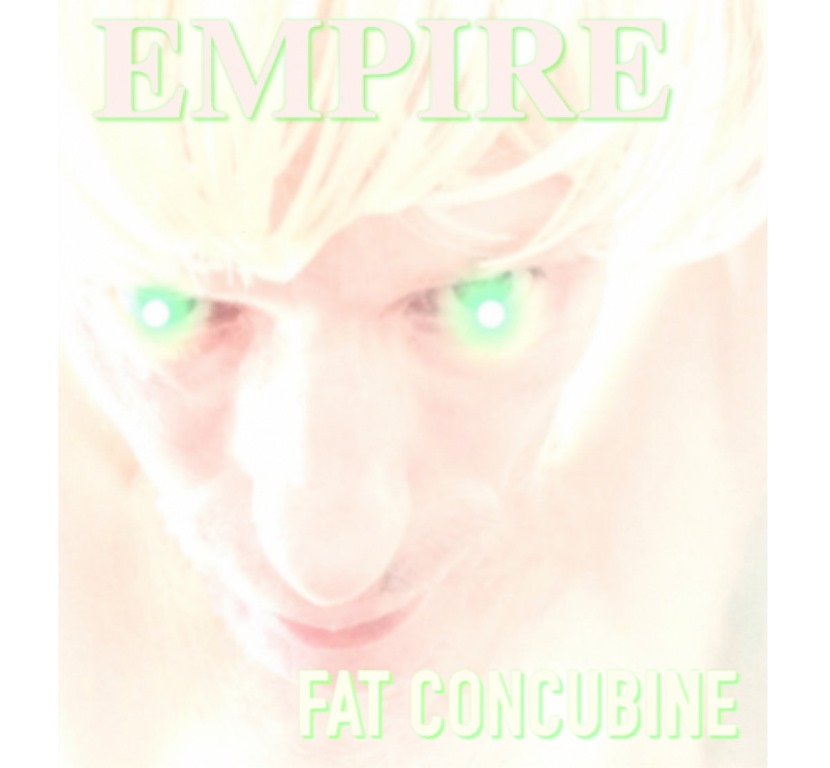
Fat Concubine are most certainly not representative of any kind of zeitgeist movement. With a name that’s not entirely PC, the London acts describe themselves as purveyors of ‘unhinged dance music’, and Empire is their debut EP, following a brace of singles. The second of those singles, ‘for Whom the Fools toll’ (with its irregular capitalisation, which is a bit jarring), is featured here, along with four previously unreleased tracks. This is a positive in my view: so many bands release four, five, or six tracks as singles, and then put them together as an EP release, which feels somewhat redundant, apart from when there’s a physical release.

And so it is, in the spirit of wild hybridisation, that they’re not kidding when they say their thing is ‘unhinged dance music’, or as quoted elsewhere, ‘unhinged no wave ravers’. ‘Feeding off the dogs’ pounds in melding angular post-punk in the vein of Alien Sex Fiend with thumping hardcore techno beats, and it’s not pretty – although it is pretty intense. The snare drum in their first thirty seconds of ‘for Whom the Fools toll’ takes the top of your head off, and the rest of the ‘tune’… well, tune is a stretch. It’s brash, sneering punk, but with hyperactive drum machines tripping over one another and a stack of synthesized horns blaring Eastern-influenced motifs.

There are hints of late 80s Ministry about ‘When we kick Their front door’, another synth horn-led tune that begins as a flap and a flutter before a kick drum that’s hard enough to smash your ribs thuds in and pumps away with relentless force. If the notes didn’t mention that it was a perversion of ‘These Boots We’re Made for Walking’, I’d have probably never guessed. As the song evolves, layers and details emerge, and the vibe is very much reverby post-punk, but with an industrial slant, and a hint of Chris and Cosey and a dash of The Prodigy. If this sounds like a somewhat confused, clutching-at-straws attempt to summarise a wild hotch-potch of stuff, to an extent, it is. But equally, it’s not so much a matter of straw-clutching as summing up a head-spinning sonic assault.

‘tiny pills’ is a brief and brutal blast of beat-driven abrasion, with a bowel-shaking bass and deranged euphoric vocals which pave the way for a finale that calls to mind, tangentially, at least, Cabaret Voltaire’s ‘Nag Nag Nag’.

The version of ‘O so peaceful’ was recorded live, and builds to an abstract chanting drone work. It offers a change of angle, but is no less attacking, its percussion-heavy distorted, shouting racket reminiscent of Test Department and even Throbbing Gristle, particularly in the last minute or so, and you can feel the volume of the performance, too. This is some brutal shit.

Empire is pretty nasty, regardless of which angle you approach it from. It’s clearly meant to be, too. Harsh, heavy, abrasive, messed-up… these are the selling points for this release. And maybe having your head mashed isn’t such a bad thing if you’re wanting to break out of your comfort zone and really feel alive.

AA

a1581875889_10

Cruel Nature Records – 1st August 2025

Christopher Nosnibor

Nicholas Langley outlines his latest offering with the explanation that “One Square Centimetre Of Light is a continuation of the ideas and techniques I used to compose Thinky Space and especially Cymru Cynhyrchiol. Recorded in spring and summer 2024, this album was an outlet for a lot of thoughts and emotions regarding the involuntary loss of time and memory.’

There are gaps in the narrative here – gaps which I don’t feel it’s necessarily appropriate to probe or plug, particularly when, in his extensive explanation of the album’s final, thirteen-minute piece, ‘Missing Day’ – of which he writes: “‘Missing Day’ can refer either to the mourning feeling of losing whole days to bad health, or to the actual calendar day of mourning, Missing Day, on February 20th. For this piece, as well as layers of tracks 3, 4 and 5, I returned to the generative music techniques I started in 2016. This time around I spent many days getting to grips with programming multiple pieces until I eventually programmed a piece which exactly conveyed my feelings of mourning and hope.”

Memory loss can be a source of panic, anxiety, and while it appears to be a focus, or inspiration of sorts for this album, it feels inappropriate to probe here. But listening to the soft, soporific ambience of One Square Centimetre Of Light, I find myself wondering – where will it go next?

It doesn’t really need to ‘go’ anywhere: the instrumental works which make this album are subtle, sublime. ‘Welsh Summits’ is a beautiful, resonant ambient exploration, while ‘The Weather on the Seafronts’ is magical, mystical, ambient, while ‘Old Age’ quivers and chimes abstractedly, with layers of resonance and depth.

And so we arrive at ‘Missing Day’: fully forty minuses of melodic instrumental exploration, serene, calm, expansive. It’s soft and as much as One Square Centimetre Of Light soothing, the vast sonic expanse of ‘Missing Day’ encapsulates the album’s conflicting and conflicted nature.

One Square Centimetre Of Light is overtly serene and beguiling, but hints at an undisclosed turmoil beneath the surface, a work which is a sonic balm, the result of a process to calm inner strife. As lights at the end of the tunnel go a mere on centimetre is barely there – but there it is. And it is hope. keep the focus on that.

AA

a2057051706_10

Cruel Nature Records – 1st August 2025

Christopher Nosnibor

If ever an album was appropriately titled, this is it. Obliteration is from the Sunn O))) / Earth end of the slow and heavy spectrum, with everything low and grinding and dense and seeping along at a snail’s pace – but it’s also so very different. The eleven-and-a-half-minute ‘Teeth’. which raises the curtain on this colossal work, trudges along, thick and murky, the guitars like sludge, overlaid with the most haunting, ethereal vocals, like spirits ascending to the heavens – or perhaps more accurately, fleeing the molten torment of the volcanic pits of hell. The quieter passages ripple gently, but there’s something off-key and off-kilter that proves unsettling, a discordance which isn’t quite right.

The album is described as ‘a visceral, atmospheric journey shaped by improvisation, deep literary roots, and a shared affinity for both crushing heaviness and ghostly ambience’, with the notes going on to add that ‘vocalist and instrumentalist Amanda Votta draws lyrical inspiration from classic rock icons and poets alike – Led Zeppelin, Stevie Nicks, Carl Sandburg’s poems ‘Alone’ and ‘The Great Hunt’, along with Sylvia Plath.’

If none of the influences are immediately apparent, it’s likely because influence can be subtle, more a process of osmosis and assimilation rather than being about emulation. Drawing influence from Led Zep doesn’t have to equate to epic solos and using ‘baby’ a thousand times. And so it is that The Spectral Light suck all of those influences into a swirling vortex.

The churning ‘Branch’ is wild: ZZ Top on acid, Led Zep in the midst of a breakdown, riffs played at a thousand decibels through shredded speakers and melting amps. But it also spins into cracked post-rock territory over the course of its disorientating nine minutes.

Make no mistake: this is a monster: ‘Moonsinger’ warps and bends and it’s emotionally gutting in ways that are difficult to articulate. It touches the core of the very soul. The title track is defined by a dense, metallic churn… and yet there is still a delicacy about it. It’s dark, disturbing, ugly, and yet… beautiful. There is nothing else quite like this. And the dark, airless trudge of Obliteration feels like a black hole… and I find myself being dragged into its eternal depths.

Ahead of the album’s release, we’re privileged to be able to offer a video exclusive for the album’s final track and choice of lead single, ‘Whisper Surgery’. You might want to pour a big drink for this one.

AA

AA

AA

a1781525944_10

Cruel Nature Records – 27 June 2025

Christopher Nosnibor

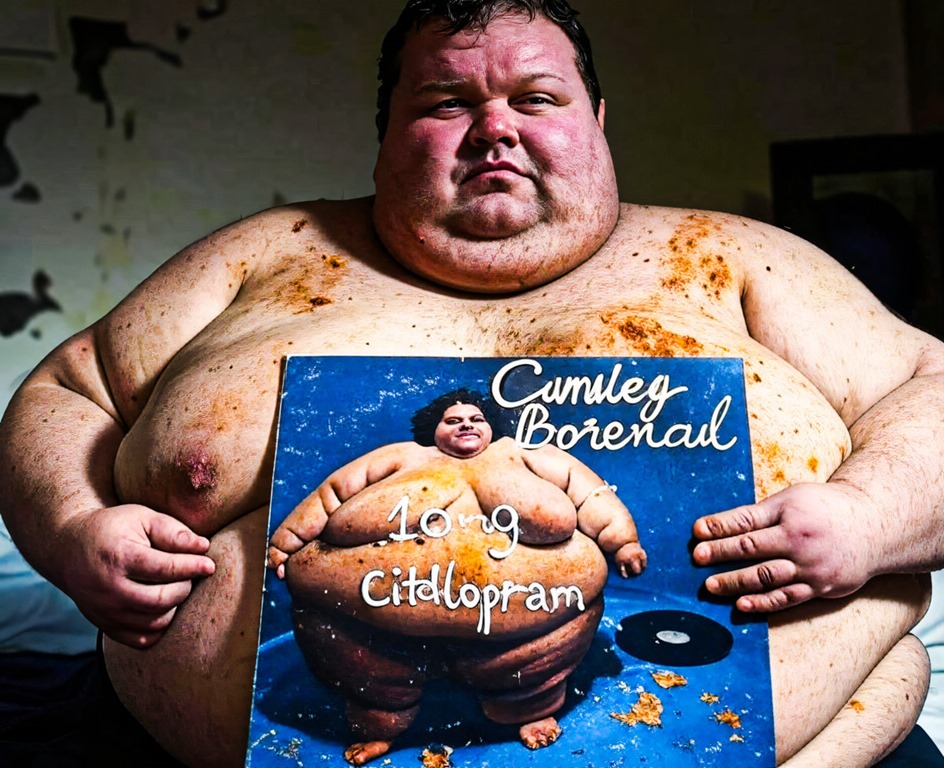
The cover within a cover artwork is only the first example of near infinite layers when it comes to this complex and inventive work from the truly demented experimentalist who records under the moniker of Cumsleg Borenail.

This latest effort promises ‘a collision of methods—part LLM-based sampling, part MPC assembly, part human lyrics—stitched together into something fluid and unpredictable. AI scavenges random prompts, returning garbled errors and fractured phrases, while voices and instruments drift in from nowhere, guided by no fixed direction. Each track begins as one idea and mutates into another, warping its original design into something unrecognizable yet strangely intentional.’

Oh, and it delivers on that promise, alright. This is truly a derangement of the senses, a collaged cut-up, an uncompromising mash-up, a smash-up, if you will, where absolutely nothing is off limit, and it all gets tossed, unceremoniously and indiscriminately, into the blender and churned up into a mess of the most mind-blowing chaos imaginable.

To provide a detailed analysis of this would be to unpick the threads in a way which would reduce the album to less than the sum of its parts. 10mg Citalopram works precisely because it’s an exercise in brain-pulping loop-heavy derangement.

‘You mean nothing me!’ a female voice repeats, and repeats, against a clattering, springing backdrop of twangs and poings throughout ‘You Mean Something To Me’. My head’s a shed by the time we’re midway through the second track, ‘Denizen Invocation Via Lunar Phase’ – because this is a work that goes off in all directions, all at once, and it’s really not pretty. It is, however, weird and frantic. It’s a mess of noise and samples and glitchy electronic samples and frantic breakbeats. Later in the album, there’s a companion piece of sorts, ‘Now I Know I Am Nothing Because You Said’.

AA

In some respects, I’m reminded of early Foetus, JG Thirlwell’s crazed tape loops and cacophonous noise bursts, and the way Cabaret Voltaire took the tape experiments conducted by William Burroughs and Brion Gysin and the ideas outlined in The Electronic Revolution as their starting point – but it’s also a bit Trout Mask Replica, in that it’s like listening to several songs being played at the same time, only it’s got bust-up techno beats exploding all over the shop and frankly, it’s impossible to know what the fuck’s going on most of the time. Too much, for sure. But that’s the point.

For context, Citalopram is a widely-prescribed antidepressant, described on the NHS website as ‘a medicine that can help treat depression and panic attacks’. This album, however, sounds more like a prolonged panic attack or all of the listed possible side-effects being experienced at once, while the numerous references to being ‘nothing’ appear to allude to the inner voice of low mood. Then again, there are other medical matters of an altogether different sort which provide the reference points for tracks like ‘Clostridium Difficile’ (a bacteria which causes diarrhoea) and ‘Snifflers, Nostril Pickers and Dribblers’. All of it is utterly batshit wonky and wildly arrhythmic, and certainly not for anyone who’s feeling tense or jittery or suffering from any kind of psychosis. For anyone else… proceed with caution. May have unwelcome and unpleasant side effects.

AA

a1363557647_10

Cruel Nature Records – 30th May 2025

Christopher Nosnibor

First things first: Beige Palace were ace, and their departure has left a gap in the musical world, especially in Leeds. In a comparatively short timespan, the trio produced a respectably body of work, evolving from their minimal lo-fi beginnings to explore musical territories far and wide, and this final release, split with another Leeds act, Lo Elgin, who, in contrast, have released precious little.

The accompanying notes provide valuable context for the final recordings laid down by Beige Palace, recorded at Wharf Chambers, one of Leeds’ finest DIY venues by Freddy Vinehill-Cliffe (guitar/keys/vocals)… and now helming the mighty Thank.

Taking a step back from the discordant post hardcore of ‘Making Sounds For Andy’ and the freewheeling experimentation of ‘Leg’, Beige Palace’s side largely favours the repetition and extreme dynamic shifts found on their 2016 EP ‘Gravel Time’. The production here also returns to the lo-fi, DIY approach from that EP, eschewing the more polished sound of their two full-length albums. Through returning to their roots, Beige Palace manages to drag their sound to new extremes, with these three tracks bringing to mind artists as disparate as US Maple and Sunn O))).

‘Wellness Retreat’ is dense and discordant, low-end synth drone and bass coalescing to a eardrum-quivering thrum over which scratchy guitars and vocals come in from all sides to forge a magnificently disjointed and angular two minutes and twenty seconds. Too chaotic to really be math-rock, it’s a squirming can of worms, a melting pot where Shellac meets Captain Beefhart at a crossroads with Trumans Water. Or something.

Bringing hints of Silver Jews, the lo-fi crawler ‘Good Shit Fizzy Orange’ does math-rock but with an experimental jazz element, the sparse picked guitar and slow-rolling cymbal work juxtaposed with what sounds like the strumming of an egg slicer before sad strings start to weave their way over it all. The lyrics are, frivolous and stupid, and we wouldn’t want things any other way. Because much as one may value well-crafted, poetical lyrics, sometimes dumb, trashy, meaningless words work just fine. Better than fine, even.

There’s a hint of later Earth about the spartan folksiness of ‘Update Hello Blue Bag Black Bag’ – a song which sounds serious but as the title suggests, isn’t quite so much, but around the midpoint, all the pedals are slammed into overdrive and suddenly there’s a tidal wave of distortion, a speaker-busting cascade of heavy doom-laden drone. And as it tapers to fade, while we mourn the departure of a truly great band, we get to rejoice that during the span of their career, Beige Palace did everything. It’s a solid legacy they’re leaving, and one which may well expand in the years to come. There will be people in five, ten, fifteen years asking ‘remember Beige Palace?’, and other people will be replying ‘Yes! I saw them at CHUNK!’. Well, I will be, anyway. And we still have Thank to be thankful for.

The two pieces which represent Lo Elgin’s contribution mark a sharp contrast to those of Beige Palace. The first, the eleven-minute monster that is ‘Beneath the Clock’, is a thunderous blast of doom-laden rage and anguish. The barking, howling vocals are low in the mix of droning, lurching, lumbering noise, through which strings poke and burst, and as the noise sways and sloshes like a boat tossed hither and thither on waves in a storm as it attempts to guide its way through the entrance to the harbour, the listener finds themselves almost seasick with the unpredictable movement. Around seven minutes in, the tempest abates and the piece meanders into altogether mellower territory, where again I’m reminded of Earth circa Angels of Darkness, Demons of Light. And then, right at the end, there’s a massive jazz segment, backed with crushing guitars. I did not see that coming. And then ‘Abomination’ is different again- a gritty, gnarly, gut-spewing blast of noise that is simply too much…. But too much is never enough as we’re led through a racketacious swamp that starts out Motorhead and toboggans down to a crazed morass of manic jazz.

The two very different sides belong to completely different worlds, at least on the surface. But they are both staunchly strange, keenly experimental, and dedicated to inventive noisemaking, and as such, compliment one another well. And this also perfectly encapsulates the essence of the Leeds scene: diverse, noisy, weird, and wonderful.

AA

a1376481820_10

Cruel Nature Records – 25th April 2025

Christopher Nosnibor

Limited to 30 cassette copies worldwide, which sold out in advance of the release date, anyone wanting this now will have to satisfy themselves with a stream or download. Tapes really have become cult cool again of late. Raised on vinyl, the cassette was my format of choice in the mid- to late-eighties, until I got a CD player for Christmas in 1991, although I continued to buy vinyl through the 90s because an LP cost about £8 whereas a CD cost around £12. I loved tapes, and I especially loved being able to copy stuff to tape, and do it so cheaply. It was a long time before the advent of the technology to rip and burn CDs.

But for a time, I would buy albums on tape, often in Woolworths or WH Smiths and sometimes from Britannia Music when my parents had made enough purchases to earn a free album – because a tape was about eight quid and you could stuff it in your Walkman and sometimes, perhaps, get it played in the car when going on holiday. Although I recall purchasing Children by The Mission in 1988 on the same trip my parents took me to buy a snake, and my mother moaned and asked if we could have ‘the nice man’ back on (meaning the Bruce Springsteen album I’d been listening to before discovering The Sisters of Mercy and The Mission.

So, the status of the cassette release has certainly changed – again, and one can’t help but wonder if it’s only a matter of time before the cassette single makes a comeback.

Before the Skeletal Dance Of Our Festering Jesters is… bassy. And with good reason for certain. As the Bandcamp blurbage details, ‘Blind Johnny Smoke was born severely deaf in both ears, and started to lose his vision as a teenager with only a few degrees of central vision remaining and still decreasing. Then at the end of 2023 he experienced a sudden loss of his remaining hearing on his left side leaving him profoundly deaf. This posed huge questions for him, what life will be like going forward, how this would change how he felt about the nefarious shit going on in the world around him, and whether he was still equipped to be able to express himself through music. With the aid of The Juddaman, the answer lies within the tapestry of Before the Dance of our Festering Jesters.

Musically, the album is almost obscenely focused on bass frequencies, which coincidentally are the only sounds Blind Johnny can detect without hearing aids. There is a dub sensibility that the band have always dabbled with, but here it weighs in heavily alongside trademark percussive programming and unmusical cut up noise. The accompanying words are as angry as ever and, after a few years of Blind Johnny performing on the spoken word circuit, the lyrics have depth and trickery sitting alongside blunt vitriol.’

‘Sensory Denudation’ presents a groaning mass of distortion, and the spoken word vocals offer up comparisons to Pound Land and Sleaford Mods, and nothing about this is easy on the ear as ambience and trudging industrial noise grind away. It’s the Mods and Benefits who come to mind during the stark electronic grind of ‘Safety First’ and ‘Words Without Echo’, which also introduces a Public Image kind of slant, and Before the Skeletal Dance Of Our Festering Jesters brings together post punk and ranty rap with hip-hop and industrial and spoken word. It’s hard going if you’re wanting tunes, but ‘Ghouls’ is perfectly representative of the low-tempo, thudding noise approach the band have taken to the creation of Skeletal Dance.

‘This is All I Hear Now’ is pure rant, raw and aggressive, the ‘blah, blah, blah’ refrain snarled over a thick, woozy bass, before the six-minute ‘Party On’ turns its focus on the UK government’s COVID lockdown ‘partygate’ shenanigans and dubious contracts for PPE as dense, industrial percussion builds, and I’m reminded of Test Dept’s The Unacceptable Face of Freedom. It’s pretty potent stuff.

Running beyond seven minutes, ‘Crooked’ is the album’s centrepiece, a murky postindindustrial wasteland of a soundscape dense in distortion, crashing beats trudging hard through an unusually melodic chorus which provides the album’s lightest moment at the point it was least expected. Sorry for the spoiler there. It’s back to seething and sparse, throbbing techno bass and thumping beats on ‘Behind Closed Doors’, a bleak slice of dark dance that wouldn’t have been entirely out of place on a Wax Trax! release in the late 80s or early 90s.

‘Laughter’ offers a sliver of illumination in this overall dark offering, although it’s very much relative and it’s a cold, mirthless cackle than an uproarious belly-shaker: a piano-led piece of Numanesque electropop, it’s stark but structured.

Everything builds perfectly for the monster finale, the twelve-minute ‘Satellites, a low, rippling drone crawling and billowing from the speakers in the most lugubrious and ominous fashion. A chorus of voices rises up, dissonant but united, before fading out in a waft of reverb, to be replaced by slow-smouldering synths and a sparse but insistent beat that strolls its way to an almost tranquil horizon.

Before the Skeletal Dance Of Our Festering Jesters covers a lot of ground, and while much of it is pretty desolate, it is not an album entirely bereft of hope.

AA

a0086783039_10

Cruel Nature Records – 4th April 2025

Christopher Nosnibor

Machine Mafia may be largely unknown, but the duo’s members have some pedigree, being Adam Stone of Pound Land and Jase Kester (Omnibadger/Omnibael/Don’t Try/Plan Pony), all regulars at Aural Aggravation. Jase joined Pound Land’s ever-shifting lineup as the (then) sixth member in 2023 for a handful of live shows, and contributing additional noise to Mugged (because it needed more noise). Deciding to collaborate in early 2024, they slipped out a couple of self-released EPs, which as the notes which accompany Zoned observe, ‘more or less went under the radar at the time’ – which is why they’re getting a second go here, with Zoned being a compilation of those EPs plus four new tracks, or a new EP packaged with the previous ones, depending on your perspective. The tracks aren’t in their original order of release, and have bene resequenced, presumably for the purpose of creating a flow that’s sonic rather than chronological. And so it is that the album starts with ‘Killzones’, arguably the most overtly Pound land-like track on the album, which eases fans of Pound Land into the world of Machine Mafia nicely, or will otherwise alienate pretty much everyone else, unless they’re on the market for something that sounds like Sleaford Mods in collaboration with PiL while monged on Ketamine.

They describe themselves as ‘a voice/electronics duo in the grand tradition of Suicide, Silver Apples, Soft Cell, Pet Shop Boys etc.’ And it is indeed a grand tradition, to which one would reasonably add Sparks, Air, and Erasure, and even the final incarnation of Whitehouse, although what this list ultimately achieves is to demonstrate just how wide-ranging the electronic duo format stretches in terms of style. I very much doubt you’d find these guys donning big hats or flamboyant costumes and kicking out a set of brassy dancefloor-friendly pop bangers, at least on the evidence of the thirteen tracks on offer here. They recount that their first gig was ‘in a small craft ale bar in the Staffordshire town of Leek, receiving a ban for high decibel levels and foul language’. This sets the bar of expectation, and in this context, Zoned does not disappoint.

As I suggested in my write-up of the Killzones EP, the electronic duo they share the most common ground with is Cabaret Voltaire in their early years, mashing up samples and noise in a Burroughsian cut-up style, and churning out gnarly noise that sits between Suicide and Throbbing Gristle. This is particularly true of the collage chaos of ‘Lecture 0.3B’,

But then, ‘F.O.S’, is a blast of uptempo, lo-fi, bass driven drum-machine propelled hardcore punk strewn with feedback and snarling aggression, and ‘Where’s The Money Gone?’, from the Money Gone EP is a filthy racket with massive blasting beats which lands in the space between The Fall and Big Black, powering away at a motorik groove for the best part of six minutes while Stone hollers thickly and ever-more desperately ‘where’s the money gone?’ Well, we know it’s not gone into public services, but there some mega-rich cunts swanning around and jetting into space. And has anyone seen Michelle Mone since she sailed off on her multi-million quid yacht?

‘England’, originally released on Industrial Coast’s ‘Rock Against Racism’ compilation is very Throbbing Gristle, in the (pulsating) vein of ‘Very Friendly’.

Of the four new cuts, ‘Crabclaw’ invites comparisons to Selfish Cunt’s ‘Britain is Shit’, and this may not be entirely accidental, a stinking snarling assault on culture and the senses, with an overloading gritty bass and vitriolic vocals ranting in a mess of distortion and reverb over the murky morass of a musical backing. It’s the sound of frustration, it’s the sound of anger mashed together with despair. ‘Jackpot’, meanwhile, is like John Cooper Clarke spouting over a segment of Metal Machine Music. All the while, a drum machine and throbbing bass pulse away relentlessly: this is Sleaford Mods for real punks. ‘Human Like’ revisits the dubby tendencies first explored with ‘Killzones’, and it’s a dark, sprawling cavernous hell of reverb atop an organ-shaking bass, again bringing together PiL (think ‘Theme’) and Throbbing Gristle (think ‘What a Day’). It’s meaty, and then some, and crunches and grinds away for a full six echo-soaked minutes. Closing with the eight-and-a-half-minute megalith that is ‘Outside My House’, they go full Whitehouse, with a booming bass that’s positively weapons-grade density, over which Stone delivers a rabid, drawling rant from the perspective of a crabby right-wing old-timer while electronic extranea bubble and eddy around. It’s utterly brutal, and completely uncomfortable, and this is the brilliance of Machine Mafia. Gnarly, nasty, uncompromising, Zoned is not friendly, and it will leave you feeling drained, harrowed, punished. Mission accomplished. You’re not supposed to like this.

AA

a2183471837_10

Cruel Nature Records – 28th March 2025

Christopher Nosnibor

Pound Land have evolved, expanded, metamorphosed, mutated, from two guys cranking out two-chord dirges, to a shifting lineup of musicians cranking out some wild freeform jazz over murky two-chord dirges. And now we learn that they’ve returned to their roots for this latest offering, their third of the year, no less. As they put it, ‘Can’t Stop sees founding Pound Land members Adam Stone and Nick Harris return back to the gratifying freedom and eccentricity of DIY recordings and lo-fi audio projects. Nine diverse tracks spread over half an hour, this short experimental collection nods to Pound Land’s absurdist ‘kitchen-sink punk’ past’.

Can’t stop? Or won’t stop? Not that they should, either way: Pound Land’s mission, it seems, is to proliferate their dingy bass-driven racket as far and wide as possible, and the world – as unspeakably shit as it is, especially right now – is in some small way better for it.

“Got my joggers on / got my flapjack / got my shaven head,” Stone mumbles laconically as if half asleep, over some trickling electronics at the start of the opening track, ‘Armed with Flapjack’. Then some dirty, trebly guitar clangs in and everything slides into a messy mesh that’s neither ambient nor rock, providing a seething, surging drone by way of a backdrop to the spoken word narrative, which is only partially audible, but seems to be a gloriously mundane meandering tale involving, essentially, leaving the house and going about ordinary business.… But it actually turns out to be more of an internal monologue of an anxietised mind. “I’m alright, I tell myself that, I’m gonna be ok, I can do this… bus, and train, take one thing at a time…” It’s really quite powerful in its way.

And staying with the mundane, ‘Watching TV’ is a spectacularly sloppy-sounding celebration of the mindrot pastime that starts out sounding almost sensitive and with a dash of country in the mix, but slides into soporific sludge, before the choppy ‘Lathkill’, which clocks in at just under two and a half minutes, shifts the tone again: it’s a classic Fall rip, or perhaps Pavements ripping The Fall, a sparse, lo-fi four-chord effort which just plugs away repetitively.

Things get really murky with the pulsating ‘Stuff’, where Stone’s meandering contemplations ring out through waves of reverb, and the whole thing feels – and sounds – very Throbbing Gristle. Dark, muffled, monotonous, it grinds and clatters away, a thick sonic soup, and it’s as primitive and unproduced as it gets. It’s not pleasant, but it works perfectly: it needs to be rough, raw, unfiltered. There’s simply no way this act is ever going to have commercial appeal, and that’s perfect: Pound Land are made for limited cassette releases and playing tiny venues to audiences who will be split roughly down the middle between absolutely loving them and wondering what the fuck they’ve stumbled upon. Pound Land really aren’t for everyone. They’re the anti-Coldplay. They’re for people who relish being challenged. ‘I Spy’ brings that challenge straight away, being different again, the rawest, scratchiest, scratchiest, most abrasive no-fi-punk you’ll hear all year.

Things get even more jarring and difficult towards the end of the album. ‘Janet’s Here’ should be a breezy interlude, announcing the arrival of a guest, but instead it’s tense because the delivery is straight-up demented, and ‘Affordable Luxury’ is a rabid rant, again reminiscent of Throbbing Gristle. It’s uncomfortable, the drawling vocal secondary to the warping drones and scratchy experimentalism. Stripped-back not-quite acoustic ‘EGG’ is a trick: again, it has hints of The Fall doing ‘sensitive’ – like ‘Time Enough at Last’, for example – and it’s delicate, but it’s also not.

And this is the thing. Can’t Stop is their most wide-ranging and accessible album to date. And yet… well, it’s not really accessible, for a start.

Can’t Stop is challenging in new ways, too. Working with so little, they’ve pushed the songwriting in divergent directions, making for an album that reaches in all different directions, while, of course, retaining that primal Pound Land core and purposefully simple, direct approach and aesthetic. I love it, but I expect many will hate it. And that’s the way it should be. It’s peak Pound Land.

AA

a3349026030_10