Archive for the ‘Reviews’ Category

Christopher Nosnibor

Anyone who suggests that the fact most gig lineups are male-dominated because there is a lack of female representation, or of quality female fronted acts on the rock scene is simply wrong. Tonight’s killer lineup is undeniable proof to the contrary.

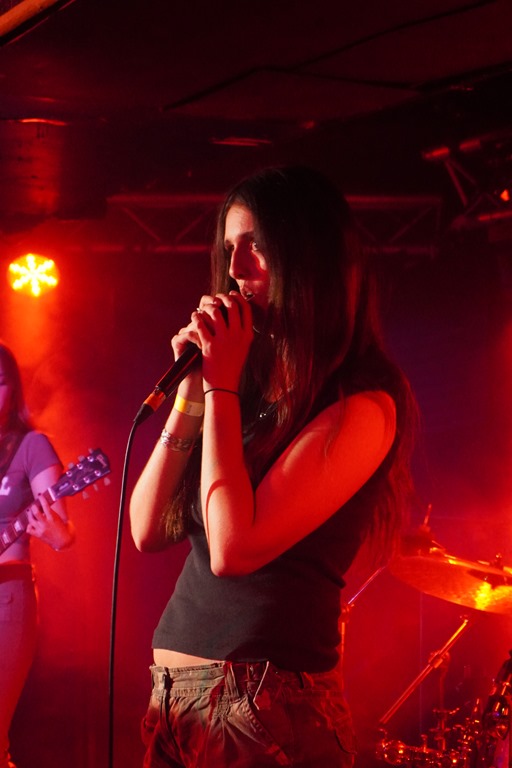
Innovation Way really aren’t innovative in any way, playing a set that’s 50% originals and 50% emo covers, but it’s clear that they’re just starting out, finding their feet and their identity, so I’m not going to give them hard time over it. The originals don’t feel quite as evolved in terms of songwriting, but the only way to develop is to be given opportunities to try out, and they play well, really well, and one day they’ll be playing 90% originals and stretching further – and what’s more they’ve brought a lot of their uni mates down, so the place is busy. That means tickets sold and money over the bar. These are good things right now. It does seem strange to me that people in their twenties are now picking up on music that was big around the time they were born, but I suppose this is a generational thing. I’m just more surprised by the idea of an emo revival than a grunge revival.

DSC03623

Innovation Way

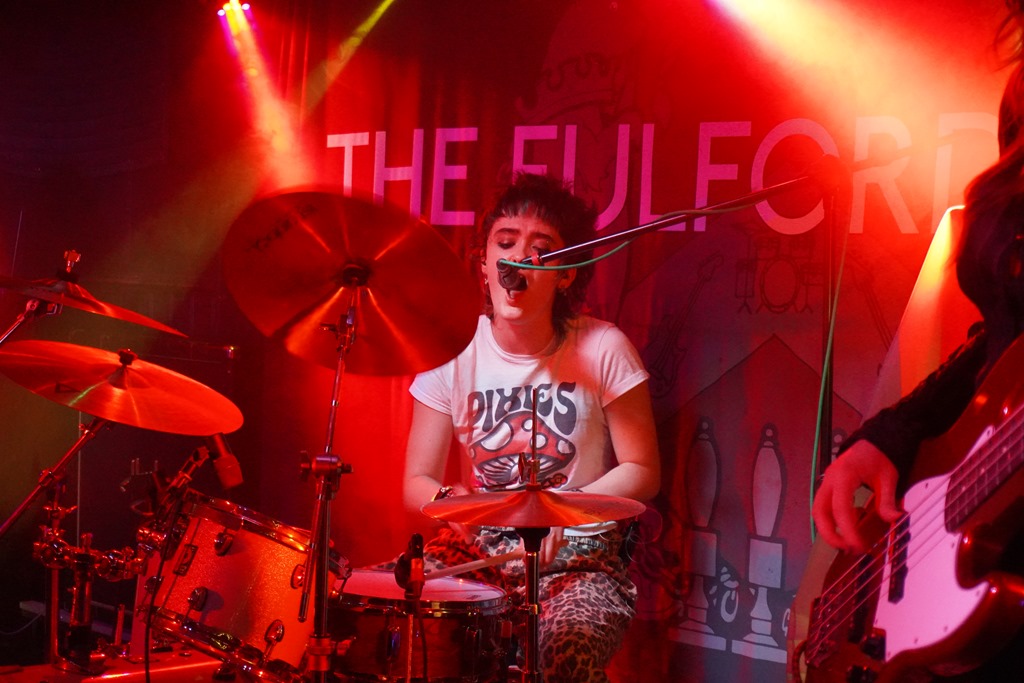
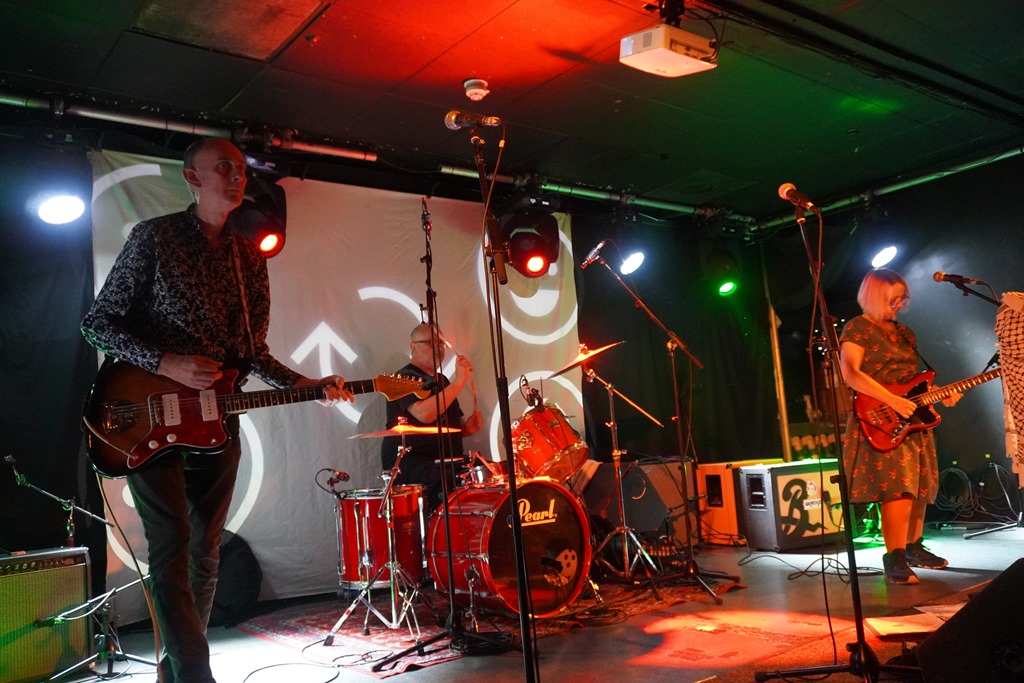
On the subject of developing, I had fully expected to report that Static Lives look very much like Weekend Recovery, and their sound isn’t a million miles away either. But this is not the case: having started out with the same lineup but new material, they’ve reconfigured as a five-piece, with two guitars, synths, and the vocals shared three ways. Having have just completed their first headline tour, which sold out, their place third on the bill was more likely due to travel needs than anything else. No two ways about it, they’re good: they bring the energy and look to be really enjoying themselves. The sound is full, there’s details and dynamics happening all over. The diminutive bassist whacks out some chunky low-end while also contributing a considerable amount of the vocals. This new division of labour means Lori can focus more on guitar and also being part of a team rather than the primary focus, and she seems to revel in this freedom.
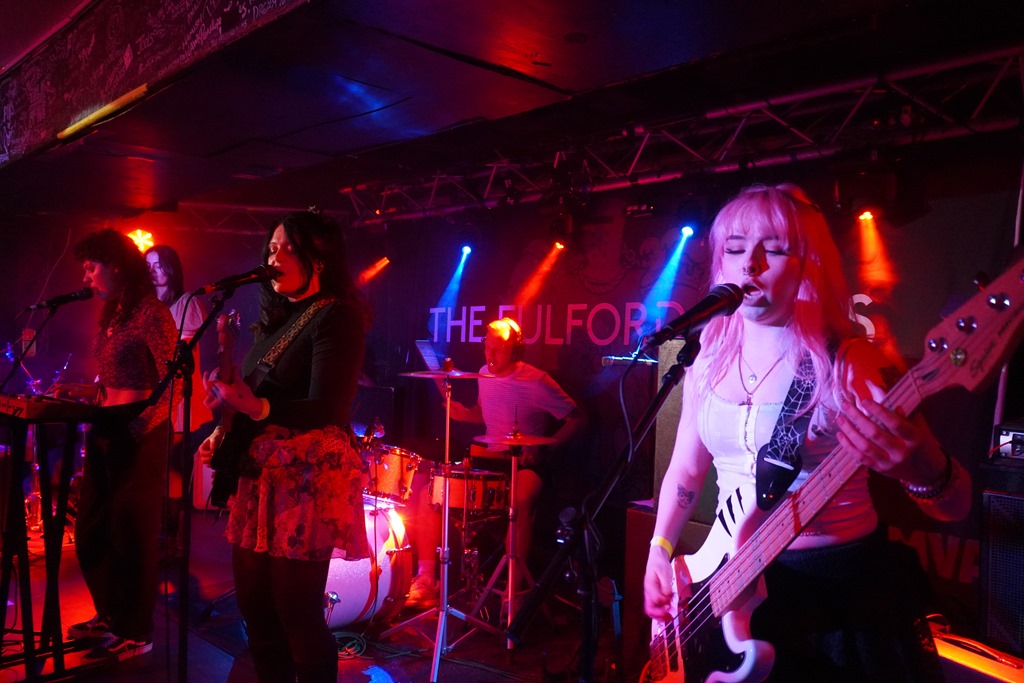

DSC03688DSC03697DSC03727

Static Lives

Returning to the grunge revival, Blair Bitch Project bring Sabbathesque riffery and hints of folk horror married to gnarly grunge stylings. Despite the bassist being a late substitution, they’re tight and solid, and play with a confidence that carries not only the band, but the crowd. The drummer and vocalist switch for the third song and it’s a real heavyweight, with explosive riffery and thunderous percussion and a low-registering, gritty bass. Mid-set, with the drummer still on vocals, they deliver a cover of ‘Plump’ by Hole delivered with the raw intensity of the original. They get slower and heavier as the set progresses, and towards the end drop a second Hole cover, this time a ragged rending of ‘Teenage Whore’. There’s no question as to their influences, and they play with so much force that it’s hard to fault.
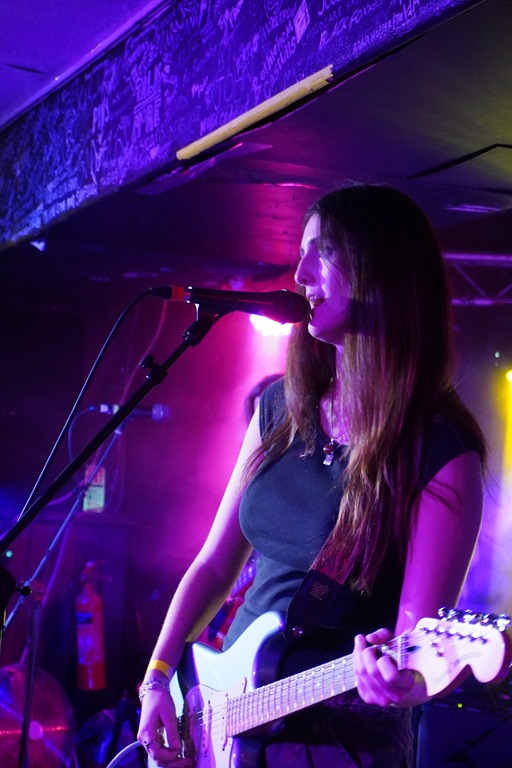
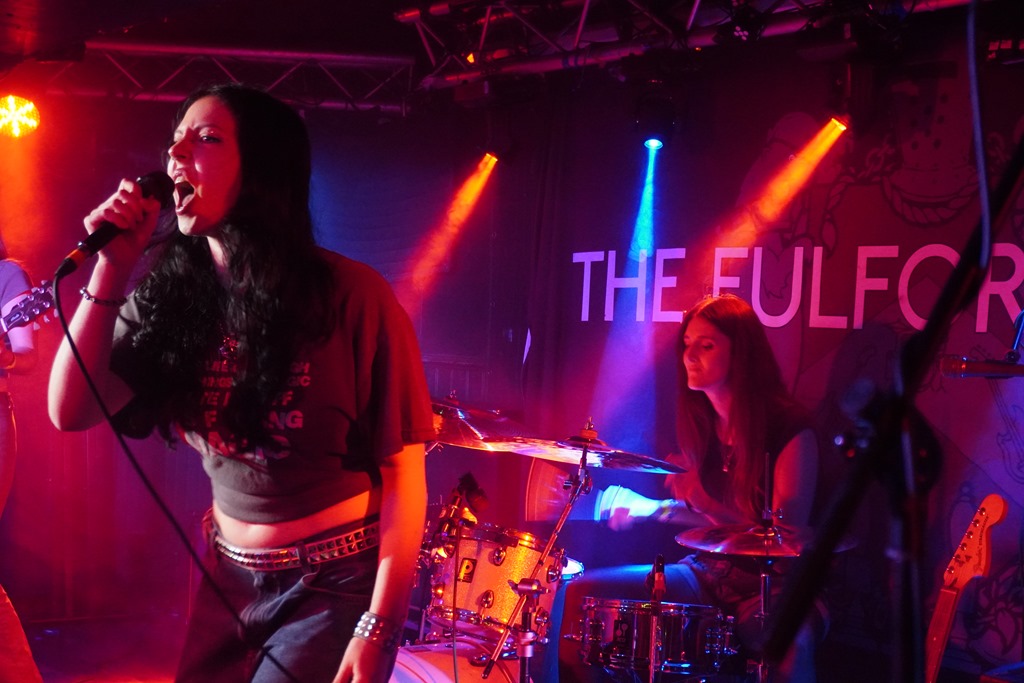
DSC03748DSC03762DSC03816

Blair Bitch Project

“Anyone else got a sweaty crack?” asks the singing drummer of WENCH! before introducing a song about men who shouldn’t have access to the internet, bursting with angular guitar and shouty vocals before ripping into a roaring scream and gut churning riff. Yep, they’re from Hull, they’ve no filter and they’re fucking phenomenal – and they don’t even know it, which makes us love them all the more.
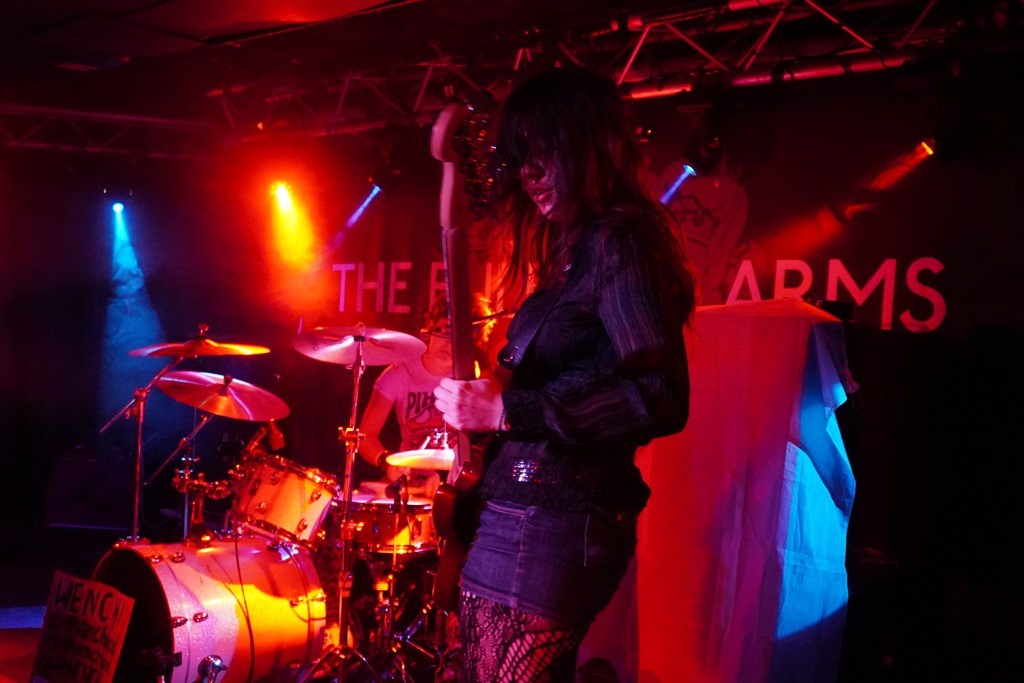

DSC03839DSC03885DSC03922

Wench!

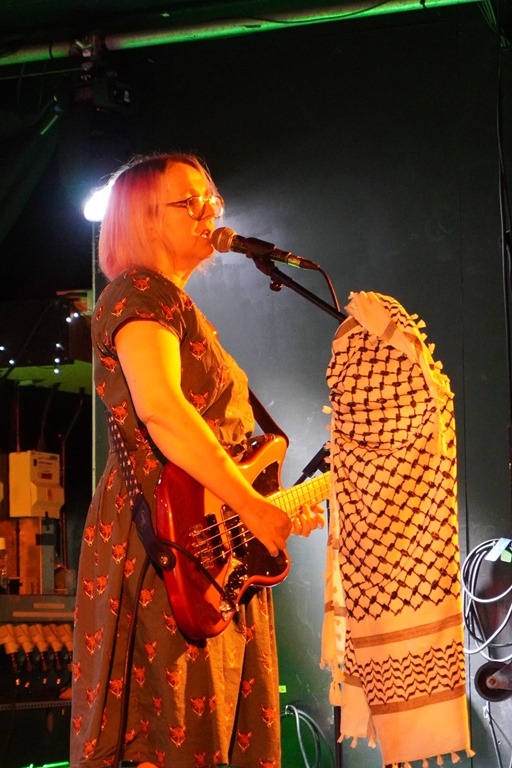
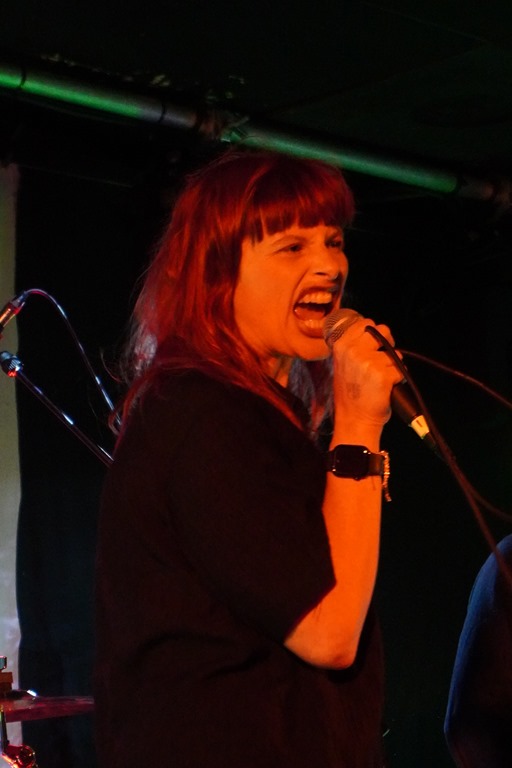
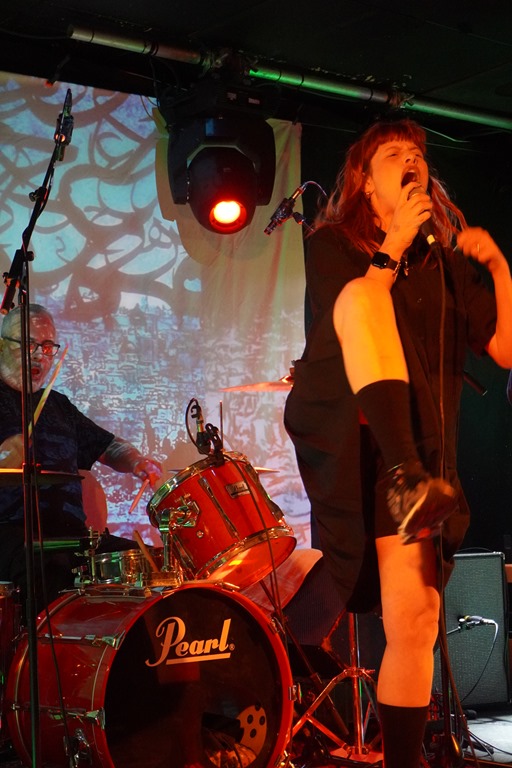
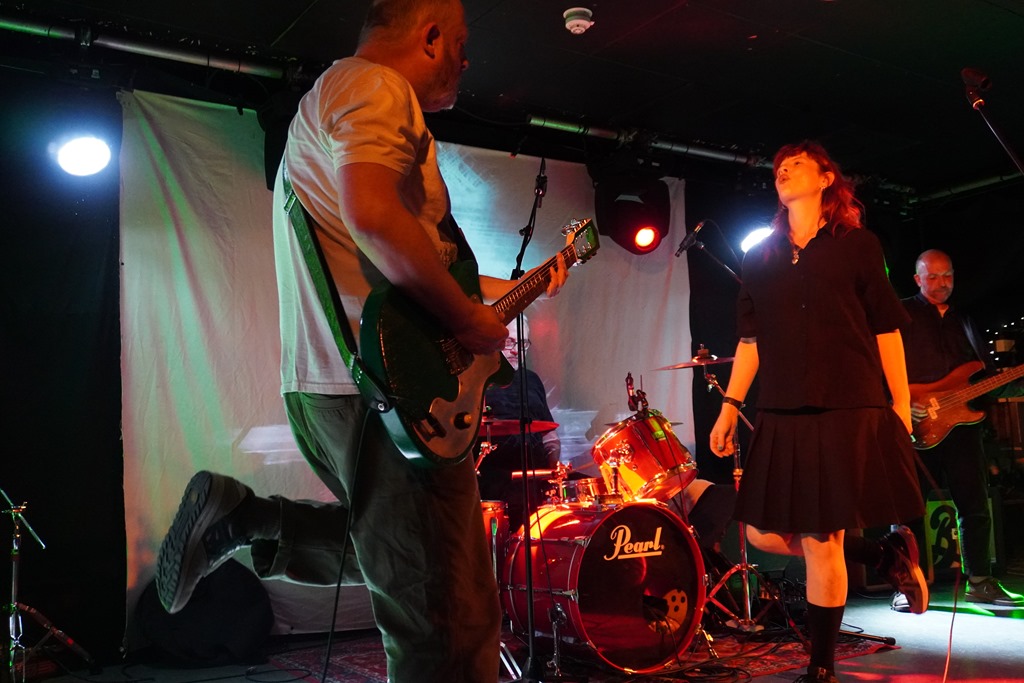
They, too, bring some Sabbath-inspired riffery, but there’s a whole lot more to them than that, not least of all high-octane punk, with the energy and aggression amped up to eleven. A measure of their structure is the fact the guitarist has two pedals, while the bassist has eight: the rhythm section dominates, and there’s wah-wah and shedloads of distortion on that dominant bass that shapes the songs in a unique way. Their set is a relentless rush, and the channel their feminist fury into the most glorious guitar-driven exorcism. Aesthetically, they are the absolute definition of punk, and the adrenaline rush they deliver is direct and pure.

Yes, yes, and YES! THIS is what it’s all about.

Editions Mego – 10th October 2025

Christopher Nosnibor

This is a monster. A monster that’s been roaring and raging for twenty-three years now. The appropriately-titled noise classic, Sheer Hellish Miasmah, was first released in 2002. It remains a pinnacle of abrasive noise after all this time. To say that Kevin Drumm has released a lot of albums would be an understatement: as is the case with many experimental / noise artists, the likes of Merzbow, and myriad lesser known underground noise acts he’s cranked out multiple albums per year, and the question of quality versus quantity becomes an obvious point of debate, or even potential friction. But when it comes to Sheer Hellish Miasmah, there’s no real debate: the consensus is that it’s a classic in its field.

I step back for a moment to present the summary offered in the press release: The history of Drumm’s Sheer Hellish Miasma is one of resilience to the twists of underground trends that have come and gone since its initial release. Using guitar, tape manipulation, microphones, pedals, analog synthesizers, and subtle computer processing, Sheer Hellish Miasma is an overwhelming experience: a sonic onslaught of storming feedback, fractured textures and an unrelenting energy. At once brutal and meticulously composed, the album offers a singular vision at the outermost edges of sound art.

And here it is, reissued on four sides of vinyl. I assume it’s nice and black and heavy and shiny, because I’m working from an MP3 download, as is the way these days. Does vinyl sound better? It depends on your kit. And your ears.

A lot of extreme noise albums are mercifully brief, presenting a short, sharp shock. Not so Sheer Hellish Miasma, which presents a sustained and truly brutal assault, with five tracks stretching out for well over an hour, some sixty-six torturous minutes. The track sequencing has been altered, with the two longest tracks first, and ‘The Inferno’ is split over sides B and C.

The first, ‘Hitting the Pavement’ is a twenty-minute blast of oscillating, pan-heavy drone and distortion. As grating sinewy nose and distortion riven with feedback hard enough to annihilate even the toughest eardrum, the discomfort levels are high. Sunn O))) may be hailed as pioneers of heavy drone, but Drumm’s activity is contemporaneous, taking electronica to the same extremes and over the same epic durations. The first couple of minutes of ‘The Inferno’ are gnarly, overloading crackle and pop, stutter and static that give you cause to wonder if your speakers are fucked or there’s something wrong with either the recording or your equipment (something I genuinely experienced when I first heard Whitehouse – having downloaded a couple of tracks via Napster back in the day, I deleted the files and searched elsewhere as I assumed the files were corrupted). But no, it’s supposed to sound this fucked-up, and it burrows into your skull in the most intense and uncomfortable way. Over the course of twenty-four minutes, he gives the listener’s ears a proper kicking, and more, seemingly conjuring new frequencies and discovering infinite new angles from which to deliver a truly brutal sonic assault.

At times, it’s like having a road drill applied directly to the head. Full-on doesn’t even come close. It’s not just the frequencies, either: it’s the jagged, abrasive textures that graze hard enough to draw blood. And there is absolutely no respite. Glitching laser bleeps shoot across grinding earthworks. It’s the sound of total annihilation. The album’s title provides the perfect summary of its content: it is absolutely, mercilessly, hellish.

If ‘Cloudy’ offers a momentary pause to breathe and feel the tinnitus, the sawing oscillations of ‘Impotent Hummer’ hit with all the more impact, a persistent buzz that grates away at every sense. The effect is cumulative, and the reaction is physical. The track’s thirteen minutes is a test of endurance. ‘Turning Point’, which now closes the album, leaves the listener with an obliterative thrum, which, while comparatively mild in terms of its attack, is insistent, and again feels like a considered, targeted sensory assault.

Sheer Hellish Miasma is a hard listen – but it’s not hard to understand how it’s come to be considered an outstanding noise album. It’s not for the feint of heart.

AA

eMego053V front

Mortality Tables – 25th September 2025

Bryan Alka’s brief post on Facebook sharing the news of his new release, is revelatory: ‘Today we release my 5th full length on Mortality Tables. After a series of breakdowns… The Magnitude Weighs Heavy.’

The Magnitude Weighs Heavy is the third and final instalment of a of dark and brooding albums, the first two parts of which – The Colour Of Terrible Crystal and Regarding The Auguries – were released by Vince Clarke’s VeryRecords. Alka, and particularly Bryan Michael, has no small back story: ‘a Philadelphia-area artist who has collaborated with Vince Clarke (Depeche Mode / Erasure / Yazoo), Roger O’Donnell (The Cure), Christian Savill (Slowdive / Monster Movie) and Michael Textbeak (Cleopatra Records). alka was formed around 2000 as a return to his bedroom producing days, and as a cleansing of his disappointing experience within the Philadelphia indie rock scene.’

This thirteen-track album is epic, grand, expansive. It’s also an exercise is taut electropop with a decidedly early 80s bent. Because what goes around comes around, the whipcrack snare and noodly electronic drift which defines many of the tracks, despite being pure 1989, have a contemporary feel, too.

‘Soliloquiy’ drifts into dreamy electro shoegaze, mellow and atmospheric, rippling, and soaked with a certain sadness, however sturdy the beats remain. Elsewhere, as on ‘Creeps; its clearly an attempt to lock things down with pinging robotic beats

This feels like quite departure for Mortality Tables, given their learning toward abstraction an ambience, but they’ve always leaned toward the different, and this is a work which is unashamedly different. ‘Unravel’ is exemplary here: it’s got groove, and is ostensibly a bopping dance cut, and a far cry from the implications of the album title. But everyone deals with trauma, grief, and distress differently, and we all articulate our internal strifes by different means. ‘enchanté’ locks into a hypnotic groove, the likes of which I haven’t been so immersed in since I discovered The Dancing Wu Li Masters by 25 Men back in 2008.

For all that, there are large, ambient expanses, passages of stuttering electro which draw together elements of industrial alongside the layered dance beats. The ten-minute ‘an attempt to conjure quiet’ feels like it’s quite willing to delve deeper into noise, the very opposite of the quiet it claims to seek, and the duration of this album feels like a teetering on edge. I’m reminded of how my late wife would hassle an and harangue over details, over chores, and the tense, jittery tone which leads n this album at times tales me there. But if the dark mutter of ‘thee individual visions ov jhonn’ is dark with resonating melancholia, The Magnitude Weighs Heavy brings things back to the light. ‘Whatever Will Become’ is a hybrid of pop and bubbling electronica, busy but mesmerising in its concentric circles of sound, its abrupt ending jolting the listener back to the moment.

The magnitude may weigh heavy, but this album has a remarkable lightness, delivered with a deftness of touch.

AA

a2561728450_10

2nd October 2025

Christopher Nosnibor

The context for Ashley Reaks’ sixteenth solo album – and his third in three years (not counting the compilation of demos released earlier this year) – is weighty. He has written openly and extensively of his health issues, while sharing images and commentary nocturnal wanderings, and these both inform At Night The World Belongs To Me, of which he writes:

The looming spectre of death and loss haunt the album: Reaks survived two major health scares and a misdiagnosed terminal illness over the last 18 months, experiences that inform the reflective, poetically gloomy lyrics, and the 4 am downtempo grooves. Adding to the sense of loss, guitarist and long-term collaborator Nick Dunne died suddenly at home just one week after completing his guitar parts for the record.

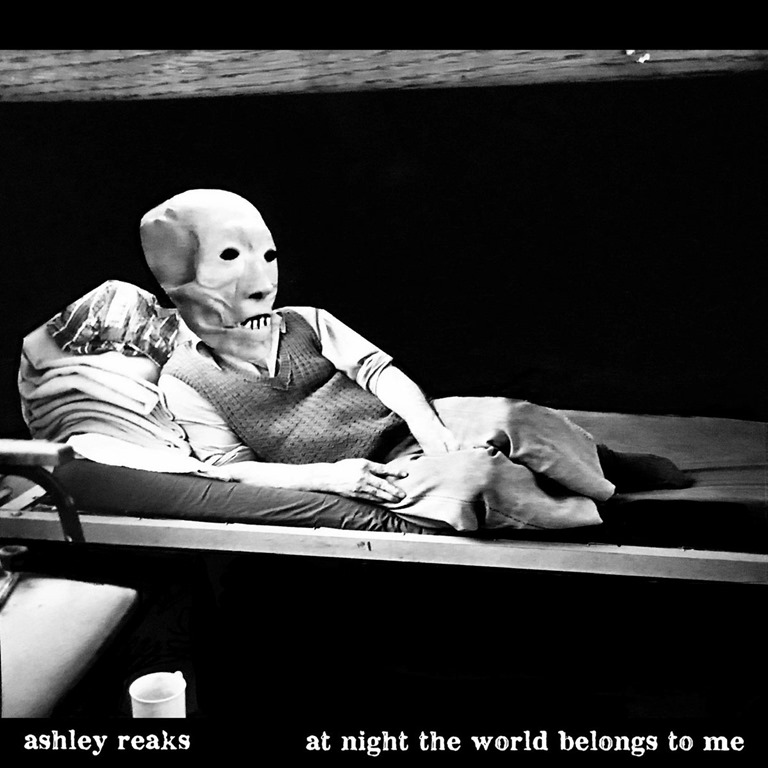
Through all of this, he has continued to collage and write prodigiously, but At Night The World Belongs To Me marks a distinct change of tone from its immediate predecessors, The Body Blow of Grief (2024) and Winter Crawls (2023). The usual elements are all present and correct – the sense of experimentalism, the collaging of genres, melding post-punk, jazz, and dub – but this feels darker, more introspective. The cover art, too, reflects this. While it has the same rather disturbing, grotesque strangeness of his usual work, the grim-looking figure in repose has connotations of ailment, frailty, even the deathbed.

The first track, ‘Playing Skittles With The Skulls and Bones’ has a bass groove that calls to mind The Cure’s early sound, melded to a rattling rhythm reminiscent of ‘Bela Lugiosi’s Dead’. The smooth sax that wanders in around the mid-point provides something of a stylistic contrast, but at the same time, it’s minor-key vibes keep the song as a whole contained within a bubble of reflection, evoking the stillness of night. I know, I’m sort of dancing about architecture here, but something about Reaks’ work prompts a multi-sensory response.

‘Rimmed With Yellow Haloes’ brings soaring post-rock guitars atop of an urgent ricochet of drumming and solid bass. On the fact of it, it’s almost poppy, but it soon shifts to take on a folksy aspect, while Reaks sings of death and funeral pyres, and the refrain, delivered with lilting, proggy overtones, ‘The Lord gave the day to the living, the night to the dead’. In context of the album’s title and theme, there is a tangibly haunting foreshadowing here, a suggestion that Reaks has not only accepted his mortality, but has assumed his place. It’s powerful, and deeply moving. Of course, Reaks can’t help but introduce incongruous elements, with some horns which are pure ska and some super whizzy 80s pop synths providing a pretty wild counterpoint to it all. It’s hard not to smile, because there’s an audacity to this approach to composition and arrangement – a lot of it simply shouldn’t work, but it does, and it’s uniquely Reaks.

The album’s shortest song, ‘Things Unseen’ is snappy, poppy, Bowie-esque, an amalgamation of post-punk and electropop, a standout which is succinct and tight, and consequently, the dark connotations of the bleak shuffle of ‘Life Forever Underground’ – a rippling synth-led tune – are rendered more profound. The sequencing of this album is such that the shifts between songs accentuate their individual impact.

‘Mask the face, unmask the soul…’ he sings softly on ‘Mask The Face’, which has a somewhat spacey Krautrock feel to it – before a guitar solo that worthy of Mark Knopfler emerges most unexpectedly. And as dark as things get here, Reaks never ceases to bring surprises. At Night The World Belongs To Me perfectly encapsulates the reason he’s so respected and critically acclaimed, but orbits light years outside the mainstream. In a world defined by an exponentially reducing capacity for sustained attention, Ashley Reaks makes music that requires real engagement, the musical equivalent of complex carbs and high fibre foods in a processed, white bread culture. But also, contemporary mainstream radio music favours short songs which cut straight to the chorus, where the hook has to land in the first twenty seconds. Here, we have eight songs, all but one of which are over five minutes long. They take their time, they’re expansive and exploratory, there’s atmosphere, there’s depth. And as ‘Eyeing Up The Sky’ tapers away on a buzzing drone, we’re left with much to chew on, much to consider.

AA

a2008509738_10

Dependent Records – 3rd October 2025

Christopher Nosnibor

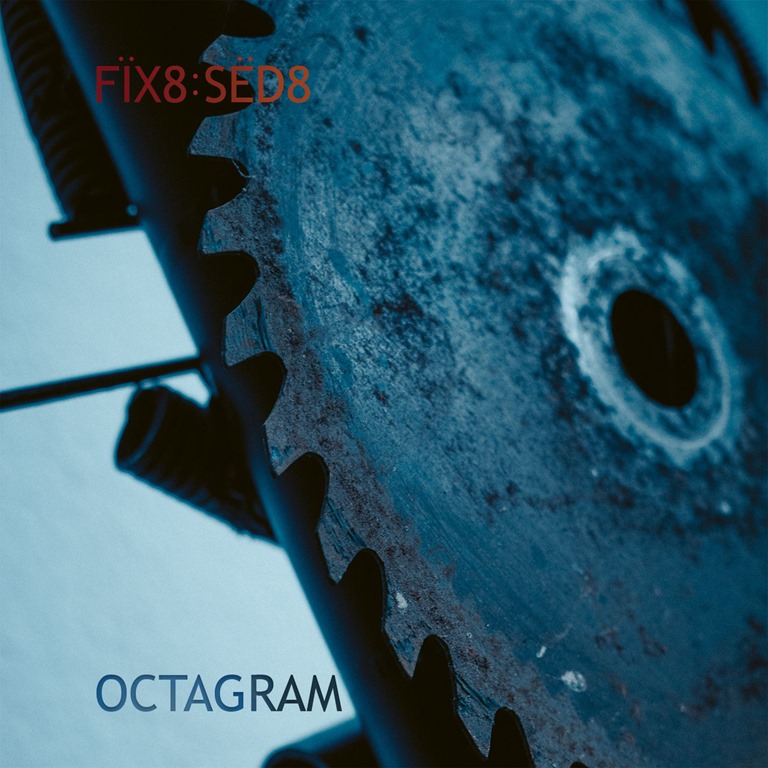
I’ve always favoured words over numbers – meaning, maths was never my strong point, and my qualifications strongly favour the arts. But it doesn’t take a maths genius to deduce that there are some serious numerical gymnastics taking place when conjuring the equation for this release. That Octagram extends the love of the number 8 which is clear from the band’s name to a concept, whereby the album features 8 songs with a playing-time of 8 minutes is logical, but when they try to spin it that ‘when the 8 just turns by a little in the context of the German electro industrial project’s sixth album, it becomes the symbol for infinity’, I’m lost. How does infinity fit in, and how does it all sit with being their sixth album, something which really screws up the whole thematic.

The tracks aren’t all exactly eight minutes in duration, but in the eight-minute span, ranging from 8:11 to 8:58, so it doesn’t feel as if the limitations / constraints of the project are so rigid as to inhibit the creative freedom necessary to explore and interrogate the themes flexibly.

We’ve already aired single cuts ‘New Eden’ and ‘Oathbreaker’ here at Aural Aggravation, and it’s fair to say they’re representative of this expansive, ambitious effort. It’s electronic industrial, with expansive, ambient trance elements woven in, as well as sampled snippets of dialogue. It’s perhaps worth noting that the vocal samples consist mainly of recitations quoting the last words of persons that were about to receive the death sentence. It’s all there on the sweeping, cinematic, dark electronic dance opener, ‘The Unborn’. In terms of texture and production, it’s absolutely meticulous, but a bit predictable and of a form. Three minutes or so in, the tone and tempo changes, the atmosphere darkens and the beats get harder, and the gritty, distorted vocals finally arrive and while it’s still quintessential technoindustrial / dark electro, the switch makes the song work in terms of structure and dynamics. And this seems to the strength to which FÏX8:SËD8 play to on Octagram, blending the trancey ambient dance elements with the driving hard-edged aspects of the genre.

Skinny Puppy are an obvious touchstone, to which they themselves draw attention, they seem to have assimilated the entirety of the Wax Trax! catalogue, while pulling from all aspects of cybergoth, and even Tubular Bells to forge a hypnotic hybrid of techno, electronica, dance, and industrial, taking a number of cues from Ministry’s Twitch. It’s true that I often return to the same sources: Wax Trax!, KMFDM, Skinny Puppy, 80s Ministry… but I feel I should stress that this isn’t entirely a reflection of my limited sphere of reference, but the two inches of ivory on which so much of the electronic industrial scene carves its tales of angst. The use of samples does feel rather cliché, the way the beats build behind fuzzy synths which ebb and slow, the minor-key one-finger synth riffs… And that’s fine: you know what you’re going to get. But at least with Octagram, FÏX8:SËD8 push that envelope a bit.

If ‘New Eden’ represents the more accessible side of all this, ‘Blisters’ goes in hard. ‘Tyrants’, too, brings a heavy Industrial throb with a dominant percussion, led by a powerful bin-lid smash of a snare sound. With the distorted vocals low in the mix, it’s tense, it’s intense, it’s claustrophobic. Taking its title from one of my favourite phrases from Milton, ‘Darkness Visible’ brings an interlude of cinematic serenity, at least initially, before locking into another dark pulsing groove. The darkness has rarely been more visible.

‘An Unquiet Mind’ makes for a slow-simmering, brooding finale, cinematic, atmospheric, expansive, as synth layers and beats build, rising from a montage of samples to stretch out an almost post-apocalyptic landscape. It feels like the end… and it is.

The best electronic industrial has an intensely inward focus, and makes you feel tense, restricted, somehow, and as much as it draws on obvious influences, with its taut, claustrophobic feel and dense production, Octagram sits – shuffling, twitching, crackling with anxiety – with the best electronic industrial.

AA

a1712199305_10

Constellation – 3rd October 2025

Christopher Nosnibor

The third album by The Dwarfs Of East Agouza (Maurice Louca (Lehkfa), Alan Bishop (Sun City Girls, Sublime Frequencies), and Sam Shalabi (Land Of Kush) promises ‘a focussed set of rhythmic psych-trance free/improv’.

As their moniker and the album’s title suggests, they demonstrate a collective interest in urban myths, the strange, the embroidered and embellished tale, perhaps spun with a twist of esoteric mysticism, but at the same time, aren’t entirely serious about it all. That is by no means to imply they’re not serious about the music they make, even when the pieces have titles like ‘Goldfish Molasses’, ‘Saber Tooth Millipede’, and ‘Swollen Thankles’. Because it is possible to be intense and serious and at the same time retain a capacity for humour, a sense of the absurd.

Sasquatch Landslide is an album that’s knowingly ‘out there’, but at the same time, it’s clearly the work of a collective who are completely immersed in the world they’re creating through a conglomeration of sounds which border on the transcendental. Elongated, quavering drones and an array of percussion merge in a haze to forge loose, yet curiously intense grooves. The aforementioned ‘Sabre Tooth Millipede’ is a full-on wig-out jazz frenzy played with the psychedelic loopiness of Gong as their most far-out, and at the same time, amidst the twanging and clattering, there’s something of the spirit of The Master Musicians of Joujouka about it. For an added addling bonus, there are tempo changes galore, and some parts where there are multiple tempos crossing one another simultaneously as the players seemingly detach from this physical realm into different plains of consciousness, separate from one another yet still connected by some kind of telepathy. Because however weird and disjointed it gets, somehow it works.

‘Double Mothers’ goes spaced-out, haunting, and atmospheric. On the one hand, it’s one of the most overtly jazz pieces on the album, but the wandering, reverb-soaked saxophone weaves its way through a nagging twang of a distinctly Eastern influence, while a pulsing heartbeat rhythm creates an underlying tension.

Single cut ‘Titular’ is busy and adds an easy listening, lunge-like organ trill which is completely at odds with the hectic hand drums and frenzied fretwork. They really cut loose on the ten-minute ‘A Body to Match’, stretching things out in all directions – tempo, texture, detail, serving up a pan-cultural smorgasbord of noodlesome improvisation. There, they slowly pick apart the component elements, a slow-motion explosion or deconstruction of the composition, each part slowly moving further from the rest. ‘Goldfish Molasses’ slowly melts, a plodding beat reminiscent of ‘What A Day’ by Throbbing Gristle provides the spine for this slow, pulsating Industrial thudder, where a woozy bassline undulates in the background, and incidental noises and chattering yelps fill the space behind some indecipherable vocal.

Sasquatch Landslide is big on warped, looping drones and layers of intricacy upon layers of intricacy, which weave a shimmering sonic cloth that ripples and shifts before the eyes – and ears. Time itself bends and stretches, taking on an almost elastic quality as the threads unravel to reveal new layers and dimensions. One can feel the instrumentation expanding outwards into infinity – and infinite reverb – in the same way that the universe is continually expanding, only in an accelerated timeframe. For all of its abstraction, Sasquatch Landslide provokes quite visual interpretations of the sounds emanating from the speakers. I expect to have very strange dreams tonight after this.

AA

08 - The Dwarfs Of East Agouza cover art

Cruel Nature Records – 12th September 2025

Christopher Nosnibor

Postmodernism, emerging primarily as a product of post-war America was defined by hybridity, the demolition of parameters and distinctions between different cultures, genres, and was, in many respects, tied to the accelerating pace of technological development, in particular the globalisation of communications and beyond. But postmodernism also not only recognised, but celebrated, the fact that originality has finite scope, and that anything ‘new’ will by necessity involve the reconfiguration of that which has gone before. Shakespeare had all the ground to break in terms of the advent of modern literature, and one might say the same of Elvis and The Beatles with the advent of rock ‘n’ roll and pop respectively. The reason the 80s were such a watershed was because technology revolutionised the potentials for music-making, and while this saw a huge refraction in terms of creative directions, from industrial to electropop, one could reasonably argue that the next leap in music after 1985 came with house and techno.

Post-millennium, it feels like there is no dominant culture, no defining movement, underground or overground: the mainstream is dominated by a handful of proficient but in many ways unremarkable pop acts, and notably, it’s largely solo artists rather than bands, and while there are bands who pack out stadiums, they tend to be of the heritage variety. At the other end of the spectrum, the underground is fragmented to the point of particles. There are some pros about this, in that there is most certainly something for everyone, but the major con is that unlike, say, in the mid- to late-noughties, when post-rock was all the rage, there’s no sense of zeitgeist or unity, and right now, that’s something we could really do with.

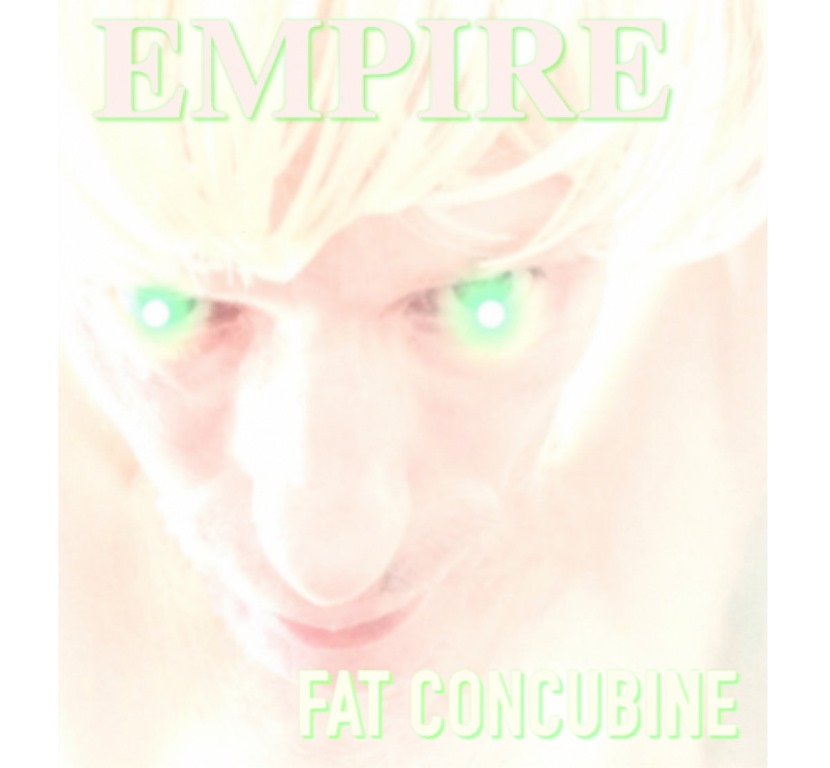
Fat Concubine are most certainly not representative of any kind of zeitgeist movement. With a name that’s not entirely PC, the London acts describe themselves as purveyors of ‘unhinged dance music’, and Empire is their debut EP, following a brace of singles. The second of those singles, ‘for Whom the Fools toll’ (with its irregular capitalisation, which is a bit jarring), is featured here, along with four previously unreleased tracks. This is a positive in my view: so many bands release four, five, or six tracks as singles, and then put them together as an EP release, which feels somewhat redundant, apart from when there’s a physical release.

And so it is, in the spirit of wild hybridisation, that they’re not kidding when they say their thing is ‘unhinged dance music’, or as quoted elsewhere, ‘unhinged no wave ravers’. ‘Feeding off the dogs’ pounds in melding angular post-punk in the vein of Alien Sex Fiend with thumping hardcore techno beats, and it’s not pretty – although it is pretty intense. The snare drum in their first thirty seconds of ‘for Whom the Fools toll’ takes the top of your head off, and the rest of the ‘tune’… well, tune is a stretch. It’s brash, sneering punk, but with hyperactive drum machines tripping over one another and a stack of synthesized horns blaring Eastern-influenced motifs.

There are hints of late 80s Ministry about ‘When we kick Their front door’, another synth horn-led tune that begins as a flap and a flutter before a kick drum that’s hard enough to smash your ribs thuds in and pumps away with relentless force. If the notes didn’t mention that it was a perversion of ‘These Boots We’re Made for Walking’, I’d have probably never guessed. As the song evolves, layers and details emerge, and the vibe is very much reverby post-punk, but with an industrial slant, and a hint of Chris and Cosey and a dash of The Prodigy. If this sounds like a somewhat confused, clutching-at-straws attempt to summarise a wild hotch-potch of stuff, to an extent, it is. But equally, it’s not so much a matter of straw-clutching as summing up a head-spinning sonic assault.

‘tiny pills’ is a brief and brutal blast of beat-driven abrasion, with a bowel-shaking bass and deranged euphoric vocals which pave the way for a finale that calls to mind, tangentially, at least, Cabaret Voltaire’s ‘Nag Nag Nag’.

The version of ‘O so peaceful’ was recorded live, and builds to an abstract chanting drone work. It offers a change of angle, but is no less attacking, its percussion-heavy distorted, shouting racket reminiscent of Test Department and even Throbbing Gristle, particularly in the last minute or so, and you can feel the volume of the performance, too. This is some brutal shit.

Empire is pretty nasty, regardless of which angle you approach it from. It’s clearly meant to be, too. Harsh, heavy, abrasive, messed-up… these are the selling points for this release. And maybe having your head mashed isn’t such a bad thing if you’re wanting to break out of your comfort zone and really feel alive.

AA

a1581875889_10

Room40 – 19th September 2025

Christopher Nosnibor

There are many labels putting interesting and unusual, innovative releases into the world. The majority of them are small, and supremely niche, but survive by virtue of knowing their audience – and I say audience rather than market, because while they obviously need to balance financially, often on the minutest of margins, they exist for the purpose of disseminating art rather than the production of profit. The underground operates on a very, very different model, and with very different objectives, from the mainstream.

One label which is consistent in its output is Lawrence English’s Room40. The interview I conducted with Lawrence some years ago has vanished from the Internet now, as happens when websites cease to operate and their owners stop paying for their hosting, but it will always stand as one of my favourites. This is relevant, because we touched on the subjects of William Burroughs, cut-ups, and sonic collage, and lo, English, in his appraisal of Steelwound, recounts how ‘In the early 00s, Ben had been working on cut-up electronics, spilling over with floating rhythms, humming string samples and piano splices. It was a sound realised in part through the subversion of fruity loops and also owes a debt to Ableton Live which arrived in late 2001. His works to that point, gently saturated and bristling with a fizzy distortion at times, hinted at another sound world which would become his focused in the summer of 2002 and into 2003.’

A further note on Frost’s process is also informative by way of a preface, and comes again courtesy of Lawrence, who writes, ‘Working with a Fender Twin, often with the reverb dialled in at maximum, he found a language of shimmer and saturation, of compression and collision, that set the stage for a prolonged interest in how sound performs and is perceived at volume. It also is the first time that many of the tonal and melodic inflections that have come to be recognised as his compositional language are on display.’

This is the twentieth anniversary edition of an album that likely very few people have even heard of, let alone heard, and the chances are, it will remain that way despite this reissue. That isn’t because it’s not good, but because it’s ultra-niche and on a small label. But, in those certain small circles, it will likely receive attention, and deservedly so.

As is often the case, any technical and theoretical background is lost in the listening. The album’s first piece, ‘Swarm’, is an ambient work which may well weave a certain tension, but its trickling drone reveals nothing of the aforementioned context. The same is true of the epic ‘I Lay My Ear to Furious Latin’, which in itself is anything but furious, an floats, drifts and wisps abstractly over the duration of nine minutes, before the mellifluous ten-and-a-half-minute ‘You, Me and the End of Everything’ stretches out into post-rock territory, and in doing so extends its emotional pull, also. It’s slow and ponderous, spacious, and expansive, and strains of feedback scrape and push at the delicate, soft-focus edges, before the first vocals of the album arrive, haunted, detached, and deeply moving in unexpected ways. Sometimes, the human voice affects us more profoundly when any words aren’t discernible. We hear the emotion poured into them, and we feed on what we take implicitly. Sound and enunciation, delivery, can convey emotion and meaning which is beyond words, and that is very much the case here.

The title track, emerging from the rumble of thunder and heavy rain amidst a blustery backdrop scrapes and drones, trills and whines, a representation of an industrial soundscape that veers between the graceful and the brutal, the harsh, as feedback assails the ears frequently – but there are points at which it dissipates, and submits to drifting mellowness, even then the feedback continues. ‘Last Exit to Brooklyn’, taking its title from Hubert Selby Jr’s classic, if gritty, novel is soft but with harsher edges.

It’s hard to comment on the initial resonance or impact of Steelwound twenty years ago. There likely wasn’t much. But as the whistles and wails of the title track dissipate in a gentle breeze, it does grow dark. Not SO dark, but darker that it was. This is an album of texture and detail, moving, but also captivating, a spell of gripping stillness, a pause to reflect. As the scraping, sonorous trails of ‘And I watch You Breathe’, it’s worth stepping back, taking a moment, and breathing. Just… breathing.

AA

RM403_20 front

Christopher Nosnibor

I shouldn’t be here. This event shouldn’t be happening. No, I don’t mean there shouldn’t be a bunch of York acts performing a packed bill on a Sunday evening in front of around two hundred people, but the reason it’s happening, the circumstances meaning we need a gig for Gaza. It’s something I haven’t really written or commented on – not because I condone the genocide that’s been playing out over the last twenty-three months, but because the shock, the sheer horror of it all has resulted in some kind of paralysis. The fact that after almost two years, it’s not only ongoing, but the situation is worsening is almost beyond comprehension, and while our government hasn’t mentioned Israel’s ‘right to defend itself’ recently, it continues to supply arms to and meet with their government, and to deny both genocide and famine, preferring instead oversee the arrest hundreds of pensioners for holding placards stating their opposition to this. Since when did vandalism equal terrorism? The media still refer to the ‘war’ in Gaza, but this is not a war. It’s a decimation. It’s annihilation. It’s genocide.

It’s impossible at this point to reasonably stack a hierarchy of horror, to say ‘but what’s worse is…’, but the fact that Israel’s collapsing of buildings in Gaza city at barely any notice is only occasionally making footnotes in the news a measure of how appalling things have become. Meanwhile, the UK news is currently devoted to outpourings over the assassination of a pro-gun fascist hardly anyone had heard of until he was shot, plugging a pro-racist march arranged by jacked-up right-wing thug Stephen Yaxley-Lennon, and giving Nigel Farage so much more screen time than all of the other parties combined (who knew that The Green Party hold as many seats in Parliament as Reform, eh?), and Russia continue to pound Ukraine and extend their reach, and under the radar, Sudan is another hell on earth. Meanwhile, the world burns, and people are still in thrall to billionaires, chucking their cash at Daniel Ek to fund more war so they can stream mediocre slop while ordering some shit via Deliveroo and spending their evenings watching Love Island and shit instead of facing the fact that we’re actually entering World War 3 and the apocalypse is happening right here right now.

But here we are. I’ve written extensively about the therapeutic qualities of live music, and why grassroots venues are important., and tonight brings my entire thesis together perfectly. The Crescent Community Venue – as the name suggests – is about community. Not in the way those who have been zip-tying flags half-way up have been harping on about ‘uniting communities’ (the subtext being that they’re uniting against something – namely anything that isn’t white, straight, etc.), but in the truest sense. Everyone is welcome – just please don’t be a dick.

Tonight is the perfect representation of what community means. It’s not even really about the acts performing – although it’s a great lineup, curated by local promoter of the experimental, avant-garde, spoken word milieu, Navigator Arts, with the aid of the venue and local legend Joe Coates, who operates independently and via a regional network as Please Please You. These guys champion local acts and regional talent and live and breathe it, and the performers who’ve given their time for this event – I can only applaud them all, really.

What we have here, then, is a great lineup for a vital cause, in a great venue – I’ll say it again that The Crescent is York’s Brudenell: there are many parallels, and they’re all positive. And tonight is exemplary, because what we have here is a great lineup for a vital cause, with a brilliant vibe.

DSC03424

Lara McClure

It’s an interesting mix of bands and interludes: spoken word artist Lara McClure stretches out a fantastical story over the course of the night, seamlessly – or otherwise – creating segues to the following acts, and a guy who operates under the moniker of Cast – clearly being too young to remember the 90s indie act – does some beatboxing before Knitting Circle take the stage, as a three-piece on this outing. My appreciation of Knitting Circle is strewn all over these pages. They’re a great band, and a perfect choice for this event. They’re proud and passionate lefties with a ‘don’t be a dick’ agenda of inclusivity, and songs like ‘Safe Routes’ aren’t only resonant but prove quite moving in the context of the event. They’re brilliant, as always, and I have to take a moment after their set.

DSC03320DSC03325

Knitting Circle

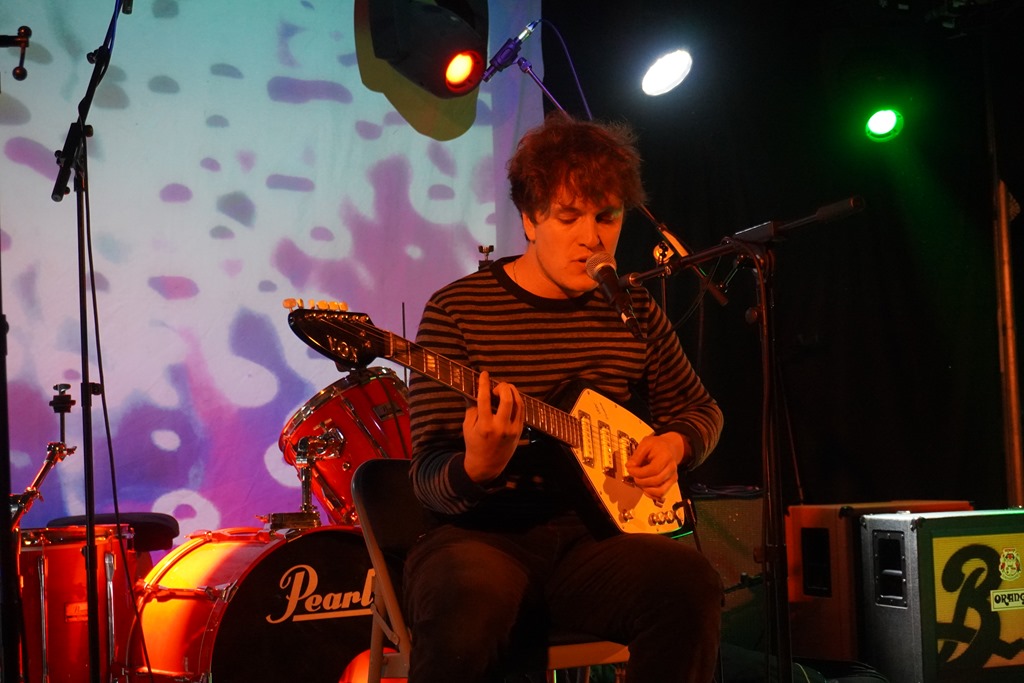
Captain Starlet are a band I’ve never really taken, to, but here’s their singer, Tom, playing a set that includes covers of songs by Love and The Incredible String Band with a Vox guitar, and her does so in a self-effacing manner. And he’s here, taking a stand against genocide and fascism, and so respect is due.

DSC03346

Tom of Captain Starlet

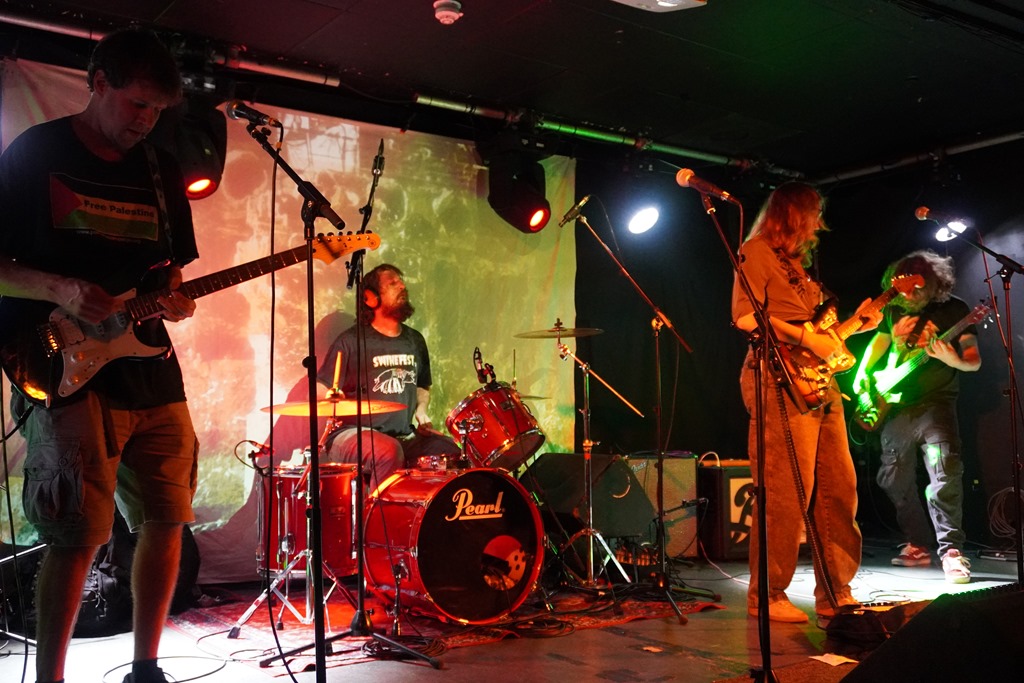
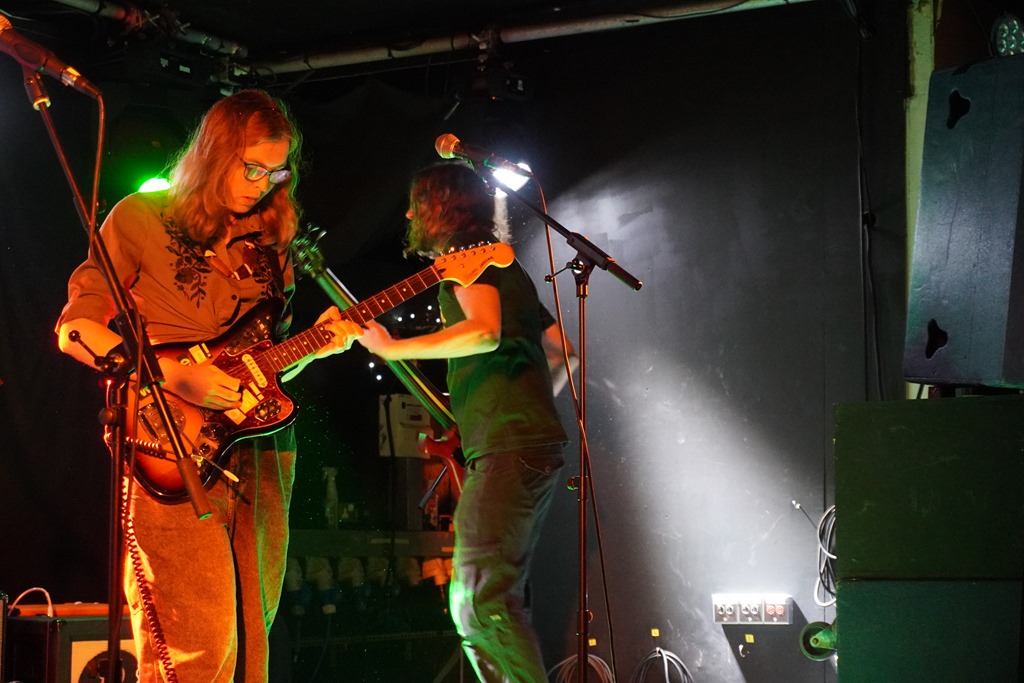
Things take a turn when Fat Spatula hit the stage, and the volume takes a leap by at least ten per cent. The songs may be fairly mellow alt-rock in the main, but they are LOUD and played with masses of energy and enthusiasm, they’re kinetic (especially the rhythm section), electric. As a band, they seem a little uncertain of their abilities, despite the fact they’re rarely anything other than killer. But maybe that’s a part of their way of working. They put everything into their set and look to be really enjoying themselves. And it’s great.

DSC03395DSC03385DSC03411.2

Fat Spatula

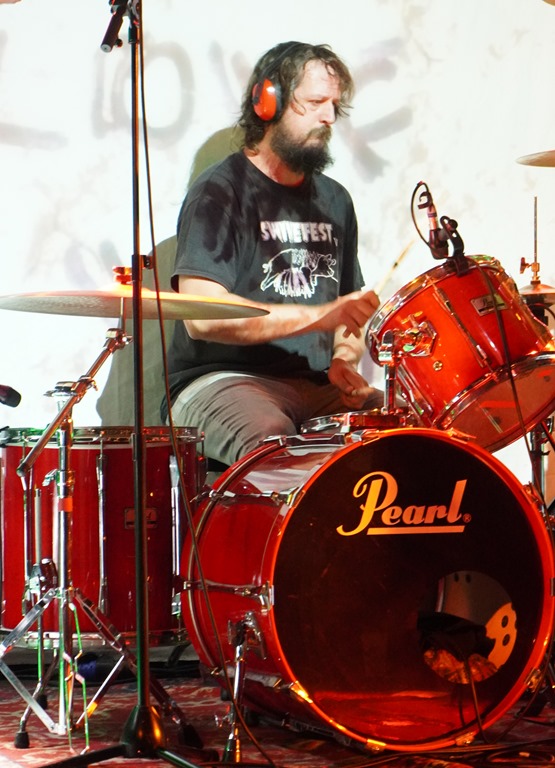
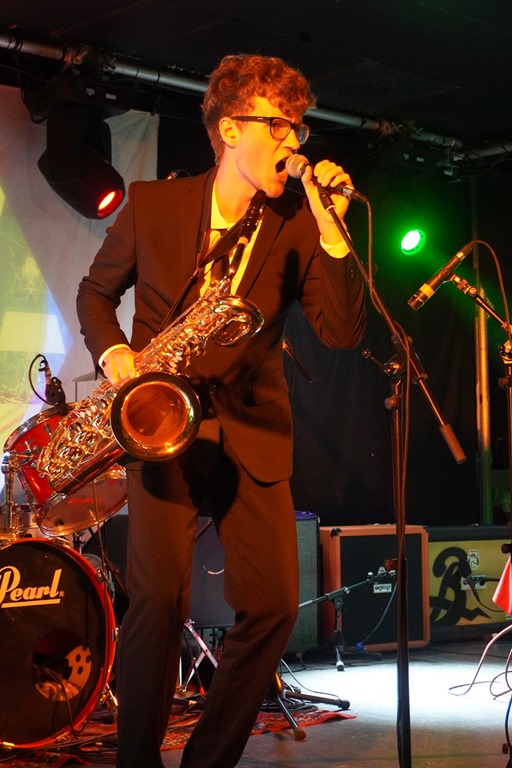
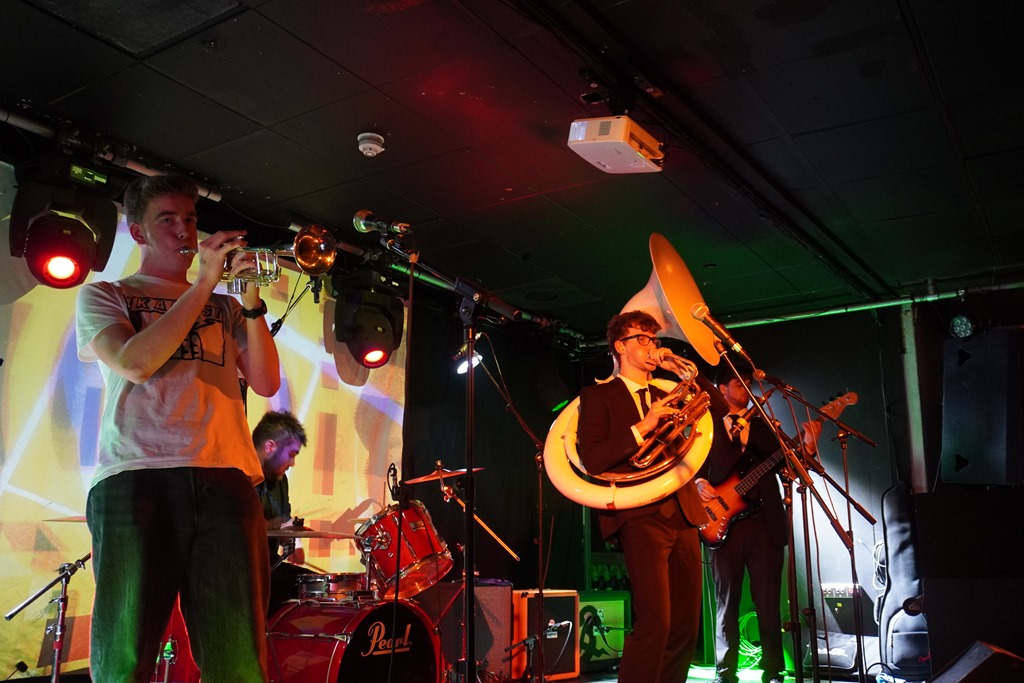
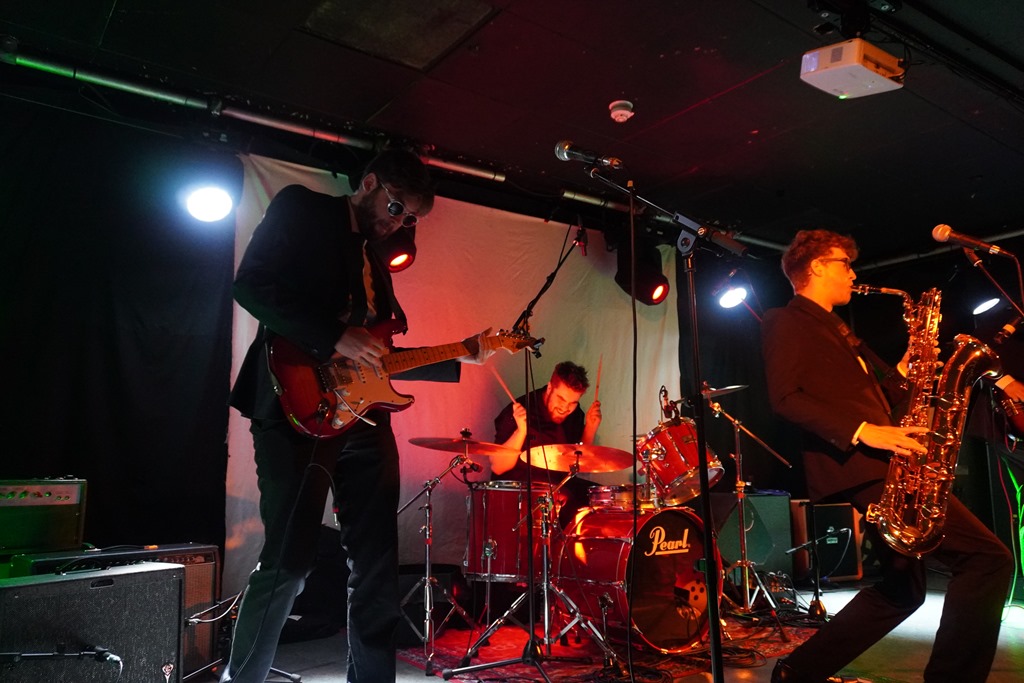
It takes me a while to get into Borgia, and my initial impression is of these purveyors of jazz punk is ‘jazz punk cunts in suits’ (which, I know, is a niche piece of self-referencing for the ten people familiar with my own ‘musical’ work, but, why not?). They’re decidedly more jazz than punk, and the shades are off after five minutes. But they present a pretty meaty racket with busy bass balanced by sturdy drumming and some wild parping sax. The theatrical enunciation and dramatic presentation is a bit over the top and only nearly as cool as they think, but all credit to them for putting on a performance. They’re seriously tight and go all-out to entertain.

DSC03451DSC03475DSC03443

Borgia

The Bricks are on fire right now. Just eleven days previous they were up-close and personal in a pub on the other side of town, and looked to be relishing the intense proximity. Now, here they are in a 350-capacity venue and owning every inch of the stage. Gemma’s voice may be cracking and only just surviving with the aid of honey, but she still goes all out for the duration, and doesn’t miss a note. There aren’t many bands that seem as much at home playing large or small venues, and even fewer who bring their A-game every single time, but The Bricks are one of the few.

DSC03525DSC03519DSC03560

The Bricks

While there were reminders of why we were here – and rightly so – tonight was as much about bringing people together and espousing true community spirit. The atmosphere was warm, genial, and safe, and in the current climate, riven with tension and hate, this felt like an oasis of nice, a much-needed balm to soothe the stress. And if you’re going to be proud of anything, be proud of local bands, local venues, be proud of generosity and kindness, not shitty flags.

The latest is that the event raised £1,500… and you can still donate… Please.

548187537_18021967130742283_8609393116234650645_n

Tartarus Records/Sweatlung – 29th August 2025

Christopher Nosnibor

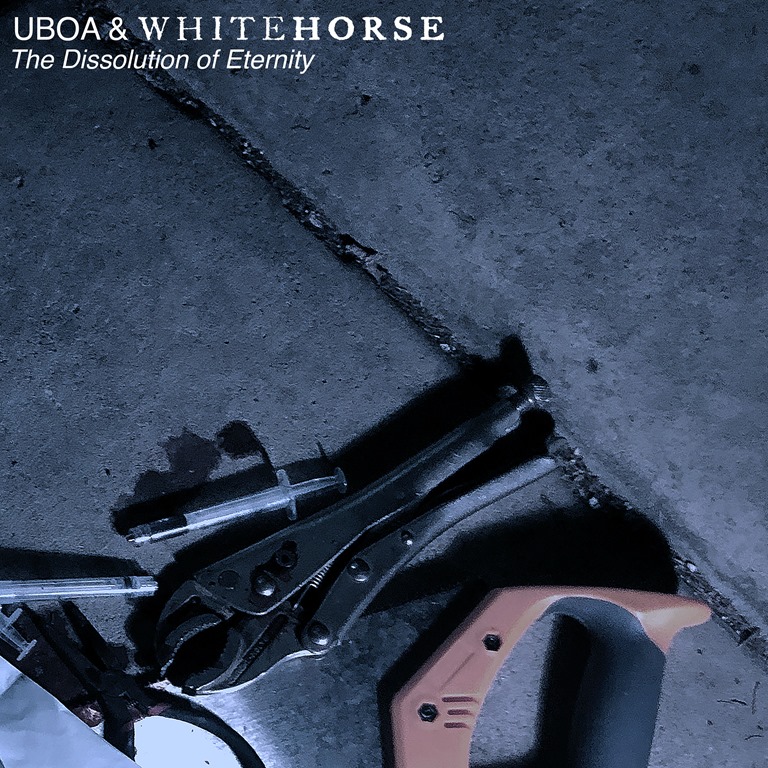
My appreciation of the split release is well documented among these virtual pages, and this colossus of a monstrous beast is exemplary of the perfect balance of the contrasting and the complimentary. It’s quite the face-off, pitched as a head-on crash where ‘Australia’s heaviest force of nature Whitehorse teams up with sonic chaos conjurer UBOA for a split album that crushes, scorches, and transcends. The Dissolution of Eternity is not just an album, it’s a seismic rupture’. Yes. ‘A seismic rupture’. It’s a bold statement, bit one that’s hard to argue with, and the fact that this is getting a proper physical release on vinyl, cassette, and CD is something to get hyped about, especially the vinyl and cassette. The contrasts make the act of getting up and flipping the object an integral part of the experience, like an interval between acts at the theatre, or… well, really, like turning over a record. There’s no substitute for it when it comes to the elements of engagement with a physical release.

There must be something about bands with ‘horse’; in their name that plugs into a direct line to the world of heavy. Horsebastard, and the late, great Palehorse are just two example of UK bands who hit heavy, hard. And as for Whitehorse – not to be confused with Whitehouse, purveyors of extreme electronic noise – they are indeed as heavy as fuck. I’ll take their ‘heaviest band in Australia’ claim on face value, on the basis that ‘Wringing Life’ is almost seventeen minutes of grating, crawling, growling riff assault. It’s a heavy, harrowing, low-BPM sludge trudge, with the most choked, rasping vocals, buried low in the mix, sucking the oxygen from the air in dying gasps. The drum solo in the middle is punishing – sparse, slow, the cathedral-like reverb enough to make your head swim – and then the guitar and bass return lower and slower than ever. It’s bowel-trembling, rectum-quivering stuff, the sound of a slow, zombified clawing out of the cold damp sods: it’s the darkest, doomiest sludge imaginable. By comparison, ‘The Wait’, a mere seven and a half minutes in duration is a pop song. But it’s another crawler, its dingy riff mess strewn with feedback. This shit is so heavy it weighs down on your shoulders, your back, your lungs, just sitting in a chair listening to it.

File together Godflesh and early Swans and Oil Seed Rape and Sunn O))) and your halfway to the sternum-crushing weight of this.

Uboa’s noise brings a different kind of weight, and it’s compressed into shorter songs. When I say compressed, ‘Petplay Polycule Open Fire’ is a mere minute and forty-nine seconds of brutal, raging, clanging fury. It’s tempestuous, savage, demonic, a ravaging, brutal assault, and it bleeds into the gut-gouging morass of plunging, churning, amorphous noise that is ‘Wasted Potential’. Holy hell, is this dark and harrowing. You feel your innards slowly slump under its weight.

The theatrical piano of ‘Deamwalker, Fuck I Miss You’ certainly provides contrast, bit in terms of form and mood, and there’s a gloomy sadness which hangs over it before the darkening shadows gather at pace over the gloomy, semi-ambient ‘Pareidolia Shadow’, which reaches a sustained tempestuous crescendo that marries industrial with dark ambient and post-metal. The last track, ‘The Apocalypse of True Love’ is nothing short of a monster: clocking it at over nine minutes, it begins gentle, expanding synth ripples and surges, providing an atmospheric swell of sound, and you find yourself swimming, drifting on currents and tides… and then it expands in every direction, a surging blast of ambience ad noise and culminating in the most immense sustained crescendo… The final minutes are a slow, sloping comedown from the most all-encompassing blast that hits hard.

This release is quite something. It’s certainly loud. And it’s harsh, brutal, and unforgiving too. In short, everything we like – so this comes recommended.

AA

404158