Archive for the ‘Albums’ Category

Room40 – RM4143 – 9th July 2021

Christopher Nosnibor

This cassette release’s liner notes are prefaced with an epigraph from Fredric Jameson, one of the preeminent writers on postmodern theory. It reads, ‘It is easier to imagine the end of the world than it is to imagine the end of capitalism.’

One of the most profound things about Jameson’s writing is that much of it seems more true and more relevant now, than when it was first published. Postmodernism, or, The Cultural Logic of Late Capitalism appeared in 1991, with the rather more succinct The Cultural Turn, which collected his writings on postmodernism form 1983-1998 distilling his critique of the era. The present feels like postmodernism on steroids, a relentless blizzard of media, technology and consumption progressing at a pace that evolution simply has no hope of keeping abreast of. The worst spins ever faster, but our bodies and brains aren’t equipped for the environment we’ve created. And it’s capitalism that drives much of the pace, perpetually reinventing, recreating, reselling to milk the market dry. And any suggestion that the pandemic would cause a rethink is already proving to have bene but wishful thinking. Capitalism has made off the situation, even when high-street retail and hospitality has been dying, and now the race is on to get everyone back to work, back to the office, and to supply those ever-growing demands.

This, then, is part of the context for Robert Gerard Pietrusko’s new album, and the press release provides a more granular and specific level of context, explaining how ‘On Elegyia, Robert Gerard Pietrusko reflects on notions of accumulation and decay, calling specifically on his memories of the demise of the Soviet Union. The sudden collapse of the USSR shocked the world and in that moment came an intense and wholesale reveal, that spoke to the impermanence of all political and social structures, no matter how fixed they might appear. Using this as a compositional metaphor, Pietrusko creates an edition of muted sonics, rich saturation and submerged low energies.’

The album and the compositions it contains are highly structured, ‘based on five piano motifs that are repeated with constant variation and extrapolation across the album’s nine tracks. In structure, harmony, and timbre each piece attempts to capture the contradictory condition of a macro-level stasis versus a tumultuous interior, rigorous movement but no progression, and a threat of its own undoing’.

Indeed, the greatest threat to capitalism is always capitalism itself, and it’s the endless recycling and regurgitation of ideas that keeps it alive: each revival is a reimagining of the past that exploits the ache of nostalgia, which grows ever stronger the worse the present becomes.

And so it is that Elegyia mourns the passing of the past through its subtly-sequenced movements of droning ambience and slow-turning mellifluous aural abstractions. The nine-minute ‘Perishing Red Skies’ sets the tone and is formed from slow-turning waves and the most gradual of movements. The motifs are often buried beneath broad washes of sound, and twist and warp further out of shape as the album progresses – but they are, breaking through the waves, at times discernible, bobbing around in eddying flows. Sometimes, the feel is quite light-hearted – but then, at others, it feels vaguely threatening, while at others simply contemplative. How I miss those periods of quiet introspection, before work, family, and simply life took over.

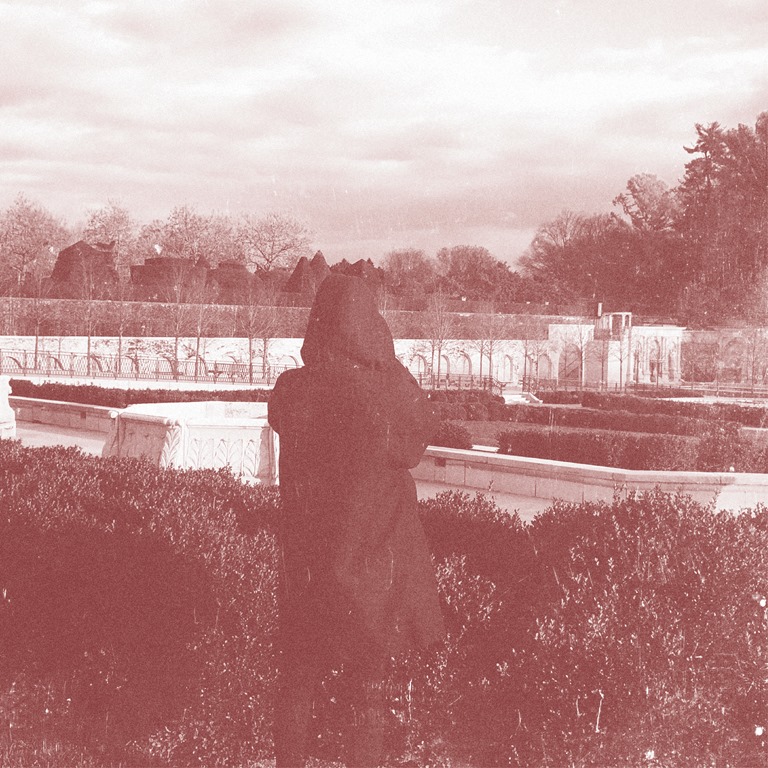
Dark clouds build on the two-parts of ‘The Lost Seasons’, the second occupied by a stammering oscillation of slow disruption to a smooth, soft surface. It’s soothing, but is it real? Postmodernism is all about surface, about deception, about appearance, and so one must inevitably ask how much of Elegyia is art, and how much is artifice? take the sepiatone cover image. It’s an evocation of a bygone age – but it’s simply a shortcut, a signifier – rather than the signified.

And these are the questions to ponder as you cast away on the drift, and without expending too much energy on what lies beneath the surface.

Elegyia is a delicate and finely-balanced work, with expansive sweeps and fine detail coexisting, layering atop of one another, reforging its own reality in the moment.

AA
Print

Gates of Hypnos  – 4th July 2021

Christopher Nosnibor

This is a split release by, as the title suggests, Sado Rituals and Mass Grave, who each bring approximately twenty minutes of harsh noise wall to the dark, antisocial party.

Sado Rituals’ ‘Funeral Pile of the Nameless’ is a murky cloud of tearing, rumbling devastation.

As I listen, I contemplate whether they mean pile or pyre, but conclude it maters little, especially not least of all to the couple of hundred people who will even ever hear it. We’re in ultra-niche territory here, and no mistake. But it’s a niche filed with a truly hardcore following.

It’s deep, dark, dank, a rumbling morass of formless darkness that billows and rumbles, and over the course of its precise twenty minutes, it sucks the fucking soul from you as it churns away at the guts without shift and without mercy. It feels like standing beneath the rotors of a helicopter, or on the edge of a cyclone spiralling down and drawing all matter into the pits of hell, the sonic equivalent of a black hole. A vortex of bleakness, of dense matter without form. And then, bang on the twenty-minute marks, it stops.

As purveyors of self-labelled ‘blackened noise wall’, Mass Grave’s nineteen-minute gut churner sounds like the tail end of a piano being rolled down a flight of stairs, a rolling crash of dissonance. It’s even darker and dinger than Sado Rituals’ contribution, a low rumble reduced to a slow, low drone that gradually warps as it billows like smoke from a fire on a wrecker’s yard, all types burning and cars slowly melting in the suffocating black smog.

The lack of treble on these two pieces tempers the harshness, in many ways: it’s a real gut-rumbler but neither track feels particularly attacking or abrasive: it’s a noise wall, and no mistake, but one which is more designed to smoother and suffocate than penetrate the flesh and the psyche with its harsh intensity. It’s still punishing, and it’s still gnarly as fuck, and its power lies in just how oppressive, stifling, the two pieces are.

AA

a3190939614_16

Editions Mego – EMEGO305 – 28th June 2021

Christopher Nosnibor

BJ Nilsen’s focus has long been the ‘sound of nature, the nature of sound and the effects these have on humans’, and his exploratory collages and soundscapes tend to draw of field recordings and myriad other sources to create often contrasting, and dissonant works, and Irreal is very much dissonant and contrasting, with moments of tranquillity and subtle, quivering elongated drones disrupted by battering blasts of difficult noise.

The liner notes outline how ‘Irreal is a selection of recordings from different situations encountered in Austria, Russia, South Korea and The Benelux. The range of sound is as wide as is the emotional impact which slides from the unnerving to the shimmering and gor- geous. Doors, bells, birds, wet snow falling from a tree, hacking of wood, water dripping in a cave are all exquisitely captured and moulded into vast landscapes of sound. Human voices, string instruments, descending trains, oceans, winds, grass, trees. These diverse sonic elements are grafted around and upon each other to create a rich tapestry of sound. Electronic embellishments harness the whole to create a singular expressive canvas. The 3 part suite concludes with the Beyond pebbles, rubble and dust, a grand glacial work which serves as a masterclass in extraordinary transcendental drone.’

I’m instantly primed for some challenging scraping drones as the first few seconds of ‘Short Circuit of the Conscious Thought’ build tense, treble scratches, and am immediately puzzled when it halts and there are just clicks in silence. It’s as if the file has inexplicably glitched. From the quiet, a trilling, rippling drone emerges and hangs like a haze – but that smooth stillness carries a tension, which ruptures with distortion and bands like a dozen car doors slamming simultaneously, and at the most unexpected of times. In the final minutes, it evolves into a slow-pulsing minimal ambient Krautrock sequence reminiscent of Tangerine Dream.

Rumbling thunder cracks and crackles all around at the start of ‘Motif Mekanik’, and it booms and grumbles all around a low, ominous drone, and the track is a tumbling tempest of amorphous noise like a raging storm circling and hovering, drifting back and forth, and it’s unsettling. The contrast of the sounds of the elements and the metallic scrape of the eternal drone is perhaps the most obvious way in which Nilsen highlights the relationship between nature and humans, the man-made and the organic. It also intimates the tensions at the heart of that relationship, as strains of ear-splitting feedback cut through the murk and mumble, and it segues quietly into the expansive final composition, the monumental thirty-eight minute ‘Beyond Pebbles, Rubble, and Rust’ – and I know ‘immersive’ is a word I probably use excessively, but it’s entirely appropriate as I find myself swimming amidst the thick, slow—moving sounds of the piece.

Lazy bleeps, like R2D2 on a low battery or the Clangers on ketamine bibble into the mix, before fading out to a drifting mist of dark rumblings that present not immediate routes into the heart of dark mass, only an impenetrable mass of sound, like a mountain rising to the heavens, its summit hidden by a low cloud base. A low bass registers almost subliminally, a single note repeated slow and regular, booming out dolorously. Not a lot happens over a very long time, but the effect is cumulative, and as you sit and stare while the drones and spectral wails of ambience envelop, you find yourself in contemplation and searching for the meaning.

There are all shades of reality, spanning the unreal and the hyperreal. But the irreal is not real. However, where the irreal is distinct from unreal lies in the perception – not just something unreal, but estranged and otherly. In drawing on so many found sounds and field recordings, Nilsen’s album is in fact rooted in the tangibly real, bur recontextualises it, shifting the axes so as to present that reality through the filter of human intervention and incongruity, and as such, distorts that reality to present an interpretation which in turn becomes a fiction and therefore not real, or irreal.

As the rain hammers outside on this early July night, following a day of heavy storms, it occurs to me that what Nilsen articulates through his sonic juxtapositions, is that the relationship between human and nature is precarious: we, as a species, are not nature’s friends, and that progress is disruptive and often damaging – and it’s the human way to command, control, and harness nature for our own ends. But that superiority is an illusion, a delusion, and humanity will always be at nature’s mercy. The relationship is not interdependent or symbiotic, and we need the natural world , whereas it does not need us. In time, we may reach a point where our planet is uninhabitable to us, and to many other species, but it will exist long after we have ceased to, just as it did before. Darkness descends, and at the close, the album tapers to silence – and this is as it will be.

AA

eMEGO305_front

Panurus Productions – 4th August 2021

Christopher Nosnibor

Fading Tapes: a moniker that casts allusions to degradation, the wear and fade through the passage of time, the notion of impermanence and the significance of medium – because the medium isn’t only the message, it’s the determining factor in the lifespan of a record, whereby digital is supposedly forever, but analogue corrodes, deteriorates, and ultimately becomes unusable.

A Cartographer is one who draws or makes maps, and Fading Tapes’ latest work is, ins ways, both map and territory. The titles of the four tracks sketch out the features of the locations in the most minimal of forms – and these aren’t necessarily natural geographical landforms or biomes, but remains of human activity left marking the landscape.

The sequencing of the four compositions, each of which span around fifteen minutes apiece, very much create the sensation that the listener is being guided on a journey, and there is a clear linearity to Cartographer.

Opener ‘East Valley’ calls us to the ritual with an insistent tribal drumming and wailing pipe before… actually, before what the fuck? It’s not so much a building of layers of sound as it is a jet plane flying overhead, devastating the image of a hidden tribe enacting an ancient, esoteric ritual. And this is the dynamic of the piece – ancient collides with modern, and as immense gongs and cymbals crash, ringing out into an expansive desert, unchanged for centuries, hidden from the march of technology and evoking a deep-seated spirituality, the disruptions are deep incisions that disrupt without care for the existing habitat. But over time it’s the soft, supple droning ambience and wordless vocal tones that ring out into a spacious echo that come to dominate. For once, nature, and the old world, wins out as so-called progress falls by the wayside: the valley remains unconquered.

‘Bones’ is a more contemporary-sounding drone work, with conventional western percussion propelling a deep, dark surge of slow-burning desert rock that’s slowed to a the pace of drifting dunes, and the sound is dense. The snare rings out into a cavern of reverb – it’s almost dubby, but it’s accompanied by wailing feedback, that does on, and on, and endless mid-range drones. We learn little, if anything, of the bones themselves, or their origins, but there is a sense that there is little interest in the real detail of the past, and that a sketched narrative is all that there is an appetite for. Instead, to the present, and the future.

The cymbals grow in dominance on the tempestuous ‘Boats’, but again, echoes and shadows dominate, and this very much feels like a window on an historical event, the soundtrack to a battle or other catastrophe at sea where boats were lost beneath the waves. To all intents and purposes, this is a spacious post-rock piece, but it possesses a richness, a level of detail, and a degree of ambience, that is so much more.

The final track, ‘Red Dry Land’ is a hypnotic piece that drifts without real movement, a nagging motif backed by a thrum that simply thumps on unchanging for what feels like an eternity. There’s a scratchy guitar that’s reminiscent of Andy Moor, and mines a more avant-jazz seam, but retains that expansive post-rock vibe, too.

The map charts a route, and as it progresses, it leads the listener back to themselves. This all feels highly evocative, and conjures images in the mind’s eye – but every perception is different. Perhaps that difference ultimately does come down to the map, and one’s experience of the territory – for while the former is fixed, factual, the latter is not, and will always be coloured by individual realities, the eye of the explorer. You may know exactly where you are, and still be lost. With Cartographer, Fading Tapes point the way but provide no real answers. But perhaps that’s ok: the enjoyment is in the journey rather than the destination.

AA

cover

SIGE Records – SIGE103 – 25th June 2021

Christopher Nosnibor

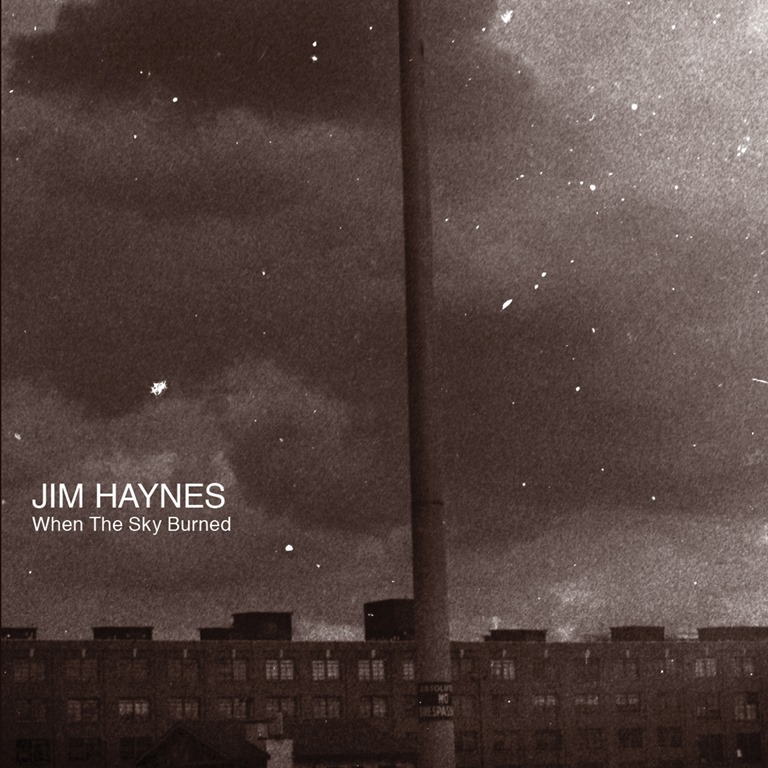
It was The Decline Effect, a full decade ago, which provided my introduction to the work of Jim Haynes. It was an album I described as ‘bleak’, commenting on the way it reminded me of ‘Robert Burton’s 17th Century text The Anatomy of Melancholy, which detailed in the richest language the terrible physical symptoms of melancholy and its effects on the humours of the body. It still stands as a fitting description of a work by an artist whose career is devoted to ‘compositions of corrosion, shortwave radio, and tactile noise’.

Haynes’ inspiration for this latest offering was environmental, circumstantial, situational, as he recounts: “I completed this record in the fall of 2020. Much of the western states of the US was ablaze for months. The anxiety of the collective American psyche was ubiquitous, also due to the Presidential elections in November of that year. And When The Sky Burned became an appropriate title given the environmental and political climate of that particular time.”

But what’s also fascinating is the more subtle use of reference, of intertext: Haynes explains that When The Sky Burned When The Sky Burned is ‘also a reference to Zbigniew Karkowski’ – before going on to explain his ‘complicated, if distant relationship’ and subsequent hostility from both Karkowski and Andrew McKenzie, aka The Hafler Trio, for what appear to be the most disproportionate of reasons.

Haynes dedicates the album to both McKenzie and Karkowski ‘whether they like it or not’, writing on the latter, ‘After his death, I most certainly felt a sorrow that the world has lost this artist, but I was also very conflicted as I wish there could have been a conversation about what happened. I don’t think he was capable of remorse or reconciliation, but I wonder if I was wrong in that analysis. So this album is a tenuous homage to Karkowki’s early works – with the chest, cavity rattling lows and the shrill sustained high frequencies. The title in fact is a direct translation of the opening piece to that aforementioned Silent CD – "Als der Himmel brannte." But of course, I can never leave anything so static alone, and the heaps of noise, junk, and dissonance were required."

Haynes is an absolute master when it comes to noise, junk, and dissonance, and When The Sky Burned is abrim with all three.

As album openings go, the first few seconds of ‘Multiple Gunshots’, are striking, shocking, even, as blasts of percussion – which slam like gunshots – hit the listener without warning. They arrive a succession of hard blasts – some warping backwards, and Haynes manipulates them to forge an erratic but devastatingly heavy beat. I’m reminded of how Swans sampled a nailgun and pitched it up and down for the punishing rhythm on ‘Time is Money (Bastard)’, and this builds a grind of rapidly oscillating drones that flicker and shudder. Seven minutes in, the drones rise to a shriek, before obliterative distortion decimates any semblance of musicality. Everything combines to forge an intense and oppressive eleven minutes where little happens other than the listener suffering a brutal sonic punishment.

Between this, and the ten-minute ‘Appropriate to a Sad, Frightened Time’, Haynes presents a series of compositions that really test the listener’s capacity for noise and overall endurance. ‘Abruptly Scattered’ sounds like an enormous generator’s throb, occasionally rent with blasts of explosive treble noise as if said generator is bursting into flames. The tonal separation is well-defined: the bass sends the most uncomfortable vibrations through the pit of your gut, while the shrill, harsh treble smash makes you clench your teeth and fear for your hearing. You swallow hard, feeling uncomfortable, wondering if you’re going to suffer tinnitus or diarrhoea first, and pray it’s not both simultaneously.

Haynes’ explorations are brutal and harsh, and the set as a whole is truly relentless. Heavy crunches and grinding, gut-churning growls are suddenly ruptured by unexpected thacks and cracks, detonations, and the kind of heavy impact that makes the car-door slams used for punches in films sound like friendly pats on the shoulder. Swirling vortices of noise on noise howl and shriek, violent sonic tornadoes that inflict devastating levels of damage tear from the speakers, and even the moments of calm are unsettling, uneasy.

When The Sky Burned is not a nice album, but it’s a remarkable one, one that quite literally crackles with intensity, and genuinely hurts in places. But while it is relentlessly abrasive and often excruciating, Haynes’ attention to tone and texture, and the way the utilises these elements to forge a work of immense range isn’t only admirable on the technical, sonic, and compositional levels, but also results in an album that has massive impact, and is an outstanding example of well-crafted and intuitive electronic noise.

AA

BSBT_j-cardfront_double

Chapter 22 – 24th June 2021

Christopher Nosnibor

On 31 December 2019, writing on Yur Mum’s explosive Ellipsis EP, I closed with the lines ‘Fuck it, for my last review of the year, and of the decade, I’ll put it out there: 2020 is going to be Yur Mum’s year. And if it isn’t, then I give up.’ There was no way of knowing that 2020 would be no-one’s year, if it could even be considered a year rather than an immense, bleak desert of time without form or meaning. If it seems as if in 2021 we’re now just starting to emerge from a long dormant spell, it’s perhaps worth realising that it’s already the end of June and we’re past the longest day.

Still, it’s been a while in the gestation, but Yur Mum having scored a deal with Chapter 22, finally get to unveil their second full-length album, Tropical Fuzz. Apart from ‘Sweatshop’, the lead single form the aforementioned Ellipsis EP, this is a completely new set of material, penned since they cut back from a trio to a duo in 2019, and it feels very much like an album, a cohesive work that’s been planned and structured, with the second half comprising noticeably shorter songs as it builds up and races to the finish.

‘Banana Republic’ comes belting out of the traps with a colossal lumbering riff, the gritty, grainy bass and thunderous drumming tight as you like. There’s such a density to the sound that it punches you right in the stomach, and the production captures that live feel magnificently.

‘Black Rainbow’, premiered at the start of the year, marks a change of tone and tempo, with its slower pace, and more theatrically gothic feel, it’s a dark, brooding beast of a song that showcases another facet of Anelise Kunz’s vocal range.

It’s on third track, ‘Crazy’ where they deliver on the pitch of ‘more cowbell, more fuzz’, as drummer Fabio Couto goes all Blue Oyster Cult and Kunz grinds out a doozer bassline while coming on like Courtney Love, with a drawling sneer and full-lunged roar, and they pack the belters in back-to-back, the driving alt-pop of ‘Dig Deep’ is a fast and furious two-and-a-half minute harmony-filled rush of adrenaline. They step up the volume and fuzz another few notches with ballsy grunger ‘Kiss and Tell’.

The pairing of the jarring, ribcage-rattling ‘Sweatshop’ and the raucous hard-rock attack of the title track makes for a killer finale.

Each song feels fully honed, distilled to its optimal strength, with no fat or faffing about – this is, of course, one benefit of being a two-piece: there’s not a lot to faff about with – breakdowns and extended solos simply don’t work with such a minimal format, but where Yur Mum really make it work for them is that they achieve a maximal sound. And that sound is a driving, punky blast of energy that feels great.

AA

Yur Mum Press Shot 2

Blind Mice Productions – 18th June 2021

Christopher Nosnibor

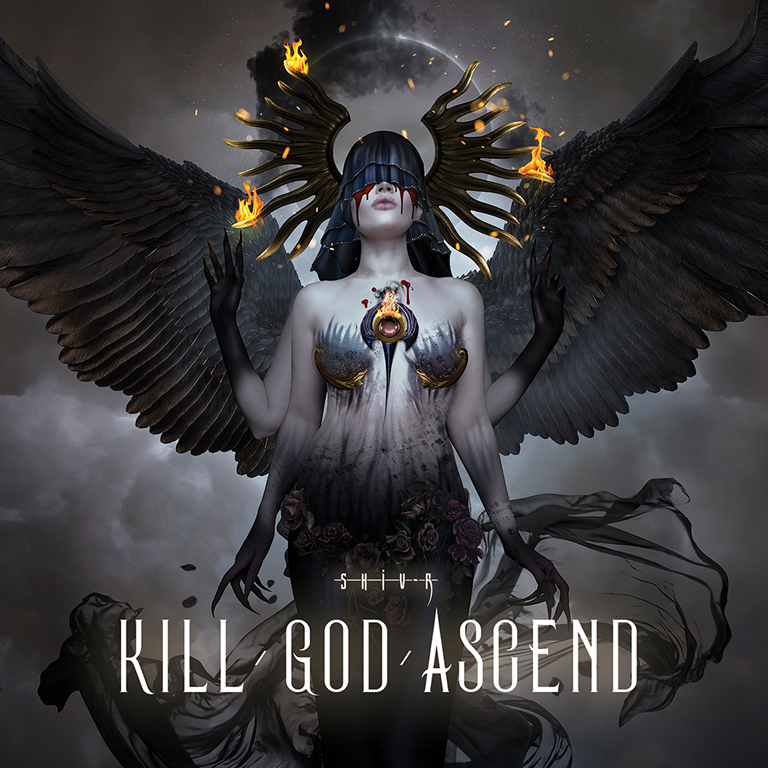
As the liner notes to Australian electro-industrial band SHIV-R’s fifth full-length album explain, ‘there is a Zen teaching that if you meet God on the road, you must kill him… What the killing of God means to each listener will be a unique and personal revelation. In a world full of gatekeepers and figureheads whose only interest in you is to tell you what to do, illusions will need to be shed and those who profess to have all the answers will need to be confronted’.

The title track launches the album with some harsh metallic guitars pitched against a pounding technoindustrial groove, where beats and synthesized bass are melded together perfectly. And while a lot of bands in this vein – even the likes of KMFDM to an extent – peg the guitars back in favour of pushing the synthesised elements of the instrumentation to the fore, to give a harsh, but ultimately slick, digital vibe overall, SHIV-R to crank up the guitars, and they punch hard, providing a strong counter to the danceable, mechanoid beats and throbbing low-end.

While growly or distorted vocals are common to the genre, it’s often strained-sounding or raspy, whereas Pete Crane has a rich, full-throated metal roar that has real depth and proper guts. That said, on ‘Spark’ and ‘Promises of Armageddon’ where they slip into grinding electrosleaze mode, evoking Pretty Hate Machine era Nine Inch Nails and mid-90s PIG, Crane shows a cleaner tone that’s poppy, but dark – which is a description that fits the slower pace of the Depeche Mode-like minimal electro of ‘Blue Turns to Black’. It’s well-placed at what would conventionally mark the end of side one – and highlights another strength of Kill God Ascend: it feels like an album in the classic sense, with ten tightly-structured and concise tracks that are sequenced in such a way as to drop the tempo, and conversely, slam in with an absolute banger, at just the right time. More than anything, it’s reminiscent of Stabbing Westward’s debut – but at the same time, Kill God Ascend is very much an album with its own identity.

Sixth track, ‘Empire’ is exemplary, kicking off virtual side two with a dark stomper on which Crane snarls, “I’m on my own path. Get the fuck out of my way.” He sounds like he means it, too.

There are some solid hooks, and Kill God Ascend sustains the angst from beginning to end – even when they bring it right down for the brooding penultimate song, ‘Valley of Death’, it’s as a prelude to the epic finale, the dark, slow-burning ‘Turpentine’ that’s gnarly and hefty and brimming with twists, turns, and glitches, a track where the machines finally devour the human components in a mangles mess of rust and dirt, blood and guts. And it’s at this point, you realise that god is indeed dead.

AA

AA

395781

Dret Skivor – 18th June 2021

Christopher Nosnibor

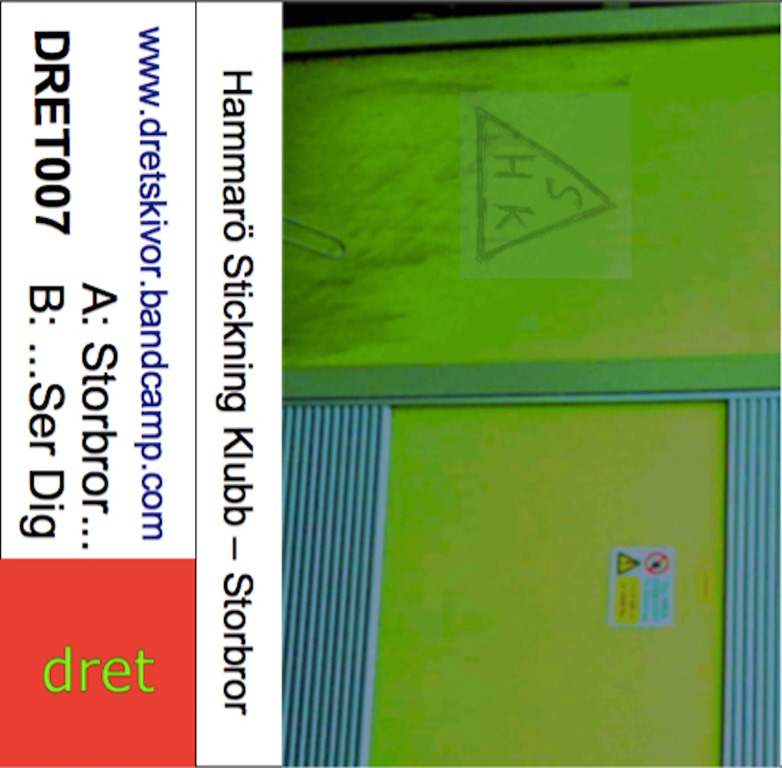
Swedish cassette label Dret Skivor continue to expand their catalogue at pace with another made-for-tape two-tracker in the shape of Hammarö Stickning Kubb’s Storbror Ser Dig. As is customary, biographical information for the label’s seventh release is nil, and technical information is sparse, the accompanying notes simply stating ‘Six oscillators, reverbs, psychoacoustics, voices in your head, chance methods.’

Methodologically, this evokes the spirit of John Cage – substitute eight or twelve radios with six oscillators, retain the random, and, well, there you have it. The fascination of the random – particularly where there are multiple operatives or machines involved – is the way it can yield moments of unanticipated interplay. It’s not just about the overlaps and intersections, either, but the spaces where one or more of those elements is not participating or contributing. It’s here where the potentials of permutation present themselves. Maths, I‘ll freely admit, isn’t one of my greatest strengths, but the permutations of six clearly offer significant numbers of variations. And on the one hand, while it is mathematical, there is also a strong musical and literary lineage of permutational work, with Brion Gysin’s permutational poems being a strong example of how a simple phrase consisting of maybe four, five, or six words can yield a substantial array of variants through the process of permutation. Then, of course, there is Dret label founder Dave Procter’s own Fibonacci Drone Organ project, which is – as the name suggests – mathematically based.

The permutational aspect of Storbror Ser Dig – split across two twenty-minute pieces, ‘Storbror.’ (side one) and ‘…Ser Dig’(side two) aren’t really apparent, but on the former, a minimalist drone swells to a filler drone that continues to expand in density over time.

‘…Ser Dig’ occupies a lower mid-range register and subtly wavers through slow oscillations. Not a lot happens, but this is a work that demands a certain level of focus – or otherwise, no attention whatsoever, by which I mean that close listening will reveal minute details, and that intent, alert state of scrutinising the sound brings with it a different state of mind, a certain clarity. Contrastingly, allowing oneself to become one with the drone is a deeply relaxing experience: headphones, dark room and candle, a smoky scotch all contrive to a certain slow fade in and out of the continuum, which is different altogether. It encourages you to empty your mind and instead of reflecting on any sense of trajectory, simply immersing oneself in the slow, subtle ripples of sound that reveal themselves over time. No drone is ever just a drone: there is always movement, shapes, undulations, ripples, waves. They are all present in this subtly-shifting, rippling dronescape that evolves over the course of its forty-minute duration. And the details are nice, but nicer still is just to sit back and let it play out, because life is stressful and demanding enough and sometimes, details simply don’t matter. With this, it’s time to go with the flow.

AA

DRET007 tape inlay card

CD Unsounds 68U – 15th June 2021

Christopher Nosnibor

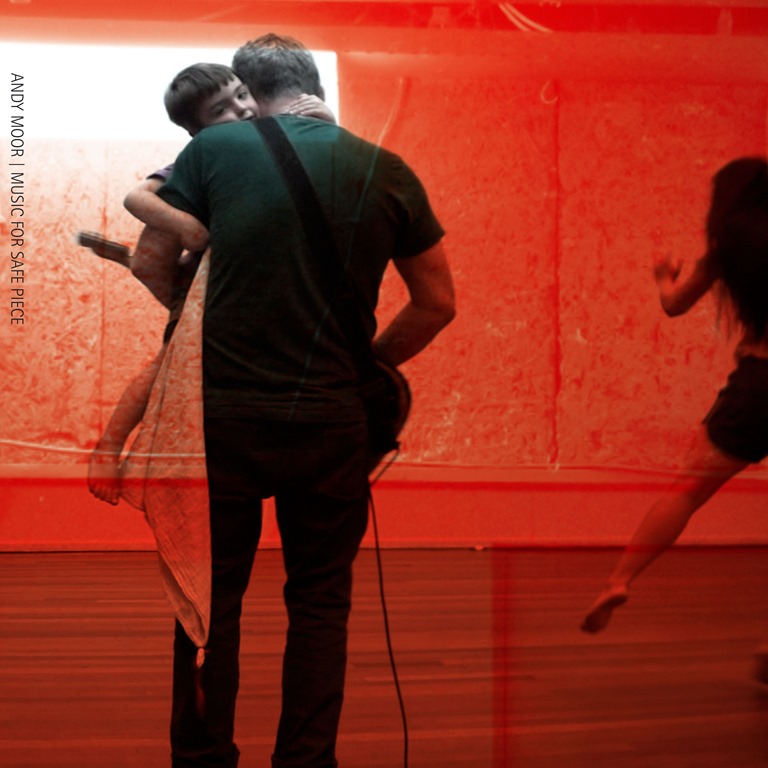
No-one plays guitar quite like Andy Moor. Renowned for his work with purveyors of expansive and exploratory avant-jazz The Ex, Moor’s solo work takes that guitar work from a collectivist, band setting, where it’s a part of a conglomeration of instruments, and places it directly under the spotlight.

As the liner notes explain, Safe Piece is an exploration of the question of parenting while maintaining an artistic practice. Choreographer Valentina Campora, who initiated the project, began testing the possibility of dancing onstage with her baby as an experiment. The project became a series of 8 performances where Campora performed with the baby for a small public. Andy Moor, father of the child and Campora’s partner, accompanied and gave a sonic context to this experiment. Each performance was filmed by visual artist Isabelle Vigier for the video Safe Piece (a film).

Tye tracks sequencing is segmented in a way that perhaps make more sense in context of the filmed pieces. There are three themed chapters, if you will, pieced together in chunks – but identifying any specific thematic unity that connects them is difficult. Moor moves between single-string pings and frenetic fretwork. But for the most part, this is sparse and lugubrious downturned fret buzzing notes slumping down like a machine winding down as the batteries run down or clockwork unwinds to a crawl. There’s some growling, gut-churning low-end that provides substantial contrast with the nagging of the picked top notes. There’s fret-buzz and warped, slashing chord chanking, stuttering stop/start shudders and jarring , jolting unmusic, that’s uncomfortable at times – not just a bit awkward, but fully squirm-inducing, setting the nerve-endings of the teeth on edge.

Across the album’s thirteen pieces, Moor’s minimal style that centres around scratching and scraping and all other kinds of angular guitar abrasions are front and centre. Discord and atonality are his signatures – but at the same time, he conjures myriad moments of fractured musicality. Hums and thrums and crunches crash through picked chord sequences and segments that sound like tuning up and down in frantic search of the note and not quite finding it.

Safety is paramount, but Music For Safe Piece brings a cognitive dissonance that’s difficult to process in places. But we know that comfort is overrated, and that art should proffer challenges, and Music For Safe Piece brings plenty.

AA

68U_front