Archive for the ‘Albums’ Category

Southern Lord & DVL Recordings

12 June 2021

Christopher Nosnibor

Reviewing Record Store day releases feels a shade cruel in some respects. Since they pretty much all sell out within a couple of hours, with participating record stores looking like a cornfield stripped by locusts by 11am after hungry collectors and traders have queued round the block since dawn to buy up anything and everything they can get their hands on (more often as not nowadays to resell at massively inflated prices. But who do you blame for this? The system is screwed), reviewing any RDS release feels like a posturing gesture of ‘look what you could have won’. But some releases warrant a wider exposure, ad perhaps, ultimately, a wider release, and this is one of them.

Neon Christ formed in 1983 and having taken a break in 1986, they’ve been more or less dormant ever since, with their career’s recorded output consisting of just one eponymous ten-track EP released in Jube ’84 and an appearance on a compilation album: On Labor Day 1984, the band recorded four tracks in the home studio of Nick Jameson, of Foghat fame, and from this, ‘Ashes to Ashe’" was included on the International Peace/War compilation released by MDC’s R Radical Records.

Guitarist William DuVall wrote an album’s worth of songs in 1985, but only ‘Savior (Drawn In)’ was ever recorded in what would be the band’s final studio session on 26 December 1985 (the master tapes were lost).

And so 1984 contains everything committed to tape by Neon Christ which still survives (which was all recorded in 1984, bar the one 1985 track which doesn’t feature here – which is fair enough, as it sits outside the band’s one explosive year).

Side one features the original Neon Christ 7” EP, and side two contains the four songs of the Labor Day session.

These recordings are over thirty-five years old, but they’re still dynamite. The early-mid eighties really were the apogee of the hardcore punk scene, and it’s perhaps integral to that history that bands burned brightly and briefly. Scenes are rarely best represented by recorded output or longevity, but the immediate buzz. Anything left for posterity is a bonus, and 1984 is that bonus that documents the brief and explosive existence of Neon Christ.

That first EP is fiery, frenetic, and raw as hell. Of the ten tracks, only one breaks tr two-minute mark. It’s rough and ready, the production isn’t so much primitive as non-existent, ad everything really is played at a hundred miles an hour as they blast through back-to-back blasts of fury ass mere minute long each. They do go a bit mellow and indie at the start of their titular track, but in no time it’s hell for leather thrashing, and overall, the pace of this album is blistering.

The Labor Day EP is slower, denser, less primitive. The songs feel more realised, and I would say ‘more produced’ – but it’s all relative, since the production prior was truly zero. The vocals and playing are both still rough and ready and nothing on offer here could ever be described a slick or polished. This is proper hardcore and is more than merely a historical document.

AA

Outer_Gatefold_Retemplated

Bam Balam Records –12th June 2021

Christopher Nosnibor

Two names to conjure with collided live in Tokyo on 14th March 2019, with sprawling psychedelic masters Acid Mothers Temple coming together once more, a full decade after the release of the live album Underdogg Express in 2009, with the founder of the legendary Krautrock band Guru Guru. ‘A fiery psychedelic collaboration recorded in the spirit of early Guru Guru’ ensued.

Edited neatly into four tracks – two per side of vinyl – it’s being released on limited edition vinyl for the French ‘Disquaire Day’ June 2021 (French Record Store Day 2021).

In recent years, I’ve come to despise Record Store day: after all, a record store is for life, not just for RSD, and the whole thing reeks of exploitation, from the retail prices being set as a level that means stores themselves make next to nothing from any sales, many fans are priced out – assuming they aren’t geographically advantaged – and then they’re shafted once more when those who had both the benefit of cash and location resell at even more exorbitant prices. Yes, one could discus free markets and supply and demand and how buyers choose to pay those prices – and I personally choose not to – but ultimately, a lot of the fun has gone out of it since the early years.

It doesn’t help that RSD has been swamped by reissues by major labels, meaning completists and hardcore collectors of some very popular acts are climbing over to buy new editions of old records, and none of them really give a fuck about independent stores, labels, or artists.

In this context, this release is a welcome one. It’s also a good one, and finds the collaborators veering from wildly chaotic and discordant free-jazz to muted, atmospheric ambience, with the fifteen-minute ‘Electric Junk’ spanning both, and beyond, exploding as it does into a searing proggy / post-rock crescendo in the closing couple of minutes.

‘The Next Time You See the Dalai Llama’ is built around a cyclical motif that whirls like a kaleidoscope over a throbbing reception of pounding drums and bass that lock into a relentless groove for the first four of is nine minutes. The title track closes with a mash-up of classic rock and wild desert psych, with some wild guitar work going fret crazy over an insistent, monotonous bass groove and thumping percussion that pounds and crashes relentlessly, and it even get on quite a swagger and swings into a full strolling jazz workout in the second half.

Tokugoya doesn’t bring any real surprises, and is, really, exactly what you’d expect – but then it doesn’t disappoint… although its limited availability might (but there is still a CD version).

BBLP085_front

Front & Follow and the Gated Canal Community – 25th June 2021

Christopher Nosnibor

Independent cassette label Front & Follow disbanded a bit back, some time before the pandemic hit. Said pandemic changed a lot of things for a lot of people, and certainly not just those immediately affected by the virus itself, through either contracting it themselves or friends or family. This is, after all the first time in history where governments have quarantined the healthy, and even during the world wars, while artistic activity was curtailed, society did not completely grind to a halt for any sustained period of time.

Having un-mothballed the label in order to release a series of compilations under the title Isolation & Rejection, which gathered tracks submitted and rejected for compilations on other labels, showcasing not only a wealth of amazing material over the course of five releases, but also creating a sense of community a month the rejected during the isolation of lockdown (a simple but effective premise that was a different kind of novel from the one everyone was talking about on the news).

Then, the label fell dormant again – for a few months, before this, pitched as ‘One final final FINAL project from F&F’. It may be a statement akin to Kiss announcing another farewell tour, but I know I’m by no means the only one who’s happy about the arrival of another release on the label, whose exceptional knack for curation has been a distinguishing feature of a thoroughly outstanding catalogue, and this, their sixty-firth release is no exception.

As label founder writes, ‘Another not planned but a nice thing happened so we went for it’. You Can Never Leave offers ‘alternative soundtracks to a luxury apartments advert’ taking its cue from an ad for Deansgate Square, Manchester, ‘comprising elegant spacious apartments across four carefully designed towers’ which ‘delivers a new level of city centre living’. With its slick visuals and sterile technoambient soundtrack, it’s a contemporary image of hell, JG Ballard’s High Rise for the 2020s. I’ve suggested previously that postmodernism is dead, and theorised that the post-postmodern age is marked by the end of irony. The fact this video exists, unironically, is surely proof of my hypothesis.

For their sign-off, F&F have assembled an immense thirty-one artists, many of who have featured on previous releases, including Field Lines Cartographer, Kieper Widow, and Polypores.

So, all of the tracks are around the 2:15-2:20 mark, and are intended to be played simultaneously with the video, and it’s perhaps unsurprising that each presents a different perspective on dystopian horror, from the sterile dark ambience of Bone Music’s ‘Reality Will No Longer Burden You’ with it’s clipped, android voiceover, via the tense trance-inducing electronica of Field Lines Cartographer’s ‘Consume and Prosper’, which is an outstanding piece of marketing sloganeering that we can imagine being a part of the UK government’s post-lockdown reinvigoration promo push (it’s snappier than ‘Eat out to help out’, and is a succinct summary of the late capitalist agenda they’ve espoused over the last decade), and the eerie waves of aural otherness that drift through courtesy of Von Heuser who give us ‘Pass Through The Tear’.

F-Lithium’s take is a cold Kraftwekian analogue rumble that ripples and churns around the solar plexus, while Guerrilla Biscuits’ ‘Manchester, So Much to Answer For’ dismantles the city’s musical and architectural heritage in one fell swoop with its space-age bleepery. WELTALTER bring some pulverising black metal to the party, and its bleak, dingy gloom that pounds insistently paves the way for more gnarly darkness in the form of the industrial ambience of ‘The Assimilation’ by The Metamorphe. Acid Wilhelm’s ‘The Changing’ is particularly unsettling, as rolling piano gradually evolves into a dense rumble of thunder, with ghostly voices muttering, while the cut-up / found-sound collage of Her Majesty’s Coroner for Wirral’ also pursues a haunting vibe, with ‘Contemporary City Living’ sounding like ‘Carmina Burana’ performed by a spectral clamour wailing to break through from the other side. With ‘Find Your Epic’, Friends, Business Colleagues or Family present the most torturous two and a bit minutes going, a howling shriek of purgatorial pain during which every demon rises from the flames to wreak havoc for all eternity on the living.

As is typical for a F&F compilation, You Can Never Leave is eclectic and yet for all its stylistic divergencies, fits together very nicely indeed, and collectively create a document which presents a multifaceted aural interpretation of the next level of gentrified hell, spanning epic prog and industrial. Oftentimes, it’s spooky, unsettling, and the album presents a powerful and ultimately terrifying vision. But is it any more terrifying than the original promo clip? Probably not, no.

Here’s the video that inspired all of this….

Deansgate

As an aside, for the record, the project is not affiliated with Deansgate Square in any way – the video was our inspiration for this project, and for each artist’s soundtrack.

All sales from this release will go to Coffee4Craig, which provides vital support for Manchester’s homeless and people in crisis. Find out more here – coffee4craig.com.

AA

F&F065 - YOU CAN NEVER LEAVE - cover

5th June 2021

Christopher Nosnibor

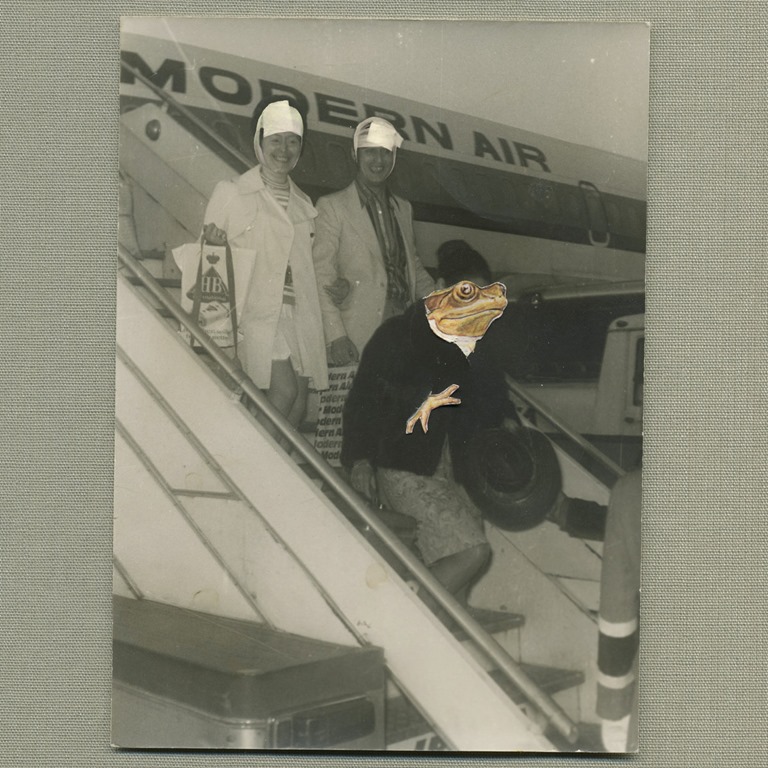
The only way to remain sane through all of this madness is to embrace it, or at least some of it. Then again, ( kröter ) have been ahead of the curve in the madness stakes for some time, as the conveyor-belt of releases over the last couple of years have shown, since they were all culled from some epic sessions around 2018.

*f is their third album of 2021, and the sixth album to be culled from these sessions. Remarkably, rather than a random collection of offcuts and flow-sweepings, it contains some of the most outstanding material yet, and one has to wonder how much did they actually record?

They’ve spent a lot of time sifting through the material and chopping it into tracks and sequencing them into albums – with varying degrees of cohesion – but as they note, ‘as usual, there are no second takes in this pond. All is nutritious, spiraling and slowly growing legs.’ These legs are long and hairy, and the sprawling eleven-minute ‘Trajectory’ is a dingy, dirgy grind dominated by a crunchy, dirty bass groove and plodding beat. It’s kinda post-punk, kinda no-wave, kinda noise-rock, and if there are moments when Mr Vast’s vocals hint at a Jim Morrison-esque swagger, the whole thing reminds me most of Terminal Cheesecake, for those who can handle an obscure reference point.

‘The Letter’ is swampy, minimal, meandering, while ‘The Rock’, another low-oscillating slab of dark industrial-leaning synth is propelled by clattering percussion and features snarling, growling manic vocals. Vast is a versatile vocalist, even if on this set his delivery isn’t particularly angled towards melody, as he drones and yelps and drawls and yowls all kinds of atonality over repetitive electronic grooves.

It all comes together on the eighteen-minute ‘casper hauser in the mirror’, a thumping, humping, ketamine-paced motoric industrial jazz odyssey. Vast sounds utterly deranged as his voice wanders lost, aimless, as he half speaks, shouts, raps and yawns out abstract lyrics that drift out in a drift of reverb. Again, around the six minute mark, it sounds like Kraftwerk fronted by Jim Morrison circa LA Woman, and yes, it’s a pretty fucked-up experience, and the atmosphere is not only intense, but also dizzying, bewildering in its hypnotic pull. It transports the listener to another place, out of mind if not out of body, conjuring an almost trance-like experience. It may be some kind of woozy, weirdy, hippy shit, but it’s also affecting. There’s much to be said for the power of repetition, and this just goes on, and on… and on. It’s not nightmarish as such, but it is trippy and disorientating.

This is a fair summary of the album as a whole: *f really does pack in the weird shit, and if the initial tone is one of quirky, oddball fun, the overarching experience is rather darker. The disorientation it creates is less kaleidoscopic joy and more the nausea of excess, and a kind of unsettled bewilderment. ( kröter ) depart from Hunter S. Thompson’s adage that when the going gets weird, the weird turn pro, and instead forge their own path, whereby when the going gets weird, the weird gets even weirder, and a few shades darker, too. Which is cool, because who wants their weirdness to be predictable, after all?

AA

a2240317846_10

Empty Quarter – 1st June 2021

Christopher Nosnibor

The latest instalment in the reissue series of albums by oddballs Photographed by Lightning is something of a departure from its predecessors – but then, each album marks a different departure, and if one thing this contemporary appraisal of their back catalogue highlights is that they never stated still or retrod ground, which each release existing in a completely different realm from those which came before.

Recorded in 2002 and released in 2004 and considered by the band to perhaps be their strangest offering (and it’s got some tough competition), it lists as its inspirations the works of Kenji Siratori, Friedrich Nietzsche, Suehiro Mauro, Georges Bataille, J G Ballard. I’m often particularly intrigued when a band’s citations are literary, or otherwise non-musical, perhaps because in some respects, while there is naturally much crossover between all creative disciplines, literary influences tend to be more cerebral, ideas or concept-based over sonic. When a bands say they’re influenced by Led Zeppelin, you can probably hear certain stylistic elements in the composition: but you’re not going to hear elements of Ballard in the guitar technique of any band – although with a substantial catalogue of releases to his credit, Kenji Siratori is a notable exception to the rule, particularly as the experimental Japanese polyartist’s forays into extreme electronica and harsh noise in the vein of Merzbow actually do very much resemble his literary works also as a brain—shredding sensory overload.

This is certainly a fair summary of the experience of this album: the title track, a mere intro at under two minutes, is a blend of scratchy, synthy noise with extraneous elements collaged here and there.

‘The Embryo Hunts in Secret’ and ‘Putrid Night’ are both a sort of psychedelic new wave collision, and with the wandering basslines that veer up, down, and everywhere amidst treble-soaked chaos, the effect is disorientating dissonant, as if everything is slowly melting or collapsing in on itself. Everything is murky, dingy, kinda distant-sounding and discordant. Take ‘Kundalini Butterly’ – a spiralling kaleidoscopic mess or scrawling feedback and a bass that sounds like an angry bee bouncing around inside an upturned glass, coming on like Dr Mix covering Cabaret Voltaire’s ‘Nag Nag Nag’.

Blood Music is noisy, but it’s not straight-ahead guitars noisy: instead, it’s a mangled menage of bits and bobs hurled together – not clumsily, but then, not delicately, either, with pulsing washes of rhythm throbbing and crashing all around. It gets weirder and darker as they plunge into ‘My Hole’, where the bass bubbles and throbs beneath a continuous stream of trilling distortion, synth whistles and wails, and there’s a lot of overloading, whupping distortion that derails the helicotoptoring synths and froth and foam that sloshes around at the lower end of the sonic spectrum. ‘Dark Sun’ goes kind of industrial with a hefty, thunking beat, with a relentless, distorted snare, low-slung, booming bass and heavily treated vocals, and there’s chaotic piano all over the place: the emphasis is very much on the dark here.

Dave Mitchell’s lyrics are, we’re led to believe, to have been inspired by whatever he was reading, but buried low in the mix, bathed in reverb and given a grating metallic edge, he sounds like a malfunctioning Dalek chanting incantations. To be clear, that’s by no means a criticism.

Final track, ‘Frame’ is more overtly ambient, but dark, with a certain industrial hue as it shifts to pound out a relentless beat against braying sax and a whirlpool of aural chaos: I’m not about to suggest that PBL were going through any kind of NIN phase, but there are hints of parallels with The Fragile in places here.

Everything about Blood Music is seemingly designed to challenge, to present the music in the least accessible way possible – and it’s far from accessible to begin with, for the most part. The dark density of the sound is heavy, and there’s something quite deranged about the album as a whole, in a way that’s hard to define… but deranged it is. Which seems a pretty fitting summary of the band’s catalogue as a whole: the only thing you can really predict is their unpredictability.

AA

a3521472505_16

Cruel Nature Records – 4th June 2021

Christopher Nosnibor

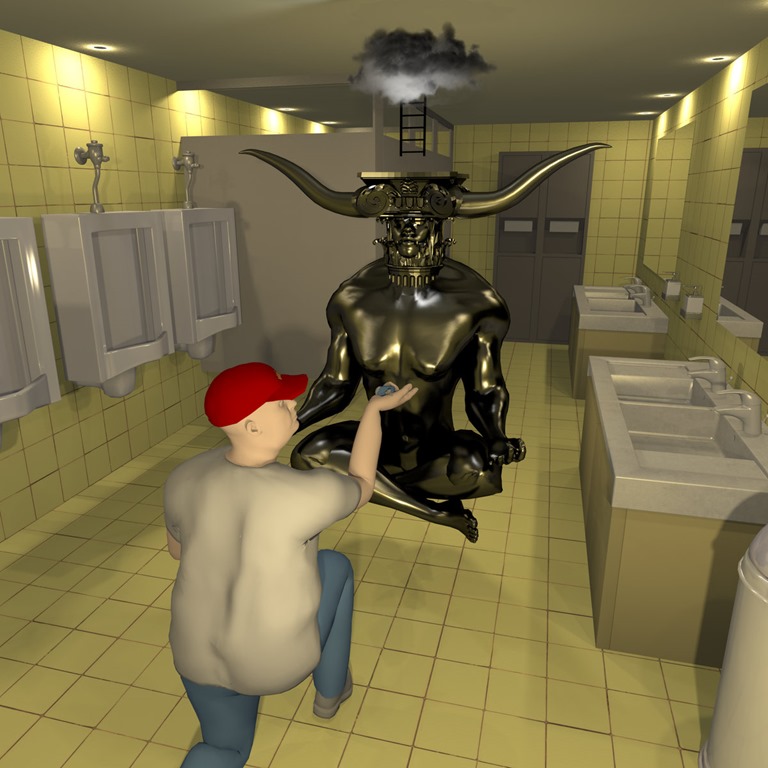
Cruel Nature’s programme of releasing difficult, niche music on cassette tom a discerning audience continues with this Finnish-Iranian collaboration of droney, dark ambience with lots of echoes and ominous, subterranean beats that resonate with dark overtones of damp caves and tunnels. The coming together of different cultural backgrounds lies very much as the heart of this release, and those contrasting elements are celebrated in their coming together. I say celebrated because while this is by no means an uplifting album. Indeed, the five compositions are often darkly sombre or otherwise menacing and unsettling. There is a sense that this release – details of which are sketchy, particularly about those behind it – is hinged upon these differences, which almost suggest it shouldn’t work, and that it only does so by virtue of grim determination and a certain musical ear.

It’s difficult to make a fully-informed critique of works that bring together music from diverse cultural backgrounds without appearing as some Jools Hollandy ‘world music’ wanker, but I’d like to think that delving into more nuanced and less populist works means I have some handle on differentiating a release such as this from one like, say, Paul Simon’s Gracelands. The simple and key differentiating feature is that Gnäw pull on myriad influences from across the sonic and geographical range without patronising their sources.

The percussion becomes more prominent as the album progresses, and on ‘گمگشته چوپان’ frenetic hand-drumming dominates the murky drones that hover and hang with a heavy air. Esoteric string instruments are plucked, quaveringly, the notes echoing outwards.

The tension builds and the tone of the drones shift, darker and denser, taking a further turn for the more monotonous and more oppressive on حل’اج’m which makes a sudden shift in the final couple of minutes, tapering down to a mellow, noodling, doodling mellowness that feels like a release, a moment of much-needed relaxation.

Closer ‘Marras’, the album’s longest track, meanders and trembles tremulously, leading the listener on a difficult and at times addling route along a journey with a questionable destination. But who cares where we’re going with an album like this? It’s all about the ride, and I is a weird and wonderful mystery tour.

Video by Jase Kester

avatars-000044123198-xvf3em-t500x500

Southern Lord – 25th June 2021

Christopher Nosnibor

Twenty years is a long time. But that’s how long it’s been since Iceburn last graced us with new material. The shifting collective, primarily operative between 1990 and 2001 reconvened in 2007, with this current lineup again at the core.

As the band’s bio summarises, ‘The band’s initial output slowly evolved from hardcore and metal to free improvisation and noise. The 10 year arc saw the band following their own path and becoming more and more obscure as they got deeper into unknown musical worlds. By 2000 the cycle seemed complete and Iceburn did their final tour in Europe 2001. In 2007 this early core crew reunited to play a local anniversary show focused on the earliest material. Every few years since they would get together for another ‘reunion’ until that word became more of a joke, it was clear the band was back, getting together every week, and working on new material.’

And here it is: two truly megalithic tracks, each spanning the best part of twenty minutes, and packing them densely with some hard-hitting, churning, trudging, sludgy riffs.

This is some heavy, doomy, din: the riffs are Sabbath as filtered via Melvins, and let’s face it – Sabbath may have invented heavy metal, but it was Melvins who reinvented it with that gnarly, stoner twist and all the sludge.

It’s about halfway through the eighteen-minute ‘Healing the Ouroburous’ that things take a bit of a crazy turn. The lead riffing steps up to next-level flamboyant and I’m starting to think ‘this is maybe a bit much’. It’s not just that it’s technical, it’s just a bit fretwanky, even a bit Thin Lizzy, like ‘Whisky in the Jar’ jammed for fifteen minutes at a gig with three local support bands for a minor-league headliner – but then they pull it back and we’re returned to slow, lumbering territory. If there’s a brief burst where it sounds a bit Alice In Chains, it’s forgivable, because within the obvious genre framework, Iceburn bring in so much to expand the limits of convention, and it’s refreshing, especially from a band with so much history. It would have been so easy for them to just turn out a brace of droning riff beasts where not a lot happens, and no doubt they would have been lauded for their return to form and their place in the underground canon, but… well bollocks to that. Then there are the vocal – shifting between a low growl and some quite melodic moments, but all kept low in the mix.

‘Dahlia Rides the Firebird’ is another absolute bloody behemoth, a collision of Earth and Melvins, and a real slow-burner that takes suspense to a point near the limit. It takes three minutes before it even begins to take form, and then lumbers like some giant Cretaceous riff-lizard – one with big, swinging riff knackers at that. Yes, this has some swagger, and it builds, and it builds… The monster crunching riff that crashes in to punch hard in the last five minutes more than justifies the wait. When it lands, it’s absolutely fucking colossal.

Asclepius is a statement, and one which informs us that Iceburn are forward-facing and aren’t looking to recreate the past or retread old ground just to please people. And that in itself should please enough people, because this is so, so solid.

AAA

a1401051411_10

Come Play With Me – 11th June 2021

Christopher Nosnibor

These are difficult times, fraught with division – not just the well-established social and economic divides, but with infinite fragmentation and fallout over issues and identities. It seems unfathomable that there should be any need for debate when it comes to racism and sexism, and yet here we are in 2021 and still these topics are divisive, and while Pride events have done much to raise awareness, gender issues are not only grounds of immense discrimination, but also division, and, in some quarters, infighting. It’s difficult, and for many, incredibly painful.

Over the five and a bit years since its inception, Leeds label Come Play with Me has done a lot of work to represent the under-represented, primarily in giving a platform to local artists. Its latest compilation is billed as ‘a callout to support women, marginalised genders and LGBTQ+ artists based in Leeds and further afield around the north of England’, and as such has a specific and explicit agenda, and above all, serves to provide a platform and to send a message of unity and solidarity.

The blurb informs us that ‘The album features a collection of 12 brand new diverse tracks from an exceptionally talented group of artists including emerging shoegaze/dreampop sensation Bored At My Grandma’s House, renowned composer and Carnatic vocalist Supriya Nagarajan, art-rock collective Dilettante (led by multi-instrumentalist Francesca Pidgeon), and soul/pop singer-songwriter Tyron Webster.’ And it’s true: Side By Side showcases an eclectic range of artists, which is a solid representation of the diverse, cross-cultural melting pot that is the scene in and around Leeds.

Tryon Webster isn’t the kind of artist you’re likely to see playing in any venues like The Brudenell or Wharf Chambers or Oporto: they may have a local slat, but are more geared towards guitar bands and alternative acts, and Webster’s smooth r’n’b is decidedly more mainstream, as is the smoky would of Dilettante’s soulfully smoochy ‘Single Sleeve’.

Then, in contrast, Bored At My Grandma’s House’s ‘China Doll’ demo is a magnificent sliver of lo-fi indie with some effortless low-key harmonies over a sparse acoustic-guitar-led backing and minimal arrangements.

Long Legged Creatures were the last band I saw perform a proper gig, back on 14th march 2020, and I was impressed by what I referred to as their ‘electro/post-rock/psych hybrid’, and ‘Creatures’ is certainly a drifting, dreamy number – but then again, Witch of the East mine a dreamy post-punk / post-rock seam with ‘Something’s Wrong’. Shauna’s ‘Modes of Thinking’ welds the iciness of The Flying Lizards withy some deep dance groove action that’s half nightclub, half industrial motorik grind.

The chances are, not everyone will love every track on here, and adherents of the live Leeds scene will likely be surprised by just how much non-noisy, soul and jazz-flavoured sounds are on offer here: Day 42 are leagues away from, say, Pulled Apart By Horses, and sound more like Sugababes. But that’s not only ok, it’s the very point of this release. Regardless of musical preferences, it’s impossible to fault the quality of any of the acts showcased here. Moreover, this goes beyond genre and style and musical preference. This is a statement of inclusion. Embrace it.

ei

1st July 2021

Christopherr Nosnibor

No doubt it’s an age thing, but the title of this compilation from Leeds noisemakers Thank – a collection of everything they’ve released to date, which number three in total existing across a brace of EPs and a one-off single – makes me think of Maureen Lipman in the 1987 ad for BT when he grandson tells her he‘s failed all of his exams except pottery and sociology, and she famously cries, ‘He gets an ology and he says he’s failed… you get an ology you’re a scientist!’ I’m amused by this, and I have an A-level in Sociology, and I’m certainly no fucking scientist (I also have a PhD in English literature, and lot of good that’s done me, too). As a further pointless digression, the title also reminds me of the third album by another legendary Leeds band, That Fucking Tank.

This is relevant, because back in 2004 or so, Tank were ubiquitous, and proved to be an absolute revelation. It wasn’t that the DIY ethos was anything new – it emerged when punk broke, and has long been a major feature of the Leeds scene. Track back about 40 years and The Sisters of Mercy were representing Leeds internationally on their own label. Whatever bollocks recent governments have spouted, the North has always been a powerhouse of its own making. Free of the sway of whatever’s cool in London at any given time, the Noeth – and particularly Leeds – has forged its own identity and done its own thing. And Leeds has, over the last tent o fifteen years, been a city with a scene throwing up a lot of angular, noisy stuff.

Emerging from the DIY microscene centred around the rehearsal space / occasional gig venue that was CHUNK, Thank draw on a host of influences from home and away, but sound like no-one else.

That debut EP, Sexghost Hellscape, from 2017, was – and still is – a wonderfully deranged mash-up of all kinds of strains of noise, with throbbing synths and punchy fink-tinged post-punk basslines reminiscent of Gang of Four providing the backbone of some off-kilter blasts of noise and some ragged, shouty vocals. The insistent pounding of ‘Punching Bag’ – a dismal, depressed swipe at celebrity taking ‘Stars in Their Eyes’ as its starting target – has that twitchy relentlessness of Shellac about it, and it really only cuts loose right at the end. Thank get delayed gratification – and sometimes they really torture us: there’s no real gratification on the squirming, crawling eight-and-a-half-minute dirge of ‘Petrol Head’ that grinds mercilessly like early Swans. It has the roaring rage of hardcore, slowed to a glacial crawl, and it twists at the gut with its low, slow percussion-driven relentlessness.

Standalone single ‘The Curse’ is an anguished roar of rage – it’s sparse, mangled, messy, and comes on like Uniform minus the riffs. It’s pretty fucking dark and brutal.

Skip on to the last EP, and it’s an even more rabidly raging effort, harder, harsher, more furious. ‘Commemorative Coin’ ups the rage another forty percent. It’s like PIL on steroids: pink and fuck, but more articulate than some three-chord thrash, many time more oppressive and infinitely more powerful. In contrast ‘Think Less’ goes full 80s electro, but it’s jitter, jarring, a three-way collision between Talking Heads, Revolting Cocks, and DAF. It’s crazed, manic, and intense. ‘No Respect for the Arts’ is all-out, foaming-at-the-mouth frenzied. It’s raw. It’s passion, and it’s real. And they speak from the heart here. Please was released in the Autumn of 2019, and this reminds us that the arts were being battered to fuck long before the Covid pandemic shut everything down. Over the last decade, successive Tory governments have been shafting the arts from every whichway. Artists have a right to be angry, but so few articulate that anger so directly though their music. We have reason to thank Thank.

Thankology give us no fewer than ten reasons to thank Thank, They stand as the very epitome of the Leeds underground / alternative /DIY scene: uncompromising, unbeholden to trends, and doing it because they believe in it, and just because. Bands like this are rare these days, and Thank stand apart in these times.

For those who’ve had a taste, this will give the full flavour, and for the uninitiated, here it all is. Get stuck in.

AA

AA

a0669879946_10

Mongkong Music – mkng-01

Digital release date: 4th June 2021 / Physical release date: 4th July 2021

Christopher Nosnibor

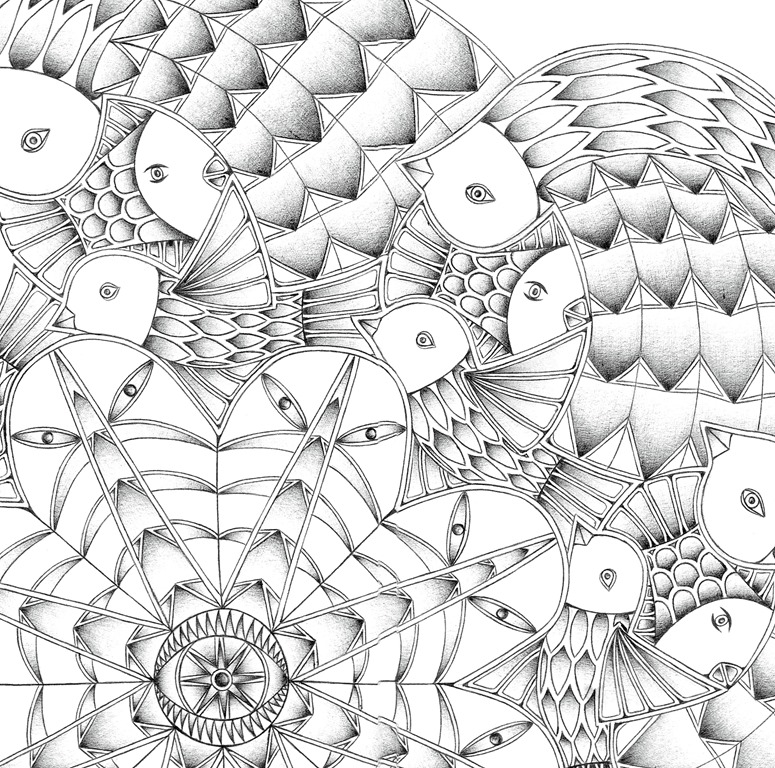
Having been introduced to the world of microtonal experimentation around a decade ago, I’ve found a certain fascination in those close lenses on the most minute of details – the musical equivalent of peering through a microscope and seeing objects and life forms on a granular, even cellular level. I’ve also learned that anything that can be rendered or viewed from a micro level, it’s probably been done, or otherwise is within someone’s sites to do, or I simply haven’t found it yet. Take, for example, the ensemble Microtub – not a small bath, but a trio of microtonal tubas.

Mycrotom is not a microtonal tom drum, nor a microtonal extension of the work of the Vegetable Orchestra (a ten-piece collective based in Vienna who make music using instruments crafted from actual fresh vegetables). In fact, the moniker is somewhat misleading, for as the press release notes, ‘Tom Simonetti alias mycrotom has created rather large-format sound carpets in the Bertolt Brecht mechanical engineering city of Augsburg. He now presents the same: soundscapes on which you can go out of work and walk away.’

So, it’s actually about sound carpets. I have to confess that I chuckled a little on reading that, before reminding myself of my own habit of describing works as ‘sonic tapestries’ and going into detail about the ‘fabric’ of numerous compositions – and that was before I listened to the album.

The pieces are built on interesting juxtapositions – sparse motoric beats click metronomically through gloopy synth basslines that could have been lifted off early 80s electro cuts on Wax Trax! while xylophone-type chimes ring out lilting motifs. Extraneous sounds are looped to forge unusual rhythms, and there’s a muddy, murky aspect to the sound that makes it difficult to separate the different elements.

Many of the synth sounds are vintage in style, squelchy, thick, fuzzy-edged, and while the arrangements are sparse, the effect is far from minimalist: there’s quite some density to the sound, and what’s more, a lot of Ratoratiyo pursues quite danceable grooves, and with a hybrid of 90s minimalism and 80s robotix, it feels completely removed from anything human.

‘Logic by Machine’ contains human voices – sampled, distanced, detached – against a sparse, rhythmic loop. It’s anything but comforting, and leaves one feeling even further adrift, alienated. It’s a strange experience that twists at the cognitive filters in unexpected ways. After all, none of the elements are new or particularly unusual – but their assemblage is, and in ways that are difficult to place a finger on. And it’s that difficulty of placement that lies at the heart of the challenge for a listener. You ask yourself ‘how does this fit with my experience?’ and ‘where do I belong in all of this?’ There are no handholds or footholds in terms of emotional resonance, in terms of experience. And precisely what does this convey? The sounds may be warm, but the experience is somehow cold, with a sense of separation.

It’s from this place of distance, a position of removal, isolation, that we begin to explore the spaces of Ratoratiyo, and the exploratory adventure begins.

AA

mkng-01_front