Archive for the ‘Albums’ Category

Human Worth – 19th June 2023

Christopher Nosnibor

I’d love to avoid tedious repetition but it’s hard to review yet another Human Worth release without mentioning just how fucking great this label is, because the name means what it says – it’s a label of rare integrity, which always donates a percentage of proceeds to charitable causes, more often than not one local to the artist, and for this release by ‘shape shifting south London noise rock outfit Thee Alcoholics’, 10% of proceeds from this record will be donated to the south London based charity The Lewisham Primary Care Recovery Service.

They’re also outstanding with their radar for quality noise, and Thee Alcoholics sit comfortably on the label’s roster, delivering ‘songs that rail against injustice, intolerance and institutionalised Great British apathy – neatly wrapped around screeching, trash guitar riffs and blast beat driven bass synths. Mixing the gnarly, outsider big muff energy of early Tad and Mudhoney with the industrial crush repetition of Godflesh. Ugly vocals are buried somewhere between the Brainbombs and Girls Against Boys.’

Could it get any better? Well, actually, yes! The EP’s artwork, by Tony Mountford, tips a hat to Therapy?’s live 7inch ‘Opal Mantra’, while the recording itself is pitched as ‘a document of the journey so far – 30 minutes of agro [sic] drunk rock n roll. In the red sizzle of a load of broken equipment. The band barely holding it together in their chaotic element.’ Oh, and it’s mastered by Jon Hamilton of Part Chimp.

Human Worth may be a young label, but the sense of musical history and heritage that informs their choices is remarkable, and all of the references trace a solid lineage to the early 90s – and it’s hard to overstate just how exciting those short few years were. Because as much as it was about Nirvana and Pearl Jam and Soundgarden and Rage Against the Machine breaking the mainstream, it was about a current of alternative guitar-based music which occupied John Peel’s playlists and infinite column inches in Melody Maker (if not so much the NME). And the live ‘Opal Mantra’ EP is absolutely fucking blinder and makes for an admirable reference point, packing as it does raw and ripping renditions of ‘Innocent X’ and ‘Potato Junkie’ alongside one of the best non-album tracks ever. That a band could chuck a song like that out in such a fashion was a revelation at the time and it’s interesting to see all of these references come together here.

For me, Tad was always way more the quintessence of grunge than, say, Pearl Jam, the gritty, sweaty metal heft of songs about farming and manual labour really getting to grips with the reason the Seattle scene emerged representing the blue-collar – or perhaps more accurately the plaid-collar demographic who needed to vent after several hours of slog and grind. And Thee Alcoholics really capture that mood, often at a frantic pace that suggests a strong influence from mid- to late-eighties hardcore melded with nineties noise and grunge.

Live recordings can be difficult: too crisp and clean and so polished and overdubbed it doesn’t sound live, or otherwise just dingy and shit; this one is great because it’s not dingy and shit, but isn’t exactly ‘produced’ either: it’s dense and you can hear the audience – sometimes shouting to one another during the songs, because they’re tossers – and it all makes for a document that’s perhaps flawed to some ears, but is, as a document, absolutely perfect because you really do feel like you’re there.

Live At The Piper features live renditions of songs from their debut album released on cassette, and seven-inch releases, and it’s warts-and-all in the vein of The Fall’s Totale’s Turns – and it needs to be: it’s a proper live document rather than some polished-up, super-dubbed-up, hyper-clean fictionalised reimagination of events, as they power through eight songs in twenty-four minutes.

‘A Ghetto Thing’ is two minutes of throbbing, thrashing fury, rushing its way to the safety of a pub car park in blitzkrieg of noise, while ‘Turn on the Radio’ is built around a driving riff which switches up a key for the chorus; the vocals are half buried and the drums dominate everything and it’s all over in less than two minutes, which is time enough to do the job of grabbing you by the throat and kneeing you in the nuts several times. It’s a hell of a racket, but amidst the frenetic crashing of cymbals and general murk is a song that’s strong enough to lodge in your brain, and it’s rare for bands this noisy, this messy, to incorporate ‘catchy’ elements, favouring instead sheer force and sonic impact – which they do elsewhere, not least of all with the high-impact forty-one second detonation that is ‘Sweetheart’. Then again. ‘She’s the Man’ is built around a nagging locked-in industrial groove, but it’s also scuzzy as hell, and it’s not hard to see where the Godflesh and Girls Against Boys references come in, and it’s arguably the strongest song on the set, a low-sling grinding wheeze emerging from shards of feedback.

Six-and-a-half-minute set closer ‘Politicians’ is low, slow, and grimy – which is extremely fitting, really, and the booming, sludgy bass is just magnificent.

As with the B E L K release, Human Worth have adhered with the old hardcore ethic of releasing a band in its rawest, most unadulterated form, and it works because it preserves the energy and integrity of the moment. It ain’t pretty, but it’s real.

AA

351139534_653919199914757_6286899155116254549_n

Mille Plateaux – 19th May 2023

Christopher Nosnibor

Fase Montuno is the twenty-seventh release by Cristian Vogel. Yes, the twenty-seventh. Depending on which version you get, this one has seven or eight tracks, all reliant on old synth and drum machine sounds, giving it very much a late 70s / early 80s vibe,

As the accompanying notes detail, ‘This highly personal release is a visionary take on the futuristic potential of Latin American electronica, and promises to be a thrilling journey through Vogel’s musical imagination, every track infused with his signature creativity and energy.

Vogel has lingered on the fringes of dance music for the entirety off his career, and Fase Montuno goes very much all out on accentuating the dance elements of the pieces. That doesn’t mean that Fase Montuno is a chart-dance album, not at all. But with its Larin American influences, it’s very much music you can dance to, if you’re that way inclined – and if you’re not, well, it has groove, and that’s something anyone can get into.

The title track is a busy, bleepy six-minute chiptune that builds layers and energy as it progresses. Things get glitchier and gloopier on ‘Temples in the Sky’ with some busy polyrhythms which flicker over pulsing beats and swathes of swashing synths. It’s sparse, but at the same time there is much happening, sometimes incidentally, sometimes simultaneously.

Always, the beats are dominant, even when pitched subtly. ‘Labyrinth and Warrior’ mines a specific seam of techno I find quite oppressive despite its spaciousness, whereby the repetitions are tightly looped and I find myself feeling as if I’m trapped in a nagging glitch of just a second or two and physically can’t move. Ironic, perhaps, that certain dance music should, instead of moving me, render me utterly paralysed and almost suffocating with claustrophobic panic. But there it is. For those reasons, I find this and uncomfortable experience, and difficult to enjoy.

And so it is that the nagging grooves of Fase Montuno lead nowhere other than inside, burrowing into themselves and clanking away hermetically: there is nothing beyond this is and of itself, and while many find release and escape in this form of music, for me, it’s like being zipped up in a bag where I’m unable to move my limbs and then thrown into a darkened room – worse than sensory deprivation, it’s like the drip-drip-drip of water torture.

I can’t blame Cristian Vogel for my extreme and quite irrational reaction to his music: it’s meticulously crafted, and the frequencies, the mix, are magnificent, and evidence – as if more evidence were needed – Vogel’s enduring appeal in his field.

AA

MP60_front

Riot Season Records – 23rd June 2023

Christopher Nosnibor

Having had something of a chuckle at Henge for their pseudo-space mythology and psychedelic psilliness, I find myself squaring up to purveyors of genre-straddling experimental doom, Codex Serafani. Their biography explains: ‘Their journey started a long time ago, some say on Saturn, some say in the subconscious of the human psyche, coming out in different manners through the ages, channeled by mystics, witch doctors, shamans, free thinkers, free spirits. But we do know that what has become Codex Serafini travelled here from their home world on Enceladus in 2019 and crash landed into the music scene of Sussex.’ Of course they did.

But what are the chances that a I’m writing this review, an article from The Guardian pops up in my news feed reporting on how astronomers have spotted a six-thousand mile plume of water vapour blasting from Enceladus – a small moon belonging to Saturn believed to be one of the most promising places in the solar system to find life beyond Earth? As coincidences go, this was an usual one, and one which befits this band.

With a name which references Luigi Serafini’s Codex Seraphinianus, an illustrated encyclopaedia of an imaginary world, written in an imaginary language, it’s clear these guys have a keen interest in the realms of fantasy and mythology, to state it lightly.

I suppose that the concept piece whereby the concept includes the artist as much as, if not more than, the album goes back to Bowie – but back in 1972, this was new and novel, and moreover, Bowie was unique and an artist whom you could almost believe was from another planet. But even then, however much the concept became all-encompassing, it was also clear that the concept was a persona. But to base an entire career on a persona – not a media or public persona, but a far-fetched one which requires the suspension of disbelief – can be somewhat limiting. Where do you go when you’ve explored the concept to its logical limits?

In creating such a vast and multi-faceted alternative universe, Codex Serafini have ensured an abundance of time and space in which to explore and expand their concept, and rather than it being self-limiting, the challenge will be to test the capacity of their imagination, not only conceptually, but also musically.

While the adage that you should never judge a book by its cover hold some merit, one can tell much about an album by the ratio of its duration to the number of tracks, and The Imprecation Of Anima has a running time in excess of forty-five minutes and contains just four tracks. We know we’re in ‘epic’ territory before hearing a note, and the first of the four compositions, ‘Manzarek’s Secret’ unfurls slowly with a long droning organ (which one suspects is no coincidental nod to The Doors) and chiming percussion. It’s not long before a thick, gritty bass and reverb-heavy vocal incantations are joined by some wild brass to burst into the first of numerous big, jazz-flavoured crescendos. At nine-and-a-half minutes long, it’s epic, but only an introduction ahead of the fifteen-minute swirling mystical monster that is ‘Mujer Espritu’, which brims with Eastern promise and sprawls in all directions at once.

Single release ‘I Am Sorrow, I Am Lust’ is perhaps the least representative song of the album as a whole: it’s snappy, exuberant, uptempo, jazzy, rocky, busy, climactic, and fairly structured – and clocking in at three minutes, it feels like a single when standing alone, but more like an aberrant interlude in context of the album ahead of the seventeen-and-a-quarter minute ‘Animus in Decay’. Now this is a wig-out! It’s heavily psychedelic and transitions through a succession of passages on the path to – what? Enlightenment? It’s certainly a journey, whichever angle you approach it from. It builds and grows in volume and tempo, then falls again and there are some expansive ponderous sections and shifts like sand dunes in a vast sonic expanse.

And so it may be that the concept is a little daft, but they deliver The Imprecation Of Anima – a work that’s as ambitious as it is immense – with absolute conviction, and the vast sound pulls you into Codex Serafini’s (other) world. Inventive and accomplished, it’s a truly mighty record.

AA

thumbnail_THE IMPRECATION OF ANIMA FRONT copy

Cosmic Dross – 26th May 2023

Christopher Nosnibor

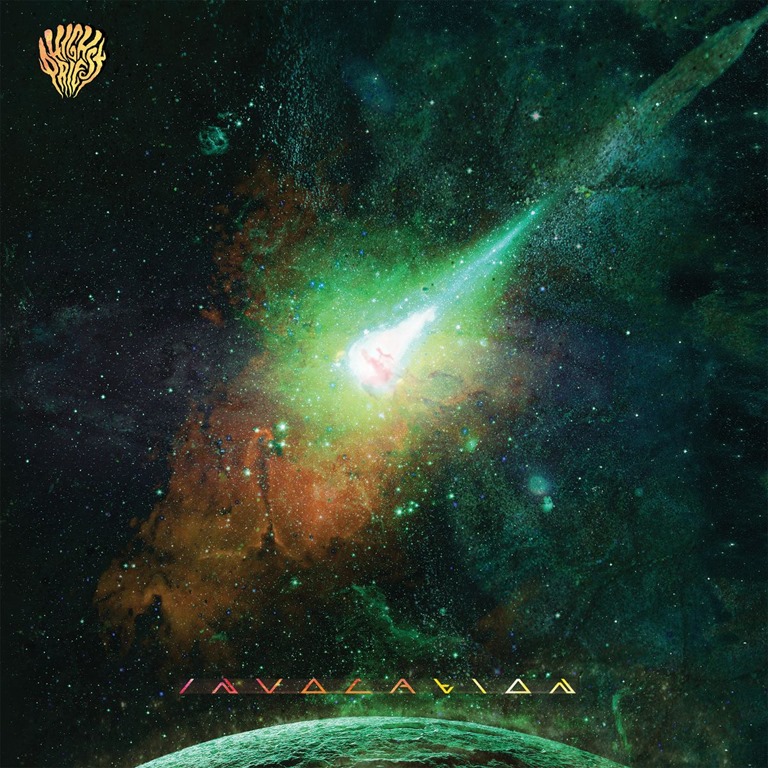
When it comes to spaced-out, trippy conceptual stuff, I can’t help but wonder if large quantities of drugs are involved, or of the creators are just a bit crackers. Their debut album Attention Earth! Featured a song called ‘Mushroom One’, which makes mee think drugs – or perhaps just the image they want to portray. The members of HENGE, Mancunian purveyors of self-styled ‘cosmic dross’ go by the names of Zpor, Goo, Grok and Nom, and Zpor, their ‘front-being’, explains of the new album: “Alpha Test 4 is our third Planet Earth LP release. With each record we have sought to fine tune our extraterrestrial sounds for human ears, optimising these alien frequencies in order to more effectively access the pleasure sensors in the Sapien brain…We believe that the wisest lifeforms are always open to new learning, and we have been conducting our own studies on the human beings that we’ve encountered on Earth so far. We have discovered that exposure to this alien music can have a profound effect on the human nervous system, and have recorded an average increase of 72% in the happiness levels of human specimens attending our experiments”.

If you’re going to do performance, you need to commit to it completely: there can be no half-measures, no stepping out of character off stage, and HENGE clearly live and breathe being HENGE, and one would like to think they’re entirely aware of the absurdity of it all, but happy with the trade of preserving the identities they enjoy at home and in their dayjobs or whatever. I’m going to at least hope that Zpor doesn’t insist that his wife and kids and colleagues address him as such.

Alpha Test 4 is noodly, doodly, silly fun that harks back to the 70s with its cheesy, wibbly synths and tinfoil futurism that was retro even at the time. It’s not so much prog in its primary inspirations, so much as ‘Where’s Captain Kirk?’

‘DNA’ brings stupid funk and daft robotix vocals and it’s probably fun if you’re into it, but mostly it’s annoying: their space-age daft Punk shtick just feels obvious, derivative, passé. And yes, everything is just recycling now: that was postmodernism, where we accepted that originality was dead and celebrated that the future was built on assimilations and permutations of the past. Progress lay in the innovations of new hybrids and how genres were intermingled, and we reached a point, I’m not quite sure when, where it all came down to the execution. It ain’t what you do, it’s the way that you do it… and HENGE do it, and with wild abandon and great enthusiasm.

But great energy does not make for a great record on its own. Alpha Test 4 is bursting with energy and brimming with bubby synths: ‘Ra’ is exemplary, an explosion of Lucozade and Red Bull-fuelled 8-bit twitchy pop that crosses XTC with D‘n’B, and spins in a dash of Eastern promise alongside a swirl of experimentation. The worst excesses of YES are tossed into the mix along with Jean Michele Jarre and Yello. It has its moments, but most of those moments are indulgent and rather corny. But HENGE likely know this and don’t care, because unless they are from another planet and spent their time hovering in space, they’re aware and self-aware, and grasp the absurdity of what they do with both hands before jettisoning the junk, and no doubts regardless of my views – and likely because of them since the chances are everything I dislike is everything fans love – Alpha Test 4 will go stratospheric.

AA

793f4928-efba-26d1-5287-6d6b5e45d6e7

Sacred Bones – 16th June 2023

Christopher Nosnibor

They’re the first to admit that this pairing may seem like an unusual one, having first teamed up for a US tour in 2019: as the bio notes, ‘Sure, both bands harness the power of big, blown-out riffs, but Boris’s rock heroics, lysergic sprawl, and monolithic sludge summon a different energy than Uniform’s mechanized bombardments and frenzied assaults.’ But often the most exciting and unexpected results emerge when pairing contrasts rather than sameness. Put two drone bands together, you can predict the outcome will be amplified drone; sludge with sludge equals more sludge, and industrial matched with industrial is unlikely to yield any great surprises. Yes, pairing like with like makes sense, it’s safe, there’s an intuition and interplay that comes from familiarity with the territory and the form, and fans will likely be happy being served a double helping of what they like.

But neither Boris nor Uniform are acts who are overly concerned with appeasement: that isn’t to say they don’t care about their fans, but more that they both trust their fan bases to be broad-minded and accommodating of the idea that creative fulfilment is integral to their existence. Even those more casually acquainted with their respective catalogues will recognise that both Boris and Uniform are driven, not by the desire to entertain, but to follow their creative instincts. The way these manifest musically are very different, but in this context, the parallels become more apparent, and it also becomes easier to understand their mutual appreciation for one another. And neither act is new to the spirit of collaboration, with Boris having have collaborated with the likes of Sunn O))), Merzbow, and Keiji Haino, and Uniform having previously released a blistering collision with The Body back in 2018, as well as remixes with Zombi more recently.

It will be news to no-one that this is big on riffs, that it’s loud and heavy, but this is a collaboration like no other: ordinarily, artists will bring their ‘thing’ to the table, and the songs will represent the meeting in the middle ground. This isn’t so much the case on Bright New Disease: the two acts are given equal billing and play evenly to their strengths and stylistic methodologies: but don’t necessarily play ‘together’ in the conventional sense. But when did either Boris or Uniform do ‘conventional’?

The album’s first track, ‘You are the Beginning’, aired online a few weeks ago, is the perfect combination of the two bands’ individual sounds: hard, heavy, the blistering harsh industrial intensity of Uniform, angular, antagonistic, crackling with the punk-tinged rage of Michael Berden, suddenly melts into a wild blitz of fretwork which paves the way for a monster thrash workout. Even the tone and texture shifts from harsh treble to murky mid-range, and it feels like a song of two halves. Quite unexpectedly, it works. When you weight up the value of any collaboration the question is always ‘is it different from or better than their independent works?’ Bright New Disease throws a curveball in that it’s a yes and a no at the same time, and that’s the genius of it.

The explosive ‘Weaponized Grief’ is a sub-two-minute blast of feedback and fury, and another thing which is notable about Bright New Disease is just how short the songs are. While there are a couple over four minutes and the finale, ‘Not Surprised’ does just creep over five minutes, the majority are significantly shorter, and condense a lot into those brief times, too.

‘No’ goes all-out grindcore / thrash in a two-and-a-half- minute flurry of churning guitars, but at the same time there’s something vaguely Spinal Tap – or Melvins –about its overblown excesses, and this may be a short album, but it’s high impact, and that’s true of much of the album: they slam down riff after riff with relish. ‘Endless Death Agony’ brings together the boldest excess of Boris with the most brutal attacks of Uniform, with a shrieking guitar solo fading out ahead of a most punishing riff with more solo mania blistering and melting on top, before the megalithic slow grind of ‘Not Surprised’ drags its way through the pits of hell.

Apart from the gloomy atmospheric suspense of the intro to ‘The Look is a Flame’ there really isn’t much respite on Bright New Disease. It’s harsh, heavy, relentless, by turns sludgy and slow, or otherwise frantic, frenetic, explosive – and packed with surprises, from the murky ambience of ‘The Sinners of Hell’ to the bubbling electronica of ‘Narcotic Shadow’ that sounds more like DAF collaborating with A-Ha and the straight-up glam pop of ‘A Man from the Earth’. Never could I have anticipated describing anything involving Uniform as ‘glam pop’. But then they kill it hard with ‘Endless Death Agony’, which is some brutal shit. Bright New Disease is everything all at once: it’s often punishing, sometimes spectacularly theatrical, and (almost) always heavy, but it’s smartly realised and expounds the importance of identity as both bands showcase and celebrate theirs in triumphant tandem.

AA

326319

Young God Records – 23rd June 2023

Christopher Nosnibor

Swans are back – again. This is no surprise: they released – as has become standard form – a limited edition demos CD, Is There Really A Mind? through the website as a fundraiser to pay for the album’s recording and release. All ten of the songs which appeared there have made it to the finished album, but, more often than not, in aa rather different form. Unusually, though, the bare-bones demos didn’t all start life as brief acoustic sketches which expanded to twenty-minute sprawlers exploding with extended crescendos: the shapes of the songs were realised early on, and in several cases, the final versions are actually shorter than the drafts. And while Gira hinted at a seismic shift following the gargantuan blow-out of The Glowing Man, heralding the arrival of a new era with Leaving Meaning – and it’s true that the shape of the band has been very different, not least of all with mainstay Norman Westberg and Thor Harris both stepping back to being contributors rather than a core members, Kristof Hahn remains – Swans remains very much ultimately Gira’s vehicle. And so it is that for all of the changes, The Beggar is clearly very much a Swans album, and sits comfortably in the domain of their body of work.

There does very much seem to be an arc when it comes to Swans releases, rather than any rapid shifts, particularly since their 2010 comeback, My Father Will Guide Me up a Rope to the Sky, whereby the songs grew incrementally longer and more sprawling and the crescendos more drawn out, fewer, and further apart. And so it is that The Beggar follows the more minimal sound of Leaving Meaning, and, like its predecessor, it’s a comparatively succinct statement, at least by Swans standards in the last decade – at least, discounting ‘The Beggar Lover (Three)’, an album-length track which is absent from the album, and occupies the majority of disc two on the CD. This track is, in some ways, contentious: does it even belong on the album, or should it have been released as a standalone work? The album minus ‘The Beggar Lover (Three)’ is still an expansive work, but has a certain flow and sense of existing as a cohesive document. And so it feels like there are almost two different albums here:

As the album’s ‘taster’ tune, the twitchy, trippy, eternally-undulating ‘Paradise is Mine’ indicated, Gira’s compositions on The Beggar are constructed around heavy repetition. This is to be expected: it’s been Gira’s style since day one. The first song, ‘The Parasite’, strips right back to nothing around the mid-point to find Gira acappella, imploring ‘come to me, feed on me’ in a menacing low-throated rasp. And as Gira questions ‘is there really a mind?’ in the psychedelic droning loops of ‘Paradise is Mine’ the tension increases and you start to feel dizzy. and perhaps a little nauseous. This pit-of-the-stomach churn is something that Swans have long been masters of, although quite how it manifests has changed over time: back in the days of Filth, Cop, and Greed, it was sheer force. More recently, it was woozy, nagging repetitions that lurch like a boat on a bobbing tide.

‘Los Angeles: City of Death’ returns to the style and form of The Great Annihilator – a three-minutes hard-punching gloom folk song. After the previous incarnation’s ever-longer workouts, it’s an absolute revelation, and a joy to be reminded that despite the work of the last decade or so, Gira can still write tight songs that you can actually get a grip on and really get into. ‘Unforming’ is a soft country drone, which finds Gira crooning cavernously over slide guitar, and it’s reminiscent of some of the more tranquil moments of Children of God.

‘I’m a shithead unforgiven… I’m an insect in your bedclothes…’ Gira drones on the ten-minute title track. For all of the artistic progress and evolution over the decades, Gira is still chained to the tropes of self-loathing and the darkest, most self-destructive introspection, and this is dolorous, doomy, and bleak …and then about four minutes in, the drums crash in and the sound thickens and they plug into one of those nagging grooves that simply immerses you and carries you upwards on a surge of sound. ‘My love for you will never end’, Gira moans, ever the subjugate, before the vocals conclude with an anguished, wordless strangled gargle as the riff kicks back in and swells to a monumental scale seemingly from nowhere.

‘No More of This’ is mellow and almost uplifting, both sonically and in its message – at least until near the end, when Gira reels off a list of farewells, and as much as ‘Ebbing’ seems to be about drowning, it’s a sliver of sunny-sounding psychedelic folk. And then ‘The Memorious’ hits that dizzying swirl of repetition that feels like a kind of torture. It’s hard to really articulate just how there can be music that makes you want to puke because it’s so woozy, wibbly. It’s the sonic equivalent of watching Performance. You don’t need to take a trip to take a trip.

‘The Beggar Lover (Three)’ represents a massive detour that does and doesn’t sit within the flow of the album. It’s either the penultimate track, or an appendix, depending the format of your choice. However you approach it, this is drone on an epic scale. Five minutes into ‘The Beggar Lover (Three)’, which starts out a trickle, with a robotic female spoken word narrative, everything just goes off – mostly drums, but also noise. When this tapers away, we’re left with the sound of sirens, ominous drones, and then after some hypnotic droning, there’s another monster surge, a nagging guitar motif riding atop a thumping beat and heavy swell of drone. It soon crackles into a grand wheeze of electronica, And a detonating wall of noise, and at the end, it all collapses. Around the eighteen-minute mark it really hits a heavy groove and blows you away.

The Beggar is certainly not the kind of heavy of Swans early releases, but it’s still heavy. It may not possess the sledgehammer force of the original. It’s beyond strong.

Once again, Swans have produced an album that’s more than an album, more than anything.

AA

a3082583285_10

Dependent Records – 2nd June 2023

Christopher Nosnibor

Now in their twenty-seventh year, Girls Under Glass return after an extended break – of some seventeen years – with a new album that wasn’t wholly planned. As the bio notes, explain, when they started composing some new tracks for an EP to round off a planned boxset of their complete works, ‘The fire reignited and songs kept coming… [they] understood that their batteries had recharged to bursting point after a 17-year break and the projected EP turned into a full-length.

The trouble with being forerunners and progenitors is that time catches up. What was innovative at one time becomes assimilated, absorbed: ‘influential’ becomes commonplace, however much you keep moving. And while Backdraft shows that Girls Under Glass have progressed, it also shows how external elements have, too – even within the spheres of post-punk and goth, which on the face of things, haven’t evolved all that much. Emerging bands are still emulating The Cure and The Sisters of mercy circa 1985, and oftentimes if feels as if these are genres locked in time – but then, the same is also true of punk, and contemporary grunge acts.

At least Girls Under Glass can lay justified claim to being there at the time and laying the foundation stones for the sound that endures over thirty years on, and they’re fully accepting that this new outing draws on the sound and sensations of their previously active years in the 80s and 90s. ‘Night Kiss’ brings all the synth-goth vibes where early New Order and third-wave goth acts like Suspiria meet, but there’s much to chew on across the ten songs on Backdraft. ‘Tainted’ – which features Mortiis on guest vocals – has a more industrial feel – but that’s industrial in the way that Rosetta Stone drew on Nine Inch Nails for Tyranny of Inaction than Ministry. It’s got grit and magnetic bubbling synths and some hard grooves, but the aggression is fairly restrained.

Single cut ‘We Feel Alright’ has a vintage vibe and sits in the bracket of ‘uplifting goth’ – it may not bee recognised as a thing, but it sure is, and propelled by a pumping disco beat, it’s one of those songs that brims with an energy that makes you want to raise your arms and your face to the sky as you’re carried away on the driving rhythm and expansive synths and guitars.

The six-minute ‘No Hope No Fear’ blissfully ventures into Disintegration-era Cure stylings, with a bold, cinematic approach, while ‘Everything Will Die’ is a quintessential slab of Numanesque electrogoth It’s uptempo, even poppy, but it’s dark, and if the Hi-NRG pumping of ‘Endless Nights’ is a shade cliché, but they redeem the dip with the sparse six-minute ‘Heart on Fire’ with its sepulchral synths, before erupting into an epic climax that’s like a shoegaze / synthwave take of Fields of the Nephilim.

Ultimately, Backdraft is a solid album: its roots are deeply retro, and it’s not one hundred percent hit, but it’s a solid addition to the catalogue of a band whose longevity speaks for itself.

AA

077216

Sacred Bones – 19th May 2023

Christopher Nosnibor

It’s been fourteen years since there was new music from Khanate, the experimental doom outfit featuring members of Sunn O))), OLD, and Blind Idiot God. It’s perhaps not surprising that my social media feeds have been bursting with the news of the surprise arrival of their fifth album on digital platforms ahead of a physical release next month– and because it landed from nowhere overnight, you couldn’t say it was eagerly anticipated, but it’s got a lot of people excited.

As you would expect, given the members’ main projects, and the previous Khanate releases, To Be Cruel is an absolute monster, with just three tracks spanning a full hour. You don’t tune in to Khanate for snappy pop tunes.

The first chord hits like an atomic bomb, blasting from the speakers with such force it’s almost enough to floor you, and rising from the sustain, crackling synth notes, then another sonic detonation that’s so hard and loud it hurts. Many of the tones and tropes of To Be Cruel are heavily redolent of the crushing doom drone of Sunn O))), but as the first piece, ‘Like a Poisoned Dog’ abundantly evidences, Khanate are different. This difference may be less apparent to the casual listener, but the stop/start power chords and skewed, sinewy shards of feedback are cut from a different sonic cloth, and if Sunn O))) are renowned for their indebtedness to Earth, there are elements woven in here which seem to owe more to early Swans, and while I wouldn’t necessarily want to speculate on whether the album’s title is some kind of response to Swans’ 2014 album To Be Kind, there is some kind of contextual interface here, in that both acts are pushing parameters within a longform song format.

And then there are the vocals: it’s a good seven minutes before Alan Dubin makes his first contribution: the song takes another swerve, the blistering blast simmers down and as he howls and roars, the feel is a cross between the darkest of mangled metal and brutal hardcore. And his manic screams are powerful and affecting. He sounds troubled, but in a way that conveys the kind of tortured mental suffering that’s common to many: it’s a primal howl of rage ad anguish that we struggle to unleash, and so to hear this is to feel emotions channelled by proxy, and as much as it hurts, it’s a release.

‘It Wants to Fly’ takes it to the next level, presenting almost twenty-two minutes of pain. The guitar is slow, crushing, punishing. What can you say? It hurts. It’s also minimal in arrangement but maximal in volume: this is first-gear BPM, with decimating feedback between the crushing chords. At the same time, it’s doomy and ominous as well as raging, making for a powerful cocktail of weight and raw emotion. There is no question that Khanate bring both.

And so it is that the album’s third and final track, the twenty-minute title track, is twenty minutes of low drone and tortured screaming that sounds like a breakdown captured on tape as Dubin yelps and screams about spiders against a sparse backing of a distant rumble and clanging guitar. ‘Look! In the closet!’ he shrieks in what sounds like abject terror. You dare not look. You don’t even want to hide under the bed: you just want to leave the house. The composition takes its time, it hums and drones, and in time, it hits and it hurts, and in some way you wish you could be Dublin, you want this release to have a channel into the unhinged. But you’re stuck on the outside, an observer to what sounds like either the ultimate catharsis or mental disintegration.

Ground down to nothing beyond and anguished screams and squalling feedback, this is bare bones, the sound of desperation. It isn’t pleasant, and there is simply no room to breathe: this is dark, dense torturous, and it’s exactly what fans have been waiting fourteen years for.

AA

a3411741448_10

Dedestrange Records – 2nd June 2023

Christopher Nosnibor

Initially released on vinyl for record store day, for the rest of the world who don’t own a record player or otherwise have spare cash to splash on records that cost as much as a week’s groceries, See Through You: Rerealized – containing twenty-one remixes of the songs from last year’s See Through You – is now getting a digital release.

Given just how twisted and fucked-up A Place to Bury Strangers’ records have got over the last few releases (Pinned notwithstanding), the prospect of the mangled messes that make up See Through You being remixed was a source of both curiosity and trepidation. Curious, because exactly what can you do with material this brain-bendingly off the wall, with so much noise and unconventional structures and production? And trepidation because just how fucked up is this going to be? After all, if you’ve ever witnessed A Place to Bury Strangers live, the chances are probably still haven’t recovered, and you know that things can get pretty insane without external help or interference.

There’s also the eternal question of just how many reworkings of any given song you want or need. There are no more than four versions off any one song on here, and the diversity of the remixers’ approaches means there doesn’t really feel like there’s significant duplication.

Trentmøller’s remix of ‘I’m Hurt’, which opens the album brings a glammy swagger to the song, and it feels cleaner, quite different from the original, and while the album version of ‘Love Reaches Out’ sounds like a demo version of a reimagined take on New Order’s ‘Ceremony’, in the hands of GIFT it becomes a winsome indie tune, at least to begin with, and the theme overall seems to be, contra to what normally happens with remixes, is that many of the remixers have straightened out and unfucked the songs to render them crisper, cleaner, more overtly ‘songy’. There are always exceptions, of course: Data Animal twists ‘Broken’ into a twisted dark synth effort, and as for Xiu Xiu and their take on ‘Love Reaches Out’, well. You’d expect nothing less, mind you. Ceremony East Coast revel in the racket with their murky electronic post-punk mangling of ‘So Low’, and it works well as a celebration of reverb and sonic fog.

Also notable and noteworthy are the reworkings by bdrmm and Sonic Boom: the former’s contribution, a ‘I Don’t Know How You Do It’ is a work with a sparse, minimal skeleton and misty layers overlaid to conjure a dreamy yet energetic cut that fades into rippling piano, while the latter’s immense ten-and-a-half-minute megalith is, well, a lot. It preserves the New Order vibe and polishes it up a bit, and seems to simply loop it forever. Indulgent? Well, yes, but then, it’s fitting.

It’s not until Lunacy’s ‘My Head Is Lunacy’ that were plunged into swampy hypnotic semi-ambient terrain, and it immediately precedes a reworking of ‘I’m Hurt’ this time by Ride’s Andy Bell under the Glok moniker, which is – rather unexpectedly – a work of dark, stark trance, with a thudding beat and a chunked-up bass.

‘Rerealized’ is the key to understanding this album, really. The songs find themselves not so much remixed or reimaged, but restore, to a state before all of the mess and noise and twisting and screwing and scrunching and all the rest. Despite its length, it works well. Does it improve on the original songs? No, but it definitely places them in an array of different lights.

AA

012270

A Place to Bury Strangers will bring their legendary live shows – a shamanistic experience that bathes listeners in glorious sound, crazed left turns, transcendent vibrations, real-time experiments, and brilliant breakthroughs – to the UK and Europe in May and June 2023 for the second leg of their Destroy Into The Future Tour. See full dates below:

DESTROY INTO THE FUTURE TOUR – TICKETS

19 May – Foul Weather Festival – Le Havre, France

20 May – Patterns – Brighton, UK *

21 May – The Lanes – Bristol, UK *

22 May – Furure Yard – Birkenhead, UK *

23 May – The White Hotel – Manchester, UK *

24 May – Belgrave Music Hall – Leeds, UK *

25 May – Broadcast – Glasgow, UK *

26 May – The Star and Shadow – Newcastle, UK *

27 May – Wide Awake Festival – London, UK

29 May – Wave Gotik Treffen – Leipzig, Germany

30 May – Futurum Music Bar – Prague, Czech #

31 May – Fluc – Wien, Austria #

01 Jun – Storm – Munich, Germany #

02 Jun – Vinile – Bassano del Grappa, Italy #

03 Jun – Freakout – Bologna, Italy #

04 Jun – Grabenhalle – St. Gallen, Switzerland *

05 Jun – L’Usine – Geneva, Switzerland *#

06 Jun – La Marché Gare – Lyon, France *#

07 Jun – Rockschool Barbey – Bourdeaux, France #

08 Jun – Festival Aucard De Tours – Tours, France

09 Jun – La Laiterie – Strasbourg, France #

10 Jun – Reklektor – Liege, Belgium #

* with Camilla Sparksss

# with Lunacy