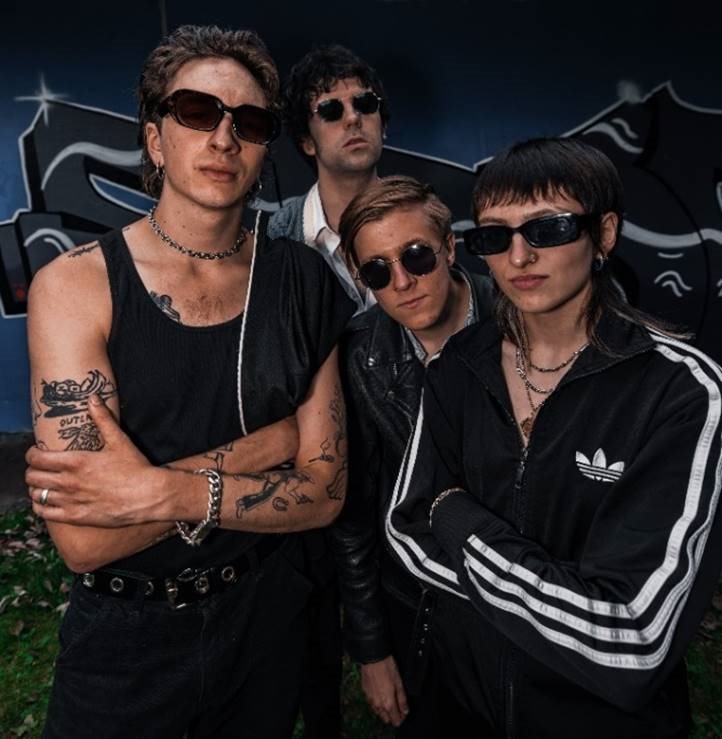
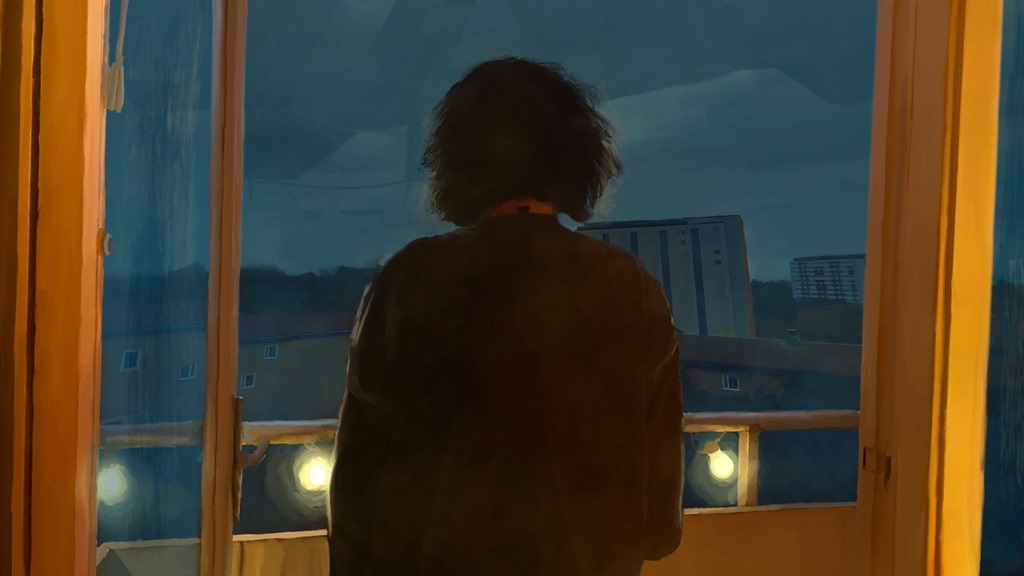
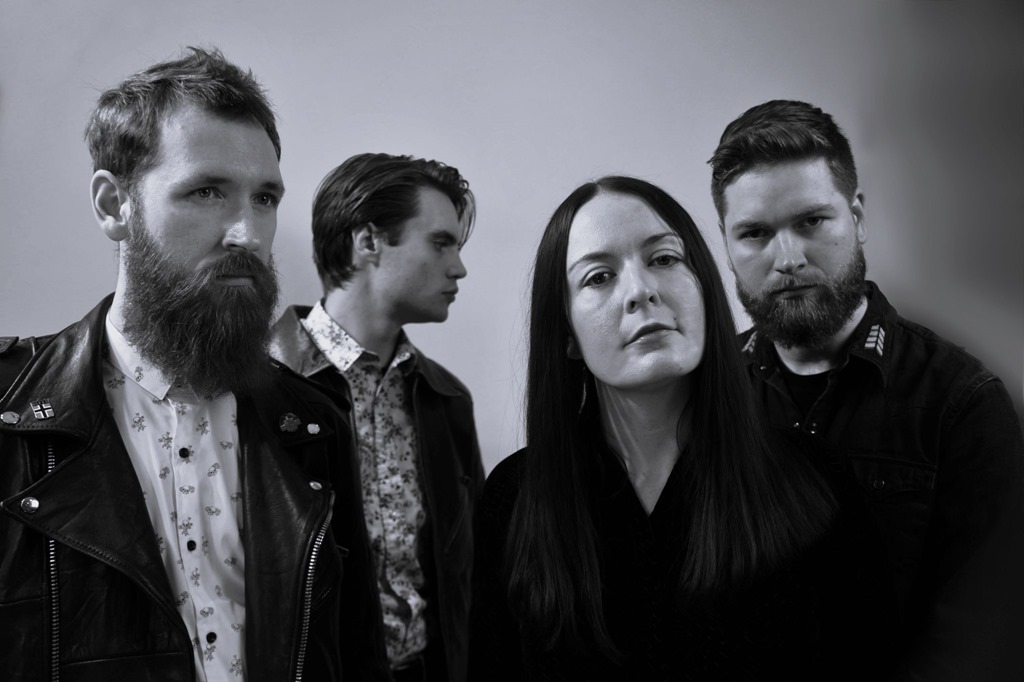
UK indie pop-rock outfit JODY AND THE JERMS have a summer surprise for eager ears – their new single ‘Liberation’, which was produced, mixed and mastered by RIDE frontman MARK GARDENER at his OX4 Sound studio. Getting into the summer groove with a 3-minute stomp, the Oxford band ventures beyond their jangle pop roots. With vocals to the fore, buoyed by the addition of new Jerm Salma Craig on backing vocals, the song is awash with Wah, Hammond and shaker.
Now that the dust has settled on April’s release of their third album ‘Wonder’ and latest single ‘Intuition’, the sweet taste of ‘Liberation’ propels the band forward, recalling the killer riffs, sass and harmonies of the B-52s in the embrace of the Jerms’ own trademark twists and warm production. An upbeat and empowering song, ‘Liberation’ is about how the good times make you feel alive and free - and how you want that positivity to last forever.
Racking up a second release in its first month of existence, new Swedish label skoghall rekordings – the gentler sibling of Dret Skivor – offers up a reissue of the second album by Farming Incident, originally released in 2008 on Wrath Records, home of The Scaramanga Six and Eureka Machines.
The tags which accompany this release include ‘experimental’, ‘hip hop’, ‘ambient’, ‘anarcho-folk’, ‘folktronica’, ‘politics’, ‘post-punk’, ‘post-rock’, and ‘space rock’, and if that seems an incredibly eclectic cocktail, it’s a fair summary of a band who never sat comfortably in any category, at a time when crossovers and hyper-hybridity were still pretty uncommon and even less accepted: this was a time in the wake of the 90s emergence of rap-rock crossovers and around the time when instrumental post-rock’s ubiquity was waning after what felt like an eternity but was in fact a span of maybe four years at most.
For this, their final album, Farming Incident had expanded its pseudonymous membership to four, with Agent Jones (guitar, bass), Agent Mays (drums) and Agent Procktaur (vocals, guitar, bass, keyboards) being joined by Agent Pushkin (backing vocals, guitar, bass) ‘to allow more flexibility in instrument swapping’. And that’s certainly a lot of guitar and bass-playing contributions across their personnel.
‘Elk vs Volvo’ is a choppy slice of post-punk that crunches Gang of Four and The Fall together with sinewy guitars propelled by energetic drumming. It’s also got that authentic lo-fi eight-track early eighties sound, and really only being familiar with Dave Procter’s work from the last ten years or so, it’s something of a revelation to hear him doing vocals – and actually singing(ish) – in a more conventional indie / rock context. The verses on the goth-tinged ‘Sadism vs Fadism’ (although it’s more early Pulp with a dash of PiL and Rudimentary Peni than The Sisters of Mercy or The Danse Society) finds him in more recognisable voice, with a Sprechgesang delivery with flattened northern vowels, before coming on more like David Gedge in the choruses.
There’s indie-surf and straight-up indie in the mix, and it’s all going on really. Casting my mind back to 2008, and some of it’s hazy because time, and beer, and so may gigs and albums, but this doesn’t sound like an album from around that time. The nagging bass and guitar of ‘Stiletto’, which reminds me of Murder the Disturbed but with the synths from B-Move or even Ultravox, giving it very much a feel of c79-81, before it locks into a motorik groove.
‘The Terrorist You Seek Is in the Mirror’ finds Procter in the kind of lyrical territory he’s made his home since, slogging out slogans with passion, but with a fairly standard four-square punked-up pub-rock instrumentation, it’s perhaps the alum’s least interesting track, particularly as it’s overshadowed by the atmospheric stroll of ‘G.O.T.H.’ which explodes in a colossal crescendo three quarters of the way in, flange and chorus heavy guitars dominating.
They chuck in a surprise grunge tune in the shape of ‘Phobos’, but it’s also got that early 90s noise rock slant that owes as much to the more obscure acts. And then there’s the final track, ‘Owls’. It’s a goth—tinged alt-rock screamer, one of those longer songs that simply could never be long enough even if it was half an hour long, in the same way that The Honolulu Mountain Daffodils’ ‘Tequila Dementia’ is simply too short. ‘Night vision, owls are gonna get you!’ Dave sings, channelling paranoia and panic while prefacing the avian themes that would resurface latter in his career on songs like The Wharf Street Galaxy Band’s ‘No Puffins For You, Lad’.
A lot has happened in the last fifteen years. We’ve had thirteen years under a Conservative government for a start, and the whole world seems to have taken a nosedive socially, politically, economically, and it seems impossible to think now that Trump and Brexit and Johnson and Covid were only the tip of the iceberg. But while we’re seemingly more divided than ever as people wage war over pronouns and images of Mickey Mouse in hostels for asylum-seeking children, we do seem to have become more accommodating of music that is so eclectic as to seem rootless. Nine Degrees of Torture probably feels more at home in 2023 than it did back in 2018, but even now, it doesn’t really sound like anything else. Bits of stuff, yes, like a magpie raid on bits and bobs from all over, but it’s not grunge or post-punk or anything really, but somehow it hangs together nicely.
Talk about moving fast: as their bio details, ‘The Bleak Assembly was formed in July, 2022. Two weeks after its inception, the first EP, We Become Strangers was unveiled. The Bleak Assembly’s meaning takes inspiration from Charles Dickens’s Bleak House – the ‘Bleak Assembly’ being the chain of people in the story whose lives are destroyed by the promise of wealth.” This seems a fitting parable for modern times, and show how we never, ever learn from history.
Comprising Michael Smith (all Instruments) and Kimberly (from Bow Ever Down), they continues to create at pace (ugh – I hang my head at having written such a corporate phrase in a review… but, phraseology notwithstanding, it’s true), and followed up their debut EP with the ‘Alibi’ single in February of 2023, and now they present Strangers Among Strangers. The goal of this EP, says Michael Smith was to “try a different sound. Bands seem to fall into a certain sound after a while, so if that should happen to us. I wanted to open it up to a more electronic sound to give us more room in the future.”
They have pedigree and experience, having between them shared stages with the likes of Assemblage 23, Razed in Black & Switchblade Symphony with their own individual projects, and it’s unusual to see them declare up-front that The Bleak Assembly will likely remain strictly a studio project. But why not? Sometimes the creative process evolves organically and feels like it needs to have that live outlet, while at other times, recordings simply don’t lend themselves to being replicated live. And then there are logistics, not to mention economics. The latter is a very real factor in determining how artists operate now. Funny (not) how the cost of everything has gone up apart from wages and the fees paid to artists.
But this sounds like a studio project, also. And that’s no criticism, and no bad thing. Oftentimes you’ll find bands striving – and failing – to capture the energy of their live performances in the studio. It’s often the case that they developed out of playing live and that’s the platform on which they’re familiar and on which they thrive. And fair play to them: but other acts evolved in the studio and are detrimented by distance, while others simply don’t feel comfortable as live entities and feel they simply cannot replicate their studio works in a live setting. Whatever the case with The Bleak Assembly, they’ve clearly found a method which works for them, facilitating a rapid stream of material.
With Strangers Among Strangers, The Bleak Assembly, who clearly have something of a fixation on strangers and the unheimlich have crafted a crisply-manufactured piece of electropop, and while it’s got some strong gothy / darkwave elements, there’s a lot of Midge Ure era Ultravox and Violator-era Depeche Mode in the mix here, as is immediately apparent on ‘A Night Like This’ (which isn’t a Cure cover).
Strangers Among Strangers is solidly electro-based and packs some real energy. It’s synthy and it’s dark – and nevermore dark than on ‘Ready to Die’, where Kimberley faces straight out into the abyss and confronts the ageing process and, ultimately, the end, against a backdrop of swirling chorus-soaked guitar that’s pure 1985. ‘Remains’ is similarly bleak on the lyrical front, and these songs channel a lot of anguish. It may well be that they’re common tropes in the field of goth and darkwave, but the delivery is gripping, as well as keenly melodic. There’s something of a shift on the EP’s second half, moving to a more guitar-driven sound, but the throbbing synth bass and cracking vintage drum machine snare keep everything coherent and push the songs along with a tight, punchy feel. There’s much to like.
Earlier this year, JW Paris were the millionth act to cover Chris Isaak’s ‘Wicked Game’ – a song that bombed on initial release in 1989 and only started getting attention when it was featured on the soundtrack to David Lynch’s Wild at Heart, and becoming a hit in 1991. What was interesting about JW Paris’ version is that it was different. It didn’t pussyfoot around being nice and delicate – not that it was insensitive or trashed the original, it just had the guts to be different instead of a predictably, safe, straight copy. And I suppose this sums the band up, really. They do their own thing – and it so happens to be good.
‘Leave It Alone’ is three-and-a-half minutes of choppy post punk with bite – not to mention a yawning guitarline that evokes the essence of Nirvana and The Pixies, straddling a magnificent strolling bassline and exploiting that classic quiet / loud dynamic – but keeping the overdrive in check in favour of a cleaner guitar sound – but with a chorus that’s eminently moshable.
Yes, of course it all pulls me back to the early 90s – no one song or band or anything specific, but that vague, aching haze of what it was like to be there in my late teens and early twenties. There’s some recycled gag about the 60s now being applied to the 90s along the lines of if you can remember the decade, you weren’t there, and there’s an element of truth on a personal level with it being the time I got into beer (and vodka) and live music, but there’s that other key element, namely the passage of time. It’s not even about memory fading: when you’re living life and simply in the midst of things, you don’t stop to take stock or pin a marker on your memory that any given moment in time was something to remember as special. It’s only in hindsight – even if that hindsight is developed in relative proximity to the event – that you often come to appreciate things for what they were. This is, of course, the nature of nostalgia, and why people in their thirties become fixated on the ‘golden age’ of music, movies, and TV, which almost invariably coincides with their late teens and early twenties before the weight of adulthood and the crushing tedium of work and shit took over. But I say this because the further a time recedes into history, the vaguer and more nebulous the recollections become.
It’s not that I can’t pinpoint where bands have leaned on Nirvana or The Pixies for inspiration, but the bigger – and vaguer – picture is that TV and radio and gigs were awash with acts which represented the zeitgeist: it’s impossible to remember all of the little bands who maybe released one single or nothing at all, who played in upstairs rooms in poky pubs, but the period overall is indelibly etched into my memory banks. And this is important, because JW Paris don’t sound like they’ve studied key albums of the time and appropriated accordingly, but have, instead, soaked up the spirit and distilled it into a sweet and powerful shot.
There are layers to this: ‘Take a look at me, am I the person that you wanna be?’ becomes ‘am I who you want to see?’ How much is projection, perception? And not just perception of others, but self-perception. Look in the mirror: are you who you want to see? And how much does that change over time? It’s not always easy to make peace with your former selves.
Speaking on the single, the band say “‘Leave It Alone’ is a deeply personal song that reflects our own inner journey of self-discovery and acceptance… With honest lyrics and a haunting melody, it invites our audience and listeners on an introspective exploration of identity and the longing for inner peace”.
And I guess that’s what the preceding five-hundred-word contemplation is: it’s my introspective exploration, as inspired by the song. A good song does so much more than fill a few minutes with sound: it enters you and takes you places. ‘Leave It Alone’ is a fucking good song.
And so it goes that ‘In 2022, Norway’s Hammok released their first EP ‘Jumping/Dancing/Fighting’ and received very good reviews in publications such as Distorted Mag and Pitchfork – and we fucking loved it, too.
The press pitch for the Oslo-based trio’s follow-up, Now I Know, promises ‘a new chapter for the band [which] takes listeners on a vast and powerful journey, beginning on a more bright tone with the band exploring their more introspective and emotionally intense side and gradually drifting towards a more heavier and ferocious approach, reaching levels of fury and intensity never explored before.’
Predictably, perhaps, then, we fucking love this, too.
The EP comprises three tracks: ‘This Will Not Last’ parts one and two, and the title tune, and immediately, with ‘This Will Not Last PT 1’, the shift from the previous release is apparent. The vocals are still trained and straining, angry, aggressive, but they’re swamped in reverb as the instrumentation forges an almost shoegazey, dream pop curtain of sound. The thick, blooping, glooping bass and other key elements are still present but they’re all softer, meaning there’s no gut-punching blasts like ‘Contrapoint’ here. That isn’t to say it’s entirely mellow: it does break into a driving riff propelled by pounding drums and a blizzard of guitar around the mid-section, then takes a turn for the darker in the final minute. Perversely, as much as it’s a pristine slice of post-punk / noise rock crossover, it equally makes me think of a hardcore version of The Twilight Sad and I Like Trains.
‘This Will Not Last PT 2’, released as a preview, is the most accessible and melodic song on the EP, and is their most commercial cut to date by a mile, presenting a melodic, post-hardcore face. Melody is relative, mind you. It’s hardly The Coors. It sits strangely ahead of ‘Now I Know’ which is dense and dark and abrasive in its roaring rage and frantic pace. The guitars chop and churn, and by the close, Tobias Osland is practically spraying his flayed larynx in spatters on the floor as he purges his final howls of obliterative fury.
Hammok have expanded both their sound and range, but while there are softer moments, it would be a mistake to say that they’ve softened overall – and the softer moments only serve to give the hard blasts even greater impact, making for a second killer EP.
London ‘synth-punk passion project’ Kill, The Icon, fronted by NHS Dr Nishant Joshi have been building their presence nicely in recent with a series of strong singles, kicking off with ‘Buddhist Monk’ in late 2021, and the trio have been kicking ass with pissed-off, politically-charged sonic blasts ever since, and gaining significant airplay and critical acclaim in the process.
The bio and background, for those unfamiliar with the band, is worth visiting, as the context of the music is important. As much as Kill, The Icon are a part of a growing swell of artists who are using their music to not only channel their frustration and to voice their dissent – in a way which can’t get them arrested, at least not at the moment, no doubt to Suella Braverman’s irritation – Joshi is also very much an activist.
Joshi made national headlines during the pandemic, being the first frontline NHS doctor to go public with concerns that staff were not being protected. In true punk rock style Joshi and his wife then launched a legal challenge against the government. They won the case, making huge change and were recognised by The FA and England’s football team. Fueled with frustration, in the summer of 2020 KILL, THE ICON! was born as an extension of Joshi’s activism.
You certainly couldn’t accuse these guys of being all mouth and no action, but of course, the power of music as a unifying force should never be underestimated, particularly when our government’s modus operandi is to divide enfeeble the populace. It wasn’t just Brexit, which say the country not so much split and cleaved in twain: now there is a war being waged on benefit claimants (or scroungers and fraudsters, as they’re portrayed, dehumanising society’s most vulnerable in the process); a war on woke (anyone who is opposed to racism, misogyny, homophobia is the enemy); a war on migration… everything is cut between ‘us’ and ‘them’, and the smaller the splinters, the less the likelihood of meaningful, coherent opposition, especially when even so much as having a placard in your car boot is likely to lead to a pre-emptive arrest.
While the four tracks on Your Anger is Rational have been released as singles in the run-up to its release, with ‘Danny Is A Hate Preacher’ landing just ahead of the release date, packaging them together as an EP presents a precise statement of what they’re about.
It’s ‘Heavy Heart’ that’s up first, a no-messing ballsy banger that calls out the racism that’s not only rife but seemingly accepted post-Brexit, and the second track, the gothy ‘Deathwish’ (accompanied by the first AI promo video) steps up on this, with its refrain of ‘No blacks! No dogs! No Irish!’. ‘They used to whisper / And now they shout’, Joshi observes, and sadly it’s true. For a time, it felt like we had progressed from the casual racism of our grandparents – I remember feeling uncomfortable hearing my late grandmother talk – without malice – about ‘darkies’ and ‘coloureds’, and feeling a certain lightness of being at the sense we had moved on, stamping out the BNP and becoming more inclusive… but then the right has risen again with Farage and UKIP and Britain First and Stephen Yaxley-Lennon and in the blink of an eye there are flag-waving racist cunts everywhere and Christ it’s fucking ugly.
And as much as Your Anger is Rational is a unified work musically, it’s lyrically and thematically that it really comes together. With a hard, driving bass to the fore, ‘Danny Is A Hate Preacher’ explores how indoctrination from an early age spawns the next generation of wrongheadedness, how violence begets violence, and I’m reminded of Larkin’s ‘This Be the Verse’. Your parents really do fuck you up. And now it’s not just parents taking kids to racist rallies, kids are being moulded by ‘influencers’ like Andrew Tate, and again, adults are buying into and propagating this obnoxious shit too: I’ve had to defriend a number of people on Facebook for sharing his content. My anger is, indeed, rational: we’re surrounded by cunts.
The last track, ‘Protect the Band’ is slower, more measured, but again, it’s a bass-dominated grinder with a monster groove, and it’s all pinned tightly together with some sturdy drumming and it’s a magnificent dismantlement of corporate hierarchies and the way they oppress workers into subservience. Protect the brand! But will the brand protect its staff? Will it fuck.
As much as Kill, the Icon are punk in aesthetic and sentiment, they’re very much new wave in their sound and approach. And while they’re strong on the punchy slogans and lyrical repetitions, KTI are more articulate and more nuanced than your average rabble-rousing punkers.
There isn’t a weak track in here. Musically, sonically, lyrically, they’ve got everything nailed and it’s tight: there’s no waste, everything is measured and weighed for maximum impact, but it’s still delivered with a coolness and a real groove, which makes this absolutely killer work.
Their debut extended-play release, the ‘PLAYTEST’ EP finds the Yorkshire noiseniks delivering 5 tracks of ferocious, Doomsday-baiting post-punk ripe for our times. From the cataclysmic Dune-inspired ‘Spice King’, to the slithering gothic-rock stylings of ‘Wee Van Bee’, or the intense industrial clamour of ‘Smother’; the band make their mark with a dark, brooding collection of songs that meld the gothic and euphoric with invigorating results.
Opening this Pandora’s box is the pulse-quickening ‘Fractured’, which is also out now. A song about dual-identities and the dawning realisation of deception when it’s been staring you in the face, lead vocalist Jamie explains of the track: “’Fractured’ channels the complicated relationship of having a double-life paraded right in front of your eyes, understanding its insidiousness but ultimately fearing the fire of confrontation.”
Scottish six-piece – Parliamo – are back with the new single ‘Matters Like’, out today.
Arriving as the band’s grittiest, stickiest offering to-date, it sees Parliamo’s usual bright rhythms and funky basslines, traded-in for howling Suede-esque electric guitars, low-slung hooks and unconventional choruses.
Like a migraine growing under the noon-day sun, ‘Matters Like’ has a burbling, off-kilter intensity quite at odds with the brilliant sunshine that baked the Summer of 2022 in which it was written. Finding nuanced inspiration during those mind-melting times in the Fontaines D.C. track ‘Roman Holiday’ and the spring reverb bass of The Last Shadow Puppets’ second record, the band’s Jack Dailly and Finn Freeburn Morrison began assimilating both into a new track that would mark a moody left-turn for the band.
A song about finding confidence in a new relationship and the overcast feelings that can come hand-in-hand with it, vocalist Jack Dailly explains: “’Matters Like’ has a moodier sound than most of our previous output, with its screaming guitars and echoing hi-hats. This mood fits well with the lyrics, as the song touches on feelings of uncertainty and internal conflict. It’s a song about insecurity in a fledgling relationship and the plethora of emotions which come with getting to know more about someone than you might have bargained for.”
Weaving their straight-up songwriting and babbling instrumentals niftily through a heatwave-warped collision of influences, ‘Matters Like’ finds a band pushing the Parliamo sound and enjoying getting a little experimental.
They may have only formed in 2020 during lockdown, but Brighton’s heavy post-punk noisemakers Mules (not to be confused with 90s US punk blues band, Mule) have already racked up three digital single releases before this six-track cassette EP. And while three of the tracks here are the preceding singles (with a studio recording of the live debut, ‘I Think We Need to Talk’, Illusions of Joy stands as a taut, cohesive document.
Their bio pitches their sound as being ‘equal parts dissonant and melodic, with a tight rhythm section providing insistent motorik grooves and angular rhythms’, adding that ‘In the tradition of Mark E Smith, the vocals are generally spoken, with very little concession to melody. Occasionally they escalate into a desperate and emotional yelp. With roots in the punk scene, Mules take influence from the first wave of post-punk, indie-rock, 90s noise-rock, and various more contemporary bands such as Parquet Courts, Metz, and Gilla Band.’
At the risk of repeating myself, shit times do at least make for decent music, and it’s no coincidence that the social and political landscape in which we find ourselves, which bears remarkable parallels to Thatcher’s Britain, is spawning a wave of disaffected musical voices. It’s not simply that the contemporary crop are aping the sound and feel of the first generation of punk and new wave acts because it feels fitting: the music itself is a means of articulating those knotty emotions that are a conglomeration of anger and frustration and the sense of powerlessness in the face of a need for change. Angularity, discord, dissonance, noise; these are the sonic vehicles which carry the sentiments sonically.
And so it is that while the primary grist to Mules’ mill is ‘everyday life in Tory austerity Britain’, they also pull on ‘broader themes, which draw on Tommy’s MA thesis, such as cultural hegemony, global political economy, and systems of control.’
There’s something particularly pleasing about hearing the words ‘cultural hegemony’ in the first verse of the first song on a record. Because as much as we live in shit times on so many levels, a real bugbear – and a genuine issue – is the dumbing down of culture; we have a government who openly attack intellectualism and deride ‘experts’, who refuse to engage in debate and view critical thinking as unhealthy – and in their tenuous position of power which serves only to protect their own interests – and, specifically, wealth – it is. And so it is that ‘Ergonomic Living’ takes its lead from Marxist social critique, and while the verses are defined by an insistent beat and wandering guitar, it all explodes into a roaring chorus. I’m reminded rather of Bilge Pump, and this is very much a good thing.
‘The Things We Learn in Books’ spews lists of theory against some driving guitars, and the urgency of the delivery is gripping and exhilarating. ‘Lonely Bored and High’ is the most Fall-like of the songs, but there’s a dubby element to it as well as spacious atmosphere, rendering it as much Bauhaus as The Specials, and again, it rips into a raging chorus. Fuck, these guys have such a knack for dynamics and tempo changes, it’s hard to respond in any way other than pumping your fists, because YEAHHHHH!!! FUCK, YEAHHHH!
‘I Think We Need to Talk’ is mathy, messy, disorientating, hypnotic, and ‘Clapping for Carers’ largely speaks for itself. Claps don’t pay bills, motherfuckers, and it shouldn’t be volunteers distributing limp packaged sandwiches and bags if crisps to the people sitting for ten hours or more in A&E units up and down the country (this one’s particularly sore for me, but we’ll save that for another time and just leave it that hearing a song like this really revs me).
Feeling angry and frustrated but disenfranchised and disempowered? Mules speak to, and for, you.
90s alt-rock band Come, fronted by Thalia Zedek, provided my route to discovering Live Skull, which she joined in 1987 and took over lead vocal duties. But my curiosity and interest in evolution and lineage led me to pick up cheap vinyl copies of Bringing Home the Bait and Don’t Get Any on You, which, brimming with shouty vocals, scratchy guitars and low-slung bass, could reasonably be described as No-Wave classics.
Somewhat ironically for a band which emerged out of the foment of 80s New York which also spawned Sonic Youth and Swans, the Live Skull reportedly disbanded in 1990 due to sustained lack of commercial success.
Perspectives change over time, although it was perhaps more of a returning to their original motivations which spurred them to reconvene in 2016, since when they’ve released two albums, with Party Zero being the third, and the seventh studio album of their career.
Delivering an album that’s described as ‘a fiercely political album, in keeping with this politically fierce age’ and ‘timely music, essential, impassioned, angry and beautiful’ founder Mark C. It is a politically fierce age, and now more than any time since the late 70s and early 80s – a period which spawned so many bands who existed as an outlet for frustration and anger and all kinds of difficult and even ugly emotions through nihilistic noise and various forms of confrontation and antagonism.
Sonically, Party Zero isn’t especially nihilistic or noisy, confrontational or antagonistic, but does very much refine these elements and hone the delivery of an almost obsessive focus on corruption, abuse of power, inequality and injustice.
If the sound is rather more polished and widescreen than their 80s releases, the key ingredients are still there, not least of all jagged guitars that blur and crackle with treble and careen into dissonance and discord against big, bold basslines. There’s a palpable sense of urgency to the songs on Party Zero. It may not be their strongest album or their most innovative or distinctive – but it’s an album that’s necessary.
“We’ve been pushed to the edge – how do we claw our way back? That’s been a common theme in Live Skull since the beginning, and so it is now. We’re trying to provoke thought.” There seems to be a rising tide of bands out to achieve these same ends, now, and from a vastly diverse range of stylistic contexts, from the minimal beats and loops of Sleaford Mods to the raging ranting noise-blasts of Benefits via the angular post-punk of I Like Trains. People are pissed off – and they’re frustrated, and scared – and those people in bands are using their platforms to call the bullshit, the fearmongering, the manipulation, the rise of the right and the immorality of governments and multinational companies.
It’s not just the pithy lyrics: ‘Neutralize the Outliers’ sounds like a rabble-rousing protest song, more New Model Army than anything that belies the band’s origins, and it works because it feels necessary, vital.
‘Chords of Inquiry’ plugs away at a simple, spare riff driven by crashing drums, and the drumming is a strong contributor to the album’s dynamic feel, and nowhere more on ‘Mad Kingship’, as they thunder along in a sustained roll. ‘Inside the Exclusion Zone’ is accessible, but driven, choppy, urgent, with a contemporary post-punk feel – think Radio 4’s take on the Gang of Four sound – and the same is true of ‘Turn Up the Static’, with its dubby strolling bass that ambulates through the reverby verses (before the chorus slugs out a mid-tempo fist-pumping holler-along call to arms).
And this is why the surge in protest music is what we need right now. It likely won’t change the world; the chances it won’t change opinions or provoke all that much thought, since most people who are likely to listen to Live Skull are the kind of people who are already in the same camp of political frustration or despair – and that’s ok. What these people – we – need is to know we’re not alone, and to feel a sense of unity and community, and for these feelings of frustration and anger to be articulated by relatable voices. Party Zero does that – and with some solid tunes.