Posts Tagged ‘Intense’

Artoffact Records – 5th December 2025

Christopher Nosnibor

In the last few years, CD box sets have become quite a thing. And I for one am a real fan. It’s not just about ‘fuck Spotify’ or the realisation that stuff has a tendency to disappear from streaming services at no notice – something true of Netflix and other TV streaming services, too. But, it is a fact that if you don’t have something physically, in some form or another, even if it’s only a digital file, you don’t have it, and you certainly don’t own it. But not all CD box sets are equal, and not all serve the same purpose. Much as I’ve come to appreciate the ’five albums’ sets and the like as instant collection fillers when it comes to acts I’ve previously managed to skip for whatever reason, they’re beyond stingy on bonus material. When it comes to releases for fans, releases like the monster boxes with all B-sides and bonuses galore, such as those by Fields of the Nephilim and The March Violets have been far more exciting.

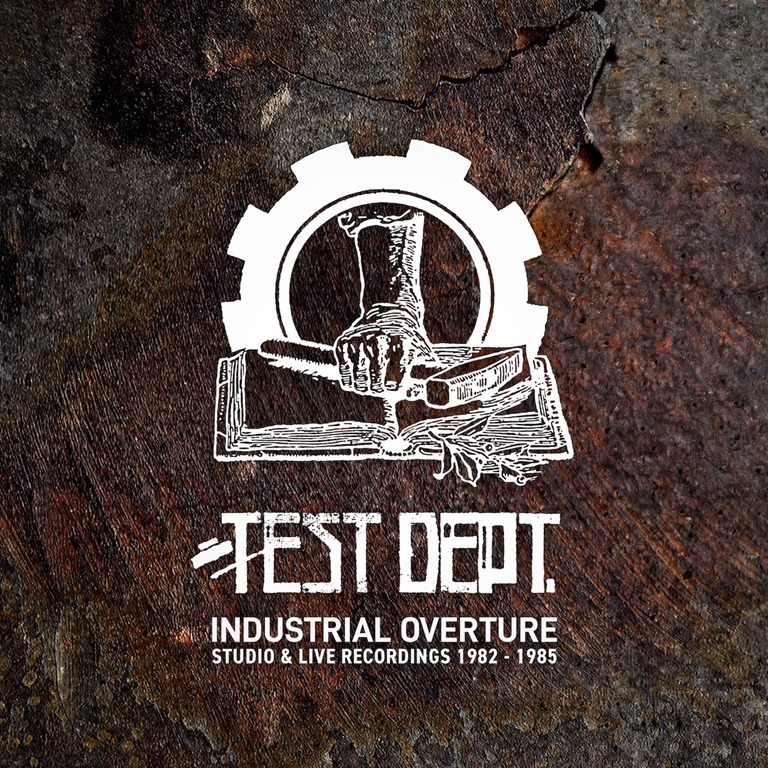
Industrial Overture: Studio & Live Recordings 1982-1985 is definitely exciting. It’s no simple repackage of the albums, and the chances are most people – even the staunchest fans of Test Dept – don’t own the majority of the material on this one, consisting as it does primarily of scarce material, outtakes, and Peel Sessions.

Industrial Overture: Studio & Live Recordings 1982-1985 consists of 42 tracks across 4 CDs and also available digitally. It’s a document of their earliest, most abrasive period – not that they exactly mellowed in the years after, as perhaps their most commercially successful album, The Unacceptable Face of Freedom (1986) attests, and includes a first ever reissue of the group’s 1983 cassette-only debut album Strength Of Metal In Motion, the classic Ecstasy Under Duress and Atonal & Hamburg albums (both unavailable for over three decades), plus a disc of hitherto unreleased studio recordings that incorporate two sessions recorded for the John Peel show on BBC Radio 1.

As the notes inform, ‘In total, 26 tracks are new to CD and digital formats, of which 12 have never been previously available at all. All contents have been compiled by Test Dept and are newly remastered by Paul Lavigne (Kontrast Mastering)’.

Disc one gives us Strength Of Metal In Motion – a collection of raw live recordings. The first five were recorded at Albany Empire, Deptford, in August ’82, and it’s fucking brutal. Even remastered, it has something of a bootleg sound quality about it, that muddiness that’s particular to 80s recordings. In many respects, this adds to the appeal here. It opens with the dissonant blasts of harping faux-brass blasts of ‘Last Rites’ – heraldic, but askew – before giving way to the pummelling percussion and shouting of ‘Shockwork / Workshock’, which is brief but brutal. ‘Prokofiev’s Dream’ is a full-on assault of clanking percussions with occasional horns, before ‘Drum and Body’ drops a shard of industrial punk noise, with rabid vocals-riding a wave of the most relentlessly aggressive beats. The dark ambience of ‘Death of God’ is nothing short of purgatorial, and showcases a different side of the band. Four more of the thirteen tracks were recorded at Temperance Hall, Newbury, four months earlier, and with samples, synths, and drum machines flashing in all directions, their debt to Cabaret Voltaire is clear there – as is the sense of their future direction. That said, ‘Kindergarten’ is pure Throbbing Gristle, laced with heavy hints of Suicide and the bibbling synths of Whitehouse. But the wayward experimental jazz elements are also strong. Overall, this is the sound of punk in a head-on collision with Throbbing Gristle and drumming that sounds like they’re battering the shit out of sheet metal. Unless you were actually there, one can only imagine what it must have been like to witness any of these early shows.

Ecstacy Under Duress was initially released in 1984 and is another (largely) live compilation consisting of recordings which again were captured in ’82 an ‘83, although this time featuring future debut single ‘Compulsion’. The compositions feel more evolved, and perhaps as a consequence, more honed in their attack. ‘Hunger’ builds to a punishing climax and sets the tone. The aforementioned ‘Compulsion’ is relentless. Samples and crashing percussion dominate the stark industrial landscape, and the intensity of these performances translates well despite the separation of time and medium. I suppose it’s here we can really identify the point at which Test Dept carved a path which departed from their industrial predecessors and peers in their pursuit of the most punishing percussion. Only Einstürzende Neubauten really compare, but even they’re not quite as up-front with the hammering beats, despite their love of sledgehammers and metallic objects. The twelve-minute ‘Efficiency’ takes the percussive assault to a whole other level, leaving the listener feeling pounded, pummelled, bewildered.

The third disc offers some respite by virtue of being studio-based and therefore not having that muffled 80s live sound to the recording – although it’s marginal. ‘Blood and Sweat’ – one of three demos from 1982 – is primitive and raw and very, very drum-orientated: the vocals are relegated to the back of the mix, anguished shouting buried in a barrage of noise. It’s cruel and it’s harsh and it’s heavy, and the demo version of ‘Shockwork’, recorded during the same session is similarly hard on the ear, with its combination of machine-gun drumming and squalling avant-jazz tones.

The two Peel Sessions, recorded in ’82 and ’85 shows a honing of the sound: between the two sessions, they would release their debut album proper, Beating the Retreat, which included contributions from F M Einheit and Genesis P. Orridge, as well as Shoulder to Shoulder, with the striking miners choir, and which would finally see the release of an official studio version of ‘Shockwork’ – another version of which featured in the 1983 Peel Session, which comes on as heavy and mercilessly brutal as Swans on Filth – which was released the same year and channels the pain of life enduring the crushing slog of capitalism.

AA

Of the four discs, this perhaps has the greatest impact, and not just sonically. Atonal, anguished-sounding vocals reverberate vast sonic swamps dominated by the ever-present barrage of industrial-strength percussion. It’s relentless in intensity, and the effect is cumulative. Between the pulverizing six-and-three quarter minute ‘Efficiency’ (which feels in some way to be their answer to Throbbing Gristle’s ‘Discipline’), and the six-and-a-half-minute ‘Red Herrings’ version of ‘Gdansk’, with the disorientating mutter of ‘State of Affairs’ in between, this is a sustained assault that hammers blows from every direction.

AA

Disc four, which contains the Atonal & Hamburg album – released in 1992, but documenting two live performances from 1985 marks a significant shift from the earlier live shows. Containing material drawn predominantly from Beating the Retreat and The Unacceptable Face of Freedom, the punishing volume translates well, and the force is more controlled. There is structure, too, building from dirge-like crawls – again comparable with Swans around this time – quickening the pace and the all-encompassing ferocity of the percussion.

Those familiar will likely already know, but in addition to providing a truly magnificent document of Test Dept at their most uncompromising early best, Industrial Overture shows how they were right at the heart of an emerging zeitgeist spawned in the wake of Throbbing Gristle, as represented by the likes of Neubauten, Cabaret Voltaire, Swans… this was not a scene or a movement, but a disparate array of artists channelling frustration at the dark underside of a time when the charts were dominated by the likes of Duran Duran and Culture Club. In pop culture, the early 80s is presented and remembered as being glitzy, aspirational, fun. But that was not the lived reality of many. Test Dept may have been underground not least of all because their racket was largely unpalatable to the majority. But as Industrial Overture evidences, they were providing the soundtrack of the grim realities of working life, drudgery and trudgery. Essential listening.

AA

AA

3fa9f627305a21e10fbc1f2455628c4f1a429e6e

Christopher Nosnibor

It’s a cold and very wet Thursday night in December. The kind of night that would validate the narrative that music venues go bust because they’re not supported, and people want to see bands they know over local acts and so on – if the place had been quiet. But there’s nothing quiet about tonight., in terms of turnout or decibels. Ok, it’s not rammed, but it’s respectably busy, and as for the volume… These guys take it all the way to eleven.

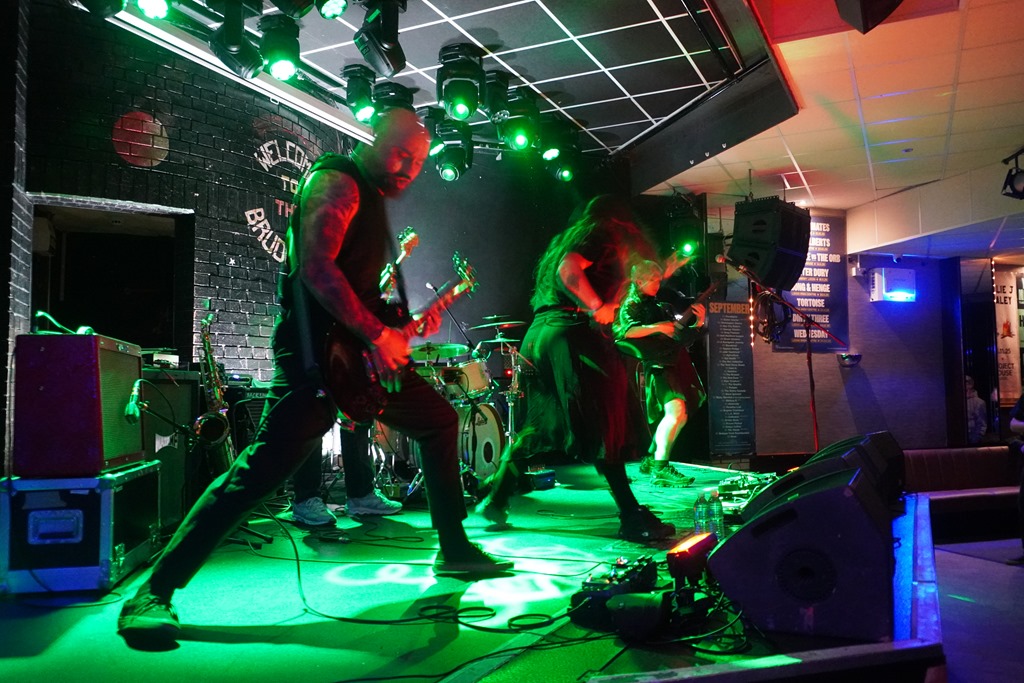
The promoter’s strategy of booking a local / student / uni band to open up is one that rarely fails, and there’s a significant turnout early doors for ATKRTV. It helps that they’re good, albeit an acquired taste and not your average uni band. Operating in the classic power trio format, their primary inspirations are clearly US noise rock and grunge – there’s a bit of the Jesus Lizard here, a dash of Sonic Youth and Shellac there – as well as UK 90s noise that makes nods to the likes of Fudge Tunnel and Terminal Cheesecake – but there’s a lot going on, with hints of avant jazz in the blend, too. They’re a bit rough round the edges, but there is a musical style which is forgiving of this, and the jagged jarring juxtapositions of squalling guitar work with some meaty bass work evidences a technical ability beneath the surface of the feedback-strewn tempest. And while the banter might need some work, the songs are a glorious angular explosive racket, and they give them a hundred percent. And this is why it’s always worth getting down early doors. Every headliner was a support act once, after all.

DSC05224DSC05185

In my recent review of that debut album, Atavism, I commented on how the challenge would be for them to replicate the live sound in the studio. This is because their life sound is simply immense. There really is no other word for it. And this is not volume simply for the sake of it: this is volume as an expression, volume which renders the music physical, volume without which certain frequencies and tonalities, so integral to their sound, would not be achievable. Their performance in this same venue back in February was spellbinding, and I came tonight in the hope of replicating that experience. And oh yes, I did, and then some: Teleost seemed to take things to the next next level tonight.

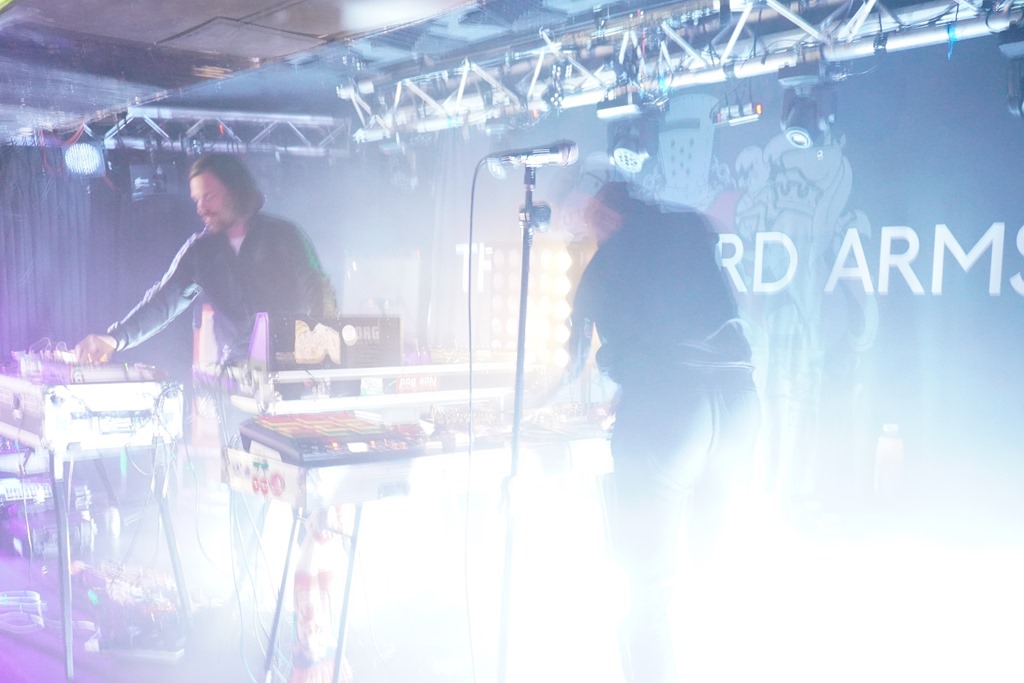
Theirs is a subtly different take on the whole droning doom / stoner form, incorporating almost folky elements in the way that more recent Earth albums do. And instead of being solely about bludgeoning riffery – and hell, there’s plenty of that – there’s a rare attention to detail, not just in the delicate picking and soft cymbal splashes in the quieter moments, but in the full-spectrum sonic experience they conjure. And yes, conjure is the word: this is a world of magic made with a mystical blend of musicianship, amps, pedals, and something else quite indefinable. The way Leo Hancill uses a standard guitar, played through a substantial but not extravagant pedal set and two amps, to cover the range of both guitar and bass is spectacular in itself, but what really makes their sound unique, and it’s so easy to lose yourself in the timbre and texture, the way the sounds reverberate against one another to create this sensurround experience.

DSC05272DSC05244DSC05267

Teleost

Once again, I find myself truly mesmerised by Cat Redfern’s ultra slow drumming. What’s most remarkable is how effortless she makes it appear. Granted, her sticks are batons, but she is still an immensely hard hitter please with absolute precision. Yet she plays with an order of serenity, her expression calm, almost a smile, although it’s clear that’s behind this is intense concentration, and perhaps an element of telepathy between herself and Leo. Certainly the intuition between pair is remarkable, and no amount of rehearsal alone can achieve this level of tightness. The way they navigate the peaks and troughs, spinning elongated quiet passages, where they reduce everything to a hushed hum and the tinkle of a cymbal before bringing in a cataclysmic riff with pinhead precision is nothing short of phenomenal. And for all the noise, the experience is remarkably calming.

Before Teleost, there was PAK40. But with basis / vocalist Andy Glen now resident in Germany, and Leo Hancill living in Glasgow, activity from this former York duo is now extremely rare. That they’re touring with Teleost, having released a new EP simultaneous with the Teleost album makes economical sense, but also represents a significant feat of co-ordination.

It’s not difficult to identify the origins of Teleost when listening to pack 40. They’re certainly slow and heavy. But their style draws more overtly on the Sabbath-based doom sludge template, and there much more overtly metal. In places, they present a sort of blackened New Age metal hybrid. There’s also something more direct about their drum / bass combination. But oh, that bass. The thick, tearing distortion when the riffs kick in are agonisingly close to brown note territory: you feel your ribs rattle and your skin quivering.

In contrast to Cat Redfern’s zen drumming, Leo drums with his face, and in contrast to Hanclil’s slow nodding guitar style, Andy Glen goes all out with some unrestrained headbanging as he unleashes the most pulverising bass riffs. PAK40 are harder, and more abrasive. And this is why the double-header works: for all of their similarities, the two bands bring different shades of heavy. And they’re both intense, physical forces.

DSC05300DSC05280

PAK40

I babble some shit to people on the way out. I think I got away with it, because everyone is equally dazed. We’ve been blitzed, blown out of our minds and shaken out of our skins tonight by a musical experience that borders on transcendental. It’s a cut above your average wet Thursday night in December, for sure.

Christopher Nosnibor

Benefits exploded onto the scene not long after lockdown – and I mean exploded, an atomic detonation of rage. The essence of the setup was pretty simple: angry sociopolitical spoken word delivered with blistering vitriol, backed by a blinding wall of noise. The result could reasonably be described as something in between Whitehouse and Sleaford Mods, but the fact is that from day one, Benefits created their own niche. The live shows were jaw-dropping, and the debut album, Nails captured that raw energy with a rare precision.

The arrival of second album, Constant Noise marked a necessary departure – sonically mellower, far more beat-orientated, a lot less shouty, angry-sounding. My first impression was that it was decent, more produced, but still packed some sting in the lyrics., and will be hard to top in terms of the number of mentions of dogshit in albums of the 2020s. But it’s a fair reflection of post-lockdown Britain: dogs have proliferated exponentially, and concordantly so has the volume of dogshit – and, just as bad, bags of dogshit tied and dropped, piled next to or on top of bins, and hung in trees. What kind of twat does that? A selfish one is the only answer. But as for the album, I kinda let it sit for a while. But over time, with more – and more – listens, the album’s depths reveal themselves. Constant Noise is every bit as angry as Nails, and if anything, the more moderate, tempered delivery hits harder. It just takes a little bit longer to reveal its depths and quality. But how would this translate live, especially now they’ve been stripped back to the founding duo of Kingsley Hall and Robbie Major?

DSC05075

Benefits

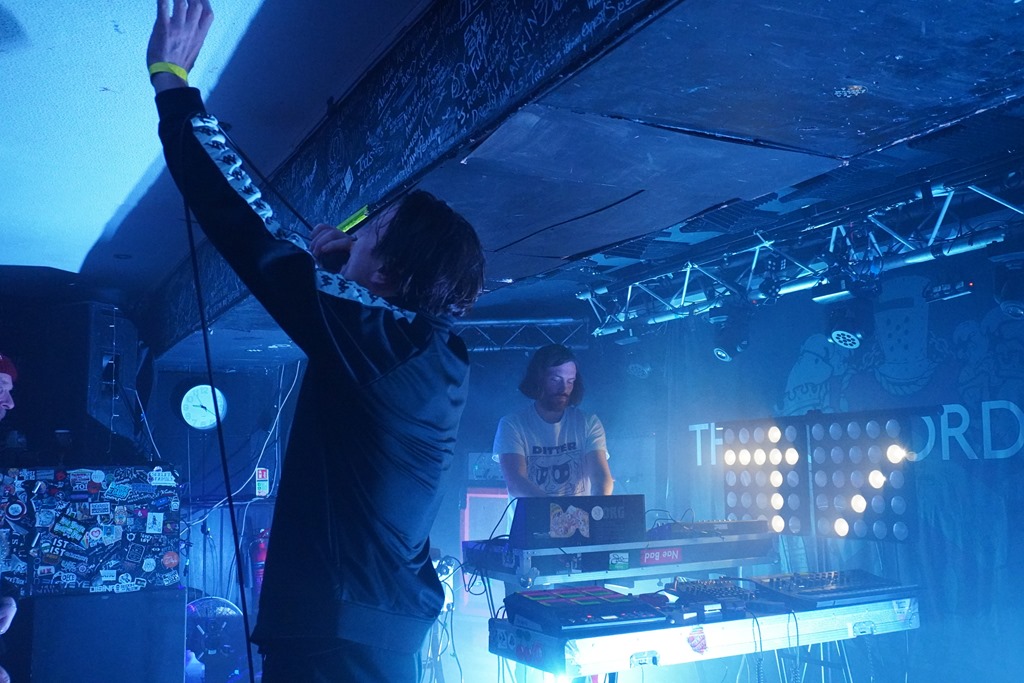
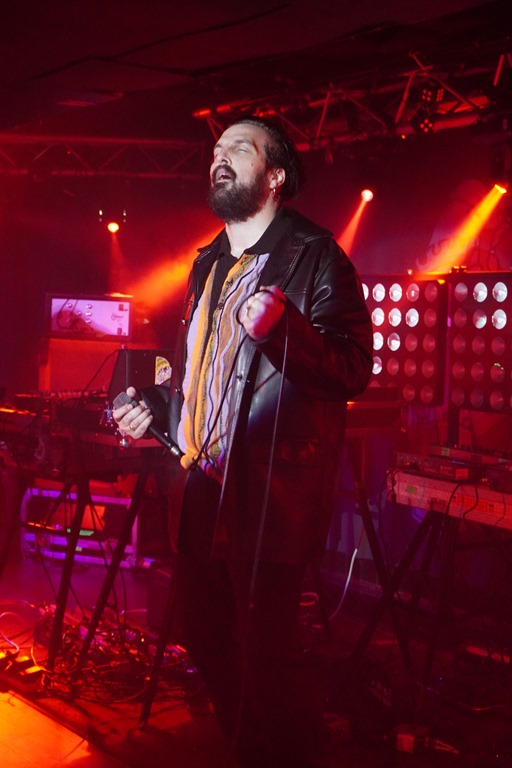
Before we would get to find out, there was the equally intriguing support. The Eighties Matchbox B-Line Disaster are one of those acts who may have only attained cult status during their time together, but it’s one which has expanded since their demise. They were always a band destined to implode, as was apparent when I witnessed a particularly fractious gig here in York circa 2007. But this was always a band which had derangement and volatility wired into their makeup. Guy McKnight formed DSM IV in 2018, and they’re an altogether different proposition, trading in gothy electro with some tidy guitar textures woven into the fabric of the songs, and Guy seems altogether more settled. It’s all relative, of course, and he ventures into the crowd on numerous occasions, and at one point around the middle of the set, tosses mic stand over, drops the mic and busts some tai chi moves. It’s a solid set, both compelling and entertaining, and they’ve got some tunes, too.

DSC04943DSC04962DSC05008

The DSM IV

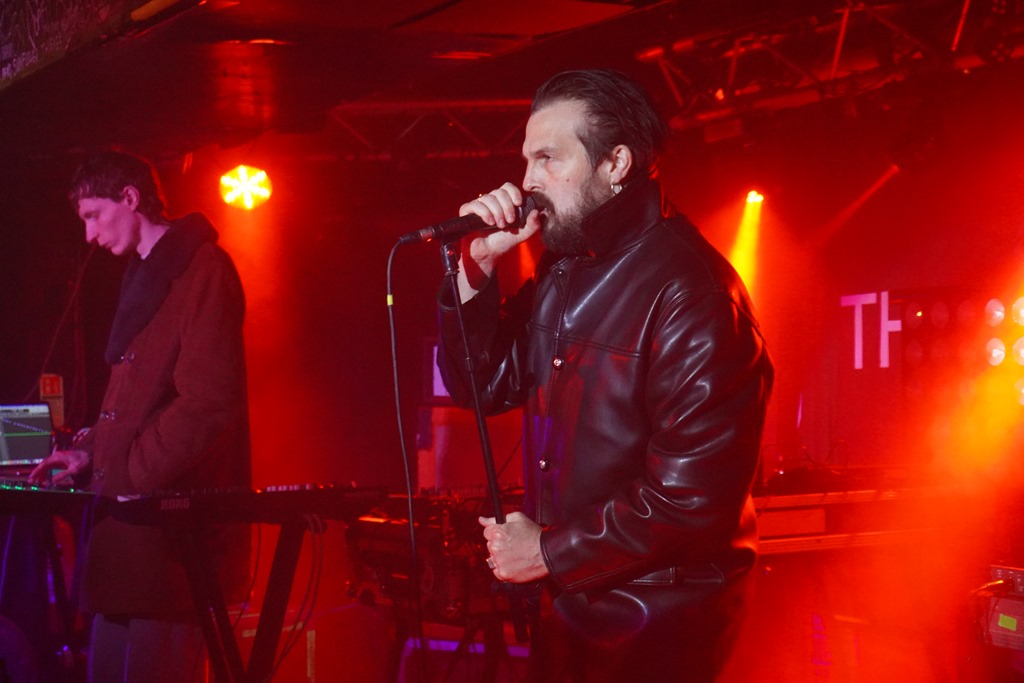
Benefits don’t really have a great many tunes in the conventional sense. Choruses and hooks aren’t the primary focus of their compositions. Hall’s words range from reflective and ponderous to outright roaring rage, the backing spanning sprawling barrages of obliterative noise to quite chilled dance grooves. But at this volume, and when delivered with this much passion, there’s nothing chilled about this live show.

Here, I find myself returning to the topic of seeing an act you’ve seen before and been blown away by, and going to see them again in the hope of replicating that first time – only it’s a weak hope, because the first time has the element of surprise which is unlikely to be repeated. Yes, a band may be consistently awesome, but that first bombshell experience, that initial high… very few bands have the capacity to have that impact more than once. Benefits, however, hit even harder on this outing than any before.

DSC05025DSC05084

Benefits

There was word online that their current tour was as brutal as any they’d ever done. Having seen them three times previously, and never with the same lineup, it seemed like that claim might be a bit of a stretch, particularly without a live drummer. But synthetic beats have a way of bludgeoning and cracking in a way that live drums don’t always, and when paired with gut-churning low-frequencies and ear-bleeding top-end noise, the sonic impact of what blasts from the PA is positively immolating.

DSC05085

Benefits

Kingsley gets most of the chat out of the way at the start, with a bit at the end: in between, they power through a relentless set uninterrupted. And relentless it is, and not just sonically: with the sole lighting consisting of blinding white strobes for the entire duration of the hour-and-twenty-minute set, the stark, uncompromising nature of the music and lyrics is amplified. They put every ounce of energy into the show, Hall positively streaming with perspiration by a third of the way through. And we feel the passion; the whole room is buzzing and aglow with a sense of unity through a shared experience of catharsis. These are shit times. Dark times, bleak and scary times, domestically and globally. Benefits capture the zeitgeist, and rail against those who will one day be proven to have stood on the wrong side of history – the right-wing, flag-shagging, pro-Brexit, racist, xenophobic, hatemongering, exploitative, manipulative capitalist shits and their supporters and enablers – articulating thoughts and feelings with a unique precision and an intensity which is positively nuclear. The experience is nothing short of mind-blowing.

Fysisk Format proudly announce the signing of Fanatisme and the release of their debut album Tro, håp og kjærlighet, set to be released on December 12, 2025.

Emerging from the Norwegian underground, Fanatisme channel the lunatic, forest-worshipping spirit of Ulver and Darkthrone, merging it with the gothic pulse of Christian Death and The Cure. The result is a singular collision of black metal and post-punk, a dark and ecstatic celebration of life, death, and everything in between. Tro, håp og kjærlighet is both unrelenting and reflective, a debut that collapses the boundaries between black metal’s primal fury and post-punk’s spectral beauty.

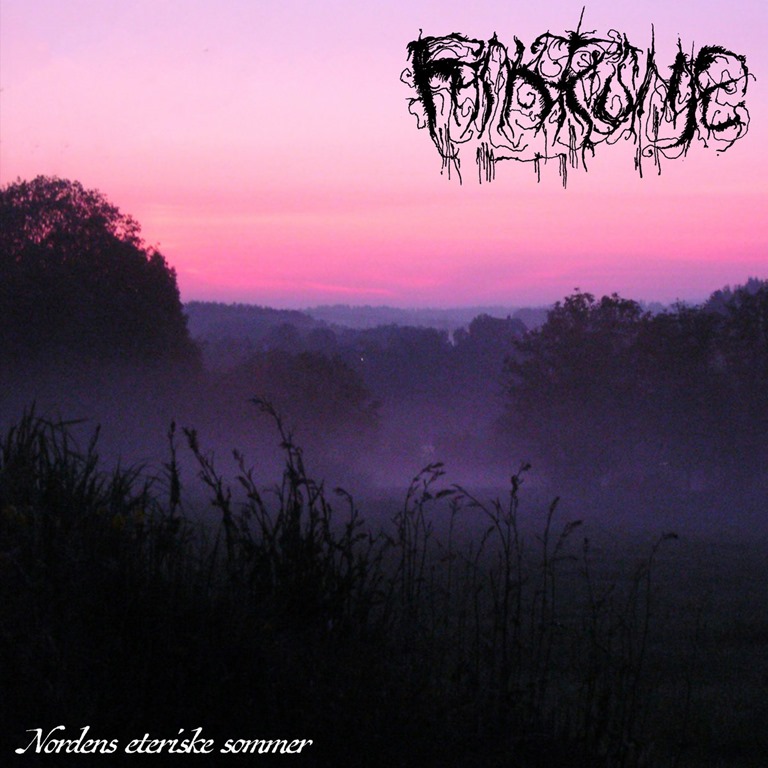
‘Nordens eteriske sommer’ is the first cut to be aired from the album. It’s a belter, and you can hear it here:

AA

a2526695503_10

After rising through the ranks steadily from their 2014 album Distorture through to 2017’s Invidia record and following a series of EPs and singles, alternative rock hybrid outfit Ventenner return with new EP Slow Dissolve on 31st October (Athanor Records). Known for flawlessly blending metal, atmospheric electronics and doomy riffs, this latest release marks a new era for the band, following a number of years of major changes and upheavals. Though the concept of change has been a constant theme that has run through Ventenner’s music. Frontman Charlie Dawe comments,

"A lot of my music over the years has centered around the idea of something ending and something new beginning. There’s always been a strong theme of death and rebirth in the approach. These were normally restricted to the lyrical themes and to a personal level, this time however it was more about the band as a whole and a concept.

We had got to a good point by the end of the decade. Our 2017 album Invidia had been a success, so had the subsequent singles we released in its wake. It had opened doors to big shows and big tours, management, a publishing deal, tipped as the next big thing etc etc. After the lockdown, we had some key line up changes that didn’t end on good terms, and I spent the following years releasing Ventenner albums and EPs with fellow long time member Luke Jacobs. But the way things were, the industry was on pause still, and our momentum had stalled."

Despite those releases being some of Ventenner’s best work to date, it all came to a head in 2023, with their first step on to the stage in 4 years. Charlie explains,

"The newly joined RomyBen-Hur and Ted Nieddu, both on guitars and backing vocals, came along for the trip and musically it was great. The tour was fun, the people who came said we were on our A game, but it was stressful and difficult and without the support of our agent (who had quit the business in covid) it wasn’t a success. Personally, my life was in a similar situation. Having made some difficult decisions to move on from people and things, done the therapy thing, I had no idea where I fit in to music any more, if Ventenner was still a thing or ever would be, generally an existential crisis and cataclysmic shift on every level.”

After nearly 20 years in London, Charlie admitted defeat, closed his record label and moved to the wild coasts of Rural Suffolk. Away from the pressures of living in the capital, he got sober, ran in the woods every day, immersed himself in a burgeoning career as a film score composer and thought that maybe, that was it…. Charlie adds,

"We had put out an album in 2024, Exit Manual, which was the most startlingly apt title I’ve ever come up with for what I and the band were going through at that point. For me it was probably a swan song and it was time to bow out, quietly and without applause.

At some point, whether it was the newfound clarity and productivity, the letting go of negative elements, or just being away from everything and being ‘on the outside’ of the industry, something just sparked. I had a few things left over from the previous album sessions that didn’t fit, and some ideas I had from a side project called Last Sign which never really came into full bloom. So I started writing for Ventenner again, not because I thought I had to or I had something to prove like the last 10 or so years, but just because I wanted to. I had been writing a lot out here, both for solo work and soundtracks, and it was flowing easily. The long drawn out slow dissolve of the last 10 years was not the demise I had thought it was, rather just a very gradual reveal.”

The results are the Slow Dissolve EP, now once again a solo project with Charlie handling all the music and vocals, this is the sound of an artist refreshed, refocussed and reenergised across 4 new tracks of dark heavy rock & metal, underpinned with atmospheric textures. Essential listening for fans of: Nine Inch Nails, Filter, Smashing Pumpkins, Deftones, Failure, Tool & Massive Attack with Cold in Berlin vocalist makes a guest appearance on ’Sway’.

Today sees the release of first single ‘Ultraviolet’ which according to Charlie, “is about examining things close up. Things that are only visible under a certain light, but are there all the time and affecting everything we do. This song, and this record, is about finding the hidden reason in our actions. Things that wanted to stay hidden for our own protection, but need to be uncovered if we ever want to move forward.”

Listen to the track now:

oDO5RpRQ

Dragon’s Eye Recordings  – 22nd August 2025

Christopher Nosnibor

A year on from my review of Yorkshire Modular Society’s Fiery Angels Fell, I find myself presented with another release of theirs on LA label Dragon’s Eye Recordings, and I can’t help but contemplate the circuitous routes by which music travels, since the release landed in my inbox courtesy of a PR based in Berlin – while no-one in my sphere of acquaintance, which includes a broad swathe of electronic artists around York and, indeed Yorkshire as it spreads in all directions – appears to have even the first inkling of the existence of YMS, despite their connection to Todmorden. But then, I often observe that what holds a lot of acts back is confinement to being ‘local’, and it’s a lack of vision, or ambition – or, occasionally, practical matters – which prevent them from reaching the national, or international, audience they deserve.

Yorkshire Modular Society clearly have an audience, and it’s not going to be found at pub gigs in their native county. This is true of most experimental artists: there’s no shortage of interest in niche work globally, but it’s thinly spread. There are places, predominantly across mainland Europe, and like Café Oto, which cater to such tastes, but they’re few and far between, which explains why most such projects tend to be more orientated towards the recording and release of their output, their audience growing nebulously, more often than not by association and word of mouth.

This release – which is the first collaborative album from Yorkshire Modular Society with Peter Digby Lee – could only ever really be a download. With ‘a suite of four ambient compositions shaped by intuition, ritual, and shared resonance’, it’s over two hours in duration, giving recent Swans a run in terms of epic.

The story goers that ‘The artists first crossed paths not through conversation, but through shared vibration — at the resonance Drone Bath in Todmorden. A quiet alignment. Some time later, Peter sent over a treasure trove of sound: samples he had recorded and collected over many years — textures, fragments, and moments suspended in time. From this archive, Dominick Schofield (Yorkshire Modular Society) began to listen, to loop, to stretch, to shape… What followed was a process of intuitive composition—letting the materials speak, revealing what had been buried in the dust and hum. This album is the result: four pieces, each unfolding from the source material with care and curiosity, a shared language spoken in tone, breath, and resonance.’

The title track is soft, gentle, sweeping, lilting, serene, floating in on picked strings, trilling woodwind and it all floats on a breeze of mellifluousness, cloud-like, its forms ever-shifting, impossible to solidify. With hints of Japanese influence and slow-swelling post-rock, it’s ambient, but also busy, layered, textured, thick, even, the musical equivalent of high humidity. It moves, endlessly, but the breezy feel is countered by a density which leaves the listener panting for air. The sound warps and wefts in such a way as to be a little uncomfortable around the region of the lower stomach after a time, like being on a boat which rocks slowly from side to side. ‘Beneath the Hanging Sky’ lays for almost thirty-six minutes, and it’s far from soothing, and as a consequence, I find myself feeling quite keyed up by the arrival of ‘Glass Lung’, another soundscape which stretches out for a full half-hour. This is more conventionally ambient, softer, more abstract, but follows a similar pattern of a slow rise and fall, an ebb and flow. Here, the application is emollient, sedative. I find myself yawning, not out of boredom, but from relaxation, something I don’t do often enough. And so it is that this slow-drifting sonic expanse takes things down a couple of notches. You may find yourself zoning out, your eyes drooping… and it’s to the good. Stimulation is very clearly not the objective here.

Third track, ‘Echo for the Unseen’, is the album’s shortest by some way, at a mere twenty-two minutes in length. It’s also darker, dense, more intense than anything which has preceded it, and as ambient as it ss, the eternal drones are reminiscent of recent both latter day Swans, and Sunn O)). The epic drone swells and surges, but mostly simmers, the droning growing more sonorous as it rolls and yawns wider as the track progress. There are harsher top-end tones drilling away in the mix as the track progresses. It makes for a long and weighty twenty-two minutes, and we feel as if we’re crawling our way to the closer, ‘Spiral of Breath’, which arrives on a heavy swirling drone that’s darkly atmospheric and big on the low-end. Instead of offering levity, ‘Spiral of Breath’ is the densest, darkest piece of the four, as well as the longest. With no lulls, no calm spells, no respite, it’s the most challenging track of the release. It’s suffocating. There is no respite. There is, however, endless depth, and eternal, purgatorial anguish.

AA

a1425387917_10

Floodlit Recordings – 29th August 2025

Christopher Nosnibor

Having discovered Swans in my teens – it was the late 80s and a friend introduced me to their most recent album, Children of God, which swiftly led me, via weekends spent at record fairs, to Cop, whenever I’m forewarned that a new release is ‘heavy’, I invariably find myself thinking ‘really? How heavy? Bring it on!

I read – am forewarned – that Trudger’s ‘new album Void Quest… released on August 29th through Floodlit Recordings, a new label venture from guitarist of Pijn and Leeched… [is]

absolutely savage’. I saw Pijn live a few years ago and they slayed, so I consider this a positive in advance. And there’s no question that Void Quest is something of a monster. Arriving a full eleven years on from their debut, it’s as if they’ve distilled all the rage and festering fury of a decade into the nine songs on offer here.

The first track, ‘Merciless Sabre’ is fast and furious, but arrives with a surplus of fast licks and an element of black metal fretwankery that, in my ears, diminishes its weight despite the rampant, rabid ravings of the vocals, the tempestuous blast of the instruments combined to create a thunderous wall of noise.

Things settle to a more organised shape with ‘Occupied Frequency’, where math and metal merge. It seems as if they flung everything into the blender to grab the attention at the start and possibly overdid it, as things aren’t quite as wildly ostentatious thereafter. Sure, the guitar work is fast and furious, and it’s still showy and perhaps a bit over-the-top, but they layer down some magnificent textures and judicious detail amidst the relentless sonic assault, the eardrum-bursting blast.

‘God Rest’ is slower, heavier, and utterly devastating in its driving density. ‘Battle Hardened’ is simply out-and-out brutal, a song that slays all comers. Think you’re hard? Wait for this. This is shit that will slice your head off and ruin your internal organs.

Void Quest is heavy, but what makes it really heavy is its relentlessness. Thirty-five minutes or so of blasting ferocious noise, it leaves you feeling like you’ve just been given a good kicking. I wouldn’t recommend taking a kicking, but I would recommend this.

AA

a2040788392_10

Christopher Nosnibor

The Fulford Arms has quite a record for booking bands which are of a significantly larger magnitude than its 125 capacity – Wayne Hussey, and The March Violets are a couple which immediately spring to mind from personal experience, while Utah Saints, Bob Vylan, and Ginger Wildheart are further examples, and there are countless others who played here before going massive. And now Light of Eternity join that list. Formed with legendary drummer Paul Ferguson, whose credits in addition to Killing Joke are a feature in their own right, they’ve released a brace of belting EPs and are now undertaking their first tour, taking in a number of larger venues as a headline act, an even larger venues as support for Ministry. And here we are: the first night of the tour is also their live debut, here in this grassroots venue with its small, low stage, and black walls marked in chalk with the names of the acts who have played previously.

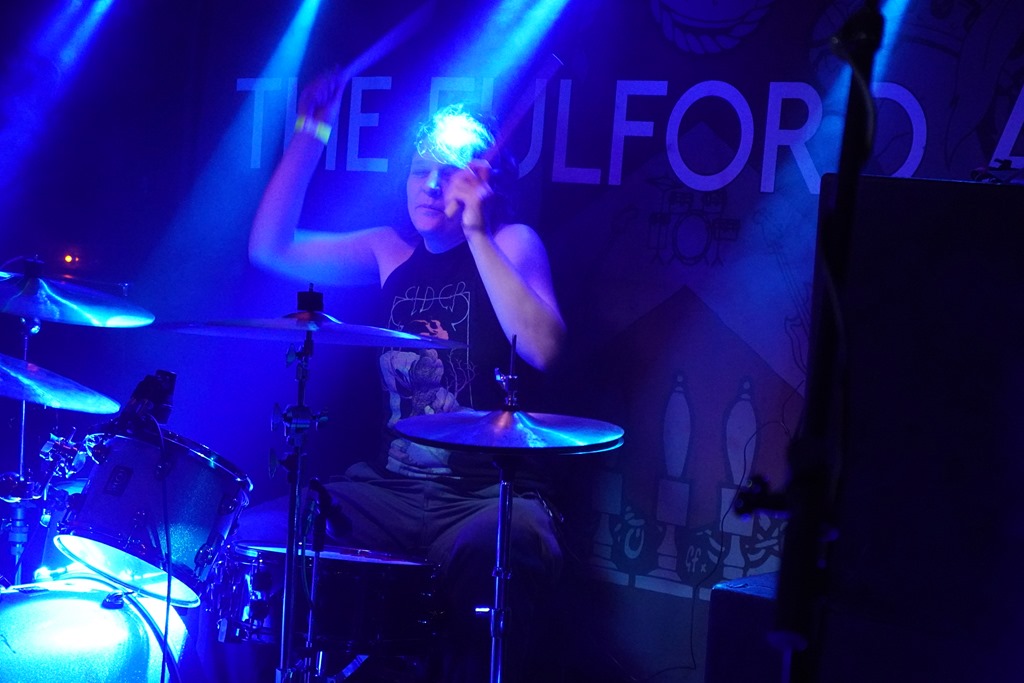
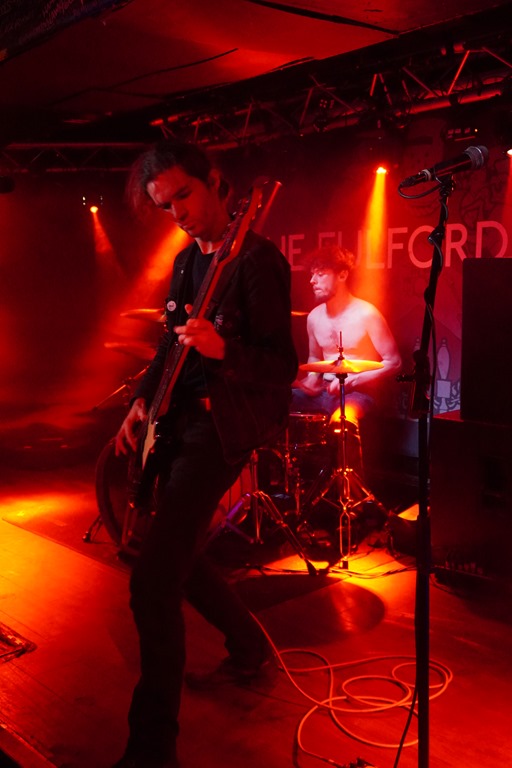
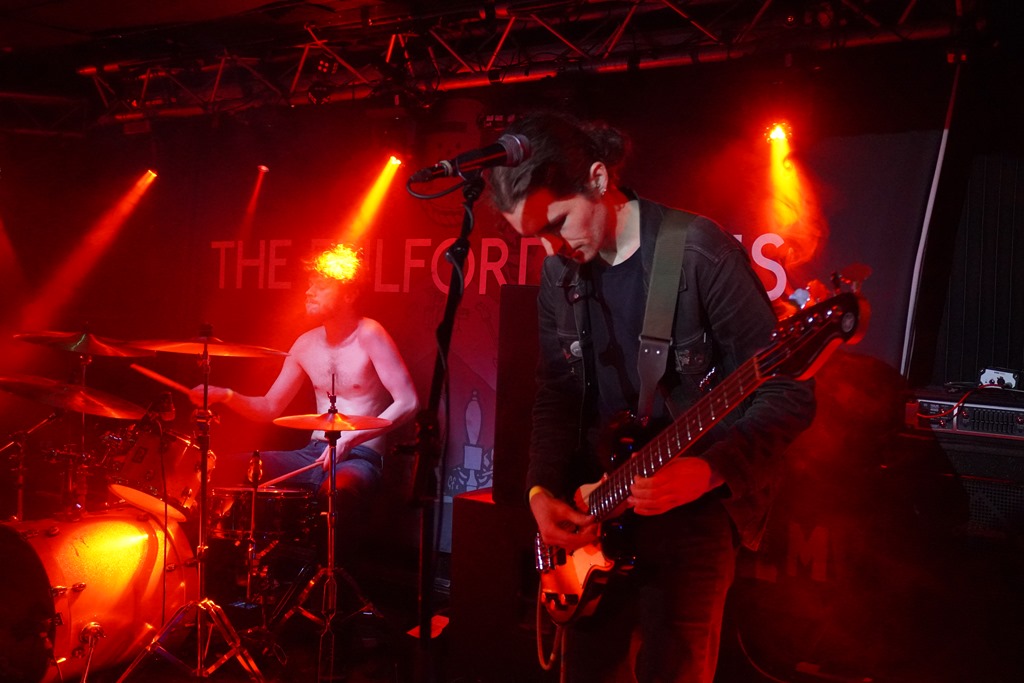
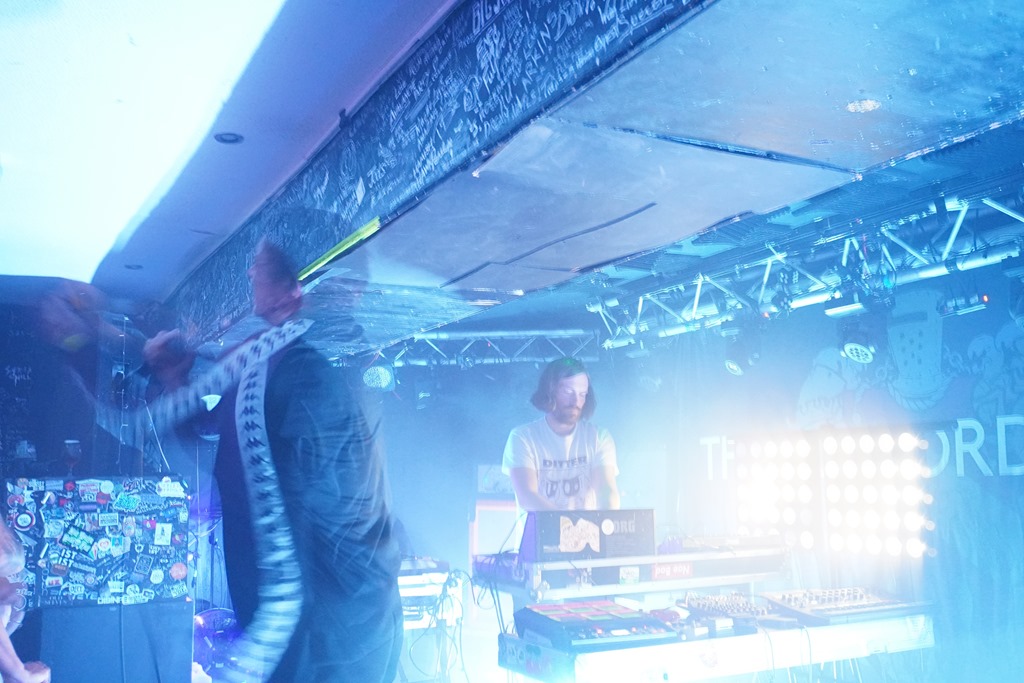
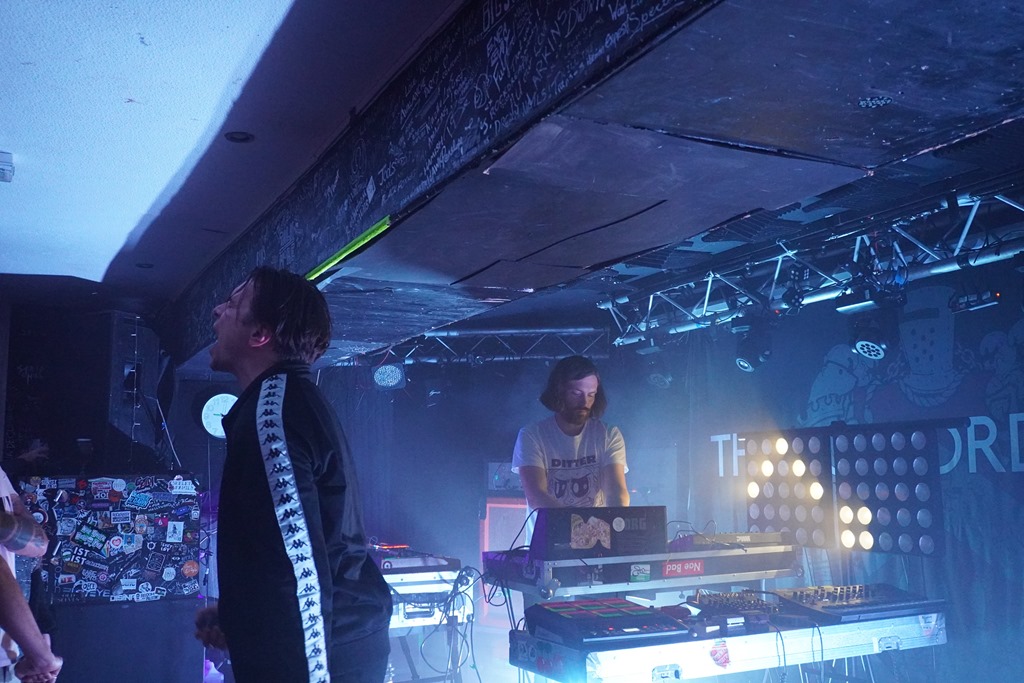
Soma Crew have a knack for landing a fair few of the city’s high profile support slots, and deservedly. Supporting The Fall will likely be a career highlight, but something about tonight is special. The Crew’s ever-shifting lineup sees them packing out the stage as a sextet, and they open with the crawling ‘Dead Insect’. Is it the right choice for this occasion? Do they care? On the second song, ‘Counterfeit’, they hit the motorik groove that’s their strong suite, and from hereon in, they’re away. Broken string? Meh, it’s no issue when you’ve got three guitars (plus a bass), one with an E-bow plugging away at a single chord. With the addition of a throbbing bass, it all makes a magnificent hypnotic drone. This is Soma Crew at their best.

DSC02831

Soma Crew

The DJ spun Ministry (‘Just One Fix’) and Murder Inc. between bands. Is it the done thing to play tracks by bands related to those about to take the stage? Why not, eh? I’d actually played not only the band’s two EPs but Locate, Subvert, Terminate, just the other day in advance of tonight, and it proved appropriate. There’s an interesting – and perhaps somewhat telling – selection of bands T-shirts on display here: no shortage of Killing Joke, but also The Sisters of Mercy, Paradise Lost, and The KLF… and the near-capacity crowd is suitably rewarded with a belter of a set, with twelve songs in all, which represents both EPs and another EP’s worth of as-yet unreleased material.

DSC02851DSC02847

Light of Eternity

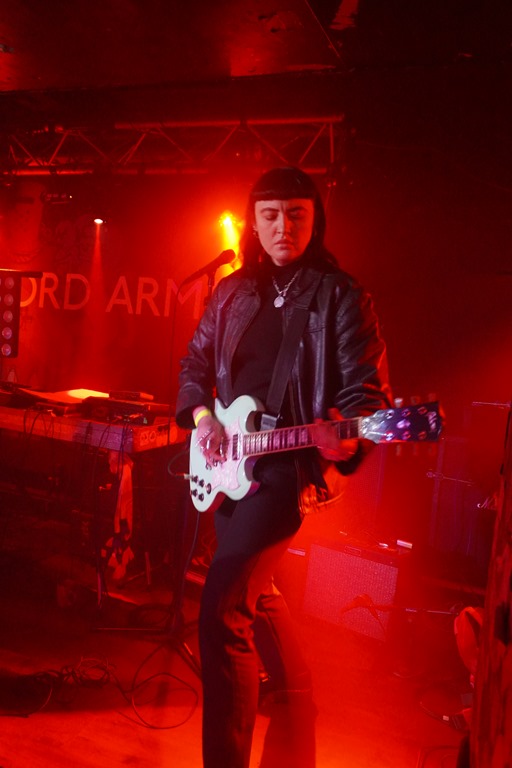
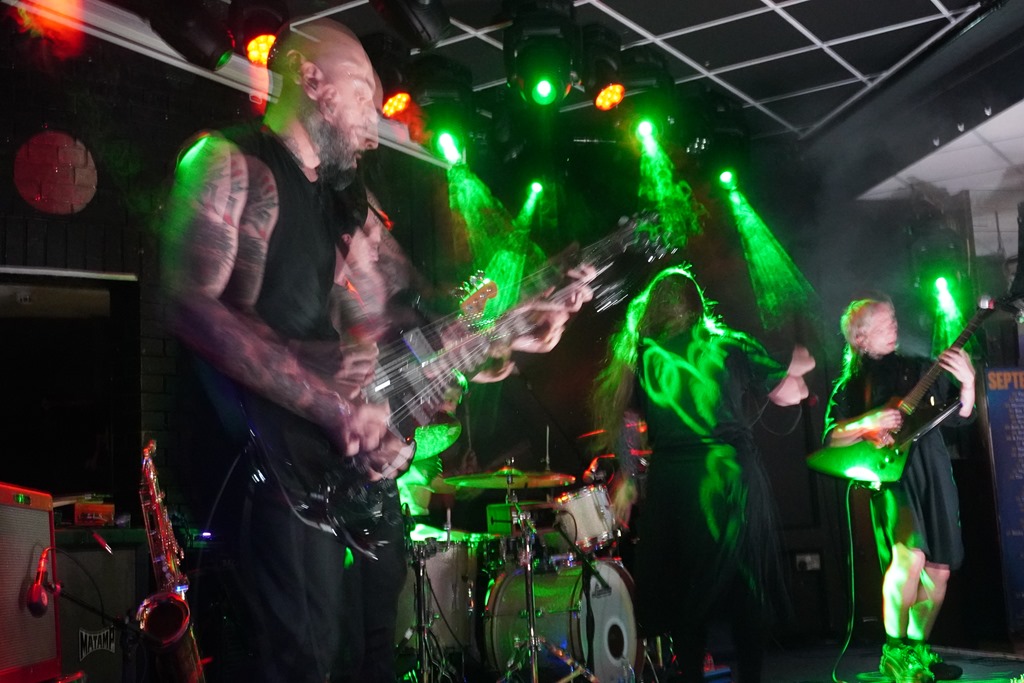
Ferguson’s drum kit isn’t only the focal point: it occupies the majority of the little stage, with Fred Schreck (bass and vocals) and Pauly Williams (guitar) positioned either side. It’s perhaps as well they’re not given to ambulating a great deal. In Williams, they’ve found a guitarist with a sound that’s incredibly close to that of the late, great, Geordie Walker, and capable of churning out methodical riffs – and his dense, compression-heavy sheet metal thunder really rings out in a live setting, more so than recorded. He keeps his head down and just keep cracking ‘em out, and it works well alongside sturdy bass grooves, while it’s the busy, full-kit drumming that provides much of the action, the movement, within the songs.

DSC02911DSC02896

Light of Eternity

Their presence could be reasonably summarised as unassuming but focussed. They’re not a band for chat: Schreck does begin to speak on the subject of America, and hope, before ‘Dark Hope’, but it’s curtailed by the onset of the next percussive barrage which marks the start of the song. Ferguson not only leads proceedings, but does so in his own world, and that world is the centre of all of this. After the first few songs, he’s one hundred percent in the drum zone, and it’s apparent he doesn’t do breaks, preferring instead to keep that relentless momentum. Some may read it as standoffish, but it’s fairly apparent that it’s about the intensity, the songs slamming in back-to-back, the explosive beats, the churning riffs. Singer may not have Jaz Coleman’s charisma, but his reverb-drenched vocals are crisp and clear and delivered in such a way that the experience is that of an unyielding force.

DSC02893

Light of Eternity

Checking the setlist encapsulates the mood and subject matter of Light of Eternity: ‘Conformity’, ‘Distraction’, ‘Tipping Point’, ‘Explode’. They may be older (Ferguson is 67 now), but they’re not settling into a comfortable relationship with the status quo, offering a cocktail of anger and disaffection at the state of the world. ‘Dark Hope’ is grungy, built around descending chords played with steely guitars. The unreleased ‘Fascist X’, landing near the end of the set is a full-throttle heavy grinder, while ‘Aftershock’ is an absolute juggernaut. They simply don’t let up: every song is driving, solid, muscular, a wall of leaden density.

There isn’t a weak song in the set, and their live debut more than delivers on the promise of the first studio releases. Most of those present reasonably expected quality, but for a live debut, this was phenomenal. The smaller venue was a test, in a way – and they passed it, and then some. The rest of the tour promises to be fantastic – but those who were here tonight witnessed something special that they won’t forget in a hurry.